Bloomberg News | May 12, 2025 |
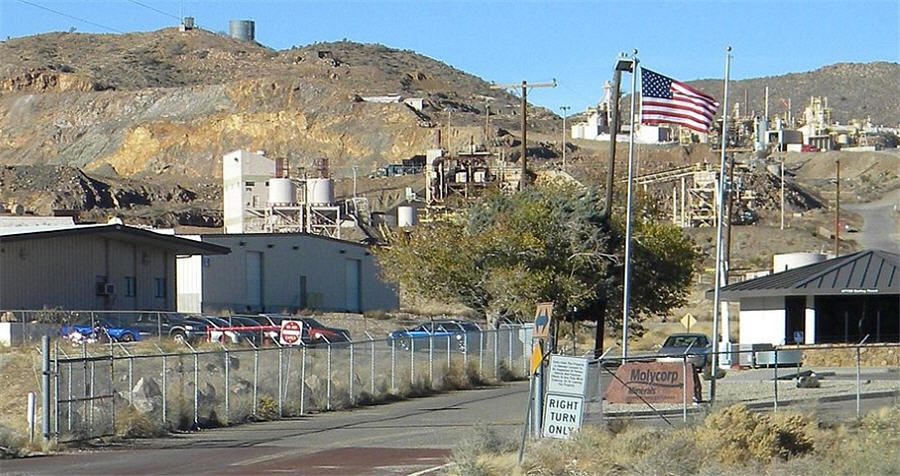
Mountain Pass in California. The only producing rare earth mine in the US. Image from Wikimedia Commons
China’s weaponization of rare earths in its trade war with the US will spark a much greater focus on American supply security for critical minerals, according to MP Materials Corp., the only US miner of the key materials used in smartphones and defense applications.

“Regardless of how trade negotiations evolve from here, the system as it existed is broken, and the rare-earth Humpty Dumpty, so to speak, is not getting put back together,” the miner’s chief executive officer, Jim Litinsky, said on an earnings call last Friday.
China, which dominates global supply, put export restrictions on seven types of rare earths last month, widely viewed as a response to President Donald Trump’s trade assault. Companies including Ford Motor Co. have warned of shortages, and US negotiators had hoped to address rare earths in their Geneva appointment with Chinese officials, according to people familiar with the matter.
China may expedite US rare earth permit approvals after trade truce: Reuters
The teams emerged from two days of talks touting “substantial progress” toward resolving trade differences, leaving markets waiting for more details due to be outlined later on Monday.
Litinsky used the company’s earnings call — before the meetings in Switzerland — to argue that China’s measures were a decisive break with the past by exposing the vulnerability of key industries. MP Materials began mining rare earths in California in 2017, started refining in 2023, and plans to sell rare-earth magnets to General Motors Co. by the end of 2025.
“This idea that there was a threat that has now been utilized has really changed psychology, I think, from everybody across the board,” Litinsky said. “My impression from conversations with the Department of Defense is that there is a full-on recognition that we can’t be reliant on Chinese magnetics for national security purposes.”
China’s previous use of rare earths as a trade weapon — against Tokyo more than a decade ago — mobilized Japanese industry to significantly reduce its reliance on Chinese supplies. The US and other western nations had already begun moves to mitigate China’s grip on critical minerals, but the curbs on rare earths and other niche commodities has prompted greater urgency.
“For years, we have warned that the global rare-earths supply chain was built on a single point of failure,” Litinsky said. “With China’s sweeping tariffs and export restrictions, that geopolitical fault line has now become a commercial reality.”
China Bolsters Export Controls on Critical Minerals

China is bolstering export controls on the entire supply chain of critical minerals as it seeks to keep its dominant position in the sector.
China’s relevant authorities will track the exports of critical minerals and will strictly prevent illegal exports, the Chinese Commerce Ministry said on Monday.
“Since the export control of strategic minerals has much to do with national security, strengthening the control of the whole export chain is the key,” the ministry’s statement read, as carried by Reuters.
Last week, the commerce ministry announced “a special operation to crack down on the smuggling and illegal export of strategic minerals.”
China aims to fight the smuggling and illegal exports of strategic minerals by targeting evasion methods such as false reporting, concealment, smuggling, and “third country” transshipments, the authorities said.
Earlier this year, China, which dominates the global rare earth and critical minerals supply chain, announced it would curb its exports of dysprosium, gadolinium, scandium, terbium, samarium, yttrium, and lutetium. These so-called “heavy” and “medium” rare earth elements are mostly used in automotive applications, including rotors, motors, and transmission in electric vehicles and hybrids, as well as in the defense industry in parts of jets, missiles, and drones.
Following Beijing’s move, Chinese exporters of these seven rare earth metals will need to apply for licenses to export, while re-export to the United States is banned. China placed 16 U.S. entities – mostly in the defense and aerospace sectors – on an export control list, limiting them from receiving dual-use goods.
Monday’s announcement of stricter controls on exports of critical minerals comes just as China and the United States announced they are backing off from 100%-plus tariffs on each other’s goods.
The U.S. and China agreed to suspend the tariffs for 90 days, except a 10% baseline rate, the countries said in a joint statement at the end of this weekend’s trade talks in Geneva, Switzerland.
By Charles Kennedy for Oilprice.com


No comments:
Post a Comment