Austria's gun laws come under scrutiny after shooter at Graz school kills 10
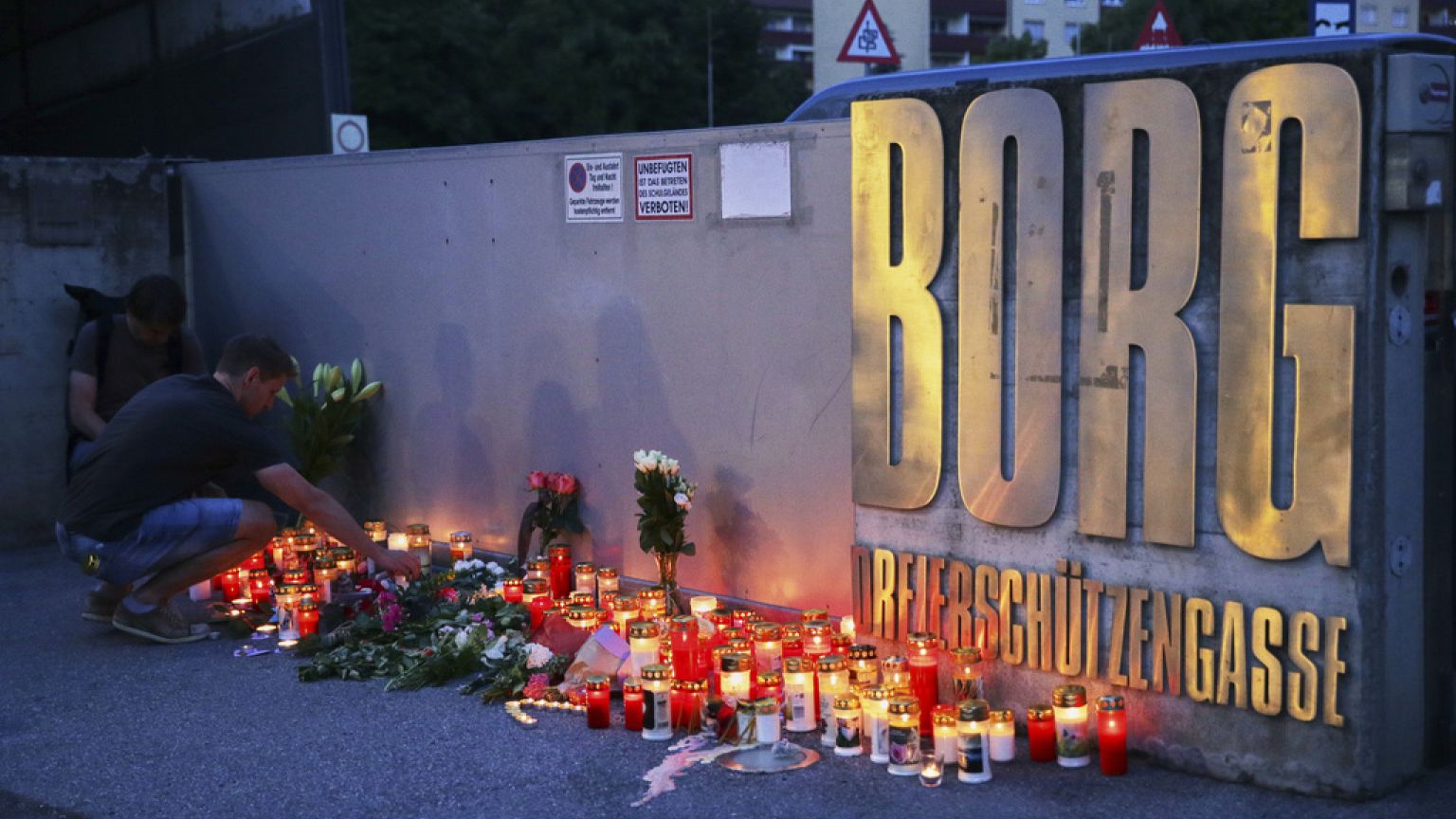
A debate about gun laws in Austria is gathering pace after a 21-year-old former student killed 10 in a shooting at a school in Graz on Tuesday.
A day after a gunman attacked a school in Graz and killed 10, including students, many in Austria were left questioning how such an act of violence could occur, turning attention to the country’s gun laws.
According to police, the 21-year-old attacker legally owned both weapons used in the assault on Tuesday: a Glock pistol and a shotgun.
According to Kleine Zeitung newspaper, the attacker had purchased one of the weapons just days before carrying out the attack. To acquire it legally, he was required to pass a psychological evaluation, Süddeutsche Zeitung reported, citing Austrian authorities.
Around 1.5 million weapons are registered in Austria - a country with a population of just over 9 million and more liberal gun laws relative to the rest of Europe.
After the attack, a debate on the country's laws is gaining pace, with Graz Mayor Elke Kahr calling for a ban on weapons in the private sector on Tuesday evening. In her opinion, gun licences are "simply issued too quickly".
Austrian newspaper Der Standard reported that there are approximately 400,000 more weapons in the Alpine country today than there were five years ago.
How liberal are Austria's gun laws?
Compared to other European countries such as Germany or France, Austria’s gun laws are considered to be somewhat more liberal, especially in how they allow for handgun ownership and cite self-defence as a reason to be able to carry weapons.
Austria's Weapons Act divides firearms into four categories: Prohibited weapons (category A), firearms subject to authorisation (category B), firearms subject to registration (category C) and other firearms (category D).
The possession of category B weapons — such as pistols or semi-automatic rifles — is only permitted with a firearms licence or a firearms pass. The latter also authorises the holder to carry the weapon in public.
Category C and D weapons — such as hunting rifles — may be purchased from the age of 18, but must be registered in the Central Weapons Register within six weeks.
In Austria, the basic requirements for legal possession of weapons include being of legal age, holding a permanent residence permit, and not having a weapons ban.
Depending on the weapon category, additional proof such as reliability, training, and evidence of justification may also be required.
Weapons and ammunition must be stored safely at home, usually in a gun cabinet, and may only be transported unloaded and in a locked container.
Austrian authorities have widely condemned the attack, said to be Austria's worst mass shooting since World War II.
Austria’s President Alexander Van der Bellen said the “horror could not be put into words”, while Chancellor Christian Stocker has declared three days of national mourning in response to the tragedy.
Mass held in Graz for victims of Austria's
deadliest mass shooting since World War II
Copyright Darko Bandic/Copyright 2025 The AP. All rights reserved
By Malek Fouda
Published on 11/06/2025 -
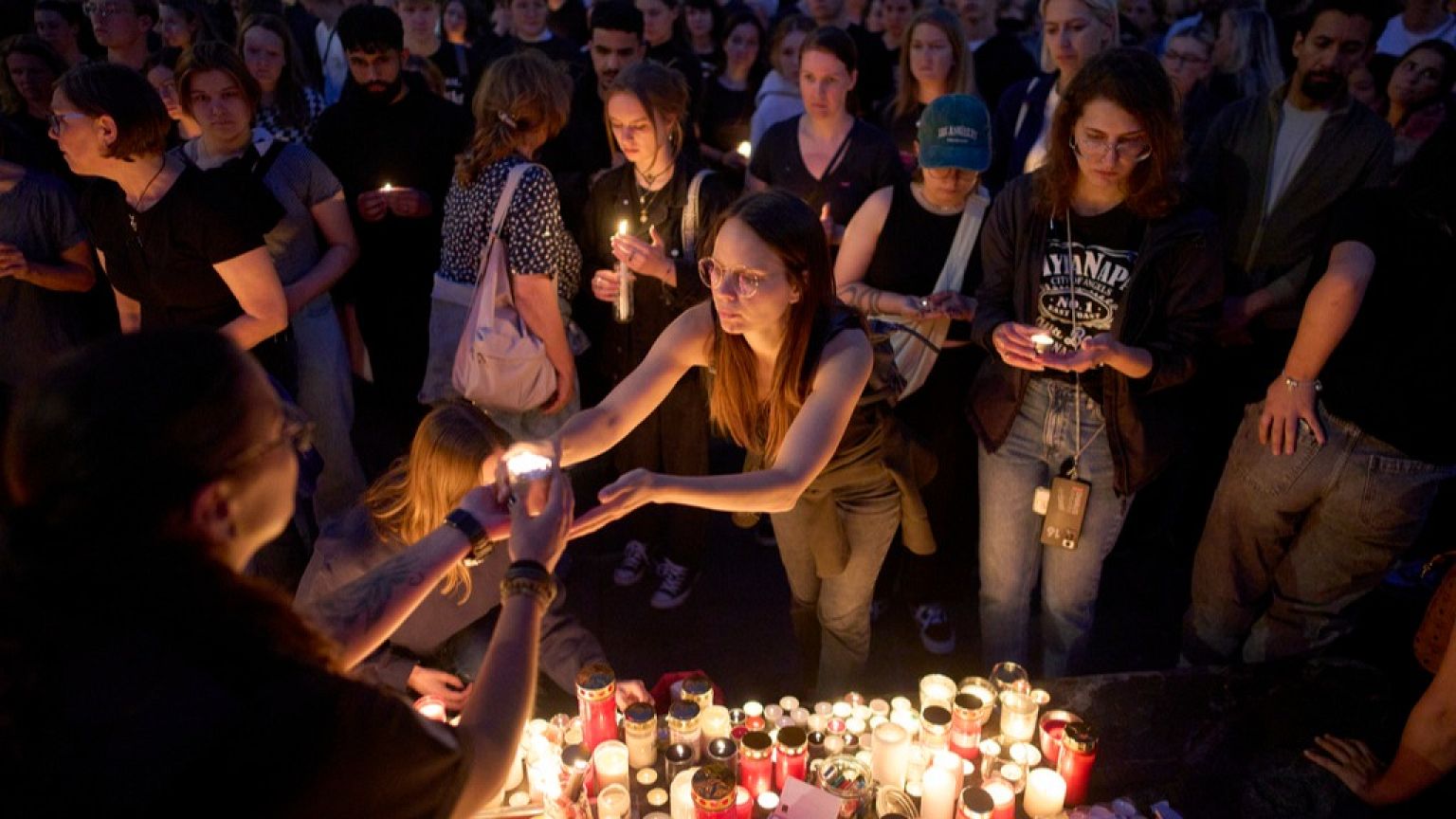
Residents of Graz gathered for a mass and a candle lit vigil to mourn the 11 victims who were killed after a former pupil opened fire in a school.
Several hundred people attended a Mass in Graz for the 10 victims of Austria's deadliest shooting in its post-war history on Tuesday evening.
Ten people, including students, were killed and others injured on Tuesday after a gunman opened fire at a school in Austria’s second-biggest city before killing himself, according to authorities.
There was no immediate information on the motive of the 21-year-old former student of the school, who had no previous police records.
Austria's Press Agency said the authorities seized a suicide note reportedly belonging to the attacker, which provided no clues as to why he carried out the attack.
He owned two weapons which he used to carry out the assault, both of which he legally owned.
Austria's Chancellor Christian Stocker, Vice Chancellor Andreas Babler and Foreign Minister Beate Meinl-Reisinger attended the Mass for the victims at Graz Cathedral.
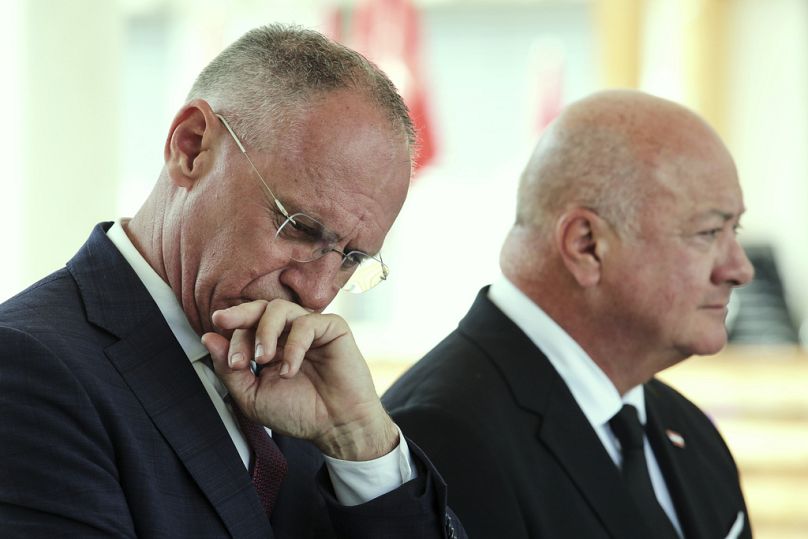
“Today is a dark day in the history of our country,” Stocker told reporters in the city of about 300,000 people in southern Austria and the capital of Styria.
The day was “a national tragedy that shocks us deeply”, he said as he declared three days of national mourning, with the Austrian flag lowered to half-mast at official buildings. A national minute of silence is to be held on Wednesday morning in memory of the victims.
Resident Elisabeth Schuster, who came to the Mass to show solidarity with the victims of the tragedy, said the incident "shocked me a lot like everybody else."
"I’m with them, feel for them. And I hope that together we can find a way, so that something like this never happens again," she added.
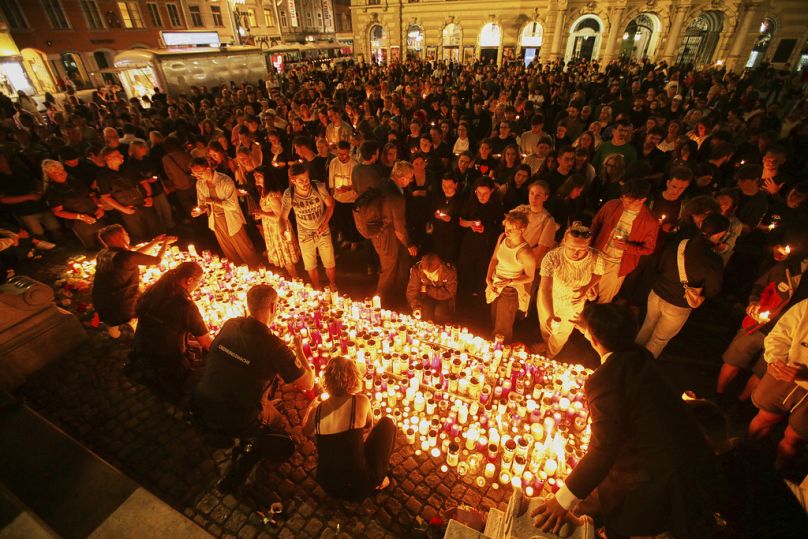
In Graz's main square people also gathered for a candle-lit vigil to mourn the victims of the fatal attack.
Cobra special forces were among those sent as part of the first response team to the BORG Dreierschützengasse high school, about a kilometre from Graz’s historic centre, after calls at 10 am local time reporting shots at the building.
More than 300 police officers were also deployed to the scene, who helped evacuate students from the school. Footage from the scene showed students filing out quickly past armed officers. Police said security was restored in 17 minutes.
Interior Minister Gerhard Karner said the gunman had been a student at the school who had failed to complete his studies.
Austria has some of the more liberal gun laws in the EU.

No comments:
Post a Comment