Swedish green steel maker mulls IPO to finance expansion plans
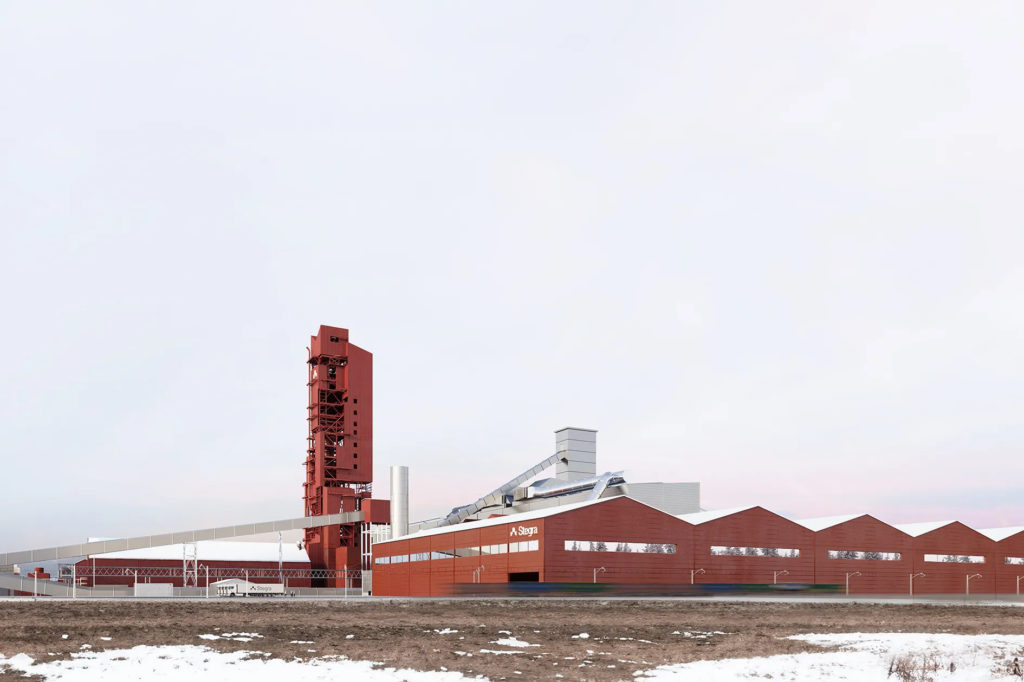
Stegra AB, which is building the world’s biggest green steel plant in northern Sweden, is doing initial work for an eventual public listing of shares because its expansion plans may need more funding than it can raise privately.

The four-year-old startup, on track to start producing the metal by the end of next year, has raised about €6.5 billion ($7.4 billion) so far, one-third equity and two-thirds debt. That will largely be used to get the plant up and running and produce 2.5 million tons a year. A second phase could see Stegra double the production, but would require further substantial fund raising.
“I think we can do phase 1 and phase 2 through the private market, but if we want to go further than that, then it’s a lot of money to raise on the private market even if we have strong investors with us,” chief executive officer Henrik Henriksson told reporters at its inaugural capital markets day at the site in Boden. “So it’s something we’re working on to prepare for but we haven’t set a time frame.”
The firm is among a new breed of steelmakers seeking to overhaul the way the alloy is manufactured in one of the most polluting industries in the world. The sector, which has relied largely on the same production techniques for more than a century, accounts for about 7% of global carbon emissions. Stegra will largely use hydrogen made with renewables rather than polluting fossil fuels in its production process.
“We have ambitions to grow,” Henriksson said Tuesday. “First we want to complete Boden, get it up and running and show that we can start to generate money.”
His comments come as steel structures are being erected at pace on the vast plot of land just outside the small town of 30,000 people. Hundreds of cranes, diggers and trucks are in the process of building the factory where the tallest structure will stand at about 140 meters (459 feet).
About 40% of the construction is complete, according to Henriksson. Work progresses by about 1% a week and he says he expects to get to 75% by the end of the year.
Higher premiums
The company also shared some financial forecasts for the first time. Henriksson said Stegra has increased its expectation for earnings before interest, taxes, depreciation and amortization in 2030 by about 10% from a 2023 estimate of €1.1 billion as a result of higher premiums paid for green steel compared with traditional products.
Return on capital employed will be above 20% for phase 1, which is much higher than the industry average, it said.
One big stumbling block for Boden is that it hasn’t yet got a connection to the power grid for its second phase. Without it, there won’t be an investment decision, said Henriksson, adding that he hopes to get some clarity by early next year.
The steel factory is part of a cluster of projects backed by Vargas Holding AB, a Swedish impact investor whose mission is to cut global emissions by 1% — the equivalent of annual carbon pollution from Australia. But its other big industrial bet, electric-vehicle battery maker Northvolt AB, filed for bankruptcy after expanding too fast and running out of cash.
Henriksson said that both Stegra as a company, and the steel product it is making, are different from Northvolt, even though there are similarities in the funding model with supply contracts used as collateral.
(By Lars Paulsson)
The Global Race to Produce Green Steel
- The steel industry produces 7% of global emissions, prompting innovation in hydrogen use, biocarbon, and electric arc furnaces to cut its carbon footprint.
- Projects in Sweden, the U.S., Brazil, and China show varying levels of success and ambition in implementing green steel technologies.
- High costs, energy demand, and limited market appetite for green steel remain major hurdles to scaling these initiatives globally.
Governments worldwide are investing heavily in finding new ways to decarbonise heavy industry, where emissions are notoriously hard to abate. While certain sectors have come leaps and bounds in decarbonising operations, several heavy industries are failing to advance. Making manufacturing and other sectors more sustainable will be key to achieving a green transition and ensuring that we meet the global heating limits stipulated in the Paris Climate Agreement. One sector that is rapidly searching for ways to decarbonise is steel, and some pilot projects that show promise are already underway.
According to the International Energy Agency (IEA), the steel sector produces around 7 percent of the world’s greenhouse gas emissions, at about 3.5 billion tonnes a year. Meanwhile, the steel demand is expected to rise by up to 30 percent by 2050, meaning that decarbonising the industry is key to achieving a green transition.
Scientists now believe there are a range of ways to decarbonise the industry, including switching out coal for sustainable charcoal, using green hydrogen produced from renewable energy to power operations, and using carbon capture and storage (CCS) technology to capture carbon emissions.
In Sweden, the firm Stegra was awarded $286 million in 2023 to develop what it calls “the world’s first integrated large-scale green steel plant”. Located in Boden, in the north of Sweden, Stegra’s facility will feature a 690 MW electrolyser, which will use renewable electricity to generate green hydrogen to replace coal for powering operations. It is expected to support the production of sponge iron with a 95 percent lower carbon footprint compared to blast furnaces processes. The green sponge iron will then be melted in an Electric Arc Furnace using renewable electricity to produce steel.
Stegra is not the only company in Sweden investing in “green steel”. Hybrit, which is short for hydrogen breakthrough ironmaking technology, is a collaboration between iron ore producer LKAB, energy firm Vattenfall, and steel manufacturer SSAB. The Hybrit project commenced in 2016 and aims to phase out the use of coal in steel production by using green hydrogen and renewable electricity. The trio ran pilot projects from 2018 to 2024, focusing on the fossil-free production of iron ore pellets, hydrogen-based reduction of iron ore, and the production of crude steel by melting sponge iron in an electric furnace. In 2023, the facility produced 3.6 million tonnes of pellets, with an estimated carbon emissions reduction of 50,000 tonnes.
Other countries around the globe are also investing in developing their green steel capabilities. In the United States, Massachusetts-based Boston Metal expects to soon earn its first revenue for “low-carbon steel”. The firm is using a technique developed at the Massachusetts Institute of Technology, using electricity to remove contaminants from iron ore to produce just a small fraction of the emissions generated by conventional fossil fuel-fired blast furnaces. The technique releases just oxygen, instead of carbon emissions. The only greenhouse gas emissions released from the plant are those associated with the electricity used to power operations.
Former U.S. President Joe Biden promoted green steel as part of his economic and environmental agenda, with funding support from the 2022 Inflation Reduction Act and the 2021 Bipartisan Infrastructure Law. This spurred several U.S. companies to invest in green steel operations.
The global demand for low-emissions steel is expected to rise by at least 6.7 million tons by 2030. ?“The demand for green steel is there,” said Kaitlyn Ramirez, a senior associate with the energy transition think tank RMI. ?“We’re seeing the momentum … even when there are challenges on the supply side that need to be resolved,” she added.
In Brazil, the producer Aço Verde do Brasil is using biocarbon to replace coal in its operations, having planted 50,000 hectares of eucalyptus for sustainable charcoal. The plant, which has a capacity of 600,000 tonnes a year, has reportedly achieved carbon-neutral steel production and has been certified by Société Générale de Surveillance following the GHG Protocol, with no more than 60 to 100 kg of CO2 per tonne of steel being released from the production process.
China is also attempting to decarbonise its steel sector, which emits an estimated 2.2 gigatons of carbon a year. However, decarbonising the industry is no easy feat, and several challenges stand in the way of a transition. China has around 200 steel firms, 360 mills, and an average furnace age of just 12 years, according to Wood Mackenzie. In addition, only 30 to 40 percent of China’s steel production has neighbouring renewable energy projects, making for a difficult transition to green. In addition, there is not enough demand in the market for green steel at present, due to its higher cost, which has deterred many Chinese steel companies from investing in low-carbon technologies.
Green steel is still in the nascent stage, with several companies investing in pilot projects and just beginning to scale up production. While the shift to low-carbon steel is key to a green transition and limiting global warming, there are several challenges standing in the way of producers making the shift, including the high costs involved, a lack of demand, and a lack of availability of the renewable energy and green hydrogen needed to power operations.
By Felicity Bradstock for Oilprice.com

No comments:
Post a Comment