Campaigners lament ‘glaring omission’ of fossil fuels in Macron’s opening remarks at UN ocean summit
Oil and gas blocks cover an area the size of Argentina in just 11 ocean ‘frontier regions’, a new report shows.
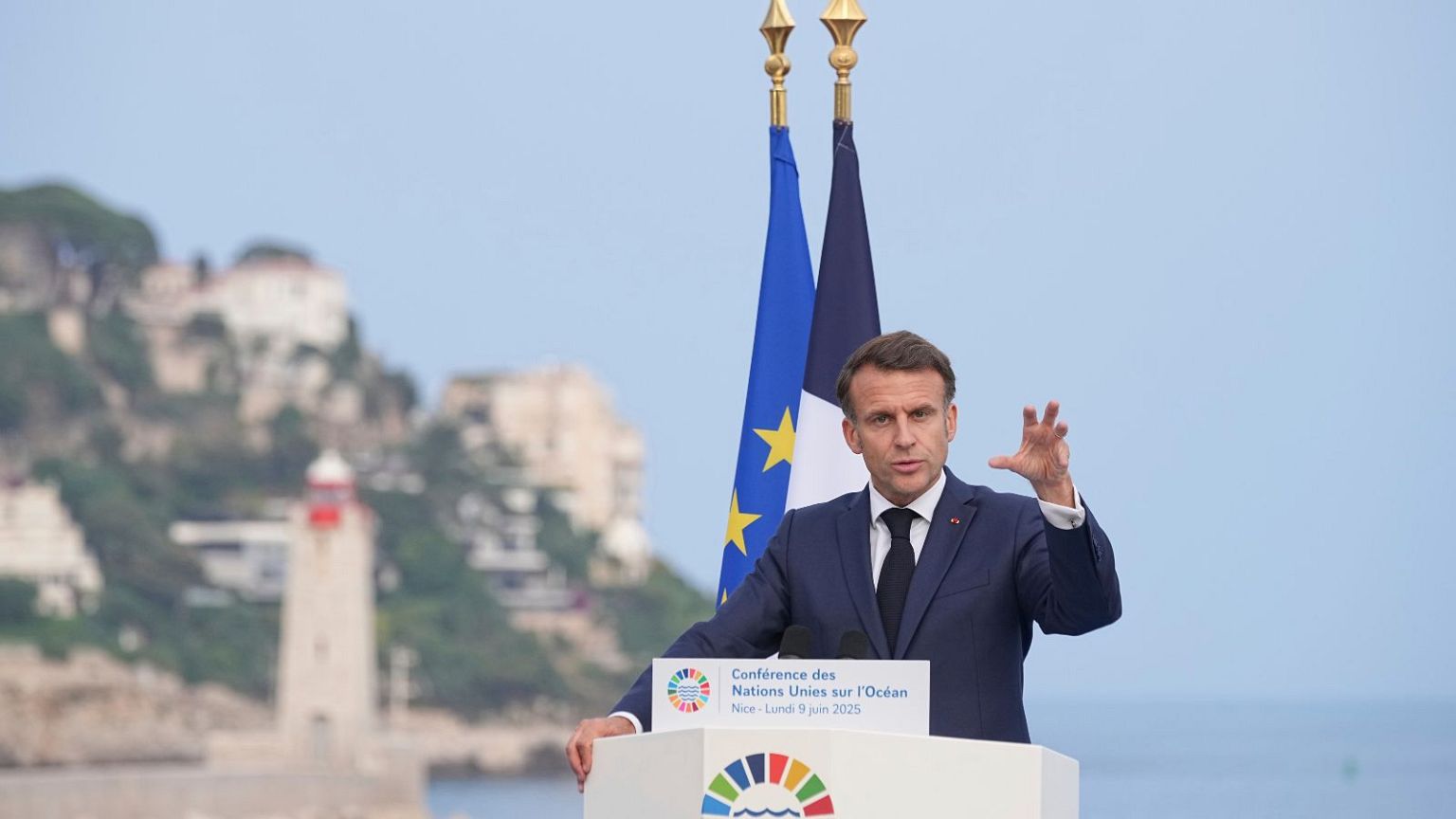
French President Emmanuel Macron kicked off the United Nations Oceans Conference (UNOC) in Nice yesterday with a speech calling on world leaders to unite for ocean protection.
But there was one notable absence from the address, according to campaigners: fossil fuels.
The global expansion of offshore and coastal oil and gas development poses profound threats to marine ecosystems, as underscored by a new report from Earth Insight, a data analytics company that tracks fossil fuel and mining activities around the world.
“This glaring omission demonstrates that the impacts of fossil fuel extraction on marine biodiversity and coastal communities continue to be overlooked,” says Tyson Miller, Executive Director at Earth Insight.
“France has an opportunity to seize this historic moment and show leadership once again, as it did in 2015 with theParis Agreement, by calling on countries to end the expansion of offshore and coastal fossil fuel activities.”
A major focus of this third UNOC is the ratification of a High Seas Treaty, which will allow nations to establish marine protected areas in international waters for the first time.
Even at the UN climate summit last year in Baku (COP29), fossil fuels were scarcely addressed in key documents, despite their usage being the primary cause of the climate crisis.
How is fossil fuel extraction jeopardising the oceans?
Burning fossil fuels is placing a huge burden on oceans, which absorb the excess heat, leading to a slew of dangerous consequences, from killing coral reefs to fuelling more hurricanes.
The new report from Earth Insight exposes the vast physical presence of fossil fuel infrastructure in oceans and the destruction and pollution caused by its encroachment.
Much of this expansion is taking place in ‘frontier regions’ - underexplored areas with significant potential for oil, gas and Liquefied Natural Gas (LNG) development.
Looking at 11 case studies from around the world, the analysts find that oil and gas blocks cover over 2.7 million km2 in these frontier regions - an area about the size of Argentina.
Moreover, 100,000 km2 of these blocks overlap with protected areas, leaving 19 per cent of coastal and Marine Protected Areas (MPAs) at risk across the frontier regions.
Coral reefs, seagrass meadows and mangroves are some of the vital ecosystems being threatened by fossil fuel companies. Approximately 63 per cent of seagrass meadows in the frontier case studies - from Barbados to Senegal - are overlapped by oil and gas blocks, the study warns.
The researchers propose a range of solutions to tackle the environmental and social harm caused by fossil fuel extraction, starting with stopping expansion in environmentally sensitive regions and removing unassigned oil and gas blocks.
International treaties - like the Fossil Fuel Non Proliferation Treaty - should be strengthened to prohibit new coastal and offshore oil and gas expansion, they say. This is where international conferences like UNOC could be used to galvanise action.
‘A key opportunity’: Brazil and France urge nations to boost ocean climate action ahead of COP30

Brazil explicitly included ocean-based actions for the first time in its most recently submitted national climate plan.
Brazil and France have just launched a new challenge to countries to put oceans at the centre of climate action.
On Monday, at the UN Ocean Conference, the two countries called on all nations to place ocean-focused action at the heart of their national climate plans - also known as Nationally Determined Contributions or NDCs - ahead of the UN climate summit COP30 it is hosting in November.
Alongside Brazil and France, an inaugural group of eight countries, including Australia, Fiji, Kenya, Mexico, Palau, and the Republic of Seychelles, has joined the initiative.
“For Brazil, the Blue NDC Challenge represents a key opportunity to strengthen ocean-related climate action and to emphasise the essential role of ocean-based solutions in achieving emission reduction targets,” says Marina Silva, Brazil's Minister for the Environment and Climate Change.
“Through this initiative, Brazil seeks to advance international cooperation on ocean climate action in the lead-up to COP30, and to underscore the need for all countries to fully integrate the ocean into their national climate strategies.”
Silva added that in its most recently submitted NDC, Brazil had explicitly included ocean-based climate actions for the first time. That includes commitments like establishing programmes for the conservation and restoration of vital marine ecosystems such as mangroves and coral reefs.
40 per cent of Brazil’s territory is located at sea, and it hosts marine ecosystems of global significance - including the only coral reefs in the South Atlantic and the world's largest contiguous mangrove belt along the Amazon coast.
Oceans-based actions are vital for wider climate goals
NDCs are the centrepiece of countries' efforts to reduce emissions and limit warming to 1.5°C under the Paris Agreement.
Countries remain largely off track for meeting the Paris goals, according to the most recent UN emissions gap report, with the next round of climate pledges needing to deliver a “quantum leap in ambition” to give the world a chance of limiting global warming to 1.5°C.
Nations were due to submit updated plans in February, but only 11 of the 195 Paris Agreement signatories made the formal deadline. As of early June, just 22 countries have so far delivered their enhanced NDCs.
Brazil is one of only five G20 countries that have submitted updated plans alongside the US under the Biden administration, the UK, Japan and Canada. The real deadline is now September, when the plans will be tallied up before COP30.
As the world prepares to celebrate the 10th anniversary of the Paris Agreement this year, the Blue NDC challenge is aimed at highlighting the role oceans can play in enhancing these plans.
“Ocean-based climate solutions can deliver up to 35 per cent of the emissions reductions needed to keep 1.5°C within reach,” says Tom Pickerell, global director of the ocean programme at the World Resources Institute and Head of the Secretariat for the High Level Panel for a Sustainable Ocean Economy.
“But we are running out of time to maximise the ocean’s potential. That’s why countries must place the ocean at the heart of their climate strategies.”
Industrial marine sectors and natural ecosystems are “underused tools” in addressing climate change, Wavel Ramkalawan, President of the Republic of Seychelles, one of the eight inaugural countries that joined the initiative, added.
Macron says High Seas Treaty could take effect from January after surge in support at ocean summit

The High Seas Treaty, adopted in 2023, would allow countries to establish marine protected areas in international waters.
Eighteen countries ratified the High Seas Treaty on Monday, bringing the total to 49 - just 11 short of the 60 needed for the landmark ocean agreement to enter into force.
At the UN Ocean Conference (UNOC) in Nice, 18 countries formally ratified the agreement to protect the high seas.
Guinea-Bissau, Liberia, Côte d’Ivoire, Solomon Islands, Tuvalu, Malta, Vietnam, Jamaica, Albania, Bahamas, Belgium, Croatia, Denmark, Fiji, Mauritania, Vanuatu, Greece and Jordan now join the 31 countries plus the European Union, which formally ratified the High Seas Treaty, officially known as the Biodiversity Beyond National Borders agreement (BBNJ), before the summit.
“Today’s surge of ratifications for the High Seas Treaty is a tidal wave of hope and a huge cause for celebration”, said Rebecca Hubbard, Director of High Seas Alliance.
Hubbard said it was a "powerful victory" for those who have worked relentlessly to put the protection of the high seas at the heart of the global environmental agenda.
"With just 11 more ratifications needed for entry into force, it could be just a matter of weeks before the 60 is achieved.”
French President Emmanuel Macron said at the close of day one of the conference that the treaty has received sufficient support to take effect in early 2026.
He claimed that 55 countries' ratifications have been completed, around 15 are in progress with a definite date, and another 15 will happen before the end of the year.
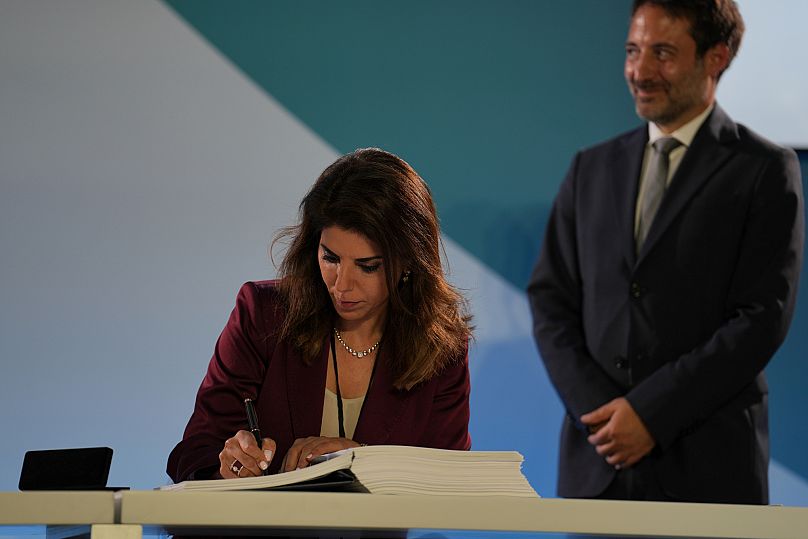
That would push the total above the 60 needed for the treaty to come into force.
"This means that this treaty will be able to enter into force on January 1 of next year, which means we would finally have an international framework to regulate and administer the high seas,” Macron said.
EU pledges €40 million to ‘bring the High Seas Treaty to life’
Ahead of UNOC, the EU and six of its member states announced their ratification of the treaty. Spain and France already did so earlier this year.
At the opening of the summit on Monday, European Commission President Ursula von der Leyen said the EU had pledged €40 million in funding for the Global Ocean programme to “bring the High Seas Treaty to life”.
This money will go towards supporting African, Caribbean and Pacific nations in their efforts to ratify and implement the agreement.
“We all know the Treaty is a crucial instrument to protect our Ocean beyond borders,” she said.
“And indeed, we made it – the Treaty was agreed and adopted. And today, we are inches away from the 60 signatures for ratification.”
“The EU is proud to have ratified the BBNJ and it calls, jointly with Palau and Seychelles, all countries to join the High Ambition Coalition on BBNJ to support its ambitious implementation," Costas Kadis, European Commissioner for Oceans and Fisheries, said.
"The EU also stands with its partners to implement the BBNJ, including through the €40 million Global Ocean Program."
What is the High Seas Treaty and why does it matter?
The High Seas Treaty will allow nations to establish marine protected areas in international waters for the first time.
Despite their remoteness, the high seas are under growing pressure from overfishing, climate change and the threat of deep-sea mining. Environmental advocates warn that without proper protections, marine ecosystems in international waters face irreversible harm.
“Until now, it has been the wild west on the high seas," said Megan Randles, global political lead for oceans at Greenpeace. "Now we have a chance to properly put protections in place.”
The high seas cover around two-thirds of the world’s oceans but are largely ungoverned. They are managed through a patchwork of regional fisheries agreements, shipping conventions and scattered marine protected areas.
The agreement is intended to support the protection of these bodies of water that are outside of international jurisdictions.
Officially adopted in 2023 after nearly two decades of negotiations, 60 ratifications are needed for the treaty to become binding international law - something France was hoping would happen before UNOC. The agreement will enter into force 120 days after the 60th ratification.

No comments:
Post a Comment