REST IN POWER
Funk icon Sly Stone, leader of groundbreaking 1960s band, dies at 82
Funk icon and pioneering multi-instrumentalist Sly Stone, whose band Sly and the Family Stone remolded musical norms and challenged segregation along racial and gender lines, died at the age of 82 on Monday, his family said, leaving behind a legendary, genre-mashing discography which lifted Afrocentric music and hippie culture.
Issued on: 10/06/2025 -
By: FRANCE 24

Disc Jockey to Singer
Born Sylvester Stewart in Denton, Texas, he moved as a child with his family to Northern California, where his father ran a janitorial business.
He took the show business name Sly Stone and worked for a time as a radio disc jockey and a record producer for a small label before forming the band.
Funk icon and pioneering multi-instrumentalist Sly Stone, whose band Sly and the Family Stone remolded musical norms and challenged segregation along racial and gender lines, died at the age of 82 on Monday, his family said, leaving behind a legendary, genre-mashing discography which lifted Afrocentric music and hippie culture.
Issued on: 10/06/2025 -
By: FRANCE 24
US singer Sly Stone perfoms July 19, 2007 during the Nice Jazz festival in Nice.
© Eric Estrade, AFP
Sly Stone, the driving force behind Sly and the Family Stone, a multiracial American band whose boiling mix of rock, soul and psychedelia embodied 1960s idealism and helped popularize funk music, has died at the age of 82, his family said on Monday.
Stone died after a battle with chronic obstructive pulmonary disease and other health issues, a statement from his family said.
"While we mourn his absence, we take solace in knowing that his extraordinary musical legacy will continue to resonate and inspire for generations to come," the statement said.
Stone was perhaps best known for his performance in 1969 at the historic Woodstock music festival, the hippie culture's coming-out party.
His group was a regular on the US music charts in the late 1960s and 1970s, with hits such as "Dance to the Music," "I Want to Take You Higher," "Family Affair," "Everyday People," "If You Want Me to Stay," and "Hot Fun in the Summertime."
Sly Stone, the driving force behind Sly and the Family Stone, a multiracial American band whose boiling mix of rock, soul and psychedelia embodied 1960s idealism and helped popularize funk music, has died at the age of 82, his family said on Monday.
Stone died after a battle with chronic obstructive pulmonary disease and other health issues, a statement from his family said.
"While we mourn his absence, we take solace in knowing that his extraordinary musical legacy will continue to resonate and inspire for generations to come," the statement said.
Stone was perhaps best known for his performance in 1969 at the historic Woodstock music festival, the hippie culture's coming-out party.
His group was a regular on the US music charts in the late 1960s and 1970s, with hits such as "Dance to the Music," "I Want to Take You Higher," "Family Affair," "Everyday People," "If You Want Me to Stay," and "Hot Fun in the Summertime."
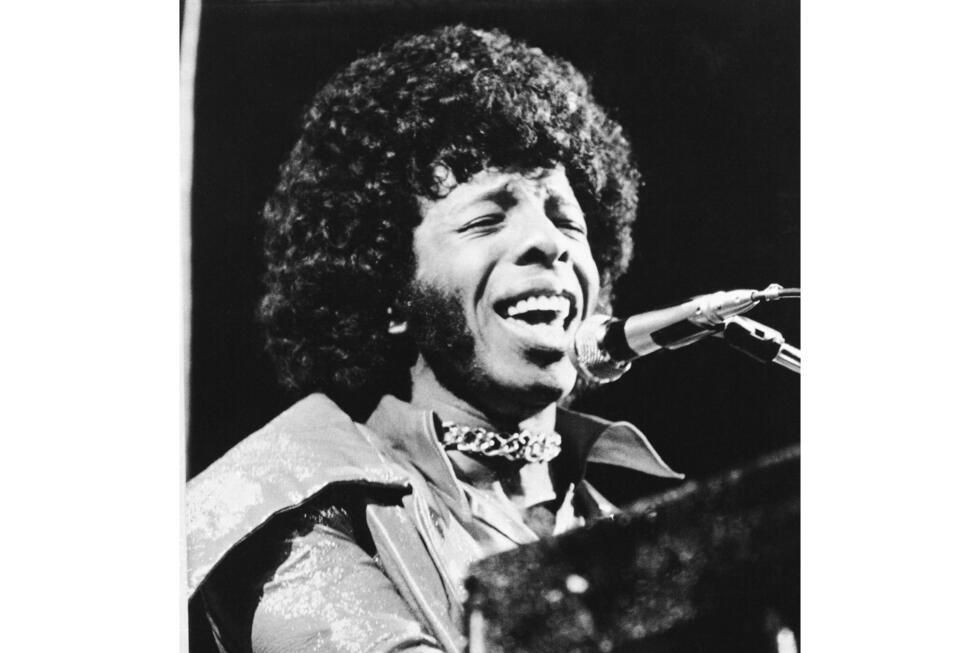
Rock star Sylvester "Sly" Stone of Sly and the Family Stone appears in April 1972.
© AP
But he later fell on hard times and became addicted to cocaine, never staging a successful comeback.
The confident and mercurial Stone played a leading role in introducing funk, an Afrocentric style of music driven by grooves and syncopated rhythms, to a broader audience.
James Brown had forged the elements of funk before Stone founded his band in 1966, but Stone's brand of funk drew new listeners. It was celebratory, eclectic, psychedelic and rooted in the counterculture of the late 1960s.
"They had the clarity of Motown but the volume of Jimi Hendrix or The Who," Parliament-Funkadelic frontman George Clinton, a contemporary of Stone and another pioneering figure in funk, once wrote.
When Sly and the Family Stone performed, it felt like the band was "speaking to you personally," Clinton said.
Stone made his California-based band, which included his brother Freddie and sister Rose, a symbol of integration. It included Black and white musicians, while women, including the late trumpeter Cynthia Robinson, had prominent roles.
That was rare in a music industry often segregated along racial and gender lines.
Stone, with his orb-like Afro hairstyle and wardrobe of vests, fringes and skin-tight leather, lived the life of a superstar. At the same time, he allowed bandmates to shine by fostering a collaborative, free-flowing approach that epitomized the 1960s hippie ethic.
"I wanted to be able for everyone to get a chance to sweat," he told Rolling Stone magazine in 1970.
But he later fell on hard times and became addicted to cocaine, never staging a successful comeback.
The confident and mercurial Stone played a leading role in introducing funk, an Afrocentric style of music driven by grooves and syncopated rhythms, to a broader audience.
James Brown had forged the elements of funk before Stone founded his band in 1966, but Stone's brand of funk drew new listeners. It was celebratory, eclectic, psychedelic and rooted in the counterculture of the late 1960s.
"They had the clarity of Motown but the volume of Jimi Hendrix or The Who," Parliament-Funkadelic frontman George Clinton, a contemporary of Stone and another pioneering figure in funk, once wrote.
When Sly and the Family Stone performed, it felt like the band was "speaking to you personally," Clinton said.
Stone made his California-based band, which included his brother Freddie and sister Rose, a symbol of integration. It included Black and white musicians, while women, including the late trumpeter Cynthia Robinson, had prominent roles.
That was rare in a music industry often segregated along racial and gender lines.
Stone, with his orb-like Afro hairstyle and wardrobe of vests, fringes and skin-tight leather, lived the life of a superstar. At the same time, he allowed bandmates to shine by fostering a collaborative, free-flowing approach that epitomized the 1960s hippie ethic.
"I wanted to be able for everyone to get a chance to sweat," he told Rolling Stone magazine in 1970.
Disc Jockey to Singer
Born Sylvester Stewart in Denton, Texas, he moved as a child with his family to Northern California, where his father ran a janitorial business.
He took the show business name Sly Stone and worked for a time as a radio disc jockey and a record producer for a small label before forming the band.
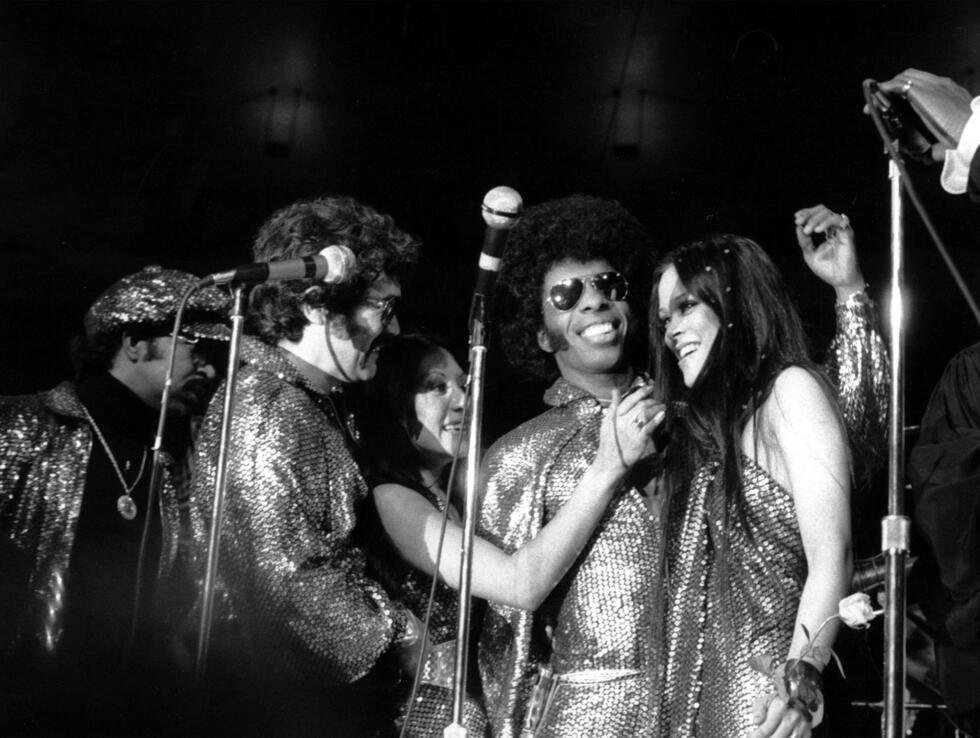
Sylvester "Sly" Stewart and his bride Kathy Silva are congratulated by well-wishers during their wedding ceremony at a rock concert in New York's Madison Square Garden on June 6, 1974. © AP
The band's breakthrough came in 1968, when the title track to their second album, "Dance to the Music," cracked the Top 10.
A year later, Sly and the Family Stone performed at Woodstock before dawn. Stone woke up a crowd of 400,000 people at the music festival, leading them in call-and-response style singing.
Stone's music became less joyous after the idealistic 1960s, reflecting the polarisation of the country after opposition to the Vietnam War and racial tensions triggered unrest on college campuses and in African American neighborhoods in big US cities.
In 1971, Sly and the Family Stone released "There's a Riot Goin' On," which became the band's only No. 1 album.
Critics said the album's bleak tone and slurred vocals denoted the increasing hold of cocaine on Stone. But some called the record a masterpiece, a eulogy to the 1960s.
In the early 1970s, Stone became erratic and missed shows. Some members left the band.
But the singer was still a big enough star in 1974 to attract a crowd of 21,000 for his wedding to actress and model Kathy Silva at Madison Square Garden in New York. Silva filed for divorce less than a year later.
Sly and the Family Stone's album releases in the late 1970s and early 1980s flopped, as Stone racked up drug possession arrests. But the music helped shape disco and, years later, hip-hop artists kept the band's legacy alive by frequently sampling its musical hooks.
The band was inducted into the Rock & Roll Hall of Fame in 1993 and Stone was celebrated in an all-star tribute at the Grammy Awards in 2006. He sauntered on stage with a blond Mohawk but bewildered the audience by leaving mid-song.
In 2011, after launching what would become a years-long legal battle to claim royalties he said were stolen, Stone was arrested for cocaine possession. That year, media reported Stone was living in a recreational vehicle parked on a street in South Los Angeles.
Stone had a son, Sylvester, with Silva. He had two daughters, Novena Carmel, and Sylvette "Phunne" Stone, whose mother was bandmate Cynthia Robinson.
(FRANCE 24 with Reuters)
The band's breakthrough came in 1968, when the title track to their second album, "Dance to the Music," cracked the Top 10.
A year later, Sly and the Family Stone performed at Woodstock before dawn. Stone woke up a crowd of 400,000 people at the music festival, leading them in call-and-response style singing.
Stone's music became less joyous after the idealistic 1960s, reflecting the polarisation of the country after opposition to the Vietnam War and racial tensions triggered unrest on college campuses and in African American neighborhoods in big US cities.
In 1971, Sly and the Family Stone released "There's a Riot Goin' On," which became the band's only No. 1 album.
Critics said the album's bleak tone and slurred vocals denoted the increasing hold of cocaine on Stone. But some called the record a masterpiece, a eulogy to the 1960s.
In the early 1970s, Stone became erratic and missed shows. Some members left the band.
But the singer was still a big enough star in 1974 to attract a crowd of 21,000 for his wedding to actress and model Kathy Silva at Madison Square Garden in New York. Silva filed for divorce less than a year later.
Sly and the Family Stone's album releases in the late 1970s and early 1980s flopped, as Stone racked up drug possession arrests. But the music helped shape disco and, years later, hip-hop artists kept the band's legacy alive by frequently sampling its musical hooks.
The band was inducted into the Rock & Roll Hall of Fame in 1993 and Stone was celebrated in an all-star tribute at the Grammy Awards in 2006. He sauntered on stage with a blond Mohawk but bewildered the audience by leaving mid-song.
In 2011, after launching what would become a years-long legal battle to claim royalties he said were stolen, Stone was arrested for cocaine possession. That year, media reported Stone was living in a recreational vehicle parked on a street in South Los Angeles.
Stone had a son, Sylvester, with Silva. He had two daughters, Novena Carmel, and Sylvette "Phunne" Stone, whose mother was bandmate Cynthia Robinson.
(FRANCE 24 with Reuters)
Sly Stone – Underrated, uncompromising, and undervalued even now
By Paul Wallis
June 10, 2025
By Paul Wallis
June 10, 2025
DIGITAL JOURNAL

To be called a “pioneer in black music” isn’t at all easy. You have to be good; you have to be different and be doing something that’s basically unheard of. That’s a reasonably accurate picture of Sly and the Family Stone.
In the blasé world of 60s mainstream pop, and to a slightly lesser extent, modern black pop, you didn’t have to be revolutionary. You just had to sound nice and look nice and not wake anyone up.
Black and white audiences were also dazzled by the glamour and skills of Motown and Atlantic artists. In jazz, Miles Davis had made a few points about technical music and new sounds. Things were pretty sedate.
Into this environment came Sly and the Family Stone. They first came to prominence with the funk anthem “Dance to the Music.” It was a repetitive attention-getter, and deliberately so. It was also a complete departure from the Motown Sound.
It wasn’t slick; it was gritty. It wasn’t a cure; it was physical. It was also a complete departure from the glitz-heavy arrangements of the time. This turned out to be the hallmark of Sly and the Family Stone. They’d try anything, and they did. They appeared at Woodstock and fit right in.
Technically, the phrasing was also very different. Brief phrases turned into funk. Leads switched between instruments. Hook lines came out of anywhere. The famous “Boomshakkalakka” was part of the song I Want To Take You Higher and has been a staple, almost a complete cultural statement ever since.
Sly was the front guy and driving “entity”, but his band were no slouches either. Watch any video, listen to any album, and you’ll hear a rash of musical ideas, particularly live, when they have a chance to jam. Simply describing the range of styles and innovations would take a book.
The “eventually iconic” album Stand was also a legacy album for future generations. The album produced quite a few singles, but as usual with Sly and the Family, just dig around and you’ll find other gems, such as “Sex Machine,” which has to be one of the most undersold and underrated guitar/bass tracks of all time.
This was also a pretty tough time to be a frontline black musical icon. The Watts Riots and a fluctuating range of what we’d now call “hood” issues upped the ante for artists. You couldn’t just wear an Afro. You had to mean something. The song Thank You (Falettinme Be Mice Elf Agin) is maybe some sort of definitive statement.
This is roughly where the career track for Sly gets complicated. Things got bumpy. Meanwhile, funk took off, a bit belatedly. The Sly and the Family Stone sound started popping up everywhere, in various forms. This opened up the field for a lot of innovation, experimentation, and just fun stuff. It’s the direct ancestor of hip-hop, rap, and just about all modern black music since. Just listen. You can hear it, still there, still playing strong. There were never any compromises.
I’ve been listening to Sly and the Family Stone since early high school, and I still do.
Thank you, Sly.
To be called a “pioneer in black music” isn’t at all easy. You have to be good; you have to be different and be doing something that’s basically unheard of. That’s a reasonably accurate picture of Sly and the Family Stone.
In the blasé world of 60s mainstream pop, and to a slightly lesser extent, modern black pop, you didn’t have to be revolutionary. You just had to sound nice and look nice and not wake anyone up.
Black and white audiences were also dazzled by the glamour and skills of Motown and Atlantic artists. In jazz, Miles Davis had made a few points about technical music and new sounds. Things were pretty sedate.
Into this environment came Sly and the Family Stone. They first came to prominence with the funk anthem “Dance to the Music.” It was a repetitive attention-getter, and deliberately so. It was also a complete departure from the Motown Sound.
It wasn’t slick; it was gritty. It wasn’t a cure; it was physical. It was also a complete departure from the glitz-heavy arrangements of the time. This turned out to be the hallmark of Sly and the Family Stone. They’d try anything, and they did. They appeared at Woodstock and fit right in.
Technically, the phrasing was also very different. Brief phrases turned into funk. Leads switched between instruments. Hook lines came out of anywhere. The famous “Boomshakkalakka” was part of the song I Want To Take You Higher and has been a staple, almost a complete cultural statement ever since.
Sly was the front guy and driving “entity”, but his band were no slouches either. Watch any video, listen to any album, and you’ll hear a rash of musical ideas, particularly live, when they have a chance to jam. Simply describing the range of styles and innovations would take a book.
The “eventually iconic” album Stand was also a legacy album for future generations. The album produced quite a few singles, but as usual with Sly and the Family, just dig around and you’ll find other gems, such as “Sex Machine,” which has to be one of the most undersold and underrated guitar/bass tracks of all time.
This was also a pretty tough time to be a frontline black musical icon. The Watts Riots and a fluctuating range of what we’d now call “hood” issues upped the ante for artists. You couldn’t just wear an Afro. You had to mean something. The song Thank You (Falettinme Be Mice Elf Agin) is maybe some sort of definitive statement.
This is roughly where the career track for Sly gets complicated. Things got bumpy. Meanwhile, funk took off, a bit belatedly. The Sly and the Family Stone sound started popping up everywhere, in various forms. This opened up the field for a lot of innovation, experimentation, and just fun stuff. It’s the direct ancestor of hip-hop, rap, and just about all modern black music since. Just listen. You can hear it, still there, still playing strong. There were never any compromises.
I’ve been listening to Sly and the Family Stone since early high school, and I still do.
Thank you, Sly.

No comments:
Post a Comment