Iran Seizes Foreign Oil Tanker in Gulf of Oman
- Iran's Islamic Revolutionary Guard Corps (IRGC) has seized a foreign oil tanker in the Gulf of Oman, reportedly on charges of smuggling 2 million liters of fuel.
- This incident follows recent geopolitical tensions, including US strikes on Iranian nuclear facilities and previous reports of Iran considering mine deployment in the Strait of Hormuz.
- The seizure highlights the ongoing risks to maritime traffic in critical chokepoints and Iran's diverse methods for disrupting oil flows, often involving "dark fleet" tankers for sanctions circumvention.
It remains important for energy traders to closely monitor the Strait of Hormuz and other key critical maritime chokepoints in the region (recall Red Sea events last week, given persistent geopolitical tensions involving Iran and Israel.
Tehran retains a diverse toolkit—both asymmetric and conventional—for disrupting tanker traffic through the Strait of Hormuz. These methods include naval mine deployment, anti-ship missile and drone launches, fast-attack craft swarms, and the seizure of vessels transiting the critical waterway responsible for 20% of the world's oil flows.
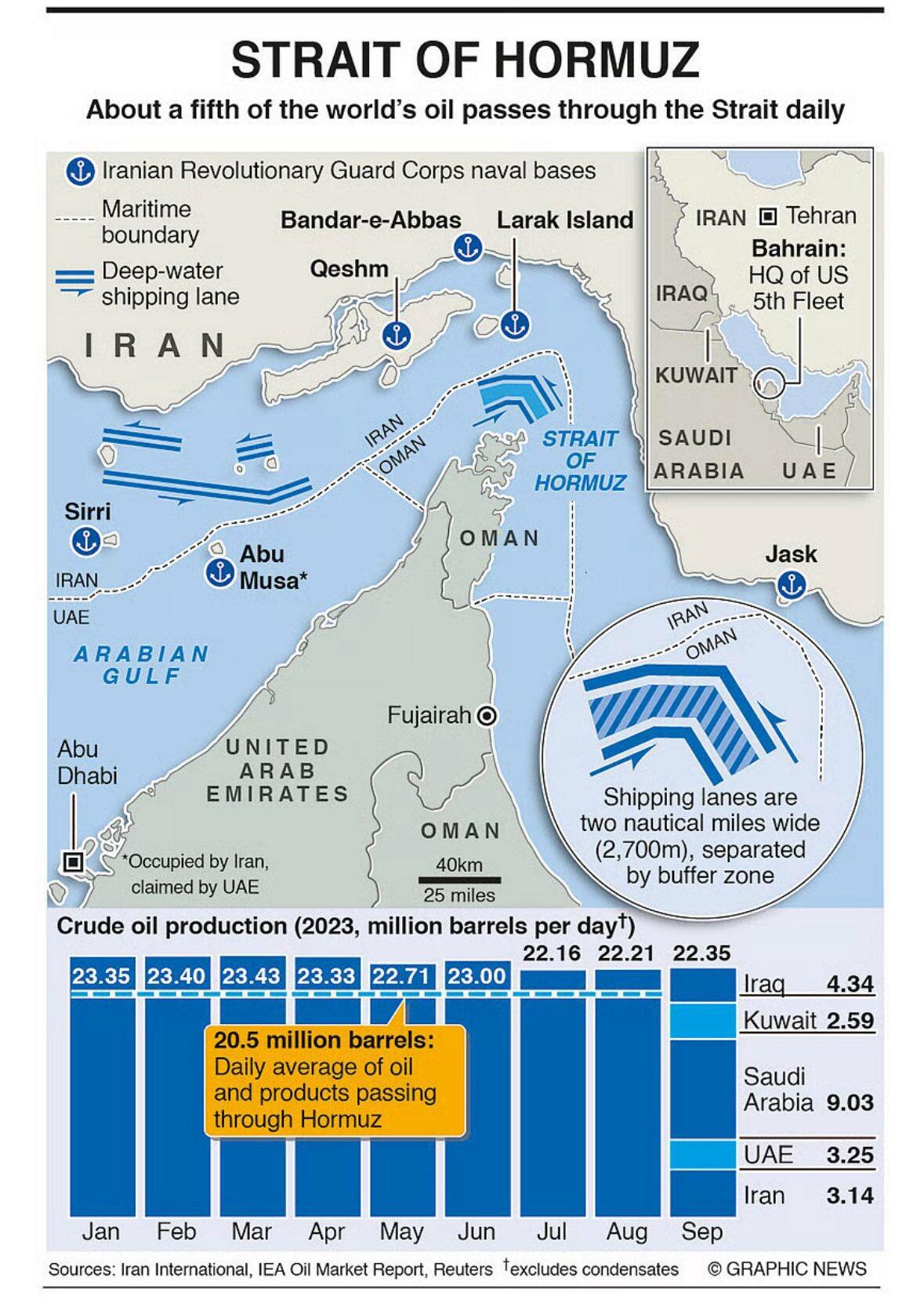
Shortly after the U.S. launched "Operation Midnight Hammer" in late June, deploying stealth bombers to strike Iran's nuclear facilities at Fordow, Natanz, and Isfahan using Massive Ordnance Penetrator bombs, Iran's parliament voted to authorize the closure of the strait. However, Tehran never closed the strait, but there was at least one report we covered that said the Islamic Revolutionary Guard Corps mulled over littering the waterway with mines.
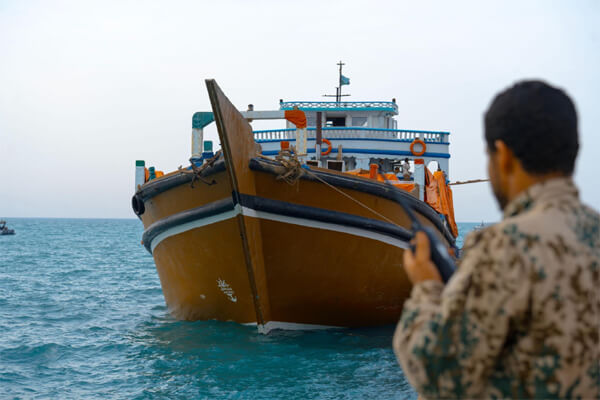
Given that the mines were not deployed, a troubling new report from local media indicates that the IRGC has intercepted and seized a foreign tanker in the Gulf of Oman. The seizure was reportedly carried out under the pretext of "fuel smuggling," according to Iranian state media outlet Mehr News Agency (MNA) on X.
"The Chief Justice of Hormozgan Province has announced the seizure of a foreign oil tanker on charges of smuggling 2 million liters of fuel in the Sea of Oman," MNA reported.
Here are more details from pro-Iranian news channel Al Mayadeen:
"Following persistent surveillance of suspected fuel smuggling operations off Iran's Sea of Oman coast, security forces boarded and searched a foreign oil tanker," Ghahremani said.
Iranian authorities confirmed the seizure of the foreign tanker after detecting irregularities in its cargo documentation, with security forces arresting 17 crew members, including the ship's captain, during the operation. The vessel was suspected of transporting two million liters of smuggled fuel through the Sea of Oman.
Fuel smuggling via "dark fleet" tankers has been a consistent tactic used by Iran to circumvent Western sanctions, with much of the crude oil ultimately making its way to China. Details about the seized vessel's ownership and final destination remain limited.
Iran's Internal Turmoil Could Have Regional Ripple Effects
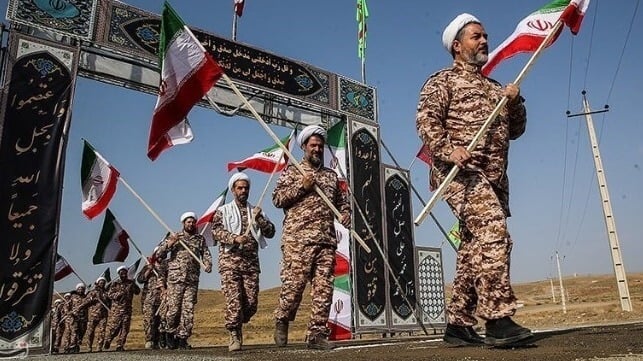
In the Western world, the news cycle has moved on. But in Iran, the country is still in trauma following devastating Israeli and American air raids, which Iranians knew might come but which they relaxed into believing never would. The risks remain of a resumption of fighting, which would cause widespread disruption to trade and shipping across the region (and within some very nervous Gulf states).
Since the ceasefire on June 24, the Iranian government has permitted Western media visits to the country, and while the carefully-controlled reporting from inside the country has painted a picture of defiance, once the reporters were safely home, a different picture has emerged - complementing what can be deduced from Iran’s own active media scene. There is little doubt that the 12-Day War has had a profound effect on Iran’s future trajectory.
A subtle but powerful indicator of the change was the first post-war appearance on July 5 of the Supreme Leader Ali Khamenei. A man with no clear successor, he emerged from hiding in his bunker to make a surprise appearance at a prayer meeting. He immediately asked a prominent religious singer to adapt a well-known poem, giving a new Iranian nationalist spin to Ashura and the battle of Karbala, key Shi’ite calendar events. Such small gestures mean a lot in Iran. By stoking patriotic sentiment in this way at the expense of religious focus, the war has provided the clerical leadership with further cause to tighten the IRGC’s grip on Iranian society, focused inwards under the pretext of the threat from external enemies.
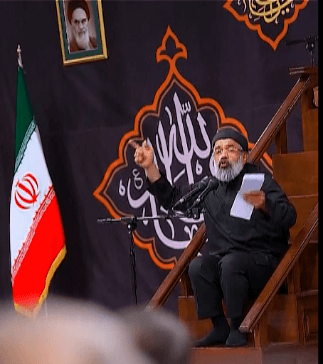 At the invitation of Supreme Leader Khamenei, Haj Mahmoud Karimi chants a dirge at the July 5 Husseiniyya meeting (https://farsi.khamenei.ir/video-content?id=60621)
Reflecting this symbolic gesture, and using mass arrests and threats of public executions, the spark of a popular revolt against the regime has for the time being been stamped out. Most Iranians for now put flag before faith. However, that does not remove widespread contempt for the leadership, which has failed to defend Iran effectively and jeopardized normal life for most Iranians through their foreign adventurism. So the powder keg is loaded but not yet fused, and while the Israeli attempt to destabilize the regime has failed for the moment, a revised approach could work in the future.
Notwithstanding the new lead from the top, the split between hard-liners and reformists within the political ruling elite has widened. Hardliners have issued death-threat fatwas, urged a rush to complete nuclear weapons manufacture, threatened bigger ballistic missile attacks on Israel and American bases, and called for the closure of the Straits of Hormuz. Reformists, including President Pezeshkian - who was wounded in an Israeli attack on June 16 - have pressed on with attempts to revive negotiations with the United States. Previously, hard-liners and reformists papered over their differences; now some 30 hardliners in Parliament are even suggesting President Pezeshkian is fomenting a coup. The danger is that the two factions will pursue uncoordinated and opposing courses of action, some of which could be highly destabilizing. Examples are already emerging, like the seizure of a huge arsenal of new weaponry newly-shipped by the IRGC Qods Force to the Houthis and intercepted in the Red Sea by the UAE-backed National Resistance Forces. The resumption of Houthi attacks on shipping is no doubt encouraged by the IRGC.
The political chasm between hardliners and reformists has been widened further by continuing bomb attacks mounted from within Iran on key IRGC figures, and the feeling that more Israeli attacks could occur at any time. This is compounded by the difficulties the leadership are having communicating with each other, now that it seems dangerous to live at home, use WhatsApp or even carry a mobile phone.
Save for the hotheads, most Iranians sense the delicacy and dangers of the moment and remain cautious - much like the Iranian Navy still hiding out at sea, keeping a low profile and out of harm’s way. In this environment, small unpredictable events could well ripple across the region into another security crisis - perhaps next time not so well contained as the 12-Day War.
The opinions expressed herein are the author's and not necessarily those of The Maritime Executive.
Massive Cache of Iranian Weapons Intercepted on Way to Houthis
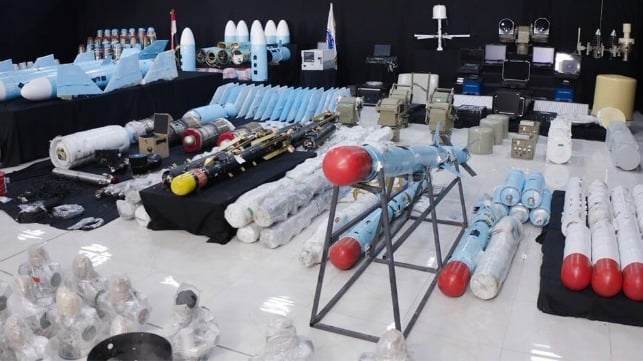
U.S. Central Command is reporting that the Yemeni forces in opposition to the Houthis made their largest ever seizure of Iranian weapons bound for the Houthis. In total, the U.S. is reporting that over 750 tons of munitions and hardware were intercepted.
Few details were released on the operation other than it was conducted by the Yemeni National Resistance Force, which is the opposition to the Houthis and represents the exiled government of the war-torn country. Pictures and a video released by CENTCOM show a dhow that was apparently transporting the materials. The report was issued on July 16, but did not specify when the seizure took place.
According to the details released by the U.S. forces, the shipment included hundreds of advanced cruise, anti-ship, and anti-aircraft missiles, warheads and seekers, components, as well as hundreds of drone engines, air defense equipment, radar systems, and communications equipment.
The pictures show manuals in Farsi and CENTCOM reports that many of the systems were manufactured by a company affiliated with the Iranian Ministry of Defense that is sanctioned by the United States.
AP analyzed the video and photos, highlighting the Iranian-made Type 358 anti-aircraft missiles. It notes that the Houthis have claimed to have downed 26 U.S. MQ-9 drones, likely using these types of missiles. The U.S. has confirmed the loss of some of the spy drones, while the Houthis released videos showing some of the shootdowns.
Also visible are anti-ship missiles. These would be similar to the ones used by the Houthis to attack merchant ships, including the Magic Seas and Eternity C, both of which were sunk just over a week ago.
Reports coming from the region had indicated that the Houthis were rearming after the bombing by the U.S. between March and May of this year. Despite the prolonged attacks by the U.S. and several strikes by the Israelis, the Houthis have been able to maintain their launches of missiles and drones toward Israel, and this month resumed attacks on merchant ships. Reports last week said that Israel had appealed to the United States to resume its air assault on Houthi positions.
Late on Wednesday, July 16, the Houthis reported that they had launched a new attack of missiles and drones toward Israel. They claimed to have targeted Ben Gurion Airport and the port at Eilat. They also said that two drones were directed toward a military site in the Negev.

No comments:
Post a Comment