By David O'Sullivan23/07/2025 -
On Monday, Ukraine’s domestic security agency detained two NABU officials on suspicion of links to Russia and searched other agency employees on unrelated allegations.
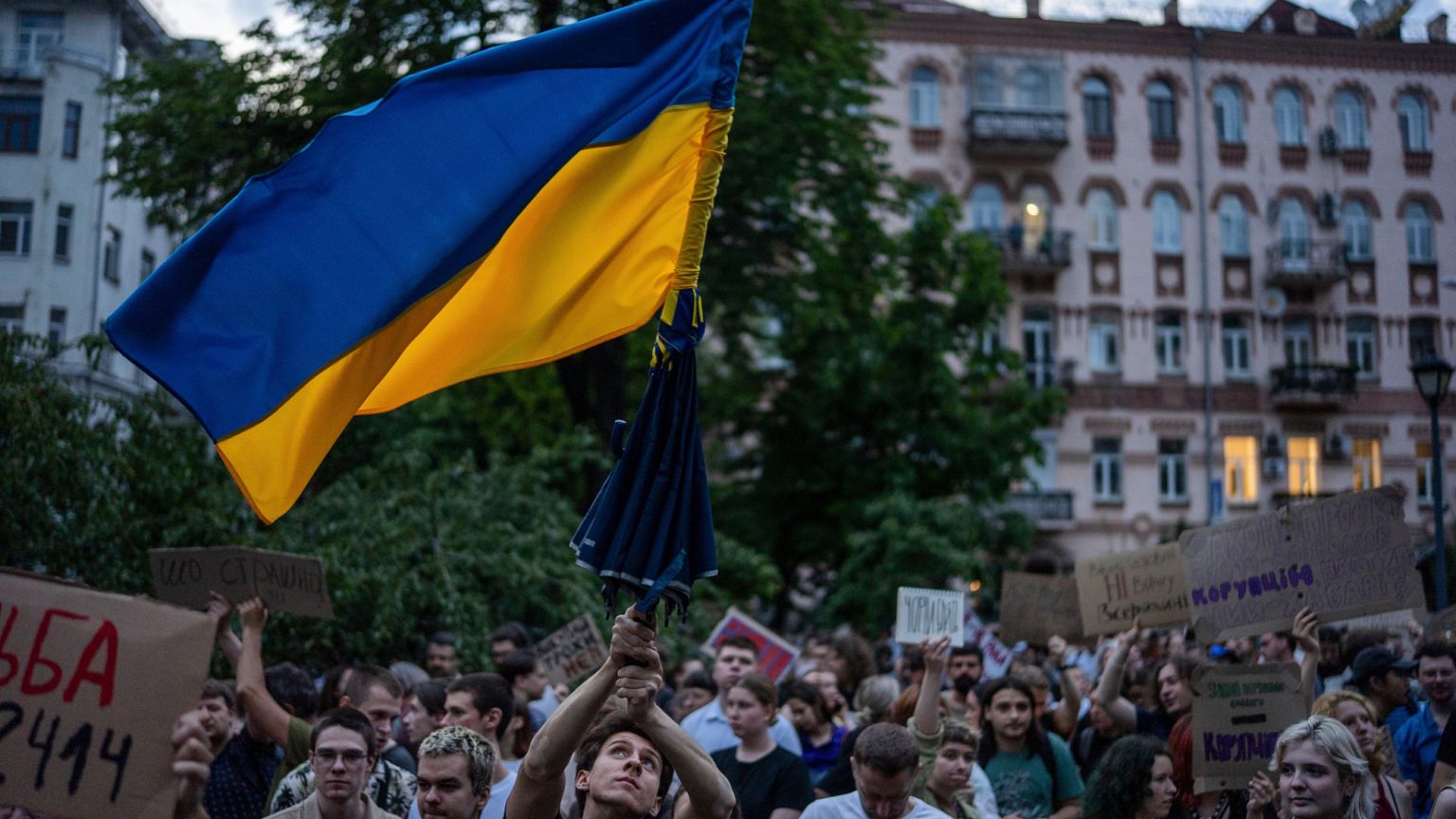
Thousands of Ukrainians rallied in Kyiv and other cities on Tuesday, urging Ukrainian President Volodymyr Zelenskyy to veto legislation which critics say undermines the country’s anti-corruption infrastructure.
The protest marked the first major rally against the government in more than three years of Russia’s ongoing, full-scale invasion.
Ukraine’s parliament had passed a bill which tightened oversight of two key anti-corruption bodies – the National Anti-Corruption Bureau of Ukraine (NABU) and the Specialised Anti-Corruption Prosecutor’s Office (SAPO). Opponents warn the measure could weaken the independence of the agencies and increase political influence over investigations.
Despite public outcry, Zelenskyy reportedly signed the bill into law on Tuesday.

Fighting corruption is a key condition for Ukraine’s bid to join the European Union and for secure ongoing Western financial support as it fights Russia’s invasion. The move sparked anger among civil society and officials.
“In effect, if this bill becomes law, the head of SAPO will become a nominal figure, while NABU will lose its independence and turn into a subdivision of the prosecutor general’s office,” the agencies said in a joint statement on Telegram.
In a post on X, the EU’s Enlargement Commissioner Marta Kos also expressed concern over the vote in the Ukrainian parliament.
She described it as a “serious step back” and said “Independent bodies like NABU & SAPO are essential for Ukraine’s EU path. Rule of Law remains in the very centre of EU accession negotiations.”
The Ukrainian branch of Transparency International also criticised the news, saying it undermines past reform and damages trust with international partners.
The group urged Zelenskyy to veto the law, warning that otherwise he would share responsibility with the parliament for “dismantling Ukraine’s anti-corruption infrastructure.”
While rallies have taken place since Russia launched its full-scale invasion in 2022, they have largely focused on the return of prisoners of war or missing people. Protests, however, remain a traditional form of public pressure in Ukraine, where two previous revolutions were victorious for the public.
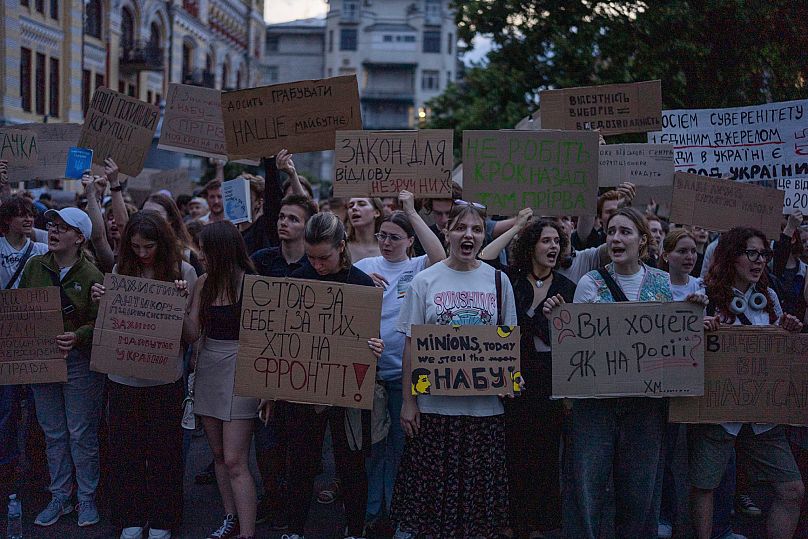
Many protesters at Tuesday’s demonstration carried signs reading “Veto the law,” “Protect the anti-corruption system, protect Ukraine’s future,” or simply “We are against it.”
Zelenskyy's toughest battle:
People of Ukraine protest over
anti-corruption crackdown
Copyright Gregorio Borgia/Copyright 2025 The AP. All rights reserved
By Sasha Vakulina
Published on 23/07/2025 -
Thousands of demonstrators gathered in Kyiv, Lviv, Odesa and Dnipro, protesting against the controversial bill which effectively eliminates the independence of Ukraine’s anti-corruption institutions.
The Ukrainian parliament passed on Tuesday a controversial bill that effectively eliminates the independence of the country's anti-corruption institutions.
The 12414 bill subordinates the National Anti-Corruption Bureau (NABU) and the Special Anti-Corruption Prosecutor's Office (SAPO) to Ukraine’s prosecutor general.
Activists had urged Ukrainian lawmakers to vote against the bill before the vote, warning that it would make it impossible for the anti-corruption agencies to investigate senior officials without approval from President Volodymyr Zelenskyy's administration.
But despite the civil society calls and pressure, the Verkhovna Rada passed the bill, triggering the first protests in Ukraine since the beginning of Russia’s full-scale invasion.
Thousands of people hit the streets in Kyiv, Lviv, Odesa and Dnipro, protesting against the 12414 bill and calling on Zelenskyy to veto it even after the parliament’s green light. But according to the official legislative website, Ukraine’s president did sign the bill later on Tuesday.
What are NABU and SAPO?
The two agencies were created in 2015 as part of pro-Western reforms following Ukraine's 2014 Revolution of Dignity, which ousted former pro-Russian Ukrainian President Viktor Yanukovych.
NABU investigates top-level corruption, and its cases are overseen and prosecuted by SAPO. Those cases are subsequently tried by Ukraine's High Anti-Corruption Court.
The two institutions were established with the aim of being able to independently investigate and prosecute leading Ukrainian officials suspected of graft, without being subject to political influence or interference.
Corruption cases were supervised by the chief anti-corruption prosecutor, who was independent from Ukraine's prosecutor general.
However, the newly signed law removes this independence and places NABU and SAPO under the direct supervision of the country's top prosecutor.
In his overnight address, Zelenskyy said "the anti-corruption infrastructure will work, but without Russian influence".
"We need to clean up everything. And there should be more justice. Of course, NABU and SAPO will work. Ukraine has really ensured the inevitability of punishment for those who go against the law. And this is what Ukraine really needs. Cold cases must be investigated," he added.
Raids on NABU
While Zelenskyy normally delivers his daily address via his Telegram channel at about 8 pm local time (7 pm CET), the latest update was not posted until about 1 am local time, after parliament rushed to pass the bill and protesters gathered to voice their discontent.
"For years officials who have fled Ukraine have been living abroad for some reason in very nice countries and without legal consequences," he said in the latest address.
"This is not normal. There is no rational explanation for why criminal proceedings worth billions have been hanging around for years. And there is no explanation why the Russians can still get the information they need. It is important to do it without Russians."
Ukraine's SBU state security service on Monday said it had launched a series of raids on NABU and conducted more than 70 searches as part of an investigation into allegations that officials within the agency have been cooperating with Russia.
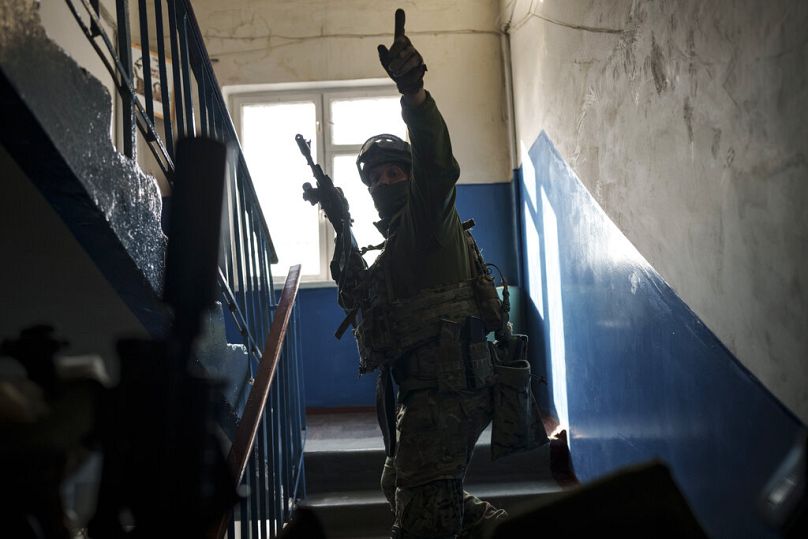
The SBU said it had arrested one official at the NABU on suspicion of being a Russian spy and another over alleged business ties with Moscow. Other NABU officials had ties to a fugitive Ukrainian politician's banned party, according to the state security service.
NABU criticised the raids and said that they went too far.
"In most cases, the grounds cited for these actions are the alleged involvement of certain individuals in traffic accidents," it said in a statement. "However, some employees are being accused of possible connections with the aggressor state [Russia]."
According to NABU, there is no evidence that its employee detained by the SBU was involved in anti-state activities.
Backlash and bill criticism
The Ukrainian branch of Transparency International said the bill undermined one of the most significant reforms since the Revolution of Dignity and would damage trust with international partners.
The watchdog had also condemned the SBU's raids on NABU, saying that the authorities were exerting "massive pressure" on Ukraine's anti-corruption activists and fighters.
NABU and SAPO expressed their concern about the new law in a joint statement.
"The head of SAPO will become a nominal figure, while NABU will lose its independence and turn into a subdivision of the prosecutor general’s office," the agencies said.
In a post on X, the EU's Enlargement Commissioner Marta Kos said that she was "seriously concerned" about the law.
"The dismantling of key safeguards protecting NABU's independence is a serious step back," she wrote. "Independent bodies like NABU and SAPO are essential for Ukraine’s EU path. Rule of Law remains in the very centre of EU accession negotiations."
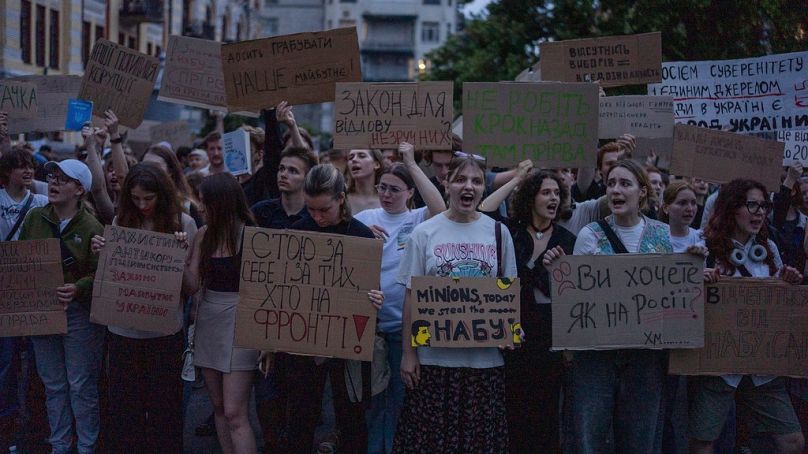
Yet the harshest criticism against Zelenskyy over the law has come from home, rather than abroad.
War veteran Dmytro Koziatynskyi urged citizens to "take cardboard from boxes and make posters to write everything you think about the recent onslaught".
Protesters across Ukraine have carried signs reading "Veto the law," "Protect the anti-corruption system, protect Ukraine’s future," or simply "We are against it."
People were carrying handmade sings and writings, chanting "Get your hands off NABU and SAP," "Veto the law," and "No corruption in government."
The demonstrations included war veterans, active-duty soldiers, civilians and anti-corruption activists.
People were chanting "Shame", "Corruption is the death of the future", and "Power belongs to the people" as they urged Zelenskyy to veto the bill.
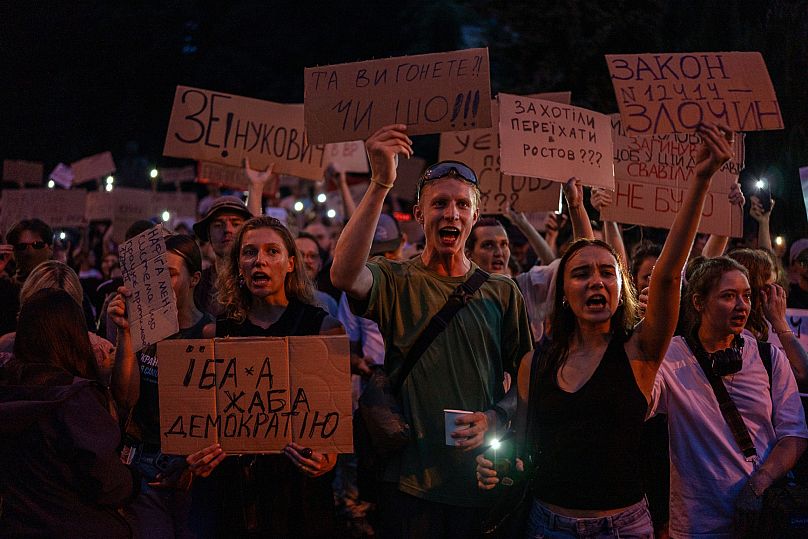
Both NABU and SAPO expressed gratitude and support for the protests.
"We perceive this support as a sign of trust in our institution. And we will do everything to justify it," NABU said in a social media post.
"We were particularly impressed by the decisive stance of young people — the future of the country for which we work. We will continue to work and defend the independence of our investigations from interference."
The SAPO also thanked the demonstrators for their support.
"Despite immense pressure and disgraceful decisions, we continue to fight for justice, integrity, and dignity," SAPO said.
For many protesters and critics, the importance of this bill is comparable to Yanukovych’s 2013 decision to reverse Ukraine's European integration, which triggered the Revolution of Dignity, also known as the EuroMaidan revolution, leading to the president's ousting.
At the Tuesday protests, many Ukrainians were holding signs referencing the 2014 uprising, calling on Zelenskyy not to repeat the mistakes of his predecessor.
Many were holding the picture of Zelenskyy from 2019, when shortly after being elected, he was urging people not to tolerate any cases of corruption and to contact the NABU immediately.
"We will never overcome corruption if you keep turning a blind eye to it. Are you being asked for a bribe? Being offered a 'kickback'? Please, don't stay silent! Contact the NABU hotline – 0 800 503 200. Each of you can start changing the country today," Zelenskyy said at the time.
On Tuesday, thousands of Ukrainians reminded him of this address and also of what happened to the former President Yanukovych, who went against the will of the people of Ukraine.
The protesters are set to continue the demonstrations on Wednesday, as they found out that Zelenskyy signed the bill that the people urged him to veto.
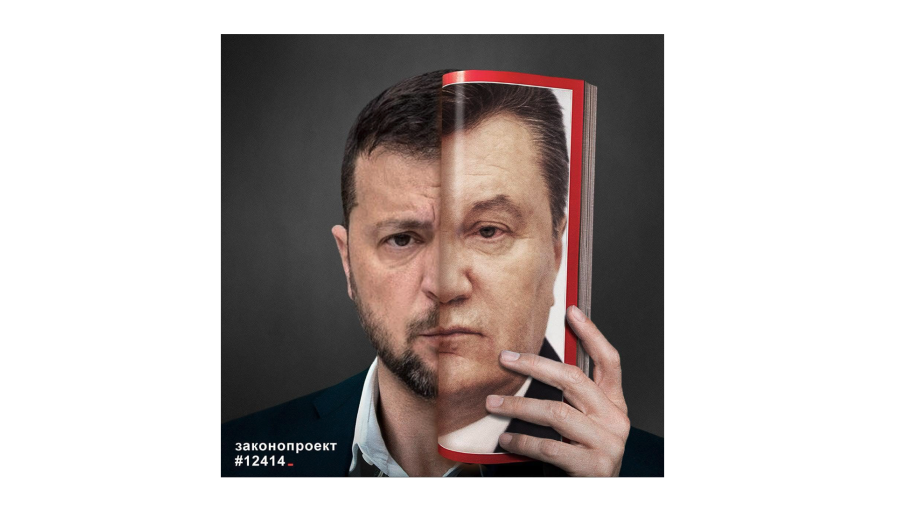
Ukrainian lawmakers forced through a controversial law that gives unlimited power to the General Prosecutor that civil rights groups say will gut Ukraine’s anti-corruption reforms on July 22. The passage of the law sparked the first anti-government demonstrations since the war with Russia began over three years ago.
A post calling on people to meet outside the President’s offices on Bankova street in the heart of Kyiv went viral and more than 2,000 people turned up. Protestors chanted “veto the bill!” and carried placards saying “corruption = death”. Smaller rallies also took place in Dnipro, Lviv, Odesa and Sumy, the Financial Times reports.
“There haven’t been any anti-Zelensky protests since the Russian full-scale invasion of 2022, as the Ukrainian society realized that to survive it must stay united. Today’s move, unless reversed, is likely to change that. Soldiers on the front are particularly infuriated,” Yaroslav Trofimov, the Wall Street Journal correspondent to Ukraine said in a post on social media, describing the public reaction to the law as a “firestorm.”
The law eliminates the independence of Ukraine’s corruption investigative body, the National Anti-Corruption Bureau (NABU) and the prosecutor’s arm, the Specialized Anti-Corruption Prosecutor’s Office (SAPO). The two organs are part of the triumvirate that also includes the Anti-Corruption Court (ACC) to try those caught stealing. All three were set up starting in 2016 at the EU and IMF’s insistence. They are supposed to be completely independent from the government and the executive, which is not supposed to have any power of appointment other than to approve the chief selected by an independent body of experts.
The bill hands all control of all corruption investigations to the General Prosecutor, who is a presidential appointee and directly under his control. Likewise, the Ukrainian Security Service (SBU), Ukraine’s equivalent of Russia’s Federal Security Service (FSB), is also directly under the president’s control. The bill passed with 263 votes, with a second vote approved by 246 MPs to send the legislation to the president’s desk immediately.
According to the new law, NABU and SAPO will now be placed under the wartime authority of the prosecutor-general, who is appointed by the president.
The EU made a muted protest at the passage of the law and says it is now in conversation with the president’s office. In a veiled threat a spokesperson for the EU pointed out that Brussels’ funding to Kyiv was “conditional on progress on transparency, judicial reform and democratic government,” the FT reports. A joint statement from G7 ambassadors in Kyiv said they were “closely following” the situation and had raised concerns with Ukrainian government officials.
Analysts say if Zelenskiy does not veto the law, Ukraine’s EU accession bid may now be in danger and Kyiv could even face sanctions over the issue.
It will also complicate the new Prime Minister Yuliia Svyrydenko, who was talking to international donors on July 22, trying to raise more money. Ukraine needs between $10bn and $15bn to plug a hole in this year’s budget and proposed to negotiate a new deal with the IMF to fund Ukraine’s government for the next few years.
The bill was forced through by Zelenskiy’s Servant of the People party that has a majority in the Rada. MPs who were against the changes shouted ‘‘shame!’’ during the vote, the FT reports.
Zelenskiy may have bitten off more than he can chew. Corruption remains largely concentrated in the government, with more 70% of Ukrainians believing that their leaders are on the take, according to a recent poll. Yet after elections were suspended following the imposition of martial law in 2022 there is little the population can do to hold their leaders to account.
Nevertheless, after two revolutions Ukraine today boasts one of the strongest civil societies in the world and the people are not afraid of standing up to the authorities and even laying down their lives if the clashes become violent in defence of the rights they believe should be theirs.
Raids
On July 22, security officers raided NABU’s offices detaining at least 15 of its investigators. Two were held on suspicion of working with Russia, but most were accused of minor offenses like traffic accidents, unrelated to their work. Separately, security services also inspected SAPO offices. The SBU dismissed allegations that it may disclose sensitive information about covert operations carried out by NABU and SAPO as "unfounded and manipulative."
NABU said in a statement the searches were carried out without court warrants.
“In most cases, the grounds cited for these actions are the alleged involvement of certain individuals in traffic accidents. However, some employees are being accused of possible connections with the aggressor state. These are unrelated matters," NABU said.
These raids have come in a bunch just as the new law stripping the anti-corruption bodies of their powers was presented in the Rada and are widely seen as a politically motivated smear campaign.
And the raids have not been limited to NABU officers. Leading anti-corruption activists have also got caught up in the dragnet. On July 11, armed SBU officers, which act under the direct control of the president, also raided the Kyiv home of prominent activist Vitaliy Shabunin seizing phones and tablets from him and his family in a move he claims is politically motivated. Shabunin’s Anti-Corruption Action Centre, the non-profit that he heads, has launched multiple investigations into the Zelenskiy administration and exposed multiple cases of high-level corruption.
Shabunin said on Telegram that Zelenskiy was “taking the first but confident steps towards corrupt authoritarianism,” as accusations of Zelenskiy’s growing authoritarian traits swell in recent weeks.
Ironically the new Law on the General Prosecutor’s powers represent a reversal of Zelenskiy’s anti-corruption credentials as before the war he launched a successful campaign to curb the power of the influential businessmen following his oligarch speech in March 2021 and then his oligarch law in September the same year. He even had uber-oligarch Ihor Kolomoisky arrested in September 2023, Zelenskiy’s former mentor and business partner, who now faces life in jail for corruption.
In the latest scandal, it was revealed that Zelenskiy and his right-hand man head of Ukraine’s presidential office, Andriy Yermak, have awarded billions of hryvnias of classified drone procurement contracts to companies run by their associates, according to a recent report by investigative journalist Yurii Nikolov.
The US has long worried about the opaque nature of Bankova’s spending of US and European aid money sent to Ukraine. Last month a team of US accountants arrived in Kyiv to audit the government’s books.
The raids and the new law appear to have been fuelled by NABU accusation that Oleksiy Chernyshov, a deputy prime minister with close ties to Zelenskiy and his family, took a $345,000 bribe on a property deal, an allegation he denies – a case very similar to NABU’s 2017 accusation of corruption against Roman Nasirov, former President Petro Poroshenko’s close associate who was also accused of stealing tens of millions of dollars. Chernyshov has not been arrested but was dismissed in last week’s reshuffle that was widely seen in Kyiv as a further consolidation of power within Zelenskiy’s inner circle. Chernyshov told The Kyiv Independent that he won’t relinquish his post as Deputy Prime Minister.
It’s hard to know whether to see this as proof that NABU is ready to tackle wrongdoing at the highest levels, or as evidence of rot at the heart of the system.
NABU a muted force for change
The bill was framed as a wartime measure to regulate investigations into missing people but contains provisions that would place NABU and SAPO under tighter executive control, effectively ending their role of holding the executive to account.
“Corruption is not a problem of the system. It is the system,” a Ukrainian minister told bne IntelliNews in a private conversation several years ago. There has been some progress since then, but little has really changed. Ukraine’s elite have always opposed the Western-back anti-corruption measures.
Even the government of former pro-Western President Petro Poroshenko resisted the working of this system and he managed to block the creation of the AAC for several years. Although the need for a dedicated court was recognised early, Poroshenko’s government stalled until it eventually caved into significant pressure from the International Monetary Fund (IMF) and EU that threatened to cut off Ukraine's money in 2017.
During the Rada vote on July 22, several opposition party deputies voted for the law, including the former Orange Revolution Prime Minister Yulia Tymoshenko, who accused Ukraine’s Western partners of “trying to control Kyiv through NABU and SAPO.”
After it was established in April 2015, NABU made its first attempt to hook its first big fish, when it arrested Nasirov, the government’s financial controller and former President Petro Poroshenko's right-hand man, and charged him with embezzling millions of dollars in March 2017.
Nasirov spent an uncomfortable weekend in jail until his wife showed up and paid a million dollars in bail, in cash. He was released before the court could assemble on Monday to arraign him. He kept his job and NABU’s case against him was eventually dropped. Not only did Nasirov escape punishment, he even ran against Zelenskiy in the 2019 elections.
“Corruption-related cases that involve senior officials of the Prosecutor General’s Office are in our investigative jurisdiction, and we will keep investigating these cases. Whatever incidents may arise, they can’t affect our position,” Artem Sytnyk, head of NABU, told bne IntelliNews in an exclusive interview in his Kyiv office just after the body was established in 2016.
EU bid in danger
As bne IntelliNews reported, Ukraine’s EU accession bid stalled last week on July 18 when Bankova was hoping formal negotiations on the first cluster would be opened. Ukraine’s EU ambassador Olha Stefanishyna explained in a long interview that Bankova has given up temporarily as “multiple” EU members were unhappy with Ukraine’s progress towards membership.
Zelenskiy’s new law now not only puts Ukraine’s bid to join the EU in danger of being cancelled, the EU could respond by imposing sanctions on Ukraine for passing laws that are deemed to work against the anti-corruption efforts and undermine democracy, similar to the sanctions recently imposed on Georgia, another EU candidate that has introduced a similar Kremlin-style “foreign agent” law. At the very least Ukraine could lose its much-vaunted visa-free travel status in the EU.
Zelenskiy responds
As public anger spilled out onto the streets on the evening of July 22, Zelenskiy was backtracking rapidly and tried to refocus the debate on the need to protect Ukraine from Russian spies.
In his nightly video post released at 1am in the morning, the visibly haggard Zelenskiy said: “I spoke with the head of NABU Semen Kryvonos, SAP prosecutor Oleksandr Klymenko, Prosecutor General Ruslan Kravchenko, and head of the Security Service of Ukraine Vasyl Malyuk – there are various challenges. We discussed all of this.”
“The anti-corruption infrastructure will operate. But only without Russian influences – everything must be cleansed of that. And there must be more justice,” the president said. “Of course, NABU and SAP will continue to work. And it is important that the Prosecutor General is committed to ensuring real inevitability of punishment in Ukraine for those who break the law. And that is what Ukraine truly needs. Cases that have been stagnant must be investigated.”
The public are unlikely to buy the “enemy at the gates” line as they are already well aware of the rampant corruption in the top tiers of government. Zelenskiy was forced to sack his Defence Minister Oleksii Reznikov in October 2023 after a string of major military procurement corruption scandals broke earlier that year involving overpriced eggs and winter jackets. Despite the support the public has shown Zelenskiy as a heroic wartime leader, the public remains well aware that the elite have been filling their own pockets with international gold throughout the war.
Zelenskiy losing the trust of his people as he adopts more authoritarian ruling style
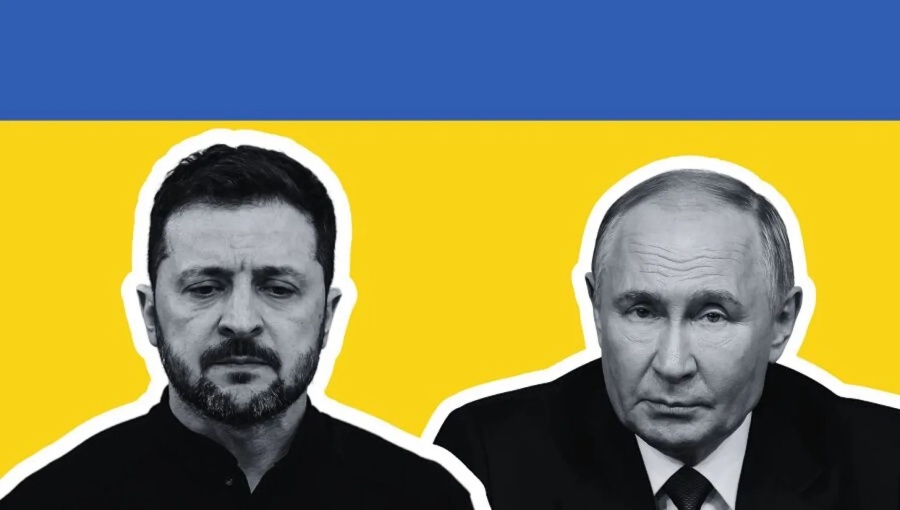
Messages circulating on social media in the last few days claim that Ukrainian President Volodymyr Zelenskiy is proposing a new law that makes criticising the president illegal. The claims are almost certainly Russian disinformation, but they are playing on legitimate fears that the Ukrainian president is concentrating more and more power in his own hands at a time when his popularity is starting to fade as the war with Russia drags into its fourth year with no end in sight.
Zelenskiy is no longer the most popular politician in the country and his grip on power is weakening, the Spectator associate editor Owen Matthews said in a hard-hitting piece last week. This is not the first time that Zelenskiy has been accused of reverting to type and using the political tactics that are common outside of the EU in the Former Soviet Union (FSU).
He was roundly criticised for shutting down three opposition, albeit pro-Russian, television stations and banning the pro-Russian Opposition Platform – For Life party, at the time the second biggest in parliament after the president’s own Servant of the People party. They also eventually arrested the party’s leader Viktor Medvedchuk, who admitted is a close friend of Russian President Vladimir Putin’s, who is godfather to Medvedchuk’s daughter.
Given there is a war going on, these actions are easy to justify. Medvedchuk tried to flee the country but was arrested before he was eventually included in a prisoner swap and now lives in luxury in Moscow. However, commentators are worried that whatever the justifications, these moves by Zelenskiy are undermining democracy and part of a wider trend. The Swiss Federal Intelligence Service concluded in a 2023 study that Zelenskiy is showing “authoritarian traits” especially in his fight with Kyiv mayor Vitali Klitschko, who has been a constant Zelenskiy-critic.
Similar accusations were made against Zelenskiy following his decision to fire former commander-in-chief General Valerii Zaluzhnyi, after he overtook Zelenskiy in the popularity ratings, despite his obvious competence as the military commander-in-chief and widespread amongst the men in arms.
More recently in an interview Kyrylo Budanov, Ukraine’s spy master and chief of the Main Directorate of Intelligence of the Ministry of Defence of Ukraine, who is third in the popularity rankings after Zaluzhnyi and Zelenskiy, claims that the president has tried to fire him nine times, but has been prevented by US pressure, due to his competence in his job.
And a Zaluzhnyi interview with Time Magazine put the cat amongst the pigeons in Bankova (Ukraine’s equivalent of the Kremlin) after the general criticised the president's strategy and described the war as a stalemate. He was fired several months later and made ambassador to the UK. The article described widespread dissatisfaction with Zelenskiy top-down style and head of Ukraine’s presidential office, Andriy Yermak, has also come in for frequent criticism for the Machiavellian grip he maintains on power, most recently in a profile by Politico.
And the Kremlin has constantly played on question marks over Zelenskiy legitimacy, arguing that his five years in office expired in May and so under the Kremlin’s reading of the constitution, Zelenskiy is no longer the legitimate leader of the country and Rada Speaker Ruslan Stefanchuk should have taken over.
This line is obvious Russian disinformation, as the constitution is crystal clear that presidential elections cannot be held as long as martial law is in effect. Zelenskiy has been a heroic wartime leader and rallied the citizens around the flag in Ukrainians titanic struggle against Russian aggression. He won accolades with his “I don’t need a ride. I need ammo” comment after the US offered to evacuate him in the first week of the war, and his now legendary “We are all here,” video post filmed on the street outside Bankova in the heart of Kyiv only a few days after the invasion began.
But as the war slips into its fourth year, fatigue is setting in. Last week Zelenskiy reshuffled his government, replacing the long-serving Ukraine’s Prime Minister Denys Shmygal with the highly competent, but ultra-loyal, Yulia Svyrydenko, who recently cut a minerals deal with the Trump administration on April 30, in move that was also interpreted by Zelenskiy shoring up his grip on power.
Fading support, growing frustration
As a former television producer, Bankova has taken tight control of the government’s media message. But the public have been growing increasingly tired of the endless upbeat state-propaganda, The Kyiv Independent reported at the start of last year.
Bankova has also shown itself to be tolerant of any media outlet that it believes is not loyal enough to the regime. In another scandal in January 2024, the Ukrainian Security Service (SBU) was caught spying on and intimidating Bihus.info, one of the country’s most prominent independent investigative journalism outlets.
Bihus.info released a statement alleging that members of the SBU had placed their journalists under surveillance, including video and audio recording of staff during private moments, some of which were later leaked online in a smear campaign. Videos of the staff drinking and smoking marijuana were used in an attempt to discredit the organisation, broadcast by pro-government or anonymous Telegram channels, suggesting coordinated targeting.
Bihus.info said the surveillance and subsequent smear campaign were retaliation for its investigations into government corruption, including reports involving powerful figures close to Zelenskiy. Among other scandals, Zelenskiy was forced to sack Defence Minister Oleksii Reznikov) after the local press exposed a military procurement corruption scandal involving overpriced eggs and winter jackets.
A few months later Ukrainian investigative journalism outlet Slidstvo.Info said their journalist, Yevhenii Shulhat, appeared to be targeted by military enlistment officers as retaliation for his work investigating authorities, The Kyiv Independent reported.
More recently, prominent anti-corruption activist Vitaliy Shabunin, the co-founder and chair of the leading Anti-Corruption Action Centre (AntAC) NGO, has been accused of evading military service and fraud, in a move widely seen as politically motivated. He is known for his outspoken criticism of both pre-war governments and the current administration.
“Taking advantage of the war, Volodymyr Zelensky is taking the first but confident steps towards corrupt authoritarianism,” Shabunin posted on Telegram.
Drift into despotism?
Donald Trump’s “big announcement” on July 14 of new Patriot missile batteries for Ukraine, along with threats of punitive sanctions against Vladimir Putin and quiet approval for strikes on Moscow, has thrown Kyiv a desperately needed lifeline, as the Armed Forces of Russia (AFR) summer offensive grinds relentlessly on, albeit at enormous cost in the lives of men; reports claim that Russia is losing over 1,000 soldiers a day. But despite the military fillip, weapons alone may not be enough to prevent Ukraine from collapsing under the weight of its own political, social and military crisis, argues The Spectator’s Matthews.
Putin chose renewed escalation this spring based on advice from his generals and spies that Ukraine was on the verge of disintegration. Alarmingly, they may not be wrong, argues Matthews. Ukraine’s army is critically overstretched, its front-line forces exhausted, and its manpower depleted. The Kyiv Independent reported last week that the year-long battle for the key logistics hub town of Pokrovsk may be coming to an end and could fall into Russian hands soon, in what would be a major strategic setback for the Armed Forces of Ukraine (AFU).
“If the war continues soon there will be no Ukraine left to fight for,” one former senior official in President Volodymyr Zelensky’s administration told Matthews. That official now accuses Zelensky of “prolonging the war to hold on to power.”
Despite extraordinary endurance, Ukrainian morale is faltering. “We are hanging over the abyss,” Mariia Berlinska, head of the Aerial Reconnaissance Support Centre told Matthews. “Ukraine is an expendable pawn in an American game… Trump, Putin, Xi [will] spend us like small change if they need to.”
The fading hope of victory was reflected in a recent poll from the respected Kyiv International Institute of Sociology (Kyiv International Institute of Sociology (KIIS), which found the number of Ukrainians that believed Ukraine would be a “flourishing member of the EU in ten year’s time” has fallen from 88% in 2022 to 43% in June this year, and the larger part of society (47%) now believed that in a decade Ukraine will have “a ruined economy and a large outflow of people.” Another poll found that 70% of Ukrainians now believe their leaders are enriching themselves from the war. Corruption cases are a constant feature of the Zelenskiy administration and the US even sent a team of auditors into Kyiv in June to check how US financial support is being spent – a line item specifically including in last year’s $61bn Biden-backed aid package.
The state of emergency, originally meant to isolate pro-Russian oligarchs, is now being used to silence opposition and seize private property. “Ukraine has two enemies, two Vladimirs: Zelensky and Putin,” a former cabinet minister told The Spectator. “Putin is destroying Ukraine from [the] outside, but Zelensky is destroying it from within… The irony is that this Putinification of Ukraine is being funded by the West.”
Fuelling the growing dissatisfaction is the government’s aggressive compulsory conscription campaign, known as “busification” for the minivans that victims are bundled into by snatch squads. Social media is awash with videos of forced conscriptions. Desertion is also at epidemic proportions: over 230,000 cases have been opened since 2022, more than the active-duty militaries of Britain, France and Germany combined.
Soldiers serve indefinitely. Rotations or rest are not scheduled. A draft law that would have granted discharge after 36 months was shelved due to fears of mass personnel shortages. The members of AFU are exhausted. New recruits or conscripts are delivered to the frontline with little training and most don’t last long, even if the AFU losses are a fraction of the AFR’s.
Both Zelenskiy and the Kremlin have suggested a fresh round of talks after the ceasefire negotiations stalled at the last meeting in Istanbul on June 3. However, progress is unlikely as the two sides are so far about: Putin is insisting on no-Nato and recognition of Russia’s sovereignty over the five occupied regions; Zelenskiy will not negotiate at all until a 30-day unconditional ceasefire is in place.
While the polls show the majority of Ukrainians still back Zelenskiy and indeed, his popularity got a boost after Trump accused him of “having no cards” and “behaving undemocratically” during the shouting match between two presidents on February 28 in the Oval Office, he cannot keep the war up forever. Putin, for his part, continues to enjoy an approval rating of over 80% and patriotism in Russia is at an all-time high, despite the growing economic problems there.
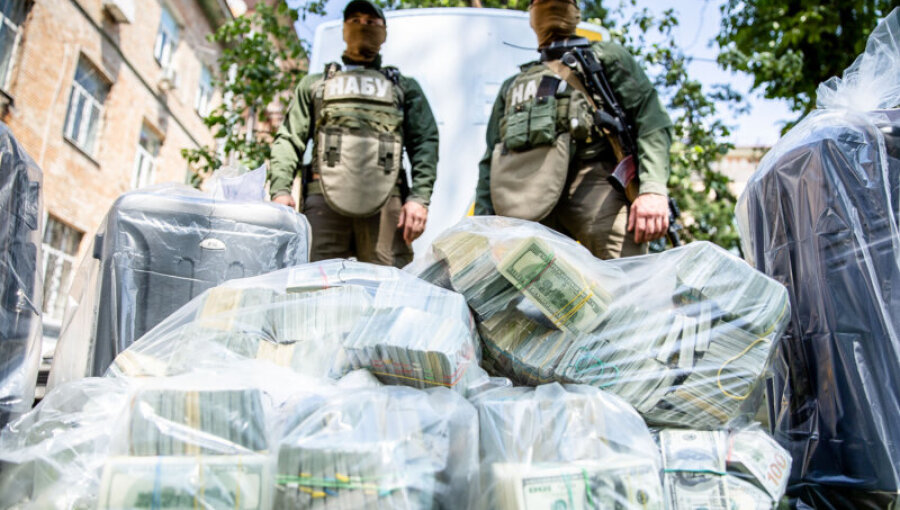
Ukraine’s NGOs are up in arms over a new law No. 12414 passed on July 22, which they say will destroy Ukraine's anticorruption reforms.
The law will massively expand the General Prosecutor’s powers, Ukraine’s top policeman, allowing him to arbitrarily change the jurisdiction of any case and effectively disenfranchise any of the other enforcement bodies of power.
It also denudes the National Anti-Corruption Bureau (NABU) and the Specialised Anti-Corruption Prosecutor’s Office (SAPO), which are two of the three legs of the anti-corruption triumvirate that also includes the Anti-corruption court (ACC) that were set up at the insistence of the IMF a decade ago to try and control Ukraine’s runaway corruption. As bne IntelliNews reported at the time, corruption in Ukraine is not a problem, corruption is the system.
“Corruption-related cases that involve senior officials of the Prosecutor General’s Office are in our investigative jurisdiction, and we will keep investigating these cases. Whatever incidents may arise, they can’t affect our position,” Artem Sytnyk, head of the National Anti-Corruption Bureau of Ukraine (NABU), told bne IntelliNews in an exclusive interview in his Kyiv office just after the body was established in 2016.
The Nobel Laureate Center for Civil Liberties (NLCCL) issued a statement that called on Ukrainian President Volodymyr Zelenskiy to veto Draft Law.
“The Center for Civil Liberties calls on the President of Ukraine to veto draft law No. 12414, which was adopted by Parliament today, July 22, in violation of parliamentary procedure. The draft law poses a direct threat to the rule of law and human rights,” the statement said.
The NLCCL also called on the EU to pressure Bankova (Ukraine’s equivalent of the Kremlin) to squash the bill before it is signed into effect.
“This draft law eliminates the procedural independence of prosecutors. In fact, the Prosecutor General is now granted the power to change the jurisdiction of any case in Ukraine, depriving all other law enforcement bodies of their independence,” the NLCCL said in the statement. “They can decide whether or not to investigate a case, transfer an investigation to another body, assign a case to other investigators, require that all charges against top officials be signed exclusively by them, and also direct the course of investigations and issue binding instructions to any investigators.”
The NLCCL implied that the new bill is the latest in a string of actions by Zelenskiy to concentrate more power in his hands as he is accused of becoming increasingly authoritarian in his ruling style.
According to Ukrainian legislation, the Prosecutor General has no guarantees of independence and is entirely politically dependent on the President’s Office.
Andriy Kostin is the current Prosecutor General of Ukraine and has served in the position since July 2022. Kostin is a lawyer and and previously a member of the Ukrainian parliament as deputy for Zelenskiy’s Servant of the People party as head of its legal policy committee. He is considered a close ally of President Volodymyr Zelenskiy.
The law comes in the wake of a government reshuffle that saw Zelenskiy consolidate his hold on power by replacing Prime Minister Denys Shmyhal with Yuliia Svyrydenko, a competent politician who successfully negotiated the difficult minerals deal signed on April 30 with the Trump administration. However, she is reportedly very close to Zelenskiy’s right hand man, head of the presidential office, Andriy Yermak, and an ultra-loyalist to Zelenskiy personally. Shmyhal was seen as a largely technocratic prime minister and has been retained and demoted to Defence Minister.
Zelenskiy campaigned on an anticorruption platform and has a good record on fighting against corruption following his oligarch speech in March 2021 and then his oligarch law in September of the same year. He also ordered the arrest of oligarch Ihor Kolomoisky in September 2023, his former business partner and mentor.
However, as Bankova comes under increasing pressure as the US withdraws its support and the Armed Forces of Russia (AFR) continues to make steady advances on the battlefield, it seems that Zelenskiy is shoring up his position by gathering more threads of power to his hand.
The General Prosecutor’s office has always been of special importance. The previous head was Iryna Venediktova, another Zelenskiy loyalist, and one of his first appointments.
She served from March 2020 to July 2022, becoming the first woman to hold the position in Ukraine's history. Venediktova was also affiliated with the Servant of the People party and previously headed the State Bureau of Investigations (SBI). She was dismissed by President Volodymyr Zelenskiy amid concerns over insufficient progress in prosecuting wartime treason and collaboration cases following the Russian invasion in 2022, but was also criticized for taking an excessively pro-president partisan line in the execution of her duties.
Corruption remains a big problem in Ukraine and several high profile arrests were made only this week of officials from the law enforcement bodies.
Ukraine's EU accession bid is underway and while Kyiv has scored well in the nuts and bolts Internal Markets cluster screening process, EU diplomats report there are much bigger problems with the Fundamental cluster that deals with issues like anti-corruption bodies and the independence of the judiciary.
The EU’s reaction to the new controversial law was muted. European Commission spokesperson Guillaume Mercier said that the European Union is not going to raise the issue of suspending financial assistance to Ukraine over actions against NABU or SAPO, reports European Pravda.
Mercier said that while no action was planned at the moment, he noted that the EU is concerned about the situation with NABU and SAPO.
NABU has been particularly active in busting large scale and high-profile corruption cases, but it has failed to deliver on jailing top officials thanks to Ukraine’s ingrained corruption.
NABU’s biggest test came when it arrested Roman Nasirov, the government’s financial controller and former President Petro Poroshenko's right-hand man, and charged him with embezzling millions of dollars in March 2017. However, following an uncomfortable weekend in jail, Nasirov’s wife managed to come up with over a million dollars in cash and bailed him out before Monday, avoiding an arraignment by a judge. The case was quietly buried and Nasirov never stood trial. Indeed, he stood for the presidential election in 2019 and ran against Zelenskiy.
As reported by bne IntelliNews, since then Bankova has quietly been increasing its control over NABU, effectively defanging it as an anticorruption agency. Amongst other moves, the NABU’s first director, dubbed the “Eliot Ness of Ukraine” was replaced by his deputy, Semen Kryvonos who was seen as closer to Zelenskiy.

No comments:
Post a Comment