Madagascar's President Andry Rajoelina said on Monday he was dissolving the government following days of youth-led protests over repeated water and power cuts in the Indian Ocean nation. The UN says at least 22 people have been killed and more than 100 injured in the unrest, condemning the government's "violent response".
Issued on: 29/09/2025 -
By: FRANCE 24
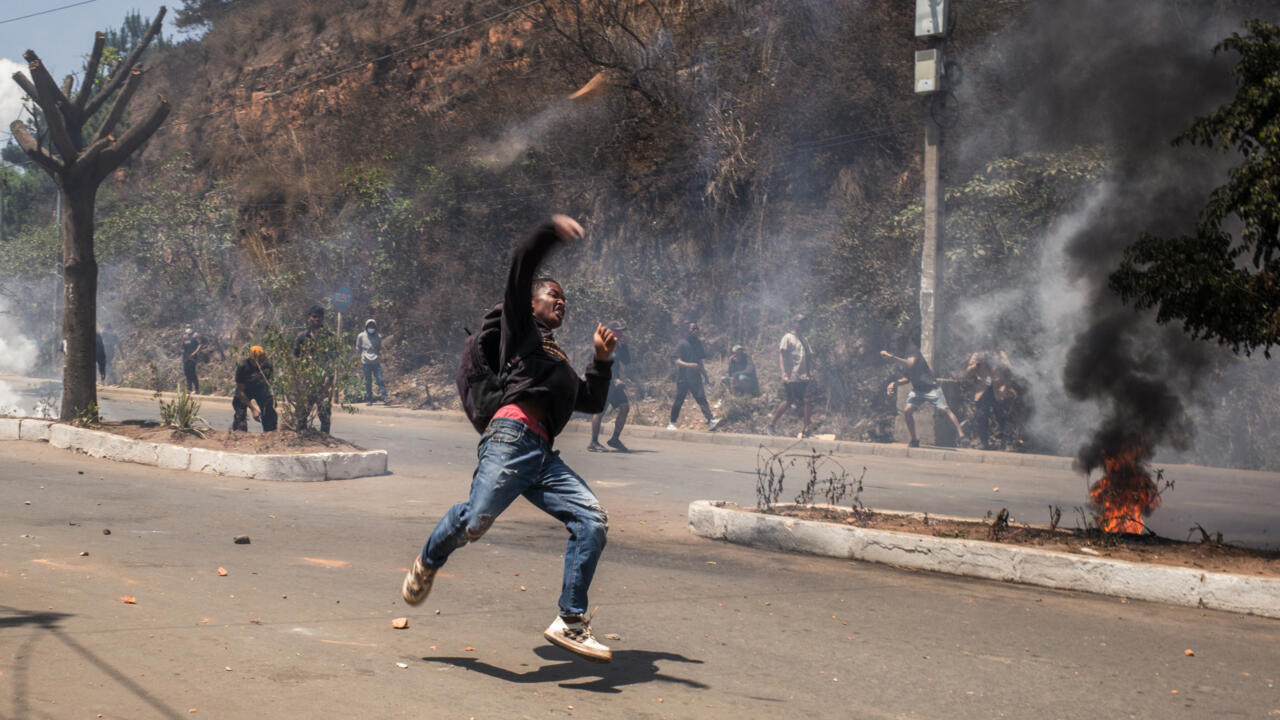
A protester throws stones towards police officers during unrest over repeated water and electricity outages in Madagascar on September 29, 2025. © Rijasolo, AFP
Madagascar's President Andry Rajoelina on Monday sacked his government following days of deadly unrest which the United Nations said has left at least 22 people dead.
Thousands have poured onto the streets of the Indian Ocean nation to protest against repeated water and electricity outages.
Police have responded with a heavy hand, firing teargas and rubber bullets to disperse the crowds, called to action on social media through a movement called "Gen Z".
Read more‘They couldn't see who they were shooting at’: Police target protesters in Madagascar
The days-long protest, led mostly by young demonstrators, has left at least 22 people dead and more than 100 injured, according to a United Nations tally rejected by the government as unverified and "based on rumours".
"I have decided to terminate the functions of the Prime Minister and the government. Pending the formation of the new government, those in office will act as interim ministers," Rajoelina said in a televised national address.
Applications for a new premier will be received over the next three days before a new government is formed, he said.
The president on Friday sacked his energy minister "for not doing his job".
Madagascar's President Andry Rajoelina on Monday sacked his government following days of deadly unrest which the United Nations said has left at least 22 people dead.
Thousands have poured onto the streets of the Indian Ocean nation to protest against repeated water and electricity outages.
Police have responded with a heavy hand, firing teargas and rubber bullets to disperse the crowds, called to action on social media through a movement called "Gen Z".
Read more‘They couldn't see who they were shooting at’: Police target protesters in Madagascar
The days-long protest, led mostly by young demonstrators, has left at least 22 people dead and more than 100 injured, according to a United Nations tally rejected by the government as unverified and "based on rumours".
"I have decided to terminate the functions of the Prime Minister and the government. Pending the formation of the new government, those in office will act as interim ministers," Rajoelina said in a televised national address.
Applications for a new premier will be received over the next three days before a new government is formed, he said.
The president on Friday sacked his energy minister "for not doing his job".
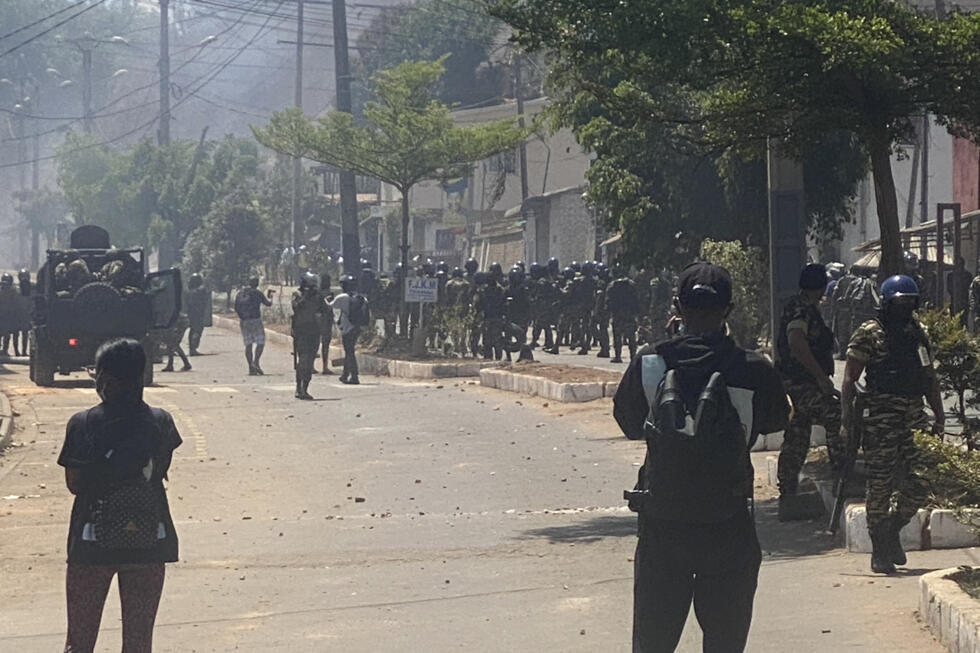
Fresh protests were held in Madagascar Monday over persistent power and water cuts. © Rijasolo, AFP
Madagascar, among the world's poorest despite vast resources, has experienced frequent popular uprisings since gaining independence in 1960, including mass protests in 2009 that forced former president Marc Ravalomanana from power.
UN High Commissioner for Human Rights Volker Turk condemned Madagascar's "violent response" to the protests.
On Monday, growing crowds marched through the capital Antananarivo, many dressed in black and chanting calls for Rajoelina to resign.
He first came to power following a coup sparked by the 2009 uprising.
Some demonstrators held signs reading "We want to live, not survive," a central slogan of the movement.
Police detained an opposition lawmaker during the march in Antananarivo, footage shared on social media showed, prompting calls from his colleagues for his release.
At least one other protester was also arrested, prompting the UN's Turk to urge the authorities to "ensure respect for freedom of expression and peaceful assembly".
A statement released by the protest movement late Sunday called for the government and Antananarivo's prefect to resign. They have also targeted figures close to the president including Prime Minister Christian Ntsay and businessman Mamy Ravatomanga.
The movement has adopted as its rallying symbol a pirate flag from the Japanese anime series "One Piece", a logo also used recently by youth-led, anti-regime protests in Indonesia and Nepal.
Madagascar, among the world's poorest despite vast resources, has experienced frequent popular uprisings since gaining independence in 1960, including mass protests in 2009 that forced former president Marc Ravalomanana from power.
UN High Commissioner for Human Rights Volker Turk condemned Madagascar's "violent response" to the protests.
On Monday, growing crowds marched through the capital Antananarivo, many dressed in black and chanting calls for Rajoelina to resign.
He first came to power following a coup sparked by the 2009 uprising.
Some demonstrators held signs reading "We want to live, not survive," a central slogan of the movement.
Police detained an opposition lawmaker during the march in Antananarivo, footage shared on social media showed, prompting calls from his colleagues for his release.
At least one other protester was also arrested, prompting the UN's Turk to urge the authorities to "ensure respect for freedom of expression and peaceful assembly".
A statement released by the protest movement late Sunday called for the government and Antananarivo's prefect to resign. They have also targeted figures close to the president including Prime Minister Christian Ntsay and businessman Mamy Ravatomanga.
The movement has adopted as its rallying symbol a pirate flag from the Japanese anime series "One Piece", a logo also used recently by youth-led, anti-regime protests in Indonesia and Nepal.
'Anonymous individuals'
Thursday's protests in the capital were followed by widespread looting throughout the night, which encountered no police response.
The Gen Z movement said in its Sunday statement that "groups of anonymous individuals were paid to loot numerous establishments in order to tarnish the movement and the ongoing struggle".
The movement was named after Generation Z, a nickname attributed to people born between the late 1990s and early 2010s.
Protests were also widespread in Antsiranana at the northern tip of Madagascar.
The demonstrations were the largest since 2023 when protests erupted ahead of the presidential elections, which were boycotted by opposition parties.
Rajoelina, a former mayor of Antananarivo, stepped down after 2013 general elections but triumphed in the 2018 presidential election, winning re-election in contested polls in 2023 in which less than half of registered voters cast their ballots.
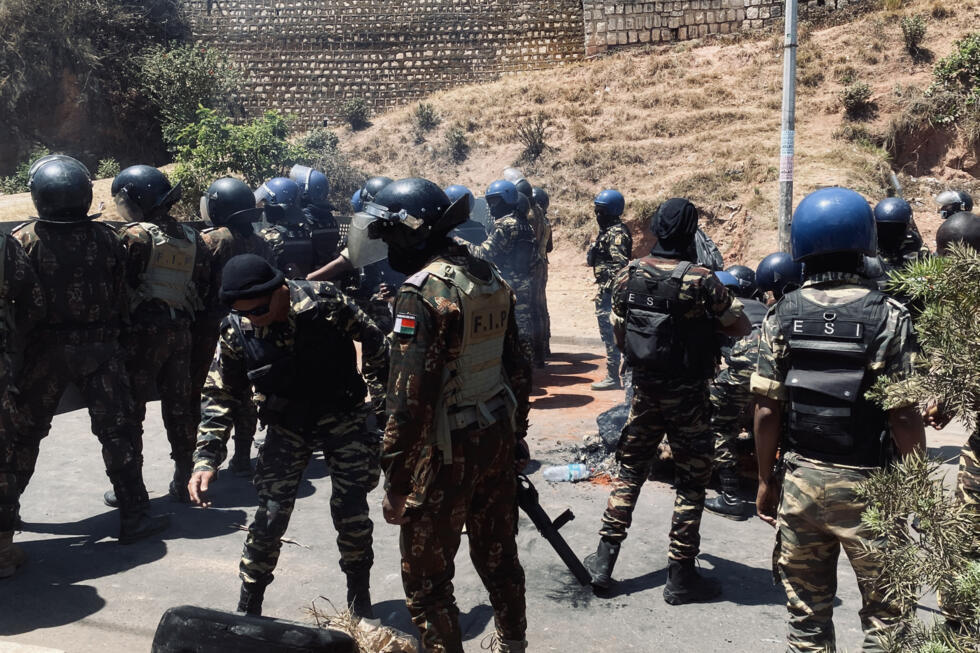
Madagascar has experienced frequent popular uprisings since gaining independence in 1960. © Rijasolo, AFP
The 51-year-old leader on Monday vowed to find a solution to the country's problems, saying he had heard the grievances.
"When the Malagasy people suffer, I want you to know that I feel that pain too, and I have not slept, day or night, in my efforts to find solutions and improve the situation," he said.
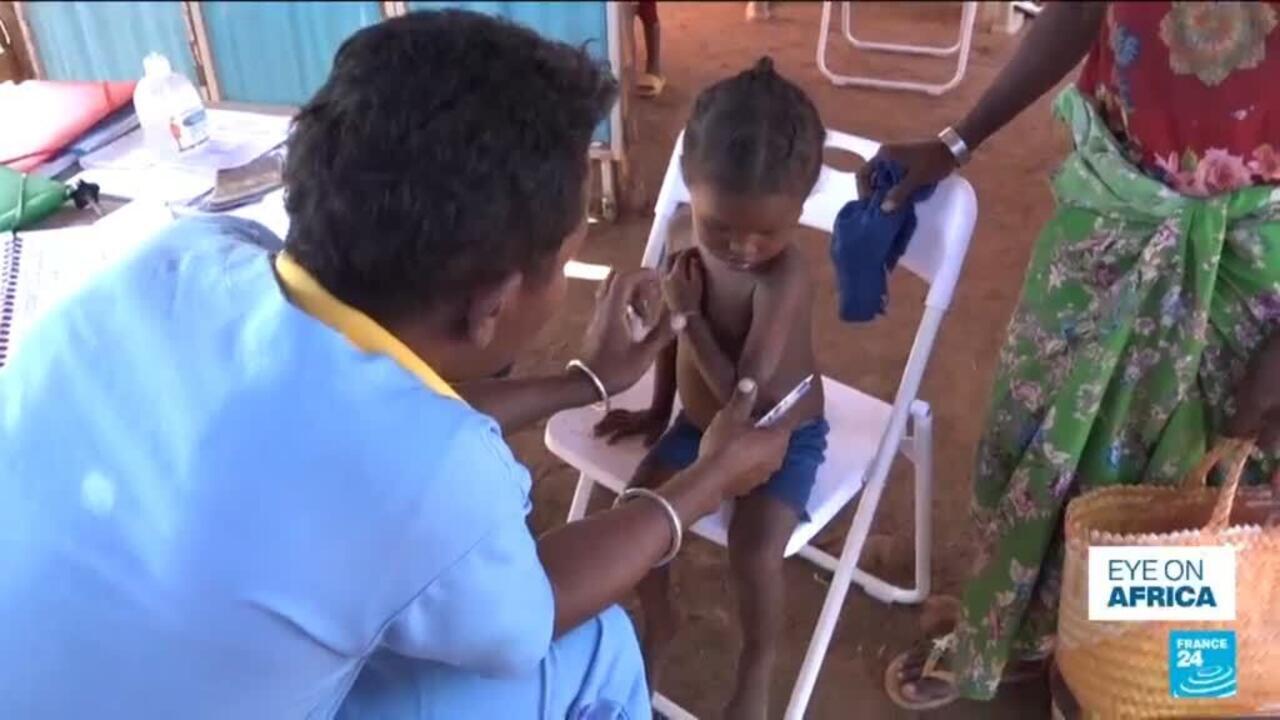
Despite having natural resources, Madagascar remains one of the poorest countries in the world and is among the most corrupt, ranked 140 out of 180 countries in Transparency International's Corruption Perceptions Index.
The 51-year-old leader on Monday vowed to find a solution to the country's problems, saying he had heard the grievances.
"When the Malagasy people suffer, I want you to know that I feel that pain too, and I have not slept, day or night, in my efforts to find solutions and improve the situation," he said.
Despite having natural resources, Madagascar remains one of the poorest countries in the world and is among the most corrupt, ranked 140 out of 180 countries in Transparency International's Corruption Perceptions Index.
© France 24
02:44
Nearly 75 percent of the population lived below the poverty line in 2022, according to the World Bank.
The latest unrest is just the latest to hit Madagascar since the end of French rule.
Philibert Tsiranana, who led the country through the post-independence era, was forced to hand over power to the army in 1972, after a popular uprising was bloodily suppressed.
(FRANCE 24 with AFP and Reuters)
02:44
Nearly 75 percent of the population lived below the poverty line in 2022, according to the World Bank.
The latest unrest is just the latest to hit Madagascar since the end of French rule.
Philibert Tsiranana, who led the country through the post-independence era, was forced to hand over power to the army in 1972, after a popular uprising was bloodily suppressed.
(FRANCE 24 with AFP and Reuters)
‘They couldn't see who they were shooting at’: Police target protesters in Madagascar
Demonstrators in Madagascar's capital Antananarivo flouted a ban from authorities to protest against the nation's water and electricity outages on September 25. Our Observers who attended the protests described the security forces' response as violent and disproportionate: tear gas being deployed at close proximity and vehicles ploughing into the crowd, resulting in multiple injuries and generalised chaos. At least five people died in the unrest, a hospital source reported.
Issued on: 29/09/2025 - By: The FRANCE 24 Observers/Mellit DERRE
Hundreds took to the streets on September 25 in Madagascar's capital Antananarivo after an appeal was launched on social media to protest against the nation's crippling water and electricity outages. The protest had been prohibited by the prefect of Antananarivo, who cited the risk of public disorder as the reason for the ban.
Residents of the capital attempted to gather at the city's usual protest spots but were pushed back by security forces. Videos and photos shared by the Malagasy diaspora and demonstrators show scenes of police violence. A hospital source said that five people died in the unrest. Separately, the homes of a Malagasy deputy and a senator were torched.
Following Thursday's clashes in Antananarivo, authorities have imposed a nightly curfew in the capital, running from 7pm to 5am.
‘We came with flowers’
Our Observer, Andry (pseudonym), and his friend, both working in Antananarivo, attempted to join the demonstration on September 25. Repelled by tear gas fired by police, they sought refuge in an alleyway made up of stairs, where they were injured by further tear gas grenades.
“Everyone was in good spirits; we were happy to see many of our friends again. It was a peaceful movement. We came with flowers specifically to show that we didn't have weapons and weren't there to attack people.”
Andry said that as they approached Ambohijatovo Square, where the protest was due to take place, security forces fired tear gas, prompting the demonstrators to disperse.
"We then came to a kind of junction. My friend and I were right in the middle of the crowd. And suddenly, from one of the lanes of that intersection, an SUV drove straight into us – it literally ploughed into the people.
Those at the front started running very fast; those who could get to the side tried to protect themselves.
There were men in blue gendarmerie uniforms with rifles and grenades who charged at us. In the panic, we tried to escape down a narrow alleyway, about 1.5 metres wide, made of stairs. We took refuge there and, when we got inside, we closed the door. They immediately threw stun grenades and tear gas grenades at us.”
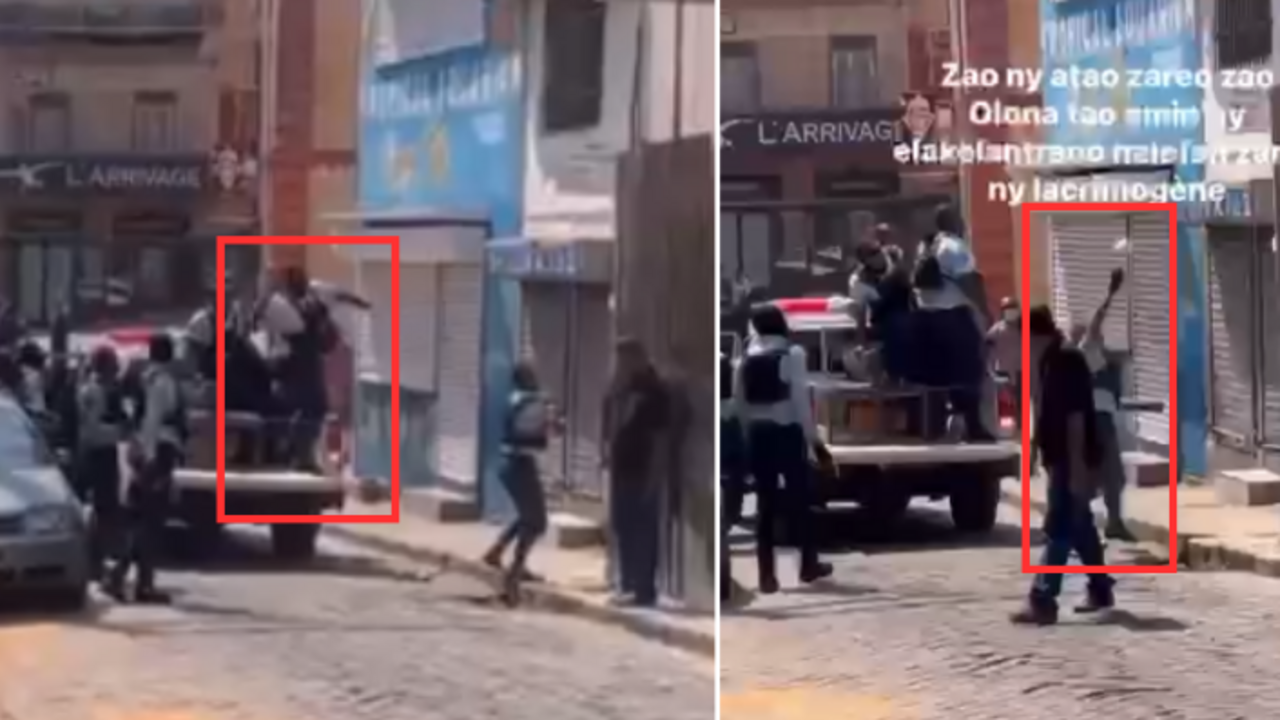
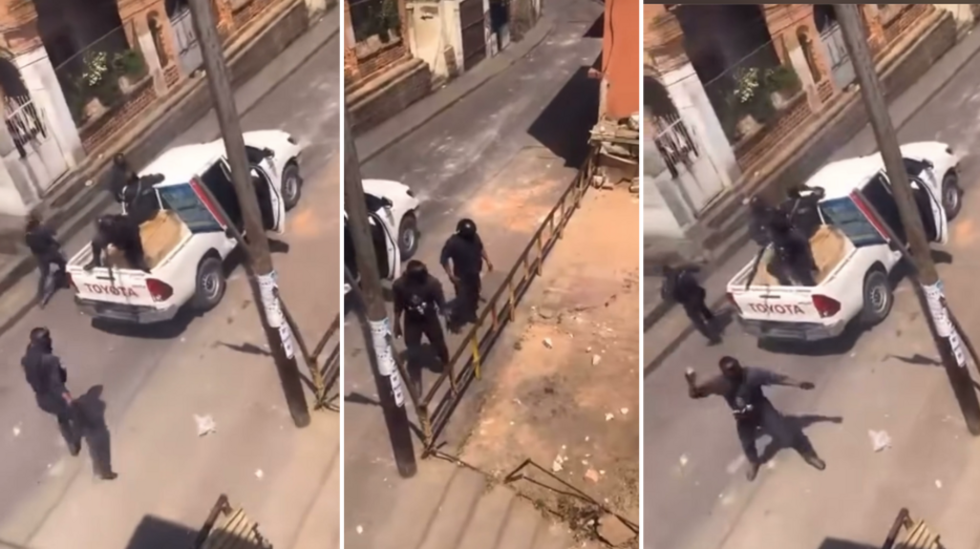
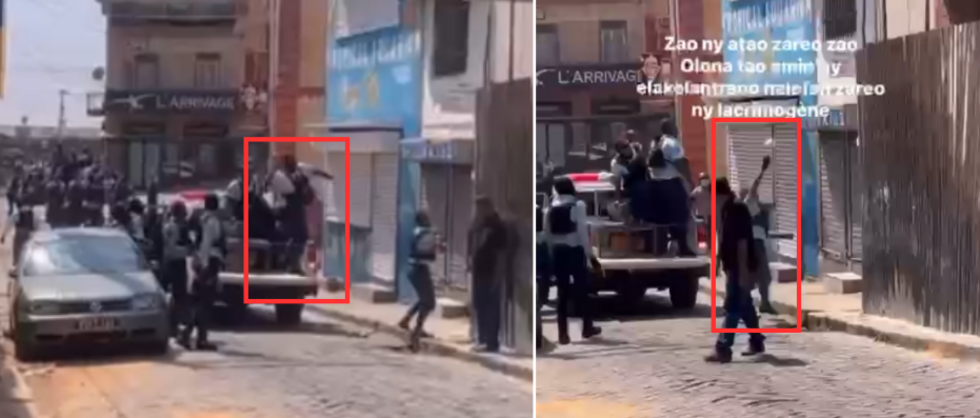
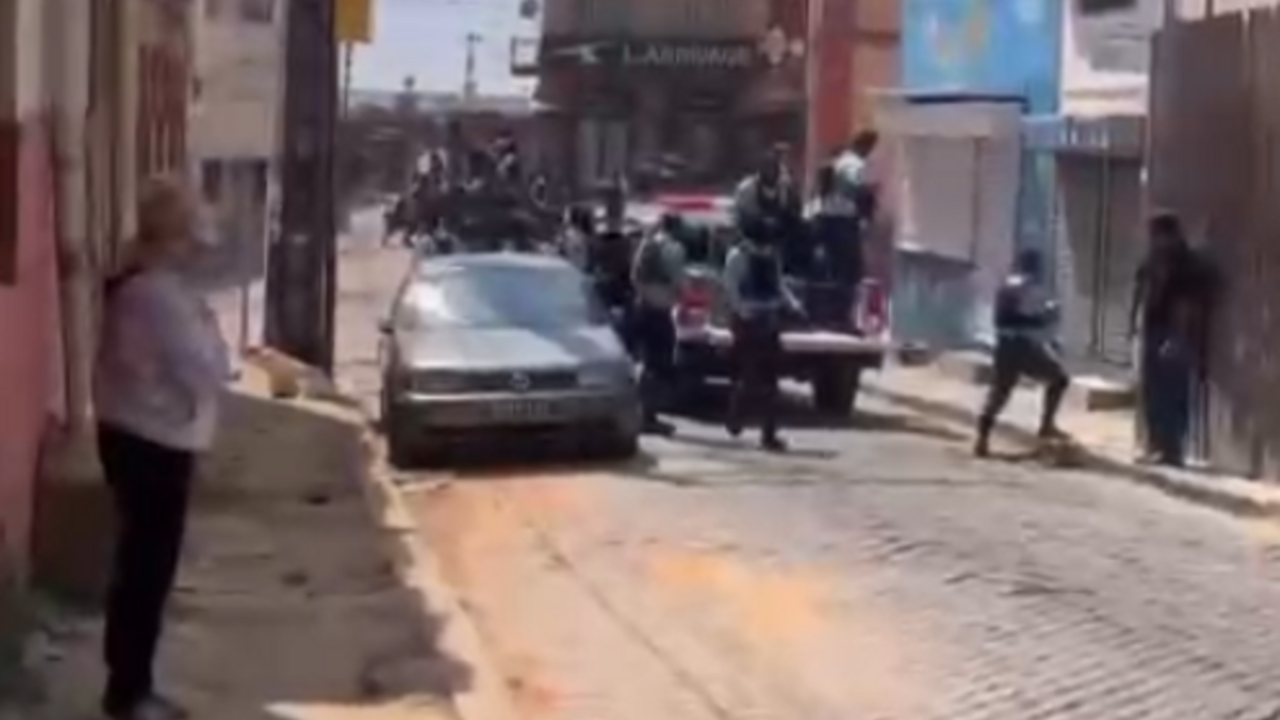
Another video shared on social media shows a similar pattern of operation at a different location in the city. A pickup truck stops, a group of masked men wearing the black uniform of the GSIS – a gendarmerie unit – get out, throw four projectiles at demonstrators who were already fleeing, and then quickly disperse.
‘One grenade landed maybe half a metre from my friend's head’
"They couldn't see us because the door was in the way. They saw us go up that path, but the door was closed. It's a very confined area, but they couldn't see exactly who they were shooting at. They just knew we were there.
They tossed the grenades over the door into the corridor. And one landed maybe half a metre from my friend's head and my arm. He was right behind me, and I was a little higher up on the stairs."
"It exploded right between me, my friend, and another person who was just in front of me. The door was closed. There were an enormous number of people on the stairs; we could neither move forward nor backward. The first grenade exploded between us.
After it went off, we went back up. It’s a good thing other people were there, because we couldn’t see, walk, or breathe anymore. They carried us."
‘My friend had blood coming from his ear’
Andry shared images with the Observers team showing the injuries he and his friend sustained. One photo shows him with a forearm wound from a tear gas canister fragment, while his friend was struck in the neck and shoulder.
"We could still hear explosions outside. We didn't dare to move. We tried calling several medical centres, the Red Cross, and others to find out what to do. My friend had blood coming from his ear. We were still too frightened to go back outside to get medical attention."
Witnesses contacted by the Observers team, as well as accounts posted online, reported live ammunition gunfire. We were unable to independently verify this information.
Several commercial districts and storefronts were looted overnight Thursday, but the situation appeared calmer in the capital on Friday. On September 27, hundreds of protesters gathered again in Madagascar's capital and clashed with security forces.
This article has been translated from the original in French.
Demonstrators in Madagascar's capital Antananarivo flouted a ban from authorities to protest against the nation's water and electricity outages on September 25. Our Observers who attended the protests described the security forces' response as violent and disproportionate: tear gas being deployed at close proximity and vehicles ploughing into the crowd, resulting in multiple injuries and generalised chaos. At least five people died in the unrest, a hospital source reported.
Issued on: 29/09/2025 - By: The FRANCE 24 Observers/Mellit DERRE
These screenshots from a video filmed on September 25, 2025, in Antananarivo, Madagascar’s capital, show two gendarmerie officers throwing tear gas canisters over a gate behind which protesters are taking refuge. © Observers
Hundreds took to the streets on September 25 in Madagascar's capital Antananarivo after an appeal was launched on social media to protest against the nation's crippling water and electricity outages. The protest had been prohibited by the prefect of Antananarivo, who cited the risk of public disorder as the reason for the ban.
Residents of the capital attempted to gather at the city's usual protest spots but were pushed back by security forces. Videos and photos shared by the Malagasy diaspora and demonstrators show scenes of police violence. A hospital source said that five people died in the unrest. Separately, the homes of a Malagasy deputy and a senator were torched.
Following Thursday's clashes in Antananarivo, authorities have imposed a nightly curfew in the capital, running from 7pm to 5am.
‘We came with flowers’
Our Observer, Andry (pseudonym), and his friend, both working in Antananarivo, attempted to join the demonstration on September 25. Repelled by tear gas fired by police, they sought refuge in an alleyway made up of stairs, where they were injured by further tear gas grenades.
“Everyone was in good spirits; we were happy to see many of our friends again. It was a peaceful movement. We came with flowers specifically to show that we didn't have weapons and weren't there to attack people.”
Andry said that as they approached Ambohijatovo Square, where the protest was due to take place, security forces fired tear gas, prompting the demonstrators to disperse.
"We then came to a kind of junction. My friend and I were right in the middle of the crowd. And suddenly, from one of the lanes of that intersection, an SUV drove straight into us – it literally ploughed into the people.
Those at the front started running very fast; those who could get to the side tried to protect themselves.
There were men in blue gendarmerie uniforms with rifles and grenades who charged at us. In the panic, we tried to escape down a narrow alleyway, about 1.5 metres wide, made of stairs. We took refuge there and, when we got inside, we closed the door. They immediately threw stun grenades and tear gas grenades at us.”
Another video shared on social media shows a similar pattern of operation at a different location in the city. A pickup truck stops, a group of masked men wearing the black uniform of the GSIS – a gendarmerie unit – get out, throw four projectiles at demonstrators who were already fleeing, and then quickly disperse.
Screenshots of a video posted on Instagram on September 25, 2025, showing a pickup truck carrying a unit of Madagascar’s gendarmerie in Antananarivo. One of the police officers can be seen firing two projectiles at demonstrators. Another police officer throws two projectiles. © Instagram / gen_z_madagascar
‘The first grenade exploded between us’
Police officers who attacked Andry and the group of protesters taking refuge on the stairs fired at least two tear gas canisters over a door blocking the alleyway, according to the video of the scene reported by our Observer.
Images sent to us by our Observer and verified by the FRANCE 24 Observers team show a white vehicle stopping in front of a space between two buildings. About ten men, masked and wearing light blue uniforms and bulletproof vests, are seen exiting the vehicle. Based on the attire, the unit appears to belong to Madagascar’s gendarmerie.
‘The first grenade exploded between us’
Police officers who attacked Andry and the group of protesters taking refuge on the stairs fired at least two tear gas canisters over a door blocking the alleyway, according to the video of the scene reported by our Observer.
Images sent to us by our Observer and verified by the FRANCE 24 Observers team show a white vehicle stopping in front of a space between two buildings. About ten men, masked and wearing light blue uniforms and bulletproof vests, are seen exiting the vehicle. Based on the attire, the unit appears to belong to Madagascar’s gendarmerie.
Screenshots from a video taken on September 25, 2025, in Antananarivo. Two gendarmerie officers can be seen throwing tear gas grenades over a door behind which the protestors were sheltering. © Observers
Two grenades were thrown at nine and twelve seconds into the video. At 0:31, a cloud of smoke is seen forming in the alleyway after two shots were fired into the area where the protesters were taking cover.
Two grenades were thrown at nine and twelve seconds into the video. At 0:31, a cloud of smoke is seen forming in the alleyway after two shots were fired into the area where the protesters were taking cover.
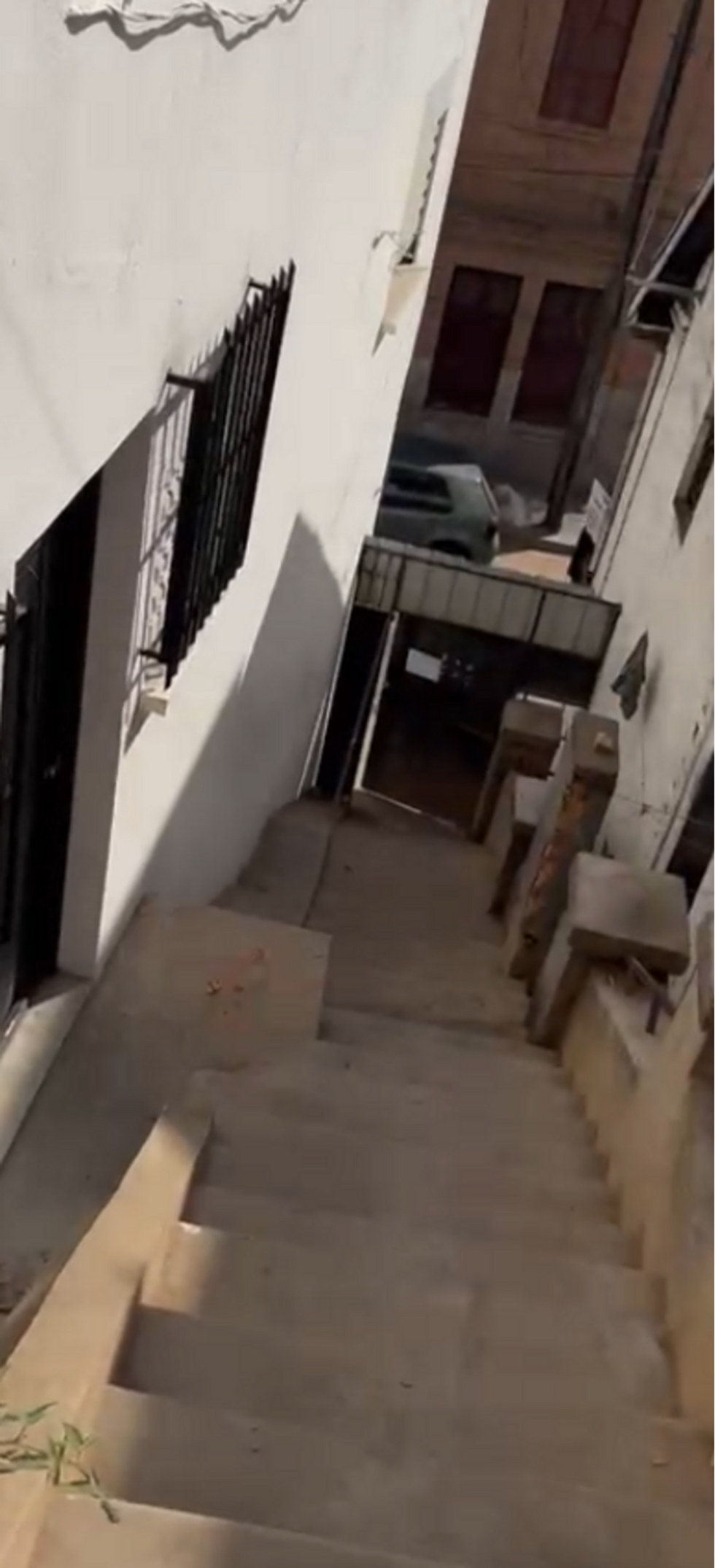
Screenshot showing the alleyway where the protesters had taken refuge. © Observers
Another video sent by our Observer clearly shows the stairs of the alley where the demonstrators were sheltering, as well as the tall metal door over which grenades were fired. The pickup truck was situated on the other side, in the street.
Another video sent by our Observer clearly shows the stairs of the alley where the demonstrators were sheltering, as well as the tall metal door over which grenades were fired. The pickup truck was situated on the other side, in the street.
‘One grenade landed maybe half a metre from my friend's head’
"They couldn't see us because the door was in the way. They saw us go up that path, but the door was closed. It's a very confined area, but they couldn't see exactly who they were shooting at. They just knew we were there.
They tossed the grenades over the door into the corridor. And one landed maybe half a metre from my friend's head and my arm. He was right behind me, and I was a little higher up on the stairs."
Video showing the gendarmerie officers firing tear gas grenades at protesters sheltering in the alley, in Antananarivo, on September 25, 2025. © Observers
"It exploded right between me, my friend, and another person who was just in front of me. The door was closed. There were an enormous number of people on the stairs; we could neither move forward nor backward. The first grenade exploded between us.
After it went off, we went back up. It’s a good thing other people were there, because we couldn’t see, walk, or breathe anymore. They carried us."
‘My friend had blood coming from his ear’
Andry shared images with the Observers team showing the injuries he and his friend sustained. One photo shows him with a forearm wound from a tear gas canister fragment, while his friend was struck in the neck and shoulder.
"We could still hear explosions outside. We didn't dare to move. We tried calling several medical centres, the Red Cross, and others to find out what to do. My friend had blood coming from his ear. We were still too frightened to go back outside to get medical attention."
Witnesses contacted by the Observers team, as well as accounts posted online, reported live ammunition gunfire. We were unable to independently verify this information.
Several commercial districts and storefronts were looted overnight Thursday, but the situation appeared calmer in the capital on Friday. On September 27, hundreds of protesters gathered again in Madagascar's capital and clashed with security forces.
This article has been translated from the original in French.
Madagascar sacks energy minister after repeated power cuts spark protests
Madagascar's President Andry Rajoelina on Friday sacked his energy minister a day after police used rubber bullets and tear gas to disperse protesters angered by persistent power cuts and water shortages in the capital Antananarivo. Five protesters were killed in Thursday's violence, a hospital source told AFP.
Issued on: 26/09/2025 -
By: FRANCE 24
More disorder 'expected'
While the situation appeared calm in the centre, reports of looting continued in a commercial district on the outskirts of Antananarivo.
Hundreds of young people carrying the body of a fellow student marched in Antsiranana on Friday, a local source told AFP, confirming images of the event spread on social media.
The French embassy advised avoiding non-essential travel in the capital and in Antsirabe, Madagascar's third-largest city. The British embassy warned that "further protests and disorder are expected and may spread to other parts of Madagascar".
Organisers called for demonstrators to gather at the capital's university on Saturday at 10am local time (0700 GMT).
Rajoelina, who was in New York this week for the UN General Assembly, acknowledged on Friday that "the energy minister was not doing his job" but "firmly condemned" the "pillaging and violence".
The 51-year-old was re-elected late last year for a third term in a ballot boycotted by the opposition in which less than half of registered voters took part.
He first came to power in the world's top producer of vanilla in 2009, leading a popular movement and benefiting from a coup that ousted former president Marc Ravalomanana.
After not contesting the 2013 election due to international pressure, he was voted back into office in 2018.
(FRANCE 24 with AFP)

Madagascar's President Andry Rajoelina on Friday sacked his energy minister a day after police used rubber bullets and tear gas to disperse protesters angered by persistent power cuts and water shortages in the capital Antananarivo. Five protesters were killed in Thursday's violence, a hospital source told AFP.
Issued on: 26/09/2025 -
By: FRANCE 24
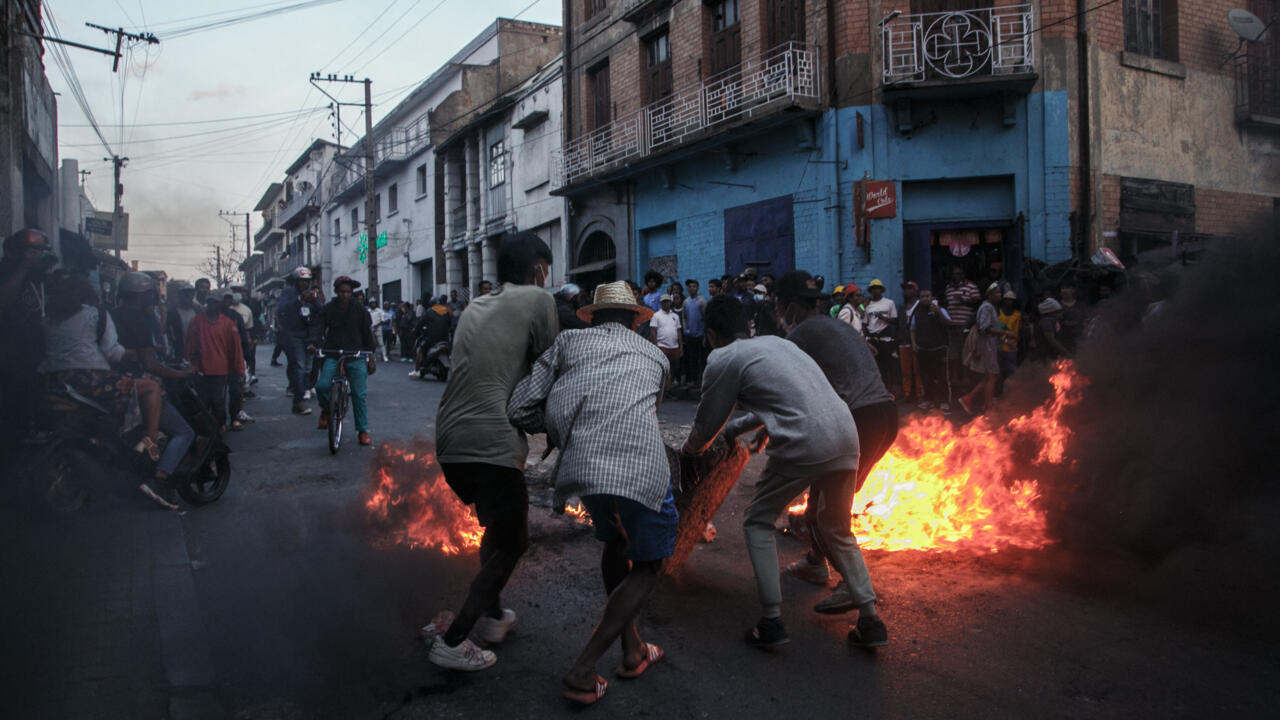
Protesters erect barricades as they demonstrate against repeated water and electricity outages in Antananarivo on September 25, 2025. © Rijasolo, AFP
Madagascar's president on Friday sacked his energy minister in a bid to calm protests over power cuts and water shortages, which had left wreckage strewn across the capital a day earlier.
Police used rubber bullets and tear gas to disperse crowds of mostly young people in Antananarivo on Thursday, in protests President Andry Rajoelina branded "acts of destabilisation in the form of a coup d'état" in his first on-camera comments.
Protest organisers on Friday urged people unhappy with Rajoelina's government to "come in numbers" for a "peaceful demonstration" on Saturday morning, distancing themselves from the scenes of looting on Thursday.
Protesters have voiced anger over persistent water and power cuts that often leave homes and businesses without electricity for more than 12 hours each day across one of the world's poorest countries.
Some people accuse Rajoelina's government of failing to improve living conditions.
The authorities imposed a dusk-to-dawn curfew after banks and shops were robbed and set on fire and the houses of three pro-government parliamentarians were torched.
Five protesters were killed in the violence, a hospital source said. AFP has not been able to verify the toll from official sources.
A station of Antananarivo's new cable car system – one of the government's flagship infrastructure projects – was also set on fire.
Besides the capital, the authorities on Friday placed four other major cities – Antsiranana, Majunga, Toliara and Antsirabe – under an extended nightime curfew.
Stunned Antananarivo residents – some in tears – assessed the damage Friday morning, an AFP journalist at the scene reported.
One young activist, who had returned to clean up a looted bookstore, said he had left before the unrest escalated but conceded that other youngsters might have been responsible for the destruction.
"Maybe they were frustrated. Maybe they were sent to break things. They're already poor and have nothing. So they take what little they see," he told AFP, requesting anonymity for fear of reprisals.
Madagascar's president on Friday sacked his energy minister in a bid to calm protests over power cuts and water shortages, which had left wreckage strewn across the capital a day earlier.
Police used rubber bullets and tear gas to disperse crowds of mostly young people in Antananarivo on Thursday, in protests President Andry Rajoelina branded "acts of destabilisation in the form of a coup d'état" in his first on-camera comments.
Protest organisers on Friday urged people unhappy with Rajoelina's government to "come in numbers" for a "peaceful demonstration" on Saturday morning, distancing themselves from the scenes of looting on Thursday.
Protesters have voiced anger over persistent water and power cuts that often leave homes and businesses without electricity for more than 12 hours each day across one of the world's poorest countries.
Some people accuse Rajoelina's government of failing to improve living conditions.
The authorities imposed a dusk-to-dawn curfew after banks and shops were robbed and set on fire and the houses of three pro-government parliamentarians were torched.
Five protesters were killed in the violence, a hospital source said. AFP has not been able to verify the toll from official sources.
A station of Antananarivo's new cable car system – one of the government's flagship infrastructure projects – was also set on fire.
Besides the capital, the authorities on Friday placed four other major cities – Antsiranana, Majunga, Toliara and Antsirabe – under an extended nightime curfew.
Stunned Antananarivo residents – some in tears – assessed the damage Friday morning, an AFP journalist at the scene reported.
One young activist, who had returned to clean up a looted bookstore, said he had left before the unrest escalated but conceded that other youngsters might have been responsible for the destruction.
"Maybe they were frustrated. Maybe they were sent to break things. They're already poor and have nothing. So they take what little they see," he told AFP, requesting anonymity for fear of reprisals.
More disorder 'expected'
While the situation appeared calm in the centre, reports of looting continued in a commercial district on the outskirts of Antananarivo.
Hundreds of young people carrying the body of a fellow student marched in Antsiranana on Friday, a local source told AFP, confirming images of the event spread on social media.
The French embassy advised avoiding non-essential travel in the capital and in Antsirabe, Madagascar's third-largest city. The British embassy warned that "further protests and disorder are expected and may spread to other parts of Madagascar".
Organisers called for demonstrators to gather at the capital's university on Saturday at 10am local time (0700 GMT).
Rajoelina, who was in New York this week for the UN General Assembly, acknowledged on Friday that "the energy minister was not doing his job" but "firmly condemned" the "pillaging and violence".
The 51-year-old was re-elected late last year for a third term in a ballot boycotted by the opposition in which less than half of registered voters took part.
He first came to power in the world's top producer of vanilla in 2009, leading a popular movement and benefiting from a coup that ousted former president Marc Ravalomanana.
After not contesting the 2013 election due to international pressure, he was voted back into office in 2018.
(FRANCE 24 with AFP)


No comments:
Post a Comment