US President Donald Trump is deploying 10 F-35 fighter jets to Puerto Rico to intensify the fight against drug cartels, sources said Friday. This comes as the US intensifies its military operations in the Caribbean, stoking tensions with Venezuela, which the US accuses of "narcoterrorism". A TOTALLY MADE UP DESIGNATION BY THE US
Issued on: 05/09/2025 -
By: FRANCE 24
Video by: Camille KNIGHT
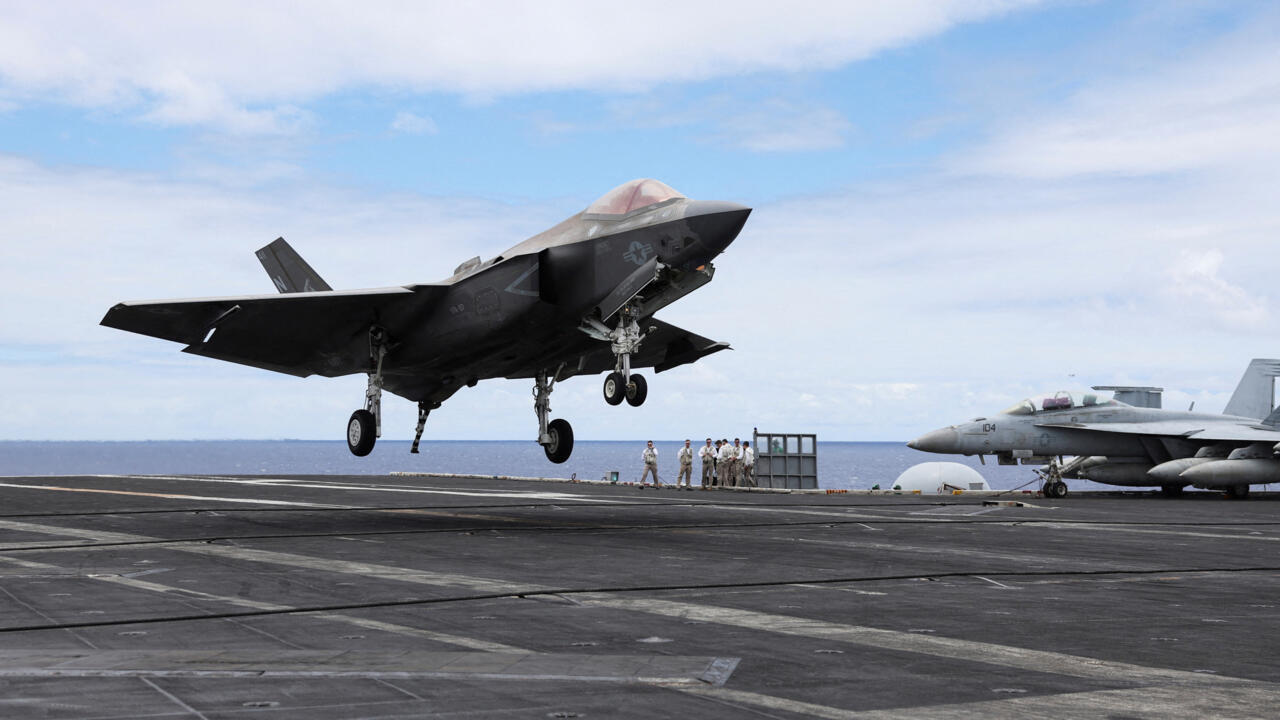
US President Donald Trump is sending 10 F-35 fighter jets to Puerto Rico as part of his war on drug cartels, sources familiar with the matter said on Friday, as tensions mount with Venezuela over Washington's military build-up in the Caribbean.
The planes will join US warships already deployed to the southern Caribbean as Trump steps up pressure on Venezuelan President Nicolas Maduro, whom the United States accuses of leading a drug cartel.
The standoff has grown in recent days as the Pentagon said two Venezuelan military planes flew near a US Navy vessel in international waters Thursday in a "highly provocative" move.
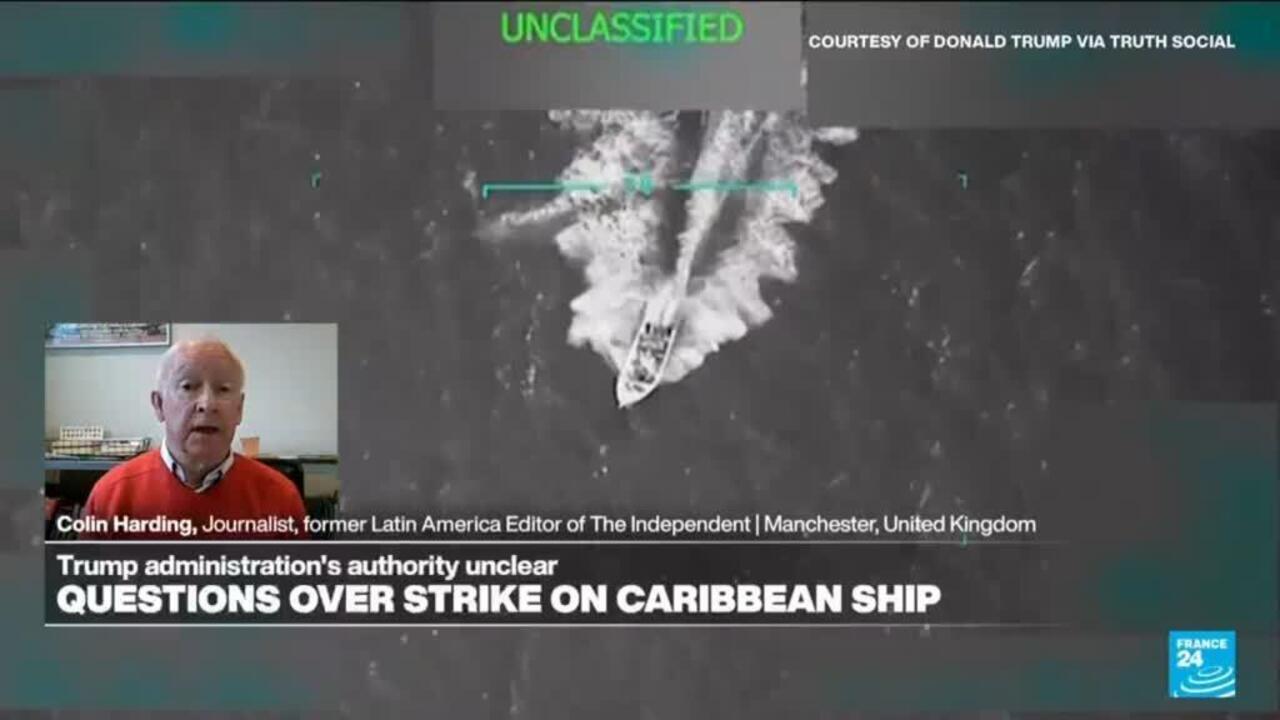
US forces on Tuesday blew up an alleged drug boat in the Caribbean that Trump said belonged to the Tren de Aragua, a Venezuelan criminal organisation he tied to Maduro, killing 11 people.
The US administration has been designating drug cartels as 'terrorist organizations'
05:14
The high-tech F-35 jets are being deployed to an airfield in Puerto Rico, a US Caribbean island territory of more than three million people, the US sources said on condition of anonymity.
Maduro – a leftist firebrand whose last election in 2024 was seen by Washington as illegitimate – has denounced the US build-up as "the greatest threat our continent has seen in the last 100 years".
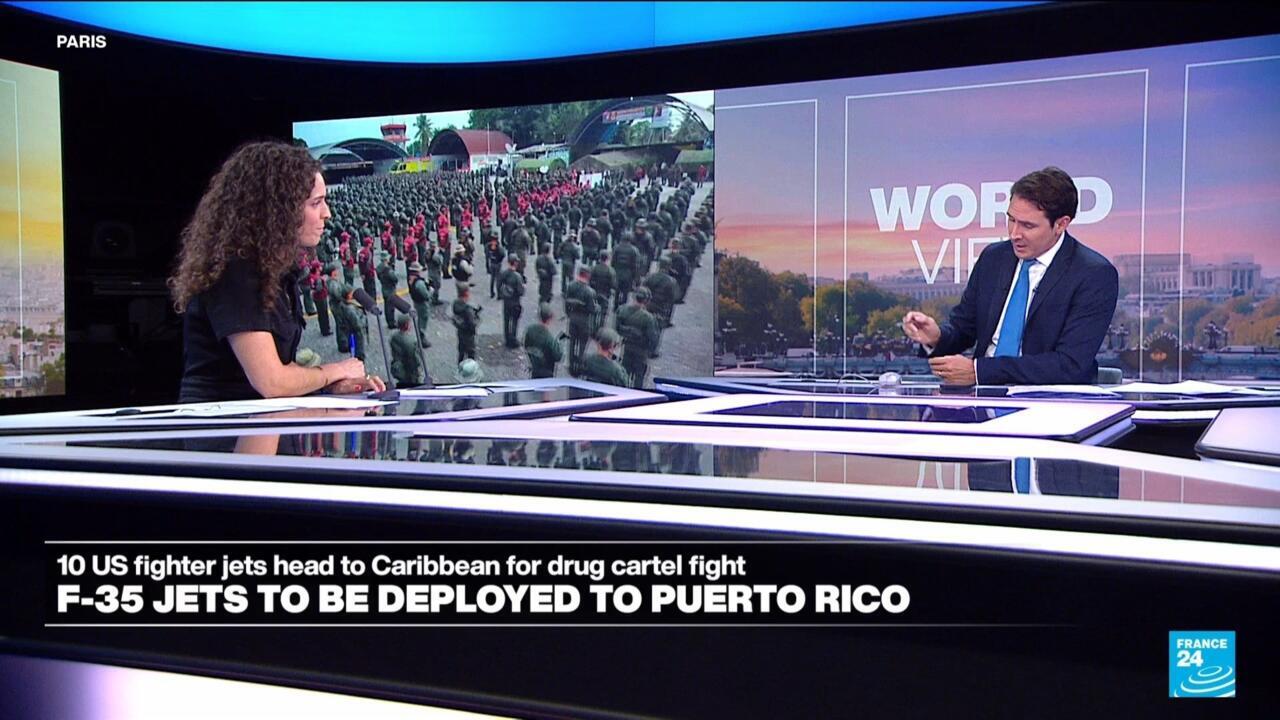
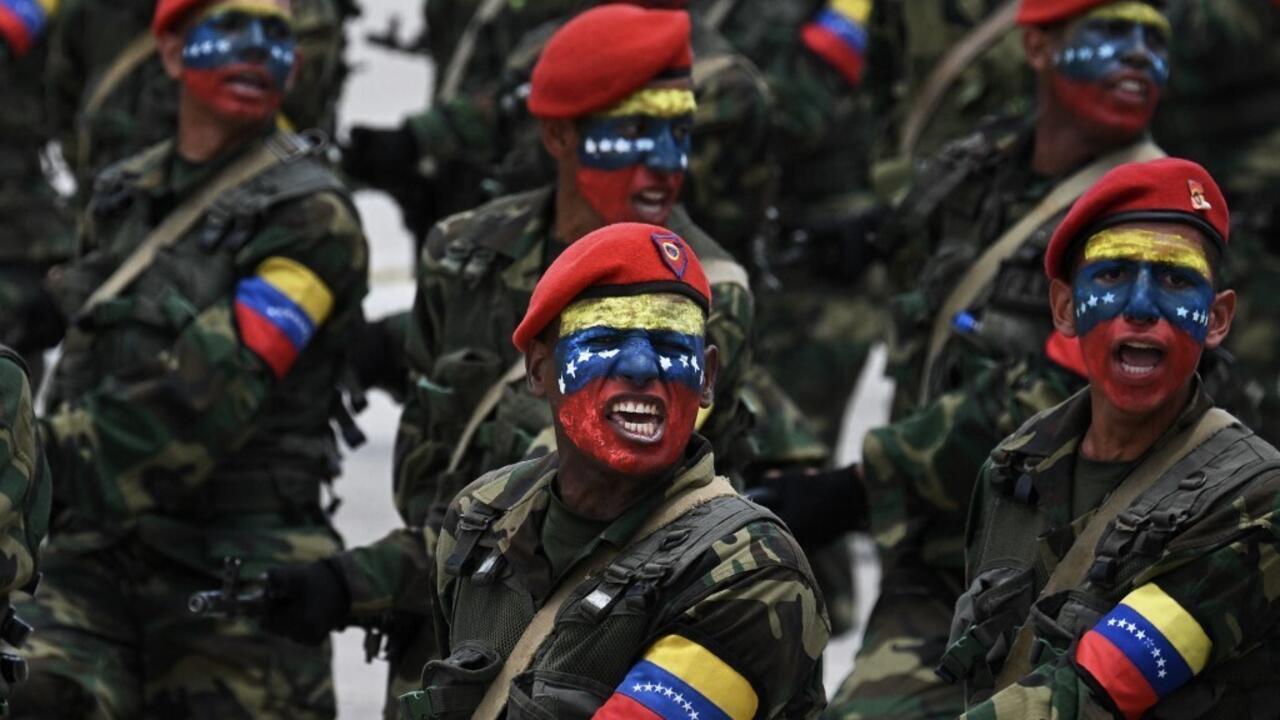
Declaring his country prepared for "armed struggle in defence of the national territory", he has mobilised Venezuela's military, which numbers around 340,000, and reservists, which he claims exceed eight million.
"If Venezuela were attacked, it would immediately enter a period of armed struggle," Maduro told foreign correspondents.
'Highly provocative'
Tuesday's deadly US attack on what Washington said was a drug-carrying boat was a major escalation, as well as an unusual use of the US military for what has historically been a law enforcement issue.
"Venezuela has been very bad, both in terms of drugs and sending some of the worst criminals anywhere in the world into our country," Trump told reporters in the Oval Office on Wednesday.
Trump has so far deployed five US vessels – a guided missile cruiser, three guided missile destroyers and a nuclear-powered fast attack submarine – to the Caribbean as part of the counter-drug mission.
There are also 4,000 US Marines reportedly involved in the deployment.
'Highly unusual': Normally anti-drug operations involve international cooperation
07:11
"This highly provocative move was designed to interfere with our counter narco-terror operations," it said on X.
It did not give further details. Venezuela has 15 F-16 fighter jets purchased from the United States in the 1980s plus a number of Russian fighters and helicopters.
US Secretary of State Marco Rubio defended the new aggressive approach towards what Washington calls "narcoterrorist" groups on a trip to Latin America this week.
"What will stop them is when you blow them up, when you get rid of them," Rubio said in Mexico on Wednesday.
"If you're on a boat full of cocaine or fentanyl headed to the United States, you're an immediate threat to the United States."
Caracas accused Washington of committing extrajudicial killings in the attack.
(FRANCE 24 with AFP)
Explainer
Tensions soared in the Carribean this week, with the US striking a Venezuelan vessel it claimed carried "massive amount of drugs" before deploying warships, fighter jets and thousands of troops in a crackdown on drug trafficking. Experts say Venezuela’s role in the drug trade is smaller than claimed.
Issued on: 05/09/2025 -
By:Anaelle JONAH
The United States ramped up its military presence in the Caribbean this week, sending fighter jets, warships and thousands of troops, sources speaking on condition of anonymity said, in a push against Venezuelan drug trafficking. The US accused President Nicolas Maduro of running a "narco state" and vowed to dismantle cartels it blames for fuelling America’s drug crisis.
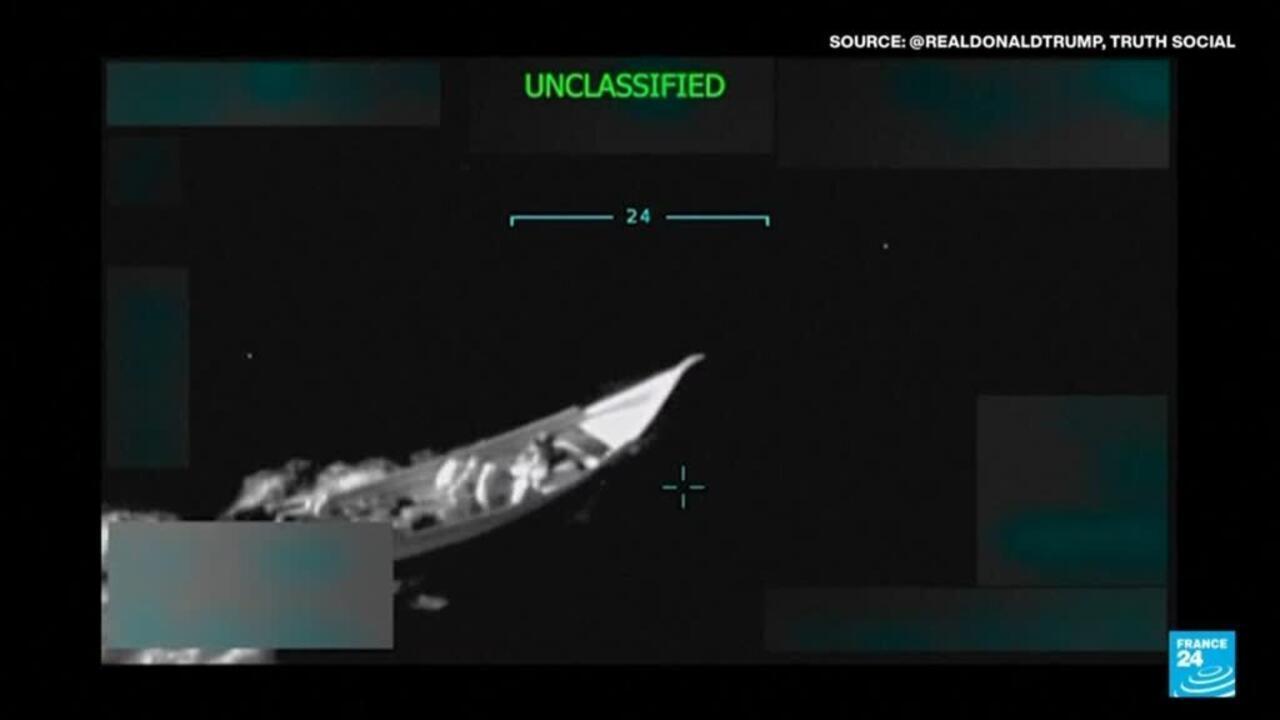
The operation has already proven deadly. On Tuesday, US forces blew up a boat in the southern Caribbean, killing 11 people. Trump claimed it was carrying "massive amounts of drugs" and tied it to Venezuela’s Tren de Aragua gang, which Washington designated a terrorist organisation earlier this year.
Trump says 11 killed in US strike on alleged drug boat from Venezuela
01:29
Caracas rejected the claim, accusing Washington of fabricating evidence and suggesting the video US President Donald Trump shared of the strike was made with artificial intelligence. Interior Minister Diosdado Cabello condemned the strike, saying “no allegation of drug trafficking can justify extrajudicial executions at sea”.
Earlier this week, at a rare press conference, Maduro denounced what he called "the greatest threat our continent has seen in the last 100 years" and warned Venezuela would enter "a period of armed struggle" if attacked. He has since ordered the mobilisation of the country’s military, which numbers around 340,000, and reservists, which he claims exceed eight million.
The Pentagon said two Venezuelan military planes flew near a US Navy vessel in international waters Thursday in a "highly provocative" move, marking a new escalation in the standoff.
Read more
A transit point, not a producer
Despite Washington’s claims, Venezuela produces little cocaine itself. Its long, porous border with Colombia – the world’s largest supplier – and access to Caribbean waters make it a transit point, but far from the main one.
"Venezuela is not a cocaine-producing country," said Thomas Posado, a lecturer in Contemporary Latin American Civilisation at Rouen University. "The main producers are Colombia and Peru. Venezuela serves more as a transit country, particularly for Colombian cocaine."
That role has waned in recent years. "These days, the primary transit country is Ecuador," Posado explained, pointing to its Pacific ports like Guayaquil and its location closer to production zones.
US estimates suggest between 200 to 250 metric tons of cocaine pass through Venezuela annually. By comparison, some 1,400 tons moved through Guatemala in 2018 alone.
‘Disproportionate’ accusations
For analysts, Washington’s focus on Venezuela is above all political. "Trump’s accusation is disproportionate to the actual role Venezuela plays," Posado said.
The contrast with Ecuador underscores the point, he added. "Ecuador is heavily infiltrated by narco-groups and has become a major exit point for cocaine going to the Pacific. But its president, Daniel Noboa, is a close ally of Donald Trump. So there are no aggressive policies aimed at him."
Meanwhile, Venezuela is seen in Washington as "a hostile power and an ally of Russia and China in the region".
In 2020, US prosecutors charged Maduro and 14 associates with conspiring alongside Colombian armed groups to use cocaine as a weapon to “flood” the United States. While unproven in court, officials in Washington portray him as the head of the so-called "Cartel de los Soles" (“Cartel of the Suns”) – a loose network of Venezuelan officers and politicians accused of profiting from smuggling, illegal mining and corrupt contracts.
Acccording to the US Treasury, the cartel takes its name from the sun-shaped insignia on Venezuelan officials’ uniforms and "supports Tren de Aragua in carrying out its objective of using the flood of illegal narcotics as a weapon against the US". Tren de Aragua is involved in extortion, murder, drug and human trafficking across Latin America.
Posado said the label is misleading. "In my view, it’s not a real cartel in the traditional sense like Medellín [Editor’s note: a powerful and highly organized Colombian drug cartel that was founded and led by Pablo Escobar]. The Cartel de los Soles is more of a political construct used by some US figures. Calling it a centralised cartel is exaggerated."
'A geopolitical manoeuvre'
Washington has so far deployed seven warships, a nuclear-powered submarine, more than 4,500 Marines and now 10 F-35 fighter jets to a Puerto Rico airfield to conduct operations against drug cartels in the region.
Read moreUS deploys fighter jets to Puerto Rico to combat drug cartels amid tensions with Venezuela
But US drug agency data show most cocaine bound for America now travels through the Pacific, not the Caribbean. In 2019, three-quarters of shipments took the Pacific route, compared to a quarter through the Caribbean.
For Posado, this confirms that the campaign is "much more of a geopolitical manoeuvre than a real anti-narcotics strategy. If this were a genuine campaign, it would require cooperation with Mexico, Colombia and Ecuador."
"By targeting Venezuela, which is neither a major producer nor a key transit country, the US is cutting itself off from crucial partners and reviving the old spectre of US interventionism in the Caribbean," he added.
Analysts say the military build-up is as much about domestic politics as international strategy. Florida Senator Marco Rubio, a close Trump ally, has pushed for regime change in Venezuela and praised the strikes, while others in Trump’s circle have favoured negotiations.
"This is less of a counter-narcotics operation, more of a show of strength," Posado concluded.
US Issues Stern Warning After “Highly Provocative Move” by Venezuelan J
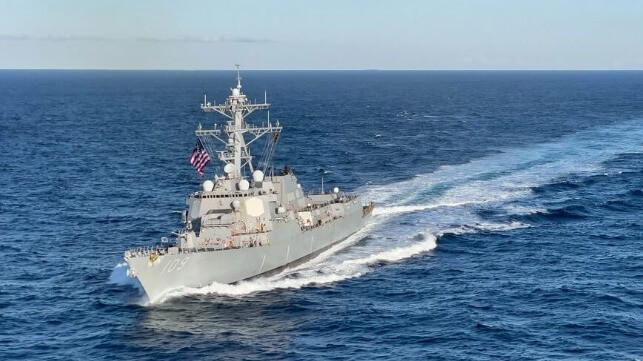
The U.S. Department of Defense confirmed in a brief statement that two Venezuelan jets overflew a U.S. warship in international waters in the Caribbean. The U.S. termed it a “highly provocative move,” warning the “cartel running Venezuela” not to interfere with its counter-narcotics and counter-terror operations.
CBS News, The New York Times, CNN, Reuters, and others are all reporting that two Venezuelan F-16 jets flew close to a U.S. destroyer in the Caribbean on Thursday. The warship was not identified in the official statement, but off the record, Pentagon sources told the media it was the Arleigh Burke-class Aegis guided missile destroyer USS Jason Dunham. Commissioned in 2010, the vessel is 9,200 tons (displacement) and normally has a complement of 380 aboard.
Reuters reports that at least seven U.S. warships have been deployed to the Caribbean carrying more than 4,500 sailors and Marines. The deployment has drawn criticism from Venezuela and global attention as the Trump administration has vowed to stop drug smuggling. Earlier this year, the administration declared Venezuela’s Tren de Aragua cartel a terrorist organization. Reuters is reporting that 10 U.S. F-35 jets have also been sent to Puerto Rico as part of the ongoing buildup of forces.
According to the reports, the two Venezuelan jets flew close to the U.S. warship. USS Jason Dunham did not engage the jets.
The Defense statement said, “Today, two Maduro regime military aircraft flew near a U.S. Navy vessel in international waters. This highly provocative move was designed to interfere with our counter narco-terror operations. The cartel running Venezuela is strongly advised not to pursue any further effort to obstruct, deter, or interfere …”
The incident came two days after the U.S. military destroyed a speedboat that it said was being used to smuggle drugs. Donald Trump announced the action, saying 11 individuals had been killed in the strike.
The administration has asserted that it will continue to pursue these types of strikes to stop drug smuggling. U.S. Secretary of State Marco Rubio had told reporters on Wednesday that previous efforts had not stopped the drug smuggling. He said, “What will stop them is when you blow them up.”
Earlier on Thursday, before reporting the incident, U.S. Defense Secretary Peter Hegseth defended the actions. He told reporters that the U.S. would continue its activities to stop the threat of illegal narcotics.
USS Jason Dunham had been deployed at the start of 2025 as part of the USS Harry S. Truman strike group when they were operating in the Red Sea. The vessel was part of the group when it was repeatedly targeted by the Houthis. The Truman left the region and returned to the United States in June after what the U.S. Navy called one of its “most combat-intensive missions” in decades.

No comments:
Post a Comment