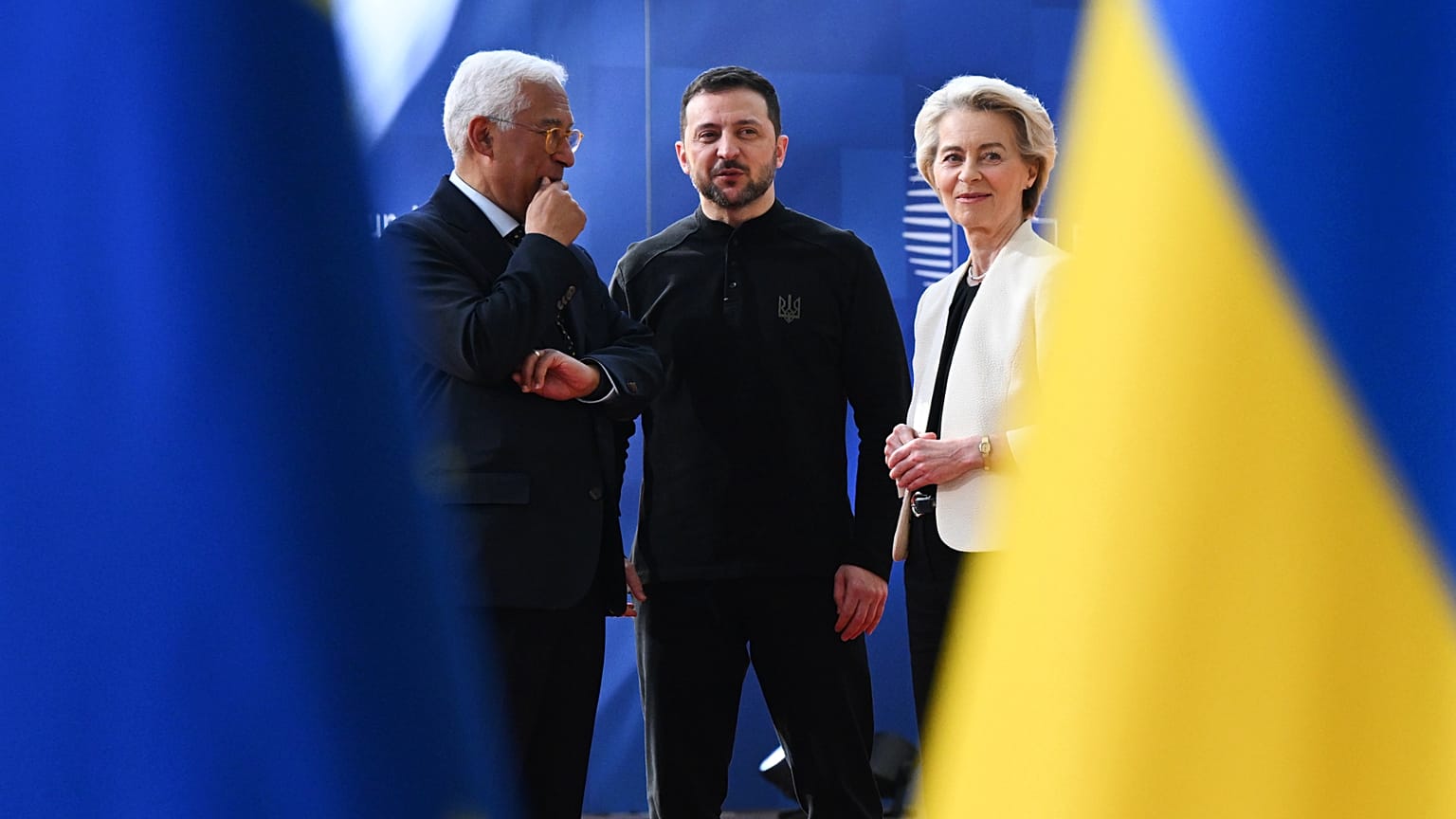
Copyright European Union, 2025.
By Jorge Liboreiro
Published on 20/12/2025 EURONEWS
The EU will jointly borrow €90 billion to support Ukraine's fight against Russia. The funds will be gradually disbursed and subject to conditions. Hungary, Slovakia and the Czech Republic will opt out of the scheme.
Reparations loan is out, joint debt is in. That is the agreement that the 27 leaders of the European Union reached at their make-or-break summit this week.
With the reparations loan ruled out for good, the bloc turns to common borrowing to raise €90 billion to meet Ukraine's budgetary and military needs for the next two years.
It is a simpler, faster and more predictable solution compared to the high-risk scheme of using the immbolised Russian assets. But joint debt is expensive, and immediately so.
Here's what you need to know about the plan.
Back to the markets
Since neither the EU nor its member states have €90 billion at their disposal at the moment, the European Commission will go to the markets and raise the money from scratch by issuing a mix of short-term and long-term bonds.
The €90 billion will be gradually dolled out to ensure a steady flow of assistance to Ukraine, which needs a fresh tranche as early as April. The country will be able to use the funds for both military and budgetary purposes for greater flexibility.
In the meantime, the EU budget will absorb the interest rates to spare Ukraine, already heavily indebted, from any additional burden. The Commission estimates that, under current rates, the interest payments will amount to €3 billion per year. This means the next EU budget (2028-2034) will have to make space for about €20 billion.
Member states will share the interest according to their economic weight. Germany, France, Italy, Spain and Poland will carry the highest costs.
According to Commission officials, the €90 billion will not count towards domestic levels of debt because the issuance will be done exclusively at the EU level.
Forever roll-over
Under a non-recourse loan agreement, Ukraine will be asked to pay back the €90 billion only after Russia ceases its war of aggression and agrees to pay war reparations.
Given that Moscow has emphatically ruled out the possibility of any compensation, the Commission is already prepared to roll out the liability over time so that Ukraine does not have to pay out of pocket, which will be painful after suffering so much devastation.
"The assumption is, today it's a non-recourse loan to Ukraine that is only paid back when reparations are there, and therefore this debt is going to be rolled over up until then," a senior Commission official explained.
But will the roll-over continue for eternity?
That seems unlikely. At some point in the future, the EU will have to settle the fate of the €90 billion to stop paying interest rates. The go-to method will be the EU budget, which will act as the ultimate guarantor to ensure investors are always paid back.
The three opt-outs
The reason why joint debt for Ukraine is now possible is that, as first reported by Euronews during the summit, Hungary, Slovakia and the Czech Republic agreed to refrain from vetoing in exchange for being exempted.
This is key because under current rules, the EU budget cannot be used to raise money for a non-EU country. Any changes to that effect will require unanimous approval.
Hungary, Slovakia and the Czech Republic will commit to that unanimity. In return, the bloc will activate the so-called "enhanced cooperation" mechanism to spare them from any costs and responsibilities associated with the €90 billion.
The other 24 countries will take over their share of the interest. But the change will be minimal because the three opt-outs only amount to 3.64% of the bloc's GNI.
The exemption will also be institutional. Once the budget rules are amended and the "enhanced cooperation" is triggered, the three countries will lose their voting rights to approve the regulation that will establish the new assistance programme.
In practice, they will be strictly removed from the initiative.
Strings attached
The Commission intends to recycle the now-discarded proposal of the reparations loan to set up the €90 billion common borrowing.
As a result, Ukraine will be subject to the same conditions to receive the funds.
One of them is a "no rollback" clause that will link the aid to the anti-corruption measures that Kyiv must implement to advance in its EU accession bid. The country was recently shaken by a corruption scandal in the energy sector that precipitated numerous resignations, including that of Andriy Yermak, President Zelenskyy's chief of staff.
If Kyiv takes a step back on the fight against corruption, as it briefly did in the summer when it undermined the independence of two anti-corruption agencies and prompted widespread protests, payments will be suspended.
There will also be safeguards to strengthen oversight on how Ukraine allocates defence contracts, which have been a source of controversy in the past.
Additionally, there will be "Made In Europe" criteria to ensure the €90 billion fosters Ukraine's and Europe's domestic defence industries. Only when the equipment is not readily available on the continent will purchases outside Europe be allowed.
Assets still on the table
Resorting to joint debt means the cash balances from the Russian assets will not be touched, as was originally planned in the reparations loan.
However, in their conclusions, EU leaders say they reserve "the right" to tap the assets, or at least try, sometime in the future, as a way to repay the €90 billion borrowing.
"For me, it's very difficult and very premature today to say how this will be translated in actual terms," a senior Commission official said when asked about the meaning.
"I think the message is pretty political, which is to say that the option to use the cash balance assets of the Russian Central Bank is not off the table."
The addition of the assets into the final wording is considered a way to placate those countries that were most vocally supportive of the reparations loan, particularly Germany, and had publicly ruled out the idea of common borrowing.
President Zelenskyy hailed the decision as an "important victory" for his country.
"Without these funds, it would be very difficult for us. In any case, this is tied to Russian reparations," he said. "For us, this is a reinforcement. It is a signal to the Russians that there is no point for them to continue the war because we have financial support, and therefore, we will not collapse on the front line. We will support our army and our people."
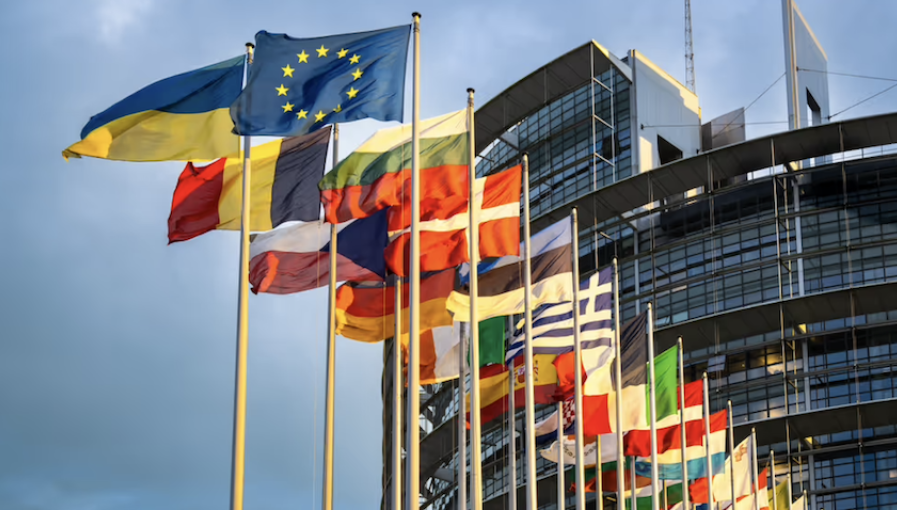
The EU’s vote on approving the €210bn Reparation Loan to fund Ukraine’s war for another two years failed after late night talks on December 18 found no compromises. The EU leaders gathered at the European Council (EUCO) summit have decided to go with a Plan B and raise €90bn by issuing collective debt instead to keep Kyiv in the fight.
"Today we approved a decision to provide €90bn to Ukraine," EU summit chairman Antonio Costa told a news conference early on December 19 after the talks. "As a matter of urgency, we will provide a loan backed by the European Union budget."
The EU reaffirmed its “unwavering” support for Ukraine and again called for an immediate ceasefire in a statement issued after the meetings ended.
Despite applying intense pressure, the deal failed after Belgium’s Prime Minister Bart De Wever and Italy’s Prime Minister Giorgia Meloni refused to vote for the measure.
Wever has objected to the deal as it exposes Belgium to being on the hook for tens of billions of euros should Russia successfully win a court order demanding its frozen money be repaid. Meloni has also come under intense US pressure to block the deal and refused to budge.
The EU has decided to raise €90bn loan by collective borrowing with the participation of 24 of the EU’s 27 member states. Hungary, Slovakia and Czechia have opted out. That should be just enough to fund the Ukrainian government in 2026 and 2027, although Ukraine remains under intense funding pressure.
"This is good news for Ukraine and bad news for Russia and this was our intention," German Chancellor Friedrich Merz said.
The decision will bring some relief for Ukrainian President Volodymyr Zelenskiy as Ukraine was facing a macroeconomic collapse in the first quarter of 2026 without fresh funds.
“We can’t let Ukraine face next year without answers on financing. The risk is real: a $45–50bn deficit, possibly more,” Zelenskiy said in his speech in Brussels. “Russia talks more about war than peace. Ukraine must stay strong — this isn’t just about the front, it’s about our ability to survive.”
The EU has successfully ringfenced the €210bn of frozen Russian cash in Europe and said the money will remain frozen until Russia pays reparations to Ukraine. That will put Brussels into conflict with Washington, which wants to use the money to fund a US-Ukraine reconstruction fund and another US-Russia investment fund.
The White House will be pleased the Reparation Loan vote failed and lobbied hard to prevent it being adopted. As part of America’s new National Security Strategy (NSS) it is now official policy to interfere in EU domestic politics.
Trump also has his eye on Russia’s frozen $300bn as included in the Witkoff-Dmitriev plan, named after its reported authors, US Special Envoy to the Middle East Steve Witkoff and the head of Russia’s sovereign wealth fund, Kirill Dmitriev, are plans for a $100bn US-Ukraine reconstruction fund and another $200bn US-Russian investment fund for commercial projects, using the CBR money.
In addition, Trump has started talks with Blackrock to revive a private capital $400bn reconstruction fund that becomes possible if a clean negotiated settlement is agreed that reduces the risks of the war restarting. The EU’s plan to perpetuate the war for at least another two years, according to Merz, creates an impossible investment climate that will attract no private capital at all for years, because of the Damoclesian threat of a renewed invasion by Russia.
Florida meeting
Trump has called for an all-or-nothing push this weekend in Miami, Florida, to close the Russo-Ukraine peace deal. Zelenskiy has already assembled his team in Miami and Trump will also travel to Florida on December 19 but it is unclear what role he will play in the upcoming talks. The Russian delegation will be led by head of Russia’s sovereign wealth fund, Kirill Dmitriev, who has been instrumental in stitching the 27-point peace plan (27PPP) together that is on the table that was thrashed out at the Moscow meeting on December 3.
Trump said on December 18 that the talks are moving toward an ending and are "getting close to something" ahead of the meeting in Miami this weekend. "I hope Ukraine moves quickly," he told the White House press pool on December 18.
The negotiations will centre on Bankova agreeing to give up control of all of the Donbas (Donetsk and Luhansk) but freezing the line of contact where it is in Zaporizhzhia and Kherson. The Crimea will also go to Russia.
The second key question is the details of the US security guarantees for Ukraine. While a US draft agreement looks like a real Article 5-like security guarantee, and includes a military action should Russia re-invade component, the devil is in the details, which are still being discussed. Zelenskiy wants to be sure the US will put boots on the ground if Russia attacks Ukraine again.
“There’s still a key question I don’t have an answer to. If Ukraine is not in Nato, how do security guarantees actually work? What exactly will the United States do if Russia attacks again? How will these guarantees function in practice?” He said in his speech in Brussels on December 18.
The EU is still refusing to offer Ukraine real security guarantees and is proposing instead mere “security assurances”. The main idea is that Ukraine take care of its own security by beefing up its standing army to 800,000 men – by far the largest army in Europe – that analysts say will be very expensive and difficult for a post-war Ukraine to pay for. The EU area also suggesting a multinational contingent of peacekeepers is stationed in Ukraine -an idea that was already rejected in April as unworkable. Both ideas are anathema to the Kremlin.
It’s decision time for Zelenskiy. The EU €90bn loan for Ukraine improves Zelenskiy’s hand in the Miami talks as he now has the option of fighting on with Europe’s help and can walk away from the US-backed deal if needed. A recent Kyiv International Institute of Sociology (KIIS) poll in Ukraine found that 75% of the population won’t back giving away territory to Russia, but 72% are open to compromise if a “just” peace deal can be struck.
Trump has also suggested that Ukraine’s EU accession bid be accelerated and Ukraine becomes a member in 2027, rather than the 2030 at earliest the EU itself has suggested is the earliest possible date. Since the end of the USSR, by far the most successful reform strategy for any formally Warsaw Pact country has been to join the EU.
Mirroring Trump’s comments that the US-Ukraine minerals deal signed on April 30 was “all the security Ukraine needs”, Zelenskiy appears to have accepted that his European partners will not give him a real security deal and that EU membership is the best he can hope for. The EU has said in the last week that a 2027 entry is “not practical” and has been dragging its heels on opening formal negotiations on the various clusters, which were supposed to kick off on July. Talks have been complicated by the mushrooming Energoatom corruption scandal.
“When it comes to US security guarantees, we’re negotiating the details. From Europe, the key guarantee is EU membership, including countries beyond the EU in the coalition of the willing. For Ukraine, EU accession means security: economic, political and geopolitical,” Zelenskiy told delegates in Brussels.
The Ukrainian president is afraid of a security deal that is similar to the Budapest Memorandum signed by Russia in 1994 that guaranteed Ukraine’s sovereignty in exchange for giving up its nucellar missiles. However, that deal was only a memorandum, not a treaty, and so has no force in international law, leaving the Kremlin free to walk away from its commitments.
Putin’s piggies
The Miami meeting will be key as it will be the first time that the feedback from a frenetic ten days of diplomacy that culminated in intense talks at the Berlin meeting on December 14-15 will put a revised version of the 27PPP deal in front of a Putin representee.
He may reject the revised deal out of hand. Russian Deputy Foreign Minister Sergei Ryabkov, who led the negotiations with former US Secretary of State Antony Blinken in January 2022 just before the war started, said in an interview this week that the Kremlin is prepared to make zero concessions on the status of Donbass, Novorossiya or Crimea.
“We are not able in any form to compromise on this, because it would be, in our view, a revision of a very fundamental element of our statehood, set forth through our constitution,” Ryabkov said.
Putin signalled this hard line by referring to Europeans as подсвинки (podsviniki), a subtle Russian colloquialism that literally means “under-pig”, but is maybe better translated as “nasty little piggies.” There is no direct English-language equivalent, but it is not as insulting as “pig” and widely used as a criticism of someone who is a “lackey”, “henchman” or “underling” for whom you have no respect.
Putin used the word to signal that he will ignore any suggestions the EU are making in the talks and that he is fully focused on the deal trashed out between Witkoff and Dmitriev. Dmitriev’s involvement and the absence of the veteran Russian Foreign Minister Sergei Lavrov also suggests strongly that business deals play a very important role in the talks.
The Kremlin has upped its rhetoric recently, as Putin referred to the “war” in Ukraine for the first time last week, using the Russian word for war, whereas he has always called it the “special military operation” (SVO) for all of the last four years.
Time running out
The Florida meeting may be the last chance for a negotiated peace deal to be agreed. Both Putin and Trump are in a rush to do a deal quickly. If it fails, then Trump has threatened to wash his hands of Ukraine and Putin has repeatedly said he is happy to settle the dispute in Ukraine by force.
The International Monetary Fund (IMF) warned that time is running out for Ukraine in a December 18 statement. The IMF said Ukraine is on the brink of bankruptcy without substantial funding. Kyiv will need a total of €137bn euros ($160bn) in 2026 and 2027 and needs the funds by spring or face collapse.
European Central Bank President Christine Lagarde also warned that the Reparation Loan idea was highly questionable. Addressing a press conference in Frankfurt after the ECB’s Governing Council meeting, Lagarde said she was “confident” that heads of government meeting in Brussels would thrash out a mechanism for lending to Kyiv, but said again that the ECB would not underwrite it, due to restrictions in its charter.
“We are an area of the world which praises itself for respecting the rule of law,” Lagarde said. “I’m sure that there are solutions that can be debated and discussed, and ... constructions that can be elaborated, but it’s not for the central bank to actually encourage [or]support a mechanism under which we would be called upon — and scheduled — to breach Article 123 of the Treaty.”
Article 123 forbids the ECB from printing money explicitly to finance government spending: something that happens if the EU lends Ukraine from its own budget, which is being proposed. “You cannot expect me to validate a mechanism under which there would be monetary financing,” Lagarde said as cited by Politico. “This is pretty obvious.”
Even if the Reparation Loan motion passed, EU action would be very slow in coming. A YES decision requires approval by the European Parliament that would only vote in January and also be subject to wrangling.
Polish Prime Minister Tusk said that "light years" would pass between the freezing of Russian funds and the potential use of these assets to rebuild Ukraine or provide military support. The same will apply to the €90bn collective loan that has been proposed to replace the Reparation Loan.
Belgium refused
In the end the EC couldn’t overcome Belgium’s objections. The Belgian government has put forward several conditions to the European Commission for the use of blocked assets for the Reparations Loan to Ukraine and the other member states refused to sign off on them.
The key demands include coverage of potential legal costs in the event of Russia's disputes with any EU country, the rejection of new investment agreements with Russia by European countries, and the termination of existing ones. Belgium reportedly wants the guarantees to be "independent and autonomous, remaining in force even if the loan is declared invalid," says CEO of Macro Advisory Chris Weafer.
Belgium’s Prime Minister Bart De Wever described the EU’s plan as a “a nice idea, stealing from the bad guy to give to the good guy. But stealing the frozen assets of another country has never been done.”
He added: “Even during the second world war, we did not confiscate Germany’s money. In a war, you freeze sovereign assets. And at the end, the losing side must give up all or part of those assets to compensate the victors,” he said, adding, it was “a fairytale, a complete illusion” to “imagine that Russia will lose this war in Ukraine”.
Moscow has, “let us know that if the assets are seized, Belgium, and me personally, will feel the effects for eternity”. The Reparation Loan is only repayable if Russia agrees to reparations and that will only happen if Russia is defeated militarily.
Permanently frozen
Despite the failure of th e Reparation Loan vote, the EU has successfully ringfenced the frozen assets that are no longer subject to the need for a semi-annual vote to renew the freeze, after it enacted Article 122 of the foundation treaty and used emergency powers to nix that provision. That move heads off a potential veto on renewing the freeze by Hungary that would have triggered a repayment of all the frozen funds.
Russia's Dmitriev said that European authorities will face "consequences for illegal actions" If it were to permanently freeze Russia's assets. "This isn't just about Russia—it's about undermining trust in the global reserve system, the rule of law, and Europe's financial solvency. Panicking EU bureaucrats will face consequences for their illegal actions," Dmitriev said in a social media post.
The cash is now frozen for the long-term allowing the EU to use the annual interest income from cash – about $4bn a year -- to service the collective borrowing loan to Ukraine, similar to the G7 €50bn loan extended to Ukraine last year.
“The proposal is that the loan would then be repaid from the frozen assets as part of a reparation deal (for damage) agreed with Moscow. The Kremlin has rejected the idea of any sort of reparation deal,” says Weafer.
Country exposure to frozen Russian assets:
Belgium $200bn (mostly in Euroclear)
France $70bn
Austria $15bn
Germany $5bn
UK $25bn
US $5bn
Switzerland $8bn
Japan $55bn
Source: bne IntelliNews from reports
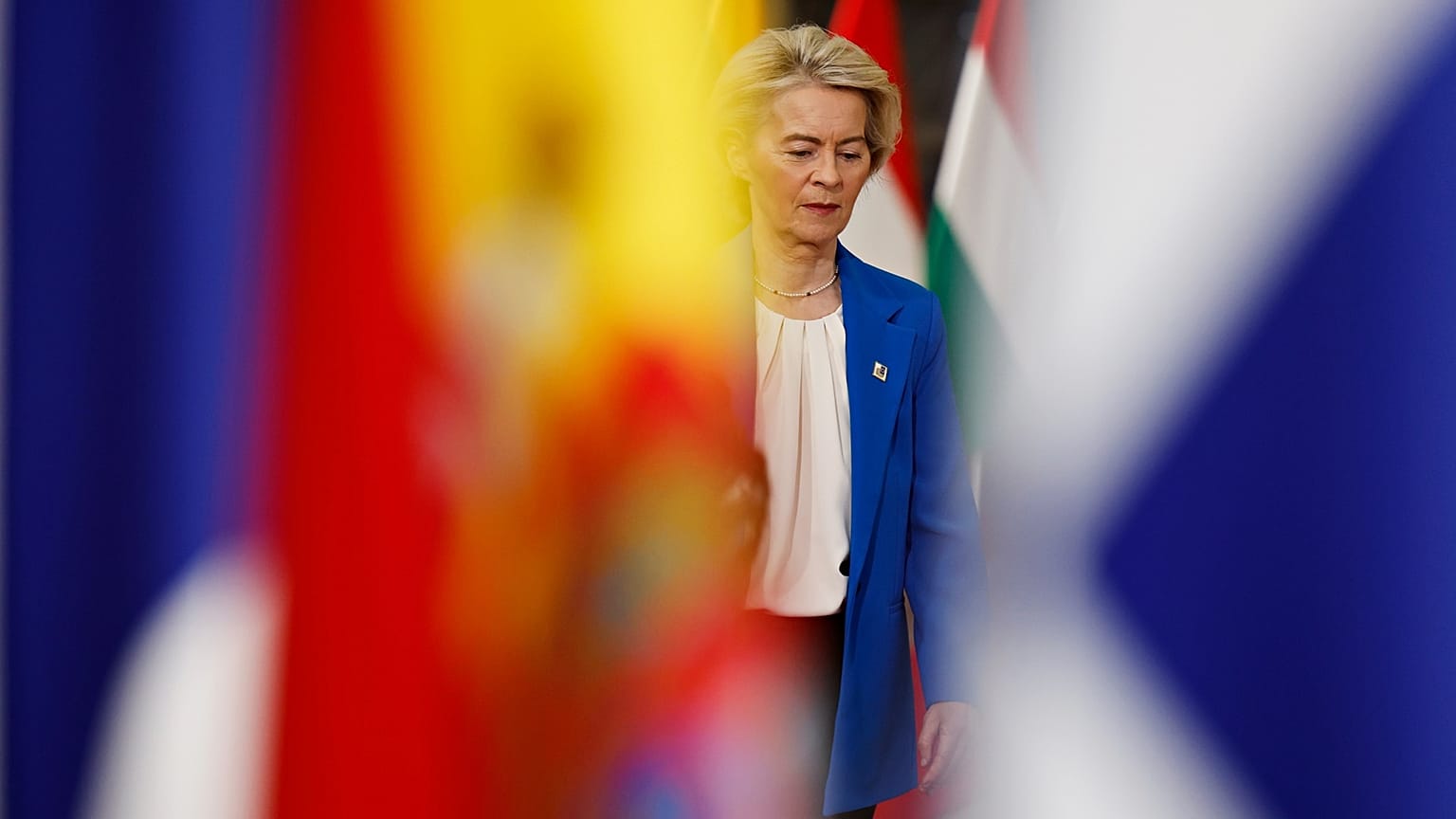
Copyright Geert Vanden Wijngaert/Copyright 2025 The AP. All rights reserved.
By Jorge Liboreiro
Published on 19/12/2025 - EURONEWS
On Thursday night, EU leaders realised that their planned reparations loan for Ukraine – a proposal without parallel in modern history – could not overcome the obstacles in its way.
It was so bold that, at times, it seemed impossible — and in the end, it was.
The European Union's attempt to channel the immobilised assets of the Russian Central Bank into a zero-interest reparations loan failed when the bloc's 27 leaders, faced with a leap into the unknown, chose to support Ukraine's resistance with the tried-and-tested method of joint debt.
"If you take money from (Russian President Vladimir) Putin, you are exposed," said Belgian Prime Minister Bart De Wever, the chief opponent of the reparations loan, explaining its failure. "If you're exposed, then people like certainty, and where can you find certainty? In charted waters."
The bloc will now go to the markets to raise €90 billion on its own, without touching the €210 billion in Russian assets, which will remain immobilised until Moscow ceases its war of aggression and compensates Kyiv for the damages.
The choice means that there will be no reparations loan — and not what the European Commission had promised to Ukraine, a complex proposal that advocates thought ingenious and detractors said was foolhardy.
Euronews has pieced together the events of the last four months to understand how and why the reparations loan spectacularly fell apart.
September: The pitch
The first appearance of the loan proposal dates back to 10 September, when European Commission President Ursula von der Leyen delivered her hour-long State of the EU speech in Strasbourg.
There she proposed using the cash balances from the immobilised Russian assets held in the EU to issue a reparations loan to support Ukraine. She did not provide any details at the time.
"This is Russia's war. And it is Russia that should pay," von der Leyen said. "It should not only be European taxpayers who bear the brunt."
But it was not von der Leyen who would define what was about to become the most energy-consuming political debate of 2025. It was German Chancellor Friedrich Merz.
A few days after von der Leyen's speech, he published an opinion piece in the Financial Times that offered a full endorsement of the project, presenting it as a foregone conclusion despite its lack of precedent.
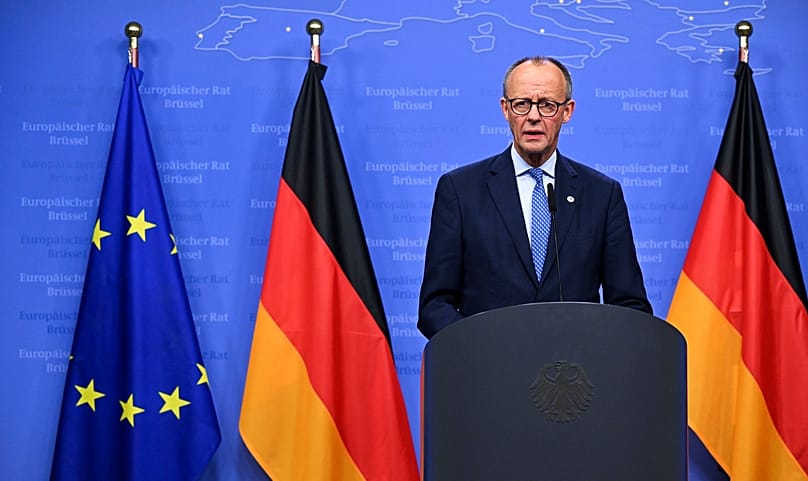
"That decision should, ideally, be unanimous," he wrote. "Failing that, it should be adopted by the large majority of member states who are firmly committed to Ukraine."
The so-called "Merz op-ed" caught diplomats and officials by surprise. Some saw it as yet another example of Germany exploiting its position as the largest member state to single-handedly set the agenda for the entire bloc.
Subsequently, the Commission put forward a two-page document that outlined, in highly theoretical terms, how the initiative would work in practice.
The chain of events triggered one country in particular.
October: The pushback
Belgium holds the bulk of the Russian assets — about €185 billion — in central securities depository Euroclear, and felt it should have been adequately consulted before the Commission's two-page proposal was circulated.
The Belgian resistance burst into the open in October when De Wever delivered a remarkably frank press conference in Copenhagen in which he argued the reparations loan would deprive the EU of its most powerful leverage vis-à-vis the Kremlin.
"The question now is: can we eat the chicken?" De Wever said. "The first problem, of course, is that you lose the golden eggs if you eat the chickens. You have to consider that. If you put the chicken on the table and you eat it, then you lose a golden egg."
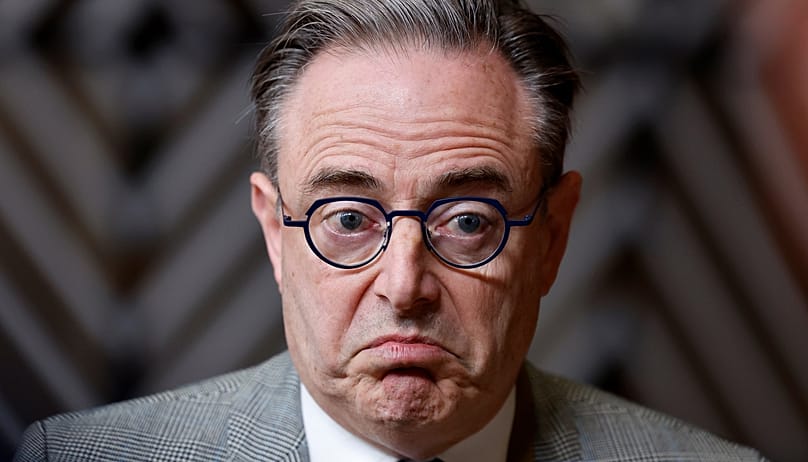
De Wever then delineated, one by one, his demands for the untested project: bulletproof legal certainty, full mutualisation of risks and real burden-sharing among all countries holding Russian sovereign assets.
He reiterated his concerns about the plan during a closely watched summit in mid-October, where leaders hoped to endorse the reparations loan. De Wever held his ground, and the meeting ended with a vague mandate tasking the Commission to design several "options" that could meet Ukraine's financial and military needs for 2026 and 2027.
Von der Leyen, however, seemed to interpret the mandate as an implicit affirmation of her bold idea, which she framed as the only viable option.
"There are points to be clarified and have a deep dive," she said at the end of the summit. "We agreed on the what, that is, the reparations loan, and we have to work on the how, how we make it possible (and) what's the best option to move forward."
A few days later, the EU's three Nordic leaders publicly ruled out issuing joint debt to support Ukraine. Danish Prime Minister Mette Frederiksen went as far as to declare that "for me, there is no alternative to the reparations loan".
November: The shock
The inconclusive summit revealed that without Belgium's consent, the reparations loan would not be possible. The Commission accelerated bilateral talks with De Wever's team to address the sticking points and sketch out a landing zone.
On 17 November, von der Leyen sent leaders a letter detailing three options to raise €90 billion for Ukraine: bilateral voluntary contributions, joint debt and the reparations loan.
"The options presented in this note are stark both in their design and in their implications. Clearly, there are no easy options," she said.
The section devoted to the reparations loan was explicitly written to mitigate the Belgian concerns. It addressed two of De Wever's key demands: providing "legally binding, unconditional, irrevocable and on-demand guarantees" and securing the participation of all EU and G7 countries holding Russian sovereign assets.
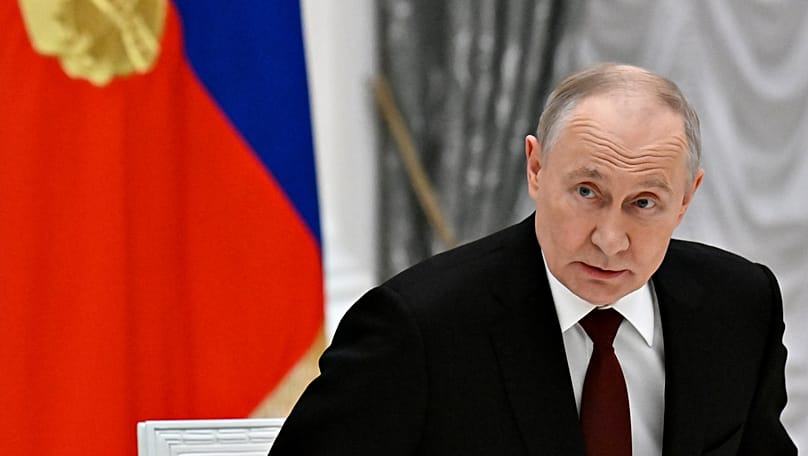
The letter also acknowledged the disadvantages of the reparations loan, warning of reputational damage to the eurozone and "knock-on effects" for its financial stability.
Just as diplomats were digesting von der Leyen's matter-of-fact assessment, a hurricane swept through Europe: the now-infamous 28-point plan drafted by US and Russian officials to end the war in Ukraine that, among other things, proposed using the immobilised assets for the commercial benefit of both Washington and Moscow.
The plan incensed European leaders, who quickly closed ranks and emphasised that any issue within European jurisdiction would require full European involvement. Rather than weakening the case for the reparations loan, the 28-point plan seemed to strengthen it.
But then, De Wever re-entered the scene with a strongly worded letter to von der Leyen describing her blueprint as "fundamentally wrong" and riddled with "multifold dangers".
"Hastily moving forward on the proposed reparations loan scheme would have, as collateral damage, that we, as the EU, are effectively preventing reaching an eventual peace deal," De Wever said in the most controversial segment of the letter.
His invective revealed the chasm that still existed between Belgium and the Commission, and raised the bar even higher for a compromise.
December: The collapse
Undeterred by De Wever's castigations, von der Leyen forged ahead and unveiled the legal texts of the reparations loan in early December — just as the European Central Bank declined to provide a liquidity backstop for the measure.
The complex proposal, which diplomats said arrived too late in the process, further expanded the guarantees to protect Belgium, erected safeguards to nullify arbitration and created an "offset" mechanism to recoup any eventual losses.
"We want to make very sure to all our member states, but specifically also to Belgium, that we will share the burden in a fair way, as it is the European way," von der Leyen said.
This time, the pushback came from Euroclear itself, rather than De Wever. In a statement to Euronews, the depository decried the texts as "very fragile," describing them as excessively experimental and liable to trigger an exodus of foreign investors from the eurozone.
As uncertainty over the project deepened, the leaders of Estonia, Finland, Ireland, Latvia, Lithuania, Poland and Sweden came together in its defence.
"In addition to being the most financially feasible and politically realistic solution, it addresses the fundamental principles of Ukraine's right of compensation for damages caused by the aggression," they wrote in a joint statement.
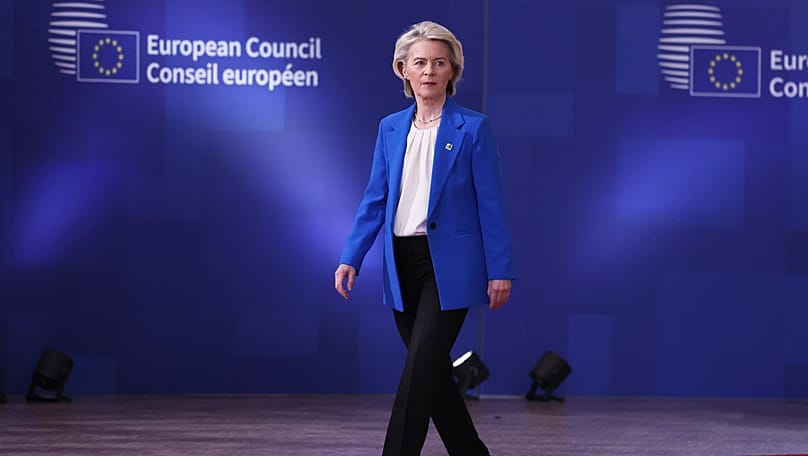
High-level Commission officials, from Kaja Kallas to Valdis Dombrovskis, echoed von der Leyen's message and framed the reparations loan as the most credible option.
The proposal was bolstered after member states, fearing a repeat of the 28-point plan, invoked an emergency clause to indefinitely immobilise the Russian assets, something that on paper could help alleviate one of Belgium's most pressing concerns.
Yet the momentum proved to be short-lived.
In an unexpected twist, Italy, Bulgaria and Malta joined Belgium in urging the Commission to explore "alternative solutions" to finance Ukraine with "predictable parameters" and "significantly less risks". Separately, Andrej Babiš, the newly appointed prime minister of the Czech Republic, called on the Commission to "find other ways".
The reservations set the scene for the make-or-break summit on 18 December.
During the closed-door talks, officials worked to address all the outstanding Belgian concerns and unblock the reparations loan. But in the end, the effort backfired, instead laying bare the scope of commitment that governments were required to undertake.
At one point, a compromise was floated: to provide "uncapped" guarantees and reimburse "all amounts and damages" stemming from the scheme.
The wording was too much for the sleep-deprived leaders: all of a sudden, they were staring down the prospect of bailing out the entire Belgian banking system.
Faced with mounting concessions and liabilities, leaders shelved the reparations loan and opted for joint debt.
"I knew beforehand that the enthusiasm for the reparations loan was not so big as people thought it would be," De Wever said, suggesting that von der Leyen, while doing an "excellent job," had been misled by Germany, the Nordics and the Baltic states.
"It turned out, as I knew it would, that many more countries that hadn't spoken yet were extremely critical of all the financial aspects of it, finding out that a simple truth: there is no free money in the world. It just does not exist."
MACRO ADVISORY: Implications of seizing frozen Russian assets for foreign investors and companies in Russia
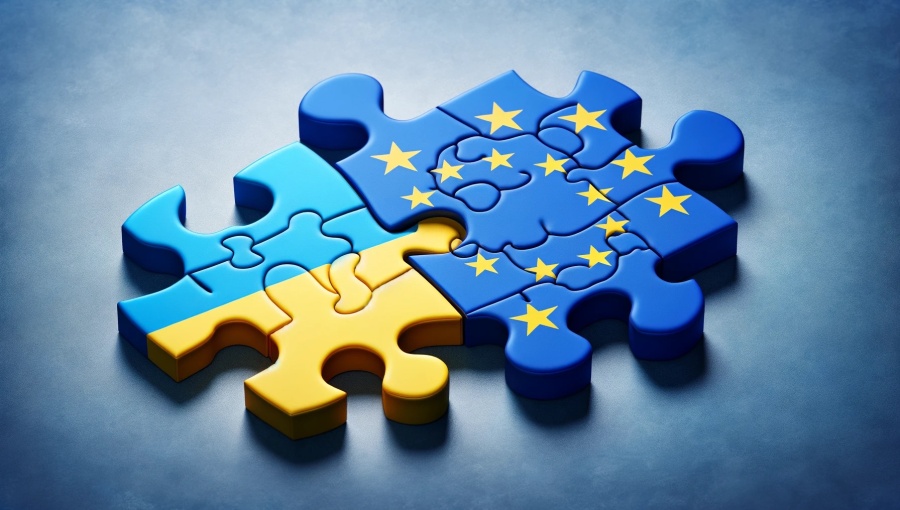
The EU is today (and maybe tomorrow) discussing how to formally use the frozen Russian Central Assets to fund Ukraine
- Financial institutions and legal experts are warning against outright confiscation – as is Belgium, which is most at risk of Russian retaliatory actions
- The most likely outcome will be an agreement to use income from frozen assets to fund a loan to Ukraine and then to repay the loan from (hoped for) Russian reparations. Russia has ruled any such reparations as unacceptable
- Moscow has not previously retaliated to the confiscation of income (approx. $5 bln) but has now made clear it will start to take such actions (on a $ for $ basis) if the EU formalizes the confiscation of “Russian income or assets”
- It would mean that money now frozen in the I and C accounts in Russia would be targeted first. It is unclear whether the money owned by investors and companies in countries directly involved in the “confiscation process” would be targeted or whether all EU investors and companies would be held accountable
- The U.S. and UK would be expected to join in any action taken by the EU (and would be a possible target for reciprocal action on a proportionate basis) while Japan and Switzerland have not confirmed either way at this stage
- Only in the (now very unlikely) scenario where the EU decides to confiscate the underlying CBR assets, or a portion of it, would EU/UK/US corporate assets be at risk. This is unlikely under the (expected) scenario of a use of income
- Moscow is unlikely, in any event, to target any US assets because of the clear wish to strike a deal with Washington and to work with US strategic companies. That is not the case with most EU states or the UK
EU summit to formalise use of Russian frozen assets. The issue of the frozen Central Bank assets appears to be finally coming to a head at the EU summit in Brussels (today and tomorrow). The head of the EC, Ursula Von der Leyen, said this morning that no one will leave the EU summit until the issue of funding for Ukraine is resolved. This is despite the Hungarian PM saying that the issue cannot be resolved (he would veto any decision to confiscate money) and the Belgian Prime Minister again stated that while compromise is impossible on several provisions regarding the use of frozen Russian assets, on some other issues (not specified) a compromise is impossible.
"I can certainly compromise, but on a number of points that threaten the financial security of Europe and Belgium, this is impossible. To be absolutely clear: this is impossible," the PM stated to the media
IMF warns that time is running out for Ukraine. This is against the backdrop of a statement (this morning) from the IMF that Ukraine is on the brink of bankruptcy without substantial funding. According to the IMF, Kyiv it will need a total of 137 billion euros ($160 billion) in 2026 and 2027 and needs the funds by spring.
Backdrop
Moscow has not retaliated to income previously confiscated. The EU has been using income generated by the frozen Euroclear money to provide funding to Ukraine for several years. Despite statements from the Russian Finance Ministry that any confiscation of Russian money would be met with a similar ($ for $) response, so far Russia has not retaliated to the approximate $5 bln that the EU has transferred. The Russian government has, so far, differentiated between the money frozen in the G7/EU in February 2022 and the income earned since…the former is a red line while the latter has not been (thus far).
Action and Reaction
That is now about to change. But the EU is now discussing how to use the money to fund Ukraine and will either confiscate the money held in the EU or will lock it up indefinitely. Moscow views either option as a “theft” and will now retaliate. The process of retaliation has already started (see below), and very clear threats have been made about retaliatory asset confiscation.
The worst case is that the EU decides to confiscate all or some of the Russian money now frozen in Belgium and in other EU states (approximately $280 bln by consensus estimates – TBC). In this case, Moscow will grab a similar amount of EU assets .. starting with frozen I and C and then some corporate assets if the financial assets are not sufficient.
The other – and more likely option - is that the EU decides on a long-term freeze of the Russian assets so the EU can use the annual income to service a loan to Ukraine. The proposal is that the loan would then be repaid from the frozen assets as part of a reparation deal (for damage) agreed with Moscow. The Kremlin has rejected the idea of any sort of reparation deal.
This latter option would mean the confiscation of only the income generated by the frozen assets (not the underlying money) for an indefinite number of years. But, while Russia has not previously reacted to the confiscation of income, that would certainly change with this new approach by the EU.
I and C accounts would be used. The “annual loss” would be a smaller amount and, if Russia retaliates $ for $, the amount would be covered by the financial assets in I and C accounts. However, based on the initiation of legal actions by the CBR (below) and statements made by Russian officials, they would treat even this “confiscation of income on a longer-term basis) as a full confiscation and would retaliate
What it may mean for companies
EU companies potentially face the greatest risk (but it must be stressed this is based on worst case and threat made…what happens in reality will also depend on whether, and on what terms, there is a peace deal)
The financial assets in the I and C accounts are the most at risk and would certainly be targeted. Perhaps on a proportionate basis for all EU states or based on a proportion calculated on who has Russian assets in the EU. Currently Belgium is most at risk (close to $200 bln), followed by France (circa $70 bln), Austria (circa $15 bln) and Germany (circa $5 bln).
The UK would almost certainly participate in the actions agreed by the EU, and it currently holds approximately $25 bln of Russian assets.
The U.S. would also likely join the EU action – it has only $5 bln of assets frozen
Switzerland’s position is unknown at this stage – it holds approximately $8 bln
Japan also appears undecided – it holds approximately $55 bln
Compensation on a proportionate basis? So, based on what the Russian officials have been saying, if the EU, UK, and the US take the same actions, the Russia would target assets belonging to these countries, companies registered in these countries or citizens, on a proportionate basis to the money lost.
It is also unclear whether – despite threats to include countries not actually holding any Russian assets, e.g. Norway – the action to confiscate would be confined to those states actually holding Russian assets in Europe or to all EU member states by association.
What Moscow is saying
Actions and deliberate speculation. There have been some specific actions – the CBR initiation claim in a Russian court (below) – and a lot of (probably) deliberate speculation and threats made ahead of today’s EU summit.
Central Bank reaction. "The Bank of Russia reserves the right, without further notice, to proceed to the practical implementation of all available legal and other mechanisms to protect its interests in the event of further progress or any form of implementation of the aforementioned European Union initiatives under discussion," the Central Bank emphasized.
Special Representative Kirill Dmitriev stated that European authorities will face "consequences for illegal actions" If it were to permanently freeze Russia's assets. "This isn't just about Russia—it's about undermining trust in the global reserve system, the rule of law, and Europe's financial solvency. Panicking EU bureaucrats will face consequences for their illegal actions," Dmitriev said.
Timeline
On December 9, Russian presidential press secretary Dmitry Peskov stated that Europe would face serious consequences if Russian assets were seized. The Kremlin spokesman recalled President Putin's statement that the Russian government was involved in this matter. According to the press secretary, there is already an understanding of how to proceed.
On December 12, the EU Council approved an indefinite freeze on the assets until the end of hostilities in Ukraine. Previously, European countries voted to extend the freeze every six months. Approximately €210 billion in Russian assets have been frozen in the EU since 2022.
On December 15, the Moscow Arbitration Court received a lawsuit from the Central Bank of the Russian Federation against Euroclear for 18.17 trillion rubles. The Belgian depository holds €180 billion in frozen assets of the Russian regulator.
Why Moscow courts? The Central Bank explained its filing of the lawsuit against Euroclear in the Moscow Arbitration Court by the nature of the dispute over state property.
- The assets of the Bank of Russia are federal property in accordance with the Law "On the Bank of Russia," and therefore, the dispute with Euroclear falls under the category of disputes over property owned by the state of the Russian Federation. Therefore, according to the CBR, the dispute falls within the exclusive jurisdiction of Russian arbitration courts and is subject to review by the Moscow Arbitration Court.
- Euroclear's actions in complying with anti-Russian sanctions constitute culpable misconduct that has resulted in losses. Guided by sanctions against Russia and its citizens, Euroclear is receiving income from blocked Russian assets, the CBR stated. For the first nine months of 2025, interest income from sanctioned Russian assets amounted to €3.9 billion.
- Since February 2022, in accordance with EU Council regulations, Euroclear has been taking actions that make it impossible for the Bank of Russia to use and manage funds, securities, payments, and income on them.
Comments from the EU/G7
Belgium remains wary. The Belgian government has put forward several conditions to the European Commission for the use of blocked assets for a "reparations loan" to Ukraine. The key demands include coverage of potential legal costs in the event of Russia's disputes with any EU country, the rejection of new investment agreements with Russia by European countries, and the termination of existing ones. Belgium reportedly wants the guarantees to be "independent and autonomous, remaining in force even if the loan is declared invalid."
Belgian PM’s warning. The Belgian prime minister described the EU’s plan as a “a nice idea, stealing from the bad guy to give to the good guy. But stealing the frozen assets of another country has never been done.” He added: “Even during the second world war, we did not confiscate Germany’s money. In a war, you freeze sovereign assets. And at the end, the losing side must give up all or part of those assets to compensate the victors.” But, the PM stated, it was “a fairytale, a complete illusion” to “imagine that Russia will lose this war in Ukraine”. Moscow had “let us know that if the assets are seized, Belgium, and me personally, will feel the effects for eternity”.
British banks opposed the transfer. It has been reported (FT, citing sources) that UK banks expressed dissatisfaction with the government's plans to channel almost £8 billion in Russian assets to finance Ukraine. They fear serious legal risks.
Poland has little confidence of immediate action. Speaking at a press conference following a meeting in Berlin between the leaders of several European countries and President Zelenskyy, Polish Prime Minister Tusk said that "light years" would pass between the freezing of Russian funds and the potential use of these assets for the reconstruction of Ukraine or the provision of military support. He expressed confidence that no fundamental decisions on this issue would be made at the EU summit this week.


No comments:
Post a Comment