Beyond the Headlines: Why Iran’s Protest Wave Can’t Be Reduced to One Name
Monday 26 January 2026, by Siyavash Shahabi
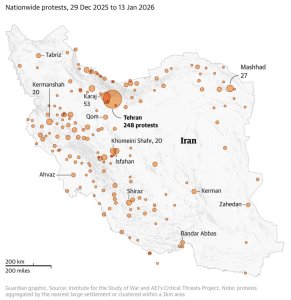
As Iran’s new wave of nationwide protests enters its 12th day [1]—and as reports of a widespread internet blackout since last night circulate—an old debate has returned to the center of political discussion with new speed: are “calls to action” from political figures driving the streets, or are they mainly an attempt to ride a movement that is already happening?
BBC Persian tackled this question on its program Goftogoo-ye Vizheh, hosted by Farnaz Ghazi-Zadeh, in a conversation with Leila Hosseinzadeh, a former student activist and political prisoner. In recent years, Hosseinzadeh has become known for her consistent focus on economic justice and labor and professional demands, while also stressing minority rights. One of the most widely noted moments in her public story was about two years ago, when she defended her thesis without compulsory hijab and wearing Kurdish dress—an act that, many observers say, pushed the language and space of student activism into a new phase. Hosseinzadeh was born in 1991 (1370 in the Iranian calendar). She says she began political and civil activism in 2009, at age 18, and she is currently in Germany on a research fellowship.
Monday 26 January 2026, by Siyavash Shahabi
As Iran’s new wave of nationwide protests enters its 12th day [1]—and as reports of a widespread internet blackout since last night circulate—an old debate has returned to the center of political discussion with new speed: are “calls to action” from political figures driving the streets, or are they mainly an attempt to ride a movement that is already happening?
BBC Persian tackled this question on its program Goftogoo-ye Vizheh, hosted by Farnaz Ghazi-Zadeh, in a conversation with Leila Hosseinzadeh, a former student activist and political prisoner. In recent years, Hosseinzadeh has become known for her consistent focus on economic justice and labor and professional demands, while also stressing minority rights. One of the most widely noted moments in her public story was about two years ago, when she defended her thesis without compulsory hijab and wearing Kurdish dress—an act that, many observers say, pushed the language and space of student activism into a new phase. Hosseinzadeh was born in 1991 (1370 in the Iranian calendar). She says she began political and civil activism in 2009, at age 18, and she is currently in Germany on a research fellowship.
Linking the protests to Pahlavi’s call is a mistake”
The program’s first question went straight to the core issue. Hosseinzadeh—who has long emphasized “bottom-up organizing”—was asked how she sees mass public action when it is framed through calls made by well-known political figures.
Her answer flipped the dominant narrative of these days. She argued that the protests have been underway for 12 days, while Reza Pahlavi’s call was issued only two days ago. So, she said, tying the start of the protests—or even their expansion—to his call is fundamentally wrong. In a sarcastic tone, she added that many political figures in Iran behave like the king in The Little Prince: first they watch what people are doing, and then they “announce” the same thing as if it were their own call to action. In her view, this pattern is not limited to high politics; she says it has repeated across different arenas, from resistance to compulsory hijab to labor and professional protests.
At the same time, she stressed that because the internet has been cut, the picture on the ground is still unclear. Still, she said available reports suggest turnout has been far broader than previous nights, and she sees this as a natural result of how protests have been spreading—not the product of an outside call. She does not deny that political figures have real supporters inside Iran, but she argues that the “one-to-one” link between a single figure’s call and the logic of protest expansion does not match the reality of the past decade.
From the bazaar to the streets—and the logic that “any spark can become a fire”
Explaining what she calls the internal logic of the protests, Hosseinzadeh pointed to where they began. She said the protests started from the bazaar. She noted that in Iran, bazaar protests usually stay limited to that sector, but this time they expanded with accelerating speed. In her view, conditions have become so unbearable for ordinary people that “any spark” can set off a larger blaze—and as long as protesters can push past the forces of repression, the protests will keep spreading.
Within that framework, she referred to earlier experiences and said that even the “freeing” of cities—if only for a few hours or days—has happened frequently over the past eight years. In her account, December 2017 (Dey 96) marked the start of a diverse, multi-stream anti-regime movement. She added that in November 2019 (Aban 98), if it hadn’t been stopped by what she described as a “mass killing,” the protests could have moved forward even faster than what we see today. As an example, she said that in just a few days back then, parts of major cities were effectively “freed.”
Her conclusion was clear: if you look from inside the field, what is being called “unprecedented” is not unprecedented in form or pattern. If anything, she argued, repression and social fractures have sometimes increased the protests’ “inertia,” making some groups join more cautiously or with more hesitation. But she sees the growing boldness—and the stronger emphasis on people’s “right to legitimate self-defense”—as a logical outcome of state violence: people have concluded they cannot move forward in any other way.
Today’s difference: the risk of shrinking a diverse movement into “one unity”
When the host asked what has been different over these two weeks, Hosseinzadeh highlighted one central worry: that the movement’s diversity is being taken over and reduced in favor of a forced “oneness,” a single unity, and a kind of one-power narrative. She argued that the movement that began in Dey 96 was strengthened from the very start by the entry of many different social forces—without those forces censoring themselves or shrinking their demands to fit one ideology, one faction, or one political brand.
To illustrate that diversity, she placed several images side by side: the overlap between the Dey 96 protests and protests by Arabs in Khuzestan framed as the “Dignity Uprising,” the emergence of the “Girls of Revolution Street” after Vida Movahed’s action, students standing alongside the wider public, and the sit-in by dervishes outside a prison. In her view, the movement has always advanced through this multi-voiced reality—and any project that tries to compress it into a single “figure” or a single flag will eventually crash into the actual complexity of Iranian society.
The “grey middle” argument—and her sharp pushback on leader-centered politics
In one of the tensest parts of the conversation, the host raised a familiar argument: some say that to bring in the “grey middle”—people who are hesitant or politically quiet—you need a prominent figure, and that Reza Pahlavi has now stepped into that role.
Hosseinzadeh answered that bazaar strikes in Tabriz and Isfahan happened before Pahlavi’s call, and if you want to talk about the “grey middle,” those groups are among the clearest examples. From her perspective, throwing a “rope” into the middle so people can grab onto it is an old, worn-out, and ineffective model of how street uprisings and revolutions actually organize. She said this model has repeatedly shown its failure even within this movement—but it keeps coming back, not because no other methods exist, but because “other interests” are at work that insist on keeping politics centered around famous faces.
She returned to Dey 96 to press the point: at that time, which of today’s big names truly believed this regime could be brought down? She then moved to a deeper structural factor: over the last two or three decades, the Islamic Republic has harshly cracked down on any kind of civil, labor, or professional organizing—from environmental groups and charities to student organizations—and today, she said, many of the most prominent figures in social and labor fields are in prison. Under those conditions, she asked, how can anyone expect these groups to function “normally”?
“We’ll get to democracy later”—or why democracy has to be confronted now
The host then raised another common concern: isn’t it time to move past these disputes, focus on change first, and only after the Islamic Republic is transformed deal with how to achieve democracy?
While Hosseinzadeh emotionally emphasized her personal wish to see the regime fall, she warned that the logic of “let it fall first, we’ll fix it later” is exactly where history can repeat itself with a new face. She said even if someone, crushed by unbearable conditions, says “fine—let it fall, and then we’ll see,” the approach of what she called the “main opposition,” which has become the loudest voice through media and money, shows signs of something else: it looks more like an effort to control the protests than to help push them toward genuine change.
In her view, labeling minorities and inflaming ethnic sensitivities is one sign of that controlling approach. She argued that even before anything has happened, large parts of the population get pushed aside through stigma and accusations—something she sees as directly opposed to the reality of Iran’s diverse society. Her bottom line was that this kind of politics dulls the edge of broad social forces, pulls them into doubt, and even makes people who were in the streets until yesterday worry: “What if we’re the first ones to be sacrificed?”
“Leaders get manufactured”
Asked what pro-democracy groups should do at this moment, Hosseinzadeh said the first step is to abandon old, unproductive habits—like gathering a few famous figures, announcing an alliance, and imagining that regime change will happen through that alone. She argued that many of these figures did not come from the street, and they are not connected to real networks or organized social bases.
She then gave a personal example: after being released from prison in 2022 (1401), she said she suddenly saw people presented in the media as “leaders of the movement.” Her point was blunt: leadership is being manufactured—often without a clear answer about what that person’s real relationship to the field actually is.
When the host noted that “becoming a figure” can sometimes come out of real struggle—and that Pahlavi, as the former شاه’s son, has long been a political name—Hosseinzadeh drew a distinction. She said her criticism targets figures who are “grown” through media projects and pushed into a central role in an artificial way. As for Pahlavi, she acknowledged that his family background gave him a built-in platform, but she argued that this visibility does not automatically create legitimacy for a project that tries to seize or reshape a diverse movement.
The host also pointed to pro-Pahlavi slogans being heard in the streets. Hosseinzadeh accepted that he has supporters among part of the public, but she made a provocative argument: popularity alone does not create political legitimacy, and it does not necessarily point to the most effective path toward unity that can actually bring down the regime.
Her proposed way out of the deadlock: learn from people, and give it back to people
When asked directly what the way out of the impasse is, Hosseinzadeh emphasized two paths. First: drop leader-centered politics and symbolic, media-friendly alliances. Second: do something she described as “simple, but hard in practice”—for those who want to act as guides rather than bosses. They should learn from what people are already doing, understand its strengths and weaknesses, spread what works, and “return it to the people.”
She stressed that the internet blackout happened in 2019 too, and cities being temporarily “freed” has happened many times—yet she asked: which political force, opposition outlet, or activist has seriously investigated how people organized themselves, how they confronted repression, and how they managed to move forward?
She said she tried to fill this gap herself, mentioning that she wrote two comprehensive reports on the 2019 and 2022 protests. But she added a sharper critique: opposition media, she said, have not even produced serious critical content analysis of their own performance. Without that kind of self-criticism, she argued, anxiety remains high and mistakes keep repeating.
The closing note: speaking to democratic forces, not judging people in the street
In the final part, the host returned to a practical question: isn’t it understandable that someone who is exhausted by daily pressure might be drawn to a force that offers an “emergency plan” and a concrete roadmap?
Hosseinzadeh responded that she is not trying to lecture people in the streets—people who, as she described it, are at a point where they either fight, get killed, topple the regime, or die trying. Her message, she said, is aimed at pro-democracy forces and the hesitant social groups who fear that, after so much blood and struggle, another form of authoritarianism and plunder could be reproduced.
Her core warning was stark: if democratic forces stay trapped in fragmentation and inaction, they risk recreating the same historical patterns—patterns where power slips through cracks at decisive moments, and the future gets seized against freedom.
The interview ended with thanks from the host and the hope of continuing the conversation later. But Hosseinzadeh’s main line was simple: the street is the product of a decade of accumulated pressure, repression, and scattered bottom-up organizing. Famous figures arrive late. The real danger is that, instead of strengthening the movement’s diversity and real field experience, projects emerge whose goal is not to open a road to freedom—but to manage and control a movement that has already broken out of control.(Summary and presentation of the interview, in English, by Siyavash Shahabi.
12 January 2026
Source: The Fire Next TIme.
Attached documentsbeyond-the-headlines-why-iran-s-protest-wave-can-t-be_a9383.pdf (PDF - 1007 KiB)
Extraction PDF [->article9383]
Footnotes
[1] 28 December 2025 to 12 January 2026, see the map showing the cities where protests are taking place
Iran
A new popular uprising in Iran
Iran on fire: rebellion returns to the streets
Support for the struggle of the people of Iran!
Iran’s regime in a predicament of its own making
Neofascism, Imperialism, War, and Revolution in the Middle East
Protest movements
ICE Murder of Minneapolis Woman Leads to Grief, Anger, Sparks National Protests
Support the prisoners, stop the repression in Tunisia
When past and present collide: Indonesia 1965-2025
The streets against the regime in Serbia: one year of mobilization in review
Mobilization shakes regime in Madagascar
Siyavash Shahabi, a freelance writer and journalist, is a political refugee in Athens. He writes regularly about Iran, the Middle East and the situation of refugees in Europe. He is also the author of critical reflections on religion.
Rights group says Iran protest toll nears 6,000 dead
By AFP
January 26, 2026

The death toll from Iran's protest movement has been rising,
Iranians struggle as internet shutdown hits livelihoodsBy AFP
January 26, 2026
The death toll from Iran's protest movement has been rising,
according to figures from NGOs - Copyright AFP Yasin AKGUL
Stuart Williams
A US-based rights group said on Monday it had confirmed the deaths of nearly 6,000 people during a wave of protests in Iran suppressed by security forces, as Tehran warned Washington against intervening.
The protests started in late December, driven by economic grievances, but turned into a mass movement against the Islamic republic, with huge street demonstrations for several days from January 8.
But rights groups have accused authorities of launching an unprecedented crackdown by shooting directly at the protesters under the cover of an internet shutdown that has now lasted an unprecedented 18 days.
The clerical leadership who took power after the 1979 Islamic revolution remains in place despite the protests, with many opponents of the system looking to outside intervention as the most likely driver of change.
US President Donald Trump had appeared to step back from military intervention, but has since insisted it remains an option.
He said last week that Washington was sending a “massive fleet” to the region “just in case”. Iran’s foreign ministry warned on Monday of a “comprehensive and regret-inducing response to any aggression”.
NGOs tracking the toll from the crackdown have said their task has been impeded by the internet shutdown, warning that confirmed figures are likely to be far lower than the actual toll.
The US-based Human Rights Activists News Agency (HRANA) said it had confirmed that 5,848 people had been killed, including 209 members of the security forces. But the group added it was still investigating another 17,091 possible fatalities.
At least 41,283 people have been arrested, it said. Giving their first official toll from the protests, Iranian authorities last week said 3,117 people were killed, the majority of whom it described as members of the security forces or innocent bystanders killed by “rioters”.
– ‘Reap the whirlwind’ –
Confirming that the internet blackout remains in place, monitor Netblocks said the shutdown was “obscuring the extent of a deadly crackdown on civilians”.
“Gaps in the filternet are being tightened to limit circumvention while whitelisted regime accounts promote the Islamic Republic’s narrative,” it added.
Over the weekend, Persian-language TV channel Iran International, which is based outside Iran, said more than 36,500 Iranians were killed by security forces from January 8 to 9, citing reports, documents and sources. It was not immediately possible to verify the report.
Meanwhile, the US was massing forces in the region with Trump keeping open the possibility of military intervention, having threatened Tehran at the height of the protests.
Trump said last week:”I’d rather not see anything happen but we’re watching them very closely.”
US media reported that Washington has sent the aircraft carrier USS Abraham Lincoln to the region.
The US briefly joined Israel’s war against Iran in June, striking its nuclear facilities. Israel also targeted Tehran’s ballistic missile programme and killed several senior Iranian security officials during 12 days of air strikes.
In Iran, foreign ministry spokesman Esmaeil Baghaei warned against intervention and said Iran was “confident in its own capabilities”.
In apparent reference to the Lincoln, he added: “The arrival of such a battleship is not going to affect Iran’s determination and seriousness to defend the Iranian nation.”
Meanwhile, a new anti-US billboard has appeared in the central Enghelab Square in Tehran, appearing to show an American aircraft carrier being destroyed.
“If you sow the wind, you will reap the whirlwind,” the English-language slogan read.
Supreme leader Ayatollah Ali Khamenei last appeared in public on January 17, warning in a speech broadcast on state television that authorities would “break the back of the seditionists”.
In Lebanon, Iran-backed Shiite militant group Hezbollah, whose capabilities and leadership were severely degraded in a war with Israel in 2024, was organising a rally in several areas on Monday in support of Iran “in the face of American-Zionist sabotage and threats”, with leader Naim Qassem set to speak.
A US-based rights group said on Monday it had confirmed the deaths of nearly 6,000 people during a wave of protests in Iran suppressed by security forces, as Tehran warned Washington against intervening.
The protests started in late December, driven by economic grievances, but turned into a mass movement against the Islamic republic, with huge street demonstrations for several days from January 8.
But rights groups have accused authorities of launching an unprecedented crackdown by shooting directly at the protesters under the cover of an internet shutdown that has now lasted an unprecedented 18 days.
The clerical leadership who took power after the 1979 Islamic revolution remains in place despite the protests, with many opponents of the system looking to outside intervention as the most likely driver of change.
US President Donald Trump had appeared to step back from military intervention, but has since insisted it remains an option.
He said last week that Washington was sending a “massive fleet” to the region “just in case”. Iran’s foreign ministry warned on Monday of a “comprehensive and regret-inducing response to any aggression”.
NGOs tracking the toll from the crackdown have said their task has been impeded by the internet shutdown, warning that confirmed figures are likely to be far lower than the actual toll.
The US-based Human Rights Activists News Agency (HRANA) said it had confirmed that 5,848 people had been killed, including 209 members of the security forces. But the group added it was still investigating another 17,091 possible fatalities.
At least 41,283 people have been arrested, it said. Giving their first official toll from the protests, Iranian authorities last week said 3,117 people were killed, the majority of whom it described as members of the security forces or innocent bystanders killed by “rioters”.
– ‘Reap the whirlwind’ –
Confirming that the internet blackout remains in place, monitor Netblocks said the shutdown was “obscuring the extent of a deadly crackdown on civilians”.
“Gaps in the filternet are being tightened to limit circumvention while whitelisted regime accounts promote the Islamic Republic’s narrative,” it added.
Over the weekend, Persian-language TV channel Iran International, which is based outside Iran, said more than 36,500 Iranians were killed by security forces from January 8 to 9, citing reports, documents and sources. It was not immediately possible to verify the report.
Meanwhile, the US was massing forces in the region with Trump keeping open the possibility of military intervention, having threatened Tehran at the height of the protests.
Trump said last week:”I’d rather not see anything happen but we’re watching them very closely.”
US media reported that Washington has sent the aircraft carrier USS Abraham Lincoln to the region.
The US briefly joined Israel’s war against Iran in June, striking its nuclear facilities. Israel also targeted Tehran’s ballistic missile programme and killed several senior Iranian security officials during 12 days of air strikes.
In Iran, foreign ministry spokesman Esmaeil Baghaei warned against intervention and said Iran was “confident in its own capabilities”.
In apparent reference to the Lincoln, he added: “The arrival of such a battleship is not going to affect Iran’s determination and seriousness to defend the Iranian nation.”
Meanwhile, a new anti-US billboard has appeared in the central Enghelab Square in Tehran, appearing to show an American aircraft carrier being destroyed.
“If you sow the wind, you will reap the whirlwind,” the English-language slogan read.
Supreme leader Ayatollah Ali Khamenei last appeared in public on January 17, warning in a speech broadcast on state television that authorities would “break the back of the seditionists”.
In Lebanon, Iran-backed Shiite militant group Hezbollah, whose capabilities and leadership were severely degraded in a war with Israel in 2024, was organising a rally in several areas on Monday in support of Iran “in the face of American-Zionist sabotage and threats”, with leader Naim Qassem set to speak.
By AFP
January 24, 2026

Iranians shop for food at the Grand Bazaar in the capital Tehran - Copyright AFP ATTA KENARE
Ramin KHANIZADEH, Menna ZAKI
Cut off from the global internet for more than two weeks, online content creator Amir spends his days scanning the few news websites available on Iran’s domestic web for signs that connectivity to the world might return.
Amir, 32, has been unable to produce his reviews of video games and movies since January 8, when authorities imposed an unprecedented communications blackout amid mass anti-government protests that authorities acknowledge left more than 3,000 dead.
The prolonged shutdown has impacted key sectors of the economy from travel to exports, according to Iranians in Tehran who spoke to AFP, while costing the country millions of dollars each day.
“My work entirely depends on the internet… I really cannot see myself surviving without it,” said Amir, who works with social media platforms including Instagram and YouTube.
He said the restrictions had left him demotivated and increasingly concerned about his income and future.
Nationwide rallies against the rising cost of living erupted in Tehran on December 28, beginning as peaceful demonstrations before turning into what officials describe as “foreign-instigated riots” that included killings and vandalism.
An official death toll from the unrest stands at 3,117, but international NGOs have provided higher numbers.
The protests have since subsided but remaining in place are the internet restrictions, which Iran’s foreign minister has justified as necessary to confront foreign “terrorist operations”. Rights groups, however, say the shutdown was imposed to mask a government crackdown on protesters.
Millions of Iranians have been left reliant on the country’s intranet, which supports a wide range of domestic apps while keeping users isolated from the outside world.
Buses, subway systems, online payment and banking platforms, as well as ride-hailing, navigation and food delivery services, are all functioning on the intranet, along with local news websites.
Last weekend local media reported that domestic messaging apps including Bale, Eitaa and Rubika would also become functional again.
But Amir told AFP that he had “never used these apps and I will not start now”, citing privacy concerns.
– Flight disruptions –
Social media sites such as Instagram have served as a key marketplace for Iranian entrepreneurs, but the impact on the economy from the internet restrictions extends far wider.
On Sunday, local media quoted Iran’s deputy telecommunications minister Ehsan Chitsaz as saying the shutdown is estimated to have cost between four and six trillion rials per day — around $3 to $4 million.
Internet monitoring group NetBlocks has provided a much higher estimate, saying each day costs Iran more than $37 million.
A travel agent, who declined to be named for security concerns, told AFP that booking international flights has been “unstable”. Some flights had been cancelled and passengers only informed upon arrival at airports, she said.
“Business has been affected, with the number of customers calling me daily to book flights dropping,” she added, noting that “domestic flights remain easier to arrange”.
Iraj, a 51-year-old truck driver in western Iran who transports goods across the country’s borders, said administrative procedures for loading and unloading export cargo have slowed.
“Drivers have been required to wait hours to complete paperwork,” he added.
– ‘It will backfire’ –
Curbs on the internet have been imposed during previous bouts of unrest in Iran though have generally been shorter and more limited in scope.
Disruptions took place as far back as 2009 during nationwide demonstrations against the re-election of then president Mahmoud Ahmadinejad.
Restrictions were also in place during protests sparked by rising fuel prices in 2019, rallies in 2022-2023 after the death in custody of Mahsa Amini, and during the 12-day war with Israel in June last year.
Amin, another content creator who reviews tech devices in videos posted to YouTube and Instagram, said he had anticipated restrictions this time but did not expect the shutdown to be so long or so stringent.
“We used to complain that working under these conditions was difficult, but now it’s affecting every aspect of our livelihoods,” the 29-year-old told AFP.
It remains unclear how long the blackout will last. In recent days patchy access to some foreign websites and email services such as Google has been available, but has been highly unreliable.
“The only optimistic thing I can say… is that I don’t see them keeping the internet shut completely for a long time,” Amin said.
“Otherwise, it will backfire.”


No comments:
Post a Comment