Why the Alt-right’s Real Power Is In the Narrative It Sells
November 3, 2020 Alissa Wilkinson VOX
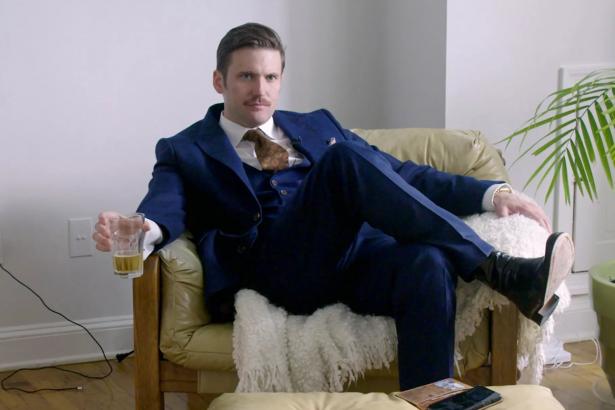
Richard Spencer in White Noise., The Atlantic
One among a sea of unfortunate consequences of the last four years is that ordinary people have heard of many political figures who once would have been relegated to the fringe. There’s Mike Cernovich, a self-styled provocateur and meme creator who is an InfoWars regular. There’s Richard Spencer, the white nationalist leader who became especially notorious during the violent “Unite the Right” rally in Charlottesville in 2017. And there’s Lauren Southern, a YouTube personality and anti-immigrant activist who famously supported the “Defend Europe” group, which opposes search-and-rescue operations for refugees in the Mediterranean Sea.
These three individuals are the focus of White Noise, an excellent new documentary from Daniel Lombroso, a journalist at the Atlantic. The film paints a portrait of the past few years of their lives, but more than that, it subtly exposes how much of the internet-fueled alt-right is driven by a desire to get rich, become well-known, and draw acolytes. Lombroso spent several years tagging along with Cernovich, Spencer, and Southern, attending their events, letting them talk, and quietly allowing them to do the work of unraveling their own arguments.
I recently spoke with Lombroso about how he secured this access, what he learned, and how it’s changed him. Our conversation has been lightly edited and condensed for clarity.
:no_upscale()/cdn.vox-cdn.com/uploads/chorus_asset/file/21984560/George_Hutcheson___Lauren_Southern._Courtesy_The_Atlantic__1_.jpg)
Students For Western Civilisation President George Hutcheson with Lauren Southern in White Noise.
The Atlantic
Alissa Wilkinson
How did you get connected with these subjects?
Daniel Lombroso
I started covering the alt-right as a reporter at the Atlantic way back in 2016, before the figures in the film were especially well known. It started with a series of short documentaries. I was actually the guy who caught a roomful of people breaking out into Nazi salutes [in 2016], which was a pivotal journalistic moment that solidified the alt-right as fundamentally a white nationalist — and potentially a neo-Nazi — movement.
So, I was covering the alt-right in short documentary form. I did a profile on Richard Spencer back before he was, you know, essentially synonymous with David Duke the way he is now.
Then I returned to my day job as a video producer at the Atlantic, covering all sorts of issues, but really carving out a niche around fundamentalism. I did a piece on far-right Christian media called Church Militant. I did a piece on Israeli settlers in the West Bank and spent two weeks there.
Then Charlottesville happened. It was eight months after the Nazi salute excerpt that went viral, and it was a pivotal moment for a million reasons. In the newsroom, we knew we had to do something deeper. So, I immediately circled up with Jeff Goldberg, the editor-in-chief [at the Atlantic], and Kasia [Cieplak-Mayr von Baldegg], who ran Atlantic Studios. All of us had always wanted to do a feature. I think we didn’t know when it would happen or what it would be about, but right away when Charlottesville happened, and when Trump failed to disavow white nationalists, we knew that this had to be the story.
Alissa Wilkinson
So that was three years ago, and it’s evident in the film that several years elapse from the beginning to the end. What was it like to stick with them for so long?
Daniel Lombroso
I spent three years reporting out the film, beginning with Richard, then meeting [Mike] Cernovich, and then eventually getting access to Lauren [Southern]. She was the hardest and actually took eight months to negotiate access to. And for me, she’s the most pivotal to the film. She is a female face of racism, and she embodies such blatant contradictions.
The Atlantic was really great about giving me space. I basically work alone as a reporter and a filmmaker, so I’m a one-man band. I shot the film and directed it and co-produced it.
I started by reporting and filming with maybe 20 or 30 subjects on the right. It became clear to me pretty quickly that I didn’t want to just amplify a fringe voice, someone who wasn’t relevant, and make them relevant by giving them the credibility of the Atlantic. I quickly decided, along with Jeff and Kasia, that it had to be these three figures, because they have followings in the millions and a tremendous amount of influence. Cernovich can start a meme from his laptop in Orange County, and a few days later, it’s coming out of [Sean] Hannity’s mouth on Fox News and then eventually the president’s mouth.
It was a slow burn. After Charlottesville, I spent two or three months all over the country. By October or November of [2017], we were planning on those three [subjects]. And it took until May of the following year, eight months later, for Lauren to sign on.
From there, I just tracked their stories very closely. For Richard, it’s a little more than three years; with Mike and Lauren it’s more than two. At its core, White Noise is a “follow film.” To do that right, you need time. And thankfully the Atlantic gave me the space to do that.
:no_upscale()/cdn.vox-cdn.com/uploads/chorus_asset/file/21984581/Mike_Cernovich._Courtesy_The_Atlantic.jpg)
Mike Cernovich in White Noise.
The Atlantic
Alissa Wilkinson
This film struck me as a portrait of what it takes to be a grifter today, or at least it explains the social and financial rewards inherent in taking extreme positions on the internet.
Daniel Lombroso
They’re opportunists, they’re hucksters, and I would say it’s fair to say they’re grifters, too. It’s tricky, because they do believe what they say — Cernovich a little bit less than the other two, but they definitely believe it enough to say it.
But, they’re also in it for the fame and for the money. I think Cernovich is the most extreme example of this. He starts the film very comfortable using the term “alt-right.” When that term becomes a little bit more toxic after Charlottesville, he says, “Fuck the Nazis,” and gets away from them and re-brands. And then at the end of the film, you see he’s selling supplements and lifestyle regimens.
Lauren is really interesting. She knows what her package is. She is very articulate, and she can use her looks, and she’s very convincing — and on YouTube, that’s the sort of thing that works. It almost feels Stalin-esque, like old Russian propaganda stuff; if you look down the barrel of the lens and say something that’s convincing, it feels true. And she’s able to back it up with pseudo-science that’s usually not accurate.
Their motivations are so mixed, and at its core, that’s what the film seeks to expose. The real power of the alt-right is that they’re selling a narrative, that they understand life, and that if you feel lost or depressed but follow them, you’ll be connected to the great history of white civilization.
By allowing you to sit with the subjects for so long, the film lets you see how mixed their motivations really are. They have a vested interest. They want to be famous. They want to get rich. And they are constantly contradicting the things that they believe.
Alissa Wilkinson
A challenge in this era seems to be figuring out how to write about these folks without aestheticizing them, without talking wonderingly about the “clean-cut” neo-Nazi. The film shows that a lot of what they’re doing is essentially leaning on an appealing aesthetic. They’re presenting a picture to people of who they could be. Are there special challenges in presenting that in film, which is a visual medium?
Daniel Lombroso
We didn’t want the film to glorify them in any way. That influenced everything from the scene selection to the shot selection. We had very spirited conversations about everything from the way we cover the subjects down to shot-level decisions. We screened for diverse audiences and built a really diverse team around the film.
What they’re doing is fundamentally aesthetic. They’re so obsessed with their appearance that it is obviously part of the story. I think it’s our responsibility as journalists to cover that ethically and responsibly, and to be highly critical. I think the film does that.
And you are missing the mark if you ignore it, because the appeal of the alt-right is to upper-middle-class, highly educated white kids in New York and LA. It’s hardly about the white nationalism. It’s about the community. It’s about a clique. It’s about the way you look and dress, and the way you say, “Hello” — all of their interesting codes of communication, different kinds of ways they communicate online but also in the physical sphere. That’s pretty fundamental to understanding the movement.
:no_upscale()/cdn.vox-cdn.com/uploads/chorus_asset/file/21984586/Lauren_Southern___Gavin_McInnes._Courtesy_The_Atlantic.jpeg)
Lauren Southern with Proud Boys founder Gavin McInnes in White Noise.
The Atlantic
In the film, you see that in various ways. In the conference at the beginning, when Richard says, “Hail Trump!” — we really dwell on the fact that they’re young. He says, “Stand up if you’re under the age of 30,” and the whole room stands. Most of those kids went to college — I interviewed a lot of them — and they are educated. They have a very clear aesthetic. You might call it Hitlerjugend, 20th-century fascism, but it’s like suit and tie, and they all have a haircut that they call “the fashy.”
Lauren’s package is all about her image. I have a story on this; she’s very conscious of her image and she uses it. She very consciously uses it. She’s an intelligent person and knows how to be convincing, but she knows the package she’s selling and uses it to maximize her effect and her influence.
There are really dangerous ways to cover that. I mean, there was a botched profile early on — I don’t want to call out who wrote it — that really dwelled on Richard being a dapper white nationalist. We’ve seen all sorts of iterations of that. I think it just comes down to being very, very careful, from the shot selection to the way you talk about the subjects. But their aesthetic is really fundamental to the whole project, in the way it always has been for fascist movements.
Alissa Wilkinson
So much about fascism is about the myths and legends that the look of it calls to mind.
Daniel Lombroso
Exactly.
Alissa Wilkinson
Sometimes when I’m watching a documentary, I feel like I’m just reading a magazine article. So one thing I appreciate about White Noise is how skillfully you use the visual medium to reinforce and undercut what people are saying out loud, or to get at elements that you couldn’t easily capture in a piece of writing. I’ll never get over the look on Cernovich’s face when he is hawking skin care products.
Daniel Lombroso
Or in the car wash. He’s sitting, depressed, going through a car wash.
Alissa Wilkinson
Are you looking for those images as you shoot?
Daniel Lombroso
When people watch a movie, they want to see a movie. What I’m really looking for are quiet, telling moments that don’t require dialogue. What destroys most Hollywood films is exposition, or saying something in dialogue that you would never say in real life, just to set up the audience. That’s the bane of everything I wanted to do. In the edit, I was trying to find ways to set up and say things that are very subtle.
I’m always looking for ways to let the subjects hang themselves. For instance, in one scene, Richard says very proudly, “I’m bigger than the movement” — which is insane for a million reasons. And then five minutes later in the film, which was the following day in real life, he gives a speech in a school of agriculture, and six people are there, maybe 10.
This is my first feature, but I’m always looking for visual ways to tell the story and to stay subtle. I think that’s ultimately a lot more powerful than a talking head or someone telling you, “This is a racist movement. Cernovich is a grifter.” I think it’s much more revealing when you just see him putting on facial serum and talking about how that’s his latest pivot.
Alissa Wilkinson
There’s a bit where Lauren is watching a video of herself talking, and she’s sitting with another woman who is side-eyeing her the whole time. It felt like that scene encapsulates something else the film shows: the kind of bubble that your subjects built around themselves to elevate their importance. Richard’s statement is a good example of that. They know they’re influential, but they also have surrounded themselves with people who keep saying “You’re influential” to them.
Did you get a sense of that while following them around? Were there times where you were, like, “Wow, your sense of reality is so far from reality”?
Daniel Lombroso
Absolutely. There’s so much disinformation on the far right. People just casually joke about things like Pizzagate, which is just false. There’s not even a basement at Comet Pizza, where [according to the disproven Pizzagate conspiracy theory] there was allegedly a pedophilia ring in the basement.
But all of them have a sense of inflated importance. I think that’s because they very intentionally surround themselves with yes men, or with people who play to their ego.
Richard is the most obvious example. He’s constantly followed by mostly younger kids in their 20s, college kids or kids right out of college, who have this dated but modernized fascist aesthetic. On a typical day, especially when I’m not filming and just sitting with them, they’re pouring him whiskey and buying him dinner and they’re fulfilling his every command. He has the air of a cult leader.
:no_upscale()/cdn.vox-cdn.com/uploads/chorus_asset/file/21984608/674157310.jpg.jpg)
Lauren Southern livestreaming a rally in Berkeley, California in April 2017.
Josh Edelson/AFP via Getty Images
With Lauren and Mike, it’s to a lesser extent. This might be surprising to people, but Mike is sort of a father figure to people in his sphere. In that alpha-male section of the alt-right, called “the manosphere” or whatever, people really trust Mike and turn to him for advice. So, when Lucian Wintrich — who we ultimately played down a little bit, he’s a far-right provocateur who started the “Twinks4Trump” meme — went through a breakup, Mike was one of his first calls. He wanted Mike’s advice. I think that’s what sets apart Mike from the other two characters: In his world, people really trust him, and that might be surprising.
Lauren is going through a transformation in the film, and ultimately, it’s an incomplete one. She’s always doubting herself. She gets her validation online, and I think the moment you mentioned is a really good example. Everything’s mediated through screens. She’s in Moscow, watching herself speaking in London through a screen, and then Brittany, who’s jealous of her, is side-eyeing her watching herself.
Lauren derives a lot of her confidence from comments, and she obsesses over negative comments and things that don’t go her way. That’s been hard for her, and continues to be hard for her. I think part of it is just that she was so young when she got into this, and this is all she knows. It’s all she’s ever known.
Alissa Wilkinson
That attention bubble seems so warping. I had the feeling watching White Noise that I had watching the two documentaries about Steve Bannon that’ve come out in the last few years, or that I have every time I read one of those explosive interviews that Isaac Chotiner does at the New Yorker. I wonder, why on earth would these people talk to a journalist or filmmaker, or let cameras follow them around? What do you think is the character trait or quality that makes a person willing to have a filmmaker follow them around for a few years when they know that person is is not sympathetic to their views?
Daniel Lombroso
Part of it is narcissism, and that comes across pretty clearly in the film. The other is that I work really small. I shoot alone, I’m a one-man band, and that helps neutralize them. They’re all willing to sit and give a quote here and there. But it’s sort of a misconception that the alt-right wants attention — they’re happy to give you a quote here and there, or sit for an interview, as long as they’re in control. This sort of unvarnished, all-access thing was incredibly difficult to achieve. And I think part of the reason they did it was that I was genuinely curious, and I kept coming back.
But part of it was their narcissism. I think they thought that they could outsmart me, that if they only depict a positive part of their life — for instance, Cernovich’s sunny, southern California life — that could help redeem him or rewrite his public image.
Part of it, too, especially with Lauren — I’m a little bit older than her, but I’m around her age, and we grew up experiencing a lot of the same things. So there are enough reference points in common that, when you’re spending hundreds of hours off-camera just killing time in an airport or getting lunch, there’s enough to talk about to kind of get them to that place where they’re willing to open up.
In the film, you see many of the juiciest moments. But all documentary filmmakers know that you spend hours and hours to get people to that point. The three minutes of Russia in the film was a 10-day trip. It was that way across the board.
Alissa Wilkinson
You said you covered fundamentalism in the past. Is there an overlap between fundamentalism and this topic?
Daniel Lombroso
There’s absolutely overlap. Extremism allows you to feel like you’re part of a historical narrative. You feel like you’re living for the past and for the future, that you’re part of something larger than your mundane, day-to-day, even boring experience.
I don’t mean to conflate these things because they are different, but you see that with far-right evangelicals. In the Church Militant piece, I interviewed a bunch of interns who were working at this far-right media company, and it was the same narrative. One of them said, “I was lost for years and years and years, wandering in the darkness, until I met Michael Voris,” the person who started Church Militant. It’s the same narrative.
:no_upscale()/cdn.vox-cdn.com/uploads/chorus_asset/file/21984622/644207442.jpg.jpg)
Richard Spencer at CPAC in February 2017.
Chip Somodevilla/Getty Images
With Israeli settlers — again, I don’t mean to conflate the situation there with white supremacy! — but there’s this feeling that in settling the West Bank they’re writing the next chapter of Jewish history. That’s a lot more fun, in a way, than just being a person who will die and everyone will forget you.
So, there is this gravitas to it. At its core, it’s the same appeal — a profoundly emotional or even metaphysical appeal.
Alissa Wilkinson
So you spent three years in the alt-right’s world. How did the experience change the way you think about American politics?
Daniel Lombroso
I don’t know that I was ever naïve enough to think that we lived in a post-racial America, but I was probably a little bit more hopeful going into the project, and now I’m a lot more cynical about the whole thing. The film is an unsympathetic eulogy to the alt-right. You see the figures fall off at the end, but their ideas are now so clearly part of our discourse. They’re on Fox News every night. There are newer influencers coming up who are saying things a whole lot worse. Tucker Carlson is now the highest-rated person on broadcast TV and he’s saying things that I heard Richard say three or four years ago.
It’s been very depressing to see the scale of white nationalism and conspiracy in both American and especially European politics, and I just don’t see it going away. I think it’s wrong to think that if Trump loses the election, it’s done and it’s over, because even if a section of his base lost, they’re still there. There are still kids who are finding these videos on YouTube and being radicalized by them.
In the way we talked about radical Islam, for better or for worse, as being a defining issue of the late ’90s and early ’00s, I think white domestic terrorism and white nationalism are issues we’re going to be dealing with for a long time.
White Noise is available to digitally rent on platforms including Apple TV and Google Play; see the website for details.
“They’re hucksters,” says the director of White Noise, a new doc that focuses on three prominent right-wing figures: Richard Spencer, Mike Cernovich, and Lauren Southern.
November 3, 2020 Alissa Wilkinson VOX
Richard Spencer in White Noise., The Atlantic
One among a sea of unfortunate consequences of the last four years is that ordinary people have heard of many political figures who once would have been relegated to the fringe. There’s Mike Cernovich, a self-styled provocateur and meme creator who is an InfoWars regular. There’s Richard Spencer, the white nationalist leader who became especially notorious during the violent “Unite the Right” rally in Charlottesville in 2017. And there’s Lauren Southern, a YouTube personality and anti-immigrant activist who famously supported the “Defend Europe” group, which opposes search-and-rescue operations for refugees in the Mediterranean Sea.
These three individuals are the focus of White Noise, an excellent new documentary from Daniel Lombroso, a journalist at the Atlantic. The film paints a portrait of the past few years of their lives, but more than that, it subtly exposes how much of the internet-fueled alt-right is driven by a desire to get rich, become well-known, and draw acolytes. Lombroso spent several years tagging along with Cernovich, Spencer, and Southern, attending their events, letting them talk, and quietly allowing them to do the work of unraveling their own arguments.
I recently spoke with Lombroso about how he secured this access, what he learned, and how it’s changed him. Our conversation has been lightly edited and condensed for clarity.
Students For Western Civilisation President George Hutcheson with Lauren Southern in White Noise.
The Atlantic
Alissa Wilkinson
How did you get connected with these subjects?
Daniel Lombroso
I started covering the alt-right as a reporter at the Atlantic way back in 2016, before the figures in the film were especially well known. It started with a series of short documentaries. I was actually the guy who caught a roomful of people breaking out into Nazi salutes [in 2016], which was a pivotal journalistic moment that solidified the alt-right as fundamentally a white nationalist — and potentially a neo-Nazi — movement.
So, I was covering the alt-right in short documentary form. I did a profile on Richard Spencer back before he was, you know, essentially synonymous with David Duke the way he is now.
Then I returned to my day job as a video producer at the Atlantic, covering all sorts of issues, but really carving out a niche around fundamentalism. I did a piece on far-right Christian media called Church Militant. I did a piece on Israeli settlers in the West Bank and spent two weeks there.
Then Charlottesville happened. It was eight months after the Nazi salute excerpt that went viral, and it was a pivotal moment for a million reasons. In the newsroom, we knew we had to do something deeper. So, I immediately circled up with Jeff Goldberg, the editor-in-chief [at the Atlantic], and Kasia [Cieplak-Mayr von Baldegg], who ran Atlantic Studios. All of us had always wanted to do a feature. I think we didn’t know when it would happen or what it would be about, but right away when Charlottesville happened, and when Trump failed to disavow white nationalists, we knew that this had to be the story.
Alissa Wilkinson
So that was three years ago, and it’s evident in the film that several years elapse from the beginning to the end. What was it like to stick with them for so long?
Daniel Lombroso
I spent three years reporting out the film, beginning with Richard, then meeting [Mike] Cernovich, and then eventually getting access to Lauren [Southern]. She was the hardest and actually took eight months to negotiate access to. And for me, she’s the most pivotal to the film. She is a female face of racism, and she embodies such blatant contradictions.
The Atlantic was really great about giving me space. I basically work alone as a reporter and a filmmaker, so I’m a one-man band. I shot the film and directed it and co-produced it.
I started by reporting and filming with maybe 20 or 30 subjects on the right. It became clear to me pretty quickly that I didn’t want to just amplify a fringe voice, someone who wasn’t relevant, and make them relevant by giving them the credibility of the Atlantic. I quickly decided, along with Jeff and Kasia, that it had to be these three figures, because they have followings in the millions and a tremendous amount of influence. Cernovich can start a meme from his laptop in Orange County, and a few days later, it’s coming out of [Sean] Hannity’s mouth on Fox News and then eventually the president’s mouth.
It was a slow burn. After Charlottesville, I spent two or three months all over the country. By October or November of [2017], we were planning on those three [subjects]. And it took until May of the following year, eight months later, for Lauren to sign on.
From there, I just tracked their stories very closely. For Richard, it’s a little more than three years; with Mike and Lauren it’s more than two. At its core, White Noise is a “follow film.” To do that right, you need time. And thankfully the Atlantic gave me the space to do that.
Mike Cernovich in White Noise.
The Atlantic
Alissa Wilkinson
This film struck me as a portrait of what it takes to be a grifter today, or at least it explains the social and financial rewards inherent in taking extreme positions on the internet.
Daniel Lombroso
They’re opportunists, they’re hucksters, and I would say it’s fair to say they’re grifters, too. It’s tricky, because they do believe what they say — Cernovich a little bit less than the other two, but they definitely believe it enough to say it.
But, they’re also in it for the fame and for the money. I think Cernovich is the most extreme example of this. He starts the film very comfortable using the term “alt-right.” When that term becomes a little bit more toxic after Charlottesville, he says, “Fuck the Nazis,” and gets away from them and re-brands. And then at the end of the film, you see he’s selling supplements and lifestyle regimens.
Lauren is really interesting. She knows what her package is. She is very articulate, and she can use her looks, and she’s very convincing — and on YouTube, that’s the sort of thing that works. It almost feels Stalin-esque, like old Russian propaganda stuff; if you look down the barrel of the lens and say something that’s convincing, it feels true. And she’s able to back it up with pseudo-science that’s usually not accurate.
Their motivations are so mixed, and at its core, that’s what the film seeks to expose. The real power of the alt-right is that they’re selling a narrative, that they understand life, and that if you feel lost or depressed but follow them, you’ll be connected to the great history of white civilization.
By allowing you to sit with the subjects for so long, the film lets you see how mixed their motivations really are. They have a vested interest. They want to be famous. They want to get rich. And they are constantly contradicting the things that they believe.
Alissa Wilkinson
A challenge in this era seems to be figuring out how to write about these folks without aestheticizing them, without talking wonderingly about the “clean-cut” neo-Nazi. The film shows that a lot of what they’re doing is essentially leaning on an appealing aesthetic. They’re presenting a picture to people of who they could be. Are there special challenges in presenting that in film, which is a visual medium?
Daniel Lombroso
We didn’t want the film to glorify them in any way. That influenced everything from the scene selection to the shot selection. We had very spirited conversations about everything from the way we cover the subjects down to shot-level decisions. We screened for diverse audiences and built a really diverse team around the film.
What they’re doing is fundamentally aesthetic. They’re so obsessed with their appearance that it is obviously part of the story. I think it’s our responsibility as journalists to cover that ethically and responsibly, and to be highly critical. I think the film does that.
And you are missing the mark if you ignore it, because the appeal of the alt-right is to upper-middle-class, highly educated white kids in New York and LA. It’s hardly about the white nationalism. It’s about the community. It’s about a clique. It’s about the way you look and dress, and the way you say, “Hello” — all of their interesting codes of communication, different kinds of ways they communicate online but also in the physical sphere. That’s pretty fundamental to understanding the movement.
Lauren Southern with Proud Boys founder Gavin McInnes in White Noise.
The Atlantic
In the film, you see that in various ways. In the conference at the beginning, when Richard says, “Hail Trump!” — we really dwell on the fact that they’re young. He says, “Stand up if you’re under the age of 30,” and the whole room stands. Most of those kids went to college — I interviewed a lot of them — and they are educated. They have a very clear aesthetic. You might call it Hitlerjugend, 20th-century fascism, but it’s like suit and tie, and they all have a haircut that they call “the fashy.”
Lauren’s package is all about her image. I have a story on this; she’s very conscious of her image and she uses it. She very consciously uses it. She’s an intelligent person and knows how to be convincing, but she knows the package she’s selling and uses it to maximize her effect and her influence.
There are really dangerous ways to cover that. I mean, there was a botched profile early on — I don’t want to call out who wrote it — that really dwelled on Richard being a dapper white nationalist. We’ve seen all sorts of iterations of that. I think it just comes down to being very, very careful, from the shot selection to the way you talk about the subjects. But their aesthetic is really fundamental to the whole project, in the way it always has been for fascist movements.
Alissa Wilkinson
So much about fascism is about the myths and legends that the look of it calls to mind.
Daniel Lombroso
Exactly.
Alissa Wilkinson
Sometimes when I’m watching a documentary, I feel like I’m just reading a magazine article. So one thing I appreciate about White Noise is how skillfully you use the visual medium to reinforce and undercut what people are saying out loud, or to get at elements that you couldn’t easily capture in a piece of writing. I’ll never get over the look on Cernovich’s face when he is hawking skin care products.
Daniel Lombroso
Or in the car wash. He’s sitting, depressed, going through a car wash.
Alissa Wilkinson
Are you looking for those images as you shoot?
Daniel Lombroso
When people watch a movie, they want to see a movie. What I’m really looking for are quiet, telling moments that don’t require dialogue. What destroys most Hollywood films is exposition, or saying something in dialogue that you would never say in real life, just to set up the audience. That’s the bane of everything I wanted to do. In the edit, I was trying to find ways to set up and say things that are very subtle.
I’m always looking for ways to let the subjects hang themselves. For instance, in one scene, Richard says very proudly, “I’m bigger than the movement” — which is insane for a million reasons. And then five minutes later in the film, which was the following day in real life, he gives a speech in a school of agriculture, and six people are there, maybe 10.
This is my first feature, but I’m always looking for visual ways to tell the story and to stay subtle. I think that’s ultimately a lot more powerful than a talking head or someone telling you, “This is a racist movement. Cernovich is a grifter.” I think it’s much more revealing when you just see him putting on facial serum and talking about how that’s his latest pivot.
Alissa Wilkinson
There’s a bit where Lauren is watching a video of herself talking, and she’s sitting with another woman who is side-eyeing her the whole time. It felt like that scene encapsulates something else the film shows: the kind of bubble that your subjects built around themselves to elevate their importance. Richard’s statement is a good example of that. They know they’re influential, but they also have surrounded themselves with people who keep saying “You’re influential” to them.
Did you get a sense of that while following them around? Were there times where you were, like, “Wow, your sense of reality is so far from reality”?
Daniel Lombroso
Absolutely. There’s so much disinformation on the far right. People just casually joke about things like Pizzagate, which is just false. There’s not even a basement at Comet Pizza, where [according to the disproven Pizzagate conspiracy theory] there was allegedly a pedophilia ring in the basement.
But all of them have a sense of inflated importance. I think that’s because they very intentionally surround themselves with yes men, or with people who play to their ego.
Richard is the most obvious example. He’s constantly followed by mostly younger kids in their 20s, college kids or kids right out of college, who have this dated but modernized fascist aesthetic. On a typical day, especially when I’m not filming and just sitting with them, they’re pouring him whiskey and buying him dinner and they’re fulfilling his every command. He has the air of a cult leader.
Lauren Southern livestreaming a rally in Berkeley, California in April 2017.
Josh Edelson/AFP via Getty Images
With Lauren and Mike, it’s to a lesser extent. This might be surprising to people, but Mike is sort of a father figure to people in his sphere. In that alpha-male section of the alt-right, called “the manosphere” or whatever, people really trust Mike and turn to him for advice. So, when Lucian Wintrich — who we ultimately played down a little bit, he’s a far-right provocateur who started the “Twinks4Trump” meme — went through a breakup, Mike was one of his first calls. He wanted Mike’s advice. I think that’s what sets apart Mike from the other two characters: In his world, people really trust him, and that might be surprising.
Lauren is going through a transformation in the film, and ultimately, it’s an incomplete one. She’s always doubting herself. She gets her validation online, and I think the moment you mentioned is a really good example. Everything’s mediated through screens. She’s in Moscow, watching herself speaking in London through a screen, and then Brittany, who’s jealous of her, is side-eyeing her watching herself.
Lauren derives a lot of her confidence from comments, and she obsesses over negative comments and things that don’t go her way. That’s been hard for her, and continues to be hard for her. I think part of it is just that she was so young when she got into this, and this is all she knows. It’s all she’s ever known.
Alissa Wilkinson
That attention bubble seems so warping. I had the feeling watching White Noise that I had watching the two documentaries about Steve Bannon that’ve come out in the last few years, or that I have every time I read one of those explosive interviews that Isaac Chotiner does at the New Yorker. I wonder, why on earth would these people talk to a journalist or filmmaker, or let cameras follow them around? What do you think is the character trait or quality that makes a person willing to have a filmmaker follow them around for a few years when they know that person is is not sympathetic to their views?
Daniel Lombroso
Part of it is narcissism, and that comes across pretty clearly in the film. The other is that I work really small. I shoot alone, I’m a one-man band, and that helps neutralize them. They’re all willing to sit and give a quote here and there. But it’s sort of a misconception that the alt-right wants attention — they’re happy to give you a quote here and there, or sit for an interview, as long as they’re in control. This sort of unvarnished, all-access thing was incredibly difficult to achieve. And I think part of the reason they did it was that I was genuinely curious, and I kept coming back.
But part of it was their narcissism. I think they thought that they could outsmart me, that if they only depict a positive part of their life — for instance, Cernovich’s sunny, southern California life — that could help redeem him or rewrite his public image.
Part of it, too, especially with Lauren — I’m a little bit older than her, but I’m around her age, and we grew up experiencing a lot of the same things. So there are enough reference points in common that, when you’re spending hundreds of hours off-camera just killing time in an airport or getting lunch, there’s enough to talk about to kind of get them to that place where they’re willing to open up.
In the film, you see many of the juiciest moments. But all documentary filmmakers know that you spend hours and hours to get people to that point. The three minutes of Russia in the film was a 10-day trip. It was that way across the board.
Alissa Wilkinson
You said you covered fundamentalism in the past. Is there an overlap between fundamentalism and this topic?
Daniel Lombroso
There’s absolutely overlap. Extremism allows you to feel like you’re part of a historical narrative. You feel like you’re living for the past and for the future, that you’re part of something larger than your mundane, day-to-day, even boring experience.
I don’t mean to conflate these things because they are different, but you see that with far-right evangelicals. In the Church Militant piece, I interviewed a bunch of interns who were working at this far-right media company, and it was the same narrative. One of them said, “I was lost for years and years and years, wandering in the darkness, until I met Michael Voris,” the person who started Church Militant. It’s the same narrative.
Richard Spencer at CPAC in February 2017.
Chip Somodevilla/Getty Images
With Israeli settlers — again, I don’t mean to conflate the situation there with white supremacy! — but there’s this feeling that in settling the West Bank they’re writing the next chapter of Jewish history. That’s a lot more fun, in a way, than just being a person who will die and everyone will forget you.
So, there is this gravitas to it. At its core, it’s the same appeal — a profoundly emotional or even metaphysical appeal.
Alissa Wilkinson
So you spent three years in the alt-right’s world. How did the experience change the way you think about American politics?
Daniel Lombroso
I don’t know that I was ever naïve enough to think that we lived in a post-racial America, but I was probably a little bit more hopeful going into the project, and now I’m a lot more cynical about the whole thing. The film is an unsympathetic eulogy to the alt-right. You see the figures fall off at the end, but their ideas are now so clearly part of our discourse. They’re on Fox News every night. There are newer influencers coming up who are saying things a whole lot worse. Tucker Carlson is now the highest-rated person on broadcast TV and he’s saying things that I heard Richard say three or four years ago.
It’s been very depressing to see the scale of white nationalism and conspiracy in both American and especially European politics, and I just don’t see it going away. I think it’s wrong to think that if Trump loses the election, it’s done and it’s over, because even if a section of his base lost, they’re still there. There are still kids who are finding these videos on YouTube and being radicalized by them.
In the way we talked about radical Islam, for better or for worse, as being a defining issue of the late ’90s and early ’00s, I think white domestic terrorism and white nationalism are issues we’re going to be dealing with for a long time.
White Noise is available to digitally rent on platforms including Apple TV and Google Play; see the website for details.





 Credit: David Clode, Unsplash