Wednesday, January 05, 2022

Activists urge Tesla to close new Xinjiang showroom


Tesla CEO Elon Musk holds a press conference to introduce the auto-driving system upgrade for Chinese Tesla owners in Beijing, China on Oct. 23, 2015. Activists on Monday, Jan 3. 2022 are appealing to Elon Musk and Tesla Inc. to close a new showroom in China's northwestern region of Xinjiang, where officials are accused of abuses against mostly Muslim ethnic minorities
. (Chinatopix via AP)


BEIJING (AP) — American activists are appealing to Tesla Inc. to close a new showroom in China’s northwestern region of Xinjiang, where officials are accused of abuses against mostly Muslim ethnic minorities.

Tesla on Friday announced the opening of its showroom in Urumqi, the Xinjiang capital, and said on its Chinese social media account, “Let’s start Xinjiang’s all-electric journey!”

The Council on American-Islamic Relations, an American organization based in Washington, D.C., on Monday urged Tesla and its chairman, Elon Musk, to close the showroom and “cease what amounts to economic support for genocide.”

Pressure on foreign companies to take positions on Xinjiang, Tibet, Taiwan and other politically charged issues has been rising. The ruling Communist Party pushes companies to adopt its positions in their advertising and on websites. It has attacked clothing and other brands that express concern about reports of forced labor and other abuses in Xinjiang.

“No American corporation should be doing business in a region that is the focal point of a campaign of genocide targeting a religious and ethnic minority,” the group’s communications director, Ibrahim Hooper, said in a statement.

A message was left Tuesday seeking comment from Austin, Texas-based Tesla, which has disbanded its media relations department.

Activists and foreign governments say some 1 million Uyghurs and members of other mostly Muslim minorities have been confined in detention camps in Xinjiang. Chinese officials reject accusations of abuses and say the camps are for job training and to combat extremism.

On Friday, the ruling party’s discipline agency threatened Walmart Inc. with a boycott after some shoppers complained online they couldn’t find goods from Xinjiang in its Walmart and Sam’s Club stores in China.

In December, Intel Corp., the world’s biggest maker of computer chips, apologized for asking suppliers to avoid sourcing goods from Xinjiang after the state press attacked the company and comments online called for a boycott of its goods.

The United States has barred imports of goods from Xinjiang unless they can be shown not to be made by forced labor.

China is one of Tesla’s biggest markets. The company’s first factory outside the United States opened in Shanghai in 2019.

Other foreign auto brands including Volkswagen, General Motors and Nissan Motor Co. have showrooms in Xinjiang operated by the automakers’ Chinese joint-venture partners. VW also operates a factory in Urumqi.

If Tesla and Musk are bowing to Chinese government pressure, it’s in contrast to the U.S., where Musk has repeatedly clashed with government agencies. Last year he moved Tesla’s headquarters to Austin from California after a spat with Alameda County health officials over reopening a factory at the start of the coronavirus pandemic.

He also has fought with the Securities and Exchange Commission over a 2018 tweet claiming that he had financing to take Tesla private, when that funding was not secured. He and the company agreed to pay $20 million each to settle allegations that he misled investors. Musk branded the SEC the “shortseller enrichment commission,” distorting the meaning of its acronym. Short sellers bet that a stock price will fall.

Tesla also faces inquiries by the National Highway Traffic Safety Administration over its Autopilot and “Full Self-Driving” systems. The company has said both are partially automated driver-assist systems despite their names.




PRISON NATION USA
Man free after 37 years due to ‘sex for lies’ false witness

By MARYCLAIRE DALE

1 of 7
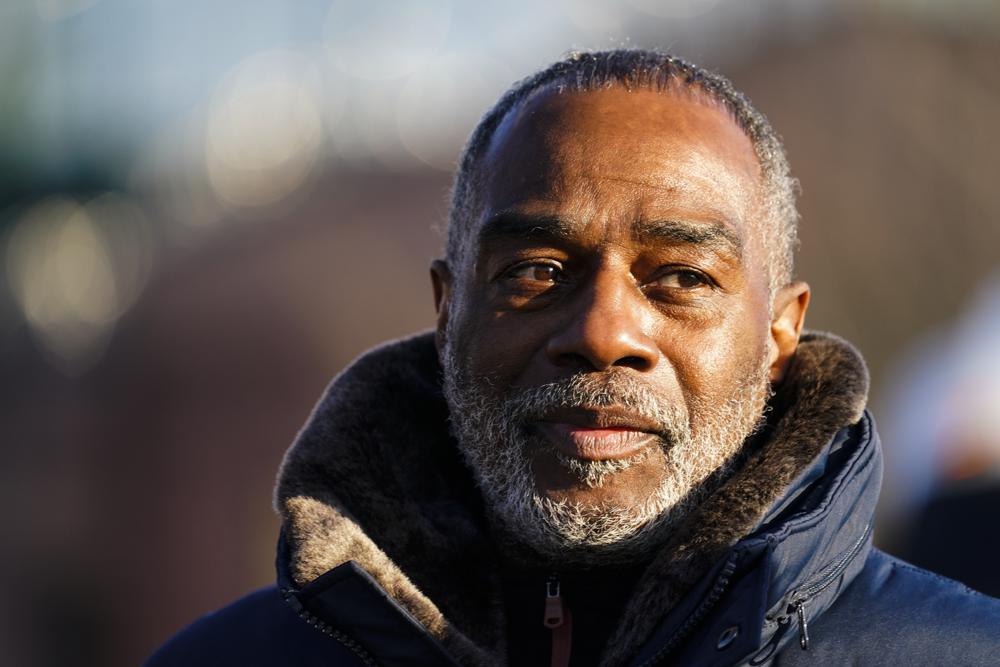
Willie Stokes walks from a state prison in Chester, Pa., on Tuesday, Jan. 4, 2022, after his 1984 murder conviction was overturned because of perjured witness testimony. Stokes was serving a life sentence and spent decades in prison before learning the witness who testified against him at a 1984 court hearing soon pleaded guilty to perjury over the testimony. 
(AP Photo/Matt Rourke)


PHILADELPHIA (AP) — A Philadelphia man was freed from prison Tuesday after 37 years in a case marred by detectives who allegedly offered a witness sex and drugs at police headquarters in 1983 in exchange for false testimony.

The trial witness was charged with perjury just days after Willie Stokes was convicted of murder in 1984. But Stokes didn’t learn about that perjury plea until 2015, decades into a life sentence.

Stokes, 61, walked out of a state prison near Philadelphia eager to get a hug from his mother and a corned beef hoagie. His mother was too nervous to come after several earlier disappointments, so he greeted other family members instead.

“Today is a tremendous day. We’re all very thankful,” said his lawyer, Michael Diamondstein. “However, it’s also a sad day, because it reminds us of how lawless, unfair and unjust Philadelphia law enforcement was for so long.”


Both detectives who allegedly offered witness Franklin Lee a sex-for-lies deal to help them close a 1980 murder case are now deceased. Lee was in custody on unrelated rape and murder charges at the time, and said he was also promised a light sentence.

“I fell weak and went along with the offer,” Lee told a federal judge in November, recalling his testimony at a May 1984 preliminary hearing when he claimed Stokes, a neighborhood friend, had confessed to killing a man during a dice game named Leslie Campbell.

Lee recanted the story at Stokes’ murder trial in August 1984, but Stokes was nonetheless convicted and sent to prison for life. Days later, Philadelphia prosecutors charged Lee with perjury — not over his trial testimony, but over the initial testimony he’d given at the preliminary hearing. Lee pleaded guilty, admitting he’d made up the confession, and was sentenced to a maximum seven-year prison term.

“The homicide prosecutors that used Franklin Lee’s testimony to convict Willie Stokes then prosecuted Franklin Lee for lying on Willie Stokes. And they never told Willie Stokes,” Diamondstein argued at the November hearing in federal court.

Stokes’ mother, now elderly, has been planning for his homecoming as his appeals gained traction, only to face repeated setbacks, she told The Philadelphia Inquirer, which first reported on the case.

But Lee’s mother also played a role early on.

In federal court testimony last November, Lee said his girlfriend — who detectives summoned to have sex with him at police headquarters back in 1983 and who was allowed to bring marijuana and a few dozen opioid pills — told his mother about the deal he’d struck.

His mother told the woman not to go down to the station again. Instead, police secured him a sex worker the next time, Lee said.
ADVERTISEMENT


“Once I talked to my mother, she told me, ‘I didn’t raise you like that, to lie on a man because you got yourself in a jam,’” Lee testified, according to the transcript. “She said, ‘I couldn’t care if they give you 1,000 years. Go in there and tell the truth.’ And that’s what I did.”

One surviving prosecutor, now in private practice, did not immediately return messages seeking comment Tuesday. However, he has given a statement saying he doesn’t remember either case, according to court files.

Philadelphia police offered no immediate comment on the case.

The U.S. magistrate who heard the appeal called the omission an “egregious violation of (Stokes’) constitutional rights,” and a U.S. district judge agreed, overturning the conviction last week.

As for Lee, he ended up serving 35 years on the rape, murder and perjury charges. He got out of prison two years ago and now works as an assembly line supervisor.

He apologized to Stokes in court “for the problem I caused.”

“I’m going to take his tears to indicate he’s accepting the apology,” U.S. Magistrate Judge Carol Sandra Moore Wells said.

Philadelphia District Attorney Larry Krasner, whose office has championed about two dozen exoneration cases, supports Stokes but has not yet formally decided whether to retry him. That decision should come before a scheduled Jan. 26 hearing in state court, a spokesperson said.

___ Follow Maryclaire Dale on Twitter at https://twitter.com/Maryclairedale
CRIMINAL CAPITALI$M
Elizabeth Holmes saga still has some loose ends to resolve
By MICHAEL LIEDTKE

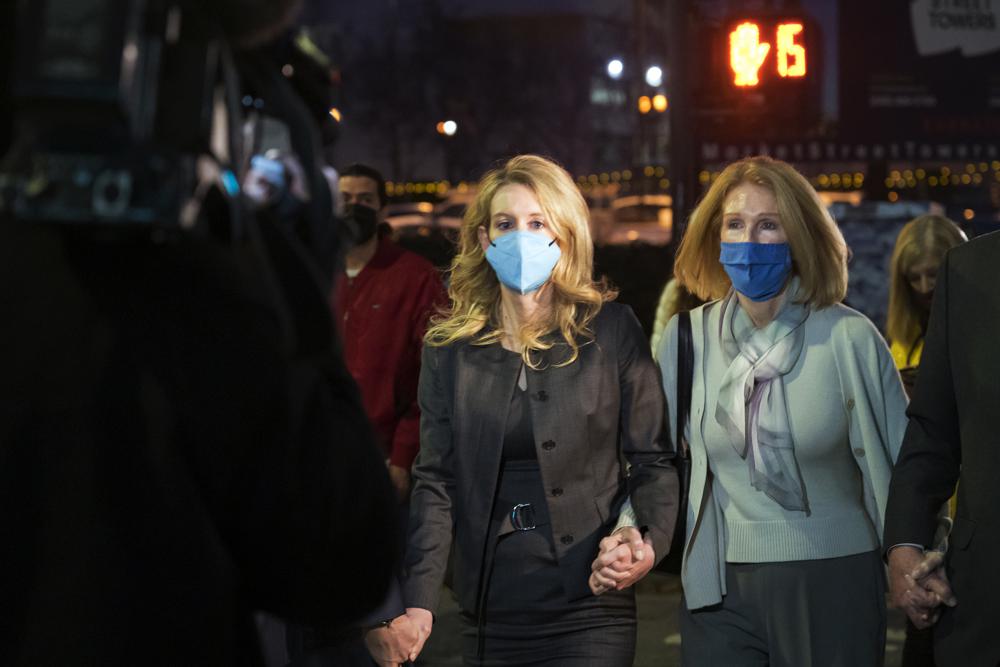
Elizabeth Holmes leaves federal court after the verdict in San Jose, Calif., Monday, Jan. 3, 2022. Holmes was convicted of fraud for turning her blood-testing startup Theranos into a sophisticated sham that duped billionaires and other unwitting investors into backing a seemingly revolutionary company whose medical technology never worked as promised. (AP Photo/Nic Coury)


SAN JOSE, Calif. (AP) — A jury has ended the suspense surrounding the fraud trial of former Theranos CEO Elizabeth Holmes by finding her guilty on four of the 11 charges facing her, but some issues in the legal drama remain unresolved. Here’s a look at some of the most pressing questions.

PRISON BOUND

The general consensus is that Holmes almost certainly will be sent to prison, although it’s difficult to predict for how long. Technically, she could be sentenced to a maximum of 20 years in federal prison for each of the four felony convictions, but experts doubt that will happen.

Former federal prosecutor Neama Rahmani believes Holmes, 37, will be sentenced to at least 10 years in prison unless she can win an appeal to overturn the guilty verdicts. Holmes was convicted for duping Theranos investors and conspiring to commit fraud against them.

An appeal also seems certain, especially because the jury acquitted Holmes on four counts alleging she had also defrauded and conspired against patients who paid for Theranos blood tests that didn’t work as advertised.

“Mixed jury verdicts are definitely the kind of thing you want to bring to an appellate court,” said Matthew Barhoma, a Los Angeles attorney who specializes in appeals. “You want to use that mixed result to say the jury didn’t understand the information presented to them, and there’s an argument to be made that the evidence was insufficient for a conviction.”

Holmes declined to answer questions from reporters after she left court Monday following the verdicts.

U.S. District Judge Edward Davila, who presided over the complex trial in San Jose, California, indicated it will probably be several months before he sentences Holmes. Until then, she will remain free on bail, although she will now likely to have to offer some sort of property or cash as security to discourage from trying to flee.

The freedom will allow her to spend more time with her infant son, who was born shortly before the trial began in September.

Davila is also expected to declare a mistrial on three fraud charges that deadlocked the jury.

WHAT ABOUT SUNNY?


Initially, there was relatively little interest in Theranos’ longtime chief operating officer, Ramesh “Sunny” Balwani. Until, that is, Holmes heaped much of the blame for the company’s scandalous downfall on his alleged attempts to control her and his alleged mismanagement of the company’s blood-testing labs.

The trial also cast a bright light on the secret love affair that Holmes and Balwani, now 57, had been having for years, unknown to Theranos’ board of directors and almost everyone else in the company.

At one point in the seven days she spent on the witness stand, Holmes weepily testified that Balwani had subjected her to years of mental, emotional and sexual abuse and suggested it may have clouded her judgment at times. Balwani’s attorney adamantly denied Holmes’ accusations, but Balwani never told his side of the story during the trial.

He will get that chance in his own fraud trial scheduled to start next month.

Interest in Balwani’s trial will intensify if Holmes takes the stand to testify against him. But her attorneys almost certainly won’t allow that in order to protect her likely appeal of her conviction, said Richard Greenfield, a lawyer who represents investors in startups.

OTHER LEGAL ENTANGLEMENTS?


While it’s always possible there might be additional civil lawsuits filed against Holmes, there doesn’t seem to be much left for would-be litigants to pursue. Theranos is now worthless, and Holmes reached a civil settlement with the Securities and Exchange Commission even before she was indicted on criminal charges.

In addition to imposing a $500,000 fine on Holmes, the SEC settlement also required her to surrender controlling interest in Theranos. That stake was valued at $4.5 billion in 2014 before a series of revelations about Theranos’ flawed technology caused it all to collapse. Holmes also was barred from becoming an executive or board member of a publicly held company for 10 years,

Elizabeth Holmes Convicted of Defrauding Theranos Investors

Joel Rosenblatt and Joe Schneider
Mon., January 3, 2022

Elizabeth Holmes Convicted of Defrauding Theranos Investors

(Bloomberg) -- Elizabeth Holmes was found guilty of criminal fraud for her role building the blood-testing startup Theranos Inc. into a $9 billion company that collapsed in scandal.

A jury in San Jose, California, returned the verdict after hearing three months of testimony that was often technical, heavily contested and, from Holmes herself, shocking. The 37-year-old faces a maximum sentence of 20 years in prison, although she’ll probably get far less than that. Holmes will also likely appeal her conviction and any sentence she gets.

Holmes, wearing a mask in the courtroom as everyone else did, stayed perfectly still and upright while the verdict was read. She looked directly at the jurors as they were polled by the judge to determine if the verdict matched their conclusions. There was little reaction in the courtroom to the verdict, beyond the sound of fluttering of keyboards from the press. Holmes’s partner, her mother and father sat still in the front row.

Holmes was convicted of four out of 11 counts of conspiracy and wire fraud and acquitted of four counts. The jury didn’t reach a verdict on three of the counts. Holmes was found not guilty of all charges pertaining to defrauding patients.

Elizabeth Holmes Verdict Breakdown in Theranos Fraud Case

“The jurors in this 15-week trial navigated a complex case amid a pandemic and scheduling obstacles,” San Francisco U.S. Attorney Stephanie Hinds said in a statement. “The guilty verdicts in this case reflect Ms. Holmes’s culpability in this large-scale investor fraud and she must now face sentencing for her crimes.”

Holmes’s fall from her status as celebrity chief executive to convicted felon marks one of the most dramatic descents in Silicon Valley history. While her trial was viewed as a test of the “fake-it-til-you-make-it” braggadocio that has become synonymous with venture capital, the verdict is unlikely to significantly change behavior in a red-hot startup investing market, where no one’s willing to slow down.

Read More: Memorable Moments From the Elizabeth Holmes Fraud Trial

After deliberating for seven full days, jurors agreed Monday with prosecutors that Holmes lied to investors over several years about the accuracy and capabilities of Theranos blood analyzers. A parade of witnesses told jurors they were gravely misled by the Stanford University dropout-turned-entrepreneur. They ranged from executives at Walgreens and Safeway Inc. to James Mattis, the former U.S. secretary of defense who served on the Theranos board, as well as advisers to investors who poured hundreds of millions of dollars into the company.

The panel of eight men and four women also heard colorful accounts from several Theranos employees about the company’s lab taking dangerous shortcuts to conceal shortcomings with the analyzers, and from patients who recounted receiving inaccurate test results that left them anxious about their health.

Would You Invest in Theranos? Listen to Elizabeth Holmes’s Pitch

As was the case with the fate of Theranos itself, Holmes’s defense was tethered to her charisma and credibility. She made the risky decision, unusual in white-collar criminal cases, to testify in her own defense.

The move gave Holmes the final voice in the long trial -- and served to dampen the testimony of dozens of government witnesses before her -- but also forced her to make uncomfortable admissions during a grueling cross-examination.

In seven days on the witness stand, Holmes alternated between deflecting blame, failing to remember certain events and accepting responsibility for mistakes, even while insisting she didn’t intend to deceive anyone.

The most jolting moments in the courtroom were when Holmes testified she was raped as a student at Stanford University and suffered years of verbal and sexual abuse from her former boyfriend, former Theranos President Ramesh “Sunny” Balwani.

By Holmes’s account, the abuse lasted throughout the decade-long relationship with Balwani and had a profound if incalculable influence on her life. Her legal team’s decision not to call a psychiatrist with an expertise in relationship trauma as a witness left it up to jurors how to factor the testimony into their decision.

Read More: The Spectacular Rise and Fall of Elizabeth Holmes and Theranos

A prosecutor told the jury in closing arguments that the alleged abuse isn’t relevant to the fraud Holmes was charged with.

“In the absence of any evidence linking that experience to the charged conduct, you should put it out of your mind,” Assistant U.S. Attorney John Bostic told jurors.

Holmes’s defense team tried to convince the jury that she made a sincere effort over 15 years to steer Theranos to success and shouldn’t be punished for failing to achieve her dream.

“Elizabeth Holmes was building a business and not a criminal enterprise,” attorney Kevin Downey told jurors.

Michele Hagan, formerly a prosecutor in the San Francisco District Attorney’s office, said the jury may have rejected the patient fraud charges because there wasn’t enough evidence of wrongdoing by Holmes. Jurors heard Theranos patients testify their blood-test results falsely led them to believe they had unhealthy conditions.

“I could see any reason for a jury not finding her guilty of those charges,” Hagan said. “I mean, for instance the HIV, the positive HIV, well that turned out to be a false positive, so I could see how they could find reasonable doubt there.”

Robert Weisberg, a Stanford University law professor, said the details of the specific counts Holmes was convicted of and those she wasn’t “don’t matter that much since she really had a big broad scheme to defraud and that’s what the jury believed.”

“Her personality defenses failed completely,” Weisberg said. “Her claims that she was psychologically undone by Sunny Balwani and so on, because of the conviction on the major fraud counts, it’s clear that those defenses failed, and if she avoided conviction on other grounds they were on technical matters.”

The judge allowed the jury to deliver a verdict on only eight of the 11 charges she faced, after they said they were unable to reach a unanimous decision on all of the counts.

Abraham Simmons, a spokesman for Hinds, had no comment on whether prosecutors would seek to retry Holmes on the three counts for which the jurors were unable to reach a verdict.

After the verdict Holmes walked out the front door of the court and was trailed by media for a block to the Marriott hotel in San Jose. She ignored all questions posed to her. Holmes’s attorneys declined to comment.

U.S. District Judge Edward Davila said Holmes will remain free on bond for the time being.

Holmes rose to prominence with her promise of a revolution in health care, based on her claims the compact Theranos devices could perform hundreds of diagnostic tests faster, more accurately and cheaper than traditional, bigger machines.

A big selling point was that Theranos analyzers could arrive at the results with just a pinprick instead of vials of drawn blood. Holmes cited her own fear of needles as inspiration for the invention, part of the narrative investors and the public heard over years in her promotion of the technology.

By 2015 Holmes was dubbed by Forbes as the youngest female self-made billionaire and was gracing the covers of magazines. But that same year, the Wall Street Journal published stories pointing to flaws in Theranos technology, which led regulators the following year to conclude the machines posed a danger to patient health.

The revelations triggered civil lawsuits, including one Holmes settled with the Securities and Exchange Commission, and the Justice Department’s investigation and prosecution. Holmes, Balwani and Walgreens all still face claims over inaccurate blood tests by customers of the drug store chain in an Arizona lawsuit.

Balwani, who faces a separate trial in February on the same fraud charges as Holmes, has pleaded not guilty and has denied her abuse allegations.

(Updates with comments by U.S. attorney, former prosecutor and law professor.)

Most Read from Bloomberg Businessweek

Who hacked Poland's opposition?

The phones of dissident lawmakers and an opposition prosecutor have been hacked using the Pegasus spyware. Poland's government, however, shows little interest in finding the culprits.


Computer experts say there is no protection against spyware such as Pegasus

In July 2021, an international consortium of journalists published an in-depth investigation revealing how the Israeli Pegasus spyware had been used by a range of autocratic states such Azerbaijan, Saudi Arabia, Rwanda and Morocco to snoop on politicians, correspondents and human rights activists. The only EU country known to have utilized the software was Hungary.

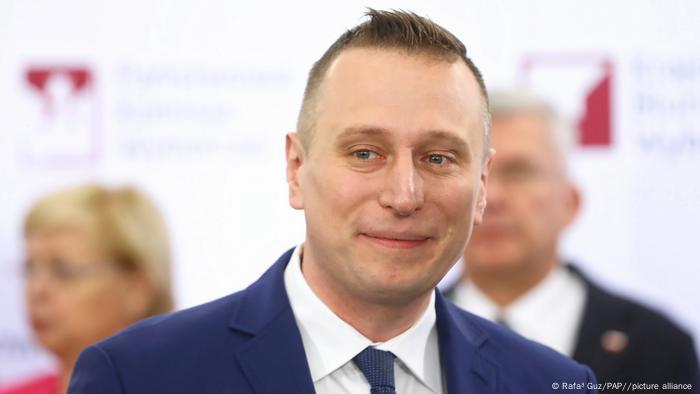
Now, half a year later, details are emerging that suggest Poland's incumbent government, led by the national-conservative Law and Justice (PiS) party, may be mired in a Pegasus scandal of its own. Krzysztof Brejza, a leading lawmaker with the opposition Civic Platform (PO), said in late December 2021 that his smartphone had been hacked 33 times between April and October 2019.

It was during this time that Brejza directed his party's election team ahead of the parliamentary polls on October 13, 2019. During this period Polish public broadcaster TVP accused Brejza of waging a vitriolic campaign against his political enemies, citing fake emails to back up the claim. Brejza thinks the timing of the accusation was "no coincide." The 38-year old says emails were downloaded from his phone during this time and later manipulated to cast him in a bad light.


Brejza says his phone was hacked numerous times to discredit his opposition work

Brejza was not the only Polish politician to have come under surveillance. Roman Giertych, a prominent opposition lawyer, who once served as interior minister, says his phone was hacked 18 times. Traces of six hacks between June and August 2021 were also detected on the phone of Polish prosecutor Ewa Wrzosek, who had criticized the Polish government over its controversial plans to introduce postal voting for the 2020 presidential election, and who also works for the opposition Association of Polish Independent Prosecutors, "Lex Super Omnia."

What is Pegasus?

The Pegasus spyware was developed by Israeli technology firm NSO. It is sold to states around the world to aid their fight against terrorism and organized crime. Pegasus is capable of snooping on iPhones and Android-based smartphones in real time, it can record conversations, register Geo data and secretly active cameras. Computer experts say there is no protection against such spyware.


NSO is based in Herzliya, Isreal

Brejza learned he had been hacked from an Associated Press (AP) report; Wrzosek found out her device had been compromised from smartphone-maker Apple. Citizen Lab, an interdisciplinary laboratory based at Toronto University, confirmed the hacks. Polish opposition figures are calling this a "Polish Watergate" movement, and are demanding a special parliamentary inquiry, fearing previous elections could have been compromised.

Government denies any knowledge

The government, meanwhilesays it is unaware of any wrongdoing. Speaking with journalists in late 2021, Deputy Justice Minister Michal Wos said "I do not know which system you are asking about, I do not know what system this is." Wos added that Justice Minister and Public Prosecutor General Zbigniew Ziobro was similarly unaware of any illegal surveillance measures of this kind. Indeed, the public prosecutor's office has shown conspicuously little interest in the affair. Opposition lawmaker Brejzas' attorney has filed charges but so far no proceedings have been launched. Wrzosek, who has also sought legal action, has her case dismissed, with authorities citing a lack of evidence.

In early January, Deputy Justice Minister Wos made light of the affair on Twitter, posting a picture of a PlayStation gaming console with the caption: "This is the Pegasus I bought in the 90s." Polish Prime Minister Mateusz Morawiecki, meanwhile, has alluded the phone hacking scandal could have been the work of foreign intelligence agencies, of which "there are many in the world."

Top-level deal

Recently, however, a spate of documents have surfaced shedding yet more light on the spyware affair. On December 3, 2021, Polish left-wing-liberal dailyGazeta Wyborcza revealed how back in July 2017, Hungarian Prime Minister Viktor Orban met with Poland's then-Prime Minster Beata Szydlo and former Israeli Prime Minister Benjamin Netanyahu. The newspaper reports that this is when the decision to buy the Pegasus spyware was reached.


Hungary is the only EU country known to have used the spy software

Gazeta Wyborcza reports the Polish government sought to conceal the 25-million Zloty ($6 million, €5.5 million) purchase by taking the money out of a fund for crime victims, overseen by the Justice Ministry, instead of having the CentralAnti-Corruption Bureau (CBA) foot the bill. To make this possible, Polish parliament had to change the fund's status. The paper says Deputy Justice Minister Wos submitted the request to the financial committee. Lawmakers were never, however, informed the funds were earmarked to buy spyware, says Gazeta Wyborcza.

Spoiled for choice

Israel has reportedly reduced to number of states licensed to use Pegasus from over 100 to a mere 37. Hungary and Poland are among the countries who had their license revoked. Poland's opposition, however, doubts this will put and end to the surveillance program.

"In the coming days, we will learn the names and phone number of more surveillance victims," says Grzegorz Schetyna, a founding member of PO, who once served as interior and foreign minister. Security expert Piotr Niemczyk, meanwhile, points out that other spyware alternatives are already on the market: North Macedonia-based Israeli cybersecurity company Cytrox has developed Predator, a pendant to Pegasus.

On Dezember 27, 2021, PiS leader and Deputy Prime Minister Jaroslaw Kaczynski assuaged the Polish public when he said "I'm only half joking when I tell you to use a phone like mine: an old, used device, that records videos, if you know which button to push." It is well known that Kaczynski is deeply skeptical of modern technology.

This article was translated from German.

How the rich are profiting from the water crisis

Dec 31, 2021


DW Planet A

More and more regions around the world are running out of water. At the same time, companies and their investors are getting richer the drier it gets. Can we fix this? We're destroying our environment at an alarming rate. But it doesn't need to be this way. Our new channel Planet A explores the shift towards an eco-friendly world — and challenges our ideas about what dealing with climate change means. We look at the big and the small: What we can do and how the system needs to change. Every Friday we'll take a truly global look at how to get us out of this mess.

Herd the moos? Latvia's symbolic blue cow back from the brink

Driven to near extinction during the Soviet era, the Latvian blue cow has made a comeback over the last few decades
Driven to near extinction during the Soviet era, the Latvian blue cow has made a comeback 
over the last few decades.

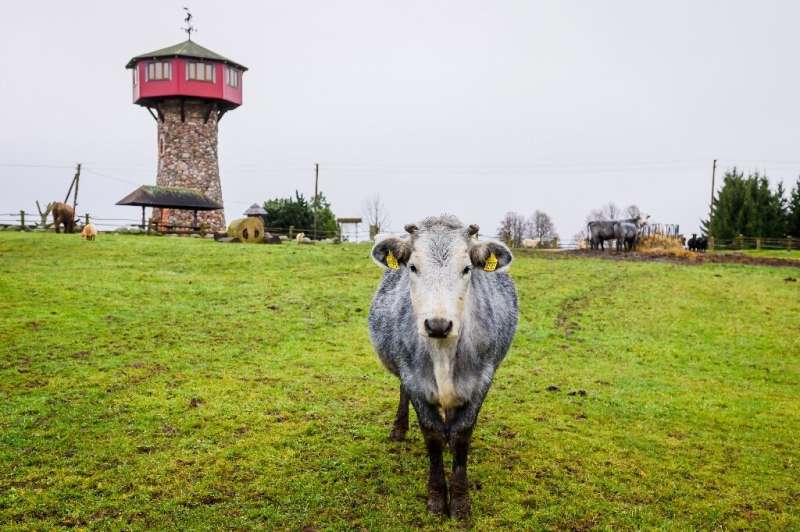
Once a rarity, cows with light blue or dark ultramarine hides may again be glimpsed grazing on the Latvian countryside among the regular brown, black or white spotted cattle.

The unique and hardy breed, driven to near extinction during the Soviet era, has made a comeback over the last few decades as an unlikely symbol of Latvian national identity.

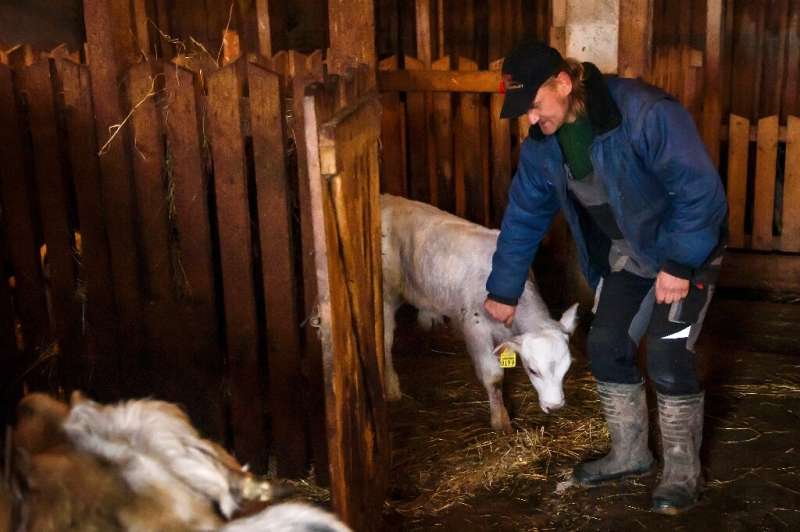
"Their worst days are over," said Arnis Bergmanis, head of the Ciruli animal park in the village of Kalvene, which serves as a breeding facility for the cattle.

"Blue cows are unique and wonderful. I'm glad we can help them thrive," he told AFP while examining a baby calf.

In 2000 there were only 18 blue cows in Latvia, but today they number around 1,500—thoroughbreds as well as hybrids.

Originally found only on the Baltic coast in the Kurzeme region, they are increasingly popular in central areas too.

"We are happy to help every new farmer or guesthouse owner get their own special blue cow," Bergmanis said.

Rural innkeepers acquire the cattle as a tourist attraction, while farmers include a token blue cow in their herd for its strong maternal instinct.

"If a calf of any colour loses its mother or gets separated, the blue cow will take the calf and raise it as its own," Bergmanis said.

'Their worst days are over,' says Arnis Bergmanis, head of the Ciruli animal park in the village of Kalvene, which serves as a b
'Their worst days are over,' says Arnis Bergmanis, head of the Ciruli animal park in the 
village of Kalvene, which serves as a breeding facility for the blue cow.

Cultural symbol

Blue cows evolved on the coast, where they led a spartan lifestyle, able to subsist on bush branches and dune grass—fodder considered inedible by other cattle.

Legend has it that they get their colour from the sea, though in fact they are born almost beige. Their coat soon turns blue however and gets darker with the years.

The pigment also influences the muscular tissue, producing beef that is exceptionally dark, though their numbers have always been too low for meat sales on a mass scale.

When the communists came to power under the Soviet occupation, they put an emphasis on mass production of beef and dairy. They favoured more generic cattle, causing the blue cow to almost go extinct.

But theatre, of all things, saved the day.

Following the highly popular 1970s play "The Blue One" by Latvian playwright Gunars Priede, the special cattle returned to public consciousness, becoming a symbol of vanishing national identity.

Under the Soviets, emphasis was placed on mass production of beef and dairy, favouring more generic cattle and causing the blue
Under the Soviets, emphasis was placed on mass production of beef and dairy, favouring 
more generic cattle and causing the blue cow to almost go extinct.

In 2006, farmers, scientists and enthusiasts founded the Blue Cow Association to safeguard the breed.

The government meanwhile offers special subsidies for owners of blue cows.

'Strong, independent'

Blue cows provide less milk than your average cattle—around 5,000 litres (1,300 gallons) per cow per year compared to 8,000 for the Holstein breed—but the milk is healthier and more nutritious.

They also stand out for their ability to thrive in harsh conditions, according to Daiga Simkevica, head of the Blue Cow Association.

"The strong, independent and robust blue cow can live all year round outdoors, even during the winter frosts, which many other cattle breeds can't endure," she told AFP.

The Blue Cow Association organises seminars for farmers, keeps meticulous records to avoid inbreeding, works to keep the population growing and also does research on the .

Thanks to a highly popular 1970s stage play, the blue cow returned to public consciousness, becoming a symbol of vanishing natio
Thanks to a highly popular 1970s stage play, the blue cow returned to public consciousness
, becoming a symbol of vanishing national identity .

"In the future we hope to carry out full DNA analysis to identify those genes that are unique to the blue cow," Simkevica said.

"We've never had a blue cow catch the bovine leukosis virus, therefore we hope to identify genes that might benefit all other cows too."More interaction with humans means smaller brains for cows

© 2022 AFP

Taiwan LGTBQ community buoyed by court adoption ruling


Taiwanese activists said Wednesday a court decision allowing a married gay man to adopt his husband's non-biological child offered hope but they called for the government to grant adoption equality to all same-sex couples.

© Sam Yeh
 Taiwan is at the vanguard of the burgeoning LGBTQ rights movement in Asia and became the first place in the region to legalise marriage equality in 2019

Taiwan is at the vanguard of the burgeoning LGBTQ rights movement in Asia and became the first place in the region to legalise marriage equality in 2019.

But same-sex couples still face restrictions others do not.

They can only adopt a partner's biological child and can only wed foreigners from countries where gay unions are also legal.

In the first favourable ruling of its kind in Taiwan, a family court in Kaohsiung city allowed a 34-year-old man to become the legal guardian of his spouse's daughter, who his husband adopted before they married.

The ruling, made public on Tuesday by activist groups after it went into effect, only applies to the couple.

But activists hope the decision will encourage other courts and local officials to follow suit and add to pressure on Taiwan's government to pass new legislation for full equality.

"I am happy that my spouse is also legally recognised as the father of our child... but I can't feel all that happy without amending the law," Wang Chen-wei, one of the claimants, told AFP.

"It's really absurd that same-sex people can adopt a child when they are single but they can't after they get married," the 38-year-old added.

Wang said he and his partner Chen Jun-ru would like to adopt a second child, but would have to go through the entire court process again.

Activist Jennifer Lu said the ruling offers "a ray of hope" but she noted that Taiwan's courts are inconsistent on the matter -- similar requests filed by two other same-sex couples were previously rejected.

"We hope the rulings serve as a reminder to government officials and lawmakers that the current unfair legal conditions need to be changed," said Lu, executive director for rights group Taiwan Equality Campaign.

The group has received enquiries from over 500 same-sex families interested in adopting non-biological children, she said.

Taiwan is home to a thriving LGBTQ community: a record 200,000 people attended a pride march in Taipei in 2019 to celebrate the legalisation of same-sex marriage.

At least 6,000 same-sex couples have wed since then.

That law came about after Taiwan's top court ruled that denying same-sex couples the right to marry was discriminatory and unconstitutional.

But same-sex marriage proved deeply divisive and the law contained restrictions that conservatives pushed for.

In May, a Taiwanese-Macanese gay couple won a similar court ruling that allowed them to wed even though Macau does not recognise gay marriage.

But like the adoption ruling, it only applies to their individual case.

aw/jta/dva
AFP
Thousands protest Argentina oil exploration project

AFP

Thousands marched Tuesday along the beaches of Argentina's Mar del Plata to protest an oil exploration project off the Atlantic coast.
© Diego Izquierdo The protesters marched along the beaches of Argentina's Mar del Plata

Carrying placards reading, "Oil is death", "A sea without oil tankers" and "No to pollution", demonstrators marched to drums, while classical dancers performed.

The group oppose a recent decision by center-left President Alberto Fernandez's administration authorizing seismic exploration studies by the Norwegian oil company Equinor, the Argentinian public firm YPF and Anglo-Dutch company Shell.

The work will take place in offshore areas of the Argentine Sea around 300 kilometers (186 miles) from beaches that attract millions of tourists.

These explorations "kill marine animals," said demonstration organizer Julieta, who declined to give her last name.

"If there is an accident, the oil spill could reach neighboring Uruguay," she added.

Surfer and lifeguard Juan Manuel Ballestero told AFP that he was against the exploration due to "disastrous data on oil spills in Brazil and Mexico."

Rallies were also staged in other Argentinian coastal cities.

Argentina holds extensive shale oil and gas deposits -- including the world's second-largest shale gas formation -- which the government hopes could be a driver of economic growth as it struggles to rebound from the pandemic.

dm/atm/llu/nzg/ybl/lb/axn
Ecuador, Colombia slam use of wild animal species after MasterChef episode

AFP - Yesterday
 
Capybara 


© STRINGER


Ecuador on Tuesday warned would-be wild animal eaters of possible prison time and Colombia launched an investigation after a competitive cooking TV show featured shark, alligator and capybara as ingredients.

In the offending episode, contestants of MasterChef Ecuador cooked up tollo, a small shark, as well as a type of wild deer and a capybara, a large rodent that can weigh up to 80 kilograms (175 lbs).

The National Animal Movement of Ecuador warned that the use of such ingredients on TV would "normalize the consumption of protected animals, whose ownership contributes to the trafficking of wild animals and the destruction of ecosystems."

Neither the channel nor the producers of the program responded to the charges leveled against them, though the show's chef and judge, Carolina Sanchez, claimed the meat was "from a farm."

In response to the program, which was filmed in Colombia, Ecuador's environment ministry said it "rejects the promotion and dissemination of graphic or audiovisual content that encourages the purchase and consumption of wild species or their constituent elements."

It also warned that crimes against wild flora and fauna can be punished with prison sentences of up to three years.

In Colombia, Environment Minister Carlos Eduardo Correa announced an investigation.

He said authorities "are verifying information circulating on social networks about the use of wildlife by-products in television programs.

"Trafficking and marketing of wildlife is a crime in Colombia," he wrote on Twitter.

MasterChef Ecuador, which is in its third season, is recorded in Colombia and broadcast on the privately owned national channel Teleamazonas.

pld-sp/jh/lb/ssy

Hi-tech AI-powered robots are replacing recycling centre workers in Finland


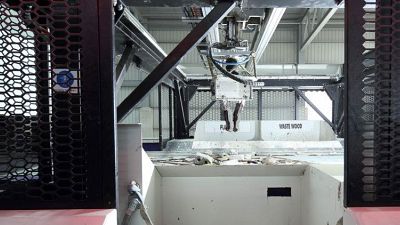
Image shows an AI-powered zenrobotics recycling robot at work. - Copyright zenrobotics

By Euronews and AP • Updated: 31/12/2021

On the outskirts of Finnish capital Helsinki, new technology is making recycling easier.

A recently-opened, 35-million-euro plant, owned by Finnish firm Remeo, can process up to 120,000 tonnes of construction waste, including wood, plastics, and metals.

It is said to be the most advanced recycling plant in Europe.

"We have thousands of thousands of customers, all industries," said Johan Mild, CEO of Remeo, which operates eight plants across Finland.

"From shopping malls, from production sites, from all over our customers, with our lorry it comes here."

An educational robot interacts with students at a Gaza school.

A fleet of 67 driverless 'robotaxis' have begun taking paying customers in Beijing

According to the European Union, the average European produces about five tonnes of waste a year, but only 38 per cent of that gets recycled. Over 36 per cent of all EU waste comes from construction.

Recycling waste is complicated due to the limited information on materials' content and quality.

"Unpure" items often cannot be recycled and reused as raw materials.

In several European countries, including Finland, some waste that can’t be recycled is sent to incineration plants, which produce power and heat, but also add to greenhouse gas emissions.

These arms, they never get tired and also they never get bored, and that makes them quite superior for a job like this. And frankly, given the amount of hazardous objects on the belt, it's really not a good place for people to put their hands on these kinds of sharp edges and other dangerous materials.
Harri Holopainen
CTO, ZenRobotics

"The whole industry basically has had the challenge that a lot of the waste goes for incineration," said Mild. "So, it's burnt up and that's not good for the nature and for the whole planet. So basically, what we now do is we try to raise the level of recycling."

This is where these quick-thinking AI-powered robots come in.

Several ZenRobotics heavy picker robots are helping sort wood from plastic, and metals from stone. The 12 robotic arms help capture valuable pure materials to boost recycling rates.

"The key thing for these robots is that they actually identify the waste objects on the belt," said Harri Holopainen, chief technology officer of Helsinki-based ZenRobotics, a company which has robots across 35 sites in around 20 countries.

"They look at each and every object that comes on the belt and then figure out whether it's wood, whether it's wood that has some nails in it, tiles or concrete, and then they put it in the correct chute for later processing."

Stanford engineers have taken a leaf out of nature’s book to build this bird robot
How does it work?

A unit scans the waste with cameras, a 3D sensor system and a metal detector.

Its AI-powered brain then recognises and identifies the objects and determines the best gripping point.

Its machine vision has been trained on thousands of images of waste, meaning it can recognise over 350 "fractions", a term used to describe the various different types of waste.

The robot's dexterous arm - which can lift up to 30 kilos - then picks and drops the waste down specified chutes. It has billions of potential picking motions. Almost every pick planned by its software is unique.

"These arms, they never get tired and also they never get bored, and that makes them quite superior for a job like this," Holopainen said.

"And frankly, given the amount of hazardous objects on the belt, it's really not a good place for people to put their hands on these kinds of sharp edges and other dangerous materials."

Industries are coming under increasing pressure to raise recycle rates. In Europe, an strategy set to be adopted in early 2022, aims to boost textile recycling.

Dancing mini robots are helping to teach children in Seoul kindergartens

Meanwhile, China, which had long been the world's largest destination for paper, plastic, and other recyclables, phased in import restrictions in 2018.

Remeo's Mild says the new technology has allowed them to raise recycling rates from around 50 to up to 90 per cent, in some cases.

"In construction waste already last year, we had in Finland a regulation that says that construction waste needs to be recycled 70 per cent, and with the traditional way that's really difficult to get," he said.

"But now, the robots doing it or the machines doing it, we can (get) much more higher than even 70 per cent."

In the battle against global waste, these robots are lending a helping hand.