Wednesday, January 05, 2022


On Annual Inspection Tour, USCG Witnesses Climate Change in Alaska
teller alaska
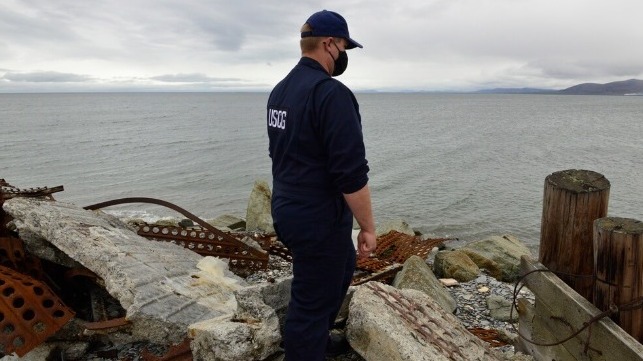
Residents have placed concrete and steel debris to control shoreline erosion near a fuel oil storage site in Teller, Alaska. With an increasing threat of soil erosion, remote communities in Alaska face new challenges (USCG)

PUBLISHED JAN 4, 2022 8:44 PM BY U.S. COAST GUARD NEWS


[By Petty Officer 1st Class Nate Littlejohn]

2021 marked a milestone for the Coast Guard’s Marine Safety Task Force initiative in Alaska. The seasonal MSTF initiative, first implemented in 2019, deploys Coast Guard teams to remote areas across the state to conduct vessel and facility inspections, provide operator training, improve maritime domain awareness, and conduct outreach for preparedness and safety programs. 

Through MSTF operations, the Coast Guard observed firsthand the impacts of climate change to the landscape of the Arctic and Western portions of Alaska. As permafrost thaws, the ground under many aging fuel facilities is becoming unstable. This could potentially leave people unable to heat their homes and schools, or fuel their traditional hunting and fishing transportation. Potential fuel oil spills caused by aging infrastructure in rapidly changing landscapes threaten local ecosystems that sustain communities. Additionally, an increase in maritime traffic in the Arctic increases the potential for search and rescue or pollution cases.

"I had a very special opportunity to be part of an MSTF team that deployed to the island community of Little Diomede in October,” said Capt. Leanne Lusk, commander, Sector Anchorage. “Little Diomede is the closest location in the U.S. to Russia. The island has 98 residents, half of whom are children. We learned that they only receive one fuel delivery each year. We were there to inspect their fuel tanks to ensure they could survive the coming winter without a fuel or heating oil spill, and to talk about pollution response efforts in the Bering Strait should a spill ever occur. The residents we met described this increasingly-transited region as their ‘grocery store’ and explained the tragic impacts a major pollution incident would have on their village and their people.”

Inhabitants of Little Diomede subsist on blue king crab, walrus, seal, and an occasional polar bear, all harvested in the winter months when the ice is safe enough to walk on around the island. However, for the last seven years, the multi-year ice they have counted on for fishing and hunting for generations has receded substantially.

“Crabbing on winter ice is not so good anymore,” said Opik Ahkinga, environmental coordinator and vice-mayor on Little Diomede. “We are no longer able to access the locations where crabs are abundant . . . We are concerned that hunting for our traditional Inupiaq foods will be lost. For three years now, we have not seen full meat racks of oogruk (seal) and walrus. We are also concerned about the increased shipping near our island and the potential for groundings and possible oil spills. We do have mitigation plans, but we need to train everyone here on how to respond should an incident occur.”

An oil spill in a remote part of Alaska could potentially devastate nearby marine life and maritime communities, and remote pollution incidents require significantly more resources to clean up. A 3,000-gallon heavy fuel oil spill on Shuyak Island in 2019, just northeast of Kodiak Island, cost $9 million to clean up, the highest cost-per-gallon spill in U.S. history. In the winter of 2020-2021 there were a total of five spills in remote Alaskan communities, including one during a barge-over-the-water transfer that cost a community more than $60,000 in lost fuel alone.

Long-range logistics

In 2021, aircrews from the Alaska Army National Guard flew Coast Guard members from Joint Base Elmendorf-Richardson to hub communities, including King Salmon and Nome. From these hub communities, pilots from the Civil Air Patrol Alaska Wing flew MSTF members to remote communities, where runways only allow for smaller airplanes. In total, MSTF teams visited 95 remote communities, completed 128 fuel storage facility inspections, 470 commercial fishing vessel exams, five gold dredge exams, and monitored six fuel-to-shore transfers.

The direct result of the MSTF effort has been a 395 percent increase in physically inspected facilities and an almost 2,000 percent increase in vessel exams since the program's launch in 2019. 

“Coastal erosion, changes to the home range of key species, increased commercial traffic, and thawing permafrost all have significant impacts on coastal communities and Coast Guard operations across various mission sets,” said Cmdr. Jereme Altendorf, an Arctic emergency management specialist at Sector Anchorage. “Via the MSTF initiative, the Coast Guard has positioned itself to not only complete its statutory missions, but simultaneously share the story of the effects of climate change with those who may be able to act.”

This article appears courtesy of U.S. Coast Guard News and is reproduced here in an abbreviated form. The original may be found here

 CRIMINAL CAPITALI$M

World's Largest Bunker Company Keeps CEO After Criminal Conviction

bunker holding
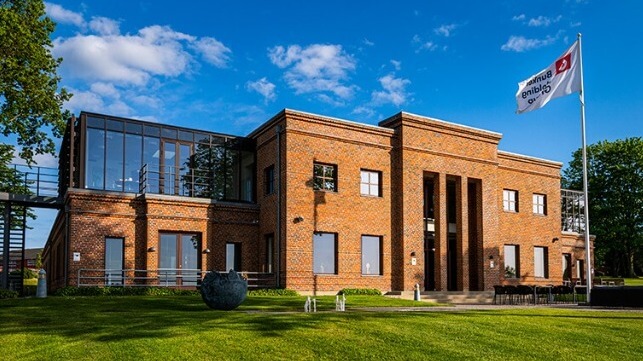
Bunker Holding headquarters (USTC)

PUBLISHED DEC 29, 2021 2:32 PM BY THE MARITIME EXECUTIVE


It is rare for a company with $10 billion in turnover to retain a CEO with a custodial sentence, but Danish trading house Bunker Holding - the largest bunker company in the world - has decided to keep a convicted chief executive and to accept its own sentencing on charges related to sanctions-busting.

Earlier this month, Bunker Holding, subsidiary Dan-Bunkering and Bunker Holding CEO Keld Demant were all convicted of charges related to supplying jet fuel to Russian intermediaries, who then resold the fuel for diversion to Syria. The deliveries were made during a period in which Russian and allied Syrian forces allegedly engaged in indiscriminate bombing in civilian areas of Aleppo, killing hundreds of non-combatants. The battle was a turning point in Syria's 10-year civil war, and its outcome hinged on Russian air support. At the time, EU sanctions prohibited fuel deliveries to Syria. 

Prosecutors argued that executives at Dan-Bunkering and Bunker Holding, including Demant, were aware or should have been aware of the risk of diversion - but still signed off on 33 sales totaling 172,000 tonnes of jet fuel over two years. In the trial, it emerged that the firm's internal compliance controls had worked properly - Bunker Holding's chief legal officer flagged the sales and warned repeatedly that they risked violating EU sanctions - but traders overrode the warnings and approved the deals anyways. 

The court agreed with the prosecution, finding that Dan-Bunkering should have "realized it was overwhelmingly probable" that the fuel would be used in the Syrian conflict and that such use would violate EU sanctions. It handed Bunker Holding CEO Keld Demant a four-month suspended prison sentence, and it sentenced Dan-Bunkering to a fine of nearly $5 million - plus an additional profit confiscation of $2 million. 

Bunker Holding noted that only Dan-Bunkering was convicted of a deliberate breach of sanctions, and Bunker Holding and Demant were convicted only of negligence contributing to a breach of sanctions. 

The penalty was unusually stringent for a white-collar crime case, according to observers. "It is not often that we see fines of that magnitude in Denmark," commented Prof. Thomas Elholm, a professor of criminal law at University of Copenhagen, speaking to DR. "And it is not every day that we see directors who are sentenced to imprisonment."

In a statement this week, Bunker Holding owner Torben Ostergaard-Nielsen - the head of Denmark's sixth-richest family - expressed his continued support for Demant and said that he would remain CEO. "Keld R. Demant has the full and unchanged supoport of the board of directors and the ownership and will continue as the CEO of Bunker Holding," Ostergaard-Nielsen said. 

Ostergaard-Nielsen added that as the world's largest bunker company, Bunker Holding has "an obligation to take the lead in compliance and set the highest standards for ourselves." 

Bunker Holding and Dan-Bunkering will accept the court's decision and will not appeal the ruling, said Klaus Nyborg, Bunker Holding's vice chairman.

Researchers identify biomarker for depression, antidepressant response

depression
Credit: Pixabay/CC0 Public Domain

Researchers are one step closer to developing a blood test that provides a simple biochemical hallmark for depression and reveals the efficacy of drug therapy in individual patients.

Published in a new proof of concept study, researchers led by Mark Rasenick, University of Illinois Chicago distinguished professor of physiology and biophysics and psychiatry, have identified a biomarker in human platelets that tracks the extent of .

The  builds off of previous studies by several investigators that have shown in humans and animal models that depression is consistent with decreased adenylyl cyclase—a small molecule inside the cell that is made in response to neurotransmitters such as serotonin and epinephrine.

"When you are depressed, adenylyl cyclase is low. The reason adenylyl cyclase is attenuated is that the intermediary protein that allows the neurotransmitter to make the , Gs alpha, is stuck in a cholesterol-rich matrix of the membrane—a lipid raft—where they don't work very well," Rasenick said.

The new study, "A Novel Peripheral Biomarker for Depression and Antidepressant Response," published in Molecular Psychiatry, has identified the cellular biomarker for translocation of Gs alpha from lipid rafts. The biomarker can be identified through a .

"What we have developed is a  that can not only indicate the presence of depression but it can also indicate therapeutic response with a single biomarker, and that is something that has not existed to date," said Rasenick, who is also a research career scientist at Jesse Brown VA Medical Center. 

The researchers hypothesize they will be able to use this blood test to determine if antidepressant therapies are working, perhaps as soon as one week after beginning treatment. Previous research has shown that when patients showed improvement in their depression symptoms, the Gs alpha was out of the lipid raft. However, in patients who took antidepressants but showed no improvement in their symptoms, the Gs alpha was still stuck in the raft—meaning simply having antidepressants in the bloodstream was not good enough to improve symptoms.

A blood test may be able to show whether or not the Gs alpha was out of the lipid raft after one week. 

"Because platelets turn over in one week, you would see a change in people who were going to get better. You'd be able to see the  that should presage successful treatment," Rasenick said.

Currently, patients and their physicians have to wait several weeks, sometimes months, to determine if antidepressants are working, and when it is determined they aren't working, different therapies are tried. 

"About 30% of people don't get better—their depression doesn't resolve. Perhaps, failure begets failure and both doctors and patients make the assumption that nothing is going to work," Rasenick said. "Most depression is diagnosed in primary care doctor's offices where they don't have sophisticated screening. With this test, a doctor could say, 'Gee, they look like they are depressed, but their blood doesn't tell us they are. So, maybe we need to re-examine this.'"Why is it so hard to withdraw from some antidepressants?

More information: Steven D. Targum et al, A novel peripheral biomarker for depression and antidepressant response, Molecular Psychiatry (2021). DOI: 10.1038/s41380-021-01399-1

Journal information: Molecular Psychiatry 

Provided by University of Illinois at Chicago 

How Psychedelic Therapy Fuses Indigenous Shamanism With Western Science

SHAMANIC TECHNIQUES ARE NOW FINDING THEIR WAY INTO CLINICAL THERAPEUTIC SETTINGS. 


By Benjamin Taub 
03 JAN 2022

Psychedelic-assisted psychotherapy is widely talked about as a novel development within psychiatry, yet the ironic truth is that mind-altering substances have been used to promote mental wellbeing for thousands of years. And while the ceremonial ingestion of plants like ayahuasca in South America, peyote in North America, and iboga in Africa may seem a far cry from the psychiatrist’s couch, researchers are increasingly looking to indigenous cultures in order to learn how to utilize these potent medicines.

Inevitably, however, this attempted reconciliation of modern science with ancient medical traditions has thrown up a fair amount of cultural friction, which researchers from various disciplines are now trying to smooth over.


IMAGE: STÉFANO GIRARDELLI/UNSPLASH.COM

Anthropologists studying the ceremonial use of psychedelic plants often write about the skillful manner in which shamans guide their patients into “managed altered states of consciousness”. Through the ritual manipulation of symbols, sounds, and other aesthetic elements, these traditional healers are able to steer participants’ visions and hallucinations in certain desirable directions.

Such techniques are routinely employed by indigenous healers at the Takiwasi Center in Peru, a world-leading treatment and research facility where traditional Amazonian medicine is combined with Western psychotherapy. The project’s scientific director, Dr Matteo Politi, told IFLScience that “most Western researchers who come to the Amazon and observe an ayahuasca ceremony would probably see the ritual itself as lacking in scientific value, and would not count it as a significant variable. But many of us within the field of ethnopharmacology consider ritual to be not just important, but absolutely fundamental to the outcome of treatment.”

A recent study of Westerners attending a similar mental health retreat run by indigenous ayahuasca healers found that 36 percent rated the actions of these shamans as the single most important factor in the improvement of their wellbeing. And while shamanic rituals may not be fully appreciated by conventional psychiatrists, it is widely agreed that psychedelic experiences are the product of more than just mere pharmacology.

Back in the 1960s, Harvard-professor-turned-LSD-evangelist Timothy Leary helped to popularize the notion of “set and setting”, which holds that the effects of psychedelics are largely determined by the mindset of the user as well as the environment in which they are taken, rather than the properties of the substances themselves. Adding some meat to these bones, a study published in 2018 concluded that psychedelics make people more receptive to environmental stimuli, probably as a result of their ability to increase neuroplasticity.

For this reason, set and setting has been incorporated into recent psychedelic trials. Typically, this is achieved by manipulating the therapeutic environment with low lighting and carefully selected music playlists. This last element is considered to be of particular importance, as research has revealed that music amplifies the capacity of psychedelics to enhance activity within the parts of the brain that process emotion.

“The recognition of the importance of set and setting represents a bridge between traditional healing and modern medicine,” says Politi. “However, if we want to develop this principle within modern contexts then we have to learn from the cultures that have been using these plants for centuries.”

COMMUNITAS

Also located in the Peruvian Amazon is the Temple of The Way of Light, an ayahuasca retreat where researchers from Imperial College London are currently studying the efficacy of traditional healing techniques for the treatment of mental health. Researcher Adam Aronovich, who is involved with the study, told IFLScience that “when we interview people about which parts of the experience have the biggest impact on them, not everybody actually talks about ayahuasca straight away. Instead, a lot of people focus their narratives on the social aspect and shared togetherness, which all come under the umbrella of communitas.”

Another anthropological term, communitas refers to a sense of collective rather than personal identity, whereby members of a group come to see each other as one and the same. It is said to occur frequently in shared rituals during which social and relational structures are lifted so that participants are able to bond as equals. While the use of psychedelics is not necessary for communitas to arise, studies have shown that these substances tend to heighten emotional empathy and inhibit activity in the parts of the brain that process social rejection, implying that they may serve to enhance this experience of shared togetherness.

In this instance, communitas arises from undergoing intense and sometimes challenging ayahuasca ceremonies together, rather than individually. The substance itself is therefore key to the whole process, yet, Aronovich says, “for most people, the group aspect and the sense of communitas was a primary factor in their healing.” Likewise, a global study of people who have used psychedelics in group settings found that “communitas during ceremony was significantly correlated with increases in psychological wellbeing, social connectedness, and other salient mental health outcomes.”

Interestingly, another recent study concluded that people who get high and dance together at rave parties often report improved psychological wellbeing, indicating that the benefits of communitas can also be experienced outside of traditional settings.

And yet, all clinical research into the efficacy of psychedelics to treat mental health disorders has overlooked this aspect, focusing on individual treatments rather than collective healing through group bonding. Herein lies a major paradigm clash between modern psychiatry and indigenous shamanism, presenting a major obstacle to the marriage of these two contrasting systems.

A CLASH OF WORLDVIEWS

“Something that’s very ingrained in the Amazonian worldview is this eco-social understanding of interdependence,” explains Aronovich. “In indigenous traditions, there is no such thing as an individual in the same way that we take for granted in the west. We are all just nodes in a network of interdependent relationships. It’s a different way of looking at things.”

For those of us who have been raised as firm materialists, such an outlook can be difficult to understand, let alone accept. We are conditioned to see the world as populated by discrete, independent entities that can be neatly isolated from one another, whereas many indigenous cultures view the universe as one unified conscious system, in which everything is connected to everything else.

In line with this outlook, mental health problems are understood not as the product of faulty brain chemistry or personal psychological quirks, but as a symptom of misalignment with the encompassing whole. Healing, therefore, is typically a collective affair and is achieved by restoring the patient’s sense of connectedness to their community and wider environment.

Put another way, connection is healing, and communitas, therefore, is one of the greatest psycho-medicinal tools available to these cultures. Meanwhile, the Western scientific establishment is now paying increasing attention to the disastrous psychological and physical toll of loneliness, yet it stops short of recognizing mental illness as a symptom of the disconnectedness that is inherent to our modern worldview.

Because of this, collective rituals are not routinely prescribed by modern doctors to patients suffering from depression, anxiety, or other psychological ailments. As Aronovich explains, “in our Western medical culture, these problems have been completely individualized. So if you have depression, you take a pill and you hope for the best.”

Presenting the anthropological challenge at the center of this cultural juxtaposition, Politi explains that “we in the West must understand that our medicine is also an ethnomedicine, as it simply reflects our cultural worldview. There is no objective definition of health – we just think of ourselves as healthy or sick depending on our cultural perspective.” Thus, while we may limit our notion of health to the mere absence of physical or mental symptoms within an isolated individual, other cultures might take social and environmental connections into account before passing diagnosis.

BRIDGING THE DIVIDE

While most research on psychedelics continues to focus on pharmacology, a number of studies are beginning to recognize the importance of contextual factors. For instance, the Imperial College study taking place at the Temple of the Way of Light seeks to quantify the contribution of communitas to clinical outcomes, thereby bridging the gap slightly between two seemingly opposing worldviews.

At the same time, Aronovich insists that there is validity in both approaches, and that psychedelic-assisted psychotherapy can and should be adapted in order to be compatible with different cultures. “I’m a proponent of both the clinical design but also the ceremonial group component,” he says. “I think both of them are important and both of them offer unique functions.”

And while he says we must learn what we can from indigenous approaches to psychedelics, he recognizes that “it’s a bit of a stretch to impose a whole new worldview on people.” Rather than building therapeutic protocols around philosophies that “the majority of people in the West are going to find difficult to digest,” therefore, he insists that we’re better off “adapting these principles to create something that makes sense.”

Such an approach is likely to mitigate concerns about cultural appropriation of indigenous practices, yet still leaves room for the adoption of basic yet important elements like sitting around a fire and sharing one’s feelings with a group. As simple as this sounds, it may well be the key to psychedelic healing.
Deadly surge in U.S. gun violence brings inequities of the pandemic, police violence and firearms laws into sharp focus


JAN 04, 2022 

A first responder in Chicago leaves the scene where two women were shot this past Christmas morning.

Chicago had more homicides in 2021 than any year since 1996.Cheney Orr/Reuters.

On the evening of July 7, Miles Thompson left his home in a northern suburb of Chicago to visit his father in the city.

In 2020, homicides rose 30 per cent countrywide.

The U.S.’s homicide rate – 7.5 per 100,000 people – is nearly four times Canada’s rate, more than six times Britain’s and 25 times that of Japan.

Anderson, president of Thrive Chicago, a group that designs programs to help disadvantaged youth across the city, her stepson’s killing and the wave of shootings of which it is part are wakeup calls to a country that has for too long avoided addressing the root causes of gun violence.

Firearm-related homicides.

per 100,000 people (2001–2019).

Licensed firearm dealers per 100,000 people*.

*Dealers and pawnbrokers in firearms other than destructive devices (includes gunsmiths).

Firearm-related homicides.

per 100,000 people (2001–2019).

Licensed firearm dealers per 100,000 people*.

*Dealers and pawnbrokers in firearms other than destructive devices (includes gunsmiths).

Firearm-related homicides per 100,000 people (2001–2019).

Licensed firearm dealers per 100,000 people*.

*Dealers and pawnbrokers in firearms other than destructive devices (includes gunsmiths).

Firearm-related homicides per 100,000 people (2001–2019).

Licensed firearm dealers per 100,000 people*.

*Dealers and pawnbrokers in firearms other than destructive devices (includes gunsmiths).

Firearm-related homicides per 100,000 people (2001–2019).

Licensed firearm dealers per 100,000 people*.

*Dealers and pawnbrokers in firearms other than destructive devices (includes gunsmiths).

It logged 90 homicides in 2021, its worst-ever tally.

“We have an obligation to keep people safe on a day-to-day basis,” says Ted Wheeler, the city’s mayor.

In 2020, after the police murder of George Floyd ignited the largest national racial-justice protests since the Civil Rights movement – including months of demonstrations in Portland’s central square – the city cut its police budget by US$15-million.

It has put US$5.2-million more into the police budget.

“The short-term problem has been a lack of resources and personnel,” says Sergeant Kevin Allen, a police spokesman, who cited a decision in 2020 to disband a specialized gun violence team.

He says people “are much more emboldened to carry guns.

They know it’s less likely they’re going to get stopped.”.

Lamar Winston, who runs an inner-city basketball program, says the lack of law enforcement has seen people taking matters into their own hands.

So it’s every man for themselves,” he says.

In Chicago, there is scant evidence that simply flooding the streets with police is going to solve anything.

In 2021, Chicago had 797 homicides, compared with 485 in New York City, which has more than three times the population.

Toronto, which is slightly more populous than Chicago, had 404 total shootings in 2021

We’ve already tried that,” says Curtis Amir Toler, director of outreach at Chicago Create Real Economic Destiny (CRED), a group working to end gun violence by helping men in marginalized communities find work in the legal economy.

A community member watches police at the scene of a deadly shooting in Chicago this past Dec.

Other people have spent years going to school for this.

It makes no sense,” he says.

Shutting down schools, recreation activities and anti-violence programs caused at-risk youth to get involved with gangs, he says.

But he argues the necessary social spending shouldn’t be taken out of the police budget.

“One of the richest cities in the richest country in the world is being told ‘You have to choose between safety and jobs,’ and I beg to differ that that’s a choice that has to be made,” he says.

“If you pull the police out now, there’s going to be bloodshed, and who’s going to suffer from that.

It’s going to be people living in these Black and brown communities.”.

Shani Buggs, a gun violence expert at the University of California Davis, says researchers are still gathering data and have not reached definitive conclusions explaining the spike in violence these past two years.

Buggs says, is likely a combination of police holding back and an increased mistrust of officers by communities subject to brutality.

We have also seen evidence that when these incidents happen, police engage the community less.

If people believe there is no accountability for what’s being done to them and their families, people will take matters into their own hands,” she says.

“High rates of police aren’t necessarily stopping the violence,” she says.

It’s dangerous out there,” says Mr. Toler, the anti-violence outreach worker, says guns are far more ubiquitous than when he was leading a street gang decades ago

“We’re seeing guns and ammunition that I haven’t seen in my lifetime,” he says at a Chicago CRED outreach centre in a strip plaza on the South Side

Some guys have never seen the skyline downtown,” says Terrance Henderson, a 38-year-old Chicago CRED outreach worker

Marshall, who associated with Chicago gangs as a teen, was ultimately caught with his gun by police

While serving a sentence of house arrest last year, he joined READI Chicago, a program that provides a mix of cognitive behavioural therapy and job training for people trying to escape violence

“We need to be able to have more staff, to be more in the community to get people out,” says Toronto Brooks, 56, a READI outreach worker 

The sense of anger is palpable, says Arthur Hayes Jr., a Portland gang member who now eschews violence

We’re not fighting,” he says

“Many people are having mental-health crises,” he says

Answers have been similarly elusive in the shooting death of Miles Thompson, the 18-year-old killed in Chicago

But from her work with disadvantaged young people

And reaching people like them is exactly what she aims to do through her work at Thrive Chicago

It takes resources and patience, she says, but the only way out of this epidemic of violence is fixing the problems that cause people to take up arms in the first place

“As a nation, we have to understand that we’re going to pay for it one way or the other

Either we’re going to invest on the front end, or we’re going to pay on the back end,” she says

MURAT YÜKSELIR / THE GLOBE AND MAIL, SOURCE: CENTERS FOR DISEASE CONTROL AND PREVENTION; BUREAU OF ALCOHOL TOBACCO FIREARMS AND EXPLOSIVES; U.S.


NOVA SCOTIA
A nun kidnapped her from a residential school


Jan 4, 2022
CBC News

A Mi’kmaw woman was the last student to leave the Shubenacadie Indian Residential School in Nova Scotia when it closed in 1967. Instead of going home, Debbie Paul was kidnapped by a nun and forced to live with a white family

To read more: https://www.cbc.ca/newsinteractives/f... 

Support is available for anyone affected by their experience at residential schools and those who are triggered by these reports. A national Indian Residential School Crisis Line has been set up to provide support for residential school survivors and others affected. People can access emotional and crisis referral services by calling the 24-hour national crisis line: 1-866-925-4419.
They say they fought for democracy. Border guards argue they supported a terror group. Will they get to stay in Canada?

These asylum seekers backed Egypt’s first democratically elected government. Now, they’re facing accusations of belonging to subversive groups.

By Nicholas Keung
Immigration Reporter
TOR STAR
Tue., Jan. 4, 2022


Attia Elserafy remembers taking to the streets with his family.

A human rights and labour activist all his life, the 60-year-old had been encouraged, he says, by the Arab Spring and saw hope for a new and democratic Egypt.

With his wife and five children in tow, he braved a military crackdown to join thousands of his compatriots at peaceful protests calling for “Bread, Freedom and Social Justice,” under then president Hosni Mubarak’s autocratic government.

The 2011 Egyptian revolution would topple that regime and Elserafy, the head of the General Petroleum Union, was invited to join the leading Freedom and Justice Party, which later formed the country’s first democratically elected government.

“It was a peaceful revolution. The world celebrated it with us. People in Egypt, for the first time, experienced freedom and democracy, and the belief in democracy and our ability to stop corruption,” Elserafy reminisced through an Arabic interpreter recently.


That fledgling democracy, however, was short lived — and today, Elserafy has found himself trying to justify his role and his political allegiances from that tumultuous period in Egypt so that he might start a new life a world away in Canada.

His case is one of a cluster now being highlighted by advocates, who say it shows the unevenness of Canada’s immigration system and the whims to which asylum-seekers can fall prey.

It was in 2013 that the elected president, Mohammed Morsi, was removed by a coalition led by army Chief Gen. Abdel Fattah Al-Sisi.

Elserafy said he refused the demand of the new regime to publish a declaration of support and was dismissed from his union job.

Like many supporters and sympathizers of the deposed Morsi government, Elserafy began a life in exile, first in Turkey and then in Canada, where he arrived in 2018 with his wife and three of his five children, claiming political persecution.

In the past six years, until September, 3,381 Egyptians have sought asylum in Canada, many of them on similar grounds, and 2,679 have been granted protection in this country.

However, Elserafy is not among those successful claimants, despite the union’s leader’s profile with the Freedom and Justice Party, which has been dissolved by the Egyptian court.

Instead, he has found himself among a group of Egyptian asylum-seekers facing inadmissibility in Canada for their alleged membership with the party, which was founded in 2011 by the Muslim Brotherhood.

Canada border service agents in Vancouver allege both the Freedom and Justice Party and the Muslim Brotherhood are terrorist groups that promoted violence, and engaged in subversion against a democratic government, even though Canada and most western countries, including the United States, don’t designate them as such.

The Vancouver agents’ position is far from a universal one.

“In other jurisdictions in Canada, individuals who are a member of these organizations actually relied upon that as their refugee claim and were approved,” says Vancouver immigration lawyer Erin Roth, who represents five of these emerging inadmissibility cases against Egyptian claimants.

“We found a whole stack of decisions that were made in those jurisdictions that contained allegations about the Muslim Brotherhood and Freedom and Justice Party, where it was not made an issue. I do not know of any cases in other regional offices where these allegations have been presented.”

According to Encyclopaedia Britannica, the Muslim Brotherhood was founded in 1928 in Egypt, advocating for the return to the Quran to guide the building of a healthy modern Islamic society that centred on education and much needed social services. It evolved to become a political group, challenging colonialism and authoritarian regimes.

Roth said there are a lot of geopolitical pressure and international propaganda about the nature of the Brotherhood’s activities then and now.

“When CBSA officers are researching, depending on how their own biases appear, they’re going to be pulled or attracted to one side of information versus another,” said Roth.

Mohamed Abdelhameed also has ties to the Freedom and Justice Party, but when he came to Canada, he says, it was not held against him.

Abdelhameed, a former Egyptian parliamentarian and professor of medicine at the University of Alexandria, sat on the Supreme Council of the party, an executive committee of the group, and came to Canada for asylum in January 2017.

The 65-year-old claimed he was persecuted by the current regime and was granted protection by a refugee judge in Quebec in November 2018. He said the border agent in his hearing did not raise any issue with his membership to the political party.

Abdelhameed, who is not a member of the Muslim Brotherhood, said the border agents’ allegations against the Egyptian claimants in Vancouver mirrored the rhetoric of Al-Sisi’s regime.

“I was an elected member of the parliament. I have never advocated for violence and neither did my colleagues. And then my name is being put into these military and national security courts (in Egypt), no witnesses, no evidence, no charges,” he said. “It’s all political.”

The Federal Court has made it clear that officials have the authority to order a foreign national inadmissible even if the group the person is alleged to belong to is not on the Canadian government’s designated terrorism list.


Border agents and immigration tribunal adjudicators are independent decision-makers who are given the discretion to rule on admissibility. All it requires are reasonable grounds to believe someone is inadmissible as a security threat by membership to a group that “engages, has engaged and will engage” in espionage, subversion and terrorism.

In Elserafy’s case, the border agency alleged the Muslim Brotherhood promoted violence from 1928 to the 1980s and engaged in subversive activities, including sending its members to fight Israel in 1948 and participating in the revolution against the British colonial rules.

They also claimed the Freedom and Justice Party is the same as the Muslim Brotherhood and it engaged in subversion against the democratic process of drafting and passing the constitution in Egypt.

Elserafy said neither the Muslim Brotherhood nor his party promote violent or terrorist acts.

“The world welcomed the Freedom and Justice Party. It was recognized as a legitimate party from all governments. The Canadian ambassador twice had diplomatic meetings with the Freedom and Justice Party,” said Elserafy, who is not a member of the Muslim Brotherhood.

“Those viewpoints are inaccurate and are based on evidence by the Egyptian government and anti-Muslim groups.”

Critics have pointed to the arrests of tens of thousands of political opponents by the Al-Sisi regime since the current president dethroned Morsi.

Egyptian Canadian Khaled Al-Qazzaz has seen the reality first hand. He was the foreign secretary for Morsi, and was arrested at the president’s office in July 2013 by soldiers armed with machine guns. Al-Qazzaz was detained, initially incommunicado, between July 3, 2013 and June 15, 2015.

“What happened in Egypt in 2013 is a full-fledged military coup against a democratically elected president,” said Al-Qazzaz today. “The removal of all forms of democracy, dissolving the parliament, dissolving the constitution that many Egyptians had participated in is actually the act of subversion and not the other way around.

Former Conservative foreign minister John Baird flew to Egypt to lobby for Al-Qazzaz’s release in 2015 on medical grounds while Prime Minister Justin Trudeau’s Liberal government successfully brought him back to Canada a year later.


Al-Qazzaz, who has been called as a witness in some of the inadmissibility proceedings against the Egyptians in Vancouver, said he was surprised by evidence the border agency has relied on, including one 2015 report by London-based 9 Bedford Row, “The History of the Muslim Brotherhood,” commissioned by the current Egyptian government.

“These families who have suffered for being part of the democratic process in Egypt have continued to suffer and struggle even when they are theoretically in safe haven in Canada, a place that respects democracy and respects human rights,” said Al-Qazzaz, a member of Human Rights Watch’s Canada Committee.

“It is counterintuitive not to see that those who stood for democracy are the ones now being punished by individual members with the Canada Border Services Agency.”


While some of the Egyptians’ inadmissibility cases only started slowly trickling into the judicial system, Abdelrahman Elmady is believed to be the first person to be found inadmissible in Canada for his membership in the Muslim Brotherhood. His appeal was recently heard by the Federal Court and a decision is pending.

Elmady was excluded from seeking asylum by the border agency upon his arrival in Vancouver in 2017 because he was alleged to be a member of the Freedom and Justice Party. His case was referred to the immigration tribunal, which sided with the border agency.

Roth called the fight between the border agency and these claimants a David and Goliath battle.

“It’s one thing to ask somebody whether they are or not a member and have them provide evidence of their membership. My biggest issue is that these individuals on a case-by-case basis are being asked to prove or disprove the conduct of an organization,” she said.

“One officer or tribunal member can say, ‘Yes, it’s a terrorist organization’ and the next can say, ‘no, it’s not a terrorist organization’ based upon their personal review of the evidence and the specific file. To the extent, it places individuals in a monumental task of basically a parliamentary inquiry.”

Ideally, the Canadian Parliament should create a binding list of designated terrorist organizations to guide inadmissibility decisions made by border agents when applying the provisions on memberships to groups engaging in terrorism and subversion, Roth said.

At the very least, she added, the border agency should establish its own list to ensure some level of consistency in its decision making.

“These individuals shouldn’t have to litigate whether something is or is not a terrorist or subversive organization. That should be left to the parliament,” said Roth. “An individual should be able to go into a hearing or any system of law and have a reasonable expectation as to the outcome.”

According to Roth, even if a person is ultimately recognized as inadmissible by court, they can still be found to be a protected person and can’t be removed if they can show their lives would be at risk if deported. But then they will just languish here with little prospects of getting permanent residence.

Nicholas Keung is a Toronto-based reporter covering immigration for the Star. Follow him on Twitter: @nkeung
Experts say Canada must defend itself from the Arctic ambitions of China and Russia
AND AMERICA

By Janet E Silver. Published on Jan 3, 2022 
A street in Arctic Bay, Nunavut

As global warming melts glaciers in Canada’s Arctic and sea levels continue to rise, countries like Russia and China are eyeing the shipping routes that have opened up as a result, and threatening our national security in the process, experts say.

China and Russia view the North as a source of oil, gas, minerals, and seafood. To access and defend those resources, both countries are investing in ports, satellites, ballistic-missile submarines, hypersonic missiles, and icebreakers. They also want to gain control of the Northwest Passage, which is the sea route along the northern coast of North America between the Atlantic and Pacific Oceans.

Unlike Russia, China isn’t an Arctic state, but in 2013 it became a member of the Arctic Council — a forum for governments to promote co-operation in the Arctic — and has become more active in the region ever since. To support its shipping routes through Arctic waters, earlier this year, China unveiled more details of its “Polar Silk Road” plan to build infrastructure like ports, marine corridors, satellites, and ice-breaking tankers.

The biggest challenge for Canada and the U.S. is modernizing NORAD to prevent the possible encroachment on our countries’ sovereignty, says Troy Bouffard, director of the Center for Arctic Security and Resilience in Fairbanks, Alaska.

NORAD, the North American Aerospace Defense Command, is headquartered in Colorado and provides air security and an aerospace warning system for Canada and the U.S.

“We do lack effective defence systems in the North,” Bouffard said. “How do we deal with threats like hypersonic cruise missiles (from Russia)? Decision-makers, working together, have to commit a lot more dollars (to NORAD).”

Russia has been testing and launching hypersonic cruise missiles from warships in its northern waters for years. Tracking these missiles is difficult, because they’re manoeuvrable in flight and travel more than five times the speed of sound.

Even though opinion is divided on how much to increase its budget, Bouffard says Canada and the U.S. need to invest in NORAD “right now,” calling its underfunding “a very large problem (that will) affect both nations’ political systems.”

Conservative MP James Bezan says that, under NORAD, Canada has a responsibility for continental security.

Bezan was parliamentary secretary to the minister of Defence from 2013 to 2015, and has been his party’s Defence critic for years.

“Currently, the North warning system only exists on the continent of North America,” Bezan said. “It doesn’t include the Arctic archipelagos — consisting of 94 major islands almost entirely covered by ice — with the exception of Resolute Bay and Alert (in Nunavut).”

We need more satellites in the area, and we need to update our Air Force bases that have high strategic and tactical importance, he said. Once we buy a new surveillance system, whether for the Super Hornets or the F-35s, hangars and runways will need to be modernized, too. (The government is expected to announce next year which of the two fighter jets will replace its aging fleet of CF-18s.)

Meanwhile, foreign vessels are entering waters near Nunavut, and people in the North feel threatened by their presence, says NDP MP Lori Idlout, who won the riding of Nunavut in the September election. Furthermore, national discussions of security in Canada’s North need to include the people of Nunavut, she said.

“We know our lands,” she told iPolitics in November. “The best way to make sure that security is appropriate is to make sure it’s done with a strong partnership and relationship with the inhabitants of the Arctic.”

Ottawa says its Arctic and Northern Policy Framework, published two years ago, commits it to consulting provinces, territories, and Indigenous partners.

It also states that “Canada will enhance the Canadian Armed Forces’ presence in the region over the long term by setting out the capability investments that will give the Canadian Armed Forces the tools they need to help local people in times of need, and to operate effectively in the region.”

In a statement to iPolitics in November, Defence Minister Anita Anand confirmed Canada’s financial commitment: “In Budget 2021, our government announced initial investments of over $250 million in continental defence, which will lay the groundwork for NORAD modernization. Canada continues to work hand-in-glove with our American allies to protect our North and modernize our continental defence and deterrence capabilities.”

But to prevent China and Russia from encroaching further on the North, Canada and the U.S. must spend millions more than what they’ve already set aside, say Bezan and Bouffard.

“If we don’t start making investments and adapting to the changing threat, government has failed to protect Canadians from what could come in the future,” Bezan said.

This article was first published in the iPolitics Holiday Magazine that was printed in early December.
After press conference arrest, Ron DeSantis bashes ‘authoritarian’ Joe Biden

A.G. GancarskiJanuary 4, 2022

The Governor's press conference was delayed, but the fundraising email was not.

Gov. Ron DeSantis‘ Tuesday press conference in Jacksonville started late, after community activists refused to leave when asked by aides.

After the arrest of 72-year-old Ben Frazier, the remarks went as scheduled.

Also appearing as scheduled: An email during the press event from the Governor’s political operation, ironically bashing “authoritarian” President Joe Biden for COVID-19 policies.


“Back in August, Biden told me to ‘get out of the way’ if I wouldn’t go along with his administration’s authoritarian, lockdown COVID policies, guided by Dr. (Anthony) Fauci and his ‘science,'” DeSantis asserted.

“Fortunately, I never caved to Biden’s ineffective and authoritarian government lockdowns and mandates in Florida,” DeSantis added in an email full of familiar attacks.

DeSantis bashed Biden for having “demagogued” former President Donald Trump throughout the 2020 campaign, only to pronounce that there is “no federal solution to COVID.”

“When the going got tough, Joe ran back to his basement,” the email contends.

The timing of the email and its worries about authoritarianism came after a tense morning at the Duval County office of the Florida Department of Health. Frazier and others stood their ground, wondering why they were being compelled to leave a public press conference in a public building.

Frazier was told by a man who described himself as a facilities manager that the conference was only for “credentialed press” and asked everyone to leave “who is not media.” A former broadcast journalist, Frazier serves as president of the Northside Coalition of Jacksonville.

As police handcuffed him, Frazier asked “Why am I being handcuffed? Am I being arrested?”

In the end, he was charged with trespassing, and given a notice to appear, as first reported by Jim Piggott of WJXT.

The Governor had no explanation for the delay.

“I have no idea what happened,” DeSantis said when asked about the incident after his prepared remarks.
Fire at vital tech factory could worsen global computer chip shortage

Deneen Broadnax

Photolithography systems are used to manufacture computer chips
Paul Raats/ASML

ASML Holding, which supplies a vital technology used in computer chips has reported a fire at a manufacturing plant, but the extent of the damage is not yet known

4 January 2022
By Matthew Sparkes

A fire at a factory owned by the sole provider of a vital technology used to manufacture computer chips could exacerbate an already serious global shortage of semiconductors used in everything from phones to cars.

The blaze broke out overnight on Sunday at a plant in Berlin owned by ASML Holding. Although far from a household name, the Dutch company is the world’s largest supplier of photolithography systems and the only source of extreme ultraviolet lithography (EUV) photolithography machines, which are more advanced. These devices are used to etch circuits onto silicon wafers and create computer chips used by Apple, IBM and Samsung. In the third quarter of last year, ASML sold €5.2 billion worth of this equipment.

The world is experiencing a computer chip shortage due to a perfect storm of problems including a global pandemic, a trade war, drought and snowstorms. It has coincided with a period of soaring, unprecedented demand – in January 2021 alone, chip sales reached a record $40 billion.

Semiconductor factories have limited capacity, and building new plants requires massive investment and often takes several years. Although semiconductor companies are racing to increase production and governments are signing deals to bring plants to their own shores to guarantee supply, if ASML can’t provide as many machines as expected, the shortage could continue for much longer.

ASML declined a request for interview, but said in a press release that it was too early to tell how significant the damage was and whether it will have any impact on production. “The fire was extinguished during the night and fortunately no persons were injured during this incident,” the release said. “It will take a few days to conduct a thorough investigation and make a full assessment.”

Vladimir Galabov at technology analysts Omdia says some of the end products that rely on ASML machinery have already been in “dire shortage”. The impact of the fire will depend on what was damaged and whether that affects the most advanced chip-making technology, which has been less affected by existing shortages, or older equipment.

“If it’s components used for lithography machines used to manufacture bleeding edge processors, we might manage slightly better. If the fire-damaged components used to manufacture the older nodes, we’re in trouble because we need to urgently ramp up the manufacturing of such processors,” says Galabov.

“We’re entering 2022 with a lot of pent-up demand,” he says. “If the fire is severe and if ASML struggles to recover quickly, we might need to get used to a tough semiconductor supply situation for the next two years.”