It’s possible that I shall make an ass of myself. But in that case one can always get out of it with a little dialectic. I have, of course, so worded my proposition as to be right either way (K.Marx, Letter to F.Engels on the Indian Mutiny)
Wednesday, February 23, 2022
Energy agency: Methane emissions higher than countries claim
PARIS (AP) — The International Energy Agency said Wednesday that emissions of planet-warming methane from oil, gas and coal production are significantly higher than governments claim.
The Paris-based agency said its analysis shows emissions are 70% higher than the official figure provided by governments worldwide. If all leaks were plugged, the methane captured would be enough to supply all of Europe's power sector, it said.
The findings underline “the urgent need for enhanced monitoring efforts and stronger policy action to drive down emissions of the potent greenhouse gas,” it said.
Experts say methane is responsible for almost a third of the temperature increase that has occurred since the start of the industrial revolution. The gas remains in the atmosphere for a much shorter period of time than carbon dioxide, however.
Bringing down methane emissions is seen as a crucial and quick way to limit further warming over the coming decades.
The IEA said its annual Global Methane Tracker report shows emissions from the energy sector grew by almost 5% last year. It said the volume of methane leaked amounted to about 180 billion cubic meters of natural gas.
“That is equivalent to all the gas used in Europe’s power sector and more than enough to ease today’s market tightness,” the IEA said.
The agency's executive director, Fatih Birol, called for greater transparency on the size and location of methane emissions.
New satellites have helped experts pinpoint the sources of large emissions, though regions along the equator, the far north and offshore are still poorly covered.
The countries with the highest emissions are China, Russia, the United States, Iran and India, the IEA said.
The Associated Press
An Idaho potato farm threatened to fire foreign workers and deport them to Mexico if they didn't accept wages below the legal limit, the DOL says
gdean@insider.com (Grace Dean) - Jorgensen Management gave back nearly $160,000 in unpaid wages to workers after a DOL investigation.
valentinrussanov/Getty Images
An Idaho potato farm intentionally violated H-2A rules and underpaid guest workers, the DOL said. The farm even threatened to end their contracts if they didn't accept illegal wages, per the DOL. Jorgensen Management showed a "willful disregard for the law," a DOL director said.
A potato farm in Idaho "intentionally" violated H-2A visa rules and even threatened to fire guest workers if they didn't accept wages below the legal limit, according to the US Department of Labor (DOL).
Jorgensen Management, a potato farm in Bancroft, southeast Idaho, gave workers nearly $160,000 in unpaid wages after a DOL investigation.
The farm showed a "willful disregard for the law," in which it "created a toxic workplace and victimized these vulnerable workers," Carrie Aguilar, district director of the DOL's Wage and Hour Division in Portland, Oregon, said in a press release Tuesday.
Jorgensen Management could not immediately be reached for comment by Insider.
The H-2A program allows employers to bring foreign nationals to the US to temporarily fill agricultural jobs when they can't find enough domestic workers. The employers have to provide workers with transport to the US and housing.
But Jorgensen Management didn't pay guest workers for inbound transportation costs or meet housing safety and health standards, the DOL said.
The farm also gave the workers less than three-quarters of the hours guaranteed on their contracts and didn't provide wage statements to workers or pay them on time, the DOL said.
Labor laws require H-2A workers to be paid at least twice a month.
The DOL said that Jorgensen Management also used intimidation to "exploit" workers by threatening to terminate their contracts and send them back to Mexico if they refused to accept wages at a lower rate than legally required under the H-2A program.
The farm also failed to pay the required rates to 69 domestic workers hired alongside H-2A visa workers, per the DOL.
The department said it had recovered $159,256 in unpaid wages for the workers and had assessed $25,430 in civil money penalties.
Guest workers and immigrant labor are essential to US agriculture. Insider previously reported that US immigration laws mean that some farms are struggling to get enough labor, which limits how much produce they can grow and harvest.
Poverty, fear drive exodus from Syria’s one-time IS capital
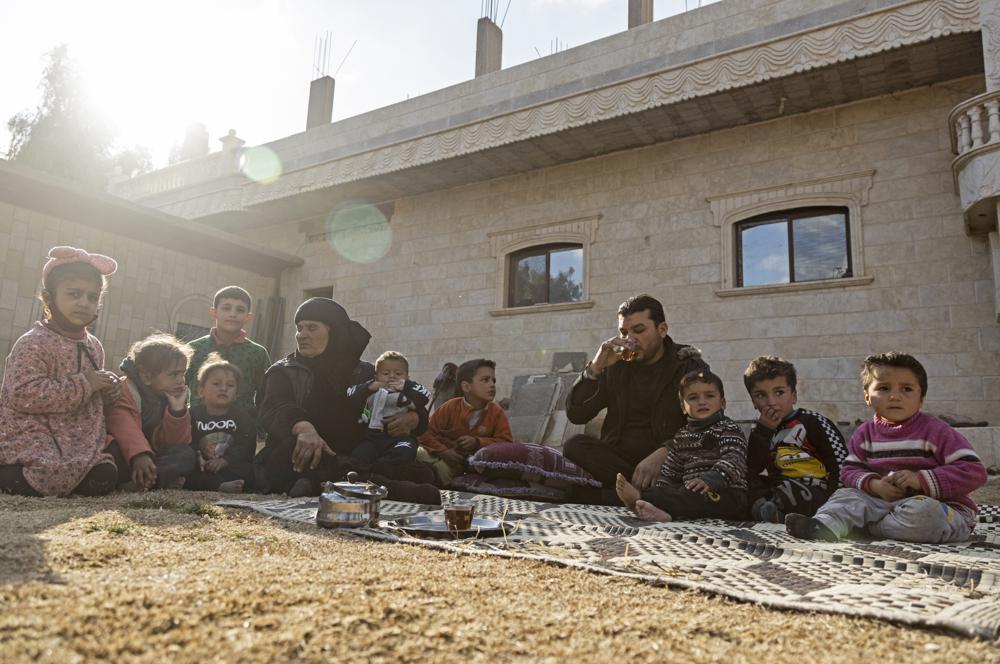
Milhem Daher, 35, drinks tea as he sits with his family outside his house in the village of Kasrat Srour, in the southeastern countryside of the Raqqa province, Syria, Monday, Feb. 7, 2022. Raqqa, the former de facto capital of the self-proclaimed IS caliphate and home to about 300,000, is now free, but many of its residents try to leave. Those with capital are selling their property to save up for the journey to Turkey. Those without money struggle to get by. (AP Photo/Baderkhan Ahmad)
RAQQA, Syria (AP) — In a square that a few years ago was a grim stage for the Islamic State group’s brutal rule in the Syrian city of Raqqa, Mahmoud Dander sat deep in thought.
He wants to leave Syria, but has a problem: The 75-year-old has no money. He recalled the old days before protests and wars led to his country’s collapse and national currency crash: Syria wasn’t thriving back then, but he had work, his children had university degrees and decent futures, and food was always on the table.
That’s all gone now. “We have fallen, just like our currency,” he said.
Raqqa, the former de facto capital of the self-proclaimed IS caliphate and home to about 300,000 people, is now free, but many of its residents try to leave. Those with property are trying to sell it to save up for the journey to Turkey. Those without money struggle to get by. At least 3,000 people left Raqqa for Turkey in 2021, according to the city’s civil council co-chair Mohammed Nour.
Their reasons span the spectrum of post-war life in Syria, one of the world’s most complex conflict zones. They include economic collapse and widespread unemployment following one of the worst years of drought, as well as fears of an IS comeback and a proliferation of criminal gangs. And there is the looming specter of conflict between rival powers that control various parts of northern Syria, including Turkey, Russia and Syrian government forces.
On the surface, the city’s slow recovery from IS rule is evident. Cafes and restaurant are full of patrons. Kurdish-led forces stand guard at every major intersection.
But poverty is rampant in the majority Arab city administered by U.S.-backed Kurdish-led forces. People line up for basics such as bread. Unemployed young men sit around. Water and electricity are limited. Many live among bombed-out ruins. Local officials say at least 30% of the city remains destroyed.
Poverty and unemployment drive young men into the arms of IS. Kurdish investigators say new IS recruits captured last month had been lured by money. At the same time, the Kurdish-led city administration received applications from 27,000 job seekers last year, but had no jobs.
Milhem Daher, a 35-year-old engineer, is in the process of selling his home, businesses and properties to pay a smuggler to take him and his family of eight to Turkey, a key route for Syrian migrants trying to win asylum in Europe.
He plans to leave as soon as he has enough money.
Daher had survived Raqqa’s recent violent history, including the outbreak of Syria’s civil war in 2011, and the 2014 takeover by IS militants who turned the city into the capital of their caliphate spanning parts of Syria and Iraq. A U.S.-led coalition dropped thousands of bombs on the once vibrant city to drive out IS, liberating it in 2017. IS lost its last territorial foothold in Syria in 2019.
Daher emerged from the dark chapter ready to invest, but said he faced many obstacles, including a lack of resources and export markets. “If you sell to locals, it won’t generate profit,” he said.
For his first project, Daher bought seeds to cultivate vegetables. When it was time to harvest, traders weren’t interested in paying the asking price.
He purchased trucks to lift rubble amid reconstruction efforts. But the quality of the vehicles quickly degraded as a result of poor fuel in the market and lack of materials for upkeep. A potato chip factory and internet service company also floundered.
Finally, Daher bought livestock, but a devastating drought led to shortages in animal feed. His cattle died.
Now he is selling off what remains of these failed businesses to start a new life. He needs $10,000.
In Raqqa, having money can also be a problem as kidnappings-for-ransom are on the rise.
Real estate developer Imam al-Hasan, 37, was taken from his home and held for days by attackers in military fatigues. To secure his release, he paid $400,000, money belonging to him and traders who trusted him with their life savings. He complained to the local authorities, but he said nothing was done. A month after the ordeal, bruises are still visible on his face and legs.
Al-Hasan, too, is selling his home and belongings. “There is nothing left for me here,” he said.
Two of Al-Hasan’s relatives who left in September and recently arrived in Europe said that apart from economic uncertainty it was the threat of more violence that pushed them to leave.
“At any moment the situation could explode, how can I stay there?” said Ibrahim, 27. He and Mohammed, 41, spoke under the condition that only their first names be used, citing security concerns for their wives and children still living in the city.
Like many others, their journey from northeastern Syria to Europe began via tunnels along the town of Ras al-Ain, which straddles the border with Turkey.
The smuggler had charged $2,000 per person. From there, the path to Europe was riddled with risk.
Ibrahim arrived in Germany last week after an arduous journey that began in Belarus. Mohammed walked for treacherous miles before setting off for Greece by boat. He ended up in The Netherlands in October.
Mohammed is waiting for a chance to bring his family from Raqqa to Europe, he said in a phone interview. For now, he is without work.
Back in Raqqa, Reem al-Ani, 70, prepares tea for two. Her son is the only one of four children who has remained in Syria. The others are spread across the world.
The stairs leading to their apartment are riddled with bullet holes, remnants of battles to dislodge IS. The ceilings are charred from smoke.
She has grown accustomed to a silent house. “I miss them,” she said of her children.
Nearby, in Naim Square, the elderly Dander says he barely makes ends meet, surviving on his rapidly diminishing pension from his previous government job.
His three children have university degrees in engineering and literature, and one was a teacher, he said. But none have been able to find work. He wishes he had the money to help them leave.
“I spend every day thinking about how to get out,” he said.
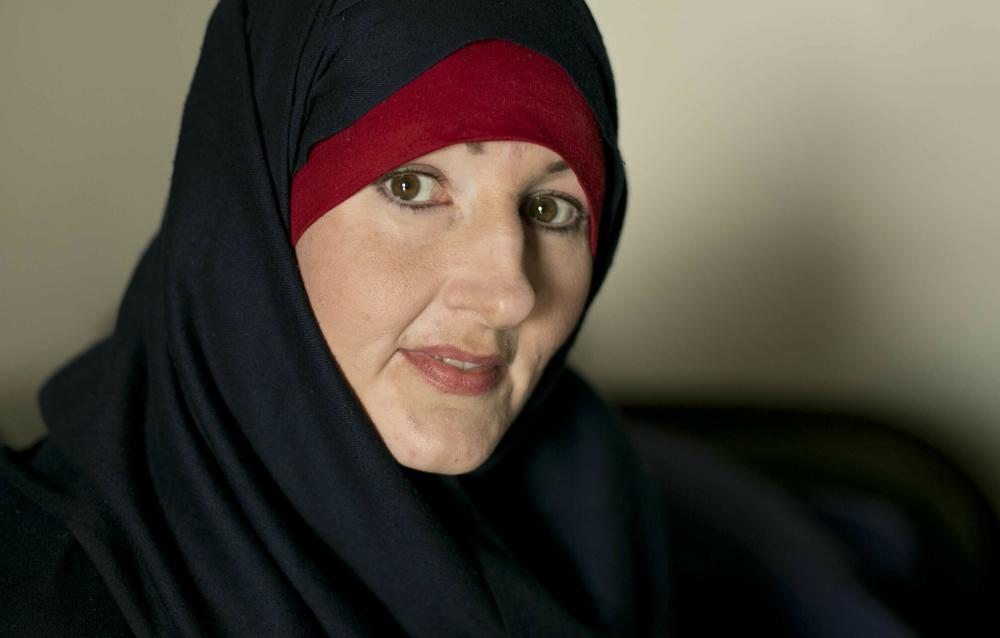
Rights group: Canada blocking return of citizens from Syria By ZEINA KARAM Kimberly Gwen Polman, a Canadian national, poses for a portrait at camp Roj in Syria, April 3, 2019. Canadian authorities are preventing Polman and a child under age 12, who is not related to Polman, who are detained in a camp in Syria from returning home for life-saving medical treatment, contradicting policies that allow such repatriations, Human Rights Watch, a prominent rights group said Tuesday, Feb. 22, 2022.
(AP Photo/Maya Alleruzzo, File)
BEIRUT (AP) — Canadian authorities are preventing a Canadian woman and a child detained in a camp in Syria from returning home to get life-saving medical treatment, contradicting policies that allow such repatriations, a prominent rights group said Tuesday.
Human Rights Watch identified the two “gravely ill” Canadians as Kimberly Polman, 49, and a child under age 12. It withheld further details about the child, who is not related to Polman, including the name and medical condition, to protect their privacy.
There are nearly 50 Canadian nationals stuck in camps in northeastern Syria. Some of them have been held since even before the Islamic State group lost the last sliver of land in its self-declared caliphate in March 2019. More than half of the Canadians are children, most under age 7, HRW said.
They are among tens of thousands of women and children from about 60 countries being held by U.S.-backed Kurdish-led fighters in the camps. Many of them are wives, widows and children of IS fighters,
A few countries have agreed to repatriate their citizens but many others, including Canada, have refused to do so.
The Associated Press met with Polman earlier this month at Roj Camp, where she has been for three years. She looked tired and said she was suffering from kidney disease, high blood pressure and other problems. She said there is one doctor for almost 1,000 women and 3,000 children and no facilities to deal with specific illnesses.
“Women walk around here with conditions that would normally be hospitalized,” she said. “You just get used to being sick here all the time and you just kind of keep going with life, because it’s either that or a huge depression.”
“One day you will come into my tent (and) I will be rocking in a corner … and I am trying not to do that,” she said.
HRW said a former American ambassador who has taken several foreigners out of northeast Syria on behalf of their home countries told the rights group that in days of exchanges ending on Feb. 15, Canadian authorities refused his offer to escort Polman and the child to a Canadian consulate in neighboring Iraq.
“How close to death do Canadians have to be for their government to decide they qualify for repatriation?” said Letta Tayler, associate crisis and conflict director at Human Rights Watch.
A message seeking comment from Canada’s embassy in Beirut was not immediately returned.
The families of the two Canadians have repeatedly implored government authorities to repatriate the woman and child and have sent them medical records attesting to their need for life-saving care.
“Canada should be helping its citizens unlawfully held in northeast Syria, not obstructing their ability to get life-saving health care,” Tayler said.
Despite the fact that Kurdish-led authorities in northeast Syria have called on countries to repatriate their citizens, Canada considers the repatriation of its nationals from Syria a security threat.
However, the Canadian government has said that if its citizens reach a consulate, it will assist them, including if they request repatriation, HRW said.
On Feb. 10, more than a dozen U.N. independent experts called on Canada to urgently repatriate Polman to treat life-threatening illnesses, including hepatitis, kidney disease, and an autoimmune disorder, HRW said.
Polman told the AP she contracted hepatitis four times while in the camp, as well as pneumonia, adding that her kidney disease was probably a result of dirty water.
___
Associated Press writer Samya Kullab contributed from Hassakeh, Syria.
Black innovators who reshaped American gardening, farming
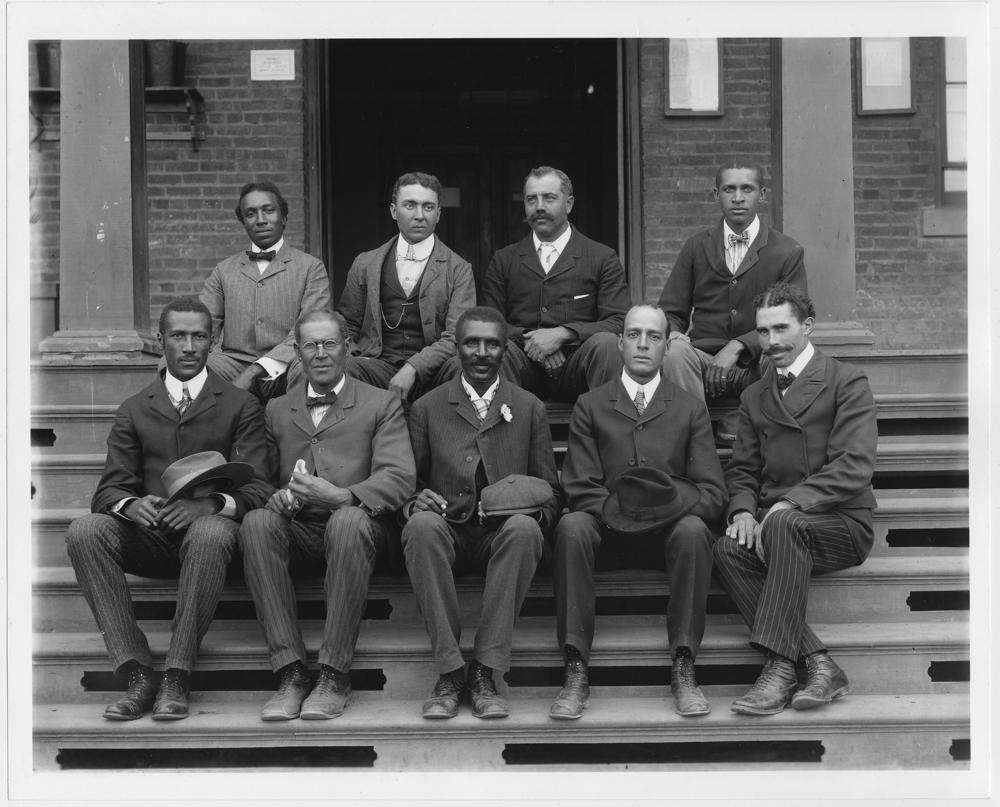
By JESSICA DAMIANO This 1902 portrait provided by The Library of Congress shows George Washington Carver, front row, center, seated with other staff members on the steps of Tuskegee Normal and Industrial Institute in Tuskegee, Alabama. (Frances Benjamin Johnston/Library of Congress via AP)
The achievements of George Washington Carver, the 19th century scientist credited with hundreds of inventions, including 300 uses for peanuts, have landed him in American history textbooks.
But many other agricultural practices, innovations and foods that traveled with enslaved people from West Africa — or were developed by their descendants — remain unsung, despite having revolutionized the way we eat, farm and garden.
Among the medicinal and food staples introduced by the African diaspora were sorghum, millet, African rice, yams, black-eyed peas, watermelon, eggplant, okra, sesame and kola nut, whose extract was a main ingredient in the original Coca-Cola recipe.
Whether captives smuggled seeds and plants from aboard slave ships or captains purchased them in Africa for planting in America, key components of the West African diet also journeyed along the Middle Passage across the Atlantic.
After long days spent working on the plantation’s fields, many enslaved people grew their own gardens to supplement their meager rations.
“The plantation owners could then force them to show them how to grow those foods,” said Judith Carney, a professor of geography at UCLA and co-author of “In the Shadow of Slavery: Africa’s Botanical Legacy in the Atlantic World” (University of California Press, 2011).
“Those crops would then become commodities,” said Carney, who spent a decade tracing such food origins by reconciling oral history with written documents.
It’s no coincidence, then, that “many of the agricultural practices seen in Africa were also happening in the South,” said Michael W. Twitty, culinary historian and James Beard-winning author of “The Cooking Gene” (Amistad, 2017).
Multicropping (growing different types of plants in one plot), permaculture (emulating natural ecosystems) and planting on mounds (arguably the precursor of berms) can be traced to African agricultural practices, said Twitty, who partnered with Colonial Williamsburg last year to establish the Sankofa Heritage Garden, a living replica of the type of garden grown by enslaved people during that era.
History did not record many inventions of enslaved Africans, in no small part because slaveowners often claimed credit. Some, however, were recognized, as were the accomplishments of many who came after them. Here are five early Black innovators whose contributions reshaped the agricultural landscape:
Henry Blair (1807-1860)
Only the second Black man to be awarded a U.S. patent (Thomas L. Jennings, who invented an early method of dry-cleaning clothes in 1821, is believed to be the first), Blair designed a wheelbarrow-type corn planter to help farmers sow seeds more effectively. Two years later, he received a second patent for a mechanical horse-drawn cotton planter, which increased yield and productivity.
Details about the Maryland farmer and inventor’s personal life, including whether he was born into slavery, are scarce.
George Washington Carver (circa 1864-1943)
Peanuts, believed to have originated in South America, were brought to Spain by European explorers before making their way to Africa. They then traveled back to the Western Hemisphere aboard slave ships in the 1700s. By the late 1800s, the legume had grown from a Southern regional crop to one with national appeal across the United States.
It was around that time that Carver, who was born into slavery in Missouri and freed as a child after the Civil War, earned a master’s degree from Iowa State Agricultural College.
As head of the agriculture program at Alabama’s Tuskegee Normal and Industrial Institute (today’s Tuskegee University), Carver gained fame for his peanut research and invented hundreds of peanut-based versions of products, including flour, coffee, Worcestershire sauce, beverages, hen food, soap, laxatives, shampoo, leather dye, paper, insecticide, linoleum and insulation.
He also devised alternative uses for other crops, and is credited with discovering the soil-rejuvenating benefits of compost and promoting crop rotation as a means of preventing the depletion of soil nutrients.
Frederick McKinley Jones (1893-1961)
With a background in electrical engineering, Jones is credited with many inventions — from a portable X-ray machine to a broadcast radio transmitter — but one in particular made a drastic impact on the modern American diet: mobile refrigeration technology.
Jones, who was born in Cincinnati and settled in Minnesota, developed a refrigeration system that was installed in trucks, train cars, airplanes and ships, enabling the safe transport of perishable foods around the world.
Booker T. Whatley (1915-2005)
An Alabama horticulturist and agriculture professor at Tuskegee University, Whatley introduced the concept of “clientele membership clubs” in the 1960s to help struggling Black farmers, who often were denied the loans and grants afforded to their white counterparts.
The farmers would sell pre-paid boxes of their crops at the beginning of the season to ensure a guaranteed income. In many instances, customers would harvest their shares themselves, which saved on labor costs.
Today’s Community Supported Agriculture (CSAs) and U-Pick farming enterprises grew directly from Whatley’s ideas, as, it can be argued, did the farm-to-table and eat-local movements.
Whatley also pioneered sustainable agriculture and regenerative farming practices to maximize biodiversity and keep soil healthy and productive. His handbook “How to Make $100,000 Farming 25 Acres” (Regenerative Agricultural Assn. of Rodale Institute, 1987) is still regarded as an important resource for small farmers.
Edmond Albius (1829-1880)
Although not American, Albius, who was enslaved as a youth and living on the French colony island of Réunion in the Indian Ocean, is responsible for the worldwide distribution of vanilla.
The plant had been brought from Mexico to Europe by the explorer Hernán Cortés but did not produce beans there due to the absence of a specific pollinator bee indigenous to Mexico.
A man named Ferréol Bellier-Beaumont, who lived on Réunion, had come to own Edmond and taught him from a young age how to care for his many plants. One of those lessons included instruction for hand pollination, manually transferring pollen from male flowers to female flowers to produce fruit.
In the 1840s, 12-year-old Edmond examined Bellier-Beaumont’s vanilla vine flowers, which had been growing without yield for two decades, and observed that their male and female reproductive organs were not on separate flowers but contained within a single flower, separated by a flap-like membrane. He moved the flap and, beneath it, spread the pollen from the stamen to the pistil. Before long, the plants were producing beans.
Word spread, and Réunion began cultivating vanilla and exporting it overseas. Within 50 years, the island had surpassed Mexico in vanilla production. Albius’ pollination technique reshaped the vanilla industry and remains in use worldwide.
—-
Jessica Damiano is an award-winning gardening writer, master gardener and educator. She writes The Weekly Dirt newsletter and creates an annual wall calendar of daily gardening tips. Send her a note at jessica@jessicadamiano.com and find her at jessicadamiano.com and on Instagram @JesDamiano.
Beekeepers using tracking devices to protect precious hives
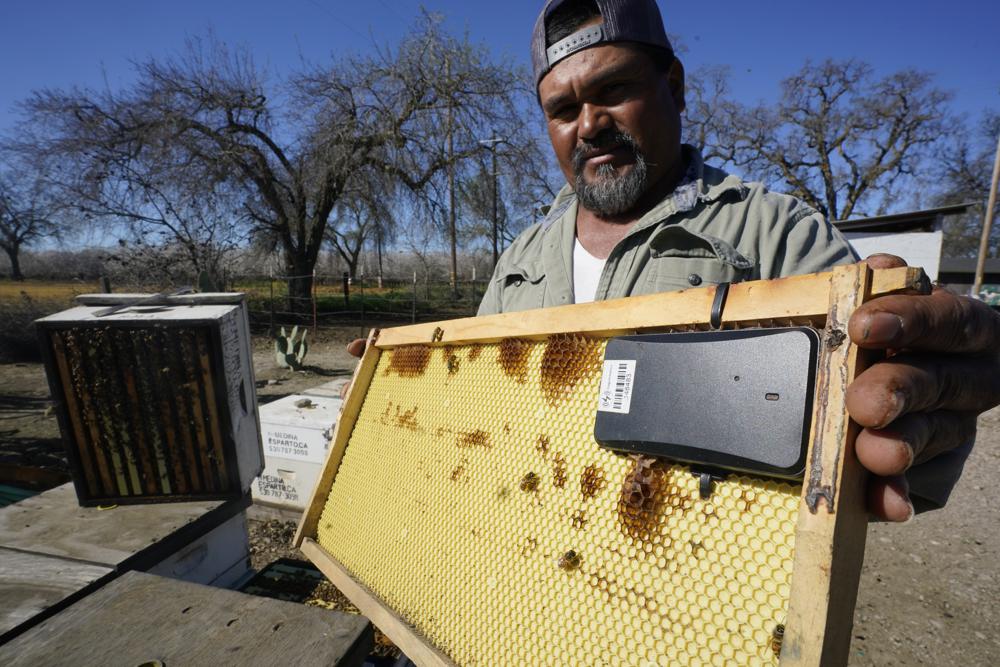
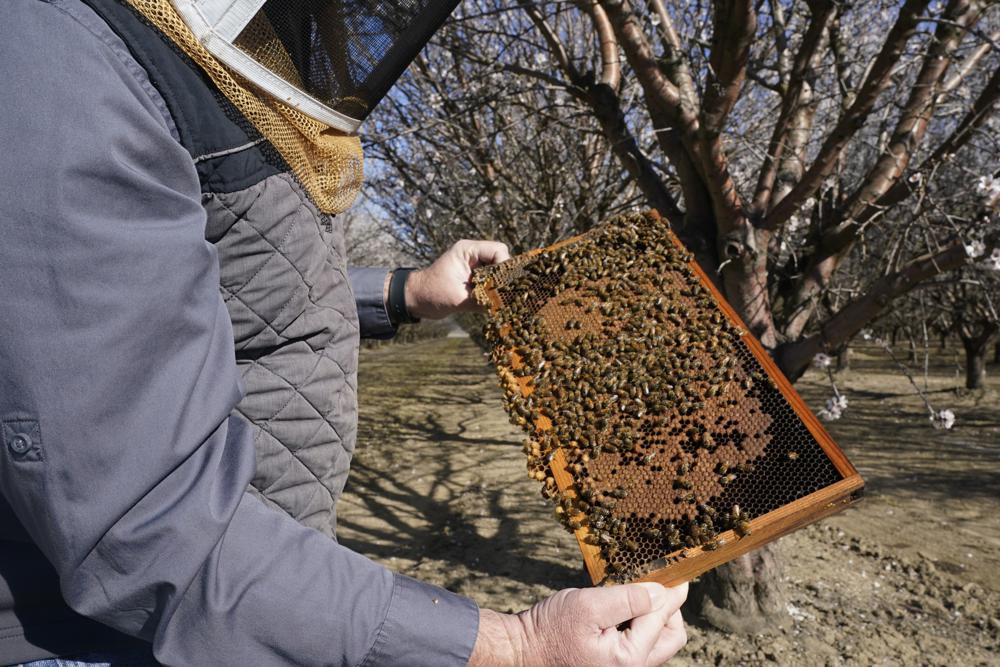
Beekeeper Hello Medina displays a beehive frame outfitted with a GPS locater that will be installed in one of the beehives he rents out, in Woodland, Calif., Thursday, Feb. 17, 2022. As almond flowers start to bloom, beekeepers rent their hives out to farmers to pollinate California's most valuable crop, but with the blossoms come beehive thefts. Medina says last year he lost 282 hives estimated to be worth $100,000, and is now installing GPS-enabled sensors to help find the stolen hives.
(AP Photo/Rich Pedroncelli)
WOODLAND, Calif. (AP) — For a few frenzied weeks, beekeepers from around the United States truck billions of honeybees to California to rent them to almond growers who need the insects to pollinate the state’s most valuable crop.
But as almond trees start to bloom, blanketing entire valleys in white and pink flowers, so begin beehive thefts that have become so prevalent that beekeepers are now turning to GPS tracking devices, surveillance cameras and other anti-theft technology to protect their precious colonies.
Hive thefts have been reported elsewhere in the country, most recently three hives containing about 60,000 bees taken from a grocery chain’s garden in central Pennsylvania. They happen at a larger scale and uniquely in California this time of year because bees are most in demand during the largest pollination event in the world.
In the past few weeks, 1,036 beehives worth hundreds of thousands of dollars were reported stolen from orchards statewide, authorities said. The largest heist involved 384 beehives that were taken from a field in Mendocino County, prompting the state beekeepers association to offer a $10,000 reward for information leading to their recovery.
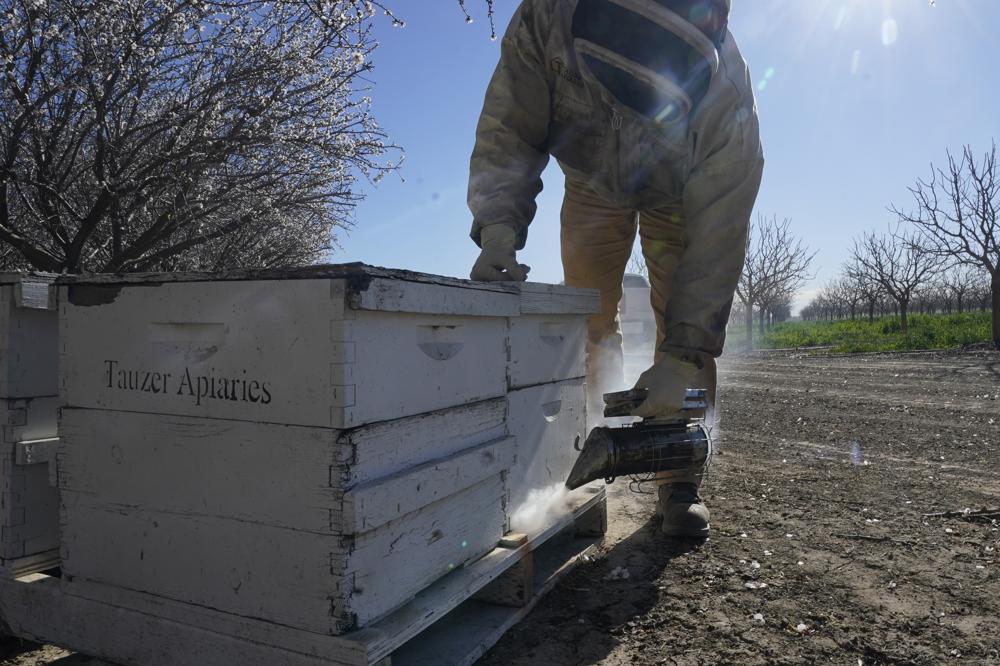
“It’s hard to articulate how it feels to care for your hives all year only to have them stolen from you,” Claire Tauzer wrote on Facebook to spread the word about the reward. A day later, an anonymous tipster led authorities to recover most of the boxes and a forklift stolen from Tauzer’s family business some 55 miles (88 kilometers) away, at a rural property in Yolo County. One suspect was arrested.
Investigators also found frames, the kinds used to hold the honeycomb, belonging to Helio Medina, another beekeeper who lost 282 hives a year ago.
Medina said the theft devastated his apiary, so this year he placed GPS trackers inside the boxes. He also strapped cable locks around them and installed cameras nearby. As the almond bloom approached and the hives became most valuable, he drove around patrolling the orchards in the dark.
“We have do what we can to protect ourselves. Nobody can help us,” Medina said.
Thefts usually happen at night, when no one is in the orchard and the bees are back in their hives. The rustler is usually a beekeeper or someone familiar with the transportation of bees.
“More often than not, they steal to make money and leave the bees to die,” said Rowdy Jay Freeman, a Butte County sheriff’s detective who has been keeping track of hive thefts since 2013.
A tightening supply of bees and soaring pollination fees — jumping from less than $50 to rent a hive two decades ago to as much as $230 per hive this year — are likely motivating beekeepers to go rogue.
The demand for bees has steadily risen over the last 20 years as popularity of the healthy, crunchy nut turned California into the world’s biggest almond producer. Accordingly, the amount of land used to grow almonds has more than doubled to an estimated 1.3 million acres (526,000 hectares).
Beekeepers have been keeping up with that growth by providing an ever-increasing proportion of the nation’s available stock of hives. This year, a survey of commercial beekeepers estimated it will take 90% of honeybee colonies in the U.S. to pollinate all the almond orchards.
“What that means is that beekeepers are coming from as far as New York and Florida, and to get them to come all that way, pollinator fees have to rise,” said Brittney Goodrich, an agriculture economist at the University of California at Davis.
But bee populations are notoriously unstable due to a host of problems, including disease, loss of habitat and insecticides.
The drought that gripped Western states last summer also weakened colonies. The lack of rain ravaged wildflowers that provide the nectar that bees turn into honey. Beekeepers had to artificially supplement their diet with sugar solutions and pollen substitutes — and incur more costs.
For beekeepers, the loss of a hive means the loss of income from honey production and future pollination, not to mention the expense of managing the hive throughout the year. They say they hardly break even.
“For every $210 paid to rent a beehive, we put close to that much into it the whole year feeding the bees because of drought. We do all the health checks, which is labor intensive, and we pay our workers full benefits,” Tauzer said.
Denise Qualls, a pollination broker who connects beekeepers with growers, suspects the thefts are happening because beekeepers can’t provide the strong colonies they promised, “so they can get the money from the grower and then they leave the hives.”
Beekeeper Hello Medina displays a beehive frame outfitted with a GPS locater that will be installed in one of the beehives he rents out, in Woodland, Calif., Thursday, Feb. 17, 2022. As almond flowers start to bloom, beekeepers rent their hives out to farmers to pollinate California's most valuable crop, but with the blossoms come beehive thefts. Medina says last year he lost 282 hives estimated to be worth $100,000, and is now installing GPS-enabled sensors to help find the stolen hives. (AP Photo/Rich Pedroncelli)
“The grower is just as responsible when they accept them,” she said.
To help her clients track their investments, Qualls merged her business with tech startup Bee Hero to equip hive boxes with a GPS-enabled sensor.
Freeman, who got into beekeeping after investigating his first hive theft, said he advises beekeepers to use security cameras and put their names and phone numbers on the boxes.
He said some beekeepers have tried tagging their boxes with SmartWater CSI, a forensic tool used to help police trace recovered stolen property. The clear liquid is visible only under UV light, even through layers of paint, so police can ascertain the rightful owner even when thieves try to disguise boxes.
To raise the crime’s severity, Freeman worked with prosecutors in 2016 to charge a man accused of stealing 64 beehives with theft of livestock. Under California law, theft of property worth $950 or less is classified as a misdemeanor. But the theft of any agricultural product worth at least $250 is considered a felony.
“Stealing one or 10 or 100 hives would result in the same charge,” he said.
The man pleaded guilty and was sentenced to 90 days in jail and three years probation.
The California State Beekeepers’ Association urges beekeepers to communicate regularly with growers about where their hives are placed, and encourages growers to hire reputable beekeepers who can show proof of ownership of their hives. The almond industry, meanwhile, is trying to reduce its dependence on bees by growing “self fertile” almond varieties that require fewer bees for pollination and by investing in research and other initiatives aimed at improving their health.
The Almond Board of California also joined a coalition of agricultural, environmental and government groups to create habitat for wild bees, butterflies and other pollinators on privately owned working lands such as cattle ranches and orchards. The state government is funding $15 million toward the effort, calling it an investment in “climate smart agriculture.”
TRIFECTA GOING FOR A QUAD
Storm Gladys: When next storm could hit UK after Dudley, Eunice and Franklin
Storm Franklin battered the South West yesterday after Storm Eunice
By James Rodger Imogen McGuckin
Senior Reporter 22 FEB 2022
A couple are hit by a wave during strong winds on the promenade in Folkestone, Kent
(Image: PA)
More unsettled weather could hit the UK this week, after the recent batterings from Storms Eunice and Franklin. If this next weather system becomes a storm, it will be named Storm Gladys by meteorologists.
According to forecasters, the system is well on its way. We had Storm Eunice on Friday, swiftly followed by Storm Franklin, and the region is still reeling from the high winds.
More heavy showers are expected today (Tuesday, February 22) with a band of cloud cover and rain in the north predicted too. Thursday is set to be "blustery", with some snow possible.
Forecasters are expecting Thursday, February 24, to be the most likely day for another storm - but nothing is certain yet, Birmingham Live reports.
High winds are forecast for later in the week and should these winds get stronger, the Met Office could decide to name the system Storm Gladys.
Chief meteorologist at the Met Office, Andy Page, said: "A strong jet stream is driving weather systems across the North Atlantic with a succession of weather fronts moving into the UK bringing more wet and windy weather at times this week.
"As Storm Franklin clears the UK and pushes into the near continent this afternoon, the windy conditions will gradually ease and showers become fewer, leaving some dry, sunny weather for many."
In the North and the North West, rain is expected tomorrow (Wednesday, February 23), bringing wind and a heavy band of torrential downpours. This could form into sleet or even snow on higher peaks and hills. “This is the first time we have had three named storms within a week, and we started the storm naming system in 2015,” Met Office meteorologist Becky Mitchell said. We have had Dudley, Eunice and Franklin in recent days.
Alex Deakin said: "We still have a yellow weather warning in place as the system heads out into the North Sea. It is still going to be a windy afternoon - but not quite so windy."
The Met Office meteorologist added: "It will turn quite cold this evening, quite chilly and it will start to lift and by dawn, we will be well above freezing."
He added: "It will continue to be chopping and changing all week - and windy but not quite as stormy as recent days."
The next names on the storms list are Gladys, Herman, Imani, Jack, Kim, Logan, Meabh, Nasim, Olwen, Pol, Ruby, Sean, Tineke, Vergil and Willemien.
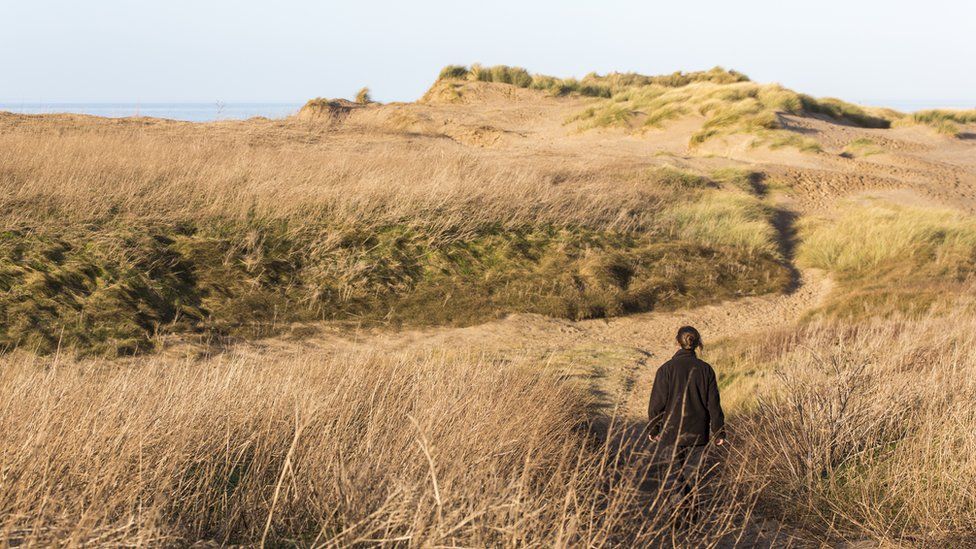
Formby beach: Nature reserve sand dunes blown away by storms
Mark Woolcock, who died from Covid in April 2020 (Image: Inquest/PA Wire)
An NHS employee who died from Covid-19 was put in danger at work and was not given enough protection, an inquest has heard.
Mark Woolcock, 59, of Stratford, died on April 20 2020 at east London's Newham University Hospital - where he had worked in patient transport services for more than 17 years moving discharged patients to their homes or care homes.
Ted Purcell, a national officer at the Community trade union, said he had "no doubt" that Mr Woolcock contracted Covid while doing his job, either while collecting patients from hospital wards or while transporting them in vehicles without adequate protection.
The policy at the time, before the end of March 2020, was that patient transport services drivers did not have to move Covid or suspected Covid patients.
But Mr Purcell said that drivers raised concerns that month about being exposed to the virus while picking up patients from wards where infected patients were not clearly segregated without proper personal protective equipment (PPE).
He said: "They shouldn't have been allowed in there, certainly not without the correct PPE.
"They were being put in danger."
He also suggested that patients were not being correctly screened for coronavirus before being discharged.
Mr Woolcock's job required him to be physically close to patients, lifting them and accompanying them in the back of the vehicle.
Mr Purcell noted that while a policy was in place that workers should use PPE, some did not have access to masks, hand sanitiser and gloves in those early stages of the pandemic.
"It was too little, too late," he said.
"It was all very messy at the very beginning of this.
"We can make the excuse that no one has been through this before, but it was 2020, we should have had all this ready."
He also said their vehicles were not sufficiently sanitised, lacked screens and the space to socially distance.
He described Mr Woolcock as "a very unassuming, pleasant gentleman" who was "devoted to his job" and would not have exposed himself to the disease outside of work.
"Nobody goes to work to die," Mr Purcell said.
In a statement read out at the hearing, a fellow ambulance care assistant said that in March 2020, drivers "had to copy and see what other nurses were doing to protect themselves as there was not much information given to us".
Mr Woolcock's daughter Tania Woolcock told the inquest at Barking Town Hall on Monday that her father "did not feel safe" at work and was worried about being exposed to the virus with no PPE.
He worked his last shift overnight on March 22, developing Covid symptoms within days that progressively worsened.
By April 3 he was struggling to breathe and was admitted to hospital.
The Barts Health NHS Trust, which runs the hospital, investigated Mr Woolcock's death, as did the Health and Safety Executive.
The inquest, set to last until March 4, is looking into the systems put in place at the hospital to try and keep Mr Woolcock and other employees safe.
Kwangu Nyirenda, an operations manager for the Barts Trust who worked with patient transport services at Newham University Hospital, described Mr Woolcock as "very highly regarded" among staff.
"He was a well-liked, quiet man, very intelligent, pleasant to be around," he told the hearing on Tuesday.
Mr Nyirenda acknowledged that concerns were raised about entering wards with possible Covid patients, but said drivers were supposed to conduct a risk assessment, asking the discharging nurse about any symptoms.
They did not have to move coronavirus patients before April 2020, when they were trained to do so safely.
He could not recall any cases where drivers were immediately made aware of a patient they had moved then testing positive for Covid.
He said: "It's very difficult to pinpoint where exactly he could have contracted it."
The hearing was adjourned to Wednesday at 10am.
New Covid variant being studied in Japanese labs could be 'seriously bad news'
A new Japanese study has found that the BA.2 subvariant of Omicron has the capacity to produce more severe histopathological disorders than other variants, experts have warned
The BA.2 variant is now dominant in Denmark (Image: Getty Images)
Boris Johnson's government might have announced the end of all restrictions in England but elsewhere in the world, experts are worried a new subvariant of Omicron could see a massive surge in infections and deaths.
The new subvariant named BA.2 has been described as 'seriously bad news' by virus geeks who have been tracking its spread through Denmark where it is the dominant strain.
Eric Feigl-Ding, a Harvard-trained epidemiologist has warned of the new strains' ability to transmit itself, saying: "Even the World Health Organisation is getting very concerned about BA.2 variant outcompeting and displacing old Omicron."
In Denmark, the new strain accounts for a staggering 90% of all new cases.
Eric Feigl-Ding continued: "Here is what is happening in the country with the most BA.2 variant so far.
"Denmark has been BA.2 dominant for weeks and have now almost no mitigations either … now their excess deaths are spiking again.”
The subvariant has been extensively analysed (Image: via REUTERS)
His thoughts were echoed by the World Health Organisation’s Maria Van Kerkhove who said that the new subvariant has the potential to become the new dominant strain globally.
She said: "We already know that Omicron has a growth advantage … compared to other variants of concern. But we know that BA.2 has a growth advantage even over BA.1. Sponsored
“This virus continues to be dangerous. This virus transmits very efficiently between people but there’s a lot that you can do.
“We need to drive transmission down. Because if we don’t, we will not only see more cases, more hospitalisations, more deaths, but we will see more people suffering from Long Covid and we will see more opportunities for new variants to emerge.
“So it’s a very dangerous situation that we’re in, three years in.”
A Japanese university has said it is a variant of concern
Image: The Asahi Shimbun
To make matters worse, a new Japanese study appears to suggest the new variant BA.2 can make symptoms of the virus worse.
Organised by Kei Sato of the University of Tokyo, the study exposed hamsters to different variants and compared their viral loads.
And annoyingly it found that the "viral RNA load in the lung periphery and histopathological disorders of BA.2 were more severe than those of BA.1 and even B.1.1."
The study finished by recommending that BA.2 be "recognised as a unique variant of concern."
Study finds COVID-19 vaccine protection against severe disease remains strong at six months
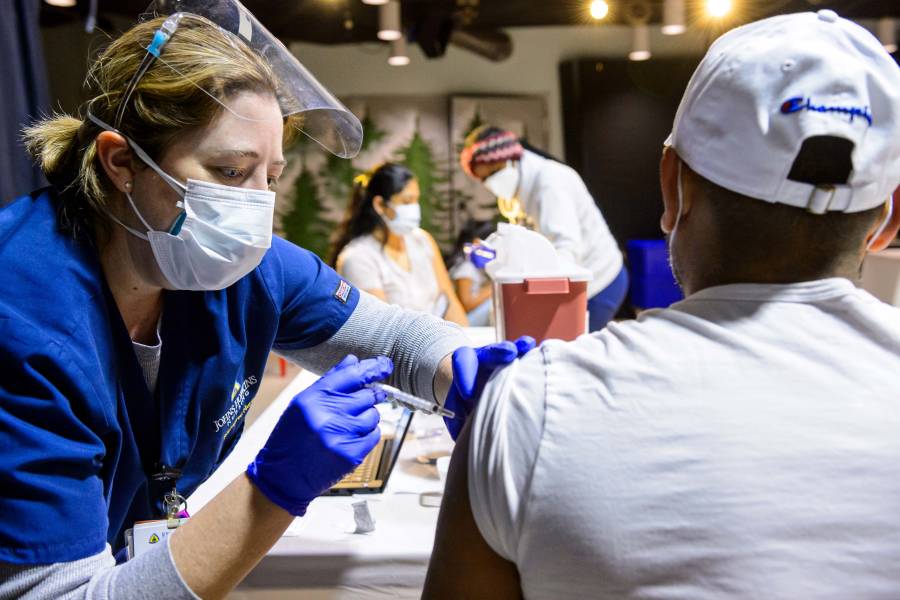
The pre-omicron study reviewed four vaccines, finding they retain nearly all of their ability to prevent severe disease up to six months after full vaccination A person receives a COVID-19 vaccine during a vaccine clinic at Port Discovery. CREDIT:WILL KIRK / JOHNS HOPKINS UNIVERSITY
By Bloomberg School of Public Health staff report
An analysis of research literature published last year before the omicron variant took hold found that while COVID-19 vaccines lose some effectiveness in preventing SARS-CoV-2 infection, the vaccines retain nearly all of their ability to prevent severe disease up to six months after full vaccination. The study, which appears online February 21 in The Lancet, was led by researchers at the Johns Hopkins Bloomberg School of Public Health and the World Health Organization.
For their study, the researchers analyzed vaccination effectiveness data published last year from June 17 to December 2 in both peer-reviewed journals and on preprint servers, which post papers ahead of peer review. The data—detailed in 24 papers—covered dozens of individual vaccine evaluations preceding the emergence of the currently dominant omicron variant.
The researchers found that the level of protection from SARS-CoV-2 infection fell by about 21 percentage points, on average, in the interval from one to six months after full vaccination—whereas the level of protection against severe COVID-19 fell by only about 10 percentage points in the same interval. The authors defined "full vaccination" as one dose of Janssen vaccine or two doses of other vaccines. Booster doses were not evaluated.
"There is an indication here of waning vaccine effectiveness over time, though it is encouraging that protection from severe disease—the most worrisome outcome—seems to hold up well," says study co-first author Melissa Higdon, a research associate in the Department of International Health and a member of the International Vaccine Access Center (IVAC) at the Bloomberg School.
How long vaccines protect from infection and severe disease is one of the most urgent questions facing public health professionals and policymakers in the COVID-19 pandemic. To address the question, the researchers identified 24 studies, published in journals or posted on preprint servers June 17 to December 2 last year and covering the four major Western-developed vaccines—Pfizer, Moderna, J&J, and AstraZeneca. Many papers contained multiple vaccine evaluations. The researchers combined the data from the different studies using statistical tools to estimate an average change in vaccine effectiveness over time.
The finding that protection dropped against detected infection by an average of 21.0 percentage points over five months means that a vaccine providing 90 percent protection from infection at 1 month would provide only 69 percent protection at 6 months. The average drop was essentially no different among vaccinated persons older than 50 when analyses were restricted to just their data.
Similarly, protection against symptomatic illness from SARS-CoV-2 infection—which includes both mild and severe illness—dropped on average by 24.9 percentage points among persons of all ages, and 32.0 percentage points among older persons, from one month to six months post-vaccination.
Public health officials often emphasize vaccination for its protection against severe COVID-19. For this more serious outcome, vaccine protection apparently was more durable, with effectiveness dropping on average by just 10 percentage points during the one- to six-month interval. The slight drop was similar for older persons who are at increased risk for severe COVID-19 outcomes.
An analysis of post-vaccination infections with only the delta variant also found waning protection over time, suggesting that declining immunity—rather than changes in protection against the delta variant—was the principal reason for the waning vaccine effectiveness prior to the omicron wave.
The study is broadly consistent with others that have looked at vaccine effectiveness over time, and suggests that the four vaccines on average, during pre-omicron waves, have provided good protection against the severe outcomes that are most relevant to public health concerns.
"Omicron is still prevalent in many parts of the world, so it's going to be critical for COVID-19-related policymakers to pay attention to vaccine effectiveness studies in the context of omicron as well as any future variants—and to assess effectiveness over extended periods of time after vaccination, including vaccination with booster doses," Higdon says.