Thursday, February 24, 2022

U.S. Postal Service finalizes plans to purchase mostly gas-powered delivery fleet, defying EPA, White House


The United States Postal Service (USPS), United Parcel Service (UPS) and FedEx try to keep up with increased deliveries during the coronavirus pandemic in New York City. (STRF/STAR MAX/IPx)

Jacob Bogage and Anna Phillips
Wed, February 23, 2022,

WASHINGTON - The U.S. Postal Service finalized plans Wednesday to purchase up to 148,000 gasoline-powered mail delivery trucks, defying Biden administration officials' objections that the multibillion dollar contract would undercut the nation's climate goals.

The White House Council on Environmental Quality and the Environmental Protection Agency asked the Postal Service this month to reassess its plan to replace its delivery fleet with 90% gas-powered trucks and 10% electric vehicles, at a cost of as much as $11.3 billion. The contract, orchestrated by Postmaster General Louis DeJoy, offers only a 0.4-mile-per-gallon fuel economy improvement over the agency's current fleet.

Vicki Arroyo, the EPA's associate administrator for policy, issued a statement calling the Postal Service's decision a "crucial lost opportunity."

"Purchasing tens of thousands of gasoline-fueled delivery trucks locks USPS into further oil dependence, air pollution, and climate impacts for decades to come, and harms the long-term prospects of our nation's vital mail provider," Arroyo said.

Related video: Biden's nominees could shape the USPS's and Louis DeJoy's future


President Joe Biden has pledged to transition the federal fleet to clean power, and apart from the military, the Postal Service has more vehicles than any other government agency. It accounts for nearly one-third of federally owned cars and trucks, and environmental and auto industry experts argue that the agency's stop-and-start deliveries to 161 million addresses six days a week was an ideal use case for electric vehicles.

Federal climate science officials said the Postal Service vastly underestimated the emissions of its proposed fleet of "Next Generation Delivery Vehicles," or NGDVs, and accused the mail agency of fudging the math of its environmental studies to justify such a large purchase of internal combustion engine trucks.

But DeJoy, a holdover from the Trump administration, has called his agency's investment in green transportation "ambitious," even as environmental groups and even other postal leaders have privately questioned it. When DeJoy repeated the characterization at a public meeting of the Postal Service's governing board earlier in February, his remarks were met with chuckles from the audience.

Environmental advocates assailed the agency's decision, saying it would lock in decades of climate-warming emissions and worsen air pollution. The Postal Service plans call for the new trucks, built by Oshkosh Defense, to hit the streets in 2023 and remain in service for at least 20 years.

"Right now, putting aside the climate benefits and the air quality benefits, it is a smarter business decision to transition to electric vehicles," Katherine Garcia, acting director of the Sierra Club's clean transportation campaign, said in an interview. "Given our climate commitments, given our public health commitments, it is completely unacceptable for the USPS to cling to an overwhelmingly fossil fuel fleet."

"DeJoy's plans for the postal fleet will drag us back decades with a truck model that gets laughable fuel economy. We may as well deliver the mail with hummers," said Adrian Martinez, an attorney for the environmental law firm Earthjustice. "We're not done fighting this reckless decision."

DeJoy said in a statement that the agency was open to pursuing more electric vehicles if "additional funding - from either internal or congressional sources - becomes available." But he added that the agency had "waited long enough" for new vehicles.

The White House and EPA had asked the Postal Service to conduct a supplemental environmental impact statement on the new fleet and to hold a public hearing on its procurement plan. The Postal Service rejected those requests: Mark Guilfoil, the agency's vice president of supply management, said they "would not add value" to the mail service's analysis.

Now that the Postal Service has finalized it agreement with Oshkosh, environmentalists are expected to file lawsuits challenging it on the grounds that the agency's environmental review failed to comply with the National Environmental Policy Act. They will probably base their case on the litany of problems Biden administration officials previously identified with the agency's technical analysis.

The EPA and top White House environmental regulators have accused the mail agency of signing a contract for the new trucks and then using a faulty study to support its decision. Officials said the resulting analysis, which should have been written before a deal was made, relied on incorrect calculations of the new trucks' greenhouse gas emissions, the cost of fuel and the estimated cost of buying a larger share of electric vehicles.

EPA officials have also criticized the mail agency for basing its analysis of electric vehicles on current charging infrastructure, which is in a nascent stage, and for only considering either shifting to an entirely electric fleet or switching over just 10% of its delivery vehicles. The Postal Service's own analysis showed that about 95% of mail carriers' routes could be electrified.

Regulators and activists had asked the agency to study more alternatives, especially since the agency has said that budget concerns are its main impediment to a cleaner fleet. The administration and lawmakers are considering giving the Postal Service more funding to buy electric vehicles. Biden's Build Back Better plan, for example, would provide $6 billion for a fleet of 70% electric vehicles.

Analyzing more purchasing plans is important, critics say, because the environmental study is supposed to look beyond the fleet's emissions or the pollution it would cause. It should also look at how and where vehicles will be deployed, argued said Sam Wilson, senior vehicles analyst at the Union of Concerned Scientists.

"What would be reasonable to do would be to have a high-level scenario of 95% battery-electric vehicles, which matched [the Postal Service's] own assumptions," Wilson said. "Even a 75- or 55% analysis would be reasonable."
New Zealand Protest, an Echo of Canada's, Digs In and Turns Ugly


Demonstrators and the police outside of the Parliament grounds in Wellington, New Zealand. 

Pete McKenzie
Wed, February 23, 2022

WELLINGTON, New Zealand — The anti-government protests that jolted Canada have been quashed. But 9,000 miles away, in the capital of another Western democracy largely unaccustomed to violent tears in the social fabric, an occupation on the grounds of Parliament has entrenched itself and turned increasingly ominous.

Hundreds of demonstrators opposed to New Zealand’s COVID-19 vaccine mandate are in their third week of encampment in Wellington, erecting tents, illegally parking vehicles and establishing communal kitchens and toilets in a deliberate echo of the Canadian siege.

Initially, the New Zealand occupation had a carnival atmosphere, with a popcorn stand and a doughnut truck and a number of children brought in by their parents. New Zealanders joked that it was the country’s only omicron-era music festival: Officials blared Barry Manilow and James Blunt to try to drive out the protesters, who responded with some Twisted Sister of their own.

In recent days, however, after police moved to evict some protesters, the demonstration has grown more violent. On Monday, protesters threw feces at the police. On Tuesday, a driver tried to ram a car into a large group of officers, and three other members of the force required medical attention after protesters sprayed them with what a police statement called a “stinging substance.”

Many demonstrators describe Prime Minister Jacinda Ardern, a global symbol of the political left, as a dictator. Some have threatened journalists and politicians with execution. Others have shouted at students wearing masks on their way to school. Many espouse support for conspiracy theories like those of QAnon.

While the protesters represent a tiny minority of New Zealanders, the division is notable in a country that has been lauded for its highly effective response to COVID-19. The escalating words and violence, experts say, demonstrate the dangerous influence that exported American disinformation is having on otherwise stable democracies around the world.

“There is a tsunami of bile every day,” said Sanjana Hattotuwa, a researcher at the New Zealand think tank Te Pūnaha Matatini who studies disinformation. It is “a torrent of hate and harm directed towards individuals promoting the vaccine and the prime minister.”

Although rifts were already present in New Zealand society, they were “exacerbated by conspiracism which had its genesis outside the country,” Hattotuwa said. “Everything which you would associate with QAnon in the United States is here.”

The protesters were initially united under the banner of opposition to vaccine mandates, which cover workers in certain fields in New Zealand. But they encompass a variety of people, including vaccine skeptics, those aggrieved by mandate-related job losses and far-right conspiracy theorists.

The weekslong protests in Canada, which began as a response to vaccine mandates for truck drivers, were broken up Saturday with tear gas and mass arrests. In New Zealand, by contrast, police have proceeded more carefully, in part because of early challenges and still-fresh memories of a brutal crackdown on protesters four decades ago.

On the protest’s third day, when officers attempted to dislodge some demonstrators, more extreme protesters sidelined the occupation’s organizers and pushed back against the police. After a daylong struggle in which children were placed on the protest’s front line, the police were repelled.

Since then, officers have cautiously patrolled the protest. The police commissioner, Andrew Coster, who was appointed to the role in 2020 after emphasizing the importance of maintaining public support for the force, expressed concern that more confrontational tactics could lead to bloody clashes.

Coster invoked the so-called Springbok tour of 1981, when thousands of New Zealanders protested against the traveling rugby team from apartheid South Africa. Police violently broke up those protests, including by using batons against protesters on Molesworth Street — a street that anti-mandate protesters now occupy. The episode harmed the police’s reputation for decades.

On Sunday, in an interview with TVNZ, Coster emphasized his reluctance to repeat that experience. “If we look to the low points of policing in our country, we would look to points like the Springbok tour,” he said.

But the police’s reluctance to take stronger action seems to have emboldened the protesters.

Many hundreds more people and cars joined. The occupation consumed nearby streets and shut down wider Wellington, with businesses closing after demonstrators harassed staff members for requiring masks and proof of vaccination. In anticipation of a long stay, some protesters drilled holes into the ground to anchor their tents. New protests emerged in other cities.

Some protesters have relished being part of what they see as a global movement. Reuben Michael, a demonstrator who was sitting at the occupation’s eastern edge Wednesday, noted that “this phenomenon has gone around the world.”

The New Zealand protesters have successfully forced a conversation about vaccine mandates. On Monday, in what many saw as an effort to encourage the protesters to leave, Ardern said that vaccine mandates were likely to end after the current omicron outbreak peaks in the coming months.

But the protesters have largely dismissed the prime minister’s comments. One young woman sitting on the steps of a parliamentary war memorial angrily insisted, “She’s told too many lies. It’s too hard to trust her.”

While police have not moved decisively against the demonstrators, concerns about increasing radicalization, as well as wider public dissatisfaction with the occupation, have prompted officers to take more active steps to contain the occupation.

On Monday, police escorted forklifts carrying large concrete blocks to establish a border around the protest. During early-morning operations in the days since, police have begun shrinking that border to try to squeeze protesters into leaving.

The number of protesters appears to have dwindled. But they have left behind a group that shows little interest in deescalation, prompting concerns that violence is increasingly likely.

When five male protesters sitting on the lawn of an occupied law school were asked what would happen if police tried to evict them, one answered, “We’ll hold our line.” A second noted, “There might be bloodshed,” prompting a third to insist, “But it’ll be peaceful.”

The second protester paused, then emphasized, “We’ll stay to the end.”

© 2022 The New York Times Company
The US Version of the Canadian Trucker Convoy Had a Tough First Day


Paul McLeod
Wed, February 23, 2022

WASHINGTON — America’s attempt to replicate the Canadian trucker protest movement got off to a slow start Wednesday as a modest number of trucks hit the road on their way to Washington, DC.

Loosely connected organizers are trying to replicate the success of the anti–vaccine mandate Freedom Convoy, which traveled from Western Canada to the capital city of Ottawa. Hundreds of vehicles and thousands of protesters effectively took over downtown Ottawa for three weeks before police cleared them out.

A lightly rebranded People’s Convoy took off from Southern California Wednesday in the same spirit. Around a dozen big rig trucks and a couple of hundred people gathered at a parking lot in the city of Adelanto for the kickoff, according to Ben Collins of NBC News. Their plan is to spend 11 days moving through Texas, then north to Indiana, then east arriving at Washington next Saturday. It’s not clear how many truckers are along for the full ride.

Meanwhile, another convoy from Scranton, Pennsylvania, was a bust, as only one truck, driven by organizer Bob Bolus, and a handful of personal vehicles showed up. They set out for Washington regardless.

The People’s Convoy will not make it to Washington in time for President Biden’s State of the Union address Tuesday, but the Scranton group will. Bolus said his convoy would significantly disrupt traffic into the district, though he made those comments when he expected many more trucks to take part.

The Canadian truckers became an international cause celebre due to their shocking success in capturing the attention of a G7 nation. The protesters also blockaded border crossings, causing major trade disruptions.

Their American counterparts are starting small and may have a harder time replicating that energy. For one, their side has already largely won. Lockdowns and vaccine mandates have vanished in most jurisdictions as local and state governments bowed to pressure to reopen. The People’s Convoy website claims $465,000 has been raised in donations. The Canadian convoy earned millions from American donations alone, though most of that money has been returned or frozen by Canadian authorities.

The People’s Convoy will also not be able to waltz into downtown Washington and park around the Capitol building, robbing them of the dramatic images of Ottawa protesters partying in front of Parliament. In fact, organizers say that’s not even their goal. After discussing with local officials, the final destination is listed only as “DC Beltway area.”

“The People’s Convoy will abide by agreements with local authorities, and terminate in the vicinity of the DC area, but will NOT be going into DC proper,” says a convoy press release.

The Pentagon approved 700 unarmed National Guard troops to be deployed to the District of Columbia for traffic control starting next week. DC Police and US Capitol police had asked the Pentagon for reinforcements to deal with trucker convoys.

The Metropolitan Police Department of DC did not respond to questions of whether they reached out to Ottawa officials about their experience with the convoy.

The immediate plan for the People’s Convoy is to stop in Kingman, Arizona, for the night, then wake up and head east, hoping to attract more vehicles along the way. Their demands are to end the national state of emergency that was first declared in response to the COVID pandemic in March 2020 as well as to “restore our nation’s Constitution.”


D.C. Truck Convoy Organizer’s Plan Sputters Like a Busted Engine

Zachary Petrizzo
Wed, February 23, 2022, 

Christopher Dolan

At first, ardently MAGA trucker Bob Bolus vowed that his makeshift “freedom convoy” making a beeline from Scranton, Pennsylvania to D.C. this week would “choke” the nation’s capital like a boa constrictor in protest of vaccine mandates.

But on Wednesday, when his overhyped convoy turned out to be a piddly procession of one, Bolus backtracked, telling The Daily Beast that his plans have changed and he will not attempt to interfere with traffic.

“We’re not putting a chokehold on D.C. today,” the Pennsylvania-based trucker told The Daily Beast by phone shortly after noon, before quickly getting his hopes up again about one day disrupting Beltway traffic: “Not to say that it wouldn’t happen in the very near future. It’s just going to be an idea of what’s to come.”

This particular wing of the convoy movement was originally slated to arrive in the D.C. metro area around noon, with the hopes of causing a gridlock blockade like the Canadian anti-vaccine mandate trucker demonstration that caused chaos in Ottawa until it was dispersed by police. Earlier this week, the Pentagon approved the use of nearly 700 National Guard personnel to assist local authorities with the possibility of multiple convoys blocking up the D.C. area.

But now, as Bolus confessed to The Daily Beast, his tiny convoy will just “peacefully” sit in Beltway traffic and not attempt to cause any such backup.

“We’re going to go with the flow. Today we’re going to go with the flow of traffic,” a defeated Bolus told the Beast. “If they go at two miles an hour, we will be at two miles an hour.”

As of midday Wednesday, there were merely eight vehicles in his group, as reported by Reuters producer Julio-César Chávez, who has been traveling with the Bolus convoy.

The singular 18-wheeler driven by Bolus has several SUV and pickup-driving supporters in tow, but otherwise, according to Chávez, all other big-rigs on the road have driven past the convoy. The group‘s voyage began with a delay after Bolus got two flat tires, ABC 7 News reported.

Earlier this week, Bolus garnered heavy press attention for his convoy after telling Fox 5 D.C. that he intends to “shut down” the Capital Beltway, likening his alleged group of truckers to a deadly boa, which “squeezes you, chokes you, and it swallows you—and that’s what we’re going to do to D.C.”

The trucker has built a small following on Facebook for his pro-Trump antics, but some of his followers seemed skeptical of the convoy idea from the start. “I’m in agreement with this cause, but I have to warn you that the quickest way to lose that support in the DC region is to disrupt business and people’s commute worse than it already is,” one such supporter wrote.

One day before departing for D.C., Bolus broadened the convoy movement’s anti-vaccine mandate protest to include grievances like the death of Jan. 6 Capitol rioter Ashli Babbitt, the teaching of “critical race theory” in schools, and rising fuel costs.

Asked whether his tiny caravan of a single tractor-trailer and several gas-guzzling SUVs is needlessly burning through that increasingly expensive fuel, Bolus said no.

“We don’t consider it a waste of gas or anything else,” he asserted. “We as Americans feel we are standing up for our rights.”

Inspired by Canada convoy, U.S. truckers plan trek to D.C. to oppose COVID-19 rules

Truck drivers are seen parked on Constitution Avenue near the White House in Washington as they stage a protest amid the COVID-19 pandemic on May 1, 2020. On Wednesday, a convoy of truckers will begin a trek from California to the capital to oppose federal COVID-19-related mandates. 
File Photo by Kevin Dietsch/UPI | License Photo

Feb. 23 (UPI) -- Modeled after the "Freedom Convoy" that disrupted a border crossing in Canada for several days this month, a group of American truckers is set to travel across the United States in an 11-day journey to protest COVID-19 restrictions, beginning Wednesday on the West Coast.

Organizers for the group, known as the People's Convoy, are planning to have 1,000 semi-truck drivers gathered in Adelanto, Calif., for the start of the trek that will take them to Washington. Adelanto is about 65 miles northeast of downtown Los Angeles.

The group argues that the "government has forgotten its place" and is overextending its reach with federal COVID-19 restrictions, and says they should be removed.

"The message of The People's Convoy is simple," the group said in a statement. "The last 23 months of the COVID-19 pandemic have been a rough road for all Americans to travel: spiritually, emotionally, physically and -- not least -- financially.

"It's time for elected officials to work with the blue-collar and white-collar workers of America and restore accountability and liberty -- by lifting all mandates and ending the state of emergency -- as COVID is well in hand now and Americans need to get back to work in a free and unrestricted manner."

During a rally Tuesday at Adelanto Stadium, organizers said the truckers will receive encouragement and blessings from speakers as they depart on their journey. After departing Wednesday, the group planned to make stops in Arizona, New Mexico and Texas before arriving in Oklahoma on Saturday.


Hundreds of unarmed National Guard troops have been approved to help Washington, D.C., police handle convoys that arrive in the area.
 File Photo by Kevin Dietsch/UPI

As the nationwide trek continues, they will move through Missouri, Indiana and Ohio before heading south to Maryland and ultimately arriving in the Washington, D.C., area on March 5.

Unlike the Canadian Freedom Convoy -- which blocked various roads, including the Ambassador Bridge linking Ontario and Detroit, and ultimately led to the arrests of almost 200 people -- the People's Convoy says it does not plan to obstruct roadways or bridges.

"This convoy is about freedom and unity," the group said in a statement. "The truckers are riding unified across party and state lines and with people of all colors and creeds -- Christians, Muslims, Jews, Sikhs, Mormons, agnostics, Blacks, Hispanics, Asians, Native Americans, Republican, Democrats. All individuals are welcome to participate."

There are also other potential convoys that are mulling similar trips cross-country -- including "Truckers for America" and the "American Truckers Freedom Convoy" later in March.

Earlier this month, authorities said they were monitoring possible convoy plans to drive across the country and arrive in D.C. in time for President Joe Biden's State of the Union address on Tuesday. Officials at the time said they were also looking for a convoy-style protest at Super Bowl LVI in Los Angeles on Feb. 13.

The Defense Department said on Tuesday said that it received a request from U.S. Capitol Police for troop deployment in Washington ahead of the convoy's planned arrival. Defense Secretary Lloyd Austin has approved about 700 National Guard members to aid police ahead of the convoy's arrival. Officials said the National Guard support troops will not be armed.

Wednesday, February 23, 2022

Workers across Turkey go on strike as inflation bites

AFP , Wednesday 23 Feb 2022

Soaring inflation in Turkey has propelled a wave of strikes unlike any the country has seen since the 1970s, as workers demand more money to counter the shrinking value of their pay.

Turkey
Workers of Yemeksepeti Banabi motorcycle couriers attend the weekly speech of the main opposition Republican People s Party (CHP) leader Kemal Kilicdaroglu to his MPs in the Turkish Parliament in Ankara on February 15, 2022. AFPShareSupermarket warehouse worker Bekir Gok was sacked this month -- alongside 256 of his colleagues -- for demanding an extra four Turkish liras (30 US cents) per hour, the equivalent of a loaf of bread.

Relate

However after the workers at the Migros supermarket chain went on strike, they won back their jobs as well as salary rises and other demands, giving inspiration to dissatisfied employees across the country.

"We were asking for the price of a loaf of bread! It's nothing compared to what we've helped them earn since the pandemic began," Gok said.

Turkey's annual inflation rate officially reached 48.7 percent in January, and workers have struggled to keep up with the sky-rocketing cost of living.

Industrial action is rare in Turkey, where the major strikes that marked the 1970s remain a distant memory for most -- a military coup in 1980 led to a crack down on union activities.

However the country has seen more than 60 strikes, factory occupations, protests and boycott calls involving at least 13,500 workers in less than two months, according to the independent Labor Studies Group.

One of the most prominent recent strikes was launched on February 1 by motorcycle couriers for the food delivery company Yemeksepeti Banabi.

"We put our own lives in danger doing this work. We're not working in a four-walled office, we deliver packages in snow and rain," said Izzet Baskin, a 27-year-old delivery worker for the company in the capital Ankara.

'No hope left'

His colleague Ferhat Uyar said that "we can't think or see ahead".

"We have no hope left. We continue this resistance to try and get ahead of the issues," the 27-year-old said.

After paying his rent and energy bills, Uyar said he is unable to afford the products he delivers, such as takeaway coffee from Starbucks.

Yemeksepeti Banabi delivery couriers currently receive 4,253 liras ($305) a month, now the minimum wage after President Recep Tayyip Erdogan increased the rate by 50 percent for 2022.

But the Turk-Is union said last month the poverty level was 13,844 liras. The Banabi workers are on strike demanding less than half that figure: 5,500 liras.

German company Delivery Hero bought Yemeksepeti Banabi for $589 million in 2015.

Freight workers' union Nakliyat-Is, which is supporting the delivery workers on strike across Turkey, said nearly 100 couriers were killed in the past three months, compared with 190 deaths in all of 2020.

"These are workplaces where there is no supervision of employees' health or security," the union's Ankara representative Bayram Karkin said.

To make their demands heard, the riders -- instantly recognisable in their fluorescent pink jackets and helmets -- blocked roads with their motorcycles.

The company then made an overnight administrative change to officially register the workers under the "office" label rather than as transport workers, so they could not be members of the Nakliyat-Is union, Karkin said. There is an ongoing legal case challenging the move.

There were calls on social media for a boycott against companies accused of ignoring employee demands, and unions say Yemeksepeti Banabi saw a drop of 70 percent in orders.

The success of delivery workers at Turkish e-commerce company Trendyol has also inspired many seeking more pay.

After being offered a pay rise of 11 percent, they went on strike in late January. After three days, they accepted an increase of 39 percent.

New worker 'spring'

Basaran Aksu, the organising coordinator of the Umut-Sen union, said this could just be the beginning.

"The results of collective bargaining will come out soon in April or May, and we'll see a rise in concerns about livelihoods and the future. I believe this will lead to a rise in workers' movements," Aksu told AFP.

Neslihan Acar, of the DGD-Sen union which represents Migros employees, said that "workers' conditions have deteriorated with the pandemic".

Migros, which claimed the striking 257 supermarket workers had "occupied" its warehouses, welcomed back the employees in a statement after the deal was resolved on Sunday.

Aziz Celik, a labour lecturer at Kocaeli University, said workers' protests would continue for as long as the cost of living was high.

"Workers who seek to unionise in the private sector face a lot of pressure, they are sacked," Celik said.

But despite the difficult conditions, DGD-Sen's Acar was confident that change is coming.

"Anger is accumulating. The workers will create their own spring."

Lebanon thwarts IS bomb plot targeting

Hezbollah bastion

AFP , Wednesday 23 Feb 2022

Lebanon has thwarted a plan by the Islamic State group to carry out three suicide bombings targeting Shia religious compounds in Beirut's southern suburbs, the interior ministry said Wednesday.

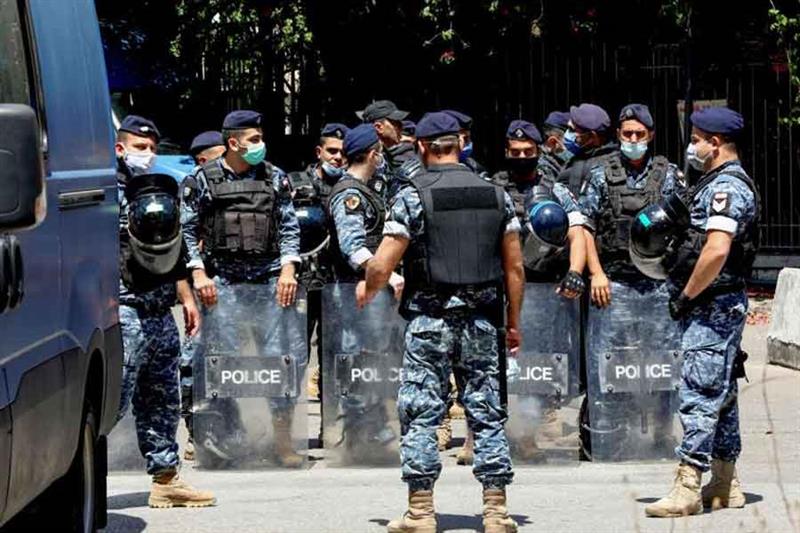
File photo: Members of the Lebanese security forces deploy during an anti-government protest in the
File photo: Members of the Lebanese security forces deploy during an anti-government protest in the capital Beirut. (AFP)

"A terrorist group had recruited young Palestinian men in Lebanon to carry out major bombing attacks using explosive belts" and other munitions, Interior Minister Bassam Mawlawi told a press conference.

"Three separate targets were to be hit at the same time," the ministry said, in an operation Mawlawi said would have caused a large loss of life.

Lebanon's Internal Security Forces (ISF) said the instructions for the bomb plot came from an IS operative based in the Palestinian refugee camp of Ain al-Hilweh, who is in touch with fellow Sunni extremists in Syria.

The instructions were passed to an undercover ISF agent who had successfully managed to infiltrate IS networks in Lebanon.

On February 7, the ISF agent was instructed to prepare attacks on a Shia religious compound in the Al-Laylaki neighbourhood, the Imam al-Kazem compound in Haret Hreik and the Al-Nasser mosque in Beirut's Ouzai suburb, the ISF said.

He was given three explosive vests and other weapons to conduct the attacks on February 16, the ISF added.

Beirut's southern suburbs, a stronghold of Shia militant group Hezbollah, saw a wave of bombings in 2013 and 2014 carried out by Al-Qaeda linked militants in retaliation for Hezbollah's intervention in the civil war in neighbouring Syria on the side of the Damascus government

According to the ISF, the planned attack by IS was meant to "pay homage" to the group's slain leader Ibrahim al-Hashimi al-Qurashi, killed in a US raid on his home in rebel-held northwestern Syria last month.

Michelangelo's three 'pietas' united in historic first


The exhibition is the first time Michelangelo's famed "Pieta" will be displayed with two other sculptures by the Renaissance giant of the Virgin Mary mourning over the body of Christ (AFP/Vincenzo PINTO)

Gildas LE ROUX
Wed, February 23, 2022

It is admired the world over as an exquisite depiction of maternal grief. But Michelangelo's "Pieta" has overshadowed two other moving sculptures on the same subject by the Renaissance giant.

That is why Florence's Opera del Duomo museum in Italy is putting on display together for the first time all three versions of the Virgin Mary mourning over the body of her son Jesus Christ.

The Tuscan museum's original "Bandini" goes on show Thursday alongside casts of the "Pieta" and "Rondanini", which are on loan from the Vatican Museums.


Positioned to face each other in an intimate setting, there are striking contrasts between these variations, which mark different phases in the life of the artist, who died aged 88 in 1564.

The museum's director, Timothy Verdon, said it was a unique opportunity to "observe Michelangelo's intellectual maturation on the theme of the sacred".

The exhibition, which runs until August 1, "highlights the link between life and art in this religious sculptor, who served the popes for most of his career".

- Purity -

The "Pieta" housed at the Vatican -- masterfully executed when Michelangelo was not yet 25 years old -- amazed his contemporaries, who were dazzled by the beauty of this virgin, clothed in billowing drapery.

The artist rejected criticism that his Mary was too youthful, saying purity kept women beautiful.

Mary cradles her 33-year old son, whose serene expression suggests he could almost be sleeping in a nod to the coming resurrection -- the rising of Jesus from the dead in Christian belief.

This sculpture was damaged by a Hungarian hammer-wielding attacker in 1972, and the restored work of art is now protected behind bulletproof glass.

Centuries earlier, Michelangelo himself -- dissatisfied with the "Bandini", his second pieta -- attacked it with a hammer, leaving marks which can still be seen today on Jesus' shoulder and Mary's hand.

This version was done when the then-72-year old artist was suffering from depression. Convinced death was near, Michelangelo took a vow of poverty and placed religion at the centre of his life.

He lent his own features and beard to the character of Nicodemus, who dominates the "Bandini", shielding Jesus, Mary Magdalene and Mary, who here has lost her earlier timeless beauty.


Michelangelo's cast of so-called "Rondanini" Pieta was begun when the artist was nearly 80 years old and was found in his home in Rome 
(AFP/Vincenzo PINTO)

- Evolution of style -

The "Rondanini" is without doubt the most surprising: stunningly modern, this stripped-down sculpture, about two metres high, was begun around 1552, when the artist was nearly 80 years old.

It was found in his home in Rome, where he worked until his death.

Juxtaposing the three works "allows us to measure the evolution of Michelangelo's style over the 50 years that separate the first pieta from the other two, and the even more drastic and striking change between the last two," said Verdon.

The last pieta feels unfinished and far removed from the aesthetic canons of the time, but experts also see it as a message of faith and the importance of looking beyond appearances to the essential.

Gone is the rich drapery, gone are the supporting characters.

Mary and her son, whose faces and bodies are reduced to sketches, are once again represented alone in an extreme simplicity that reinforces the spiritual power of Michelangelo Buonarroti's last work.

glr/ide/yad

US launches biggest yet auction for offshore wind


US officials launched the biggest yet auction for offshore wind developments similar to this site being built in Le Havre, France (AFP/Sameer Al-DOUMY) (Sameer Al-DOUMY)

Bidding began Wednesday in the biggest US offshore wind energy auction yet, involving nearly 500,000 acres off the coasts of New York and New Jersey.

Through 13 rounds of bids by mid-afternoon, companies had offered $817 million for leases on on six tracts up for grabs, according to data from the Bureau of Ocean Energy Management.

The agency, part of the US Department of the Interior, has said it could extend the bidding process through to Friday.

Development of all six tracts could generate as much seven gigawatts of wind energy, enough to power some two million homes, the agency said.

Nearly 25 firms were authorized to participate in the auction, including European companies Avangrid Renewables, Equinor ASA and EDF Renewables Development, as well as US groups Invenergy and Arevia Power.

"People are excited because this is the first lease sale that has been held by the federal government since 2018," said Lesley Jantarasami, an energy specialist at the Bipartisan Policy Center, a US think tank.

Jantarasami noted that the Biden administration has set a goal of producing 30 gigawatts of offshore wind energy by 2030.

"For a long time, everybody has been saying it's poised to take off," she said, alluding to the interest of European companies in the US offshore market.

"But we had not seen the federal government take concrete action to make this a reality," she said.

In 2018, 11 companies bid on three tracts across 390,000 acres near Massachusetts. That sale raised $405 million following 32 rounds of bidding.

jum-jmb/hs

Melting glaciers, fast-disappering gauge of climate change


Patagonia's glaciers are retreating faster than anywhere else in the world 
(AFP/PABLO COZZAGLIO)

Alberto PEÑA, Pablo COZZAGLIO
Wed, February 23, 2022

A crack widens in the San Rafael glacier in Chile's extreme south, and a ten-storey iceberg crashes into the lake by the same name -- a dramatic reminder of the impacts of global warming.

In the lake San Rafael, about 100 icebergs float today, pieces broken off from the glacier that 150 years ago stretched out over two-thirds of the body of water now free of ice cover.

The San Rafael glacier is one of 39 in the Northern Patagonian Ice Field (3,500 square kilometers or 1,350 square miles), which with the Southern Patagonian Ice Field (11,000 km2) in Chile's Aysen region forms one of the world's biggest ice masses.

According to the European Space Agency satellite images show San Rafael to be one of the world's most actively calving glaciers and the fastest-moving in Patagonia, "flowing" at a speed of about 7.6 kilometers (4.7 miles) per year -- "receding dramatically under the influence of global warming."

Glaciers are bodies of slowly-moving ice on land that can be several hundred or several thousand years old.

Seasonal glacier melt is a natural phenomenon that with global warming has accelerated "significantly," Jorge O'Kuinghttons, a regional head of glaciology at Chile's water directorate, told AFP.


Patagonian ice fields in Chile (AFP/Nicolas RAMALLO)


- 'Excellent indicator' -


At the moment, Patagonia's glaciers are retreating faster than anywhere else in the world.

"Glaciers are an excellent indicator of climate change," said Alexis Segovia, another government glaciologist who works in the remote region of southern Chile.

All but two of Chile's 26,000 glaciers are shrinking, he said, due to rising temperatures caused by manmade greenhouse gas emissions.


Melting glaciers also add to sea level rise (AFP/PABLO COZZAGLIO)

It is a vicious cycle.

Ice-covered surfaces of Earth reflect excess heat back into space, and if these are reduced through melting, temperatures rise even more.

Melting glaciers also add to sea level rise, which increases coastal erosion and elevated storm surges.

And water dammed by glaciers can be released by a sudden collapse.

"Areas are being flooded these days that were never flooded before," said O'Kuinghttons.

To learn more about what to expect in the future, glaciologists study the evolution of Chile's glaciers, which contain a frozen record of how the climate has changed over time.

According to the WWF, more than a third of the world's remaining glaciers will melt before 2100 even if mankind manages to curb emissions from the burning of fossil fuels.


There are about 100 icebergs in San Rafael lake (AFP/PABLO COZZAGLIO)


- The heat is 'strong' -

East of San Rafael, on the lake General Carrera that is shared by Chile and Argentina, small-scale sheep and cattle farmer Santos Catalan has been living on the forefront of the change.

To augment his income, he criss-crosses the lake in a wooden boat with glacier-watching tourists.

Over the last 15 to 20 years, he told AFP, the landscape has become a lot less white as the ice has melted and snow dwindled.

"Things have changed a lot," he said. "The heat is very strong."

apg-pc/pb/ltl/jb/mlr/
BirdLife Cyprus sees ‘worrying’ spike in migratory bird killings

Conservation group BirdLife Cyprus reported on Wednesday a “worrying increase” in illegal bird trappings last year, blaming authorities for reducing fines for killing protected species. 


Updated 23 February 2022
AFP

"This sadly comes as no surprise, following a shameful relaxation of the Cyprus bird-protection law in December 2020," the group said

Autumn is when trappers target migratory birds, especially Blackcaps and other migrant songbirds

NICOSIA: Conservation group BirdLife Cyprus reported Wednesday a “worrying increase” in illegal bird trappings last year, blaming authorities for reducing fines for killing protected species.

“This sadly comes as no surprise, following a shameful relaxation of the Cyprus bird-protection law in December 2020,” the group said in a statement.

It has systematically monitored bird trapping levels for the past 20 years in the Republic of Cyprus and a British military base area on the Mediterranean island.

Its autumn 2021 report showed a big increase in trapping levels with so-called “mist nets” within the survey areas compared to 2020.

Autumn is when trappers target migratory birds, especially Blackcaps and other migrant songbirds.

Late last year, activity using mist nets — which are barely visible and designed to entangle the birds — was 132 percent higher than for autumn 2020.

At Dhekelia, a British base area, mist netting activity showed an increase of 46 percent from 2020.

Last year’s increase is similar to the past four years but significantly lower than the peak 2016 trapping season when 2.3 million songbirds were killed.

“These recorded trapping levels amount to just over 600,000 birds that might have been illegally trapped and killed in the autumn of 2021 within the survey areas,” said BirdLife Cyprus.

“This troubling increasing trend in trapping activity comes after a series of retrograde steps on a policy level that sent a general message of decriminalizing bird trapping.”
It said fines that were reduced from 2,000 euros (about $2,200) to 200 euros “are non-deterrent and non-punitive, and clearly not proportionate to the profit one would make by illegally selling these birds.”

The illicit trade in migratory birds is estimated at 15 million euros per year, although it has been illegal for decades. Critics blame lax enforcement.

In a letter to the Cyprus government last October, the European Commission expressed concern and urged Nicosia to annul this law amendment and restore the fines starting at 2,000 euros.

“The state’s objective should be the protection and conservation of our natural heritage, starting from re-instating a strict and deterrent law,” said the group.

“Cyprus is very likely to be taken to the EU Court of Justice for the insufficient protection of migratory birds, as highlighted in the Commission’s letter.”
GOING, GOING, GONE

Belarus independence 'under threat' by Russian troops: opposition

AFP - 
© JOEL SAGET


The presence of tens of thousands of Russian troops inside Belarus, which the West fears could be used to invade Ukraine, represents a threat to Belarusian independence, the country's exiled opposition leader said Wednesday.

Svetlana Tikhanovskaya, who the West believes was the true winner of August 2020 presidential elections that kept autocratic leader Alexander Lukashenko in power, told Agence France-Presse that her country now needed to fight "for our independence" as well as "against dictatorship".

She also expressed horror that a referendum in Belarus this weekend could give Lukashenko the legal means to house Russian nuclear weapons in the country.

Lukashenko was prepared to sacrifice the country's sovereignty because he was "grateful" for the Kremlin's support in the aftermath of the 2020 vote that prompted mass protests, said Tikhanovskaya, who now lives in Lithuania.

"We want to be friends with our neighbours but we do not want to be the appendix of another country," she said during a visit to Paris.

"We see that our independence now is under threat... We see the threat of a slow occupation of our country."


Tikhanovskaya said she believed there were now some 30,000 Russian troops in Belarus -- ostensibly there for carrying out military drills -- as well as even more units of military hardware.

"Lukashenko was supported by the Kremlin and now he is showing his loyalty to the Kremlin -- he is grateful for the support he got, and now he is giving lands for military drills to show this loyalty," she said.

"But it's not in our national interest. People do not want these troops on our lands, we do not want to be a country that is an aggressor to our Ukrainian brothers."

The military exercises were supposed to end last weekend but Minsk then announced that the troops would remain to carry out more manoeuvres for an unspecified duration.

The Ukrainian capital of Kyiv lies just 150 kilometres (90 miles) south of the Belarusian border, while the northern Ukrainian city of Chernigiv is a mere 60 kilometres (40 miles) east of Belarus.

- 'Threat to Europe' -

Tikhanovskaya urged Western powers to denounce the February 27 referendum on constitutional reform called by Lukashenko, who has been in power for almost three decades and is accused of brutally repressing the 2020 post-election protests.

Opposition activists say there are now over 1,000 political prisoners in Belarus.

Tikhanovskaya said the most concerning aspect of the referendum was proposed changes to Belarus' neutrality that would allow it to house Russian nuclear weapons.

"It shows us where Lukashenko wants to go. He can use our territory for nuclear weapons and this will be a huge threat to Europe," she said.

Lukashenko had already raised the prospect earlier this month that Belarus could host nuclear weapons.

"All countries must declare they do not accept any result of this referendum, it is illegitimate. If something happens with a nuclear weapon, Lukashenko will bear all the responsibility," said.

"We want to be neutral," she added, noting that the presence of Russian troops in Belarus also represented a risk for Lukashenko, who was dependent on the Kremlin rather than popular support to stay in power.

"The illegitimate leader understands this is a threat to himself as well," she said. "He is weak and he may also think that one day when the Kremlin does not need him, they can get rid of him."

sjw/js/jj