Wednesday, June 29, 2022

How did vertebrates first evolve jaws?

Peer-Reviewed Publication

KECK SCHOOL OF MEDICINE OF USC

Zebrafish 1 

IMAGE: A ZEBRAFISH SHOWING THE SKELETON AND JAW (MAGENTA), THE EYE (GREEN CIRCLE ON THE LET), AND GILL-LIKE PSEUDOBRANCH AND GILLS (GREEN STRUCTURES ON THE RIGHT). view more 

CREDIT: IMAGE BY MATHI THIRUPPATHY/CRUMP LAB

Five-hundred million years ago, it was relatively safe to go back in the water. That’s because creatures of the deep had not yet evolved jaws. In a new pair of studies in eLife and Development, scientists reveal clues about the origin of this thrilling evolutionary innovation in vertebrates.

In the studies, Mathi Thiruppathy from Gage Crump’s laboratory at USC, and collaborator J. Andrew Gillis from the University of Cambridge and the Marine Biological Laboratory, looked to embryonic development as way to gain insight into evolution—an approach known as “evo-devo.”

In fishes, jaws share a common developmental origin with gills. During development, jaws and gills both arise from embryonic structures called “pharyngeal arches.” The first of these arches is called the mandibular arch because it gives rise to jaws, while additional arches develop into gills. There are also anatomical similarities: the gills are supported by upper and lower bones, which could be thought of as analogous to the upper and lower jaws.

“These developmental and anatomical observations led to the theory that the jaw evolved by modification of an ancestral gill,” said Thiruppathy, who is the eLife study’s first author and a PhD student in the Crump Lab. “While this theory has been around since the late 1800s, it remains controversial to this day.”

In the absence of clear fossil evidence, the eLife publication presents “living” evidence in support of the theory that jaws originated from gills. Nearly all fishes possess a tiny anatomical structure called a “pseudobranch,” which resembles a vestigial gill. However, this structure’s embryonic origin was uncertain. 

Using elegant imaging and cell tracing techniques in zebrafish, Thiruppathy and her colleagues conclusively showed that the pseudobranch originates from the same mandibular arch that gives rise to the jaw. The scientists then showed that many of the same genes and regulatory mechanisms drive the development of both the pseudobranch and the gills.

In a related study just published in Development, Gillis and his Cambridge colleague Christine Hirschberger show that skates also have a mandibular arch-derived pseudobranch with genetic and developmental similarities to a gill. While zebrafish are bony fish, skates represent an entirely different evolutionary class of jawed vertebrates: cartilaginous fish.

“Our studies show that the mandibular arch contains the basic machinery to make a gill-like structure,” said Crump, the eLife study’s corresponding author, and a professor of stem cell biology and regenerative medicine at the Eli and Edythe Broad Center for Regenerative Medicine and Stem Cell Research at the Keck School of Medicine of USC. “This implies that the structures arising from the mandibular arch—the pseudobranch and the jaw—might have started out as gills that were modified over the course of deep evolutionary time.”

Gillis, who is the corresponding author of the Development study and a co-author on the eLife study, added: “Together, these two studies point to a pseudobranch being present in the last common ancestor of all jawed vertebrates. These studies provide tantalizing new evidence for the classic theory that a gill-like structure evolved into the vertebrate jaw.”

Peter Fabian, a postdoctoral trainee in the Crump Lab at USC, is also a co-author on the eLife study.

Ninety-seven percent of the support for the eLife study came from federal funding from the National Institute of Dental and Craniofacial Research (grants R35DE027550, F31DE030706, and K99DE029858). The remaining funding came from the Royal Society (RGF/EA/180087) and the University of Cambridge (14.23z). 

The Development study was funded by the UK Biotechnology and Biological Sciences Research Council (BBSRC), The Royal Society, and the Isaac Newton Trust.

About Keck School of Medicine of USC

Founded in 1885, the Keck School of Medicine of USC is one of the nation’s leading medical institutions, known for innovative patient care, scientific discovery, education and community service. Medical and graduate students work closely with world-renowned faculty and receive hands-on training in one of the nation’s most diverse communities. They participate in cutting-edge research as they develop into tomorrow’s health leaders. The Keck School faculty are key participants in training of 1200 resident physicians across 70 specialty and subspecialty programs, thus playing a major role in the education of physicians practicing in Southern California.

Safe period trackers: Open source apps protect your data

With the US ending constitutional rights to abortion, people have voiced concern over apps that track menstruation cycles. But some apps do protect privacy.


Why expose yourself and data about your body when you can use a non-commercial period tracker?

As a late adopter of smartphones, Marie Kochsiek couldn't help but feel excited the first time she encountered the millions of apps available on the market.

Period tracking apps, especially, caught her attention. Finally, she thought, she wouldn't need to manually fill in the papers her gynecologist handed her after every visit, but instead she could digitally monitor her menstrual cycle.

"I was so excited back then that I told a friend about it. She asked me if I was sure it was a safe option. She was involved in internet politics," Kochsiek recalls.

Behind the pink interfaces and mascots, some apps track more than a user's period. They often have access to a user's name, location, email address, browsing history and more — all to provide targeted advertising.
Protect your data: Alternative period trackers

When reports started to emerge on how these apps monetize and sell user information to third parties, Kochsiek was concerned but refused to go back to the old analog way.

Instead, Kochsiek felt motivated to develop an alternative app called .drip—a cycle tracker that only stores data on your device.

As with other cycle apps, .drip allows users to monitor their menstrual health and keep track of their flow and fertile days.


Period trackers track more than your cycle — some commercial apps have been found to sell on sensitive data to social media platforms for advertising purposes

The difference is that users don't have to agree to invasive practices, such as permitting an app to access their microphone or having intimate data, like sexual encounters or a week of heavy menstrual flow, stored on a company's servers many miles away from them.

But the popularity of non-commercial trackers lags far behind bigger players like Mi Calendario Menstrual, Flo and Clue, which add up to 160 million downloads across mainstream app stores.

Period trackers since Roe vs. Wade was overturned

The US Supreme Court's decision to reverse Roe vs. Wade, a 1973 decision establishing a federal — and constitutional — right to terminate a pregnancy, has sparked new fears about the things that companies do with menstrual data.

"It seems as if these [popular] companies have more to gain from me tracking my menstrual cycle than what I get as an individual. The gain for their commercial business is larger," says Julia Kloiber, co-founder of SUPERRR Lab, a feminist organization advocating for equal digital futures.

For Kloiber, non-commercial trackers pose a safer option to track periods. "It's important that these alternatives are being developed so people have the option to switch," Kloiber says.
Open source: More privacy and inclusion

More free and non-commercial alternatives have entered the market in the past few years. They are steering the conversation toward data protection, but also shifting it away from the mass-market approach for these apps.

And that is allowing for space for people with varied identities and needs.

Take for example Periodical, a gender-neutral tracker that works offline and only stores data on your phone or memory card. Like .drip, Periodical is open source, which means that the code behind the app is free to share and check for data security issues, for instance.

Open source technology stays in conversation with the community, says Kochsiek.

"It's not a blackhole code. When we talk about periods, we talk about women's health, about our bodies, so the conversation should be transparent and people should be able to join the discussion," says Kochsiek, the co-founder developer of .drip.


Concern about the US overturning constitutional rights on abortion spread internationally — here, demonstrators gathered in Berlin

Meanwhile, Hamdam is the first period tracker in Farsi and the only one equipped with the Persian Jalali Calendar. The app provides Iranian users with information on women's rights, domestic violence and sexual health.

On June 13, a Spanish tech non-profit called Eticas released a report analyzing the privacy practices of 12 popular fertility apps. The report concluded that only one of them, WomanLog, didn't sell or share user data under any circumstance.

Other apps like Euki, Stardust and Clover also featured among the top-ranked apps. Euki lets users create a personal PIN to access their data on the app.
Tracking more than periods

Research into period trackers and their use of personal data goes back a few years.

In 2019, a UK-based charity, Privacy International, warned how five period trackers shared user data with Facebook and other third parties for commercial purposes.

A year later, the charity filed data requests to another handful of apps and concluded that the data the apps collected was accessible via company servers, making them vulnerable to leaks.

While collecting menstrual data may promote research in a field as understudied as women's reproductive health, Kloiber says the lack of transparency and compliance with data protection frameworks in tech could also pose a risk.

"At a first glance, it's just some data points that don't say a lot about a person. But this [situation in the US] shows that data that seems banal at first needs to be protected because if the political climate shifts, it can turn sensitive," Kloiber says.

Digital rights activists warn that data from period trackers could be used by prosecutors not only in the US, where some federal states were quick to introduce abortion bans after the Supreme Court ruling, but also in Europe, in countries such as in Poland, where terminating a pregnancy is illegal.

"If a woman in the US gets an abortion, authorities could ask [the company behind] the app to provide data that can be used against her," researcher and founder of the Eticas Foundation, Gemma Galdon, says.

And that data could be something as simple as googling for an abortion clinic.

"That information could also be used by their family or their partner," Galdon says. "There are a lot of risks concerning the use of this data and [some people] are not aware of it."

Edited by: Zulfikar Abbany

KNOW YOUR BELLY BUTTON
A near-universal lint trap
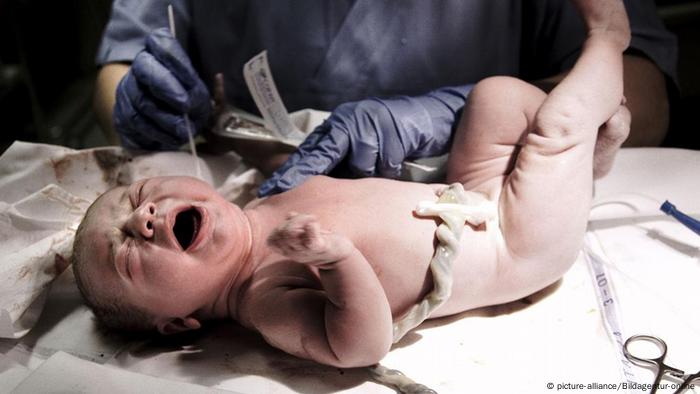
It's not strictly true to say we all have a belly "button" — an outward looking bump. And some people appear to have nothing at all, often after surgery for a hernia. But we all have a "navel," a spot that marks where our umbilical cords were attached when we were in our mother's womb. The cord gets cut when we're born, leaving a bit of it to heal, dry and close, and we get a belly button.


Rewilding – The Fine Art Of Doing Nothing

Sit back, relax and let nature do the work.

Jun 28, 2022 

A beaver munches on a branch
Image Credit: benny337/Shutterstock

Rewilding is a progressive conservation concept with many different approaches. The idea is to restore natural healthy ecosystems to the point at which nature’s processes can take over. This initial restoration can include the reintroduction of keystone species, which are organisms (often predatory animals) that fill an ecological niche. 

Large grazers can also be introduced to manage vegetation, and non-native plants can be removed. Removal of human-made structures that function to change the natural landscape also allows the environment to naturally re-shape. 

After these implementations, humans can sit back and let the habitat develop into a natural cycle created by the organisms that live there. 

Unfortunately, many species have been lost from their native habitats due to hunting, urbanization, and climate change. Rewilding works to bring back those lost species and enable them to carry out their ecological functions once more. Keystone species like wolves and beavers can alter the fauna of an area, restoring ecological niches so organisms can thrive and the ecology of an area can start to be repaired. 

The reintroduction of 41 wolves to Yellowstone National Park between 1995 and 1997 was an understandably concerning endeavor, but large predators are vital to maintaining a healthy ecosystem. The wolves are hard at work keeping the elk population under control. Before the wolves were brought back, the elk did not naturally move through the park, causing the willow along the banks of the river to become heavily overgrazed. 

Now with a wolf population to influence the elk distribution, the willow can flourish. This leads to an increased beaver population which relies on the willow branches to survive in winter. 

Talking of beavers, in a 2017 rewilding effort, a family of two adults and two kits were introduced into the Forest of Dean, UK. In the five years since, the area has already benefited from the creation of natural flood defenses and improvements to the soil. The porous nature of beaver dams benefits not only the ecology of the area, but also the people living nearby – beavers are pretty *dam* handy at creating effective, sustainable, and cheap flood defenses. 

It is well documented that spending time in nature is massively beneficial for human mental and physical health and wellbeing. Rewilding native areas means more land is protected for people to enjoy, not to mention the resources that are conserved during the natural process that take place. It is important to remember that there is no fixed goal with rewilding, it is simply about letting nature take the lead. 

author

ELEANOR HIGGS

Creative Services Assistant

CHARLIE HAIGH

Social Media and Marketing Assistant

What is forest bathing?

Forest bathing is a mindful, meditative practice.

By Kirsten McEwan published 1 day ago
Forest bathing involves using your senses to notice your surroundings while out in nature. 
(Image credit: Godong / Contributor via Getty Images)

Jump to:
What does forest bathing look like?
How is it different from a normal nature walk?
Origins
Benefits
Mechanism and "dosage"
Find forest bathing guides
Bibliography

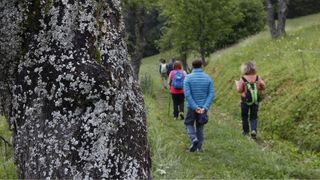
Forest bathing, or shinrin-yoku in Japanese, means to soak in the forest through all of your senses. In practice, forest bathing can be a slow, mindful walk in nature, where you pay close attention to your surroundings using your senses (e.g. sight, smell, hearing, touch). There is no destination or goal, other than to notice and appreciate your surroundings.

Forest bathing, which originated in Japan in the 1980s, can be practiced alone. However, it is often helpful to try the first few times with a guide who can suggest new ways of enhancing your senses and prompt you to notice your surroundings.

Related: What is mental health?

WHAT DOES FOREST BATHING LOOK LIKE?

Forest bathing involves using your senses to notice your surroundings. For example, this may include noticing the different colors and patterns of leaves; noticing movement in the tree canopy or on the surface of water; viewing a natural scene or finding a "sit spot" from which to observe nature; smelling fallen leaves and soil; listening to the sound of the wind through the trees, running water or bird song; or noticing textures by touching bark, leaves and moss.

Although most of the walk is conducted in silence so that you can pay full attention to your surroundings, a guide can offer opportunities to share the interesting things you notice. Other people’s observations can also inspire you to look for new things, such as the fallen leaf that smelled like cinnamon, for instance.

Often the guide ends the session by inviting people to spend time with a preferred tree or a view or by leading a mindfulness activity that involves noticing your surroundings through all the senses in turn. (Broadly speaking, "mindfulness" refers to the act of bringing your attention to what you're doing in the present moment.)

Some guides end the session by offering a foraged tea to experience the sense of taste in the forest.

HOW IS FOREST BATHING DIFFERENT FROM A TYPICAL WALK IN NATURE?

Even for those who already love the outdoors, forest bathing often differs dramatically from their usual experience of being in nature.

On a typical nature walk, you might be moving quickly to cover distance, chatting with a friend, walking the dog, listening to music, checking your phone or simply being distracted by your thoughts. In contrast, in a guided forest bathing session, the guide plans a route that provides opportunities to notice nature using all the senses, sets a slower pace and provides prompts to keep you in your senses rather than inside your busy head. The guide will suggest different ways to enhance our senses to help you notice the small details of your surroundings that you would normally miss on a typical walk.

ORIGINS OF FOREST BATHING

Forest bathing originated in Japan, where the practice is called shinrin-yoku. The translation into English is "forest bathing," and a bit like the term "sun bathing," the idea is that you "bathe" in the atmosphere of the forest by noticing your surroundings and breathing in the oxygen and wood oils let off by the trees.

Japan has a long cultural history of valuing nature through Shintoism, a religion that centers around the idea that divine spirits or "kami" are manifested in everything in nature, taking the form of the trees, rocks, mountains, sea and animals, according to the Asia Society(opens in new tab).

In the 1980s, when the Japanese government realized they had a problem with stressed workers who were experiencing too much screen-time — or "techno-stress" — the government invested in forest bathing as a solution, protecting woodland and establishing 62 forest bathing clinics. Forest bathing became available on prescription, so when patients visit their doctor because of stress or high blood pressure, they may be given the option to take medication or try forest bathing, according to "Shinrin Yoku: The Japanese Art of Forest Bathing(opens in new tab)" (Li, 2018).
 
BENEFITS OF FOREST BATHING

Since 2004, the Japanese government has invested $4.3 million in 62 clinics offering forest bathing as a public health treatment, according to "Shinrin Yoku: The Japanese Art of Forest Bathing." The science about the benefits of forest bathing came later with Japanese researchers such as Qing Li and Yoshifumi Miyazaki leading the way in proving what people intuitively knew: that spending time in nature is good for you.

So far, research has shown that forest bathing can improve several aspects of a person's health. For example, research published in February 2021 in the International Journal of Environmental Research and Public Health(opens in new tab) showed a decrease in systolic blood pressure after 12 healthy volunteers practiced forest bathing for a two-hour stint. In a research article published in October 2018 in the journal Frontiers in Public Health(opens in new tab), scientists showed improvements in heart rate variability — a measure of cardiovascular health — in 485 male participants while walking in a forest for just 15 minutes.

Research published in February 2018 in the journal Biomedical and Environmental Sciences(opens in new tab), found reduced biomarkers of chronic heart failure, inflammation and oxidative stress in elderly chronic heart failure patients after they participated in two four-day forest bathing trips. Researchers also found that a five-day forest trip improved immune system health, as indicated by an increase in natural killer cells, which are part of the body's defence against cancer, they reported in March 2018 in the journal Oncotarget(opens in new tab).

Research has also found that forest bathing offers psychological benefits. In a review of 20 research studies published July 2022 in the International Journal of Mental Health and Addiction(opens in new tab), researchers found consistent improvements in mood, especially anxiety, following forest bathing sessions. In January 2021 researchers published an article in the journal Sustainability(opens in new tab), revealing reductions in anxiety and rumination about problems, and increases in social connection and prosocial values such as feeling compassion for others in 61 volunteers, after two hours of forest bathing.
 
HOW DOES IT WORK AND WHAT'S THE DOSE?

In researcher Li’s book "Shinrin-Yoku: The Art and Science of Forest Bathing," he describes how 50% of the benefit of forest bathing comes from breathing in the essential oils given out by evergreen trees. His research suggests that forest bathing for two hours daily and breathing in the wood oils, known as phytoncides, is linked to an increase in the number and activity of natural killer cells in the body. This research led to guidance about the correct "dose" of forest bathing: at least two hours every month.

(Different tree species produce different phytoncides, and more research is needed to understand whether trees native to different regions of the world offer specific benefits, according to the New York State Department of Environmental Conservation(opens in new tab).)

RELATED STORIES

Ancient trees form bloodlines that bolster forests for thousands of years

What are the largest rainforests in the world?

Meditation may have shaved 8 years of aging off Buddhist monk's brain

Research published in the journal Scientific Reports(opens in new tab) in 2019 found that spending two hours in nature per week produces the greatest noticeable improvements in well-being, measured as a change in self-reported health and well-being. However, don’t worry if you can’t spend two hours in one go forest bathing, because the same study found that shorter visits to nature — as short as 20 minutes per day adding up to two hours per week — were still really beneficial to a person's health and well-being.

According to research published in the International Journal of Environmental Research and Public Health(opens in new tab) in 2021, levels of the stress hormone cortisol typically decrease in people's blood after just 15 minutes of forest bathing. And there are many forest bathing guides who notice it takes about 20 minutes for people to slow down, relax and connect with their surroundings during a session, so give yourself at least 20 minutes each day to connect with nature in your garden, local park, forest or any other type of natural environment that appeals to you.

WHERE CAN I FIND FOREST BATHING GUIDES NEAR ME?

Forest bathing guides can offer in-person forest bathing walks or if you are currently experiencing low energy or limited mobility, some guides offer online forest bathing experiences.

You can find a trained guide near you by using the certified guide maps on the Association of Nature and Forest Therapy(opens in new tab) website and Forest Therapy Hub(opens in new tab) website.

For forest bathing in New York City, check out the New York Botanical Garden in the Bronx(opens in new tab).

For forest bathing across Washington DC, perhaps try a guided walk with naturalist and author Melanie Choukas-Bradley(opens in new tab).

You can also search MeetUp.com(opens in new tab) or EventBrite.com(opens in new tab) to find guides near you.

For those with low energy or limited mobility there are online(opens in new tab) forest bathing sessions.

If you’d rather try forest bathing on your own, there are audio(opens in new tab) and visual(opens in new tab) guides to get you started.

BIBLIOGRAPHY


Jones, R., Tarter, R., Ross, A.M. (2021). Greenspace Interventions, Stress and Cortisol: A Scoping Review. International Journal of Environmental Research and Public Health, 18(6):2802. https://doi.org/10.3390/ijerph18062802(opens in new tab)


Kobayashi, H., Song, C., Ikei, H., Park, B-J., Lee, J., Kagawa, T., Miyazaki (2018). Forest Walking Affects Autonomic Nervous Activity: A Population-Based Study. Frontiers in Public Health, 6, https://doi.org/10.3389/fpubh.2018.00278(opens in new tab)


Kotera, Y., Richardson, M. & Sheffield, D. (2022). Effects of Shinrin-Yoku (Forest Bathing) and Nature Therapy on Mental Health: a Systematic Review and Meta-analysis. International Journal of Mental Health and Addiction, 20, 337–361. https://doi.org/10.1007/s11469-020-00363-4(opens in new tab)


Li, Q. (2018). Shinrin-Yoku: The Art and Science of Forest Bathing’. Penguin Life. (ISBN13: 9780241346952)


Mao, G.X., Cao, Y.B., Yang, Y., Chen, Z.M., Dong, J.H., Chen, S.S., Wu, Q., Lyu, X.L., Jia, B.B. Yan, J., Wang, G.F. (2018). Additive Benefits of Twice Forest Bathing Trips in Elderly Patients with Chronic Heart Failure, Biomedical and Environmental Sciences, 31,2, 159-162. https://doi.org/10.3967/bes2018.020(opens in new tab)


McEwan, K., Giles, D., Clarke, F.J., Kotera, Y., Evans, G., Terebenina, O., Minou, L., Teeling, C., Basran, J., Wood, W., Weil, D. (2021). A Pragmatic Controlled Trial of Forest Bathing Compared with Compassionate Mind Training in the UK: Impacts on Self-Reported Wellbeing and Heart Rate Variability. Sustainability. 13(3):1380. https://doi.org/10.3390/su13031380(opens in new tab)


Miyazaki, H. (2018). Shinrin-yoku: the Japanese way of forest bathing for health and relaxation. Aster. (ISBN13: 1912023512)


NYS Dept. of Environmental Conservation. (n.d.). Immerse yourself in a forest for Better Health. Immerse Yourself in a Forest for Better Health . Retrieved June 24, 2022, from https://www.dec.ny.gov/lands/90720.html (opens in new tab)


Peterfalvi, A., Meggyes, M., Makszin, L., Farkas, N., Miko, E., Miseta, A., Szereday, L. (2021). Forest Bathing Always Makes Sense: Blood Pressure-Lowering and Immune System-Balancing Effects in Late Spring and Winter in Central Europe. International Journal of Environmental Research and Public Health, 18(4):2067. https://doi.org/10.3390/ijerph18042067(opens in new tab)


Tsao, T., Tsai, M., Hwang, J., Cheng, W., Wu, C., Chou, C., Su, T. (2018). Health effects of a forest environment on natural killer cells in humans: an observational pilot study. Oncotarget, 9, 16501-16511. https://doi.org/10.18632/oncotarget.24741(opens in new tab)


White, M.P., Alcock, I., Grellier, J., Wheeler, B.W., Hartig, T., Warber, S.L., Bone, A., Depledge, M.H., Fleming, L.E. (2019). Spending at least 120 minutes a week in nature is associated with good health and wellbeing. Science Reports, 9, 7730. https://doi.org/10.1038/s41598-019-44097-3(opens in new tab)


This article is for informational purposes only, and is not meant to offer medical advice.


Originally published on Live Science.

Kirsten McEwan Live Science Contributor

Kirsten McEwan is a research psychologist and associate professor of health and wellbeing at the University of Derby in the U.K. She is happiest spending time in nature and unites her passion for the outdoors with health and wellbeing research as a forest bathing researcher and practitioner. For the last 20 years, she has worked in hospitals and universities evaluating the effectiveness of health and well-being treatments. Most of her research has centered on talk therapies for mental health, such as Compassion-Focused Therapy. Her current research largely focuses on evaluating the effectiveness of forest bathing and making it accessible to a wider swath of the population.
The strange underground economy of tree poaching


June 28, 2022
NPR
GREG ROSALSKY

Coastal Redwood Trees
Justin Sullivan/Getty Images

NOTE: This is Part Two of a two-part Planet Money newsletter series on the struggles of a former logging town named Orick, California. Part One, "The tale of a distressed American town on the doorstep of a natural paradise," can be found here.


On the morning of March 27, 2018, rangers from Redwood National and State Parks put on their bulletproof vests and jumped into their cars. Their destination wasn't far: a house in the small town of Orick, California, the same town as the park headquarters where the rangers are based. Pulling up to the house, they grabbed their AR-15s. Guns in hand, they pounded on the door, shouting they had a search warrant.

One of the residents opened the door, and the rangers began searching the premises. Two of them rounded the property and went into the backyard, where there was a shed. Holding their semi-automatic rifles up, ready to shoot, they entered the shed and found their suspect, Derek Hughes. "If you shoot me, you're going to have all hell to pay," Hughes reportedly said.

The park rangers handcuffed Hughes. Searching the premises, they found brass knuckles, a handgun, a camera they suspected was stolen from the park, a plastic bag with traces of methamphetamine, and four meth pipes. But the rangers weren't there for any of that. They continued searching for what they were really looking for. And, scattered along a fence, under a tarp, and in a woodworking shop, they found it: chunks of illegally poached redwood.

When most people think of park rangers, they probably think friendly nature guides in fun hats. But at Redwood National and State Parks, the park rangers' mission of protecting old-growth redwood trees has led them to become a kind of anti-poaching police squad. Some of their investigations have been so action-packed they could be episodes of a TV show. Think CSI: Redwood Forest.

A new book by writer and National Geographic Explorer Lyndsie Bourgon dives deep into this fascinating criminal world of tree theft and efforts to combat it. It's called Tree Thieves: Crime and Survival in North America's Woods, and much of it examines poaching conflicts in Orick, the southern gateway to Redwood National and State Parks.

Burl Poaching


In many ways, the struggling former logging town of Orick, California, resembles other rural towns and inner cities hit by the atomic bomb of deindustrialization. Blight mars man-made structures. Poverty and unemployment rates are high. And people have turned to drugs, alcohol, and crime to cope.

But the crime around Orick that Bourgon examines in her book has a distinctive local flavor. Over the last decade, Orick residents have been caught illegally harvesting a part of redwood trees known as "burls."

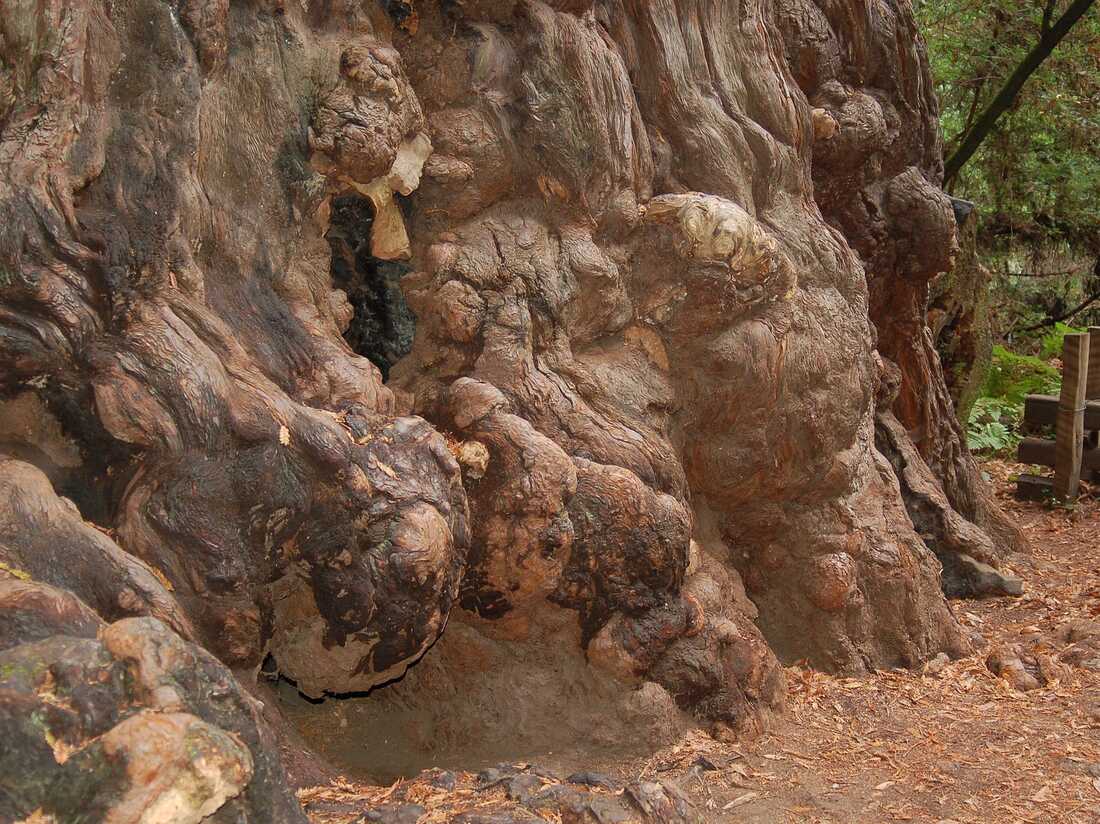
Bourgon describes burls as "big, gnarly bumps" on trees that are covered in bark. "And they form after the tree has experienced a bit of distress," Bourgon says. "Sometimes that means a fungal infection or a lightning strike or maybe they've survived a fire. And the burl is the tree kind of directing all of its resources into healing that area — and in doing so it creates a burl that holds a lot of genetic DNA. And often new trees will sprout from a burl because it contains a lot of genetic material."


Redwood Burls
Wikimedia Commons

Burls may be important to the health of trees, but they're also financially valuable, sometimes fetching thousands of dollars for a slab. "They produce this really lovely piece of grained wood that's very easy to carve because it's smooth," Bourgon says. "You don't get a lot of blemishes or knots in it. People turn them into tables, sculptures, statues. They have been used in luxury goods made abroad, like in the consoles of cars."

They say that money doesn't grow on trees, but tell that to the region's burl poachers. "It's quick money," says Stephen Troy, the chief ranger of Redwood National and State Parks. Through their investigations, Troy says, they've discovered that poachers can quickly offload their burl heists to local buyers. "We have found illegal burlwood in storefronts in Orick and as far as Eureka, to the south, as well as Crescent City, to the north," Troy says.

The burl industry around Orick remains lucrative. Driving up Highway 101 — which in these parts is also known as Redwood Highway — you'll see artisanal shops that sell sculptures, furniture, and trinkets made out of burlwood. It's a cultural pastime and a way of making a living. The products show incredible craftsmanship and artistry. The problem, however, is some of this wood — and it's pretty unclear how much — may be illegally harvested from old-growth redwood trees on national and state park land.

In an effort to get burlwood, poachers sneak into the woods in the dead of the night with chainsaws. Typically, Troy says, they'll do it during stormy weather, when it's less likely for people to catch them in the act. They saw off large chunks of trees, opening them up to infection and potentially threatening their ability to stand. "The burl is also a protectionary reproductive measure, so if you lose the burl, you're not only losing that tree, but you might also be losing the ability of that tree to reproduce," Bourgon says.

Articles about poaching at Redwood National and State Parks began proliferating around 15 years ago. Back then, however, the problem was theft of dead redwood logs, not live trees. "Although thieves haven't started chopping down live trees, authorities worry that will become an issue as the number of easily poached logs diminishes," the San Francisco Chronicle reported in 2006.

Poaching downed trees is still a serious problem for the ecological health of the forest, says Erin Gates, the Deputy Superintendent of Redwood National and State Parks. However, the problem has gotten even worse over the last decade. Since at least 2012, poachers have expanded their poaching to live trees in the parks, hacking off burls and even felling whole old-growth redwoods in their quest for burlwood. Park officials have uncovered dozens of poaching sites. And that, Ranger Troy suspects, is "just the tip of the iceberg."

Gates sees illegal burl poaching as the latest chapter in a centuries-long story: the obliteration of the coastal redwood forest, which once covered two million acres along the West Coast. "For the most part, almost all of the old-growth redwoods on the planet have been cut down," Gates says. "There are only 4 percent of them left." Redwood National and State Parks protects about 40 percent of these remaining trees, and with supply dwindling on private land, the park has increasingly become a target. These trees can be upwards of 2,000 years old, so it's not like they can be easily replaced.

To combat this scourge of forest crime, the park has invested in cameras, motion detectors, and various other technologies to catch poachers in the act. In the case of poacher Derek Hughes, this technology helped to catch the perpetrator. After a park ranger stumbled across a secretive poaching site in the park, he suspected the poacher would come back to the same area to harvest more burls. So he hid motion-activated cameras in the forest. A month later, the ranger analyzed the footage and identified a suspect who they believed was Derek Hughes (it's a small town). The footage helped rangers get a search warrant for his residence, where they eventually found evidence of burl theft.

Hughes ultimately pleaded guilty to felony vandalism. The court sentenced him to two years of probation and required him to pay a $1,200 fine, as well as complete 400 hours of community service. Hughes is also banned from Redwood National and State Parks.

Rumble In The Woods

As we highlighted in the first part of this series, Orick residents have long had beef with the national park, seeing its creation, expansion, and subsequent management as the source of their immiseration. While in the past this tension was about the park's prevention of logging, which was once the region's livelihood, these days tensions are about the policies and day-to-day conduct of park officials.

In the early 2010s, Redwood National and State Parks declared burl poaching a "crisis," and they began ramping up law enforcement efforts. A huge part of their mission, after all, is to protect this one-of-a-kind ancient redwood forest. However, as Bourgon documents, it also has exacerbated tensions between the parks and Orick.

Talking to some locals, the national park can sometimes sound like a foreign occupying force. Redwood National Park's rangers, Bourgon says, pull people over if they suspect they are carrying illegally harvested wood, or are breaking the law in some other way. The park has also partnered with the Save The Redwoods League, an environmental group that has spent more than a century protecting redwoods, to offer a $5,000 reward to anyone who snitches on poachers.

"You can imagine — in an area that has been really affected by the work of the Save The Redwoods League and the park — how that might be perceived," Bourgon says.

For Bourgon, tree poaching is the product of a desperation found in places without many options. Since the logging industry collapsed, Orick has been trapped in a downward spiral. When the park was opened and then expanded, officials told Orick that it would thrive as more and more tourists flocked to the area. How could it not? It's right next to the parks. However, despite its prime real estate and the flow of tourist traffic through the area, Orick has, for the most part, failed to capitalize on its desirable geography.

"Orick finds itself ensnared in a vicious circle: its reputation for drugs and unsightly property deters anyone who might want to invest in making it a permanent home or a place where tourists might want to stay," Bourgon writes. Local officials, like Gregg Foster, the executive director of the Redwood Region Economic Development Commission, sees a big part of the problem as a lack of public investment in infrastructure and upkeep and a morass of confusing regulations that discourages private investment.

Bourgon argues that Redwood National and State Parks should hire more locals, which might do double-duty of easing community tensions and providing greater opportunities in the area. Gates says park jobs are "open to everyone." She added, "We encourage our local surrounding community members to apply for these positions, but we do not have any control over whether they do or do not apply."

In recent years, economists have been paying much more attention to the intractable problems created by deindustrialization. It turns out that after places lose the main source of their livelihoods, residents don't just move to other places for better opportunities, as classic economic theory suggested they would. Instead, many stay and suffer, even as their hometowns collapse. In desperation, some turn to criminal activity, like dealing drugs or stealing precious redwood burls. We've seen stories like this play out over and over again, in former coal-mining towns, in inner cities, and in places that lost manufacturing after Chinese-made goods flooded America.

Recognizing that people show a tendency to stay in place, economists and policymakers have been turning to "place-based policies," or policies aimed at helping distressed places get out of their economic rut. If there were ever a place that smart policies could help turn around, Orick — which sits at the doorstep of incredible parks with the tallest trees in the world — has got to be a prime candidate. After all, if people there had good jobs and an incentive not to sneak into the parks at night, chainsaws in hand, it wouldn't just be the community that would benefit: the redwoods would be more likely to flourish as well.
This giant kangaroo once roamed New Guinea – descended from an Australian ancestor that migrated millions of years ago


Illustration by Peter Schouten, Author provided


THE CONVERSATION
Published: June 28, 2022

Long ago, almost up until the end of the last ice age, a peculiar giant kangaroo roamed the mountainous rainforests of New Guinea.

Now, research published by myself and colleagues suggests this kangaroo was not closely related to modern Australian kangaroos. Rather, it represents a previously unknown type of primitive kangaroo unique to New Guinea.
The age of megafauna

Australia used to be home to all manner of giant animals called megafauna, until most of them went extinct about 40,000 years ago. These megafauna lived alongside animals we now consider characteristic of the Australian bush – kangaroos, koalas, crocodiles and the like – but many were larger species of these.

There were giant wombats called Phascolonus, 2.5-metre-tall short-faced kangaroos, and the 3-tonne Diprotodon optatum (the largest marsupial ever). In fact, some Australian megafaunal species, such as the red kangaroo, emu and cassowary, survive through to the modern day.

Written by academics, edited by journalists, backed by evidence.Get newsletter

The fossil megafauna of New Guinea are considerably less well-studied than those of Australia. But despite being shrouded in mystery, New Guinea’s fossil record has given us hints of fascinating and unusual animals whose evolutionary stories are entwined with Australia’s.

Palaeontologists have done sporadic expeditions and fossil digs in New Guinea, including digs by American and Australian researchers in the 1960s, ’70s and ’80s.

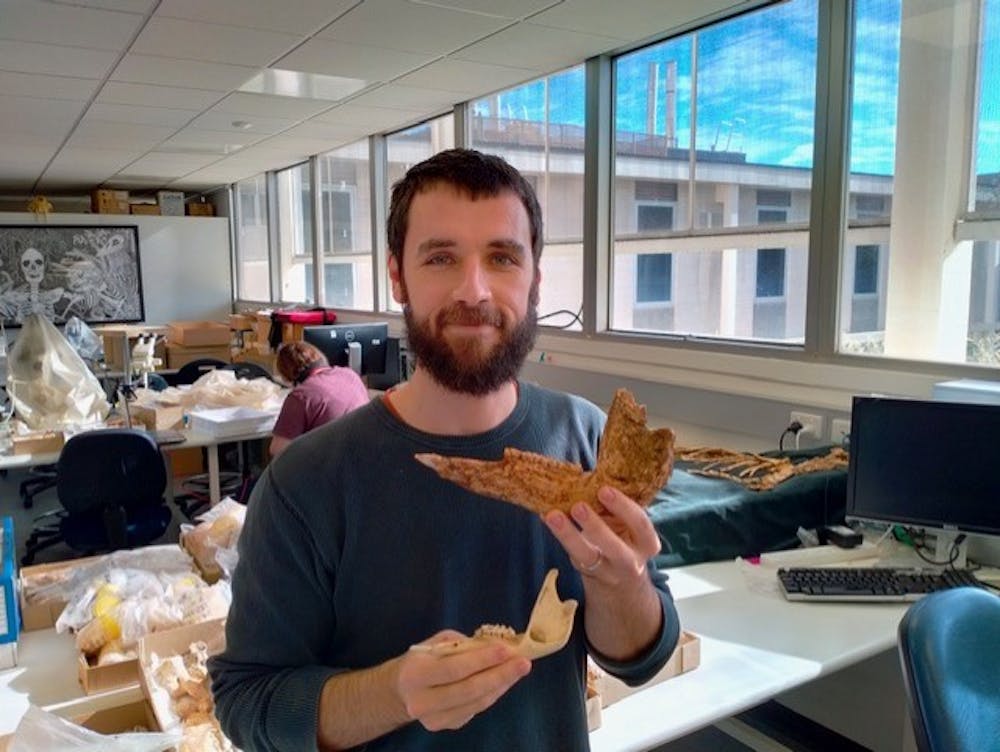
It was during an archaeological excavation in the early 1970s, led by Mary-Jane Mountain, that two jaws of an extinct giant kangaroo were unearthed. A young researcher (now professor) named Tim Flannery called the species Protemnodon nombe.

The fossils Flannery described are about 20,000–50,000 years old. They come from the Nombe Rockshelter, an archaeological and palaeontological site in the mountains of central Papua New Guinea. This site also delivered fossils of another kangaroo and giant four-legged marsupials called diprotodontids.

Read more: Meet the giant wombat relative that scratched out a living in Australia 25 million years ago
An unexpected discovery

Flinders University Professor Gavin Prideaux and I recently re-examined the fossils of Protemnodon nombe and found something unexpected. This strange kangaroo was not a species of the genus Protemnodon, which used to live all over Australia, from the Kimberley to Tasmania. It was something a lot more primitive and unknown.

In particular, its unusual molars with curved enamel crests set it apart from all other known kangaroos. We moved the species into a brand new genus unique to New Guinea and (very creatively) renamed it Nombe nombe.
A 3D surface scan of a specimen of Nombe nombe, specifically a fossilised lower jaw from central Papua New Guinea. (Courtesy of Papua New Guinea Museum and Art Gallery, Port Moresby).

Our findings show Nombe may have evolved from an ancient form of kangaroo that migrated into New Guinea from Australia in the late Miocene epoch, some 5–8 million years ago.

In those days, the islands of New Guinea and Australia were connected by a land bridge due to lower sea levels – whereas today they’re separated by the Torres Strait.

This “bridge” allowed early Australian mammals, including megafauna, to migrate to New Guinea’s rainforests. When the Torres Strait flooded again, these animal populations became disconnected from their Australian relatives and evolved separately to suit their tropical and mountainous New Guinean home.

We now consider Nombe to be the descendant of one of these ancient lineages of kangaroos. The squat, muscular animal lived in a diverse mountainous rainforest with thick undergrowth and a closed canopy. It evolved to eat tough leaves from trees and shrubs, which gave it a thick jawbone and strong chewing muscles.

The species is currently only known from two fossil lower jaws. And much more remains to be discovered. Did Nombe hop like modern kangaroos? Why did it go extinct?

As is typical of palaeontology, one discovery inspires an entire host of new questions.
Strange but familiar animals

Little of the endemic animal life of New Guinea is known outside of the island, even though it is very strange and very interesting. Very few Australians have much of an idea of what’s there, just over the strait.

When I went to the Papua New Guinea Museum in Port Moresby early in my PhD, I was thrilled by the animals I encountered. There are several living species of large, long-nosed, worm-eating echidna – one of which weighs up to 15 kilograms.


I’m excited to start digging in New Guinea’s rainforests! Author provided

There are also dwarf cassowaries and many different wallaby, tree kangaroo and possum species that don’t exist in Australia – plus many more in the fossil record.

We tend to think of these animals as being uniquely Australian, but they have other intriguing forms in New Guinea.

As an Australian biologist, it’s both odd and exhilarating to see these “Aussie” animals that have expanded into new and weird forms in another landscape.

Excitingly for me and my colleagues, Nombe nombe may breathe some new life into palaeontology in New Guinea. We’re part of a small group of researchers that was recently awarded a grant to undertake three digs at two different sites in eastern and central Papua New Guinea over the next three years.

Working with the curators of the Papua New Guinea Museum and other biologists, we hope to inspire young local biology students to study palaeontology and discover new fossil species. If we’re lucky, there may even be a complete skeleton of Nombe nombe waiting for us.

Author  
Isaac Alan Robert Kerr
PhD Candidate for Palaeontology, Flinders University
Disclosure statement
Isaac Alan Robert Kerr receives funding from the Royal Society of South Australia.
Partners

AUSTRALIA
Golden-backed tree-rat: these rodents go nuts for nuts

Like the main character from Ratatouille, these native rats have a taste for fine dining.


Credit: Alex Harshorne.

Name: Golden-backed tree-rat (Mesembriomys macrurus), also known as koorrawal, wunggangbarn or jarri

Group: Rodents

Size: Body length 190-270 mm, plus tail (a whopping 290-350 mm); weight 240g-330g

Diet: Primarily a herbivore, foraging on nuts, leaves and flowers of fruiting trees such as Terminalia, Owenia, and Celtis sp. and boabs (Adamsonia species)

Habitat: Historically, this species was found right across northern parts of the Northern Territory, as well as the east, central and southwest Kimberley around Broome. It’s now only found on a narrow strip of land along the north Kimberley coast from the Yampi peninsula to Kalumburu, as well as a couple of wee offshore islands.

Conservation status: Listed as critically endangered in the Northern Territory

Superpower: Particularly adept at sniffing out the most delicious and tasty nutty snacks

Credit: Alex Harshorne.

Golden-backed tree-rats are no run-of-the-mill rat that you saw last week raiding your compost. They’re a mysterious and curious rodent native of the north – one that’s a little bit punk, a little bit kung-fu, and definitely has a taste for fine dining. Their movie relative might be some the magical combination of Splinter, the kung-fu rat sensei from Teenage Mutant Ninja Turtles, and Remy, the chef rat from Ratatouille.

These rats’ most distinctive features are their curious dark eyes, the mohawk of golden hair that runs down their back, and their mega-long tail that looks like a giant paintbrush held high in the air behind them as they bounce along. While it’s not prehensile (able to hang onto things like a monkey’s), their tail is used expertly as a counterweight when they’re jumping through the trees, giving them amazing manoeuvrability in the canopy.

When looking for golden-backed tree-rats at night, it’s sometimes easier to hear them before you see them – sitting high in the tree above you, crunching happily through a tasty boab, Terminalia or Pandanus nut. Despite their size, these rats can travel big distances in a night – up to a kilometre – to visit their favourite trees. During the day they nap in tree hollows, mostly alone but sometimes with buddies or in small family groups.

Credit: Alex Harshorne.

Their love for fruiting trees – and nutty snacks – is one factor that may in part be responsible for golden-backed tree-rats’ decline in northern Australia. Without traditional Indigenous fire management practices, the tree-rats’ home has experienced an increase in large-scale hot fires occurring late in the dry season, often lit by lightning strikes. These fires can kill fruiting and hollow-bearing trees, causing a decline in the rainforest vegetation that our friendly adventure rats love.

These patterns of landscape change may have impacted on dryer areas earlier, leading to the species’ disappearance from large parts of their historic range. Also, feral cats are unfortunately no friend of our tree-rat buddies, as cats are adept at targeting small mammals of the tree-rat’s size and habits.

Luckily, land management practices in the region are improving through landscape-scale collaborations between traditional owners, NGOs and government organisations to reinstate traditional burning practices and protect habitat for our mysterious kung-fu chef punk, the golden-backed tree-rat.


What Is the Point of Sunday Political “News” Shows?

Shows like "Meet the Press" and "Face the Nation" once featured informative discussions with a combination of pundits and experts. Now they've swapped experts for both-sideist banter and political theater. And it's destroying the national conversation


Jonathan Reiss 
DAME
Jun 28, 2022

The hearings of the House select committee investigating the Jan. 6 insurrection at the Capitol have included detailed revelations of a criminal conspiracy to attack our country and overturn our Constitution. The Sunday morning “news” shows have been covering them, but none of the guests has been a historian or an expert in law, corruption, or authoritarianism, as one might expect. Almost all have been politicians, most of them members of the Committee. As a result, the hearings have been framed as political theater rather than as a threat to democracy. This focus on politics is not unusual. In a recent research study of all the guests on the Sunday shows in 2021, and a review of guests during 2022, we found that not one has been a historian, legal scholar, or anyone else who could put the attack in context for viewers. Even worse, there were dozens of guests who spread the Big Lie.

The shows have also failed in their coverage of enormously consequential Supreme Court decisions handed down late last week, not least of which, the overturning of Roe and Casey. The Sunday shows invited several politicians, including some governors, to weigh in on the case, but there were no appearances by guests who provide reproductive services or who represent the marginalized communities most impacted by the decisions. None of the shows invited experts on Bruen, the ruling striking down New York’s hand-gun law, which will now allow anyone to carry a concealed weapon, invalidating long-standing local laws; or on the upcoming decision that could prevent the EPA from addressing climate change. Our study found that this was also true in 2021 when they had virtually no experts on legal matters and none who work on women’s health or reproductive justice.

This neglect of experts extends beyond insurrection and coup coverage, abortion and the judiciary. The Sunday shows had few, if any, experts on many other vital issues including climate change, education, immigration, drug policy, civil rights, labor, sexual harassment, over all of 2021. Relying on politicians is extremely damaging. Not only does it keep the public from being fully informed, but “horse-race” political coverage increases cynicism and polarization.

But there is a solution, and we’ve seen it with some pressing issues, like COVID, when the shows relied heavily on experts, proving they can do better when they choose.

In our recently published study of all the guests on the major Sunday shows in 2021 —ABC’s This Week, CBS’s Face the Nation, NBC’s Meet the Press, CNN’s State of the Union, and Fox’s Fox News Sunday. There were 816 guests appearing on 251 shows. We performed data analysis on characteristics of the guests and textual analysis of show transcripts. We found that more than half of the guests were politicians, predominantly congresspeople. Textual review of the show transcripts found that members of Congress rarely delved into the issues in any depth; they discussed politics and process far more often than substance. As a result, they make the issues appear partisan and not amenable to solutions. It would be far better if the shows hosted more experts on these issues who could speak knowledgeably about what is being done, or could be done, to address these problems.

The formulaic structure of the news shows contributes to horse-race coverage—one Democrat and one Republican. While they’re creating two sides, those “sides” fail to inform and give equal weight and legitimacy to both positions. The coverage of the coup attempt is a good example of the horse-race coverage we found for almost all issues. Americans experienced a serious and determined attack on our country between November 2020 and January 2021. Efforts are continuing to turn the country into an authoritarian state. The shows should be hosting historians and experts on authoritarianism like Heather Cox Richardson, Timothy Snyder, Ruth Ben-Ghiat, and Asha Rangappa among others to put these events in context and explain how the actions now being taken are similar to those in countries that turned away from democracy. They should also host experts in the law and corruption such as Dahlia Lithwick, Elie Mystal, Jennifer Taub, and Walter Shaub to discuss how those involved could be prosecuted and how our laws could be revised to shore up our system. Guests like these would inform the public and make it clear that these concerns are not normal political gamesmanship but real threats to our country. But no one of this ilk appeared during 2021 and a more cursory review of 2022 so far indicates that this continues to be true. Similarly, they should host experts on reproductive rights and justice, people like Planned Parenthood president Alexis McGill Johnson, Executive Director of the Yellowhammer Fund Laurie Bertram Roberts, and Tammi Kromenaker, who runs the last abortion clinic in North Dakota, The Red River Women’s Clinic; and authors like Linda Villarosa (author of Under the Skin: The Hidden Toll of Racism on American Lives and On the Health of Our Nation), Robin Marty (author of Handbook for a Post-Roe America), and Lauren Rankin (author of Our Bodies on the Line). These are the people who know the issues inside and out.

The reason we take issue with the fact that so many of the guests are members of the Jan. 6 House Select Committee and others who supported the investigation is that it makes the issue appear as a partisan political matter, not a legal one. What’s worse, some of the shows have hosted senators and representatives who have spread the Big Lie, and who conspired to keep the elected president from assuming office. The Republican Accountability Project graded all GOP congresspeople based on whether or not they supported democracy. Their criteria for an F was: actively working to undermine our elections by voting to overturn the election; spreading lies about the election; obstructing an investigation. There were 58 appearances by people who got D grades or worse. Not surprisingly, Fox was the worst offender. The other networks were better, but they still both-sided it: CNN hosted Fox favorite Rep. Michael McCaul twice—he had received a D-. But the big three networks hosted guests who received F grades on the democracy report card and voted not to certify the electoral college results—even after the attacks: ABC had on Sen. Rick Scott and Rep. Steve Scalise; CBS invited Sen. Ted Cruz and Scalise; and NBC hosted Sen. Scott, Rep. Dan Crenshaw, Sen. Roger Marshall, and Rep. Geoff Duncan.

The networks offer two excuses for providing a platform for these traitors to the rule of law and our Constitution. First, they claim to confront them on their actions. But our review, as well as studies by Media Matters and others, find that they are not able to force them to answer questions or acknowledge facts. Fox News Sunday doesn’t even try. Chuck Todd of NBC’s Meet the Press is the most inept as he appears cowed by right-wing critics. Margaret Brennan of CBS’s Face the Nation and George Stephanopoulos of ABC’s This Week make an effort but are not successful. Second, they argue that if they excluded all coup supporters, they would be excluding a large fraction of the Republicans in Congress—this much is true—and therefore would be partisan. But looking to achieve mathematical partisan balance is a mistake when most of one party is actively undermining the rule of law. There are not “good people on both sides” of a coup attempt. Even in more normal circumstances, partisan balance would be the wrong goal. They should have fewer politicians of all stripes and far more people who specialize in the topics they are discussing.

But unlike some media critics who say the Sunday shows are “hopelessly broken,” we believe they can be fixed. We know the shows are capable of providing truly informative, expert information to their viewers because we’ve seen it. The shows demonstrated that they are capable of covering issues well by hosting 141 medical experts to cover COVID. They recognized the pandemic as an issue of vital concern to the public and provided non-political expert-centric information. They also had a reasonable number of experts on the economy and foreign policy. But, based on who they invite on the shows, we conclude they consider all other issues, including climate change, to be political footballs, not serious problems that can be solved.

To improve the information Americans receive from these agenda-setting shows, we propose an initial solution: If the networks cut the number of congressional guests in half, there would be room to provide insights and solutions on several more topics. In total, out of the 816 guests, our study counted only 53 guests with deep knowledge of the issues of climate (and other environmental/energy policy), education, drug policy, the judiciary, labor, immigration, corruption, sexual harassment, civil rights, and voting rights. In contrast, there were over 400 elected officials, of whom 300 were congresspeople.

For all issues, the Sunday shows should consider inviting experts who are working on solutions. For example, instead of hosting congresspeople who are debating over money for renewable energy, we would all be better served if they hosted thought leaders who could explain what needs to be done to foster electric vehicles. This would make the public more aware of what is being done to address these problems.

Our study also found extremely pronounced demographic biases. We found the guests are overwhelmingly white men. Latinas and Latinos are 19% of the population, 9% of Congress but a meager 3% of Sunday show guests. And only 23% of the guests are women. The demographics of the guests more closely resemble the make-up of Congress than the U.S. population. Reaching out more broadly would better reflect the American people—and may have an added benefit of increasing the diversity of viewing audiences

We studied the Sunday shows because they are watched by over 10 million people each week and their reach extends even further. They help set the agenda for news coverage and discussion across all media platforms. We also believe that the Sunday shows are a microcosm in which to examine how the TV networks, and the media more generally, cover matters of great consequence. We found they did a very poor job of covering the failed coup attempt and many other vital issues. Reviewing more recent coverage makes clear that this failure continues. Considering the ongoing threats to our nation, we urge the Sunday shows executives to cease treating subjects that are sabotaging our democracy (including the insurrection, the coup attempt, willful spreading of disinformation such as the Big Lie and legislating racist voter suppression) as political strategies and to cover them as the threats and criminal conspiracies that they are.


NOTE: This study is dedicated to the memory of media critic Eric Boehlert, a constant source of inspiration for us, and the strongest voice we knew confronting the uninformative journalism and media failures this study highlights. As Philadelphia Inquirer columnist Will Bunch said after his death, “This country needs a small army of Eric Boehlerts.” We hope our report inspires others to join the fight for a better-informed American public.


We urgently need your help. DAME reports the stories that need to be told, from perspectives that aren’t heard enough. In times of crisis it is even more critical that these voices are not overlooked, but COVID-19 has impacted our ability to keep publishing. Please support our mission by joining today to help us keep reporting.
SUPPORT US