Wednesday, June 29, 2022


Lori Garver’s new book is must read


Marc Boucher June 28, 2022 

In this weeks Space Economy podcast my special guest is Lori Garver, the former Deputy Administrator of NASA and author of the new book Escaping Gravity: My Quest to Transform NASA and Launch a New Space Age.

Escaping Gravity: My Quest to Transform NASA and Launch a New Space Age
Escaping Gravity: My Quest to Transform NASA and Launch a New Space Age. Credit:

During her 35 year career, and this is just partial list, Lori worked at NASA twice, advised a variety of presidential candidates, led the NASA transition team under Barak Obama, was the Executive Director of the National Space Society for nine years and co-founded the Brooke Owens Fellowship, an internship and mentorship program for collegiate women. Oh, and she’s also a space pirate, and that’s a good thing.

My long-time friend and colleague Keith Cowing, editor of NASA Watch and SpaceRef, said of the book “Not a week goes by without a new headline about yet another commercial space mission. NASA is now among the loudest cheerleaders, but that was not always the case. In Escaping Gravity, former NASA Deputy Administrator Lori Garver documents the long internal and external struggles that often went on behind the scenes wherein the agency slowly warmed to commercial space. She was there in the trenches pushing the agency to transform. If you want to truly understand the origins of the current revolution in commercial space, this book is a must-read.”

Listen in.

About Marc Boucher

Boucher is an entrepreneur, writer, editor & publisher. He is the founder of SpaceQ Media Inc. and CEO and co-founder of SpaceRef Interactive LLC. Boucher has 20 years working in various roles in the space industry and a total of 30 years as a technology entrepreneur including creating Maple Square, Canada's first internet directory and search engine
The Costs of NASA's Modern Moon Mission Are Really Adding Up

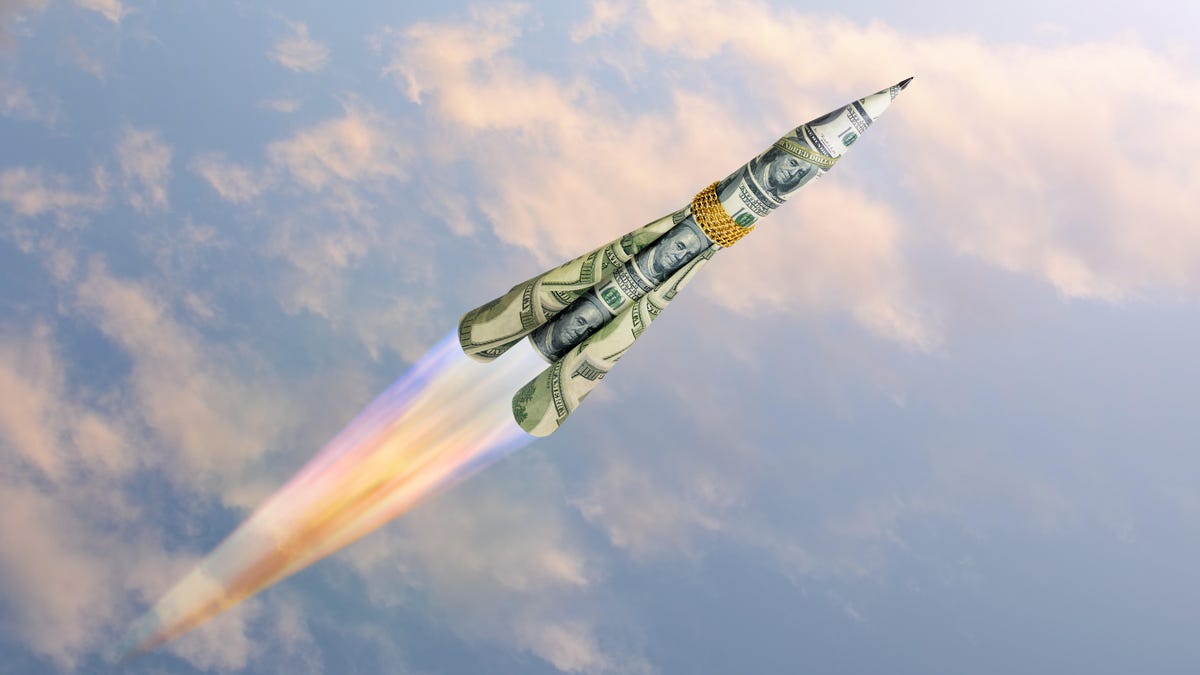
Commentary: Let's talk about the fiscal footprint of NASA's latest lunar endeavor, Artemis.


Monisha Ravisetti
June 28, 2022 

NASA's Space Launch System rocket has faced a flurry of technical setbacks and fiscal complications.
Getty Images

As a science writer, I'm very familiar with the excitement of musing about humanity traveling to the moon -- I even find awe while writing about the tiniest lunar update.

A headline like "The Moon Might Have a Trace of Something That Could Potentially Be Water But Probably Not" will do it for me because, at the very least, it underscores that we're far along enough in our timeline to study worlds beyond our own. It's proof that we're on the path toward spectacular, scientific breakthroughs.

But the toil, planning and money that it takes to create -- let alone realize -- a moon mission often gets lost in translation.

Lunar travel inspires us because the difficult middle steps feel like a means to a deserving end. The remarkable cosmic finding that eventually propels medical research on Earth. The stirring realization that, somehow, we did it. That might've been what John F. Kennedy meant when he said we choose to go to the moon not because it is easy, but because it is hard.

For a moment, though, let's talk about the toil, the planning and moreover -- the money.

NASA's Artemis I moon mission is still a go, having slowly but surely waddled through its final testing phase. But as NASA is a government agency, pretty much all the money funding this lunar dream comes from taxpayer pockets -- a fact that inevitably calls into question whether moon missions are really worth the thrill, and even the scientific advancement, they give us. 


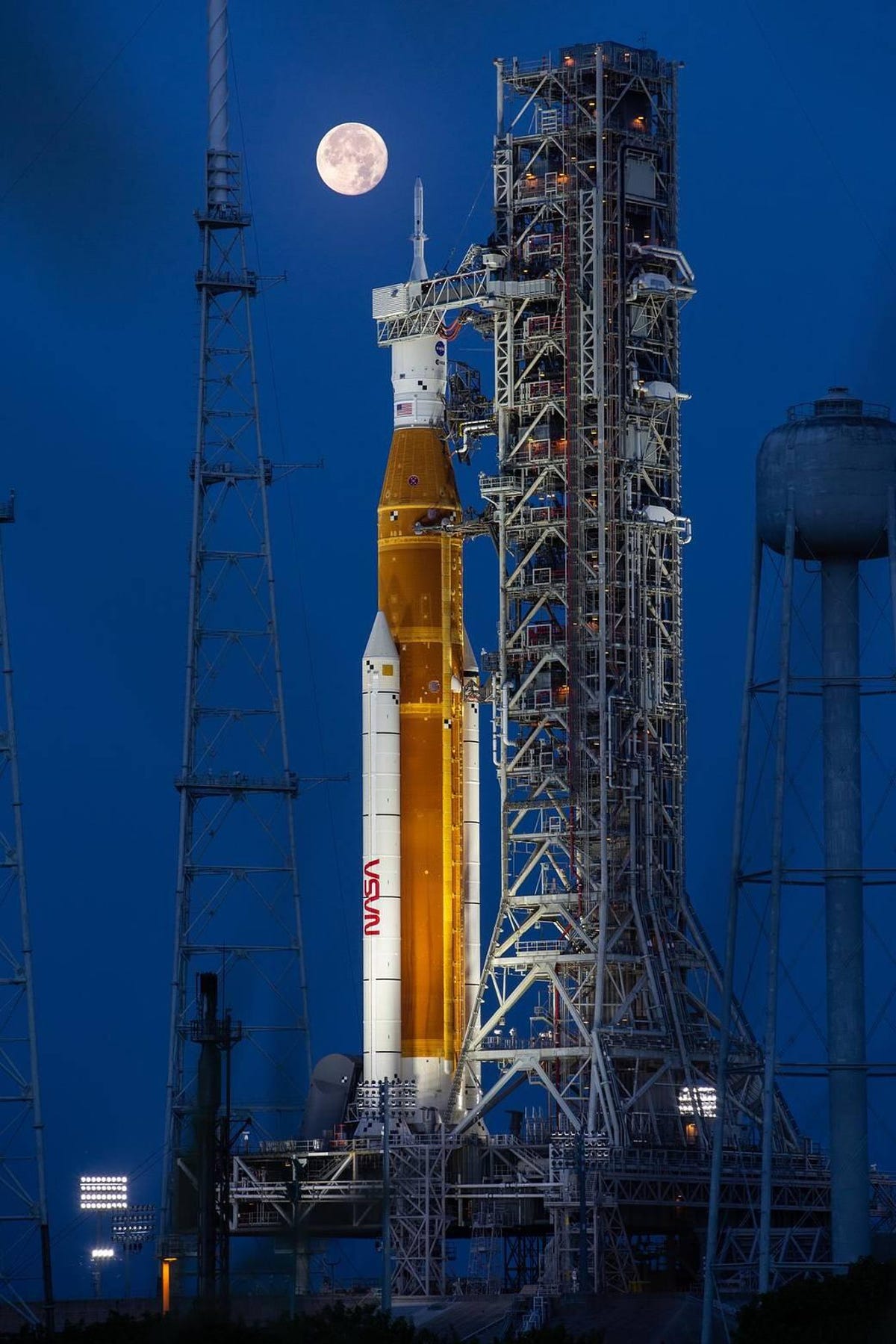
The Artemis I Space Launch System rocket, topped by the Orion spacecraft, stand tall at launch complex 39B at NASA's Kennedy Space Center in Florida on June 14.NASA/Cory Huston

Facts about lunar billions

NASA's Artemis moon rocket, slated to touch space for the very first time in 2022, was supposed to launch in 2017.

It was supposed to encompass four missions, each with a price tag estimated a decade ago at $500 million -- but a 2021 audit now projects a cost of $4.1 billion per launch. That's a difference of about $3.6 billion for every cosmic ferry. At a rate of one number per second, it'd take you over a century to count to that figure. This might explain why the same audit and NASA's inspector general bluntly label the endeavor "unsustainable."

This audit is the second of two conducted for the program, and according to the document, was motivated by the fact that Artemis is the agency's "most ambitious and costly activity." It states that Artemis "faces schedule, procurement, technical and funding risks," and therefore looked at NASA documents, systems, policies and procedures pertaining to schedule, cost, budget, operations, and other such things to evaluate those risks.

What it found was striking."I do think there are people who maybe believed it could happen, but they really in their heart of hearts had to know they were going along with something that was going to take a lot longer and cost a lot more money."
Former NASA deputy administrator Lori Garver

According to the audit, those four launches at a projected $4.1 billion a pop would be on top of the about $40 billion already spent to build Artemis equipment -- items like the rocket itself, known as the Space Launch System, and the Orion spacecraft, which will hold important devices for science exploration.

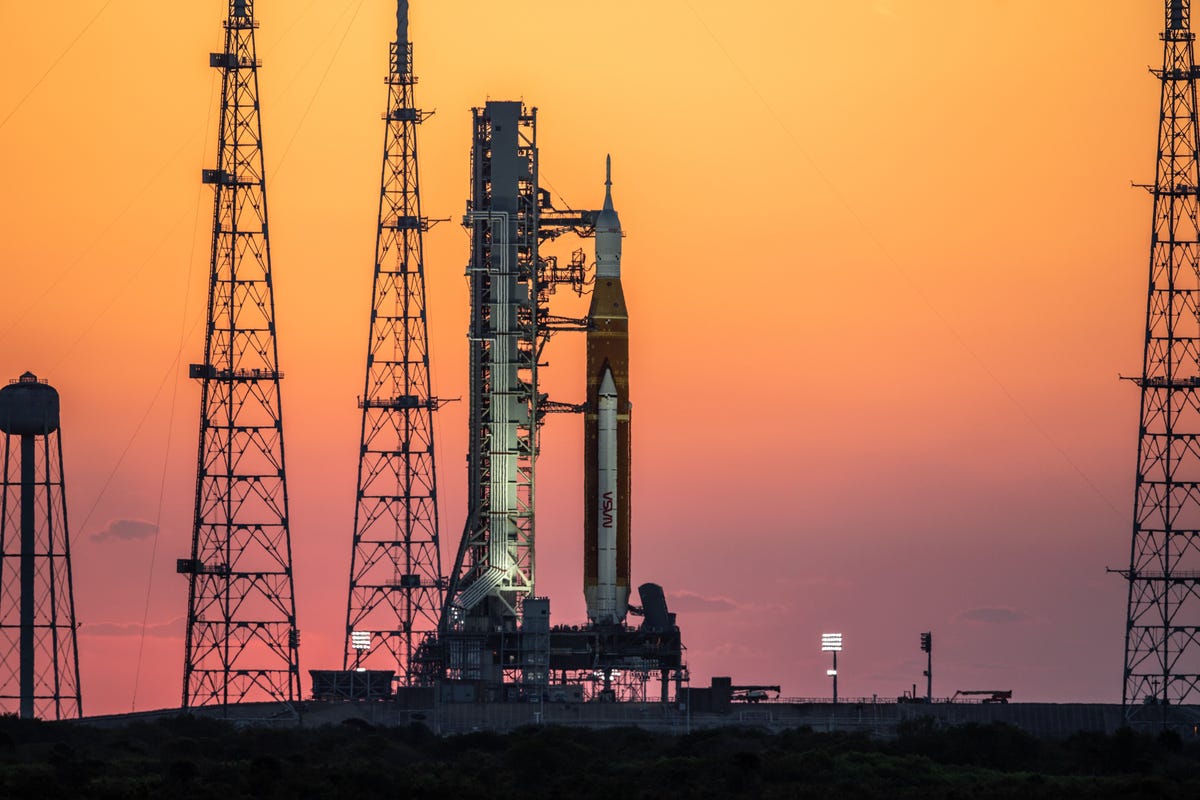
A rosy sunrise lightens the sky behind NASA's Artemis I SLS rocket in Florida. NASA

Under the Trump administration, NASA set a goal for the first Artemis crewed trip to the moon -- mission three -- for late 2024 instead of the program's initial hope of 2028, which was "just not good enough," Vice President Mike Pence said during a meeting of the National Space Council in 2019.

The accelerated timeline prompted the agency to request a "down payment" of $1.6 billion and left congressional budgeters with some big questions.

"NASA has not provided the committee with a full cost estimate despite repeated requests," US Rep. José Serrano, a Democrat from New York, said at the time -- a worry that still holds true today, according to the latest audit.

"Since NASA has already programmed the lunar landing mission for 2028," Serrano continued, "why does it suddenly need to speed up the clock by four years, time that is needed to carry out a successful program from a science and safety perspective?"

Fast-forward to now.


That 2024 deadline has since changed to 2025 and might fall even further into the future because Artemis spacesuits are behind schedule. Those spacesuits themselves will also probably end up costing a ton more than previously expected. "Since our 2017 report, NASA has spent an additional $220 million -- for a total of $420 million -- on spacesuit development," the 2021 audit said.
All in all, $93 billion

The closest we get to an "all-in-all" within the audit is "when considering the $40 billion already spent on the Artemis mission from [fiscal years] 2012 to 2020, the total projected cost through FY 2025 becomes $93 billion."

In other words, it's probably going to take at least around $93 billion to bring humanity back to the moon via Artemis.

CNET reached out to NASA for comment on audit details like delays and budget changes and was directed to the appendix section of the document where NASA management provides thoughts on the inspector general's findings.

In this section, among other things, the agency lays out some steps it plans to take in order to learn from Artemis' setbacks. For instance, it notes its intention to review requirements and specifications for streamlining the program, implementing lessons learned and measuring technical performance against the costs needed to build equipment.

The agency also offers an example of one such lesson learned: "For the SLS Boosters team, learning curve improvements reduced non-conformances by 76 percent; similarly, the SLS Core Stage team achieved a 52 percent reduction in discrepancies per 1,000 labor hours."

As management's comments echo, it's all in the name of trailblazing lunar exploration – but as it stands, remember that Artemis has yet to venture into space.


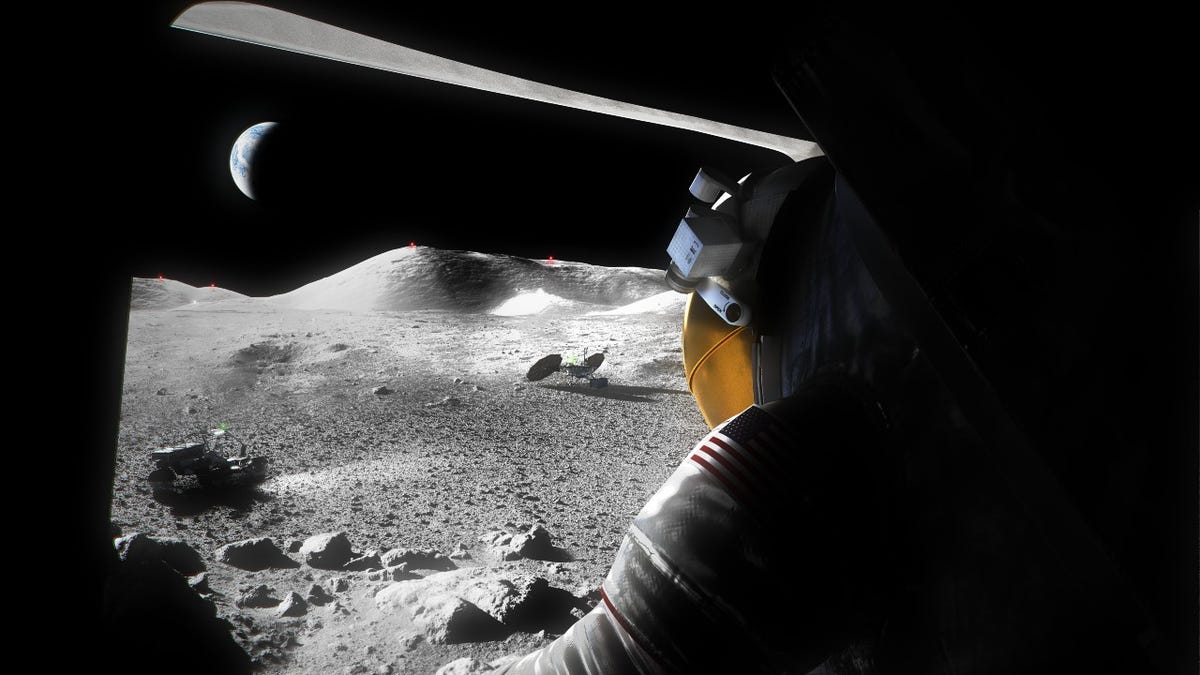
An illustration of a suited Artemis astronaut looking out of a moon lander hatch across the lunar surface.NASA

Fingers are crossed that a launch goes as planned later this year, but we still don't know whether it will. Though what we do know is that NASA's moon expedition has cost billions upon billions of extra dollars, years upon years of extra time and, according to the agency's former deputy administrator Lori Garver, breath after breath of wasted words.

"It was projected to be $500 million [per launch]" Garver, who worked at NASA between 2009 and 2013, told CNET. "I was at NASA asking these questions of the technical people, who looked me in the eye and said they could do it for that. I don't believe they thought they could. I just don't. I think they're smarter than that."

"We had things to do with that money that could have gotten us much farther," Garver said, suggesting that the $500 million per launch could've been allocated for things like astrobiology studies, which help us understand where to search for life in the cosmos. Or for research closer to home.

"Whenever I tried to push for more Earth science," such as studies related to climate change, she said, "I would often get told by the Hill" -- that is, by members of Congress -- "'that's not NASA's job. NASA is supposed to go where no one's gone before,' and I remember thinking, well, that's actually Star Trek. That's not NASA."
The Artemis wet dress rehearsal success

You might've heard that June 20 marked a milestone for Artemis, as the agency got further than ever before with the spacecraft's final -- crucial -- testing sequence.

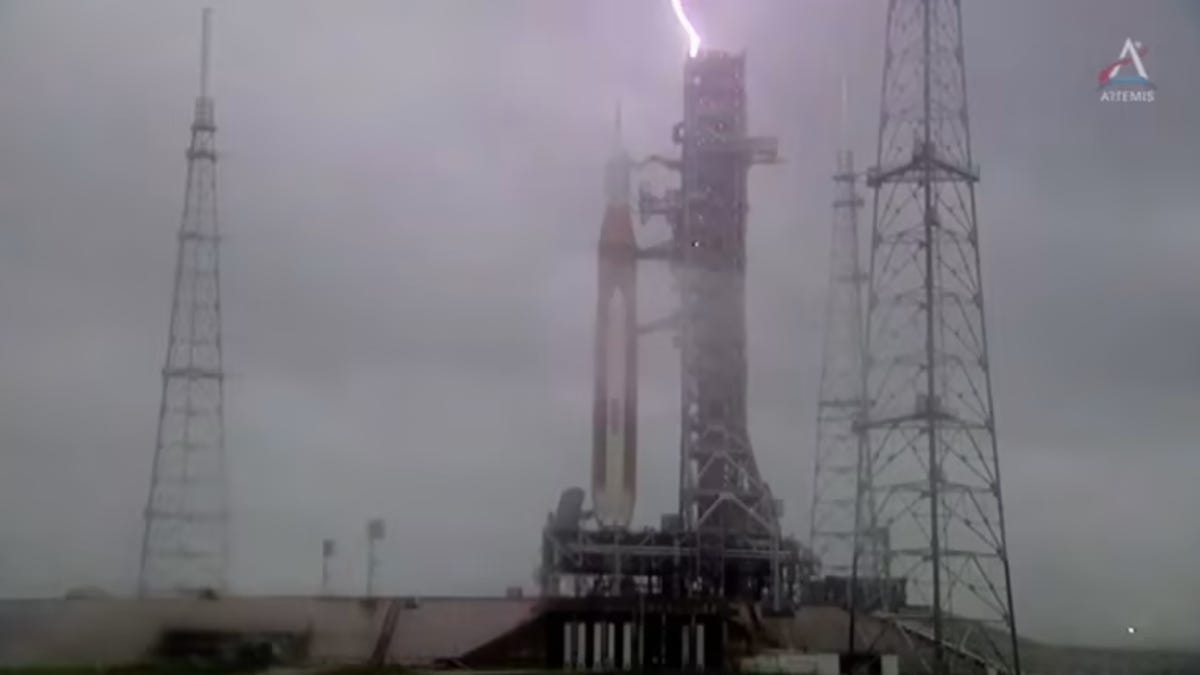
It's called the wet dress rehearsal, and it took four tries to get to this point. A flurry of technical setbacks imperiled each of the previous three rehearsal attempts -- and even Mother Nature played a hand when lightning struck during attempt No. 1.


This is essentially the last step in preparing for the big day and involves tasks like filling the rocket with fuel (hence, "wet" dress rehearsal) and quadruple-checking that all facets are in tip-top shape. Everything but the launch itself.

Though the mission still has a few more tests to take care of, Mike Sarafin, Artemis mission manager at NASA headquarters, said in a press conference last week that celebratory hugs and handshakes were spread on Monday.

"It firmly establishes Orion and SLS as our transportation system for crew and cargo for the Artemis program," he said a day after the team's wet dress rehearsal success. "Yesterday put us on a path for Artemis I."

But, economically, Artemis' mega vehicle has caused quite the commotion.

Once estimated to cost a total of $10 billion, the SLS has left a hole of over $20 billion in taxpayer money dedicated to NASA's ambitious lunar mission and it has taken much (much) longer to complete it's testing. Charlie Blackwell-Thompson, NASA's Artemis launch director, remained hopeful in early April, saying that "this is a test, and the purpose of the test is to fully understand our systems."


Lightning strikes tower one of Artemis I's lightning protection system.NASA


To that end, however, Garver said, "it is absolutely true that testing is all about finding problems and continuing -- but these are the same people who said they could do it in five or six years. And instead of taking five or six years, it's taking 10 or 12. So you can't have it both ways."

OK. Your mind might be overwhelmed right now. It's been a bumpy road for Artemis. But this blown-out lunar travel timeline raises a couple of pressing questions.

Why would NASA support an overidealized Artemis timeline -- if, of course, the team knew it was over idealized?

And the second might've been one lingering in your mind since you began reading this article. Should we still go forward with Artemis at all?
Introducing the 'Senate' Launch System

The Space Launch System vehicle has earned a disparaging name among critics of the Artemis program: The "Senate" Launch System.

Some experts believe the pitfall of Artemis lies in irresponsible decisions put forth by members of Congress working with the NASA bureaucracy.

"I think anyone who was honest with themselves would have agreed the system allowed the aerospace industry -- who was getting billions of dollars to build [the SLS] -- to tell Congress they could do it by that time," Garver said, explaining that the industry knew it'd be paid the same amount every year, regardless of delays. "There was a reverse incentive."

NASA Inspector General Paul Martin, who led the recent audit, even told CNBC, "We saw that the cost-plus contracts that NASA had been using to develop that combined SLS and Orion system work to the contractors' rather than NASA's advantage." Cost-plus contracts basically promise that contractors get paid for all costs, plus a fee.

He called out Boeing, which was contracted to build the SLS, for what he described as "poor planning and poor execution."


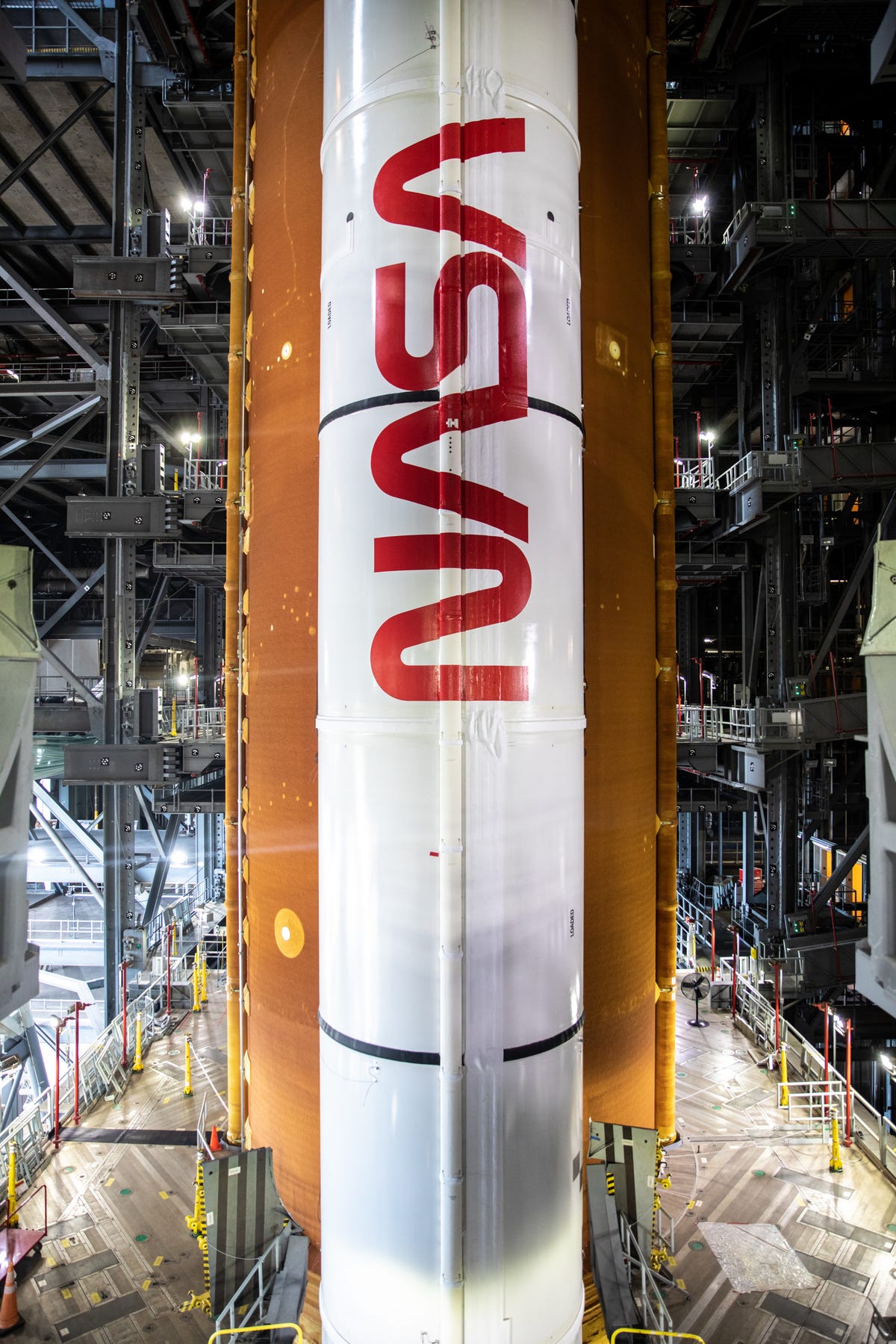
NASA's '70s-vintage worm logo fully emblazoned across the Artemis I SLS boosters.
NASA/Kim Shiflett

When asked for comment on these high SLS construction costs, Boeing told CNET, "When adjusted for inflation, NASA has developed SLS for a quarter of the cost of the Saturn V and half the cost of the Space Shuttle," and "SLS, the Orion spacecraft and Exploration Ground Systems necessary for the Artemis missions have consumed less than the average annual spending on Space Shuttle operations, which is the sustained human space flight investment level for the system they were intended to succeed."

Plus, it's worth considering that SLS building timelines might have been a bit unpredictable because the last few years have been anything but normal – COVID-19 shutdowns affected spacecraft manufacturing, and a few natural disasters impacted locations where the rocket was kept.

But looking to the past, Garver said, "Congress and industry and many in NASA have done this before. They go along with the narrative just to get a program started, knowing it will be hard to cancel."

As an example, she pointed to what we now know as the International Space Station. Back in the late '80s, when President Ronald Reagan dubbed it "Space Station Freedom," it was announced as an all-American space hub and was initially going to have a price tag of $8 billion. By 2010, after it had become an international project, overall estimates of its cost, to all participating countries, was pegged at $100 billion.

Though cost increases were to be expected as the scope of the project expanded and the ISS itself grew more efficient, that's exactly what tends to happen with timelines and budgets for big space projects.

"I do think there are people who maybe believed it could happen," Garver said of Artemis' initial timeline and budget. "But they really in their heart of hearts had to know they were going along with something that was going to take a lot longer and cost a lot more money."
In a world of reusable rockets, Artemis doesn't have one

SpaceX, Blue Origin, you name it. Everyone involved in the space game wants to craft the ultimate recyclable rocket. One that you can fly to space, then bring back home like the car sitting in your driveway.

The goal is to create cheaper, greener versions of space travel. But in this world of reusable rockets, the Artemis vehicle isn't one. "Guess what the benefit is supposed to be?" Garver said. "Cheaper; faster."

But for an example of cheaper and faster, there's Starship, the reusable rocket that Elon Musk's SpaceX is building. It's cost $5 billion so far and is arguably nearing the same point as Artemis' SLS, if it's not further along. The SLS has cost something like $23 billion so far. To be clear, Starship also hasn't yet made it to space, so it's story is still being written too.

If Starship does find success quicker than NASA's SLS, Garver suggests it might be the case that Musk's private space organization could light the way for future moon missions -- it's already poised to help with Artemis III's crewed mission and has garnered a lot of praise for its Falcon 9 successes, though notably, Falcon 9 trips have only gone as far as low Earth orbit.


Starship prototype SN15 during its successful test flight.SpaceX


"There's no way to use it for something else, unfortunately," Garver said. "Those sunk costs would be a waste -- it's not easy to say, and the people who worked on it are not bad. This was a design flaw."

However, the SLS' recent checkpoint with the wet dress rehearsal completion offers some hope that this worst-case scenario won't happen.

Further, it would be remiss to ignore the feeling that NASA's intrinsic value transcends what private space companies have right now. Undoubtedly, the agency's highly trained astronauts will uniquely know what to do once we do get to the moon and possess valuable insights from the Apollo missions that began our lunar saga -- insights that SpaceX hasn't yet proven to hold.

Traveling there via the SLS, or even the Starship for that matter, is just one piece of the puzzle. But that is the piece we have to worry about right now.

It's only a matter of time before we see how the rest of the Artemis story will unfold. Artemis I's uncrewed mission will be followed by several others, including a crewed mission that takes the first woman and first person of color to the moon and later others to build lunar space stations, bases, something called the "Lunanet" (think of it as a moon-based internet) and even pave the way for Mars missions down the line.

Regardless of who gets there first, and aboard which vehicle, Kennedy's Apollo speech still resonates:

"We choose to go to the moon in this decade and do the other things, not because they are easy, but because they are hard, because that goal will serve to organize and measure the best of our energies and skills, because that challenge is one that we are willing to accept, one we are unwilling to postpone, and one which we intend to win, and the others, too."

But even as we all feel lunar butterflies, we might want to consider the costs incurred along the way.

"I am also confident we all have the same shared goal – a robust human spaceflight program. But, as the saying goes, the devil is in the details," US Rep. Brian Babin, a Republican from Texas, said during a House space subcommittee hearing in March.

"We are still waiting on those details."
Nasa's Capstone mission blasts off to study unique Moon orbit

Findings will help scientists work out where to place a future crewed station called Gateway


The Capstone CubeSat system was launched on a Rocket Lab Electron rocket from New Zealand on June 28, at 1.55pm, UAE time. All photos: Nasa

Sarwat Nasir
Jun 28, 2022

Nasa has launched a small satellite to the Moon to study a unique lunar orbit that would be home to a crewed station called the Gateway.

The Capstone CubeSat — which stands for Cislunar Autonomous Positioning System Technology Operations and Navigation Experiment — was launched on a Rocket Lab Electron rocket from New Zealand on Tuesday at 1.55pm.

Electron is a two-stage, partially recoverable orbital launch vehicle developed by Rocket Lab, an American aerospace company with a New Zealand subsidiary.

It was designed and built to send small satellites, which are meant to be affordable and reliable, to space more often.

Capstone is commercially owned and operated by Advanced Space, a company that works on sustainable exploration, development, and settlement of space. But the project is funded by the US space agency.


The satellite will study a unique, halo-shaped orbit, called near-rectilinear halo orbit (NHRO). This would be used by Nasa for its Gateway, a lunar outpost astronauts will arrive at first before descending to the Moon's surface.

It is part of the Artemis programme, which aims to build a sustainable human presence on the Moon.

“After a four-month journey to its target destination, Capstone will orbit this area around the Moon for at least six months to understand the characteristics of the orbit,” Nasa said on its website.

“Specifically, it will validate the power and propulsion requirements for maintaining its orbit as predicted by Nasa’s models, reducing logistical uncertainties.

“It will also demonstrate the reliability of innovative spacecraft-to-spacecraft navigation solutions as well as communication capabilities with Earth.”

Capstone will enter into and try to maintain the unique lunar orbit for at least six months.

“Hanging almost like a necklace from the Moon, NRHO is a one-week orbit that is balanced between the Earth’s and Moon’s gravity,” Nasa said.

“This orbit will periodically bring Gateway close enough to the lunar surface to provide simple access to the Moon’s South Pole where astronauts will test capabilities for living on other planetary bodies, including Mars.

“NRHO can also provide astronauts and their spacecraft with access to other landing sites around the Moon in addition to the South Pole.”

During this mission, Capstone will use its on-board flight computer and radio for calculations to determine its location in the orbital path.


The Capstone CubeSat will study a unique, halo-shaped orbit that would be potentially used by Nasa to place the Gateway. Photo: Nasa

It will use Nasa’s Lunar Reconnaissance Orbiter, which has been orbiting the Moon since 2009, as a reference point.

The CubeSat will communicate directly with the orbiter and use its data to measure its position in space and help mission control test Capstone’s autonomous navigation software.

“If successful, this software, referred to as the Cislunar Autonomous Positioning System, will allow future spacecraft to determine their location without having to rely exclusively on tracking from Earth,” Nasa said.

“This capability could enable future technology demonstrations to perform on their own without support from the ground and allow ground-based antennas to prioritise valuable science data over more routine operational tracking.”

Under the Artemis programme, the space agency hopes to send the next man, first woman and first person of colour to the lunar surface.

It is hoped that once a Lunar Gateway is built in the Moon’s orbit, it would establish a continuous human presence there, including landing on the surface regularly for science experiments.

“Built with international and commercial partnerships, Gateway’s capabilities for supporting sustained exploration and research in deep space include docking ports for a variety of visiting spacecraft, space for crew to live and work, and on-board science investigations to study heliophysics, human health, and life sciences, among other areas,” Nasa said.

The space agency is launching Artemis 1 later this year, an uncrewed test flight to the Moon and the first of many under the Artemis programme.

The Space Launch System and Orion spacecraft will launch from Florida’s Kennedy Space Centre, a mission that will help to measure the spacecraft’s performance.


Updated: June 28, 2022, 5:19 AM


How Tunisia's trade unions became Kais Saied's most powerful opponent

Alessandra Bajec
28 June, 2022
Analysis
In-depth: A nationwide strike in June saw Tunisia grind to a standstill as the country's largest trade union continues to challenge IMF-linked austerity measures and the president's concentration of powers.


A national strike staged by a Tunisian labour union this month signals strong mobilisation potential in the face of the government's economic reform plan and President Kais Saied’s non-inclusive dialogue.

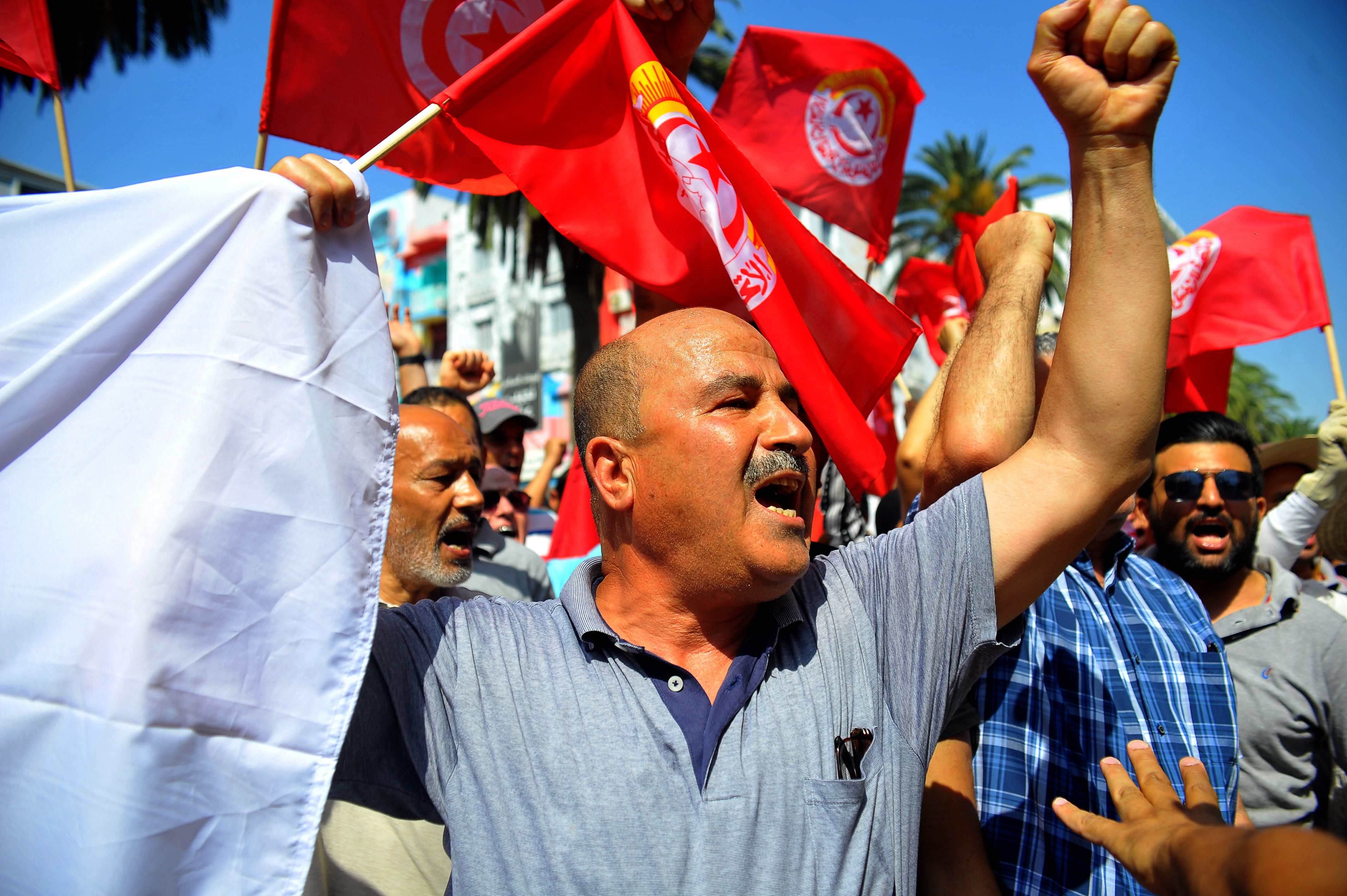
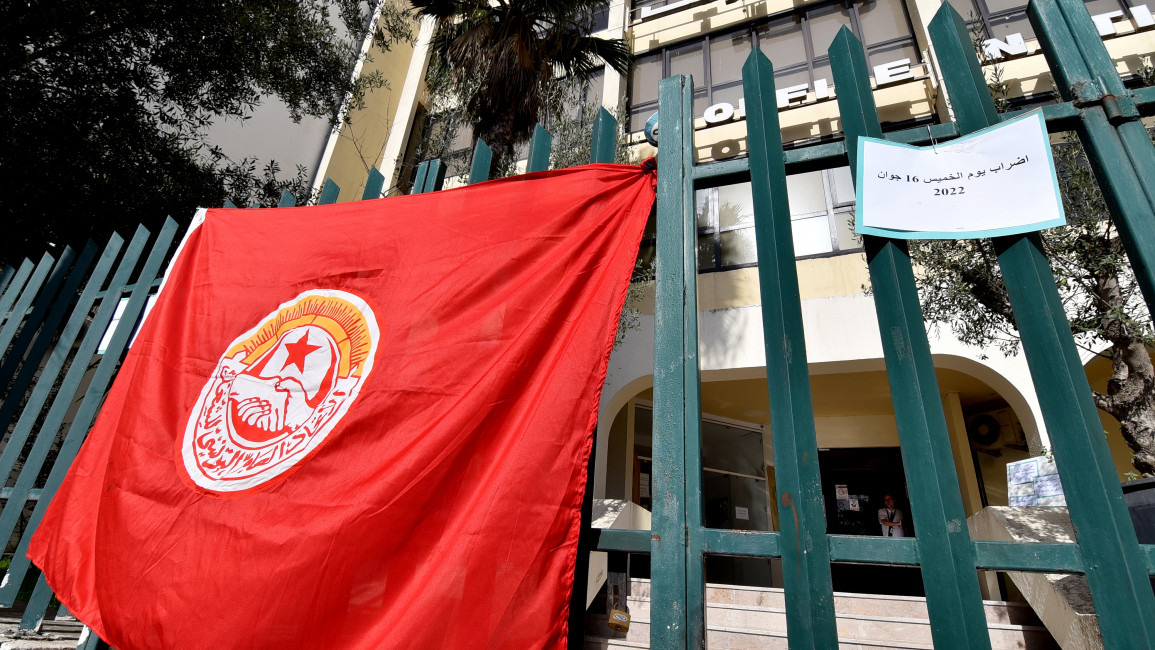
The general strike held by Tunisia’s largest trade union (UGTT) on 16 June, which saw over 96 percent of public employees from 159 state institutions and public companies halting work nationwide, was a test for president Saied after the UGTT’s rejection of a reform package announced by his government.

The strike was in response to an austerity proposal to secure a major loan from the International Monetary Fund that included the freezing of salaries and jobs in the public sector, the lifting of subsidies, and the privatisation of state-owned firms.

The mass mobilisation protested the decision of Najla Bouden's cabinet not to increase public wages and to propose spending cuts, as well as to add pressure on the president, who’s taking steps to prepare a new constitution that will be put to a referendum on 25 July.

“The message directed at the head of state was that the union is a main stakeholder, and nothing will happen unless it is included in the process,” Tunisian economist Aram Belhadj told The New Arab.

"The UGTT's strike action is a huge challenge to Saied amid continued political and social turmoil, one of the largest crises the Tunisian leader has faced since he assumed full powers last July"

The day before the strike, the UGTT stated that public workers would walk out “to defend their economic and social rights” and denounced the deterioration of their living standards due to rampant inflation and declining purchasing power.

Serife Akinci, an expert on Middle East and African Economies Studies at the Center for Middle Eastern Studies (ORSAM), suggested that economic activity in Tunisia may be “disrupted” by more action in the near future if demands remain unheard, possibly threatening the country’s stability, which the head of state “won’t be able to ignore”.

The national strike aimed to pressure the president on wage increases and other social demands, coinciding with Tunisia’s negotiations with the IMF for a $4 billion loan.

Whether it will succeed in convincing the government to return to the negotiating table is an open question. Despite a last-minute discussion on 13 June between the powerful labour union and the ministry of social affairs, the parties failed to reach an agreement and the public-sector strike went ahead as planned three days later.

Riccardo Fabiani, North Africa project director for the International Crisis Group (ICG), observed that the crucial issue in the talks with the IMF is whether the Tunisian government can give guarantees.

“It’s unrealistic to expect an accord in the current context of crisis and tension, except if there’s a push from international actors [US or Europe] to unlock funding without requiring major conditions,” the political analyst told The New Arab, although he thinks such a scenario is hard to envision.

RELATED
Tunisia trapped between one-man rule and economic woes
Analysis
Alessandra Bajec

Belhadj pointed out that given Tunisia’s failure to uphold its obligations in the past the IMF is now demanding a consensual agreement between the executive and the labour union along with other requirements.

In his view, the formal negotiations for a rescue plan, which the IMF is ready to begin in the coming weeks, will pass through “further complications” even if a deal is signed as, he argued, the union will continue to oppose spending cuts.

The North African country has been in preliminary discussions with the global lender since the start of 2022 but progress seems to have stalled. It hopes to secure a badly needed deal - the third in a decade - to address the state’s massive budget deficit at 10% of GDP.

The UGTT’s strike action is a huge challenge to Saied amid continued political and social turmoil, one of the largest crises the Tunisian leader has faced since he assumed full powers last July.

The social mobilisation was inevitably political too, coming in the midst of heavy criticism against the head of state for excluding opposition forces from his ‘national dialogue’ to draft the new charter.

The million-member labour confederation had earlier refused to participate in the debate, which excludes the county’s main political parties and several civil society groups. The union’s secretary-general Noureddine Taboubi has repeatedly criticised Saied’s “unilateralism”, and demanded an inclusive dialogue.

While president Saied stays focused on his political project, accelerating his constitutional reform for what he has called a "new republic", Tunisians largely appear uninterested in his vision and more preoccupied with the collapsing economy and soaring food prices.


The national strike aimed to pressure the president on wage increases and other social demands, coinciding with Tunisia's negotiations with the IMF for a $4 billion loan. [Getty]

Less than 10 percent of Tunisian citizens took part in the national e-consultation on the new constitution. Critics say that Saied lacks an economic or social program to lead the country out of the current crisis.

For its part, the UGTT, a key actor in the debate on the transition and socio-economic reforms in Tunisia, has political leverage and the ability to mobilise the street and obstruct Saied. Added to that, it is very unlikely that the international lender will negotiate a bailout deal without its backing given that the IMF has made any new loan conditional on the trade union’s support for the government reform plan.

“Kais Saied’s room for manoeuvre for an agreement over a rescue package is very limited. It doesn’t seem possible for him to ignore a major player with veto power,” Akinci told The New Arab. She explained that bypassing the labour organisation would translate to a lack of consensus on economic reforms and undermine the chance to restore confidence among international creditors, causing talks with the IMF to reach a stalemate.

“Saied is aware that the UGTT is important to him at this point in time,” the MENA economist said. “He realises that concluding an accord with the union involvement would strengthen his credibility abroad and significantly increase the likelihood of an IMF funding arrangement”.

Yet, if the government or the president do not respond to the trade union’s pressure, she continued, larger strikes could follow adding a “new dimension” to the deepening political and economic crisis.

"It's unclear what the impact of the 16 June strike on Saied will be, but we can consider the UGTT's move a run-up to wider-scale mobilisation in the country, with different workers' groups joining"

The ORSAM specialist noted that such labour actions could potentially “bring the country's economy to a standstill”, which would in turn have negative repercussions on Tunisian lives and compromise the confidence of international donors.

Fabiani hinted that an eventual option for the UGTT could be choosing to apply its full political weight in future strike action, though he reiterated that union members appear to be more focused on fulfilling socio-economic objectives.

The ICG’s North Africa expert stressed that the president’s individualistic modus operandi is “detrimental” to dialogue with social partners as well as the possibility of an accord with the IMF, as he hardly makes any concessions and pays little attention to the country’s economic priorities.

“It’s unclear what the impact of the 16 June strike on Saied will be, but we can consider the UGTT’s move a run-up to wider-scale mobilisation in the country, with different workers’ groups joining,” the analyst maintained.

Discussing the union’s negotiating power, Fabiani contended that the UGTT carries less influence in today’s context of no-dialogue with the presidency, whereas its mobilisation is more widespread and participative than in the past given mounting frustration with the country’s worsening outlook.

RELATED
Kais Saied sets his sights on Tunisia's civil society
In-depth
Alessandra Bajec

“The UGTT’s ability to achieve results is reduced, but it has greater power to mobilise the public,” he said. “If there’s no explicit move from the chief of state to initiate a dialogue with the UGTT, we’re going to see more social mobilisations in the following weeks,” Belhadj said. “The ball is in the president’s court”.

The economic expert claimed that the reform programme, as it stands, is “inapplicable” for various reasons, namely the unstable economic environment, a lack of consensus from the UGTT, and Tunisians’ resistance to unpopular cuts to subsidies. Bouden's government announced earlier this month plans to start cutting energy and food subsidies from 2023.

In addition, he said, Saied’s focus on his transition roadmap at the expense of socio-economic questions does not facilitate the applicability of the reform agenda.

During this week’s visit to Tunisia by IMF Middle East director Jihad Azour, president Saied urged the fund to take into account the social impact of any economic reforms it demands as part of a financial aid package. Azour in turn urged the government to discuss the proposed reforms “with all stakeholders”, reiterating that the UGTT’s consent is essential to the bailout.

Alessandra Bajec is a freelance journalist currently based in Tunis.

Follow her on Twitter: @AlessandraBajec
Sudanese migrant’s dream dies on Melilla border fence

37 migrants dead while attempting to cross from Morocco into Spain enclave of Melilla

Khaled Majdoub |28.06.2022


RABAT, Morocco

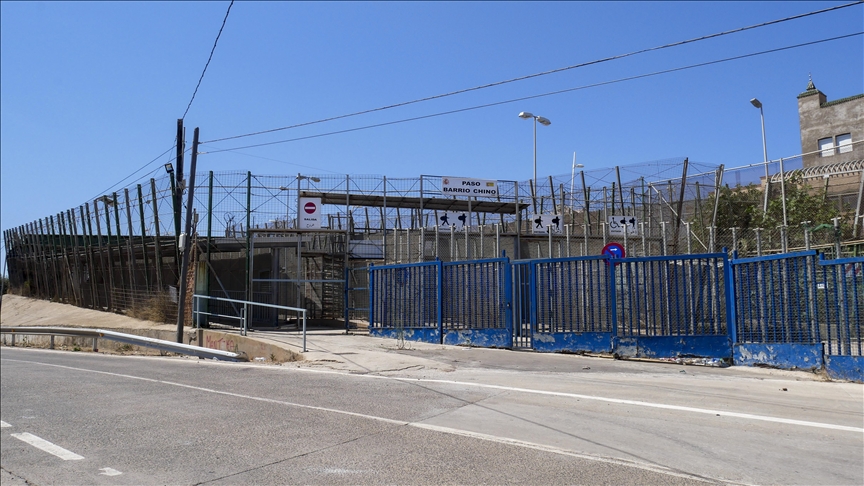
Sudanese migrant Mohamed Ismail has left his country to Morocco in the hope of finding a better job. His hope, however, ended up in injuries from bullets fired by Moroccan security forces.

Ismail departed Sudan through the border into several countries until he landed in Morocco six months ago. There, he helplessly tried hard to find work to make a living, but to no avail.

Losing any hope to find a good job opportunity, he decided to join hundreds of migrants in crossing the militarized border fence between Morocco and the Spanish enclave of Melilla, but they were met with force from both Moroccan and Spanish security forces.

Initial reports indicated five were killed in last week’s violence, but Moroccan authorities later raised that figure to 23. Helena Maleno Garzon, head of the NGO Walking Borders, says at least 37 people lost their lives.

Videos from the Moroccan side of the border show what appear to be dead bodies and severely injured people strewn across the ground without receiving medical attention.

Other images show hundreds of people, some with clear injuries, lying in a pile on the ground with their hands tied behind their backs.

Among those injured was Ismail, who was shot and injured by rubber-coated bullets.

“I came to Melilla in search for work and to cross into Spain,” Ismail told Anadolu Agency.

He recalled that the situation suddenly turned into violence when police tried to prevent migrants from crossing the border fence.

“The migrants did not use violence,” Ismail said.

According to Spanish news agency EFE, dozens of Moroccan and Spanish police officers were also injured during the storming of the border, where migrants were armed with homemade knives, as well as sticks, stones, and hooks to climb the border fence.

Following the violence, Ismail was deported by Moroccan authorities to the city of Beni-Mellal, 600 kilometers far from Melilla.

“I have no idea why I was deported,” he said.

Moroccan authorities have deported hundreds of migrants to other cities in an attempt to prevent any future attempt by them to cross into Spain.

On Saturday, several non-governmental organizations have demanded a probe into the treatment of migrants during their attempt to cross the border.

The attempt was the largest mass movement on the border since Spain and Morocco boosted bilateral cooperation after Madrid decided to support Rabat's position on the independence of Western Sahara.
Cop15: lack of political leadership leaves crucial nature summit ‘in peril’, warn NGOs

Nairobi biodiversity talks end in stalemate, prompting open letter to world leaders calling for action before Montreal conference


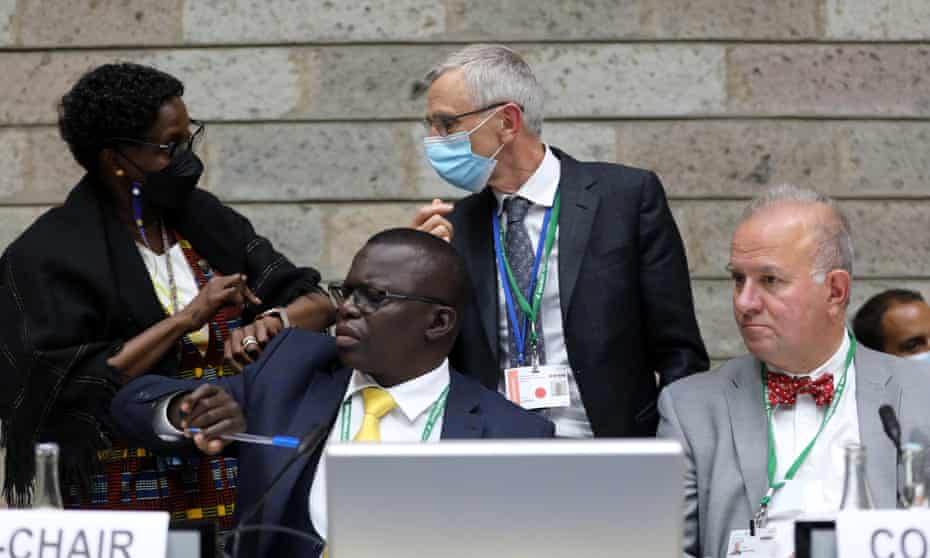
On the dais in Nairobi, from left: UN biodiversity head Elizabeth Maruma Mrema, CBD executive secretary Francis Ogwal, and co-chairs David Cooper and Basile van Havre. Photograph: IISB


Patrick Greenfield and Peter Muiruri in Nairobi
THE GUARDIAN
Tue 28 Jun 2022 

UN biodiversity negotiations have reached crisis point due to a lack of engagement from governments, leading NGOs have warned, three years after experts revealed that Earth’s life-support systems are collapsing.


Last week, countries met in Nairobi for an extra round of talks on an agreement to halt the human-driven destruction of the natural world, with the final targets set to be agreed at Cop15 in Montreal. Governments have never met a target they have set for themselves on halting the destruction of nature despite scientists warning in 2019 that one million species face extinction, and that nature is declining at rates unprecedented in human history.


While world leaders including Emmanuel Macron, Justin Trudeau and Boris Johnson have underscored the importance of the summit, which only takes place once a decade, the biodiversity negotiations have seen substantial divisions between the global north and south over money, proposals to protect 30% of land and sea by 2030, and implementation of any agreement. The Africa group warned it would not sign off the final post-2020 global biodiversity framework unless it includes a target on digital biopiracy.

In an open letter published on Monday, environmental groups including Greenpeace, Avaaz, the Campaign for Nature and the International Indigenous Forum on Biodiversity said progress on the final deal was not being made, and the talks lacked high-level political engagement. In the run-up to any Cop, negotiations are largely handled by technical specialists in the initial phases, with ministers typically getting involved at the end of talks.

The letter calls on the UN secretary general, António Guterres, and government ministers to inject political leadership into the process and avert disaster at Cop15 in Montreal in December. China will oversee the event as president after its zero-Covid policy forced organisers to move the summit earlier this month.

“Negotiations have become stagnant, and the post-2020 global biodiversity framework is in peril,” the letter reads. “Countries had once pointed to Cop15 as an opportunity to deliver a global deal for nature and people, similar in significance to the Paris climate agreement, but there is a notable absence of the high-level political engagement, will and leadership to drive through compromise and to guide and inspire the commitments that are required.”

Delegates meet in Nairobi, Kenya, last week to hammer out agreements in the run-up to Cop15 in Montreal. Photograph: IISB

During six days of talks last week, negotiations saw little agreement among countries over the final text, which includes draft targets on eliminating environmentally harmful subsidies, reducing pesticide use, and action on invasive species in an effort to cut extinction rates. Scientists warned again in 2020 that the sixth mass extinction of wildlife on Earth is accelerating.

A further round of pre-Cop15 talks has been scheduled in the days before the summit, which starts on 5 December and concludes on 17 December, the day before the football World Cup final.

If adequately funded and implemented in full, the agreement could see major changes to global agricultural practices and extractive industries, both major drivers of the eradication of wildlife and natural ecosystems.

It had been hoped that countries would use the extra round of talks in Nairobi to hammer out points of division ahead of Cop15. Yet one negotiator, speaking to the Guardian on the condition of anonymity, said they left the talks seeing more division.

“When the meeting ended yesterday, everyone was really frustrated. Many people were expecting to move forward, at least on some of the targets. It should be a wake-up call and might raise awareness among ministers that they need to find a way out of this conundrum,” they said.
Sharon Ruthia, of the Environment and Natural Resources Foundation, at the Nairobi talks last week. Photograph: IISB

Elizabeth Maruma Mrema, the UN’s biodiversity head, urged governments to work together on the agreement ahead of Cop15 to help reach consensus. “I call upon the parties, in the next months, to vigorously engage with the text, to listen to each other and seek consensus,” she said.

Basile van Havre, a co-chair for the UN convention on biological diversity (CBD) negotiations, said he was not as negative as others about the state of talks but agreed that ministerial input was important. “People came prepared. Delegates worked really hard and there was no blocking. The challenge we have is that there are a lot of difficult issues.


World fails to meet a single target to stop destruction of nature – UN report


“We made progress but we are not where we need to be. We need ministers to get involved and give negotiators technical mandates to advance,” he said.
Top talking points from Nairobi

A quiet China When delegates travel to Montreal this December, Beijing will still hold the presidency of the much delayed Cop, even though it will be hosted from Canada, not Kunming as originally planned. China has so far played a largely passive role in negotiations and did so again in Nairobi.

African scepticism on 30x30 Several world leaders have put forward proposals to protect 30% of land and sea as a key target of the agreement. But many African countries have indicated that the goal will not make the final text without a substantial financial commitment from the wealthy global north.

Brazil accused of undermining talks At the end of the talks on Sunday, Marco Lambertini, director general of WWF International, accused Brazil of “actively working to undermine the negotiations”. Cop15 could become another chance for Bolsonaro to add to his destructive environmental legacy.
G7 proposal for publicly funded gas projects “a catastrophically bad idea”

28th June 2022, Brussels - Responding to the G7 proposal to use tax money to fund fossil gas projects, Murray Worthy, gas campaign leader at Global Witness said:

“Building new fossil gas terminals and pipelines is a catastrophically bad idea and will only mean one thing: hooking the world onto this dangerous fossil fuel for the long term. Energy experts have shown that Europe doesn’t need more infrastructure to replace Russian gas, and climate scientists say the climate absolutely can’t afford it.”

“Rather than trashing the commitment to stop funding fossil fuels that were made at the UN climate talks last year, governments should be doubling down on them. Instead of using public money to fund further dependence on fossil gas, governments should be pulling out all the stops to phase it out once and for all with an emergency build-out of renewables and insulation projects.”

Notes to editor:

[1] https://www.politico.eu/wp-content/uploads/2022/06/28/220628-Final-Draft_Leaders-Communique.pdf

[2] Analysis from Ember, E3G, RAP and Bellona show that the EU can end imports of Russian fossil gas without building new gas import infrastructure. [PH1] https://ember-climate.org/insights/research/eu-can-stop-russian-gas-imports-by-2025/
Heard about this? Massive lump of Gdańsk amber weighing 68kg 200g is world's biggest

PAP JUNE 28, 2022
Worth an estimated PLN 140,000 (EUR 29,803) the piece was officially weighed and measured at the city's Museum of Amber to mark World Amber Day.
Adam Warżawa/PAP

A lump of amber on display in Gdansk is set to enter the record books as the world's biggest piece of amber, after it weighed in at 68kg 200g.

The piece, which will now enter the Guinness Book of Records, was officially weighed and measured at the city's Museum of Amber to mark World Amber Day.

The record weigh breaking-in was attended by representatives of the Gdansk authorities, amber craftsmen and representatives of the Regional Office of Measures in Gdansk and officials from the Guinness Records Office.
Adam Warżawa/PAP

Worth an estimated PLN 140,000 (EUR 29,803) the piece comes from the Indonesian island of Sumatra.

The record weigh breaking-in was attended by representatives of the Gdansk authorities, amber craftsmen and representatives of the Regional Office of Measures in Gdansk and officials from the Guinness Records Office.

Waldemar Ossowski, director of the Gdansk Museum, said that a piece of amber is not just a small thing that can be found after a storm somewhere on the beach on Sobieszewo (a Polish island in the Baltic Sea - PAP), but can also weigh several dozen kilograms.

The piece will now enter the Guinness Book of Records.
Adam Warżawa/PAP

"Amber is discovered not only here, but practically on every continent. It can be 2 million years old or over 100 million," he said.

Before Tuesday's weigh-in the huge lump was removed from its glass cabinet and placed on a scale.

Ossowski said that it was fitting that it was weighed and measured on World Amber Day (June 28th).

Before Tuesday's weigh-in the huge lump was removed from its glass cabinet and placed on a scale.
Adam Warżawa/PAP

"This is an important day for everyone who loves amber and we are glad that on this holiday we were able to set a new record," said the museum's director.

Although the record for the largest lump of amber has been established, it will still have to wait about a week for the record to be officially confirmed and entered into The Guinness Book of Records.

The piece can be seen at the Amber Museum of Gdansk, located in the city's Grand Mill.
Decades-old mystery solved after satellite shows ‘Bluetooth Viking king’ IS buried in Polish village

TFN REPORTER JUNE 28, 2022
Using satellite remote sensing tools, researchers say they have now solved ‘one of history’s most enduring mysteries’ and confirmed that a large Viking Age burial mound in the village of Wiejkowo did belong to the 10th century king of Denmark and Norway, Harald Gormsson Bluetooth.Marek Kryda/Public domain

The long-lost burial site of a Viking king whose name was the inspiration for Bluetooth wireless technology has been found in a village in Poland.

Using satellite remote sensing tools, researchers say they have now confirmed that a large Viking Age burial mound in the village of Wiejkowo, belonged to the 10th century king of Denmark and Norway, Harald Gormsson Bluetooth.

Lead researcher Marek Kryda, author of the best-selling book Viking Poland, told TFN: ‘The death and possible burial site of the Danish king Harald Gormsson Bluetooth was until now one of history’s most enduring mysteries.

 
The discovery confirms earlier speculation by Swedish archaeologist Sven Rosborn who suggested the Viking king was buried in the area following the 2014 discovery of a gold disc known as the Curmsun disc. Marek Kryda

‘The space-based reconnaissance allowed us to look at large swaths of landscape and find archaeological disturbances within the land, some as small as 12 inches (30.5 centimeters) long.

‘In a discipline where discovery was traditionally confined to a two-meter-square excavation, 21st-century technology satellite imagery has helped to make a breakthrough discovery of the possible burial mound of Harald Bluetooth.’

Gaining the nickname Blåtand meaning blue tooth, because he had a dead tooth that was dark blue, King Harald was credited with uniting the Scandinavian countries by introducing Christianity.

The disc’s Latin inscription mentioned the Viking king as the ‘ruler of Danes, Scania and the Viking fortress of Jomsborg’, which is today the town of Wolin just 3.5 miles west of the Wiejkowo burial mound.CC BY-SA 3.0

The discovery now confirms earlier speculation by Swedish archaeologist Sven Rosborn who suggested the Viking king was buried in the area following the 2014 discovery of a gold disc known as the Curmsun disc.

The disc’s Latin inscription mentioned the Viking king as the ‘ruler of Danes, Scania and the Viking fortress of Jomsborg’, which is today the town of Wolin just 3.5 miles west of the Wiejkowo burial mound.

According to Rosborn, the Curmsum disc, which he believed was a ‘grave gift’, was originally discovered alongside skeletal remains and a stash of other valuables in 1841 in a stone burial chamber underneath the current building of the local church in Wiejkowo.

According to Rosborn, the Curmsum disc, which he believed was a ‘grave gift’, was originally discovered alongside skeletal remains and a stash of other valuables in 1841 in a stone burial chamber underneath the current building of the local church in Wiejkowo.CC BY.30

The hoard was left in the crypt until 1945, when a Polish army major called Stefan Sielski entered and seized what was left of it.

Hiding it in a chest with old buttons it wasn’t until 2014 that his 11 year old great-granddaughter found it and showed it to her history teacher.

That sparked a chain reaction which led to the disc’s inscription being revealed.

The hoard was left in the crypt until 1945, when a Polish army major called Stefan Sielski Pictured centre) entered and seized what was left of it.Tomas Sielski

But doubts about whether the king actually died and was buried in the village have divided archaeologists.

Kryda said: ‘There’s no doubt that the golden Wiejkowo disc found in the tomb is an extraordinary find.

“However it's worth mentioning that Rosborn's strong suggestion that Bluetooth was buried in Wiejkowo was not based on research on the ground in Wiejkowo.

Hiding it in a chest with old buttons it wasn’t until 2014 that his 11 year old great-granddaughter found it and showed it to her history teacher.Tomas Sielski

“Instead, his suggestion was based solely on the research of the Curmsun Disc and Sielski family archives in Sweden.

“Without hard scientific evidence collected on the ground in Wiejkowo, Rosborn's theory was just a well-documented guess and suggestion.”

He added: “The satellite research fully confirmed the existence of a large Wiejkowo Mound, and of course at the same time confirmed that Wiejkowo is the burial site of Bluetooth.

Viking expert Marek Kryda said: “The satellite research fully confirmed the existence of a large Wiejkowo Mound, and of course at the same time confirmed that Wiejkowo is the burial site of Bluetooth. And that would mean that only the burial mound is his real grave, the original church was only a later addition to it. Using Ground-Penetrating Radar Imagery will help us see what was inside.”Marek Kryda

“And that would mean that only the burial mound is his real grave, the original church was only a later addition to it.

“According to Danish archivist Steffen Harpsøe, the disc may have been created over 70 years after Bluetooth's burial by local priests around Jomsborg and Wiejkowo between 1050-1125 - and only then placed in his Royal crypt.

“Using Ground-Penetrating Radar Imagery will help us see what was inside.”

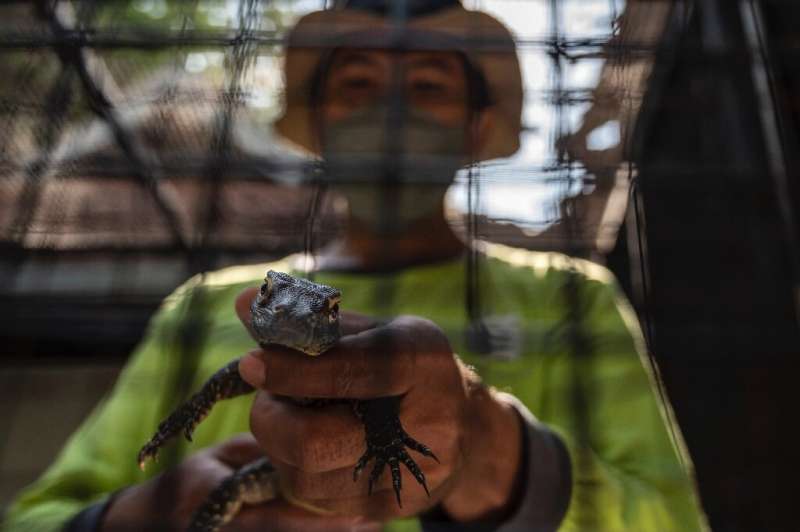
Indonesian zoo breeds dozens of endangered baby Komodo dragons

An Indonesian zoo has welcomed dozens of new baby Komodo dragons hatched in captivity in recent months as part of a breeding pro
An Indonesian zoo has welcomed dozens of new baby Komodo dragons hatched in
 captivity in recent months as part of a breeding programme.

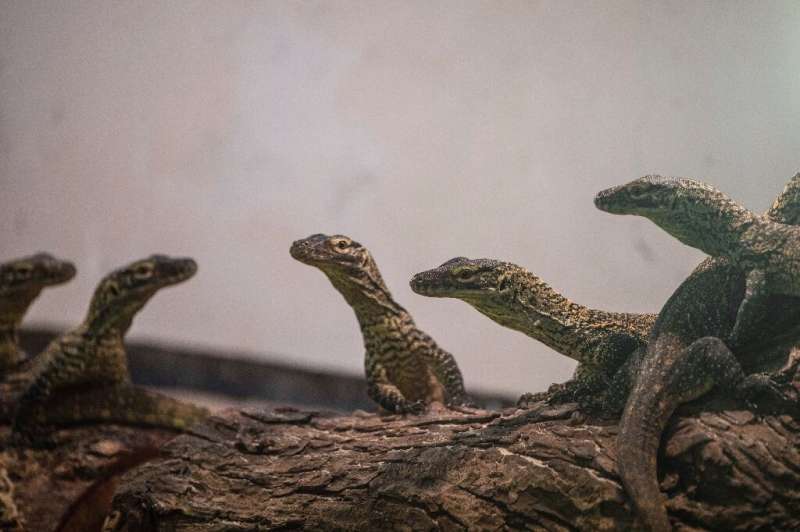
An Indonesian zoo has welcomed dozens of new baby Komodo dragons hatched in captivity in recent months as part of a breeding programme, its director said Tuesday, offering hope for efforts to conserve the endangered species.

The world's largest living lizards are found only in Indonesia's World Heritage-listed Komodo National Park and neighbouring Flores, and just 3,458 adult and baby species are left in the wild according to estimates.

The fearsome reptiles, which can grow to three metres (10 feet) in length and weigh up to 90 kilograms (200 pounds), are threatened by  and  destroying their habitat.

But a breeding programme in Indonesia's second-largest city of Surabaya is trying to change that, successfully breeding 29 dragons in incubators between February and March.

"We have habitats that mirror the Komodo's natural habitat, including its humidity and temperature," zoo director Chairul Anwar told AFP.

The newborns were hatched from two female Komodo dragons after their eggs were placed in incubators to prevent them from being eaten by their mothers or other Komodo dragons.

Female Komodos can fertilise an egg without the need for a male dragon.

The zoo started the programme in the 1990s as part of the effort to conserve the species in a city located more than 700 kilometres (434 miles) away from the dragon's .

The newborns were hatched from two female Komodo dragons after their eggs were placed in incubators
The newborns were hatched from two female Komodo dragons after their eggs were placed
 in incubators.

After the spate of births this year, Surabaya Zoo now houses 134 Komodo dragons, the largest population group outside of its habitat in the cluster of islands east of Bali, Anwar said.

In a report last year, the International Union for the Conservation of Nature warned the ' habitat was expected to shrink by 30 percent in the next 45 years due to rising sea levels.

Anwar said the dragons will not be released back into the wild on Komodo or Flores until conditions improve.

"Komodo Island is still working to rejuvenate the forests," which feed the dragon's declining natural prey such as deer, he said.Why we must reassess the komodo dragon's endangered status

© 2022 AFP