Sunday, January 29, 2023

CRIMINAL CAPITALI$M
Adani’s 413-Page Hindenburg Reply Aims to Calm Before Share Sale


Adani’s 413-Page Hindenburg Reply Aims to Calm Before Share Sale

P R Sanjai and Sidhartha Shukla
Sun, January 29, 2023 

(Bloomberg) -- Gautam Adani published a 413-page rebuttal of allegations of fraud by short seller Hindenburg Research, seeking to calm potential investors before the Indian billionaire’s flagship completes a $2.5 billion share sale.

Some 65 of the 88 questions have been addressed in Adani’s public disclosures and the conduct of the American short seller “is nothing short of a calculated securities fraud under applicable law,” Adani Group said in a statement Sunday. It reiterated it will “exercise our rights to pursue remedies to safeguard our stakeholders before all appropriate authorities.”

The lengthy response comes in the last leg of the follow on offer by Adani Enterprises Ltd., which received overall subscriptions of 1% on Friday. While investors in Indian public offerings typically wait until the last day of the sale to place bids, there were concerns that Hindenburg’s attack on the country’s richest man would sour sentiment.

“This is not merely an unwarranted attack on any specific company but a calculated attack on India, the independence, integrity and quality of Indian institutions, and the growth story and ambition of India,” Adani said in its response.

Hindenburg had published a 100-page report on the eve of Adani’s share sale opening, alleging that its two-year investigation found “brazen stock manipulation and accounting fraud.” It also called out the conglomerate’s “substantial debt.” The firm, which said it has taken a short position in Adani’s companies through US-traded bonds and non-Indian-traded derivatives, declined to share details of the trade when reached by Bloomberg News.


Who Is Gautam Adani and What Is Hindenburg Research?

Analysis by Sankalp Phartiyal | Bloomberg
January 29, 2023

Allegations of stock manipulation and accounting fraud from New York-based investor Hindenburg Research against Adani Group are piling pressure on the Indian conglomerate and its 60-year-old founder. Gautam Adani became Asia’s richest man last year and was second only to Elon Musk in the world at one point. Unlike Musk, Adani is relatively unknown outside his home country. Here’s some background.

1. Who is Gautam Adani? What’s his net worth?


Adani was born to a small textile merchant family in 1962 in the western industrial state of Gujarat. He dropped out of university and began his career sorting diamonds for a firm in the financial hub of Mumbai. He later imported materials used in manufactured goods and by the mid-1990s was managing the Mundra Port, which he now owns. While his net worth took a beating in the days after Hindenburg’s report was published on Jan. 24, he was still in the top 10 on the Bloomberg Billionaires Index as of late January.

2. How does Adani make money?


Adani Group today comprises half a dozen major companies with interests ranging from energy to transportation and infrastructure development. It’s India’s largest port operator and manages some of the country’s biggest airports. Adani Enterprises, the group’s listed trading house, reported $9.3 billion in sales in the year through March 31, 2022.


3. What are Adani’s companies?


Adani Green Energy Ltd. (Renewable power generation)


Adani Enterprises Ltd. - (Coal mining and trading)


Adani Transmission Ltd. (Power transmission)


Adani Total Gas Ltd. (Gas distribution)


Adani Power Ltd. (Coal-fired power generation)


The Adani Group also runs a real estate business, a shadow banking firm named Adani Capital and an edible oil and food business via a venture with Singapore-based Wilmar International Ltd.

4. What are Adani’s political connections?


The tycoon is seen as closer to Prime Minister Narendra Modi, who also hails from Gujarat state, than any other Indian billionaire. Adani’s corporate strategy has run in parallel with Modi’s efforts to develop India’s $3.2 trillion economy. When Modi promised to bring reliable electricity to more Indians, Adani doubled down on coal-fired power production. The alignment extends to foreign affairs. In 2021, Adani began construction of a major port facility in Sri Lanka. Officials from both countries said the plan was encouraged by the Modi government, which wants to curb Chinese influence in the island nation. Whether building expressways or upgrading data centers, Adani can be counted on to provide money, infrastructure, or expertise, whatever the policy priority.


5. Why did shares in Adani Group companies fall?


They quickly lost roughly $50 billion in market value after Hindenburg Research, founded by short-seller Nathan Anderson, issued a 100-page report containing wide-ranging allegations of stock manipulation and accounting fraud that it said dated back decades. The Adani Group dismissed the report as “maliciously mischievous” and said it’s exploring legal action as well as preparing a detailed rebuttal.


6. What is Hindenburg Research?


Anderson’s firm — technically a research and trading outfit, not a hedge fund with outside investors — is less than five years old and wagers its own money in the markets. Even in Manhattan’s financial circles, Anderson is hardly a big name. The closely held firm specializes in forensic financial research, according to its website. It first attracted Wall Street’s attention in 2020 for raising serious questions about electric-vehicle makers Nikola Corp. and Lordstown Motors Corp.


Who is behind Hindenburg, the research firm targeting the Adani group?


Mimansa Verma
Fri, January 27, 2023 

Hindenburg Research’s bruising report accusing the Adani Group of pulling off “the largest con in corporate history” has rattled India’s stock markets.


On Jan. 24, the New York-based forensic financial research firm disclosed its short positions on Adani companies, on the grounds of alleged accounting fraud and “brazen stock manipulation” over the course of decades. This has sent shares of the company spiraling down into a deep red zone in the past two days. So far, its seven listed entities have lost $39.4 billion of value.


Hindenburg Research has a track record of exposing corporate wrongdoings, including those of electric-truck maker Nikola Corporation, and of betting wisely on short and long investments, as it did with Twitter during the social media company’s long takeover drama with Elon Musk.

Hindenburg’s latest report, 106 pages in all, seeks answers to 88 questions related to discrepancies at Adani that it says it found across two years. The group’s chief, Indian industrialist Gautam Adani, is Asia’s richest man, with a net worth of roughly $120 billion.

The conglomerate’s legal head, Jatin Jalundhwala, in a statement on Jan. 26, said the company was “deeply disturbed” by the “intentional and reckless” attempt to tarnish Adani’s reputation ahead of a follow-on public offer that opened today (Jan. 27).

The extent of the damage triggered by Hindenburg’s findings is of widespread importance in India, where several public-sector banks and the country’s trust fund Life Insurance Corporation (LIC) hold large stakes in the company. If Adani collapses, it will hurt taxpayers in a big way.

datawrapper-chart-6S98Y

What is Hindenburg Research?

Nathan Anderson founded Hindenburg Research in 2017 to analyze the equity, credit, and derivative markets. The name Hindenburg is derived from the 1937 airship explosion in New Jersey that killed 36 passengers.

The firm says on its website that it looks for “man-made disasters,” such as accounting irregularities, mismanagement, and undisclosed related-party transactions. Its stated aim: to uncover corporate disasters before they “lure in more unsuspecting victims.”

Anderson’s firm has targeted at least 16 companies to date. It employs 10 people, mostly former journalists and analysts, Bloomberg reports.

Who is Hindenburg’s founder?

Anderson, 38, grew up in a small town in Connecticut and earned a degree in international business at the University of Connecticut.

Seeking a “diverse set of experiences,” as he put it to the Financial Times in 2021, he worked as a paramedic while studying abroad in Israel. His career in finance began at financial data company FactSet Research Systems. There, he worked with investment management companies, and found that “the processes across these firms is virtually the same, and not particularly incisive,” as he told the FT.

Stints in capital-raising at the firms Blue Heron Capital and Tangent Capital were Anderson’s first steps toward investigative research. His roles involved studying hedge funds and investment opportunities for high-net-worth individuals, according to his his LinkedIn profile.

His first big win was unearthing fraud at hedge fund Platinum Partners. For this case, Anderson teamed up with another senior financial fraud investigator, his mentor Harry Markopolos, who famously went after Bernard Madoff’s Ponzi scheme.

Why do corporates fear Anderson?

The short-seller is often not welcome in corporate circles,where short bets are commonly viewed as a means to attack companies and stunt their growth.

Short sellers, who profit when a targeted stock declines, have been a part of the market ever since the stocks came into existence. They create an important system of checks and balances in markets prone to froth.

According to Hindenburg’s report, the firm put together its short positions in Adani companies through US-traded bonds and non-Indian-traded derivative instruments. It also underscored the huge debt pile on the Adani books, which Hindenburg says has put the entire group on a “precarious financial footing.”

By the digits

$100 billion: Addition in Gautam Adani’s net worth in the past three years due to a meteoric rise in stock prices

$39.4 billion: Wealth erosion of Adani Group in a span of two trading days

38: The number of shell entities identified by Hindenburg Research that are allegedly controlled by Gautam Adani’s elder brother Vinod Adani or other close associates

$17 billion: The combined amount of alleged money laundering, theft of taxpayer funds, and corruption that was previously investigated by four government agencies that looked into Adani holdings

85%+: The amount of downside Hindenburg sees for Adani-listed firms “purely on fundamentals”


India's Adani hits back at Hindenburg, says it made all disclosures


The logo of the Adani Group is seen on the facade of its Corporate House on the outskirts of Ahmedabad

Sun, January 29, 2023 
By Aditya Kalra, Aditi Shah and Jayshree P Upadhyay

NEW DELHI (Reuters) -India's Adani Group issued a detailed response on Sunday to a Hindenburg Research report that sparked a $48 billion rout in its stocks, saying it complies with all local laws and had made necessary regulatory disclosures.

The conglomerate led by Asia's richest man, the Indian billionaire Gautam Adani, said last week's Hindenburg report was intended to enable the U.S.-based short seller to book gains, without citing evidence.

For 60-year-old Adani, the stock market meltdown has been a dramatic setback for a school-dropout who rose swiftly in recent years to become the world's third richest man, before slipping last week to rank seventh on the Forbes rich list.

Adani Group's response comes as its flagship company is pushing ahead with a $2.5 billion share sale. This has been overshadowed by the Hindenburg report, which flagged concerns about high debt levels and the use of tax havens.

"All transactions entered into by us with entities who qualify as ‘related parties’ under Indian laws and accounting standards have been duly disclosed by us," Adani said in 413-page response issued late on Sunday.

"This is rife with conflict of interest and intended only to create a false market in securities to enable Hindenburg, an admitted short seller, to book massive financial gain through wrongful means at the cost of countless investors," it added.

Hindenburg did not immediately respond to a request for comment on the Adani response on Sunday.

Hindenburg's report questioned how the Adani Group has used offshore entities in tax havens such as Mauritius and the Caribbean islands, adding that certain offshore funds and shell companies "surreptitiously" own stock in Adani's listed firms.

Adani said on Thursday that it is considering taking action against Hindenburg, which responded on the same day by saying it would welcome such a move.

The report also said five of seven key listed Adani companies have reported current ratios - a measure of liquid assets minus near-term liabilities - of below 1.

This, the short-seller said, suggested "a heightened short-term liquidity risk".

It also said key listed Adani companies had "substantial debt" which has put the entire group on a "precarious financial footing" and that shares in seven Adani listed companies have an 85% downside on a fundamental basis due to what it called "sky-high valuations".

Defending its practice on pledging shares of its promoters - or key shareholders - the Adani Group in its response said that raising financing against shares as collateral was a common practice globally and loans are given by large institutions and banks on the back of thorough credit analysis.

The group added there is a robust disclosure system in place in India wherein listed companies need to disclose their overall pledge position of shares to stock exchanges from time to time.

It said that its promoter pledge positions across portfolio companies had dropped from more than 50% in March 2020 in some listed stocks, to less than 20% in December 2022.

(Reporting by Aditya Kalra, Aditi Shah, Jayshree Upadhyay and Anirudh Saligrama in Bengaluru; Editing by Kevin Liffey and Alexander Smith)


Adani publishes 413-page response to accusations as he suffers $28b wipeout


ByAnders Melin, P R Sanjai and Sidhartha Shukla
January 30, 2023

Indian billionaire Gautam Adani’s group published a 413-page rebuttal to allegations of fraud by short seller Hindenburg Research that has erased billions from the value of his flagship firm.

Some 65 of the 88 questions have been addressed in Adani’s public disclosures and the conduct of the American short seller “is nothing short of a calculated securities fraud under applicable law,” Adani Group said in a statement. It reiterated it would “exercise our rights to pursue remedies to safeguard our stakeholders before all appropriate authorities.” Adani is seeking to calm investors before the conglomerate completes a crucial $US2.5 billion ($3.5 billion) share sale.


Adani lost more than $US20 billion of wealth on Friday as shares in his group’s various entities tumbled.
CREDIT:BLOOMBERG

Adani had initially appeared to weather the biggest broadside yet to his sprawling empire after the accusations from Hindenburg last Wednesday, heading into a holiday in India as the world’s fourth-richest person and dismissing a short-seller report as “stale” and “baseless.”

But then Indian markets reopened on Friday and it quickly became apparent that Hindenburg Research, a tiny New York firm, had pierced the defences of the mighty Adani Group, a corporate giant half a world away.

Bonds and shares of the various Adani entities fell. Then fell some more. In the end, units like Adani Green Energy and Adani Total Gas plunged by the daily 20 per cent limit, delivering punishing losses after years of world-beating gains.

RELATED ARTICLE

David vs Goliath: Meet the short seller taking on Adani


In just over six hours of trading in Mumbai, the group lost more than $US50 billion in market value, costing Adani in excess of $US20 billion ($28 billion), or about one-fifth of his total fortune, according to the Bloomberg Billionaires Index. It was his biggest wealth wipeout ever and the steepest market-fuelled drop in history for anyone in Asia since Bloomberg started tracking the fortunes of the world’s richest a decade ago — a shocking blow to a man who in recent years rocketed up the ladder of the world’s super-rich at a seemingly unstoppable pace.

As for Adani himself, even after Friday’s loss — the fourth-largest market-driven drop in the history of the Bloomberg wealth index — the 60-year-old commands a net worth of $US92.7 billion. He’s fallen below Bill Gates and Warren Buffett to the seventh-richest person on the globe.

Sunday’s lengthy rebuttal comes in the last leg of the follow-on offer by Adani, which received overall subscriptions of 1 per cent on Friday. While investors in Indian public offerings typically wait until the last day of the sale to place bids, there were concerns that Hindenburg’s attack on the country’s richest man would sour sentiment.

“This is not merely an unwarranted attack on any specific company but a calculated attack on India, the independence, integrity and quality of Indian institutions, and the growth story and ambition of India,” Adani said in its response.

Hindenburg had published a 100-page report on the eve of Adani’s share sale opening, alleging that its two-year investigation found “brazen stock manipulation and accounting fraud.” It also called out the conglomerate’s “substantial debt.” The firm, which said it had taken a short position in Adani’s companies through US-traded bonds and non-Indian-traded derivatives, declined to share details of the trade when reached by Bloomberg News.


Adani said the short-seller report was “a calculated attack on India, the independence, integrity and quality of Indian institutions, and the growth story and ambition of India”.
CREDIT:BLOOMBERG

The dramatic saga has prompted more questions. What’s next? How might this impact the group’s ongoing share sale? How will regulators in India and globally react? But also — perhaps more importantly — it has put a spotlight on how one of India’s most powerful family-built conglomerates is owned, operated and bankrolled.

“The volatility in Indian stock markets created by the report is of great concern and has led to unwanted anguish for Indian citizens,” Adani’s top lawyer said Thursday in a statement, which called out Hindenburg’s missive as mischievous, unresearched and unsubstantiated. Hindenburg, in turn, shot back that Adani has “resorted to bluster and threats.”

Taking on Adani

Adani Group is the biggest target yet for Nathan Anderson, the man behind Hindenburg who earned Wall Street’s attention with takedowns of electric-vehicle makers Nikola and Lordstown Motors Corp. It’s a sprawling web of businesses that includes port and airport operators, coal mining and trading, natural gas, media and cement, with its expansion plans closely aligned to the development and economic goals of Indian Prime Minister Narendra Modi.

The battle has sharply divided global investors. Many Indian analysts say the group won’t face a severe domestic fallout because its fortunes and strategy are tied to Modi’s. Others see Adani Group’s rebuttal as insufficient, with billionaire Bill Ackman likening it to the response he got from Herbalife, which he said on Twitter “remains a pyramid scheme.”

Hindenburg alleged in a report on Wednesday that its two-year investigation found the Adani Group “engaged in a brazen stock manipulation and accounting fraud scheme over the course of decades.” It called out the conglomerate’s “substantial debt,” which includes pledging shares for loans; that several of its key leaders are Adani family members; that Gautam’s brother Vinod “manages a vast labyrinth of offshore shell entities” that move billions into Adani companies without required disclosure; and that its auditor “hardly seems capable of complex audit work.”


RELATED ARTICLE

Opinion
Corporate ethics
Australia’s involvement in ‘the largest con in corporate history’
Elizabeth Knight


Business columnist

The firm said it’s shorting Adani Group through US traded bonds and non-Indian-traded derivatives, and that its report “relates solely to the valuation of securities traded outside of India.” It said it “would welcome” legal action in the US.

The more pressing concern is the $US2.5 billion share sale by his flagship firm, Adani Enterprises, which is meant to fund capital expenditures and to pay down the debt of its various units.

The transaction, India’s biggest ever primary follow-on public offering, is meant to draw in a mix of institutions, retail investors and high-net-worth individuals. It had already attracted anchor investors including Abu Dhabi Investment Authority, State Bank Of India Employees Pension Fund and Life Insurance Corp. of India before the Hindenburg report.

Adani Enterprises ended Friday 11 per cent below the floor price of the share sale, which closes on January 31.

AMERIKA
Nobody Is Happy With the Federal Grazing Program


Lauren Leffer
Sun, January 29, 2023

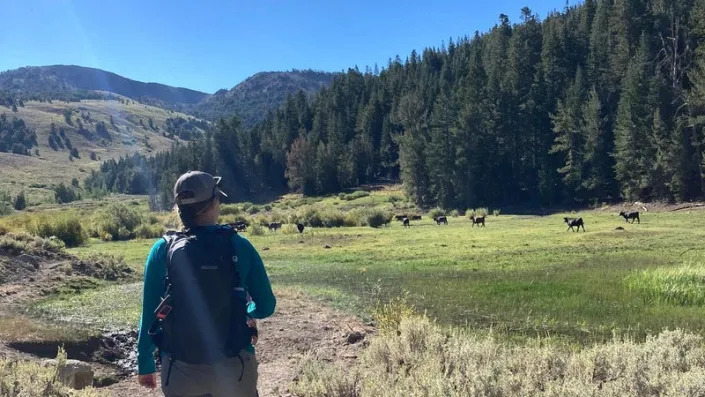
Rachel Sadowski, a conservation researcher at the San Diego Botanic Garden, walks on a National Forest trail facing a herd of cattle.

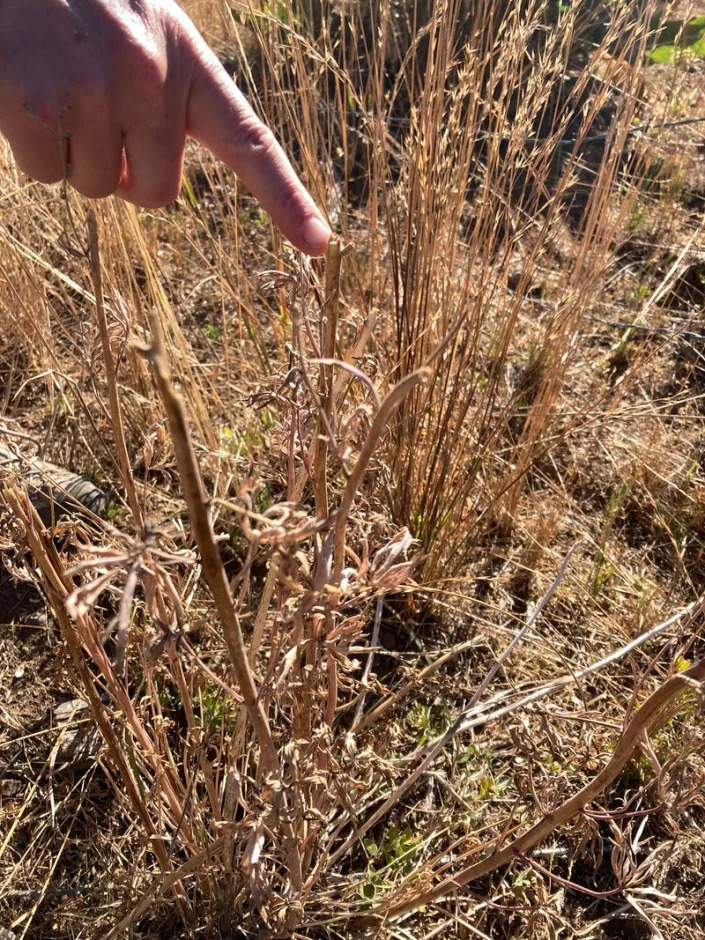
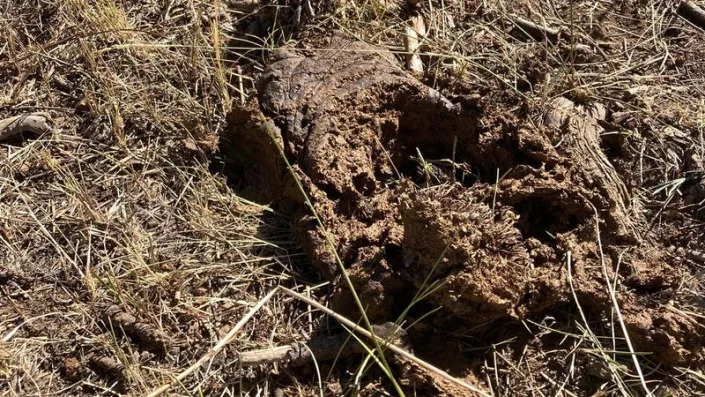
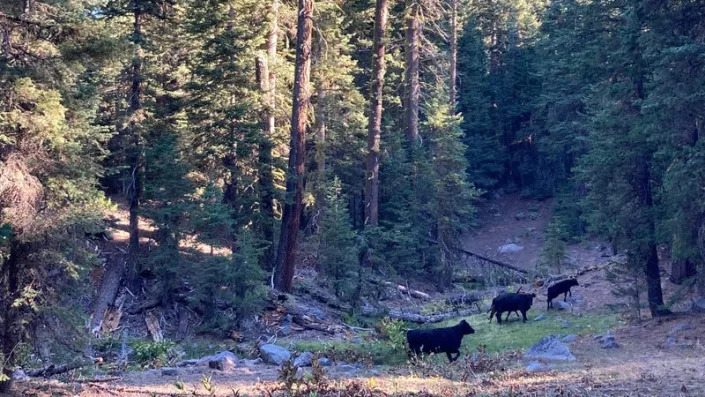
At the first National Forest site we visited in California’s remote Modoc Plateau, nearly every plant had been chewed on by cattle. The botanists, there to track down and collect seeds from rare plants, pointed out the soil erosion from stomping hooves. The cow pies were everywhere, unavoidable on the steep roadside slope, and they crunched or squished under our boots. The seeds we had come to collect, from a delphinium only known to exist in a handful of places in the state (though more common elsewhere), were mostly gone before the botanists could preserve them—disappeared in the digestive tracts of hungry ungulates. These plants, which just a few weeks ago had been flush with purple flowers, and which the botanists had thought would now be covered in seed pods, were instead largely gnawed to stubby stalks. At the base of the hill along the river below, we could see the offending cattle. And even before we saw them, we could hear their lowing.

The cows are innocent enough, of course. But they’re unknowingly at the center of an ongoing battle between ranchers, conservationists, and the federal government. The conflict, which spans more than a century, is set to get even more heated this year, with the forthcoming release of new Bureau of Land Management rules on cattle grazing and a recent legal challenge filed by environmental groups. The outcome could permanently alter the western U.S.’s public lands.

At the field site, the botanists collected what they could of the remaining seed pods in small yellow envelopes. Christa Horn, the trip coordinator and a plant conservation researcher at the San Diego Zoo, pulled up the state records for the delphinium at our location on her field tablet. Cattle damage had been noted at this site all the way back in 2010. This time, before we moved on to the next place, Horn submitted a note to the purple plant’s digital file. She indicated that cattle damage wasn’t just present at the site but that it posed a real threat to the flower’s survival there.


Cattle were just about everywhere in California’s Modoc National Forest, even here in a designated wilderness area.

It’s a pattern that would repeat over the five days in August 2022 that I spent with the researchers: cows where we weren’t expecting them to be, trampled soil, poop piles, and plants cut down before their seeds could mature into the next generation. Every place we visited was on public, ostensibly protected land—National Forest or Bureau of Land Management territory. And at nearly every site, we encountered cattle.

Horn and her colleagues took it in stride. They were careful not to make any sweeping declarations about how the health of the overall plant populations were or weren’t being affected by the presence of cattle. Cows have been grazed on these lands for more than a century, and at least the plants they were out to collect have survived in that time (albeit in small pockets), pointed out Tobin Weatherson, another San Diego Zoo plant conservationist. The plants are persisting, but the damage in front of us was hard to ignore.


Photo of Hand pointing at plant

A botanist points out where a plant has clearly been grazed. This delphinium is rare in California, and the researchers were trying to collect enough seeds to bank, to ensure the species’ conservation in the state. However, specimens like this one had been munched on by cattle before the seeds could mature and be collected.

It’s indisputable that cattle shape the landscape of the American West, yet whether or not they should be allowed to is a perennially touchy issue. As Horn put it, “people like things the way they’ve always been,” or at least the way they think they’ve always been.

Cattle aren’t native to the U.S. Though bison used to roam in many areas of the country, domestic cows are a different animal, with their own specific quirks, dietary preferences, and movements. For instance, they are thirstier than bison and so spend much more time disturbing the riparian areas along streams and rivers, which also happen to be home to unique and often already imperiled communities of other animals and plants. For plant conservationists like Horn and Weatherson, the cattle are just one facet of a slew of human impacts piled onto the ecosystem. While for ranchers, the cattle represent an entire way of life and a right to the land and its resources. Yet even for the ranchers, the current system is broken.

Cattle grazing is the single largest commercial use of public lands in the western U.S.—more than mining, forestry, or other types of agriculture. About 85% of public lands, or some 250 million acres in the West, are grazed by livestock (mostly cattle), and most of that land is managed by the Forest Service or the BLM. Such grazing has been officially sanctioned since the Taylor Grazing Act of 1934. Prior to that, grazing was entirely unregulated. Without management, grazing became overgrazing, and grassland became wasteland, especially amid the widespread southwestern drought of the 1930s. Overgrazing was one of the primary contributing factors of the Dust Bowl, and the Dust Bowl spurred the Taylor Act. The federal government realized some management was necessary to prevent systemic agricultural collapse from repeating itself.


One of many cow pies. It was nearly impossible to avoid stepping in the cattle evidence left behind.

Since 1934, some aspects of the grazing program have been updated, but the changes haven’t kept up with our scientific understanding of land management, ecological health, or climate. And the consequences are being felt by people, not just plants. Ranchers are struggling to keep cattle alive in a shifting ecosystem. Invasive species have become fire-starting nuisances spread, in part, by cattle. An overabundance of cows may be exacerbating water shortages and California’s persistent drought. And public lands are far from the pristine wildernesses recreators seek out. In its current form, the grazing program isn’t working, and it’s not sustainable—not for ecologists, conservationists, federal workers, ranchers, or even the cows.

Now, these cumulative and long-simmering tensions over whether and how to graze cattle on public lands are coming to a head. For the first time in decades, the Bureau of Land Management is set to present new rules on livestock management. The federal agency is planning to release a draft for the updated guide early in 2023. Stakeholders remain skeptical the update will address the multitude of difficulties with the current public grazing program, but any changes would signal a big shift from the stagnation of past years. Additionally, the Center for Biological Diversity, a nonprofit conservation advocacy group, is suing the BLM over the destruction the organization says cattle grazing causes to plants and the landscape, according to a 60-day notice of intent filed in early January. What has long been a taboo issue, too thorny to navigate for federal regulators, is set to be a conversation that defines the next few months.


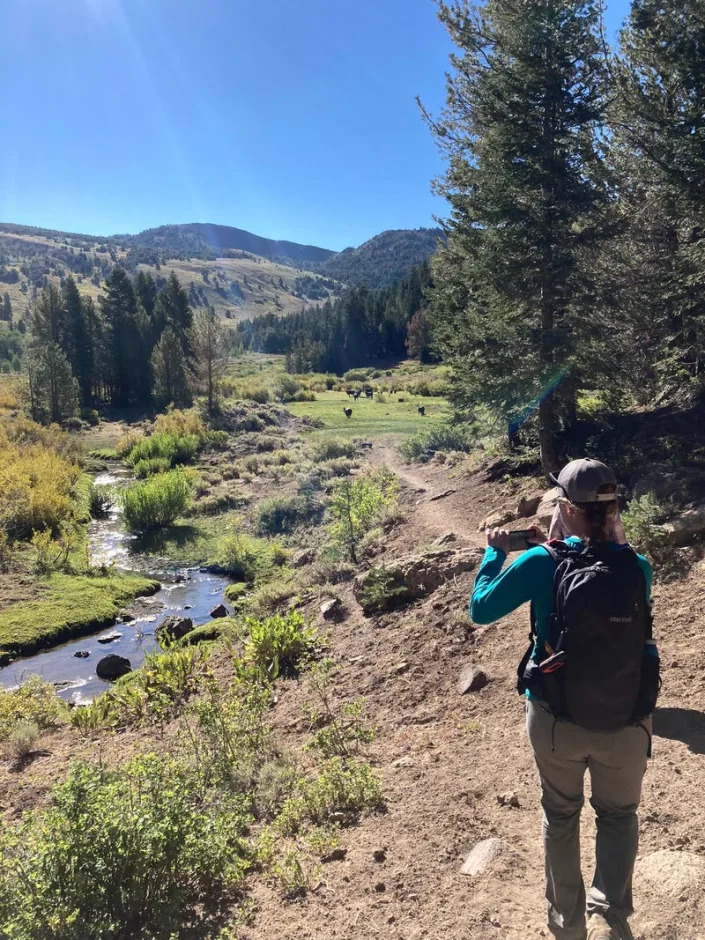
Photo of person and landscape

Rachel Sadowski, a conservation researcher at the San Diego Botanic Garden, documents a herd of cattle in the hike up to a rare plant collection site.

So what are the problems, and what needs to change? For starters, the current cattle program is deeply under-resourced, said Chandra Rosenthal in a video interview with Gizmodo. Rosenthal is the head of the Rocky Mountain office of the nonprofit group Public Employees for Environmental Responsibility (PEER), which provides legal and other support for current and former public employees. The BLM is supposed to track the health of every parcel of rangeland it allots to ranchers, Rosenthal said. Yet through PEER’s own analysis (developed by a former BLM subcontractor), the nonprofit found that the Bureau hasn’t recorded any monitoring data on about 28% of that land. And of the land it had assessed, the BLM noted about half failed to meet its own Land Health Standards, according to PEER’s 2020 review. In 72% of those failures, covering about 40 million acres of land, the BLM indicated livestock overgrazing was a central factor. “We think that the program is really understaffed,” said Rosenthal, who said she and PEER have spoken with numerous past and present workers at the Bureau concerned that the land they oversee is in worse condition than it was when they began their jobs. “There’s a lot of dissatisfaction in those positions,” she added.

PEER opted to create its rangeland health map because the data from the BLM wasn’t centralized or analyzed within the agency itself, Rosenthal said. “Different field offices have different standards for the way they do things,” she added. So, in order to better understand the scope of the problem for federal employees, PEER had to put together its own database. But there were still gaps. “We’ve totally tried to figure out the total number of cattle,” Rosenthal said—but PEER couldn’t. Parts of the data were incomplete, outdated, or unreliable. “It’s crazy,” she added. As a result, it’s difficult to know if there are more or fewer heads of cattle on the landscape now versus a decade ago. The BLM does publish annual land use reports, which track the number of authorizations issued and the amount of grazing material authorized to be eaten, but not the number of animals. Researcher estimates put the number somewhere around 1.5 million cattle on BLM land, not including the rangelands managed by the Forest Service.

Chris Christofferson, the forest supervisor for Modoc National Forest, told Gizmodo in a phone call that the U.S. Forest Service also doesn’t have a single number on the livestock grazing its land. In California, he believes the numbers of cows on the landscape are declining, in accordance with drought restrictions, but he couldn’t point me to public numbers demonstrating that. Christofferson’s account echoed Rosenthal’s perspective, that the public grazing program doesn’t have the funding or staffing it needs, and that in recent years and federal administrations the problem has worsened.

In Modoc, where those rare purple delphiniums had been gnawed to nothing, Christoffersan said that once, there were eight staff solely responsible for monitoring grazing; then, about 10 years ago, it was cut to four people. Then it went from four to just three staff, meant to be managing 1.7 million acres of rangeland.


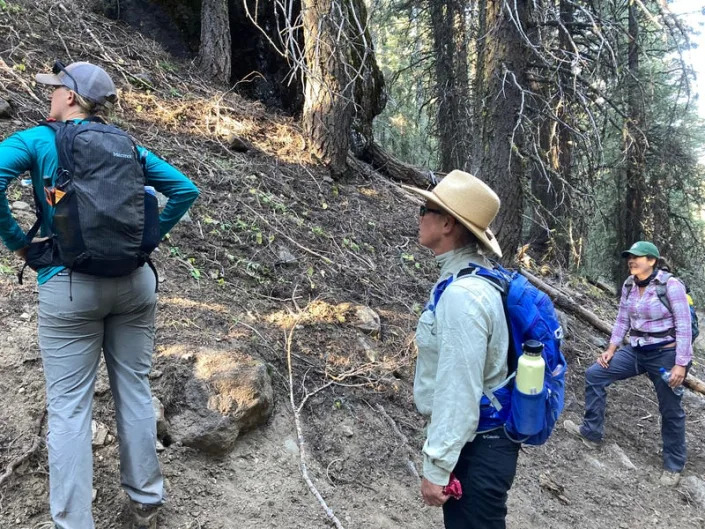
Photo of three people in woods

Botanists Rachel Sadowski, Liz Bittner, and Christa Horn survey cattle damage on an eroded slope where they expected to be able to collect rare plant seeds.

One possible part of the budget issue often cited by environmental advocates: both the Forest Service and the BLM charge ranchers the same fees to graze livestock on public land as they have since 1986. By some estimates, the federal fees are 15 times less than what private landowners charge, effectively offering ranchers an enormous federal subsidy. Those meager fees don’t necessarily end up supporting land management. In certain unique cases, local jurisdictions have set up their grazing fees to go back toward monitoring and maintenance, but Christofferson described this more as the exception than the rule.

Before he began in his role at the Forest Service, Christofferson was a botanist and ecologist. In his view, the relationship between cattle and land health is complicated. “It’s really site specific, timing, and intensity specific,” he said, explaining that some research has shown cattle grazing can benefit certain plant communities reliant on some level of disturbance to flourish. For instance, he pointed me to one 2017 study of grazing in vernal pool habitats in northeast California, in which researchers found that excluding cattle over years led to a lower diversity of annual plants (though the findings weren’t significant at every spatial scale). On the other hand, Christofferson admitted that cattle grazing always comes with the possibility of big negative impacts, “because you’ve got some big animals out there that weigh a lot. And if they are not managed correctly, they can do a lot of damage in a short amount of time.”

In the aftermath of the Biden Administration’s $1 trillion infrastructure bill, Christofferson says his office has been hiring once again. The 2021 legislation included a large chunk of funding for public lands, and he’s already seeing a positive effect that’s left him feeling more optimistic.

Yet in some environments, all the staffing and funding in the world wouldn’t be enough to make grazing sustainable, said Chris Bugbee, an ecologist and conservation advocate for the Center for Biological Diversity, in a phone call with Gizmodo. Bugbee is based in Arizona, and in the Southwest desert, he said, cattle have no place. There, the cows decimate streamside vegetation, spread invasive species like cheatgrass and medusahead, widen and contaminate waterways with their stomping and waste, and compact the already drought-stricken soil, making it even harder for water to infiltrate, according to Bugbee. “Cows are exacerbating the effects of climate change,” he said. Because of the drought in the Southwest, “native plants are already stressed from that alone. Often when you add cows to that, that’s really like the nail in the coffin.”

Under federal management guidelines, the number of livestock is supposed to be limited on public lands during drought periods, but Bugbee said that’s not happening nearly to the extent it should be. He described a 2002 incident in which all of the livestock were pulled off of the grazing parcels in Tonto National Forest during a period of severe drought. The decision “caused a huge backlash. I mean, people lost their jobs over that,” said Bugbee. And, as a result, he’s skeptical that such drastic (though in his view, necessary) measures are likely to happen again. To him, there’s an inherent conflict of interest in the federal agencies’ management. “The role of the range conservationists is to keep cattle on the ground. That’s their interest. That’s their whole job. So that’s a pretty biased system.”

In some cases, the livestock suffer the consequences of ecosystem failure directly. Both Bugbee and Rosenthal of PEER said they’ve seen animals starving and dying on denuded land. Plus, as wildfires increase in severity and size across the West, more and more animals are becoming casualties of burns. Dave Daley, a rancher in Butte County, California and a former president of the California Cattleman’s Association, lost most of his cattle herd in the 2020 Bear Fire, as he described to Gizmodo in a phone interview. Climate change is contributing to the problem of wildfires, but so is fuel buildup from decades of aggressive fire suppression, Daley pointed out. From his perspective, the solution is more grazing, not less. “I think, actually, grazing can be used to heal the landscape.” Similarly to prescribed fires, cattle reduce the amount of vegetation that could otherwise fuel megafires, pointed out Daley. And indeed, some research supports the idea that cattle can help minimize severe wildfire risk in certain settings.

But Bugbee disputes that idea. Because of cattle’s propensity to spread fast-growing invasive species, which fuel fires, he described the concept of grazing to manage fire as “getting drunk to cure your hangover.” It’s a short-term approach to a longer-term environmental issue. Plus, “these ecosystems have been grazed heavily for a century and a half, and yet fires are a monumental and worsening problem,” he added.


Photo of person standing in mountain meadow


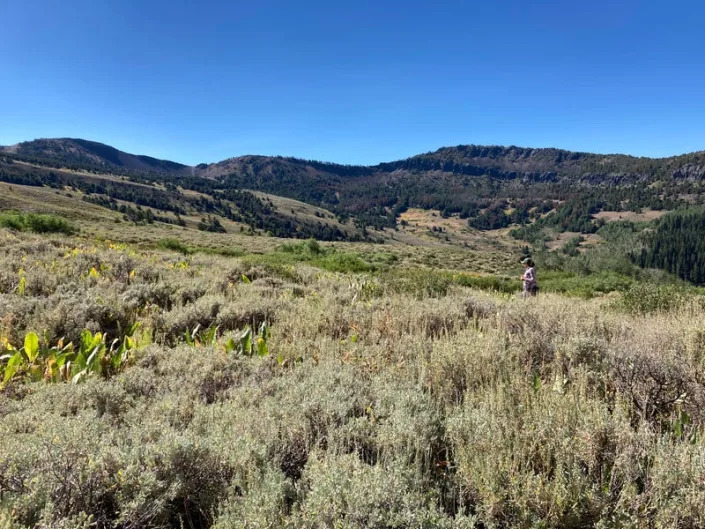
At one of our final locations, the botanists noted much less cattle damage than elsewhere, and Christa Horn (pictured) and her colleagues were finally able to collect the seeds needed to preserve the rare delphinium plant.

All of these issues—of severe drought, out-of-whack fire regimes, invasive species, and biodiversity loss and shifts—are, at least partially, the result of climate change. And cattle contribute to climate change in a big way. Through their digestive processes, livestock are responsible for 27% of U.S. methane emissions, and methane is about 25 times more heat-trapping than carbon dioxide in the atmosphere. One 2022 study estimated that livestock grazing on U.S. public lands alone contributes the equivalent of 12.4 teragrams of CO2 (or 12,400,000 metric tons) every year—equivalent to more than 2.6 million cars’ annual emissions. Though the beef industry would like us to believe otherwise, there is no getting around the climate consequences of cattle. Through fossil fuel extraction alone, federal land actually produces more greenhouse gas than it absorbs, according to a 2018 USGS analysis. And cattle grazing tips the balance even farther from where we need it to be.

Yet there is still time for change. And, for the plants, all is not yet lost.

On one of my last days with the botanists, the seed collection sites we’re checking are a long hike into a designated wilderness area. The first location, relatively early on in the miles-long trek, has been decimated by cows. The soil is trampled and rutted, so much so that the scientists opt not to look around much and disturb it any further, for fear of adding erosion. The few plants we find still clinging to life in the tumbled dirt have no seeds on them, and the researchers hypothesize that the plants self-aborted their seeds to conserve resources. The site doesn’t bode well for points farther on, but we truck ahead up the trail anyway, climbing thousands of feet in elevation to reach a second population of that same blue-ish purplish delphinium that the botanists couldn’t collect enough of on the first day.

And somehow, when we finally get to the open meadow, in a bowl surrounded by ridgelines, the delphinium are there, with their seeds intact. In fact, there are more than expected—enough to make up for the lack at that first roadside hill. It’s a clear win for the botanists, relieved to have something to show for the seven or so miles of hiking, and also for the plants, which have made it to another season. The collected seeds, destined for banks around the state of California, are meant to be an insurance policy (against climate change, invasive species, and yes, cattle) but one that, for another year at least, won’t need to be cashed in.

Gizmodo

UAE museum unveils Torah scroll that survived the Holocaust in tolerance push

Bushra Shakhshir
Sun, January 29, 2023 

By Bushra Shakhshir

DUBAI (Reuters) - A private museum in the United Arab Emirates unveiled on Saturday a Torah scroll that survived the Holocaust, the latest sign of what Israel and its new Arab allies describe as a new approach to understanding Jewish history in the Middle East.

Ahmed Obaid Al Mansoori, founder of the Crossroads of Civilizations Museum in Dubai's historic district, said the display, unveiled for International Holocaust Remembrance Day would help combat "big denial" of the Holocaust in the region.

"For us peace is a complete peace," Al Mansoori said. "Many people have forgotten the Jews are part of the region. So here, we're trying to show ... the good days between the Jews and the Arabs in the past."

The scroll is on permanent loan to the museum from the Memorial Scrolls Trust, which looks after more than 1,000 Czech scrolls saved from the Holocaust and later sent to London.

"I lived in the Arab world when I was young, and the term Holocaust does not exist ... So this is a huge step," said Edwin Shuker, an Iraqi-Jewish businessman and vice-president of the Board of Deputies of British Jews, who facilitated the loan.

Israel has reached out to promote understanding of Judaism among its new allies in the two years since the UAE and fellow Gulf state Bahrain, followed by Morocco and Sudan, forged ties with it under U.S.-brokered pacts known as the Abraham Accords.

The history of the killing of six million Jews by Nazi Germany is little taught in the Arab world, where some politicians say it was wrongly used to justify the creation of Israel in 1948 at the expense of Palestinian Arabs.

In the years that followed Israel establishment, major Jewish communities that had existed for centuries throughout the Middle East largely disappeared, with hundreds of thousands of Jews emigrating from Arab countries to the new state.

The Emirati embassy in Washington, in a Twitter post earlier this month, said the UAE would include Holocaust education at schools, the first country in the region to do so.

"It's important to remember what happened. It's important to make sure that it will never happen again. And it's important to stand here together, all of us, Israelis, Emiratis and others in order to say: Not anymore," Israeli ambassador to the UAE, Amir Hayek, told Reuters on the sidelines of the museum event.

(Reporting by Bushra Shakhshir and Abdel Hadi Ramahi; Writing by Ghaida Ghantous; Editing by Peter Graff)
Nicaragua arrests 24 after attack in indigenous land dispute


Fri, January 27, 2023 at 6:06 PM MST·2 min read
MEXICO CITY (AP) — Nicaraguan authorities said Friday they arrested 24 settlers after they allegedly attacked an indigenous community as part of a land dispute.

It was the first large-scale arrest of non-indigenous settlers after several years of invasions and attacks in the territory belonging to the Miskito, Mayangna and other indigenous groups.

Nicaragua’s National Police said the 22 men and two women were detained in the Caribbean coastal region the previous day. Police said indigenous residents told them the attackers were armed with sticks, stones and machetes.

Nicaraguan authorities have been slow to investigate such attacks, and activists said Friday that the settlers had actually been detained by residents, who turned them over to police.

“They didn't detain the settlers. It was the local residents themselves who caught them,” said María Luisa Acosta, a lawyer who heads the Center for Legal Assistance for Indigenous Peoples.

The arrested settlers were taken to a jail near the capital, Managua, and would be charged with organized crime, land seizure and environmental crimes, officials said.

But activists expressed doubts about whether the government would really follow up on the case, after years in which it has allowed indigenous communities to be attacked.

“This is the first time the government has announced the detention of those who invade indigenous territory,” said environmentalist Amaru Ruiz, director of the Del Río Foundation.

He added that “we have to be extremely cautious” about the arrests. “They have detained these kind of people before and later let them go,” Ruíz said.

The Mayangna and Miskito communities have been hit by a number of attacks in recent years that have been blamed on settlers who invaded indigenous lands. Ruíz has said that at least 28 indigenous leaders and community members have been killed in recent years.

Several attacks in 2021 and 2022 killed Miskito and Mayangna people around Bosawas, a protected area. The reserve has been hit by illegal mining and logging.

Indigenous activists say the government of President Daniel Ortega has not done enough to address the problems in the jungled region, something his administration denies.

Activists say many of the settlers moving onto the lands are former soldiers linked to timber and illegal logging interests.

The Del Río Foundation says about 60% of the Mayangnas’ territory has been invaded by about 5,000 settlers since 2015, displacing some 3,000 indigenous inhabitants.
Op-Ed: How to disagree about sexism and racism without being a jerk

Kenji Yoshino and David Glasgow
Sun, January 29, 2023 

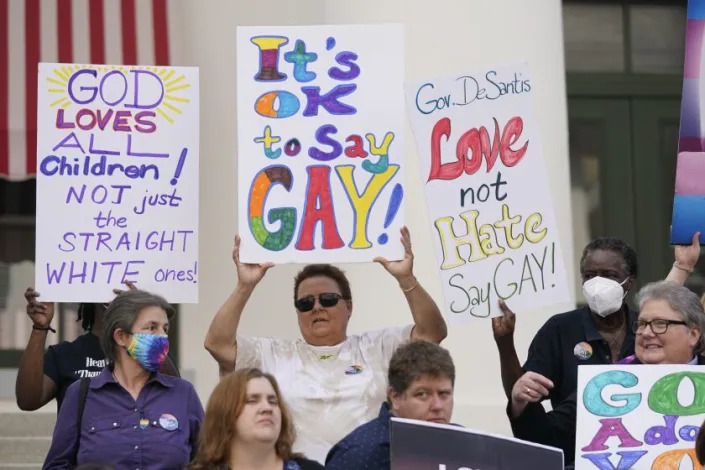
Demonstrators in Tallahassee, Fla., last March protest legislation that bars conversations in public schools about sexual orientation and gender identity. (Wilfredo Lee / Associated Press)

We once hosted an event at our law school to discuss how members of advantaged social groups could be “allies” to marginalized people. As we left, a white male student ran up to us. He had a burning question he wanted to pose privately: “What if I say something, and a woman says it was sexist, but I don’t think it was. Am I allowed to disagree?”

Our response was easy: “Of course!” But he was right to feel nervous.

As scholars working on diversity and inclusion, we teachmembers of dominant groups how to have better conversations about identity issues. Many advantaged individuals find such disagreements agonizing. They often feel pressure to fake their opinions or defer to their conversation partners, fearing that to express any disagreement is to betray marginalized people or risk getting canceled.


To be clear, we don’t want people to jump reflexively to disagreement. We first advise individuals to build resilience — the ability to manage discomfort — and then cultivate curiosity about others. In that particular student’s case, perhaps his comment was sexist, but he won’t understand why unless he grounds his emotions and listens generously to his conversation partner.

In some situations, however, resilience and curiosity aren’t enough to resolve a genuine difference of opinion. Friends might legitimately disagree over whether it’s appropriate for an organization to fire someone for transphobic comments made a decade ago.

Colleagues might reasonably disagree over whether someone was overlooked for a promotion because of bias. Without space to share disagreements, people will compromise their own dignity and authenticity rather than connecting and growing together. Many potential allies will simply avoid identity-related conversations if they think their only option is to capitulate to whatever the other person says.

The key is to learn how to express such disagreements without causing unnecessary harm to yourself or others.

A critical element is to recognize that not all identity disagreements are created equal. Imagine what we call the "controversy scale," which plots subjects of disagreement along a straight line. On the left are the safest subjects, where disagreement is expected or even celebrated. On the right are the most controversial subjects, where the conversation is most likely to turn ugly.

Disagreements over personal tastes are usually warm and good-natured, such as when friends mock us for our love of trashy TV shows. Disagreeing over facts is also relatively comfortable, provided it really is a debate about facts (such as who, what, when, where) rather than a thinly veiled debate over values (such as the vitriolic debates over “alternative facts” or “fake news”).

The real danger comes when the topic drifts farther to the right on the controversy scale. The most intense conversations are those in which one or both sides feel their equal humanity has been put into question.

People from more advantaged social groups and less advantaged ones almost always locate relevant issues at different positions on the controversy scale. Take the recent comments of pop star Gwen Stefani when she was asked about accusations of cultural appropriation surrounding her Harajuku Lovers fragrance collection, which draws heavily on Japanese youth culture.

To Stefani, a white woman, the dispute was a policy debate over cultural sharing. She told a journalist that it “should be OK to be inspired by other cultures because if we’re not allowed then that’s dividing people, right?” To the interviewer, however, this topic had much deeper significance: “I am an Asian woman living in America, which comes with sobering realities during a time of heightened Asian American and Pacific Islander hate.” What might seem like a conceptual argument about the definition of cultural appropriation was also a debate over which groups in society have power and which groups are less valued.

Many people fail to take the imaginative leap of considering how their own position on the controversy scale might differ from others’.

Another recent example is that of Gianni Infantino, the president of FIFA, soccer's governing body, who made headlines for a rambling defense of World Cup host Qatar’s human rights record regarding women, LGBTQ+ people and migrant workers. Rather than emphasizing what the debate might mean to members of these marginalized groups — and how that meaning might differ from his own perspective — Infantino appeared to think his perception of the controversy level was essentially the same as that of his critics.

“Today I feel gay. Today I feel disabled. Today I feel [like] a migrant worker,” he said, adding that he knows “what it means” to be discriminated against: “As a child at school I was bullied because I had red hair and freckles.” Infantino could have opened a nuanced, empathetic debate about how best to advance human rights in hostile jurisdictions. Instead, the conversation turned into a train wreck.

To use the controversy scale in a conversation, start by identifying where you would place a particular disagreement on the scale, then consider how your conversation partner might place it differently.

Suppose you are a parent of a white child, discussing the local school’s anti-racist curriculum with a parent of a Black child. You might see the dispute as a factual debate over specific events in American history, or as a policy debate over how such history should be taught at different grade levels. They might see it as a debate over whether their child belongs at the school. To that parent, the antiracist curriculum might feel immediate and emotionally charged, while to you it feels more abstract and distant.

You may find that when you empathize with the other person’s situation, you’ll reassess the nature of the disagreement, and your perception of the issue will move closer to where they’ve placed it on the scale. But you might not.

The mental exercise can still pay off if you explicitly acknowledge how your counterpart’s position might differ from your own: “To me this is a policy debate, but I see how it could be deeply personal for you, and I’ll do my best to respect that fact when sharing my views.”

There might also be times during or after a conversation when you realize you treated the topic as a purely intellectual exercise and need to recognize the impact the discussion might have had on the other person: “I’ve been bringing policy arguments to the table, but can I ask how you’ve been experiencing this discussion as someone whose life may be more directly affected by this issue?” Routinely, allies fail to take these simple but critical steps, depriving identity conversations of the empathy and respect they sorely need.

Using the controversy scale is one way to keep important conversations going. The worst outcome would be for people who see the world differently to disengage and learn nothing from each other.

When handled well, sharing a thoughtful difference of opinion can show the other person you value them enough to be honest with them. Learning to disagree respectfully is a gift you give yourself, but it’s also one you give to your conversation partner.

Kenji Yoshino and David Glasgow are the faculty director and executive director, respectively, of the Meltzer Center for Diversity, Inclusion and Belonging at the New York University School of Law. They are co-authors of the forthcoming book "Say the Right Thing: How to Talk About Identity, Diversity, and Justice."

This story originally appeared in Los Angeles Times.
FLORIDA
Sugar cane burn season still blankets Glades with smoke after study showing it kills people


Antigone Barton, Palm Beach Post
Fri, January 27, 2023

When the pre-harvest sugar cane burning season began on Oct. 3 with fires across 160 acres of Glades land, the Florida Department of Agriculture, which authorizes the blazes, proclaimed the day the start of “Florida Climate Week.”

It was perhaps an unintentionally ironic start of eight months every year that will see more than 8,000 fires across at least 300,000 acres of agricultural land send toxic smoke and ash into the air.

Setting fields of sugar cane on fire to burn off the plants’ unused outer layer and facilitate harvesting has been phased out in other countries on evidence that it not only contributes to climate change but also harms the health of workers and residents. It has been challenged in South Florida where the soot and pollution it produces predominately affect the Palm Beach County’s most impoverished communities where most residents are people of color.

Deaths in South Florida:Sugar cane fire pollution kills up to three South Floridians yearly, study finds

Nikki Fried and sugar: Glades residents left behind: Nikki Fried’s ‘changes’ to cane burning served only Big Sugar

Black Snow reporting:Here are the first 2 parts of the Black Snow sugar cane burning series, a finalist for the Pulitzer Prize

Health effects:'A complete failure of the state': Authorities didn't heed researchers’ calls to study health effects of burning sugar cane

More than 30 years since limits on authorizing the fires were written to spare more affluent and largely white communities, however, little has otherwise changed to mitigate the effects of a practice that the sugar industry claims saves jobs.

This season, however, is unprecedented in one regard. It is the first to be authorized in the face of scientific findings that smoke from each burning season in the Glades harms people exposed to it.

The findings, from a study led by Florida State University researchers, relied on multiple sources of data to track exposure to the smoke and rates of death across South Florida from illnesses linked to fine particle pollution released by the fires from 2008 to 2018.


Smoke from cane burns near State Road 80 in Palm Beach County in 2020.

The researchers concluded that two to three people die prematurely each year because of their exposure to sugar cane fires.

U.S. Sugar consultant Randall Miller called the study’s conclusions “meritless and without proof.” Miller, a former air quality supervisor for the Palm Beach County Health Department, added that the scientists from FSU, Washington State University and England’s Sheffield University who carried out the study were “biased.”

The FSU study findings, however, are in line with those from studies in other countries that have linked sugar cane fires to greenhouse gas emissions. The studies led Brazil to phase out burning and use the outer leaves to enrich the soil and generate renewable energy.

Glades residents are citing the FSU study findings as they call on local officials to protect them.

At the same time, even as the smoke fills the sky daily, it does not violate national air quality standards. Last revised by the U.S. Environmental Protection Agency in 2012, those standards set limits on fine particle pollution based on 24-hour averages. Critics of the standards have noted that those limits fail to address the effects of frequent sharp spikes in pollution caused by the fires.

In Wellington, medical device and research company owner Javin Pierce watches ash settle on his home, sees clouds of smoke erupt over the road ahead of him leading to a nearby school and equestrian fields, and comforts his dog, that, on a recent smoky day was coughing and wheezing.


Authorized burns on Dec. 2 included one near Wellington that sent plumes of smoke over the community.

Clouds of fine particulate matter from the Dec. 2 sugar cane field burn near Wellington rise over the road ahead.

The smoke and ash have clouded skies over Wellington about half a dozen times this year so far, he says.

When he moved to the area from Vermont four years ago, neighbors were used to it, he said. He points to research in Brazil, to the FSU study, to the smoke’s effects on horses in Wellington and to the demonstrated alternative to burning. He remains astonished that the fires are permitted.

“The sugar companies save millions of dollars,” he said, “launching their trash into the sky.”


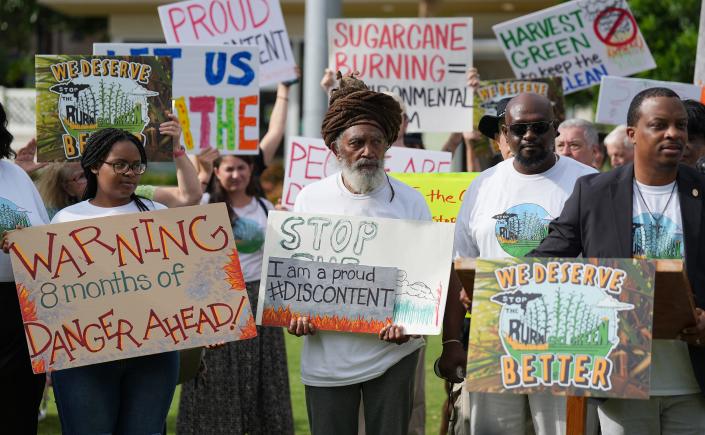
Protesters across from Florida Crystals' corporate headquarters in downtown West Palm Beach draw attention to life-threatening harms caused by pre-harvest sugar field burning in Florida.

Pahokee resident Colin Walkes, a former mayor of the town, was one of about 60 protesters outside Florida Crystals’ headquarters in West Palm Beach days before the season’s first fires. Ash falls on his home almost daily during burning season, while neighbors struggling with respiratory illnesses face months indoors.

“It’s not like it’s a special occasion,” he says.
'An immediate threat to your life or property'

A few years ago, a Twitter account called PBC Sugarcane Burning Analysis, using the handle @RealNikkiFried, began holding the agriculture commissioner’s purported “changes” to cane burning up to scrutiny, noting the numbers of fires and their continuing effects on predominately Black communities.

With Fried’s defeat in the gubernatorial primary in August, the Twitter account shifted its attention to Palm Beach County and its Division of Emergency Management, urging county officials to protect residents from the pollution.


While posting screen grabs of Florida Forest Service maps showing projected smoke and ash plumes for fires authorized each day, PBC Sugarcane Burning Analysis tweets called on the county to use its AlertPBC text message and calling system as well as its Twitter accounts to inform residents of the risks of authorized sugar cane fires in their vicinities. The weather satellite driven app MyRadar provides immediate notification of smoke in its subscribers’ areas, including plumes from agricultural fires, tweets from the account noted.

Palm Beach County Commissioner Sara Baxter took her seat in November representing the western communities affected by the smoke. In early December she said through a staff member that she had no comment on whether residents should be alerted to the fires.

While the county Division of Emergency Management’s website describes the alert service as providing “notifications about events that may affect your home, workplace, family’s schools, and more,” division Director Mary Blakeney said the terms of its contract limit the mass notifications to ones that concern “an immediate threat to your life or property.”

An event with longer-term implications, however, could prompt an alert if it involved the St. Lucie nuclear power plant, Blakeney acknowledged.

According to federal guidelines, the highest level of alert would be triggered in the event of damage to a plant’s reactor core when “radiation release is expected to be above the U.S. EPA protective guidelines and exposure levels are expected to go beyond plant boundaries.” In accordance with those guidelines, Blakeney said, Palm Beach County residents who have signed up for alerts to events within 50 miles of the plant would be notified.

Palm Beach County Emergency Management Director Mary Blakeney

In the absence of guidelines based on real-time monitoring of industrial or agricultural pollution, the emergency management division has no grounds to issue an alert to either evacuate or shelter in place, Blakeney said.

“That doesn’t mean residents can’t stay in on their own,” she added.

PBC SugarCane Burn Analysis also argues that in light of the latest data, the county could use its Twitter accounts to better educate its residents on the long-term effects of the fires and precautions that people already struggling with breathing issues could take.

Tweets from her division, Blakeney said, are intended to serve the broad public with “general standard safety and disaster preparedness information.”

Recent examples included using battery-operated lights rather than flame to light Halloween pumpkins and to use care handling turkey fryers when preparing Thanksgiving dinner.

The Palm Beach County Health Department might be better positioned to alert the public if the smoke poses a health hazard, Blakeney said.

The county health department, however, has long cited a need for data to support any action addressing the burns.

In contrast, an October tweet from HealthyFLPBC, the Palm Beach County health department invited beachfront residents to seek assistance from the county if they suspect the ocean water lapping their property might be contaminated with fecal bacteria.


The department also posts frequent health alerts on its website including news that the department continues to respond to “monkey pox” (now known as mpox) and warning of an unspecified rise in “mosquito borne disease activity” in parts of the county.

Although specifics are lacking in both of the above examples, decisions to post these alerts were all “data-driven,” according to a written response from a department spokesman after Palm Beach County Health Director Dr. Alina Alonso declined to respond to questions for this story.

Alonso has also repeatedly refused to comment on earlier Palm Beach Post reporting on the fires’ impacts and on studies indicating high levels of dangerous particulate matter pollution emitted by the cane fires.

The spokesman referred to “protocol” in which air quality advisories are based on 24-hour data gathered by the county health department, but the data do not reflect spikes in pollution released by the fires.

Any revisions to that protocol in response to the FSU study linking premature deaths in South Florida to sugar cane fire exposure, the spokesman wrote, “would need to come from an authorized authority like the DEP (Florida’s Department of Environmental Protection) or EPA.”

That, however, could be about to change, according to EPA spokesperson Shayla Powell. This year the EPA revisited the now 10-year-old National Ambient Air Quality Standards, she wrote, in response to a question from The Post, “as available scientific evidence indicate(s) that the current standards may not be adequate.”

Revisions are now being reviewed by the U.S. Office of Management and Budget and are expected to be opened for public comment in early 2023.
Stricter Clean Air Act standards could be coming soon

While U.S. Reps. Debbie Wasserman Schultz and Lois Frankel have both called for additional studies and monitoring of the pollution emitted by the fires, advocates have criticized them for stopping short of calling for an end to the practice.

Now, with pending revisions to Clean Air Act standards, both say they stand ready to support state and local officials to ensure safer restrictions are enforced.

One opportunity to do that, according to the Stop the Burn campaign and other environmental groups, lies in the upcoming five-year reauthorization of the federal Farm Bill and its sugar program, which they could use to persuade sugar companies to phase out the burning and to create incentives for environmentally friendly “green harvesting.”

It is a logical next step, says Friends of the Everglades Executive Director Eve Samples, noting that in November, the Biden administration blocked sugar imports from the Central Romana Corp., a company in the Dominican Republic, citing evidence of forced labor. The company, partly owned by Florida Crystals’ Fanjul family, has been the subject of reporting over decades on the brutal labor and living conditions of its workers.

"The Fanjuls are engaged in different abuses on U.S. soil,” said Samples whose organization has produced a series of videos documenting the effects of sugar cane burning on Glades residents. “The painful irony is those harmful practices are underwritten by the very generous program in the U.S. Farm Bill.”

A set of Depression-era mechanisms to bolster the economic strength of the industry, the federal sugar program ensures that sugar companies earn high returns on their crops through import quotas and tariffs, resulting in higher U.S. sugar prices than most other nations. Critics say these prices saddle U.S. companies that use sugar for their products and consumers with the costs of supporting a wealthy industry.

At the same time, says Gil Smart, executive director of VoteWater, an environmental nonprofit organization started by Stuart residents responding to waterway pollution, “the federal sugar program supports ― no, creates ― sugar’s political clout.”

In Florida alone, during the last election cycle, he notes, the sugar industry contributed $10.2 million to political campaigns.
Is change in the air?

Pahokee resident and Stop the Burn campaign member Walkes has a new congressional representative.

Sheila Cherfilus-McCormack won her seat after signing a pledge that she would take no direct campaign contributions from the sugar industry. She took the seat left vacant by the death of long-time Rep. Alcee Hastings, a 28-year congressional veteran whose campaigns were consistently well-supported by sugar industry donations.

Walkes has reached out to Cherfilus-McCormack to meet with residents and see the effects of the fires for herself. They are the same every year, he says.

While rules already barred burns after sunset, the changes announced under outgoing commissioner Fried declared that burns after sunset would require special authorization. On the Florida Forestry Service map showing daily burn authorizations, burns scheduled until 7:30 p.m., two hours after sunset this time of year, are frequent this season.

While Fried’s political committee received multiple contributions through political action committees heavily funded by the sugar industry, the political committees of her successor, former state Senate President Wilton Simpson, have been funded directly by sugar companies as well as by big sugar-funded PACs. Simpson campaigned on his support for the the state “Right to Farm” act that blocks what his campaign calls "frivolous suits" prompted by exposure to particulate matter from agricultural fires.

As Walkes and and other Glades community members continue to draw attention to their concerns, Pierce says his Wellington neighbors no longer seem resigned to the occasional smoke and ash that littered their Wellington properties during burn season, he says.

“Now,” he adds, “it’s more, 'Damn it, we’ve got to stop this.' ”

This article originally appeared on Palm Beach Post: Sugar cane burning still full of smoke despite study saying it kills
Protesters: 'Cop City' activist's killing doesn't make sense


R.J. RICO
Sun, January 29, 2023

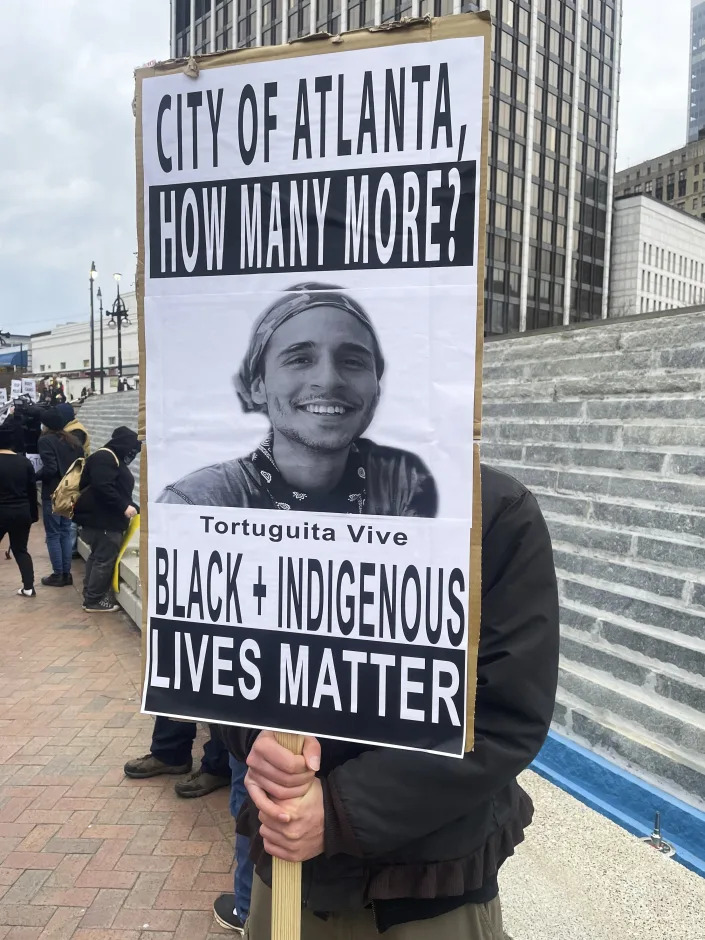
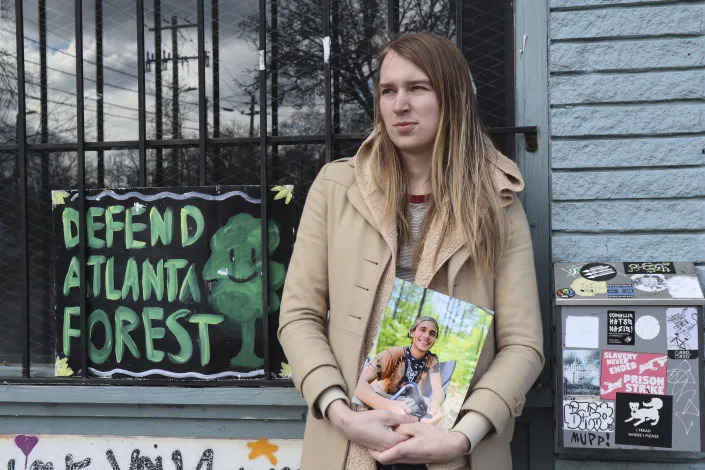
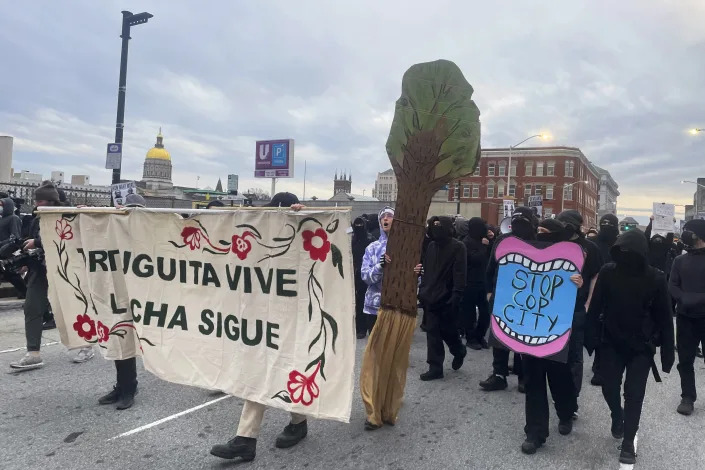
ATLANTA (AP) — Tortuguita’s cautious voice rang out from a platform amid the tall pines the first time Vienna met them: “Who goes there?” she remembers them calling.

The tree-dweller, who chose the moniker Tortuguita – Spanish for “Little Turtle” – over their given name, was perched above the forest floor in the woods just outside Atlanta last summer.

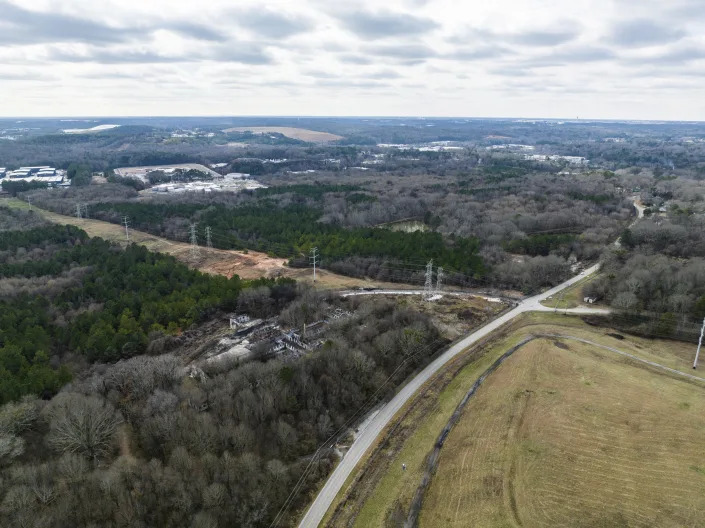
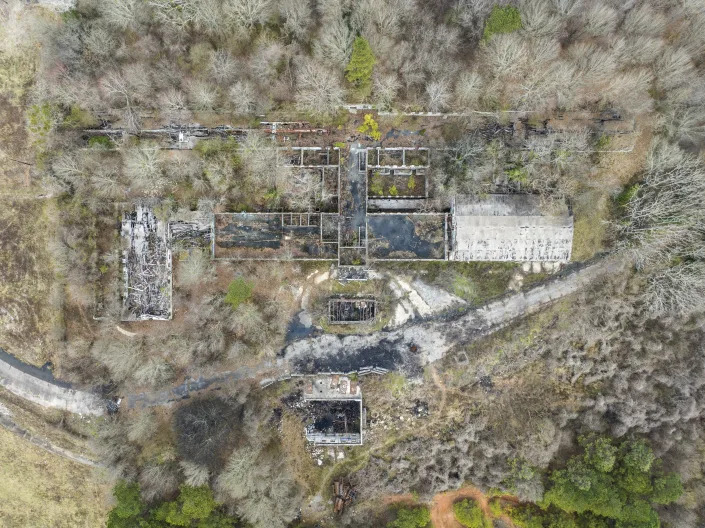
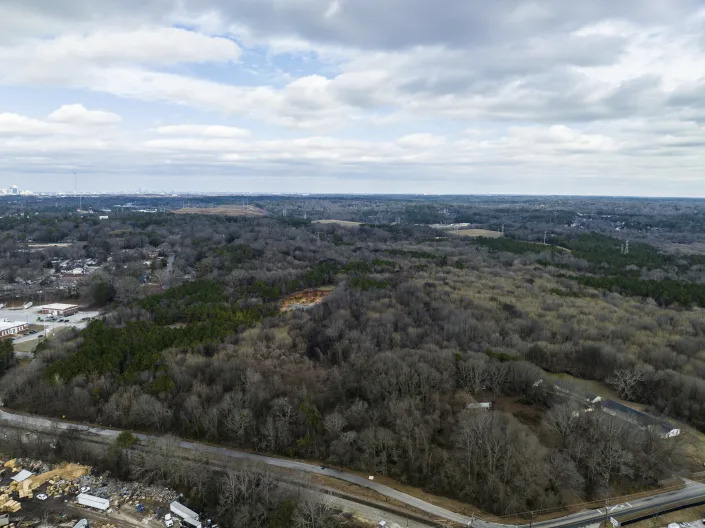
Vienna quickly identified herself, and Tortuguita’s watchfulness melted into the bubbly, curious, funny persona so many in the forest knew. They welcomed the newcomer and helped her settle in alongside the other self-proclaimed “forest defenders” on an 85-acre (34-hectare) site officials plan to develop into a huge police and firefighter training center. Protesters derisively call it “Cop City.”

“It was a magical experience for me, being able to live out our ideals,” Vienna told The Associated Press, recalling how the protesters shared clothing, food and money, all while engaging in community activism. She and Tortuguita quickly fell in love during those warm, late summer days.

That was before. Before a Jan. 18 police operation that ended in gunfire, leaving 26-year-old Tortuguita dead and a state trooper hospitalized, shot in the abdomen. Officials have said officers fired in self-defense after Tortuguita, whose given name was Manuel Esteban Paez Terán, shot the trooper. Activists argue it was state-sanctioned murder.

Outrage over the events has galvanized leftists around the world, with vigils from Seattle to Chicago to London to Lützerath, Germany.

Environmentalists for years had urged officials to turn the land into park space, arguing that the tall, straight pines and oaks were vital to preserving Atlanta’s tree canopy and minimizing flooding.

Vienna, 25, recalls her first four months there as joy-filled. There were campfires and sleepovers, in her tent or Tortuguita’s, nestled in the large wooded tract that activists call the Weelaunee Forest, the Muscogee (Creek) name for the land.

City Council approved the $90 million Atlanta Public Safety Training Center in 2021, saying a state-of-the-art campus would replace substandard offerings and boost police morale beset by hiring and retention struggles in the wake of violent protests against racial injustice that roiled the city after George Floyd’s death in 2020.

The planned development, largely financed by private corporate donations, enraged activists. Trees would be razed to build a shooting range, a “mock village” to rehearse raids and a driving course to practice chases. All would be within earshot of a poor, majority-Black neighborhood in a city with one of the nation’s highest degrees of wealth inequality.

Like many of those who took to living in the forest to oppose the development, Tortuguita was an eco-anarchist committed to fighting climate change and halting expansion of a police state, Vienna said.

Beyond the distrust many in the “Stop Cop City” movement have toward police, six people who knew Tortuguita told the AP that authorities’ allegations about the protester's final encounter do not match up with the person they knew: someone who, almost to a fault, always put others first.

“They were genuinely so generous and loving and always wanted to take care of people,” Vienna said of her partner, who last year took a 20-hour course to become a medic for the activists. “Their biggest thing was building communities of care.”

Tortuguita’s brother, Daniel Esteban Paez, said his sibling was even growing long hair to donate to children with cancer.

Tortuguita was a “citizen of Earth,” Paez said, growing up in their home country of Venezuela as well as Aruba, London, Russia, Egypt, Panama and the U.S. as their stepfather’s oil industry career led the family around the world. Tortuguita graduated magna cum laude from Florida State University and had been active in Food Not Bombs, helping feed homeless people in Tallahassee, Florida.

They had lived for several months among the “Stop Cop City” campers, a group whose reputation had been growing among leftist activists.

The campers built platforms in the trees and slept out, seeking public support and to block construction. They barricaded forest entrances and have been accused of threatening contractors and vandalizing heavy equipment.

Officials recently ratcheted up pressure. In December, authorities said firefighters and police officers were removing barricades to the site when they were attacked with rocks and incendiary devices. Vienna was among six arrested and accused of domestic terrorism for allegedly throwing rocks at fire department and emergency services workers, as well as a moving police vehicle. She’s fighting the charges in court.

The allegations are designed to scare others away from the cause, argued Marlon Kautz of the Atlanta Solidarity Fund, a group providing legal aid to those arrested.

“These charges are purely being brought for the sake of putting activists in jail ... and demonizing the movement in the public eye,” Kautz said. “When we see the authorities using the criminal justice system to chill speech and prevent activists from associating with the movement, that is a grave threat to democracy.”

DeKalb County District Attorney Sherry Boston declined to comment on the specific facts of each case but said "if a person uses threats and violence in an effort to force a government entity to change a policy ... that is defined as Domestic Terrorism according to the Georgia statute.”

A month after the December altercation with police, Tortuguita was dead, killed as officers tried to clear remaining protesters from the site. Seven others were arrested on domestic terrorism charges during what authorities called a “clearing operation.”

The Georgia Bureau of Investigation has said there is no body camera or dashcam footage of the shooting, but that ballistic analysis shows the trooper was shot by a bullet from a handgun in Tortuguita’s possession.

The GBI said Tortuguita was inside a tent and did not comply with officers’ commands prior to firing at authorities. Vienna declined to comment when asked whether she knew if her partner had a gun, though the GBI says records show Tortuguita legally purchased the firearm in 2020.

Vienna and other activists have questioned the official version of events, calling the shooting a “murder,” accusing officials of an inconsistent, vague narrative and demanding an independent investigation. The GBI says it has a “track record of impartiality” when investigating officer-involved shootings.

On Saturday, violence and vandalism broke out when a masked contingent among hundreds protesting in downtown Atlanta began throwing rocks and aiming fireworks at a skyscraper housing the Atlanta Police Foundation. Activists then lit a police cruiser on fire and smashed a few more windows. No injuries were reported.

Authorities arrested six more people that night on charges including domestic terrorism, saying that “explosives” had been recovered. Police declined to elaborate when asked whether they were referring to fireworks or more dangerous incendiary devices.

“Make no mistake about it: these individuals meant harm to people,” Atlanta Mayor Andre Dickens said during a news conference Saturday.

In response, GOP Gov. Brian Kemp on Thursday declared a state of emergency, giving him the option of calling in the Georgia National Guard to help “subdue riot and unlawful assembly.”

Paez, Tortuguita’s 31-year-old brother from Texas, said his family is heartbroken.

“Our family doesn’t want violence toward cops, but we also don’t want violence from cops,” Paez told the AP. “I’m just terrified at the thought that the tactics that were used to kill my sibling are going to be replicated at Cop City.”

He bristles at the allegation that Tortuguita was a domestic terrorist. They were too kind. Too smart. Too caring.

“He was a privileged person but he chose to be with the homeless, to be with the people that needed his caring,” said Tortuguita’s mother, Belkis Terán, who lives in Panama.

For a long time, Paez said he did not care about the forest’s fate. He was far more concerned about Tortuguita’s safety.

“I told my sibling, ‘If you were ever to die, I’m going to dump oil and hazardous materials in your stupid forest,’” Paez recalled, his voice cracking. “They called my bluff. I care about the forest now.”

THE FBI DECLARED ECO ACTIVISTS TERRORISTS AFTER 9/11
NO ECO ACTIVISTS WERE SAUDI'S

Arrests in Atlanta 'Cop City' protests raise concerns over domestic terrorism charges

Daniella Silva
Sun, January 29, 2023 

The decision by prosecutors to pursue domestic terrorism charges against opponents of a police training center outside Atlanta is drawing criticism, with some legal experts saying it’s a potentially dangerous overreach that could be viewed as politically motivated.

More than a dozen people have been charged with domestic terrorism in connection with the protests, including seven people after a Jan. 18 confrontation with police who were trying to clear the proposed site of the center, dubbed "Cop City" by critics.

One man was fatally shot by police in the confrontation after he opened fire and wounded a state trooper, authorities said. In protests that followed the killing and the police sweeps, six people were arrested and charged with domestic terrorism.

In December, the same charges were filed against five people after law enforcement moved in to clear barricades and confront protesters.

Critics of domestic terrorism laws, including some civil rights groups, oppose them “because of the risk of politicization, because they can be used against politically disfavored groups by the government,” Patrick Keenan, a professor of law at the University of Illinois, said.

A 2017 Georgia law defines domestic terrorism as a felony intended to kill or harm people; “disable or destroy critical infrastructure, a state or government facility, or a public transportation system"; “intimidate the civil population or any of its political subdivisions”; and change or coerce state policy or affect the conduct of government “by use of destructive devices, assassination, or kidnapping.” Conviction carries a maximum sentence of 35 years in prison.


The allegations against the protesters include trespassing, resisting arrest, throwing rocks and glass bottles and damaging property, including setting fire to a police car. Authorities have also said they found “explosive devices, gasoline, and road flares” in an area in the forest where protesters had makeshift treehouses.

Georgia Gov. Brian Kemp, a Republican, has called the protesters “militant activists” and said “we will bring the full force of state and local law enforcement down on those trying to bring about a radical agenda through violent means.”


A protester holds up a sign that says

Although “domestic terrorism” is defined in the Patriot Act of 2001there is no specific federal crime covering acts of terrorism inside the U.S. that are not connected to al Qaeda, the Islamic State, other officially designated international terrorism groups or their sympathizers — even though the U.S. has said in recent years that white supremacist and militia groups are a top domestic terrorism threat.

Last year's mass shooting at a grocery store in Buffalo, New York, fit that category, said Javed Ali, an associate professor at the University of Michigan’s Gerald R. Ford School of Public Policy.

The 19-year-old white supremacist who shot and killed 10 Black people last May was the first person in New York state convicted of domestic terrorism motivated by hate; he also pleaded guilty to first-degree murder. The terrorism charge carries an automatic sentence of life in prison.

But in a number of states, including Georgia, domestic terrorism laws include a wide range of offenses outside those motivated by hate.

Because the Georgia statute “focuses on conduct that is intended to intimidate the government or to affect the government in any way,” Keenan, the law professor, said, it is “especially vulnerable to politicized use.”

Keenan said he believes attaching the domestic terrorism label to protesters could have “some really dangerous effects.”

“I don’t think it’s mostly protesters who are the biggest domestic terrorism threats. Domestic terrorism threats are coming from other places, and so to use this statute really publicly and prominently to try to squash this protest seems to me, kind of the politicized use of the law that a lot of people were worried about,” he said.

Keenan said that while he does not condone violence or attacks on law enforcement, he believes there are other ways to address those things under Georgia law that do not include a domestic terrorism charge.

“As someone who handled capital murder cases in Georgia, I can tell you Georgia law has a lot of ways to deal with violence against law enforcement or against anyone,” he said. “So this domestic terrorism statute is not necessary and it can lead to this politicized use that I think doesn’t do anybody any good.”

Joshua Schiffer, an attorney who represents one of the protesters, said he believes that as the investigation moves forward, “the charges won’t be justified,” calling them “particularly concerning” given Georgia’s rich history of civil rights and civil disobedience.

“The use by the state of such an aggressive statute indicates the state’s position when it comes to protesters and how the state intends to deal with protesters,” he said. “This state action is meant to impact and chill this protest issue nationally.”

Ali, a former senior U.S. government counterterrorism official, said such cases highlight what could be a new development at the state and local level where authorities will begin to bring more domestic terrorism charges.

He said that prosecutors typically bring such charges when they believe there is enough evidence to support them, “because why would you bring a charge forward on something that’s fairly unusual and controversial if you’re going to lose the case in court?”

In the months leading up to the most recent arrests, critics have raised environmental concerns about building a $90 million law enforcement training center on 85 acres just outside Atlanta. Opponents say it would devastate forest, and they also object to making such a huge investment in policing after the national 2020 protests against police violence and systemic racism following the murder of George Floyd.

Officials have defended the center, saying that the forested land was the only viable location and law enforcement needs modern training facilities.

On Thursday, Kemp declared a state of emergency in Georgia, the result, he said, of “unlawful assemblage, violence, overt threats of violence, disruption of peace and tranquility of this state and danger existing to persons and property.” The order gives Kemp the ability to call in the Georgia National Guard.

Marlon Kautz, an activist with the Atlanta Solidarity Fund, which provides resources to people arrested during protests, said the group was “extremely alarmed at the use of this domestic terrorism statute.”

“It’s clear that it’s being used in an overly broad way to maliciously prosecute people,” he said.

The Atlanta Solidarity Fund said that the state of Georgia was trying to “set an alarming precedent” with the charges.

“If they are successful, protesters across the country could be facing similar speech-chilling ‘domestic terrorism’ charges,'” it said in a statement this week. “We must strongly reject this extreme level of repression here and now, before it becomes the norm for activists in every movement.”

This article was originally published on NBCNews.com


A police officer blocks a downtown street following a protest, Saturday, Jan. 21, 2023, in Atlanta, in the wake of the death of an environmental activist killed after authorities said the 26-year-old shot a state trooper. (AP Photo/Alex Slitz)


Lawsuits filed over U.S. state restrictions on abortion pills

Wed, January 25, 2023 
By Jonathan Stempel and Brendan Pierson

Jan 25 (Reuters) - A maker of abortion pills and a doctor have filed lawsuits challenging state restrictions on the medication, in the first lawsuits of their kind since the U.S. Supreme Court overturned the federal constitutional right to abortion.

In a complaint filed in federal court in Huntington, West Virginia, GenBioPro Inc said the state cannot override the U.S. Food and Drug Administration (FDA) approval from 2000 of mifepristone by banning the drug, the first in a two-drug regimen for medication abortions.

The doctor, Amy Bryant, filed a separate lawsuit in the federal court in Durham, North Carolina, challenging state-imposed restrictions on obtaining mifepristone, which she said impeded her ability to treat patients.

Both lawsuits fuel a growing legal battle over medication abortion in the wake of the U.S. Supreme Court's June ruling eliminating the longstanding right to abortion established 50 years ago in Roe v. Wade, and effectively left states to regulate the procedure.

In a separate case, anti-abortion activists are urging a Texas federal judge to undo FDA approval of mifepristone altogether, and effectively pull the drug off the market.

Medication abortions make up more than half of U.S. abortions. Misoprostol is the second drug of the two-drug regimen for medication abortions.

GenBioPro, which sells a generic version of mifepristone, said West Virginia's Unborn Child Protection Act, which banned nearly all abortions in September, "conflicts with the strong national interest in ensuring access to a federally approved medication to end a pregnancy."

According to the lawsuit, the abortion pill ban violated the U.S. Constitution's Supremacy Clause because Congress gave the FDA the power to regulate drugs. The clause gives federal laws priority over conflicting state laws.

GenBioPro also said that the state's ban violated the Constitution's Commerce Clause, which restricts states from burdening interstate commerce.

U.S. Attorney General Merrick Garland said last June that states "may not ban mifepristone based on disagreement with the FDA's expert judgment about its safety and efficacy."

Bryant objected to North Carolina's requirements that patients obtain abortion pills only in person from physicians in specially certified facilities, and undergo state-mandated counseling at least 72 hours before having abortions.

Her lawsuit said the restrictions "interfere with her ability to provide medical care to her patients according to her best medical judgment and in accordance with federal law."

"We are prepared to defend West Virginia's new abortion law to the fullest," West Virginia Attorney General Patrick Morrisey, a Republican, said in a statement.

A spokeswoman for North Carolina Attorney General Josh Stein, a Democrat, said the state was reviewing Bryant's complaint.

GenBioPro previously sued Mississippi over restrictions on mifepristone there, but dropped the case in August after the state banned nearly all abortions following the Supreme Court's decision. The company cited a "changed national landscape" for its decision.

Twelve states, all of which have Republican governors and legislatures, now ban nearly all abortions, including medication abortions.

As of November, 16 states that permit some abortions, including North Carolina, restrict medication abortion to some extent, according to the Guttmacher Institute, a research group that supports abortion rights.

The cases are GenBioPro Inc v Sorsaia et al, U.S. District Court, Southern District of West Virginia, No. 23-00058; and Bryant v Stein et al, U.S. District Court, Middle District of North Carolina, No. 23-00077. (Reporting by Jonathan Stempel and Brendan Pierson in New York Editing by Tomasz Janowski, Alexia Garamfalvi and Howard Goller)