Sunday, July 09, 2023

Did the Cambrian explosion really happen?

The Cambrian explosion is often presented as a chaotic moment in early evolutionary history (Image credit: canbedone via Getty Images)

A cursory flip through any high school biology textbook will inevitably surface a mention of the Cambrian explosion, a period about 540 million to 520 million years ago during which many animal groups first sprang into life and diversified. The event is frequently described as rapid and prolific, evoking a chaotic moment in early evolutionary history. 

But was there really a dramatic burst of biodiversity on Earth during this time? 

Thomas Servais, a paleontologist and research director at the French National Center for Scientific Research (CNRS), and colleagues published a 2023 paper in Palaeogeography, Palaeoclimatology, Palaeoecology arguing that the Cambrian explosion didn't happen in the way it's popularly portrayed. It wasn't truly an explosion, he told Live Science, but rather a gradual increase in biodiversity that took place throughout the early Paleozoic era (541 million to 251.9 million years ago). The appearance of an "explosion," he said, is really an artifact of the biases scientists have when studying the past. 

The process of locating, excavating and cataloging fossils is costly and laborious, so researchers often add their specimens to large databases to make it easier to compare finds. Two of these databases, the Paleobiology database and the Geobiodiversity database, collectively contain roughly 2 million entries and have been used to investigate global patterns in biodiversity, including trends that appear during the Cambrian.

The authors assert that these resources aren't truly global, however. The Paleobiology database is largely made up of fossils found in Europe and North America, while the Geobiodiversity database mostly includes fossils from China. These regions host some of the most famous Cambrian deposits in the world — including Canada's Burgess Shale and the Chengjiang fossil bed in China's Yunnan province — that pull the majority of the funding. But at best, they can give "a regional assessment of patterns in diversity, and then only for those species that preserve well enough to persist in the fossil record," Servais said.

The databases also include specimens from another period, called the Great Ordovician biodiversification event (GOBE), thought to have taken place roughly 40 million to 50 million years after the Cambrian explosion. The period between the two events is relatively understudied and seems to lack the same pattern of flourishing biodiversity. But this too, Servais said, is the result of bias on the part of scientists. Were they to put the same effort into studying this period, the existence of two individual events would likely melt away, he said.

Related: Why do Cambrian creatures look so weird?

Researchers have unearthed numerous fossils from the Cambrian period. (Image credit: NPS)

Karma Nanglu, a paleontologist at Harvard University who studies Cambrian and Ordovician fossils, told Live Science he understands why Servais and his colleagues would like to tamp down on the use of terms like "explosion" and "event," and said it's well-accepted in the field that biodiversity estimates may be influenced by sampling bias. "But to my mind, I still do think there is actually quite good evidence that there was a Cambrian explosion, as we would typically call it," he said.

Regardless of whether the databases are biased toward certain groups or areas, there is a general trend of increasing complexity that is visible in the animals themselves.

"It's not just that two species are equivalent to each other in terms of what they contribute to diversity, it's that species A and species B are drastically different from each other in terms of the way their bodies are organized, how they develop, what their ecological role might be, how they live," Nanglu said. "And to that point, I think there's direct evidence that you can read straight from the rocks.

The causes for this biodiversification aren't fully known, but scientists have a few ideas. During the Precambrian, the supercontinent Rodinia broke apart into pieces, including Gondwana (modern-day Antarctica, South America, Africa, Australia, India and New Zealand) and Laurentia (most of North America). During this time, oxygen levels in the ocean increased, and there was a greater proportion of warm, shallow, tropical coastline — the perfect conditions for new species to evolve and later be fossilized in. A similar hypothesis has been studied for the breakups of the supercontinents Pannotia and Pangaea much later, and researchers have identified a link between the fracturing and animal diversity in the Phanerozoic eon (541 million years ago to the present). 

Saturday, July 08, 2023

Canadian court gives thumbs up on emoji counting as binding contract

A dispute over a flax contract could usher in a ‘new reality in Canadian society’ as emoji make their way into everyday communication, according to a Saskatchewan judge


By Aaron Gregg
Updated July 7, 2023 
The Washington Post 

What started as a run-of-the-mill contract dispute in rural Canada has yielded a unique legal precedent for the internet age: An emoji constitutes a legally binding contract.

In a June 8 opinion that was itself peppered with the little yellow “thumbs-up” emoji, Saskatchewan judge T.J. Keene ruled that a farmer’s emoji response to a contract sent by a grain cooperative did qualify as agreement on the contract terms. He ordered the farmer to pay 82,200 Canadian dollars ($61,000) in damages.

Thanks to technology, Keene argued, emoji have become a common facet of modern communication, something the legal system will have to confront moving forward.

“This Court cannot (nor should it) attempt to stem the tide of technology and common usage — this appears to be the new reality in Canadian society and courts will have to be ready to meet the new challenges that may arise from the use of emoji and the like,” Keene concluded.

Although Keene said the case was “novel” for his district, the ruling plays into broader issues surrounding the use of images in electronic communication.

The ruling arose from a dispute between a farmer, Chris Achter, and a grain processing cooperative in southwestern Saskatchewan. During the covid-19 pandemic in 2020, the grain cooperative stopped sending its salespeople to deal with farmers face-to-face and instead handled contracts by phone or email.

The cooperative claimed that both parties entered a deferred delivery purchase contract for 87 metric tons of flax in 2021, with an agreement to pay 669.26 Canadian dollars (about $500) per ton.

According to court records, a cooperative employee drafted a contract that listed “Nov.” as the delivery period, signed it, and took a photo of it on his cellphone. He then sent it to Achter, along with the phrase “Please confirm flax contract.” In response, Achter texted back a thumbs-up emoji.

However, the grain never arrived, prompting the cooperative to sue for breach of contract and insist that the emoji constituted an agreement.

In a deposition, Achter countered that he had not meant the emoji to function as a signature.

“I confirm that the thumbs-up emoji simply confirmed that I received the flax contract,” Achter said. “It was not a confirmation that I agreed with the terms of the Flax Contract. The full terms and conditions of the Flax Contract were not sent to me, and I understood that the complete contract would follow by fax or email for me to review and sign.”

Achter added that he regularly texted back and forth with the salesperson, and many of those texts were informal. As supporting evidence, he presented texts showing a joke that the salesperson had previously sent him.

“I deny that he accepted the thumbs-up emoji as a digital signature of the incomplete contract,” Achter said in the deposition. “I did not have time to review the Flax Contract and merely wanted to indicate that I did receive his text message.”

All about nuance

Emoji are commonly used to emphasize a text message or react to a post on social media. To some, they can take the place of words: The so-called “tears of joy” emoji was named the 2015 word of the year by Oxford Dictionaries, which said in a statement at the time that emoji “have been embraced as a nuanced form of expression, and one which can cross language barriers.”

In some cases, they have entered the business world as well, as some companies favor the workplace communications platform Slack over more formal methods like email.

Emoji have also sometimes posed complicated legal questions. In a 2014 case, Ghanam v. Does, a Michigan appeals court had to analyze the facts and circumstances surrounding a “sticking out tongue” emoticon in a defamation case. The court concluded that it was a joke, ruling in favor of the defendant.

In other cases, emoji have been used as evidence showing a person’s intent, such as a Pennsylvania drug conviction in which a defendant had used an image of a rat to indicate someone had been disloyal.

In a January 2022 article for the American Bar Association, attorney Heather King advised litigators to focus on “factors such as the sender’s and recipient’s intent, surrounding circumstances and the text accompanying the emoji.”

Culture can be important, too, King wrote, noting that a thumbs up gesture can be considered offensive or vulgar in some Middle Eastern countries.

It’s Deadline Day for Deep-Sea Mining

The International Seabed Authority had until this weekend to finish drafting exploitation regulations for deep-sea mining. They’re not done. So now what happens?

by Elham Shabahat

Two years ago, the Republic of Nauru, a small island nation in the South Pacific, put the world on course for the beginning of a new industry: deep-sea mining in international waters. Nauru triggered a clause forcing the International Seabed Authority (ISA)—the body that governs the seabed in international waters—to finalize the Mining Code, the rules that will dictate where and how countries and companies can mine the deep sea. That two-year timeline runs out this weekend, on July 9. Despite the looming deadline, the ISA is far from finishing its task.

“I don’t see any chance that the regulations will be ready for adoption in July,” says Pradeep Singh, an expert on the law of the sea at the Research Institute for Sustainability in Potsdam, Germany.

The tight deadline and slow development of the Mining Code’s exploitation regulations have put the world in a potentially tricky bind. Once the two-year deadline passes, the ISA is on the hook to consider mining bids under whatever existing draft regulations it has in place.

Efforts to finish the exploitation regulations by the deadline have been mired by an array of difficult issues ranging from how mining could affect marine ecosystems, to how, exactly, the profits of deep-sea mining will be distributed to benefit all of humankind. That last is a requirement mandated by the United Nations Convention on the Law of the Sea, which gives the ISA its authority.

Earlier this year, the ISA—at Germany’s request—set up a scientific working group to determine thresholds for acceptable environmental risk. Deep-sea mining will generate plumes of sediment on the seabed and in the water column that could affect marine life. But scientists’ understanding of how these plumes could impair marine ecosystems is clouded by uncertainty, making the task of developing thresholds significantly harder.

Along with concerns around sediment plumes, the ISA is also looking to establish limits for other environmental hazards, such as noise pollution, which can affect how animals including dolphins and whales communicate and navigate in deeper water. Another top concern is toxicity. Recent research suggests that the objects of deep-sea miners’ desire—small rocks containing cobalt, manganese, nickel, and copper—are radioactive and pose substantial health risks to people. While there is some research in progress, not much is known about how this could affect marine organisms.

Part of the ISA’s mandate is to protect the marine environment. But with so many uncertainties and scientific gaps, ISA member states are struggling to define acceptable limits to environmental harm.

“Right now, we don’t have any environmental thresholds, which are important to understand when mining might cause serious harm to the environment,” says Jesse van der Grient, a deep-sea biologist at the South Atlantic Environmental Research Institute.

With so much still left to negotiate, and the likelihood that the exploitation regulations will not be finalized in time, ISA member states are now being forced to consider what to do if a mining application comes in before the rules are finished. A group of four nations led by Chile has put forward a proposal to reject all mining applications until the rules are complete. There is also a chance that the ISA might appeal to the International Tribunal of the Law of the Sea for an advisory opinion on the consequences of missing the two-year deadline. These options will likely be the focus of the ISA’s upcoming meeting in Jamaica.

According to Singh, however, Nauru may have good reasons to want to wait before moving ahead with its bid. Nauru’s quest to mine the deep sea is being made in concert with Nauru Ocean Resources, a company that is wholly owned by Vancouver, British Columbia–based the Metals Company. Along with setting thresholds for environmental harm, the Mining Code will also define the liability of a sponsoring state like Nauru in the event that something goes wrong. If Nauru were to apply for a mining license with an unfinished Mining Code, Singh says, it would not be very wise.

“If you put in a [mining] application without the regulations, you’re basically doing so without protection,” he says. “Why would you sign a blank check to expose yourself to liability?”

As the ISA scrambles to finish the Mining Code, 15 countries—including Canada, France, Fiji, Micronesia, and, most recently, Switzerland—have also issued statements against deep-sea mining in international waters.

Earth's final frontier: the global race to exploit deep sea minerals • FRANCE 24 English

Jul 7, 2023
Today's FOCUS takes us into the depths of the Atlantic and Pacific oceans. Many of the minerals used in our day-to-day electronic devices can be found on the seabeds, and the global race to exploit them has already begun. However, scientists fear that this will result in long-lasting environmental damage, with major losses for the biodiversity of the world's oceans. A report from our colleagues at France 2 with FRANCE 24's Guillaume Gougeon.


Deep-sea metal rush in doubt as regulatory body meets

Reuters | July 7, 2023 |

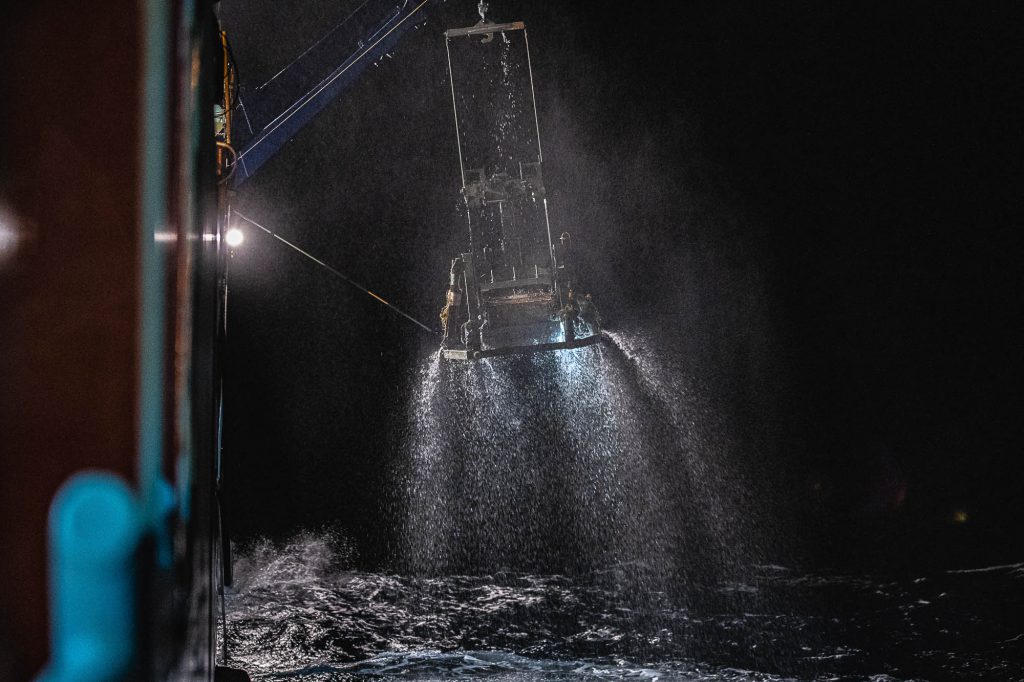
Image: The Metals Company

Plans to extract minerals from the ocean floor are expected to be put on hold next week at a meeting of the UN body regulating the sector, with environmental and economic risks threatening to scupper the industry before it begins.


Environmental groups expect next week’s meeting of the International Seabed Authority (ISA) in Kingston, Jamaica, to rule out any immediate permission for mining to begin. Countries will also discuss a moratorium later in the month to ensure projects do not go ahead without safeguards.

Mining companies say the ocean floor is potentially rich in metals like nickel and cobalt used in batteries for electric vehicles, so their extraction will support the global energy transition.

Any permitting delay will hurt the prospects of Canada’s The Metals Company (TMC), which has led efforts to exploit seabed minerals in the Pacific. The company was not immediately available to comment.

Environmental groups warn that the use of heavy machinery to extract “polymetallic nodules” from ocean floors could cause irreparable damage to marine ecosystems, destroying habitats, churning up sediment and disrupting migratory routes.

TMC says that while deep-sea mining will have some ecological impact, it would be less damaging than land-based extraction.

At the heart of the discussions is a loophole known as the “two-year rule”, which says the ISA council must “consider and provisionally approve” applications two years after they are submitted, even though it has yet to finalize related regulations. The Pacific island of Nauru, TMC’s sponsoring state, triggered the loophole in July 2021.

Nauru has indicated it would submit a “plan of work” to the ISA’s technical committee this year but the committee is not expected to formally recommend approval, said Sian Owen of the Deep Sea Conservation Coalition, a non-government environmental group.

“This is a reflection of the growing momentum, globally and also within the ISA Council, of a move towards a pause,” she told a briefing. Germany, New Zealand and Switzerland have called for a moratorium, while France supports an outright ban.

ISA is responsible for exploration in sea areas beyond national jurisdictions, and its decisions will not prevent countries from digging for minerals in their own territorial waters. Norway recently announced plans to open up 280,000 square kilometres (108,000 square miles) to exploration.

Beyond the environmental impact, soaring costs and uncertain economic returns could also turn off investors.

“The fact is no one has ever mined the sea floor in any major commercial capacity,” said Victor Vescovo, an investor and deep-sea explorer who will attend the meeting.

“I think they would end up being stopped not by environmental concerns, not even by political pressure, but by the weight of the financial risk and poor performance that would happen at those incredibly difficult operating depths.”

(By David Stanway, Melanie Burton and Clara Denina; Editing by Robert Birsel)

Underwater mining of high seas inches closer, worrying environmentalists


08 Jul 2023

UNITED NATIONS: Governments will soon likely be able to apply for deep sea mining contracts in international waters, a plunge into the unknown that is worrying conservationists as calls for a moratorium on such digging grow.

States have for ten years been negotiating a mining code to set rules for the possible exploitation of nickel, cobalt and copper in deep seabed areas that fall outside of national jurisdictions.

But agreement has so far been elusive, and on Sunday a clause is set to expire that allows governments to apply for contracts while negotiations continue.

"I think it's a very real possibility that we see an application submitted this year," Emma Wilson of the Deep Sea Conservation Coalition told AFP.

"So it's crucial for states to be bold and implement the necessary measures to protect our ocean," she said, adding that the International Seabed Authority (ISA) is entering "the most critical decision-making period in the history of its existence".

The ISA was established under the 1982 UN Convention on the Law of the Sea. It is responsible for protecting the seabed in the high seas as well as regulating activities related to coveted minerals.

Presently, the Jamaica-based body only grants exploration permits for these areas, which the UN convention classifies as "the common heritage of mankind."

In the summer of 2021, the small Pacific island state of Nauru threw a spanner into the works of the decade-long negotiations for the mining code by triggering a clause demanding that agreement be reached within two years.

With that timeframe now up, if Nauru were to apply for a contract for Naura Ocean Resources (Nori), a subsidiary of Canadian firm The Metals Company, then ISA would have to consider the request - but may not necessarily give the green light.

The Nauru authorities have given assurances that they will not act immediately, but other companies sponsoring states' underwater mining ventures could take advantage of the opportunity, experts say.

"I'm not too concerned," Pradeep Singh, a laws of the sea expert at the Research Institute for Sustainability in Potsdam, Germany, told AFP.

"I think it would be a mistake to submit an application anytime soon, seeing that states are still negotiating and working towards completing the regulation.

"The indication is quite clear that states are very reluctant and hesitant to allow mining to commence without regulations," he added.

"QUESTION OF CREDIBALITY"


In March, the 36 member states of the ISA Council, the decision-making body on contracts, noted that commercial exploitation "should not be carried out" until the mining code was in place.

But they were unable to agree on the process for examining a possible application, or on the precise interpretation of the clause triggered by Nauru.

NGOs fearing that companies may exploit the legal vacuum hope that the Council will make a much clearer decision when it meets in Kingston from Jul 10 to Jul 21.

Meanwhile, Chile, France, Palau and Vanuatu have chosen to take the debate to the political level.

At their request, and for the first time, the assembly of ISA's 167 member states will discuss a "precautionary pause" in mining when it meets between Jul 24 and Jul 28.

"The aim is to put the issue on the table, to have a debate that has never taken place before", French Secretary of State for the Sea Herve Berville told AFP, hoping that this will "encourage other countries to follow suit."

The coalition supporting the moratorium, although gaining ground, currently comprises just under 20 countries.

"The aim is that by 2024, it will be clear to a majority of countries that a precautionary pause in the exploitation of the seabed is the right thing to do if we are to meet the challenges of climate change and biodiversity," Berville added.

He insists it's a "question of credibility" at a time when the world has just adopted the first treaty to protect the high seas and has set itself the target of preserving 30 per cent of land and oceans by 2030.

NGOs and scientists say that deep sea mining could destroy habitats and species that may still be unknown but are potentially vital to ecosystems.

They also say it risks disrupting the ocean's capacity to absorb carbon dioxide emitted by human activities, and that its noise interferes with the communication of species such as whales.

"We have the opportunity to anticipate this new extractive industry and stop it before it can do any damage to our planet," said Louisa Casson of Greenpeace.

Source: AFP


Innovation, collaboration, education emerge as themes of N.W.T. climate conference

3-day conference intended to inform the territorial government’s next strategic framework

Man at conference smiles at camera.
Richard Nerysoo, a former N.W.T. politician, is now an "energy champion" with a federal initiative focused on supporting remote Indigenous communities in reducing diesel reliance. (Natalie Pressman/CBC)

To tackle our climate crisis, Richard Nerysoo says we can't be paralyzed by fear.

Nerysoo, a former N.W.T. politician, is now an "energy champion" with a federal initiative that supports remote Indigenous communities to reduce their reliance on diesel. He participated in a three-day conference this past week engaging residents, government representatives and industry on what is working and not working in the territory's plan to address climate change.

Input from the sessions is intended to inform a review of the 2019-2023 action plan, and contribute to developing the next strategy. 

"Because we fear, we don't take responsibility, and because we don't take responsibility — we don't take action," Nerysoo said Friday, on the final day of the event.

Man in pink shirt stands in front of poster of ice road.
Robert Sexton is the director of energy for the government of the Northwest Territories and president of the board of directors of Arctic Energy Lines. He said events like this help channel diverse perspectives into a shared goal. (Natalie Pressman/CBC)

Nerysoo suggested some of that action start with including Indigenous people on boards and renovating homes to be more energy efficient rather than always building new. He said industry is also learning it has social responsibility in remediating sites.     

"To have markets, change has to happen," he said.

Robert Sexton is the director of energy for the government of the Northwest Territories and president of the board of directors of Arctic Energy Lines. Like Nerysoo, he said industry is changing and economics and environmentalism don't need to be at odds. 

"Investors want to see more sustainable mining, lower carbon mining, so the change is going to happen I think and it looks like that's the way it's going to go everywhere."

Sexton said events like the conference help channel diverse perspectives into a shared goal. 

"You have people from around the N.W.T. communities, Indigenous governments, leaders, NGOs, in this type of structured environment, there's a lot of things being said that we would never think of and absolutely need to take into account."

Colourful posters display "policy lens", "Indigenous leadership", and "economic lens".
Posters from the event display participant ideas about different lenses from which to approach climate action. (Natalie Pressman/CBC)

As far as how the event will inform the territory's next climate plan, Sexton says it's too soon to say. 

In addition to the conference participants, the territory is collecting feedback from Indigenous governments and the public through an online portal until August 22 — though Sexton said he and his team would be happy to take feedback anytime. 

He said that will then be packed into a report, which will help to inform the territory's next government.   


Vince Teddy, a hamlet councillor in Tuktoyaktuk, said he's thinking about how best to communicate the issues to get the help his community, and the North has been asking for. 

He said leadership in Tuktoyaktuk and the Inuvialuit region have been proclaiming the dangers of rising sea levels and permafrost thaw for over a decade. 

"Finally over the last two years, there's been some action taken by the federal government and finally they've come across to say 'We hear you, we understand where you're coming from, we'll help you out to do mitigation, to look at ways to continue to live where you're living today as best as possible.' 

But we know the reality is we gotta move 50 years from now. We have to be out of there. So that's the stage we're at."

Two men at a conference sit at a table.
Vince Teddy, left, and Zain Ali, right, said that coming out of the conference, they're thinking about education. (Natalie Pressman/CBC)

Zain Ali, the education program manager with the environmental non-profit Ecology North, said educating on climate change is an important step in motivating people to take action. 

"Finding a way to take all of this information and make it digestible not only for the general public but also for youth and children that will end up using this as kind of a pathway to careers that they might take on to address this."

Ali also emphasized that through continued teamwork, it is possible to move toward a greener world. But it has to be ongoing. 

"We all can enact change," he said. "We've talked a lot about collaboration and coordination, it just needs to continue. It can't just happen just at conferences where we see each other, we make great relationships and then we don't see each other again for a certain amount of time. 

It'll be really nice if there was a way to kind of coordinate all the relationships that have been built."

STEEL CITY

Air monitoring shows high levels of cancer-causing pollutant in neighbourhoods across Hamilton

Citywide pollution-tracking found unhealthy levels of common steelmaking pollutant benzo(a)pyrene at monitoring sites from Dundas to Stoney Creek.


By Matthew Van Dongen Spectator Reporter
Saturday, July 8, 2023

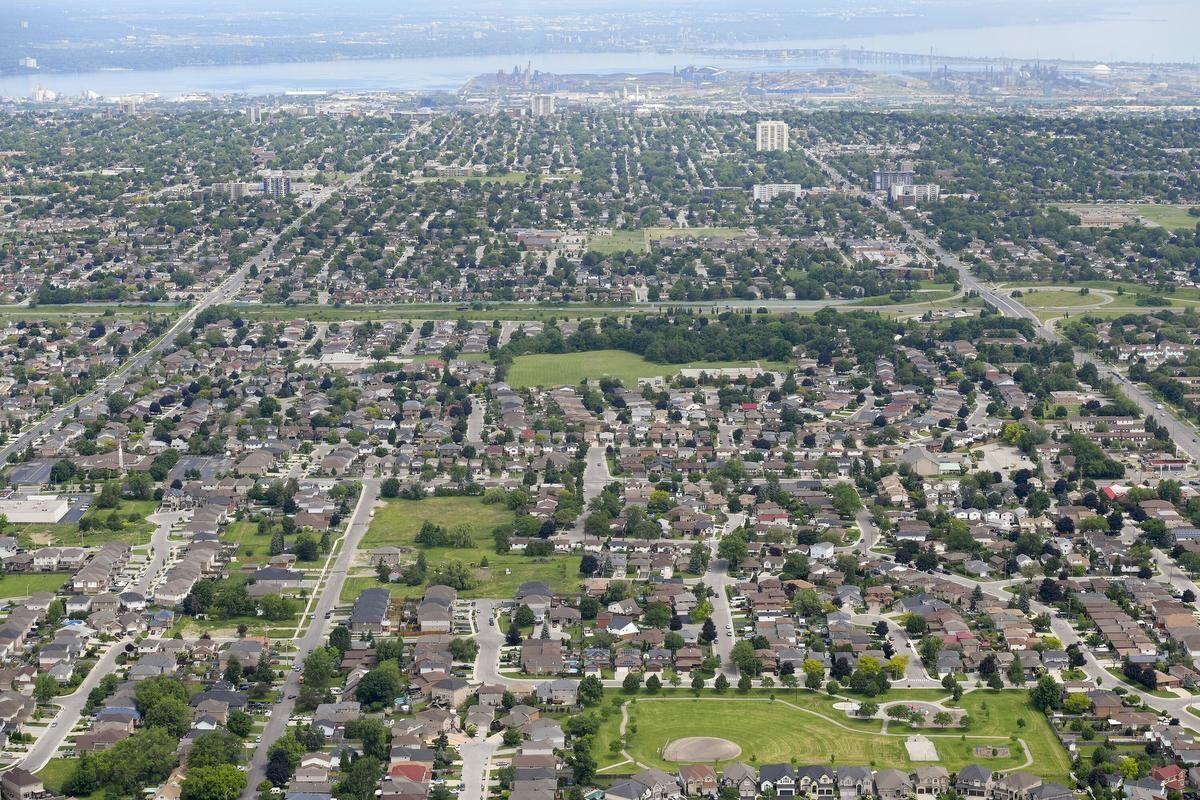
The study, funded by Health Canada, measured several air pollutants last year at 60-plus sites using devices attached to utility poles. The air samplers were spread across the lower city — but also on the Mountain and in outlying communities.
The Hamilton Spectator file photo

The largest air-monitoring experiment in city history has found unhealthy levels of a cancer-linked contaminant across Hamilton — including in neighbourhoods kilometres away from polluting bayfront industries.

The results suggest coal-fired steelmaking pollutants like benzo(a)pyrene travel far beyond the lower city and pose “an even greater (health) impact than we may have expected,” said Matthew Adams, an urban air-quality expert who is co-ordinating the study alongside city staff.

A promised cut in coal use by Hamilton’s biggest steelmaker should eventually help clear the air — but not before 2028.

In the meantime, Adams said it’s up to governments to do more to regulate and reduce such dangerous pollutants. “It’s not the sort of risk an individual can realistically do much to protect themselves against.”

The study, funded by Health Canada, measured several air pollutants last year at 60-plus sites using devices attached to utility poles. The air samplers were spread across the lower city — but also on the Mountain and in outlying communities like Binbrook, Winona and Freelton — allowing the city to track air quality by neighbourhood and ward.

Results from the study will be shared in a public online meeting Tuesday at 7 p.m. that residents can access via a link from project partner Environment Hamilton’s website by visiting bit.ly/airmeeting.

As expected, levels of pollutants like nitrogen dioxide and sulphur dioxide were generally worse in the lower city near industry or busy roadways, while rural air was cleaner, said Adams, a professor at the University of Toronto.

But nearly all of the 26 air monitors that tested for benzo(a)pyrene recorded summer concentrations above Ontario’s standard for air quality. That included samplers kilometres away from the industrial bayfront in Dundas, on the central and east Mountain, and in Stoney Creek.

The chemical compound, which studies link to cancer, is created by incomplete combustion of organic material. It can come from smouldering wood, cigarette smoke or even burning steak — but the biggest emissions come from coal-fired steelmaking.

Two of the top industrial emitters of benzo(a)pyrene in Ontario are steelmakers in Hamilton: ArcelorMittal Dofasco and Stelco’s bayfront coke plant.

Adams said neighbourhood air testing showed the highest levels near industry. “But what we saw is that most of the city, certainly the urban areas, (were) also above the guideline,” said Adams.

The results appear to ground truth past provincial models that suggest lifetime cancer risk due to benzo(a)pyrene and benzene is higher for Hamilton residents compared to the rest of Ontario.

While pollution levels in the city have dropped significantly since the 1990s, the latest test results show residents must “continue to push” for changes to protect their health, said Environment Hamilton head Ian Borsuk.

Some improvements — like factory pollution controls, but also electrified transportation and cleaner fuels — will have the double-barrelled benefit of cutting greenhouse gas emissions, he added.

One critical example is a “green steel” project by ArcelorMittal Dofasco, which has vowed to end the use of coal by transitioning to electric arc steelmaking furnaces as early as 2028. Both federal and provincial tax dollars are committed to the project, which is expected to dramatically slash both carbon emissions and air pollution.

Stelco has not publicly committed to ending coal use in Hamilton by a particular date, but lease documents suggest its polluting coke-making plant could shut down before 2030.

The province has also recognized the unique local health risk posed by benzene and benzo(a)pyrene by introducing tighter regulations for new industries seeking to set up shop in Hamilton.

Still, local politicians have expressed frustration with provincial air-quality exemptions routinely provided to the city’s big steelmakers that allow them to exceed standards for pollutants like benzo(a)pyrene.

City council voted earlier this year to send a letter opposing further exemptions after learning Dofasco’s latest “site specific standards” for various pollutants were about to expire.

The latest experiment just reinforces those concerns, said Mountain councillor John-Paul Danko. “This (pollution) is obviously a serious issue for people living near industry. But it is also a wider concern.”

Dofasco general manager of environment Gas Gebara said Friday the company is working with the province to develop a “technical standard compliance approach” for the steel industry. He added the planned green steel transition will “eliminate or vastly reduce” problem pollutants like benzene and benzo(a)pyrene.

Gebara also said the overall trend for benzo(a)pyrene emissions from the steelmaker is downward. National Pollutant Release Inventory data shows Dofasco’s annual emissions have dropped by more than half over the last decade.


Matthew Van Dongen is a transportation and environment reporter at The Spectator. mvandongen@thespec.com


Matthew Van Dongen is a Hamilton Spectator reporter. He lives in Hamilton and started working at The Spectator in 2011 after journalism stints in Peterborough and Niagara covering everything from arts to health to the environment. He has been recognized with awards for coverage of hidden pollution threats in Hamilton and historic flooding in Peterborough, among other projects.