It’s possible that I shall make an ass of myself. But in that case one can always get out of it with a little dialectic. I have, of course, so worded my proposition as to be right either way (K.Marx, Letter to F.Engels on the Indian Mutiny)
Sunday, July 09, 2023
Ben & Jerry’s co-founder Ben Cohen arrested during protest over Julian Assange case
The 72-year-old activist had tweeted that he was willing to ‘risk arrest’ the day before the demonstration
Ben Cohen, the 72-year-old activist and co-founder of Ben & Jerry’s ice cream, was arrested after blocking the Department of Justice entrance during a protest against the US government’s prosecution of WikiLeaks founder Julian Assange.
Mr Cohen was arrested in Washington DC on Thursday, one day after tweeting that he would be participating in the protest and was willing to “risk arrest” in order to “protest the criminalisation of the free press and the prosecution” of the WikiLeaks publisher.
“Right now, unless things change, and unless we change them, freedom of press is going up in smoke,” Mr Cohen said during the demonstration, before setting aflame a document propped up on an easel, which read “freedom of the press.”
Mr Cohen sat outside the building entrance next to Jodie Evans, co-founder of the social justice charity CodePink, until Homeland Security officials handcuffed them.
This isn’t the first report related to the ice cream brand that made headlines this week. Ben & Jerry’s came under fire after putting out a 4 July message calling for the US to return “stolen indigenous land,” starting with Mount Rushmore.

Mr Assange faces an 18-count indictment from the DOJ. He faces 17 charges of espionage and one charge of computer misuse after WikiLeaks allegedly published classified documents in 2010.
(Reuters) -Nearly 900 Amazon workers at a warehouse in Britain will stage a strike for three days in the coming week over a pay dispute, labour union GMB said on Saturday.
The strike will take place from July 11-13 at Amazon's warehouse in Coventry, for two hours during the morning and two hours in the evening on the three days, GMB said in an emailed statement to Reuters. It coincides with a "Prime Day" sales event the company has announced for July 11-12.
"GMB members in Coventry have time and time again shown that this fight will only end with 15 pounds ($19.25) an hour and union rights," GMB Senior Organiser Rachel Fagan said.
Amazon, the world's largest e-commerce said that the minimum starting pay for its employees is between 11-12 pounds per hour, depending on the location.
The Coventry site does not directly serve customer orders and there will be no disruption to customers, Amazon told Reuters in an email.
Last month, the union said that the Coventry warehouse workers had voted for six more months of strikes. The workers also went on strike last month from June 12-14.
Amazon is expected to record about $7 billion in revenue from its Prime Day sales, an increase of 12% from what was disclosed for Prime Day during the third quarter last year, according to JPMorgan.
Strikes have been called in several industries in Britain in recent months, including by nurses, teachers and transportation workers in response to inflationary pressures.
On Thursday, trade union RMT said the staff of the London Underground will strike from July 23-28 in a long-running dispute over pensions, job cuts and working conditions.
($1 = 0.7791 pounds)
(Reporting by Anirudh Saligrama in Bengaluru; Editing by Alistair Bell)
B.C. port workers holding union rally at Jack Poole Plaza
By Staff The Canadian Press Posted July 9, 2023 International Longshore and Warehouse Union Canada said the event supporting its workers is expected to include international labour leaders who will call for a negotiated contract settlement with the BC Maritime Employers Association.
A rally is to take place in Vancouver Sunday as the strike at British Columbia’s ports stretches into its second week.
International Longshore and Warehouse Union Canada said the event supporting its workers is expected to include international labour leaders who will call for a negotiated contract settlement with the BC Maritime Employers Association.
ILWU Canada is holding the rally at 11 a.m. Sunday at Vancouver’s Jack Poole Plaza. A large turnout of supporters is anticipated including strikers and local and international labour leaders with some from the U.S., and around the world, who will echo the call for a negotiated contract settlement with the BC Maritime Employers Association.
The International Transport Workers Federation, representing 740 affiliated trade unions with 18.5 million workers from 150 countries, has voiced its support for the ILWU’s quest for a contract that reflects its members’ contributions to the Canadian economy.
“B.C. shipping companies and terminals have made record profits during the pandemic as shipping costs have tripled through changes in the economy and buying habits,” said ILWU Canada President Rob Ashton.
About 7,400 workers at more than 30 B.C. ports have been on strike since Canada Day over issues including pay and provisions related to maintenance work, contracting out and automation.
After talks stalled on Monday, the two sides were back at the negotiating table Saturday, supported by federal mediators. The association has accused the union of trying to “aggressively expand” its control of maintenance duties beyond what has been established for decades.
Business organizations and some politicians have publicly called for the federal government to bring in back-to-work legislation, but Labour Minister Seamus O’Regan has said negotiations are the way to go.
The BC Maritime Employers Association issued a statement on Saturday evening saying it met with the International Longshore and Warehouse Union Canada and proposed a committee and independent arbitrator to make recommendations related to key sticking points around maintenance work.
Other issues on the table include concerns around pay, the cost of living, and automation.
In its latest statement, the association said an arbitrator could make non-binding recommendations to help parties consider whether union members could perform some or all of the maintenance work in question.
It said their side also proposed increased benefits for casual tradespeople and more apprenticeships, but the union rejected the ideas.
“We believe a deal can be reached if ILWU Canada wants one,” the statement said.
“We know that the best deals are made at the table, and this is exactly what we are proposing the parties do.”
The union did not immediately release its position on the meeting but has previously accused employers of waiting for the federal government to do their “dirty work” instead of negotiating.
It has said employers enjoyed record-high profits for many years, especially during the pandemic, and workers who work under difficult and dangerous conditions should have a fair share of that money.
Multiple business organizations across the country have called for Ottawa to step in with back-to-work legislation, citing concerns over the impact of a strike on the Canadian economy.
It’s unclear when the two sides will talk next, after talks came to a close on late Saturday. The employers association said it’s awaiting further direction from federal mediators.
This report by The Canadian Press was first published July 8, 2023
Striking B.C. port workers to hold rally as labour negotiations resume
Social Sharing
Facebook
Twitter
Email
Reddit
LinkedIn
Meeting took place a day before the union is expected to hold a rally in Vancouver
The Canadian Press ·
Striking port workers from the International Longshore and Warehouse Union Canada attend a rally in Vancouver on Thursday. (Darryl Dyck/The Canadian Press)
Talks between the two sides in an ongoing port strike in British Columbia have resumed, ending a days-long stretch away from the negotiating table.
The B.C. Maritime Employers Association issued a statement on Saturday evening saying it met with the International Longshore and Warehouse Union (ILWU) Canada.
The association said it proposed a committee and independent arbitrator to make recommendations related to key sticking points around maintenance work.
The meeting took place a day before the union is expected to hold a rally in Vancouver in support of the 7,400 workers who walked off the job on Canada Day, in part because the union says its jurisdiction over maintenance is being eroded by the use of contractors.
Talks broke off on Monday, and the association has accused the union of trying to "aggressively expand'' its control of maintenance duties beyond what has been established for decades.
Other issues on the table include concerns around pay, the cost of living, and automation.
'We believe a deal can be reached'
In its latest statement, the association says an arbitrator could make non-binding recommendations to help parties consider whether union members could perform some or all of the maintenance work in question.
It says their side also proposed increased benefits for casual tradespeople and more apprenticeships, but the union rejected the ideas.
"We believe a deal can be reached if ILWU Canada wants one,'' the statement says. "We know that the best deals are made at the table, and this is exactly what we are proposing the parties do.''
The union did not immediately release its position on the meeting but has previously accused employers of waiting for the federal government to do their "dirty work'' instead of negotiating.
WATCH | What the B.C. port strike means for Canada
Workers at ports across B.C. are on strike. We break down why it's happening and what it means for you and for Canada's economy.
It has said employers enjoyed record high profits for many years, especially during the pandemic, and workers who work under difficult and dangerous conditions should have a fair share of that money.
Multiple business organizations across the country have called for Ottawa to step in with back-to-work legislation, citing concerns over the impact of a strike on the Canadian economy.
A White Pass & Yukon Route train crosses a bridge in Carcross, Yukon. (Cheryl Kawaja/CBC)
Workers on the White Pass & Yukon Route railway have voted to authorize possible strike action, citing a six-year wait for wage increases and potential job cuts.
The company — based in Skagway, Alaska — runs scenic train routes for tourists, including some that bring visitors into the Yukon from the U.S.
Jason Guiler is the general chairman for SMART Transportation Division Local 1626, the union representing engineers, conductors and brakemen on the railroad. Union members make up close to 30 workers out of about 250 White Pass and Yukon Route (WPYR) employees.
The union says if strike action is taken, no trains can operate.
Guiler said the workers haven't had a wage increase since 2017. After six years of what he called "minimal" negotiations, the union and the company began a formal mediation process earlier this year. That process has been ongoing.
A three-day mediation session last weekend didn't result in an agreement, Guiler added, and the process has stalled. Union members voted to authorize the strike late last week, giving them the option to strike if they choose.
Members meet again Friday evening to discuss next steps.
"I think it's a real shame that there is a divide right now between the company and its employees," Guiler said. "We take pride in the work that we do."
A White Pass & Yukon Route train passing by Bennett, B.C. (Cheryl Kawaja/CBC)
Even given the vote results, a strike can't happen right away.
The company and union have been assigned a national mediator, Guiler explained. If the parties can't reach an agreement, union members must be released by the mediator and wait at least an obligatory 30-day cooling-off period before they can strike.
Workers seeking wage increases
White Pass and Yukon Route was purchased by Klondike Holdings in August 2018. The ownership group includes Survey Point Holdings and Carnival Corporation, according to WPYR's website.
"(Ownership) has not been willing to come to an agreement with us," Guiler said. "So that collective bargaining agreement that was initially written for the years 2014 through 2017 is still in place today."
Conductor Bryan Saul said the workers are frustrated and demoralized.
"We're not asking for much; the main thing is we want to keep pace with inflation and the cost of living," Saul said.
Bryan Saul is a conductor for the White Pass & Yukon Route. (Cheryl Kawaja/CBC)
Both Saul and Guiler acknowledged the company has also experienced hard times, having to cancel excursions over the course of the pandemic when the travel and tourism industry took a big hit.
Still, Saul noted, contract negotiations opened in 2017 — three years before the pandemic began.
White Pass and Yukon Route says it wants a resolution. Tyler Rose, executive director of human resources, said the company would not comment further.
"We do not believe it is appropriate to further comment in the media on the mediation process at this time," he said in an email.
Skagway Mayor Andrew Cremata said he hopes the two parties can come to an agreement.
He noted many cruise ship passengers who visit Skagway take WPYR trains, and cruise lines market the excursions to their passengers. That means cruise operators could feel the impacts of a work stoppage.
Cremata also said the cost of living in the town has gone up, meaning some other business owners have had to raise their wages. He said he wants railroad employees to be able to stay in the community.
"If (workers are) looking for a cost of living increase from six years ago, I'm going to operate under the assumption that that's something that they probably need to survive," Cremata said.
"I certainly would never get in the middle of negotiations between a private company and their workers. But I want those residents of Skagway to be able to stay in Skagway," he said.
Skagway, Alaska, pictured on Aug. 18, 2019. (Steve Silva/CBC)
Brakeman positions could be cut, says union
On top of wages, Guiler said a major sticking point is possible cuts to brakeman jobs.
Brakemen, Guiler explained, carry out maintenance and inspection of the train's brake systems and ensure cars are safe.
About a third of union members are in those roles, he said.
"Cutting that person is something that we have seen in the industry on the freight side of things," Guiler explained. "Now, it's obvious that railroads like ours are starting to go after it on the passenger-carrying service trains."
Guiler believes cutting those jobs would also pose a safety issue, but by his account, the company disagrees.
"They believe that they have technological advances in place, and we'll continue to install things in place in the future that will essentially eliminate personnel on board," Guiler said.
Popular Vancouver brewery closes temporarily as workers go on strike
Workers voted to strike after negotiations reportedly reached an impasse over the issue of wages.
Workers at Granville Island Brewing have gone on strike on July 8, 2023, after negotiations reportedly reached an impasse on the issue of wages. Peter Cade/Stone/Getty Images
A group of unionized workers at Granville Island Brewing voted to strike after negotiations reportedly reached an impasse in June on the issue of wages. The strike started Saturday, July 8.
"Workers at Granville Island Brewing need raises that reflect the rising cost of living," says the union. "The brewery doesn’t seem to agree, as what they’ve offered in negotiations, does not keep up with inflation."
Granville Island Brewing is owned by a branch of the fifth largest beer company in the world, Molson-Coors which reported $10.7 billion in net sales revenue last year and according to the release, some of the brewery workers' wages start at $16.75 per hour, with most making $20.97 an hour.
Now, as union workers strike, the brewery has temporarily closed its taproom, kitchen, and retail store to "minimize disruptions to our team, our neighbours and visitors," the brewery says in an Instagram post.
Granville Island Brewing assures that despite the work stoppage, beers and other products will still be available.
"We're doing everything we can to get a deal done, including offering raises on top of current pay, which is already above Vancouver's living wage," the brewery adds. "We look forward to welcoming everyone into the taproom for some great beer soon!"
The union invites the public to join them through the summer for 'Solidarity Saturdays' from 12 to 2 p.m. and 4 to 7 p.m. outside the brewery.
With files from Allie Turner.
Future of deep-sea mining hangs in balance as opposition grows
Ireland and Sweden join countries calling for moratorium on extraction of metals from seabed as UN-backed authority prepares for crucial talks
The list of countries calling for a pause on deep-sea mining continued to grow this week ahead of a key moment that mining companies hope will launch the fledgling industry, and its opponents hope could clip its wings, perhaps for good.
Ireland and Sweden became the latest developed economies to join critics, including scientists, environmental organisations and multinationals such as BMW, Volvo and Samsung. The carmakers have committed not to use minerals mined from the seabed in their electric vehicles.
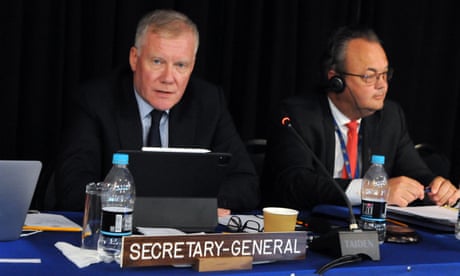
It is a critical time. With a deadline due to expire on Sunday, commercial applications for deep-sea mining could be given the green light despite the absence of any regulations. From Monday, the International Seabed Authority (ISA), the quasi-UN body in charge of those regulations, will meet in Kingston, Jamaica until 28 July to resume negotiations.
Much is at stake. Scientists have warned of large-scale, severe and irreversible harm to global ocean ecosystems, already threatened by the climate and biodiversity crises, if deep-sea mining goes ahead. Too little is known about the ocean’s abyss even to draw up regulations, they say.
Last month, the European Academies Science Advisory Council warned of the “dire consequences” for marine ecosystems and against the “misleading narrative” that deep-sea mining is necessary for metals required to meet the transition to a low-carbon economy.
Mining below 200 metres (650ft) can lead to harmful noise, vibration and light pollution. There is also the risk of leaks and spills of fuels and other chemicals used in the mining process.
00:43 Undercover footage shows waste from deep sea mining tests discharged into ocean – video
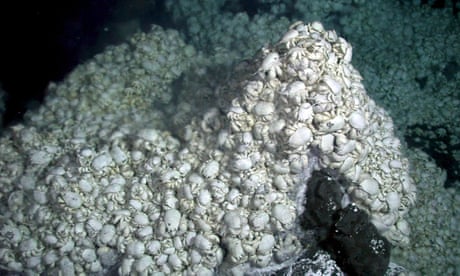
Researchers this year discovered more than 5,000 new species – most of them new to science – living on the seabed in an untouched, mineral-rich area of the Pacific Ocean, known as the Clarion-Clipperton zone, targeted by deep-sea mining firms.
The tiny Pacific island of Nauru is expected to be the first to apply to the ISA to begin mining, although the country has said it won’t sponsor an application on behalf of The Metals Company (TMC) until after the ISA meets this month. Nauru – with a population of about 12,000 – triggered the “two-year rule” in 2021 on behalf of Nauru Offshore Resources, a subsidiary of TMC. This request required the authority to complete the mining code by 9 July 2023, or accept mining applications under whatever regulations exist.
Canada-based TMC, formerly known as Deep Green Metals, is partnering with the Pacific states of Nauru, Tonga and Kiribati to explore for deep-sea metals. It has downplayed the impacts and highlighted the need for metals such as cobalt and copper for a transition to clean energy technologies.
That narrative is disputed by some scientists and environmental groups. They point out that such metals are already mined around the world; that lithium, the key mineral used in many batteries, is not widely present in the deep sea; and that electric vehicle technology is constantly changing.
Sweden and Ireland joined a growing list of countries calling for a moratorium, pause or ban on commercial deep-sea mining. They include Germany, France, Spain, New Zealand, Costa Rica, Chile, Panama, Palau, Fiji and the Federated States of Micronesia. The French president, Emmanuel Macron, has backed a complete ban. Other countries that have not yet supported a moratorium have nevertheless indicated they will not give approval without first agreeing regulations.
So far, the ISA has allowed companies to explore the deep sea for research purposes only. It has created and adopted regulations to govern 31 exploration contracts, sponsored by 14 nations. As well as Nauru, Tonga and Kiribati, they include China, Russia, South Korea, India, Britain, France, Poland, Brazil, Japan, Jamaica and Belgium.
But the failure to establish a regulatory framework for commercial mining before the 9 July deadline triggered by Nauru has thrown the ISA into uncertainty, and means all eyes are on the meeting starting next week.
Many critical issues remain to be addressed within the draft regulations, a long document full of temporary text in brackets and marked in red. According to the NGO Pew Charitable Trusts, the ISA has yet to agree what levels of environmental harm would be considered permissible, what would be the criteria for such harm, and how it would assess liability and assign penalties.
In theory, each of the ISA’s 168 members is involved in its decision making. But in practice, most power lies with a small group of experts known as the Legal and Technical Commission (LTC), made up of lawyers, geologists and diplomats, with few environmentalists. There is no scientific assessment group to vet applications and no inspectorate to ensure compliance. If the LTC recommends that the council approves an exploitation contract, it can be overturned only by a super-majority of two-thirds of the full council, which comprises 36 states.
Other concerns, particularly among smaller island nations and Indigenous communities, which fear being affected most, include how to share the benefits from mining. There is currently no mechanism to do so. At the last ISA meeting three months ago, the head of Belgium’s delegation, Hugo Verbist, warned the authority was “sleepwalking into a legally uncertain situation”.
This time around, the ISA will address a new proposal by France, Chile, Costa Rica, Palau and Vanuatu to pause deep-sea mining until all regulations are in place. If passed, it would act as a moratorium but would require approval by a super-majority, or two-thirds, of the 168 assembly members.
William Hague, a former leader of the Conservative party, this week called for Britain to support the moratorium. The UK has so far pushed only for high environmental standards, and said it would not support any exploitation licences “unless or until” there were enforceable regulations and sufficient evidence to judge the potential impact on deep-sea ecosystems.
Proponents of deep-sea mining have questioned whether a moratorium is even legal for the ISA to institute. Under the UN convention on the law of the sea, which set up the ISA, the authority is charged with regulating mining activities and with protecting the marine environment. However, the treaty also specifies that the seabed and its mineral resources are the “common heritage of mankind”, and part of the ISA’s remit includes equitable sharing of financial benefits.
Despite the opposition, an executive from TMC has said it expects to file an application in the second half of 2023 with the goal of receiving an ISA mining licence in 2024. Production would start by the end of that year or early 2025.
Cook Islands PM ‘proceeds with caution’ on deep-sea mining as critics warn over risks
Deadline tied to the regulation of controversial plans to extract seabed minerals looms amid division over the practice
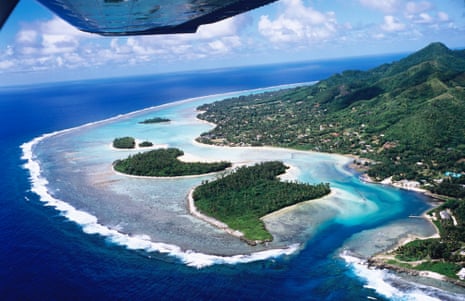
Rarotonga, Cook Islands. The nation is studying the feasibility of harvesting minerals through deep-sea mining within its waters. Photograph: Holger Leue/Getty Images
Days ahead of a deadline that highlights the pressure to develop rules on deep-sea mining, Cook Islands prime minister Mark Brown said pursuing the controversial practice is “the right thing to do for our country.”
Brown told the Guardian the small Pacific nation continues to “proceed with caution” as it studies the feasibility of harvesting seabed minerals within its waters. As the Cook Islands moves ahead, opposition to the nascent industry is widespread – including among Pacific states – with some countries calling for a moratorium or outright ban. Those against deep-sea mining are concerned about the environmental impact it could have on marine ecosystems.
“Exploring this opportunity is not only the right thing to do for our country, it is the responsible thing to do,” Brown said in an email interview, while stressing his government hasn’t made a decision on whether it will mine the sea floor. Row erupts over deep-sea mining as world races to finalise vital regulations
His remarks come ahead of the 9 July deadline that compels the UN-affiliated International Seabed Authority (ISA) to complete regulations governing deep-sea mining. Those regulations are unlikely to be ready, however countries and companies will still be able to apply for permits to begin exploitation of the sea floor.
The Cook Islands is a nation of 15 small islands located between Tonga and French Polynesia, with a population of about 18,000. It estimates there is vast mineral wealth embedded in around 7bn tonnes of polymetallic nodules sitting on the seabed within in its territorial waters. Forming over millions of years, the typically black, round potato-sized nodules are rich in cobalt, copper, nickel, and manganese. Brown has previously said the Cook Islands could become a source of critical strategic metals with enough nodules to meet the world’s current demand for cobalt for 80 years.
Along with Nauru, Tonga, and Kiribati, the Cook Islands is a state sponsor of international companies preparing to apply for a permit to mine the ocean floor in sovereign and international Pacific waters.
Proponents say deep-sea mining offers states a chance to develop their economies using ocean resources while contributing to a transition away from fossil fuels. While no companies are currently mining the ocean floor, significant exploration work is under way. In 2022, the Cook Islands issued three exploration licences within its exclusive economic zone. As a result, Brown says 20,000 sq km of Cook Islands’ seafloor has been mapped and biological and geological samples collected.
The 168-member ISA is mandated to control mineral-resource related activities on the sea floor while ensuring protection of the marine environment.
The ISA has granted 30 active exploration contracts to 21 contractors including the governments of India, South Korea, Poland, and companies supported by the four Pacific sponsoring states.
Ahead of the July deadline, a spokesperson for ISA told the Guardian that exploitation applications can be received at any time and would be the start of a long and rigorous approval process.
“Decision making at ISA is based on a consensus and a work plan for exploitation would be approved only if member states … agree to it. At the moment, it is too soon to say when potential exploitation could begin.”
In a statement to the ISA in March, Margo Deiye, Nauru’s ambassador to the ISA, stated her country would not submit an application on behalf of its commercial partner in July.
The collection of nodules involves the deployment of unmanned robotic vehicles which will vacuum nodules from the seafloor to be pumped back to a ship on the surface.
Last year French president Emmanuel Macron called for a total ban on deep-sea mining, while governments in Germany, Chile, Spain, New Zealand and elsewhere support a moratorium or ban.
Fiji and Tuvalu, which had previously considered supporting deep-sea mining companies, have both reversed course. Fiji has joined Palau, Samoa, Vanuatu and other Pacific nations in demanding a moratorium or pause.
Craig Smith, a professor emeritus of oceanography at the University of Hawaii, specialises in the biodiversity and disturbance ecology of the deep ocean, leading research expeditions in the CCZ. He told the Guardian an estimated 40-70% of the area’s species have not been collected.
“We’re still very early on in censusing the biodiversity of the region that is targeted for abyssal polymetallic nodule mining,” Smith said. A recent study documented over new 5,000 species in the CCZ.
He said he’s not for or against deep-sea mining but that the activity would have profound and undeniable impacts including the irreversible destruction of deep-ocean habitat, sediment plumes, and noise that can affect whales and other marine life hundreds of kilometers from a mining operation. The effects, he believes, may be more significant than people expect.
Speaking from Tonga on the sidelines of an ISA-hosted workshop on equity for sponsoring states, Tau told the Guardian, “We cannot be talking about benefit sharing and equity in the absence of proper environmental regulations and standards.”
With deep-sea mining dividing Pacific Island nations, Stuart Minchin, director-general of the Pacific Community (SPC), the region’s largest scientific and technical organisation, said its role is to be objective and support all 27 member nations with “the best available science on sovereign and regional issues” no matter their position.
Brown doesn’t expect to receive an application for a mineral harvesting licence for at least several years, and says his country needs more information and data before it makes a decision about whether or not to proceed.
The prime minister told the Guardian that as a small island nation vulnerable to external shocks, deep-sea mining offers the long-term prospect for development, diversification, and future prosperity.
“We are the ones in charge of our destiny, and it is Cook Islanders that will continue to make decisions about how our Cook Islands resources are developed,” he said.
This article was amended on 8 July 2023 to remove the statement that Tuvalu has joined other Pacific nations in demanding a moratorium or pause on deep-sea mining.