Saturday, December 23, 2023

ANOTHER DISCOVERY IN THE MUSEUM STORAGE ROOM

19-million-year-old fossil jaw bone hints the biggest whales evolved somewhere unexpected

The Conversation
December 22, 2023

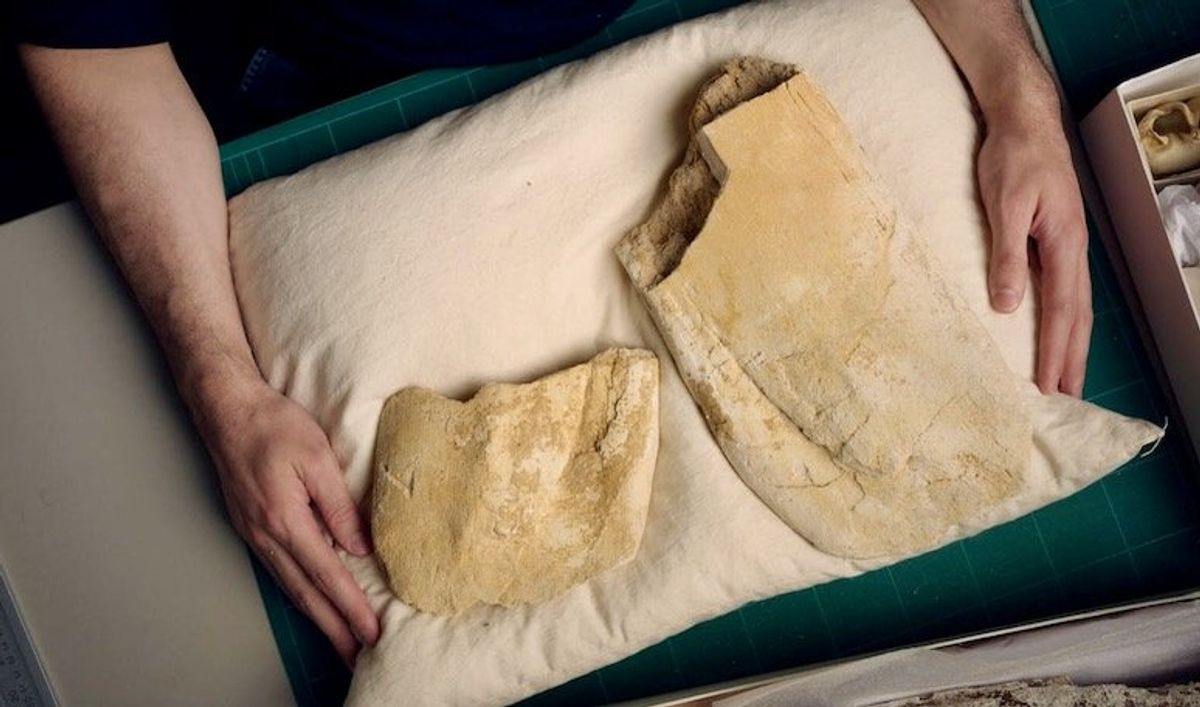
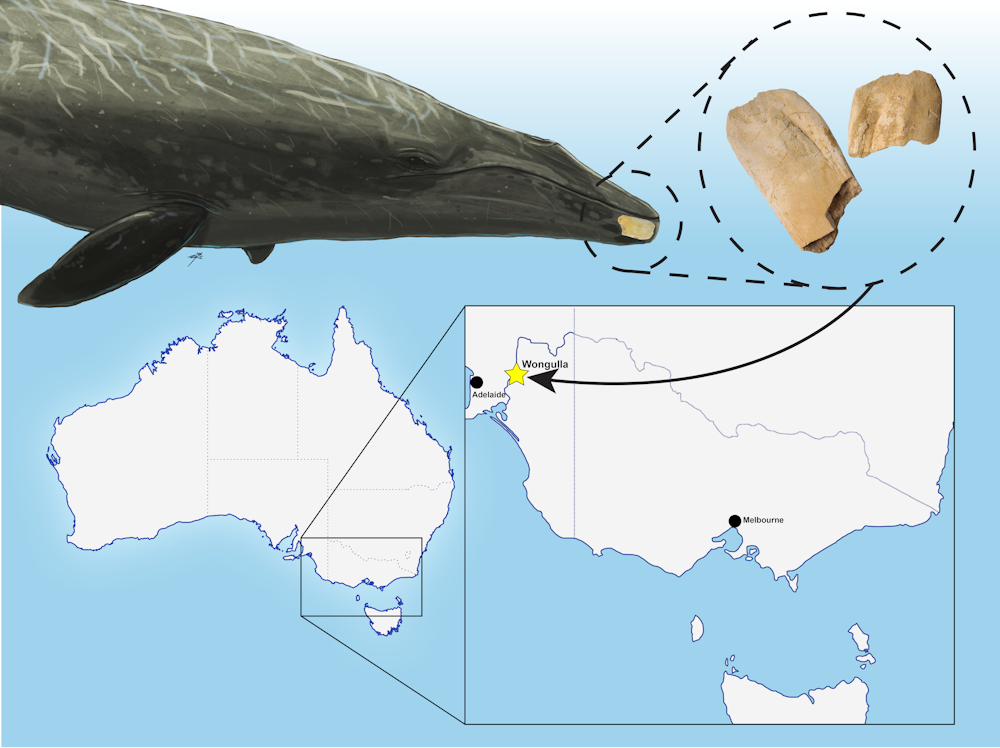
The baleen whale fossil at Museums Victoria Research Institute. 
Eugene Hyland, Museums Victoria


Baleen whales are the titans of the ocean, the largest animals to have ever lived. The record holder is the blue whale (Balaenoptera musculus), which can reach lengths of up to 30 metres. That’s longer than a basketball court.

However, throughout their evolutionary history, most baleen whales were relatively much smaller, around five metres in length. While still big compared to most animals, for a baleen whale that’s quite small.

However, new fossil discoveries from the Southern Hemisphere are beginning to disrupt this story. The latest is an unassuming fossil from the banks of the Murray River in South Australia.

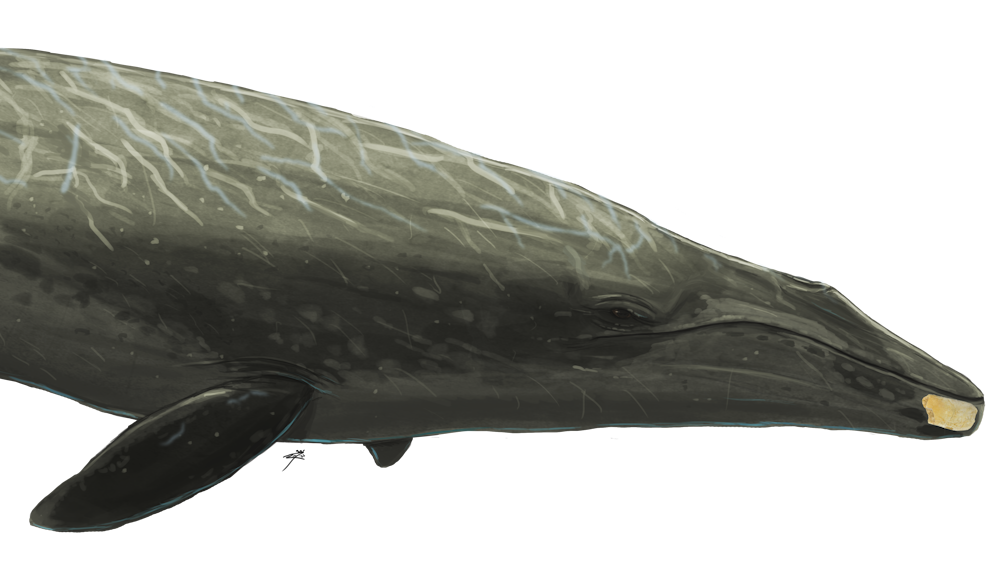
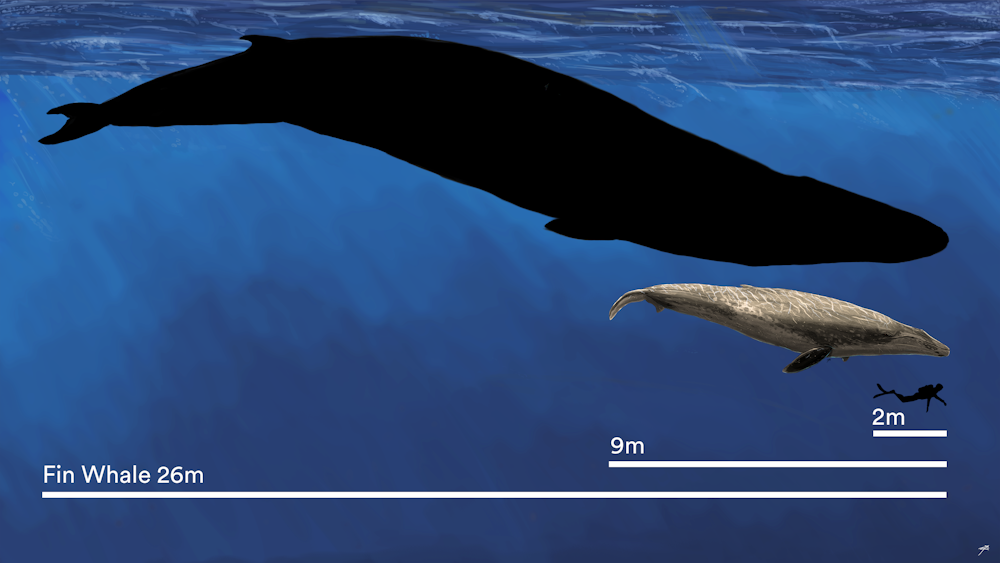
Roughly 19 million years old, this fossil is the tip of the lower jaws (or “chin”) of a baleen whale estimated to be around nine metres in length, which makes it the new record holder from its time. This find has been published today in the journal Proceedings of the Royal Society B: Biological Sciences.


The roughly 19-million-year-old fossil ‘chin’ bone superimposed on a Murray River whale illustration. Art by Ruairidh Duncan

What are baleen whales?

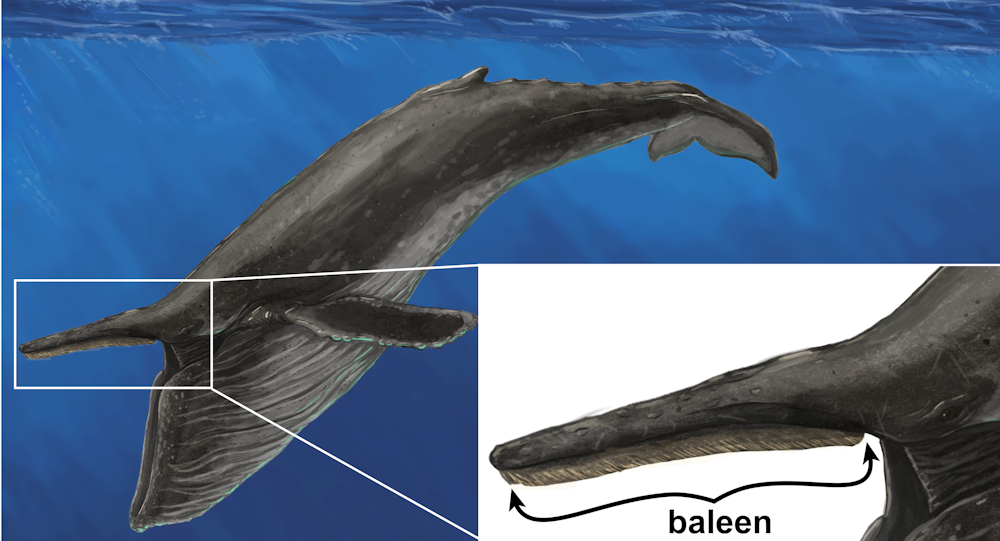
Most mammals have teeth in their mouth. Baleen whales are a strange exception. While their ancestors had teeth, today’s baleen whales instead have baleen – a large rack of fine, hair-like keratin used to filter out small krill from the water.

This structure enabled baleen whales to feed efficiently on enormous shoals of tiny zooplankton in productive parts of the ocean, which facilitated the evolution of larger and larger body sizes.
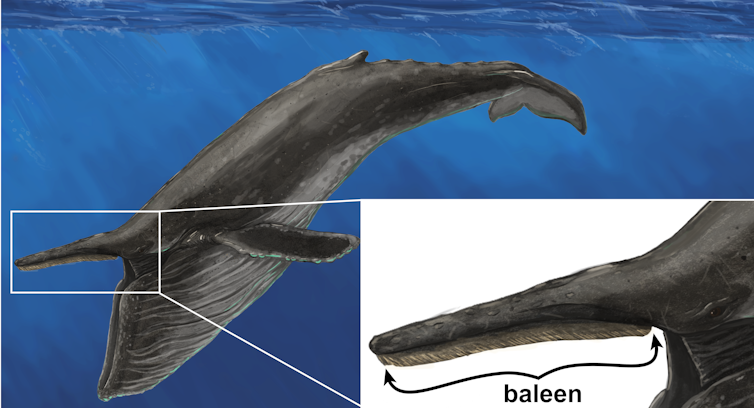


The bristle-like baleen, as shown on a humpback whale. Art by Ruairidh Duncan


The ‘missing years’ of whale evolution

Various groups of toothed whales terrorised the ocean for millions of years, including some that were the ancestors of the toothless baleen whales. Yet at some time between 23 and 18 million years ago these ancient “toothed baleen whales” went extinct.

We aren’t exactly sure when, as fossil whales from this episode in Earth’s history are exceedingly rare. What we do know is immediately after this gap in the whale fossil record, only the relatively small, toothless ancestors of baleen whales remained.
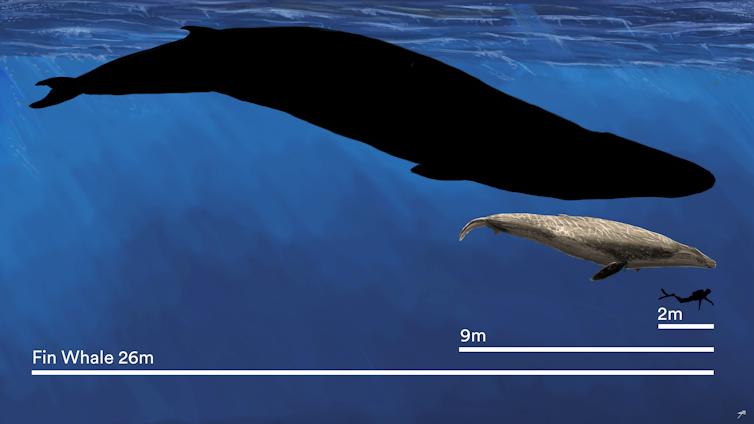


The newly described extinct Murray River whale (9 metres) next to a fin whale (26 metres) and a human diver (2 metres). Art by Ruairidh Duncan, graphic by Rob French

Scientists previously thought baleen whales kept to relatively small proportions until the ice ages (which began from about 3–2.5 million years ago). But the majority of research on trends in the evolutionary history of whales is based on the reasonably well-explored fossil record from the Northern Hemisphere – a notable bias that likely shaped these theories.

Crucially, new fossil finds from the Southern Hemisphere are starting to show us that at least down south, whales got bigger much earlier than previous theories suggest.

An unexpected find

More than 100 years ago, palaeontologist Francis Cudmore found the very tips of a large pair of fossil whale jaws eroding out of the banks of the Murray River in South Australia. These 19-million-year-old fossils made their way to Museums Victoria and remained unrecognised in the collection until they were rediscovered in a drawer by one of the authors, Erich Fitzgerald.

Using equations derived from measurements of modern-day baleen whales, we predicted the whale this fossilised “chin” came from was approximately nine metres long. The previous record holder from this early period of whale evolution was only six metres long.

Together with other fossils from Peru in South America, this suggests larger baleen whales may have emerged much earlier in their evolutionary history and the large body size of whales evolved gradually over many more millions of years than previous research suggested.
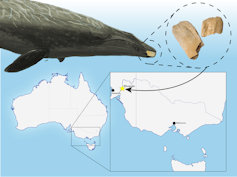

The fossilised baleen whale ‘chin’ was found along the banks of the Murray River in South Australia. Art by Ruairidh Duncan, photo by Eugene Hyland

The Southern Hemisphere as the cradle of gigantic whale evolution


The large whale fossils from Australasia and South America seem to suggest that for most of the evolutionary history of baleen whales, whenever a large baleen whale shows up in the fossil record, it is in the Southern Hemisphere.

Strikingly, this pattern persists despite the fact the Southern Hemisphere contains less than 20% of the known fossil record of baleen whales. While this is an unexpectedly strong signal from our research, it doesn’t come as a complete surprise when we consider living baleen whales.


Today, the temperate seas of the Southern Hemisphere are connected by the chilly Southern Ocean, which surrounds Antarctica and is extremely productive, supporting the greatest biomass of marine megafauna on Earth.
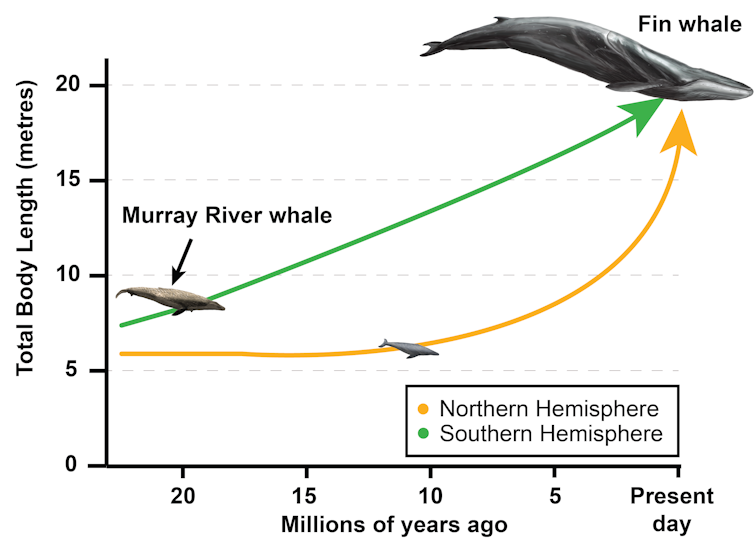

Fossils from the Southern Hemisphere, including the Murray River whale fossil, are demonstrating that whales may have evolved large body sizes first in the Southern Hemisphere. Art by Ruairidh Duncan


Around the time baleen whales started evolving from big to gigantic, the strength of the Antarctic Circumpolar Current was intensifying, eventually leading to the present day powerhouse Southern Ocean.

Today, baleen whales are ecosystem engineers, their huge bodies consuming tremendous amounts of energy. Upon death, these whales provide an abundance of nutrients to deep-sea ecosystems.

As we learn more about the evolutionary history of whales, such as when and where their large size evolved, we can begin to understand just how ancient their role in the ocean ecosystem may have been and how it could shift in tune with global climate change.

James Patrick Rule, Research Affiliate, Monash University and Erich Fitzgerald, Senior Curator, Vertebrate Palaeontology, Museums Victoria Research Institute

This article is republished from The Conversation under a Creative Commons license. Read the original article.

 Do dog ‘talking buttons’ actually work? Does my dog understand me? Here is the science.


The Conversation
December 22, 2023

Beagle dogs (Shutterstock)

Is your dog bothered by something but you can’t work out what? Do you wish they could tell you?

There’s a huge range of dog “talking” buttons on the market that now claim to let your dog do this. A very basic kit will set you back about $15, while more sophisticated ones can cost hundreds of dollars.

But is there any evidence these products work?

How the buttons work

The idea behind these buttons is simple. You record yourself speaking a word such as “treat” or “outside” into each button, after which the word is played back each time the button is pressed. Your dog can supposedly be trained to understand the words coming from the buttons, and use them to communicate with you.

Talking buttons are an example of augmentative and alternative communication. To put it simply, they’re a method of communication that doesn’t use speech. In humans, similar devices are valuable for people with autism or intellectual disability, or those suffering from a stroke or other neurological condition.

Can dogs learn complex communication?


A dog could figure out to press talking buttons through a process called operant conditioning – the same process used to teach dogs simple commands such as “sit”. When a dog performs a behaviour and receives something they want, such as a treat, they’re more likely to continue that behaviour.

The idea of dogs “talking” to humans with buttons was started by Christina Hunger, a speech language pathologist who understood the use of augmentative and alternative communication devices. Hunger claims to have taught her dog Stella more than 50 words and phrases up to five-words long.

Alternative explanations

There are simple explanations for what may seem like complex behaviour in animals. For one thing, animals excel in picking up our body language. As a result, they may appear to understand more than they actually do.

Clever Hans the horse is the perfect example. Hans gained prominence in the early 1900s for allegedly being able to do mathematics. Even his trainer believed he could count. It was only when the trainer was no longer present that people realised Hans was relying on involuntary cues in the trainer’s body language to “solve” problems, and couldn’t actually count.

Dogs are probably even better than horses at picking up on our body language cues. As the first domesticated species, they’ve spent thousands of years working out what we’re likely to do next. Just think of all the times your dog has rushed to the door even before you’ve picked up their leash.

When we train dogs to use talking buttons, they’re probably learning using operant conditioning to some extent. For example, they learn that pressing a button can lead to a reward.

But in cases where dogs seem to be able to string multiple buttons together to say something advanced, or where they can press the “right” button when asked, they’re likely just responding to their owner’s body language. And they probably wouldn’t be able to replicate the behaviour if a new pet-sitter was making the command.

We need more data


Federico Rossan, director of the Comparative Cognition Lab at UC San Diego, is working on a large project analysing results from dogs using talking buttons.

Although FluentPet (a business that sells pet communication products) is involved, the study is reported to be independent. That means a person who doesn’t have a conflict of interest will analyse and report the results.

Data collection started in late 2020, but so far no evidence has been published. Until then, the best “evidence” we have for these products is anecdotal reporting coming from dog owners who are probably biased (since they’d like to think their dog is very clever).

Could it do any harm?

It matters when we treat our dogs differently depending on what we think they are thinking.

One example is when we assume dogs feel guilty for certain actions. For instance, when you come home and your dog has chewed up your favourite rug, they might look “guilty” as you scold them, but they’re actually just responding to your reaction. Studies have shown dogs can’t experience the human emotion of guilt.

That’s why you shouldn’t punish your dog when you come home to a chewed-up carpet. They won’t associate your yelling or smacking with their action from hours earlier.


The reality is some dogs will simply be more interested in interacting with talking buttons than others. There’s no good reason to think these dogs are therefore smarter than others.


Should I buy talking buttons?


If you can recognise and account for the potential risks mentioned above, then buying talking buttons won’t do any harm to you or your dog (apart from putting a dent in your wallet).

That said, there are myriad ways to communicate with your dog without needing such a device. Chaser the border collie learned how to retrieve 1,022 toys by name without an augmentative device.

However you do it, spending time with your dog using positive reinforcement training will benefit both of you. Dogs are amazing, unique animals with whom we can communicate in all kinds of ways, and they don’t need to understand our language for this.


Talking buttons could be harmful if a dog’s refusal to use them changes their owner’s attitude towards them. 
Shutterstock

Correction: this article previously included a line saying human language is “too complex” for a dog to understand. This has now been removed as it doesn’t correctly reflect the state of research on dog communication.


Susan Hazel, Associate Professor, School of Animal and Veterinary Science, University of Adelaide and Eduardo J Fernandez, Visiting Assistant Professor, Florida Institute of Technology

This article is republished from The Conversation under a Creative Commons license. Read the original article.

The future of canine stem cell therapy: unprecedented, painless, and feeder-free


New method generates canine-induced pluripotent stem cells in dogs from urine samples, without using feeder cells


Peer-Reviewed Publication

OSAKA METROPOLITAN UNIVERSITY

Generating canine induced pluripotent stem cells (iPSCs) without using feeder cells 

IMAGE: 

SCIENTISTS CREATED CANINE IPSCS FROM URINE-DERIVED CELLS WITH GREAT EFFICIENCY

view more 

CREDIT: SHINGO HATOYA, OSAKA METROPOLITAN UNIVERSITY


Osaka, Japan – Dog owners may need to learn to appreciate their best friend’s urine. Scientists at Osaka Metropolitan University have devised an efficient, non-invasive, and pain-free method to reprogram canine stem cells from urine samples, bringing furry companions one step closer to veterinary regenerative treatment.

Induced pluripotent stem cells (iPSCs) have been widely employed in studies on human generative medicine.  With the growing importance of advanced medical care for dogs and cats, there is an expectation that new therapies utilizing iPSCs will be developed for these companion animals, just as they have been for humans. Unfortunately, canine somatic cells exhibit lower reprogramming efficiency compared to those of humans, limiting the types of canine cells available for generating iPSCs. IPSC induction often involves using feeder cells from a different species. However, considering the associated risks, minimizing xenogeneic components is often advisable, signifying the need to improve the efficiency of reprogramming various types of canine cells in dogs without using feeder cells.

A research team led by Professor Shingo Hatoya and Dr. Masaya Tsukamoto from the Graduate School of Veterinary Science at Osaka Metropolitan University has identified six reprogramming genes that can boost canine iPSC generation by about 120 times compared to conventional methods using fibroblasts. The iPSCs were created from urine-derived cells using a non-invasive, straightforward, and painless method. Additionally, the researchers succeeded in generating canine iPSCs without feeder cells, a feat that had been impossible until now. The team aims to disseminate their findings in the global research community, contributing to advances in regenerative medicine and genetic disease research in veterinary medicine.

“As a veterinarian, I have examined and treated many animals,” explained Professor Hatoya. “However, there are still many diseases that either cannot be cured or have not been fully understood. In the future, I am committed to continue my research on differentiating canine iPSCs into various types of cells and applying them to treat sick dogs, hopefully bringing joy to many animals and their owners.”

Their findings are set for publication in Stem Cell Reports on December 21, 2023.

###

About OMU 

Osaka Metropolitan University is the third largest public university in Japan, formed by a merger between Osaka City University and Osaka Prefecture University in 2022. OMU upholds "Convergence of Knowledge" through 11 undergraduate schools, a college, and 15 graduate schools. For more research news, visit https://www.omu.ac.jp/en/ or follow us on Twitter: @OsakaMetUniv_en, or Facebook


Does losing a parent during childhood contribute to separation anxiety and anxious attachment in women?


Peer-Reviewed Publication

WILEY


Women who lost a parent early in life may be more likely to experience separation anxiety with romantic partners during adulthood, according to a study published in Stress and Health. In addition to feeling distressed when separated from their partners, these women may also experience anxious attachment, or worry that significant others will not be available at times of need.

The study included 60 women who lost one or both parents in their youth and 60 who had living parents. Based on participants’ answers to questionnaires, women who lost a parent reported higher levels of anxious attachment and adult separation anxiety from a partner. The groups did not differ, however, in terms of avoidant attachment, or the desire to maintain autonomy and emotional distance from their parents during childhood and from their partners during adulthood.

In women who lost a parent, adult separation anxiety and anxious attachment peaked in the initial 5 years of romantic relationships and gradually declined after a decade.

“A future study is suggested to delve into how the duration of a romantic relationship impacts separation anxiety and anxious attachment among women who have experienced early parental loss in childhood,” said corresponding author Ora Peleg, PhD, of the Max Stern Yezreel Valley College and the Academic College Emek Yezreel, in Israel.

URL upon publication: https://onlinelibrary.wiley.com/doi/10.1002/smi.3356


Additional Information
NOTE: 
The information contained in this release is protected by copyright. Please include journal attribution in all coverage. For more information or to obtain a PDF of any study, please contact: Sara Henning-Stout, newsroom@wiley.com.

About the Journal
Stress and Health provides an international forum for disseminating cutting-edge theoretical and empirical research that significantly advances understanding of the relationship between stress and health and well-being in humans. Despite the prevalence of stress in society, scientific conceptualizations of stress are less than 100 years old and there is much yet to learn regarding the causes, nature, and outcomes of stress, as well as the mechanisms for coping with such stress.

About Wiley
Wiley is a knowledge company and a global leader in research, publishing, and knowledge solutions. Dedicated to the creation and application of knowledge, Wiley serves the world’s researchers, learners, innovators, and leaders, helping them achieve their goals and solve the world's most important challenges. For more than two centuries, Wiley has been delivering on its timeless mission to unlock human potential. Visit us at Wiley.com. Follow us on FacebookTwitterLinkedIn and Instagram.


Why do people age differently?


With $3.5M National Institutes of Health grant, research teams from Case Western Reserve University / University Hospitals Cleveland Medical Center and NYU Grossman School of Medicine / NYU Langone Hospital hope to find out


Grant and Award Announcement

CASE WESTERN RESERVE UNIVERSITY


CLEVELAND—Throughout our lives, changes in our DNA, called genetic mutations, occur in every healthy cell of the human body—mutations which have long been thought to be an important reason why our bodies age.

But it’s not known whether some people accumulate mutations at a faster or slower rate with age, and whether those differences might predict how long we live and the risk for aging-related diseases like cancer.

With a $3.5 million research project grant from the National Institutes of Health (NIH), Jonathan Shoag, a surgeon-scientist at the Case Western Reserve University School of Medicine and urologic oncologist at University Hospitals Cleveland Medical Center's Urology Institute, and Gilad Evrony, a physician-scientist at New York University (NYU) Grossman School of Medicine and NYU Langone Hospital, seek to answer these critical questions.

Shoag and Evrony, together with a team of collaborators, will leverage new sequencing technologies in a large number of people to understand how mutations that arise throughout the lifespan may associate with the risk of aging-related diseases like cancer.

“Our study will help us understand healthy aging and define new predictors for aging-related diseases,” Shoag said. “This has the potential to allow us to try to prevent aging associated diseases sooner with clinical interventions.”

“Much remains unknown about how DNA mutations affect the fundamental process of aging, because only recently have the technologies become available to detect these changes in DNA,” Evrony said. “Studying aging-related mutations on a large scale will reveal how our genome dynamically changes throughout our lives.”

Shoag and Evrony are also part of the NIH Somatic Mosaicism across Human Tissues consortium, a multi-institutional effort designed to develop technologies to understand these mutations across the body.

                                                            ###

Case Western Reserve University is one of the country's leading private research institutions. Located in Cleveland, we offer a unique combination of forward-thinking educational opportunities in an inspiring cultural setting. Our leading-edge faculty engage in teaching and research in a collaborative, hands-on environment. Our nationally recognized programs include arts and sciences, dental medicine, engineering, law, management, medicine, nursing and social work. About 6,200 undergraduate and 6,100 graduate students comprise our student body. Visit case.edu to see how Case Western Reserve thinks beyond the possible.

About University Hospitals / Cleveland, Ohio
Founded in 1866, University Hospitals serves the needs of patients through an integrated network of 21 hospitals (including five joint ventures), more than 50 health centers and outpatient facilities, and over 200 physician offices in 16 counties throughout northern Ohio. The system’s flagship quaternary care, academic medical center, University Hospitals Cleveland Medical Center, is affiliated with Case Western Reserve University School of Medicine, Northeast Ohio Medical University, Oxford University, the Technion Israel Institute of Technology and National Taiwan University College of Medicine. The main campus also includes the UH Rainbow Babies & Children's Hospital, ranked among the top children’s hospitals in the nation; UH MacDonald Women's Hospital, Ohio's only hospital for women; and UH Seidman Cancer Center, part of the NCI-designated Case Comprehensive Cancer Center. UH is home to some of the most prestigious clinical and research programs in the nation, with more than 3,000 active clinical trials and research studies underway. UH Cleveland Medical Center is perennially among the highest performers in national ranking surveys, including “America’s Best Hospitals” from U.S. News & World Report. UH is also home to 19 Clinical Care Delivery and Research Institutes. UH is one of the largest employers in Northeast Ohio with more than 30,000 employees. Follow UH on LinkedInFacebook and Twitter. For more information, visit UHhospitals.org.


Digital training program improves quality of life for care residents with dementia – even during the COVID-19 pandemic


The iWHELD programme supported care home staff in delivering personalised care and encouraging meaningful social interactions


Peer-Reviewed Publication

UNIVERSITY OF EXETER


Quality of life for people with dementia living in residential and nursing home care substantially improved after staff took part in a digital training programme that was specially adapted to Covid-19 restrictions. The training also led to a significant drop in the prescription of potentially harmful sedative medications to residents.

The iWHELD programme supported care home staff in delivering personalised care and encouraging meaningful social interactions. Through a digital platform featuring live coaching sessions led by trained coaches, the programme supported homes during the Covid-19 pandemic to enhance care and share best practices among peers.

Published Alzheimer’s & Dementia, the journal of the Alzheimer’s Association, the trial was delivered to staff supporting more than 700 residents with dementia across 149 residential homes in the UK, comparing iWHELD with usual care.  In the iWHELD group, researchers found particular benefits in residents who contracted Covid-19, those who showed signs of agitation when the study began, and those taking psychiatric medications.

Led by the University of Exeter and King’s College London, and funded by UK Research and Innovation (UKRI), iWHELD is designed to support carers and residents by training staff in delivering personalised care, which puts residents at the heart of decision-making. The programme was specially adapted during the pandemic, so that it could be delivered remotely, with support available for care home staff, even in the most challenging circumstances for care homes.

Joanne McDermid, creator of the iWHELD platform and lead author of the paper, said: “Urgent action is needed to ensure care homes have access to dementia care training and support that is both high quality and shown to be effective. Every person deserves thoughtful and compassionate care and not everyone is receiving it. In response to the unfolding global pandemic, iWHELD was created as a ground-breaking, first-of-its-kind solution, placing care staff and people living with dementia at the heart of support for care homes and nursing homes. iWHELD leverages digital innovation to bring together stories, ideas, and communities. It’s the first programme to provide an effective, evidence based, affordable and scalable solution that can address the needs of care and nursing homes and critically, to improve the lives of the people with dementia.”

Katie Ives, manager of Stonebow House care home in Worcestershire, took part in the iWHELD training along with her management team. She said: “We all really enjoyed it, and it’s made a huge difference to some of our residents. As part of the training around personalised care, we’ve realised we need to change our approaches and even our demeanours to communicate effectively with residents – so if someone is quite reserved, being very bubbly is less effective and relatable to that person. We’ve always tailored our approach to residents, but now we offer a wider variety of activities and clubs to suit people’s interests in their lives, and we’re seeing some residents spend more time in communal areas and less time in their rooms as a result.”

Professor Clive Ballard, of the University of Exeter Medical School, senior author on the paper, said: “People with dementia living in residential and nursing home care are among the most vulnerable in society, and care homes and their staff perform an extremely challenging role.  iWHELD is an effective, practical, and affordable programme that can enable staff to improve the lives of people with dementia and can be delivered nationally and internationally – even amidst a pandemic.”

The paper is entitled ‘Impact of the iWHELD Digital Person-Centered Care Program on Quality of Life, Agitation and Psychotropic Medications in People with Dementia Living in Nursing Homes during the COVID-19 Pandemic: A Randomized Controlled Trial’, published in Alzheimer’s & Dementia.

The research was supported by the National Institute for Health anc Care Research (NIHR) Biomedical Research Centre at South London and Maudsley NHS Foundation Trust and King’s College London, the NIHR Exeter Biomedical Research Centre, and the NIHR Applied Research Collaboration South West Peninsula (PenARC).


URI’s new neuro-learning center to boost brain education


Students in multiple health disciplines gain access to state-of-the-art neurological technology at University of Rhode Island


Grant and Award Announcement

UNIVERSITY OF RHODE ISLAND

Functional Near Infrared Spectroscopy system (fNIRS) 

IMAGE: 

A YOUNG STUDY PARTICIPANT WEARS A FUNCTIONAL NEAR INFRARED SPECTROSCOPY SYSTEM CAP, WHICH ALLOWS NEURO SCIENTISTS TO MEASURE BRAIN ACTIVITY BY MONITORING CHANGES IN BLOOD FLOW IN THE BRAIN.

view more 

CREDIT: SUBMITTED PHOTO


University of Rhode Island students and faculty members in multiple health disciplines will soon have access to state-of-the-art neuroscientific technology to enhance classroom lessons and research education, thanks to a grant from the Champlin Foundation.

College of Health Sciences Professors Mariusz Furmanek and Alisa Baron, along with collaborators Mark Hartman, Nicole Logan, Ellen McGough and Kunal Mankodiya, will establish a Neuro-Learning Center that includes some of the most cutting-edge equipment available to neuroscientific researchers, allowing for the non-invasive study of relationships between brain activity and behavior, functional brain mapping, and mechanisms of neuroplasticity. The equipment will be available to undergraduate and graduate students as well as faculty in such disciplines as communicative disorders, physical therapy, kinesiology and biomedical engineering.

“We are planning to establish the Neuro-Learning Center, which will allow that interdisciplinary interaction with faculty members from different departments,” Furmanek said. “In the majority of institutions, these are only used for research. Primarily, we would use them for education. There is, of course, a research component with this equipment, but the primary goal is to educate our students in neuroscience and knowledge about the brain.”

The non-invasive technology includes a Transcranial Magnetic Stimulation system, which uses low-intensity magnetic stimulation to facilitate or inhibit neural activity in areas of the brain; and a functional Near Infrared Spectroscopy system (fNIRS), which is an advanced neuroimaging technique used to measure brain activity by monitoring changes in blood flow in the brain. The TMS is used in conjunction with a NeuroNavigation System to target specific areas of the brain for neurostimulation. Basically, the technology will allow students to look at specific areas of the brain and determine which areas of the brain are active and which should be stimulated.

“It’s a cap that’s put on the head and it can be configured in any way depending on the part of the brain you want to look at,” Baron said of the fNIRS system. “You put the sources and detectors in the areas you are interested in on the scalp, and when a participant does a particular task, you can analyze the data to see what part of the brain lights up—the part of the brain that has more blood circulating to it. That shows the part of the brain that is the most active in trying to process that information from whatever task you’re asking the participant to do. This is a non-invasive system that’s used across the lifespan, which is a big benefit since a lot of people think of an MRI when thinking about neuroimaging techniques, having to put people into a scanner that’s quite loud and not child friendly.”

The systems are essential to study, diagnose and treat neurological diseases, such as depression, Alzheimer’s, Parkinson’s, stroke and more. Both systems can be used together by multiple clinicians. For example, the fNIRS system can identify parts of the brain that have died or have decreased function due to a stroke. Physical therapists can then use the TMS system to apply stimulation to those parts of the brain. If needed, a neurosurgeon would use the NeuroNavigation system to improve precision and safety of surgery, then a speech language pathologist could use fNIRS again to examine the post-procedure brain activity and its impact on communication.

“Such a collaborative and interdisciplinary approach will be emphasized when teaching our students to ensure the patient’s comprehensive care and recovery,” the professors wrote in their funding proposal. “There have been rapid advancements in the neuroscience field, including the types of equipment used. University courses and the training they provide must simultaneously evolve to ensure students are familiar with the techniques and technologies that will be utilized during their careers in patient care and research.”

Having the advanced equipment available to undergraduate students will be unique to URI. Furmanek and Baron are unaware of any other institutions that have the equipment for training undergraduate students and early-career graduate students, despite their widespread use by researchers and clinicians in the field. As important as the research capabilities is the educational component for students seeking careers in multiple health disciplines.

“The huge benefit to these systems is their portability. We can actually take them into the classroom so students can see how to use it, how to put it on someone, how to analyze the data, all in the classroom without having to pull them out of the class into the lab,” Baron said. “A lot of these technologies are only available in laboratory spaces, which creates a lot of inequity for students. We’re getting students access to these technologies early so they can understand and get comfortable using them, so that’s one more marketable skill when they go on the job market.”

Baron and Furmanek expect to begin acquiring the advanced technology in the spring, and expect to have it available for classroom use by fall 2024. The Neuro-Learning Center and the equipment will be housed between Furmanek’s and Baron’s labs in Independence Square on the Kingston campus.


Groundbreaking hip-focused physical therapy reduces low back pain


First-of-its-kind clinical trial emphasizes precision medicine for older adults often overlooked in musculoskeletal research


Grant and Award Announcement

UNIVERSITY OF DELAWARE

Back pain breakthrough 

IMAGE: 

UNIVERSITY OF DELAWARE PROFESSOR GREGORY HICKS, A RESEARCH CHAMPION AIMING TO IMPROVE THE HEALTH OF OLDER ADULTS, IS SHOWN MONITORING TREATMENT WITH PHYSICAL THERAPIST NATASHA LOBO AT THE PHYSICAL THERAPY CLINIC ON UD’S SCIENCE, TECHNOLOGY AND ADVANCED RESEARCH (STAR) CAMPUS.

view more 

CREDIT: ASHLEY BARNAS LARRIMORE/ UNIVERSITY OF DELAWARE


When the University of Delaware’s Gregory Hicks started his research career two decades ago, he was one of only a few people in the United States studying chronic low back pain in people over 60 years old.

Fast-forward to today, the research on back pain has ramped up, yet studies of older adults with the problem are still sparse.

“Unfortunately, the societal attitude is that older people don’t warrant the same level of care that younger people do when it comes to musculoskeletal problems,” said Hicks, Distinguished Professor of Health Sciences at UD. “But I don’t believe that for a minute.”

Hicks, a research champion aiming to improve the health of older adults, “has their back” in more ways than one.

“I’ve always loved working with this age group,” he said. “Just as there are health disparities due to race and ethnicity, being older leads to under-treatment of pain. Older people are told there’s really nothing we can do about it, but that’s simply not true.”

With support from the National Institute on Aging, part of the National Institutes of Health, Hicks recently led a clinical trial with researchers at UD, Duke University and the University of Pittsburgh to test new ways of treating chronic low back pain in adults 60 to 85 years old. 

The study, called the Manual Therapy and Strengthening the Hip (MASH) Trial, is believed by the research team to be the first clinical trial to assess the efficacy of a tailored physical therapy intervention matched to an at-risk subgroup of older adults with chronic low back pain and coexisting hip pain and muscle weakness. 

Conducted between November 2019 and April 2022, the study involved 184 participants who were randomly assigned to either hip-focused or spine-focused therapies delivered at the researchers’ locations over an eight-week period, including at the Physical Therapy Clinic on UD’s Science, Technology and Advanced Research (STAR) Campus. The study participants were evaluated for pain-related disability, walking performance (speed and endurance) and the ability to rise after being seated in a chair.

The findings, published in the Dec. 18 issue of The Lancet Rheumatology, indicate that while both therapies improved walking speed similarly, the hip-focused therapy resulted in a greater reduction in disability from low back pain immediately following the eight-week intervention, but no difference at six months. 

“So essentially, the people who received the hip-focused intervention get better faster, in terms of low back pain disability,” Hicks said. “The other group with the spine-focused therapy catches up, but it takes longer.”

However, further analyses found that 46% of participants in the hip-focused group and 33% in the spine-focused group had a substantial improvement in disability scores (50% or greater reduction in disability scores) while 53% of the hip-focused participants and 60% of the spine-focused participants had substantial improvement in gait speed. In addition, the hip-focused treatment was associated with greater improvements in chair-rise performance at six months and walking endurance at eight weeks and at six months. 

All low back pain is not the same 

The MASH clinical trial builds on the results of Hicks’ previous NIH-funded research, which was a longitudinal study following older adults with chronic low back pain for one year, specifically examining the role of hip impairments relative to low back pain and overall physical function. 

“It’s becoming quite clear,” Hicks said, “if you make the assumption that all low back pain is the same, you’re wrong. If you can identify sub-groups of low back pain patients with similar traits, you can develop matched treatments, which hopefully lead to better outcomes.” 

Distinct chronic low back pain sub-groups came to light with the aid of artificial intelligence and modeling tools — one sub-group had significant issues with hip weakness and hip pain, another had significant hip weakness without hip pain, and yet another had no issues with the hip at all. 

As each sub-group emerges, so does the prospect of precision medicine and precision rehabilitation. 

“My training is in epidemiology, in identifying risk factors,” Hicks said. “We observe first, understand what’s happening, and then intervene. We’ve made the first step into intervention now for this low back pain subgroup with hip weakness and pain — the hip-focused group did better than the spine-focused group in pain-related disability, chair rise performance and walking endurance. We have more work to do to refine this hip-focused physical therapy intervention. So, in our next clinical trial, we will be working to tighten that up and develop treatment approaches for the other two subgroups.

“I’ve always had this sort of special place in my heart for this older age group,” Hicks said. “When I started this work, there were a lot of naysayers. I’d tell them, ‘Read the literature — why are we excluding older adults from low back pain research?’ We all hope to get older. Why ignore a place in time where we all hope to end up?” 

According to the World Health Organization, low back pain is the leading cause of disability globally. Cases around the world have increased 60% in the past 30 years.

This research was supported by National Institute on Aging grant R01AG041202. ClinicalTrials.gov identifier: NCT04009837.