Tuesday, January 09, 2024


Fired Gildan CEO responds to board criticism in open letter

GILDAN ACTIVEWEAR INC (GIL:CT)

42.12 0.05 (0.12%)
As of: 01/09/24 10:18:03 pm
REAL-TIME QUOTE. Prices update every five seconds for TSX-listed stocks
6. Nov4. Dec8. Jan3540455055
Chart Type - 3month
See Full Stock Page »

Gildan Activewear Inc.’s ousted CEO responded to criticism from the company’s board Tuesday, calling their actions a “premeditated” attack on his record that threatens to undermine the business itself.

“I am deeply disappointed by the actions of the Gildan board of directors. Having been at the helm of Gildan for more than two decades, I take great offence at what appears to be a premeditated effort to publicly undermine my record,” Glenn Chamandy said in a statement.

“What is even worse from a corporate standpoint, is that their careless behaviour is also tarnishing the reputation of a great company.”

Chamandy was dismissed by Gildan’s board of directors on Dec. 11. Soon after, several of the company’s biggest investors called for him to be reinstated, including U.S. investment firm Browning West, which owns a five per cent stake in the company.

After Chamandy’s Tuesday statement, Browning West requested a special meeting of Gildan shareholders with the aim of replacing eight of the company’s 11 board members and reinstating Chamandy as CEO -- increasing its previous request to replace five board members.

Chamandy, who had been the company’s chief executive for nearly 20 years, maintains he was fired without cause.

In a statement released Monday, Gildan’s board said they were unanimous in their belief that keeping the longtime executive “would have jeopardized the future of Gildan and destroyed shareholder value.” 

The board also reiterated earlier statements that Chamandy forced a showdown over a proposed multibillion-dollar acquisition strategy, and said they were “dubious about these high-risk acquisitions, particularly in light of Mr. Chamandy’s inability to answer even the most basic questions about his strategic proposal.”

Chamandy responded Tuesday by saying that “contrary to what the board claims,” the strategy showed “meaningful organic growth prospects” for the company and was supported by Gildan’s management team.

“The board's unfortunate actions have resulted in a massive loss of shareholder value,” Chamandy’s letter continued.

“This destructive course of action is counterproductive, and all efforts should be redirected at driving growth that benefits all Company stakeholders, a priority which has traditionally been at the core of Gildan's values.”

Since reaching a 2023 high of more than $50 per share in early December prior to Chamandy’s departure, Gildan stock was down more than 17 per cent as of Tuesday morning.

With files from Bloomberg News and the Canadian Press


Gildan board says fired CEO Chamandy was distracted by deals, golf resort

Takeaway for other boards watching Gildan shakeup is lead, follow or get out of the way: Professor


GILDAN ACTIVEWEAR INC (GIL:CT)

42.12 0.05 (0.12%)
As of: 01/09/24 11:08:48 pm
REAL-TIME QUOTE. Prices update every five seconds for TSX-listed stocks
30. Oct4. Dec8. Jan3540455055
Chart Type - 3month
See Full Stock Page »

The board of Gildan Activewear Inc. is digging in for a fight against major shareholders who are pressuring the clothing manufacturer to bring back fired chief executive officer Glenn Chamandy. 

Gildan directors publicly attacked Chamandy’s track record and strategies in a letter released Monday, saying they are unanimous in their belief that keeping the longtime executive “would have jeopardized the future of Gildan and destroyed shareholder value.” 

The Canadian company, which owns the American Apparel brand, is the subject of an unusual, and increasingly bitter, feud between the board and several large investors over who should run the company. Gildan announced Chamandy’s departure on Dec. 11. 

Los Angeles-based investment firm Browning West LP said last month it plans to force a shareholder meeting to elect new directors and install United Rentals Chair Michael Kneeland as chair. The effort to overhaul the board and reinstate Chamandy also has the support of Jarislowsky Fraser Ltd. and Turtle Creek Asset Management Inc. 

Those three firms together own about 15 per cent of Gildan’s shares, according to their statements and public filings. 

In Monday’s letter, the Gildan board reiterated earlier statements that Chamandy forced a showdown over a proposed multibillion-dollar acquisition strategy. “The board was dubious about these high-risk acquisitions, particularly in light of Mr. Chamandy’s inability to answer even the most basic questions about his strategic proposal,” it said, without naming the proposed acquisition targets. 

The board also accused him of being a distracted CEO and said he was rarely in the office, even after the end of COVID shutdowns. 

“Mr. Chamandy was chief executive for 20 years, and, in his last few years he gradually became more disengaged as CEO as he increasingly focused on outside personal pursuits including the development of a golf resort in Barbados,” the directors said.

“We would have preferred to keep many of these details private, but the public misinformation tactics by Mr. Chamandy and Browning West demand a public response.”

Chamandy and Browning West did not immediately reply to a request for comment.

Gildan shares were little changed shortly after 10 a.m. Monday. The Montreal-based company’s market capitalization is $7.2 billion down by more than $1 billion since Chamandy was sacked.

The board named a former Fruit of the Loom executive, Vince Tyra, as the next CEO. Browning West and other holders have been scornful of that appointment, questioning Tyra’s track record. 

Electric Passenger Ferries to Transform Public Transportation with Torqeedo

Torqeedo
EcoLancha project will electrify fleet of passenger ferries that serve as primary mode of transport in the ecologically unique Delta del Paraná

PUBLISHED JAN 8, 2024 4:30 PM BY THE MARITIME EXECUTIVE


[By: Torqeedo]

The Delta del Paraná in Argentina is the only river delta on earth that empties into another river, creating an 8,400 square-mile wetlands paradise just one hour from Buenos Aires. For the families who call the delta’s 1,000 tiny islands home, the "lanchas colectivas" – vintage mahogany wood passenger ferries powered by old diesel engines – are the primary mode of transport, albeit at the cost of the delicate ecosystem. But change is on the horizon.

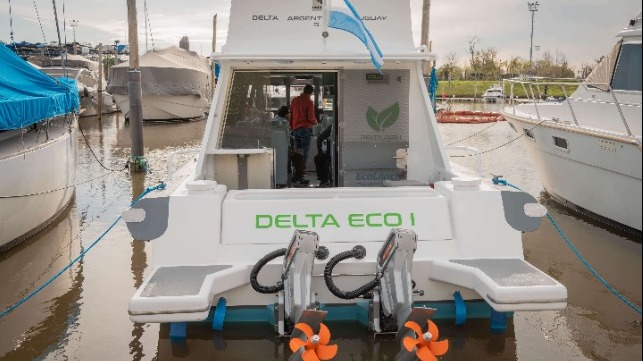
The EcoLancha initiative, spearheaded by Delta Argentina Uruguay – the region's second-largest ferry operator – is set to revolutionize river transport. The Delta Eco One, a sleek prototype, is currently conducting test runs in the Paraná River and the Rio de la Plata. The 22-passenger aluminum vessel is powered by twin Torqeedo Cruise 12.0 motors and Power 48-5000 batteries, achieving a top speed of 9 knots. An 1100 W solar panel on the roof powers the onboard equipment and air conditioning.

Leonel Falcón, president of Delta Argentina Uruguay, stated, "The initial test navigations were a success, and the official launch of the EcoLancha project is imminent." The company's mid-term goal? To replace the entire fleet of "lanchas colectivas" with 174 EcoLancha units, creating 1,000 new jobs in the process. The project is also planning a larger, 60-passenger electric water taxi, equipped with Torqeedo’s state-of-the-art Deep Blue 100 kW electric motor.

Nicolás Fothy, a Buenos Aires naval architect and Torqeedo distributor, notes, "The Delta del Paraná is culturally and ecologically unique. Electric ferries represent a leap into the future, maintaining tradition while embracing innovation." The EcoLancha promises a safe, efficient, and silent service, removing passenger and crew exposure to vibrations, noise, and exhaust fumes, and reducing water pollution risks.

Currently, the EcoLancha team is collaborating with the Argentinian Coast Guard to develop and implement safety regulations for electric water mobility. "We're laying the groundwork for this technology," explains Fothy. "It's about fostering a culture of electric mobility on water in South America."

Naval Electric, Fothy's company, in partnership with Torqeedo, has already introduced several 100% electric boats in South America. The E-Delta 650 day cruiser, for example, features a Torqeedo Cruise motor and boasts a range of up to 35 nautical miles. "It's perfect for crossing the Rio de La Plata to Uruguay and back," says Fothy. Electric vessels are currently also operational as tour boats in the Paraná delta's nature reserves.

“Water forms the heart of many of our planet’s most delicate and ecologically significant ecosystems. In the Paraná Delta - Rio de la Plata river system, climate change instability does not only affect nature’s wonders – this region is also home to 30% of Argentina’s population. At Torqeedo, we’re dedicated to reducing pollution and protecting both the climate and local economies with environmentally friendly transportation solutions,” said Matthias Vogel, senior vice president of BU customized solutions for Torqeedo GmbH.

The products and services herein described in this press release are not endorsed by The Maritime Executive.


Ukraine Reaches New Export Milestones with Support of Bulk Shippers

Ukraine Black Sea exports
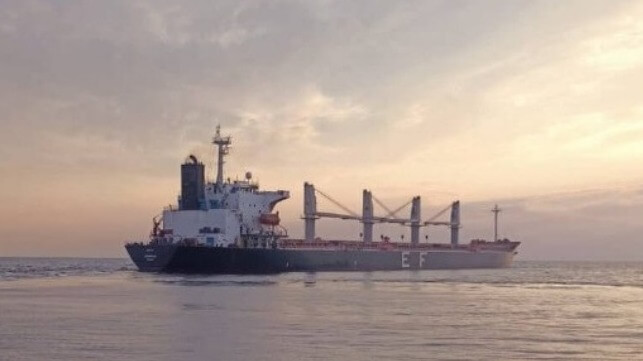
Ukraine marked a new milestone in its export program on the Black Sea (Oleksandr Kubrakov)

PUBLISHED JAN 9, 2024 8:08 PM BY THE MARITIME EXECUTIVE


Ukraine is marking a new milestone in its ongoing export programs with the now six-month-old corridor established along the Black Sea and support for the West to provide insurance for vessels operating out of the Black Sea ports. Despite renewed attacks by Russian forces on the port infrastructure especially in the area around Odesa, and the periodic reports of mine incidents, Ukraine reports it has reached 15 million metric tons of cargo moved through its Black Sea shipping corridor. 

The focus remains on foodstuffs and ag products. Two-thirds of the exports have been agroproducts. During the agreement brokered by the UN and Turkey, Ukraine was only permitted to export ag products. However, since going it alone they have also been able to export 5 million tons of additional material. This includes steel and coil exports.

Vice Prime Minister for the Restoration of Ukraine Oleksandr Kubrakov highlights that they have been able to build broad support from within elements of the shipping community. He wrote on X that, “During the five months, 469 new vessels entered the Black Sea ports for loading. Currently, 39 vessels are loaded in the ports of Odesa, Chornomorsk, and Pivdenny.”

A further 83 vessels reportedly have also registered for arrival. Kubrakov reports that will be able to export an additional 2.4 million tons of cargo.

While the exports are providing a vital lifeline for Ukraine’s economy, they are far below pre-war levels. Reports are that Ukraine despite Russian attacks destroying portions of the crop in storage has a total of 50 million tons of exportable grain. Including the final days of the Black Sea Agreement and now the independent effort, Ukraine exported just over 19 million tons in the second half of 2023.

While reopening the Black Sea ports was a vital step, efforts have also expanded exports from along the Danube and various overland and inland routes. 

The Ukrainian Sea Ports Authority reports that they achieved new records at the Danube ports in 2023. Head of the authority, Yuriy Lytvyn told the Ukrainian media that over 29 million tons of cargo passed through the Danube ports in 2023, an almost six-fold increase to pre-war levels. Just over 13,000 vessels arrived at the Danube ports in 2023 up from 8,944 ships in 2022.

Plans for 2024 call for launching further investments to enhance the operations on the Danube. The authority reports it plans to implement 15 investment projects for the two main ports on the river.


The First American Transit of the Northwest Passage

THE NORTHWEST PASSAGE IS CANADIAN TERRITORY

Storis
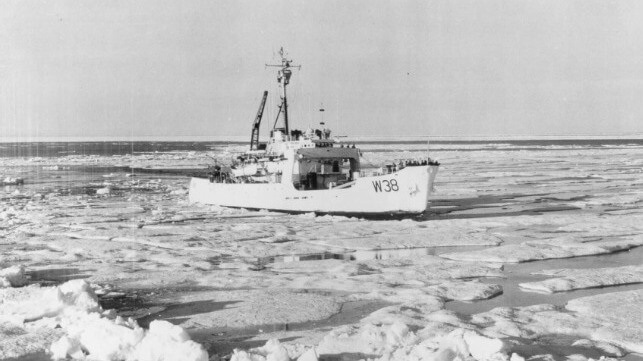
Icebreaker Storis under way in the Northwest Passage (USCG)

PUBLISHED JAN 7, 2024 8:03 PM BY U.S. COAST GUARD NEWS


Four hundred and sixty years. That was the span of time that separated the first attempt, in 1497, to discover and navigate a new northerly sea route to East Asia, and the successful attempt in 1957 of three U.S. Coast Guard cutters to break through and officially chart what had become known as the fabled Northwest Passage. 

Sailing out of Bristol, England, in May 1497, under the anglicized name of John Cabot, Genoese maritime explorer Giovanni Caboto made the first voyage to the new world to try his luck discovering a faster, more direct trade route to the Far East. Had he been successful, the route would have traversed through the treacherous and complicated archipelago of the Canadian arctic — an immense area of water, ice, and mostly uninhabited snow and ice-covered islands. 

Despite his intentions, John Cabot’s voyage ended along the coastline of eastern Canada and possibly Maine. He returned to England and eventually disappeared from history. However, over the next four centuries numerous mariners, explorers, and scientists were inspired to undertake similar voyages experimenting with different routes and charting pathways through the North Polar Region. Indeed, finding a route through the waters of the Northwest Passage became an obsession for several expeditions — many vanishing without a trace or returning home empty-handed. This quest continued unabated up to the 20th century with disappointing results compared to the efforts made. 

The first successful attempt to sail through the Passage was accomplished between 1903 and 1905 by Norwegian explorer Roald Amundsen. Using a small, shallow draft fishing vessel, he carefully maneuvered his way through the ice, sticking close to coastlines. The next successful transit of the Northwest Passage was accomplished between the years 1940 and 1942 by a Canadian ship called the St. Roch, which had an ice strengthened hull. 

In the summer of 1957, the Northwest Passage was conquered again and charted by three Coast Guard Cutters — Storis (WAG 38), Spar (WAGL 403) and Bramble (WAGL 392). For this journey, the vessels were tasked with establishing and charting a successful path through the Northwest Passage in response to defense concerns caused by Cold War tensions with the Soviet Union. The icebreaker Storis was based in Juneau, Alaska. Spar, homeported in Bristol, Rhode Island, and Bramble, based out of Miami, Florida, were both buoy tenders. 

All three cutters rendezvoused in Seattle, Washington, and set sail on July 1st. Gaining a better understanding of ice floe movements and transiting through them without sustaining severe damage or getting stuck in the ice pack was critical for future shipping activity in this region. Their mission was to resupply American and Canadian Arctic bases of the U.S Navy’s Military Sea Transportation Service, conduct hydrographic surveys of Arctic waters, and search for a sea route deep enough to support larger, deeper draft cargo ships.  

The three cutters were under the overall command of Coast Guard Cmdr. Harold L. Wood, commanding officer of Storis. Spar was skippered by Lt. Charles V. Cowing and Bramble was skippered by Lt. Cmdr. Harry H. Carter.  Sailing northward around the Alaskan coast and through the Bering Strait, the cutters skirted the coastline of the Northwest Territories for a large portion of the trip. Eventually, the convoy turned northward and traversed the Rae, James, Ross, and Franklin Straits. While in Franklin Strait, the cutters became trapped in an ice floe field for a number of days before Spar freed itself and then helped the other vessels reach clear water. During this time, the cutters continued their mission of charting and recording water depths, correcting old charts, in addition to leaving moored buoys to mark future shipping lanes.  

On September 6th, as they entered Bellot Strait, the cutters met up with HCMS Labrador which guided them through the challenging seventeen-mile passage. In doing so, they became the first deep draft ships to sail through this waterway. Continuing eastward, they sailed toward Lancaster Sound, crossed the Arctic Circle, and steamed into the Labrador Sea. Heading homeward, they continued along the eastern Canadian and United States coasts. By October, all three cutters had reached their respective homeports and thus went down in history as the first American vessels to transit through the icy seas of the Northwest Passage and circumnavigate the North American continent. 

This article appears courtesy of Coast Guard News and may be found in its original form here

The opinions expressed herein are the author's and not necessarily those of The Maritime Executive.