Sunday, January 14, 2024

UPDATED
Palestine protesters march through London en masse as TENS OF THOUSANDS demand end to Yemen air strikes


Palestine protesters are marching to Parliament Square
GB NEWS/ PA

By Dan Falvey
Published: 13/01/2024 - 

The Met Police has deployed hundreds of officers in order to try and ensure that there is no trouble at the march

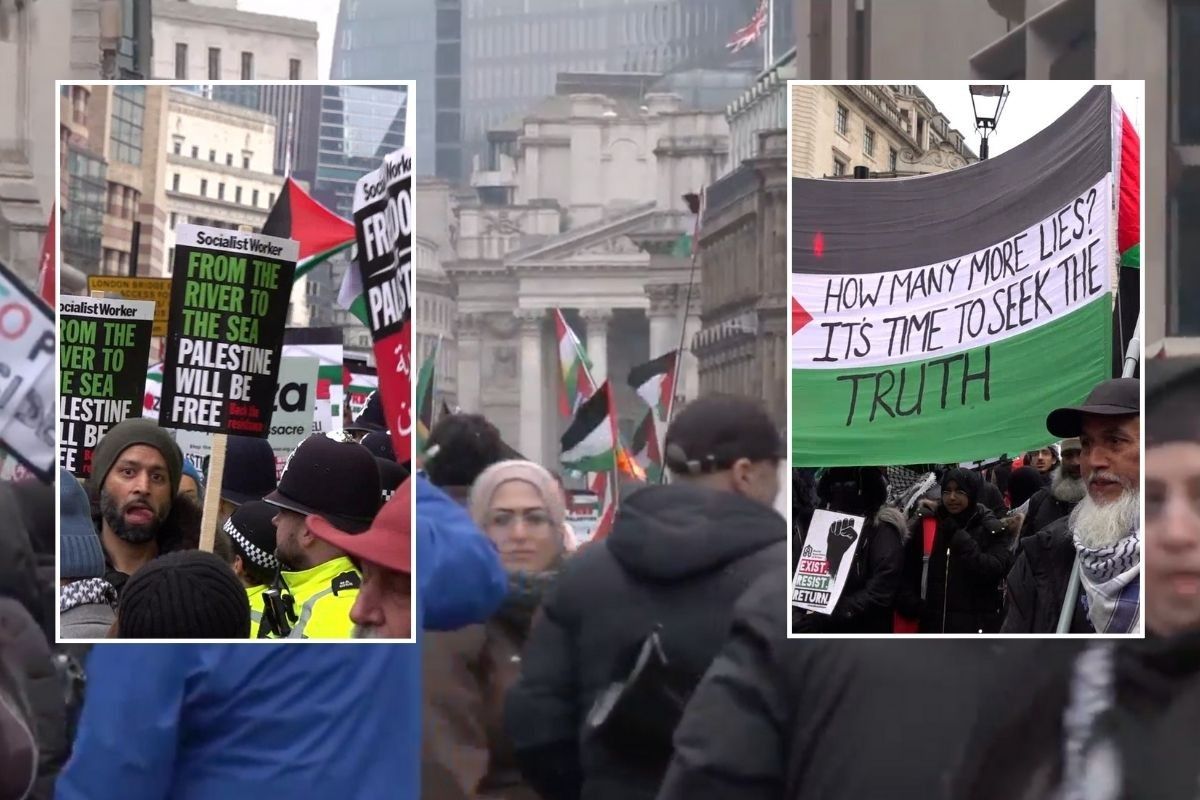
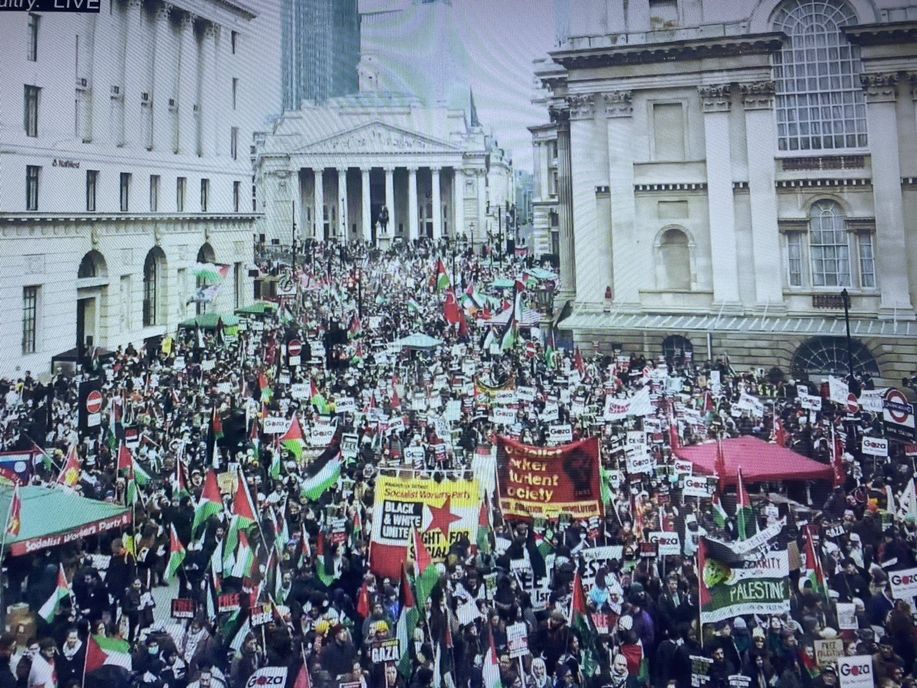
Thousands of pro-Palestine protesters have gathered in London to take part in a mass march through the capital.

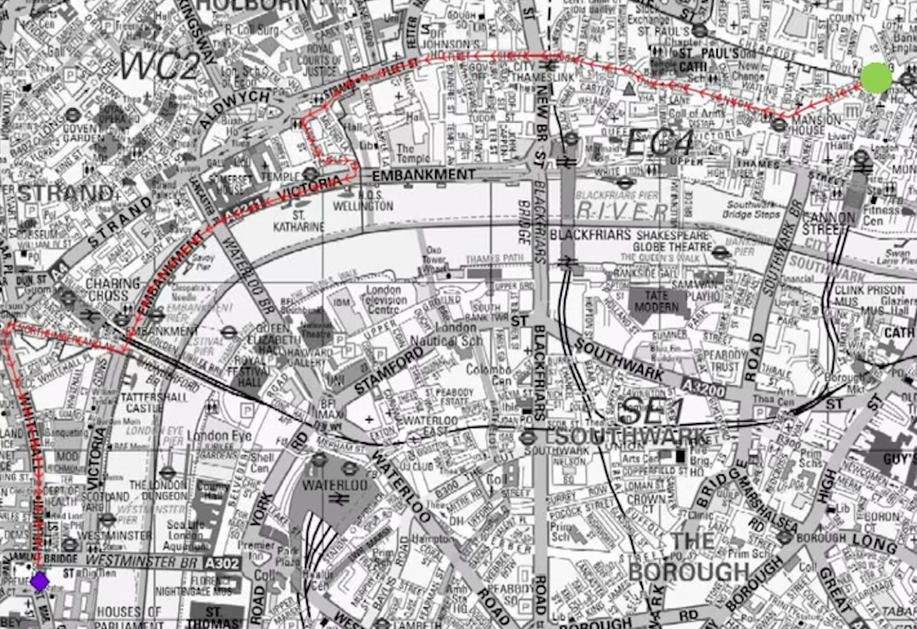
The event, which comes just days after the UK and US carried out airstrikes against Iran-backed rebels in Yemen, started at around midday on Queen Victoria Street and is set to end in Parliament Square.

Protesters were seen filing past St Paul’s, with one man holding a placard claiming Yemen “supports Palestine”.

The placard read: “UK + US wants war. Yemen supports Palestine. Gaza wants to live.”


MET POLICE

The Met Police has deployed hundreds of officers in order to try and ensure that there is no trouble at the march.

Warnings have been issued that any placards deemed to be antisemitic will be confiscated and activists potentially arrested.

"Around 1,700 officers will be on duty to police the march on Saturday, including many from forces outside London," the Met said in a statement on Friday.

"Officers are there to ensure the events take place safely and peacefully, that disruption to other members of the public is kept to a minimum and that any offences are seen and dealt with."
Protesters have been warned they must stick to an agreed route

It added: "The majority of protests and other events held in recent months have taken place without any notable disorder, with most people attending to express their views in a lawful and peaceful way.

"Regrettably not everyone has acted responsibly and we have seen multiple arrests at a number of protests.

"In particular, there have been repeated examples of placards, banners and other items being carried or worn, or statements being chanted, that have crossed the line into religiously or racially aggravated offences.

"Some have even been so serious as to be dealt with under the Terrorism Act.

"The Met’s Counter Terrorism Command has launched around 30 investigations into suspected offending at protests since 7 October, the majority of which relate to potential terrorism offences. Officers will be working again this weekend to identify any further offences."

A set route for the march has been set out by police with those participating in the march warned not to deviate from the agreed path. A strict 5pm curfew has also been set.

Pro-Palestine marches held in France, Italy, Ireland

TEHRAN, Jan. 14 (MNA) – Hundreds of thousands of demonstrators rallied in cities across Europe to show their support for the Palestinians amid the brutal Israeli military onslaught on the Gaza Strip.

Simultaneous pro-Palestine marches were held on Saturday in Paris, Rome, Milan, and Dublin as well as in London, Amsterdam, and Washington.

Demonstrators in the Irish capital of Dublin waved Palestinian flags and chanted slogans "Free Palestine" while criticizing Western governments for their support for the Israeli regime's aggression on Gaza. 

Hundreds of demonstrators also gathered in Rome, the capital of Italy, calling for a stop to the genocide being committed by the Zionist regime in Gaza.

The Israeli regime waged the war on Gaza on October 7 after the Palestinian Resistance movement Hamas carried out the surprise Operation Al-Aqsa Storm against the occupying entity in response to the Israeli regime’s atrocities against Palestinians.

Since the start of the aggression, Israel has killed more than 23,843 Palestinians, mostly women and children. Nearly 60,317 Palestinians have also been wounded, according to Gaza’s Health Ministry.

The Tel Aviv regime has also imposed a “complete siege” on the territory, cutting off fuel, electricity, food, and water to the more than two million Palestinians living there.

MP/IRN


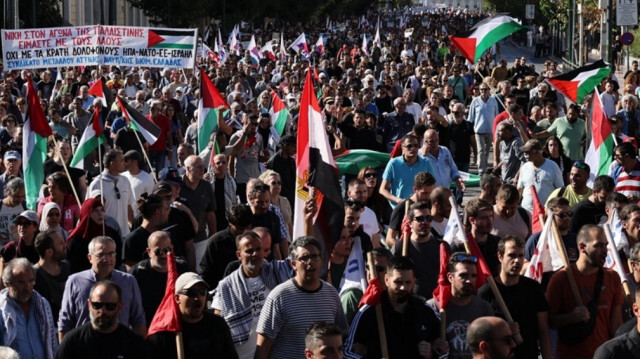
Israel's relentless attacks on Gaza protested in Athens

Hundreds of people from left-wing student organizations, trade unions, and political parties condemn Israeli attacks, demanding Palestine's right to live in freedom


 13/01/2024 Saturday
AA


Israel's relentless attacks on Gaza, which have continued since Oct. 7 of last year, as well as NATO, EU, and US policies regarding the plight of Palestinians, were protested on Saturday noon in the Greek capital city of Athens.

The rally was organized by the Palestinian Community of Greece and Stop the War-Alliance with Palestine, and it was attended by hundreds of people from left-wing student organizations, trade unions, and political parties who carried Palestinian flags and banners condemning Israeli attacks and demanding Palestine's right to live in freedom.

The protestors also chanted slogans condemning Israel's indiscriminate bombing of Gaza and the West's failure to acknowledge Israel's war crimes in the enclave and the West Bank.

At a separate rally in the northern port city of Thessaloniki organized by the Thessaloniki Committee for International Recession and Peace, hundreds of people protested the use of the port by US, German, and British military ships, as well as Western policies on the Israeli-Palestine conflict, the Greek Communist Party's (KKE) media platform reported.

“People's killers are not welcome,” and “Thessaloniki is a port of the people, and not a stronghold of the imperialists,” they chanted during the anti-Israel rally.

The Palestinian death toll from the Israeli army's ongoing attacks on Gaza since Oct. 7 has risen to 23,843, with 60,317 injured, the Health Ministry in Gaza announced on Saturday.

Israel has launched relentless air and ground attacks on the Gaza Strip following a cross-border attack by Palestinian group Hamas on Oct. 7.

Authorities claim the attacks by Hamas have killed around 1,200 Israelis.

The Israeli onslaught has left Gaza in ruins, with 60% of the enclave's infrastructure damaged or destroyed and nearly 2 million residents displaced amid acute shortages of food, clean water, and medicines.


Activists protest at British base in Cyprus used in Yemen strikes

Reuters
Sun, January 14, 2024 


Protest at gates of RAF Akrotiri, British base on Cyprus used to launch strikes against Houthi militia in Yemen, near Limassol

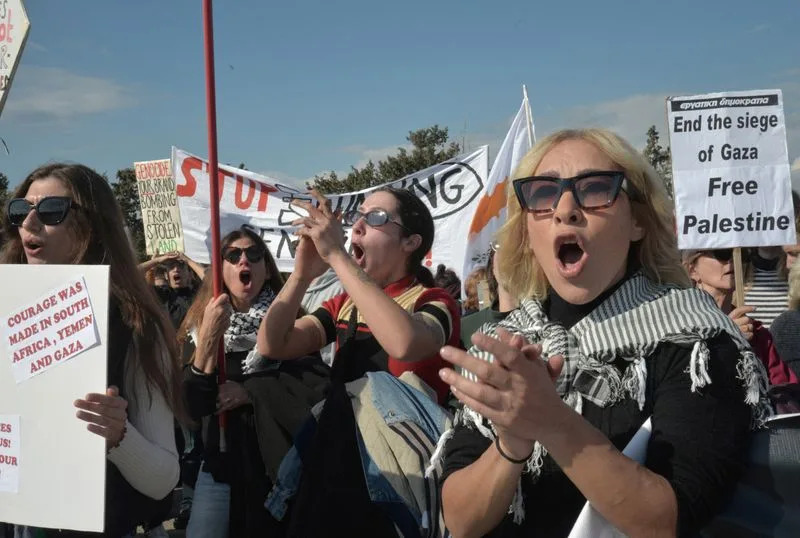
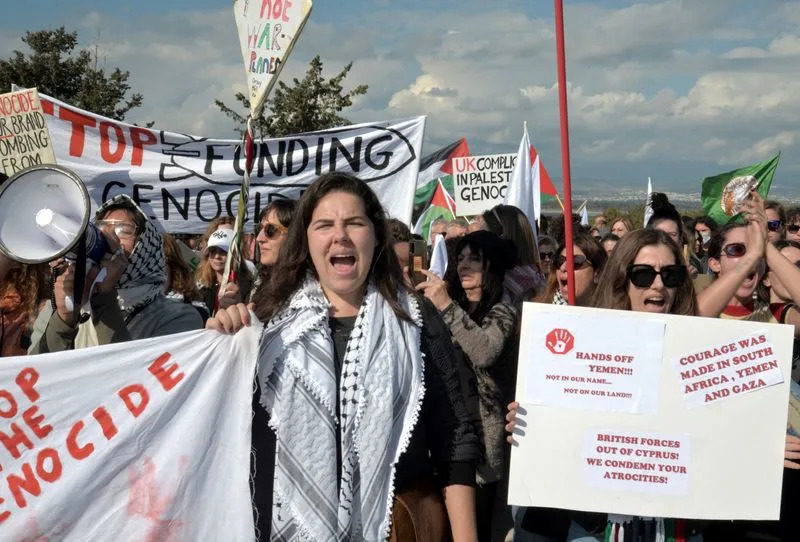
AKROTIRI, Cyprus (Reuters) - Pro-Palestinian activists protested at the gates of RAF Akrotiri in Cyprus on Sunday, angry that the British base was used as a launch pad for strikes against the Houthi militia in Yemen.

U.S. and British warplanes, ships and submarines launched dozens of air strikes against Houthi forces in Yemen overnight Thursday to Friday in retaliation for attacks on Red Sea shipping that the Iran-backed group says is a response to the war in Gaza.

RAF Akrotiri was used as a staging point for Typhoon fighter jets involved in the operation.

Several hundred protesters chanted "Out with the Bases of Death" at the entrance to RAF Akrotiri, one of two bases Britain retains in Cyprus, a former colony.

The iron gates to the heavily-guarded compound, which sits on a peninsula on Cyprus's southernmost tip, were locked with dozens of police present.

"We are here because we condemn the complicity of the UK government and using Cypriot land for their agenda to support Israel in their onslaught of Gaza," said Natalia Olivia of the Cyprus-based United for Palestine organisation.

Another activist, Nicos Panayiotou, called the use of the British bases a disgrace. "They are using Cypriot land to do something every Cypriot is condemning," he said.

Britain is not obliged to seek permission from Cyprus for operations out of Akrotiri under the terms of the bases' presence on the island.

The strikes have added to concerns that the Israel-Gaza war could spread through the Middle East, with Iran's allies also entering the fray from Lebanon, Syria and Iraq.

Sunday's demonstration was organised before Akrotiri was used for the strikes on Yemen amid perceptions - denied by Britain - that the base is being used to offer logistical support to Israel.

In response to the protests, a British Ministry of Defence spokesperson said: "British Forces Cyprus continue to support the delivery of humanitarian aid into Gaza and no RAF flights into Israel have transported any lethal cargo."

(Reporting By Michele Kambas; editing by Christina Fincher)

Hundreds of peace protesters rally outside British base in Cyprus

AFP
Sun, January 14, 2024 
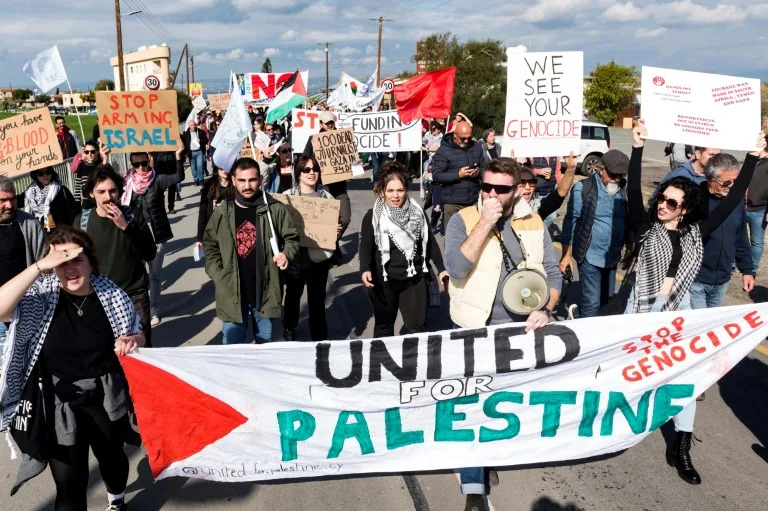
Peace protesters rally outside the Royal Air Force Akrotiri base near the Cypriot coastal city of Limassol (Iakovos Hatzistavrou)

About 300 peace protesters rallied on Sunday outside Britain's Akrotiri military base in Cyprus, charging it is fuelling regional conflicts in Gaza and Yemen.

The demonstrators demanded the closure of military bases that have been under British control since the eastern Mediterranean island nation's independence in 1960.

They carried a banner demanding a "Ceasefire Now" in the Israel-Hamas war raging in the Palestinian territory since October 7 while another read "Stop funding genocide".

Some online reports in Britain have pointed to UK and US military flights from Akrotiri to Tel Aviv and charged they were carrying military supplies for Israel.

A British defence ministry spokesperson told AFP that "British Forces Cyprus continue to support the delivery of humanitarian aid to Gaza and no RAF flights into Israel have transported any lethal cargo".

The spokesperson also said that a British naval vessel "with the support of British Forces Cyprus, delivered 87 tonnes of UK and Cypriot aid to Egypt for the people of Gaza".

Police stood between the protesters and the gates of the Royal Air Force Akrotiri base, a British overseas territory near the southern coastal city of Limassol.

The head of the Cyprus Peace Council, Tasos Kosteas said at the demonstration: "Cyprus is a living example that military bases do not solve problems, do not provide stability and security, but intensify militarisation and perpetuate tension."

The march was organised by the Cyprus Peace Council and supported by the leftist opposition party AKEL, the group United For Palestine and other leftist groups.

A United For Palestine activist, Leandros Fischer, a professor from Limassol, said the base was also used in recent US and British bombing of Yemen's Huthi rebels, after the Iran-backed group had attacked ships in the Red Sea.

Fischer said that protesters also voiced "opposition to the very presence of British bases on Cyprus' soil" and that they make the island "a potential target".

Vera Polycarpou, AKEL's head of international relations, said "we're demonstrating against the uses of the bases against the peoples of the region, against the bases' presence in Cyprus. We want them to be dismantled."

The Gaza war was sparked by Hamas's unprecedented attack of October 7 on southern Israel, which resulted in about 1,140 deaths, mostly civilians, according to an AFP tally based on official figures.

Israel in response vowed to destroy Hamas and launched a relentless military campaign that the Gaza health ministry says has killed nearly 24,000 people, most of them women and children.

sk-anr/fz


Port of Oakland: Protesters gathered early Saturday morning opposing U.S. aid in Israel-Hamas war

Community members began pounding drums and chanting hours before sunrise


Hundreds of protesters gathered at the Port of Oakland by 5 a.m. Saturday, opposing the United States’ continued military aid to Israel’s war on Hamas in Gaza.

By KATIE LAUER | klauer@bayareanewsgroup.com | Bay Area News Group
UPDATED: January 14, 2024

OAKLAND — Rain did not dissuade scores of protesters from gathering at the Port of Oakland by 5 a.m. Saturday, opposing the United States’ continued military aid in Israel’s war on Hamas in Gaza.

Several hours before sunrise, hundreds of community members began pounding drums and chanting near Middle Harbor Shoreline Park and Seventh Street to disrupt port operations.

The demonstration, organized by the Arab Resource and Organizing Center, successfully shut down the first shift of longshoremen scheduled for work Saturday, according to Wassim Hage, an AROC spokesperson.

The crowd dispersed by late morning, but Hage said protesters vowed to return to the port by 2 p.m. “to shut down any business as usual for the afternoon shift.”

Organizers said they believed a ship carrying military supplies was set to arrive at the port, though that claim could not be immediately verified. In November, a similar protest at the Port of Oakland targeted the Cape Orlando vessel, a ship with the U.S. Department of Transportation’s Maritime Administration, authorities said.

Hage said a shuttle was made available for any protesters who arrived at the West Oakland BART station for Saturday’s afternoon protest, which also coincided with a global day of action against the longest and deadliest war between Israel and Palestinians in 75 years. The group has also called for a ceasefire.

Ahead of Martin Luther King Jr. Day this weekend, AROC said the action was also a way to “honor and uphold (his) radical legacy … and his internationalist vision for human rights, racial justice, and an end to war and exploitation across the world.”

The move comes more than three months after Hamas’ surprise attack on Oct. 7 left roughly 1,200 people dead across southern Israel. Since then, the death toll from Israel’s bombardment of Gaza has eclipsed 23,000 people, which is roughly 1% of the Palestinian territory’s population. Experts say the Israeli bombing is among the most intense in modern history.

Lara Kiswani, executive director of the Arab Resource and Organizing Center, said Saturday’s protest aimed to disrupt business at the port, which generates around $12 million in revenue daily.

“This is nearly the same amount of money that the US sends to Israel per day in economic and military aid,” Kiswani said in a statement. “The Oakland port has facilitated the transport of weapons, military equipment, and technology that fuel the Israeli genocide of Palestinians. As long as the US enables this war with our tax dollars and through our port, there can be no business as usual.”

Roberto Bernardo, a spokesperson for the Port of Oakland, could not confirm Saturday afternoon if the same ship from the November protest was at the port this weekend. However, he said that officials continue to work with their maritime partners to “ensure safety and security, which is paramount for the Port of Oakland.”

“For us, the most important thing is that no one gets hurt,” Bernardo said Saturday afternoon.

While it’s unclear if the AROC protest specifically aimed to stop specific vessels from leaving the Port of Oakland, Bernardo said delayed ships may simply opt to dock in another city that is more accessible — potentially affecting the livelihoods of nearly 100,000 local jobs.

“What’s important is how these types of disruptions impact all of us,” Bernardo said, explaining how the entire Bay Area community would feel the repercussions of delayed shipments of goods such as medical supplies, food products and auto manufacturing parts. “We do a disservice to ourselves when we give our business to someone else.”


Pro-Palestine protesters rally in Washington, London; demand Israel war ceasefire

Pro-Palestine protesters in Washington, London, and other locations rallied for a global day of action. Demonstrators expressed solidarity, calling for an end to the conflict and condemning alleged war crimes.


A person wearing a mask depicting Israeli Prime Minister Benjamin Netanyahu holds a doll as people take part in a protest in London, UK, to mark 100 days since the start of the war on Gaza (Reuters)


Agence France-Presse
Washington,
Jan 14, 2024

Thousands of pro-Palestine protesters marched in Washington, London and elsewhere on Saturday as part of a "global day of action" to demand an immediate ceasefire in the Gaza fighting and to oppose US and British support for Israel.

In Washington, large crowds waved Palestinian flags as the mostly young protesters -- many wearing the traditional keffiyeh -- gathered in a show of solidarity on the 99th day of the Israel-Hamas war in the Gaza Strip.

"Cease-fire now," people chanted, while carrying banners and posters that read "Free Palestine" and "End the War on Gaza."

On a stage a few blocks from the White House, several Palestinian-Americans -- originally from Gaza, but now living in US states from Michigan to Texas -- offered emotional accounts of friends and relatives killed or wounded in Gaza.

They exhorted US President Joe Biden to end military and financial support for Israel.We'd like two minutes of your time in order to understand you better. Please take this reader survey.

"President Biden can easily stop this madness" by pressuring Prime Minister Benjamin Netanyahu of Israel, one speaker said to wide applause.

London, meantime, saw its seventh pro-Palestinian demonstration since October 7, when Hamas militants invaded southern Israel and killed around 1,140 people, mostly civilians, according to an AFP tally based on official figures.

Israel vowed to destroy Hamas and launched a relentless bombardment of Gaza that has killed at least 23,843 people, mostly women and children, according to the latest toll from the territory's health ministry.

Around 1,700 police were on duty Saturday to ensure security for the London protest.

"We want to show the people of Palestine we are with them, and to speak up against our government as well," 27-year-old health service worker Maleeha Ahmed, who was at the march with her family, told AFP.

"They are playing a very, very big role in allowing Israel to continue what they are doing and it's just not acceptable," she said.

Another marcher, Dipesh Kothar, 37, said it was "very frustrating to sit and watch the world do nothing."

"That's why we come out to show support for the Palestinian people and show our unhappiness with the governments around the world," he said.

Saturday's marches held particular significance given US and British air strikes in Yemen this week against Huthi bases, after the Iran-backed militants attacked ships in the Red Sea in solidarity with Gaza.

The day of action, called by a British organising coalition, involved protests in 30 countries.

Kate Hudson of the Campaign for Nuclear Disarmament, which is part of the coalition, said the event was "to demand a permanent cease-fire and a lasting political settlement for all Palestinians."

She said the British government "must end its support for Israel's brutal war in Gaza, and join the wider international community in condemning its war crimes."

Hundreds of thousands attend 7th national march for Palestine in London

January 13, 2024 

An aerial view of thousands of people, holding banners and Palestinian flags, stage a demonstration in support of Palestinians, and demanding ceasefire as they march towards Parliament Square in London, United Kingdom on January 13, 2024. [Raşid Necati Aslım – Anadolu Agency]


A pro-Palestine march began on Saturday in the heart of London, marking the seventh demonstration in the British capital since Israel’s onslaught on the Gaza Strip began in early October, Anadolu Agency reports.

Drawing hundreds of thousands of participants, the event was organized by the Palestine Solidarity Campaign (PSC), which has lauded the protests as constituting “one of the largest, sustained political campaigns in British history.”

This demonstration is part of a global day of action, mobilizing for a comprehensive cease-fire in Gaza across 60 cities and over 30 countries.

The groups departed from Bank junction in the City of London at roughly midday, heading via Fleet Street and Victoria Embankment to Parliament Square, where speeches are to take place.

READ: 135 more Palestinians killed as Israel continues onslaught on Gaza: Health Ministry

The PSC, expecting about 250,000 participants in the march, which is the first since the new year began, acknowledged the myriad of developments in the region during this period.

Notably, the march featured the presence of Little Amal, a giant puppet representing a Syrian child refugee, who will join a group of Palestinian children in the procession. The symbolic addition aims to draw attention to the plight of refugees in the region.

Home Secretary James Cleverly, in anticipation of the protest, voiced confidence in the Metropolitan Police’s ability to ensure order and safety during the event.

He endorsed the use of police powers to manage the protest and address any potential criminal activities.

Around 1,700 officers are on duty to police the march on Saturday, including many from forces outside London, with attendees warned that those who intentionally push legal limits on placards and slogans could face arrest.

‘Hands off Yemen’


One thing that sets this march apart from its predecessors, which followed a different route through the city, was the diverse array of flags and banners unfurled throughout the crowd.

Alongside the familiar calls for a free Palestine and cease-fire in Gaza, it featured banners supporting South Africa, which has filed charges of genocide against Israel with the International Court of Justice in The Hague, and Yemen, where members of the Houthi group are blocking Israel-affiliated ships from entering the Red Sea.

The rally drew attention to the ongoing conflict in Yemen, with protesters holding banners with the demand, “Hands off Yemen.”


Protesters holding banners with the demand, “Hands off Yemen” in London, United Kingdom on January 13, 2024.

The UK and US, with the support of Australia, Bahrain, Canada, and the Netherlands, conducted airstrikes Thursday against military targets in Houthi-controlled areas of Yemen, following a string of Houthi attacks in the Red Sea that destabilized trading routes.

“We won’t stop until a permanent cease-fire is achieved,” a protestor told Anadolu, asserting that the demonstration was sending a strong message that “the world is waking up to the interconnectedness of our struggles.”

“South Africa’s case against Israel resonates with us, and we’re here to demand justice for all those facing injustice, be it in Gaza, Yemen, or anywhere else,” she added.

South Africa, which filed the case in December, accused Israeli authorities of perpetrating genocide against Palestinians in Gaza. It requested provisional measures from the court to protect Palestinians, including by calling upon Israel to immediately halt military attacks.

South Africa laid out a list of alleged genocidal acts by Israel on the first day of the hearing Thursday, while Israel defended itself Friday.

Israel has killed more than 23,800 Palestinians in Gaza since an Oct. 7 cross-border offensive by Palestinian resistance group Hamas. The military campaign has also caused mass displacement, destruction, and hunger.

READ: 53% of Israelis believe Tel Aviv did not defeat Hamas, 22% believe army lost war

Little Amal stands in solidarity with the Palestinian people at the London march


Little Amal, popular puppet representing a refugee girl, joined the Global Action Day for Gaza in London. The Walk with Amal page announced that they are joining to call for an immediate ceasefire in Gaza. Little Amal is known for their advocacy for children around the world to have safe refuge, health education and prosperity.


January 13, 2024 


Israel has achieved little but a humanitarian catastrophe


13th January
By David Pratt
THE HERALD SCOTLAND
Foreign Affairs Editor

Western arrogance and miscalculation has led to an uptick in hostilities across the Middle East and no-one this time is taking much notice of America’s ‘big stick’. Foreign Editor David Pratt reports

IT was never supposed to play out this way, not according to the Israeli government anyway. This time around the old “mowing the grass” metaphor so favoured in the past by Israeli officials to describe their strategy of keeping Palestinian militants in Gaza down didn’t begin to convey what was coming Hamas’s way.


For in the words of Israel’s own war cabinet, this time Hamas would be “wiped off the face of the Earth,” and never for one moment did the government of Israeli prime minister Benjamin Netanyahu doubt their country’s military capacity to do just that.

Why should they b given Israel’s regional “superpower” status?

Likewise, Israel’s allies in the West, notably the US and UK, equally never doubted for a moment that should things get out of hand then they would always be able to rein in any overzealous Israeli military campaign.

This was how it was handled in the past and this is how it would be handled again, was the prevailing view, even given the scale of Hamas’s murderous attack on October 7.

The only difference this time was that Hamas would be eliminated and a new security apparatus for Gaza would be put in place preventing any regional escalation and keeping the Middle East in check.

Job done and normal diplomatic business would be resumed.

Such was the conventional thinking in Washington, London, Riyadh and elsewhere in the wake of October 7, even if just to be on the safe side the US sent its newest, most advanced aircraft carrier to the eastern Mediterranean.

America’s ‘big stick’


The USS Gerald Ford would be a signal that America, if necessary, still meant military business and was determined to deter Iran and its myriad proxy militias in the region for upping the ante.

But now, as we mark 100 days into the war in Gaza, no-one, it seems, is taking much notice of America’s “big stick”.

Hamas has far from been eviscerated and fights on.

In the interim, meanwhile, tens of thousands of Palestinians have been killed and millions more displaced.

Then there is the ominous reality that an even bigger war between Israel and Hezbollah is only a blink away, and elsewhere in the region other Iranian backed militias in places like Syria and Iraq now have Western interests in their sights.

And, as if this was not escalation enough, US and UK warplanes are now bombing Yemen as the Red Sea comes under threat from Houthi fighters attempting to turn it into a maritime no-go zone that could put a choke lock on world trade.

Along with Hamas and Hezbollah, Yemen’s Houthis have stepped up as part of the Iranian-led “Axis of Resistance” opposed to Israel and its allies.

From Jerusalem to Washington, London to Riyadh, it’s a fair bet that those in the respective corridors of power in these countries – and others – never expected things to play out this way.

That very thing Western and Middle East policy had so sought to avoid, a regional escalation, has now become an unwelcome reality.

Such now is the fear of a full-blown conflict in one of the most politically fragile and strategically important parts of the world, that security analysts to energy markets, shipping companies to oil suppliers, already show signs of being thoroughly spooked and rattled.

A child watches as a mourner cries over the bodies of family members at al-Najar hospital in Rafah in the Gaza Strip after they were killed during Israeli bombardment, on January 10

Western failings


The obvious trigger of the war in Gaza aside for a moment, the current crisis, many argue, has laid bare what for some time has been the failings of Western policy in the Middle East. And at the heart of this failure, say some analysts, are the United States’ main regional partnerships.

“The two crucial US partners in the region, Israel and Saudi Arabia, are liabilities to the United States, not assets,” says says Jon Hoffman a foreign-policy analyst at the Washington, DC-based Cato Institute.

“Although the two states maintain considerable political, economic, and social differences, they both consistently undermine US interests and the values that the United States claims to stand for. Washington should fundamentally reorient its approach to both countries, moving from unconditional support to arm’s-length relationships,” Hoffman argued recently in an article in Foreign Policy magazine, expressing a view shared by other Middle East watchers.

Far from leveraging its relationship with Israel, Washington, says Hoffman, has continued its “blank-cheque approach” to Israel, providing more than $14 billion in military aid in a package approved in November which risked massive escalation in the process.

As for America’s other regional partner, Saudi Arabia, Hoffman reminds us that it remains one of the most autocratic countries in the world and is “a principal source of political, economic, and societal disorder across the Middle East”.

In other words, with two key partners like this in the region the scene was set whereby America and others who cosied up to Jerusalem and Riyadh, while all but ignoring other countries concerns in the Middle East, would eventually face some kind of backlash.

Anyone who doubts the extent to which Washington had taken its eye off the ball in the region needs only consider remarks made by US national security adviser Jake Sullivan last September, who asseretd that “the Middle East region is quieter today than it has been in two decades”.

“Now challenges remain, but the amount of time that I have to spend on crisis and conflict in the Middle East today compared to any of my predecessors going back to 9/11 is significantly reduced,” maintained Sullivan in a statement that has aged both horribly and embarrassingly for the Biden administration.

Palestinians line up for food in Rafah last Tuesday during the ongoing Israeli air and ground offensive on Gaza

Volatile region

SULLIVAN’S remarks act as a sharp reminder of the dangers of diplomatic complacency and inaction in a region almost constantly in a state of volatile political flux.

Now, the United States along with the UK and other Western allies are reaping the whirlwind for such diplomatic miscalculation and neglect. The Houthi “problem” in the Red Sea is by far the most pressing for now.

Backed by their sponsor Iran, the Houthis in the past have proven resistant to attacks from Saudi Arabia and the United Arab Emirates (UAE), suggesting that they will not be quickly subdued by the American and British strikes.


As Michelle Wiese Bockmann, principal analyst at Lloyd’s Intelligence List observed writing in the Financial Times a few days ago, the Houthis’ tactics “show how swiftly the vulnerabilities of key trade chokepoints can be exploited to upset global supply chains, causing maximum disruption”.

Before the Houthi attack, the Red Sea was usually one of the busiest shipping lanes in the world. But by mid-December, the world’s four largest shipping companies – MSC, Maersk, CMA-CGM, and COSCO – had suspended the Red Sea transit.

In response, under what’s been dubbed Operation Prosperity Guardian, five warships from the US and UK now

patrol the Red Sea to thwart the attacks, yet so far this effort has failed to secure safe passage for the 12% of world trade that crosses Bab-el-Mandeb Strait to the Suez Canal.

In Britain, there have been calls to increase the Royal Navy’s involvement, with one newspaper columnist calling for the Royal Navy aircraft carrier HMS Queen Elizabeth to be deployed to the Red Sea, and for “offensive strikes against into Houthi territory”.

Last Friday, America and Britain responded with more than 60 sea and air attacks on Houthi targets in Yemen in an attempt to restore open passage and yesterday the attacks continued with what the Americans said was a strike on a “radar site”.

President Joe Biden has threatened further military action and said America would not allow “hostile actors to imperil freedom of navigation in one of the world’s most critical commercial routes”.


But critics of the UK-US military operation say they risk further escalation and little mention has been made of years of brutal war in Yemen, sustained in many instances by the US and Britain, and resulting in a death toll of hundreds of thousands.

They point also to what they say are double standards in that little action has been taken to lift Israel’s long-time maritime blockade of Gaza which, if currently removed, could assist in the supply of humanitarian aid to the devastated coastal strip.

‘Harsh and painful’

In Yemen itself, meanwhile, the Houthis – whose official name is Ansar Allah – have been characteristically brazen, insisting that their response to the “hostile actions” by the US and Britain, would be “very harsh and painful”.

According to one former US national intelligence officer for the Near East, the Western strikes are “unlikely to immediately halt Houthi aggression.”

“That will almost certainly mean having to continue to respond to Houthi strikes, and potentially with increasing aggression,” Jonathan Panikoff was cited by the US-based magazine Politico as saying.

“The Houthis view themselves as having little to lose, emboldened militarily by Iranian provisions of support and confident the US will not entertain a ground war,” Panikoff added.

While the Houthis claim that their attacks on military and civilian vessels are tied to the ongoing conflict in Gaza and are aimed specifically at those vessels connected with Israel, one senior US official briefing reporters in Washington last Friday dismissed such claims as “baseless and illegitimate”.

But as Politico magazine has highlighted, the escalation has thrown the spotlight on the difficulty both Washington and London have “in striving to distinguish their bid to deter the Houthis in the Red Sea from the war in Gaza, fearful that merging the two will hand Tehran a propaganda advantage in the Middle East.

“The Houthis and Iran are keen to accomplish the reverse.”

Biden’s problem, then, and that of Washington’s allies like the UK, is how to balance responding to hostile action with trying to contain the Israel-Hamas conflict as Israeli officials warn that their military onslaught in Gaza will continue for months. So far, Israel has failed to achieve its military objectives.

Despite entering the Gaza operation with the most advanced capabilities in the detection and destruction of tunnels of any army in the world, Hamas’s fighters are still operating from them – resulting in an increasing number of casualties among Israeli soldiers.

Little also has been heard of those hostages still said to be held by Hamas in Gaza.

With Hamas still functioning – albeit diminished – the only thing Israel has achieved to date in Gaza is a humanitarian catastrophe. Even the hoped for mass exodus of Palestinians into Egypt so desired by those Israeli nationalists and right-wingers within Netanyahu’s government has failed to materialise.

As veteran regional reporter David Hearst pointed out in the online UK-based news website Middle East Eye the other day, “there have been no attempts to storm the border with Egypt at Rafah. Nor is there any evidence, so far, of a popular revolt against Hamas”.

Meanwhile, as the fighting continues in Gaza, there are other flashpoints too for the Israelis and their US and western allies.

Border clashes

THERE are rising concerns, for example, that border clashes between Lebanese militant group Hezbollah and Israel are getting perilously close to spiralling into full-blown conflict while in Iraq, Iranian-backed militias like al-Hashd al-Shaabi have been targeting US troops just as they have been in Syria. In all, there have been at least 115 attacks on US military personnel throughout the Middle East by Iranian proxies since October 17.

This weekend, as the 100-day mark passes since Israel launched its offensive in Gaza, there has been much talk from Jerusalem of the war “transitioning” to a new phase with fewer troops, less bombing, and more use of “targeted strikes”.

But the evidence on the ground in Gaza suggests otherwise.

Likewise from the Israel-Lebanon border to Iraq, Syria, and especially in the Red Sea and Yemen, the shooting war is heating up.

As Middle East Eye rightly pointed out on Friday: “If anything, these 100 days feel like the opening shots of a much larger and longer war, which would be catastrophic for everyone –both Jews and Arabs.”

Watching events unfold right now with diplomacy nowhere to be seen and war-war rather than jaw-jaw the order of the day, it would be hard to disagree with such a bleak assessment.
How Britain’s corrupt political funding helps the Right

Gabrielle Pickard-Whitehead
Yesterday

With the 2024 general election set to be the dirtiest battle yet, the party which receives the most money from donors could be at a distinct advantage.


Desperate times call for desperate measures and facing the ‘worst outcome in the party’s history’, as described by Sir John Curtice, the UK’s top polling guru, Rishi Sunak has pulled out what could be the mother of all trump cards – a stealthily passed plan to increase the election spending cap.

Despite public support for the party nosediving, donations to the Tories keep flooding in, made by a small pool of filthy rich supporters. As of September 2023, the ruling party had raised £22m compared to Labour’s £16m. In the last quarter of 2023, the Conservatives raised three times as much in election funding than the opposition.

With large sums of money already flowing into party coffers, it is not surprising that the government wants to increase the spending limits for parties and campaigners at elections.

In November, the government passed a statutory instrument that will increase the national election spending cap from £19.5m to around £35m. The major reform to election policy cannot be challenged by opposition parties. The Electoral Commission sounded the alarm, saying that the ‘sneaking out’ of the plan would give an unfair advantage to the biggest parties.

Warning of the injustices of Britain’s big-donor culture, the Electoral Reform Society said, rather than fixing ‘worrying loopholes,’ in deciding to raise the cap, the government is just ‘increasing the amount that can flood in.’

The same statutory instrument will increase the amount of money that an individual can donate to a party without declaring who donated it, from £7,500 to £11,180. “We are concerned about any move that could see more money flowing anonymously into our politics,” the watchdog continued.

Liberal Democrat Peer and Left Foot Forward contributor, Lord Chris Rennard, voiced similar concerns, with a reminder that no party had ever reached the former spending cap of £30,000 for every constituency they contested. This would equate to £19.5m nationally if they stood a candidate in every seat. He said that only the Tories had come close and accused the government of a ‘desperate’ bid to gain an advantage at the next election.

Writing for Byline Times, Rennard said that increasing the amount political parties can spend on general elections is ‘another warning sign for British democracy.’

“It will now be legally possible for a single billionaire to stump up the entire £36 million, or for six billionaires to pay £6 million each, and cover a party’s total general election spend at the national level,” warned Rennard.

The Tories claim the rise allows for inflation, since the limit was last set in 2000. (It’s a shame such inflation-busting enthusiasm isn’t extended to junior doctors, and other public sector workers, who are forced to work for real-time pay cuts.)

Unlike other advanced democracies, like France and Canada, which have strict political donor limits, in Britain, there is no cap on how much donors can give, meaning rich people can basically attempt to buy elections. Hell, even in the US, there are restrictions on how much you can give to candidates.

Friends in high places

As we know, the Tories have rich mates, extremely rich. In recent years, the Conservative party has become dependent on big money coming from a tiny elite.

As prime minister, David Cameron promised to rebuild trust in politics, and, among other things, limit donations to political parties. Yet rather than practising what he preached, it was revealed that since Cameron became Conservative party leader in 2005, funding for the Tories from the City’s wealthiest had risen fourfold to £11.4m a year.

The party’s reliance on wealthy donors carried on during the Cameron years. In 2013, Electoral Commission figures revealed that ten wealthy Tory supporters who attended private dinners with Cameron had between them provided a £1m boost to party coffers.

In the subsequent years, Britain’s corrupt system that effectively enables money to buy political power without transparency, has escalated.

In the run-up to the 2019 general election, the Tories smashed their own record for the most money raised in a general election, with large, overwhelmingly pro-Brexit donors contributing at least £12m to the party coffers. £1m came from Peter Hargreaves, despite the billionaire having labelled Boris Johnson a ‘buffoon.’ Hargreaves, a staunch Brexiteer, had previously donated £3.2m to the Leave.EU campaign, founded by Arron Banks.

By contrast, Jeremy Corbyn’s Labour received just £4m during the first three weeks of the election campaign, most of which came from the unions.

Data from the Election Commission showed that the Conservatives spent more than £16m on its election campaign to claim its biggest majority since Thatcher’s victory in 1987, with each winning seat costing £200,000. Labour, meanwhile, spent £12m.

Analysis in September 2023 showed that since Rishi Sunak became prime minister, an astonishing four-fifths of all individual donations made to the Tories came from just ten super rich people. This handful of backers had given a combined sum of £10.6m, accounting for 83 percent of the £12.7m received from individuals since Sunak had been in Downing Street. That figure is however lower than under Boris Johnson, Theresa May, and David Cameron, and suggests that the party has become more reliant on a small group of elite supporters.

In May 2023, the party received its largest single donation in more than two decades. Egyptian-born billionaire, Mohamed Mansour is the biggest single backer of the Sunak era. The retail magnate said he donated £5m because Sunak “understands how growth is generated.” Mansour, who served under Egyptian autocrat Honsi Mubarak, was appointed as senior treasurer of the Conservative party at a reception dinner for donors in December 2022, a job that will reportedly involve fundraising in the run-up to the next general election


.

The appointment was criticised by Labour. “Just when you think the Conservatives have plumbed the depths of sleaze and scandal we have this: a billionaire who was a part of Hosni Mubarak’s autocratic regime being put in charge of drumming up donations, to plug the gap left by those deserting this chaotic and stagnant government,” said Anneliese Dodds, chair of the Labour party.

Mansour’s company Unatrac has ties to Russia. In May, the company announced it was suspending its business activities in Russia after it was reported that the firm was supplying machinery to the Russian oil and gas industry. Labour has urged the Conservatives to hand back the £5m donation from Mubarak. Dodds called on the party to justify donations of almost £7.5m that she said had come from people and firms who had had links to business in Russia.

Another major backer in the Sunak era is Lubov Chernukhin , wife of the former Russian oligarch Vladimir Chernukhin, who gave £136,000. Her lawyer has insisted that her donations “have never been tainted by Kremlin or any other influence.”

But it’s not just the Tories who are lucratively lapping up funds from super wealthy individuals wanting to play politics with their millions. In 2016, £8.4m – the biggest political donation in UK history at the time – was given to the Brexit Party. It came from Arron Banks, the insurance tycoon who also has links to Russia and Vladimir Putin. Banks reportedly went on to lavishly fund Nigel Farage in the year after the referendum. Just last week, the billionaire Brexiteer claimed he could find £10 million for Reform UK, if Farage jumped back into the fray.

Labour meanwhile is busy building its own election war chest. The party has struggled for money in recent years, with membership – and the revenue it provides – having dropped significantly since 2020. Additionally, since 2018, trade union contributions have fallen by more than a million. Such shortfalls however have been made up by large donations from wealthy sources. In the second quarter of 2023, the party raised a record £10.4m. £3m came from supermarket baron, David Sainsbury.

Sainsbury family donor wars

The story involving the Sainsbury family’s political donations is interesting, if not slightly amusing. The largest private donors to both the Tories and Labour at the end of 2023 were made by Lord Sainsbury, but not the same Lord Sainsbury. John Sainsbury, who was knighted in 1980 and made a life peer in 1989, passed away in 2022, and left a record £10m to the Conservatives in his will, the largest single sum ever given to the party. His cousin, Lord David Sainsbury, is a Labour backer, at least he is under Sir Keir Starmer. The former Sainsbury company chair also gave generously to Labour during the Blair years. An ardent Remainer, he also donated funds to Labour and the Liberal Democrats during the EU referendum, and gave £4m to the anti-Brexit group, Britain Stronger in Europe. Sainsbury, who was made a Labour peer in 1997, withdrew his support for the party during Jeremy Corbyn’s leadership. In the 2019 election, he gave £8m to the Liberal Democrats. Sainsbury also formerly funded the Progress group, which is associated with the Labour right. He also gave a small donation to a Tory MP in 2018.


Another Labour megadonor is Gary Lubner, who donated £2.2m to the party last year. Lubner has made his millions by running the company behind Autoglass. The South-African born businessman said that he hoped his support will keep Labour in power “for a long time.”

In 2022, during Liz Truss’s disastrous reign, multimillionaire Gareth Quarry, a top Tory party donor, announced his defection from the Tories to Labour, with a £100,000 donation to Starmer’s party.

It has been argued that the resurgence in support for Labour among the business community, is pushing Starmer’s party to ditch its progressive policies. Adam Ramsay, openDemocracy’s special correspondent, notes how some members of the shadow cabinet have just one advisor, funded by the Labour Party, while others have whole teams, paid for by major donors.

“It’s generally those associated with the right of the Labour Party who seem able to attract the funding of the handful of hedge funders and millionaires who chip in to such things. As a result, they get the researchers and spinners who make them look more competent, allowing them to deliver more, to grow their profiles, to succeed,” Ramsay argues.

Void of the political donation restrictions in other developed democracies, the UK political party system is prone to a corrupt practice by those seeking to buy or sell influence in return for contributions to party coffers.

The scandal of how politics is funded in Britain seems to be something of an ‘elephant in the room’ issue that no one really wants to talk about. It is a subject that remains relatively ignored in the mainstream media. As the anti-corruption group Transparency International UK warns, while it is not always easy to connect policy outcomes directly to donations by individuals, the ‘very possibility of such a link is in itself corrosive to a healthy democracy.’

With the 2024 general election set to be the dirtiest battle yet, the party which receives the most money from donors could be at a distinct advantage. And in effectively buying political access, these megadonors are likely to have favourable consideration in policy development and legislation, as they don’t give away their money for nothing. Worrying times indeed. And if that was not enough to worry about, the whole business speaks of the decline of democracy as defined by mass membership of political parties. A generation ago the Conservative Party had a membership of 250,000 and becoming ‘a young Con’ was part of the rite of passage for thousands of middle-class young people, not necessarily for political reasons it has to be said. Now it consists of an elderly rump, something not entirely disconnected from its run of appalling leaders in recent years.

Right-Wing Media Watch – Fleet Street’s Post Office scandal failings confirms why alternative media is vital

It took an ITV drama to expose the true magnitude of what is now widely regarded as the UK’s greatest miscarriage of justice.

But rather than the mainstream media, the so-called ‘Fleet Street’ publications with their power, contacts, influence, and money doing the groundwork for the captivating four-part drama, it was Computer Weekly, a niche digital trade magazine for IT professionals.

Since breaking the story in 2009 about Horizon, the faulty Fujitsu accounting software responsible for the ‘missing’ money, the niche publication has printed around 350 stories about Horizon, 70 of which were published before the Justice for Sub-postmasters Alliance brought legal action against the Post Office in 2018. By this time, the story was public knowledge, yet it still remained relatively muted in the mainstream media.

In 2022, Rebecca Thomson, the journalist who first investigated and broke the story, told the Times that Computer Weekly had expected major follow-ups, none of which came. “It really did go out to a clanging silence. I was super-ambitious, and I was disappointed, and a bit confused about the fact that there had been so little reaction to the story, because I still continue to feel like it was incredibly strong,” she said.

Freelance journalist Nick Wallis had recognised the magnitude of the story and, with a crowdfunding campaign, had researched and written extensively about it. His outlets included Private Eye, the fortnightly satirical newsprint magazine, which was among the first to report on the scandal.

Meanwhile, the nationals, the bigwigs which love to talk up their own importance, were notably off the pace. The Mail, whose editor Geordie Greig had a personal link to the story, having a weekend cottage in a village where one of the postmasters lived, devoted some editorial space to the story in the late 2010s. Boasting with typical self-importance, when the postmasters began winning, the newspaper claimed the settlement was a victory for the Daily Mail. ‘Our £58m Post Office victory,’ it splashed.

But the newspaper hardly dedicated the same attention to the story as it does to Republican-inspired culture wars, Harry and Meghan, Westminster theatrics, and so on. Remember the fake ‘Beergate’ drama in 2021? The Mail ran a series of frontpage splashes on Starmer’s apparent beer and curry eating activities in a desperate attempt to distract from the ‘Partygate’ scandal which engulfed Boris Johnson’s government at the time. And remember the newspaper’s constant over the top support for Liz Truss? Say no more.

Today, as the mainstream media desperately backpedals on its prolonged silence on the Post Office scandal, the right-wing press seems intent on gunning for certain political figures. The Murdoch-owned Times is lashing out at Ed Davey, who was postal affairs minister in 2010 – 2012. ‘Ed Davey can make history – by resigning, was its headline this week. “Lib Dem leader has the chance to become a symbol for those who want something brought to book for the Post Office scandal,” the article continues.

Such was the singling out of Ed Davey by Nigel Farage on GB News, that the Lib Dems have called for Ofcom to investigate the broadcaster over alleged impartiality breaches.

Where are the media calls for Rishi Sunak to resign? After all, Fujitsu was awarded billions of pounds worth of contracts under his watch, even after the company’s software was found to be at fault.

And where was the media outcry when Paula Vennells was appointed as CBE for services to the Post Office and to charity in the 2019 New Year’s Honours, despite ongoing legal action against the Post Office? No, it took a petition signed by over 1 million people calling for her to hand her CBE back for the mainstreamers to bother reporting it. Then, showing typical right-wing media hypocrisy, they report the story with feverish venom.

“Stamped Out: Rishi backs calls for probe into stripping ex-Post Office boss of CBE as more than one million sign petition,” splashed the Sun this week.

Perhaps, until it captured the hearts of the nation via a televised drama, the story was considered too ‘lefty’ or dangerous to touch by the mainstream media, as Liz Gerard suggests in a piece for The New European on how the nationals missed the scandal, and the disturbing questions it raises.

As Fleet Street seemingly turns a blind eye on stories that don’t quite fit their agenda, the alternatives, the likes of Byline Times, openDemocracy, The New European, trade publications, and of course, Left Foot Forward, are picking up the pieces, disseminating information that is ignored or overlooked by the major outlets, while reporting the truth and challenging the media mafia.

Woke-bashing of the week – Liz Truss ‘PopCon’ group calls for ‘anti-woke’ agenda to be at heart of Tory manifesto

Another Tory group of right-wing rebels is set to launch, this time, by Liz Truss. And the usual suspects are lining up to be involved – Priti Patel, Jacob Rees-Mogg, Simon Clarke.

Labelled ‘Popular Conservatism’ or ‘PopCon’ to make it punchier, the group is aimed at reconnecting party members and stemming defections to Reform UK. They will urge Rishi Sunak to go to the country later this year, with policies that appeal to traditional Tory voters. So, what exactly are those policies? Putting an anti-woke agenda at the heart of Tory manifesto, according to the Mail’s headline of a report on the new group.

In other words, they are likely to be looking at amending the Equality Act, which some Tory MPs blame for watering down transgender guidance in schools, and calling for reforms to the Human Right Act, amid claims it cripples the government’s strategy to remove illegal migrants to Rwanda.

Jacob Rees-Mogg explained the general doctrine of the new Tory rebel group: “It is only right that we try to ensure that the manifesto Rishi Sunak presents to the electorate is something that will chime with what Conservative voters want.

“That way we can help the PM to be re-elected and save the country from the disaster of a Starmer-led socialist government,” he said.

Don’t these people realise that voters can see through the Right’s obsession with invented culture wars? Rees-Mogg obviously isn’t aware of, or chooses to ignore, surveys that show more than half of people feel politicians are using co-called culture wars as a political tactic to distract from other issues? And that the top issues which will determine people’s votes are the likes of living/inflation, the NHS and social care?

And such sentiment extends to traditional Tory voters. One survey found that almost three in four people who voted Tory in 2019 said there were more important things than challenging political correctness and fighting ‘culture wars.’

In this sense, in focusing on ‘anti-wokeness,’ PopCons’ aspirations to appeal to traditional Tory voters are likely to garner them little support. Why isn’t that a surprise?


Gabrielle Pickard-Whitehead is author of Right-Wing Watch


Banning conversion therapy is a ‘vital step for equality’, Scottish Greens say

Chris Jarvis 13 January 2024 


A full ban on conversion practices is a vital step for LGBTQIA+ equality and dignity, the Scottish Greens have said.

The comments were made as a Scottish Government consultation on banning the conversion therapy has been published. Conversion practices are acts which intend to change or suppress someone’s sexual orientation or gender identity.

A ban on conversion practices was a central pledge of the cooperation agreement between the Scottish Greens and SNP.

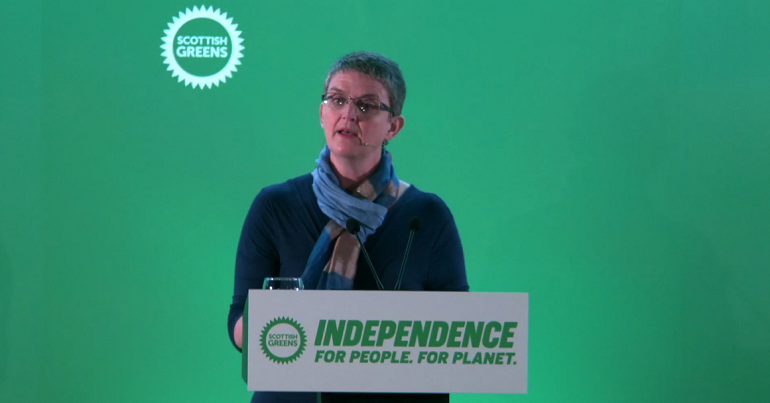
The Party’s equality spokesperson, Maggie Chapman said: “This is an important day for the rights of LGBTQIA+ people in Scotland. Conversion practices are not therapy. They are abusive and coercive. They are a form of violence that has no place in a modern or progressive Scotland, or anywhere, for that matter.

“The UK government appears to have reneged on its commitment to deliver a ban of any kind, let alone the watertight one that is so necessary.

“Far too many people have suffered for far too long. Nobody should be told there is something wrong with them or be forced to be ashamed of who they are, just because of their identity.

“The Scotland I want to see is one where everybody can live safely and freely as the people they really are. That cannot happen as long as conversion practices are still taking place.”

The consultation has also been welcomed by people with lived experience of conversion practices, including Scottish Green councillor Blair Anderson, who was a member of the Scottish Government’s Expert Advisory Group on Ending Conversion Practices.

Anderson said: “What was done to me was wrong, and I am far from the only person who has been abused in this way. So-called conversion therapy is being done in households and communities across Scotland. Today’s consultation is a key step towards ending these awful practices for good.

“It is a scary time for the LGBTQ+ community, with a resurgence in hate crimes and abuse against our trans siblings in particular. We have seen a brutal and reactionary culture war that politicians and parts of the media have knowingly stoked and encouraged.

“By banning conversion therapy we can take a key step for equality and towards tackling the pain and the prejudice that so many have had inflicted on them.”
UK
Boohoo faces pressure to recognise trade union

Chris Jarvis 13 January 2024 


Retail trade union Usdaw is again calling for discussions with online fashion retailer Boohoo about representation of their employees to ensure they are fairly treated. Usdaw represents workers at Boohoo’s warehouse and call centre in Burnley along with the head office in Manchester, but the company continues to refuse to recognise the union, leaving staff without a real voice at work.

The BBC has reported that Boohoo put “Made in the UK” labels on potentially thousands of clothes that were actually made in South Asia. It is reported that Boohoo said the incorrect labels were down to a misinterpretation of the labelling rules. This revelation comes after the BBC reported that the firm is considering closing its Leicester site, opened two years ago and was promoted by the retailer as a UK manufacturing centre of excellence.

Usdaw continues to urge Boohoo to not only clean up their supply chain, but also engage with the union to help repair their reputation and ensure their own staff are treated with fairness and respect.

Mike Aylward – Usdaw Regional Secretary said: “For some years we have been seeking a dialogue with Boohoo to enable us to represent our members’ concerns. We have been met with a wall of silence and staff have been told in no uncertain terms not to engage with the union.

“Concerns about working conditions are not isolated to the supply chain and Boohoo’s directly employed staff feel like they have no way of raising issues with managers or finding resolutions to problems. That is why they need an independent trade union, to give them a voice at work.

“We have yet again asked Boohoo to take the simple step of sitting down with Usdaw to explore how we can work together. Staff, the local community, councillors, MPs and campaign organisations all want this to happen, to help make Boohoo an ethical trader.

“The company could go a long way towards repairing their damaged reputation by meeting with Usdaw and engaging in a positive relationship. Regrettably we have still received no response; for the sake of their employees we hope that will change.”

 LITHIUM BATTERIES

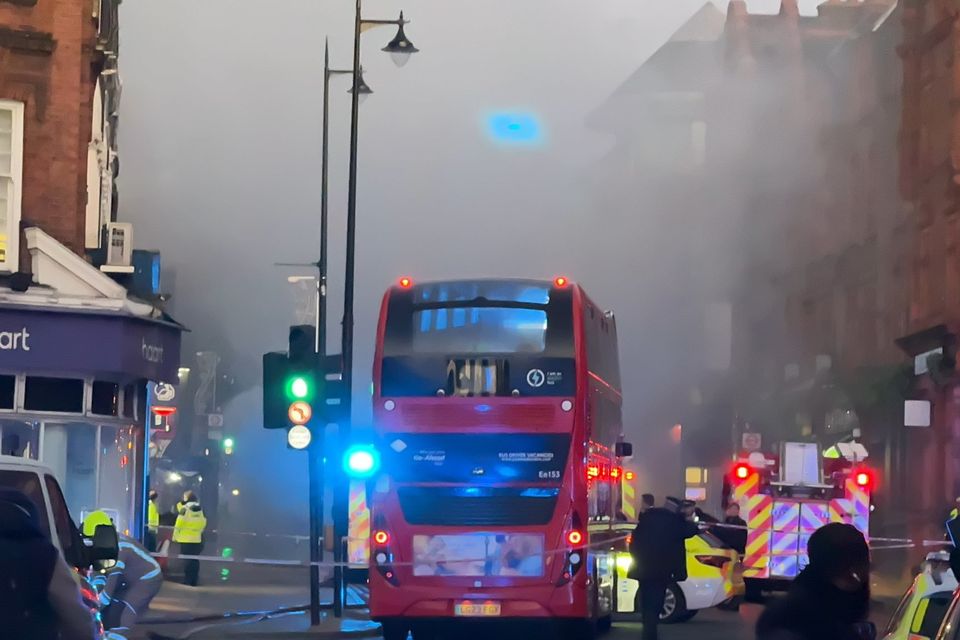
Electric bus fleet temporarily withdrawn in south London following fire


Three fire engines and around 15 firefighters attended the scene of the rush hour bus fire in Wimbledon on Thursday (@StevenW65432097/PA)


By Luke O'Reilly, PA

An electric bus fleet has been withdrawn in south London after a double-decker caught fire.


Three fire engines and around 15 firefighters attended the scene of the rush hour bus fire at Wimbledon Hill Road on Thursday.

The bus was quickly evacuated, and the fire was put out.

Following the incident, Transport for London (TfL) said electric buses on route 200, which runs between Raynes Park and Mitcham, are being “temporarily withdrawn” by operator GoAhead.

Other buses in the fleet remain in service and TfL and bus operators will not hesitate to take further action if required to ensure the network remains safe

Tom Cunnington, TfL head of bus business development

TfL said the measure was a “precaution” taken by GoAhead while the investigation into the blaze continues.

Tom Cunnington, TfL’s head of bus business development, said London’s bus network is “safe to use”.

“As a precaution, the fleet of buses that normally operate on route 200 is being temporarily withdrawn from service by GoAhead while the investigation continues, with other vehicles being brought in to cover,” he said.

“All buses made by the relevant manufacturer will be checked thoroughly as a matter of priority.

“Other buses in the fleet remain in service and TfL and bus operators will not hesitate to take further action if required to ensure the network remains safe.”

UK
Will war in the Middle East cast a shadow over a Starmer (RED TORY) government?


Airstrikes in Yemen and conflict in Gaza inflame the same issues as the Iraq war, Labour’s most painful wound


John Rentoul
INDEPENDENT
23 hours ago

Starmer says he supports Sunak's decision to bomb Houthi rebels in Yemen strikes

The shadow cabinet is more deeply divided than it appears. Labour is still subject to less media scrutiny than the Conservatives, despite the widespread assumption that Keir Starmer will become prime minister this year.

Most Labour MPs are also more disciplined than most Tory MPs because they can feel election victory within their grasp, whereas the Tories are either fed up or have given up, and so are happier to be rude about each other in private and in public.

As ever in politics, Labour’s divisions are a mixture of the personal and the ideological, and foreign policy is one of the hidden fractures threatening the foundations of an incoming government.

That is why the airstrikes against the Houthis in Yemen are potentially more of a problem for Starmer than for Rishi Sunak. They are a risk for the prime minister, because he could find himself drawn deeper into an unpopular conflict in an election year. But they could be a bigger risk for the Labour leader, who has offered his unequivocal support for the strikes, not wanting to appear soft on national security.

For Labour, however, more than for the Conservatives, military action in Yemen, which is being linked on today’s pro-Palestinian demonstrations with the conflict in Gaza, reopens all the old wounds of the Iraq war.

All the same issues have been reignited: military intervention in the Middle East; the confrontation with anti-Western Islamist ideology; and the Israel-Palestine question. The same bundle of nerves that convulsed the Labour Party and caused it to cast aside its most successful leader in history. It was not the Iraq war itself that forced Tony Blair out in the end. Indeed, he won a third election handsomely in 2005, two years after the invasion. But the party’s neutralist reflexes were making it harder to manage. What eventually got Blair out was his refusal to call for a ceasefire when Israel retaliated with disproportionate force to a Hezbollah attack from Lebanon in 2006.

The party had tolerated the Iraq war – even Clare Short, the international development secretary, defended it. One of the arguments that Blair deployed for joining the US invasion was that it would give Britain leverage with the Americans to put pressure on the Israelis to negotiate with the Palestinians. It did, and George Bush published a “road map” towards a two-state agreement – but nothing came of it, and Blair’s refusal to condemn Israel in 2006 was the stretch that broke the elastic. “All right, all right, I’m going,” Blair said (I paraphrase), and nine months later he was gone.

There was an aftershock of that trauma in October, when Starmer refused to call for a ceasefire in Gaza. Ten shadow ministers resigned from their posts – “Jobs they ain’t,” I remember Neil Kinnock snarling when one of his frontbenchers had the audacity to think their status mattered. Only one of them, Jess Phillips, attended shadow cabinet, but the revolt was significant because it was the visible part of the iceberg of discontent below the surface.

There are several members of the shadow cabinet who are unhappy with Starmer’s position on Gaza, despite its modulation under cover of the US and British governments’ shift to calling for a “sustainable ceasefire”. That is still “not a ceasefire” as far as they are concerned.

The same set of shadow ministers is sceptical about airstrikes against the Houthis. They share the view expressed by some of the banners on today’s pro-Palestine march: “End the bombing of Gaza and Yemen.” The two theatres of conflict are not the same, but they are connected. The UK is not bombing Hamas, so stopping the bombing of Gaza requires persuading the Israeli government, whereas bombing Houthi launchers was a UK government decision, in concert with the US.

But they are connected because the Houthis are attacking Red Sea shipping as a way of attacking Israel indirectly, and of identifying themselves with the Palestinian cause, which is popular throughout the Muslim world.

That cause is popular in the Labour Party too, and although reservations about airstrikes in Yemen are expressed in terms of “not wanting to be dragged into another war in the Middle East”, there is a simple equation between support for the Palestinians and opposition to airstrikes a thousand miles away.

That is not to say that Starmer has a problem with his divided party yet. But it is a fissure that could open up in government – assuming, as seems likely, that both Gaza and the Red Sea will still be conflict zones by then.

Nor is Starmer like Blair, whose jaw-jutting refusal to compromise finally provoked his party to revolt. Starmer’s conversion to liberal interventionism is so recent that it is easier to imagine him taking a Wilsonian middle path in office. As a new MP in 2015, he voted against airstrikes on Isis in Iraq. This is possibly a better guide to his true instincts than his leadership election platform of promising a Prevention of Military Intervention Act.

But if Starmer takes power at the end of this year, he will start with a party already divided and the Middle East already in turmoil, whereas it took years, and the terrorist attacks of 9/11, for Blair to hit trouble.

If this is a year of a Labour government, it is worth asking more probing questions about what kind of government it might be.


Cuba condemns American-British aggression against Yemen and considers it encouraging for genocide in Gaza

[13/January/2024]

HAVANA January 13. 2024 (Saba) - Cuban Foreign Minister Bruno Rodriguez condemned the attacks launched by the United States and NATO against Yemen and the violation of international law.

In a statement today, Saturday, Rodriguez considered that such actions encourage genocide in Gaza, reiterating the call for an immediate ceasefire in the Palestinian territories.

Rodriguez had confirmed that Cuba supports the lawsuit submitted by South Africa, calling “urgently” for an end to the genocide and apartheid against the Palestinian people.

While Cuban President, Miguel Díaz-Canel, expressed his country's firm support for the lawsuit filed by South Africa before the International Court of Justice against "Israel", due to the crimes and acts of genocide committed against the Palestinian people... stressing that his country "will never be among the brittle".

Z.E


Russia calls on international community to condemn attack by United States & Britain on Yemen

Russia calls on international community to condemn attack by United States & Britain on Yemen
[13/January/2024]


UNITED NATIONS January 13. 2024 (Saba) -
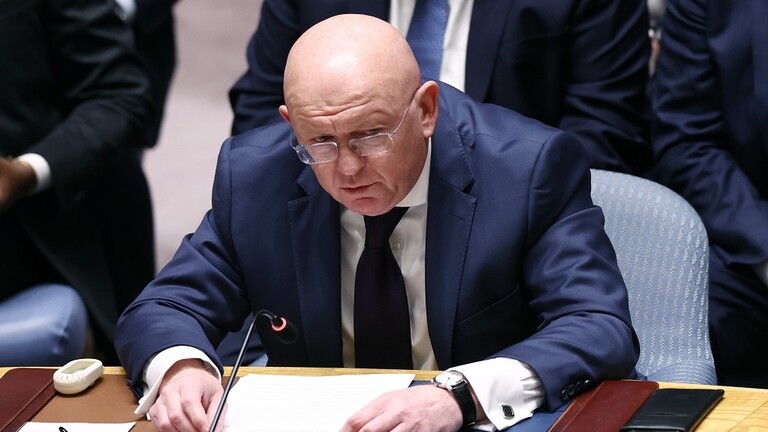
Russia's Permanent Representative to the United Nations,Nebenzia Vassily, called on the international community to condemn the attack by the United States and its allies on Yemen without a mandate from the United Nations.

The Russian RT channel quoted Nebenzia as saying in a session of the UN Security Council: “We call on the international community to strongly condemn the attack on Yemen, which was carried out by a group of countries led by the United States without authorization from the United Nations.”

He stressed: "We share the concerns expressed by our regional partners in this regard and call for intensifying international efforts to prevent further escalation of violence in the Middle East."

E.M


Labour's housing 'revolution': Rachel Reeves proposes 25-year mortgages in boost for first-time buyers

13 January 2024,Such long-term fixed-rate mortgages are common in other parts of the world, such as Canada, the UK and Japan.

Such long-term fixed-rate mortgages are common in other parts of the world, such as Canada, the UK and Japan. Picture: Alamy

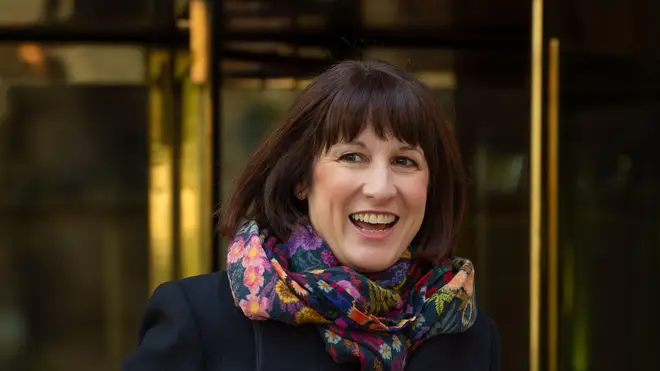
Rachel Reeves had pledged millions of people would experience a "revolution on home ownership", with Labour proposing 25-year fixed-rate mortgages to reduce instability in the housing market

Speaking to The Times, Ms Reeves said that longer fixed-rate deals would allow people to purchase homes with smaller deposits and lower monthly repayments.

Now, she has asked a Labour review of financial services to work with the mortgage industry to take away regulatory barriers and to start a broader cultural shift.

Such long-term fixed-rate mortgages are common in other parts of the world, such as Canada, the UK and Japan.

The shadow chancellor explained to The Times that the British housing market is more exposed to changes in interest rates, impacting first-time buyers

With Labour’s "revolution”, a "10, 25-year mortgage" would allow first-time buyers to be less financially impacted than they are in the current system, and reduce instability in the housing market.

Read more: National Insurance cut 'right thing to do' but 'won't make up for rising tax burden', Labour's Rachel Reeves tells LBC

She said: "If you are locked in for a 10, 25-year mortgage, those stress tests become redundant. Potentially you would be able to borrow a bit more, to put down a bit less of a deposit.

"If you can take out some of that stress and instability, that will make a difference."

Ms Reeves added that she would be reluctant for taxpayers to support lenders in proving said products, as seen in other countries.

Instead, she advocated for the industry to promote a transition away from the current two and five-year fixed mortgages.

She said that "these longer-term deals might make more sense" for many people, but "especially for families".