Nonpharmaceutical interventions saved lives and eased burdens during COVID’s first wave, new study shows
James Peters and Mohsen Farhadloo say masking, shelter-in-place and other measures reduced growth rates of deaths, case numbers and hospitalizations in early 2020
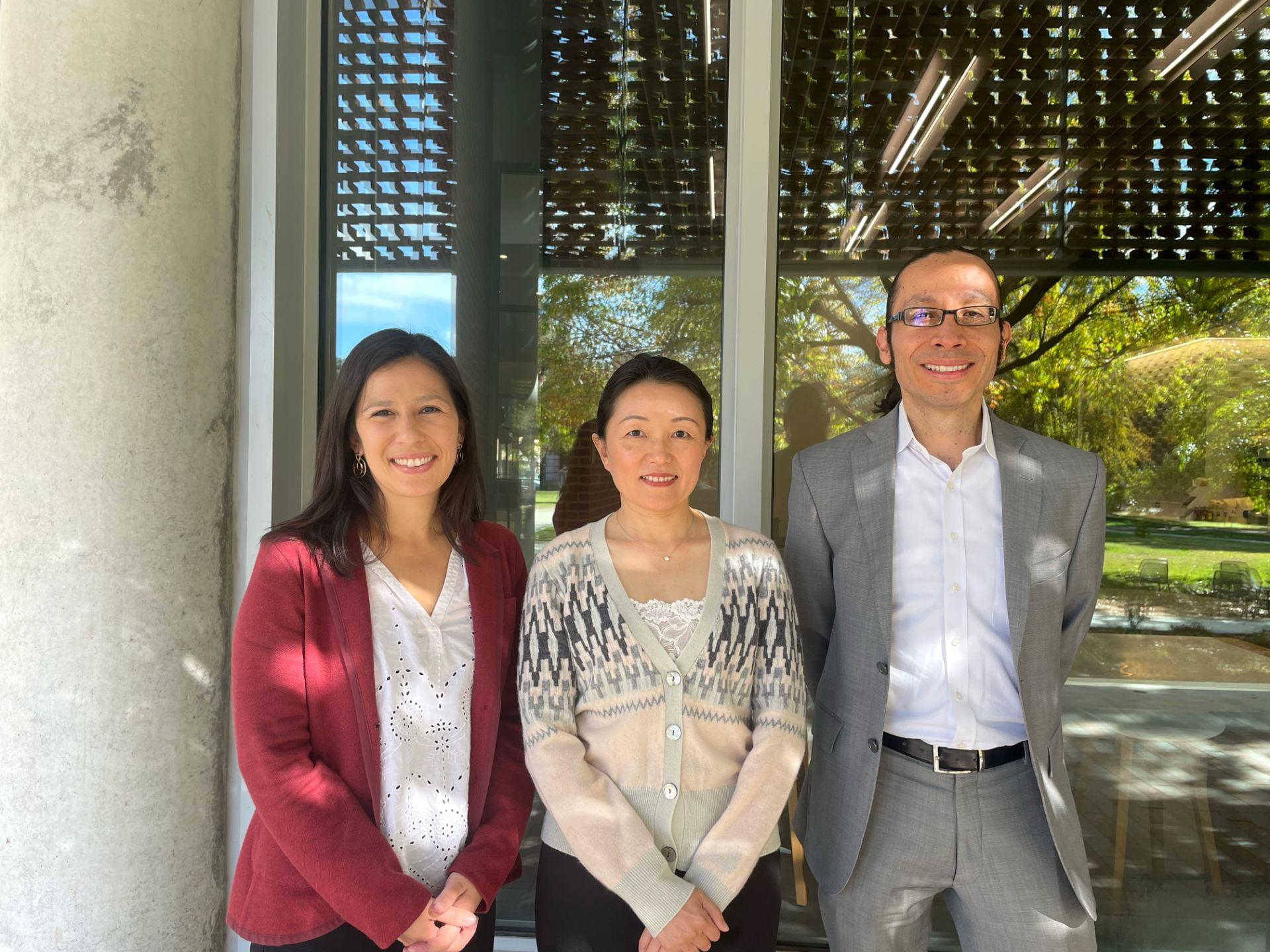
IMAGE:
MOHSEN FARHADLOO (LEFT) AND JAMES PETERS: “WHEN YOU SCALE THESE NUMBERS UP TO THE MILLIONS, THESE MEASURES COULD BE PREVENTING HUNDREDS OR THOUSANDS OF DEATHS.”
view moreCREDIT: CONCORDIA UNIVERSITY
The measures world governments enacted at the outset of the COVID-19 pandemic in early 2020 remain a source of controversy for policy experts, researchers and media commentators. Some research maintains that they did little to cut down mortality rates or halt the virus’s spread.
However, a new study by Concordia PhD student James Peters and assistant professor Mohsen Farhadloo in the Department of Supply Chain and Business Technology Management at the John Molson School of Business says otherwise.
According to Peters and Farhadloo, some of these studies do not account for the effectiveness of nonpharmaceutical interventions in other aspects, such as decreases in hospitalizations and overall number of cases. Other studies overlooked data from separate time frames after implementation, essentially taking a snapshot of a situation and extrapolating conclusions.
Writing in the journal AJPM Focus, Peters and Farhadloo note that nonpharmaceutical interventions were in fact effective at reducing the growth rates of deaths, cases and hospitalizations during the pandemic’s first wave.
The researchers say they hope that their findings will dispel some falsehoods that continue to circulate to this day.
Small numbers have a big effect
The researchers conducted a systematic literature review of 44 papers from three separate databases that used data from the first six months of the pandemic. They concentrated on this timeframe because, by fall 2020, the second wave had emerged and governments and individuals had changed their behaviours, having had time to adapt to the measures.
Peters and Farhadloo harmonized the various metrics used across the papers and divided the different kinds of measures into 10 categories. They then measured their effectiveness on case numbers, hospitalization and deaths over two, three or four, and more weeks after implementation.
Among other results, the researchers found that:
- Masks were associated with decreases in cases and deaths.
- Closing schools and businesses resulted in lower per capita deaths, but those effects decreased after four weeks.
- Restaurant/bar closures and travel restrictions corresponded to decreases in mortality after four weeks.
- Shelter-in-place orders (SIPOs) resulted in fewer cases but only after a delay of two weeks.
- SIPOs and mask wearing were associated with reducing the healthcare burden.
- Policy stringency, SIPOs, mask wearing, limited gatherings and school closures were associated with reduced mortality rates and slower case number growth rates.
“We found that wearing masks led to an estimated reduction of about 2.76 cases per 100,000 people and 0.19 in mortality. These effects sound small but are statistically significant,” Peters explains.
“When you scale these numbers up to the millions, these measures could be preventing hundreds or thousands of deaths.”
Farhadloo adds that understanding the usefulness of these measures can help counter the growth of misinformation online.
“We started this project in 2022, while COVID health measures were still in place. At that time, some people were citing research saying that these measures were not effective. But the scientific research articles they were referring to were flawed.
“We wanted to respond to the existing misinformation and disinformation that was being disseminated on social media by raising awareness about it.”
Peters believes that the paper, which looks at effectiveness over a longer time span than most previous studies, can inform policy makers in the future.
“If and when another pandemic occurs, we should be more prepared. We should know which policies are most effective at mitigating not only mortality but cases and hospitalizations as well.”
Read the cited paper: “The Effects of Nonpharmaceutical Interventions on COVID-19 Cases, Hospitalizations, and Mortality: A Systematic Literature Review and Meta-analysis”
JOURNAL
AJPM Focus
METHOD OF RESEARCH
Literature review
SUBJECT OF RESEARCH
People
ARTICLE TITLE
The Effects of Nonpharmaceutical Interventions on COVID-19 Cases, Hospitalizations, and Mortality: A Systematic Literature Review and Meta-analysis
Innovative COVID-19 analysis supports prevention protocols in health care settings
Using high-tech contact tracing and COVID-19 genetic data, researchers prove certain prevention measures protect health care workers and patients from contracting the virus with vast majority of transmission happening outside of hospital setting
IMAGE:
RESEARCHERS FOUND IN A NOVEL STUDY THAT THE TRANSMISSION OF SARS-COV-2, A PATHOGENIC VIRUS THAT CAUSES COVID-19, COULD BE PREVENTED USING SIMPLE MEASURES IN THE HEALTH CARE SETTING AT UC SAN DIEGO HEALTH.
view moreCREDIT: NIAID-RML
In early 2020, severe acute respiratory syndrome coronavirus 2 (SARS-CoV-2), a highly contagious and pathogenic virus, made its alarming debut and quickly spread worldwide, causing the novel coronavirus (COVID-19) pandemic that threatened human health and public safety. While the world was brought to a standstill, hospitals and health care systems entered unchartered territory and quickly adapted to the evolving health crisis to care for their community and keep potentially sick patients and health care workers from spreading the virus.
The magnitude of response involved the reinforced universal masking of health care workers and patients at the hospital and regular SARS-CoV-2 testing of all health care workers and patients upon admission, regardless of symptoms, and strict isolation protocols for those infected with the virus.
Approximately four years after the pandemic was declared, researchers at University of California San Diego School of Medicine used high end technology and an innovative approach to evaluate the effectiveness of those prevention measures implemented in the health care setting during the last three waves of the pandemic.
The study, published in the January 16, 2024, online edition of Clinical Infectious Diseases, was a first of its kind to use information from electronic health and contact tracing records to closely analyze the genetic makeup of the virus combined with the comparison of how the diverse strains were physically being spread among patients and health care workers in the hospital.
Researchers found that the implemented infection prevention parameters in the health care setting, including ventilation standards of at least five clean air changes per hour, combined with universal masking, prevented most SARS-CoV-2 transmissions. In patients who tested positive for the virus, personal protective equipment (PPE) shielded and virtually eliminated health care associated transmission.
“When the pandemic started, it was scary because initially we did not have rapid diagnostic nor treatments available, and we did not fully understand how the virus was transmitted or if our infection prevention protocols were adequate,” said Francesca Torriani, MD, senior author of the study, and program director of Infection Prevention and infectious disease specialist at UC San Diego Health.
“Therefore, the potential implications of the virus and the welfare of our workforce and patients was an utmost concern. I witnessed health care workers fearful of contracting the virus at work and potentially infecting their loved ones at home.”
Torriani adds that limiting the spread of infection and blocking the virus at the source became the highest priority.
“In response to the progressing pandemic and with the trust and support from executive leadership at UC San Diego Health, we learned many life-saving lessons and strengthened infection prevention control measures to reduce the risk of transmission between patients and health care workers. The swift adoption and modification of infection prevention protocols in health care were felt to be an opportunity for deeper exploration of the effectiveness of our procedures.”
The researchers took an innovative approach never used before to evaluate the different variants of the samples to identify if they were temporarily or physically near one another, suggesting health care transmission. Electronic health record data of patients, whose identities were protected throughout the study, and metadata about staff access and movement to these records, accompanied by a robust contact tracing program, were used to classify, isolate and assess individuals exposed to specific strains of the virus.
“While the virus strains were very distinguishable in the second and third wave of the pandemic, during the explosive and homogenous Omicron wave, we found that we could not rely on genetic data alone,” said Christopher Longhurst, MD, co-author of the study, executive director of Jacobs Center for Health Innovation, and chief medical officer and chief digital officer at UC San Diego Health.
“We had to dive deeper into the electronic documentation and social network analysis, such as individuals with similar virus strains, and considering their physical interaction in the hospital, to determine what really happened and how the virus was being spread.”
Researchers examined the genetic makeup of SARS-CoV-2 during three consecutive waves and compared how closely a person’s genetic variant was related to another’s.
The study involved the collection of 12,933 virus samples from 35,666 patients and health care professionals from November 1, 2020 to February 27, 2022.
“Even when hundreds of health care workers were becoming infected every week during the peak of the Omicron wave, we found that they were no more likely to acquire the virus in the hospital system,” said Joel Wertheim, PhD, co-senior author of the study and associate professor at UC San Diego School of Medicine. “The outcomes reveal the hidden patterns of viral transmission.”
The results from both the genetic and social networking analysis showed that while universal masking was key to prevent transmissions, airborne negative pressure rooms, universal N95 respirator masks or even closing the door of a patient’s room were not essential elements to protect against transmission in the health care setting.
In fact, most transmissions occurred outside of the health care setting, physical contact in the community, between households or when universal masking was not followed in the setting of unrecognized SARS-CoV-2 infection. Viral transmission was more likely to occur in shared spaces, such as breakrooms or lobbies.
“Our analysis really highlights that our health care system, with its safety measures including ventilation standards, robust viral testing, and early implementation of universal masking, was able to protect health care workers and patients during the pandemic,” said Shira Abeles, MD, co-author of the study, associate professor in the Department of Medicine at UC San Diego School of Medicine and infectious disease specialist at UC San Diego Health.
Longhurst adds the type of technological approach used can be a model for future studies and a tool deployed for epidemics of highly contagious infectious diseases.
“The pandemic has shown us what’s at stake. This novel methodology, combining a digital social network derived from electronic health record data with genomic analysis of viral strains, can be used again in the future to model spread of health care associated infections,” said Longhurst.
Co-authors of the study include: Jocelyn Keehner, UCSF; Lucy Horton, Frank E. Myers, Lindsay Riggs-Rodriguez, Mohammed Ahmad, Sally Baxter, Aaron Bussina, Kalen Cantrell, Priscilla Cardenas, Peter De Hoff, Robert El-Kareh, Jennifer Holland, Daryn Ikeda, Kirk Kurashige, Louise Laurent, Andrew Lucas, David Pride, Shashank Sathe, Allen Tran, Tetyana Vasylyeva, Gene Yeo, Rob Knight, all at UC San Diego.
Funding support for the study came, in part, from UC San Diego Health and Jacobs Center for Health Innovation.
JOURNAL
Clinical Infectious Diseases
Glowing COVID-19 diagnostic test prototype produces results in one minute
IMAGE: USING A BIOLUMINESCENT SUBSTRATE THAT REACTS WITH SARS-COV-2 SPIKE PROTEIN (SHOWN IN THE INSERT), RESEARCHERS HAVE DEVISED A POTENTIAL ONE-MINUTE COVID-19 TEST. view more
CREDIT: RYO NISHIHARA
Cold, flu and COVID-19 season brings that now-familiar ritual: swab, wait, look at the result. But what if, instead of taking 15 minutes or more, a test could quickly determine whether you have COVID-19 with a glowing chemical? Now, in ACS Central Science, researchers describe a potential COVID-19 test inspired by bioluminescence. Using a molecule found in crustaceans, they have developed a rapid approach that detects SARS-CoV-2 protein comparably to one used in vaccine research.
From fireflies to lantern fish, many animals possess the chemical tools to produce light. Typically, this reaction requires the substrate luciferin and the enzyme luciferase. However, a class of less discriminating luciferins, known as imidazopyrazinone-type (IPT) compounds, can glow when encountering other proteins, including ones that aren’t considered enzymes. Previous research suggests that IPT luciferins could serve as the basis for a new type of medical test that uses luminescence to announce the presence of a target protein in a specimen. Ryo Nishihara, Ryoji Kurita and colleagues suspected that an IPT luciferin could react with the SARS-CoV-2 spike protein, which allows the virus particles to invade cells and cause COVID-19 ― and open the door to develop a glowing test.
The team first investigated 36 different IPT luciferins’ abilities to react with a single unit of spike protein. Only one molecule, which came from tiny crustaceans from the genus Cypridina, emitted light. The researchers then tested the luciferin’s activity with the spike protein in its natural state, as three units folded together. They found that, over the course of 10 minutes, an adequate amount of light could be detected. A commercially available luminescence reading device was required; the light could not be seen by the naked eye. Additional experiments indicated that the IPT luciferin was selective because it did not glow when exposed to six proteins that occur in saliva. They define this specific luminescence reaction by non-luciferase biomolecules as “biomolecule-catalyzing chemiluminescence (BCL)”.
Finally, they found that the luciferin could detect the amount of the spike protein in saliva with the same accuracy as a technique currently used in vaccine development. However, the luciferin system delivered results in one minute — significantly faster than the current rapid point-of-care tests.
This BCL-based approach could serve as the basis for a simple “mix and read” test in which the IPT luciferin is added to untreated saliva from someone suspected of having COVID-19, according to the researchers. They note that a similar approach could be adapted to detect other viruses that possess spike-like proteins, such as influenza, MERS-CoV and other coronaviruses.
The authors acknowledge funding from the Japan Science and Technology Agency, the Japan Society for the Promotion of Science, and the New Energy and Industrial Technology Development Organization.
The paper’s abstract will be available on Jan. 17 at 8 a.m. Eastern time here: http://pubs.acs.org/doi/abs/10.1021/acscentsci.3c00887
###
The American Chemical Society (ACS) is a nonprofit organization chartered by the U.S. Congress. ACS’ mission is to advance the broader chemistry enterprise and its practitioners for the benefit of Earth and all its people. The Society is a global leader in promoting excellence in science education and providing access to chemistry-related information and research through its multiple research solutions, peer-reviewed journals, scientific conferences, eBooks and weekly news periodical Chemical & Engineering News. ACS journals are among the most cited, most trusted and most read within the scientific literature; however, ACS itself does not conduct chemical research. As a leader in scientific information solutions, its CAS division partners with global innovators to accelerate breakthroughs by curating, connecting and analyzing the world’s scientific knowledge. ACS’ main offices are in Washington, D.C., and Columbus, Ohio.
To automatically receive news releases from the American Chemical Society, contact newsroom@acs.org.
Note: ACS does not conduct research, but publishes and publicizes peer-reviewed scientific studies.
Follow us: Twitter | Facebook | LinkedIn | Instagram
JOURNAL
ACS Central Science
ARTICLE TITLE
Pseudo-Luciferase Activity of the SARS-CoV‑2 Spike Protein for <em>Cypridina</em> Luciferin
ARTICLE PUBLICATION DATE
17-Jan-2024
New U of A-based study to examine very rare adverse events linked to COVID-19 vaccines
The multimillion-dollar global initiative will study causes and risk factors, to ensure safer vaccines are ready for the next potential pandemic
EDMONTON — A University of Alberta professor is co-leading a new international vaccine safety network to examine why some people who received a COVID-19 vaccine experienced very rare adverse events associated with the vaccine.
The International Network of Special Immunization Services (INSIS), based at the U of A, is a consortium of academic medical centres around the world coming together to study very rare adverse events after vaccination. An adverse reaction is considered very rare when it affects less than .001 per cent of the population.
“The bar for safety with vaccines is very high because we’re giving them to healthy people to prevent them from getting sick,” says U of A pediatric infectious disease professor Dr. Karina Top, who alongside Dr. Robert T. Chen, scientific director of the Brighton Collaboration — a leading non-profit vaccine safety organization — is co-leading INSIS. “We don’t want these events to occur, and we want to understand why, so we can prevent them in the future.”
INSIS is receiving up to US$15.3 million over four years from the Coalition for Epidemic Preparedness Innovations (CEPI) to study why these very rare adverse events happen and who is most at risk. The network aims to help manufacturers develop new vaccines that will be even safer.
Vaccines have helped to eradicate deadly diseases such as smallpox, they save two-to-three million children a year, and they even help to combat certain types of cancer such as cervical and throat cancers, which are caused by HPV. The impact of COVID-19 vaccines has been even more striking. In the first year of their rollout during the pandemic, vaccines saved 20 million lives.
Very rare adverse events associated with immunizations tend to be detected after vaccines are rolled out at a population level. Clinical trials typically include a relatively small number of participants, which may not fully represent the diverse population that will receive a vaccine after its approval. When the vaccine is rolled out to millions of people, a broader range of individuals with varying health conditions and genetic backgrounds may receive a vaccine. This increased sample size allows for detection of very rare adverse events that might occur.
Cutting-edge safety science
The INSIS team will use cutting-edge techniques to measure the types of cells and molecules in human blood samples to identify how a vaccine may trigger an adverse event. The INSIS team will compile unprecedented amounts of data from around the world to compare information about people who experienced very rare adverse events and those who did not.
The ultimate goal of this project will be to enhance the safety assessment of vaccine candidates developed to combat emerging infectious threats before emergency authorization. This will be critical for achieving the 100 Days Mission, which aims to compress vaccine development against such pathogenic threats with pandemic potential to within just 100 days of their identification.
“Compressing vaccine development against emerging pathogens down to 100 days will be critical to combatting future pandemic threats,” explains Jakob Cramer, director of clinical development at CEPI. “Data from INSIS will help to inform health authorities on the most appropriate type of vaccine that should be used in specific outbreak settings and populations. If we can identify risk factors and identify causal mechanisms for potential serious adverse events ahead of time, immunization campaigns can be adapted to mitigate such risks in those who are potentially vulnerable to harm, contributing to increased levels of public confidence in vaccines and enabling the development of even safer vaccines.”
This global study brings together researchers from the University of Alberta, B.C. Children’s Hospital Research Institute and institutions in at least seven countries, including the Precision Vaccines Program at Boston Children’s Hospital, Mayo Clinic’s Vaccine Research Group, the Vanderbilt Vaccine Research Program at Vanderbilt University Medical Centre, Murdoch Children’s Research Institute in Australia, the Global Vaccine Data Network co-ordinated from New Zealand, Ospedale Pediatrico Bambino Gesù in Italy, Global Healthcare Consulting co-ordinated from India, and the African Leadership in Vaccinology Expertise (Wits-ALIVE).
To speak with INSIS co-lead Dr. Karina Top, please contact:
Sarah Vernon | University of Alberta communications associate | svernon@ualberta.ca
or
Debra Clark | University of Alberta communications associate | debra.clark@ualberta.ca
Other regional media contacts (please reach out directly):
USA:
Dr. Robert Chen, INSIS co-lead and Task Force for Global Health, Brighton Collaboration
Dr. Ofer Levy, Precision Vaccines Program (PVP), Boston Children’s Hospital
Dr. Gregory Poland, Mayo Clinic Vaccine Research Group
Canada:
Dr. Bruce Carleton, BC Children’s Hospital Research Institute
European Union:
Dr. Paolo Palma, Ospedale Pediatrico Bambino Gesù, Italy
Australia:
Dr. Nigel Crawford, SAEFVIC, Murdoch Children’s Research Institute
INSIS members also include:
Dr. Joann Arce, Precision Vaccines Program (PVP), Boston Children’s Hospital, USA
Dr. Al Ozonoff, Broad Institute of MIT and Harvard, USA
Dr. Buddy Creech, Vanderbilt Vaccine Research Program, USA
Dr. Sonali Kochhar, Global Healthcare Consulting, India
Dr. Steve Black, Global Vaccine Data Network, USA
Dr. Helen Petousis-Harris, Global Vaccine Data Network, University of Auckland, New Zealand
Dr. Jessica Lasky-Su, Brigham & Women’s Hospital, USA
Dr. Rae Yeung, The Hospital for Sick Children (SickKids), Canada
Dr. Ishac Nazy, McMaster University, Canada
Dr. Huyen Tran, Alfred Health, Australia
Dr. Peter Liu, University of Ottawa Heart Institute, Canada
Dr. Nicholas Wood, National Centre for Immunisation Research and Surveillance, The University of Sydney, Australia
Dr. Clare Cutland, African Leadership in Vaccinology Expertise (ALIVE), University of the Witwatersrand, South Africa
METHOD OF RESEARCH
Data/statistical analysis
SUBJECT OF RESEARCH
People