Wednesday, February 21, 2024


Bombing Muslims for Peace


 
 FEBRUARY 21, 2024
Facebook

Image by Ian Cumming.

Like many American boys of the baby-boomer generation, I played “war” with those old, olive-drab, plastic toy soldiers meant to evoke our great victory over the Nazis and “the Japs” during World War II. At age 10, I also kept a scrapbook of the 1973 Yom Kippur War between Israel and its various Arab enemies in the Middle East. It was, I suppose, an early sign that I would make both the military and the study of history into careers.

I recall rooting for the Israelis, advertised then as crucial American allies, against Egypt, Syria, and other regional enemies at least ostensibly allied with the Soviet Union in that Cold War era. I bought the prevailing narrative of a David-versus-Goliath struggle. I even got a book on the Yom Kippur War that captivated me by displaying all the weaponry the U.S. military had rushed to Israel to turn the tide there, including F-4 Phantom jets and M-60 main battle tanks. (David’s high-tech slingshots, if you will.) Little did I know that, in the next 50 years of my life, I would witness increasingly destructive U.S. military attacks in the Middle East, especially after the oil cartel OPEC (largely Middle Eastern then) hit back hard with an embargo in 1973 that sent our petroleum-based economy into a tailspin.

As one jokester quipped: Who put America’s oil under the sands of all those ungrateful Muslim countries in the Middle East? With declarations like the Carter Doctrine in 1980, the U.S. was obviously ready to show the world just how eagerly it would defend its “vital interests” (meaning fossil fuels, of course) in that region. And even today, as we watch the latest round in this country’s painfully consistent record of attempting to pound various countries and entities there into submission, mainly via repetitive air strikes, we should never forget the importance of oil, and lots of it, to keep the engines of industry and war churning along in a devastating fashion.

Right now, of course, the world is witnessing yet another U.S. bombing campaign, the latest in a series that seems all too predictable (and futile), meant to teach the restless rebels of Iraq, Syria, Yemen, and possibly even Iran a lesson when it comes to messing with the United States of America. As the recently deceased country singer Toby Keith put it: Mess with this country and “We’ll put a boot (think: bomb) in your ass.” You kill three soldiers of ours and we’ll kill scores, if not hundreds, if not thousands of yours (and it doesn’t really matter if they’re soldiers or not), because… well, because we damn well can!

America’s leaders, possessing a peerless Air Force, regularly exhibit a visceral willingness to use it to bomb and missile perceived enemies into submission or, if need be, nothingness. And don’t for a second think that they’re going to be stopped by international law, humanitarian concerns, well-meaning protesters, or indeed any force on this planet. America bombs because it can, because it believes in the efficacy of violence, and because it’s run by appeasers.

Yes, America’s presidents, its bombers-in-chief, are indeed appeasers. Of course, they think they’re being strong when they’re blowing distant people to bits, but their actions invariably showcase a distinctive kind of weakness. They eternally seek to appease the military-industrial-congressional complex, aka the national (in)security state, a complex state-within-a-state with an unappeasable hunger for power, profit, and ever more destruction. They fail and fail and fail again in the Middle East, yet they’re incapable of not ordering more bombing, more droning, more killing there. Think of them as being possessed by a monomania for war akin to my urge to play with toy soldiers. The key difference? When I played at war, I was a wet-behind-the-ears 10 year old.

The Rockets’ Red Glare, the Bombs Bursting in Air

No technology may be more all-American than bombs and bombers and no military doctrine more American than the urge to attain “peace” through massive firepower. In World War II and subsequent wars, the essential U.S. approach could be summarized in five words: mass production enabling mass destruction.

No other country in the world has dedicated such vast resources as mine has to mass destruction through air power. Think of the full-scale bombing of cities in Nazi Germany and Imperial Japan in World War II, ending in the atomic destruction of Hiroshima and Nagasaki. Think of the flattening of North Korea during the Korean War of the early 1950s or the staggering bombing campaigns in Vietnam, Laos, and Cambodia in the 1960s and early 1970s. Or consider the massive use of air power in Desert Shield against Iraq in the early 1990s followed by the air campaigns that accompanied the invasions of Afghanistan and Iraq in 2003 (and never quite seemed to stop thereafter). The butcher’s bill for such bombing has indeed been high, quite literally millions of non-combatants killed by America’s self-styled “arsenal of democracy.”

And indeed, as you read this, another country is now faithfully following America’s example. Israel is systematically destroying Gaza, rendering it essentially uninhabitable for those Palestinians who survive the ongoing rampage. In fact, early in its war of annihilation, Israeli leaders cited the Allied destruction of the German city of Dresden in 1945 in support of their own atrocious air and ground campaign against the Palestinians.

Looking at this dispassionately as a military historian, the Dresden reference makes a certain twisted sense. In World War II, the Americans and their British allies in their “combined bomber offensive” destroyed German cities indiscriminately, seeing all Germans as essentially Nazis, complicit in the crimes of their government, and so legitimate targets. Something similar is true of the right-wing Israeli government today. It sees all Palestinians as essentially members of Hamas and thus complicit in last year’s brutal October 7th attacks on Israel, making them legitimate targets of war, Israeli- (and American-) style. Just like the United States, Israel claims to be “defending democracy” whatever it does. Little wonder, then, that Washington has been so willing to send bombs and bullets to its protégé as it seeks “peace” through massive firepower and genocidal destruction.

Indeed, of late, there has been considerable debate about whether Israel is engaged in acts of genocide, with the International Court of Justice ruling that the present government should strive to prevent just such acts in Gaza. Putting that issue aside, it’s undeniable that Israel has been using indiscriminate bombing attacks and a devastating invasion in a near-total war against Palestinians living on that 25-mile-long strip of land, an approach that calls to mind the harrowing catchphrase “Exterminate all the brutes!” from Joseph Conrad’s novel Heart of Darkness.

In a sense, there’s nothing new under the sun. Certainly, the Old Testament itself provides examples of exterminatory campaigns (cited by Bibi Netanyahu as Israel first moved against the Palestinians in Gaza). He might as well have cited a catchphrase heard during America’s war in Vietnam, but rooted in the medieval crusades: “Kill them all and let God sort them out.”

America’s Unrelenting Crusade in the Middle East

In the immediate aftermath of the 9/11 attacks, President George W. Bush got into trouble almost instantly when he referred to the “war on terror” he had launched as a “crusade.” Yet, as impolitic as that word might have seemed, how better to explain U.S. actions in the Middle East and Afghanistan? Just consider our faith in the goodness and efficacy of “our” military and that all-American urge to bring “democracy” to the world, despite the destruction visited upon Iraq, Libya, Syria, and Yemen over the last several decades. Or go back to 1953 and the role the CIA played in the overthrow of Iran’s legitimate democratic ruler and his replacement by the brutally repressive regime of the Shah.

Try to imagine such events from the perspective of a historian writing in the year 2200. Might that future scribe not refer to repeated U.S. invasions of, incursions into, and bombing campaigns across the Middle East as a bloody crusade, launched under the (false) banner of democracy with righteous vengeance, if not godly purpose, in mind? Might that historian not suggest that such a “crusade” was ultimately more about power and profit, domination and control than (as advertised) “freedom”? And might that historian not be impressed (if not depressed) by the remarkable way the U.S. brought seemingly unending chaos and death to the region over such a broad span of time?

Consider these facts. More than 22 years after the 9/11 attacks, the U.S. still has at least 30,000 troops scattered across the Middle East. At least one Navy carrier strike group, and often two, dominate the regional waters, while striking numbers of military bases (“Little Americas”) are still sprinkled across countries ranging from Kuwait to Bahrain, from Qatar to the United Arab Emirates and beyond. So many years later, about 900 U.S. troops still illegally occupy part of Syria (not coincidentally, where that country produces most of its oil) and 2,500 more remain in Iraq, even though the government there would like them to depart.

Yankee Go Home? Apparently Not in My Lifetime

Meanwhile, American military aid, mostly in the form of deadly weaponry, flows not only to Israel but to other countries in the region like Egypt and Jordan. Direct U.S. military support facilitated Saudi Arabia’s long, destructive, and unsuccessful war against the Houthis in Yemen, a conflict Washington is now conducting on its own with repeated air strikes. And of course, the entire region has, for more than two decades now, been under constant U.S. military pressure in that war on terror, which all too quickly became a war of terror (and of torture).

Recall that the U.S. invasion of Iraq in 2003 led to the death of roughly a million Iraqis and the displacement of millions more as refugees. How could that not be considered part of a “crusade,” even if a fitful and failing one? Yet, here’s the rub: just as those Catholic crusades of the Middle Ages weren’t entirely or even primarily about religion, so today’s American version isn’t motivated primarily by an anti-Muslim animus. Of course, there is indeed an inescapably religious aspect to such never-ending American war-making, but what drives those wars is largely naked greed, vengeance, and an all-American urge both to appease and amplify the military-industrial-congressional complex.

Of course, as was true in the years after 9/11 and is still true today, Americans are generally encouraged to see their country’s imperial and crusading acts as purely defensive in nature, the righteous responses of freedom-bringers. Admittedly, it’s a strange kind of freedom this country brings at the tip of a sword — or on the nosecone of a Hellfire missile. Even so, in such an otherwise thoroughly contentious Congress, it should be striking how few members have challenged the latest bombing version of this country’s enduring war in the Middle East.

Forget the Constitution. No Congressional declaration of war is believed necessary for any of this, nor has it mattered much (so far) that the American public has grown increasingly skeptical of those wars and the acts of destruction that go with them. As it happens, however, the crusade, such as it is, has proven remarkably sustainable without much public crusading zeal. For most Americans, those acts remain distinctly off-stage and largely out of mind, except at moments like the present one where the deaths of three American soldiers give the administration all the excuse it needs for repetitive acts of retaliation.

No, we the people exercise remarkably little control over the war-making that the military-industrial-congressional complex has engaged in for decades or the costs that go with them. Indeed, the dollar costs are largely deferred to future generations as America’s national debt climbs even faster than the Pentagon war budget.

America, so we were told by President George W. Bush, is hated for its freedoms.  Yet the “freedoms” we’re allegedly hated for aren’t those delineated in the Constitution and its Bill of Rights.  Rather, it’s America’s “freedom” to build military bases across the globe and bomb everywhere, a “freedom” to sell such bellicose activity as lawful and even admirable, a “freedom” to engage in a hyperviolent style of play, treating “our” troops and so many foreigners as toy soldiers and expendable props for Washington’s games.

It’s something I captured unintentionally five decades ago with those toy soldiers of mine from an imagined glorious military past.  But after a time (too long, perhaps) I learned to recognize them as the childish things they were and put them away.  They’re now long gone, lost to time and maturity, as is the illusion that my country pursues freedom and democracy in the Middle East through ceaseless acts of extreme violence, which just seem to drone on and on and on.

This piece first appeared on TomDispatch.

William Astore is a retired lieutenant colonel (USAF) and professor of history. His personal blog is Bracing Views.

China's childcare costs among highest in world: Think tank

Raising children also leads to a reduction in women's paid work hours and wage rates, while men's livelihoods remain largely unchanged. 

FEB 21, 2024

HONG KONG - China is one of the world's most expensive places to raise a child, relative to its GDP per capita, a prominent Chinese think tank said on Feb 21 as it detailed the time and opportunity costs for women who opt to have children in the country.

The cost of raising a child until they are 18 relative to per capita GDP is around 6.3 times in China versus 2.08 times in Australia, 2.24 times in France, 4.11 times in the US and 4.26 times in Japan, said a report by the Beijing-based YuWa Population Research Institute.

Raising children also leads to a reduction in women's paid work hours and wage rates, while men's livelihoods remain largely unchanged.

"Because the current social environment in China is not friendly to women's fertility, the time cost and opportunity cost for women to have children are too high," said the report, co-authored by Mr Liang Jianzhang, founder of online travelling site Ctrip and also a founder of the YuWa institute.

"Due to reasons such as the high cost of childbearing and the difficulty for women to balance family and work, the Chinese people's average fertility willingness is almost the lowest in the world."

The report comes after China's population fell for a second consecutive year in 2023 with the number of new births dropping to around half of that in 2016.

An increasing number of women are opting not to have children due to high childcare costs, and an unwillingness to marry or put their careers on hold, while gender discrimination remains rife.

Women generally see a reduction of 2,106 working hours when looking after children aged 0 to 4 and face an estimated wage loss of 63,000 yuan (S$11,770) in the period, the report said, using an hourly wage gauge of 30 yuan per hour.

Having a child will also lead to a 12 to 17 per cent drop in women's wages, the report said.

Leisure time will be reduced by 12.6 hours for mothers with one child aged 0 to 6 and 14 hours for two children.

There is an "urgent need" at the national level to introduce policies to reduce the cost of childbearing as soon as possible, YuWa said, such as cash and tax subsidies, improved childcare services, equal maternity and paternity leave, access to foreign nannies, allowing flexible working and giving single women the same reproductive rights as married women.

The measures together could increase new births to around 3 million, the report said.

In 2023, China's total fertility rate will only be about 1.0, one of the lowest in the world.

"If the current ultra-low fertility rate cannot be improved, China's population will rapidly decline and age, which will have a serious negative impact on innovation and overall national strength," it said.

 REUTERS

MORE ON THIS TOPIC


P3
India seeks $35 billion of private nuclear power investments: Sources

This is the first time New Delhi is pursuing private investment in nuclear power – a non-carbon-emitting energy source. 


FEB 21, 2024

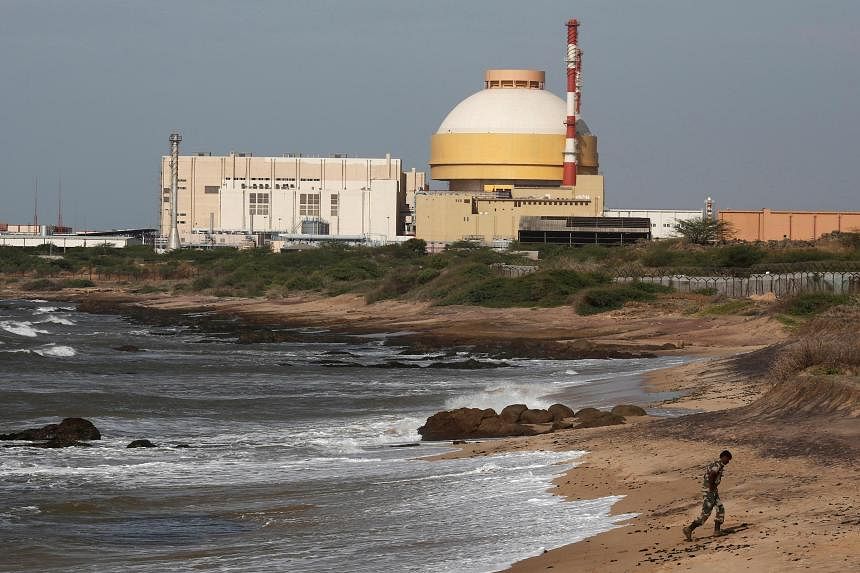
NEW DELHI – India will invite private firms to invest about US$26 billion (S$35 billion) in its nuclear energy sector to increase the amount of electricity from sources that don’t produce carbon dioxide emissions, two government sources told Reuters.

This is the first time New Delhi is pursuing private investment in nuclear power, a non-carbon-emitting energy source that contributes less than 2 per cent of India’s total electricity generation. The funding would help India to achieve its target of having 50 per cent of its installed electric generation capacity use non-fossil fuels by 2030, up from 42 per cent now.

The government is in talks with at least five private firms including Reliance Industries, Tata Power, Adani Power and Vedanta to invest around 440 billion rupees (S$7.13 billion) each, the two sources, who are directly involved in the matter, said last week.

The federal Department of Atomic Energy and state-run Nuclear Power Corp of India (NPCIL) have held multiple rounds of discussions with the private companies in the past year on the investment plan, the sources said.

The Department of Atomic Energy, NPCIL, Tata Power, Reliance Industries, Adani Power, and Vedanta did not respond to queries sent by Reuters.

With the investment, the government hopes to build 11,000MW of new nuclear power generation capacity by 2040, said the sources, who did not want to be identified as the plan is still being finalised.

NPCIL owns and operates India’s current fleet of nuclear power plants, with a capacity of 7,500MW, and has committed investments for another 13,000MW.

The sources said under the funding plan the private companies will make the investments in the nuclear plants, acquire land, water and undertake construction in areas outside the reactor complex of the plants.

But the rights to build and run the stations and their fuel management will rest with NPCIL, as allowed under the law, they said.

The private companies are expected to earn revenue from the power plant’s electricity sales and NPCIL would operate the projects for a fee, the sources said.

“This hybrid model of nuclear power project development is an innovative solution to accelerate the nuclear capacity,” said Mr Charudatta Palekar, an independent power sector consultant who formerly worked for PwC.

The plan will not require any amendment to India’s Atomic Energy Act of 1962 but will need a final go-ahead from the Department of Atomic Energy, said one of the two sources.

Indian law bars private companies from setting up nuclear power plants but allows them to supply components, equipment and sign construction contracts for work outside of the reactors.

New Delhi has not met its nuclear power capacity addition targets for years mainly because it could not procure nuclear fuel supplies. However in 2010, India struck a deal with the United States for supplies of reprocessed nuclear fuel.

India’s stringent nuclear compensation laws have hampered talks with foreign power plant builders such as General Electric and Westinghouse. The country has deferred a target to add 20,000MW of nuclear power from 2020 to 2030.

 REUTERS
The looming extinction of migratory animals

Some species are migrating straight out of existence


The number of migratory animals is rapidly decreasing
(Image credit: Grant Faint / Getty Images)

BY DEVIKA RAO, THE WEEK US
PUBLISHED 2 HOURS AGO

As humans continue to destroy the habitats of migratory animals, their numbers continue to decrease. Many of these species play important ecological roles, and certain ecosystems will be altered dramatically as a result. In order to protect migratory species, nations will have to come together and take conservation action — after all, animals don't adhere to any political boundaries.

Dropping numbers

Many animals must travel great distances across land, air and sea to meet their ecological needs. This phenomenon is called migration, defined as the "seasonal movement of animals from one habitat to another in search of food, better conditions, or reproductive needs," said National Geographic. Approximately 44% of the world's migratory species are declining in population, a new United Nations report said, and of 1,189 monitored species, over one in five are being threatened with extinction.


Migratory species "face enormous challenges and threats along the way, as well [as] at their destinations where they breed or feed," the report said. "When species cross national borders, their survival depends on the efforts of all countries in which they are found."

The threats they face

Migrating species are being threatened by habitat loss, illegal hunting and fishing, pollution, and climate change. "Migration is essential for some species. If you cut the migration, you're going to kill the species," Stuart Pimm, an ecologist at Duke University, said to The Associated Press. The report found that overexploitation was the biggest threat to migratory species, which includes "intentional removal, such as through hunting and fishing, as well as the incidental capture of non-target species." For marine animals, "bycatch of non-target species in fisheries is a leading cause of mortality."

Climate change has also played a big role in the decline of migratory species. Changing weather patterns and warming temperatures are causing some species to migrate further or earlier than usual, which may necessitate travel at unsafe times or into unsafe regions. "These animals are, first and foremost, part of the ecosystems where they're found," Amy Fraenkel, executive secretary of the Convention on the Conservation of Migratory Species of Wild Animals (CMS), said to CNN. "And we have a lot of evidence showing that if you remove these species, if they decline, it will have impacts on the ecosystems where they're found, and not in a positive way."

Taking global action

"One country alone cannot save any of these species," Susan Lieberman, vice president of international policy at the Wildlife Conservation Society, said to The Associated Press. To put it another way: Animals are non-partisan. "Migratory species have a special role in nature, as they don't recognize political boundaries," Anurag Agrawal, professor of environmental studies at Cornell University, said to CNN. This makes it all the more imperative that nations share the conservation burden.

Per the report, experts recommend that nations make commitments to "restore and establish well-connected networks of protected areas and other effective area-based conservation measures," make attempts to "halt human-induced extinctions and to ensure that any taking of wild species is sustainable, safe and legal," and promise to "address climate change and pollution." Ultimately, it is clear that ensuring the survival of migratory species is a collective responsibility.


Devika Rao, The Week US
Devika Rao has worked as a staff writer at The Week since 2022, covering science, the environment, climate and business. She previously worked as a policy associate for a nonprofit organization advocating for environmental action from a business perspective
.
Biden eyes letting Trump tax cuts expire, rakes in $42m in fundraising

21 February 2024 - 
BY TREVOR HUNNICUTT AND JEFF MASON

US President Joe Biden walks up to members of the news media to give a statement before boarding Marine One for travel to California from the South Lawn of the White House in Washington, US, February 20, 2024.
Image: REUTERS/Leah Millis


US President Joe Biden laid out part of his vision for a second term on Tuesday, from strengthening US healthcare to letting Donald Trump's tax cuts expire, during a fundraising trip to California as he steps up his re-election campaign.

Biden's three-day swing through the Los Angeles and San Francisco areas kicked off after his campaign and Democratic Party allies said they raised more than $42 million in January and have $130 million cash-on-hand for a likely general election contest against former President Trump, a Republican.

Biden has been holding regular fundraisers to fill his coffers ahead of what is expected to be a bruising fight to stay in the White House, but he has not spoken regularly about what he intends to do with a second term if re-elected.

“I’d like to talk about the future and what it means to finish the job,” he said at the start of a Beverly Hills event to a crowd that included actress Jane Fonda.

“Trump's $2-trillion tax cut, which is about to expire, overwhelmingly helped the very, very wealthiest of us and not the vast majority of the American people. 'Finish the job' means getting rid of Trump's tax cut, closing loopholes.”


He also listed reducing the deficit, strengthening the healthcare law known as the Affordable Care Act, and making housing more affordable, in what could be a preview of topics in his State of the Union address set for next month.

Though the fundraisers in California are focused on high-dollar donors, his campaign said on Tuesday its January intake was fuelled largely by small-dollar donors giving money online.

“January’s fundraising haul — driven by a powerhouse grassroots fundraising program that continues to grow month by month — is an indisputable show of strength to start the election year,” campaign manager Julie Chavez Rodriguez said in a statement.

The totals include money contributed to the Biden campaign, the Democratic National Committee and their related joint-fundraising committees.

Trump's campaign said it raised $8.8 million in January and spent more than $11 million, including more than $5 million on ads and mailings as he easily won his party's first presidential nomination contests.

Its cash holdings fell to just over $30 million at the close of last month. The Trump figures do not include related joint-fundraising committees.

Biden's latest cash haul comes as he has shaken up his re-election bid, sending top White House aides Mike Donilon and Jen O’Malley Dillon to his Wilmington, Delaware-based campaign to help oversee strategy and planning amid Democrats' concerns at a rocky start and shaky polling for the incumbent president.

Biden and Trump remain neck-and-neck in the contest for the White House, a recent Reuters/Ipsos poll showed, with the former president backed by 37% of respondents and Biden supported by 34%.

The poll was conducted after Special Counsel Robert Hur released a report declining to charge Biden for taking classified documents when he left the vice presidency in 2017 but criticising his memory and mental acuity.

Reuters
Boeing, Airbus rival from China makes debut at Singapore air show

Over 1,000 aviation industry companies take part in Asia’s influential air show

Riyaz Khaliq Khaliq |21.02.2024 -


Istanbul

China's indigenous air passenger carrier has made its debut at a six-day air show in Singapore, receiving at least 40 orders, while the industry leader Boeing also received at least four orders on the first day of the show.

The C919 passenger jet made a flight demonstration at Asia’s largest airshow, which began on Tuesday, where some 1,000 aviation industry companies are participating from over 50 countries and regions.

Singapore’s Transport Minister Chee Hong Tat, along with other officials, opened the 9th edition of the airshow, where industry leaders and CEOs also held panels to discuss challenges and opportunities for the Asia-Pacific region.

The gathering of aviation giants and newly launched civil and military air carriers came after the industry was hit hard by the COVID-19 pandemic.

On the eve of the airshow on Monday night, Singapore’s Deputy Prime Minister Heng Swee Keat said: “The buzz and energy around this year’s airshow is reflective of the strong global rebound of the aviation and aerospace industries.”

According to the organizers, the airshow witnessed the return of flight teams and commercial airliners which presented “spectacular aerial displays as part of the show.”

The US team was represented by Andrew Hunter, the assistant Air Force secretary for acquisition, while head of US Pacific Air Forces Chief Gen. Kevin Schneider also attended the show, according to the Breaking Defense news website.

Aviation giant Airbus’ A350-1000 model also took part in the fair.

The industry experts noted that innovation “will be critical” to ensure that the supply keeps up with industry demands amid expected growth of the aerospace and defense sectors.

“Asia is the largest growing aerospace market in the world and the trend line is firm and positive going into the future,” noted Skip Boyce, the president of Boeing’s Southeast Asia region.

According to the Chinese state media, two aircraft of the country’s home-built C919, as well as three ARJ21 jetliners, attended the airshow.

The two are developed by the Commercial Aircraft Corporation of China.

Participants placed orders for 40 units of C919 and 16 units of ARJ21 aircraft at the airshow.

China’s Z-10ME attack helicopter was another attraction at the show.

One of the world’s largest aircraft producers, Boeing said Royal Brunei Airlines placed orders for four 787 Dreamliners.

Royal Brunei Airlines' selection of the 787-9 “supports the airline's long-term growth strategy, sustainability goals, and focus on passenger comfort,” said the aviation giant.

Aviation teams from Indonesia, Australia, India, and South Korea were among the attendees as the Singapore Air Force sent its F-15 fighter jet and Apache attack helicopter to perform aerobatics events.
Nuclear Hot Air: The German Debate on Nuclear Weapons

Dr. Karl-Heinz Kamp

License
All rights reserved
Copyright owner
IMAGO / Pond5 Images


What should be done if a future US President like Donald Trump decides to withdraw the nuclear umbrella from Europe? Should Germany buy a thousand nuclear warheads or seek shelter under France’s protection? The current debate in Germany reveals a profound lack of understanding.


In the politically charged atmosphere of Germany, another idea is being put on parade. This time, the typically erratic yet dangerous remarks of potential US presidential candidate Donald Trump regarding the withdrawal from NATO’s mutual defense commitments have sparked what the Federal Republic hasn’t seen in a long time: a veritable debate on nuclear policy.

A politician from Germany’s center-left Social Democratic Party (SPD), who previously had successfully concealed her expertise in security policy, pondered over the European Union’s independent nuclear deterrent capability should a Republican move into the White House. Given that the EU lacks a unified government or a head of state capable of nuclear command, how this would materialize remains uncertain. Clearly, such decisions can’t be made during lengthy night sessions in Brussels that end in a majority vote.

However, a German historian, proving that knowledge of history equates to expertise in nuclear strategy, seriously proposed a shared “red button” for launching nuclear weapons that would be passed like a trophy from capital to capital. While original, the thought of Viktor Orbán being at the nuclear helm one day certainly stirs unease – and not just within the EU.

Buy a Thousand Nuclear Warheads

From the academic sphere came a seemingly sincere suggestion for Germany to purchase a thousand nuclear warheads from the United States. This would place German Chancellor Olaf Scholz at the nuclear controls, freeing him from having to coordinate with Orbán. The fact that Germany is a signatory to the Nuclear Non-Proliferation Treaty, which allows only the United States, Russia, France, the United Kingdom, and China to possess nuclear weapons and demands nuclear abstinence from all other signatories? Merely a detail. That Germany is legally bound to a permanent renunciation of weapons of mass destruction, including nuclear arms, in the Treaty on the Unification of Germany? A triviality. That no serious political voice in Germany is calling for the country’s own nuclear arsenal, not even the nationalists from the far-right Alternative for Germany (AfD)? Apparently, not a concern.

Weighed against such creativity, the rather traditional proposal for France to assume nuclear deterrence for Germany and other EU members, should the United States retract, seems almost quaint. Perhaps a sober look at the facts could steer this overheated debate back on track.

Only with Congressional Approval

For starters, discussing preparations for a potential President Trump, who despises alliances in general and NATO and Germany in particular, is both sensible and necessary. Moreover, the debate on maintaining nuclear deterrence against an aggressive Russia and Germany’s contributions is long overdue.

However, Donald Trump still has a long way to go before being reelected president, and a withdrawal of the United States from NATO can only be decided with the approval of the US Congress. While Trump could severely damage transatlantic relations (beyond just NATO), it’s doubtful that he could single-handedly erase 75 years of close, trusting cooperation in the Western defense alliance. The vast majority of the US security policy establishment would oppose such a move.

Nuclear Security Guarantees

Nonetheless, as hope alone cannot replace policy, planning for the worst-case scenario is worthwhile. What if President Trump announces he will no longer support the Alliance, through conventional or nuclear means? Initially, the popular idea that, in such a scenario, France could extend its nuclear umbrella over Germany and Europe falters on French political principles. Paris outright rejects the concept of “Extended Deterrence” in which a nuclear state provides nuclear security guarantees to a non-nuclear ally.

For France, nuclear weapons are national assets designed solely for the protection of its own territory. Hence, France developed its nuclear capability rather than relying on the US umbrella. No French president since Charles de Gaulle has altered this stance. However, the good news is that NATO has two European nuclear powers: France and the UK. Both are recognized in all NATO documents as independent decision centers. This complicates the calculations of aggressors as they must consider three potential nuclear responses.

Would these relatively small arsenals suffice to deter Russia if the United States withdrew its nuclear protection over Europe? No one knows. Yet deterrence is not solely about the number of missiles but also the attacker’s perception. Could Putin be certain that London and Paris wouldn’t launch a nuclear response to an attack on Poland? A miscalculation could inflict devastating damage on Russia that far outweighs any perceived “benefit” from the assault. Does this mean US nuclear protection could be easily replaced? Certainly not, but its absence wouldn’t entirely eliminate deterrence.

A Dialogue on Nuclear Deterrence

What should Germany and Europe do to maintain their security in the worst-case Trump scenario? First, continue the strengthening of their defense capabilities that began after Russia’s large-scale invasion of Ukraine. Here, the German government has set an important precedent with its “Zeitenwende.” Yet it’s scandalous that wealthy NATO states – such as Norway, Italy, or Canada – remain significantly below the required two percent of GDP for defense spending.

Second, Germany should accept France’s longstanding offer to engage in a dialogue on nuclear deterrence. This would not replace but complement NATO’s nuclear debates within its Nuclear Planning Group. This dialogue should also include the UK and, depending on interest, other key EU member states. Paris and London have already been conducting such a dialogue to better understand each other’s strategies and nuclear concepts.

Third, Germany, in particular, needs to reactivate its Cold War-era understanding of nuclear deterrence fundamentals. NATO refers to this as “strengthening the nuclear IQ.” The number of professors in Germany addressing nuclear deterrence in their seminars is disappointingly low. Even at the Bundeswehr Command and Staff College nuclear issues are marginal. There’s a significant need to catch up. By broadening knowledge of the benefits and dilemmas of nuclear deterrence, a meaningful nuclear debate can be conducted – one that truly deserves the name.

BIBLIOGRAPHIC DATA

This text is a translation of an article that was originally published in German in Cicero - Magazin für politische Kultur on February 16, 2024.
PROGRAM
Center for Order and Governance in Eastern Europe, Russia, and Central Asia


Dr. Karl-Heinz Kamp
Northrop Grumman tests key elements of future intercontinental ballistic missile
KEEPING UP WITH NORTH KOREA

By Emily Ryan Miller
Feb 21, 2024
Source: Northrop Grumman


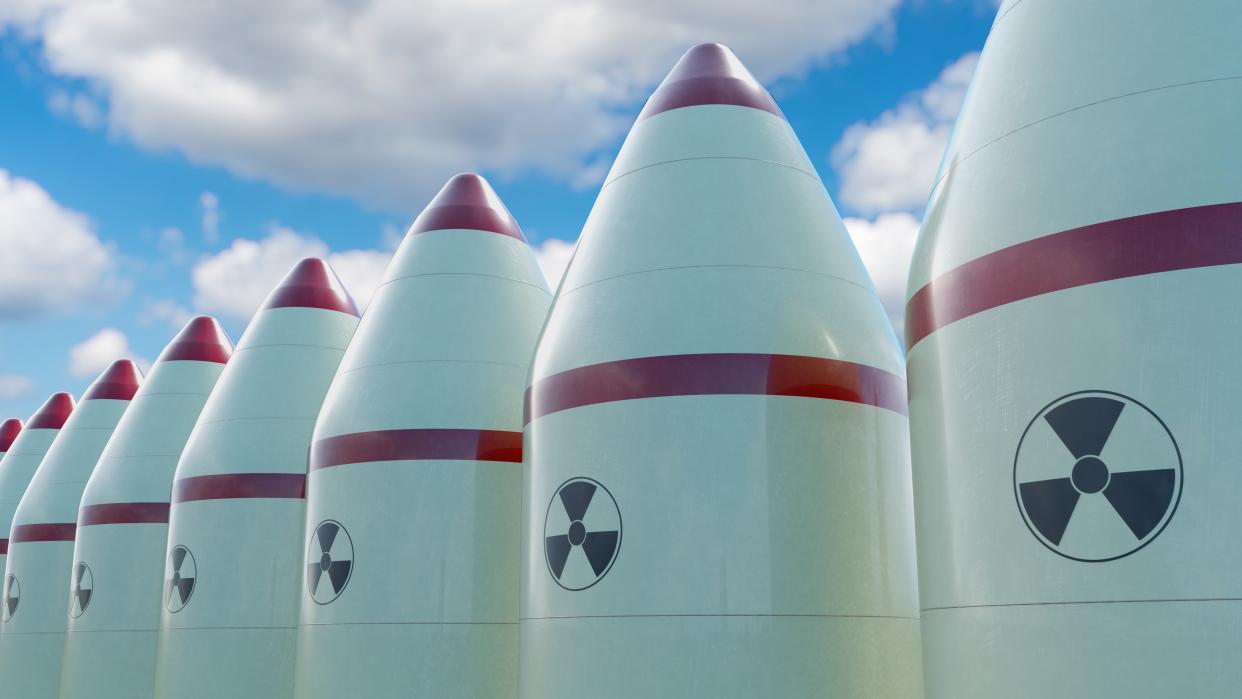
Northrop Grumman Corporation achieves a significant milestone in the development of the Sentinel intercontinental ballistic missile (ICBM) program with the successful completion of crucial tests on key elements of the missile.

The recent tests of the forward and aft sections of a Sentinel ICBM missile, also known as the Ground Based Strategic Deterrent (GBSD), provide essential data on the missile’s inflight structural dynamics, helping to mitigate risks and ensure the success of future flights.

As part of the engineering, manufacturing, and development (EMD) contract for Sentinel, Northrop Grumman conducted shroud fly-off and missile modal tests, demonstrating the effectiveness of the missile’s design and performance during flight. This successful testing validates assumptions, refines models, and enhances confidence in the program’s progress.

Sarah Willoughby, Vice President and Program Manager of Sentinel at Northrop Grumman, emphasizes the collaborative effort with the Air Force and suppliers in maturing the missile’s design and minimizing risks. These achievements underscore the company’s commitment to delivering a safe, secure, and reliable capability to the nation.

The Sentinel program, aimed at modernizing the nation’s ground-based strategic deterrent, is slated to remain operational through 2075. Northrop Grumman, leading a nationwide team for Sentinel’s EMD contract, continues to work closely with the Air Force to advance the design and achieve key milestones while reducing risks.

Prior advancements under the EMD contract include stage-two and stage-one solid rocket motor static fire tests and hypersonic wind tunnel testing. As a leading global aerospace and defense technology company, Northrop Grumman remains dedicated to pushing the boundaries of innovation and ensuring the security of the nation’s defense capabilities.


About author:
Emily Ryan Miller is an experienced journalist with excellent analytical skills and a deep understanding of military affairs. With her professional diligence and passion for the defense theme, Emily continues to inform the world about important aspects of the military sphere and deeply understands the significance of researching and tracking military events for the public and national security.

GUN BOAT DIPLOMACY
China sends new naval fleet for escort mission in Gulf of Aden


Source: Xinhua
Editor: huaxia
2024-02-21 

GUANGZHOU, Feb. 21 (Xinhua) -- The 46th fleet of the Chinese People's Liberation Army Navy on Wednesday set sail from a military port in the coastal city of Zhanjiang in south China's Guangdong Province to take over an escort mission from the 45th naval fleet in the Gulf of Aden and the waters off Somalia.

The 46th fleet includes the guided-missile destroyer Jiaozuo, the missile frigate Xuchang, and the comprehensive replenishment vessel Honghu. It has over 700 officers and soldiers, including dozens of special forces personnel, and two helicopters onboard.

In preparation for the mission, the fleet conducted meticulous analysis and made detailed plans. It also carried out targeted training for scenarios such as the rescue of hijacked commercial ships, the combating of terrorists and pirates, and the underway replenishment. ■