Monday, March 04, 2024

SHAMEFUL COLONIAL PRACTICE
Newfoundland and Labrador only province that still intends to imprison migrants


CBC
Mon, March 4, 2024 

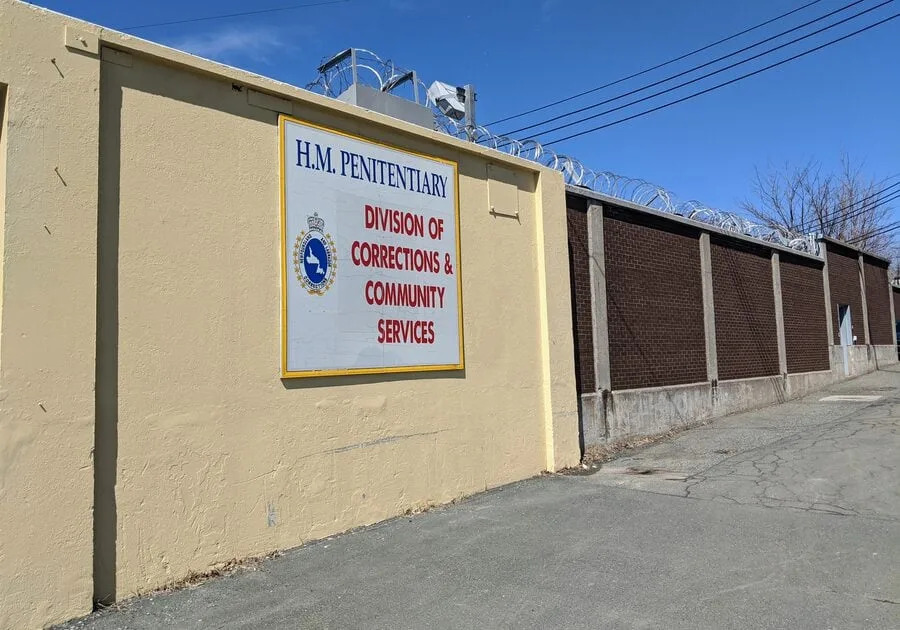
His Majesty's Penitentiary in St. John's, Newfoundland, where migrants have been detained at the request of the Canada Border Services Agency. (Sarah Smellie/The Canadian Press - image credit)

Newfoundland and Labrador, led by Andrew Furey's Liberal government, is the only Canadian province with no plans to end the controversial practice of incarcerating migrants in its provincial jails.

Every other province has now indicated to the Canada Border Services Agency (CBSA) that they will no longer imprison people detained under the Immigration and Refugee Protection Act.

The detention of migrants for administrative purposes in the same facilities as criminally charged or convicted individuals is a violation of international law, according to many experts.

"In the event a detention is required, it would be assessed on a case-by-case basis," wrote Newfoundland and Labrador's Department of Justice and Public Safety in response to Radio-Canada's questions.

"Immigration detention is not a common occurrence in Newfoundland and Labrador. The province does not have a formal agreement with the Canadian Border Services Agency," the department wrote.

Last year, six immigration detainees were imprisoned in Newfoundland and Labrador, according to CBSA statistics. The federal agency said there are no such detainees being held in that province at the moment.

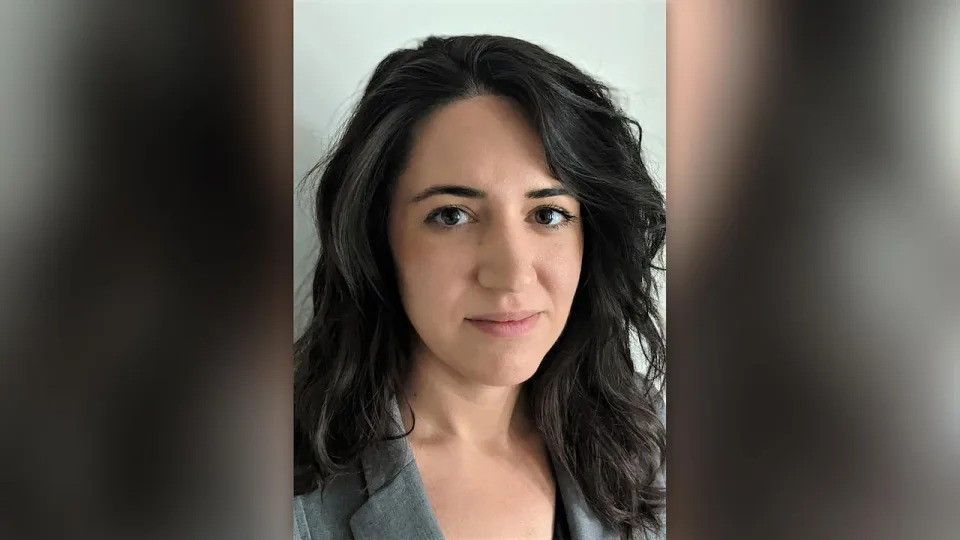
Hanna Gros, refugee lawyer and researcher at Human Rights Watch denounces Newfoundland’s decision to continue detaining migrants

Refugee lawyer Hanna Gros, a researcher with Human Rights Watch, said she's deeply disappointed in Newfoundland and Labrador’s decision to continue detaining migrants (Submitted by Hanna Gros)

Province's position 'deeply disappointing'

"Newfoundland's position is deeply disappointing," said Hanna Gros, a refugee lawyer and expert in immigration detention with Human Rights Watch.

It's one of the organizations behind the #WelcomeToCanada campaign launched in 2021 that called on provinces to cancel their immigration detention contracts with CBSA.

"Why is Newfoundland the only province committed to this abusive practice? The fact that it's not a 'common occurrence' is all the more reason to end this practice. It's not an excuse to continue it," Gros said.

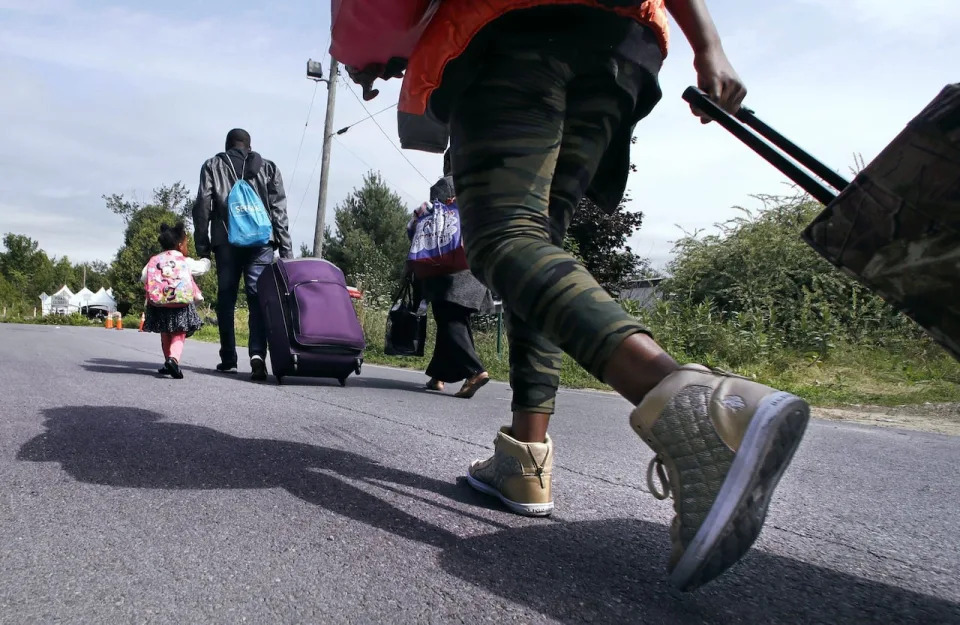
Many asylum seekers are among the tens of thousands of people who have been detained by the Canada Border Services Agency over the years.

Many asylum seekers are among the tens of thousands of people who have been detained by the Canada Border Services Agency in recent years. (The Canadian Press)

Gros fears CBSA could now send immigration detainees that other provinces refuse to imprison to Newfoundland and Labrador.

"We've seen that CBSA has no qualms about transferring people across provinces to keep them incarcerated, so it's a huge concern," she said.

Most detainees deemed flight risk

Border officers can detain foreign nationals or permanent residents, including refugee claimants, for three main reasons: if they're considered a flight risk, if their identity is not well established or if they pose a danger to the public.

The vast majority of the 71,988 migrants detained by CBSA between 2012 and 2023 were deemed a flight risk, meaning the border agency believed they would not appear for immigration processes, including those that might result in their removal from Canada.

Since June 2022, nine provinces have refused to imprison people held for immigration purposes, or have committed to doing so in the coming months. Many provinces had signed formal contracts with CBSA under which they had to give the agency one year's notice of cancellation.

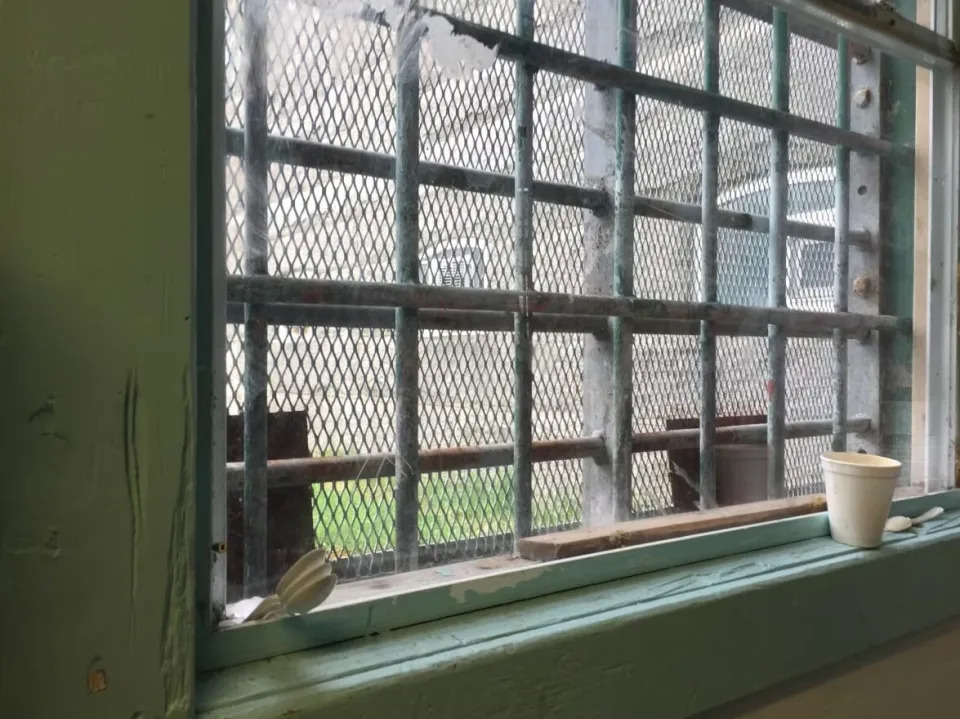
Her Majesty's Penitentiary in St. John's, Newfoundland. Last year, six people were incarcerated in this province for immigration purposes.

A view from inside Her Majesty's Penitentiary in St. John's. Last year, six people were incarcerated in Newfoundland and Labrador for immigration purposes. (Ariana Kelland/Radio-Canada)

CBSA said last December that it's upgrading its immigration holding centres in Laval, Que., Toronto and Surrey, B.C., in order to "accommodate high-risk detainees."

The agency said detention is always a measure of last resort, used only when alternative solutions in the community are impossible.

Many migrants have died in detention in Canada over the years, some by suicide.


Maine questions Canadian study of Agent Orange use at New Brunswick military base

The Canadian Press
Mon, March 4, 2024 


FREDERICTON — Maine's state legislature says it has found flaws in a Canadian study on the use of the herbicide Agent Orange in the 1960s on a southern New Brunswick military base.

A report released in January by a legislature commission says the potential links between health problems and the use of Agent Orange at Canadian Forces Base Gagetown need to be re-evaluated.

It says a new investigation would help United States veterans access medical care if they had worked at the base, where in 1966 and 1967 the American military tested defoliants such as Agent Orange.

A 2005 study by the Defence Department and other Canadian government agencies found that herbicide levels used at the Gagetown base posed no risk to human health.

But the Maine commission says it gathered testimony that criticized the methods used to collect evidence in the Canadian study.

Herbicides such as Agent Orange were used extensively in the 1960s by the American military during the Vietnam War to destroy crops of the Viet cong and North Vietnamese, and the U.S. Veterans Affairs Department has recognized certain cancers are associated with exposure to those chemicals.

This report by The Canadian Press was first published March 4, 2024.

Files.libcom.org

https://files.libcom.org/files/Bookchin%20M.%20Our%20Synthetic%20Environment.pdf

Our Synthetic Environment. Murray Bookchin. 1962. Table of contents. Chapter 1: THE PROBLEM. Chapter 2: AGRICULTURE AND HEALTH. Chapter 3: URBAN LIFE AND HEALTH.


Germany accuses Russia of seeking to divide Europe with leaked call


Updated Mon, March 4, 2024 
By Andreas Rinke and Rachel More

BERLIN (Reuters) -Germany accused Russia on Monday of leaking an intercepted recording of German military discussions about how to support Ukraine against the Kremlin's invasion in an attempt to divide Europe.

Russian media last week published an audio recording of a meeting of senior German military officials held by Webex discussing weapons for Ukraine and a potential strike by Kyiv on a bridge in Crimea.

Germany has confirmed the authenticity of the 38-minute call, saying it is investigating what it called an apparent act of eavesdropping by Russia that was part of an "information war".

Participants in the call discuss the possible delivery of Taurus cruise missiles to Kyiv, which Chancellor Olaf Scholz has publicly rejected. They also discuss how France and Britain are delivering and operating their own cruise missiles with shorter ranges.

While there has been little public response so far from allies, analysts say the recording is likely to strain ties given it is another major security breach and reveals the extent of German reluctance to get too involved in the war.

"This hybrid attack aimed to generate insecurity and divide us," a government spokesman said on Monday. "And that is exactly what we will not allow. We are in constant contact with our partners."

Moscow accuses the "collective West" of using Ukraine to wage a proxy war against Russia. NATO says it is helping Ukraine to defend itself against a war of aggression.

A spokesman for British Prime Minister Rishi Sunak told reporters the leak was a matter for Germany to investigate and Britain would continue to work with Germany to support Ukraine.

Still, he added that Britain was the first country to provide long-range precision strike missiles to Ukraine "and we would encourage our allies to do the same".

Tobias Ellwood, a Conservative lawmaker and former chair of the parliamentary defence committee, told the BBC's Radio Four Today programme said Russia had probably not learned anything it did not already know through the leak, given its vast spy operations.

"That doesn't prevent some serious conversations taking place in the diplomatic corridors between Germany and Britain and indeed NATO, as well as to why this happened in the first place," he said.

Germany has suffered a few embarrassing security leaks of late - authorities arrested a German Foreign Intelligence Service (BND) employee they suspected of spying for Russia in late 2022.

"It is a wake-up call that we are being targeted by (Russian President) Putin," Finance Minister Christian Lindner said on Monday.

GERMAN AMBASSADOR SUMMONED?

The Kremlin said on Monday the recording showed Germany's armed forces were discussing plans to launch strikes on Russian territory, and questioned whether Scholz was in control of the situation.

"The recording itself says that within the Bundeswehr, plans to launch strikes on Russian territory are being discussed substantively and concretely," Kremlin spokesman Dmitry Peskov told reporters.

"Here we have to find out whether the Bundeswehr is doing this on its own initiative. Then the question is: how controllable is the Bundeswehr and how much does Scholz control the situation?" Peskov said.

He said both scenarios were "very bad. Both once again emphasise the direct involvement of the countries of the collective West in the conflict around Ukraine".

The German government spokesman called accusations of war preparations "absurd" propaganda.

"The Russians were spooked by Olaf Scholz's U-turn last year on the dispatch of the Leopard 2 battle tanks," analysts at Eurointelligence wrote in a briefing note. "They now want to make sure that he sticks to his line on the Taurus missiles."

Russia's foreign ministry said in a statement it demanded an explanation from Germany's Ambassador Alexander Graf Lambsdorff about the discussion. It did not say how the ambassador responded.

It was the second time in the past week that Moscow has pounced on what it sees as evidence of Western intent to attack Russia directly.

After French President Emmanuel Macron floated the possibility that European nations could send troops to Ukraine, allies of Putin said last week that any French troops would meet death and defeat like Napoleon's soldiers who invaded Russia in 1812.

Putin said in a speech on Thursday that Western countries risked provoking a nuclear war if they sent troops to fight in Ukraine.

(Reporting by Andreas Rinke, Rachel More and Sarah Marsh in Berlin, Alistair Smout and Elizabeth Piper in London and Filipp Lebedev in Tbilisi; Writing by Mark Trevelyan and Sarah Marsh; editing by Timothy Heritage, Nick Macfie and Alex Richardson)


Germany’s Pistorius Says Russian Leak Part of Disinformation War

Verena Sepp
Sun, March 3, 2024
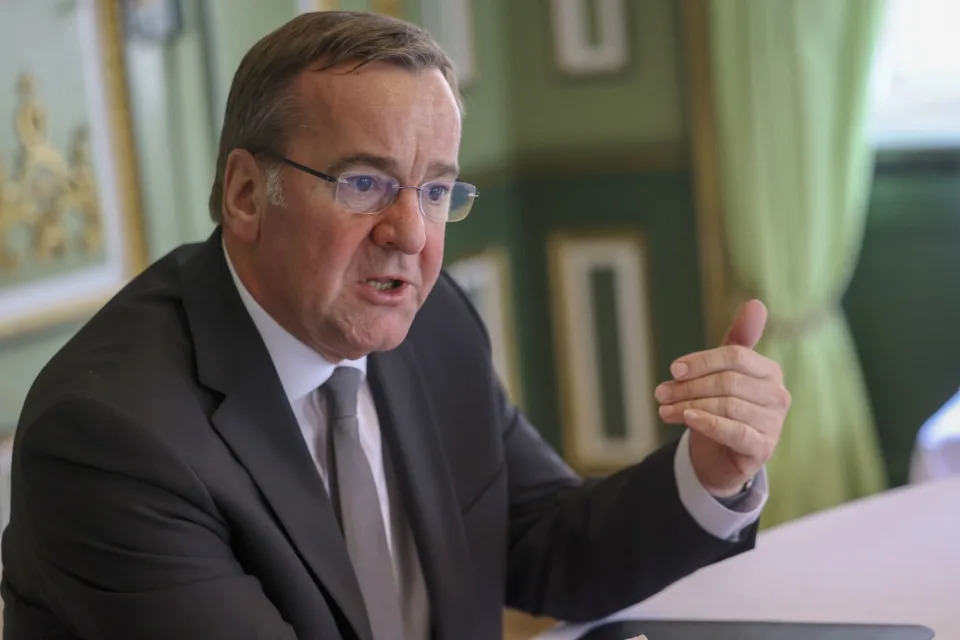


(Bloomberg) -- President Vladimir Putin is looking to divide Ukraine’s allies with a disinformation campaign, Germany’s defense minister said, days after Russian media published a leaked conversation about the possible deployment of German long-range missiles in Ukraine.

“It’s about division, it’s about undermining our unity, so we should react in a level-headed but not less determined way,” Boris Pistorius said after a hastily-convened special meeting of the defense committee in Berlin on Sunday.

“This is clearly about undermining our unity,” he said. “It is about using this recording to destabilize and unsettle us,” adding that “we should not fall for Putin’s line.”

In the 38-minute audio recording obtained by the media platform Russia Today, German air force chief Ingo Gerhartz and highly-ranked officers discussed a possible delivery of German Taurus missiles to Kyiv, and their potential impact.

“On Friday, immediately after it became known, I contacted the federal office for military counterintelligence (MAD) and instructed them to investigate the incident completely,” Pistorius said, adding that he is getting regular updates.

Read more: Germany Probes Military Security Leak After Russian Wiretap

Der Spiegel and the German press agency DPA reported separately that the recording has been determined to be authentic, while potentially doctored, and that the conversation had been conducted on the commercial, non-encrypted video calling platform Webex — with invitations sent to mobile phones via a Bundeswehr office landline.

Pistorius said it was no coincidence that the revelation came amid funeral services for Kremlin critic Alexey Navalny and new revelations about the Wirecard scandal.

Chancellor Olaf Scholz has clearly positioned himself against the deployment of German Taurus missiles in Ukraine, causing tensions among some NATO members.

Explainer-Why a leaked German military recording is causing outcry


Press conference about the Air Defender 23 in Berlin


By Sarah Marsh and Andreas Rinke
Mon, March 4, 2024 

BERLIN (Reuters) - Russian media last week published an 38-minute audio recording of an intercepted online call between senior German military officials about how to support Ukraine against the Kremlin's invasion.

Germany's government has confirmed the veracity of the call.

This is what the officials discussed and the reactions to the security breach:

WHAT WAS DISCUSSED DURING THE RECORDED CALL?

In the call, German Air Force Chief Ingo Gerhartz discusses with three high-ranking Luftwaffe officials the possible delivery of Taurus cruise missiles to Kyiv, which Chancellor Olaf Scholz has publicly so far firmly rejected.

They also talk about the training of Ukrainian soldiers, and possible military targets for the missiles including the bridge linking the Russian mainland to Crimea and Russian ammunition depots.

The discussions included details of allies' operations, such as the fact British personnel were deployed in Ukraine and how Britain's Storm Shadow and France's Scalp missiles were deployed in the country.

One official talks about the fact Britain is already handling for France the satellite data needed for Ukraine to program the missiles.

He suggests it could do the same for Germany - preventing the country from being in any way directly involved in their deployment, which is a political red line for Berlin.

WHY IS THIS A SCANDAL?

Critics have denounced the fact military secrets were discussed via a standard off-the-shelf platform like WebEx, saying this demonstrates a systematic underestimation in Germany of security threats. One call participant joined from his hotel room in Singapore, government officials confirmed.

Germany's allies have not publicly criticized the leak. A spokesman for British Prime Minister Rishi Sunak told reporters it was a matter for Germany to investigate and Britain would continue to work together with Germany to support Ukraine.

But former British Defence Secretary Ben Wallace was quoted as saying by The Times that the incident demonstrated Germany was "neither secure nor reliable".

The recording also underscores the extent to which the decision on deploying Taurus missiles is a political one - and Scholz is reticent about Germany getting too directly involved in the Ukraine war or prompting an escalation of hostilities.

The Taurus missiles can reach twice as far as the Storm Shadow and Scalp missiles, and would thus enable Ukraine to even reach as far as Moscow.

HOW DID GERMANY REACT?

Germany has said the leak was a Russian "hybrid disinformation attack" that aimed to sow discord within the country and with allies. It has also called accusations of war preparations "absurd" propaganda.

German authorities say they are investigating the incident but it is unclear so far whether any security protocols were breached and no one has been fired yet.

MOSCOW'S TAKE

The Kremlin says the recording shows Germany's armed forces were discussing plans to launch strikes on Russian territory, and questioned whether this was government policy or Chancellor Scholz lost control of the situation.

Russia's foreign ministry said in a statement that it demanded on Monday an explanation from the German ambassador to Moscow Alexander Graf Lambsdorff about the discussion which "clearly demonstrates the involvement of the 'collective West', including Berlin, in the conflict around Ukraine".

RUSSIAN SPYING IN GERMANY

Germany, one of the largest providers of military hardware to Ukraine, is a major target of Russian spying operations, which have grown in scale since Russia's 2022 invasion of Ukraine, authorities have warned.

The authorities arrested a German Foreign Intelligence Service (BND) employee they suspected of spying for Russia in late 2022.

Last year, authorities arrested an officer of the military procurement agency on suspicion of passing secret information to Russian intelligence.

(Reporting by Sarah Marsh and Andreas Rinke; Editing by Tomasz Janowski)


CANADA
Commons committee nixes Conservative push for hearings on lab security lapses

The Canadian Press
Mon, March 4, 2024 


OTTAWA — A House of Commons committee has declined to vote on a Conservative request to delve into the activities of two scientists who were fired from a high-security lab over their dealings with China.

Conservative foreign affairs critic Michael Chong asked the House committee on information, privacy and ethics to call various witnesses, including representatives of the Public Health Agency of Canada.

However, a majority of the committee voted to end debate on the motion after Liberal MP Iqra Khalid said hearings are unnecessary and fall outside the committee's mandate.

More than 600 pages of internal reports and correspondence about the security matter were made public last week after a special all-party review.

The documents show two scientists at the National Microbiology Laboratory were fired in early 2021 after reviews found they failed to protect sensitive assets and information.

Records say the scientists, Xiangguo Qiu and her husband, Keding Cheng, played down their collaborations with Chinese government agencies.

This report by The Canadian Press was first published March 4, 2024.
Survey finds 25% of Canadians think discrimination is a problem in sports

The Canadian Press
Mon, March 4, 2024 


One-quarter of respondents polled last year felt that racism and discrimination were problems in community sports in the country, according to a survey published Monday by Statistics Canada.

Eighteen per cent of respondents said they have experienced or witnessed racism or discrimination in sport over the last five years, with race or skin colour the most cited reason at 64 per cent.

Physical appearance was cited in 42 per cent of incidents and ethnicity or culture in 38 per cent.

LGTBQ Canadians (42 per cent) were more than twice as likely as heterosexuals (17 per cent) to report having experienced or witnessed discrimination.

Athletes made up 80 per cent of those who saw or were subjected to discrimination, with spectators at 26 per cent. Coaches and those in non-athletic roles ranged from five to 15 per cent.

Participants and athletes (64 per cent), spectators (39 per cent) and coaches and instructors (36 per cent) were most often responsible for acts of discrimination.

The likelihood of experiencing or witnessing discrimination in a sport decreased with age, peaking among people aged 15 to 24 (30 per cent) and gradually declining to seven per cent among people 65 and older.

The data for the survey came from the Survey Series on People and their Communities (SSPC) — Participation and Experiences in Community Sports, which was collected from Nov. 27-Dec. 17, 2023.

Statistics Canada said racialized and immigrant groups were oversampled "to provide adequate coverage of these groups."

This report by The Canadian Press was first published March 4, 2024.

SHELTER IS A RIGHT!
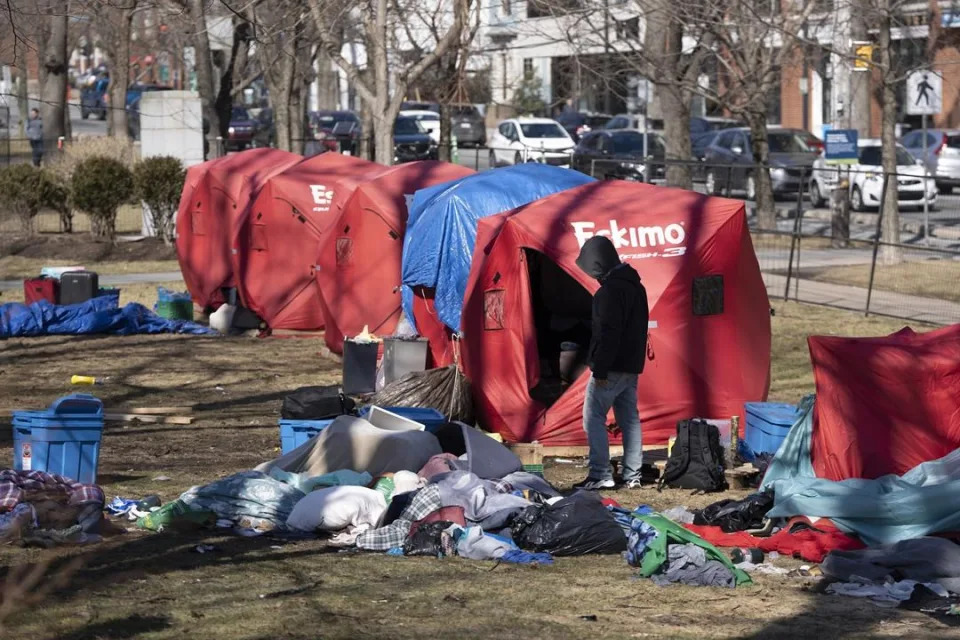
Tents trashed as Halifax clears out homeless encampment designated for closure


The Canadian Press
Mon, March 4, 2024 


HALIFAX — Workers are clearing out a central Halifax homeless encampment today — one week after a municipal deadline passed for residents to leave it and four other sites previously approved by the city.

Fencing was installed around the perimeter of Victoria Park, and the municipality’s executive director of community safety Bill Moore was on site alongside city workers who were putting tents, food waste and unclaimed belongings in the garbage.

Moore says people who had been camped in the park have moved elsewhere, and some of them will be setting up their tents one block away on a grassy berm along University Avenue.

He says Victoria Park has a concerning rat infestation, and people who want to continue sleeping in a tent can do so at one of the four remaining designated encampment sites — including the University Avenue green space.

On Feb. 7, Halifax asked unhoused people living in tents at Victoria Park and four other previously authorized encampments to leave by Feb. 26.

The city said the encampments are a safety risk and indoor housing options are available, including at the Halifax Forum, a shelter with 70 beds located in the north end of the city.

This report by The Canadian Press was first published March 4, 2024.

The Canadian Press
A man stumbled upon a 70-million-year-old dinosaur fossil but kept it secret for 2 years

Kenneth Niemeyer
Mar 3, 2024
A man in France discovered a dinosaur skeleton while walking his dog.
Getty Images


A man in France found a massive dinosaur skeleton while walking his dog.
The titanosaur skeleton is nearly 70% complete and was kept under wraps to preserve the site.

The discovery has sparked a career change for the man who found it.

A man happened upon a 70-million-year-old fossil while walking his dog, but he and local archeologists kept it a secret for two years over fears that vandals would tamper with the find.

Damien Boschetto, 25, made the discovery in Montouliers in Hérault, France, about two years ago, Newsweek reported.

Boschetto reported the discovery to the cultural, archaeological, and paleontological association in the nearby town of Cruzy, the outlet reported.

The group determined the fossil to be a nearly complete, 30-foot-long fossilized titanosaur.

While paleontologists routinely dig up bones from animals that existed millions of years ago, it's incredibly rare to find an entirely intact fossilized dinosaur skeleton. For instance, one study suggests there were 1.7 billion Tyrannosaurus rexes, which are thought to have lived 66 to 68 million years ago, but scientists have recovered fossilized remains of fewer than 100 of them.

Titanosaurs were a subgroup of sauropods, plant eaters with very long necks, according to Encyclopedia Britannica. The massive herbivores are some of the largest known dinosaurs and lived from about 150 to 66 million years ago on every continent.

Researchers discovered the titanosaur fossil discovered by Boschetto to be about 70% complete, Newsweek reported.

"While walking the dog, a landslide on the edge of the cliff exposed the bones of various skeletons," Boschetto said, according to the outlet, adding: "They were fallen bones, therefore isolated. We realized after a few days of excavations that they were connected bones."

Boschetto and the researchers kept the discovery under wraps for two years to protect the site from vandals, Newsweek reported.

When researchers are finished studying the bones, Boschetto's titanosaur is set to be on display at the Cruzy Museum, which is also home to another titanosaur femur uncovered in 2012.

Boschetto told The Washington Post he was a paleontology enthusiast. The director of the Cruzy museum, Francis Fages, told the Post that Boschetto's volunteering at the museum over the past two years had been valuable for its paleontology department.

"These discoveries are interesting from a scientific point of view because they contribute to the understanding of the species and ecosystems of the late Cretaceous of France and Europe," Fages told the outlet.
Advertisement


Boschetto quit his job in the energy sector in September to pursue a master's degree in paleontology, the Post reported.
Fact Check

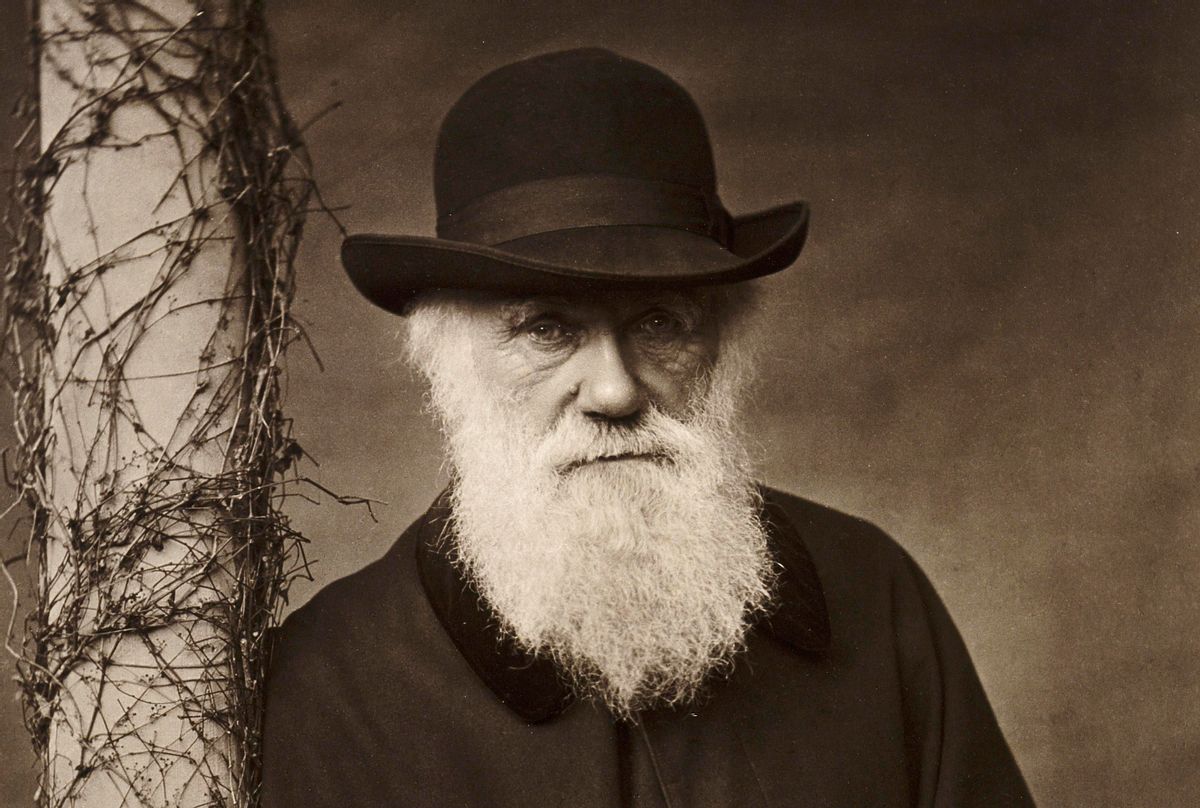
Did Charles Darwin Renounce His Theory of Evolution on His Deathbed?

"I was a young man with uninformed ideas," he supposedly said.


Jack Izzo
Published Mar 3, 2024
Image Via Elliott & Fry / Wikimedia Commons

Claim:
Charles Darwin professed a belief in God and recanted the theory of evolution on his deathbed.

Rating:
Unfounded


About this rating


On April 19, 1882, Charles Darwin, author of "On the Origin of Species" and the father of evolution, died at his home in Downe, England. He was 73. More than 30 years later, in 1915, across the Atlantic in Northfield, Massachusetts, a woman named Lady Elizabeth Hope told a story during a devotional service about meeting Darwin in late 1881. During their talk, Darwin reportedly expressed his belief in God and renounced the theory of natural selection that made him a household name.

The story quickly spread and has been used as an argument against evolution ever since because, according to Lady Hope's story, even Darwin didn't believe his own theory.

That argument, however, cannot stand on stable ground. There is no evidence Darwin professed his belief in God in this conversation, nor is there evidence that he recanted the theory of evolution. In order to best understand the claim, let's start with a brief explanation of Darwin himself.

Charles Darwin


Darwin was born in 1809, when the fields of biology and geology were new and mysterious. Over the course of his life, Darwin's theory of natural selection completely redefined the scientific landscape. But it took him a very long time to publish the work that made him famous.

Between 1831 and 1836, Darwin traveled the world on the HMS Beagle, where he visited the Galápagos Islands and first began thinking about the ideas his name would become synonymous with. Although he privately proposed his theories of natural selection soon after returning to England, he waited more than 20 years to publish them. "On the Origin of Species," now one of the most famous scientific works ever, was published in 1859.

It was not initially popular, especially among conservative and religious circles. Early reviewers quickly latched onto the implied idea that humans had evolved from apes, despite the fact that Darwin chose to never explicitly state that. One reviewer wrote:

Lady Constance Rawleigh, in Disraeli's brilliant tale, inclines to a belief that man descends from the monkeys. This pleasant idea, hinted in the "Vestiges," is wrought into something like a creed by Mr. Darwin. Man, in his view, was born yesterday — he will perish to-morrow. In place of being immortal, we are only temporary, and, as it were, incidental.


The work deserves attention, and will, we have no doubt, meet with it. Scientific naturalists will take up the author upon his own peculiar ground; and there will we imagine be a severe struggle for at least theoretical existence. Theologians will say — and they have a right to be heard — Why construct another elaborate theory to exclude Deity from renewed acts of creation? Why not at once admit that new species were introduced by the Creative energy of the Omnipotent? Why not accept direct interference, rather than evolutions of law, and needlessly indirect or remote action? Having introduced the author and his work, we must leave them to the mercies of the Divinity Hall, the College, the Lecture Room, and the Museum.

Health problems around the time of the publication of "On the Origin of Species" prevented Darwin from actively participating in the debates over the validity of his work. As a result of his health issues, Darwin's later years were largely spent doing research and with his family: his wife, Emma, and their seven children.

In the years before he died, Darwin wrote an autobiography. According to Encyclopedia Britannica, the work — completed between 1876 and 1881 — was not intended for wider publication, but for his grandchildren. The scientist died less than a year after it was finished.

"I cannot pretend to throw the least light on such abstruse problems. The mystery of the beginning of all things is insoluble by us; and I for one must be content to remain an Agnostic," Darwin wrote. It is this claim that supporters of Darwin's supposed deathbed conversion must effectively prove wrong.

It didn't take long for them to start trying. According to some sources, just a few days after Darwin's death, a preacher in Wales claimed Darwin had converted on his deathbed. In "Darwinian Myths: The Legends and Misuses of a Theory," author Edward Caudill shares a correspondence from one of Darwin's most ardent supporters, Thomas Huxley, and his son Francis Darwin, confirming for a Canadian newspaper that Darwin had not converted to Christianity.

Overall, the historians agree: Such claims were few and far in between until Lady Hope's story in 1915.

Lady Hope

Born Elizabeth Reid Cotton in 1842 as the daughter of an evangelist, Lady Hope continued her father's work throughout her life. She gained her title after marrying Adm. Sir James Hope and continued to use it after his death. Around the time of Darwin's death, Hope was living relatively close to him, and according to "The Darwin Legend," a book exploring the origins of Darwin's supposed conversion written by prominent Darwin scholar James Moore, the two probably did meet about six months before Darwin died.

(Snopes was unable to access a full copy of "The Darwin Legend." Our sources for this claim come from "Darwinian Myths" and reviews of "The Darwin Legend" available online.)

Perhaps these claims would hold more weight if Lady Hope had mentioned Darwin's sudden turn to religion not long after their meeting. However, she first recounted the supposed events in 1915 during a devotional service. It was quickly reprinted in the Watchman-Examiner, a Baptist newspaper. The following quote, which she attributed to Darwin, supposedly contains his renouncement:

I was a young man with uninformed ideas. I threw out queries, suggestions, wondering all the time over everything; and to my astonishment the ideas took like wildfire. People made a religion of them.

It's a bit much to call that a renouncement. The story quickly spread, and multiple members of Darwin's family wrote to various people advocating the theory to deny the claim. But, true or not, it has been republished multiple times since then.
Modern Distancing

Lady Hope's story was long used by creationists arguing against Darwin's theories as evidence that they were wrong. But over time, even creationist websites have come to acknowledge the inherent weakness of the argument. In fact, several of the sources we used in researching this article were from creationist websites sharing the story but cautioning readers against employing it in an argument.

We cannot sum up the arguments against this story any better than the creationist website AnswersInGenesis.org did:

Given the weight of evidence, it must be concluded that Lady Hope's story is unsupportable, even if she did actually visit Darwin. He never became a Christian, and he never renounced evolution. As much as we would like to believe that he died with a saving knowledge of Jesus Christ, it is much more likely that he didn't. It is unfortunate that the story continues to be promoted by many sincere people who use this in an effort to discredit evolution when many other great arguments exist, including the greatest: the Bible.


By Jack Izzo  is a Chicago-based journalist and two-time "Jeopardy!" alumnus.
UK
Labour: Young people will be expected to take up work and training

RED TORIES SAY 
HEY KIDZ; ARBEIT MACHT FREI

SEAN SEDDON - BBC NEWS
March 4, 2024 

Liz Kendall

There will be "no option of a life on benefits" for young people under Labour, its shadow work secretary will declare in a speech on Monday.

Liz Kendall is expected to say the party will invest in careers and skills training but warn young people have a "responsibility" to take them up.

The party warned the number of people aged between 16-24 who are not in work, education or training is rising.

A Tory spokesman said Labour has an "abysmal" record on youth employment.

According to Office for National Statistics estimates, there were 851,000 young people not in employment, education or training between October to December 2023.

That number has risen by 20,000 compared to the same period in 2022 and accounts for 12% of all 16-24-year-olds.

In a speech to the Demos think tank in central London, Ms Kendall will say the Tories have "failed on the economy - and that is because they have failed on work".

She is expected to add: "This is our commitment to young people. We value you. You are important. We will invest in you and help you build a better future with all the chances and choices this brings.

"But in return for these new opportunities, you will have a responsibility to take up the work or training that's on offer. Under our changed Labour party, if you can work there will be no option of a life on benefits."

The party has not detailed whether it would introduce enforcement measures to back up its stance.

Speaking to BBC's Today programme ahead of her speech, Ms Kendall said young people were "desperate to work" but struggled to get a job without experience, and experience without a job.

She said Labour would ensure jobseekers had access to careers advice, work experience, employment support and early mental health support.

Labour has previously pledged to invest in 1,000 new careers advisers, specialist mental health support in every school and so-called Young Future hubs in every area to provide a range of services to vulnerable young people.

It says it would fund the changes by removing tax breaks for private schools and closing tax loopholes used by some private equity fund managers.

The party plans to reform the apprenticeship levy - a 0.5% tax on large employers - to invest in skills training.

Ms Kendall is further expected to say on Monday that Labour would "overhaul access to work" for disabled young people if it wins the next election.

In response, a Conservative Party spokesman pointed towards the previous record of Labour governments on youth employment.

The Tories have also attacked Labour's plan to reform the apprenticeship levy in order to fund its policies, saying it would lead to a reduction in the number of people getting on-the-job training.

A Conservative Party spokesman said: "Under the last Labour government, youth unemployment almost doubled and the number of people seeking out-of-work benefits soared - their abysmal record speaks for itself."


Another Russian human rights defender pays with his freedom

BY TANYA LOKSHINA, OPINION CONTRIBUTOR - 03/04/24 7:00 AM ET
Courtesy of Memorial
Oleg Orlov getting handcuffed in a Moscow courtroom immediately following on the judge handing down a 2.5-year prison sentence. February 2024.

Last week, a court in Moscow sentenced Oleg Orlov, a leading Russian rights defender, to two and a half years in prison, following a trial so Kafkaesque that the accused literally spent court hearings engrossed in Kafka’s iconic novel “The Trial.”

His crime, if you can call it that, was telling the truth about the Kremlin’s abusive war in Ukraine and the staggering crackdown on all forms of dissent inside Russia. At age 70, having devoted his life to exposing violations in conflict zones and helping victims seek accountability, Orlov has given up his freedom to speak out in the face of horror and injustice.

Orlov is a co-chair of Memorial, and one of three recipients of the 2022 Nobel Peace Prize. I first met him more than two decades ago, at a news conference where he and his colleagues were presenting their findings about Russian atrocities in Chechnya and demanding accountability for those responsible.

Afterward, we lingered over coffee. His fact-based accounts and his raw dedication to justice blew my mind. I later had the privilege of working with him in Chechnya and other North Caucasus regions for many years, and in eastern Ukraine between 2014 and 2016. Fearless, thorough and empathetic, Orlov does stellar work in hostile environments. No matter how dicey the situation, he always has your back.

Orlov worked under bombs in Chechnya. He was a volunteer hostage, trading himself to ensure release of civilians during a terrorist attack. He lived through death threats, one kidnapping and a beating by state security agents.

Recently, he had to watch the Russian authorities dismantle Memorial and other leading human rights organizations as part of the Kremlin’s assault on its critics. He also watched the government take control over all forms of public life, leaving no space for artistic expression, academic freedom, independent media or even basic privacy.

He had to watch as politicians and civic activists were sentenced to years in prison for criticizing the war, ranging from denouncing Russian forces’ war crimes in Bucha to replacing supermarket price tags with information about Russia’s devastating siege of Mariupol.

This time, it’s Orlov who is going to prison. He knew it was coming. In his closing statement toward the end of his sham trial, he said that in contemporary Russia, “an acquittal on this charge is impossible,” but he emphasized that he had “nothing to regret or repent for.”

I, on the other hand, have much to regret. I regret I couldn’t be in that Moscow courtroom when he was handcuffed and taken into custody immediately following the outrageous verdict and sentencing. Human Rights Watch, which had a presence in Russia for three decades, was kicked out by the authorities in spring 2022, shortly after the invasion of Ukraine.

As much as I wanted to be at Orlov’s trial, I knew I’d probably be detained and charged myself. All of our reporting on Russian abuses in Ukraine fits under the same draconian war censorship legislation under which Orlov and hundreds of others have already been prosecuted.

It is unbearable not to be able to support such a close friend and colleague — not to see him in person before he is dragged to prison. But Orlov urged his supporters not to succumb to despair. Recalling Alexei Navalny — the leading Russian opposition politician for whose death in a penal colony earlier this month the Kremlin bears responsibility — Orlov said, “Navalny urged us, ‘Don’t give up.’ We remember that. What I can add is this: do not lose heart, do not lose optimism. Because truth is on our side. Those who have dragged our country into the abyss where it is now represent the old, decrepit, outdated order. They have no vision for the future — only false narratives of the past, delusions of ‘imperial greatness’…But we live in the 21st century, the present and the future are with us, and our victory is inevitable.”

Orlov is right, truth is on our side. We make sure that everyone responsible is held accountable for Russia’s war crimes in Ukraine and for its repression at home. For that, and for Orlov’s sake, we cannot despair.

Tanya Lokshina is associate Europe and Central Asia director at Human Rights Watch.
https://www.hrw.org/europe/central-asia/russia