Thursday, October 31, 2024

UK


Chancellor must take action on rising gender affordability housing gap ahead of Budget, says Women’s Budget Group

OCTOBER 30, 2024

The gender housing affordability gap has widened in the year to April 2024, WBG’s analysis of the Office of National Statistics’ Annual Survey of Hours and Earnings (ASHE) data released today shows. 

Private renting has become significantly less affordable for both men and women in the past year, with both spending a larger proportion of their incomes on rent. However, the burden has grown higher for women, who now have to spend on average almost half of their earnings on rent for a one bedroom flat.

Ahead of today’s budget, the Women’s Budget Group is urging the Chancellor to tackle the widening gender housing affordability gap by permanently re-linking Local Housing Allowance with actual rents.

Key findings

  • Earnings are not keeping up with private rents. In England, the percentage of women’s median earnings absorbed by rent for a one-bedroom property was 47% in the year to April 2024, up from 36% at the same time in 2023. 
  • For men, this figure stood at 26% in 2023 and has increased to 34% in the year to April 2024.
  • This comes to an increase in the gender housing affordability gap from 10 percentage points to 13 percentage points.
  • The same is true for two-bedroom properties, where the gap increased from 12 percentage points to 15 percentage points for England. 
  • The situation in London is especially acute, where a woman renting a two-bedroom property could expect to see 70% of her earnings absorbed by rent as of April 2024. This is up from 62% at the same time last year. For men, this figure is 55%.
  • However, the average rent of a one-bedroom property has gone up a further £39 per month between April and September this year. 
  • The average rental price of a one-bedroom property in England has gone up by £133 from £956 a month to £1089 per month since September 2023. In London the average price of a one-bed has risen by £153.
  • WBG analysis released last month showed that women were hardest hit by cuts to public services and changes to tax and social security since 2010, losing 9.4%, equivalent to £3,162 per year, in living standards, compared to men’s loss of 5.8% (£2,395 per year).

WBG calls on the Chancellor to

  • Unfreeze and permanently re-link Local Housing Allowance rates to local rents, raising it to the 50th percentile to ensure housing benefit actually covers renting costs and protect women from falling into poverty and/or becoming homeless.
  • Review overall benefit rates to make up for losses experienced by benefit claimants, and women in particular, over the past 14 years; and prevent the real value of benefits getting further eroded by the rising cost of living.

Dr Mary-Ann Stephenson, Director of the Women’s Budget Group commented: “The Chancellor committed to make this economy work for women. Rachel Reeves needs to address the widening gender housing affordability gap in order to deliver on this promise; an economy in which women can barely afford to rent on their own is clearly not working.

“With September’s inflation rate at 1.7% expected to determine benefit increases from April, and many predicting that inflation will go up again by the end of this year due to a rise in energy prices, we’re looking at a real-term cut in benefits for many people already struggling to make ends meet. 

“Our work has shown that the on-and-off freeze in benefits over the past decade has been the main driver of women’s income loss since 2010, and that cuts to social security and public services have disproportionately hit women’s living standards. 

“At the same time, the cost of private renting has been increasing, eating up more and more of women’s incomes. It is clear that women’s earnings are not keeping pace with private renting costs, and neither is Local Housing Allowance. 

“The realignment of LHA with the 30th percentile of average local rents at the last Autumn Budget brought a flicker of hope to those on the lowest incomes facing spiralling housing costs. But this was a temporary measure and the Chancellor must be bolder than the previous Government. Permanently re-linking Local Housing Allowance rates to rents would give private renters more security and ensure housing benefit actually meets the cost of renting. Unless she acts on this, gender inequalities will deepen, leaving more women and their children vulnerable to homelessness and poverty.”

The UK Women’s Budget Group is the UK’s leading feminist economics think tank, providing evidence and analysis on women’s economic position and proposing policy alternatives for a gender-equal economy. We act as a link between academia, the women’s voluntary sector and progressive economic think tanks.

Image: Rachel Reeves,https://www.freemalaysiatoday.com/category/world/2024/07/08/uks-finance-minister-says-will-make-difficult-decisions-to-drive-growth/ Licence: CC BY 4.0 Attribution 4.0 International


Sam White: ‘Budget 2024 leaves Reeves facing nine circles of fiscal hell’
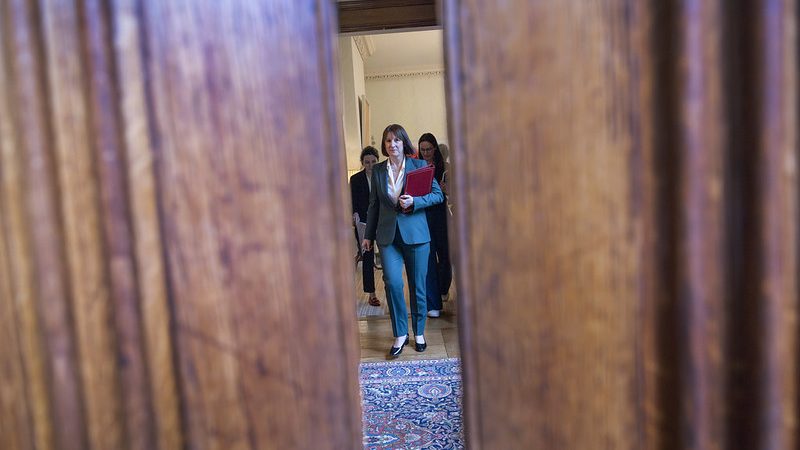

Rachel Reeves prepares for the Autumn Budget 2024. Photo: Kirsty O'Connor / Treasury via Flickr
Rachel Reeves prepares for the Autumn Budget 2024. Photo: Kirsty O’Connor / Treasury via Flickr

In the ‘Divine Comedy’, Dante tells the story of the hero being led through the Nine Circles of Hell by the spirit of the ancient poet Virgil. This week, it’s our very own Britain that must begin its journey out of the Nine Circles of Fiscal Hell, with the role of guide played by Chancellor Rachel Reeves.

‘Yeah yeah, we know this is a grim inheritance’ people tend to respond, but then we are quick to move on. It’s an understandable impulse, but it risks leaving us all surprised or disappointed that there isn’t a quick fix to all this. When the government talks of a Decade of Renewal, they’re not joking.

But this is no counsel of despair. As the historian Max Hastings observes in The Times this week: “No voter, whatever our allegiance, has much current cause for rejoicing. Our task as citizens — indeed, our duty — is to avoid succumbing to mere vacuous despair. Instead, we should keep trying to help things turn out a little better than we fear, on both sides of the House.”

We all need this to work.  The alternative is a collapse into populism and a further cycle of decline. By recognising the nine distinct problems we face, we can gain greater insight into the challenges this government must navigate.

The circles of fiscal hell

Let me divide the nine circles into three groups.  The first group are the Fiscal Horrors.

We begin on the first circle where we find the Pre-Election Traps. Here the previous government set a trap with real cuts to unprotected departments all the way to 2028 and a further cut to public investment. How did Labour avoid the trap? By pretending they hadn’t noticed it and proceeding on their merry way. This is the trap that makes Paul Johnson of the Institute of Fiscal Studies really cross. This specific problem was predictable, he fumes (not unreasonably).

The second circle is the Hidden Horrors. This is the further £22 billion blackhole in the public finances that were hidden before the Election.

Paul Johnson agrees. In his recent ‘Expert Factor’ podcast he says: “It is the case, I think, that the current government will face pressures in the order of £20bn more than was completely evident this year pre-election… more than was completely evident in the numbers they inherited” – although he adds they should have anticipated some public pay pressures.

The third circle contains the Double Headed Fiscal Hell Hound. One head spews forth the highest tax levels for 70 years, while the second taunts us with debt approaching 100% of GDP. These are both far higher than incoming governments faced in 1997 or 2010. You have to reach back most of the way to WWII to find Britain’s public finances so comprehensively wrecked.

READ MORE: Budget 2024: The tax rises and spending plans to expect as PM revises bus fare cap and reveals back-to-work package

The next group comprise the Broke and the Broken.

We begin in the fourth circle with the Walking Wounded: the public services. The highest waiting lists in the NHS ever. Schools literally crumbling.  Full prisons. You know this one.

The fifth circle contains the Living Dead. Are they still alive or just shambling forward in the appearance of life?  Or to put it in financial terms – are they bankrupt already?  Here we find tortured universities, local authorities and the like. Central government cut grants to local authorities for years. Local government cut everything they weren’t obliged by statute to deliver.  Now there’s nothing left to cut. 12 councils declared bankruptcy since 2018, with more at death’s door today.

The sixth circle contains the Spectres of Past Sins. Here we find sins of past administrations for which this government may now need to provide compensation: Contaminated blood. Horizon Post Office scandal. Grenfell. WASPI women. £10bn here, £10bn there. Sooner or later you’re talking about serious money.

Now we arrive at the final group: the layers of Structural Misery.

READ MORE: Budget 2024: ‘We can avoid taxing workers by hiking capital gains tax’

On the seventh circle reside the Long-term Pressures we’ve known about for some time. The Ageing population means for each person of working age, there are more retired people to provide for. For the NHS just to stand still, it needs a real increase in its budget of 4% every year. Meanwhile, Climate Change has moved from a ‘future risk’ to real costs today as we grapple with the increase in extreme weather events. The OBR estimate the cost of illness, age, climate will triple our debt levels over the next 50 years.

The eighth circle are New Challenges. Front and centre is geopolitical risk. Since the end of the Cold War, we have enjoyed a ‘peace dividend’ where we could cut spending on Defence to fund schools and hospitals without raising taxes. That has now gone sharply into reverse with the wide recognition we need to raise Defence spending to 2.5% or more. No small beer.

Finally, there are The Endless Flats. Imagine it, standing in a featureless wasteland with nothing in any direction. These are the Flats of Productivity (flat for a decade), the Flats of Investment (flat since Brexit) and the Flat Real Incomes (no higher than 15 years ago). We need the courage to build something productive on these plains or Britain will remain shackled to a flat economy.

Fixing the future

It may sound like I’m feeling pessimistic, but in truth it’s quite the opposite. On his entry to hell, Dante famously saw the sign: ‘Abandon all hope, ye who enter here’.

But we’re in the opposite place. For the first time in a decade, there is hope.

Why? The move to address Britain’s long-term failure through investment is THE most important thing to fix growth, productivity and living standards. And it looks to be core to Reeves’ budget this week.

So I say: ‘Abandon pessimism, ye who enter’. The turnaround has begun.

Read more of our Budget 2024 coverage:


The Chancellor must use the
 budget to abandon neoliberal policies

25 October, 2024

Chancellors come and go but the crisis has deepened because they have all become slaves to neoliberal dogmas


Tthe Labour government will present its first budget for 14 years. In a post-Brexit world, it faces considerable challenges in reviving a stagnant economy, diminishing living standards and broken public services.

Despite being the world’s sixth largest economy, a large proportion of the population is overwhelmed by poverty and a sense of helplessness. Adjustments to tax base and rates need to be used to reduce income and wealth inequalities and improve people’s spending power, a key requirement for building a sustainable economy.

Chancellors come and go but the crisis has deepened because they have all become slaves to neoliberal dogmas. People’s living standards have been eroded through never-ending austerity and corporate profits have been guaranteed through privatisations, outsourcing of public services and Private Finance Initiative’s (PFI). It all needs to change.

Profiteering by the energy sector is responsible for creating poverty and killing off the steel and shipping industry. Returns extracted by water company shareholders are the cause of high prices, pollution of rivers and seas, and low investment in infrastructure.

In the 1970s, the UK was lucky enough to win the nature’s lottery in the form of oil and gas deposits in the North Sea. The government squandered the break by handing it all to private corporations and subjecting the industry to comparatively lower rates of tax. The UK handed everything to the private sector, collected $1.72 per barrel in taxes and squandered it on tax cuts for the rich. Norway also found oil and gas deposits in the North Sea but didn’t privatise. It collected $21.35 per barrel in taxes and ring-fenced the revenue for future use. It now has a sovereign fund of $1.4 trillion whilst the UK public finances are a mess. The UK state is still enamoured with privatisation and despite failures won’t bring water into public ownership.

The neoliberal dogma portrays workers as the problem. With the state-sponsored onslaught on trade unions, workers’ share of gross domestic product (GDP) in the form of wage and salaries declined from 65.1% in 1976 to barely 50% now. 12m people, including 4.3m children, live in poverty. 9.3m people, including 3m children are facing hunger and hardship. The pre-tax annual median wage of £28,764 is lower in real terms than in 2008, and is inadequate for people to access good food, housing, healthcare and pensions. Last year some 3.12m people relied upon food banks to survive. Some 17.8m adults have annual income of less than £12,570. The average state pension of between £9,000 and £9,500 is a major source of income for pensioners, and is less than 50% of the minimum wage. Last year, some 5,000 pensioners died from cold as they struggled to afford eating and heating. Unsurprisingly, the UK has labour shortages. 2.8m people are chronically ill and unable to work and 6.33m people are waiting for 7.64m hospital appointments in England alone.

The tax system has been used to impoverish the poor. The richest fifth pay 31% of gross household income in direct taxes; poorest fifth 14%. The Richest fifth pay 9% of disposable income in indirect taxes; poorest fifth 28%. Altogether, the poorest pay higher proportion of income in tax.

Even getting higher education and skills does not necessarily offer a way out of poverty. Student debt has reached £240bn and expected to hit £500bn by 2050. Not so long ago, this was part of the public debt but successive governments have dumped it onto households. The cash which once fuelled spending in the local economy now boosts profits of the finance industry. Unsurprisingly, too many town centres resemble economic deserts.

Due to government policies the top 1% has more wealth than 70% of the population combined. The bottom 50% of the population owns less than 5% of wealth, and the top 10% has 57%. The systematic creation of poverty means that fewer have the capacity to spend and stimulate the economy.

Neoliberal policies have not boosted investment in productive assets. The UK’s investment performance is worse than every other G7 country. Successive governments have offered tax reliefs, subsidies and grants to stimulate investment but why would companies invest when people lack the power to purchase the resulting goods and services.

Against the above background, the Chancellor Rachel Reeves needs to boost people’s incomes, a necessary condition for securing economic growth and building a sustainable economy. She needs to increase the living wage and at the very least impose a triple-lock on all social security benefits. By ending the two-child benefit cap, government can lift thousands of children out of poverty. By restoring the winter fuel payment to all; it can prevent thousands of pensioner deaths.

Personal allowances have been frozen since 2021 and dragged millions of poor people into income tax brackets. The government needs to end the freeze. Each £1,000 increase in personal allowance costs around £10bn. The benefit to the rich can be clawed back with adjustments at the top end of the scale. This can boost disposable incomes and local economies.

The Employment Rights Bill currently going through parliament offers an opportunity to reset worker rights and end insecure employment. The Bill must be revised to end zero-hour contracts and obnoxious practice of firing and rehiring workers on lower wages. It must give workers a say in corporate affairs by ensuring that worker-elected directors have seats on the boards of all large companies. This can help to secure equitable distribution of income. Only strong trade unions can negotiate with belligerent employers to secure a fair deal for workers.

Taxation policy must be used to reduce inequalities and redistribute wealth. Taxing capital gains and dividends at the same rates as wages is a necessary step. Recipients of capital gains and dividends use the NHS and social care but do not pay any national insurance. That is unfair and must end, and can raise £25bn or more a year for redistribution and or investment in infrastructure.

Indeed, the government has vast policy choices for redistribution and reduction in inequalities. These include wealth taxes on the ultra rich, financial transaction tax, taxes on private planes and yachts. Since 2010, HMRC admits that it failed to collect over £500bn in taxes though others say it is closer to around £1,400bn. This does not include taxes lost due to profit shifting by large corporations. Some £570bn is stashed away in tax havens by UK residents and HMRC has made no estimate of the taxes consequently lost. Altogether, there is a huge potential to raise tax revenues to alleviate inequalities and poverty, and rebuild the economy.

Rather than reviving the discredited Private Finance Initiative (PFI) under which the government paid corporations £6 for every £1 of investment, the government needs to directly invest in the social infrastructure. Neoliberals always wheel out the argument about public debt whenever any public investment is mentioned. They need to be reminded that post-war construction of the UK was facilitated by government debt of 270% of GDP. This built the welfare state, infrastructure, new industries, revived the private sector, boosted employment and generated tax revenues. By 1976, the debt was reduced to 49% of GDP. Such policies are necessary again. The current government debt is around 100% of GDP, and includes the effects of quantitative easing. When excluded it comes down to about 65% of GDP. So there is room to borrow, and the Chancellor is thought to be considering loosening the self-imposed debt straitjacket.

The hikes in water and energy price have increased household poverty and business costs, and shown that governments obsessed with privatisation have fewer economic levers to manage the crisis. It can acquire more by bringing essential services into public ownership and thus eliminate profiteering and provide economic stability. Neoliberals sing praises of markets and competition, and surely would welcome break-up of banks and internet companies, as that can enhance competition and lower prices.

The Chancellor must abandon neoliberal policies which have held the UK back for so long. They have neither produced prosperity nor happiness for the people. Often emancipatory change is imposed in the teeth of opposition and the same is necessary now. The government must prioritise people’s welfare over the short-term selfish motives of giant corporations and the finance industry.

Prem Sikka is an Emeritus Professor of Accounting at the University of Essex and the University of Sheffield, a Labour member of the House of Lords, and Contributing Editor at Left Foot Forward.


Richard Burgon MP: Why we need Wealth Taxes, not more cuts in the Autumn Budget
Yesterday


'We need to recognise that the cuts and austerity that got us into this mess will not get us out of it'
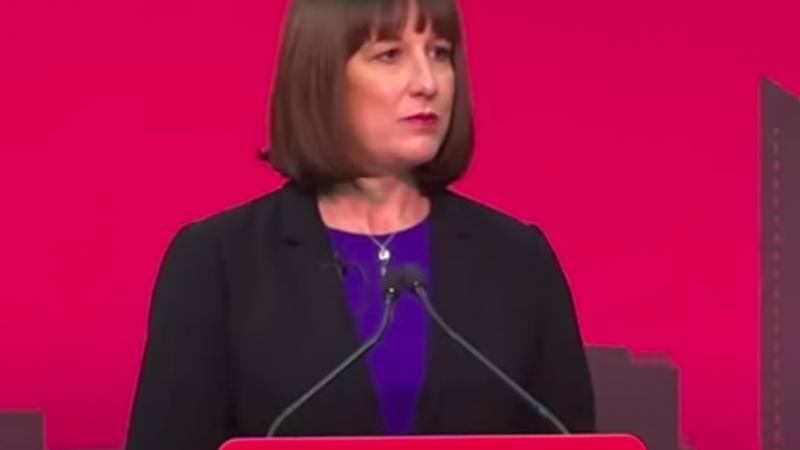


The first Labour budget in 15 years comes at a time of deep crisis for people all across the country.

The Tories left behind a toxic legacy of plummeting living standards, stagnant wages and public services stretched beyond breaking point.

No one can deny the scale of the mess left by consecutive Tory administrations. But we also need to recognise that the cuts and austerity that got us into this mess will not get us out of it.

Labour was elected to solve the crises our communities face and that means breaking the austerity doom loop.

One crucial question for our new government is who should pay for cleaning up the Tory mess: those who have thrived in the past decade, or those who have borne the brunt of Tory policies?

While millions have struggled to make ends meet in recent years, the wealthiest have flourished.

The total wealth of UK billionaires has skyrocketed from £246 billion in 2013 to an astonishing £684 billion just a decade later. That equates to an increase of £120 million every single day for 10 years.

Yet in Government the Tories implemented a series of regressive tax increases that tried to pay for the economic crisis on the backs of the majority of people. Labour must stand for the exact opposite.

So instead of further austerity that will hit the poorest hardest, the wealthiest in our society should be made to pay to fix the damage caused by the Tories and to fund the investment our public services so desperately need.

That’s why this week I have brought a public petition to the Government ahead of the Autumn Budget on October 30th, calling for Wealth Taxes and not more cuts. So far, 50,000 people have backed this call.

The package of three progressive taxes that I’m proposing will specifically target the wealthiest, the tax advantages enjoyed by those who live off their wealth and the greedy corporations that have profited from the energy crisis.

The first is the introduction of a 2% Wealth Tax that would apply to any assets over £10 million, raising up to £24 billion annually. That would affect just 20,000 people, less than 0.1% of the population.

The next calls for the equalisation of Capital Gains Tax with Income Tax rates, so that those who live off their investments pay the same tax rates as ordinary workers who go out to work day-in day-out. That would generate an additional £17 billion.

The third measure would end the state subsidies that go to fossil fuel giants and to close the loopholes in the oil and gas windfall tax, raising another £4 billion.

These three measures alone would bring in an additional £45 billion per year, providing vital funds to rebuild our crumbling public services, invest in a higher-wage economy and boost people’s incomes.

The funds raised through wealth taxes could also tackle the deep inequality that plagues our society. It would be a very popular measure to make the richest pay and then to use the funds to combat child poverty and support pensioners for example by lifting the two-child benefit cap and reversing cuts to the Winter Fuel Allowance.

After so many years of austerity, cronyism, and corporate profiteering under Tory misrule, the new Labour Government has the opportunity to directly improve the lives of millions at the Autumn budget. Wealth taxes can help it secure the resources to do so.

You can add your name to Richard Burgon MP’s petition calling for Wealth Taxes, not more cuts, in the Autumn Budget here.


IPPR: Why Labour’s first budget in 14 years gives us cause for hope

Yesterday
 Opinion

'We must celebrate the wins when they come, but the case for bold ambition on areas such as fair taxation and the green transition must be made and remade throughout the course of this parliament.'


Pranesh Narayanan, research fellow at IPPR

The first Labour budget in 14 years is shaping up to be a significant event. In the run-up we’ve heard a lot about ‘fiscal black holes’ and bleak inheritances. Many have been complaining about a narrative defined by gloom rather than hope. However, it is important to acknowledge the scale of the challenge facing Keir Starmer and Rachel Reeves at this point in time.

Ordinary people have seen a decade and a half of stagnant wages and rising living costs. Many regions outside of London and the South have seen a decline in meaningful and prosperous work. There is a palpable sense that things are just not working – whether that’s the courts, the NHS or community services. Britain is no longer at the technological frontier and lags many advanced economies on productivity and investment.

There are two pieces of good news – firstly, after being battered by the pandemic and an energy crisis, economic conditions are returning to some sense of normality. Inflation is back at normal levels, interest rates are expected to fall, and the risk of recession has faded away. In fact, the International Monetary Fund has revised the UK’s growth forecast up.

The second piece of good news is that a way forward is emerging. We’ve seen that the low-tax, small-state policies of successive conservative governments have failed to deliver prosperity. There is consensus that we need to improve, not cut, public services and investment to build a better economy.

This change in mindset was at the heart of Rachel Reeves’ recent announcement that the government will tweak its fiscal rules to allow more borrowing for public investment. For many people, this might sound like a simple edit of numbers on a spreadsheet, but it removes a key barrier to public investment that has effectively been in place since the Coalition government of 2010. This is the Treasury finally admitting that being responsible with the public finances is about spending wisely not just cutting costs.

This can release up to an additional £50bn a year for public investment in infrastructure, buildings, equipment and industrial development. It’s unlikely that Reeves will use up the entirety of this ‘new money’ – investment projects take time to set up and deliver. A careful approach is needed so that we don’t see the mistakes of previous governments in creating instability in the funding pipeline.

Whilst there is undoubtedly good news for public investment, this government’s rules on day-to-day spending state that they will have to be funded by tax revenues. However, we know that spending cuts would be a mistake.

This time last year, Chancellor Jeremy Hunt delivered a budget that cut taxes whilst complaining about poor public sector productivity. The idea was that public services would get less money and would magically improve their productivity through better discipline or some vague turn to ‘responsibility’. This was a ludicrous proposition – when services are already on their knees and dealing with huge and immediate pressures, it’s simply not possible to do root and branch reform or introduce new systems and technologies. They need funding for the present and investment for the future.

Both Starmer and Reeves have committed to not repeating austerity. It’s easy to be sceptical when the rhetoric of ‘tough choices’ has been deployed ad-nauseum. Still, it’s possible to make a different set of touch choices – most people link this idea to spending cuts thanks to George Osbourne’s brutal austerity measures but today, it’s more likely to mean tax rises. Most of the speculation in the run up to the budget has been about which taxes to hike, not about whether taxes should increase.

Capital gains tax reform could bring an extra £14bn, with almost all that revenue coming from the wealthiest in society. Closing inheritance tax reliefs could also raise some of this revenue. However, if it is not possible to fully close the funding gap through these measures, adding national insurance to employer pension contributions could also be a reasonable option – this would raise up to £14bn, of which £6bn would come out of contributions into the pension pots of the top 10% of earners.

It’s unclear how far Starmer’s Labour will go on many issues that are important to progressives – rumours around capital gains tax, for example, suggest that reforms will fall short of what is technically possible. That being said, there does seem to be a more constructive approach to economic policy. We must celebrate the wins when they come, but the case for bold ambition on areas such as fair taxation and the green transition must be made and remade throughout the course of this parliament.


Budget 2024: Here’s how Rachel Reeves could re-build our economy, rescue public services and deliver the green transition

Yesterday
Opinion

Adrian Ramsay explains what the Green Party would put forward in this year's budget


Adrian Ramsay is co-leader of the Green Party of England and Wales and the MP for Waveney Valley

Listen to Labour ministers answering questions about next week’s Budget and there’s one consistent soundbite – “the £40 billion black hole left by the Conservatives”. It leaves the impression that the only objective of the Budget is to fill that black hole.

But the Budget needs to do so much more. We need to start to re-build our broken economy, rescue our public services from years of under-funding and accelerate the transition to a greener, more sustainable future.

A Budget with zero ambition wouldn’t only be disastrous for our country, it would mean Labour turning its back on its key election promise that it would be the party of change. The caution coming out of the Treasury suggests this Budget will be austerity by another name.

Yet it is clear to anyone who’s tried to get a GP appointment, been on an NHS waiting list for years, struggled with social care or SEND provision or tried to find a home to live in that we cannot afford another 15 years of austerity. Investment is desperately needed across all our public services, from the NHS to prisons, schools to transport. And if we are to successfully build a carbon-free future and a more sustainable economy, investment in the green transition also needs to happen now.

It is deeply alarming that rather than speculating which areas might be favoured for investment, the talk instead is of ministers fighting the cuts being proposed for their departments by the Chancellor. The only area being “spared” is the NHS but even then the money coming down the track would allow it merely to stand still and do almost nothing to plug the £37 billion shortfall in capital spending identified by Lord Darzi.

This lack of ambition, even lack of vision, risks not only leaving people facing more years of poor health, poor housing and poor public services. It will drag us further away from the resilient and nature-rich future we could be creating. The roll-out of financial support for nature-friendly farming schemes has had a rocky ride since we left the EU and the Common Agricultural Policy. But reducing its budget, as has been rumoured, would be an act of economic and environmental vandalism and would undermine what little progress has been made towards improving the UK’s biodiversity and food security.

If the past 15 years have taught us anything, it should be that austerity and slashing spending on public services leads to static or even lower living standards, an unhealthier population and a weak economy. We won’t get out of the hole we’re in by following the same path.

The Government needs to drop its slavish commitment to the existing fiscal rules so it can borrow to invest, especially in the green transition, thereby creating jobs and reviving the economy.

If, as reported, the Chancellor borrows to invest, this will win the Green Party’s support because it is only by closing the yawning investment gap that we can build a flourishing economy. The list is a long one: crumbling hospital and schools, poorly-insulated homes, inadequate public transport not to mention decarbonising our economy.

So how to pay for this? There are options alongside borrowing to invest. We should close the unfairness gap in the tax system by equalising tax rates on income from wealth with those on income from work. It makes no sense that people who are paying 40 or 45 percent tax on their salaries are taxed at only 20 percent on capital gains.

We should go further by introducing a tax on the very wealthiest in society – a policy supported by Patriotic Millionaires who argue that the best way to delivering investment is through taxing the richest in our society. The wealthiest 10 percent of the population own around half of all wealth, much of which is taxed at a much lower rate than the income of ordinary working people. Yet all the talk is how to stop them leaving the country, rather than looking to them to pay their fair share of tax so everyone can benefit from improved public services.

A 2 percent tax on those with more than £10 million could raise £22 billion a year, going a long way to plugging that “black hole” identified by Rachel Reeves and start the process of turning around our ailing economy.

It is only right that those with the broadest shoulders should pay a bit more to fund the public services that our economy relies on: a better education system to teach people the skills they’ll need in the future; a strong health service so people can get the treatment they need so they can return to work; decent housing stock so people are less likely to fall ill in the first place; and decent social care for those who can’t look after themselves. That is the pathway to creating a thriving, resilient economy and a compassionate society.

There is more at stake next week than a thriving economy and healthy society. Voters need to believe that politicians can make a difference in their lives. They voted for change in July. If trust in democratic politics is to be restored, this Government needs to deliver it.

Image credit: Keir Starmer – Creative Commons


Sales of Boris Johnson’s memoir slump by 62% in second week

Basit Mahmood 
25 October, 2024 
Left Foot Forward

It was also reported earlier this month that Johnson’s book had been hit by delays and won’t be hitting the shelves in European capitals as quickly as he had hoped, due to Brexit.


It’s not going well for Boris Johnson after sales of his memoir ‘Unleashed’ dropped by 62% in its second week since publication.

Despite the former Prime Minister spending much time in promoting his book, including a prolonged media round, with the Guardian reporting that the book “only just managed to cling on to the No 1 spot in the official UK Top 50 this week, selling 133 more copies than Tim Spector’s The Food for Life, according to Nielsen Bookscan’s Total Consumer Market data.”

It was also reported earlier this month that Johnson’s book had been hit by delays and won’t be hitting the shelves in European capitals as quickly as he had hoped, due to Brexit.

In a review for the Guardian, Martin Kettle said of Johnson’s book: “It is full of angry self-righteousness … Though Johnson likes to parade the outward signs of his intellect, there is not a philosophical sentence in the entire book.”
What are the differences between Westminster and Holyrood?

25 October, 2024 
Opinion

They are apples and pears. They really cannot be compared because they are so innately different.

Jamie Stone is the Liberal Democrat MP for Caithness, Sutherland and Easter Ross and the chair of the House of Commons Petitions Committee.

“You’ve been in both, Jamie, so what’s the difference between the Scottish Parliament and the House of Commons?”

If I had a penny for every time I’d been asked that…

Right, here goes: the first is formality versus informality. In the Scottish Parliament, where I had the pleasure to work for twelve years, the staff all called me Jamie. In fact, sometimes they would comment in a derogatory way on what they had just heard me say in the Chamber.

“We’re all Jock Tamson’s bairns.” They’d say.

In other words, we’re all equal. This was and very much still is the style of the Scottish Parliament. In fact, only the other day when I popped into Holyrood (they still allow me in now and again!) Kirsty behind the bar in the Garden Lobby greeted my appearance with a loud and cheerful, ‘Jamie! What are you doing back here?’.

If one quote was to typify the Scottish Parliament then that’s it. Indeed, having been a Member since its inception in 1999, I happen to know that when they were being trained, the staff were instructed to address the newly elected MSP’s as Mr, Mrs, Ms and so forth… but never by their first name. I also happen to know that this training fell on deaf ears from the very start. I was Jamie on day one, and still am today. I must admit that’s how I’ve always preferred it.

In stark contrast, the members of staff in Westminster will never call me Jamie. Every morning when I’m going to the Chamber the doorkeepers in their white bow ties and tailcoats say, ‘Good morning, Mr Stone’. I’ve tried saying, ‘please call me Jamie’, but it hasn’t stuck.

Don’t get me started on the Chamber… You’d have to pass the smelling salts if anyone dared call me by my name. It’s the Honourable Member for Caithness Sutherland and Easter Ross – and even if somebody did refer to me as Jamie, Hansard would always correct it. It’s a funny old place down here.

I once arrived a minute late for the start of a statement by Theresa May, when she was Prime Minister. I then dared to try and catch the Speaker’s eye (in other words, indicate that I intended to ask a question). Within minutes, one of the aforementioned doorkeepers appeared with a posh envelope for me. On the back, it said ‘Mr Speaker’s Private Secretary’:

“As you attended the Chamber tardily for the commencement of the Prime Minister’s statement, Mr Speaker has no intention of calling you for a question.”

Smacky wristy time…

Another big difference is the access to Government Ministers. In Holyrood, you simply cannot help bumping into Scottish Ministers as you walk about the place. There is no hiding for them, and indeed with the boot on the other foot, there is no hiding for an MSP. A good example of this is the offices themselves. In Holyrood, the walls and doors are transparent glass – you simply cannot have anything to hide. To put it plainly, there’s no easy way to shirk your responsibilities. People notice.

In Westminster, how different. Boris Johnson and Liz Truss never really bothered circulating at all. And on the rare occasion when they did, they didn’t seem to know who anyone was. In fact, on the one occasion that Liz Truss did speak to me, she thought I was a Tory MP! Very different indeed. It’s as if the thick old wooden doors in the palace are designed precisely to keep things hidden.

If you want to buttonhole a Minister or Prime Minister in Westminster, then really your only chance is when it comes to a vote. Only then, you might catch them in one of the two voting lobbies. Apart from that, they’re into their black limousines and away into the night. Indeed, Boris Johnson and Liz Truss would be deeply shocked to think of themselves as being one of ‘Jock Tamson’s bairns’. No no, not them – not alongside the likes of me. Even then, I’m sure the expressions would have to be carefully explained to those untuned to Scottish expressions.

In closing, it does seem to me that I have been a little harsh on my present workplace, the House of Commons. There is one thing, however, that cannot be taken away. To walk this place, to sit in the same room that Winston Churchill may have sat, or to touch the toe on his statue outside the Chamber and make a wish, is to walk alongside history. Every time I step into Westminster Hall I am both privileged and humbled. I imagine the great people who have stood in the very same spot, and I realise that I am a cog in a much greater democratic machine which has preceded, and will succeed, me. I’m immensely proud of that. That much can never be taken away.

So when I answer the question I started with, I always use the same formula. They are apples and pears. They really cannot be compared because they are so innately different. It is quite fascinating to experience their different political cultures and I think it’s wonderful that, like us all, they hold very different personalities. All in all, it is an enormous privilege to be elected to either of them. How lucky I’ve been.

Image credit: Diliff – Creative Commons
Bombshell poll shows more people support Universal Basic Income than oppose it

Chris Jarvis 
Yesterday
Left Foot Forward

46% of Brits back a UBI


New polling has found that a plurality of the British public support the introduction of a Universal Basic Income (UBI). A UBI is a scheme through which every person in the country would receive a payment from the state which is designed to help meet some or all of their basic needs and costs.

Advocates for a UBI argue that it could play a major role in alleviating poverty and addressing income inequality in the country by ensuring that nobody falls below a minimum standard of living.

The new poll found that 46 per cent of people in Britain support the introduction of a UBI, compared to 33 per cent who oppose it. The remaining 20 per cent said they didn’t know whether they support or oppose a UBI.

The poll also found that 50 per cent of people think a UBI would improve quality of life and 52 per cent think it would reduce poverty.

YouGov – who carried out the poll – also found that half (50 per cent) of those who support a UBI think it should cover all a person’s basic living costs, irrespective of other forms of income. Meanwhile, 45 per cent of UBI supporters think it should only cover some basic living costs, with people being expected to supplement the UBI with other forms of income.

Despite the levels of support for a UBI, the YouGov poll also found that more than half (56 per cent) of the public don’t think such a scheme would be affordable for the government.

Support for a UBI is highest among Labour voters – 61 per cent of whom said they support the measure. 54 per cent of Lib Dem voters said they back it, as did 31 per cent of Reform voters, and 21 per cent of Tory voters.

Chris Jarvis is head of strategy and development at Left Foot Forward


EU agency finds banned chemicals in some 6% of cosmetics

The ECHA said it often found perfluorononyl dimethicone, a substance readily absorbed by skin that can accumulate over time, in products like eyeliners and lipliners

The European Chemicals Agency (ECHA) says it identified 285 cosmetic products "from various sellers and at all price ranges" containing chemicals banned in Europe. Its main investigation method was surprisingly simple.

A pilot enforcement project found that around 6% of inspected cosmetic products contained hazardous substances banned under European regulations, the European Chemicals Agency said in a statement on Wednesday.

The ECHA said that national enforcement agencies in the 13 European Economic Area (EEA) member states — including Germany — checked almost 4,500 cosmetic products, and found banned substances in 285 of them.

The investigators were looking for a series of chemicals banned or restricted under a pair of EU regulations, the POPs Regulation banning persistent organic pollutants, and the REACH Regulation on the registration, evaluation, authorization, and restriction of chemicals.
Offending chemicals found 'mainly looking at the ingredients list'

The ECHA said that its pilot project had for the most part used a very simple methodology for tests carried out between November 2023 and April 2024.

"The inspections were mainly done by checking the ingredients list — measures that can be easily used also by consumers," it said.

"Consumers should be aware that the restricted substances were found in different types of cosmetic products, from various sellers and at all price ranges," it said.

Enforcement agencies had taken some first steps to remove the non-compliant products from the market, the ECHA said.

"In most cases, the first step was issuing a written advice guide to suppliers on how to comply with the law. At the time of writing the report, investigations were still ongoing in about half the cases," the ECHA said.

Pencil eyeliners and lipliners, conditioners and hair masks among the items

The Helsinki-based organization was primarily seeking indications of the presence of perfluorooctanoic acid (PFOA), long-chain perfluorocarboxylic acids (PFCAs) and related substances, and cyclic siloxanes D4 and D5.

It said it often found perfluorononyl dimethicone, which degrades into PFOA and PFCAs, in pencil and crayon eyeliners and lipliners — and that D4 and D5 were often present in conditioners and hair masks.

"PFOA and siloxanes, D4 and D5, break down slowly in the environment and build up in humans and other species. PFOA is not only persistent in the environment but also toxic to reproduction and suspected of causing cancer. D4 is also suspected of damaging fertility," the ECHA said.

msh/ab (AFP, dpa)
Brussels hopes to advance Ukraine, Moldova entry talks in 2025


By AFP
October 30, 2024

EU foreign policy chief Josep Borrell stressed the strategic importance of the bloc's enlargement faced with the 'existential threat' from Russia - Copyright AFP JOHN THYS

The European Commission said Wednesday it hopes to move entry talks with Ukraine and Moldova to the next stage “as soon as possible” in 2025, as part of a renewed enlargement push faced with the “existential threat” from Russia.

In an annual update on the EU enlargement process, the commission also reaffirmed that Georgia’s path to joining remained “de facto” halted without a change of course from its ruling party — accused of steering Tbilisi back into Russia’s orbit.

Ex-Soviet Ukraine and Moldova opened European Union accession negotiations in June, setting them on a long — and yet uncertain — path towards membership that Russia has tried to block.

The commission said the task of screening how far laws in both Ukraine and Moldova comply with EU standards — and how much work lies ahead — was “progressing smoothly”.

Once complete, actual negotiations can begin on 35 subjects, from taxation to environmental policy — grouped under what are known in enlargement jargon as “clusters”.

For both Ukraine and Moldova, the commission said it was “looking forward to the opening of negotiations on clusters… as soon as possible in 2025” — subject to a green light from the EU’s 27 member states.

For Ukraine, the opening of talks in June marked the beginning of a protracted process that will likely take many years — and may never lead to membership.

So far, Ukraine has won plaudits for kickstarting a raft of reforms on curbing graft and political interference, even as it battles the Russian invasion.

“Ukrainians are fighting two battles at the same time,” EU foreign policy chief Josep Borrell told a news conference. “One in the battlefield, a real war, and another striving to push the reforms needed to become member of the European Union.”

“We will support Ukraine on both fronts,” he said.

Moldova only narrowly voted in favour of joining the bloc in a referendum this month marked by allegations of interference by Moscow — casting a shadow over the country’s EU aspirations.

But enlargement commissioner Oliver Varhelyi told the press conference “it is very clear that Moldova has come a long way” — citing in particular the recovery from oligarchs of tens of millions in “stolen” funds.

Kyiv and Chisinau lodged their respective EU bids in the aftermath of Russia’s 2022 invasion of Ukraine, which has reinvigorated a push to take on new members.


– No ‘business as usual’ with Russia –


EU also granted candidate status to ex-Soviet Georgia last December — but negotiations were frozen after it passed a controversial “foreign influence law” targeting civil society, which critics said mirrored Russian legislation.

“Should there be a political will from Georgia’s leadership, we are offering a clear path for re-engagement on the way to the European Union — the repeal of the law on foreign influence,” Borrell said.

But the commission’s enlargement report also warned: “Unless Georgia reverts the current course of action which jeopardises its EU path… the commission will not be in a position to consider recommending opening negotiations with Georgia.”

Borrell said the invasion of Ukraine had made “clear that Russia is posing an existential threat to Europe now more than ever, and that European Union membership becomes a strategic choice.”

“You simply cannot maintain ties with Russia or to try to do business as usual and expect that your country will be part of the European Union,” said Borrell. “It’s one thing or the other.”

Brussels earlier this year approved accession negotiations with Bosnia and has talks ongoing with Serbia, Montenegro, Albania and North Macedonia.

Borrell took a swipe at Serbia, which maintains friendly ties with Moscow and has refused to sanction it for the invasion of Ukraine.

“Serbia, sooner or later, will have to align the foreign policy with European Union foreign policy. Otherwise, membership will be jeopardised,” he warned.

Turkey officially remains a candidate, having launched membership talks in 2005, but the process has gone nowhere since a crackdown on opposition groups following a failed coup in 2016

Russia eats away at territory, and Ukrainian morale


By AFP
October 30, 2024

Russia is still launching attacks on Ukrainian cities like Kharkiv - Copyright GETTY IMAGES NORTH AMERICA/AFP ALEX WONG

Didier LAURAS

Progress has been slow but it is relentless. Russia’s army has been advancing at several points along the Ukrainian war front for weeks now, gobbling up territory one village at a time.

It has cast doubt over Kyiv’s ability to stem the tide, let alone push back the advancing troops.

Russian President Vladimir Putin’s army has taken 478 square kilometres of territory since the start of October — its largest monthly territorial gain since the early weeks of its invasion in February 2022, according to AFP analysis of data from the US Institute for the Study of War (ISW).

“Russia has been on the offensive for an entire year,” said Meduza, a Russian opposition website that has been blocked by Moscow.

“Yet this past week has been one of the toughest — if not the toughest — for Ukraine’s armed forces during that time,” it added.


– Accelerated progression –


The ISW data does not point to Ukrainian military collapse in any way, “but what is the most concerning is that it’s a pattern”, said former French army colonel Michel Goya, a war historian.

“We have seen an acceleration in this progression, with the feeling that it cannot be stopped,” he added, describing a “Russian strategy of pressure everywhere, all the time, while waiting for (the defence) to crack, crumble or collapse.”

Almost every day, Moscow claims a new victory.

“None of the locations, on their own, have any great importance, but together it represents a great success for the Russian army,” said Alexander Khramchikhin, a Moscow-based Russian military analyst.

“The Russian advance, even though not rapid, shows the increasing deterioration (of the situation) in Ukraine.”


– Artillery power –


Since the start of the war, Moscow has maintained artillery superiority.

Despite Western sanctions, Russia has turned its economy into a war machine, with support from allies, headed by Iran and North Korea.

“The Russian war industry produces more weapons than Ukraine receives,” said Khramchikhin, and “more ammunition thanks to its industry and that of North Korea”.

At the start of this year, a US Congress freeze on a multi-billion-dollar aid package significantly slowed the supply of weapons to Ukraine, “while three million North Korean shells arrived in Russian depots”, said Goya.

And Moscow developed a guidance system for bombs, which it uses “by the thousands”, he said, adding that some 1,600 North Korean KN-02 ballistic missiles had pummelled Ukraine.


– New tactical approach –


Rather than capturing towns district by district, the Russian army has gone for a suffocation tactic.

“The principle is to threaten to surround the pockets that are then forced to retreat,” said Goya.

For Alexander Kots, a war journalist for the popular Russian daily Komsomolskaya Pravda and strong supporter of the invasion, “we refused to storm towns and villages head on, where we would have to eat up every square metre of road, every house.”

As such, Ukrainian forces “can be forced to withdraw along a long corridor that is open to fire.”


– Ukraine’s tired morale –


Gradually, the Russian advance has eaten away at Ukrainian morale. Kyiv is struggling to recruit, while the army’s disorganisation and corruption facilitate desertions and refusals to fight.

“Beating an enemy is killing their hope. When the sacrifice of those who die is for nothing, there is no sense in fighting on,” said Goya.

“The (President Volodymyr) Zelensky government, faced with the war weariness of the civilian population, is struggling to mobilise,” said a French military leader on the condition of anonymity.

On Tuesday, Kyiv announced a new mobilisation drive aimed at recruiting 160,000 people, faced with the fear of Russia deploying North Korean troops, in order to boost numbers by 85 percent.


– Western procrastination –


On the flip side, Russia is suffering heavy losses, experts say.

Ivan Klyszcz, from the International Centre for Defence and Security (ICDS) in Estonia, said that at the current rate, Russia “would finish capturing the rest of the Donbas region of Ukraine after several months and at an extremely high cost.”

In the meantime, the West is procrastinating.

Zelensky’s “victory plan”, which was supposed to put him in a position of strength to negotiate, has divided allies, while the US presidential elections in November have created uncertainty.

“It seems that Ukraine will soon realise that it needs a change of course, and that relying on Western partners… will become a counter-productive strategy in the near future,” said Klyszcz.

However, the deployment of North Korean troops could provoke a sense of urgency in the West.

But “whether this urgency will translate into new pledges or enhanced support, is yet to be seen,” added Klyszcz.


Faker: eSports legend and South Korea ‘national treasure’


By AFP
October 31, 2024

South Korea's Lee Sang-hyuk, better known as Faker - Copyright AFP ANTHONY WALLACE
Hieun SHIN

Lee Sang-hyeok wanted only to be a “normal kid”. He was anything but, and is now a multi-millionaire eSports superstar known worldwide simply as Faker.

The 28-year-old has officially been given the title of “national treasure” in his native South Korea, along with the likes of footballer Son Heung-min and K-pop mega-group BTS.

He is said to earn an estimated 10 billion won ($7.2 million) a year and is easily the most recognisable name in professional gaming.

The bespectacled Lee will hope to add to his fame and fortune by winning a fifth League of Legends (LoL) world title on Saturday in London when his T1 team face China’s Bilibili Gaming.

But for all that, it is not the life Lee originally envisioned for himself.

“I just wanted to go to university like any normal kid and make good money,” he once said.

In 2011, as a high-school student, Lee decided to try the hugely popular multi-player online battle video game League of Legends.

It was to change the course of the teenager’s life.

Within months his talent caught the attention of eSports team SK Telecom (now T1).

Lee has gone on to become the first player to hold every international LoL title and helped gaming segue beyond teenage bedrooms and into the mainstream.

“League of Legends, eSports and Faker, they needed each other in a way,” Belgian television presenter and gamer Eefje Depoortere said in a documentary.

“There was a platform given by League of Legends, going professional and having all these leagues, and then there was one person who stood up and said, ‘I will be that icon for you’.”


– Global audience –


Lee’s journey hasn’t been without its disappointments.

After winning the world championship in 2015 and 2016, Lee’s winning streak ended in 2017 at the hands of a rival South Korean team.

Many fans vividly recall the scene of Lee head down and shaking with tears.

“A lot of fans were eagerly waiting and countless people were watching,” he said, reflecting later on the crushing defeat.

“In the beginning I struggled with that pressure, but these days I try to overcome it on my own, regardless of what people might think.”

In 2023 he won the championship on home soil, something he had always wanted to do.

In addition to a global television audience, tens of thousands of fans massed in the capital Seoul.

Among his many accolades, Lee bagged gold at the Asian Games last year, earning him exemption from military service.

Now in his late 20s — making him a comparative veteran in gaming — this year has not been Lee’s best, with his team coming fourth in the South Korean league.

In August videos emerged of a frustrated Lee headbutting a wall several times after his T1 team lost.


– ‘Everyone knows Faker’ –


Lee’s influence has inspired a new generation in South Korea to pursue careers as professional gamers and helped convince parents that it is a serious profession.

In May, a “Faker Temple” — a pop-up installation — was erected in his honour in Seoul.

It attracted thousands of fans who waited hours to see pictures of him and videos of his best plays.

“Lee Sang-hyeok is my religion,” devotee Park Jung-min told AFP.

“He is the legendary GOAT (greatest of all time).”

ESports have become a source of national pride for South Korea and the country was at the forefront of the emergence of gaming as a profession.

In recent years the industry has shifted, however, with Chinese teams recruiting top South Korean players and coaches, and defeating the Koreans in big championships.

Joe Marsh, chief executive of T1, said Chinese teams have repeatedly tried to sign up Lee.

“Every time he’s a free agent the offer from China comes in and it’s $20 million a year to come,” Marsh once said.

Despite the staggering offers Lee chose to remain with T1, saying he merely wanted to play in his home country.

There’s a saying in South Korea that sums up Lee’s legend.

“Not everybody knows the game League of Legends,” it goes.

“But everyone knows Faker.”


SAYING THE UNSPOKEN OUTLOUD

Papua New Guinea to boycott ‘waste of time’ UN climate summit


By AFP
October 30, 2024

The UN's COP29 climate conference in Azerbaijan will not include delegates from Papua New Guinea - Copyright AFP/File TOFIK BABAYEV

Papua New Guinea on Thursday declared a boycott of next month’s UN climate summit, branding the global warming negotiations a “waste of time” full of empty promises from big polluters.

While plenty have criticised the annual COP summit in the past, it is rare for any government to so totally dismiss the UN’s premier climate talks.

“There’s no point going if we are falling asleep because of jet lag because we’re not getting anything done,” Foreign Minister Justin Tkatchenko told AFP ahead of November’s COP29 summit in Azerbaijan.

“All the big polluters of the world promise and commit millions to assist in climate relief and support. And I can tell you now it’s all going to consultants.”

The island of New Guinea is home to the third-largest expanse of rainforest on the planet, according to the World Wildlife Fund, and has long been celebrated as one of the “lungs of the earth”.

Impoverished, flanked by ocean, and already prone to natural disasters, Papua New Guinea is also considered to be highly vulnerable to the unfolding perils of climate change.

“COP is a total waste of time,” Tkatchenko said.

“We are sick of the rhetoric as well as the merry-go-round of getting absolutely nothing done over the last three years.

“We are the third-biggest rainforest nation in the world. We are sucking up the pollutants of these major countries. And they are getting away with it scot-free.”


– ‘Talk fest’ –


The COP summit in 2015 hammered out the landmark Paris Agreement, under which almost every country in the world has agreed to slash emissions to limit soaring global temperatures.

But subsequent gatherings have been dogged by growing criticism, stoked by a perception that big polluters are using their sway to limit further climate action.

Meanwhile, adaptation funds set up through COP to help developing nations have been accused of sluggish bureaucracy that fails to grasp the urgency of the crisis.

Civil society groups banded together last year to urge a boycott of the COP summit hosted by the United Arab Emirates, claiming the meeting would “greenwash” the petrostate’s poor climate credentials.

Underwhelmed by proposed emissions cuts, dozens of African nations led a temporary walkout of developing nations during the 2009 COP talks in Copenhagen.

And Ukraine has pressed its allies to avoid this year’s summit if Russian leader Vladimir Putin shows face.

But Papua New Guinea is among the first nations to have voiced such a full-throated call to boycott the COP summit altogether.

“Why are we spending all this money going to the other side of the world going to these talkfests,” said Tkatchenko.


– ‘No traction’ –


Papua New Guinea is one of five Pacific nations involved in a pivotal International Court of Justice case that will soon test whether polluters can be sued for neglecting their climate obligations.

Low-lying Pacific nations such as Tuvalu could be almost entirely swallowed by rising oceans within the next 30 years.

Tkatchenko said the decision to pull out of COP talks had been applauded by others within the Pacific bloc.

“I’m speaking up on behalf of the smaller island states that are worse off than Papua New Guinea. They were getting no traction and acknowledgement at all.”

Papua New Guinea would instead seek to strike its own climate deals through bilateral channels, said Tkatchenko, flagging that negotiations were already under way with Singapore.

“With like-minded countries like Singapore, we can do 100 times more than COP.

“They have a big carbon footprint, and we would like to think about how they can work with Papua New Guinea to fix that up.”

A key meeting ahead of COP29 ended in frustration earlier this month, with countries making little progress on how to fund a new finance deal for poorer nations.

COP — or conference of parties — is the top United Nations climate change conference, an annual summit in which nations look to determine legally binding climate commitments.
Striking Boeing workers aim to restore old retirement program

By AFP
October 30, 2024

Boeing factory workers remain on strike after rejecting the company's latest contract offer on October 23 - Copyright AFP STR

Elodie MAZEIN

Some 33,000 Boeing workers have been on strike for seven weeks after twice voting down labor contracts, with the latest rejected offer featuring a 35 percent wage hike.

But a sticking point for many workers has been Boeing’s refusal to reestablish a discarded pension plan.

The plan was eliminated after a 2014 contract extension was narrowly approved by the union, the International Association of Machinists and Aerospace Workers District 751.

But Boeing views its refusal to reinstate the pension as a non-negotiable item.

“There is no scenario where the company reactivates a defined-benefit pension for this or any other population,” Boeing said.

“They’re prohibitively expensive and that’s why virtually all private employers have transitioned away from them to defined-contribution plans.”

More than 151 million private sector employees currently have retirement plans, according to the US Department of Labor.

But less than six percent of the 800,000 programs have a defined benefit plan like the old Boeing pension.

In 1975, when the Employee Retirement Income Security Act went into effect, one-third of US retirement plans were defined benefit retirement plans like Boeing’s old pension system.

That share has dropped to about seven percent, with many employers opting for 401K programs that most workers steer into the stock market in the hopes of generating gains for retirement.

Under the pension system, a retired worker will receive the same amount each month for the rest of his life based on a calculation of the employee’s tenure with the company.

Some workers view the pension as more secure because it is not tied to the stock market. But a pension, which does not adjust for inflation, may also be less lucrative than a 401K.


– Guaranteed payment –


Under the 401K plan, which is known as a defined contribution plan, the funds are sourced from a share of the worker’s paycheck along with an employer contribution.

An employer may contribute three percent of the worker’s annual salary under leading retirement systems, according to a report by investment firm Vanguard.

The total possible contribution to the 401K including funds from both employers and employees is capped at $69,000 in 2024, or $76,500 for people older than 50.

Mike Corsetti, a quality inspector in Everett who has worked at Boeing for 13 years, said he voted against the latest contract in part because it didn’t restore the pension.

“A lot of people feel like a guaranteed monthly payment would be great,” said Corsetti, who expressed discomfort with the uncertainty of the stock market.

Corsetti said he was “slightly optimistic” the talks could lead to the pension being restored, but added, “I’m not going to hold my breath.”

Under the current plan, Boeing automatically puts four percent of the employee’s salary into the person’s 401K plan. Boeing will also match a fraction of the payment if the worker also invests funds in the plan.

Under the latest contract offer, which workers rejected on October 23, Boeing included a provision increasing the employer match. The company also agreed to a special one-time contribution of $5,000 to the employee’s 401K.

The rejected contract also raised the monthly payments for more experienced workers who still have a pension covering their tenure prior to the phasing out of the plan in 2016.

The rejected proposal increases the monthly payout for every year of service to $105 from $95.

The IAM has targeted a 40 percent raise as its objective. The union has sought the restoration of the pension, as well as payments from Boeing making up for the period after the program was phased out.

A 40 percent wage hike would lift Boeing’s costs by $1.8 billion through 2028, according to Bank of America.

Reinstating the pension would add some $300 to $400 million in annual costs, plus some $20 billion to make up for lost pension funds since the program was frozen, according to the Bank of America analysis.

ICYMI

4,000-year-old town discovered hidden in Arabian oasis

Pieces of pottery “suggest a relatively egalitarian society”, the study said. 


By AFP
October 30, 2024

Archaeologists have discovered the remains of an ancient town hidden underneath the walled oasis of Khaybar in Saudia Arabia - Copyright AFP I-Hwa CHENG

Pierre Celerier

The discovery of a 4,000-year-old fortified town hidden in an oasis in modern-day Saudi Arabia reveals how life at the time was slowly changing from a nomadic to an urban existence, archaeologists said on Wednesday.

The remains of the town, dubbed al-Natah, were long concealed by the walled oasis of Khaybar, a green and fertile speck surrounded by desert in the northwest of the Arabian Peninsula.

Then an ancient 14.5 kilometre-long wall was discovered at the site, according to research led by French archaeologist Guillaume Charloux published earlier this year.

For a new study published in the journal PLOS One, a French-Saudi team of researchers have provided “proof that these ramparts are organised around a habitat”, Charloux told AFP.

The large town, which was home to up to 500 residents, was built around 2,400 BC during the early Bronze Age, the researchers said.

It was abandoned around a thousand years later. “No one knows why,” Charloux said.

When al-Natah was built, cities were flourishing in the Levant region along the Mediterranean Sea from present-day Syria to Jordan.

Northwest Arabia at the time was thought to have been barren desert, crossed by pastoral nomads and dotted with burial sites.

That was until 15 years ago, when archaeologists discovered ramparts dating back to the Bronze Age in the oasis of Tayma, to Khaybar’s north.

This “first essential discovery” led scientists to look closer at these oases, Charloux said.


– ‘Slow urbanism’ –


Black volcanic rocks called basalt concealed the walls of al-Natah so well that it “protected the site from illegal excavations”, Charloux said.

But observing the site from above revealed potential paths and the foundations of houses, suggesting where the archaeologists needed to dig.

They discovered foundations “strong enough to easily support at least one- or two-storey” homes, Charloux said, emphasising that there was much more work to be done to understand the site.

But their preliminary findings paint a picture of a 2.6-hectare town with around 50 houses perched on a hill, equipped with a wall of its own.

Tombs inside a necropolis there contained metal weapons like axes and daggers as well as stones such as agate, indicating a relatively advanced society for so long ago.

Pieces of pottery “suggest a relatively egalitarian society”, the study said. They are “very pretty but very simple ceramics”, added Charloux.

The size of the ramparts — which could reach around five metres (16 feet) high — suggests that al-Natah was the seat of some kind of powerful local authority.

These discoveries reveal a process of “slow urbanism” during the transition between nomadic and more settled village life, the study said.

For example, fortified oases could have been in contact with each other in an area still largely populated by pastoral nomadic groups. Such exchanges could have even laid the foundations for the “incense route” which saw spices, frankincense and myrrh traded from southern Arabia to the Mediterranean.

Al-Natah was still small compared to cities in Mesopotamia or Egypt during the period.

But in these vast expanses of desert, it appears there was “another path towards urbanisation” than such city-states, one “more modest, much slower, and quite specific to the northwest of Arabia”, Charloux said.