Tuesday, December 03, 2024


These Billionaires Subsidize the Israeli Military Through a US Nonprofit


A US nonprofit funnels money from billionaires like Home Depot’s co-founder to effectively subsidize Israeli troops.
December 2, 2024

David Foster and Haim Saban speak onstage at Friends of The Israel Defense Forces (FIDF) Western Region Gala at The Beverly Hilton Hotel on November 1, 2018, in Beverly Hills, California.
Shahar Azran / Getty Images

Israel’s war on Gaza — marked by extensive war crimes, and widely seen as an ongoing genocide — has been backed by the U.S. government, which has provided Israel with billions of dollars in weapons to be used against Palestinians. On the ground and from the air, the genocidal siege has been carried out by Israel’s military, the Israel Defense Forces (IDF), whose soldiers regularly post videos and images on social media of them destroying Palestinian neighborhoods, looting Palestinian homes and abusing Palestinian prisoners.

“The main and sometimes only machinery of repressing, killing, genociding and ethnically cleansing Palestinians is the IDF,” Haim Bresheeth, author of the wide-ranging history of the Israeli military, An Army Like No Other: How the Israel Defense Force Made a Nation, told Truthout. “This is an illegal, immoral army.”

In the U.S., there’s one group that has long worked to mobilize ironclad support for the Israeli military: the Friends of the Israel Defense Forces (FIDF).

Founded in 1981, the FIDF is a nonprofit organization that raises tens of millions of dollars annually to fund a range of programs that effectively subsidize the Israeli military by providing numerous services and benefits for Israeli troops. It also channels major donations from a host of powerful billionaires toward these programs.

In building and maintaining support for the IDF, particularly among U.S. Jews, the FIDF promotes and reproduces the dominant Zionist notion that American Judaism is synonymous with support for Israel, and that the essence of support for Israel is support for the Israeli military.



The “Friends of the IDF”

Bresheeth, the son of two Holocaust survivors, served as a second lieutenant in the Israeli military’s Golani Brigade during the 1967 Arab-Israeli War. It was an experience that disillusioned him forever.

“This is where my anti-Zionism started,” Bresheeth, a filmmaker and photographer who taught at the School of Oriental and African Studies in London before retiring, told Truthout.

Bresheeth argues that the Israeli military is at the core of Israeli national identity. It is the vehicle through which Israeli identity was historically constructed, he says, and it continues to hold Israeli national identity together amid the tensions and contradictions of Zionism.

“It’s the organization that dictates identity in Israel,” says Bresheeth.


The FIDF is a nonprofit organization that raises tens of millions of dollars annually to fund a range of programs that effectively subsidize the Israeli military.

According to its website, the U.S.-based FIDF’s vision is “to secure the survival of Israel, providing a thriving homeland for Jews worldwide.” It describes itself as “the single organization authorized to collect charitable donations on behalf of the soldiers of the IDF across the United States.”

The FIDF is a substantial operation. It has nearly two dozen chapters across the U.S. and 60 board members. It oversees programs ranging from scholarships for Israeli soldiers, to funding construction projects, to support for wounded soldiers, to helping donors subsidize foreign-born soldiers in the Israeli military or even whole military units.

The FIDF reported nearly $175 million in net assets in 2022. Covering an FIDF fundraiser in late 2023, journalist Sophie Hurwitz noted that the group “has a history of aggressive and effective fundraising,” raking in tens of millions every year.

Indeed, the FIDF is a fundraising powerhouse. Its galas typically raise millions of dollars and feature A-list celebrities. From 2018 to 2022, FIDF received $450 million in gifts, grants, contributions and membership fees. It raised more than $50 million in the weeks after October 7, 2023.

While FIDF calls itself a “non-political, non-military organization,” it also describes itself as “the official U.S. partner of Israel’s soldiers.”

Speakers at FIDF galas include top Israeli political and military leaders like Benjamin Netanyahu and Benny Gantz. One past CEO, Meir Klifi, served as a military secretary to Prime Ministers Ehud Olmert and Netanyahu before joining the FIDF, and another past CEO, Yitzhak (Jerry) Gershon, was a major-general in the Israeli army. (Both stirred controversy in the pages of Haaretz for accepting unusually large nonprofit salaries with the FIDF.)

Its fundraisers have also featured John Hagee, the far right U.S. televangelist who is the founder and chairman of Christians United for Israel, and who is notorious for making antisemitic and homophobic remarks.

Ideologically, the FIDF projects extreme Zionist views. It regularly uses maps that depict Israeli borders from the Jordan River to the Mediterranean Sea and include the Golan Heights in Syria. It has reposted trolling posts against Rep. Rashida Tlaib (D-Michigan). One of its attempts to solicit donations asked: “What is the most direct way for you to help Israel’s IDF soldiers, the defenders of Western values?”

Earlier this year, FIDF drew scrutiny for inviting donors to a talk by Israeli military intelligence veteran Eliyahu Yossian, who has said that “there are no innocents in Gaza” and that Israel should attack Gaza “with the aim of revenge, zero morality, maximum corpses.” Yossian has also said “there is no population in Gaza, there are 2.5 million terrorists.'”
Subsidizing Israeli Soldiers

Donors can subsidize entire military units through the FIDF’s “Adopt a Battalion” or “Adopt a Brigade” programs, funding services such as “financial grants” (likely cash grants to soldiers), flights home, holiday vouchers and events intended to “boost morale and team spirit.”

For example, the Miami chapter of the FIDF has sponsored the Golani Brigade — the same brigade Bresheeth belonged to in the 1960s. The brigade “is considered the first combat brigade of the IDF” whose soldiers “have fought in all of Israel’s wars,” including its current siege of Gaza.

According to the FIDF’s most recent tax disclosure, in 2022 it spent about $2.5 million on the Adopt a Brigade program to “sponsor the needs of the 24 brigades adopted by FIDF (over 50,000 soldiers).”


From 2018 to 2022, FIDF received $450 million in gifts, grants, contributions and membership fees. It raised more than $50 million in the weeks after October 7, 2023.

One of the FIDF’s flagship programs is its “Lone Soldiers” program that provides thousands of foreign-born recruits to the Israeli military with cash gifts when they begin their service, holiday vouchers, housing, flights home and recreational activities, like visits to water parks.

In 2022, the FIDF spent about $5.8 million “sponsor[ing] flights” for over 6,800 for lone soldiers, and $5.5 million on providing “economic relief” to about 68,300 soldiers “who are in financial distress through the provision of cash subsidies, holiday gift packages, food vouchers, and other assistance to their families.”

A 2018 Haaretz report on the FIDF’s Lone Soldier program noted that young Jewish adults “often learn about foreign-born IDF recruits, so-called ‘lone soldiers’ on sponsored trips to Israel or college campuses” and that “every year, hundreds of American teenagers and college graduates decide to enlist in the IDF with the wide support of American Jewish institutions.”

In the article, the FIDF said it “does not promote or take part in the process of recruiting or encouraging soldiers to enlist in the IDF,” despite offering millions of dollars’ worth of financial support to “lone soldiers.”

While the FIDF doesn’t donate military equipment to Israeli troops, some of its leaders participate in operations that send weapons to Israel. For example, FIDF board member David Hager has a personal foundation that donates to the One Israel Fund, which sends military supplies to settler militias in the occupied West Bank. Hager also serves on the board of a nonprofit that supports the Netzah Yehuda Israeli military battalion that has been tied to alleged abuses against Palestinians.

In 2016, the FIDF was among the defendants in a $34.5 billion lawsuit filed by 30 Palestinian Americans over connections to Israeli settlements in the West Bank.

The FIDF also finances construction projects for Israeli troops that include “sports centers, culture halls, synagogues, memorial rooms, swimming pools, sports facilities, and soldiers’ homes throughout Israel.” It’s currently finishing up a building project (named after the family of entertainment billionaire Haim Saban, which donates millions to the FIDF) that will house 222 of Israel’s “lone soldiers.”
Billionaire Donors

While many supporters are smaller donors to the group, several billionaires give huge amounts to the FIDF.

Bernie Marcus, the billionaire co-founder of Home Depot, gave nearly $13 million to the FIDF from 2009 to 2022, including over $6.6 million between 2018 and 2022 alone, according to a Truthout analysis of tax records of Marcus’s philanthropic arm.

Marcus made several donations per year specific to different FIDF programs, prior to his death in November 2024. His biggest donations until 2022 came in 2012 and 2013, when he donated $2 million each year to the FIDF’s “Lone Soldier Program – Soldier Aliyah Fund.”


FIDF drew scrutiny for inviting donors to a talk by Israeli military intelligence veteran Eliyahu Yossian, who has said that “there are no innocents in Gaza.”

As Truthout has previously noted, Marcus was a megadonor to conservative and Zionist organizations, anti-union groups and exchange programs between U.S. and Israeli police.

Entertainment billionaire Haim Saban, who also sits on the FIDF board and has chaired lavish Beverly Hills FIDF fundraisers, has donated tens of millions to the FIDF over the past two decades. In 2017, for example, he pledged over $9 million to the group.

Casey Wasserman, the Los Angeles 2028 Olympics power broker and heir of Hollywood baron Lew Wasserman, donated $525,000 to the FIDF in 2019 toward an “outdoor athletic center.” Paul Singer, the billionaire founder of Elliott Management, one of the world’s biggest hedge fund firms, gave over $1.7 million to the FIDF from 2011 to 2019, including over $1 million in 2015.

The largest donation to FIDF may have come in 2017, when Larry Ellison — the co-founder and chairman of Oracle, and who is worth over $200 billion — gave the group $16.6 million. Ellison also donated $10 million in 2014.

Another huge FIDF donor is WhatsApp co-founder Jan Koum, who is worth $16.3 billion. Koum donated over $6.8 million to FIDF from 2018 to 2022, including $200,000 in 2022 toward a lone soldier center and $5.3 million alone in 2018. Koum has also donated to the Elad NGO, which supports settlement expansion in East Jerusalem.

Koum, Marcus and Singer were also all among the top AIPAC donors in the 2024 election cycle.

Late billionaire casino magnate Sheldon Adelson and his widow Miriam Adelson have given millions to FIDF. The Adelsons and the Israeli army came under scrutiny in 2017 in the pages of Haaretz when the billionaires were flown to an Israeli military base for a private visit, permitted by the Israel military, to view a sports auditorium they funded.

Jared Kushner, the son-in-law of Donald Trump and former top adviser to Trump during his first presidential term, formerly sat on the FIDF board of directors, and Kushner’s family has donated hundreds of thousands of dollars to the FIDF.

In addition to billionaires’ donations, many corporations also offer matching gifts to the FIDF for their employees who donate, according to the FIDF website.

Some of the corporate donors offer matching gifts of anywhere between $1,000 and $15,000, and include asset managers and banks like BlackRock, Vanguard Group, KKR, Apollo Global Management and Bank of America; weapons companies like Northrop Grumman, Honeywell and Moog; tech companies like Google, Microsoft and Apple; and grocery and restaurant companies like Starbucks, McDonald’s and Aldi.

In April 2024, a group of Apple shareholders and former and current employees wrote an open letter demanding that the company halt its matching donations to organizations tied to Israeli atrocities in Gaza and the West Bank. The FIDF was among several groups named in the letter.

In Canada, activists succeeded in revoking the charitable status of the Jewish National Fund of Canada over its support for illegal expansion of Israeli settlements in the West Bank. In the U.S., activists and elected officials in New York are attempting to advance the “Not On Our Dime!” act to “prohibit not-for-profit corporations from engaging in unauthorized support of Israeli settlement activity.”

“They Are Supporting the Instrument of Genocide”

While the FIDF channels millions of dollars to the Israeli military’s soldiers, the money is a tiny drop in a large bucket. The U.S. has given at least $22.76 billion in military aid to Israel since October 7, 2023, on top of the billions it annually gave in the years prior.

Ultimately, Bresheeth says, the FIDF’s larger impact is more ideological than financial.

“Every penny is useful, but what’s more useful is the almost semi-religious connection between American Jews and the Israeli army,” he says. “The army is the essence of Israel, and not just for the Palestinians, but for many Zionist Jews in America.”

Bresheeth laments how Zionism — which he calls “a replacement of Judaism” and “basically a non-religious religion” — has become the dominant force shaping Jewish identity, replacing previous values of cosmopolitanism, progressivism and “even socialism.”

He says the “main tenet” of American Jewish support for Israel pivots around the military, reflected in groups like the FIDF.

“They are supporting the instrument of suppression, of murder, of destruction, of genocide,” he says.

This article is licensed under Creative Commons (CC BY-NC-ND 4.0), and you are free to share and republish under the terms of the license.



Derek Seidman is a writer, researcher and historian living in Buffalo, New York. He is a regular contributor for Truthout and a contributing writer for LittleSis.
Plastic pollution talks: the key sticking points

Agence France-Presse
December 2, 2024

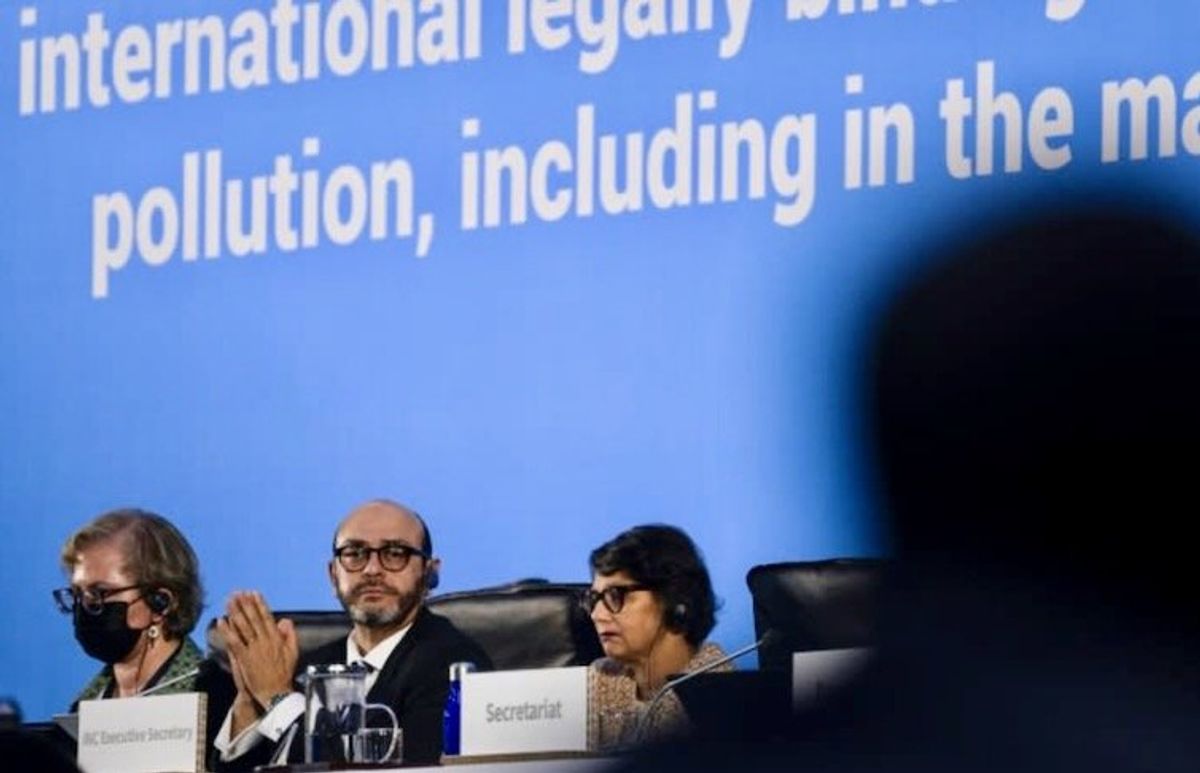
A week of difficult UN plastics talks failed to yield an agreement
 (ANTHONY WALLACE/AFP)

Divisions between countries have stalled negotiations on the world's first treaty to tackle plastic pollution, after a terse week of talks in South Korea's Busan.

Here are some of the sticking points that led to a decision early Monday to resume discussions at a later date after negotiators were unable to strike a deal:

- Production cuts -

The 2022 resolution that kicked off two years of negotiations called for a treaty that would "promote sustainable production and consumption of plastics".

But what that means has proved a key point of disagreement.

Dozens of nations want the deal to mandate a reduction of new plastic production, and there have been calls to phase out "unnecessary" items such as some single-use plastics.


"Mopping the floor when the tap is open is useless," said Anthony Agotha, the EU's special envoy for climate and environment.

But others, led by some oil-producing states like RussiaIran and Saudi Arabia, have pushed back against any binding reduction call.

"The objective of this treaty is to end plastic pollution, not plastic itself. Plastic has brought immense benefit to societies worldwide," Kuwait's delegate said Sunday.


- 'Chemicals of concern' -

An alliance led by Rwanda and Norway pushing for specific measures on production, the High Ambition Coalition (HAC), is also seeking controls on so-called chemicals of concern.

These are components of plastic that are known or feared to be harmful to human health.


Any agreement "must contain a clear, legally binding obligation to phase out the most harmful plastic products and chemicals of concern in plastics", Mexican delegate Camila Zepeda said in the final plenary session, in a statement backed by nearly 100 countries.

Fiji's representative had earlier warned there would be "no treaty without a provision on chemicals of concern", calling it "a non-negotiable".

But some countries have rejected any push to phase out or restrict the chemicals, pointing to existing international agreements and national regulations on toxins.


The Center for International Environmental Law (CIEL) said its analysis of a UN list of participants at Busan showed over 200 lobbyists from the fossil fuel and chemical industries were registered for the talks.

- Finance -

Implementing any treaty will cost money that developing countries say they simply do not have.


An article on financing in the latest draft agreement released on Sunday was full of conflicting possible options, reflecting deep disagreement on who will pay what, and how.

One focus of the talks has been creating a dedicated multilateral fund for the purpose -- after the hard-fought battle at COP29 climate talks to extract more finance from developed countries.

But the details are proving complicated.


"As developing countries have repeatedly called for in the past few days, the instrument should respect national differences" and "reflect equity and inclusiveness," China's delegate said late Sunday.

- Globally binding? -

Will the treaty create overarching global rules that bind all nations to the same standards, or allow individual countries to set their own targets and goals?

This has been another sticking point, with the European Union initially warning that "a treaty in which each party would do only what they consider is necessary is not something we are ready to support".


On the other side are nations who argue that differing levels of capacity and economic growth make common standards unreasonable.

"There shall not be any compliance regime," reads language proposed during negotiations by Iran.

Instead, it has urged an "assessment committee" that would monitor progress but "in no way" examine compliance or implementation.


UN chief defends plastic pollution talks after collapse


By AFP
December 1, 2024

Copyright AFP Anthony WALLACE


Sara HUSSEIN

The UN environment chief insisted Monday that talks on a landmark plastic pollution treaty were not a failure, saying important progress was made despite negotiations collapsing without agreement.

“It obviously did not fail,” Inger Andersen told AFP, calling the two-year timeline for the deal set in 2022 “highly ambitious”.

“What we do have is very, very good progress,” Andersen, the head of the UN Environment Programme, said.

Nearly 200 countries spent a week locked in negotiations in Busan, South Korea, from November 25 with the goal of agreeing the world’s first treaty to curb plastic pollution.

Over 90 percent of plastic is not recycled and millions of tonnes of plastic waste litter the environment each year.

But in the early hours of Monday morning, negotiators effectively conceded defeat, acknowledging that they had failed to bridge serious divisions over the aims of the treaty.

Dozens of “high ambition” countries sought an agreement that would set targets to limit new production of plastic and phase out certain chemicals and single-use plastic products.

That was fiercely and repeatedly rejected by the so-called “like-minded” nations including Saudi Arabia and Russia, which insisted the text should contain no reference to production.

This group are mostly oil-producing countries who provide the fossil fuel used to make plastic.

The disagreement stymied progress through four rounds of talks preceding Busan, resulting in a draft treaty that ran over 70 pages and was riddled with contradictory language.

The diplomat chairing the talks sought to streamline the process by synthesising views in his own draft text, which Andersen said represented a step forward.

“We walked into this with a 77-page long paper. We now have a clean, streamlined… treaty text,” she said.

“That forward movement is significant and something frankly that I celebrate.”


– ‘Significant conversations’ –


But even the revised text is full of opposing views, and countries insisted that all parts of it would be open to renegotiation and amendment at any new round of talks.

That led environmental groups to warn that extending the so-called INC-5 talks to an INC-5.2 risks simply repeating the deadlock seen in Busan.

Andersen acknowledged that deep differences remain and “some significant conversations” are needed before any new talks.

“I do believe that there’s no point in meeting unless we can see a pathway from Busan to the treaty text being gavelled,” she said.

The final plenary of the talks saw dozens of countries back new production targets and phasing out chemicals believed or known to be harmful.

“A treaty that lacks these elements and only relies on voluntary measures would not be acceptable,” Rwanda’s Juliet Kabera said.

But Saudi Arabia’s Abdulrahman Al Gwaiz indicated that production cuts remains a red line for many nations.

“If you address plastic pollution, there should be no problem with producing plastics, because the problem is the pollution, not the plastics themselves,” he said.

Andersen said it was clear that “there’s a group of countries that give voice to an economic sector,” but added that finding a way forward was possible.

“That’s how negotiations work. Countries have different interests, they present them and the conversations then have to take place… seeking to find that common ground.”

No date or location has yet been set for resumed talks, though Saudi Arabia and others sought to restart no sooner than mid-2025.

Andersen said she remained “absolutely determined” to win a deal next year.

“Sooner is much better than later because we have a massive problem.”

Indigenous groups call for health protections in plastic deal


By AFP
December 1, 2024

People look through plastic and other debris washed ashore at a beach on Indonesia's resort island of Bali - Copyright AFP SONNY TUMBELAKA


Isabel MALSANG

For Caleb Justin Smith-White, negotiations in South Korea on a landmark global deal to curb plastic pollution are about more than the environment. They are about saving lives.

He is one of dozens of people who have travelled from across the world to the city of Busan to share personal stories about the ways they say plastic — from its production to its disposal — has harmed their communities and their health.

Smith-White describes his home in Canada’s Ontario as a “petrochemical valley” and blames production of plastic for a string of leukaemia deaths in Aamjiwnaang, his community of around 2,000 people from the Chippewa Indigenous group.

“We are too small of a population for cancer studies to be effective,” he said, adding that “we don’t have the money for that”.

But his message to negotiators is that plastic causes harm, a position backed by a coalition of scientists attending the talks.

“Known and emerging health hazards constitute a serious and evolving global health concern,” they warned ahead of the negotiations.

Near Smith-White’s village Sarnia are factories run by industrial giants — Imperial Oil, Shell, Suncor Energy among others — handling chemicals needed to produce plastic.

INEOS, one of the top producers of styrene — a component in polystyrene plastic — said earlier this year it would shutter its factory near Sarnia by 2026.

Smith-White said his community had long “pushed for better regulations” over chemicals in water sources but also more recently benzene emissions in the air.

“We did not close INEOS,” he said. “They decided that it was not worth putting money into that plant to bring it up to the standards that we pushed for.”

– ‘Public health crisis’ –

First Nations groups from petrol-producing US states such as Texas and Alaska, and Indigenous peoples from Australia to Latin America have used their time in Busan to describe harms linked to plastic.

They range from the growing incidence of once-rare diseases to mountain villages being progressively buried in plastic.

“It’s everywhere in the streets, around the houses,” said Prem Singh, part of the Indigenous Tharu group, of his village in western Nepal.

“We have no dump site” and the community’s cattle and goats are eating the plastic waste, he told AFP.

Pamela Miller, executive director of the NGO Alaska Community Action on Toxics (ACAT) warned of a “public health crisis.”

“We see a cancer crisis in many of the Indigenous communities we work with in Alaska,” she told AFP, linking the problem to the extraction of fossil fuels used to make plastic, and the growing consumption of plastic among the people.

Microplastics and nanoplastics have been found in the human body — including inside lungs, blood and brains.

While it is not yet clear exactly how harmful they are, numerous studies have linked their presence to a range of health problems.

Out of the more than 16,000 chemicals used or found in commercial plastic, more than a quarter are considered potentially hazardous to human health, according to the Scientists’ Coalition for an Effective Plastics Treaty.


The draft deal in Busan — which negotiators failed to agree on — describes plastic pollution as a ‘serious environmental and human health problem’
 – Copyright AFP Anthony WALLACE

Linked health concerns include “infertility, obesity and non-communicable diseases including diabetes, cardiovascular disease and many cancers”, the group says.

– ‘Chemicals inside us’ –

The draft deal in Busan describes plastic pollution as a “serious environmental and human health problem”.

But a dedicated section to health remains mostly bare, only offering a choice between excising the section and strengthening language on health elsewhere, or deciding its content at a later date.

By Sunday night, negotiators had failed to reach an agreement on the treaty, with the chair calling for additional time for discussions.

Among the sticking issues were on setting targets for reducing plastic production, or for phasing out chemicals known or believed to be harmful to human health.

Some countries accuse a handful of mostly oil-producing nations, such as Russia, Iran and Saudi Arabia, of obstructing the UN process.

Some petrol-producing states have reportedly said in negotiations that plastic is not dangerous for health, and say existing bans on harmful chemicals are sufficient.

But Sarah Dunlop, a neuroscientist who heads the plastic and human health division of the Minderoo Foundation in Australia, is not convinced.

“If chemical regulations were working as some people say, why should we find these chemicals inside us?” she said.


Frontline Nations Demand Climate Accountability at the ICJ

Countries like Vanuatu hope that a forthcoming opinion will accelerate action around the climate emergency.
December 2, 2024
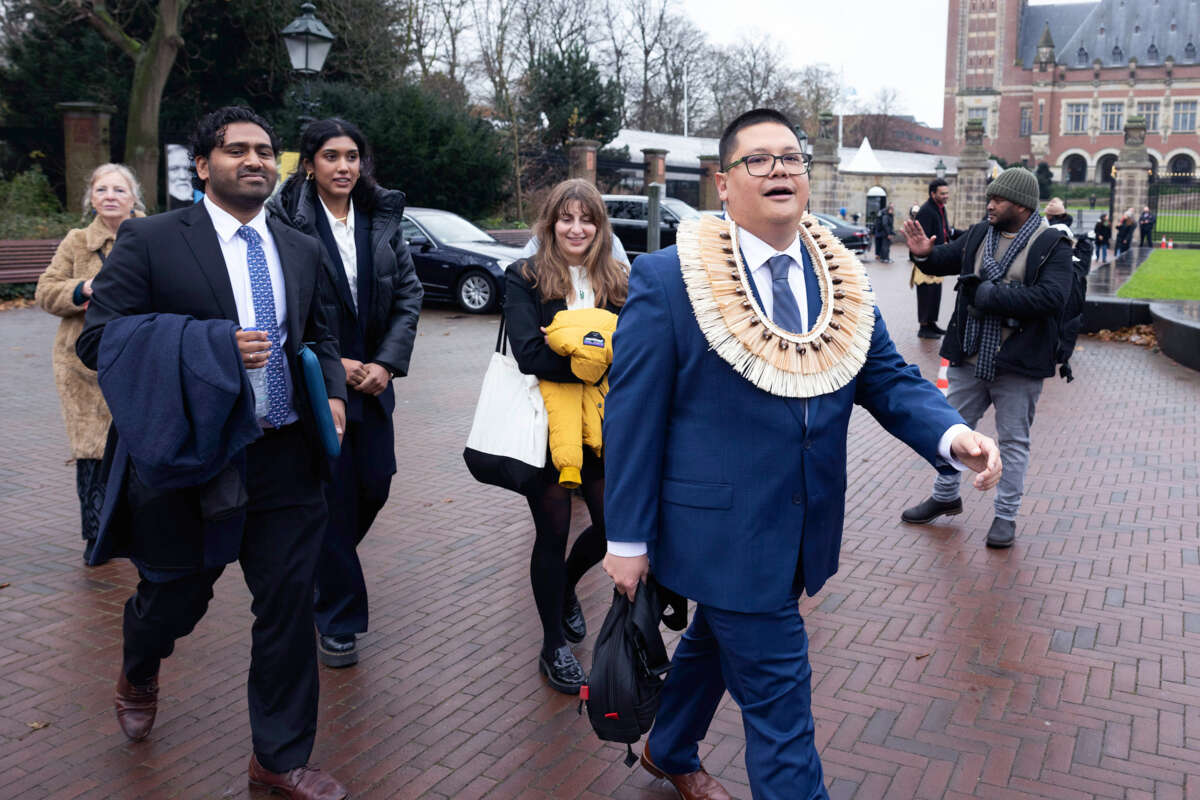
Human rights lawyer and Vanuatu's lead counsel Julian Aguon leaves after small Pacific island states attend hearings inside the International Court of Justice on December 2, 2024, in The Hague, Netherlands.
Michel Porro / Getty Images

The International Court of Justice (ICJ) heard arguments Monday in the largest climate case ever brought before it as a coalition of low-lying and developing nations demanded larger polluting nations be held to account under international law for causing “significant harm to the climate system and other parts of the environment” with runaway fossil fuel emissions over recent decades.

In the first day of hearings in The Hague that could last weeks, multiple representatives from the Pacific island of Vanuatu, which is leading the coalition of over 100 countries and allied organizations, laid the blame for the climate crisis at the feet of a small number of states that are large emitters of greenhouse gases.

“We know what the cause of climate change is: a conduct of specific States … Vanuatu’s contribution to global greenhouse gas emissions is negligible, and yet we are among those most affected by climate change,” said Arnold Kiel Loughman, attorney general of the Republic of Vanuatu.

“We find ourselves on the frontlines of a crisis we did not create,” Ralph Regenvanu, Vanuatu’s special envoy for climate change and environment, told the court.

Monday’s historic moment at The Hague follows years of work on the part of Pacific Island nations, particularly Vanuatu, to push for the ICJ to take up the issue of global warming and human rights. The stakes of the planetary emergency are particularly high for these countries, which are under threat from rising seas and other climate impacts.


As Summit Ends in Cop-Out, Can Social Tipping Points Change Climate Trajectory?
COP29 fizzled out as catastrophe looms. Could a mass change in political consciousness still stave off the worst? By Gareth Dale , Truthout November 22, 2024


Ilan Kiloe, legal counsel for the Melanesian Spearhead Group, a regional subgroup that includes Fiji, Papua New Guinea, Solomon Islands, and Vanuatu, issued a stark warning during his remarks to the court: “Climate change is now depriving our peoples, again, of our ability to enjoy our right to self-determination in our lands. The harsh reality is that many of our people will not survive.”

Last year, the United Nations General Assembly unanimously adopted a resolution calling on the ICJ to issue an advisory opinion on climate change and human rights. The measure, which was introduced by Vanuatu and co-sponsored by more than 130 governments, requested that the world’s highest court outline countries’ legal responsibilities for combatting fossil fuel-driven climate change and the legal consequences of failing to meet those obligations.

Over the next two weeks, the court will hear statements from nearly 100 nations, including wealthy developed countries such as the United States. Advisory opinions, unlike judgments, are not binding—but Vanuatu and other supporters hope that a forthcoming opinion would accelerate action around the climate emergency.

The country began pushing for the ICJ resolution in 2021, following a campaign launched in 2019 by a group of students from the University of the South Pacific.

“What started in the Pacific is now a historic climate justice campaign, as the world’s most urgent problem of climate change reaches the world’s highest court,” said Shiva Gounden of Greenpeace Australia Pacific.

“The next two weeks of hearings are the culmination of collective campaigning from 2019, powerful advocacy, and mobilizing the world behind this landmark campaign, to ensure the human rights of current and future generations are protected from climate destruction, and the biggest emitters are held accountable.”

Polly Banks, Vanuatu country director for Save the Children, who travelled to The Hague for the proceedings, said that “the hearing before the Court goes to questions about the efficacy, equity and fairness of the current responses to climate change, which are particularly relevant for children, who have contributed the least to climate change but will be most affected by its consequences.”

“Currently, only 2.4% of climate finance from multilateral funding sources is child-responsive. Even without the Court’s opinion, we know that states need to do far more to protect children from the worst impacts of this crisis, by significantly increasing climate finance to uphold children’s basic rights and access to health, education and protection,” Banks added.

The start of hearings at The Hague come on the heels of a COP29 climate summit that was heavily criticized. The summit focused heavily on climate finance, but the resulting deal was panned by critics as rich nations agreed to voluntarily provide just $300 billion to help developing nations decarbonize and deal with the impacts of the climate emergency. Poor nations and climate campaigners had demanded over a trillion dollars in funding in the form of debt-free grants and direct payments.

‘Future of planet’ at stake at ICJ hearings: Vanuatu


By AFP
December 2, 2024

A handful of protesters gathered outside the Peace Palace
 - Copyright AFP Bertrand GUAY

Richard CARTER

The future of the planet is at stake during hearings at the top United Nations court, a representative for Vanuatu said Monday, opening a historic case that aims to set a legal framework on how countries should tackle climate change.

More than 100 countries and organisations are set to present before the International Court of Justice over the next two weeks, the highest number ever.

“The outcome of these proceedings will reverberate across generations, determining the fate of nations like mine and the future of our planet,” said Vanuatu’s representative for climate change, Ralph Regenvanu.

“This may well be the most consequential case in the history of humanity,” Regenvanu told the 15-judge bench in the panelled hall of the Peace Palace in The Hague.

Activists hope the ICJ opinion will have far-reaching legal consequences in the fight against climate change, impacting ongoing court cases as well as domestic and international legislation.


Others fear the UN-backed request for a non-binding advisory opinion will have limited impact — and it could take the UN’s highest court months, or even years, to deliver.

A handful of protesters gathered outside the Peace Palace, near a big screen reading “We are watching”.

Demonstrators had hung banners saying: “Biggest problem to the highest court” and “Fund our future, climate finance now.”

“This hearing means everything for the climate justice movement,” Siosiua Veikune, 25, from Tonga, who is part of the Pacific Island Students Fighting Climate Change group, told AFP.

The presentations at the scenic Peace Palace come days after a bitterly negotiated climate deal at the COP29 summit in Azerbaijan.

Wealthy polluting countries ultimately agreed to find at least $300 billion a year by 2035 to help poorer nations transition to cleaner energy sources and prepare for increasing climate impacts such as extreme weather.

Developing countries condemned the pledge as too little, too late, and the summit’s final deal failed to include a global pledge to move away from burning planet-heating fossil fuels.

– ‘Pivotal moment’ –


The UN General Assembly adopted a resolution last year that referred two key climate questions to the ICJ.

First, it asked, what obligations do states have under international law to protect the Earth’s climate system from polluting greenhouse gas emissions?

Second, what are the legal consequences of these obligations in cases where states, “by their acts and omissions, have caused significant harm to the climate system and other parts of the environment”?

The second question also was linked to the legal responsibilities states have for harm caused by climate change to small, more vulnerable countries and their populations.

This applies especially to countries under threat from rising sea levels and harsh weather patterns in places like the Pacific Ocean.

– Record-high emissions –


Joie Chowdhury, a senior lawyer at the US- and Swiss-based Center for International Environmental Law, said climate advocates did not expect the ICJ’s opinion “to provide very specific answers”.

Instead, she predicted the court would provide “a legal blueprint… on which more specific questions can be decided”.

The judges’ opinion, which she expects some time next year, “will inform climate litigation on domestic, national and international levels”.

Some of the world’s largest carbon polluters — including the top three greenhouse gas emitters, China, the United States and India — will be among the 98 countries and 12 organisations to address the court.

The world agreed in Paris in 2015 to try to limit global heating to 1.5 degrees Celsius (2.7 degrees Fahrenheit) above pre-industrial levels.

But it did not prescribe how to achieve that and it is nowhere near on track.

Preliminary scientific data from the Global Carbon Project, published during the COP29 negotiations, showed that emissions of carbon dioxide (CO2) caused by burning fossil fuels like coal, oil and gas rose this year to a new record high.

“When the Paris agreement was concluded, the youth of the world looked up to it as an instrument of hope,” Cynthia Houniuhi, president of the Pacific Island Students Fighting Climate Change, told the court.

“Today, the entire process has been hijacked by large emitters and major fossil fuel producers, turning it into a political safe harbour and a trap for everyone else,” she said.

“For the world’s youth and future generations, the consequences are existential.”


Landmark climate case to open at top UN court

By AFP
December 1, 2024

Houses destroyed by rising sea levels in Abidjan, Ivory Coast 
- Copyright AFP Issouf SANOGO

Jan HENNOP

The United Nations’ top court will start unprecedented hearings on Monday aimed at setting legal guidelines for how countries should protect the planet against climate change and help vulnerable nations combat its devastating impact.

Representatives from Vanuatu and other low-lying at-risk islands in the Pacific Ocean will open marathon proceedings at the International Court of Justice at 10:00 am (0900 GMT) before a 15-judge panel.

Over the course of the next two weeks, more than 100 countries and organisations will make submissions on the topic, the highest number ever before the Hague-based court.

Activists hope that the opinion from the ICJ’s judges will have far-reaching legal consequences in the fight against climate change.

Others fear the UN-backed request for a non-binding advisory opinion will have limited impact — and it could take the UN’s highest court months, or even years, to deliver.

The hearings at the scenic Peace Palace come days after a bitterly negotiated climate deal at the COP29 summit in Azerbaijan.

Wealthy polluting countries ultimately agreed to find at least $300 billion a year by 2035 to help poorer nations transition to cleaner energy sources and prepare for increasing climate impacts such as extreme weather.

Developing countries condemned the pledge as too little, too late, and the summit’s final deal failed to include a global pledge to move away from burning planet-heating fossil fuels.

– ‘Pivotal moment’ –


“We are on the frontline of climate change impact,” said Ralph Regenvanu, special envoy for Vanuatu, which has been driving the ICJ initiative along with neighbouring island states.

“Our call for an advisory opinion from the ICJ on climate change is at a pivotal moment… one that sets clear the international legal obligations for climate action,” he told journalists ahead of the hearings.

The UN General Assembly adopted a resolution last year that referred two key climate questions to the international judges.

Firstly, it asked, what obligations do states have under international law to protect the Earth’s climate system from pollutant greenhouse gas emissions?

Secondly, what are the legal consequences of these obligations in cases where states, “by their acts and omissions, have caused significant harm to the climate system and other parts of the environment”?

The second question also was linked to the legal responsibilities states have for harm caused by climate change to small, more vulnerable countries and their populations.

This applies especially to countries under threat from rising sea levels and harsh weather patterns in places like the Pacific Ocean.

– Record high emissions –

Joie Chowdhury, a senior lawyer at the US- and Swiss-based Center for International Environmental Law, said climate advocates did not expect the ICJ’s opinion “to provide very specific answers”.

Instead, she predicted the court would provide “a legal blueprint… on which more specific questions can be decided”.

The judges’ opinion, which she expected some time next year, “will inform climate litigation on domestic, national and international levels”.

Some of the world’s largest carbon polluters — including the world’s top three greenhouse gas emitters, China, the United States and India — will be among the 98 countries and 12 organisations expected to make submissions to the court.

The world agreed in 2015 to try and limit global heating to 1.5 degrees Celsius above pre-industrial levels.

But it did not prescribe how to achieve that and it is nowhere near on track.

Preliminary scientific data from the Global Carbon Project, published during the COP29 negotiations, showed emissions of carbon dioxide (CO2) caused by burning fossil fuels like coal, oil and gas rose this year to a new record high.

'Nuisance': Far-right Texas AG seeks to shut down homeless ministry on Thanksgiving


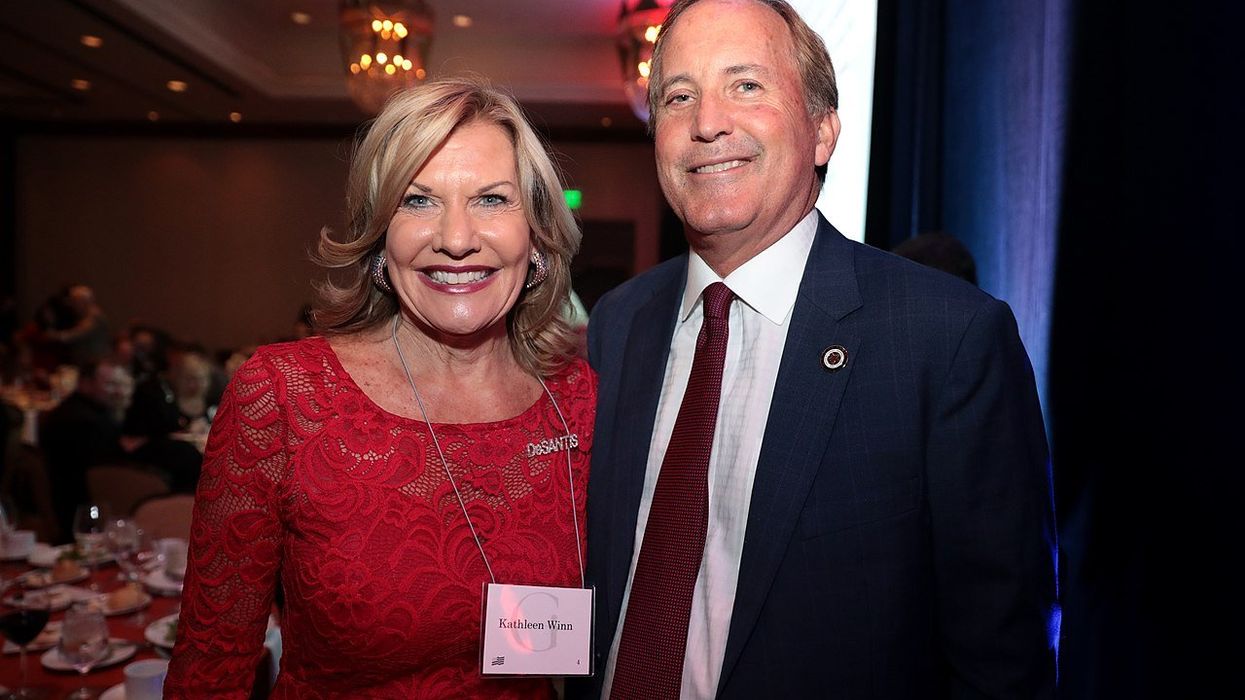
Texas Attorney General Ken Paxton with Kathleen Winn in 2021 (Gage Skidmore)


November 28, 2024
ALTERNET

Far-right Texas Attorney General Ken Paxton has been a highly divisive figure in Lone Star State politics, often drawing vehement criticism not only from Democrats, but also from fellow Republicans. Nonetheless, Paxton survived an impeachment trial in the Texas State Senate, where he was acquitted on 16 articles. And the Donald Trump ally hasn't become any less combative.

Paxton, a Baptist who embraces a severe brand of Christian fundamentalism, is known for picking fights with churches he considers impure. And his latest religious target, according to Chron.com reporter Eric Killelea, is a church in Austin that helps the homeless.

Killelea reports that on Tuesday, November 26, Paxton announced a lawsuit against Austin's Sunrise Community Church in response to their activities on behalf of the city's homeless.

READ MORE:'Encouraging decision': Here are the Trump Cabinet picks Russia is most excited about

The Texas attorney general declared, "By operating a taxpayer-funded drug paraphernalia giveaway next to an elementary school, this organization is threatening students' health and safety and unjustly worsening daily life for every single resident of the neighborhood. We will shut this unlawful nuisance behavior down."

In Austin, Sunrise operates a nonprofit called the Sunrise Homeless Navigation Center.

Paxton, in the lawsuit, describes the church as a "magnet" for people with drug problems and alleges that the Navigation Center encourages them to commit crimes.

The lawsuit alleges, "Surise homeless clients break into residents' homes. They menace residents with machetes. They routinely urinate and defecate in the streets. They masturbate in public, while trying to grab passing women. They wake up residents with high-pitched screams in the middle of the night."

According to the Sunrise Community Church, however, the Navigation Center has helped many homeless Texans overcome homelessness.

Killelea reports, "Sunrise Community Church, which is part of the Reformed Church in America — a generally liberal denomination within the Protestant faith — has described the Sunrise Homeless Navigation Center as the largest provider of homelessness services in Travis County. The Center, founded in 2015, provides meals, showers and computer access to people experiencing homelessness, per reporting by the Austin American-Statesman's Skye Seipp. The church claims to have helped more than 4275 people move into housing through the ministry.

Read Eric Killelea's full article for Chron.com is available at this link.
How Trump’s own policies could doom his pledge for US 'energy dominance' and 'harm national security'

US BUYS 60% OF ALBERTA OIL 
(BELOW WTI)
TO REFINE WITH US OIL FOR EXPORT


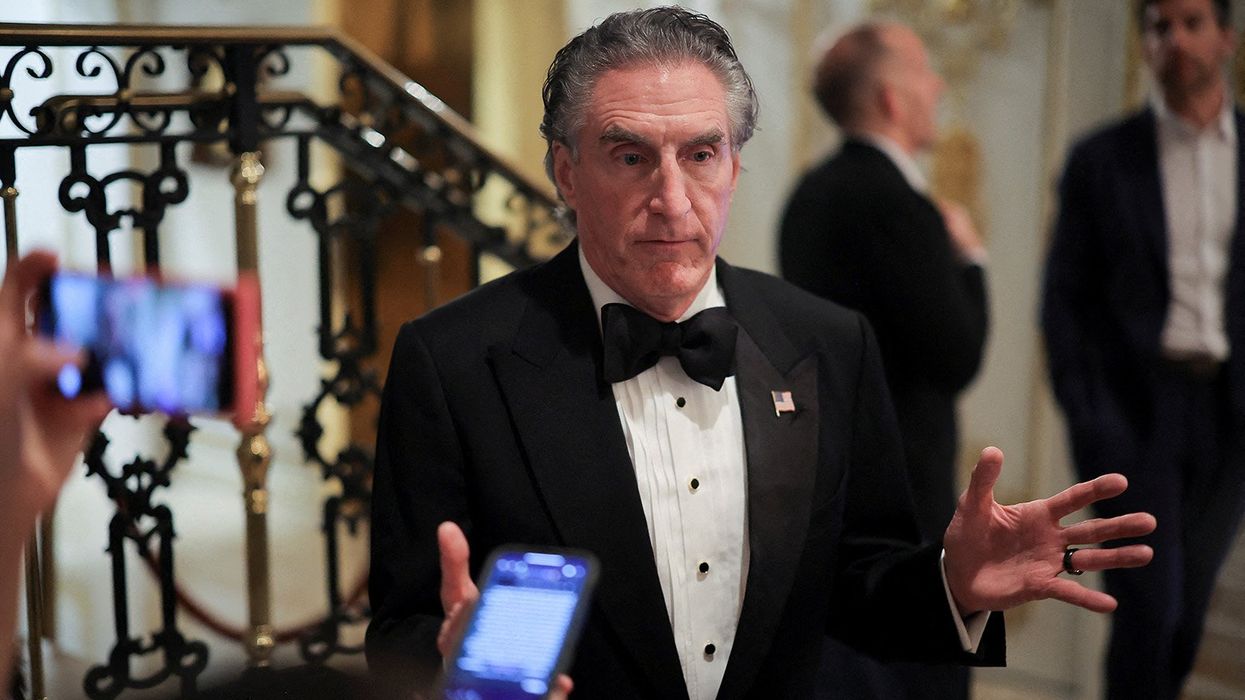
North Dakota Governor Doug Burgum speaks with the media ahead of the America First Policy Institute (AFPI) gala at Mar-A-Lago in Palm Beach, Florida, U.S., November 14, 2024. REUTERS/Carlos Barria 

Alex Henderson
November 29, 2024

During President Joe Biden's four years in the White House, the United States, according to Politico, has produced record amounts of oil and natural gas. The U.S. Energy Information Administration, in March 2024, reported that the U.S., under Biden, was producing "more crude oil than any nation at any time."

But President-elect Donald Trump is promising an even greater emphasis on fossil fuels after he returns to the White House.

Biden, as president, has favored a combination of green energy and fossil fuels. Biden acknowledges climate change as a dangerous and perilous reality and has supported ramping up green energy use without abandoning fossil fuels.

Trump, in contrast, doesn't consider climate change a problem and wants to make fossil fuels an even higher priority for the U.S. The president-elect has vowed to "drill, drill, drill," and he has proposed North Dakota Gov. Doug Burgum — Trump's nominee for secretary of the U.S. Department of Interior — to head a new National Energy Council.The video player is currently playing an ad.

Trump has promised to establish American "energy dominance." But according to Associated Press (AP) reporter Matthew Daly, his energy goals "are likely to run into real-world limits."

"Trump's bid to boost oil supplies — and lower U.S. prices — is complicated by his threat this week to impose 25 percent import tariffs on Canada and Mexico, two of the largest sources of U.S. oil imports," Daly explains in an article published on November 29. "The U.S. oil industry warned the tariffs could raise prices and even harm national security."

Scott Lauermann of the American Petroleum Institute is among the fossil fuels promoters who are speaking out.

Lauermann told AP, "Canada and Mexico are our top energy trading partners, and maintaining the free flow of energy products across our borders is critical for North American energy security and U.S. consumers."

Meanwhile, Jonathan Elkind — senior research scholar at Columbia University's Center on Global Energy Policy in New York City and a former assistant energy secretary under President Barack Obama — is highly critical of Trump's emphasis on fossil fuels and his refusal to acknowledge climate change as an "existential" danger.

Elkind told AP, "Failure to focus on climate change as an existential threat to our planet is a huge concern and translates to a very significant loss of American property and American lives."

Read the Associated Press' full article at this link.
Disruption or destruction? Inside the hidden cost of Trump's tech-friendly policies

Some venture capital investors, who have funded the tech boom in Silicon Valley and beyond, say they are excited by the prospect of a lighter regulatory environment under a new Trump administration than they saw under President Joe Biden.

But they warn that Trump policies that will benefit many technology companies may come at a cost to other pro-Trump voters.

The Bay Area bubble of Silicon Valley, which is home to institutional tech giants like Apple, Google, Intel and Adobe, had been previously seen as a left-leaning region, like many other California communities. But the 2024 election was a unique one, venture capitalists and founders say.

“There’s been a significant shift in the Valley rightward since the last election,” said Joe Endoso, a Silicon Valley investor. “And you’ve seen that in the financial flows — in the level of dollars — that were directed towards supporting President Trump’s campaign from the technology sector.”

Endoso, president of financial tech platform Linqto, said some tech industry people who previously voted for progressive issues and candidates this time cast their ballot for Trump. He said he’s heard more concern about potential regulations in the tech industry and negative economic effects under continued Democratic leadership.The video player is currently playing an ad. You can skip the ad in 5 sec with a mouse or keyboard

This turn toward Trump wasn’t universal in the Valley. The majority of donations from employees at companies such as Google, Amazon and Microsoft went toward Democratic candidate Kamala Harris, Reuters reported in September. But tech billionaires like Elon Musk and venture capital investors, like Andreessen Horowitz co-founders Marc Andreessen and Ben Horowitz, poured millions into his campaign.

While Trump didn’t receive unanimous support from the tech sector, many American tech giants and investors are excited about the light-handed approach to tech regulation that’s likely to come in the next four years. Congress has struggled to pass any federal laws around emerging technology like artificial intelligence, though states have done so on their own on issues like data privacy, transparency, discrimination, and on how AI-generated images can be used.

The Biden administration, however, on its own issued a number of “best practice” guides for emerging technologies and aggressively pursued antitrust cases against some tech giants, including an ongoing case against Google that could force the company to spin off its popular Chrome web browser.

It appears unlikely that Trump will continue the Biden era regulatory and enforcement drives.

Those working in emerging technologies like AI are making advancements so quickly that regulators are unlikely to be able to keep up anyway, Endoso said. The tech industry mindset — move fast and break things, first coined by Facebook founder Mark Zuckerberg — will likely continue under Trump’s administration.

“You’re running through walls and hoping that when the regulations come about, they’re not going to be so, you know, restrictive,” Endoso said. “But you’re not going to sit and wait for the regulators. You can’t afford to.”

Why care about the VC market?

Venture capitalists pour money into many promising startups in Silicon Valley and elsewhere, looking for the ones that will create lucrative new technologies or “disrupt” existing ones. Silicon Valley successes include Uber, which received its first round of venture capital investment for just about $1.3 million in 2010, and Airbnb, which started with just a $20,000 investment in 2008. Today, the companies are worth $146 billion and $84 billion, respectively.

Many more, however, fail. High-visibility startups that folded after raising very large sums include streaming platform Quibi, which raised $1.75 billion and ChaCha, the SMS text-based search platform that had raised $108 million.

The high-risk, high-reward nature of the industry makes for a rarified business, and there’s a high barrier to entry. To become an accredited venture capital investor, one must have an income of at least $200,000 a year, or be worth $1 million. The handful of firms pouring the most money into the United States technology market are usually worth billions.

Yet, the technology being developed and funded by wealthy investors today will shape the next decade of everyone’s lives. Some of the most influential technology in the global economy has been released under President Joe Biden’s administration in the last three and a half years.

Advancements in generative AI and machine learning technology, rapid development of augmented and virtual reality, further adoption of cloud computing and Internet of Things (IoT) technologies, such as internet connected appliances and home devices, along with automation of many industries have already shifted much of American life. ChatGPT, one of the most recognizable examples of generative AI that the public can use, was only released two years ago, but the sector of generative AI is already threatening many American jobs.

Those with writing-focused careers like copywriters and social media marketers, are already feeling the disruption, and experts believe STEM professionals, educators and workforce trainers and others in creative and arts fields are going to see much of their job responsibilities automated by AI by 2030.

The venture capital market has been a volatile one over the last four years. Though many of Trump’s attacks on Democrats during his campaign cycle centered on the healthy economy under his first term, the COVID-19 pandemic was the single-biggest economic factor to disrupt the venture capital market and others.

The U.S. saw its biggest year for venture capital investments in 2021, but supply-chain issues and the continuing reliance on remote work changed the trajectory of many companies’ plans to go public on the stock market. High inflation and interest rates have kept many investors from deploying capital and many companies from completing mergers and acquisitions since then, although the second half of 2024 is looking up.

The economy quickly became the number one issue for Americans in the presidential election cycle. And though thriving venture capital markets usually benefit those that are already wealthy enough to invest, we’ll likely see a positive correlation in the general markets too, said Scott Nissenbaum, president and CEO of Ben Franklin Technology Partners, an innovation-centered fund in Pennsylvania.

“A thriving, efficient market is good for venture capital. And the flip side is also true,” he said. “We feed into and create the innovations and the efficiencies and the next generation … that create the robust and the boom.”
How investors and founders are preparing for Trump

Nissenbaum predicts that Trump may remove regulations for technology used by U.S. transportation and military systems, allowing for more tech integration than previously permitted without human safeguards in place. That might look like more flight optimization technology, or more drone usage by military branches. Nissenbaum also thinks Trump will attempt to open up space travel, especially with big backing by Musk, who runs SpaceX.

Health care also has been implementing technology rapidly, and Nissenbaum believes could see some major changes under Trump.

That is of note for health tech founder Sipra Laddha, an Atlanta-based psychiatrist and cofounder of LunaJoy, which provides in-person and virtual wellness visits for women. The 3-year-old company raised venture capital in 2022 and 2023, despite a more challenging fundraising market. Women’s health care companies saw a surge of VC investment in the wake of the overturning of Roe V. Wade in June 2022, an exception to the generally slower investment market at the time.

But she is uncertain about how Trump’s potential cabinet appointees, like Robert F. Kennedy Jr., who was appointed to head the Department of Health and Human Services, will affect LunaJoy’s operation. Kennedy has made health a key issue in his public advocacy and political activity, but he has also espoused eccentric and even false views on issues such as vaccines and pharmaceuticals.

“When women don’t have choices, mental health is significantly worse, and that’s something that goes on, often, for the entire time of that family’s trajectory,” Laddha said. “So I’m not quite sure what’s going to happen, but you know, those are certainly things that, as a women’s mental health company, we are looking at and watching closely to see what sort of legislation, rules and laws come out.”

When it comes to fundraising early next year, Laddha is optimistic. She’s focused on how fragmented the health care industry is right now, and plans to showcase how companies like hers will aim to integrate with larger health systems.

“Our role is to be really as disruptive as possible, and to bring to the forefront the most innovative solutions that we can do while still working within the current framework of health care that exists today,” she said.
Some sectors worry about Trump economic policy

While software and cloud-based technologists seem excited by the effects of deregulation, startup founders that make physical products, especially using microchip technology, are wary of Trump’s plan to impose tariffs on imported goods.

Samyr Laine, a managing partner at Los Angeles-based Freedom Trail Capital, specializes in consumer tech and consumer packaged goods. Laine said he feels a sense of relief in ending the “uncertainty” around who will take the presidency the next four years, but he predicts many founders will feel the costly effects of Trump’s planned tariffs, and pass those additional costs to consumers.

Though the existing companies in his portfolio won’t be hit too hard, it’s a factor they’ll be forced to review when considering investments in companies in the future. Those that will incur the additional costs of imported goods will have to adjust their profit margins and might not be as attractive to investors.

“As a consumer and someone who isn’t in the space, not to be like a fear monger, but expect that some of the things you typically pay for, the price will go up,” Laine said.
The effect on work

Although Trump was successful in picking up a significant amount of tech industry elite support this election season, much of his voter base is working class people who will not feel the positive effects of tech industry deregulation.

Endoso, the Silicon Valley investor and founder, says the Trump coalition of tech entrepreneurs and working-class voters represents “a division between the haves and the have-nots.” The usual basis on which people pick their electoral preferences, like race, geography, income and proximity to city life, were “shattered” this time around.

“It was a revolt of the working class, at least in my view,” he said.

The advancements of AI and machine learning, which will enrich the investor class, will have large implications on employment for those working class voters. The vast majority of Americans who are not college educated, and work physical jobs, might struggle to thrive, he said. We’ll likely see overhauls of industries as robots replace and automate a majority of physical labor in warehouses,and as self-driving vehicles take over jobs like long-haul trucking and ride services such as Uber and Lyft.

“I think those are important questions to be asking from a policy standpoint, and I think that the intelligent answers shouldn’t be ‘let’s shut the innovation down.’” Endoso said. “That didn’t work in 19th century England. It won’t work here today, right? But it does require our rethinking the definition of work, and the definition of how you … organize a society along lines where you don’t need to have the same level of maybe direct labor input as we had in the past.”

Nissenbaum agreed, saying that AI has already begun to leak into every field and industry, and will only continue to disrupt how we work. As revolutionary as the internet and internet companies were in the late 1990s, the web has become the infrastructure for artificial intelligence to become more efficient and effective at everything it does.

With lighter regulation under a new Trump administration, we’re likely to see AI develop at unpredictable rates, he said. And laborers will definitely be feeling the effects over the next four years.

“You’re not going to lose your job to AI,” Nissenbaum said. “You’re going to lose your job to someone who understands how to do your job with AI.”

Nebraska Examiner is part of States Newsroom, a nonprofit news network supported by grants and a coalition of donors as a 501c(3) public charity. Nebraska Examiner maintains editorial independence. Contact Editor Cate Folsom for questions: info@nebraskaexaminer.com. Follow Nebraska Examiner on Facebook and X.
From Reagan to ruin: Trump's tariffs and the death of free trade

Ronald Reagan launched an attack on the middle class. We must reverse it to save our democracy
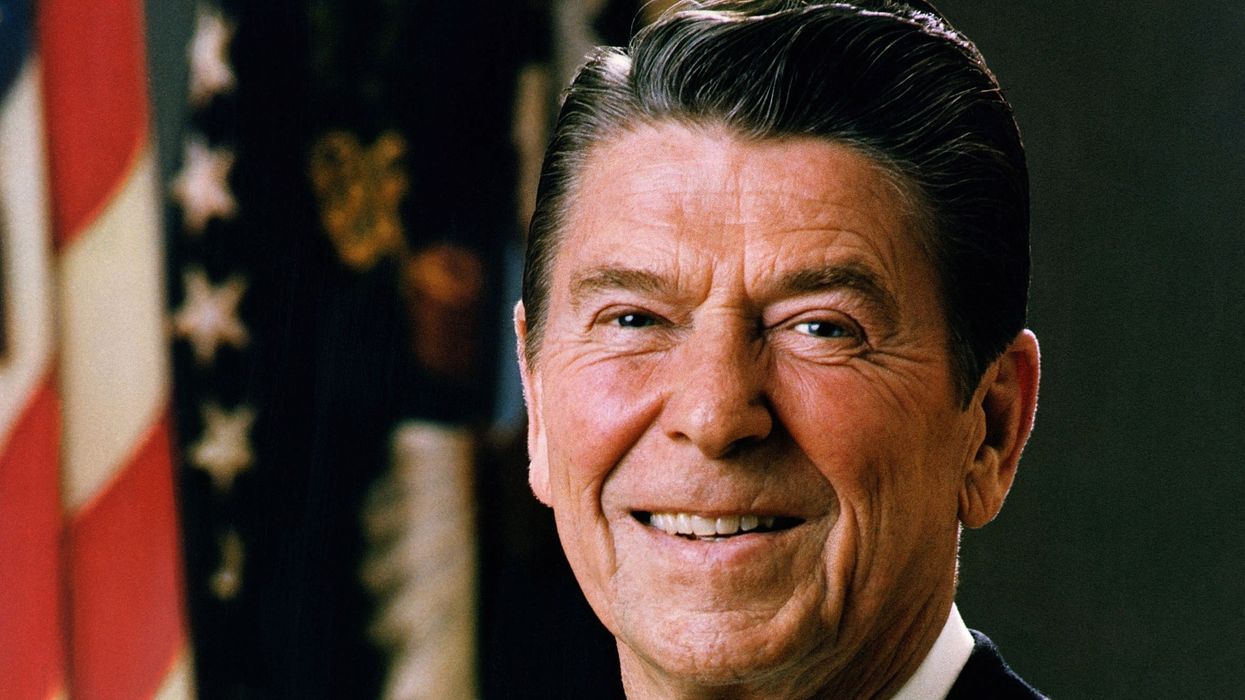
Official Portrait of President Ronald Reagan
November 29, 2024
ALTERNET

The stürm und drang all over the media this week is about Trump, on Monday, doubling down on his tariffs saying that he’d impose across-the-board 25 percent tariffs on all goods from China, Mexico, and Canada until there’s no more fentanyl or undocumented immigrants and asylum seekers coming into the US.

That’s a substantial lift, and if he follows through with the threat (which seems likely, although I’d bet money that he’ll drill lots of holes in those tariffs to satisfy corporate donors) it’ll cause a considerable disruption in American commerce. Those three countries, after all, account for more than 40 percent of all American trade.

Weirdly, Trump may be doing the Democrats a favor by taking this position, and I don’t mean the possibility that he’ll wreck the economy and thus his party’s chances in 2026 and 2028 (although that’s real, too).

Tariff-free trade was a central cornerstone of Reagan’s neoliberal agenda; he and Bush wrote the NAFTA agreement that Clinton later signed, for example. I lay this out in considerable detail in The Hidden History of Neoliberalism: How Reaganism Gutted America. Tragically, Bill Clinton and his Larry Sommers/Robert Rubin crew embraced neoliberalism with gusto, putting the final nail in the meaningful use of tariffs to protect American manufacturing and the jobs associated with it.

Democrats like Bernie Sanders and Elizabeth Warren have been working for years to pull the Democratic Party back from the neoliberal free trade brink, and if Trump pushes through his tariffs in a big way it may help shatter what’s left of the neoliberal consensus (at least with regard to trade) in the Democratic Party. That would be a Very Good Thing, both for the Party and for the nation.

Tariffs can be a good thing for a country, if done right. People who grew up in the Midwest (like me) know all about tariffs; we learned about them as children (I remember 5th Grade civics!).

Trump, however, did them so badly last time that they backfired, cost us a fortune, and forced the federal government to subsidize Midwestern farmers. Odds are, if he keeps to his current rhetoric, he’ll do the same, and Democrats should be ready with reasonable talking points; this could end up working tremendously to their advantage if they’re willing to embrace reasonable tariffs and other trade protections to bring manufacturing back to the US.


So, let’s re-examine how tariffs can work when done right, their role in American history, and why we should be discussing them now without hysterics.

Tariffs are taxes paid to the federal government on imported goods. And, like all taxes, they have two purposes: to raise revenue and to alter behavior. In the case of import tariffs, the second purpose (changing behavior, in this case encouraging entrepreneurs to start manufacturing companies aka factories here in America) is far more important than the first.

It all began here in America when General Henry Knox rode up to Mount Vernon in the late summer of 1789 to tell George Washington that Congress had just elected him as the first President of the United States. Washington took the news, and had two requests for his old friend.


First, he asked Knox to let folks know he’d be delayed by a few days because he wanted to say goodbye to his mother, who was elderly and ailing (turned out, it was the last time he saw her alive).

Second, Washington asked General Knox to ride all the way up to Connecticut to visit Daniel Hinsdale, a man who’d been secretly manufacturing black-market American-made fine men’s clothing in defiance of British law for decades. Knox took Washington’s measurements and then, a month later, brought to New York (where the swearing-in took place on what is now Wall Street) a fine American-made suit, which Washington proudly wore. (The suit was brown; the black suit of his later, famous painting was British formal wear.)

This incident highlighted the manufacturing crisis facing our new nation, and Washington was acutely aware of it.

The British, for two centuries, had been extracting wealth from the American colonies by forbidding us from manufacturing everything from fine clothing (thus Hinsdale’s illegal business) to weaponry to sophisticated machinery: all such items had to be imported from British manufacturers. We sold England cheap raw cotton, for example, and they forced us to buy back expensive fine cotton clothing manufactured on the looms of British cities. (Homespun was still legal in the colonies.)


They also forced us to buy tea — then the primary American beverage — from the East India Company, an outrage that led directly to the Boston Tea Party of 1773, which arguably kicked off the American Revolution. Thus, when Washington came into office, the first challenge he faced was how to build an American manufacturing base that wasn’t dependent on British imports.

Thirteen years before Washington’s inauguration, British economist Adam Smith had made worldwide headlines with his bestselling 1776 book An Inquiry into the Nature and Causes of the Wealth of Nations, proposing that the main thing that made a country rich was independence in manufacturing.

The process of converting raw materials of little value into finished products with a high value (manufacturing) was, to Smith’s mind, the best and only practical way a nation could grow wealthy without overseas conquest and plunder.

A tree limb laying on the forest floor, for example, had no monetary value, but when labor and the tool of a knife were applied to it and it was turned into an axe-handle — a process called manufacturing — it now had a value that could be passed down through generations.


Smith called that wealth. That axe-handle became part of the aggregate wealth of the entire nation, and even if it was sold overseas that wealth would still remain here because its value was simply converted into currency which stayed in America.

This understanding led President Washington to commission his Treasury Secretary, Alexander Hamilton, to propose to Congress in 1791 an 11-step Report on the Subject of Manufactures, also known as “The American Plan.”

At the core of Hamilton’s plan were protective tariffs on goods that were then being imported but could be easily made in the USA. The tariffs would increase the price of the imported goods so much that they’d encourage American entrepreneurs to start factories to make the same things here.

(Hamilton’s plan also included government subsidies for companies that wanted to move manufacturing to the US, federal subsidies for the development of new technologies, a massive investment in infrastructure [particularly roads and water-power systems] to support industry, and a requirement that the US government purchase only American-made products whenever possible.)


Within two decades, Congress and the Washington, Adams, and Jefferson administrations had put nearly all of Hamilton’s plan into effect, and major parts of it stood all the way up until Reagan’s neoliberal revolution kicked off in 1981.

Hamilton’s plan was such a successful and important part of how America became the wealthiest nation on Earth, and produced so much revenue, that virtually 100% of the cost of operating our federal government — from our founding until the Civil War — came from tariffs. The salary of every president from George Washington to Abraham Lincoln was paid by tariffs (some were domestic interstate tariffs, like on alcohol), as was the salary of every federal official and the cost of everything else the federal government did.

Fully two-thirds of federal government revenue came from tariffs from the end of the Civil War until the World War I era and the 1913 passage of the 16th Amendment (the income tax); a third of federal government revenue came from tariffs between WWI and WWII.

Today, however, it is under 2%.

Prior to Reagan, American manufacturing — kept on this continent by the force of tariffs — was at the core of the American Dream, with good union manufacturing jobs offering stability and prosperity to a growing American middle class from the 19th century until the 1990s. Tariffs also made America the technological leader of the entire planet.

The concept was simple: if a product could be made for $70 with cheap Chinese labor, but cost $100 to make with US labor, we’d put a $30 tariff on it to equalize the labor costs. Ditto if overseas manufacturing was subsidized by governments or by a lack of expensive pollution controls or worker safety protections: we’d match those cost advantages with tariffs.

There was still a heck of a lot of trade going on in the world when tariffs were common. As late as 1975, our imports and exports were pretty much in balance (we had a $12 billion surplus).

And then came the neoliberal sales pitch of the 1980s, as I lay out in detail in The Hidden History of Neoliberalism: How Reaganism Gutted America.

If only we could get rid of those nasty tariffs — we had over 20,000 categories of products with specified tariffs — by reducing them to zero or very, very low numbers, Reagan, Bush, and Clinton told us, then American consumers would benefit because big retailers like Walmart could buy products made with cheap labor from overseas instead of from higher-paid American workers. Prices, in other words, would be lower for consumers.

The result has been the shuttering of over 70,000 US factories and the loss of around 8 million good often-unionized manufacturing jobs. It typically takes companies between one and two decades to shift manufacturing overseas, given how large a logistical operation it involves, and reversing the process will probably also take a decade or two.

Entire regions of America were wiped out, producing a swath of our country now referred to as the “rust belt.” The situation was compounded by the Bush administration’s and the Supreme Court’s hostility to union rights.

Since Reagan’s “free trade” we’ve had nothing but annual trade deficits, each representing trillions in American worker’s wealth that’s been shifted to overseas manufacturing countries.

Sam Walton’s autobiography, titled Made in America, epitomized the situation prior to Reaganism when Walmart stores had big “100% Made In America” banners hanging over their front doors. Today, you’ll search for hours to find a single made-in-America product in most big-box stores.

Around that same time, another rationale for corporations seeking cheap labor and easy pollution regulations overseas began to take hold in the minds of the neoliberal intelligentsia: “Free trade,” they said, was so magical it could even bring about world peace!

The argument was simple, the neoliberals told us: history showed, they said, that countries that traded heavily with each other rarely went to war with each other. The example most often cited was that no two countries with MacDonald’s burger outlets had ever, at that time, gone to war (although they have since: see Russia and Ukraine).

Thomas Friedman jumped into the act at the end of the 20th century, promoting the MacDonalds’ Peace Theory and the transfer of American manufacturing overseas with his now-discredited 1999 book The Lexus and the Olive Tree.

Its impact, along with major campaigns encouraging “free trade” funded by American industrial and retail giants and their billionaire owners, echoed across American manufacturing and foreign policy for the next 20 years, as America continued to hemorrhage jobs along with the middle class “American Dream” wealth that accompanied them.

As a vast proportion of American manufacturing shifted to China, that nation — just like Hamilton predicted and proved with the US — underwent the most rapid transformation from Third World poverty to First World affluence in the history of the world.

All because the “wealth” of America was transferred to China every time a cash-register rang at Walmart, an Apple Store, or in pretty much any other American retail outlet. And continues to this day.

So, how do we bring back tariffs and how do we avoid a trade war disaster like Trump caused during his first presidency?

The main goal of a import tariff is to encourage Americans to buy the products of domestic — rather than foreign — manufacturing. For that to work, companies that may consider investing billions in factories here in the US need to know that the tariffs aren’t just a whim or election stunt like they were with Trump, but will be around for the coming years or even decades necessary to recover their initial billion-dollar investments in new manufacturing facilities.

Tariffs also need to be brought in on an item-by-item basis, organically, with each imported item that we want to put a tariff onto examined for the tariff’s impact, both on domestic inflation and international relations.

We really have no need to put a tariff on, for example, imported artwork from Mexico or moose-skin jackets from Canada; there’s no competing domestic industry here. It’s why Trump’s proposed “across-the-board” tariffs are so stupid.

But the manufacture of cars, steel, chips, computers, toys, clothes, pharmaceuticals, and hundreds of other products and categories of goods can be brought back to the US by appropriate tariffs, introduced gradually and predictably, done in a way that allows both foreign companies and US entrepreneurs to adjust without major disruptions.

There’s also a national security aspect to this. Right now, it’s nearly impossible for the US to manufacture a battleship or advanced aircraft without parts from overseas. Because tariffs had kept virtually all manufacturing here in the US prior to WWII, shifting to a war-based manufacturing economy in the 1940s, before Reagan’s neoliberal “reforms,” was easy. Today it would be extremely difficult.

On top of that, we no longer make most therapeutic drugs here in America. China makes many of the raw ingredients for the drugs we use here, and most pharmaceuticals used in America are manufactured there and in India.

One result is that often drugs we take are contaminated because they’re made in plants outside the US; an old friend got cancer from taking a drug contaminated by a toxic chemical, and my father got bladder cancer from taking a drug contaminated in India with N-nitrosodimethylamine (NDMA).

Also alarming, if we got into a serious conflict with China (for example) and they cut us off from all their manufactured goods, our economy would collapse overnight and we’d find it very, very difficult to manufacture some of our most important weaponry and telecommunications equipment. Not to mention the crisis of a massive drug shortage.

Thus, tariffs have to be put into place intelligently; after all, we’re reversing a neoliberal free trade process that took 44 years to get as bad as it is today.

We don’t want to start trade wars — like Trump did the first time with his tariff stunt and is threatening to do again in January — or wipe out people in poor countries (like Bangladesh or Malaysia, where much of our clothing is made), but we do want the “wealth of [our] nation” to be built and kept here.

We do this by having Congress openly discuss and debate tariffs, apply them gradually, and accompany them with supports for the poorer parts of the world that may be harmed by them, assisting them in developing sustainable domestic industries to replace their export losses.

This is not a radical idea.

China uses tariffs (and dozens of other trade restrictions) to protect its domestic industries. The European Union imposes tariffs on agricultural products to protect its farmers (averaging around 11.4%) as well as industrial goods (averaging around 4.1%). Some industries, like dairy products (38.4% EU tariffs) and confectionery products (24.6%), have asked for and gotten even higher EU tariffs to keep them viable domestically.

And, of course, that’s how America became the richest country in the world, and the loss of tariffs is a major part of why our standard of living has slipped so badly over these past 44 years of our neoliberal Reaganism experiment. Our wealth, along with our manufacturing and jobs, was simply shipped overseas — and now we must begin the process of bringing it back home.

Democrats know this, even if they’re unwilling to talk about it. The Biden administration took some good steps in this direction by imposing or maintaining multiple tariffs, and they’re already increased American prosperity, particularly for working people.

Biden increased tariffs on steel and aluminum products from 7.5% to 25% this year; tariffs on semiconductors will rise to 50% by 2025; tariffs on electric vehicles (EVs) hit 100% this year; tariffs on lithium-ion EV batteries and magnets for EV motors will go up by 25% by 2026. After the Covid crisis, the Biden administration put a 50% tariff on syringes and needles to jump-start domestic production, and personal protective equipment (PPE) tariffs went up 25%.

This is not a black-and-white issue. Yes, tariffs are a tax and, until domestic manufacturing replaces foreign imports, they’re a tax that’s mostly passed along to consumers, resulting in higher prices for goods.

But when done right and gradually, those higher prices open the door for American companies to again become competitive, to manufacture goods here — and thus keep our jobs and our “wealth” here — while raising the wages and standard of living of American workers and people around the world.

Just because Trump was conceptually right about tariffs (but terribly wrong in how he executed them) doesn’t mean Democrats should freak out at any mention of them. They’re an important part — as Alexander Hamilton and George Washington taught us — of creating and maintaining wealth and independence for our nation.

And voters in the Rust Belt states know all this already.

As Trump behaves like a bull in a china shop, ready to slap punitive and politically-motivated tariffs on our top trading partners, expect considerable market and overall economic dislocation; a recession is a probable outcome.

But as he shatters the neoliberal tariff consensus, Democrats should rise to the occasion and argue for rational, targeted, and gradual tariffs, taking the Party back to its pre-1980s positions on trade.

And then they’ll be well positioned to both exploit the issue and rescue the American economy in 2026 and 2028 after Trump’s done his worst.