Thursday, December 05, 2024

CRIMINAL CAPITALI$M

TD Suspends Growth Guidance in Wake of Historic Settlement

By Christine Dobby
December 05, 2024


(Bloomberg) -- Toronto-Dominion Bank suspended its medium-term financial targets amid a review of company strategy as the incoming chief executive officer seeks to move the lender past a historic money-laundering settlement with US authorities.

Canada’s No. 2 bank is “is currently undertaking a strategic review of organic opportunities and priorities, productivity and efficiency initiatives, and capital allocation alternatives,” it said in a statement Thursday. During the review, Toronto-Dominion is suspending medium-term financial targets for earnings growth, return on equity and operating leverage.

“We are looking at our business mix, including profitability and risk-adjusted return on capital, and where we need to invest and divest to improve,” Raymond Chun, the bank’s incoming CEO and current chief operating officer, said on a conference call with analysts. Asked if Toronto-Dominion would consider US divestitures, Chun reiterated an earlier remark that “everything is on the table.”

The company has been operating under the overhang of sweeping US investigations for well over a year, and finally resolved those cases in October after pleading guilty to failing to prevent money laundering by drug cartels and other criminals. It also agreed to pay almost $3.1 billion in fines and other penalties and faces a cap on its American assets.

The bank’s shares slumped 5.5% to C$75.26 at 11:50 a.m. in Toronto. They’ve dropped 12% this year.


Toronto-Dominion earned C$1.72 per share on an adjusted basis in its fiscal fourth quarter, according to the statement, missing the C$1.83 average estimate of analysts in a Bloomberg survey.

Net income at the company’s US retail unit totaled C$863 million ($614 million) for the three months through October, down 32% and less than analysts expected, during what the bank called a “challenging quarter” for the business.

‘Irrelevant’ Results

“TD’s earnings in the fourth quarter were irrelevant to its outlook,” Jefferies Financial Group Inc. analyst John Aiken said in a note to clients, pointing to Toronto-Dominion comments that “it will be challenging to generate earnings growth” in fiscal 2025. “We do not believe that the fourth quarter will provide any valuation relief and investors will need to be patient for a catalyst to release the pent-up value in TD.”

The long wait ahead for new guidance will give investors little to hold onto, making the “investment thesis here more challenging, despite the very deep discount to peers,” according to Bank of Nova Scotia analyst Meny Grauman.

“We know that there are many moving parts here, but the features of the bank’s settlement have been known for some time by the market and likely even longer internally, and we would have hoped that TD would have been able to provide a little more concrete guidance to investors here right now,” Grauman said in a research note.

Toronto-Dominion’s strategic review, which Chun said began last month, is expected to take several months, with an investor day planned for sometime in the second half of fiscal 2025.

The bank is in the midst of reducing its US assets by 10% to remain in compliance with the American asset cap and said reported net income in the US retail division includes the impact of that balance-sheet restructuring. Expenses in the US division were up on charges related to the money-laundering resolution.

In the firm’s capital-markets division, adjusted net income totaled C$299 million, missing the C$379 million average of analysts’ estimates. But that was up 68% from a year earlier, when it had higher expenses related to its integration of US investment bank Cowen Inc.

Toronto-Dominion’s provisions for credit losses totaled C$1.11 billion, in line with analysts’ forecast. Earlier Thursday, Bank of Montreal reported C$1.52 billion in provisions for potentially bad loans in the period, far exceeding estimates, with analysts speculating the lender could be taking large charges now to put the credit issues that have plagued it all year behind it.

‘Restore Morale’


Just weeks before the money-laundering resolution, Toronto-Dominion announced plans for Chun, who spent three decades across the bank’s operations, to succeed Chief Executive Officer Bharat Masrani when he retires next April.

“We believe that Mr. Chun has to restore morale in addition to revamping the bank’s strategy,” RBC Capital Markets analyst Darko Mihelic wrote in a report last month.

With the US asset cap in place indefinitely until lifted by American banking regulators, Toronto-Dominion’s stock is trading at a steep valuation discount to its peers — something likely to continue for the foreseeable future, Mihelic said.

Toronto-Dominion last month pre-announced higher-than-normal catastrophe-loss claims in its insurance business, saying it expects that figure to total C$388 million after reinsurance and before taxes in the quarter. The bank missed analysts’ estimates on adjusted earnings in the fiscal third quarter largely because of a jump in insurance claims owing to extreme weather and wildfires.

(Updates with executive comments, analyst comment beginning in third paragraph)

©2024 Bloomberg L.P.
Taiwan firm halts plan for $1B battery plant in B.C. that had federal support

By Chuck Chiang, 
The Canadian Press
December 05, 2024


A $1-billion lithium-ion battery cell production plant that was planned for Maple Ridge, B.C., has been shelved.

The parent company, Taiwan Cement Corp., announced construction of the Canadian plant with much fanfare last year, with Prime Minister Justin Trudeau and Premier David Eby attending and promising a combined $284.5 million in government funding.

Taiwan Cement Corp. company chairman Nelson Chang is quoted in a release saying construction has stopped in order to focus on Taiwanese production, in step with other battery makers suspending similar projects across North America.

The statement from Chang says it will be “very difficult” for the company to build new plants abroad before achieving full efficiency at its Taiwanese facility.

The B.C. government had previously promised to contribute $80 million toward the facility, while the federal government pledged $204.5 million as part of Ottawa’s strategy on securing key battery manufacturing facilities.

A spokeswoman from the office of Innovation Minister François-Philippe Champagne says they’ve heard from the company about the decision to halt the B.C. plant, adding that none of Ottawa’s pledged funds had been disbursed.

“We are aware of the plans to halt expansion of the E-One Moli facility in Maple Ridge, B.C.,” the statement says. “We are keeping a close eye on the situation.”

The statement also says the existing research and development operations at the site for material and cell-chemistry development will be maintained.

E-One Moli’s existing facility has been operating in Maple Ridge since 1990, and it had been estimated that expanding the plant would create 350 new permanent jobs in addition to safeguarding the 100 positions currently at the site.

The company’s offices in B.C. and in Taiwan have not responded to requests for comment on the development.

This report by The Canadian Press was first published Dec. 4, 2024.
Canada Post strike hits three-week mark as union says it’s ready to restart mediation

By Rosa Saba, 
The Canadian Press
December 05, 2024 

As the Canada Post strike hits the three-week mark, the Crown corporation says it is reviewing new counter-proposals submitted by the union representing more than 55,000 postal workers.

The Canadian Union of Postal Workers said in a bulletin Wednesday evening it had sent the counter-proposals to the government-appointed mediator. Canada Post confirmed Thursday morning it received the proposals through the mediator.

The union said it’s ready to get back to federal mediation, which was put on pause last week.

One of the key issues in negotiations has been a push to expand delivery to the weekend, but the two sides are at odds over how to staff the expansion.

Canada Post has pitched the expansion as a way to boost revenue as it’s been struggling to compete with other delivery companies.

On the weekend, the Crown corporation said it presented the union with a new framework to reach negotiated agreements, including proposals to bring greater flexibility to its delivery model. It said Wednesday it’s waiting for a direct response from the union.

The union said the framework is closer to what they’re looking for but still needs to address its priorities, which include wages and the expansion of Canada Post’s services.

This report by The Canadian Press was first published Dec. 5, 2024.
Nippon Steel committed to US Steel takeover, aims to close in December

Reuters | December 4, 2024 

Credit: Nippon Steel

Japan’s Nippon Steel is committed to its $15 billion acquisition of US Steel and is confident of completing it by year-end, a senior executive said, despite strong US opposition including from President-elect Donald Trump.


“We will not give up on the deal… There is no global strategy without the US,” Nippon Steel vice chairman Takahiro Mori told Reuters this week, after returning from his eighth visit to the United States since the deal was announced a year ago.

With US Steel, Nippon Steel aims to raise its global steel production capacity to 85 million metric tons per year from 65 million tons now and the asset is core to its goal of lifting production capacity to more than 100 million tons in the long-term.

The transaction has faced stiff resistance from politicians and the United Steelworkers (USW), a major labour group. Trump reiterated his opposition to the deal this week.

Asked whether US Steel’s CEO David Burritt would remain in place, Mori said Nippon Steel would select the right person as CEO from various candidates, including Burritt, but no decisions had been made.

Mori, who has been leading the talks, held discussions with politicians and local stakeholders in Pittsburgh, where US Steel has its headquarters, during his latest US trip, but did not meet members of the incoming Trump administration.

He declined to comment on whether he had met USW president David McCall during the visit.

“We sensed growing support from the local community,” Mori said, noting that discussions had shifted to more substantive issues, such as the project’s intrinsic value, since the conclusion of the US presidential election.

“We are close to 100% confident of closing the deal by the end of the year,” he said.

Nippon Steel, the world’s No.4 steelmaker, has obtained all necessary regulatory approvals outside the US, and is awaiting reviews from the Committee on Foreign Investment in the United States (CFIUS) and clearance from the US Department of Justice (DOJ) under antitrust laws.

US Steel confirms arbitration ruling favoring Nippon Steel’s $14.9 billion buyout


The Japanese steelmaker has promised not to transfer any US Steel production capacity or jobs outside the United States. It has also said it would not interfere in any of US Steel’s decisions on trade matters, including decisions to pursue trade measures under US law against unfair trade practices.

Trump returns to the White House on Jan. 20, though President Joe Biden has also said US Steel should remain an American-owned company.
Financing options

The CFIUS is due to deliver its decision this month. The committee could approve the deal – potentially with provisions to address national security concerns – or recommend that the president blocks it. It can also extend the review period.

If approval from US authorities is not granted, the Japanese company is open to pursuing all possible measures, including legal action, to secure the deal, Mori said.

To finance the acquisition, Nippon Steel has already raised some funds via hybrid financing and sold some assets, part of an effort to strengthen its financial position.

“We have a number of options for permanent financing, including capital increase. We will select the most appropriate financial tools,” Mori said.

In case the company decides to pursue a secondary share issue, it will not make a significant dilution for the current shareholders, he added.

The deal is being closely watched in Japan, a close US ally and its biggest foreign investor. Last month, Japanese Prime Minister Shigeru Ishiba sent a letter to Biden, urging him to approve the acquisition.

Mori said the company did not request the letter but acknowledged its significance.

“It’s important to note that the Japanese government is strongly supporting this deal and closely monitoring the proper procedures. I am very grateful for that.”

(By Yuka Obayashi, Katya Golubkova and Ritsuko Shimizu; Editing by Kate Mayberry)

Coal miner jumps by limit in biggest Indonesian IPO of 2024

Bloomberg | December 5, 2024 | 

Coking coal. (Image: Adobe Stock)

Shares of coal miner PT Adaro Andalan Indonesia jumped by the stock exchange’s limit in their first day of trading, in a show of demand for Indonesia’s largest initial public offering in about a year and a half.


The Jakarta-based company’s stock gained 20% to 6,650 rupiah, versus its IPO price of 5,550 rupiah apiece, in trading Thursday. The surge triggered the exchange’s automatic limit and pushed the miner’s market capitalization to $3.3 billion.

The firm holds the thermal coal assets of PT Alamtri Resources Indonesia — formerly known as PT Adaro Energy Indonesia — which said in September it was separating them to access more sources of financing. Alamtri is one of several Indonesian miners diversifying away from the fossil fuel through investments in metals like nickel, gold and aluminum.

Unlike peers that diversify into green ventures, Adaro Andalan “has no immediate need to follow suit and will continue to operate as a pure-play coal,” analysts at PT Verdhana Sekuritas Indonesia, including Michael Ng, wrote in a note. Verdhana estimates the shares could rise 93% from their IPO price as it fully leverages it cash flow for dividends.

Adaro Andalan’s listing, which raised $272 million, is Indonesia’s largest since gold and copper miner PT Amman Mineral Internasional’s in July 2023. The country’s IPO market has sagged this year amid its presidential leadership transition, with first-time share sales including Adaro raising about $645 million, a far cry from the $3.6 billion raised in all of 2023, according to data compiled by Bloomberg.

The Indonesia Stock Exchange is eyeing 66 IPOs in 2025, IDX President Director Iman Rachman said in an interview last month. More companies are expected to list after uncertainty over the change to new President Prabowo Subianto’s government abates, he said.

The Indonesian sister company of Mr DIY Group (M) Bhd. plans to raise as much as 4.7 trillion rupiah through a listing later this month.

Adaro Andalan recorded a comprehensive profit of $911.2 million for the first half of 2024, according to its prospectus. Its parent company paid a dividend of $2.63 billion last month to encourage shareholders to participate in the listing.

Owners of Alamtri’s stock will have the right to purchase shares in the coal company at a price determined by its trading performance on Thursday, according to its prospectus.
Mali issues arrest warrant for Barrick CEO amid tax dispute – report

Staff Writer | December 5, 2024 | 

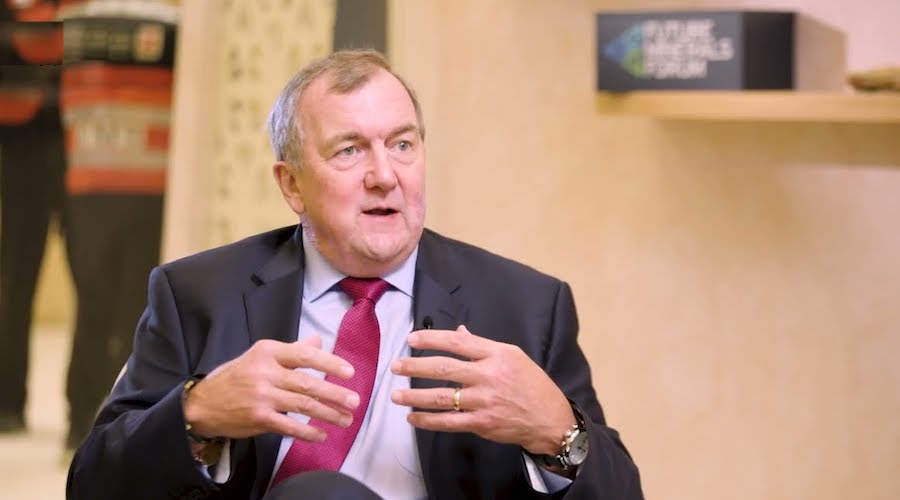
Barrick Gold CEO, Mark Bristow. in interview at the Future Minerals Forum 2024. (Screenshot from FMF TV.)

Mali has issued an arrest warrant for Barrick (NYSE: GOLD, TSX: ABX) CEO Mark Bristow, Reuters reported on Thursday.


Bristow is accused of money laundering and violating financial regulations, according to a warrant document dated December 2, first reported by Malian media and reviewed by Reuters.

The report follows the arrest of four employees from Barrick’s Loulo-Gounkoto mining complex in the West African country.

Barrick stated that the company “will not be commenting” on the reported arrest warrant.

The detention of foreign officials is becoming a pattern in Mali, as the government seeks to extract more revenue from the mining sector.

According to sources cited by Reuters, Mali is seeking approximately $500 million in unpaid taxes from Barrick.

Previously, Bristow said that since September 30, the company has been working to finalize a memorandum of agreement with the government.

The agreement would outline their partnership going forward, including details on “the state’s share of the economic benefits generated by the complex” and “the legal framework under which this would be managed.”

“Our attempts to find a mutually acceptable resolution have so far been unsuccessful, but we remain committed to engaging with the government to resolve all claims levied against the company and its employees and to secure the early release of our unjustly imprisoned colleagues,” Bristow said.

Other four Barrick employees were detained in October.

CEO released after agreement

Last month, Resolute Mining (ASX, LON: RSG) CEO Terry Holohan and two employees were released after the gold miner agreed to pay around $160 million to settle a tax dispute with the Malian government.

Mali has been under military rule since 2020, when interim leader Colonel Assimi Goita ousted the elected president, citing failures to repel Islamist insurgents. Since then, mercenaries from the Kremlin-backed Wagner Group have been deployed, while European forces and a United Nations peacekeeping mission were forced to withdraw.

Hit by sanctions and cut off from Western aid, Malian authorities have pursued both Resolute Mining and Barrick Gold over allegedly unpaid taxes.

Shares of Barrick fell 2.45% by 10:50 a.m. EDT. The Canadian miner currently has a market capitalization of C$41.6 billion ($29.6 billion).
Exxaro suspends CEO pending workplace conduct investigation

Bloomberg News | December 4, 2024 | 

Nombasa Tsengwa, CEO of Exxaro. Credit: Exxaro Resources via LinkedIn

South African coal producer Exxaro Resources Ltd. has placed chief executive officer Nombasa Tsengwa on precautionary suspension until an investigation into allegations over her conduct is concluded.


The claims relate to “workplace conduct and governance practice,” the company said in a statement to the Johannesburg bourse Wednesday. The stock fell as much as 5.2%, the most since Oct. 2.


The announcement follows a Sunday Times report that the company appointed a forensic-law firm to investigate allegations made by a whistleblower about her leadership, the Johannesburg-based newspaper said Dec. 1. Exxaro said Wednesday it has asked law firm ENS to conduct the probe.

Tsengwa, who declined to comment, took over as Exxaro’s first woman CEO in August 2022 after heading its coal business. She was elected president of the Minerals Council of South Africa in June.

Her suspension comes as Exxaro looks to further diversify away from coal, with its production of the dirtiest fossil fuel expected to decrease in the 2024 financial year. After a failed attempt to buy a copper mine last year, the company is considering investing in manganese.

The board has appointed finance director Riaan Koppeschaar as acting CEO, Exxaro said.

(By Paul Burkhardt)
Mitsubishi Corp loses $90 million in suspected China metal fraud

Bloomberg News | December 4, 2024 

Mitsubishi Corp.’s head office building in Tokyo. Credit: Mitsubishi Corp.

Mitsubishi Corp. has suffered a loss of more than $90 million in China after uncovering suspected fraud by one of its copper traders, according to people familiar with the matter.


The loss is the latest in a string of recent cases of alleged wrongdoing to hit a major commodity trading house, highlighting the risk that individual traders who handle billions of dollars in commodities may seek to enrich themselves at the expense of their own companies.

In October, Trafigura Group said it was facing a $1.1 billion hit in Mongolia involving suspected wrongdoing by its own employees. While the scale of Mitsubishi’s loss is considerably smaller, it has nonetheless sent a chill through the huge but conservative Japanese trading house.

Mitsubishi dismissed Gong Huayong, a Shanghai-based copper trader at one of its China units, after finding that he had made unauthorized trades with local companies, including some that were related to him, the people said.

The losses amounted to well over 600 million yuan ($82.8 million), they said, declining to be identified as they aren’t authorized to speak publicly.

That matches a loss of 13.8 billion yen ($92.2 million) that Mitsubishi disclosed in its most recent quarterly results, citing a “loss in Chinese trading business,” without further explanation. The hit was primarily the result of Gong’s actions, the people said.

A spokesperson for Mitsubishi confirmed that Gong had been dismissed by the Chinese unit and added a criminal complaint had been filed. The company will cooperate fully with authorities, the spokesperson said, declining to comment further on what it said was now a criminal matter.

Calls and messages to Gong’s mobile phone did not go through, and an email inquiry to his company address was rejected. Several traders in China, who used to have business connections with Gong, said they also could not reach him. These traders asked to be not named due to the sensitivity of the case.

Mitsubishi began investigating Gong’s trades earlier this year, after some customers in its copper business failed to settle trades or defaulted on payments that were due, the people said.

The Japanese company found that Gong, a Chinese national who worked as a trading manager at Mitsubishi Corporation RtM China Ltd., had caused Mitsubishi to allow certain local companies to defer payment for copper concentrate and refined copper. In some cases Mitsubishi had not approved the companies as counterparties, and in some cases the companies had personal ties to Gong.

Some of the people said they believed Gong had left China on business even before his actions were fully uncovered by the company, and then did not return. At least one of Mitsubishi’s counterparties, which helped to reveal the alleged fraud after an internal investigation, has reported the matter to the Chinese police. The Shanghai police did not respond to multiple requests for comment.

For Mitsubishi, one of Japan’s major trading companies, known as sogo shosha, the loss is highly embarrassing but manageable. When it reported second-quarter results last month, the company reiterated its full-year profit guidance of 950 billion yen.

Still, it’s far from the first trading scandal to hit the sogo shosha. Most famously, Sumitomo Corp. lost more than $2 billion in the 1990s on copper bets made by its star trader Yasuo Hamanaka that the company said were unauthorized. Hamanaka was sentenced to eight years in prison after pleading guilty to forging documents to make unauthorized copper trades on behalf of the company.

Mitsubishi shut its Singapore-based oil unit in 2019 after saying a rogue Chinese trader lost more than $300 million. (The trader said through his lawyer that he was acting on his managers’ orders and that the losses resulted from “premature” settlement of the derivatives positions.)

The latest scandal is likely to make Mitsubishi, already one of the most conservative trading houses, even more cautious, the people said. The company’s Chinese employees in particular are concerned that they may bear the brunt of any fallout.

(By Alfred Cang and Koh Yoshida)
The 45X tax credit makes a difference for US critical minerals


Farrell Gregory | December 4, 2024 | 

The US Treasury Building in Washington D.C. (Image courtesy of US Department of Treasury.)

In the coming decades, critical mineral insecurity will prompt seismic realignments of global supply chains. Initially prompted by the military concerns over sensitive materials, commercial interests may soon follow a pattern of forming more resilient supply chains for the materials that enable essential and experimental technologies.


No longer content to rely on its competitors like China, which accounts for 60% of production and 85% of critical mineral refining, the United States will turn to its allies and partners as new sources of essential materials.

But just as importantly, America will have to examine its domestic capacity to meet mineral needs. From lithium extraction in Arkansas to new antimony mining in Idaho, that process is already underway. The regulations that lawmakers and policymakers implement today will play an outsized role in the critical mineral landscape of tomorrow. Getting mining and refining policy right now could mean the difference between a fortified supply chain or continued vulnerability into the future.

The Treasury Department’s recent adjustments to the 45X tax credit are an example of forward-looking policy that brings the U.S. closer to critical mineral security. Established as part of the 2022 Inflation Reduction Act, the section 45X Advanced Manufacturing Production Credit (AMPC) offers up to 10% of production costs for manufacturers who create and sell certain products up until 2029.

While the exact value available can depend on the size, volume, or capacity of a qualifying product, the credit has indisputable value for domestic producers either as a direct payment or as a transferable tax credit. The passage of the IRA was followed by $126 billion in private sector announcements and commitments: $77 billion for batteries, $26 billion for solar and wind-related projects, but only $6 billion for critical minerals.

It took the Treasury’s recently finalized changes to make the 45X tax credit attractive for critical mineral producers. Previously, the credit was only available for processing minerals, excluding costs incurred during the mining process. Now, the new Treasury rules cover “material costs and extraction costs,” incentivizing both the domestic mining and production of 50 critical minerals.


The new Treasury rules cover “material costs and extraction costs,” incentivizing both the domestic mining and production of 50 critical minerals.

These changes could provide a long lasting incentive that reshapes the American mining landscape. Unlike other manufactured goods, which only receive full 45X benefits until 2029 and phase out by 2032, the legislation does not reduce the value of the credit for critical minerals at any point in the future.

It’s worth examining what a difference the 45X credit could make for domestic miners and producers. For operating mines, the tax credit is particularly attractive for its transferable value, which allows for more rapid cash flow and speedier reinvestment. Mining or refining startups and other small companies with low tax liability may find transferability similarly useful.

For established mining companies, the tax credit could prevent layoffs and offshoring that would otherwise be necessary to remain competitive with foreign producers. Sibanye Stillwater, which operates a Montana mine that produces the critical mineral palladium, stated that the expanded 45X tax credit could save some of the 800 workers who would otherwise be laid off. Similarly, Piedmont Lithium, a major lithium producer, stated that “without the 45X credit, many of the critical mineral projects being planned for the U.S. will likely relocate abroad.

Ali Zaidi, the White House National Climate Advisor, already identified the rule change as “a game changer for our ability to lean into mineral security.” But while a transferable tax credit provides liquidity to miners, it only supports one part of the domestic critical mineral industry. To reduce supply chain vulnerabilities, the AMPC should be just one part of a larger suite of policies and incentives to enhance national security.


For example, a price floor system that protects American mining output against price shocks from abroad could be useful. Already, the Biden administration has been rumored to be considering such a program. Overproduction from China has disrupted domestic production of lithium and cobalt while Russian competition has forced Sibanye Stillwater’s palladium mine to operate at a loss.

Beyond support for existing mines, policymakers could complement the 45X tax credit by providing research grants for innovations that allow the U.S. to capitalize on its domestic critical mineral supplies. Advances in cobalt recycling could significantly reduce reliance on China, which refines 80% of the world’s cobalt. Similarly, improved lithium extraction technology would enable the U.S. to benefit from a recently discovered deposit of lithium in Arkansas that would entirely reduce reliance on foreign sources of this critical mineral.

Valuable, transferable, and without a phase out period, the 45X tax credit has the potential to reshape American production of critical minerals for decades to come. Amid a global pattern of supply chain realignment, the U.S. should rely on allies and partner nations to secure its supply chains for sensitive materials. But it’s even better to find domestic sources that provide jobs for American workers and utilize the country’s abundant natural resources. The 45X tax credit is an important first step towards mineral security, but additional investment and support is necessary to unlock America’s mining potential.

_________________
Farrell Gregory is a Policy Fellow at the Foundation for American Innovation and research assistant at the Yorktown Institute. He is currently a visiting student at Mansfield College, Oxford, studying Politics, Philosophy, and Economics.
Panamanians divided over reopening First Quantum’s copper mine

Cecilia Jamasmie | December 5, 2024 | 

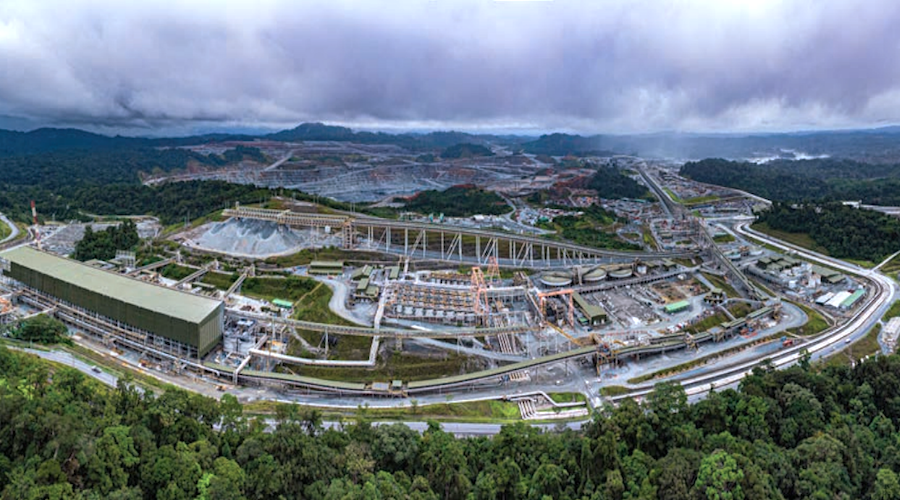
Cobre Panama copper mine contributed almost 5% of Panama’s GDP. 
(Image courtesy of Franco-Nevada assets handbook.)

A recent nationwide survey in Panama has shed light on what locals think about the potential reopening of First Quantum’s (TSX: FM) $6.5 billion Cobre Panamá copper mine, which has been shut down for over a year following a Presidential decree.


The findings reveal a nation deeply divided, with people balancing concerns about environmental impacts and governance against the mine’s critical economic role.

The survey, commissioned by ARCA Media en Direct and conducted by research firm DOXA, involved 1,600 face-to-face interviews nationwide and included 400 participants from communities near the mine.

The results of the survey come at a time when Panama is grappling with the economic and social ramifications of the mine’s closure ordered by then-President Laurentino Cortizo after the Supreme Court ruled the mine contract unconstitutional.

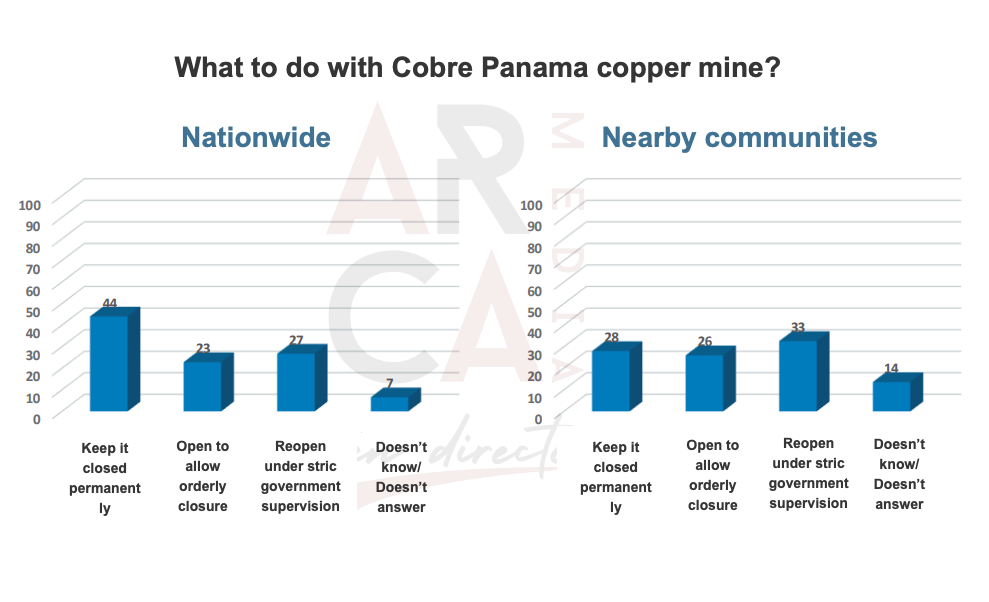
In mining-adjacent communities, a greater proportion of respondents would support to reopen the mine either to keep it operating under government supervision (33%) or to facilitate and orderly closure (26%).

The shutdown of Cobre Panama marked a turning point for a mine that once contributed nearly 5% of Panama’s GDP and accounted for 75% of its exports.

Nationally, 44% of respondents believe the mine should remain closed indefinitely. A 27% of participants support reopening it under strict government supervision, while 23% advocate for reopening the mine just to enable its orderly closure.

In mining-adjacent communities, a greater proportion of respondents would support to reopen the mine either to keep it operating under government supervision (33%) or to facilitate and orderly closure (26%).
Taken from: Doxa post election survey.

Panamanians acknowledge Cobre Panama’s economic significance. When survey participants opposed to reopening were presented with the potential consequences of a prolonged closure — including the loss of $4 billion annually and 40,000 jobs — 52% nationwide expressed support for reopening. However, in communities near the mine, economic arguments appear to hold less sway, with support for reopening, among those generally opposed, remaining low.

As operations at Cobre Panama remain suspended, the mine has transitioned into a preservation phase, incurring significant monthly costs. First Quantum reported spending between $11 million and $13 million per month on labour, maintenance, and environmental stability measures. By the end of October, nearly 121,000 tonnes of copper concentrate remained on-site, as First Quantum continued negotiating a permit to export the stockpiled metal.

Financial shock

The survey showed Panamanians are concerned about how the situation may affect the flow of foreign direct investment (FDI) if the mine remains closed. At a national level, 57% of respondents believe a continued shutdown would deter FDI, with 54% of those near the mine sharing this belief.

Respondents also expressed a strong desire for greater governmental oversight. Nationwide, 57% support reviewing the contract with First Quantum, rising to 65% among residents near the mine.

Trust in current President José Raúl Mulino’s administration to resolve the crisis was relatively high, with 44% of respondents expressing confidence in his leadership, compared to 18% for the construction workers’ union and 15% for the chamber of commerce.

President Mulino has criticized his predecessor for leaving the issue unresolved, pledging to address it with what he calls “credibility and national acceptance.”

As the government weighs its options, the survey highlights a critical tension: while a large segment of the population values the mine’s economic contributions, particularly for jobs and revenue, deep-seated concerns about its social and environmental impact persist.

Any decision about the mine’s future will need to address public opposition, economic imperatives, and the trust gap between communities and mining stakeholders.