Tuesday, December 10, 2024


Pusan National University scientists designed a new model to predict metal wear for safer, lighter cars and planes


This hybrid model uses machine learning and physics to improve fatigue life prediction for lightweight magnesium alloys


Pusan National University

Improving fatigue life prediction for lightweight magnesium alloys with a hybrid machine learning model. 

image: 

The new hybrid model uses machine learning combined with physical principles to accurately predict the fatigue life of magnesium alloys under varying stress conditions, eliminating the need for manual parameter adjustments and improving predictive accuracy.

view more 

Credit: Taekyung Lee from Pusan National University, South Korea


Magnesium alloys are increasingly popular in vehicle and aircraft design due to their strength, light weight, and ease of machining. Reducing weight is crucial because lighter vehicles need less power to move, saving energy and reducing emissions. However, since magnesium alloys behave differently under stress, predicting their ‘fatigue life’ has been challenging. Over time, parts made from these alloys can develop tiny cracks from the repeated stress during their use.

Until now, predicting exactly how and when these cracks will form has been difficult, as traditional methods involve empirical models that demand frequent adjustments for different loading conditions.  This limitation makes them difficult to implement for industrial applications, where changing loads and directions are common.

A team of researchers led by Professor Taekyung Lee from Pusan National University, South Korea along with Mr. Jinyeong Yu, a Ph. D candidate set out to tackle this challenge. In their study published in Journal of Magnesium Alloys, the group integrated machine learning with energy-based physical modeling to improve prediction accuracy. The model works by using a combination of a neural network that analyzes complex patterns in stress and strain cycles, along with an energy-based physical model that provides a more holistic understanding of material behavior under cyclic loading.

The model was built using a large dataset of hysteresis loops—the stress-strain behaviors observed during repeated loading and unloading of the material—collected from low-cycle fatigue tests of the AZ31 magnesium alloy. “The neural network learns from these stress cycles which reveal how the metal stretches, bends, and returns to shape under load. We then use a physics-based model to ground the neural network in the physical laws of material science and to forecast when cracks may form,” explains Prof. Lee.

Instead of predicting fatigue life directly, the neural network estimates the hysteresis loops for the material under different conditions. By reconstructing these loops, it can more accurately assess how the material's energy is dissipated during each cycle of loading and unloading, which is directly related to how quickly fatigue will accumulate. Then the physics-based model converts these stress cycle predictions into a reliable estimate of the number of cycles to failure, or the fatigue life of the alloy. “Because the machine learning component can continually adapt as it learns from the loop data, this method is more flexible across multiple loading directions and conditions, removing the need for manual parameter adjustments,” adds Prof. Lee.

With the advent of this new approach, manufacturers may soon benefit from greater predictive reliability when working with magnesium alloys, enabling safer, lighter, and more cost-effective designs in high-stakes environments. The model offers a more streamlined and accurate approach to the fatigue life prediction of magnesium alloys that could lead to enhanced safety and longevity of critical components in real-world applications.


***

Reference                                    

Title of original paper: Alternative predictive approach for low-cycle fatigue life based on machine learning and energy-based modeling

Journal: Journal of Magnesium Alloys

DOI: https://doi.org/10.1016/j.jma.2024.10.014


About the institute Pusan National University, Korea

Pusan National University, located in Busan, South Korea, was founded in 1946 and is now the No. 1 national university of South Korea in research and educational competency. The multi-campus university also has other smaller campuses in Yangsan, Miryang, and Ami. The university prides itself on the principles of truth, freedom, and service, and has approximately 30,000 students, 1200 professors, and 750 faculty members. The university is composed of 14 colleges (schools) and one independent division, with 103 departments in all.

Website: https://www.pusan.ac.kr/eng/Main.do


About Professor Taekyung Lee

Dr. Taekyung Lee is an Associate Professor at the School of Mechanical Engineering at Pusan National University, Korea. His group, Metal Design & Manufacturing (MEDEM) Lab, studies advanced metal-forming processes, such as the electropulsing treatment, additive manufacturing, and severe plastic deformation process. MEDEM is also interested in the optimization of processing parameters based on physics, machine learning, and microstructure-mechanical analysis. Prof. Lee earned his Ph.D. at POSTECH, Korea in 2014 and completed the postdoctoral training at Northwestern University, USA. Before coming to Pusan National University, he worked at Kumamoto University, Japan, for two years as an assistant professor.

Lab Website: https://sites.google.com/site/medemlab/

ORCID id: 0000-0002-1589-3900

The inequity of wildfire rescue resources in California


A new study finds that the most vulnerable communities are lacking state resources to reduce damages – and save lives – in a wildfire


Society for Risk Analysis


AUSTIN, TX, December 10, 2024 – Wildfires in California are intensifying due to warmer temperatures and dry vegetation – putting more residents at risk of experiencing costly damages or losing their homes. Marginalized populations (lower income, elderly, and the disabled) often suffer the most and, according to a new study, may receive less economic and emergency assistance compared to wealthy residents. 

A detailed analysis of more than 500 California wildfire incidents from 2015 to 2022 by University at Buffalo scientists shows that disaster recovery resources in California favor people living in wealthy communities over disadvantaged residents who lack the resources to plan for and recover from a wildfire. “We discovered that racial and economic inequity plays a pivotal role in resource allocation for wildfire recovery and mitigation,” says lead author Poulomee Roy, Ph.D. candidate in Industrial and Systems Engineering. She will present the results in December at the annual meeting of the Society for Risk Analysis in Austin, Texas. 

To examine the underlying relationships between resource allocation and socio-demographic factors, the researchers conducted an in-depth analysis of data (at the county level) related to 504 California wildfire incidents leveraging cutting-edge AI-driven approaches. Factors included in the analysis were: 

  • wildfire impact (the spread, burnt area, structural damage, fatalities, etc.), 

  • sociodemographic factors (population, race, ethnicity, poverty, educational level, populations of elderly and disabled, sex ratio, crowded households, etc.), and 

  • resource allocation data (estimated cost incurred for the wildfire mitigation, personnel deployed in the rescue operation, and whether any equipment like aircraft, gulf strikes, water tenders, dozers, etc., are deployed or not).  

“Our study highlighted a pronounced trend in which counties with higher percentages of lower-income and black populations receive less personnel and funding, compared to those counties with higher proportions of high-income and white people,” says principal investigator Dr. Sayanti Mukherjee, Assistant Professor of Industrial and Systems Engineering. 

When measuring “personnel for rescue operations,” the analysis showed that racial distribution within a county plays an instrumental role in resource allocation. For example, counties with a higher number of Hispanic or Latino residents had fewer wildfire rescue personnel available to them despite facing a higher risk of wildfire. The results also showed a declining trend of recovery efforts and resources allocated in counties with higher Black or African American populations. 

By contrast, counties with a greater concentration of wealthier, single-parent households (such as Los Angeles County), received adequate personnel to mitigate a wildfire. (Wildfire mitigation is defined by FEMA as “any actions undertaken to decrease the risk of damage or loss of life from wildfires.”)  

Elderly and disabled populations likely need more assistance during an evacuation and rescue operation, yet the study revealed that the number of rescue personnel lowered as the population of elderly and disabled in a county increased. The same trend was seen when the number of “crowded households” rose -- despite the likelihood of more injuries and fatalities in crowded households during a fire.   

The results were similar when resources were measured as “cost for recovery” from a wildfire. The economically disadvantaged populations did not receive adequate resources to recover from a wildfire, compared to wealthier neighborhoods with a higher proportion of single-family households.  

“Our findings underscore the significant role of ethnicity, economic status, and proportion of the elderly population in determining wildfire resource allocation for these counties,” says Mukherjee. “The results of this study can equip policymakers to adopt an informed decision about the distribution and allocation of resources.” 

The authors argue that their findings demand action from policymakers to ensure equitable recovery efforts and support for marginalized communities.  

Poulomee Roy is presenting this research Tuesday, December 10, from 3:30 pm, at the JW Marriot Austin, Texas. 

Assessing inequities and disparities in the post-wildfire recovery of socially vulnerable WUI (Wildfire Urban Interface) communities – Tuesday, December 10, 3:30 p.m. 

Part of a symposium on “Confronting the Wildfire Crisis Leveraging Risk-informed Wildfire Preparedness and Recovery Strategies” 

About SRA   

The Society for Risk Analysis is a multidisciplinary, interdisciplinary, scholarly, international society that provides an open forum for all those interested in risk analysis. SRA was established in 1980. Since 1982, it has continuously published Risk Analysis: An International Journal, the leading scholarly journal in the field. For more information, visit www.sra.org.   


Aerosol pollutants from cooking may last longer in the atmosphere – new study


University of Birmingham


New insights into the behaviour of aerosols from cooking emissions and sea spray reveal that particles may take up more water than previously thought, potentially changing how long the particles remain in the atmosphere. 

Research led by the University of Birmingham found pollutants that form nanostructures could absorb substantially more water than simple models have previously suggested. Taking on water means the droplets become heavier and will eventually be removed from the atmosphere when they fall as rain. 

The team, also involving researchers from the University of Bath, used facilities at Diamond Light Source, to study the water uptake of oleic acid, a molecule commonly found in emissions from cooking and in spray from the ocean’s surface.  They used a technique called Small-Angle X-ray Scattering (SAXS) to chart the relationship between the structure inside the particle and both its ability to absorb water and its reactivity.  

Working at Diamond’s I22 beamline with the I22 team and experts from the Central Laser Facility operated by the Science and Technology Facilities Council at the Rutherford Appleton Laboratory, the team also studied changes in the structures of polluting particles, caused by changes in humidity. They showed that as molecules react with ozone in the atmosphere and break down, they can also reform into different 3-D structures with varying abilities to absorb water and to react with other chemicals. 

The findings, published in Atmospheric Chemistry and Physics, suggest these combined effects work to keep oleic acid particles circulating in the atmosphere for longer. 

“As we develop our understanding of how these particles behave in the atmosphere, we will be able to design more sophisticated strategies for the control of air pollution,” said lead researcher  

Professor Christian Pfrang. “For example, protecting harmful emissions from degrading in the atmosphere could allow them to travel and disperse further through the atmosphere, thus substantially increasing the pollutant’s reach.”  

He added: “Our results show that aerosols exist in a really dynamic state, with complex structures being formed as well as being destroyed. Each of these states allows polluting molecules to linger in the atmosphere for longer. To reduce exposure to pollutants from cooking, people should consider making more use of extractor fans and ensuring that kitchens are well ventilated to allow aerosol particles to escape rapidly.” 

ENDS 


Air pollution linked to rising depression rates, study finds


Eurasia Academic Publishing Group


A groundbreaking study published in Environmental Science and Ecotechnology has revealed a strong connection between long-term air pollution exposure and an increased risk of depression. The research, led by Harbin Medical University and Cranfield University, analyzed data from over 12,000 participants in the China Health and Retirement Longitudinal Study (CHARLS).


The study identifies sulfur dioxide (SO₂) as the most significant contributor to depression risk, with fine particulate matter (PM2.5) and carbon monoxide (CO) also linked to depressive symptoms. These pollutants were found to have a compounded impact when combined, highlighting the dangers of multi-pollutant exposure.


The research also explored potential mechanisms, finding that cognitive and physical impairments partially mediate the link between pollution and depression. The findings emphasize the mental health risks posed by environmental pollutants and call for urgent action to reduce their levels.


“Our findings underscore the critical need for integrated air quality management to improve both physical and mental health,” the authors noted. Targeting SO₂ and other key pollutants could significantly alleviate the public health burden of depression, particularly among vulnerable populations like middle-aged and older adults.


With millions exposed to unsafe air quality levels worldwide, this study highlights the intersection of environmental and mental health challenges, calling for stricter pollution controls and targeted interventions.

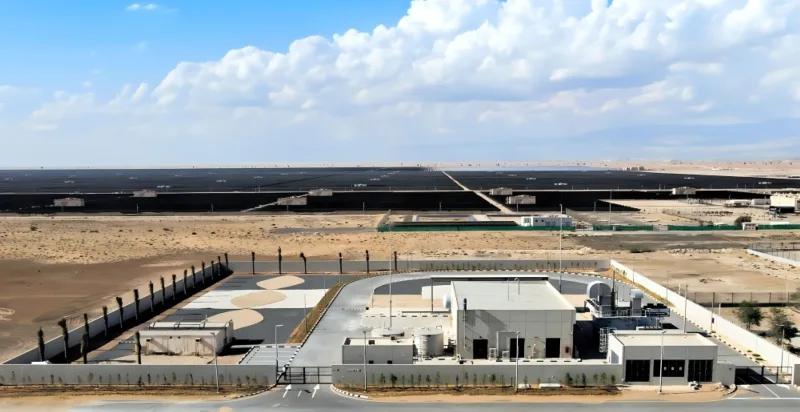
Dubai project produces 90 tonnes of green hydrogen


The Green Hydrogen project is the first of its kind in the Middle East and North Africa to produce green hydrogen using solar energy.


AI predicts that most of the world will see temperatures rise to 3°C much faster than previously expected


IOP Publishing

AI predicts that most of the world will see temperatures rise to 3°C much faster than previously expected 

image: 

AI predicts that most of the world will see temperatures rise to 3C much faster than previously expected

view more 

Credit: CCBY IOP Publishing


Three leading climate scientists have combined insights from 10 global climate models and, with the help of artificial intelligence (AI), conclude that regional warming thresholds are likely to be reached faster than previously estimated.

The study, published in Environmental Research Letters by IOP Publishing, projects that most land regions as defined by the Intergovernmental Panel on Climate Change (IPCC) will likely surpass the critical 1.5°C threshold by 2040 or earlier. Similarly, several regions are on track to exceed the 3.0°C threshold by 2060—sooner than anticipated in earlier studies.

Regions including South Asia, the Mediterranean, Central Europe and parts of sub-Saharan Africa are expected to reach these thresholds faster, compounding risks for vulnerable ecosystems and communities.

The research, conducted by Elizabeth Barnes, professor at Colorado State University, Noah Diffenbaugh, professor at Stanford University, and Sonia Seneviratne, professor at the ETH-Zurich, used a cutting-edge AI transfer-learning approach, which integrates knowledge from multiple climate models and observations to refine previous estimates and deliver more accurate regional predictions.

Key Findings

Using AI-based transfer learning, the researchers analysed data from 10 different climate models to predict temperature increases and found:

  • 34 regions are likely to exceed 1.5°C of warming by 2040.
  • 31 of these 34 regions are expected to reach 2°C of warming by 2040.
  • 26 of these 34 regions are projected to surpass 3°C of warming by 2060.

Elizabeth Barnes says:

“Our research underscores the importance of incorporating innovative AI techniques like transfer learning into climate modelling to potentially improve and constrain regional forecasts and provide actionable insights for policymakers, scientists, and communities worldwide.”

Noah Diffenbaugh, co-author and professor at Stanford University, added:

“It is important to focus not only on global temperature increases but also on specific changes happening in local and regional areas. By constraining when regional warming thresholds will be reached, we can more clearly anticipate the timing of specific impacts on society and ecosystems. The challenge is that regional climate change can be more uncertain, both because the climate system is inherently more noisy at smaller spatial scales and because processes in the atmosphere, ocean and land surface create uncertainty about exactly how a given region will respond to global-scale warming.”


ENDS


About Environmental Research Letters

Environmental Research Letters™ (ERL) is a high-impact, open-access journal published by IOP Publishing. The journal is intended to be the meeting place of the research and policy communities concerned with environmental change and management. ERL is dedicated to bringing together intellectual and professional scientists, economists, engineers, and social scientists, as well as the public sector, industry, and civil society, all of whom are engaged in efforts to understand the state of natural systems and, increasingly, the human footprint on the biosphere.


About IOP Publishing

IOP Publishing is a society-owned scientific publisher, delivering impact, recognition and value to the scientific community. Its purpose is to expand the world of physics, offering a portfolio of journals, ebooks, conference proceedings and science news resources globally.    IOPP is a member of Purpose-Led Publishing, a coalition of society publishers who pledge to put purpose above profit.  

As a wholly owned subsidiary of the Institute of Physics, a not-for-profit society, IOP Publishing supports the Institute’s work to inspire people to develop their knowledge, understanding and enjoyment of physics. Visit ioppublishing.org to learn more. 

AI predicts Earth’s peak warming


Artificial intelligence provides new evidence that rapid decarbonization will not prevent warming beyond 1.5 degrees Celsius. The hottest years of this century are likely to shatter recent records


Stanford University


Researchers have found that the global goal of limiting warming to 1.5 degrees Celsius above pre-industrial levels is now almost certainly out of reach.

The results, published Dec. 10 in Geophysical Research Letters, suggest the hottest years ahead will very likely shatter existing heat records. There is a 50% chance, the authors reported, that global warming will breach 2 degrees Celsius even if humanity meets current goals of rapidly reducing greenhouse gas emissions to net-zero by the 2050s.

A number of previous studies, including the authoritative assessments by the Intergovernmental Panel on Climate Change, have concluded that decarbonization at this pace would likely keep global warming below 2 degrees.

“We’ve been seeing accelerating impacts around the world in recent years, from heatwaves and heavy rainfall and other extremes. This study suggests that, even in the best case scenario, we are very likely to experience conditions that are more severe than what we’ve been dealing with recently,” said Stanford Doerr School of Sustainability climate scientist Noah Diffenbaugh, who co-authored the study with Colorado State University climate scientist Elizabeth Barnes.

This year is set to beat 2023 as Earth’s hottest year on record, with global average temperatures expected to exceed 1.5 degrees Celsius or nearly 2.7 degrees Fahrenheit above the pre-industrial baseline, before people started burning fossil fuels widely to power industry. According to the new study, there is a nine-in-ten chance that the hottest year this century will be at least half a degree Celsius hotter even under rapid decarbonization. 

Using AI to refine climate projections

For the new study, Diffenbaugh and Barnes trained an AI system to predict how high global temperatures could climb, depending on the pace of decarbonization.

When training the AI, the researchers used temperature and greenhouse gas data from vast archives of climate model simulations. To predict future warming, however, they gave the AI the actual historical temperatures as input, along with several widely used scenarios for future greenhouse gas emissions. 

“AI is emerging as an incredibly powerful tool for reducing uncertainty in future projections. It learns from the many climate model simulations that already exist, but its predictions are then further refined by real-world observations,” said Barnes, who is a professor of atmospheric science at Colorado State. 

The study adds to a growing body of research indicating that the world has almost certainly missed its chance to achieve the more ambitious goal of the 2015 Paris Climate Agreement, in which nearly 200 nations pledged to keep long-term warming “well below” 2 degrees while pursuing efforts to avoid 1.5 degrees. 

A second new paper from Barnes and Diffenbaugh, published Dec. 10 in Environmental Research Letters with co-author Sonia Seneviratne of ETH-Zurich, suggests many regions including South Asia, the Mediterranean, Central Europe, and parts of sub-Saharan Africa will surpass 3 degrees Celsius of warming by 2060 in a scenario in which emissions continue to increase – sooner than anticipated in earlier studies.

Extremes matter

Both new studies build on 2023 research in which Diffenbaugh and Barnes predicted the years remaining until the 1.5 and 2 degrees Celsius goals are breached. But because these thresholds are based on average conditions over many years, they don’t tell the full story of how extreme the climate could become.

“As we watched these severe impacts year after year, we became more and more interested in predicting how extreme the climate could get even if the world is fully successful at rapidly reducing emissions,” said Diffenbaugh, the Kara J Foundation Professor and Kimmelman Family Senior Fellow at Stanford.

For a scenario in which emissions reach net-zero in the 2050s – the most optimistic scenario widely used in climate modeling – the researchers found a nine-in-ten chance that the hottest year this century will be at least 1.8 degrees Celsius hotter globally than the pre-industrial baseline, with a two-in-three chance for at least 2.1 degrees Celsius. 

For a scenario in which emissions decline too slowly to reach net-zero by 2100, Diffenbaugh and Barnes found a nine-in-ten chance that the hottest year will be 3 degrees Celsius hotter globally than the pre-industrial baseline. In this scenario, many regions could experience temperature anomalies at least triple what occurred in 2023.

Investing in adaptation

The new predictions underline the importance of investing not only in decarbonization but also in measures to make human and natural systems more resilient to severe heat, intensified drought, heavy precipitation, and other consequences of continued warming. Historically, those efforts have taken a back seat to reducing carbon emissions, with decarbonization investments outstripping adaptation spending in global climate finance and policies such as the 2022 Inflation Reduction Act. 

“Our results suggest that even if all the effort and investment in decarbonization is as successful as possible, there is a real risk that, without commensurate investments in adaptation, people and ecosystems will be exposed to climate conditions that are much more extreme than what they are currently prepared for,” Diffenbaugh said. 


Diffenbaugh is a professor of Earth system science in the Stanford Doerr School of Sustainability and a senior fellow in the Stanford Woods Institute for the Environment

The Geophysical Research Letters study was supported by Stanford University and the Regional and Global Model Analysis program area of the U.S. DOE Office of Biological and Environmental Research as part of the Program for Model Diagnosis and Intercomparison.

The Environmental Research Letters study was supported by Stanford University, the European Union’s Horizon 2020 and Horizon Europe programs, the Swiss State Secretariat for Education, Research and Innovation (SERI), and the Stanford Woods Institute for the Environment.