It’s possible that I shall make an ass of myself. But in that case one can always get out of it with a little dialectic. I have, of course, so worded my proposition as to be right either way (K.Marx, Letter to F.Engels on the Indian Mutiny)
Tuesday, January 14, 2025
Lawsuit challenges NRC on SMR regulation
Friday, 10 January 2025
The States of Texas and Utah and microreactor developer Last Energy Inc are challenging the US regulator over its application of a rule it adopted in 1956 to small modular reactors and research and test reactors.
A rendering of the Llynfi Clean Energy Project in Wales, one of Last Energy's proposed projects outside the USA (Image: Last Energy)
Under the US Nuclear Regulatory Commission (NRC) Utilization Facility Rule, all US reactors are required to obtain NRC construction and operating licences regardless of their size, the amount of nuclear material they use or the risks associated with their operation. The plaintiffs say this imposes "complicated, costly, and time-intensive requirements that even the smallest and safest SMRs and microreactors - down to those not strong enough to power an LED lightbulb" must satisfy to secure the necessary licences. This does not only affect microreactors: existing research and test reactors such as those at the universities in both Texas and Utah face "significant costs" to maintain their NRC operating licences, the plaintiffs say.
In the filing, Last Energy - developer of the PWR-20 microreactor - says it has invested "tens of millions of dollars" in developing small nuclear reactor technology, including USD2 million on manufacturing efforts in Texas alone, and has agreements to develop more than 50 nuclear reactor facilities across Europe. But although it has a "preference" to build in the USA, "Last Energy nonetheless has concluded it is only feasible to develop its projects abroad in order to access alternative regulatory frameworks that incorporate a de minimis standard for nuclear power permitting".
Noting that only three new commercial reactors have been built in the USA over the past 28 years, the plaintiffs say building a new commercial reactor of any size in the country has become "virtually impossible" due to the rule, which it says is a "misreading" of the NRC's own scope of authority.
They are asking the court to set aside the rule, "at least as applied to certain small, non-hazardous reactors", and exempt their research reactors and Last Energy’s small modular reactors (SMRs) from the commission's licensing requirements.
Turning point
Houston, Texas-based law firm King & Spalding said the lawsuit, if it is successful, would "mark a turning point" in the US nuclear regulatory framework - but warns that it could also create greater uncertainty as advanced nuclear technologies get closer to commercial readiness.
"Regardless the outcome, the Plaintiffs’ lawsuit highlights the challenges in applying the Utilization Facility Rule to the advanced nuclear reactors now under development in the US," the company said in in analysis released on 9 January.
But the NRC is already addressing the issue: in 2023, it began the rulemaking process to establish an optional technology-inclusive regulatory framework for new commercial advanced nuclear reactors, which would include risk-informed and performance-based methods "flexible and practicable for application to a variety of advanced reactor technologies". SECY-23-0021: Proposed Rule: Risk-Informed, Technology-Inclusive Regulatory Framework for Advanced Reactors is currently open for public comment until 28 February, and the NRC has said it expects to issue a final rule "no later than the end of 2027".
The lawsuit has been filed with the US District Court in the Eastern District of Texas.
Viewpoint: Joint EDF-CNNC book is new chapter in bilateral links
Friday, 10 January 2025
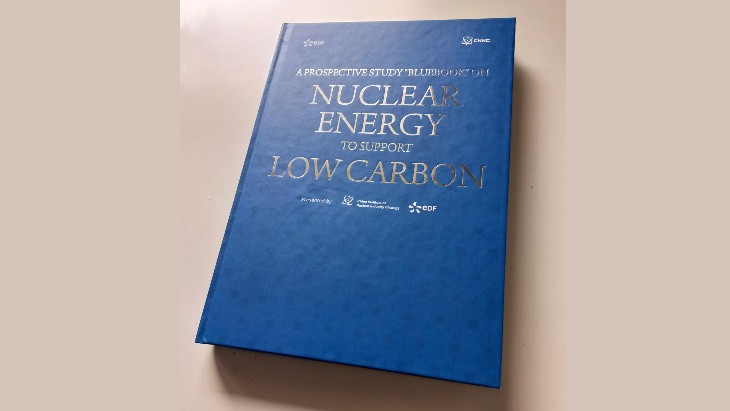
The Blue Book Nuclear Energy To Support Low Carbon is a unique collaborative work by China National Nuclear Corporation (CNNC) and France’s EDF, sharing their experience to highlight nuclear’s role in the energy transition, explains the editorial committee leader of the Blue Book at EDF, Antoine Herzog, in this Q&A.
(Image:: EDF and CNNC)
Firstly, what is the book?
The Blue Book is a collaborative work between the Chinese nuclear company CNNC and the French company EDF. It is intended to be the first fruit of a new era of collaboration between these two players on a wide range of subjects. Indeed, it is the first time in the nuclear energy sector that a Chinese and a French energy group have jointly written a book of this kind.
How did it come about?
EDF and CNNC have a long-standing relationship. Today, as the Chinese industry achieves unprecedented growth and innovation, and as France experiences a new impetus of nuclear energy, this Blue Book is a pioneering initiative. Supported by the nuclear industries of the two countries, it aims to highlight the properties of nuclear technologies for a successful energy transition, while underlying the overriding imperative of safety.
To seal this new era of cooperation, the decision to write a Blue Book was taken in 2022 and confirmed on 6 April 2023 when the Presidents of China and France, Xi Jinping and Emmanuel Macron, met in China to sign a number of agreements.
What was the process of writing the book?
It took around 18 months of work in English and Chinese to achieve this result. With the help of dozens of experts on each side, many sections were written jointly, starting with the Executive Summary, and numerous paragraphs on current cooperation. This work then had to be enriched by the specific contributions of each of the players.
EDF and CNNC agreed that addressing nuclear from a climate change perspective, as well as in terms of security of supply and economics, was key. In terms of sharing experiences, it was also enriching for each of the players to learn more about each other's approaches.
In a large number of chapters, a Chinese part and a French part follow one another, which meant that the substance of the contributions of each player was retained, while at the same time succeeding in creating a common thread. The work was then refined jointly to produce a coherent result. The two missions, one to France and the other to China, were major steps in bringing the work together.
What about the content itself?
After an overview of nuclear energy around the world, including in France and China, EDF and CNNC examined the three major contributions of nuclear power: to the climate, to the economy and to security of supply. The aim was then to focus on the comparative nuclear dynamic between the two countries, with the main themes including safety, public acceptance, the industrial supply chain, construction methods, fuel resources, decommissioning and waste, and the adaptation of plants to climate change. Last but not least, the Blue Book places great emphasis on innovation and international cooperation.
How similar, or different, were the perspectives?
The Blue Book revealed very similar approaches between the two players, while at the same time highlighting the particularities of each player so that each can benefit from the experience of the other.
CNNC has a large number of power plants under construction, and this can benefit EDF in the areas of construction methods, factory production and site optimisation. Many of EDF’s reactors are located on riversides, and the operation of its fleet is flexible, since it has long been able to adapt to variations in electricity demand. With more than 2000 reactor-years of its fleet operating successfully, EDF has a wealth of experience to draw on. All these features mean that each player can benefit from the experience of the other, which is a source of mutual enrichment.
What are the hopes for the Blue Book's impact?
This Blue Book creates a new era for China-France nuclear energy cooperation and could serve as a reference for other countries that envisage developing nuclear energy and promoting low-carbon development.
Both China and France have ambitious nuclear plans. Above all, they both have a strong record of ensuring safety and reliability in nuclear operations. Having a low-carbon, large-scale dispatchable technology such as nuclear power is crucial, and in looking to the future in this way, drawing up a Blue Book made sense.
What are its main recommendations?
The main recommendations include to: build a robust nuclear safety regulatory system, enhance the competitiveness of nuclear energy, improve public communication, build strong and resilient supply chains, build a safe, cost-effective and sufficient system for securing uranium resources, implement a closed fuel cycle and minimise radioactive waste, develop the multipurpose use of nuclear energy, optimise the research and development, design and engineering construction, enhance the research and development of advanced fuels, and strengthen international cooperation under the framework of international organisations such as the International Atomic Energy Agency.
As to what’s next, the exchanges of ideas and practical experience have enabled China-France cooperation to reach a new stage. EDF and CNNC will undoubtedly work together in the fight against climate change, and by sharing experience and strengthening their cooperation, aim to continue to pave the way for a greener and more sustainable future.
UK consortium advances fusion-grade steel production
Friday, 10 January 2025
The NEURONE Consortium - a UK Atomic Energy Authority working group - has demonstrated the industrial scale production of fusion-grade steel. This achievement, it says, has the potential to reduce production costs by an order of magnitude and improve the efficiency of future fusion power plants.
NEURONE project billet leaving the caster and entering the product straightener (Image: MPI)
The NEURONE (Neutron Irradiation of Advanced Steels) consortium is a GBP12 million (USD15 million) collaboration between UKAEA's Materials Division and academic and industry partners across the UK, as well as international partners, which provide access to neutron irradiation facilities. Academic partners include the University of Swansea, University of Sheffield, University of Birmingham, Imperial College London, University of Manchester, University of Bristol, University of Strathclyde Glasgow and University of Oxford. Two industry partner organisations - the Materials Processing Institute (MPI) and Sheffield Forgemasters - are involved as well as the Australian Nuclear Science and Technology Organisation.
The consortium was established in April 2023 to research, test and develop steels to operate at higher temperatures compared with conventional counterparts. This will maximise the capacity of fusion machines to extract heat, which is used to power turbines and create electricity, improving the overall efficiency of fusion power plants.
UKAEA - the UK's national organisation responsible for researching and delivering fusion energy - has now announced that the consortium has successfully produced fusion-grade reduced-activation ferritic-martensitic (RAFM) steel on an industrial scale, using a seven-tonne Electric Arc Furnace (EAF) at the Materials Processing Institute in Middlesborough.
"One of the major challenges for delivering fusion energy is developing structural materials able to withstand the extreme temperatures (at least up to 650°C) and high neutron loads required by future fusion powerplants," said David Bowden, group team leader for Materials Science and Engineering at UKAEA and NEURONE programme lead.
The high temperatures and radiation levels caused by the high neutron loads arise as a result of the fusion reaction. The structural materials therefore serve an important role in maintaining the integrity of the fusion power plant under these conditions.
According to UKAEA, based on Electric Arc Furnace technology, with enhanced purification and thermomechanical protocols, this approach has the potential to dramatically decrease production costs by up to 10 times compared with conventional RAFM counterparts, utilising existing and readily scalable infrastructure within the supply chain.
The Materials Processing Institute led the trials which enabled the manufacture, testing and analysis of specialist high temperature steels initially at laboratory scale leading to industrial scale trials in their Electric Arc Furnace.
"As the only sovereign UK steel research facility able to produce RAFM steel at this scale, this is a groundbreaking moment for nuclear fusion R&D," said Richard Birley, NEURONE project lead at the Materials Processing Institute. "The production of 5.5 tonnes of fusion-grade RAFM steel lays the foundation for cost-effective manufacturing of these types of fusion steel for future commercial fusion programmes.
"NEURONE plans to produce advanced variants of RAFM steel, capable of operating up to 650°C - a stretch target, given the solid-state physics of irradiated materials behaviour. Developing these types of steel could also benefit adjacent industries that require high-strength, high-temperature structural steels, such as nuclear fission or petrochemicals. The programme also intends to produce an optimised advanced RAFM alloy using the electric arc furnace at a similar multi-tonne scale to the best EU developmental fusion (RAFM) steel (EUROFER 97)."
The NEURONE project is expected to run until March 2028.
Fermi Energia kicks off SMR site selection process
Tuesday, 14 January 2025
Estonia's Fermi Energia has submitted an application to the country's Ministry of Economic Affairs and Communications to begin the state spatial planning process for a 600 MW nuclear power plant.
A visualisation of a two unit BWRX-300 power plant (Image: Fermi Energia)
The company said the application represents the culmination of six years of thorough planning, involving 71 comprehensive studies, collaboration with 32 partners and total investment of EUR1.4 million (USD1.4 million) in research and analysis. Over the same period, it has conducted more than 50 information sessions across the Virumaa region of northeastern Estonia, engaging more than 500 residents. These sessions spanned 15 localities, including Aa, Aseri, Kiviõli and Kohtla-Järve.
The municipal councils of Viru-Nigula and Lüganuse have formally agreed to participate in the spatial planning process, with decisions made in September 2023 and March 2024, respectively.
During the initial site pre-selection phase (to be conducted between 2025 and 2027) a comprehensive evaluation of potential locations will be carried out, with a focus on areas near Kunda in Viru-Nigula County and Aa village in Lüganuse County.
During the site confirmation phase (2027-2029), detailed site-specific studies will be conducted, with an assessment of technical compatibility and an analysis of location-based parameters.
Fermi Energia expects to submit a construction permit application for the proposed plant in 2029, with construction targeted to begin in 2031. The first of two small modular reactors (SMRs) is set to be operational by the second half of 2035.
"A state spatial plan is essential for identifying the optimal nuclear power plant location that aligns with both technical requirements and community interests," said Fermi Energia CEO Kalev Kallemets. "While initiating this planning process doesn't guarantee construction, it establishes the foundation for future decision-making. Recent trends in electricity consumption underscore Estonia's need for reliable, controllable energy capacity to ensure system stability and maintain competitive electricity prices in the coming decades."
Fermi Energia was founded by Estonian energy and nuclear energy professionals to develop deployment of SMRs in Estonia. In July 2019, the company launched a feasibility study on the suitability of SMRs for Estonia's electricity supply and climate goals beyond 2030, following a financing round from investors and shareholders.
In February 2023, the company selected GE Hitachi Nuclear Energy's BWRX-300 SMR for potential deployment by the early 2030s. GEH's BWRX-300 design is a 300 MWe water-cooled, natural circulation SMR with passive safety systems that leverages the design and licensing basis of GEH's ESBWR boiling water reactor.
The Estonian parliament - the Riigikogu - passed a resolution in June last year supporting the adoption of nuclear energy in the country, paving the way for the creation of the necessary legal and regulatory framework. The parliament based its decision on analysis conducted by the Nuclear Energy Working Group, which concluded that the adoption of nuclear energy in Estonia was feasible.
Estonia's current domestic electricity generation is dominated by fossil fuels, but the country is seeking to reach net-zero emissions by 2050 and is looking at nuclear power as a reliable and low carbon option to diversify its energy mix by 2035 when it plans to phase out its use of domestic oil shale.
NANO announces MMR rebrand on completion of USNC technology acquisition
Tuesday, 14 January 2025
The Micro Modular Reactor (MMR) Energy System that is part of NANO Nuclear Inc's newly completed USD85 million acquisition of Ultra Safe Nuclear Corporation's nuclear technology will now be known as the KRONOS MMR.
A rendering of the newly renamed KRONOS MMR Energy System (Image: NANO)
The acquisition also includes the Pylon Transportable Reactor Platform, as well as contracts and collaborations associated with Ultra Safe Nuclear Corporation (USNC) projects.
USNC initiated the process to sell its assets through a public auction under a Chapter 11 bankruptcy filing in November. NANO executed a definitive agreement to acquire the nuclear energy technology assets from USNC and some of its subsidiaries on 24 December.
The assets acquired by NANO include 38 issued and pending or published patents, including six issued and four pending or published US utility patents and three issued and four pending Canadian utility patents, as well as associated trademarks.
The Micro Modular Reactor is a 45 MW thermal, 15 MW electrical high-temperature gas-cooled reactor, using TRISO fuel in prismatic graphite blocks. USNC had been working on deployment projects at Canadian Nuclear Laboratories' Chalk River site in Ontario, Canada, and at the University of Illinois Urbana-Champaign in the USA. NANO said it plans to extend the existing collaboration with the University of Illinois at Urbana-Champaign, while continuing the licensing process for the reactor with the US Nuclear Regulatory Commission. It also expects "further demonstrations" of the technology to take place at Chalk River, pending Canadian governmental approvals of the acquisition.
The Pylon microreactor is a containerised system capable of producing 1.5-5 MWe with a lower mass than the MMR high-temperature gas-cooled reactor system, designed to be easily transportable to off-grid locations both on Earth and in space. Pylon was one of three microreactors selected in 2023 to receive a share of USD3.9 million of federal funding for front-end engineering and experiment design in the Demonstration of Microreactor Experiments (DOME) test bed facility at Idaho National Laboratory, and NANO said it will continue efforts to demonstrate the reactor at DOME by 2027.
NANO said the acquisition "immediately adds one of the highest technology readiness level advanced nuclear reactors in development and significantly expands NANO Nuclear's patent portfolio", with the MMR Energy System and Pylon reactor augmenting NANO's existing portfolio of nuclear power systems designed for remote, industrial, infrastructural, maritime, and extra-terrestrial applications. The integration of the MMR Energy System specifically "will enable NANO Nuclear to better serve growing markets that have high energy demands, including large-scale data and artificial intelligence centres and other energy-intensive operations in manufacturing and infrastructure", the company said.
NANO founder and Chairman Jay Yu said the addition of the MMR and Pylon "enable us to expand our business strategy and further positions NANO Nuclear as an emerging leader in the advanced nuclear reactor technology market. These technologies significantly strengthen our intellectual property foundation and create additional commercial shots on goal for us as we continue to mature our reactor technologies through design, testing and demonstration towards regulatory licensing and eventual commercial deployment".
The MMR and Pylon join NANO's reactor products in development: ZEUS, a solid core battery reactor, and ODIN, a low-pressure coolant reactor. The company also has subsidiaries focused on the fabrication and transportation of high-assay low-enriched uranium fuel and on potential commercial deployment of microreactors in space.
French auditor warns of challenges to EPR2 programme
Tuesday, 14 January 2025
The French nuclear industry is "far from ready and must still overcome many challenges" to construct six EPR2 reactors in France, according to the country's state audit office, the Cour des Comptes (Court of Auditors).
A cutaway of the EPR2 reactor design (Image: EDF)
In February 2022, French President Emmanuel Macron announced that the time was right for a nuclear renaissance in France, saying the operation of all existing reactors should be extended without compromising safety and unveiling a proposed programme for six new EPR2 reactors, with an option for a further eight EPR2 reactors to follow. The first three pairs of EPR2 reactors are proposed to be built, in order, at the Penly, Gravelines and Bugey sites. Construction is expected to start in 2027. The cost was originally estimated at EUR51.7 billion (USD53 billion), but this was revised to EUR67.4 billion in 2023. EDF is expected to make a final investment decision on the project next year.
The EPR-2 reactor is a pressurised water reactor project developed by EDF and Framatome. It meets the general safety objectives of the third generation of reactors. Its aim is to incorporate design, construction and commissioning experience feedback from the EPR reactor, as well as operating experience from the nuclear reactors currently in service.
In July 2020, the Court of Auditors released a report highlighting multiple failures explaining the delays and additional costs of EPRs under construction or in operation, in particular that of Flamanville 3 in France. It recommended that EDF "calculate the forecast profitability of the Flamanville 3 reactor and of the EPR2 and ensure its monitoring".
"Since then, the context has changed significantly," the court has said in a new report. "The nuclear industry is benefiting from a more favourable international context ... A progress report on the nuclear sector and the implementation of the recommendations made by the court in 2020 is therefore necessary to assess the conditions for implementing this policy with considerable long-term challenges in financial, industrial, energy and environmental terms."
It added: "This analysis shows that, even if the French nuclear industry has begun to organise itself to implement the strategy set out in 2022, it is far from ready and must still overcome many challenges, some of which are worrying."
The Court of Auditors noted that EDF has still not provided a forecast profitability of the EPR2 programme, as recommended, and the financing of the reactors remains unclear. It says that once the funding model is announced, there is likely to be a delay of at least one year while approval from the European Commission is sought for the state funding.
"These delays and uncertainties (which affect also the number of power plants to be built) reduce the visibility of which the actors of the sector need to engage in the industrial projects of this magnitude and obtain financing," the court said. "The accumulation of risks and constraints could lead to a failure of the EPR2 programme."
"The EPR2 programme remains marked by a delay in conception, an absence of a final estimate and a financing plan while EDF remains heavily indebted, the court issues a new recommendation: Withhold the final investment decision for the EPR2 programme until its financing is secured and the detailed design studies are progressing in line with the trajectory targeted for the milestone of the first nuclear concrete," the report says.
In addition, the court recommends ensuring that "any new international project in the nuclear field generates quantified gains and does not delay the schedule of the EPR2 programme in France".
The court noted that in the UK EDF is confronted at the Hinkley Point C construction site with "a considerable increase in costs accompanied with a new delay of two years, and with a heavy financing constraint caused by the withdrawal of the Chinese co-shareholder". Meanwhile, at the planned Sizewell C project, "delays are already accumulating, even before the investment decision has been taken". The court recommends that EDF does not make a final investment decision on Sizewell C "before obtaining a significant reduction in sound financial exposure in Hinkey Point C".
Vietnam holds Russia talks - and sets up nuclear project steering committee
Tuesday, 14 January 2025
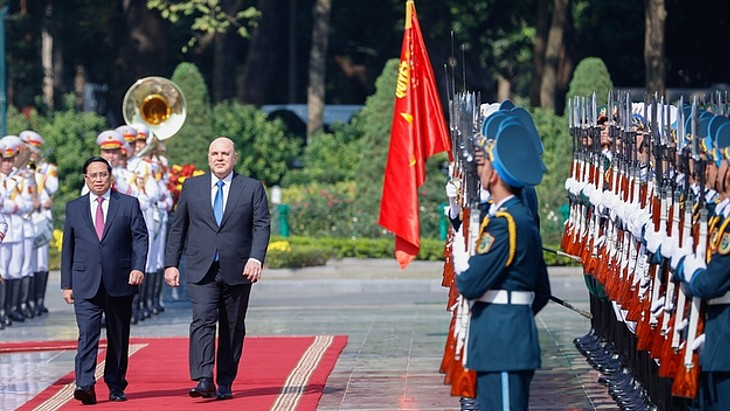
Vietnam's Prime Minister Pham Minh Chinh and his Russian counterpart Mikhail Mishustin have discussed enhancing their countries' Comprehensive Strategic Partnership, including in nuclear energy, as Hanoi sets up a steering committee to implement the Ninh Thuan nuclear power plant project.
The prime ministers review a guard of honour (Image: Vietnam.gov.vn)
The two prime ministers signed a joint communique in Hanoi, which according to Russia's Tass news agency covered a comprehensive plan for cooperation between the two countries to 2030 and a memorandum of understanding between Rosatom and Electricity of Vietnam (EVN).
In its report on the talks, the Vietnamese government said it would allow the clear defining of "key areas of cooperation, spanning from economy, trade, energy, and science and technology, to education, culture and defence". It noted that bilateral trade had increased from USD3.3 billion in 2023 to USD4.57 billion in 2024, and added that there were 60,000 Vietnamese people living in Russia.
The Vietnamese prime minister also held talks with Rosatom Director General Alexey Likhachev and, according to the official Vietnamese government account, he said he "hopes that Russia and Rosatom will continue their cooperation with and support for Vietnam, not only in the development of nuclear power but also in the development of nuclear science and technology for peaceful purposes, contributing to socio-economic development" and "urged Russia and Rosatom to support Vietnam in human resource training and technology transfer to help Vietnam develop its nuclear technology sector".
It reports that Likhachev said "Rosatom would continue strengthening cooperation with Vietnam and ... stands ready to foster collaboration and assist Vietnam in building nuclear power plants, establishing a new, modern nuclear centre, transferring technology, localising nuclear products, and developing nuclear science and industry, with a long-term vision spanning hundreds of years".
Vietnam and Russia are already cooperating in the nuclear sector on the construction of a Centre for Nuclear Science and Technology in Vietnam, as well as holding discussions last year over future options for large-scale and small modular reactors in the country.
The visit came the day after the Vietnamese government announced the setting up of a steering committee for a proposed nuclear power plant construction project in the Ninh Thuan region, led by the prime minister with the remit to "direct amendments and supplementation to legal regulations for nuclear power development; direct the research and development of the nuclear power programme and submit to competent authorities for consideration and approval; direct international cooperation with other countries, international organisations and the International Atomic Energy Agency in nuclear power development".
A prvious project, in the central province of Ninh Thuan, was approved in principle by the government in 2009 and was going to feature Russian VVER-1200 reactors - but project work was halted in 2016 because of "economic conditions". The Vietnamese government has recently been considering reviving its nuclear energy ambitions - citing energy security, development and net zero targets - and exploring the possibilities of small modular reactors.
The announcement of the steering committee follows November's decisions by the National Assembly and the Central Committee of the Communist Party of Vietnam to give their backing to new nuclear. EVN "has been assigned by the government to be the investor of the project", according to the statement announcing the formation of the steering committee.
Major Chinese operators report nuclear output for 2024
Tuesday, 14 January 2025
China General Nuclear has reported a 6% increase in nuclear electricity output in 2024, compared with 2023, while China National Nuclear Corporation said its nuclear generation was 1.8% lower in 2024, a decrease mainly attributed to reactors being offline for maintenance.
Unit 4 of CGN's Fangchenggang plant entered commercial operation in 2024 (Image: CGN)
In an announcement to the Hong Kong Stock Exchange, China General Nuclear (CGN) said that, as of 31 December 2024, it had a total of 28 power reactors in operation with a combined generating capacity of 31,798 MWe.
Total power generation last year of reactors operated and managed by the group totalled about 242.2 TWh, a year-on-year increase of 6.08%, it said. Meanwhile, the total amount of electricity supplied to the grid was 227.3 TWh, an increase of 6.13%.
CGN said that during 2024, it completed, as scheduled, 13 annual refuelling outages (including one annual refuelling outage conducted over to the next year), five ten-year outages (including one ten-year outage conducted over to the next year) and one initial outage.
As of 31 December 2024, CGN managed a total of 16 reactors under construction (including eight units which were entrusted to the company by the controlling shareholder of the company for management), among which, two were in the commissioning phase, three were in the equipment installation phase, two were in the civil construction phase, and nine were preparing for first concrete to be poured. Unit 1 of the Huizhou/Taipingling plant in Guangdong province is expected to enter commercial operation during 2025.
Meanwhile, China National Nuclear Corporation (CNNC) subsidiary China National Nuclear Power announced to the Shanghai Stock Exchange that its nuclear power units generated a total of 183.1 TWh of electricity in 2024, a year-on-year decrease of 1.8%. The amount of electricity supplied to the grid was 171.260 billion kWh, also a year-on-year decrease of 1.8%.
As of the end of December, CNNC controlled 25 power reactors in operation with an installed capacity of 23.75 GWe; controlled 18 units either under construction or approved for construction, with an installed capacity of 20.641 GWe.
UK government considering role for SMRs in AI expansion
Monday, 13 January 2025
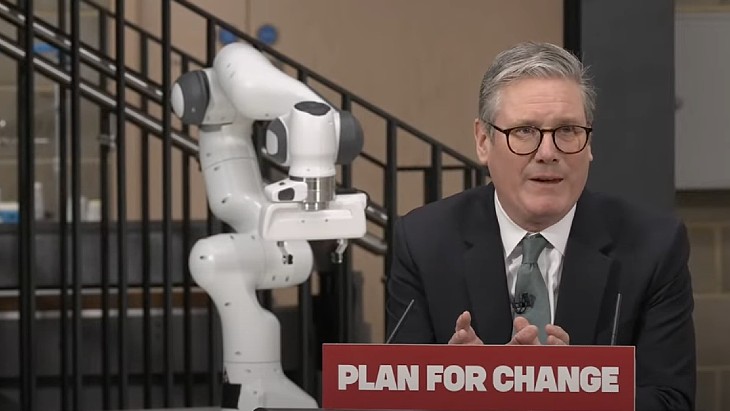
A new AI Energy Council is to be established to study the opportunities for "renewable and innovative energy solutions, including small modular reactors" as part of the UK government's plan for AI.
(Image: Screengrab/Youtube/Gov.uk)
Prime Minister Keir Starmer said AI (artificial intelligence) was a "defining opportunity" and outlined plans for specific 'AI Growth Zones' to be established to speed the build-out of AI data centres, "with enhanced access to power and support for planning approvals".
The first of these is set to be at Culham, near Oxford, home to the UK Atomic Energy Authority (UKAEA), the JET project and a host of nuclear fusion companies and researchers.
"The government and UKAEA will seek a private-sector partner who would develop one of the UK’s largest AI data centres, beginning with 100 MW of capacity and with plans to scale up to 500 MW. The pilot would pioneer innovative public-private models to deliver secure, dedicated public sector computing capacity, supporting key national priorities. A process to identify a private sector partner will commence in Spring 2025, alongside steps to select further AI Growth Zones," the government says.
It goes on to say that an AI Energy Council will be established to identify how clean and renewable energy can be used to power the demands of data centres, with the Science and Technology Secretary and the Energy Secretary co-chairing the group of "industry leaders from the energy and AI sectors".
"The Energy Council will provide expert insight on the energy needs of AI, opportunities to accelerate investment in the development of renewable and innovative energy solutions, including small modular reactors (SMRs) and the role of AI in a modern, efficient and sustainable energy system," it says, although it gives no time-scale for its work.
Starmer said: "Artificial Intelligence will drive incredible change in our country. From teachers personalising lessons, to supporting small businesses with their record-keeping, to speeding up planning applications, it has the potential to transform the lives of working people. But the AI industry needs a government that is on their side, one that won’t sit back and let opportunities slip through its fingers. And in a world of fierce competition, we cannot stand by."
The last few months of 2024 saw a number of deals struck in the USA for tech giants to use nuclear energy to power data centres, as they seek to ensure that their predicted rapidly increasing energy demands can be met in a way which provides 24/7 power and also helps them meet their climate targets.
In 2025, CNNC's planned nuclear power generation is 195.4 TWh. The company's controlled nuclear power units in operation are scheduled to undergo 16 maintenance and refuelling outages throughout the year (including three ten-year overhauls, two five-year overhauls and 11 routine overhauls).
While CNNC and CGN are the main nuclear operators in China, State Power Investment Corporation (via its nuclear power business State Nuclear Power Technology Corporation) and Huaneng Group are the country's third and fourth nuclear operators, respectively. Other companies - including Huadian, Datang and Guodian - own stakes in some plants.
China's total fleet of 58 operable reactors supply about 5% of the country's electricity.
Constellation increases US reach with major acquisition
Monday, 13 January 2025
Constellation's USD26.6 billion acquisition of Calpine, the USA's largest generator of electricity from natural gas and geothermal resources, will turn the company which already owns the biggest nuclear fleet in the USA into the country's largest clean energy power provider.
The Geysers: Calpine says its California facility is the biggest geothermal complex in the world (Image: Calpine)
Constellation's nuclear fleet, together with its renewable energy assets, already provides about 10% of the USA's emissions free energy. Combining this with Calpine's low-emission natural gas generation and expanded renewable energy portfolio, including the largest geothermal generation operation in the USA, will create the cleanest and most reliable generation portfolio in the country, with nearly 60 GW of capacity from zero- and low-emission sources, including nuclear, natural gas, geothermal, hydro, wind, solar, cogeneration and battery storage, Constellation said. The combined company’s footprint will include a "significantly expanded" presence in Texas, the fastest growing market for power demand in the USA, and other key strategic states, including California, Delaware, New York, Pennsylvania and Virginia.
The combination will also form the nation’s leading competitive retail electric supplier, serving some 2.5 million customers.
"This acquisition will help us better serve our customers across America, from families to businesses and utilities,” said Constellation President and CEO Joe Dominguez. "By combining Constellation’s unmatched expertise in zero-emission nuclear energy with Calpine’s industry-leading, best-in-class, low-carbon natural gas and geothermal generation fleets, we will be able to offer the broadest array of energy products and services available in the industry."
Calpine President and CEO Andrew Novotny described the move as an "incredible opportunity" to bring together top tier generation fleets. "Together, we will be better positioned to bring accelerated investment in everything from zero-emission nuclear to battery storage that will power our economy in a way that puts people and our environment first. It’s a win for every American family and business in our newly combined footprint that wants clean and reliable energy."
The transaction is expected to close within 12 months of signing, subject to the satisfaction of customary closing conditions and regulatory approvals. Following the close of the transaction, Constellation will continue to be headquartered in Baltimore and said it will continue to maintain a significant presence in Houston, where Calpine is currently headquartered.
Earlier this month, the US General Services Administration awarded Constellation a ten-year, USD840 million contract to supply electricity to federal facilities, and in September the company signed a 20-year power purchase agreement with Microsoft that will see Three Mile Island unit 1, which shut down in 2019, restarted as the Crane Clean Energy Centre.
Calpine was acquired by Energy Capital Partners in 2018. In addition to its fleet of simple and combined cycle gas plants and co-generation facilities, the company's generating portfolio includes The Geysers, the largest complex of geothermal energy facilities in the world. Located in the Mayacamas Mountains, north of San Francisco, the complex of geothermal plants uses wells - some of which are more than two miles (over 3 kilometres) deep - to tap naturally occurring steam which is used to generate electricity in turbines.
Partnership to develop pumps for Swedish SMR design
Monday, 13 January 2025
Lead-cooled small modular reactor technology developer Blykalla has signed a letter of intent with Swedish pump and valve manufacturer KSB to develop specialised pumps for Blykalla's SEALER technology.
The SEALER reactor (Image: Blykalla)
Under the collaboration, Blykalla and KSB will design, develop, and manufacture pumps capable of operating in liquid lead environments.
"Pumps are one of the most critical components in a liquid lead-cooled reactor, as their operational lifetime impacts the reactor's overall need for maintenance and hence cost-effectiveness," Blykalla said.
"We are very pleased to work with KSB, a global leader in their field, whose expertise and innovation will play a role in the development of our reactor systems," said Blykalla CEO Jacob Stedman. "This collaboration is an important milestone as we continue to advance our mission of building Europe's first advanced SMR."
Andreas Hefter, Vice President Nuclear Energy at KSB, added: "We are delighted to partner with Blykalla on this groundbreaking project. Our know-how based on experience out of decades in the nuclear industry and the knowledge in high-temperature equipment is a perfect match for the innovative SEALER technology."
Blykalla - formerly called LeadCold - is a spin-off from the KTH Royal Institute of Technology in Stockholm, where lead-cooled reactor systems have been under development since 1996. The company - founded in 2013 as a joint stock company - is developing the SEALER (Swedish Advanced Lead Reactor).
Together with Uniper, OKG, KTH and the Swedish Energy Agency, Blykalla will build an electric research reactor in Oskarshamn. The Swedish Energy Agency has awarded a SEK99 million (USD9.3 million) grant for the project.
A demonstration SEALER (SEALER-D) is planned to have a thermal output of 80 MW. As in future commercial reactors from Blykalla, the fuel rods will be cooled by 800 tonnes of liquid lead. The reactor will have a height and diameter of about 5 metres.
Blykalla's goal is for its first 140 MWt SEALER-55 commercial reactor to be ready for operation in the early 2030s.
Chernobyl gets go-ahead for solid radioactive waste processing
Monday, 13 January 2025
The State Nuclear Regulatory Inspectorate of Ukraine has given approval for the commissioning of the Solid Waste Retrieval Facility and Solid Waste Processing Plant at the Chernobyl nuclear power plant site.
(Image: Chernobyl NPP)
The inspectorate's decision came in the form of an amendment to the site's licence, granting the right to conduct activities relating to the processing and storage of radioactive waste. The two facilities are part of the site's Industrial Complex for Solid Radioactive Waste Management (ICSRM).
The facility will be able to process solid radioactive waste accumulated during the plant's operation as well as waste generated during the plant's decommissioning and also operational radioactive waste from the shelter object - the emergency structure that was built at pace in 1986 to cover unit 4 after the accident.
The Chernobyl operators said "the commencement of ICSRM’s industrial operation marks a significant step in the safe and efficient management of radioactive waste" at the site.
The ICSRM was majority funded by the European Union and encompasses four facilities for solid radioactive waste management integrated in a single technology cycle.
'Lot 0' is temporary storage for low- and intermediate-level long-lived waste as well as high-level waste. This is within the Liquid and Solid Waste Storage Facility and was commissioned in 2010.
'Lot 1' will retrieve solid wastes from an existing solid waste storage facility. It will handle 3 cubic metres of waste per day over an operational life of 30 years.
'Lot 2' will sort solid wastes and process low- and intermediate-level wastes at the rate of 20 cubic metres per day. Some solid and liquid wastes will be incinerated, and some will be cemented. It can package 1.5 cubic metres of low- and intermediate-level long-lived waste per day, and can store 3500 cubic metres of them and high-level waste.
'Lot 3' is a near-surface storage facility for low- and intermediate-level short-lived waste with a capacity of 55,000 cubic metres. It will accept waste for 30 years and store it for 300 years.
The Chernobyl nuclear power plant lies about 130 kilometres north of Kiev and about 20 kilometres south of the border with Belarus.
Angra 2 agreement targets radiopharmaceutical production
Monday, 13 January 2025
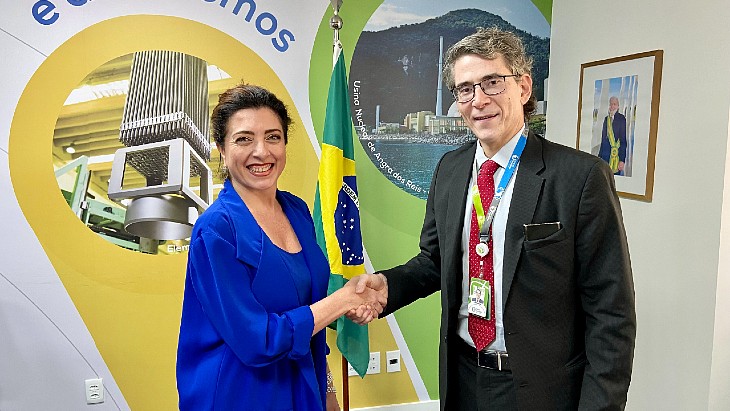
Operator Eletronuclear and the Brazilian Society of Nuclear Medicine have signed an agreement aimed at producing radioisotopes at Angra nuclear power plant's second unit.
(Image: Eletronuclear)
The memorandum of understanding will see the two sides collaborating on feasibility studies for the production of lutetium-177, which is a beta-emitting radioisotope used in targeted radionuclide therapy for the treatment of prostate and other cancers, destroying the cancer cells while leaving healthy cells unaffected.
Production has already been tested and implemented at Bruce 7 in Canada and is being implemented at Cernavoda 2 in Romania.
At present lutetium-177 has to be imported by Brazil, at a very high cost. The intention is that if the scheme is successful a similar process would also be carried out in the future if and when Angra 3 is operating.
Eletronuclear President Raul Lycurgo said: "We will put the brains of both institutions to work together to serve the health of Brazil and Brazilians. If there is a possibility of adapting our energy generation process in Angra 2, we will undoubtedly do it."
President of the Brazilian Society of Nuclear Medicine (SBMN), Elba Etchebehere, said: "We approached Eletronuclear so that Angra 2 could embrace the health cause ... although nuclear medicine represents a minimal portion of the use of nuclear energy, its impact on public health is extremely significant.
"Today, everything comes from abroad. If we can have this radioactive isotope, which is essential for cancer treatment, here in the country, the entire population will benefit. Today, less than 1% of Brazilians have access to this type of treatment."
In November, Framatome and Argentina's Nucleoelectrica began a year-long study to evaluate the technical and economic feasibility of producing the medical isotope lutetium-177 from Atucha I, Atacha II and Embalse nuclear power units.
Naarea and QGEMS form strategic partnership
Friday, 10 January 2025
French microreactor developer Naarea has announced a strategic partnership with advanced energy management platform QGEMS aimed at integrating QGEMS' technology to optimise Naarea's energy production and distribution, set to commence in 2025.
A conceptual illustration of Naarea's proposed XAMR (Image: Naarea)
In addition, Naarea said using QGEMS' advanced energy management system would extend the applications of its reactor to data and AI centres, commercial properties, industrial facilities and remote territories.
"The partnership marks a significant step in Naarea's mission to revolutionise the clean energy landscape," the company said. "By leveraging QGEMS' cutting-edge platform, Naarea will enhance the efficiency and reliability of its energy operations, ensuring seamless integration into the broader energy grid and various sectors."
Naarea - formally established in November 2021 - says its ultra-compact molten salt fast neutron reactor will use "the untapped potential of used radioactive materials, and thorium, unused mining waste". Once it develops the eXtra Advanced Nuclear Reactor (XAMR) design, the company intends to target applications in areas such as transportation, agriculture and smart buildings.
Naarea says that, because of the compact size of its reactor and because there is no need for it to be grid-connected, the XAMR can "be deployed as close as possible to regions, to match energy demand as closely as possible and allow the control of security of supply, at the service of industries and communities". It expects the first units of XAMR - which can generate 80 MWt/40 MWe - to be produced by 2030.
"As we prepare to bring our energy production online, partnering with QGEMS was a natural choice," said Naarea CEO Jean-Luc Alexandre. "Their expertise in energy management aligns perfectly with our goal of delivering clean, reliable energy solutions across multiple industries. This collaboration will allow us to optimise our energy production and distribution, maximising the impact of our technology."
The integration of QGEMS' platform is already under way, with full implementation expected to coincide with the launch of Naarea's energy supplying offer in 2025.
The parties agreed to address, as a first step, the UK and US markets. "These mature markets will enable Naarea and QGEMS to reap the maximum benefit from this partnership," Naarea said. European markets will be addressed as a second step.
"We are thrilled to work with Naarea on this groundbreaking project," said QGEMS CEO Gordon Winston. "Our energy management platform is designed to handle the complexities of emerging energy sources such as hydrogen and optimise energy use across various sectors.
"This collaboration showcases the potential of combining innovative nuclear technology with advanced energy management systems to drive efficiency and sustainability across industries. This, combined with our growing project financing capabilities, will accelerate the integration, aggregation, and orchestration of distributed energy resources and intelligent Virtual Power Plant deployments."
Libya Looks To Boost Oil Production Amid Soaring Geopolitical Risk
Libya plans to offer 22 exploration blocks in 2025, attracting IOCs like Repsol, ENI, BP, and OMV.
Russia’s growing military presence in Libya, following its removal from Syria.
While Libya’s energy reserves present immense potential, IOCs face challenges from the volatile military-security environment.
After decades of low interest in Libya’s oil and gas sector due to sanctions and the civil war, a possible new chapter could open in 2025. Based on the potential tender by the Libyan National Oil Company (NOC) for 22 onshore and offshore exploration blocks, expectations are high that international oil companies (IOCs) are returning. Despite the current political and security instability, interest in Libya is growing, as evidenced by Spain’s Repsol, which is drilling its first exploration well. The main driver behind the IOC push is a security guarantee provided by the Libyan National Army (LNA) and NOC.
In December 2024, NOC announced plans to offer 22 onshore and offshore exploration blocks in 2025 to attract foreign investment and bolster the country’s energy sector. Libya's current production levels remain far below its targets. The country claims to hold reserves of 48 billion barrels and aims to increase production to 2 million bpd in 2025, up from the current 1.5 million bpd in 2024.
Repsol began drilling its A1-2/130 exploration well on December 31, 2024, 12 kilometers from Libya’s largest oil field, Sharara. Repsol is committed to drilling six wells in its NC115 and NC186 license areas in the southwestern Murzuq basin. Concurrently, Italian major ENI and British major BP have also initiated exploration projects in partnership with the Libyan Investment Co. in Area B of the Ghadames Basin, northwest Libya. Exploration drilling at well A1-96/3 (Hasheem Prospect) is tied to the 2007 Type IV Contracting Agreement.
ENI and NOC, both partners in the 50/50 JV Melittah Oil & Gas, are overseeing drilling activities based on their experience in the Al Wafa field. NOC has stated that promising geological formations will be tested at well A1-96/3, with the final well expected to reach 3,147 meters (10,327 feet). Meanwhile, Austrian energy company OMV is currently working in the Sirte Basin. A JV involving NOC, OMV, Equinor, TotalEnergies, and Repsol, known as Akakus, is operating the Sharara oil field, aiming to boost production by around 260,000 bpd. Sharara’s production capacity is set at 320,000 bpd.
The optimism shown by IOCs and Libya’s NOC may, however, face geopolitical risks of significant magnitude. While Libya’s overall security situation is relatively stable, regional developments, especially involving Syria, Iran, and Israel, could soon have a destabilizing effect. Libyan media have recently reported discussions between Libyan government officials and Israel, sparking political unrest. However, the primary destabilizing factor in 2025 is expected to be Russia’s expanding role in Libya.
The removal of the Assad regime in Syria, resulting in the establishment of a pro-Turkish fundamentalist government and the end of Russia’s military and naval presence there, has direct implications for Libya’s security and future. Russian President Vladimir Putin is currently seeking new military bases and naval ports in the Mediterranean, with Libya being a top priority. The country serves as a critical power base for Russia’s interests and operations in Africa. Libyan ports and military bases in border regions with the Sahel are being assessed or actively built up. Russia’s supply routes to mineral-rich African nations are constrained following the loss of its bases in Syria.
In recent weeks, there has been significant movement of personnel and military equipment from Syria to Libya. Flight trackers have logged daily military transport flights from Russia’s Syrian airbase at Hmeimim to three bases in Libya since mid-December. Vessel trackers have recorded four Russian transport ships heading to the Mediterranean, likely destined for Libya with heavy equipment. The ships have turned off their AIS systems near Libya’s coast in recent days. This military buildup has set off alarm bells in NATO. Italy’s defense minister, Guido Crosetto, compared Moscow’s redeployment from Syria to Libya to the 1962 Cuban Missile Crisis.
Russia’s alignment with General Haftar, who controls several major oil and gas-producing regions, is of particular concern. Since 2014, Moscow has supported Haftar with military aid and weapons, positioning him as its main power broker in Libya. This includes granting access to ports and military bases.
A broader concern is the possibility of a renewed Russian-Turkish confrontation. Following the Turkish-backed militias’ removal of Assad in Syria, effectively ending Russia’s presence there, Libya may face a similar scenario. This time, Moscow’s stakes are higher. Without Libya, Russia’s aspirations for an African empire could collapse. A confrontation between the UN-Turkey-backed Western government and Haftar’s Russia-UAE-supported forces is increasingly plausible. Meanwhile, Russia’s oil giant Rosneft has shown interest in Libya’s vast oil and gas reserves.
Renewed instability in Libya appears imminent. Western IOCs and oilfield service companies should weigh Libya’s vast potential against the shifting military-security environment. While Libya’s oil and gas future remains promising, the growing possibility of a Russian military presence complicates the outlook.
By Cyril Widdershoven for Oilprice.com
Russia Intent On Defying New U.S. Sanctions on Its Oil Industry
The outgoing U.S. Administration on Friday slapped the most severe sanctions on Russia’s oil yet.
Russia: new U.S. sanctions risk destabilising global markets.
The sanctions have already started moving oil markets and the oil-purchasing strategies in Russia’s top crude oil customers, China and India.
Russia has slammed the new hefty U.S. sanctions on its oil industry and exports and vowed to move forward with major domestic oil and gas projects, claiming that it remains “a key and reliable player in the global fuel market.”
The outgoing U.S. Administration on Friday slapped the most severe sanctions on Russia’s oil yet, designating two major Russian oil companies, Gazprom Neft and Surgutneftegas, as well as 183 vessels, dozens of oil traders, oilfield service providers, insurance companies, and energy officials.
The sanctions on the oil companies are the first direct designations against Gazprom Neft and Surgutneftegas, which were sanctioned by the UK on the same day, too, as “the profits from these 2 companies are lining Putin’s war chest and facilitating the war,” as the UK government said.
The latest sanctions are also cutting off Russia’s access to U.S. services related to the extraction and production of crude oil and other petroleum products.
Secretary of the Treasury Janet Yellen commented that “With today’s actions, we are ratcheting up the sanctions risk associated with Russia’s oil trade, including shipping and financial facilitation in support of Russia’s oil exports.”
In response to the sanctions, Russia’s Foreign Ministry said that the U.S. move “represents an attempt to inflict damage on the Russian economy at any cost, even at the risk of destabilising global markets. This move comes in the waning days of President Joe Biden’s lacklustre tenure in office.”
“Naturally, Washington’s hostile actions will not go unanswered and will be taken into account as we shape our foreign economic strategy,” Russia said, adding that “Major domestic projects for oil and gas extraction, import substitution, oilfield services, and the construction of nuclear power plants in third countries will continue to move forward.”
The Russian Foreign Ministry’s statement concluded with “Despite the convulsions in the White House and the manoeuvres of the Russophobic lobby in the West, seeking to drag the global energy sector into the US-initiated hybrid war against Russia, our country remains, and will continue to be, a key and reliable player in the global fuel market.”
The sanctions have already started moving oil markets and the oil-purchasing strategies in Russia’s top crude oil customers, China and India.
Oil prices jumped on Friday as the U.S. sanctions were announced, and Brent Crude broke above $80 per barrel to hit the highest level in three months.
Indian refiners expect their supply of cheaper Russian crude to be severely crippled with the latest sanctions, refining sources in India told Reuters on Friday. India is now bracing for a major disruption to Russian oil supply, which is currently the single largest source of crude for the world’s third-largest oil importer.
Alongside India, China could also lose a part of its cheap Russian crude supply, analysts say.
“When it comes to buyers, China and India, in general, tend to steer clear of dealing directly with tankers and entities blacklisted by the US Treasury,” Matt Wright, lead freight analyst at Kpler, wrote in a note.
The newly sanctioned tankers handled about 42% of Russia's total seaborne crude exports. Over half of this volume was shipped to China, making up about 61% of China’s seaborne imports of Russian oil. Meanwhile, most of the remaining exports went to India, contributing to nearly a third of the South Asian nation’s total intake of Russian oil, according to Kpler’s analysis.
Moreover, the new sanctions are expected to drive up Russian crude price differentials in China and India in the short term, potentially reaching parity with non-sanctioned grades of similar quality, Kpler’s Wright said.
India and China have started to procure more crude from sources other than Russia and Iran, in view of the tightening U.S. sanctions on Russia and an expected clampdown on Iran’s oil exports from the incoming Trump Administration.
The latest U.S.-sanctioned tankers are estimated to have transported nearly 900,000 barrels per day (bpd) of Russian crude oil to China in the past year, a Singapore-based trader told Reuters, adding that this supply is “going to drop off a cliff.”
_55764_18722.jpg)

_45444.jpg)
_49378.jpg)
_70102.jpg)
_41554.jpg)
_1_85908.jpg)
_42294.jpg)
_86704.jpg)
_17856.jpg)