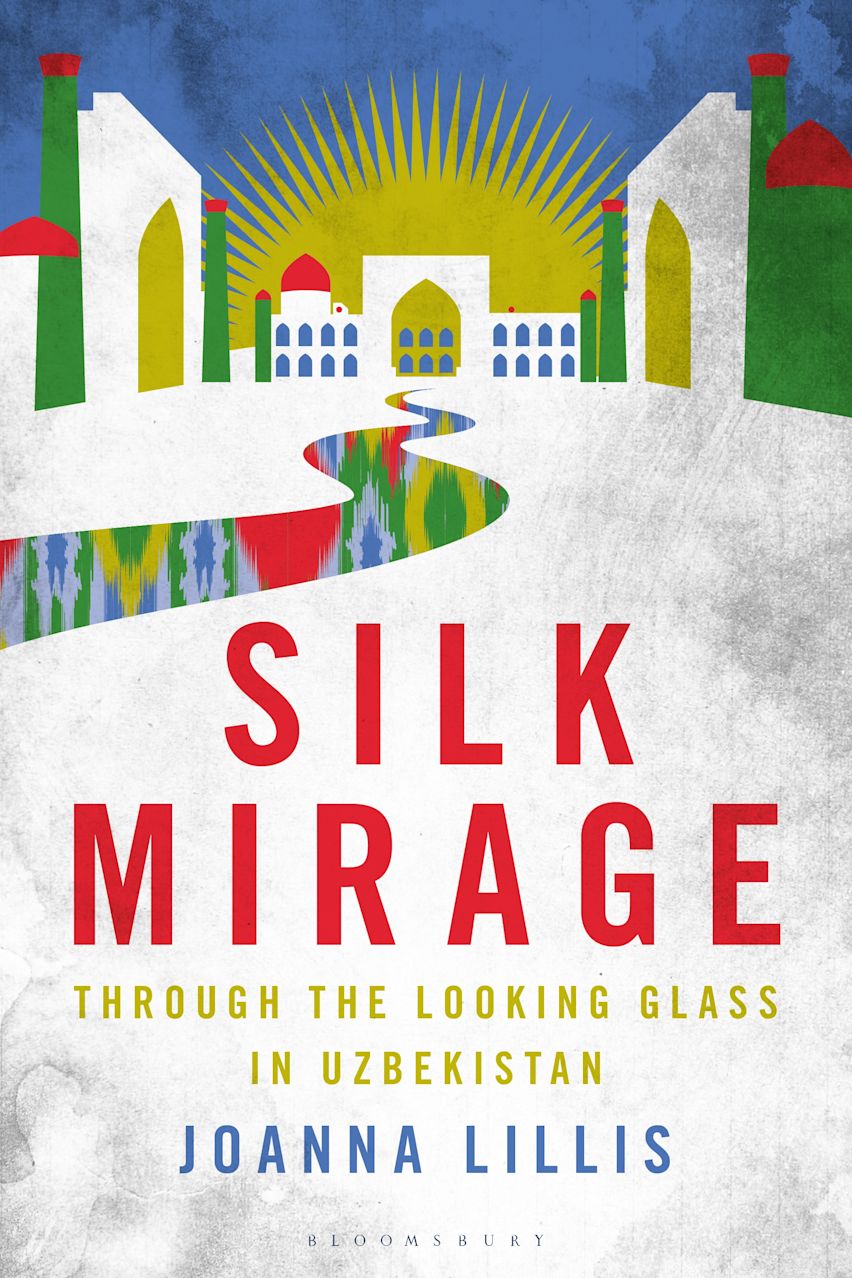
In an interview based on her new book
Silk Mirage: Through the Looking Glass in Uzbekistan, Lillis described a country with a modernising economy and more open public sphere, that contrasts with continued intolerance of political opposition, sporadic arrests of critics and “lingering fear” among citizens.
“It definitely feels like a different country,” Lillis told bne IntelliNews. “While we can criticise President [Shavkat] Mirziyoyev for the things he hasn’t done, there’s a very sharp contrast between how it was under Karimov and how it is now.” She detailed changes in how people live, how the economy functions, how people speak and what they dare to talk about.
One of the clearest changes, Lillis said, is economic liberalisation. “If we look at the economy, there are some very basic things that make it look different to me,” she said. “One example is the loosening of currency restrictions which were absolutely draconian under Karimov. That has aided businesses enormously — people tell me that again and again.”
She also recalled that under Karimov, for example, foreign bank cards did not function and there was a thriving black-market currency trade. “You used to see the black-market traders hissing at you in bazaars. Now, you just go to a bank or cashpoint. Under Karimov, Uzbekistan didn’t even have ATMs that could take foreign cards.”
More broadly, the economy is a lot more open and vibrant, and it has become easier for businesses to operate. “There were always small businesses in Uzbekistan — Uzbeks are very entrepreneurial people — but now I see a lot more happening.”
Cautious opening
On the other hand, while Uzbekistan’s media and online debate have become more open, there are limits on the space for criticism.
“Socially, I think it’s very different,” Lillis said. “Obviously people remain wary of talking. The initial euphoria of the opening of the media and the loosening of the screws has worn off a bit, especially as people are now being arrested for critical remarks on social media.” She pointed too to the decision to criminalise criticising the president, but still argued the contrast with Uzbekistan under Karimov, who ruled from 1989 until his death in 2016, is undeniable.
"The kind of debates that take place in the public domain, the kind of conversations that take place would never have taken place under Karimov,” she said. “Just look at the thriving blogosphere. There is a lot of self-censorship and there are risks to crossing red lines, but there are thriving conversations.”
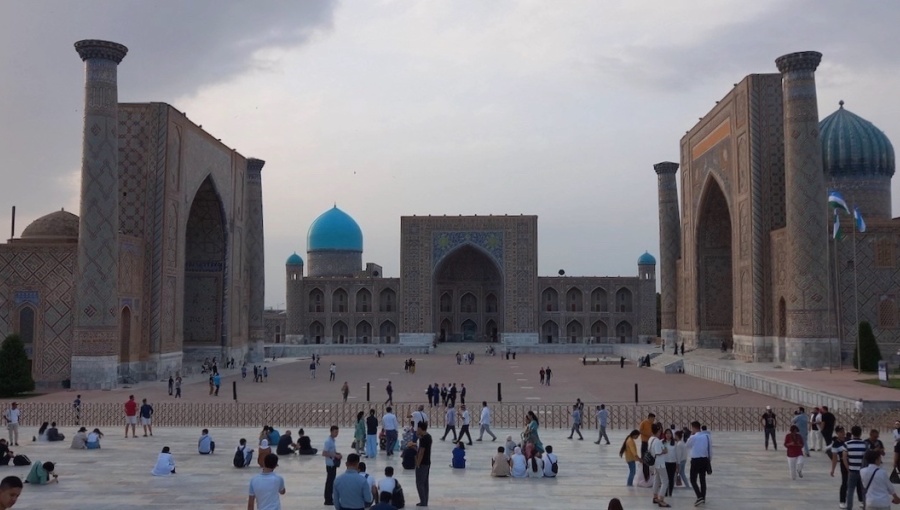
According to Lillis, Uzbekistan today remains contradictory: colourful, welcoming and outward-facing, yet still capable of harsh crackdowns.
“Uzbekistan is dazzling and charming and beautiful and vibrant. I think anyone who visits will come back with that impression,” she said.
That was also the case under Karimov, when the outward charm was in stark contrast to the harsh treatment of Uzbekistan’s population. The difference today, she argued, is one of degree.
“There is still that dichotomy, because there are still terrible things happening,” she said. “There is still repression. But it’s not as extreme as it was under Karimov. The contrast isn’t as stark.”
Red lines remain
Despite rhetoric about openness, Mirziyoyev has shown no willingness to allow political competition, according to Lillis. “Opposition is completely forbidden, at pretty much any level,” she said.
Among Lillis’ interviewees for the book are Khidirnazar Allakulov, the country’s best known opposition politician. “He has serious ideas — he has a programme, a manifesto — and he has tried multiple times to set up a party,” she said. “He told me he faced harassment and even violence because of that. That’s an example of where the red line lies.”
An attempt by popular singer Jahongir Otajonov to run for president in 2021 was also quashed. “He was kidnapped off the roadside, subjected to violence and threats of sexual violence, and told to stay out of politics. To me, that shows how nervous, even paranoid, the authorities remain about any political alternative emerging.”
Lillis was the only foreign journalist to reach the Karakalpakstan region immediately after the July 2022 unrest, sparked by proposed constitutional amendments that would have reduced the autonomy of the region.
She described the situation when she arrived as “very tense” with a “fearful population”. Moreover, she argued, the events were entirely avoidable. “Had the government simply consulted people, had there been open discussion, the unrest could have been prevented. But instead, there was a top-down approach, no explanation and then a heavy-handed response.”
Despite similarities to Kazakhstan, where protests in early 2022 spiralled into nationwide unrest, Lillis does not see a high likelihood of an imminent repeat in Uzbekistan.
“I think the government keeps a tight grip on things partly to prevent any outbreaks of public unrest. Public protest is a complete no-no in Uzbekistan because they are afraid of what it might spiral into,” she said.
She warned that suppressing people can create a “pressure cooker situation where suddenly the lid blows off as it did in Kazakhstan in 2022”. However, she does not see any sign of that in Uzbekistan.
“People are afraid to protest, especially after witnessing what happened in Karakalpakstan,” she said. On top of that, “Mirziyoyev is popular in some quarters for having brought change to the country, a little bit more freedom, as well as a better economy.”
Between reform and control
In one positive step, Mirziyoyev has brought in younger technocrats and encouraged Uzbek experts abroad to return, a change Lillis welcomes. She described a “massive influx of fresh blood into the structure of power” under the new president.
“One thing Mirziyoyev has done is encourage talented Uzbeks living abroad to return home and work in the administration. That’s positive,” she said. “And he has brought in a lot of young blood. [Some ministers] are younger than in the Karimov era, they’re technocrats, they’re obviously passionate about doing a good job.”
But elements of the old system remain firmly intact. As Lillis pointed out, the prime minister, Abdulla Aripov, held high-ranking positions in the telecoms sector during a period marked by major telecom bribery scandals involving the former president’s daughter Gulnora Karimova. “There hasn’t been a decisive break — either with the system or with the personnel,” she said.
Karimov’s legacy also remains politically untouchable. “His grave in Samarkand has become a place of pilgrimage in Samarkand,” Lillis said. “Mirziyoyev acts as if he’s trying to dismantle the dictatorship, but he is also encouraging public reverence for the dictator.”
Asked whether she is ultimately hopeful about Uzbekistan’s future, Lillis commented: “I can’t see Mirziyoyev loosening the screws; he’s actually tightening them now … That doesn’t inspire confidence. Allowing people more freedoms would benefit the people and the country.” At the same, she does think “he will continue with economic reforms and that will support growth, which will be good for the people”.
Overall, she said, she is optimistic because “Uzbekistan is already a better country than it was under Karimov”. Moreover, "whatever the leaders do, there are always the Uzbek people. They are talented, creative and dynamic, and they will always make a go of their country.”

No comments:
Post a Comment