Three years after 22-year-old Mahsa Amini died after being arrested for failing to cover her head, more and more women are pushing the boundaries of Iran's strict morality laws and going out in public without a hijab. One Iranian woman tells RFI why she sees dropping her headscarf as an act of resistance.
Issued on: 14/12/2025 - RFI
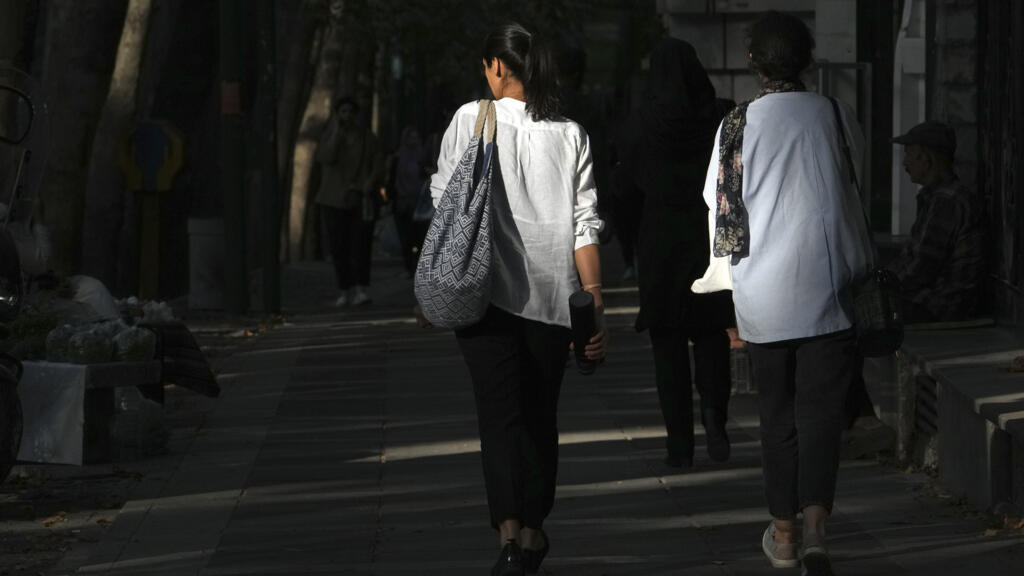
Iranian women in Tehran without the mandatory headscarf, or hijab, on 5 August 2023.
© AP - Vahid Salemi
"When I look at old photos of myself wearing the hijab, I find it quite strange," she told RFI, speaking on condition of anonymity. "I no longer recognise myself."
Today, she leads most of her daily life without a headscarf. While she walks in the street or visits cafés bareheaded, she still covers up to visit government offices, where women are denied entry unless they comply with Iran's religious dress code.
She is not alone. A growing number of women are daring to defy the rules since Amini's death in police custody provoked protests across Iran and the wider world.
"At first, it was mainly young people," the woman said. "Now it's more and more women, not all young."
"When I look at old photos of myself wearing the hijab, I find it quite strange," she told RFI, speaking on condition of anonymity. "I no longer recognise myself."
Today, she leads most of her daily life without a headscarf. While she walks in the street or visits cafés bareheaded, she still covers up to visit government offices, where women are denied entry unless they comply with Iran's religious dress code.
She is not alone. A growing number of women are daring to defy the rules since Amini's death in police custody provoked protests across Iran and the wider world.
"At first, it was mainly young people," the woman said. "Now it's more and more women, not all young."
Uneasy freedoms
Wearing a hijab remains the law in Iran, as it has been since the Islamic revolution of 1979. Some police forces are reportedly enforcing this law less rigorously in the aftermath of the protests, although observers say this varies from town to town.
Iran's parliament last year passed a law – drafted some eight months after Amini's death – that increased surveillance and imposed even harsher penalties for women and girls who refuse to entirely cover their hair, forearms or lower legs.
Yet the government postponed its implementation, originally planned for December 2024, and called for the text to be revised. The legislation remains pending.
President Massoud Pezeshkian, elected last July, has publicly expressed reservations about the mandatory hijab, telling American broadcaster NBC News: "Human beings have a right to choose."
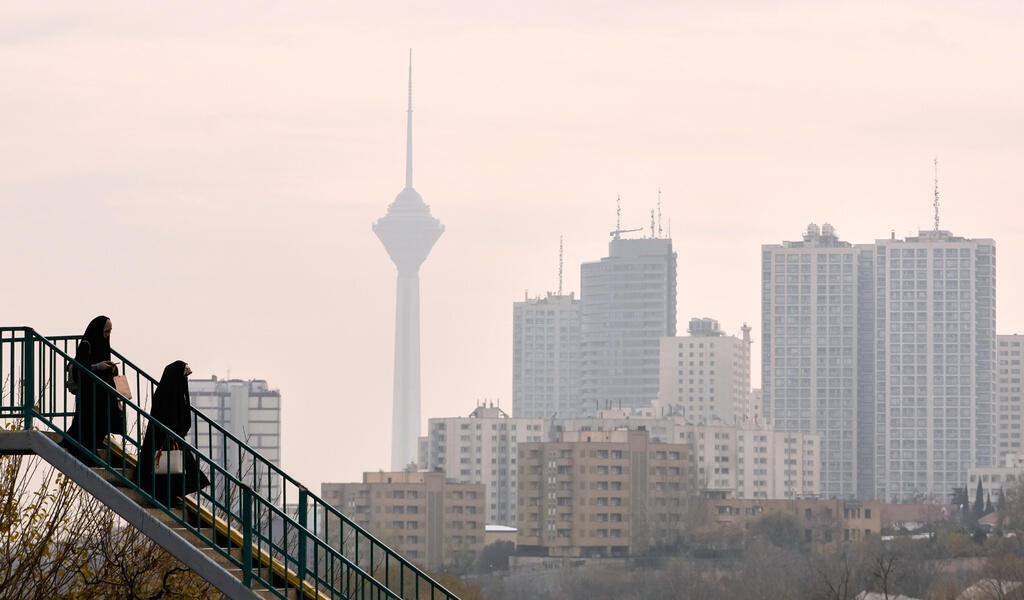
Women in Tehran on 7 December 2025, wearing conservative dress in compliance with Iran's religious laws. © AP - Vahid Salemi
His position is at odds with hardline lawmakers, who earlier this month wrote to Iran's chief justice to complain about lax enforcement of the dress code. Conservative protesters have also turned out repeatedly to call for stricter punishment, including staging a sit-in outside parliament that lasted around six weeks.
Caught between the two are the women who test the rules, a choice that still exposes them to considerable risk.
"I don't feel safe, and I don't think any woman feels safe if she doesn't wear a hijab, because at the moment, there are no rules to fall back on," RFI's interviewee said.
"It's a kind of limbo: you don't know if you're breaking the rules, you don't know if someone will feel entitled to attack you or arrest you."
How a regional reset has left isolated Iran fighting to stay relevant
'More than a piece of cloth'
Women's dress remains a lightning rod in Iran, nearly 50 years into its theocracy.
"The veil is more than a just a piece of cloth," explained Azadeh Kian, professor of sociology and director of the Centre for Gender and Feminist Studies at Paris Cité University. "It is an ideology that has been imposed on women since the beginning of the Islamic Republic."
Supreme Leader Ayatollah Ali Khamenei and other ultra-conservatives want the wearing of the hijab to be respected "at all costs", Kian said.
But she says the public's views are shifting. "Polls conducted by the government itself indicate that 80 percent of Iranian women are in favour of freedom of choice."
At least 1,000 people executed in Iran in 2025, says human rights NGO
Pezeshkian's administration is hardly liberal; it has notably stepped up executions in recent months, including for moral and religious offences. Yet circumstances may force it to be pragmatic.
"The government knows very well that returning to the veil would mean more tension in society at a time when the population is already up in arms against the regime because of an unprecedented economic crisis," said Kian.
The situation will only become more volatile as international sanctions, reinstated in September after Iran suspended inspections of its nuclear facilities, begin to bite, she believes.
While a crackdown on dress would no doubt provoke further criticism from Western countries, the woman who spoke to RFI said it could never be ruled out.
"There is always, always, always a backlash with the Islamic Republic, and it's always something frightening," she said. "We don't know when, we don't know how. But there will be a backlash when it suits them."
For now, she continues to risk going out without a hijab.
"It's everyday resistance we're expressing," she said. "We are fighting a daily battle."
This article was adapted from the original in French by Nicolas Falez.
His position is at odds with hardline lawmakers, who earlier this month wrote to Iran's chief justice to complain about lax enforcement of the dress code. Conservative protesters have also turned out repeatedly to call for stricter punishment, including staging a sit-in outside parliament that lasted around six weeks.
Caught between the two are the women who test the rules, a choice that still exposes them to considerable risk.
"I don't feel safe, and I don't think any woman feels safe if she doesn't wear a hijab, because at the moment, there are no rules to fall back on," RFI's interviewee said.
"It's a kind of limbo: you don't know if you're breaking the rules, you don't know if someone will feel entitled to attack you or arrest you."
How a regional reset has left isolated Iran fighting to stay relevant
'More than a piece of cloth'
Women's dress remains a lightning rod in Iran, nearly 50 years into its theocracy.
"The veil is more than a just a piece of cloth," explained Azadeh Kian, professor of sociology and director of the Centre for Gender and Feminist Studies at Paris Cité University. "It is an ideology that has been imposed on women since the beginning of the Islamic Republic."
Supreme Leader Ayatollah Ali Khamenei and other ultra-conservatives want the wearing of the hijab to be respected "at all costs", Kian said.
But she says the public's views are shifting. "Polls conducted by the government itself indicate that 80 percent of Iranian women are in favour of freedom of choice."
At least 1,000 people executed in Iran in 2025, says human rights NGO
Pezeshkian's administration is hardly liberal; it has notably stepped up executions in recent months, including for moral and religious offences. Yet circumstances may force it to be pragmatic.
"The government knows very well that returning to the veil would mean more tension in society at a time when the population is already up in arms against the regime because of an unprecedented economic crisis," said Kian.
The situation will only become more volatile as international sanctions, reinstated in September after Iran suspended inspections of its nuclear facilities, begin to bite, she believes.
While a crackdown on dress would no doubt provoke further criticism from Western countries, the woman who spoke to RFI said it could never be ruled out.
"There is always, always, always a backlash with the Islamic Republic, and it's always something frightening," she said. "We don't know when, we don't know how. But there will be a backlash when it suits them."
For now, she continues to risk going out without a hijab.
"It's everyday resistance we're expressing," she said. "We are fighting a daily battle."
This article was adapted from the original in French by Nicolas Falez.


No comments:
Post a Comment