Saturday, January 18, 2025

Landmark Agreement Boosts Native Ecosystems on Point Reyes National Seashore


 January 17, 2025
Facebook

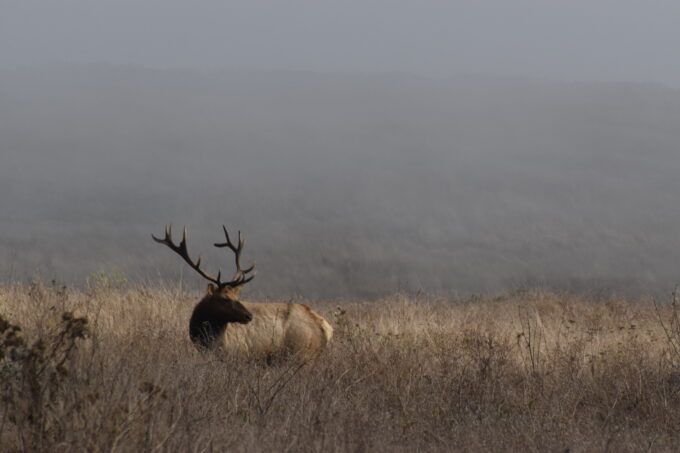
Elk in Point Reyes National Seashore. Photo: Erik Molvar.

A historic agreement has just been struck to settle a decades-long land-use conflict over the future of cattle and wildlife on Point Reyes National Seashore. Under the deal, most of the beef and dairy ranches on Point Reyes National Seashore will depart, and former ranch lands will be managed as a Scenic Landscape Zone according to a new General Management Plan approved by the National Park Service. Tule elk will have the freedom to roam unmolested throughout Point Reyes National Seashore, opportunities for public recreation will improve, and the land will have the opportunity to return to native coastal grassland.

The settlement was struck between three environmental groups (Resource Renewal Institute, Center for Biological Diversity, and Western Watersheds Project), represented by Advocates for the West, and the National Park Service, and a subset of ranchers who had intervened in our lawsuit that had challenged the prior General Management Plan at Point Reyes. In addition (and importantly), the Nature Conservancy provided the private funding for the voluntary ranch buyouts after being invited to join negotiations when mediation was underway.

Before the settlement, ranchers had faced constant challenges and uncertainty surrounding their leases, impacting the viability of their operations. Environmentalists pointed to the impacts of agricultural leasing on wildlife management and the protection of the park’s natural resources. The situation had become untenable for everyone. The settlement and new General Management Plan usher in a new era of healing on Point Reyes National Seashore.

On the National Seashore, 12 of the 14 ranches have accepted voluntary buyouts from the Nature Conservancy, brokered with private funds, and will depart these public lands. On Golden Gate National Recreation Area, all seven ranches will remain, with a 16% reduction in the number of cattle in this part of the Park. Remaining ranchers will be authorized to operate under longer 20-year leases.

The most controversial aspect of the package is that the new General Management Plan allows targeted grazing by domestic livestock on the Scenic Landscape Zone vacated by the departing ranchers. A plan will be drawn up in the future for targeted grazing in the Scenic Landscape Zone to assist in maintain desired conditions, enhancing native vegetation and controlling invasive plants, which will be conducted by the Park Service, the Nature Conservancy, and/or another conservation nonprofit. Numbers of livestock for targeted grazing are capped at 1,200 cow-calf pairs in the wettest years, 600 cow-calf pairs in an average year, and near zero during drought. The maximum limit represents a 75% reduction in livestock for this zone compared to previous numbers of cattle that grazed here, and for an average-rainfall year the published number of livestock represents an 87% decrease from previous authorizations. The Park Service’s plan gives the agency flexibility to manage livestock numbers to achieve ecological objectives outlined in the plan. We expect the actual cattle numbers to be much, much lower than the figures published in the new General Management Plan.

For the rare tule elk, the new plan means that they will have the opportunity to roam freely throughout all of Point Reyes National Seashore. Elk will no longer be allowed to be hazed away from ranch pastures as they were in the past. Elk populations will be allowed to expand and reach self-regulated levels. But disappointingly, tule elk will not be allowed to expand into Golden Gate National Recreation Area, or to disperse outside the Park, even though they are a wildlife species native to the region.

Other rare native species should also have a better opportunity to thrive at the Seashore under the new plan. The new plan contains helpful language to fence off streamside areas that will enhance the ability to protect spawning habitats for embattled runs of coho and chinook salmon and steelhead. Water quality should also improve, and it will be required to meet Clean Water Act standards.

As fences come down in the Scenic Landscape Zone, expanded trail systems will be developed, increasing recreation opportunities and public access. The recreational experience will be enhanced by an increase in wildlife, expanding wildlife viewing opportunities.

The Federated Indians of Graton Rancheria will continue to have a say in the management of livestock management and tule elk conservation under the new plan, which commits the Park Service to incorporating traditional ecological knowledge into land management. Traditional burning could be a part of the mix to help return the land to natural conditions.

A plan is being developed to assist the transition of ranch workers, with cooperation from the conservation groups, and some of the necessary funding has already been secured to help workers find employment and housing outside the National Seashore.

Under the settlement, the departing ranchers will have about 15 months to wind down their operations and move off the land, and when that happens, the environmental groups will drop our legal challenge.

From the beginning, WWP and our allies have focused on restoring healthy native coastal grasslands and allowing the rare tule elk to recover on Point Reyes National Seashore. This package offers opportunities to achieve both of our goals. It has been a long and complex negotiation, and nobody walked away from this process with everything they wanted. But in the end, this agreement starts a new era for Point Reyes National Seashore, and we look forward to better days ahead for lands and wildlife as a result of the deal.

Erik Molvar is a wildlife biologist and is the Laramie, Wyoming-based Executive Director of Western Watersheds Project, a nonprofit group dedicated to protecting and restoring watersheds and wildlife on western public lands.

An Emerging Environmental Proletariat? 


 January 17, 2025
FacebookTwitterReddit

Photograph by Nathaniel St. Clair

Awareness of eco-social conditions in the United States is growing as the LA wildfires spread death and destruction. This disaster, for example, comes on the heels of Hurricane Helene that tore through southern Appalachia last September. The Earth System and people are in trouble.

Weather-related loss of lives and property is fast becoming the new normal. Just ask the home insurers fleeing the Golden State’s wildfires. Profit is the motive for this move away.

Further, damaging weather events shape human consciousness. People experience and see the increasing pattern of torrential rains and raging wildfires. These disastrous changes in weather patterns are the toxic outcomes from the economics and politics of accumulating capital over every other consideration.

As wage repression the past 40 years worsens living and working conditions for the American public, a new study reveals what some call progressive views. I refer to policies and politics that favor building public health, a broad category, versus amassing wealth, the actions of monopoly corporations that dominate the economy, from Big Energy to Big Pharma and Big Tech.

“The U.S. electorate is open to policy agendas that reduce dependence on fossil fuels (e.g., through limits) while improving citizens’ quality of life. Notable examples include universal health care as a human right, accessible to everyone, regardless of employment or socioeconomic status, and reduced working hours as a tool for promoting well-being.”

Here is the link to “Public support for degrowth policies and sufficiency behaviours in the United States: A discrete choice experiment”: https://www.sciencedirect.com/science/article/pii/S0921800924003434

Human beings and their relationship to each other and the earth are fundamental. That runs counter to the logic of a global system that is cooking the planet in carbon emissions. President Donald J. Trump captures such a drive in his phrase “drill, baby, drill,” more coarse than President Barack Obama bragging about his role in the growing excavation of fossil fuels stateside.

There’s a nascent opponent to the profit motive driving petro-capitalism. In The Dialectics of Ecology (Monthly Review Press, 2024), John Bellamy Foster, an environmental sociologist, author and editor of Monthly Review, uses the following definition of who can transform the social order to improve the Earth System and people’s lives. Meet the environmental proletariat, a “revolutionary humanity based in the working population,” he writes.

Revolution is of course the normal operation for the system of global capitalism. It is constantly revolutionizing how people live and work. Look at how corporations grow our food, with toxic chemicals and pollutants, negatively impacting human health, a stark contrast to past farming practices.

On that note, the LA wildfires rage as the threat of a bird flu pandemic persists in and out of California. Agribusiness, euphemistically called the industry, is placing the public at risk of death and illness via the politics of capturing the regulatory oversight process that is necessary to protect public health. The system is designed to produce profits, not healthy humans.

Politics also happens between elections and judicial/legislative decisions. The frame of equating democracy with voting alone is past its due date. An alternative is movement politics, the enemy of the two major political parties.

Establishment politics generates an inactive citizenry. People disunited lack political power to make progressive changes. Anti-social media under the control of Big Tech amplifies that process of depoliticization, the opposite of democratization.

There are few things more difficult than working with other people towards a common purpose of equality and sustainability. Politically mobilizing and organizing tests people’s abilities and capacities to keep, to borrow an apt phrase from the black freedom movement, their eyes on the prize. Recall that the existence of chattel slavery in the U.S. was the normal of its time until it wasn’t.

Chattel slavery ended because of people’s actions. People, united, can win such major changes in the social order, once again.

As 2025 begins, the Earth System is weeping. Now is not the time to ignore that distress.

Seth Sandronsky is a Sacramento journalist and member of the freelancers unit of the Pacific Media Workers Guild. Email sethsandronsky@gmail.com


Risks of Ecosystem Crash-Landings


 January 17, 2025
Facebook

Image by Maksim Shutov.

Biomes as well as individual ecosystems throughout the globe are experiencing considerable stress. As a researcher/writer since 2010 of more than 400 scientific-based articles, I am aware of what science says about the status of the planet’s ecosystems. Since reading hundreds of peer-reviewed papers, it’s not a pretty picture. Yet this is not obvious to the general public inasmuch as damaged ecosystems in large part due to excessive levels of greenhouse gases like CO2 initially show up where almost nobody lives, for example: (1) Antarctica (2) tropical rainforest (3) the oceans (4) Arctic permafrost, covering 25% of Northern Hemisphere landmass. Who lives there?

People who live in NYC or LA or Des Moines don’t see the genesis of a chaotic climate system. But they do see the aftereffects, such as (1) Unprecedented flooding –2024 global record for most floods ever (2) Unprecedented drought, especially the Amazon, which is partially dying (3) Unprecedented heat – exceeded the IPCC line-in-the-sand at +1.5C pre-industrial worldwide, much, much earlier than expected (4) Unprecedented wildfires – twice the loss of the forest tree cover of 20 years ago (5) Unprecedented storms/fires – home insurance rates skyrocket or dropped altogether on both coasts (6) Unprecedented sea level rise -doubled since satellite recordings started.

Nothing is normal any longer. There are no more one-in-100-year events, which statistically means a 1% chance of happening in any given year. Nowadays, it’s all current, no more 1% chances.

Interestingly, emails from readers of my articles address these unprecedented climate events and occasionally somebody with an advanced degree in science or engineering who works for a high-profile institution. One such email recently crossed my desk in response to the article Net Zero/2050, Fantasy or Reality d/d Jan. 10, 2025. That email, in particular, struck a chord because it comes from a senior person at one of the world’s most prestigious, and widely recognized, institutions, and as a bonus, it’s a superb summation of where things stand and where civilization is headed.

It is published herein in its entirety, no edits, no changes, the original email, as follows:

Your latest article (from the weekend edition of CP) – as always – is excellent!   I did notice an assumed subtext and one that permeates all discussions of ‘net-carbon-zero,’– which of course you know and have discussed before, but a fact that often stops people in their tracks during discussions of climate change and ‘mitigating actions’, the 1000 Giga-ton elephant in the room:

Even if we were to achieve net-zero, that would be barely the beginning of our mitigation efforts, as the entire 200-year past atmospheric over-loading is still present, and will remain present for generations, wreaking havoc.  And we are no-where near approaching a path toward ‘net-zero.’

Removing already released atmospheric carbon is 1000’s times more difficult than removing it at the source (or eliminating the source), as you have extensively and excellently discussed, despite what the Fossil Fuel cartels would have us believe – as you have also discussed.

When is it time to say ‘game-over?’ and admit that neo-liberal political systems that have metastatically over-taken most governments of the planet have no impetus to, nor intention of, stopping the ‘growth-forever’ economic model that has doomed us?  I believe the time is now to admit the obvious, that we have destroyed the climate in which we as a species (and most other species) have evolved, and have sent the atmosphere hurtling someplace else – most likely something resembling the Paleocene–Eocene Thermal Maximum, of 55 million years ago, where no terrestrial creature bigger than a poodle survived, and the only habitable continent was Antarctica.  And that was with the ease of transition of several million years – a luxury current Earth biosystems won’t have.   Apparently, our rate of CO2 contamination outstrips the lead-up to the PETM by several orders of magnitude.  Humanity’s efforts seem to be effectively tripping all the Greenhouse Earth tipping points simultaneously and with breath-taking speed.

It has been said (and I don’t have the attribution) that the greatest intellectual failing of mankind is to not be able to comprehend the mathematical implications of the exponential function.  It is my own corollary aphorism that the second scariest place to live is to the left of an exponential knee.  The scariest place to be situated is to the right of the exponential knee.  And here we are at the former, staring blankly at our soon-to-be living-place in the latter.

There probably was a point in the 80’s, soon after Jim Hansen made his famous plea to Congress when – with dramatic action – we could have turned the ocean liner around.  No action (aside from grossly exacerbating action) has been taken.  From any rational engineering perspective, it’s ‘game over,’ the current CO2 loading is sending us to a bad place, there is nothing even remotely on the political/economic horizon that will mitigate the trends, and there is really nothing within our power to stop it in any case, we can’t pull the CO2 and methane back, the Earth herself is refusing to extract any more for us (or absorb any more heat either, for that matter) and is beginning to vomit it all back to us – with considerable interest on the principal to boot.  It’s game over.

I see a couple of benefits to making this admission.  First, it’s probably true.  Second, there’s a certain fairness to encouraging people to ponder the (likely) future.  There is a famous airliner disaster (true) story, of United Airlines Flight 232, in 1989, which crashed on emergency landing in Sioux City Iowa, killing roughly a third of the 300 passengers aboard (it being nearly miraculous that anyone survived).  Flight 232 works as a parable on a number of levels, from the standpoint of an undetected (at least admittedly) manufacturing defect in the blades of the GE fanjet engine to the absolute bone-head engineering mistake in the design of the DC-10’s air-surface control-line routings.  But mostly it is a parable in how Captain Al Haynes let the passengers know what they were about to experience.  In short, the fan-blade in the tail engine failed, sending shrapnel throughout the tail section, and in particular, one shard traced through the primary, secondary and even tertiary back-up hydraulic lines (which were bundled adjacent to one another).  All control-surface hydraulic fluid promptly drained from all lines, leaving Cpt. Haynes with no control of his wing or tail air-surface controls.  Through some of the most magnificent flying art in the history of aviation, Cpt. Haynes, using only throttle controls on the two remaining engines managed to maintain a tiny measure of control of the aircraft, and bring it to within fighting-distance of a landing at Sioux City.  As he approached the runway, at just below cruising speed (about 500 mph, because it was only at this speed that he could keep the nose up) he announced to the passengers that they were going to attempt something that had never been attempted before – a landing at nearly cruising speed.  With about a minute to go before the event, he told them that “this is not going to be a landing, this is going to be a crash.  This is going to be the very worst thing you have ever experienced.  I want you to prepare yourself.”

It’s ‘game over:’ this is going to be a crash.  This is going to be the very worst thing that mankind has ever experienced, and we need to prepare ourselves. Many, perhaps most will not survive, quite possibly there will be no human survivors. Our high-level technical civilization, with all of its delicately intertwined technical, economic, material, sociological channels and meta-stable intricacies will almost certainly not survive.  And we’re going to take much of the biosphere with us – it’s already happening, the sixth great extinction is underway and happening before our eyes.  People need to be able to make critical life decisions with clear-eyed focus on what is likely to happen within many of our lifetimes, about bringing more humans into the world, about selecting careers that serve their own interest vs. that of the destroying powers-that-be, or that builds upon the human intellectual edifice  that seems doomed to be a moot (and mute) monument to an extinct species and/or civilization in a very few years.   It is in the interests of the powers that be, who will continue and accelerate their raping and pillaging of the rest of us and the biosphere for their own narrow self-interest, to demand perpetual and accelerating ‘growth’, perpetual war, more human flesh for cannon fodder and slave-wage-minions, and most of all perpetual obscene profits.  It is in their interest to make us believe that they have the power to save us all, but they do not, they only have the power to make things much, much worse, as you well know and have well discussed.  They will continue to bask in obese luxury until the very end, unless the rest of us rise up to stop them and try desperately to create conditions for some sort of survival (which will be impossible with them continuing to be in charge).  But in order to know that such uprising is necessary, it has to become part of the public consciousness that humanity is about to crash in a hard and grisly fashion.  Technology and its mavens won’t save us, technology and its mavens have likely mortally wounded humanity, and people must become aware, and morally (and mortally) outraged about that fact.

Robert Hunziker lives in Los Angeles and can be reached at rlhunziker@gmail.com.