Thursday, January 23, 2025

The psychological puzzle of Donald Trump: Eye-opening findings from 20 studies


Donald Trump’s political rise in 2016 was as unexpected as it was controversial, shaking the American political landscape to its core. Emerging from a background steeped not in politics but in real estate and reality television, Trump’s ascent to the presidency defied all conventional wisdom. His brash rhetoric, unfiltered communication style, and populist appeal captivated millions, while simultaneously alienating millions of others.

The phenomenon of Trump’s support has since become a focal point for psychologists, sociologists, and political scientists alike, eager to understand what drives such fervent loyalty in his base. What psychological factors contribute to the unwavering support for a leader who has consistently broken political norms? Here, we explore some of the research that has attempted to answer these questions.

Trump’s journey to the White House was anything but typical. Traditionally, U.S. presidents have cut their teeth in politics or the military before making a run for the highest office. Trump, however, had neither. His experience lay in business and entertainment, making his leap to the presidency unconventional and unprecedented.


173.5K

Fire Ants Survive Flood By Turning Into a Raft

Trump’s fame as a real estate mogul and reality TV star provided him with an unparalleled level of name recognition, which he leveraged masterfully in his campaign. He eschewed traditional political strategies, relying instead on large rallies, extensive media coverage, and a powerful social media presence.

Furthermore, Trump’s populist rhetoric, which included promises to “drain the swamp” and put “America First,” resonated with a significant portion of the electorate. His approach was highly polarizing, often disregarding political norms and taking a combative stance against the political establishment. His rise defied the expectations of political analysts and pollsters alike, making his eventual victory in the 2016 election all the more remarkable.

The surprising nature of Trump’s ascent led to a surge in research aimed at understanding his appeal and the broader implications of his presidency. Scholars have since explored a wide array of psychological and social factors that may explain the fervent support Trump enjoys among his base. Below, are 20 studies that offer insights into the psychology of Trump supporters and the impact of Trump’s political ascent.


1. Heightened Moral Division and Support for Strong Leaders

A study published in Political Psychology found that perceptions of moral division in society intensify support for authoritarian leaders. Researchers surveyed participants in the U.S., U.K., and Australia, finding that those who perceived a breakdown in societal morals were more likely to support leaders like Donald Trump, who they believed could restore order. The study suggests that the perception of moral polarization leads people to favor strong, rule-breaking leaders who promise to challenge the status quo.

2. Authoritarian Aggression and Group-Based Dominance Among Trump Supporters


Research published in Social Psychological and Personality Science analyzed the psychological traits of Trump supporters during the 2016 primaries. The study found that while general right-wing authoritarianism did not distinguish Trump supporters from other Republican candidates, Trump supporters were uniquely characterized by authoritarian aggression and a preference for group-based dominance. These traits manifested in a greater acceptance of hierarchy and the use of aggressive measures to maintain it. The findings suggest that Trump’s appeal was partly rooted in these authoritarian and dominance-oriented dispositions.

3. Masculine Insecurity and Aggressive Politics

Research in the Personality and Social Psychology Bulletin revealed a link between masculine insecurity and support for aggressive political policies, including those endorsed by Trump. The study found that men who feel their masculinity is threatened are more likely to endorse aggressive policies and support leaders like Trump who project a dominant and unyielding persona. This phenomenon is partly explained by the concept of precarious manhood, where men strive to reaffirm their masculinity through aggressive political stances.


4. The Trump Presidency’s Impact on Prejudice

A series of 13 studies involving over 10,000 participants, published in Nature Human Behavior, examined changes in racial and religious prejudice among Americans during Trump’s presidency. The researchers found that explicit prejudice increased among Trump supporters, while it decreased among those who opposed him. This suggests that Trump’s rhetoric may have reshaped social norms, making expressions of prejudice more acceptable among his supporters.

5. Simplicity and Happiness Among Trump Supporters


A study in Social Psychological and Personality Science found that Trump supporters tended to use more positive language and exhibit less cognitive complexity compared to Biden supporters. The research suggests that Trump’s supporters may engage in more simplistic and categorical thinking, which could be linked to higher levels of happiness and satisfaction with their political choices.

6. Cognitive Rigidity and Interpersonal Warmth

Published in the Journal of Social and Political Psychology, this study found that Trump supporters tend to be more cognitively rigid and less interpersonally warm compared to supporters of Democratic candidates. Even among extreme liberals, the research found that cognitive rigidity was less pronounced than among Trump supporters, suggesting a unique psychological profile among his base.


7. Ambivalence Towards Trump

Research in PLOS One highlighted the ambivalence many people feel towards Trump. The study found that about 40% of college students displayed ambivalence in their attitudes towards Trump, indicating that political opinion polls may often overlook the complexity of voter attitudes. This ambivalence could have played a role in the unexpected outcome of the 2016 election.

8. Perceptions of Trump’s Personality Disorders

A study in Clinical Psychological Science revealed that American voters, regardless of their political leanings, perceived Donald Trump as having traits associated with sadistic and narcissistic personality disorders. Both Trump supporters and detractors rated him as highly disordered, with only a difference in the degree of perceived dysfunction. The research highlighted that voters were not necessarily divided on Trump’s personality traits but rather on how these traits influenced their judgment of his suitability as a leader.

9. Narcissism and Support for Trump

A study in the Journal of Social Psychology explored the relationship between narcissism and support for Trump. The researchers found that narcissism was linked to increased support for Trump, mediated by anti-immigrant attitudes and right-wing authoritarian beliefs. The findings suggest that Trump’s appeal may be partly rooted in his alignment with the narcissistic tendencies of some of his supporters.

10. Narcissistic Traits Among Trump Supporters

Likewise, a study published in PLOS One found that Trump supporters tend to exhibit narcissistic traits similar to those displayed by Trump himself. The research identified antagonism and indifference to others as key narcissistic traits that predicted support for Trump in the 2020 election, suggesting that his supporters may be drawn to his grandiose and aggressive personality.

11. Racial Attitudes and Polarization

A study published in Political Psychology found that Trump’s 2016 campaign had a polarizing effect on the racial attitudes of white Americans. Those who supported Trump were more likely to dehumanize Black people after the election, while those who opposed him became more empathetic. This polarization highlights the deepening racial divide that has been exacerbated by Trump’s rhetoric.

12. Moral Congruence and Political Support

Research in Political Psychology found that voters tend to adjust their moral views to align with those of their preferred candidates. The study found that Trump supporters, in particular, were likely to revise their moral beliefs to reduce inconsistencies with Trump’s positions. This suggests that political leadership can significantly influence the moral beliefs of voters.

13. The Effectiveness of Trump’s Nicknaming Strategy

A study in the Journal of Political Marketing examined the effectiveness of Trump’s use of nicknames for his political rivals, such as “Sleepy Joe” for Joe Biden. The research found that while many people remembered the nicknames, they were not necessarily more likely to believe the negative connotations associated with them. The study highlights the limitations of this campaign strategy in swaying voter opinions.

14. Religious Beliefs and Support for Trump

Published in Politics and Religion, this study found that white evangelical Christians who view themselves as a religious minority are more likely to believe that Trump’s election was part of God’s plan. The research suggests that feelings of religious identity threat may have played a significant role in the unwavering support for Trump among white evangelicals.

15. Populism and Criminal Behavior

A study in the Proceedings of the National Academy of Sciences found that individuals with strong populist beliefs, particularly those aligned with Trump’s “America First” agenda, were more likely to have been arrested in their lifetime. The research suggests a link between populist views, socioeconomic frustration, and criminal behavior, highlighting the complex relationship between political beliefs and personal conduct.

16. MAGA Republicans and Political Violence

Research published in PLOS One found that MAGA Republicans, a faction of Trump supporters, are more likely than other groups to endorse political violence. The study revealed that this group holds distinct beliefs on race and democracy, which set them apart from other Republicans and non-Republicans. However, the willingness to engage in violence personally remained low across all groups.

17. Victimhood and Support for Trump

A study in Political Behavior found that Trump supporters who scored high on measures of egocentric victimhood were more likely to feel warmly towards him. In contrast, those who felt a sense of systemic victimhood were more hostile towards Trump. The research suggests that feelings of personal victimhood may play a significant role in shaping political preferences.

18. The Rise of Political Authoritarianism and Identity Fusion

A study published in Political Psychology investigated the rise of political authoritarianism in the U.S., particularly surrounding the January 6, 2021, insurrection. The researchers found that Trump supporters who felt a deep personal connection to him (identity fusion) were more likely to perceive Democrats as existential threats and endorse authoritarian actions against them. However, those who fused their identity more with the broader concept of “America” were less likely to support such extreme measures.

19. Anti-Vaccination Engagement on Twitter

A study published in PLOS One found that anti-vaccination profiles on Twitter, which were often influenced by Donald Trump, were more engaged and interconnected than pro-vaccination counterparts. The anti-vaccination group was more active, generated more emotional and conspiracy-laden content, and formed a tightly-knit network that amplified misinformation. Trump, despite not overtly promoting anti-vaccination as president, was identified as a key influencer in this network, linking vaccination with autism in past tweets.

20. Trump’s Influence on Media Preferences

Research published in Public Opinion Quarterly explored how Donald Trump’s tweets influenced perceptions of Fox News and alternative media outlets like OANN. Trump’s increasing criticism of Fox News on Twitter correlated with a decline in the network’s ratings among Republicans, who began to show a greater willingness to consume more extreme alternatives such as OANN. Interestingly, Democrats viewed Fox News more favorably following Trump’s attacks, suggesting a shift in their perception of the network. The study highlights the powerful role of political elites in shaping media consumption preferences through their rhetoric.

These studies are just a small selection of the extensive research exploring the psychology behind Donald Trump’s support and broader political impact. If you’re interested in delving deeper into this fascinating topic, explore more research and insights at PsyPost’s dedicated section on Donald Trump.


An Open Letter to Federal Science Workers in the Second Trump Administration

January 20, 2025 | UNION OF CONCERNED SCIENTISTS

Dear Colleagues,

We are living in an era where we must prepare for another dramatic pendulum swing in public policy. For those of you in federal government this is a known anxiety-provoker.

I worked at the EPA through multiple presidential transitions, including from President Obama to President Trump in 2017, and again the transition to President Biden in 2021. In this second Trump administration we know to expect attacks on federal science and federal scientists thanks to the President’s track record and his second campaign’s promises. Plus, there is the Project 2025 manifesto that lays out the plans of the new administration to repeal the gains made over the past four years and halt efforts to combat human-caused climate change and environmental damages alongside their inherent social inequities.

One of the pillars of the cynical Project 2025 agenda is to attack the underpinnings of federally funded science. Another is to attack the very people who work in regulatory programs of administrative agencies. I recall experiencing that jarring shift eight years ago. I wondered anxiously just how I might make it through. Many of my work friends in federal government found other work during the following years. I somehow stuck it out and have many lessons learned from that period.

What’s best for you is a very individual decision, but here are seven lessons I learned over the years as a federal employee.


1. Know you have allies in the NGO community who are cheering you on.

During the first Trump administration, I recall receiving postcards from random strangers thanking me for my public service. I realize now those postcard campaigns were organized by nongovernmental organizations (NGOs) like UCS. I also remember seeing small First Amendment-protected acts, such as signs hanging in individual’s office space that said, “No Sides in Science.” The signs came from a Save Science rally organized by the NGO community. Seeing these cheered me up.

2. Tune out the noise and don’t overreact to the hype.

Much of the hype in the mainstream media is exactly that. Even if you get your information from independent media or social media, it can be deafening to consume too much. One lesson from the prior Trump administration is how much bluster there was that didn’t come to pass. Do not despair pre-emptively.

3. Understand the motivations of political appointees in your agency.

Each political appointee will have some power and an ego to satisfy. They will need to negotiate with other appointees who have their own interests and levers of power. While there will be memos from on-high, such as orders to reduce staff, agency appointees will also have to make good on requests by stakeholders with influence in the political context of your agency. We know, for example, that during the first Trump administration some industries needed permits issued, so those industries argued in favor of keeping relevant staff at EPA. Also, local businesses supported maintaining programs that offered community redevelopment opportunities, including brownfields and Superfund site cleanup. After all, it does take a clean, healthy, thriving environment to run a successful business. And, thriving local economies make good news.

4. Don’t be a mind-reader.

If there is a mandate from above, it should come in writing. Based on what I saw in the last go-around, agency leaders will try to avoid written records. If they don’t send a memo or email instruction, you have the power to send a summary of their instructions via email and make a note for the record

5. Use the rules to your advantage.

There are laws that lay out the protocols and steps that government functions, including regulatory decisionmaking, should take. For example, government analyses need to be documented for the administrative record. And, many governmental functions require involved officials to adhere to ethics rules. Be it the Federal Advisory Committee Act, the Administrative Procedures Act, the Information Quality Act, or the Evidence Act—all those laws were created to keep meticulous account of the work of government. This is important for the long game and in cases where the Freedom of Information Act could be used to demonstrate instances of political interference or censorship.

6. Know the union resources and support that are available to you.

Much of the bluster we are hearing is about attacks on staff through changes to workplace conditions. Use your union contacts, even if you aren’t part of the union, to understand what is within bounds and what flexibilities you have. Demand those flexibilities before giving up on your job in the federal government.

7. Know your labor rights.

You have rights under federal labor laws. Make sure you understand those rights and your agency’s policies, including equal employment opportunity protections based on race, national origin, gender, and sexual orientation. There are organizations, like the Government Accountability Project, with lawyers on standby to support individuals who expect targeting.


I hope these seven lessons may be of some comfort to you during the coming months and years. In addition, here at UCS we have compiled this list of resources for federal science workers and have launched our Save Science, Save Lives campaign. We are actively working to ensure that senators ask President Trump’s cabinet nominees during their confirmation hearings about their plans for protecting science and scientific integrity. You can urge your senator to do so today.

I moved on from federal government two years ago. I continue to recognize the deep value of federal science and the system of regulations that were set up to protect those most vulnerable to the excesses of our socio-political system. This new administration has a particular view that is expected to attack the foundation of scientific integrity. We at UCS know this, and we stand ready to support those of you who want to keep your position in federal institutions. Not everyone may. We understand and respect that choice as well.

In solidarity,

Chitra

Trump’s return prompts fears over impact on global science


By Shaoni Bhattacharya and Emily Twinch
20 JAN 2025

Trump presidency: Key appointees, as well as WHO and climate stances, worry scientific community

As Donald Trump’s second presidential term begins with his inauguration today, scientists worldwide have sounded warnings about the impact his policies could have on science, public health, climate and research funding.

Scientists are concerned about the consequences of the US pulling out of the Paris climate agreement—as it did under the first Trump administration—and the World Health Organization.

Trump’s nominees for key federal agency posts in science have also caused consternation. There has been anxiety over the impact for science, with vaccine sceptic Robert F Kennedy Jr likely to lead the Department of Health and Human Services, taking charge of federal government involvement in areas ranging from medical research to food safety.

Other nominees include Covid lockdown critic Jay Bhattacharya, proposed as director of the National Institutes of Health, and Lee Zeldin, nominated for director of the Environmental Protection Agency.

John-Arne Røttingen, chief executive of Wellcome, said: “The US has a critical role to play in advancing science and global health. Health security for all nations also depends on global collaboration.

“A Trump administration, and a health department led by Robert F Kennedy Jr, will pose fresh challenges for science, health and equity.”

Rallying for science

A US non-profit organisation, the Union for Concerned Scientists, last week published two open letters rallying support for science in advance of Trump’s inauguration.

The first, signed by over 50,000 “science supporters, scientists and experts” asked Congress to “stand up against attempts to politicise or eliminate scientific roles, agencies and federal research that protect our health, environment and our communities”.

A second letter addressed 99 senators, some of whom have a role in the confirmation of Trump’s federal agency nominees, on behalf of 28 organisations that “support scientific integrity”. It asked them to consider “respect for science”.

“In particular, we urge you to vote against nominees who lack the necessary qualifications, have serious conflicts of interest, or fail to recognise any scientific consensus relevant to their agency,” it added.

Opposing confirmations

The start of confirmation hearings for Zeldin as administrator of the Environmental Protection Agency on Friday met with criticism from environmentalists. The former congressman has a poor track record on environmental legislation, as noted by the US League of Conservation Voters.

“In his last role in government, then-Congressman Zeldin regularly voted for more pollution and fewer public health protections. He opposed efforts to fund the national flood insurance program—even as rising sea levels continue to threaten his own hometown [on Long Island]—and he voted to drastically slash funding for the very agency he now claims he wants to lead,” said Melinda Pierce, legislative director of environmental organisation the Sierra Club.

“Lee Zeldin has called for the repeal of standards that protect clean air and clean water…We call on members of the United States Senate to oppose his confirmation and protect the lives and livelihoods of this and all future generations.”

Scientifically worrying

Researchers have also expressed concerns to Research Professional News over the choice of Bhattacharya to lead the NIH, which describes itself as the world’s largest public funder of biomedical research.

Bhattacharya’s role in the debate over Covid lockdowns, in which he co-authored an open letter calling for an alternative strategy protecting those at highest risk while allowing those at minimal risk to “live their lives normally to build up immunity”, has seen him labelled by one critic as “a pro-infection doctor” who had wrongly claimed that “one infection led to permanent, robust immunity”.

“Given how bizarre…Trump’s nominations for high office have been, Dr Bhattacharya’s lack of any obvious qualification to be NIH director should not be a surprise,” Martin McKee, professor of European public health and medical director at the London School of Tropical Hygiene and Medicine, told RPN.

“Scientifically, it is worrying that someone who was so wrong about the course of the pandemic should be in this position.”

Stephen Griffin, professor of cancer virology at the University of Leeds, also highlighted Bhattacharya’s pandemic stance as “a particular concern, especially given the worrying proliferation of H5N1 influenza across the US”.

McKee added: “Organisationally, it [the nomination] is also concerning given his lack of any experience of leading something as complex. It is, however, impossible to know what the consequences of this and the other nominations might be.”

Loss from world stage

Scientists are also concerned about losing US expertise and funding from global scientific collaborations. In particular, if the US leaves WHO—a process initiated by Trump during his first presidential term—this would be likely to have a huge impact. The US is WHO’s top donor country, having contributed US$1.284 billion during the two-year period from 2022–23.

“Health leaders in the USA bring tremendous technical expertise, leadership and influence and their potential loss from the world stage would have catastrophic implications, leaving the US and global health weaker as a result,” said Røttingen.

He added: “The scale of the health challenges we all face means it is in everyone’s interest that the WHO can operate at full strength and with all countries as engaged members influencing their priorities.”
What Trump's EPA pick, Lee Zeldin, would mean for climate

January 20, 2025
DW

Donald Trump has tapped former Republican Representative Lee Zeldin to head the US's Environmental Protection Agency. Zeldin, a Trump loyalist, is expected to undo dozens of environmental regulations.


Donald Trump wants Lee Zeldin (pictured) at the helm of the US Environmental Protection Agency
Image: Matt Rourke/AP/picture alliance

Environmentalists are bracing for Donald Trump to be sworn in for his second term as president what his return to power may mean for the climate.

A key appointment in Trump's climate agenda— which includes boosting fossil fuel expansion and rolling back environmental regulation — is former Representative Lee Zeldin, 44, whom he has chosen to head the US Environmental Protection Agency (EPA).

Zeldin — a longtime Trump ally who voted against certifying the 2020 presidential election — has vowed to restore US energy dominance and revitalize the auto industry.

Though Trump has dismissed climate change as a "hoax," Zeldin said at his January 16 confirmation hearing that he believed it was real and a threat. He said the United States deserved a clean environment without "suffocating the economy," but stayed vague on specific policies.

What's Zeldin's stance on environmental protection?

In Congress, Zeldin's rhetoric and behavior was "very critical and hostile" to EPA regulatory power in the climate space, Barry Rabe, professor of environmental and public policy at the University of Michigan, told DW.

Zeldin's tenure could see a challenge to "almost every major interpretation" that President Joe Biden's administration has had of the Clean Air Act, a 1963 law that intended to reduce and control air pollution. "That would be electric vehicles, that would be movement toward cleaner energy and electricity sector, possibly methane regulations for oil and gas," Rabe said.

The League of Conservation Voters, an NGO that tracks congressional voting on environmental issues, gives Zeldin a 14% lifetime score for his record. In 2022, he favored an amendment that would have cut the EPA's budget, voted for pulling the US out of the UN Framework Convention on Climate Change and opted against investment in conservation and restoration of America's wildlife. He did, however, vote to take action against forever chemicals PFAS in 2021.

Why did Trump pick Zeldin?


"Zeldin is very articulate. He is very decisive," Rabe said, adding that Trump seems to be bringing in experienced people who are used to being confrontational, are loyal to him and are good on TV.

Appearing on the conservative US cable television channel Fox News in November, Zeldin made clear his pro-business vision for the EPA, saying the agency would allow the United States to pursue energy dominance. "Day one and the first 100 days, we have the opportunity to roll back regulations that are forcing businesses to be able to struggle," said Zeldin.

He said Trump had called him with a list of priorities. "There are regulations that the left wing of this country have been advocating through regulatory power that ends up causing businesses to go in the wrong direction," Zeldin added.

Some experts have predicted that one of Zeldin's first tasks as EPA head could be overturning Joe Biden's regulations on vehicle tailpipes and pollution from power plants.
What could Zeldin do at the EPA helm?

Though Zeldin could roll back some regulations, he can't easily undo policies passed by Congress, said Rabe.

When Congress adopts infrastructure funding for things such as electric vehicle charging stations, cleaning up orphan oil and gas wells, and the Inflation Reduction Act, which in part incentivizes green energy, that's part of legislation. "It's much harder for a president to stop or reverse that," said Rabe.

But, with Republicans taking charge of both chambers of the US Congress, the House of Representatives and the Senate, "it is quite possible that you could see a pivot and a repeal of some of those policies."

Trump has already said he plans to install his new Cabinet picks by recess appointments, thus bypassing Senate checks and balances. The US Constitution allows presidents to make temporary appointments of up to two years when the Senate is not in session, originally introduced at a time when the chamber didn't sit as frequently.

"What we're beginning to see is a significant test by Donald Trump of just how far he can go," Rabe said. "He's already beginning to push the boundaries of the power of the president, especially in an era where he may have a more friendly set of courts."

Trump could try to freeze some EPA funds and impound money meant for climate protection, Rabe said. However, he said he doesn't think Trump will completely reverse the Inflation Reduction Act because a lot of money goes to Republican states.


Will the EPA be gutted?


Most of the EPA's more than 15,000 employees can't be fired on a whim. Like many other US government agencies, only the top brass are politically appointed professionals. Most employees are considered apolitical staff who continue working no matter who the president is.

Trump wants to be able to turn some of those positions into political jobs, which would make it easier to dismiss employees and replace them with loyalists. The president-elect has said he would bring back a 2020 executive order known as "Schedule F," which would strip job protections from federal workers and classify them as political employees he could then fire.

Some worry about what will happen to clean air and water regulations under Zeldin
 picture alliance / NurPhoto

Rabe said Zeldin — under Trump's orders — could launch "a frontal assault on the agency, trying to drive people out."

On the campaign trail, Trump suggested moving parts of federal government agencies out of the US capital, with his team reportedly discussing shifting the EPA headquarters outside of Washington.

Trump did something similar during his first term, when he relocated the Bureau of Land Management to Colorado. Many employees took early retirement or resigned to avoid the move.

"The symbolism of that is 'get them closer to the people,' whatever that means," Rabe said. "The reality is finding ways to reduce and gut that staff."
How has Zeldin's nomination been received in environmental circles?

Environmental nonprofits and unions representing EPA workers are sounding the alarm.

"During the last Trump administration, we witnessed massive damage to EPA's work done," Nicole Cantello, president of AFGE Local 704, a union representing about 1,000 EPA workers, said in a statement.

"The Trump administration systematically and intentionally undercut EPA's ability to protect the public from toxic pollution. EPA leadership scrubbed references to climate change from the agency's website, prevented our staff from practicing sound science and blocked our ability to take enforcement action against polluters," she said.

Under Trump, the agency lost its ability to guarantee that Americans had access to clean water and air, Cantello said. The EPA abandoned its role as the agency most equipped to address climate change, she said.

"Our union's message to Mr. Zeldin is this: We are watching. Lead by example. Make a sharp departure from Trump's previous legacy at EPA," Cantello said.

Ben Jealous, the executive director of American environmental organization Sierra Club, called Zeldin "unqualified," and added that he would sell out to corporate polluters.

"Our lives, our livelihoods and our collective future cannot afford Lee Zeldin — or anyone who seeks to carry out a mission antithetical to the EPA's mission," he said.

Edited by: Jennifer Collins

Update: This article was updated on January 20, 2025, to include comments from Lee Zeldin's Senate confirmation hearing.

Sarah Steffen Author and editor
DUAL CITIZEN

Spanish citizen Darío Gil to serve as US Under Secretary for Science


Javier Villamor
20 January 2025


Donald Trump has appointed Spanish scientist Darío Gil as Undersecretary of Science and Innovation at the Department of Energy.

Gil, who was born in the Spanish village of El Palmar and raised in Madrid, will head a key agency in the US’s science and technology policies.

“Darío is a brilliant scientist and businessman, with a distinguished track record as chairman of the National Science Board and senior vice president and director of IBM Research,” said Trump’s transition team on its X account.


Gil moved to the United States, where he finished high school in California, and earned a degree in electrical and computer engineering at Stevens Institute of Technology in New Jersey. Hen then specialised in nanotechnology at MIT, where he obtained his PhD.

The US Department of Energy oversees the nation’s energy security and sustainability. It leads several major technological innovation initiatives, including developing quantum technologies, artificial intelligence, and renewable energy research.

This appointment, of a Spanish citizen to a senior energy policy role, underscores the Trump administration’s commitment to strengthening US leadership in these sectors at a time of geopolitical tension with Russia and China.

Gil’s career so far has been marked by a combination of scientific expertise and public leadership.

During Trump’s first term, he was a member of the Presidential Council of Advisors on Science and Technology (PCAST), and served on the governing board of the US National Science Foundation (NSF), which manages an annual budget of nearly $10 billion.

Gil has also played a strategic role as an advisor to the US Congress, working with the House of Representatives and Senate on critical policy areas such as semiconductors, artificial intelligence, and quantum computing.

Gil was not the only Spaniard making waves in the United States.

Other compatriots reaching prominent positions in private companies have included Ramón Laguarta, PepsiCo’s chairman and CEO of PepsiCo, Paco Ybarra, managing director of Institutional Clients Group at Citigroup, Joaquín Duato, CEO of Johnson & Johnson, and Enrique Lores, president and CEO of HP.

‘Tea drinkers live longer’: Instagram post starts hilarious discussions; coffee lovers say, ‘Nice try’

In a recent Instagram post, National Geographic emphasises tea's health benefits and potential for longevity. However, coffee drinkers humorously reject the notion, asserting that lifestyle choices are the true factors influencing lifespan.

MINT
21 Jan 2025


“Why tea drinkers live longer,” says National Geographic’s latest Instagram post. The iconic TV network has 280 million followers on the social media platform.

“If you're a coffee drinker, it may be time to switch over... Second only to water in global popularity, tea is celebrated for its calming effect—but it's also packed with antioxidants and compounds that boost your health, focus, and longevity,” wrote Nat Geo while sharing the post.

“Send this to your coffee obsessed friend,” Nat Geo added in the comment section.

Given the massive popularity of the Instagram account, the post quickly grabbed eyeballs. Social media users, however, refused to accept the logic. Coffee lovers posted some hilarious comments. Take a look.

“You think I want to live longer? In this hellscape? WITHOUT COFFEE?” asked one coffee lover.

“Nice try the british,” quipped another user.

“Leave my coffee alone!” exclaimed one user while another called it “tea propaganda”.

“Longer does not mean better,” wrote one user. “Wait until you hear about the microplastics in your tea bags,” wrote another.

“An average Indian drink 2-3 cups of tea daily. I would guess so much for anyone in the world. Either tea or coffee. It is how active you are and lifestyle which defines how much longer anyone would live,” remarked another.

In a detailed article, National Geographic explained why tea is great for health. From its ability to improve focus and help stress relief to its great hydration and disease-fighting compounds, tea has it all.

Drinking tea helps control blood sugar, reduces belly fat and boosts fat burning during exercise. That is why it’s popular with health-conscious people, Nat Geo says.


The Google India search for “Tea” on January 20-21 was high:
The Google India search for 'Tea' on January 20-21 was high:


Clarification for Indian tea lovers

As National Geographic advocates drinking tea, one must remember that it refers to black tea. Most Indians who drink tea consume milk tea, mostly with added sugar.


Milk tea can be healthy if made properly and consumed in moderation. It provides nutrients like calcium and vitamin D. However, its antioxidants may also lead to digestive issues, heartburn and weight gain.


The same goes for coffee. It is considered healthy without milk and sugar.
Origin of Australia’s 1,400-year-old mysterious earth rings finally revealed

Aboriginal people’s ancestors carefully cleared land and plants in the area, research finds

Vishwam Sankaran
Monday 20 January 2025 08:47 GMTComments

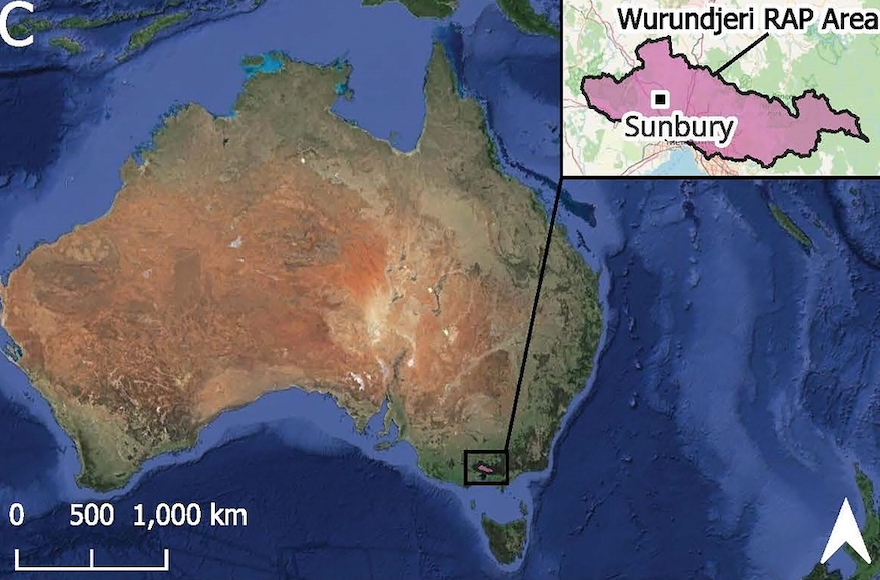
Mysterious ancient earth rings located on the outskirts of Melbourne were made by Australia’s Aboriginal Wurundjeri Woi-wurrung people hundreds of years ago, a new study finally reveals.

The origin and purpose of these large rings rising out of hills in Australia’s Wurundjeri Woi-wurrung Country in the suburb of Sunbury have remained a mystery.

Strange rings have been spotted in many parts of the world, including in England and Cambodia.

They are thought to have been created by ancient people living in these regions by digging out and clumping together earth forming a large circle, or circles, sometimes measuring hundreds of meters in diameter.


open image in galleryLocation of archaeological study (Caroline Spry et al., Australian Archaeology (2025))

Hundreds of such earth rings are believed to have once existed across Australia, many of which were destroyed following European colonisation.

The nearly hundred that remain across the continent now hold immense significance to different Aboriginal language groups reflecting on a history of occupation, colonisation, self-determination, adaptation, and resilience, researchers and elders of the Wurundjeri Woi-wurrung culture say.

For the Indigenous people, the concept of a country includes consideration of several elements including “land, water, sky, animals, plants, artefacts and cultural features, travel routes, traditions, ceremonies, beliefs, stories, historical events, contemporary associations and ancestors”.

Researchers say it is not possible to understand the earth rings completely without tying together different strands of the culture’s knowledge about the landscape, and their ancestral activity traces preserved in the region.


“While previous studies indicate these rings are sacred locations of ceremony, little is documented from cultural values and landscape perspectives – particularly in southeastern Australia,” scientists say.

A new first-of-its-kind excavation of one such ring has revealed that it was constructed “sometime between 590 and 1,400 years ago”.

Researchers found that the Aboriginal people carefully cleared land and plants in the area, and scraped back soil and rock to create the ring mound, proceeding then to create stone arrangements by layering rocks.


open image in galleryAerial view of Sunbury Ring G (Caroline Spry et al., Australian Archaeology (2025))

The findings, published recently in the journal Australian Archaeology, suggest the Indigenous people of the region lit campfires, as well as made and used stone tools to move items around the ring’s interior.

Such tools were also likely used on plants and animals as well as to create feather adornments and scar human skin during ceremonies, researchers say.

Results of this study shed further light on the cultural history of Australia’s Aboriginal people and their connection with their land.

“The results bring together Wurundjeri Woi-wurrung people’s understandings of the biik wurrda cultural landscape and archaeological evidence for cultural fire, knapping, movement, trampling, and tool-use by their Ancestors at the ring,” scientists wrote.

“While memory of the purpose of the Sunbury Rings has faded, a deep understanding of the cultural values of the landscape in which they are embedded has been passed down through successive generations of Wurundjeri Woi-wurrung people,” they said.
Young spruce trees grow better with pine neighbours thanks to underground helpers.


For generations, foresters have observed a curious phenomenon: certain trees grow better when planted alongside different species. Now, research from Zhou and colleagues has revealed the hidden mechanics behind this “nursing effect”. They studied how different combinations of trees affected the growth of Sitka spruce, Britain’s most important timber tree. They found that pines help foster beneficial soil fungi that can aid the young spruce trees.

The effect was large. Sitka spruce seedlings grew up to 60% more when planted in soil previously inhabited by Scots pine. The increased growth was correlated with a doubling in root colonisation by beneficial ectomycorrhizal fungi – from roughly 20% in spruce-only soil to over 40% in pine-conditioned soil. These fungi helped the saplings by helping them access nutrients, particularly by transforming phosphorus into forms the young trees.

The researchers devised a two-part experiment at Cannock Chase Forest in the UK to peek into the hidden life of forest soils. First, they carefully tended different tree combinations – spruce growing alone, pine growing alone, birch alone, or all three mingling together – for 34 weeks. Next, Zhou and colleagues planted spruce seedlings in these “conditioned” soils. They then watched the saplings grow for 24 weeks, measuring everything from root patterns to fungal connections.

The results won’t surprise foresters. It’s been known for a long while that diverse woodlands often flourish where single-species plantations struggle. The value of this research is that it explains why. There’s more to a forest than a lot of trees. They’re communities where species interact with each other in many different ways. With a theoretical basis for how these species help each other, there’s now a basis to work out how mixes of species can help each other.

Zhou, Y., Tao, T., Cox, F., & Johnson, D. (2024). Plant–soil feedback drives the ‘nursing effect’ on Sitka spruce. Journal of Applied Ecology. https://doi.org/10.1111/1365-2664.14848 (FREE)

Cross-posted to Bluesky & Mastodon.

Cover: Canva.


The science behind the FDA ban on food dye Red No. 3

January 20, 2025

NPR


A bright red drink with a lemon and a stainless steel straw. The petroleum-based dye known as Red No. 3 is found in candy, snacks, and juice beverages, among other food and drink.Naomi Rahim/Getty Images

On Wednesday, the Food and Drug Administration announced it is banning Red No. 3, a food dye additive in many processed foods, like sodas, sweets and snacks. Recently, it and other dyes were linked to behavior issues in children.

But high levels of Red No. 3 were linked to cancer in rats decades ago. So why is the ban happening now?

Senior editor and science desk correspondent Maria Godoy answers Short Wave's questions about Red No. 3 and other dyes that may replace it. Plus, should parents worry about feeding their kids products that may contain Red No. 3 before the ban takes effect?