Thursday, January 23, 2025


After Trump withdrawal order, UN says US to exit WHO by January 2026

The US will leave the World Health Organisation on January 22, 2026, following formal notification by President Trump. The decision, criticised by the WHO, risks impacting global health programs and halts US participation in pandemic treaty talks.
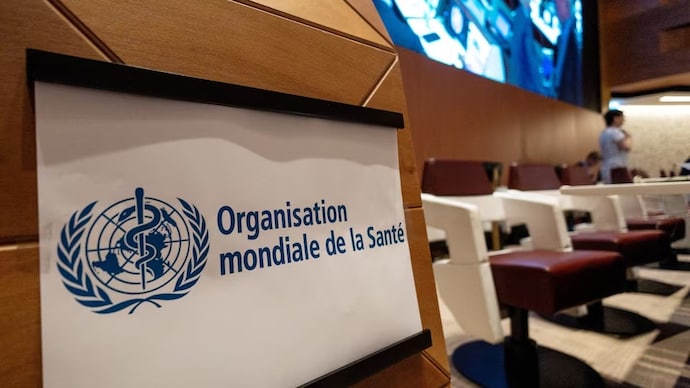


A view of a WHO logo during the 77th World Health Assembly of the World Health Organisation (WHO) at the United Nations in Geneva. (Photo: Reuters)

Reuters
United Nations,
Jan 24, 2025 
Posted By: Akhilesh Nagari

In Short

Trump announced decision after second term inauguration

US must give one-year notice and settle dues, says United Nations

US is WHO's largest donor, contributing 18% of funds


The United States will leave the World Health Organisation on January 22, 2026, the United Nations said on Thursday, after being formally notified of the decision by President Donald Trump, who has accused the agency of mishandling the pandemic and other international health crises.

Trump announced the move on Monday, hours after he was sworn in for a second four-year term. The WHO said on Tuesday that it regretted the move from its top donor country.

Trump must give a one-year notice of US withdrawal from the Geneva-based body and pay Washington's dues under a 1948 joint resolution of the US Congress.

The United States is by far the WHO's biggest financial backer, contributing around 18% of its overall funding. WHO's most recent two-year budget, for 2024-2025, was USD 6.8 billion. It was not immediately clear how much the US owes.

"I can confirm we have now received the US letter on the WHO withdrawal. It is dated January 22, 2025. It would take effect a year from yesterday, on January 22, 2026," said deputy UN spokesperson Farhan Haq.

The US departure will likely put at risk programs across the organisation, according to several experts inside and outside the WHO, notably those tackling tuberculosis, the world’s biggest infectious disease killer, as well as HIV/AIDS and other health emergencies.

The withdrawal order signed by Trump said the administration would cease negotiations on the WHO pandemic treaty while the withdrawal is in progress. US government personnel working with the WHO will be recalled and reassigned, and the government will look for partners to take over necessary WHO activities, according to the order.

Trump's withdrawal from the WHO was not unexpected. He took steps to quit the body in 2020 during his first term as president. Before the US withdrawal could be completed last time, Joe Biden won the presidential election and put a stop to it on his first day in office on January 20, 2021.

Published By:
Akhilesh Nagari

How Microsoft powered Israel's war machine in Gaza: Report

Facing increased demand for computing power after launching its offensive in Gaza, Israeli military turned to tech companies to scale its infrastructure. As firms vied for military contracts, Microsoft offered steep discounts to edge out rivals.


Microsoft was frequently involved in sensitive and highly classified projects of the Israeli forces. (File picture: AP)

India Today News Desk
New Delhi
 Jan 24, 2025 
Written By: Devika Bhattacharya

In Short

Israel signs deals worth $10 million with Microsoft post-Hamas attack

Microsoft supports Israeli military with cloud and AI tech

Leaked files reveal AI tool flagged 37,000 Palestinians as suspects

Leaked internal documents reveal Microsoft’s role as a major purveyor of cloud services and artificial intelligence (AI) technology to the Israeli military, with its support picking up pace after Hamas’s October 7 attack on Israel ignited the Gaza conflict.

A joint investigation by the Guardian, +972 Magazine, and Local Call details how Microsoft bolstered its relationship with Israel’s defence establishment following the unprecedented Hamas assault, signing deals worth at least $10 million. These agreements reportedly provided thousands of hours of technical support, alongside expanded computing and storage services.
advertisement

The Israel Defense Forces (IDF), facing increased demand for computing power after launching its offensive in Gaza, turned to tech companies to scale its infrastructure, triggering a "gold rush". As firms vied for military contracts, Microsoft offered steep discounts to edge out rivals.

According to one military commander who spoke to the Guardian, this marked a shift toward "the wonderful world of cloud providers."

The documents, first obtained by Drop Site News, show the IDF’s reliance on Microsoft, Amazon, and Google for data storage and intelligence analysis grew sharply. Between June 2023 and April 2024, Microsoft’s cloud storage usage within the military surged by over 155 per cent, peaking before the Rafah offensive in May 2024.

Microsoft’s Azure platform and ChatGPT-maker OpenAI's language model tools accounted for nearly 75 per cent of the IDF’s usage. These services supported combat and intelligence activities, including projects with Unit 8200, the IDF’s elite surveillance division, and Unit 81, which develops advanced spy technology.

The tech behemoth was frequently involved in sensitive and highly classified projects. It played a role in maintaining “Rolling Stone,” a system that tracks the movement of Palestinians in the West Bank and Gaza.

During the military operation in Gaza, Ofek, an air force unit responsible for managing databases of targets for strikes, relied on Microsoft’s communication and messaging systems.

The leaked files also detail Microsoft’s provision of AI tools like Lavender, which reportedly analysed data on 2.3 million Gaza residents to identify potential Hamas connections. The system flagged about 37,000 Palestinians as suspects, according to Tel Aviv-based +972 Magazine.

The revelations come as Google also ramped up its support to Israel’s Defence Ministry, offering increased access to its AI technologies. Additional projects worth $30 million are under consideration, though the total value of Israel’s contract with Microsoft remains unclear.

Microsoft has yet to comment on the findings, which shed light on how US tech giants are deeply embedded in military and intelligence operations work.


Leaked documents reveal Microsoft's deep ties with Israel during genocidal war in Gaza


January 23, 2025
MEMO

Microsoft logo [İsmail Kaplan – Anadolu Agency]

Leaked internal documents reveal that Microsoft has come out as a major provider of cloud services and artificial intelligence (AI) to the Israeli military, with support increasing dramatically since the conflict in Gaza began on 7 October, 2023, Anadolu Agency reports.

According to documents obtained by Drop Site News, Israel has emerged as one of Microsoft’s top global partners, with engineering support and consultancy costs totalling about $10 million since the Gaza attacks began.

Microsoft has yet to publicly confirm or deny the report, and it has not responded to Anadolu’s request for comment.

With additional support projects worth $30 million under consideration in 2024, the total size of Israel’s contract with the tech company, which is expected to be much larger, could not be determined from the documents.

The Israeli military’s use of Microsoft services has seen unprecedented growth, with cloud storage usage jumping over 155 per cent between June 2023 and April 2024, peaking just before the Rafah offensive in May 2024.

Microsoft’s most utilised services include translation tools and Azure OpenAI, accounting for nearly 75 per cent of total military usage.

Reports about AI-targeted technologies like Lavender, which analyzes data on approximately 2.3 million Gaza residents to identify potential Hamas connections, are particularly concerning.

According to Tel Aviv-based +972 media reports, the system initially identified approximately 37,000 Palestinians as “suspects”.

The war in Gaza has sparked what can be described as a “gold rush” among technology companies seeking military contracts, with Microsoft offering significant discounts to secure defence partnerships with Israel.

The documents highlight a broader trend of tech companies supporting military operations, echoing similar revelations about Google’s AI assistance to Israeli defence forces.

The total value of Microsoft’s contract with the Israeli Defence Ministry has not been declared, but documents suggest it goes far beyond the reported support costs.
Anti-Fico protests build as Slovak PM mutters about foreign ‘coup’

Political acrimony is rocking Bratislava.


Prime Minister Robert Fico claimed the unrest was “financed from abroad and connected to the Slovak opposition.” | Jakub Gavlak/EPA-EFE


January 24, 2025 
By Tom Nicholson
POLITICO EU

Slovakia’s leadership is freaking out.

Ahead of planned pro-European protests in around 20 Slovak cities Friday, the pro-Moscow ruling coalition on Thursday used an emergency meeting of the country’s Security Council to address what it alleged was an “organized escalation” of domestic tensions directed from abroad.

“The situation in Slovakia is serious,” said President Peter Pellegrini, former head of the Hlas ruling coalition party, and shows “signs of a purposeful and organized escalation of tensions with the aim of increasing expressions of dissent even beyond peaceful protests.

Prime Minister Robert Fico, who visited President Vladimir Putin in Moscow before Christmas and has defended Russia’s interests within the European Union, claimed the unrest was “financed from abroad and connected to the Slovak opposition.”

“It’s an attempt to organize a coup,” he said.

Pellegrini and Fico both said Friday’s protests would be allowed to go ahead, but warned against violence.

Since being reelected to a fourth term as prime minister in the fall of 2023, Fico has formed a mischief-making pro-Moscow duo in Central Europe with Hungarian Prime Minister Viktor Orbán, and has U-turned on Slovakia’s pro-West orientation.

On Jan. 17, Tibor Gašpar, a member of parliament with Fico’s Smer party, told the STVR public broadcaster that “the door must remain open to a situation when we might eventually consider such a drastic solution as leaving the EU.”

Days later, during a parliamentary debate on a vote of no confidence in the Fico government, Michal Šimečka, chair of the leading opposition party Progressive Slovakia, delivered what he termed a “generational indictment” of Fico’s 12 total years in office.

“You want to leave the door open to departing the European Union,” he mused. “Perhaps Mr. Gašpar has inadvertently revealed something that Smer talks about quietly and confidentially.”

In response, Fico cited what he claimed was a classified report from the country’s SIS intelligence service, which claimed to have uncovered “serious information regarding a long-term organized influence operation with the aim of destabilizing Slovakia.”

The speaker of parliament then declared the rest of the no-confidence debate classified and off-limits to journalists, causing the opposition to quit the chamber in protest.

Peter Pellegrini and Fico both said Friday’s protests would be allowed to go ahead, but warned against violence. | Jarek Praszkiewicz/EPA-EFE

Ondrej Dostál, an MP with the liberal opposition Freedom and Solidarity party, said after the session the report had contained no classified information. “It concerned some planned non-violent protests in support of democracy and the rule of law in Slovakia,” he said.

But Fico doubled down Wednesday, claiming at a press conference that “a group of experts is working on Slovak territory, having actively participated in … the [2013-14] uprising in Ukraine … I especially welcome the decision of [United States] President [Donald] Trump to put an end to the financing of these senseless activities in Europe that seriously endanger democracy.”

Fico’s opponents reckon that is nonsense.

“The whole thing is crazy,” said Ivan Mikloš, head of the MESA 10 think tank and the architect of Slovakia’s economic reforms as deputy prime minister and then finance minister from 1998 to 2006.

Mikloš told POLITICO that Fico’s pro-Moscow stance and recent saber-rattling over threats to the state were disingenuous. “Global developments have played into his hand, and he has used them, but they aren’t the primary force driving his politics,” he said. “It’s just cynical pragmatism. He can’t maintain power except by mobilizing anti-system forces. And he needs to hold onto power primarily to guarantee immunity for his people.”

As for Gašpar’s remarks about keeping the door open to an EU exit, Mikloš predicted the MP had been “just testing the terrain, because the EU is and will remain an obstacle to Fico in his attempts for an authoritarian takeover of the country.”

In a Jan. 20 column for a Slovak daily, Mikloš wrote that “despite our membership in NATO and the EU, our freedom, prosperity, independence and territorial integrity are in greater peril now than [even] in the 1990s,” when Slovakia was dropped from the list of front-runners for EU and NATO membership.

“See you on Friday,” he wrote of the planned protests. “We need each other.”
Europe hasn’t grasped the real economic threat from Trump

It’s not industrial policy that the bloc has to worry about, it’s the rise of national capitalism.


The next phase of U.S. economic policy isn’t about subsidies, state-driven growth or sector preferential regulation — it's about smashing that model to bits. 
| Chip Somodevilla/Getty Images

Opinion
January 24, 2025 
By Izabella Kaminska
Izabella Kaminska is senior finance editor at POLITICO

In the economic showdown with America, Europe is gearing up to fight an enemy that no longer exists. It’s no longer the state-backed largesse of Bidenomics that Europe has to fear; it’s a far more dramatic liberalization of America’s model.

For decades, Europeans bought into a fiction that U.S. prosperity was built on free markets and entrepreneurial grit. Then, just over 10 years ago, they changed their minds.

It was the economist Mariana Mazzucato who helped explode that myth. In her 2013 book “The Entrepreneurial State,” she argued many of the most significant innovations in recent decades — the internet, GPS and smartphone technologies — were kick-started by government investment. The secret to industrial policy, she argued, was rooted in defense spending, targeted subsidies and state-driven innovation.

Then Bidenomics came along and delivered the final coup de grâce to Europe’s sense that America was some kind of free-market fairy tale. U.S. President Joe Biden’s $369 billion Inflation Reduction Act, which offered support to sustainable industries, in particular America’s electric vehicles, was seen in Europe as an egregious government-led attempt to steal investment away from the EU.

In response, the EU became more obsessed than ever with playing the same game of state-led industrial policy, focusing on European champions and rushing through subsidy approvals.

But as Europe now scrambles to build its own industrial strategy, it’s missing the rise of something far more disruptive. The game has changed again: The next phase of U.S. economic policy isn’t about subsidies, state-driven growth or sector preferential regulation — it’s about smashing that model to bits.

The era of Bidenomics is already being eclipsed by a new vision rooted in what could be called “national capitalism.” It’s a philosophy of radical liberalization that rejects state intervention, embraces privatization and leans heavily on market forces to reshape the economy — albeit within the confines of a protected system.

For some reason this message isn’t getting through to Brussels, which is stubbornly fighting yesterday’s war, wielding the statist tools of a fading era.
Advertisement


Advertisement


Key to the ongoing misdiagnosis is blindness to the true point and purpose of the tariffs U.S. President Donald Trump threatens to implement.

The tariffs aren’t being fueled by beggar-thy-neighbor trade objectives or crude protectionism; they’re resetting the rules of the game. Their purpose is to insulate the U.S. as it embarks on a radical market-oriented recalibration, stripping away the distortive, and often corruptive, influence of other countries’ state-driven economic models.

Consumed by knee-jerk reactions, officials in Brussels are failing to see this fundamental reorientation — even as Scott Bessent, set to become Trump’s treasury secretary, has been nothing but blunt.
“Free trade is to some degree in tension with free markets,” Scott Bessent wrote in an op-ed for The Economist last year. | Justin Sullivan/Getty Images

“Free trade is to some degree in tension with free markets,” he wrote in an op-ed for The Economist last year, where he criticized decades of distortions caused by globalization. Bessent’s vision is a radical reset focused on ending domestic subsidies, confronting foreign distortions, and creating a level playing field where genuine market forces — not state interventions — dictate outcomes​.

As he explains: “Broad-based tariffs will be more effective than microeconomic interventions like industrial policy that generally rely on the government to pick winners and losers.”

Put simply, the U.S. has to build a wall against products from the global economy so that it can roll out a far more radical liberalization at home.


And evidence of this switch to liberalization is everywhere.


Beyond the headline-grabbing tax-cutting agenda, Trump’s America plans to eliminate subsidies for green energy and electric vehicles. It threatens key provisions of the Inflation Reduction Act. It will see fossil fuels compete on an equal footing, after years of being sidelined by preferential policies for renewables. The Trump camp has even floated privatizing the U.S. Postal Service, Fannie Mae and Freddie Mac, while proposing market-driven reforms in education and space exploration.

The newly inaugurated U.S. president’s approach to monopolies underscores this shift even further. His nomination of Andrew Ferguson to lead the Federal Trade Commission signals an aggressive antitrust agenda that puts competition first. “Without vigorous enforcement of our competition laws, our free-enterprise system would cease to be the miraculous engine for mass flourishing that has transformed the world,” Ferguson declared in the opening remarks of his confirmation hearing.

By comparison, Europe’s approach with the Digital Markets Act feels timid — a bureaucratic response to Big Tech’s power, not an effort to break it, in the mold of Teddy Roosevelt’s trust-busting.

This isn’t America doubling down on industrial policy — it’s America abandoning it.

Even in defense, long a cornerstone of U.S. industrial strategy, Trump’s agenda reflects the ethos of national capitalism. Pete Hegseth, the president’s nominee for secretary of defense, has clearly signaled he wants to break up entrenched relationships between the Pentagon and contractors. It’s a vision of open competition where smaller, nimbler firms can challenge the old guard.

“We must leverage market forces to prioritize competition and maximize innovation,” Hegseth wrote in reply to the Senate Armed Services Committee ahead of his confirmation hearing in January. And again, this stands in stark contrast to Europe’s defense strategy, which continues to shelter national champions under the guise of strategic autonomy.

Meanwhile, in finance, Trump’s scathing remarks about government-supported bank bailouts in 2023 have set the tone for what’s to come. His exploration of a bitcoin reserve — which advocates believe would make it impossible for central banks to prop up banks with money printing — indicates that the era of state-supported banks is likely over.

And yet, perhaps the most radical element of Trump’s vision is its reimagining of the social contract with the American people, wherein the protectionism of the state moves from micro- to macro-management.

Europe is missing how the battlefield has shifted. And the price of that miscalculation could be costly.
US judge temporarily blocks Trump's order restricting birthright citizenship


January 23, 2025 


SEATTLE — A federal judge blocked Donald Trump's administration on Thursday (Jan 23) from implementing the Republican president's executive order curtailing the right to automatic birthright citizenship in the United States, calling it "blatantly unconstitutional."

Seattle-based US District Judge John Coughenour issued a temporary restraining order at the urging of four Democratic-led states — Washington, Arizona, Illinois and Oregon — preventing the administration from enforcing the order. Trump had signed the order on Monday, his first day back in office.

The judge, an appointee of Republican former President Ronald Reagan, dealt the first legal setback to the hardline policies on immigration that are a centrepiece of Trump's second term as president.


"Obviously we'll appeal," Trump said of Coughenour's ruling.

Trump's executive order had directed US agencies to refuse to recognise the citizenship of children born in the United States if neither their mother nor father is a US citizen or lawful permanent resident.

"I am having trouble understanding how a member of the bar could state unequivocally that this order is constitutional," the judge told a US Justice Department lawyer defending Trump's order. "It just boggles my mind."

The states argued that Trump's order violated the right enshrined in the citizenship clause of the US Constitution's 14th Amendment that provides that anyone born in the United States is a citizen.

"I've been on the bench for over four decades. I can't remember another case where the question presented is as clear as this one. This is a blatantly unconstitutional order," Coughenour said of Trump's policy.


Coughenour's order, announced following a short hearing in a packed courtroom with other judges watching, prevents Trump's policy from being enforced nationwide for 14 days while the judge considers whether to issue a long-lasting preliminary injunction. He will hear arguments over whether to do so on Feb 6.

Under Trump's order, any children born in the United States after Feb 19 whose mother and father are not American citizens or lawful permanent residents would be subject to deportation and would be prevented from obtaining Social Security numbers, various government benefits and the ability as they get older to work lawfully.

"Under this order, babies being born today don't count as US citizens," Washington state Assistant Attorney General Lane Polozola, referring to Trump's policy, told the judge during the hearing.

Justice Department lawyer Brett Shumate argued that Trump's action was constitutional and called any judicial order blocking it "wildly inappropriate." But before Shumate had even finished responding to Polozola's argument, Coughenour said he had signed the temporary restraining order.
'Vigorously defend'

The Justice Department plans to file papers next week to urge the judge not to issue a longer injunction, Shumate said. A Justice Department spokesperson said it plans to continue to "vigorously defend" Trump's order.


"We look forward to presenting a full merits argument to the court and to the American people, who are desperate to see our nation's laws enforced," the spokesperson said.

Washington Attorney General Nick Brown, a Democrat, said he sees no reason to expect that the Justice Department would succeed in overturning Coughenour's ruling on appeal, even if the matter goes to the US Supreme Court, whose 6-3 conservative majority includes three justices appointed by Trump.

"You are an American citizen if you were born on American soil — period," Brown said. "Nothing that the president can do will change that."

More than 150,000 newborn children would be denied citizenship annually if Trump's order is allowed to stand, according to the Democratic-led states.

Since Trump signed the order, at least six lawsuits have been filed challenging it, most of them by civil rights groups and Democratic attorneys general from 22 states.


Democratic state attorneys general have said that the understanding of the Constitution's citizenship clause was cemented 127 years ago when the US Supreme Court ruled that children born in the United States to non-citizen parents are entitled to American citizenship.

The 14th Amendment, adopted in 1868 following the US Civil War, overturned the Supreme Court's notorious 1857 Dred Scott decision that had declared that the Constitution's protections did not apply to enslaved Black people.

In a brief filed late on Wednesday, the Justice Department called the order an "integral part" of Trump's efforts "to address this nation's broken immigration system and the ongoing crisis at the southern border."

Thirty-six of Trump's Republican allies in the US House of Representatives on Tuesday separately introduced legislation to restrict automatic citizenship to only children born to American citizens or lawful permanent residents.
Trump orders release of last JFK, RFK, King assassination files

 January 24, 2025 |
AFP


WASHINGTON: US President Donald Trump ordered the declassification Thursday of the last secret files on the assassination of president John F. Kennedy, a case that still fuels conspiracy theories more than 60 years after his death.

Trump signed an executive order that will also release documents on the 1960s assassinations of JFK's younger brother Robert F. Kennedy and civil rights leader Martin Luther King Jr.

"That's big one, huh? A lot of people have been waiting for this for years, for decades," Trump told reporters as he signed the order in the Oval Office of the White House.

"Everything will be revealed."

After signing the order, Trump passed the pen he used to an aide, saying "Give that to RFK Jr.," JFK's nephew and the current president's nominee to become secretary of the Department of Health and Human Services.

The order Trump signed requires the "full and complete release" of the JFK files, without redactions that he accepted back in 2017 when releasing most of the documents.

"It is in the national interest to finally release all records related to these assassinations without delay," the order said.

Trump had previously promised to release the last of the files, most recently at his inauguration on Monday.

Overwhelming evidence

The US National Archives has released tens of thousands of records in recent years related to the November 22, 1963 assassination of president Kennedy but held thousands back, citing national security concerns.

It said at the time of the latest large-scale release, in December 2022, that 97 percent of the Kennedy records - which total five million pages - had now been made public.

The Warren Commission that investigated the shooting of the charismatic 46-year-old president determined that it was carried out by a former Marine sharpshooter, Lee Harvey Oswald, acting alone.

But that formal conclusion has done little to quell speculation that a more sinister plot was behind Kennedy's murder in Dallas, Texas, and the slow release of the government files has added fuel to various conspiracy theories.

Trump's move is partly a gesture to one of the most prominent backers of those conspiracies - Robert F. Kennedy Jr. himself.

RFK Jr. said in 2023 there was "overwhelming evidence the CIA was involved" in his uncle JFK's murder and "very convincing" evidence the agency was also behind the 1968 assassination of his own father, Robert F. Kennedy.

The former attorney general was killed while campaigning for the Democratic nomination for president. Sirhan Sirhan, a Palestinian-born Jordanian, was convicted of his murder.

Anti-vaccine activist RFK Jr. was rewarded with the health nod in Trump's cabinet for dropping his independent presidential bid and backing the Republican, but he faces a rocky nomination process.

Conspiracy theories

Thousands of Kennedy assassination-related documents from the National Archives were released during Trump's first term in office, but he also held some back on national security grounds.

Then-president Joe Biden said at the time of the December 2022 documents release that a "limited" number of files would continue to be held back at the request of unspecified "agencies."

Previous requests to withhold documents have come from the CIA and FBI.

Kennedy scholars have said the documents still held by the archives are unlikely to contain any bombshell revelations or put to rest the rampant conspiracy theories about the assassination of the 35th US president.

Oswald, who had at one point defected to the Soviet Union, was shot to death two days after killing Kennedy by a nightclub owner, Jack Ruby, as he was being transferred from the city jail.

Hundreds of books and movies such as the 1991 Oliver Stone film "JFK" have fueled the conspiracy industry, pointing the finger at Cold War rivals Russia or Cuba, the Mafia and even Kennedy's vice president, Lyndon Johnson.

Martin Luther King Jr was assassinated in April 1968 in Memphis, Tennessee.

James Earl Ray was convicted of the murder and died in prison in 1998 but King's children have expressed doubts in the past that Ray was the assassin


Trump CIA Director pick John Ratcliffe confirmed by US Senate

Last updated: January 24, 2025 | 
Bloomberg Wire


The Senate overwhelmingly confirmed John Ratcliffe as director of the Central Intelligence Agency, installing another core member of President Donald Trump’s national security team.

Ratcliffe, 59, a fierce Trump loyalist who was national intelligence director in the president’s first administration, stressed in confirmation hearings the need to counter threats from US adversaries.

He was confirmed Thursday in a 74-25 vote, the second Trump nominee to be approved by the Senate after Secretary of State Marco Rubio’s confirmation on Monday.

Ratcliffe won support from leaders of the Senate Intelligence Committee, including top committee Democrat Mark Warner of Virginia after he assured Warner the agency under his leadership would produce objective analysis and protect CIA employees from political interference. He promised to “speak truth to power” and protect Americans’ civil liberties.

That’s a marked departure from 2020, when the former Republican congressman and prosecutor from Texas faced unified Democratic opposition when he was confirmed as Trump’s national intelligence director.

Ratcliffe, who earlier withdrew himself from consideration for that post amid accusations that he exaggerated his qualifications, eventually won Republican support for the nomination following his staunch defense of Trump during the former president’s first impeachment. At the time, Democrats expressed concern Ratcliffe would take political orders from Trump or misrepresent intelligence.

Senate Majority Leader John Thune praised Ratcliffe’s experience and said he would provide “objective intelligence analysis without bias.”

Other Trump second-term nominees, including Defense pick Pete Hegseth and Tulsi Gabbard, the former congresswoman Trump picked for Ratcliffe’s prior job as director of national intelligence, face stronger opposition.

Hegseth’s combative confirmation hearing failed to quell Democrats’ concerns about allegations of sexual misconduct, excessive drinking and financial mismanagement at two nonprofits Hegseth ran. Democrats also have cast doubt on his ability to lead the $850 billion department’s complex budget and bureaucracy.


Red herring: Why Trump wrongly blames a fish for LA wildfires

 January 24, 2025 |
AFP


WASHINGTON: Donald Trump has derided the Delta smelt as a "worthless fish," blaming efforts to protect the species for the devastating Los Angeles wildfires on social media, in a press conference, and even a White House order.


In reality, California's Delta smelt has minimal connection to the city's water supply, say experts, who argue the US president's willingness to condemn an endangered species reflects the chaotic and shortsighted nature of his environmental policies.


"It's scapegoating an internal enemy that's supposed to be responsible for all our problems, in this case, fires and drought - and directing everybody's anger toward that," John Buse, general counsel for the Center for Biological Diversity, told AFP.


It is a "classic authoritarian" move, he argues - and a likely harbinger of what we will see under Trump 2.0.


Trump's assertion, first made on Truth Social, claimed that Governor Gavin Newsom's failure to sign an order allowing millions of gallons of water from excess rain and snowmelt to flow southward from the state's north had hampered firefighting efforts.


He reiterated the accusation in a Day One executive order dramatically titled "Putting People Over Fish: Stopping Radical Environmentalism to Provide Water to Southern California."

Real crisis, wrong culprit


California has a complex water crisis - with climate change an outsized factor.


But the Delta smelt - a small, translucent fish considered a "sentinel" species that indicates the health of its Sacramento-San Joaquin Delta habitat - is not a culprit.


"It was once one of the most abundant fish in the upper estuary, supporting a diverse array of predators including striped bass," said Peter Moyle, a University of California, Davis ichthyologist widely regarded as the leading expert on the species.


However, habitat degradation caused by water diversions for agriculture and urban use, competition and predation by invasive species, exposure to contaminants, and dwindling food sources led to the Delta smelt being listed as "threatened" in 1993, and "endangered" by California in 2009.


Water projects in The Golden State must balance conservation with meeting agricultural and urban demands.


Trump's rhetoric has nationalized what was previously a Californian political narrative pitting fish against farmers, leaving the Delta smelt a convenient "scape fish," according to Moyle.


Massive federal- and state-run pumping stations redirect water from northern areas to the south, creating challenges for the smelt and other aquatic life.


Increased salinity from these pumping operations harms the fish, and many are killed when they are sucked into screens or diverted into canals.


Culture war politics


Despite Trump's claims, however, protections that limit the amount of pumping for the Delta smelt and other fish have had minimal recent impact on the Los Angeles water supply.


The federal Central Valley Project, which Trump has targeted under his order, primarily serves agriculture in Central California - not Los Angeles, explains Buse.


While the State Water Project does supply water to Southern California, including Los Angeles, most of the state's major reservoirs are currently at or above historic levels for this time of year, particularly in the south, official data shows.


Even in drier years, protections for the Delta smelt account for only a small fraction of reductions in outflow.


The primary factor determining water pumped downstream is the amount of rainfall and snowmelt flowing into the San Francisco estuary.


As Moyle explained in a 2017 paper, the same saltwater that harms the fish also poses significant challenges for agriculture, making it the key driver of restrictions on water exports.


The Delta smelt's legal protection "has been particularly controversial because right-wing pundits and politicians have seized on its small size," said Caleb Scoville, a sociologist at Tufts University. "Salmon aren't as easy of a target."


Rather than addressing the root causes of California's water challenges - including climate change - Trump's rhetoric turns "hardships associated with environmental destabilization into partisan gotchas," Scoville argued.


"It feeds us-versus-them identity politics but doesn't actually hold power to account."

TikTok’s possible buyers, from Elon Musk to MrBeast


Last updated: January 24, 2025 |
Bloomberg Wire


TikTok’s Chinese parent company has just over two months to find a buyer for the app’s US business or face a nationwide ban, after getting a time extension from President Donald Trump. There is already competition to own it.


Any purchase would have to satisfy the government’s national security concerns over its owner, ByteDance Ltd., and its ties to China. So far, the company hasn’t been able to solve that problem, and has been resistant to being acquired. It’s taken so long to find a solution that the app almost was banned on Jan. 19, per US law. Instead of enforcing the law, Trump issued an executive order delaying the ban and giving ByteDance 75 more days for a sale. “I have a warm spot for TikTok that I didn’t have originally,” Trump said while signing the order from the Oval Office.


It’s unclear whether ByteDance is open to selling the popular video service; it has spent most of the past year rejecting the idea of a sale, which could fetch upwards of $50 billion. Bill Ford, a ByteDance board member and Chief Executive Officer of General Atlantic, told Bloomberg Television that the company thinks there may be solutions “short of having to sell.”


It also remains to be seen whether Trump’s extended deadline will pass legal scrutiny. According to the national security law, an extension for the sales process was only allowable if a deal was already in progress, and no such agreement has been announced.


Still, there will be no shortage of interested acquirers for TikTok. The app boasts 170 million monthly US users and has become a major driver of culture and politics among young Americans. Trump prides himself on his deal-making abilities, and in this case his vote matters: Any purchase agreement for TikTok will require his approval and assurance that the new arrangement does, in fact, satisfy the country’s national security concerns.


So who will buy TikTok? Here’s a list of known suitors and others who could potentially be vying for the app.


Who has already said they want to buy TikTok?

Frank McCourt and Kevin O’Leary


McCourt, a billionaire and former owner of the Los Angeles Dodgers, has teamed up with Shark Tank investor Kevin O’Leary on a bid for TikTok, which they say has already been submitted. McCourt, who’s worth $2.4 billion according to the Bloomberg Billionaires Index, said that the group does not need to buy the software algorithm that recommends content to TikTok users. This could make his bid more appealing to ByteDance and the Chinese government, which are unlikely to sell that proprietary technology. McCourt also suggested this week that he’d be open to an arrangement that includes involvement from the US government. “I’m OK with whatever is legal,” he told CNBC.


MrBeast


The popular YouTuber, whose real name is Jimmy Donaldson, is talking to several investment groups that are trying to buy the app. That includes one group led by tech entrepreneur Jesse Tinsley, founder of Employer.com, which announced a bid this week and included Donaldson on its list of investors. Donaldson, though, is spreading his chips around. “Several potential buyers are having ongoing discussions with Jimmy, but he has no exclusive agreements with any of them,” a spokesperson told Bloomberg. Donaldson will play more of an operational role than a financial role in any bid, his spokesperson added.


Who are Trump’s preferred TikTok buyers?

Elon Musk


Musk is not only the richest man in the world — his net worth is $440 billion, according to the Bloomberg Billionaires Index — but he’s also one of Trump’s top advisors and the owner of another social networking company, X, the site formerly known as Twitter. Most importantly, Chinese government officials have also discussed the idea of Musk owning TikTok. He may be one of the few potential acquirers that could get necessary approvals from officials in both the US and Beijing. Trump was asked this week if he was open to Musk buying the service. “I would be if he wanted to buy it,” the President replied.


Larry Ellison


Trump also said that he would be open to Oracle Corp. Chairman Larry Ellison owning the platform. “I’d like Larry to buy it, too,” he said at the same event this week with Ellison standing just a few steps away. Ellison, who is worth $209 billion, has supported Trump, as has Oracle’s CEO Safra Catz, which could make a deal more likely. Oracle is also a major tech and infrastructure partner for TikTok and already stores the app’s US data. When Trump tried to force a sale of TikTok four years ago toward the end of his first term, Oracle was selected by Trump to acquire TikTok before the deal fell apart. Oracle, though, is saddled with debt from a previous acquisition and is investing much of its spare cash in building data centers.

The US Government


Trump has said repeatedly that he wants TikTok to be partially owned by “The United States of America.” He suggested Tuesday that a new investor should buy the app and “give half” to the US in exchange for some kind of “permit” so that it can operate in the country. It’s unclear how this arrangement might work, and there are limited examples of the US government taking a stake in a private business, or owning a powerful digital media company. It’s also unclear whether such an arrangement would be approved by government officials in China, who are likely to have a say in any deal. Still, Trump believes he holds the power to force a new buyer’s hand and give the government a financial stake in TikTok’s future.


Who else might want TikTok?


Meta


Meta Platforms Inc. already controls the largest stable of social networking products in the world, including Facebook and Instagram, and CEO Mark Zuckerberg is better than arguably anyone at building massive audiences for such products online. The company already has an established advertising business that could benefit tremendously from adding TikTok’s app to its mix of services. Unfortunately for Meta, that success and dominance is exactly why a deal is unlikely. Meta is facing intense antitrust scrutiny, and federal regulators in the US are already trying to break the company up. Adding yet another social networking service of TikTok’s size is probably out of the question.

Google


Google already owns YouTube, the world’s premier video platform, and also has a robust advertising business that would pair nicely with TikTok. It has deep knowledge and experience with online video creators, which would make it an appealing landing spot for the people who make a living by posting videos to TikTok. But like Meta, Alphabet Inc.’s Google is fighting antitrust allegations, and the US Justice Department found late last year that it illegally monopolized the online search market. The idea of regulators approving the addition of yet another major advertising platform is unlikely.

Amazon


Amazon.com Inc. already has experience operating a video service — it owns streaming platform Twitch — and has nearly $72 billion in cash or equivalents on its balance sheet. Also, Amazon is already a TikTok partner on shopping features, and could benefit from a deeper integration with TikTok Shop, the app’s ecommerce arm. Amazon is known more for its utility, with its product search engine helping shoppers quickly find what they need and get on with their lives. TikTok would add dimensions in which Amazon has traditionally struggled, like discovery and inspiration. It’s not clear that Amazon is interested in TikTok, but founder Jeff Bezos is developing a closer relationship with Trump that could help impact a possible deal; Bezos and his partner, Lauren Sanchez, joined Trump’s inauguration this week, sitting just a few seats away from the president and his family.


Microsoft


The last time TikTok was for sale four years ago, Microsoft Corp. was an early bidder for the service. Microsoft already owns LinkedIn, so it has some experience with social networking products. Still, CEO Satya Nadella called the sales process from 2020 the “strangest thing” he’d ever worked on, and it’s not known if Microsoft would be willing to go through the bidding process a second time with Trump in the mix.

Netflix


Netflix Inc. has never done a major acquisition and has consistently said it’s not interested in them. But TikTok reportedly approached Netflix about a possible deal back in 2020, and while nothing materialized at the time, Netflix remains a logical option if the streaming giant changes its mind. Netflix stock is near an all-time high, and it’s possible that TikTok would give the company a new short-form video distribution platform to complement its professionally produced film and TV. It could also help Netflix access millions of young American consumers and help it better compete with YouTube.
242 million children's schooling disrupted by climate shocks in 2024: UNICEF

Heat waves had the biggest impact, the report showed

January 24, 2025 |
AFP

A woman gives water to her child in respite from the heatwave on a hot summer day, in New Delhi.ANI


UNITED NATIONS: Extreme weather disrupted the schooling of about 242 million children in 85 countries last year - roughly one in seven students, the UN children's agency reported, deploring what it said was an "overlooked" aspect of the climate crisis.

Heat waves had the biggest impact, the report showed, as UNICEF's executive director Catherine Russell warned children are "more vulnerable" to extreme weather.

"They heat up faster, they sweat less efficiently, and cool down more slowly than adults," she said in a statement.

"Children cannot concentrate in classrooms that offer no respite from sweltering heat, and they cannot get to school if the path is flooded, or if schools are washed away."

Human activity, including the unrestricted burning of fossil fuels over decades, has warmed the planet and changed weather patterns.

Global average temperatures hit record highs in 2024, and over the past few years they temporarily surpassed a critical 1.5 degrees Celsius warming threshold for the first time.
Advertisement

That has left the wet periods wetter and the dry periods dryer, intensifying heat and storms and making populations more vulnerable to disasters.

The 242 million figure is a "conservative estimate," the UNICEF report said, citing gaps in the data.

Students from kindergarten to high school saw classes suspended, vacations moved, reopenings delayed, timetables shifted and even schools damaged or destroyed over the year due to climatic shocks, the available data showed.

At least 171 million children were affected by heat waves - including 118 million in April alone, as temperatures soared in Bangladesh, Cambodia, India, Thailand and the Philippines.

In the Philippines in particular thousands of non-air conditioned schools were closed, with children at risk of hyperthermia.

Risk rises with temperatures

September, which marks the start of the school year in many countries, was also heavily impacted.

Classes were suspended in 18 countries, notably due to the devastating typhoon Yagi in East Asia and the Pacific.

South Asia was the region hardest hit by climate-related school interruptions, with 128 million schoolchildren affected.

India had the most children affected - 54 million, mainly by heat waves. Bangladesh had 35 million also affected by heat waves.

The figures are likely to rise in coming years as temperatures continue going up, with half the world's children - around one billion - living in countries at high risk of climate and environmental shocks.

If the emission of greenhouse gases continues on its current trajectory, eight times as many children will be exposed to heat waves in 2050 as in 2000, according to UNICEF projections.

More than three times as many would be exposed to extreme floods and 1.7 times more to wildfires, the projections showed.

Beyond the immediate impacts, UNICEF voiced fears that the damage could increase the risk of some children - girls in particular - dropping out of school altogether.

Already, some two-thirds of children around the world cannot read with comprehension by age 10, it said, adding: "Climate hazards are exacerbating this reality."

Education is one of the services most frequently disrupted by climate hazards, Russell said.

"Yet it is often overlooked in policy discussions," she warned. "Children's futures must be at the forefront of all climate-related plans and actions."

UNICEF called for investment in classrooms that are more resistant to climate hazards.

Coldplay’s Chris Martin apologises for colonialism at his Mumbai concert

Let’s just say, an indirect apology for colonialism from Coldplay was not on our 2025 bingo cards.


Images Staff
20 Jan, 2025
DAWN

In a rather strange and unexpected move, Coldplay frontman Chris Martin thanked concertgoers in India for forgiving the band for “all of the bad things Great Britain has done”.

Let’s just say, an indirect apology for colonialism from the ‘Viva La Vida’ singer was not on our 2025 bingo cards.

During their performance in Mumbai, Martin said, “It’s amazing to us that you welcome us even though we are from Great Britain. Thank you for forgiving us for all of the bad things Great Britain has done.”


If you were literally born yesterday, the British Raj lasted approximately 89 years from 1858 to 1947, when England colonised the Indian subcontinent and imposed the British monarch’s rule in the region.

Seventy-eight years later, a pop singer from the colonising country is apologetic even though we doubt anyone in the audience, in their wildest fantasies, expected he would do this.

Coldplay concerts are known for their grandeur and fun vibes, and on this leg of the tour, Martin has definitely kept things interesting. Earlier, during a performance in the UAE, the band called a Pakistani woman on stage before performing ‘Everglow’, which Martin dedicated to the people in Pakistan, Gaza, the West Bank and Iran.


While that moment was sweet, this more recent thing from the Mumbai concert is screaming white guilt. As always, social media users had some hilarious reactions to his statement.

Of course, most people just wanted the Koh-i-Noor diamond back, one of the largest cut diamonds in the world which was found in the subcontinent and now rests on the Crown of Queen Elizabeth The Queen Mother (yes, that’s its full official name).


Another netizen demanded that he return “all the stolen items”.


Meanwhile, some people believed that the singer was “healing generational trauma”… which seemed a little far-fetched to us. Perhaps the occasional breakup trauma with his music, but intergenerational trauma? With an apology. Highly unlikely.


Another user questioned when the audience forgave them, given that Martin was thanking the concertgoers.


However, the best take was from the person asking for a “free concert next time as reparations”.


If that is the case, dear Chris let us remind you that Pakistan was part of the colonised Indian subcontinent and if your white guilt leads you to perform for free, then we should get a free concert too! Coldplay in Karachi, when?