It’s possible that I shall make an ass of myself. But in that case one can always get out of it with a little dialectic. I have, of course, so worded my proposition as to be right either way (K.Marx, Letter to F.Engels on the Indian Mutiny)
World Economic Forum 2025: Democracy is the key to navigating rapid change
As the global political economy faces a critical test, global leaders should urgently prioritise strengthening democratic governance and social safeguards in trade rather than undermining them.
ITUC General Secretary Luc Triangle took this key message to the 2025 World Economic Forum (WEF) Annual Meeting.
Fri. 24 January 2025
Ever since the WEF was formed to facilitate direct engagement between global businesses and world leaders, economic inequality has surged. Oxfam’s latest inequality report shows that billionaire wealth rose three times faster in 2024 than in 2023. Moreover, technological advancements have effectively put the world’s broken economic model on steroids, amplifying its flaws.
Across the world, people have lost trust in governments for categorically failing to deliver the prosperity that workers deserve. While the world urgently requires a New Social Contract, the self-declared change makers at the WEF seem to be entrenched in outdated approaches. Social safeguards
We know what the problems are:In the second half of the last century, governments failed to build in the necessary social safeguards in the globalising trade and investment system to ensure a fair distribution of the wealth created. Human and labour rights due diligence throughout global supply chains is crucial, but it remains unenforced for businesses and investors. More than a century after the world agreed to guarantee all workers a living wage, a growing number of the working poor are forced to take on multiple precarious jobs to make ends meet, while the labour income share in the economy continues to drop. There is no effective mechanism for the fair taxation of wealth. Meanwhile debt burdens and conditionalities are suffocating countries trying build their economies after colonial exploitation.
Against this backdrop, the WEF in Davos discussed the potential impact and development of Artificial Intelligence (AI). While financers and investors were keen to exploit the efficiency gains of these innovations, others voiced concerns about their potential social consequences.
The one per cent gathered at the WEF wield enormous influence over the reality of the 99 per cent. It is high time that democratic governments insist that they take their social responsibilities seriously.
Despite clear, worldwide signs that the ticking time bomb of unchecked, unequal and environmentally devastating economic growth is about to explode, leaders continued with business as usual.
As one of a few critical voices at the WEF, Luc Triangle met with leaders of international institutions, global companies and political leaders to stress that there is no time to waste in balancing globalisation.
"We have the tools and we have the opportunities – as well as the money – to fix the system, and ensure that we do not repeat the mistakes of the past."Luc Triangle
“The World Summit for Social Development in Qatar at the end of the year must guarantee that all people in all countries benefit from the benefits of global trade and investment. This requires delivering decent work through a Just Transition to a sustainable world economy that respects the fundamental rights of all, including limits on maximum working hours to ensure living wages or adequate social protection where needed.
“This will not be possible without mandatory human rights due diligence, an effective global tax standard, and boosting debt restructuring and cancellation. Only then will current tensions subside, allowing us to rebuild a better world based on a New Social Contract.”
Captain Cook statue vandalised again before controversial ‘Australia Day’
A statue of the British explorer is splashed with red paint and vandalised in Sydney’s eastern suburbs.
A statue of Captain James Cook is covered in red paint after being vandalized, in Randwick, Sydney, Australia on January 24, 2025 [Dan Himbrechts/EPA] Published On 24 Jan 202524 Jan 2025
A statue of Captain James Cook in Sydney’s eastern suburbs has been splashed with red paint and its hand removed days before Australians celebrate their controversial “Australia Day” on Sunday.
New South Wales police said it received reports of a vandalised statue in Sydney’s Eastern Beaches at Randwick on Friday morning and that officers had seized “a number of items” at the scene.
The statute has recently undergone restoration work after a similar incident in February last year.
Cook arrived in Sydney Cove in 1770 where he and his crew landed at Botany Bay, opening up the continent now known as Australia to colonisation by the British Crown.
Nine years later, he was killed by Indigenous people during an attempt to kidnap a Hawaiian chief.
As a historical figure, he is often associated with Australia Day, held on January 26, to commemorate the arrival of the First Fleet in Australia in 1788.
The public holiday is typically met with large protests from Indigenous groups and their supporters across Australian cities who refer to the holiday as “Invasion Day” or “Survival Day” as it marks the start of violent European colonisation of the continent.
Indigenous people and their supporters argue that it marks a moment of grief, loss and shame for the descendants of European colonists, or alternatively, the survival of First Nations peoples.
Prior to the arrival of Europeans, Australia was home to more than 500 different Indigenous groups with multiple languages who were present on the continent for 60,000 years – if not longer.
Such calls have been rejected as “divisive” by conservatives and nationalists, including former Australian Liberal Prime Minister John Howard who rejected what he called the “black armband view” of Australian history in favour of a more positive emphasis on shared struggle, tenacity and overcoming adversity. Source: Al Jazeera
Mike Bloomberg steps in again to fund UN climate body in response to Trump’s moves
Trump is repeating a policy decision he made at the start of his previous term in office, which similarly triggered a move by Bloomberg to uphold the country’s international climate obligations
By ASAF ELIA-SHALEV
JTA
JANUARY 24, 2025
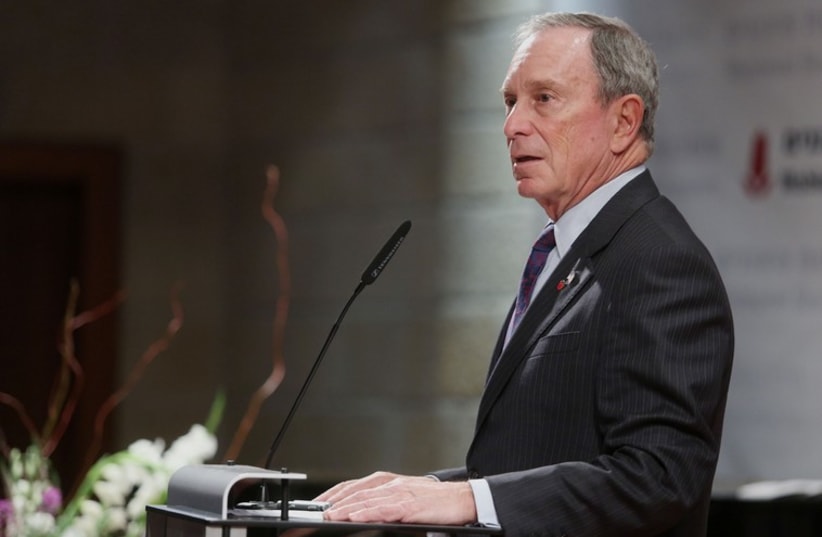
Michael Bloomberg(photo credit: MARC ISRAEL SELLEM/THE JERUSALEM POST)
Jewish billionaire and former New York Mayor Michael Bloomberg pledged on Thursday to help cover US financial commitments to the United Nations climate body after President Donald Trump said he would eliminate the funding and withdraw from the global Paris climate agreement.
The new Republican president is repeating a policy decision he made at the start of his previous term in office in 2017, which similarly triggered a move by Bloomberg to uphold the country’s international climate obligations.
“From 2017 to 2020, during a period of federal inaction, cities, states, businesses, and the public rose to the challenge to uphold our nation’s commitments — and now, we are ready to do it again,” Bloomberg said in a statement posted by his philanthropic arm Thursday
Money from Bloomberg and other unspecified US climate donors will help fund the United Nations Framework Convention on Climate Change, which runs annual global climate negotiations and tracks countries’ greenhouse gas emissions.
Bloomberg, among the richest people in the world, made his fortune in financial information and media. He has long been dedicated to fighting climate change and serves as UN special envoy focused on the issue. He is also a prolific philanthropist, having donated billions of dollars to a wide range of causes.
Former New York City mayor and philanthropist Michael Bloomberg hosts a roundtable discussion with municipal leaders throughout Israel from all walks of life
(credit: Courtesy of Bloomberg Philanthropies)
Though he is not known for emphasizing Jewish philanthropy, he has become one of the largest individual donors to Israeli charities since the start of the war in Gaza. He gave $44 million to Israel’s Magen David Adom ambulance service and committed $28 million to help rehabilitate Israeli communities targeted by Hamas’ Oct. 7, 2023, terror attack.
Growing concerns
Trump’s positions on climate, energy, and the environment put him at odds with the growing concern about these issues among Jewish communal organizations in the United States. The most recent sign of the wave of is the first-ever donation by the Schusterman family foundation to a nonprofit focused on climate action.
Concern about the climate crisis has been especially salient amid the devastating wildfires in Los Angeles, whose severity, experts say, can be linked to increasingly erratic patterns of rainfall and drought.
The fires were highlighted in the announcement of the Jewish Funders Network of a workshop for Jewish donors who want to focus on climate, and in an essay by the head of the Jewish climate group Dayenu suggesting arenas where it might still be possible to make a difference despite Trump’s installation in the White House.
Ice in the sky: Thailand's fight against air pollution
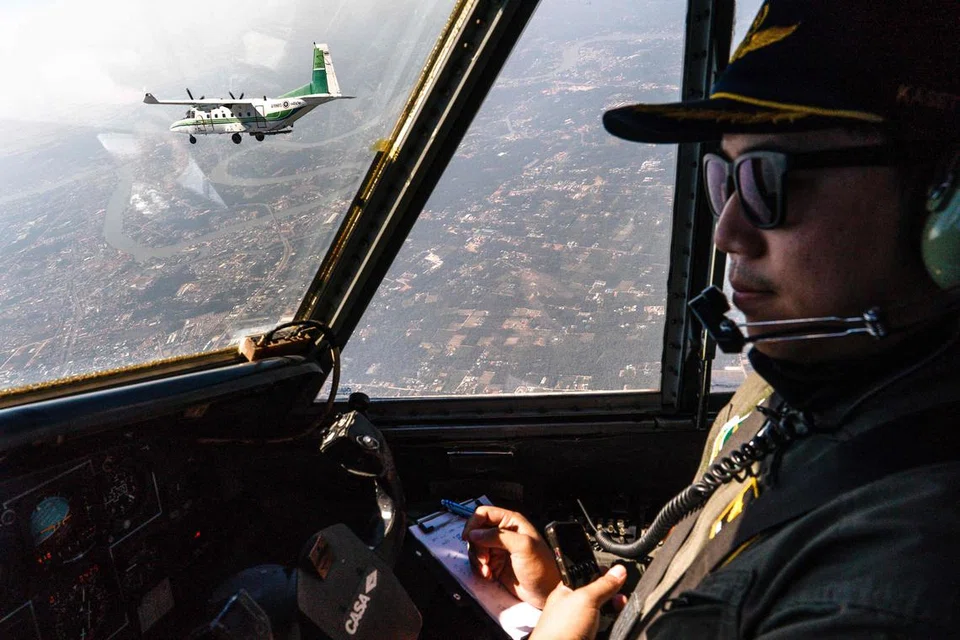
Twice a day, the Royal Rainmaking department sends aircraft up to spray cold water or dry ice into the layer of warm air to cool it down.PHOTO: AFP
UPDATED Jan 24, 2025,
Hua Hin - Flying through Bangkok’s cloudless blue skies, a small aircraft sprays a white mist over a thick haze of pea soup smog below.
This is Thailand’s desperate, unproven attempt at reducing the oppressive air pollution over its capital, which on Jan 23 reached eight times the World Health Organisation’s recommended daily maximum average.
The scourge has made more than a million people ill since late 2023 and cost Thailand more than US$88 million (S$119 million) in medical expenses, the public health ministry said earlier in January.
Air pollution in the Thai capital forced the closure of more than 350 schools – over a hundred more than the previous day – city authorities said on Jan 24, as Bangkok was ranked the world’s 7th-most polluted major city by air quality monitor IQAir.
According to Bangkok governor Chadchart Sittipunt, the main culprits are vehicle emissions, crop burning in the wider region and “closed” weather conditions – a warm atmospheric lid covering the dust, preventing it from dispersing.
Known as a temperature inversion, the kingdom is trying to deal with the phenomenon using a homegrown experimental method to displace the pollution.
Twice a day, the Royal Rainmaking department sends aircraft up to spray cold water or dry ice into the layer of warm air to cool it down.
AFP was granted exclusive access on board a flight over the outskirts of Bangkok.
Inside the small craft – which climbed to an altitude of around 1,500m – a scientist tracks the flight path on an iPad as two crew members release icy water from a pair of large blue containers that sprays out from the craft’s belly.
The theory is that reducing the temperature difference between the levels makes it easier for the trapped particles, known as PM2.5, to disperse into the upper atmosphere.
It is an unconventional method the department says is only used in Thailand.
“This is not the usual cloud seeding,” said programme head Chanti Detyothin. ‘Doing our best’
Countries have long tried “cloud seeding” – injecting chemicals such as silver iodide into clouds to trigger rain or snowfall – in attempts to alleviate drought and, increasingly, air pollution.
But its effectiveness is open to question and scientists say it has been shown to only be marginally useful in creating rain and absorbing pollutants.
Thailand’s worst smog happens during the dry season between December and April, when it is too windy and cloudless to induce precipitation.
The new technique was first used last year and is still in its testing stages.
Another aircraft measures pollutant concentrations before and after spraying to gauge the difference in air quality.
“The concentration (of PM 2.5) is less,” said Mr Chanti.
“The data suggests that at the level of our area of focus, the dust cleared up,” though he admits they cannot “make the pollution go away entirely. Even with this new technology, there are limitations.”
“We have been working every day for Bangkok to have clean air. We are doing our best as much as we can,” he said. Oil and gas firm
Ahead of takeoff, rainmaking staff pile a tonne (1,000 litres) of either dry ice, or ice and water into a plane – traditional cloud-seeding aircraft with repurposed spraying equipment.
The dry ice – solidified carbon dioxide – is provided by Thailand’s oil and gas giant PTT and other energy companies.
PTT did not immediately respond to requests from AFP for comment.
Another fossil fuel company, Bangkok Industrial Gas, also donated dry ice to the programme this month, with managing director Piyabut Charuphen saying in a statement the gift was part of their “commitment to creating a sustainable future”.
Carbon dioxide is itself a greenhouse gas and the environmental and health effects of spraying dry ice in the atmosphere are not fully understood.
Ms Weenarin Lulitanonda, co-founder of Thailand Clean Air Network, accused the energy firms of “using cilantro to garnish their dish”.
The Thai idiom, she explained, meant that “instead of solving the problem, (they) are creating a beautiful image”.
Just one flight can cost up to US$1,500, and with aircraft taking off from three bases around the country, it can reach US$9,000 per day.
Mr Ekbordin Winijkul of the Asian Institute of Technology said it is more cost-effective for Bangkok to address the causes of pollution with proven measures such as low-emissions traffic zones.
City authorities are already pursuing many of these, he said, like banning some heavy-duty vehicles and working with other provinces to control agricultural burning.
“Before we try to do something,” he said, “at least we should have confidence in the data first”.
AFP
Southeast Asian cities among world's most polluted, ranking shows
A view of the city amid air pollution in Bangkok, Thailand on Jan 24. PHOTO: Reuters
REUTERS
January 24, 2025
BANGKOK — Southeast Asian cities were among five most polluted in the world on Friday (Jan 24) according to air-monitoring organisation IQAir, with Ho Chi Minh City ranked second-most polluted, followed by Phnom Penh and Bangkok fourth and fifth, respectively.
In the Thai capital, a thick smog was seen covering the city's skyline. Workers, especially those who spend most of their time outdoors, were suffering.
"My nose is constantly congested. I have to blow my nose all the time," said motorcycle taxi driver Supot Sitthisiri, 55.
Air pollution is caused by a combination of crop-related burning, industrial pollution and heavy traffic.
In a bid to curb pollution, the government is allowing free public transportation for a week, Transport Minister Suriya Juangroongruangkit said.
Some 300 schools in Bangkok were closed this week, according to the city administration.
"They should take more action, not just announce high dust levels and close schools. There needs to be more than that," said Khwannapat Intarit, 23.
"It keeps coming back, and it’s getting worse each time."
Thai Prime Minister Paetongtarn Shinawatra said in a social media post that companies and government agencies should allow staff to work from home to reduce car use and construction sites should be using dust covers.
"The government is fully committed to solving the dust problem," she said.
In Vietnam's largest city, IQAir said the level of fine inhalable particles in Ho Chi Minh City was 11 times higher than the recommended level by the World Health Organisation.
Weeks earlier, the capital Hanoi was ranked the world's most polluted, prompting authorities to issue a warning about the health risks from air pollution and urging the public to wear masks and eye protection.
Governments in Southeast Asia were pushing for longer-term solutions to bring pollution down including a carbon tax and promoting the use of electric vehicles.
Thursday, January 23, 2025
France’s Oldest Neolithic Settlement Discovered on the French Riviera
Archaeologists work at the oldest Neolithic settlement in France. Credit: Inrap
Archaeologists have uncovered one of the oldest known Neolithic settlements in France, a rare glimpse into the early days of European farming communities. The discovery in Cavalaire-sur-Mer on the French Riviera marks a significant milestone in the study of ancient human history.
The site is part of an excavation covering 4,200 square meters, initiated as part of a city center redevelopment project. Archaeologists expect to complete their work by the end of January, 2025.
Officials have described the find as a rare and important discovery, with the settlement being only the second of its kind identified in France. The first such site is Peiro Signado, located in the Languedoc region.
A turning point in human history
The Neolithic period along the Mediterranean coast represents a crucial moment in human development. This era transitioned from nomadic lifestyles to settled farming and livestock raising. Known as the Cardial period, it is characterized by the rapid spread of early agricultural practices across the region.
Originating in Greece around 6000 BCE, the Cardial culture expanded westward, reaching southern Italy, including Sicily, Apulia, and Calabria. By 5800 BCE, it had spread further to southern France, including the French Riviera and Languedoc.
Decorated ceramic shard from the Early Cardial period. Credit: Institut national de recherches archéologiques préventives (Inrap)
The term “Cardial” refers to a distinctive pottery style, decorated with patterns made using jagged shells from the Cardium genus. This pottery is a defining feature of the early Neolithic communities, which left behind scattered traces of their homes and tools across Europe.
Cavalaire’s unique discovery
At Cavalaire, archaeologists found a structure buried beneath four meters of sediment in a coastal valley. The building dates to the Early Cardial period, confirmed by fragments of decorated pottery and its position 1.30 meters below Middle Neolithic layers from around 4800 BCE.
The structure measures approximately 7 by 5 meters and features two parallel stone walls and a small apse, though it has suffered damage over time.
Archaeologist examines excavation records at the Cavalaire-sur-Mer site. Credit: Inrap
The walls were reinforced with a mix of raw earth and gravel, a construction technique that added strength and durability. This design closely resembles similar structures found in central Italy, supporting theories of cultural diffusion from the east.
The excavation also revealed isolated hearths and a cluster of fire-related features in a 4-square-meter area. Postholes surrounding the features suggest a range of organized activities at the site, providing valuable insight into the daily lives of its inhabitants. Challenges in studying early settlements
In France, most early Neolithic remains are found in caves and rock shelters. Open-air settlements, like Cavalaire, are rare and often poorly preserved, making it difficult to fully understand construction methods and architectural designs.
Despite these challenges, discoveries like Cavalaire are transforming the archaeological landscape. They hint at the potential for more ancient settlements hidden beneath layers of sediment along rivers and Mediterranean coasts, waiting to reveal the story of Europe’s first farmers.
UK Law experts and Muslim group demand inquiry into Met Police pro-Palestine protest crackdown
January 23, 2025 A Stop Arming Israel placard and police in Trafalgar Square as tens of thousands of pro-Palestine people protested against the ongoing war in Gaza and Israel’s involvement in the West Bank and the continued arming of Israel by the British Government on the 18 January 2025, Central London, United Kingdom.
[Kristian Buus/In Pictures via Getty Images]
More than 40 legal experts and the Muslim Association of Britain (MAB) have demanded urgent action from the UK government and London Mayor, Sadiq Khan, over the Metropolitan Police’s handling of pro-Palestine protests, following controversial policing tactics at last Saturday’s demonstration, where 77 people were arrested.
In a strongly-worded letter, MAB Chair, Raghad Altikriti, challenged Khan over the Met’s “disproportionate and unwarranted assault on the rights of protest”, particularly regarding the 18 January demonstration where severe restrictions were imposed on protesters.
The letter specifically criticised Met Commissioner Mark Rowley’s “boastful remarks” at the Board of Deputies plenary, where he allegedly spoke about adopting harsh conditions against protests. Altikriti argued that Rowley’s comments reinforced perceptions of political bias in policing decisions.
Mayor Khan was also asked why the Metropolitan Police was “making baseless public claims that protesters ‘forced through’ police lines – claims that have been repeatedly refuted with ample video evidence”. Such narratives “unjustly tarnished the reputation of protesters” said the letter and “perpetuate harmful stereotypes about the pro-Palestine movement”.
The MAB’s intervention comes as more than 40 legal scholars, including prominent academics from over 15 universities, have demanded an independent inquiry into what they describe as “a dangerous assault on the right to assembly and protest.” Their letter to the Home Secretary, Yvette Cooper, highlighted concerns over the Met’s decision to ban protesters from gathering outside the BBC’s London headquarters.
The controversy centres on the 18 January protest where police made 77 arrests, including protest organisers. The Palestine Solidarity Campaign (PSC) disputes police claims that protesters “broke through police lines”, stating that the Met reneged on a previously agreed march route from the BBC to Whitehall.
“The conditions imposed by the Metropolitan Police on the PSC demonstration on 18 January 2025 were disproportionate and an abuse of police powers” said the letter signed by legal scholars. “Despite a demonstrable track record of overwhelmingly peaceful protests for over a year, the police prevented the demonstration to assemble near, or march towards, the BBC on Saturday without offering any compelling evidence. The police thus seemed to be motivated by political considerations that seek to limit the efficacy of the protesters and shield state institutions from criticism.”
Commenting on the letter, Dr Paul O’Connell, a reader in law at SOAS University of London said: “Freedom to assemble and protest is the very lifeblood of a democratic society. If people protesting the commission of a genocide in Gaza are not safe to do so, then it bodes ill for individual freedom and democratic life in Britain in the 21st century.”
The scholars called for charges to be dropped against those arrested or subsequently charged and urged that an independent investigation be conducted into the policing of Saturday’s protest. “More fundamentally, we call for a repeal of the raft of anti-protest laws passed in recent years, and a recalibration of the law in a way which genuinely protects the right to protest.”
The MAB letter specifically questioned Khan about the Met’s communication strategy, arguing that “baseless public claims” about protesters forcing through police lines have been “repeatedly refuted with ample video evidence.” It also raised concerns about Commissioner Rowley’s alleged refusal to engage with Muslim and pro-Palestine organisations while meeting with other community groups.
January 23, 2025 at 8:10 pm A Palestinian prisoner is welcomed by a relative upon the arrival of some 90 prisoners set free by Israel in the early hours of January 20, 2025 in the occupied West Bank town of Beitunia, on the outskirts of Ramallah. [Zain JAAFAR / AFP/ Getty Images]
Spending more than six months in Israeli jails, 17-year-old Rose Khwais, the youngest female Palestinian held by Israel, was released under the Gaza ceasefire and prisoner swap agreement that took effect on 19 January, Anadolu Agency reports.
Israeli authorities released 90 Palestinian prisoners, including women and children, on Sunday night from Ofer Prison, west of Ramallah in the Occupied West Bank, under the first phase of the ceasefire deal.
Khwais was arrested in May 2024 from the Old City of East Jerusalem and sentenced to 10 years in prison. She was not previously detained before enduring this harsh experience.
“I entered prison in shock, not even knowing what a prison was,” Khwais told Anadolu upon returning to her home in East Jerusalem.
The young girl, arrested at the age of 16, said she had no knowledge of the Israeli interrogation methods or their harsh tactics.
“I didn’t even know what a prison cell looked like. All I had heard about prisons was from other prisoners – that it was a small room with a mattress. But I never expected it to be this bad,” she added.
Describing her experience, Khwais said: “Prison means darkness. You don’t see anyone. It’s just a lit grave.”
Glimpse of suffering
Khwais recalled various forms of suffering in Israeli detention.
“We were subjected to oppression, including the use of weapons, intimidation, and threats,” she said.
She also spoke of violations of privacy, including strip searches, intimidation and threats of harassment against girls.
“There was actual harassment,” she said, citing incidents such as girls returning from solitary confinement with their hijabs (headscarves) removed.
Due to the difficult conditions she endured behind bars, Khwais admitted: “Prison changed many things in me.”
The harsh conditions and severe interrogation methods led Khwais to develop health problems, exposing her to challenges far beyond her years in Israeli prisons.
“Prison changed me a lot. After 37 days of interrogation at Al-Maskobiya (an Israeli detention centre in West Jerusalem), I couldn’t endure anymore. On my way to court, under intense pressure, I suddenly found myself in the hospital,” she said. Harrowing health experience
The Palestinian girl described her pains, which included signs of a stroke, fluid around her heart and blood pressure issues.
“I stayed in the hospital, and when I tried to move, I realised I was cuffed. That’s when I understood I was still in prison.”
Even while battling illness and shackles, Khwais worried more about her family’s reaction to her condition than her own suffering.
“I was afraid they would tell my family about my illness, but I still told them to inform my family,” she said.
The Israeli response was harsh, with authorities telling her it was “forbidden” and barred her from meeting her lawyer.
Khwais recounted additional hardships, including mistreatment during medical examinations.
“When I needed to be moved to another section for tests, they handled me roughly while I was shackled. One doctor even asked the police officer to call him immediately if my condition worsened,” she recalled.
Khwais said that, despite telling a police officer about her severe pain, he responded by threatening her, saying: “I’ll break your mouth.”
The young girl noted that she told him at the time that she intended to report the incident to the court and that she needed medical treatment. The Israeli officer responded by instructing his colleague to “push her with the baton”.
“Prison is terrible. Prison is prison,” she stressed.
See the sky
The greatest wish for Palestinian female prisoners, according to Khwais, was to “see the sky”.
“The prisoners wanted freedom. We could only see the sky through small squares (a ceiling of interlocked iron wires). We prayed to Allah to let us see the sky without those squares,” she said.
Speaking about her first moments after her release on Sunday, Khwais added: “We saw Mount Carmel (Haifa), the sky and so many other things.”
The ceasefire and prisoner exchange deal between Israel and Hamas took effect on Sunday, suspending Israel’s genocidal war on the Gaza Strip.
The three-phase deal includes a prisoner exchange and sustained calm, aiming for a permanent truce and the withdrawal of Israeli forces from Gaza.
More than 47,000 Palestinians have been killed, mostly women and children, and over 110,700 others injured in Israel’s genocidal war on Gaza, according to local health authorities.
The Israeli war has left more than 11,000 people missing, with widespread destruction and a humanitarian crisis that has claimed the lives of many elderly people and children in one of the worst global humanitarian disasters ever.
The International Criminal Court issued arrest warrants in November for Netanyahu and his former Defence Minister, Yoav Gallant, for war crimes and crimes against humanity in Gaza.
Israel also faces a genocide case at the International Court of Justice for its war on the enclave.
Israel does not treat Palestinian prisoners as human beings: Freed senior leader, Khalida Jarrar
January 21, 2025
MEMO
Palestinian prominent prisoner Khalida Jarrar, a figure in the Marxist Popular Front for the Liberation of Palestine (PFLP), is greeted by well-wishers following her release from Israeli prison in the early hours of January 20, 2025, in the occupied West Bank town of Beitunia, outside Ramallah [Zain Jaafar/AFP via Getty Images]
Freed Palestinian leader, politician and activist, Khalida Jarrar, said Israeli authorities do not treat Palestinian prisoners as human beings, describing the conditions in prisons as “the worst and most difficult since the Occupation of the West Bank in 1967”, Anadolu Agency reports.
In the early hours of Monday, Israel released 90 Palestinian prisoners under a ceasefire and prisoner swap agreement that suspended its genocidal war on the Gaza Strip, which has claimed more than 47,000 lives since 7 October, 2023, and left the enclave in ruins.
Jarrar, who was held in administrative detention in December 2023, was among those set free. It came after three female Israeli hostages held by the Palestinian group, Hamas, in Gaza were released. Administrative detention is a policy that allows Israeli authorities to hold individuals without charge or trial.
Speaking to Anadolu, the leader of the Popular Front for the Liberation of Palestine, who has been arrested multiple times, said Israeli prison conditions “have never been as harsh as they are now, be it the repeated assaults or constant use of tear gas”.
Describing the state of prisons in Israel, Jarrar said the Palestinians endure “poor quality and insufficient quantity of food, as well as the solitary confinement policy practiced by the Occupation authorities.”
“I spent six months in solitary confinement,” she said, adding that “many Palestinians are held in solitary cells in very harsh conditions.”
The senior politician said what is happening in Israeli prisons is a result of policies by the current Israeli government and Itamar Ben-Gvir, the far-right National Security Minister, who resigned after the Gaza truce, trying “to deal with the prisoners as if they “are not humans”.
As Jarrar, 61, was led through a cheering crowd, it could be seen her once-dark hair had greyed, and she looked exhausted.
“We were subjected to extreme harshness and physical assault in a deliberate and intentional attempt to humiliate and demean us,” she said.
The lawmaker stressed that the prisoners’ cause is “an integral part of our people’s causes”, and all Israeli policies against the prisoners must be confronted nationally.
Jarrar was elected as a member of the Palestinian Legislative Council in the last parliamentary elections held in 2006. She has served as the head of the assembly’s Prisoners Commission and was also appointed to the Palestinian committee for follow-up with the International Criminal Court.
Jarrar has been arrested by the Israeli army several times on accusations of affiliation to an “outlawed” party and for her role in activities supporting Palestinian detainees in Israeli jails.
According to Prisoners’ Affairs groups, she was repeatedly mistreated by prison guards, affecting her well-being.
Estimates put the number of Palestinian detainees in Israeli prisons at over 11,000.
Hamas released the three Israeli captives under the ceasefire deal, which took effect on Sunday.
The three-phase deal includes a prisoner exchange and sustained calm, aiming for a permanent truce and the withdrawal of Israeli forces from Gaza.
Unless otherwise stated in the article above, this work by Middle East Monitor is licensed under a Creative Commons Attribution-NonCommercial-ShareAlike 4.0 International License. If the image(s) bear our credit, this license also applies to them. What does that mean? For other permissions, please contact us.
HIDE & SEEK
Hamas Commander reappears in Gaza despite Israel assassination claims
Screenshot showing Hussein Fayyadh (center), Commander of Hamas’ armed wing, the Qassam Brigades on 22 January 2025 [mohammed_abu_loay/Instagram]
A Hamas Commander has reappeared in the northern Gaza Strip despite Israeli claims of assassinating him last year, Anadolu Agency reports.
Activists, on Wednesday, shared video footage of Hussein Fayyadh, a Commander of Hamas’ armed wing, the Qassam Brigades, during a rally in northern Gaza.
“Gaza has emerged unbreakable, victorious, and with its head held high,” Fayyadh told participants in the rally, according to the footage.
On 23 May last year, the Israeli army claimed to have killed Fayyadh inside an underground complex in the northern town of Jabalia. Israel blames the Hamas Commander for rocket fire during the Israeli genocidal war on Gaza and on Israeli settlements near the border with the enclave.
On Wednesday, the Israeli army acknowledged that its intelligence about Fayyadh’s death was inaccurate.
The first six-week phase of a Gaza ceasefire agreement took effect on 19 January, suspending Israel’s genocidal war that has killed nearly 47,200 Palestinians, mostly women and children, and injured more than 111,160 since 7 October, 2023.
The three-phase ceasefire agreement includes a prisoner exchange and sustained calm, aiming for a permanent truce and the withdrawal of Israeli forces from Gaza.
The Israeli onslaught has left more than 11,000 people missing, with widespread destruction and a humanitarian crisis that has claimed the lives of many elderly people and children in one of the worst global humanitarian disasters ever.
The International Criminal Court issued arrest warrants in November for Netanyahu and his former Defence Minister, Yoav Gallant, for war crimes and crimes against humanity in Gaza.
Israel also faces a genocide case at the International Court of Justice for its war on the enclave.
Palestinian envoy to UN invites Security Council to visit ‘devastated Gaza Strip'
Riyad Mansour calls on member states to 'witness firsthand what befell our people and our children, owing to what Israel has perpetrated'
Merve Aydogan |24.01.2025 - TRT/AA
HAMILTON, Canada
Palestine's UN envoy invited UN Security Council members Thursday to visit the Gaza Strip to "witness firsthand" atrocities committed against Palestinian children by Israeli forces.
"With the ceasefire, which should become permanent, it may be time for the Security Council to visit the devastated Gaza Strip to witness firsthand what befell our people and our children, owing to what Israel has perpetrated," Riyad Mansour told the Council session on children of Gaza.
Saying that Israel has committed war crimes and crimes against humanity "throughout 15 months of genocide and 17 years of an unjust blockade," Mansour said the Council members should visit the Gaza Strip to see the results of "double standards and immunity, the lack of accountability enjoyed by Israel as an occupying power."
He expressed solidarity with the people of Gaza and pledged to be their "voice until this criminal Israeli occupation of our people and our land comes to an end."
He also pledged the Palestinian Authority's readiness to assume the necessary responsibilities in Gaza and in the occupied West Bank.
Mansour stressed the need to call on Israel to release "thousands of doctors, journalists and academics" detained from Gaza in order to facilitate its recovery.
Calling for the Israeli army to remain on the UN's "list of abusers of the rights of children" in armed conflicts until the occupation ends, he further urged all countries to stop arms shipments to Israel.
"We cannot accept that the fate of our children will be either a grave in the Gaza Strip or a detention center in the West Bank or a displacement camp in East Jerusalem," he said.
UN rapporteur warns Israel may repeat Gaza scenario in West Bank
January 23, 2025 MEMO Palestinian families forced to flee their homes moving to other areas, on January 22, 2025 in Jenin, West Bank [Issam Rimawi/Anadolu Agency]
The UN Rapporteur on Human Rights in Palestine, Francesca Albanese, has warned that Israel may commit genocide in the occupied West Bank similar to the Gaza Strip.
“As the long awaited ceasefire in Gaza took place, Israel’s death machinery escalated its firing in the West Bank, killing 10 people in Jenin today. If it is not forced to stop, Israel’s genocide of Palestinians will not be confined to Gaza. Mark my words” Albanese posted on X.
The Palestinian Ministry of Health announced on Tuesday evening that ten Palestinians were killed by Israeli forces and 40 others were injured in the vicinity of the city of Jenin and its refugee camp in the northern occupied West Bank.
Earlier on Tuesday, Israeli Prime Minister Benjamin Netanyahu announced that a widescale military assault against Jenin had been launched, under the pretext of “enhancing security”.
Israel’s Channel 12 said Netanyahu was merely fulfilling his promise to extremist Minister Bezalel Smotrich in return for agreeing to the ceasefire deal in Gaza.
The Bible grants Israel rights to Occupied West Bank says Trump’s UN envoy pick
JESUS WAS PALESTINIAN
January 23, 2025
Congresswoman Elise Stefanik, nominee for Ambassador to the United Nations, speaks at a confirmation hearing in front of the Foreign Relation’s Committee of the Senate in Washington, DC on January 21, 2025. [Nathan Posner – Anadolu Agency]
Donald Trump’s nominee for UN ambassador, Rep Elise Stefanik, has endorsed the controversial view that Israel has a “biblical right” to the illegally Occupied West Bank, aligning herself with Israel’s far-right ministers and contradicting long-standing US policy and international law.
During her confirmation hearing on Tuesday, Stefanik openly supported the position held by far-right Israeli ministers such as Bezalel Smotrich and Itamar Ben-Gvir, who advocate for Israeli sovereignty over the Occupied West Bank based on biblical claims. There is expectation in Israel that President Trump will give the Occupation state the green light to annex the West Bank in contravention of international law.
During his first term, Trump moved away from the two-state solution and sided with Israel in a more obvious manner. It recognised Jerusalem as the undivided capital of Israel and moved its embassy from Tel Aviv to the Occupied city. It also recognised Israel’s sovereignty over the Occupied Syrian Golan Heights. It also softened its stance on illegal Israeli settlements in the Occupied West Bank, abandoning its four-decade position that the settlements were “inconsistent with international law”.
When pressed by Senator Chris Van Hollen about sharing the views of Israel’s Finance Minister, Smotrich, regarding biblical rights to the entire West Bank and if she believed that Israel has been granted the territory by God, Stefanik explicitly confirmed her position with a “yes”. Van Hollen noted that such views were not even shared by Israel’s founders, who were “secular Zionists, not religious Zionists.”
Stefanik’s position aligns with Israel’s far-right political faction, which seeks to recreate what they view as ancient biblical boundaries, effectively dismissing two thousand years of history and current international law. This interpretation is used to justify the illegal expansion of settlements in the Occupied Territories.
During the hearing, Stefanik notably avoided directly acknowledging Palestinians’ right to self-determination, despite repeated questioning. While stating that “Palestinian people deserve human rights”, she deflected questions about their right to self-determination by focusing, instead, on criticism of Hamas.
Her appointment follows a pattern in Trump’s administration of selecting officials who endorse far-right Israeli positions. This includes the appointment of Mike Huckabee as US ambassador to Israel, who has previously claimed that Israeli Occupation does not exist, and that Israel holds the “deeds” to the entire West Bank.
Critics argue that such appointments signal a dramatic shift away from traditional US policy on the Israeli-Palestinian question and could further complicate peace efforts in the region. Van Hollen warned, during the hearing, that such positions would make it “very difficult” to achieve peace and stability in the Middle East.
Hamas slams PA’s security aggression against resistance in Jenin
January 23, 2025
MEMO
Palestinian Authority security forces deploy in the Jenin camp for Palestinian refugees in the occupied West Bank on January 18, 2025 [JAAFAR ASHTIYEH/AFP via Getty Images]
Hamas yesterday condemned in the strongest terms the continued shedding of Palestinian blood at the hands of the Palestinian Authority (PA)’s Security Service, saying its practices in the occupied West Bank have “crossed all the red lines and national norms”, Quds Press reported.
In a statement, Hamas accused the PA’s security forces of persisting in attacking citizens in Jenin, saying scenes of the PA’s security besieging Al-Razi Hospital in the city seeking resistance fighters wanted by Israel “have crossed all red lines and constitute a crime against our people and a denial of the blood of the martyrs”.
These actions, the movement added, leaves no room for doubt that the security coordination between the PA and the occupation “reached catastrophic levels.”
The movement called on the Palestinian factions and national and community figures in the West Bank to unite and put an end to the PA’s serious violations and confront the Israeli occupation’s aggression and targeting of the resistance fighters in Jenin.
It also called for coordinating national efforts to confront the targeting of the resistance fighters and the Israeli aggression against the occupied West Bank.
On 14 December, the PA security forces launched a “military operation” in the Jenin refugee camp, under the pretext of pursuing “outlaws”, however Palestinian resistance factions accused the PA of collaborating with Israeli occupation in targeting resistance.
The Palestinian Security Service withdrew earlier this week to allow for occupation forces to launch a military campaign in it. Around 2,000 Palestinian families were displaced from the Jenin Refugee Camp by the second day of the Israeli military offensive, Bashir Matahin, the municipality’s public relations officer, said.
West Bank: Hundreds of Palestinians flee Jenin as Israel presses raid
Palestinians in their hundreds are forced to flee Jenin as Israel's military operation in the West Bank city intensifies.
The New Arab Staff & Agencies 24 January, 2025 Residents in Jenin are being forced to leave their homes due to fears concerning their safety [Getty/file photo]
A Palestinian official said hundreds of people began leaving their homes in the flashpoint area of Jenin the occupied West Bank on Thursday as Israeli forces pressed a deadly operation there.
The Israeli military this week launched a raid in the Jenin area days into a ceasefire was approved in the Gaza Strip.
"Hundreds of camp residents have begun leaving after the Israeli army, using loudspeakers on drones and military vehicles, ordered them to evacuate the camp," Jenin governor Kamal Abu al-Rub told AFP.
On Thursday evening the military claimed it had not asked residents to evacuate from the area.
"We emphasise that in order to maintain the safety of residents in the area, the IDF [Israeli army] is enabling any resident who chooses to exit from the area to do so via secure and organized routes," it said in a statement to AFP.
Since it began on Tuesday, the violent operation has killed at least 12 Palestinians and injured 40 more around Jenin, according to the Palestinian health ministry.
"There are dozens of camp residents who have begun to leave," Jenin resident Salim Saadi said.
"The army is in front of my house. They could enter at any moment."
Israeli forces have also detained several Palestinians from the Jenin area, with an AFP photographer seeing a row of blindfolded men in white jumpsuits being transported out of the West Bank.
Israeli Prime Minister Benjamin Netanyahu has said the objective of the operation, dubbed "Iron Wall", was to "eradicate terrorism" in the area, linking the operation to a broader strategy of countering Iran and the "Axis of Resistance".
Drones
Israeli army chief Lieutenant General Herzi Halevi said it was the right call to launch the assault on Jenin.
"I believe that once we recognised that the Jenin camp had become a hub for those planning terror attacks or looking for a safe haven after committing terror attacks, it was absolutely the right decision to go in forcefully against it," he said in a statement.
Palestinians had already begun fleeing the Jenin area on foot on Wednesday, with AFPTV images showing a group of men, women and children making their way down a muddy road, the sound of drones buzzing above them clearly audible.
The Israeli military said on Thursday that it killed two Palestinian men near Jenin during the night.
"After an exchange of fire, they were eliminated by the forces," it said, adding one soldier was wounded in the gunfight.
Violence has surged throughout the occupied West Bank since the Gaza war erupted on 7 October, 2023, which has killed more than 47,000 Palestinians.
Israeli troops or settlers have killed at least 850 Palestinians in the West Bank since Israel's military onslaught in Gaza began.
The Jenin raid began days after a truce took effect in Gaza on Sunday, after 15 months of war in the Palestinian enclave.
Israel DM: Jenin is just the beginning, West Bank raids will expand
January 23, 2025
MEMO Israeli military vehicles and construction equipment patrol the streets and alleys in the area as Israeli occupied army continues its attacks in West Bank city of Jenin on the 2nd day, on January 22, 2025 [İssam Rimawi/Anadolu Agency]
Israeli Defence Minister Yisrael Katz yesterday vowed to expand military raids in the occupied West Bank, stating that Jenin serves as a model and the starting point.
According to Sky News Arabia, Katz said: “Jenin is the beginning and the model that will be applied across the West Bank.” He added, “Other areas in the West Bank will witness military operations.”
Earlier, Katz noted that “the operation launched by Israeli military forces in Jenin on Tuesday is expected to mark a shift in the army’s strategy in the West Bank.”
The Israeli occupation army began its assault on Jenin and its refugee camp on Tuesday, resulting in the deaths of ten Palestinians and injuries to over 40 others so far.
On Tuesday night, Israeli occupation forces deployed additional military reinforcements to Jenin and its camp.
Several military vehicles entered the city from the Jalameh checkpoint, while bulldozers destroyed streets near Ibn Sina Hospital, the entrance to Jenin Governmental Hospital, and the area around Al-Hosan roundabout at the camp’s entrance.
Additionally, an Israeli military force stationed itself in the Jabal Abu Thahir neighbourhood, accompanied by a bulldozer.