Sunday, January 26, 2025

UK

‘Labour must deliver change voters can feel’, says Fabian Society’s Joe Dromey
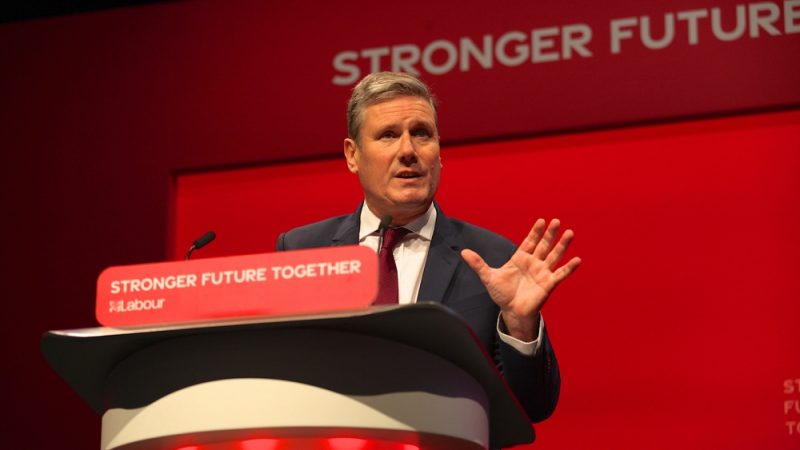

Photo: Rupert Rivett / Shutterstock

This Saturday, over 600 Fabian and Labour activists will gather for our New Year Conference. It’s the first such conference with Labour in power for 15 long years, and it is also my first as general secretary.

The Fabian Society has a long and proud history. We are both the oldest think tank in the UK, and a Socialist Society, powered by our members. We helped found the Labour party over a century ago, and we have influenced its direction ever since. The Fabian Society has long been the place where some of Labour’s best ideas have been born and nurtured.

The first six months back in government have been far from easy. But few things worth doing are.


Labour inherited a deeply toxic legacy. The economy had stagnated, leaving workers facing the longest squeeze on incomes since Napolean, and putting our public finances in a precarious position. The Conservatives failed to invest when borrowing was cheap, leaving us with crumbling infrastructure and an acute housing crisis. The Labour government inherited public services on their knees, with prisons full to the brim, local authorities on the verge of bankruptcy, and NHS waiting lists at near record levels.

We face a deeply challenging and uncertain geopolitical environment, with a war on our continent, the far right on the rise across Europe, and Trump back in the White House. We are hurtling toward a climate crisis, with temperature rises already breaching the 1.5 degree warming target.

‘Pinning blame will only get us so far’

We can’t let the previous Government forget the terrible state they left our country in.

But pinning the blame where it lies will only get us so far. If by the next election, Labour has not delivered tangible improvements in public services that voters can see, then we cannot expect to retain their trust. If Labour has not grown the economy in a way which voters will really feel, then we will struggle to win again.

At the Conference, we will explore how we can deliver the change that our country so desperately needs.

READ MORE: Labour voters would pick welfare and climate cuts over police or pension cuts

We will hear from Wes Streeting MP about how we build an NHS fit for the future, and deliver a National Care Service which provides the care people need, and the dignity care workers deserve. Annelise Dodds MP and Emily Thornberry MP will discuss how we can navigate an increasing unstable world. Steve Reed MP will set out how we can clean up our rivers and restore our natural commons. Across the day, we will explore how we can grow the economy and create good jobs for all, and we will think through the lessons of the Democrats’ defeat in November.

The Fabian Society has both a proud history and a crucial role to play in the future. We are committed to helping Labour deliver the decade of national renewal that our country so desperately needs.

‘The challenges we face are immense’

As an ally of the Labour party, we will work with the government to think through how they can deliver their missions. But as a critical friend, we will also encourage them to grasp some big issues which they may fear to touch. From charting a closer relationship with Europe in order to unleash growth, to exploring how we can tax wealth so that we can tackle inequality and fund our public services.

The Scottish Fabians and Welsh Fabians will help shape our manifestos in the run up to the crucial Holyrood and Senedd elections next year. We will work with Labour to develop a compelling political platform and policy offer for the next election, which can counter the rising threat of the populist right. We will support the health and vitality of the movement by providing an open space for discussion and debate, and developing future leaders.

The challenges that we face are immense. But they are matched by our determination to deliver change, and our commitment to building a more equal society.

If you want to join the Fabian Society, you can do so here.



‘It’s time to give a Citizen’s Advance to those who can’t rely on Bank of Mum and Dad’


We live in a country where access to the Bank of Mum and Dad has a greater impact in shaping your life than it has for decades.

For millions of people, your hope of getting on the housing ladder, changing career, or even starting a family is increasingly dependent on how much financial support you can rely upon from your parents.

This isn’t an original diagnosis, the case has been made by Thomas Piketty, with a UK focus in books like Inheritocracy by Eliza Filby and in countless pieces of financial analysis. In 2023, Legal & General found that the Bank of Mum and Dad was on course to hand out £8.1billion pounds to its beneficiaries, up 50% in just three years.

As a new Labour MP, I want to start a conversation about how we extend the opportunity for those who can’t rely on the wealth of their parents to get ahead. Breaking down barriers to opportunity is rightly one of the central missions of this government. It’s welcome we have a renewed focus on early years and education, but I want the debate to reflect the experiences and challenges of young adults too.

Parents will always want to offer financial support to their children and it is human nature that they do. My proposal isn’t about how we tax family gifts or inheritance differently, it’s an idea for how we offer financial support to all young adults, through a Citizens Advance.

‘A house deposit seems like a distant dream’

If you are under the age of 40 and have made at least 10 years of National Insurance contributions, I want the state to give you a chance to access a lump sum worth £11,500. This isn’t free money, your choice would be to delay your state retirement age for a year and in exchange, receive the value of one year’s state pension upfront (£11,500) as a lump sum.

Imagine you are a 28 year old (born in 1996) who started work as an apprentice mechanic aged 18. You have worked solidly and paid National Insurance for 10 years, rent in a shared house and put £150 away a month.

You are doing everything asked of you, but despite saving as much as you can, a house deposit seems like a distant dream. Currently your state retirement age is 68. Choose to move that back one year to 69 and you receive a lump sum of £11,500 instead. A Citizens Advance that finally means a house deposit is in reach.

Or consider a 31 year old graduate, who started work at 21. You have just hit 10 years working in marketing, have a mortgage and a two year old. You are desperate for a career change and have found a full time masters course you want to take to allow you to retrain, but you simply can’t afford it.

You face being locked into a career just to pay the bills, when you know you’ll be happier and more productive in a new role. Your state retirement at 68 feels a very long way off, so you choose to defer until you are 69, take the £11,500 Citizens Advance and you start the course.

‘This would not be the state offering something for nothing’

Given you are borrowing from your future self, a Citizens Advance would be net neutral for the Treasury over the long-term. It would bring forward state spending and act as an economic stimulus, so the mechanism needs discussion and refinement.

I am pleased the Social Market Foundation has agreed to work with me on the idea, and there is an open invitation to people who like the concept and want to help us develop it further.

My vision for a Citizens Advance is anchored by a set of principles that I think can earn widespread support.

First, this would not be the state offering, ‘something for nothing’. Setting eligibility at 10 years of National Insurance contributions means it would only be available to those who have made a contribution to society. Secondly, that there would be no compulsion to change your retirement age.

People would be trusted to make an informed choice about the value of retiring a year later, or accessing the £11,500 today.

Thirdly, this would be a universal offer to all citizens who meet the criteria.

The Bank of Mum and Dad can be life changing for those who can draw down from it. My vision is that accessing a Citizens Advance will one day be just as transformative and crucially, it will be an offer that is open to all.


UK

Streeting and Farage spar over NHS fees as SoS vows to ‘take on the populists’


Wes Streeting at the Fabian Society conference in 2025.

Wes Streeting has sounded the alarm over Reform’s threat to Labour and the “corpses of progressive political parties” across Western liberal democracies, and become embroiled in a row with Nigel Farage over potential NHS fees.

The Health Secretary used a speech at a Fabian Society conference on Saturday to warn that not embracing “legitimate” criticism of state institutions  “opens the door to the right to attack the very principle of collectivism”.

Streeting also suggested Labour “had basically said to a whole bunch of men in this country, ‘oh no, sorry, our equalities agenda isnt for you'” despite issues like male suicide, and argued Labour needed a “genuine”, inclusive equality agenda.

Public service failures ‘fertilisers of populism’

Much of the speech centred on the health service.

Problems in public services are “one of the fertilisers of populism” in breeding cynicism about the potential for change, Streeting warned. He argued improving the NHS would be a “potent antidote”.

He said the government wanted to be a “light on the hill for progressives around the world”, in response to a question about Donald Trump’s presidency.

In a wide-ranging speech, he also went strikingly on the offensive against Reform and Nigel Farage, arguing the USA showed delivery was “not enough” and Labour must also “take on the populists’ arguments and defeat them in the battle of ideas”.

READ MORE: Wes Streeting: Social media trolls saying I want NHS privatisation ‘boil my blood’

He was cheered by Fabian supporters at the Guildhall in the City of London as he ignored two hecklers while he reeled off Labour’s achievements in power so far. One protester was dragged out of the room by security officials.

At one point he also reeled off individual cabinet members’ successes, notably including the now-former Transport Secretary Louise Haigh for setting up Great British Railways.

Farage is an ‘alternative candidate for PM’

He called Reform leader Nigel Farage one of two “alternative candidates for Prime Minister”, some polls showing Reform polling near level-pegging with Labour, and warned: “The populist right are coming for us.”

He said: “Cutting the longest waiting times from 18 months to 18 weeks by the next election will mean achieving something the NHS hasn’t done in a decade.

“And if we do it, it will represent an act of resistance against the status quo of managed decline. We will have helped remake the case for progressive politics, changing the lives of working people in the face of populist cynicism. We can defeat Farage by turning around the NHS.”

For more from LabourList, subscribe to our daily newsletter roundup of all things Labour – and follow us on  BlueskyWhatsAppThreadsX or Facebook.

Streeting highlighted past comments by Farage supporting an insurance model of healthcare, and warned Reform would “put the NHS as a universal service, free at the point of use” at risk.

Farage hit back and was forced to promise the NHS will “always be free at the point of delivery” under Reform. He accused Streeting of being scared enough of Reform to start “lying”, but Streeting quoted a past interview back at him:

“For all the coverage of Nigel Farage in recent weeks, all the speculation about whether he could become Prime Minister, there has been almost no reporting of what he would actually do in office.”

He said: “I can’t think of a more potent antidote to Farage’s miserabilism, than proving the cynics wrong and getting the NHS delivering world-class care for patients again.

“In just the past four months, thanks to the investment and reforms we are making, this Labour government has taken almost 150,000 patients off the waiting list and counting.”

Labour will help some patients go private

He added that Labour would give all patients “the same choice, control, and convenience that is currently just the preserve of the wealthy”.

If the wealthy are told to wait months for treatment, they can shop around. But working-class people can’t.

“Labour’s reform agenda is placing power in the hands of the many, not the few, giving all patients the same choice as the wealthy enjoy.

“If there is a private hospital that can treat patients faster than the NHS, they will soon be able to choose to be treated there, paid for by the state.”

Labour told men ‘our equalities agenda isn’t for you’

Streeting spoke passionately too about Labour being the party of equality, racism experienced by NHS staff, and trying to tackle particular ethnic minorities’ greater risks of certain health problems, as well as ensuring trans patients are “respected”.

But he also attacked an “ideologically driven, gimmicky gesture politics” around equality, diversity and inclusion and what he called the “nonsense” of “anti-whiteness”, as well as warning Labour’s equality agenda should not be derailed by “the politics of sociology seminars”.

“How did we go so wrong when the party founded by and for the working class basically said to a whole bunch of men in this country, ‘oh no, sorry, our equalities agenda isnt for you’. Really?”

“If you know that you’re more likely to die from suicide as a young man, how do you  think those people feel if then they see that the agenda that should be speaking to them…says ‘actually, we’re about anti-whiteness’…or ‘sorry, we can’t talk about that because we’re about women’s health now’.

“We want to make sure that an agenda that’s about equality of outcomes is genuinely about equality of outcomes.”

He suggested it had “contributed to the reaction…to an agenda that should be fundamentally inclusive”.

‘The centre left can forget our purpose’

Streeting added: “Beating the populist right will require us to be honest with ourselves.

“Sometimes, the centre left can forget our purpose. It is not to blindly defend institutions because we share their values.

“Western liberal democracies are littered with the corpses of progressive political parties, who found themselves defending the indefensible.

“The left finds it easy to acknowledge market failure, but can find it harder to acknowledge state failure. A failure to accept and embrace legitimate criticism of state institutions opens the door to the right to attack the very principle of collectivism.”

‘No-one’s saying, ‘come on down, Carla Denyer”

In a Q&A after the speech with journalist Lewis Goodall, Streeting said he was frustrated with a debate about whether “the press office is doing a good enough job”.

“The whole point about communication is the communication can only be as good as the message.”

Later on he criticised the fact Farage got “so much airtime” with just five MPs, compared to the Green and Lib Dem leaders. He suggested it seemed like Farage had a “superpower”.

While he said criticising the media was like criticising the weather, Streeting added: “No-one’s saying, ‘come on down, Carla Denyer…step forward, Prime Minister Ed Davey.”

He also said “you can’t just sell policies,  you have to sell ideas”, and make the case for active government and politics itself  as a “force for good”.

Asked about the Prime Minister’s communication skills, he said Starmer’s “superpower” was coming from outside politics, even though it was “often see as a weakness”.

“He doesn’t have a great deal of patience for political game-playing, pointless political theatre. He holds some of the way in which politics is conducted in contempt, because he seens it as an obstacle to delivering real change for people.”

UK
CRUEL, CALLOUS, CONSERVATIVES
Disability rights activist wins judicial review against previous Tory government

23 January, 2025 
Left Foot Forward


Tory reforms to the Work Capability Assessment would have cut almost half a million disabled people’s benefits by nearly £5,000 a year.


The High Court has ruled that previous Conservative government acted unlawfully by trying to cut disability benefits for nearly half a million disabled people by almost £5,000 per year.

The courts found that under the Tories, the DWP presented benefit assessment reforms as a way to support disabled people into work, without making clear that cost savings were a “primary rationale” for the proposals.

The case, launched by disability campaigner Ellen Clifford, challenged the lawful of the consultation undertaken by the previous Conservative government.

In September 2023, the Conservatives launched a consultation to change how the Work Capability Assessment (WCA) functions, reducing qualifying criteria for welfare benefits for those with long-term health issues or disabilities.

However, the Labour government continued to defend the case in the High Court, maintaining that the consultation was lawful.

Mr Justice Calver’s judgment repeatedly described the DWP consultation as “misleading”, “rushed” and “unfair”.

Ellen Clifford said: “I am overjoyed that the court has recognised the importance of properly consulting Deaf and Disabled people on reforms that would leave many worse off by at least £416.19 per month.

“This is a life-or-death issue. One internal DWP estimate (which we only know about because of my legal challenge) indicates that 100,000 disabled people who are classed as highly vulnerable would be pushed into absolute poverty by 2026/27, as a result of the types of cuts they proposed in this consultation.”

“We now urge the Government to rethink these proposals and make the safety and well-being of disabled benefit claimants their priority, as well as commit to consulting us fairly and lawfully in the future.”

Following the High Court ruling, a DWP spokesperson said: “The judge has found the previous government failed to adequately explain their proposals.

“As part of wider reforms that help people into work and ensure fiscal sustainability, the government will re-consult on the work capability assessment descriptor changes, addressing the shortcomings in the previous consultation, in light of the judgment.

“The government intends to deliver the full level of savings in the public finances forecasts.”

Olivia Barber is a reporter at Left Foot Forward
Gordon Brown takes apart Trump’s reasons for leaving the World Health Organisation

23 January, 2025 
Left Foot Forward

"Without a properly funded World Health Organization, we leave ourselves unprepared.”


TweetShareWhatsAppMail


Former Prime Minister Gordon Brown has taken apart Donald Trump’s reasons for pulling out of the World Health Organisation (WHO), as he warned that it was only a matter of time before the next pandemic breaks out.

On his first day in office, Trump signed an order to remove the US from the World Health Organization (WHO), citing its perceived mishandling of the COVID-19 pandemic and “unfair” payments as a driving force for doing so.

However, former Prime Minister Brown has blasted the decision to do so, writing a piece in the Guardian where he dismantled Trump’s reasoning.

Brown took on Trump’s claims that the U.S. was being ‘ripped off by the WHO’ and that it had burdened too much of the organisations expenditure, by explaining how ‘taking all assessed and voluntary contributions together, the US provides about 18% of WHO’s overall funding, hardly an excessive amount when compared with its 27% share of the world economy”.

While Brown accepts that countries such as China could be paying more, he reiterated that ‘the 18% contribution is not an argument for the US leaving’.

Brown also tackles Trump’s claims that the WHO is overly influenced by China. He writes: “The WHO’s head, Dr Tedros Adhanom Ghebreyesus, has repeatedly called on China to adequately investigate and rapidly disclose information about the origins of the Covid-19 virus that emerged in Wuhan five years ago. Indeed, Tedros has incurred Beijing’s public wrath for rightly insisting that all hypotheses around the pandemic’s causes remain on the table until China cooperates.”

The former Labour leader warns that “with increased mass travel, rising urban populations, and human encroachment on wildlife habitats – just three of the 15 drivers of global risk cited in a recent report by the Global Preparedness Monitoring Board – a new pandemic is not a question of if but when. Without a properly funded World Health Organization, we leave ourselves unprepared.”

Basit Mahmood is editor of Left Foot Forward
REACTIONARY REVANCHISTS

Reform UK MPs make shameful call for ‘national debate’ on death penalty


24 January, 2025 
Left Foot Forward News

Reform seems intent on copying Trump


Reform UK MPs have called for a national debate on the death penalty following Axel Rudakubana’s sentencing for murdering three young girls in Southport.

Eighteen-year-old Rudakubana was given life with a minimum of 52 years in prison for murdering 6-year-old Bebe King, Elsie Dot Stancombe, seven, and Alice Da Silva Aguiar, nine, at a Taylor Swift-themed dance class in Southport on 29 July 2024.

Earlier this week, Donald Trump signed an executive order promising that Trump’s attorney general will seek capital punishment for “all crimes of a severity demanding its use”.

Speaking on LBC, Reform UK’s deputy leader Richard Tice called for a “national debate” on the death penalty.

Tice said: “I don’t think we should be afraid of having a national debate on important big issues like this. I think that many people in the country would like at least a debate.”

Reform MP Rupert Lowe said it was “time for a national debate” on the use of capital punishment “in exceptional circumstances”.

Lee Anderson MP even called for the death penalty for Rudakubana, posting an image of a noose with the horrifying caption: No Apologies Here. This is what is required!

The last use of the death penalty in the UK was in 1964. When New Labour introduced the Human Rights Act in 1998, the death penalty was banned under UK law in all circumstances.

Leader of Reform UK Nigel Farage has demanded that Crown Prosecution Service chief resign for failing to class the case as terrorism.

“This barbaric and senseless attack was clearly both political and ideological,” Farage said.

This is despite the prosecution clearly stating that the Rudakubana’s acts were not terrorism.

In response to Farage’s claims, Brendan Cox, campaigner and husband of the murdered Labour MP Jo Cox shared a post on X, stating: “For anyone trying to use this trial to spread hatred on the basis of lies:

The Prosecutor: “There is no evidence that he ascribed to any particular political or religious ideology; he wasn’t fighting for a cause.” That’s not the defence’s case, its the prosecutor.”

After the horrific attack in Southport, Farage posted a video online speculating on the background of the alleged killer and also shared a conspiracy theory that “the truth is being withheld from us” by police.

He also repeated claims published on a fake news website amplified by Russian state TV, suggesting that Rudakubana was known to security services, a claim that was later proven to be false.

In August last year, Farage admitted he had spread misinformation at the time of the attacks. Yesterday, he once again told The Times that “the truth that we deserved to be rightfully told was withheld and that stoked the tensions in the country”, adding “I am owed some apologies”.

Olivia Barber is a reporter at Left Foot Forward
Are young men drifting to the far-right?

Yesterday
Left Foot Forward

For a disillusioned young man, grappling with economic stagnation and political apathy, Trump’s return may seem like an empowering vision.


It’s been a bleak week for politics, with the inauguration of a second Trump presidency commanding the spotlight. Hard-right politicians from Europe, including some from Britain, gathered in Washington, flashing MAGA caps and silly grins. Meanwhile, images of tech billionaires Mark Zuckerberg, Jeff Bezos, and Elon Musk, strategically placed ahead of Trump’s own cabinet at the event, was a grim reminder of the growing power of oligarchs. For a disillusioned young man, grappling with economic stagnation and political apathy, Trump’s return may seem like an empowering vision.

But is this part of a broader trend? Are young men really shifting to the far-right, as some studies suggest? And what about Britain, where Labour secured a landslide just six months ago?

In the US, voting trends in the 2024 presidential election point to a drift to the far-right among young men. White, working-class, Gen Z men – mostly less well educated – overwhelmingly supported Trump, with 67% voting for him. In contrast, white working-class Gen Z women were more likely to vote Democrat (47 percent).

This political polarisation among young people however is not confined to the US. In Britain, despite a Labour landslide in the 2024 election, the populist right, led by Nigel Farage, has gained ground, especially among young men.

Financial Times’ analysis of the British Election Study shows that support for Reform UK is now higher among men in their late teens and early twenties than among those in their thirties, and a marked gender gap has opened up among younger voters.

This trend is also visible across Europe, where the far-right is gaining traction among young voters.

In the 2024 European Parliament elections, Germany saw an 11% increase in the share of young voters (aged 24-30) supporting the far-right Alternative for Germany (AfD). In France, Marine Le Pen’s National Rally party gained 30% of the youth vote, a 10-point rise compared to 2019.

This raises a critical question – why are Gen Z and young Millennials, particularly men, drawn to the far-right and moving away from the liberal politics of previous generations? Or are these trends being exaggerated, and are we misunderstanding the complexities of today’s youth?

Factors behind the shift

In the Scientific American, Adam Stanaland, an assistant professor of social psychology at the University of Richmond, argues that young, white, working-class men are drawn to figures like Trump because they embody a specific brand of masculinity, one defined by aggression, and anger. There is a real danger that it becomes a hegemonic process, whereby what the likes of Trump say is seen as commonsense by this particular group of voters.

Drawing on decades of research, Stanaland identifies conformity, motivation, and threat as key psychological drivers. The pressure on young men to conform to traditional ideals of masculinity, coupled with feelings of alienation and frustration, often manifests as political discontent.

The FT points to the economic stagnation that has particularly affected young men in the west. As their socio-economic status continues to decline, especially relative to young women who are said to be leaving men behind, a sense of disillusionment has led some to seek solace in anti-establishment narrative, which is readily offered by far-right parties and figures.

Yet it’s not just young men that are moving to anti-establishment parties. In the UK, young women shifted heavily to the Greens. Research by the King’s College London found that the gender voting gap was particularly stark among the youngest voters – those aged 18-24, with 19.7 percent of women voting Green compared to 13.1 percent of men. At the opposite end of the scale, 12.9 percent of young men voted for Reform UK, compared to just 5.9 per cent of women.

This pattern could be partly explained through a study by the Bennett Institute for Public Policy at the University of Cambridge. It found that young adults in the west are increasingly dissatisfied with democracy, with their level of disillusionment far outpacing that of older generations.

A new poll by the More in Common think-tank, found that three in five Brits have a negative view of Trump. When asked to describe the Republican in one word, the most popular responses were “idiot” and “dangerous.” But alarmingly, the poll also found that Trump is popular among men aged under 35, with 53% saying they would have voted for him if they could.


Changing media landscape

The changing media landscape is playing a crucial role in shaping young people’s political views. Social media platforms like TikTok and the so-called ‘bro-vote’ have provided a direct avenue for populist figures to bypass traditional media channels and speak directly to young voters.

Ahead of the 2024 general election, Farage’s punchy, direct and even humorous social media clips gained more attention than many of his more straight-laced political rivals. The Reform leader appeared on podcasts that appealed especially to young men, some of which were hosted by right-wing controversialists with large social media followings. In the Strike It Big podcast, which has 200,000 followers, Farage praised the “important voice” of self-proclaimed misogynist Andrew Tate in standing up for male culture.

Other guests on Strike It Big include David Icke, the conspiracy theorist, and a “testosterone expert” (yes really!) called Jack Hopkins who advises on “how to get rich FAST & become a real man.”

Not all men

But while these online communities may be successfully encouraging political engagement, it’s important to note that not all young people are translating online engagement into votes, and not all young men are flocking to the far-right.

My two TikTok-obsessed sons (16 and 18) are well aware of Farage’s appeal but would never consider voting for his party. Then again perhaps that’s because they’ve been brought up by parents and grandparents who actively espouse left-wing politics. Perhaps young men from more politically apathetic households may be more likely to give figures like Farage a chance, but even then, the far-right has yet to see mass success in the ballot box, at least not in Britain.

YouGov poll published this week on the likeliness of Farage becoming PM found that just 5% think it’s very likely, and 38% think it’s very unlikely.


Not only does our first-past-the-post electoral system stand in Farage’s way, but the other problem is how often members of the party make fools of themselves. Reform MP Lee Anderson was widely ridiculed for a bizarre X post likening the First World War’s brutal Battle of the Somme with periods, pregnancy and menopause.

And let’s not overlook some of the most jarring images from Washington this week, many of which featured women from Britain. Suella Braverman was filmed arriving in DC sporting a hat emblazoned with Trump’s “Make America Great Again” (MAGA) slogan. The former home secretary described it as an honour to be in Washington for the ceremony. She was joined by Priti Patel, Liz Truss, and, of course, Nigel Farage. These unsettling images highlight the paradox that, while more women than men voted for Kamala Harris, Trump still appeals to female voters, particularly those over the age of 45

.

But Britain isn’t America, and while figures like Nigel Farage are gaining traction – particularly among young men – support for far-right figures in the UK may follow a pattern similar to that seen with Jeremy Corbyn. Despite fervent backing at rallies, a strong presence on online platforms, and a surge in Labour membership, Corbyn’s popularity never fully translated into widespread electoral success.

Could the same dynamics play out for far-right figures in Britain? We can live in hope. Meanwhile, the challenge for Labour is to ensure young people, men and women, are provided with a broader, more inclusive political narrative, one that transcends anger and division and offers hope for the future. Starmer clearly recognises that he has to renew trust in politicians, although it has to be said that the lack of trust in authority extends much more widely than politicians. He is pinning his hopes on economic growth delivering material benefits to young men along with the rest of the population. Labour also recognises that they need to much more social media savvy.

Yet the success of Farage and Trump suggests that there are factors beyond this. What is really needed is an alternative version of masculinity that young men can recognise and value. It already exists in the good work that so many young men do in their communities and for their families. But it needs to become visible and get a hold on politics.

Right-Wing Media Watch – Tabloids silent on Prince Harry’s legal victory,  over Murdoch Press
Today
Left Foot Forward


As we've pointed out in previous editions of Right-Wing Media Watch, sometimes what the press doesn't cover is just as revealing as what it does.


As we’ve pointed out in previous editions of Right-Wing Media Watch, sometimes what the press doesn’t cover is just as revealing as what it does.

This week, we saw that in full effect.

News Group Newspapers (NGN), publisher of the Sun and the now-defunct News of the World, finally admitted to unlawful actions against Prince Harry.

They offered both Harry and his only remaining co-claimant Tom Watson, a “full and unequivocal apology” for activities carried out by the newspapers.

In a joint statement, Harry and Watson, hailed the settlement as a “monumental victory,” exposing years of lies and cover-ups.

“Today proves that no one stands above the law,” they said.

The case, which was set to go to trial this week, accused NGN journalists of unlawful information gathering, including the use of private investigators. But just before the trial was due to begin, NGN settled and apologised for violating Harry’s privacy and that of his late mother. The group also admitted targeting Watson during his time as a junior minister under prime minister Gordon Brown.

The publisher will also pay “substantial damages” to both men as part of the settlement.

You would assume that such a historic settlement, featuring a prince and a former Labour government minister, would dominate the news, especially considering the media’s usual obsession with anything related to Prince Harry. Yet, the story was conspicuously absent from the headlines the following day.

However, there was one right-wing figure who couldn’t resist making a noise – Dan Wootton.

The former Sun columnist and GB News presenter immediately took to social media to mock Harry, despite the settlement being widely regarded as a legal victory, primarily for the publisher’s admission of guilt, rather than the financial compensation.

Wootton, who had offered to testify against Harry in court, called him “self-obsessed” and claimed the settlement meant the prince had “bottled it.”

But Wootton’s gleeful posts, including one asking, “Has Prince Harry become the p***y prince?” were met with mockery online, with many pointing out the absurdity of Wootton’s self-importance.

One comment sarcastically noted: ““Oh I’m sure he’d have been shaking in his shoes facing you in court… You sound absolutely terrifying. Pathetic.”

Another said: “I think you are totally deluded if you think he is worried about facing you. The fact that they are all being ‘paid off’ shows how guilty the media is.”

“Terrified of YOU?! You really are pathetically delusional!!” was another comment.

Wootton, a long-time critic of the Duke and Duchess of Sussex, has made headlines for breaking royal “scoops,” including a 2018 story in the Sun claiming there was a confrontation between Harry and Queen Elizabeth II over a tiara Meghan Markle was supposed to wear on their wedding day. While Harry confirmed in his memoir there were tensions over the tiara, his account of events differed from Wootton’s version.

Sigh, while Harry’s legal victory exposes the depths of the Murdoch media empire’s wrongdoings, it also shows the ridiculousness of figures like Wootton, who seem more interested in petty mockery than in the serious issues of privacy invasion and media accountability. Meanwhile, the media’s glaring absence in covering the story only serves to reinforce the very problem Harry has been fighting against.


Gabrielle Pickard-Whitehead is author of Right-Wing Watch, and an editor with Left Foot Forward
Revisiting Our 2020 Post-Election Hypotheses, Four Years On

Our analysis was right on time, but there are a few points we missed
January 23, 2025
Source: Liberation Road


Image from Linke Zeitung (CC BY-ND 4.0)

In the immediate aftermath of the November 2020 elections, the two of us composed some hypotheses about the political moment. We received an overwhelmingly positive response and then proceeded on with the rest of our lives and struggles. During the last four years, however, various pieces of this essay have been referenced by friends and comrades, leading the two of us to review the document for its relevance (or lack thereof). What we found striking was that this essay remains very relevant, if not right on time in connection with the current moment. That said, we thought it would be useful to reintroduce the document with a few qualifications.

Even though Donald Trump was defeated in 2020, Biden’s win was not a landslide. For us, the question remained as to how Trump had defeated Hillary Clinton in 2016 in the first place. Something new was emerging, and the document pointed to the rise of right-wing populism as a container for American fascism that was still very much alive. Moreover, it was a mass movement that centered on white resentment and the politics of revanchism, or revenge-seeking.

This was and remains true. Yet what we understated in 2020 must be emphasized today with even greater urgency. MAGA’s racism, going back to its origins in the “New Right” in the 1970s, has always featured the centrality of white supremacy. We were remiss in not also stressing the virulent and open male supremacy, misogyny, and homophobia running through its blood today. The 2024 election saw the MAGA campaign use the vehicle of transphobia to suppress the entire LGBTQ+ population, with the aim of annihilating them in due time. The Big Lie about trans rights was that they came at the expense of both cisgender women and men, when they threatened neither. The only thing that trans rights challenge is restrictive, patriarchal definitions of gender roles and authoritarianism within the family, thus expanding democracy for all.

The ongoing growth and cohesion of the MAGA movement also has another important feature that grew out of the old Dixiecrats who went into the GOP: the politics of a New Confederacy, which combines white “Christian” nationalism with what can be understood as a new apartheid fascist movement. Contained within this homegrown fascism are multiple “grievances” against many traditionally marginalized populations. These grievances are articulated, however, in different ways depending on the audience. Misogyny is advanced towards alienated young men, often labeled incels,’ or involuntary celibates. The incels are part of a larger grouping of young men who have fallen victim to the neoliberal economy and stagnating living standards, and who see positions that were traditionally occupied only by men now open to women. (This is a global phenomenon, as a matter of fact, and one witnessed in the Arab and Muslim worlds—among other places—where educated men have found themselves marginalized and deprived of the opportunities to which they believed themselves to be entitled. Instead of aiming their anger upward to capitalism, they aim downward at the women around and beneath them. This becomes part of the appeal of so-called Islamic fundamentalism.)

We also see, globally, the targeting of displaced persons—migrants—particularly as environmental catastrophes and wars drive millions to move from threatened homelands. These new migrants become targets of older immigrant populations who, at least in the US, always thought that they, themselves, were to be the recipients of the so-called “American Dream.” As that dream has either turned into a nightmare or vanished altogether, migrants, rather than capitalism, have been the downward target of resentment and vilification.

This neo-apartheid fascist movement seeks to reconstruct the racial hierarchical system partly weakened by the gains made in the “Second Reconstruction” of the 1960s. It‘s analogous to the South African apartheid system, which ended in 1994. This movement is nonetheless reaching out to segments of racial minorities/oppressed nationalities and, in select cases, creating a situation where they can be accepted insofar as they swear allegiance to the white supremacist republic.

Efforts at uniting with the Hindu Right, for instance, are also part of these efforts, as are efforts to win segments of the Latin@ population to believe that they, too, can become white and wealthy. The barely coded message is that such populations need to distance themselves from African Americans and Native Americans—a message we have heard preached, in one version or another, to many different immigrant groups over the centuries.

Some more points regarding MAGA need to be added. It has morphed from a right-wing populist movement—accepting some of the basic rules of so-called democratic capitalism, though being unruly—into a “constitutional fascist” movement that seeks to utilize the instruments of the democratic capitalist state to undermine the democratic and constitutional elements of this state. Although MAGA forces will continue to wink at fascist paramilitaries, and quite likely utilize them, they seek to hide their overall objectives not only in the US flag but in select elements of the US Constitution. This approach will be undertaken as a way to convince segments of the population that their objectives are noble and modest rather than draconian and tyrannical. This morphing means that MAGA and its allies, e.g., the Hindu Right, are not sideshows in a larger battle but are the current manifestation of the main enemy, those who aim to block progress, justice, and democracy, and to certainly block socialism.

In our earlier essay we actually needed to—but, unfortunately, did not—reiterate the distinction between the Republican and Democratic parties (as Carl did elsewhere in his “six-party system hypothesis”), a distinction that some on the Left find unacceptable. The Republican Party has consolidated into a hard and unapologetic right-wing authoritarian party with overt fascists in the core. The Democratic Party, however, is something different and should be understood as the “Democratic Party alliance”—in other words, an alliance or coalition in party form. The Democratic Party contains several distinct political tendencies that have their own platforms and objectives. The Democrats remain a front of struggle rather than a party with a consolidated platform. This remains a major challenge for progressive forces as we go forward. But it is also critical in evaluating practices that take place under the party’s name.

Our essay raised the controversial point that we, on the Left, must think of our work as not simply building struggles or movements. Instead, we need a sharper focus of building campaigns and organizations with movements. We are not the ones who create movements. The movements arise and fade, ebb and flow, naturally as waves under various conditions inflicted by ongoing capitalist abuses. What we need most are stronger base organizations that can span the crest of one wave to the next, gaining more strength as a “critical mass” of struggles, incidents, and new ideas. We on the Left must work to advance such movements and help to direct them in positive and progressive directions rather than leaving them to themselves.

An example is the 2020 George Floyd protests and uprisings. Those explosions were not the result of any one organization or group of organizations. The question was whether organizations could help them to spread and focus, and particularly to help them develop concrete programs and demands that resonate among a major portion of the oppressed. To put it another way, the question is not just whether people support a movement, the question is whether they actively identify with the movement, take up its demands, and take action to advance them. And, yes, this means building organizations at all levels—from labor unions and community groups to electoral organizations and socialist parties—that encapsulate those demands, views, and the people in motion. This certainly applies as well to the upsurges (and the ebbs) in all of our efforts to obtain a ceasefire in Gaza and build solidarity with the Palestinians.

As we enter the period of Trump 2.0, the Left should reflect on the issues the two of us raised more than four years ago. To what extent has the Left grasped the fact that the strategic period has shifted? To put it another way, there is no “normality,” no getting back to an old “normal,” a fact that the Democratic Party establishment finds difficult to accept. There is no going backward. There is no way of shaming the fascists to behave in a different and more mature way. We have entered a 21st-century twilight zone.

As such, we close by borrowing from the creator of the original ‘“Twilight Zone,” and present this introduction and the attached essay “for your consideration.” Your responses and criticisms are welcome.
Post-Election Reckoning: New Hypotheses for the Road Ahead
First published November 7, 2020 in Convergence

Hypothesis No. 1. One cannot understand this election unless one begins with a recognition of voter suppression: Since 2008, the Republican strategy has increasingly focused on voter suppression. The weakening, if not evisceration, of the Voting Rights Act was one significant piece of that. In the lead up to 2020 the Republicans, under Trump, have pushed this further by undermining the basic right to vote; making it more difficult; encouraging intimidation; undermining the U.S. Postal Service, long voting lines, fewer polls in Black neighborhoods, and so on.

1.1 Thus this election was about racism and revanchism: The politics of this race do not make any sense unless one factors in racism and revanchism, the seeking of revenge. The Trump message of allegedly keeping America great, was a message against traditionally marginalized populations, including but not limited to African Americans, non-immigrant Latin@s, women, and immigrants from the global South. Trump continued to stoke fear among whites, while also playing to “colonial mentality” among some populations of color. His message to Latin@ immigrants seemed to imply that a vote for him was a vote for them having the chance of becoming ‘white.’ But the election was about a broader sense of revanchism. There was anti-communism aimed at Cuba and Venezuela. It was also a revanchism aimed at shifting gender roles.
There is a right wing movement

Hypothesis No. 2. There is no doubt that there is a right-wing mass movement: Much of the U.S. Left has attempted to deny or equivocate on the existence and strength of the right-wing populist movement. One can no longer debate this. This movement exists and it has an armed wing. Along with overtly fascist groups in its core. It is a movement against the 20th century victories of progress. The fact that anyone could be convinced that Biden was a socialist not only illustrates the irrationality of the movement, but also should remind us that Sanders would not have had it any easier had he been the nominee. The right-wing movement sees any progressive reforms as equaling socialism. While many on the Left have fallen into the trap of thinking or wishing that were true, we must be in touch with reality and recognize that reforms under democratic capitalism do not equal socialism.

2.1 The Trump vote was a vote against reality: This is one of the most difficult conclusions from this election. In the face of the worst global pandemic since 1918-1919; one in which the total incompetence of the Trump administration has been on display, millions were willing to live in absolute denial, many of them continuing to believe that COVID-19 is nothing more than a bad flu. This rejection of reality translates into other areas including, but not limited to, racial relations, foreign policy, and the environmental catastrophe. This is a movement whose slogan really should be the closing line of the comedian George Wallace who would say: “That’s the way I see it, and that’s the way that it ought to be.”

2.2 Every vote must be counted: In the context of massive voter suppression, every vote must be counted, whether the vote was offered in person, through the mail or in drop-boxes. There is no Constitutional reason that a vote count should be stopped.

2.3 There is no monolithic Latin@ vote; there are Latin@ voters: The election results illustrate that there is no cohesive Latin@ vote. The Puerto Rican vote in Florida, for instance, bore absolutely no resemblance to the Cuban or Venezuelan vote. The reasons that various populations have come to the U.S.A. and the class character of many of those who have arrived here, have helped to shape their politics. Trump played to the fear among many Floridian Latin@ immigrants regarding socialism and communism. That did not work so well with Puerto Ricans. They also played to social conservatism among Chican@ voters in Texas. Though this was shrewd politics on Trump’s part, we on the Left must not fall into the trap of believing that there is a monolithic population out there. That said, the Democrats made a significant error in their work in Florida and Texas in not putting greater resources into reaching and mobilizing Latin@ voters.
Assessing the Democratic party campaign

Hypothesis No. 3. The main problem in this election was not the Democratic Party leadership; the strategic situation has become far more complicated: There are already those on the Left who believe that the main problem in this election was the leadership by the Democratic Party establishment. While there were many errors made, including the matter of polling (which needs to be studied in order to understand the errors), and insufficient support and vetting of statehouse candidates, (no gains were made) to a broader array of mass initiatives, the explanation for why there were not greater victories in the election cannot be dropped simply on the D.P. The factors noted above are far more significant, especially the power of right-wing populism at the base. That said, there must be major changes made, including a DP rural organizing project, continuous outreach, stronger organization at the county level, and support of electoral efforts among traditionally marginalized groups (including but not limited to African Americans and Latin@s). Though the D.P. platform was probably among the most progressive in D.P. history, the party must champion a progressive, populist message that is both anti-neo-liberal but also anti-right-wing populist. This is a critical fight to wage within the D.P., and it’s one that will strengthen the Bernie-inspired forces at the base over the Third Wave centrists.

3.1 This is a moment where we must initiate a mass campaign of “one person, one vote”: The Electoral College was created in order to support the slave-owning states and to limit the strength of the nation-state. It is an archaic institution that must be brought to an end. In almost any other country on this planet, the person who receives the most votes wins…period. Our reliance on the Electoral College means that, in effect, only certain states really matter. The struggle for “one person, one vote” needs to be a national campaign for the expansion of democracy. This includes alternative methods for allocating votes, e.g., proportional delegates rather than a state committing all of its delegates to the top vote getter, as well as new and concrete efforts to undermine voter suppression.
“Movement building”?

Hypothesis No. 4. We need to think through this election in a wider context of ideas related to strategy and tactics. We can start with ‘movement-building.’

4.1 ‘Building a Movement’ is a flawed concept. But you can find it at the end of nearly every article or speech. It appears so often that it has more uses than aspirin as a cure for our ills. But we need to set it aside, or get a deeper understanding. Why? Because we don’t build them. Mass movements are largely built by capitalist outrages inflicted upon us, and capitalism will continue to do so, whether it’s another police murder, and invasion abroad, or a poisoning of a city water system. At most, we can fan the flames, which is fine but secondary. Our real task is to build organizations and campaigns within mass movements.

4.2 But we need to know the terrain. The ground of the current conjuncture is in motion. Like everything else in the universe, social movements move in waves. They flow and they ebb. You can count on it. What’s important is to know when to cast our nets out, making wide alliances and broad agitation when they are flowing, and when to pull our nets in, gathering new recruits and doing deeper education as they start to ebb. This way, with each wave, riding from the peak of one to the next, we grow stronger or stronger as an organization, gaining many new friends, until we shift the balance of forces for victories.

4.3 ‘Taking to the streets’ has serious limitations. We love street heat tactically. But as strategy it sucks. Why? Because its hidden subtext has one of two flaws. First, it has the aim of mass pressure on liberals in government to do the right thing. This often works, but as strategy, liberals approve of it. Why? Because it avoids the tasks of taking political power for ourselves, of replacing liberals in government with socialists of the AOC and her ‘squad’ variety. Moreover ‘street heat’ is often advocated as an alternative to electoral strategy, rather than a vital part of it. In short, it becomes a variety of militant liberalism.

Second, if ‘street heat’ is held up as strategy, it then becomes what can be called ‘the street syndicalist deviation.’ Its projected means of taking power is mainly through the mass political strike or general strike. It seeks to avoid exhausting existing parliamentary means by bypassing them with embryonic instruments of dual power that will draw the masses away from elections and into local mass assemblies. If the current conjuncture were one of being on the cusp of armed insurrection, this would be useful. But most often, it’s not, and in these conditions, it’s simply the myth of the general strike as a cover to skip the organization of the means to take power in government. Gaining government seats, in and of themselves, are likewise limited. But holding them enables us to sharpen contradictions and wage battles on a much higher level.

4.4 Neither movement-building nor street heat are minor matters. They have been the default position of the left and wider progressive forces for at least 50 years. One major reason is the tax code, allowing exemptions to 501C3-designated groups. The catch is they are not allowed to tell people to vote for this or that candidate, or this or that piece of legislation. They have to pull their punches to the ‘education but no endorsement’ boundary. This amounts to a back-handed federal subsidy to the street-syndicalist deviation, keeping people in their separate silo and always short of forming and instrument that can win elections and place socialists and their close allies in seats of power. We can still form and work with 501C3 group, but we have to escape the cul-de-sac they can keep us without alternative forms of organizations.
Who are our friends? Who are our adversaries?

Hypothesis No. 5. The key question of strategy, ‘who are our friends, who are our adversaries,’ when read closely, demands three answers. The one often overlooked is ‘Who’ is ‘the We’ implied by ‘Our’? Is it simply the revolutionary party? The left more widely? The working class? It can be all of these, but a workable answer is ‘the forces demanding change and a new order.’ Then we divide it into two, the critical force and the main force.

5.1 The critical force is a militant minority, usually young, that takes a radical action, often disruptive, against an injustice, and holds a mirror up to society, stating ‘this is what you have become. Is this what you want to uphold? Or take down?’ Think of the original Woolworth sit-ins, or John Lewis on the bridge, or Vietnam vets taking over the Statue of Liberty, or throwing their medals back at Congress. They can be a powerful expression, even a spectacle that spans the globe.

5.2 But when all is said and done, the militant minority is not yet the main force, the millions of the all the oppressed, alongside the workers and their close allies. Step by step, these come to form an insurgent and awakening progressive majority, one that ceases to be the object of history and begins to find their agency, to make history. They start with less drama, mainly going to meetings, debating, and voting in elections. But they begin to be protagonists. The critical force that unites with them will thrive. If they can’t, they will be trapped in a cul-de-sac and fade away.

5.3 Now, let’s turn to the two obvious questions about adversaries and friends. Our adversary is usually defined as capitalism in its neoliberal mode. This is fine, but it’s at a very high level of abstraction. It’s useful to analyze capitalism at various levels of abstraction, as Marx does with genius in Capital. But we’re doing something different. We want to overthrow a particular capitalism as rooted in our country and as its current forms hold us down today where we are. There are a variety of capitalisms in our world, and while they have much in common, they vary from place to place. Our capitalism in the U.S. started as a racialized capitalism from the start, and one that spent at least half its life growing from a settler-colonial slave republic into today’s hybrid of racialized neoliberal capitalism with both global and national dimensions.

5.4 But how does that break down on the terrain today? One certainty is we do not want to fight all our adversaries at once. Where to make the first cut? One prominent feature of our last 40 years and its miseries is the vast expansion of the financial sector, where capitalism often ‘makes money’ while not creating new wealth. Think of financial capital as a globalized cannibal devouring other sectors and as a vampire feasting of the blood of the wealth creators, the working classes, here and elsewhere. So we make the first cut between finance capital and productive capital.

5.5 Productive capital also divides into two, high road and low road. Low-road capital is familiar to us as an adversary. They are the ones who brought us the Rust Belt, exported jobs, the climate crisis, unions at less than 10 percent of the workforce, and flat wages for forty years. High road capital is less familiar but it exists. They want to make money from a stable, skilled and unionized workforce. They don’t mind protecting the environment, and will even try to find ways to make money doing it through green innovation. But they still will drive a hard bargain with their workers for their own profits. What begins to take shape as our key adversary, then, is racialized finance capital and its low road partners here and around the globe. High road capital in many instances – creating jobs for a Green New Deal – can be a tactical ally. Likewise, in the financial sector, a recent ‘Green Bloc’ has taken shape that thinks a green industrial revolution is a wise bet for future long-term investors. Even if most of their kind are wrapped up in the day-trading casinos of pure speculation without investment, they are willing to explore a new venture. To take on the climate change emergencies quickly, they will have to be part of the solution.

5.6 So why does ‘racialized’ matter? It’s not simply that capitalism on this continent started with the expropriation of African labor and natives’ lands, alongside the exploitation of indentured European laborers. It’s that every feature of capitalist production was shaped by ‘race’ – chain gangs for ‘vagrants’ after the defeat of reconstruction, debt peonage for Black and Mexicans and Chicanos, Chinese ‘coolie’ labor on the railroads followed by exclusion, resource confiscation from Native lands, and Jim Crow extending up to the 1960s and beyond. Abstractly, there is only one working class here. But in daily life, racialized hierarchies existed and still exist in major industries and workplaces, not to mention neighborhoods and schools. It’s not the distant past, but the past persisting in various ways, old and new, well into the present day.
The ‘White race’

Hypothesis No. 6. Our adversaries, as Gramsci has taught us, don’t like to rule by force alone. They aim to combine coercion with consent, using persuasion, direct and hidden. In our racialized capitalism, the primary way was through the ‘invention’ or social construction of ‘the white race’ along with all the subaltern ‘color races’ that partnered with it. By ceding undue advantages to European laborers early on, making them ‘white’ as something they shared with the upper crust, the colonial elite was able to form a white united front with labor in the white-skin. So as long as you could maintain the ‘common sense’ that there was such a thing as the ‘white race’ and those with pale European skin were members of it, the ruling elites had a form of social control. They had a form of consent, conscious or unconscious, that could divide the whites from the rest, and even the ‘red’, ‘yellow’, and ‘brown’ against each other as well. The ‘common sense’ of the white race enabled African slavery and Native dispersal to grow and thrive. Even after the 13th Amendment partially abolishing slavery, the ‘white race’ continued its grip in the conflicted consciousness of the masses, and allowed the reformation of slavery in other forms and names up to the present.

6.1 If we abolish the ‘white race,’ don’t we abolish the ‘Black race’ too? It’s a fruitful question often asked. The straightforward answer is ‘yes.’ The descendants of Africans here are no more a ‘race’ than the descendants of Europeans. Biologically speaking, there is only one race, the human. But this opens an important question. What are African Americans? Due to their conditions of bondage and oppression in the Deep South, Africans brought here from diverse tribes, languages, and religions developed into a new and distinct people with their own culture, language, economic stations, and religion. They have been variously called Colored, Negro, Black, and now African American. But just as Irish-Americans are no longer much like their Irish ancestors, the same is true of Blacks and Chicanos. They are all components of the demographic of the United States of America, but they are also distinct nationalities within a multi-national country. Original national ancestry, from here or elsewhere, is not a ‘race.’ And the sooner we can get rid of this old order category in our thinking, the easier a more democratic class and national consciousness can emerge from what Marx called ‘all the old muck.’


Bill Fletcher Jr  (born 1954) has been an activist since his teen years. Upon graduating from college he went to work as a welder in a shipyard, thereby entering the labor movement. Over the years he has been active in workplace and community struggles as well as electoral campaigns. He has worked for several labor unions in addition to serving as a senior staffperson in the national AFL-CIO. Fletcher is the former president of TransAfrica Forum; a Senior Scholar with the Institute for Policy Studies; and in the leadership of several other projects. Fletcher is the co-author (with Peter Agard) of “The Indispensable Ally: Black Workers and the Formation of the Congress of Industrial Organizations, 1934-1941”; the co-author (with Dr. Fernando Gapasin) of “Solidarity Divided: The crisis in organized labor and a new path toward social justice“; and the author of “‘They’re Bankrupting Us’ – And Twenty other myths about unions.” Fletcher is a syndicated columnist and a regular media commentator on television, radio and the Web.