Thursday, February 20, 2025

How Trophic Cascades Devastate Ecosystems and Endanger Human Health


 February 19, 2025

Facebook

A kelp forest at Cojo Anchorage near Point Conception, California. Photograph Source: Robert Schwemmer/NOAA – Public Domain

All organisms in an ecosystem are interconnected, and any imbalance in this complex relationship can have irreversible consequences for both humans and nonhumans. Numerous examples illustrate how the destruction of one species can lead to unforeseen and devastating impacts on others.

“Biodiversity and ecosystem functioning do matter to human beings. … And it’s not always the charismatic and fuzzy species,” said Eyal Frank, an environmental scientist and economist at the University of Chicago, in a New York Times interview in July 2024. Frank is one of the authors of the study “The Social Costs of Keystone Species Collapse: Evidence from the Decline of Vultures in India,” published in the American Economic Review in October 2024.

Various studies have shown how this lack of natural harmony has affected biodiversity and human health. For instance, the loss of trees in the United States due to the invasive emerald ash borer increased human deaths related to cardiovascular and respiratory illnesses, according to a 2013 article in the American Journal of Preventive Medicine. The study, conducted in 15 U.S. states from 1990 to 2007, examined the effects of this imbalance on biodiversity and human health.

Another example is the extinction of gray wolves in Yellowstone National Park in the 1920s, which led to an explosion in the elk population. The elks, in turn, devoured the vegetation, triggering a trophic cascade or ecosystem collapse. The loss of prey often forces predators to find new food sources, which can have unpredictable environmental consequences. By definition, trophic collapsemust affect a minimum of three feeding levels. Trophic cascades frequently occur during periods of climate stress.

“Our results… suggest that increasing environmental stress… as a result of climate change may decouple species interactions,” noted Brian S. Cheng and Edwin D. Grosholz, environmental scientists at the University of California, Davis, in a 2016 article in Ecosphere.

The public pays attention when a species considered “adorable”—like polar bears, dolphins, or pandas—is threatened with extinction. However, the same risks faced by underappreciated species—such as bats and vultures—are often overlooked, underscoring the threat posed by trophic cascades to the world’s ecosystems.

The devastation affecting bat populations in the U.S. and vultures in India has largely escaped notice, as neither species inspires much affection. Instead, they often evoke fear and disgust. However, their decline has dire implications for humanity.

Healthy Bat Populations Support Human Health

Bats are a fantastic example of a species that we like to keep a distance from, but that are truly impactful in terms of the role they play in ecosystems,” Frank told the Washington Post in September 2024. He was referring to a study he authored and published in Science that same month. The study documented how biodiversity degradation negatively affects human health.

He found that the declining bat population was linked to an 8 percent increase in infant mortality rate in certain U.S. counties. This link is due to the positive impacts of bat’s diets. Every night, a single bat consumes up to 40 percent of its body weight in insects. In agricultural areas, this means that when bats disappear, farmers might use more insecticides on their fields,” explained Rudy Molinek, a fellow at the American Association for the Advancement of Science (AAAS), in a September 2024 article in Smithsonian Magazine.

According to the study, the decline in the bat population resulted in 1,334 infant deaths between 2006 and 2017. Essentially, the loss of bats, which led to a rise in insect populations, directly impacted human health. In areas with a marked decline in the bat population, U.S. farmers increased their use of insecticides by 31 percent.

White-Nose Syndrome

The principal culprit behind the bat die-off is white-nose syndrome (WNS), a disease caused by a fungus that attacks bats during hibernation. WNS disrupts the hibernation cycle in winter, leading to energy depletion and death. Researchers first identified the disease in 2006 when they observed dying bats in the Northeast U.S. with white fuzz on their noses, ears, and wings.

It is believed that the fungus responsible for the syndrome, Pseudogymnoascus destructans, originated in Europe and was transported to the U.S., possibly through cavers traveling between continents.

As of November 2024, white-nose syndrome has​​ been confirmed in 40 states and nine Canadian provinces. The disease has wiped out more than 90 percent of three North American bat species. According to the Center for Biological Diversity, 6.7 million bats have died from WNS since 2006.

According to State of the Bats: North America, a 2023 report by experts from Canada, Mexico, and the U.S., 52 percent of North American bat species are at “risk of severe population decline” through at least 2038 due to various factors, including WNS, habitat loss, climate change, and collisions with wind turbines.

“They need our help to survive,” Winifred Frick, chief scientist at Bat Conservation International, one of the groups that participated in the State of the Bats report, told the Associated Press. “We face a biodiversity crisis globally, and bats play a vital role in healthy ecosystems needed to protect our planet.”

The syndrome’s mortality rate averages around 70 to 90 percent. “In some cases, the mortality rate has been 100 percent, wiping out entire colonies,” stated the Center for Biological Diversity. Researchers are still searching for an effective treatment for it. Polyethylene glycol 8000 has shown promise when applied as a spray to coat fungal spores and prevent their spread. Additionally, a vaccineexperimentally used in Wisconsin has reduced infections in affected bat populations.

“Fungal disease killed bats, bats stopped eating enough insects, farmers applied more pesticides to maximize profit and keep food plentiful and cheap, the extra pesticide use led to more babies dying,” Eli Fenichel of Yale University told the New York Times in September. “It is a sobering result.”

Frank told the Guardian that during his research, he ruled out all other causes of infant mortality, including “the opioid epidemic, parental unemployment, genetically modified crops, and even the weather,” Molinek of AAAS reported in Smithsonian Magazine. Frank further stated that the results provide “compelling evidence… that farmers did respond to the decline in insect-eating bats, and that response had an adverse health impact on human infants.”

Vanishing Vultures Cause Human Deaths to Rise in India

Bats aren’t the only species that benefit humans—a phenomenon some scientists call “ecosystem services.” In another study co-authored by Frank, he found that “[a]fter vultures nearly went extinct in India, an extra 500,000 people died” on the subcontinent between 2000 and 2005.

“Vultures are considered nature’s sanitation service because of their important role in removing dead animals that contain bacteria and pathogens from our environment—without them, the disease can spread,” Frank told the BBC.

“Understanding the role vultures play in human health underscores the importance of protecting wildlife, not just the cute and cuddly,” he added. “They all have a job to do in our ecosystems that impacts our lives.”

The first reports of the vulture die-off came from villagers in northern India. Hindus consider cows sacred and do not eat their meat; instead, they leave the carcasses for vultures to strip and consume. The people then harvest the bones to make bone meal and fertilizer.

The villagers’ warnings foreshadowed the catastrophe to come. The white-backed vultures, once abundant, are now on the brink of extinction. As they sicken, their long bald necks droop into the shape of nooses; death soon follows. “By the mid-1990s, the 50 million-strong vulture population had plummeted to near zero because of diclofenac, a cheap non-steroidal painkiller for cattle that is fatal to vultures. Birds that fed on carcasses of livestock treated with the drug suffered from kidney failure and died,” stated a BBC article. According to a New York Times article published in July 2024, vulture populations in India have declined to less than 1 percent of their previous numbers.

The disappearance of vultures has not only resulted in the loss of their critical environmental role but has also had severe consequences for human health and mortality. The “half a million excess human deaths” occurred because rotting livestock carcasses polluted water supplies and contributed to a rise in feral dog populations, which spread waterborne diseases and rabies, according to the New York Times article. “It was ‘a really huge negative sanitation shock,’” said Anant Sudarshan, an economics professor at the University of Warwick in England, who co-authored the study with Frank.

Sudarshan and Frank compared human death rates in Indian districts that once had thriving vulture populations to those with historically low vulture numbers, both before and after the vulture collapse. They examined rabies vaccine sales, feral dog populations, and pathogen levels in the water supplies. The researchers revealed that human death rates increased by more than 4 percent in districts where vultures had previously thrived. The effect was most significant in urban areas with large livestock populations, where carcass dumps were common.

For years, the cause of the vulture deaths remained a mystery. However, in 2004, researchers identified the culprit: diclofenac, a widely used anti-inflammatory drug.

A decade earlier, the steroid’s patent had expired, leading to the production of cheaper generic versions that farmers began using extensively. This unintentionally triggered a mass extinction of vultures.

In their study published by the American Economic Association, Frank and Sudarshan found a direct correlation between the rise in diclofenac sales and the subsequent collapse of vulture populations. The researchers used range maps to determine where vultures had lived and where they had not, allowing them to draw their conclusions. They discovered that “[i]n districts where vultures had lived, human death rates started ticking up in 1994, the year after the price dropped on diclofenac,” noted the New York Times. Human deaths continued rising over the following years in those districts, in stark contrast to areas where vultures were never present.

Alarmed conservationists pushed for a ban on the drug’s veterinary use. Although they succeeded in 2006, the 2023 State of India’s Birds report revealed that at least three vulture species in India have suffered long-term losses of 91 to 98 percent. In ecological terms, they are now functionally extinct.

The decline of both bats and vultures is already disrupting ecosystems and negatively impacting human health. To prevent further devastation, we must take urgent steps to preserve biodiversity and recognize the far-reaching consequences of our actions on other species.

This article was produced by Earth | Food | Life, a project of the Independent Media Institute.

Leslie Alan Horvitz is an author and journalist specializing in science and a contributor to the Observatory. His nonfiction books include Eureka: Scientific Breakthroughs That Changed the WorldUnderstanding Depression with Dr. Raymond DePaulo of Johns Hopkins University, and The Essential Book of Weather Lore. His articles have been published by Travel and Leisure, Scholastic, Washington Times, and Insight on the News, among others. Horvitz has served on the board of Art Omi and is a member of PEN America. He is based in New York City. Find him online at lesliehorvitz.com.


The split and challenges facing the European left: An interview with Marga Ferré (transform! europe)


Published 

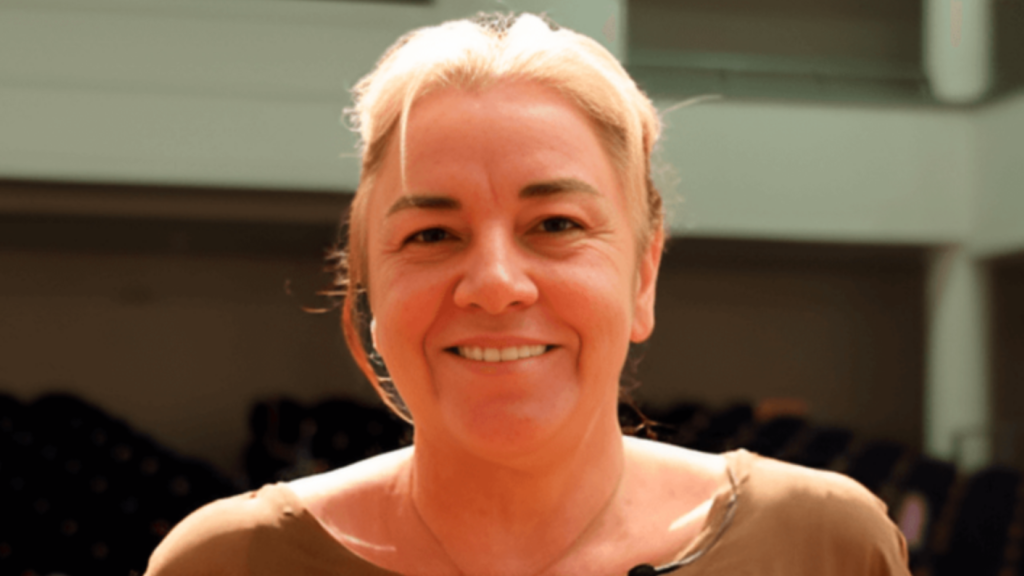
Marga Ferré, President of transform! europe

First published at transform! europe.

What are the key challenges facing the European left today, and how can unity be built in the face of growing divisions? Marga Ferré, President of transform! europe, shares her insights on the ideological and structural dynamics shaping the left across Europe. In this interview, conducted by Å tefica Gazibara, transform! europe’s web and newsletter editor, Ferré reflects on the foundation’s role as a platform for dialogue, solidarity, and action amidst the rising influence of the far right.

Following the European elections in June 2024, the European Left appears increasingly divided. In your view, what triggered this division? Does it reflect the structural and ideological conflicts within the Party of the European Left (EL)?

I think it is good to put that statement into perspective. After the European elections, in France, the entire left united under the New Popular Front and won the elections. Moreover, the Left group in Parliament increased its influence by bringing in parties that were not represented before, such as the Five Star Movement. There are divisions and diversity in the European left, which is not an exceptional situation. What is exceptional is the creation of another party of the European left and the sense of alarm that I, at least, feel about the increasing hegemonic influence of far-right discourse and governments.

For some years now the left in Europe has been undergoing a process of division. As this coincides with the years in which we have been suffering from the growth of the extreme right, I am tempted to link the two facts, but that would be an oversimplification. Last year was particularly illuminating during what I call the ‘time of splits’: In September, the Party of the European Left split, resulting in the creation of another European party, the European Left Alliance (ELA). The fact that there are now two European left parties gives us the measure of the problem.

This process partly follows the wake of splits in Germany, with the creation of a new party emerging from Die Linke, the Sahra Wagenknecht Alliance (BSW); the Greek New Left born from a split in Syriza; the splits in Spain or the traditional divisions of the Italian left. Of course, each debate, each country, each situation is different, but we can find points of unity and differentiation in the following elements that run through the debates of the European left (and beyond our continent):

The first point of contention is war, especially in Ukraine and expressed in the meta-signifier of being for or against sending weapons, or espousing positions that are interpreted as pro-Russian or approving the role of NATO. This is the reason for the split of the Nordic and German left parties; in the latter case, the genocide in Gaza is what has generated ruptures.

But perhaps more interesting for the reader is the second reason I think can shed light on this period of splits, which was synthesised by Professor Michael Holmes of the University of Lille in transform’s Strategy Seminar held in October 2024: the political distance that existed in previous decades between social democracy and the radical left has been narrowing. In some countries there is a very fine division for voters between the left, social democracy or the greens: they are becoming indistinguishable for the audiences they are addressing.

When I problematise the tendency to be part of the mainstream (which runs through part of the European left and underlies this period of splits) I don’t mean this as a criticism of being in the institutions. On the contrary, I strongly argue that the left has to contest spaces everywhere, institutions and governments included.

The problem I am pointing out is not being in such institutions or governments, what I am pointing to is that, when these spaces are entered, part of the left may be afraid to look excessively institutionalised – or, on the contrary, be tempted by a high degree of institutionalisation and thus be afraid to follow political tendencies not acceptable to the contemporary bourgeoisie.

The problem is not being in the institutions or instances of power; rather, the problem is seeing the world (“outside the Palace”, as Pasolini called it) from that vantage point. It is a problem because from the inside, the reality outside filtered through surveys, through the intentional mediation of the media, and therefore reality is analysed through a distorted lens, and in periods of extreme-right hegemony, this distortion can become perverse.

It is becoming increasingly obvious that the central problem is the gap between political representation and the social changes within contemporary capitalism. This is very relevant since political parties are the electoral representation of class interests or class fractions. We have to know where we stand because appeals for unity have to be based on the unity of interests of a class that is today very diverse.

Vladimir Bortun, political scientist at the University of Oxford, did a study on the left in Europe and the need for unity and reached a conclusion with which I agree: “that unity of action is not only compatible with, but inseparable from, fostering an internal culture of disagreement and debate. It is the pursuit of absolute agreement on absolutely everything that always ends in fragmentation and sectarianism.“

Bortun recalled that “The best years of the Second and Third Internationals were characterised precisely by this duality of internal differences and external unity”. There is no reason why the European left cannot do the same today, if not better.

What programmatic differences do you see between the newly founded European Left Alliance (ELA) and the Party of the European Left Party (EL)? Could this division ultimately strengthen or weaken the left in Europe in the long term?

Rather than talking about divisions, I prefer to talk about building unity, based on the conviction that this is necessary and that conflict builds unity through solid relations of solidarity. That is why I advocate a united front that brings together the margins and contradictions of society, in all its enormous richness; the forms that these front takes seem secondary to me.

It is not about generating fear, because fear does not build, it paralyses; but it is about understanding that the advance of the extreme right also reflects the our successes: feminism, anti-racism, pacifism, solidarity and the defence of our rights. They react brutally, as they lose the hegemony that enables human and environmental exploitation.

A better way of putting it is that it is the common task, the shared praxis, rather than the conflict that builds, that was the idea of the Popular Fronts in the 1930s. What I mean is that the model is already there, so I don’t think it is particularly smart to start from scratch.

Adamism in politics, as in almost everything else, shows certain signs of narcissism which, by rejecting what came before itself in order to justify its new existence, can make completely unnecessary mistakes.

Political parties are essential actors. The separation — very characteristic of the beginning of the century — between parties and movements, as if they were two antagonistic spheres, has, fortunately, been synthetically overcome by the need for common action. Dividing those at the bottom of society is the speciality of the ruling class; reconstructing those fragments should be the business of the popular classes.

One way of doing this is by means of the famous intersectionality, which from my point of view is born of the contradictions between capital and labour, which is not the only contradiction in capitalism and often not even the most important one. In the present decade of this century it is clear that a key capital/life, capital/planet, and the empire/colonies contradictions are key, with the increasingly clear vectorial interrelation of all of them, so that any national project that aims to expand rights should, I suggest, learn to integrate them. To seriously integrate them, and that means address them comprehensively through political and social proposals (which traditionally we called the programme), something I believe is the task for our period and to which transform! europe can contribute.

transform! europe is the officially recognised foundation of the EL. What are the implications of recent developments for its work? How can its role as a platform for dialogue be ensured? And what does the concept of ‘transform! europe for all‘ mean to you?

transform! europe is an enormously rich network of foundations, think tanks, and theoretical journals that brings together organisations from 23 European countries (inside and outside the EU). In times of competing hegemony with the horrible values of the extreme right, I am sure that transform! will continue to be a space to stimulate new thinking and foster dialogue for the entire European left, which in fact is continuing to grow. This obliges us to work better and differently.

We start from exceptional moments in which xenophobia, anti-feminism, climate-denialism, and profound anti-progressivism are characterising a time in which the extreme right is gaining hegemony behind what I suspect is the social acceptance of authoritarian government.

The task of transform!, as a network of thought, is to dispute this hegemony and to advance the wealth of anti-capitalist, feminist, ecological and pacifist thought. While the legacy of history’s anti-fascism activists is under dispute, we must defend their memory while projecting a future that inevitably has to be built on the idea that fascism will never again return.

We should feel very proud of what we are and what we have achieved, which though insufficient when measured against our deep horizons, nevertheless represent an indispensable heritage in times of fascist irrationality. Let us defend what we have achieved, which has not been little, as a basis for continuing to build, knowing, as we do, that the road has not been and will not be easy.

How are civil-society movements and initiatives — ranging from social and ecological campaigns to feminist and trade-union organisations — integrated into the work and projects of transform! europe? What role do such collaborations play in strengthening a united left perspective in Europe and what implications might this have for the future of transform! europe?

Marta Harnecker conceptualised what we need as follows: “an instance that understands politics as the art of building forces and that overcomes the old and deep-rooted error of trying to build a political force without building a social force”. In other words, unity, and the proposal that goes with it in a left-wing project, must have a social corpus to support it.

A few weeks ago, Angela Davis gave a wonderful talk in Barcelona in which she challenged us to think of hope not as a feeling, but as a construction. Hope as a discipline, she told us, that calls on us to work in a coordinated, orderly and systematic way to win, to empower people who suffer the consequences of contemporary capitalism in its many different injustices: housing, work, exploitation, extractivism, culture, sexism, racism, war, or evictions…

Every struggle counts, so helping, organising, and collaborating in any of these conflicts is a central task. The local level is of course essential because although the contradictions are global, the conflict manifests in the territories, in the concrete, in people’s lives. From the local to the global: capitalism, sexism, climate change are global phenomena, but their manifestation is concrete in each time and place.

This is our task, and it’s a beautiful task.

DEI

Class and/or Identity?!

February 19, 2025
Source: Originally published by Z. Feel free to share widely.


As resistance to fascism grows, and it is growing—how could it not—activists will face many choices. One that has often been quite contentious will re-arise. How should we decide whether to be mainly class-oriented or mainly identity-oriented? This is not a topic for a tweet or a snippet. More attention is needed. So, my apologies that this article may look to some so, so long. It really isn’t. I worry, instead, that it isn’t long enough. You decide.

Suppose we want to understand (and impact) a particular domain. It could be how the ocean moves, a pandemic, or how climate changes. Perhaps it is how a band of juvenile delinquents with immense wallets take over the innards of a major government. Whatever. We should come at our chosen domain with a set of concepts that have a highly credible lineage and are well suited to our task and to ourselves as well.

We want to address the weather, human biology, or galaxies. We will have to think about different things in each case and therefore use different concepts for each concern. Physics concepts won’t help us understand why we feel laggard in the morning, but health concepts that clarify why we feel laggard won’t help us understand global warming much less galaxy formation. The incredibly obvious point is that we will need an appropriate toolbox of concepts able to help with whatever we may want to accomplish. And we will need them to be useable by us in our situations—and not, for example, so obscure or so heavy that we can’t even find or lift them.

In fact, we want to understand society in order to change it. So we ask what concepts and what general understanding should we bring to our task. We of course shouldn’t look at society and examine it with electrons and protons, or circulatory systems and kidneys, or gravity or even all of that in mind. But what should we assemble in our minds to aid our task?

To address society, to change society, we might think that having forefront in mind economy and classes is key, so we might mainly look at how the society’s economy divides people into contending classes. We might examine how those classes see themselves and their circumstances because we believe that how classes act is central to societal change. We might even think we should understand pretty much everything about society by considering each thing’s effects on class relations and vice versa. We look at families, the state, education, health care, or what have you. Since our goal is to change society we may feel we should look at how those things affect the likelihood of a working class rising up to make change. This will be a consistent, sensible approach if our initial assertions about the centrality, and even sole centrality of economy and economic classes are correct. But are they?

Consider that we might have instead started with gender. We could have asserted that what creates profound social change is that a gender rises up and transforms social relations and institutions. And that can happen, we might have asserted, if consciousness, militance, and organization on the part of women and also some male supporters increases sufficiently. We might then call our perspective feminism or perhaps radical feminism. That approach, too, will make sense if our initial assertion is true that gender is at the heart of social dynamics so that we should understand economy, race, government and everything else insofar as they impact male and female and, nowadays, other gender designations as well.

But we might have instead asserted, wait a minute, both sets of assumptions make sense, so let’s prioritize in our societal thinking both class and gender. Let’s take both those focuses as central, not one or the other. And in fact, a half century ago, socialist feminism emerged with just that inclination. Attentive to class, it was also attentive to gender. It didn’t prioritize one above the other.

But then, of course, it struck others that it is also possible to assert that race or cultural/community designations are central, and to in turn choose to prioritize race, or race and gender, or race and class, or even all three. For that matter, we might have put power first, so we might instead prioritize power and class, power and race, power and gender, or even all four.

How do we sensibly choose among various possible approaches? What assessments should inform a choice of one approach rather than another? Presumably it will be a belief in a particular set of underlying assertions and not some other possible underlying assertions.

For example, one assertion says the economy is optimally important. Not just production and consumption but also all else depends on the existence and operations of the economy. The economy provides that with which we do things. Our role in the economy profoundly affects our circumstances and views. Our economic roles can divide us into classes where one class has one set of interests and another class has a different set of opposed interests. If we believe that holds for a society, or even that it must hold for every society, that belief will tend to push us toward a class-centered approach to understanding society in order to change it.

But what if our underlying assertion instead emphasizes gender and kinship. In that case, we might start from the observation that relations between men and women generate the next generation, bring up children, and socialize the population, which results all else depend on. Relations of nurturance, procreation, and socialization profoundly impact people and can divide us into constituencies with different interests and inclinations. Kinship can cause some to dominate others. We should elevate kinship concepts.

But then what about the way people identify themselves culturally? How about if that’s also ubiquitously present and profoundly influential? What if the ways people form cultural communities inexorably affect people’s views, behaviors, and interrelations differently for different races, ethnic groups, and religions? We should elevate cultural/community concepts. Or, by the same token, what if the way we implement overarching programs, legislate stability and coherence, and deal with disputes profoundly affects and demarcates people, in turn impacting all else. Elevate concepts of polity and power.

Even as we approach this problem of how to effectively understand society without using piles and piles of blisteringly academic books and obscure schooling, we may see that four parts of society each profoundly impact life possibilities. For example, the economy produces, distributes, and consumes. We can’t do without it. It powerfully impacts who we are, what we want, and what we can do, including creating opposed constituencies. But the polity decides, adjudicates, and legislates. It too affects our life options. Culture, or community relations creates and sustains religion, ethnicity, and racial designations including language, communication, and celebration. It can lead to conflicts and or to solidarity among different constituencies. And finally, we clearly can’t do without kinship. The relations of procreation, nurturance, and socialization make us and at times unmake us.

Following these simple assertions, perhaps we should not assert that one or another singularly-focused option is more important than the rest so that we should understand the rest in terms of that one. Perhaps instead we should understand each of society’s defining domains in itself, in its impacts, but also in context of impacts from the other three. Perhaps we should recognize they are all critical and all entwined.

Entwined? Why entwined? Well, any society will certainly have an economy that will produce stuff we use in homes, at work, at play and in all sides of life. What happens in society’s economy will impact people. Then people will go from the economy into families. They will go from the economy into communities, into government, into all sides of life, and in that way dynamics born in the economy will tend to spread. The economy will exude a force field of influences throughout the whole of society. Are we back to prioritizing just economy? No, because, thinking similarly, we can see that the same is true for kinship. When men and women, gay, straight, and trans people take themselves from families into the workplace, communities, places of worship, and schools they bring the effects they have had imposed on them from kinship relations. The other realms then start to display divisions, behavior patterns, and consciousnesses born of kinship. So socialist feminism? No, because the same holds for all the key domains. Each radiates defining influences into the rest, just as each is radiated into from the rest.

So we return to where we started. We want to change society. What do we need to address? Should we choose a class-centered or an identity-centered approach? Well, can we deny that feminists are right that we need to centrally address kinship? Can we deny that Marxists are right that we need to centrally address class? Can we deny that anti-racists and nationalists are right that we need to address culture and community? Can we deny that anarchists are right that we need to address power and the polity? Isn’t it obvious? Weighing each carefully, no, we can’t deny any of that.

But if they are all right about the importance, significance, and centrality of what they feature aren’t they each also wrong if they argue that the rest is subordinate to what they feature? If so, might we then abide the correct insights but also fix the wrong aspects by all of us understanding that we have to pay attention to class, race, gender and power, and not to just one or another. We have to see their mutual, intertwined, intersectional effects. We have to see how they bend each other. How they cause each other to accommodate. We have to see how the family accommodates to class relations, to race relations, and to power relations and vice versa. How the workplace and economy accommodate to the other three, as well, and so on. To seek fundamental change, wouldn’t we be wise to address each of these four domains in their own right and also their mutual relations?

It is certainly a plausible thought. But is it a valid thought? Why not intelligently highlight only one of the four? Why overcomplicate? The argument for highlighting just class, for example, is that if we all do so, then we will all together pay prime attention to class and since class is indeed really important, that approach will help us discern many true things about society and about the levers of change we have to address to affect society, the constituencies we must relate to, the oppressions we must overcome, the changes we must conceive and enact. So with all that to gain, what is the argument against choosing a mainly class focus?

It is simply that while to highlight class is critically important, to dismiss, disregard, or even just relegate kinship and gender, governance and power, and race and ethnicity, to a lower level of attention across all of society will impede changing society, impede successfully addressing essential constituencies, impede insightfully combating fundamental oppressions, and impede conceiving and enacting necessary changes. Such relegation will cause us to give too little attention—in our whole movement—to certain focuses even as we unduly excessively focus on only one area, in this case class.

I hope it is evident that the same exact arguments apply to prioritizing only gender and paying attention to overwhelmingly gender concepts and kinship. The argument for doing so is that kinship and gender are indeed critically important. If we ignore this, we’re ignoring something that is profound and that impacts people mightily and that also impacts people’s inclinations and dispositions regarding social change. However the argument against over-centralizing kinship is if we pay attention just to kinship, if we put it on a pedestal above everything else, then we will insufficiently attend to other domains and fail to effectively address other constituencies. And by the same reasoning, the same applies to over-prioritizing race. To do so attends to something fundamentally important but will under-attend to things equally important. More, if we take just another small step, we can see that the toolkit of concepts we should bring to our activist efforts is not solely an abstract choice. For each of us as individuals, it often reflects and even mainly derives from our own circumstances and histories.

So, for example, you could imagine paying attention to race and class, not explicitly necessarily, but your background and your history is such that that’s the way you’re oriented. Your personal history primarily points you at race and class. You see it more clearly, more deeply, than you see other social relations. You talk about racialized capitalism and maybe you talk about prison and police abolition, say, and when you do so, somehow maybe gender disappears, maybe even the state disappears and all that remains is race and class, or maybe even only just race remains forefront. And even in that last case, it’s not that to focus on race is wrong. It’s right to do so. Race is profoundly important and focusing on race does reveal critically important truths that bear on changing society. But taken exclusively a race-centered approach has the problem of obscuring and diminishing attention to other important factors, as does even a race plus economy centered approach. Similarly your personal history may cause you to naturally emphasize gender and to see and feel kinship issues intensely, everywhere, always, but to overlook or only weakly see and feel class, race, or power issues. The same logic reveals analogous benefits and debits. Our toolset and also our personal experiences impact our ability to understand society to change it. Indeed, the point of the toolset is in some serious degree to augment and even ward off possible lacks that might stem from our experiences.

So what if we perhaps consider adopting a fourfold approach that emphasizes that the dynamics of each of these areas has to accommodate to the rest. You can’t have the family producing the next generation of owners, workers, and coordinators in your society, or other actors in other societies, in such a way that they won’t fit the economy. You have to have procreation, nurturance, socialization, and education that prepares people to fit the economy or they’re going to rebel against it. So in a society that’s relatively stable, an accommodation will occur. Likewise men and women will act in the economy and will need to come out of that each day such that when they go into the family, into nurturance and socialization, they don’t have attitudes, beliefs, interests, and expectations that contradict those of sexism and kinship and misogyny. Otherwise, there will be conflict. So the workplace starts to accommodate itself to the requirements of the family and also vice versa. And similarly for racial relations and religious communities and for fort government. They two must accommodate and be accommodated to.

The point is, though put very succinctly, the four spheres of life, with their four fields of influence, each contour and mold not just the population that engages within them, but also each other, at least when they are stably entwined. More, each may tend to not only accommodate to but also reproduce the defining features of the rest. Each may become a source not only of its own characteristics and hierarchies, but of characteristics and hierarchies born elsewhere. Workplaces reproduce racism. The polity reproduces sexism. And so on…

I would like to suggest that once we escape trying to find and defend some single lynchpin aspect of society to alone highlight, the above observations seem so obvious that they should be self-evident to everybody. That is, it can become the case that institutions central to one area of life, let’s say the family, or churches, or courts, or markets, can be so immersed in the field of force of other areas of life that they come to co-reproduce the defining features of those other phenomena. So class relations and race relations get reproduced inside the dynamics of the family, and likewise sexism and racism get reproduced inside the dynamics of a corporation. So we have four sides of life that each have their own intrinsic logic but that also each have imposed on them the needs and implications of the other aspects of society. It’s not the case that economics per se has to produce racial differences or gender differences. We can imagine an economy that’s race and gender-blind. All we have to do is imagine a society in which there’s no races and no genders. There is just one kind of person around culture and gender. The economy would still be an economy, it could be a capitalist one, a socialist one, a feudal one or whatever. It just wouldn’t have been impacted by those other dynamics. But, in some societies, in human societies, it is.

I want to suggest that there is nothing rocket science-y about any of this. It’s all straightforward. What makes it difficult to keep in mind and not forget, or resist, is only our tendencies to defend what we have in the past celebrated as alone determinative. Or what experience makes feel preponderantly determinative. So does this suggest we should just add feminism’s gender perspective, Marxism’s class perspective, anarchism’s power perspective, and anti-racism’s cultural community perspective? Should we just include the concepts of each of these perspective in our toolbox and then use that toolbox instead of just using Marxism, or just feminism, or just anarchism, or just what we might call intercommunalism, or even some twofold combination?

Well, no, I think not. I think there’s a problem when we do that. And the problem I have in mind would persist even after we remove from each perspective assertions about it alone being more central than all else. And even after we add to our toolbox concepts to focus us on mutual effects. The problem I think is that in that case we would be taking three perspectives that are good once we remove their claims of domineering priority. Three perspectives that have been developed over time and that embody a lot of wisdom in their concepts that we need to have in order to think about our societies and their components, whether it be the prison system, the school system, hospitals, or larger features. But the fourth perspective we would be including, Marxism, I think that has a problem, and while I don’t want to spend too long on this now, I’ll at least mention it, as what we’re trying to do is get at the question: class and or identity, which approach do we choose?

The problem with Marxism is that while its concepts highlight class which is totally warranted and necessary, Marxism ironically also has a serious flaw regarding class. We do have to pay attention, for example, in my society, in the United States, to the capitalist class that owns the means of production and also to talk about the people who work in the capitalist workplaces and who produce the stuff that we need. But if our concepts assert that that all the people who work, all employees of owners, are workers, then we have only two main classes that we can key in on, the owning capitalist class and the working class. What if the group of all employees of owners aren’t just one class? What if they are two classes? What if employees as a whole are partly workers, meaning people who work for the owners and are denied by their position in the economy much control over their own lives because they are relegated to taking orders and carrying out agendas set by others, and so on. And another group, who I want to call the coordinator class, by virtue of their position in the economy have a kind of monopoly over empowering tasks. They set schedules, create agendas, figure out policies, and give orders. In that respect they differ from other employees, called workers. What if this subset of employees manage, engineer, lawyer, doctor, design, and decide things? They do not own, but nor are they entirely subordinate. They have considerable impact on what goes on in the economy and they use their power to give themselves more income and more status.

So now, coming at all this, everything above, from scratch, which we did, we can see a possible perspective emerging. To understand society to change it we may want to combine a modified approach to class that includes three main classes, the owning class, the working class and, in between, what I call the coordinator class (which the Ehrenreichs called it the professional managerial class which for reasons that I don’t want to bother with now, I don’t think is a perfect name) so whatever we call them, three classes. And we may want to combine that with feminism, including issues of sexuality, procreation, nurturance, and socialization plus the social relations of courtship and all the rest of it. And we want to further combine both those with attention to cultural community, celebration, identity, and language, and to the way that communities including races, religions, and nationalities, form. And we may want to combing all that with attention to polity including adjudication, execution of collective functions, and legislation.

If one were to go that route, a question would surfaces. Would it mean we all should always pay equal attention to everything? Would it mean we all have to simultaneously address all this stuff, all the time, all equally? No, it wouldn’t mean that. But why not, after all, it seems to follow, doesn’t it?

Well, we each come at society from different places in it. We each have different agendas. We feel the circumstances of life differently depending on on our position vis-a-vis kinship, culture, economy, and polity. In other words, depending on, if you will, our identity and the daily circumstances we encounter.

Our priorities depend on those various impacts and so we may mainly focus on one aspect. We may focus on talking about, say, the economy and work, or about families, sex, and education, or about race and the criminal justice system, and so on. We may personally tend to focus on one thing and prioritize only some factors. In that case, what problem does our having also adopted the broader approach help us deal with? It doesn’t prevent us from talking mainly about the economy and talking overwhelmingly about class when we do, or from talking mainly about kinship and overwhelmingly about gender when we do, but it does stop us from acting as though the economy is all class, no gender, no race, no political power—or as though kinship is all gender, no race, no class, no power. It stops us from asserting that we’re doing everything when we are keying on one thing. And while individually we can and often have to focus less than everything–collectively, we do need to focus everything.

As a whole our movements need to encompass it all. As individuals, not so much, but even as individuals we do have to avoid acting as though, and beginning to think as though, we are dealing with all that’s important when we are dealing with only a part of what’s important. So, for example, I put forth participatory economics as an economic vision. When doing so I don’t equally address issues of, say, sex or child rearing or religion and so on, all kinds of things that I barely address. That’s okay, unless I assert that an economic vision is the only vision we need, or what other domains have nothing to do with economy. To say class is the only thing we need to talk about, or relations to class, that’s not okay. And we need to be aware at all times if we’re doing something partial.

In this view, there’s no reason to create some kind of hierarchy, as if everything has to be understood in terms of one thing. But, even supposing a four fold approach is theoretically sensible, does any of this really matter outside academic treatises? Yes, I think it does, for the reason I just said. A more encompassing multi-focus approach to society will help create a mindset which removes the tendency of different orientations to conflict with one another. No one needs to feel that to pay attention to class, means we will ignore race or gender, or to pay attention to race or gender, means we will ignore power and authority. A multi-focus approach can remove concern that a given individual feels one or another focus more in their life, and is more attuned to one or another aspect of society because of their experiences. That is okay. And it can remove a tendency for that person to feel that others are somehow in competition with them, somehow trying to draw their attention away from what they naturally attend most to. It generate the possibility of a more complete understanding instead of understanding only a part. And the practical climax, it can generate the possibility of greater solidarity.

What about the approach mattering to individuals not just the whole left? We can see how it matters to the collective, to movements—to a movement of movements which needs to address all the key aspects of society that fundamentally impact social change and create constituencies relevant to social change. It helps a movement of movements see these orientations as not having to compete with each other. Each viewing angle becomes primary. Each considers that rest also primary. Okay, but how does this approach aid individuals?

Here, I think it’s perhaps a little less obvious. I don’t think an individual has to simultaneously become equally expert in everything or equally attentive to everything. It’s just not necessary and it’s also not human. But when your personal background and training and what you endure in daily life orient you in one direction, a multi focus approach can strengthen your inclination to respect and pay attention to the other directions. It can generate the possibility of mutual respect instead of thinking that some other approach has one banner and it wants us all to get behind that one banner though you know that if we all get behind that one banner, your priorities will disappear. So then you think you should downplay or ignore that banner. That implication goes away once we all understand that the movement of movements banner has to indicate a collection of other banners, a collection of multiple focuses.

So, finally, what about our initial issue, should we choose class politics or identity politics? Class politics will, in practice, tend to give only secondary attention to race, gender, and power. Identity politics will, in practice, tend to give only secondary attention to class. About class I’m suggesting is that it is of course important that we pay attention to it. It has fundamental importance. In fact, however, nowadays, among many leftists it seems that class isn’t paid enough attention. But I also want to make clear that I think class, this thing we need to attend, is more than just owners on the one hand, and workers on the other hand. There’s also this other class between labor and capital, called in my parlance the coordinator class.

But next, what about paying attention to identity? Well, about identity politics, insofar as this is a possible choice, I wonder why isn’t class also an identity? If we say we’re paying attention to identities, what does that mean? I can only assume it means we’re paying attention to how people identify themselves, and even more so to how society demarcates people into important constituencies that inform our identities. But in that case people sometimes identify themselves by class, sometimes by gender and their sexuality, or by their religion or race, and they may identify themselves by their position in the polity as order givers or order takers or office-holders or not. These are different ways people understand themselves and also, different ways society’s roles and circumstances demarcate us into different often overlapping, intersecting constituencies.

It seems to me that to seek and win social change what’s important about identities is when “identity” indicates a significant position in the dynamics of society and, in particular, in how people go about trying to change or maintain society. I get why, at a point in time, some would feel a Marxist approach gives too little and too secondary attention to race, gender, and power, and I also get why, at a particular point in time, people might feel that a radical feminist approach gives too little attention to class and race and power, and so on, around the cycle. But considering the choice between class and or identity, I don’t understand why people’s solution for the left is ever to pick one (or maybe two or even three, leaving one out) and exaggerate it (or those) at the expense of the rest. After all, wouldn’t for us to do that be what we are afraid others would do. Women are often afraid that a class perspective will squeeze them out of central attention, and justifiably so. But then why would they want to squeeze out of centralized attention class, race, or power? And so on through the various permutations. These feelings and observations lead me to think that the class/identity conflict is real and is also false.

It’s real at the level that we need shared concepts suited to the tasks we undertake. It’s false at the level of asserting that personally paying serious attention to any one sphere of life requires that we diminish our attention to the rest. That is generally the case for an individual, yes. If you’re going to start to study and pursue and be an activist around, say, sexual issues or race issues or class issues, or governance you will do attend less to issues other than of what has become your focus. That’s true. Time decrees it. But so what? As a whole, a movement we are in can collectively pay serious attention to multiple focuses without prioritizing one.

Let me suggest another aspect of this matter. There’s often a tendency, or there can be a tendency in how we look at the world that causes us to think in terms of individuals and their feelings to the exclusion of collectives and their circumstances. Or, vice versa, we might pay attention to constituencies and their circumstances and ignore or downplay individuals and their feelings. It’s a bit like what we described with respect to the different priorities. It should not be either or. It should be both and. To the extent we find this asymmetry, often the class politics orientation tends to or is seen as if it underplays individuals and their feelings, while the identity politics approach tends to or is seen as if it underplays collectives and their circumstances.

In fact, we won’t have as good an understanding of society in order to change it if we downplay the feelings of individuals, the thoughts in individuals’ minds, and the motivations that individuals have, but we’re also going to severely hurt our prospects if we pay attention to individuals but do not pay attention to collective dynamics of whole constituencies. It is a false choice. We ought to be secure enough and flexible enough to focus on both individuals and collectives. We ought to not be so defensive that we feel we have to have everyone elevate our own personal current contextual priority, whether it’s individual over collective or vice versa, or whether it’s one area of oppression over another or vice versa.

To deal with the unfolding threat of fascism we will need as much collective unity, as much multi-issue focus, as much multi-tactic diversity as we can sensibly generate and we’re going to have to not see others who are engaged in battling Trump to change society differently than we battle as enemies or competitors instead of as allies. We’re going to have to get even to the point of being able to realize that a lot of Trump supporters are as mad at, as angered by, and as upset with the state of current reality as many leftists, and even more so than some leftists, so they too are potential advocates of worthy change. I am suggesting that we should consider that perhaps the encompassing approach suggested here can help with all these needs.


ZNetwork is funded solely through the generosity of its readers.Donate


Michael Albert`s radicalization occurred during the 1960s. His political involvements, starting then and continuing to the present, have ranged from local, regional, and national organizing projects and campaigns to co-founding South End Press, Z Magazine, the Z Media Institute, and ZNet, and to working on all these projects, writing for various publications and publishers, giving public talks, etc. His personal interests, outside the political realm, focus on general science reading (with an emphasis on physics, math, and matters of evolution and cognitive science), computers, mystery and thriller/adventure novels, sea kayaking, and the more sedentary but no less challenging game of GO. Albert is the author of 21 books which include: No Bosses: A New Economy for a Better World; Fanfare for the Future; Remembering Tomorrow; Realizing Hope; and Parecon: Life After Capitalism. Michael is currently host of the podcast Revolution Z and is a Friend of ZNetwork.

The Very Important Hindus and the Ones That Are Not Counted

February 18, 2025
Source: The Wire


Image from X/@MahaKumbhMela

Even as much has been said about the grand event of the Maha Kumbh festival, one rather telling thing remains to be observed.

It has been the defining ideological pitch of the Hindutva players over the last many months that Hindus must learn to obliterate all forms of division among themselves in order to be safe and invulnerable.

There has also been little ambiguity as to who it is from whom danger ostensibly to Hindu supremacy emanates.

Thus, the frustrating faultlines of caste, region, dialect, gender, political turf wars etc. have come in for disparagement from both the grand icons of Hindutva, namely, the prime minister and the chief minister of Uttar Pradesh which hosts the Maha Kumbh festival.

As the fatal stampedes happened, widespread public comment came to the fore, bemoaning the bottlenecks caused by the exclusive arrangements made for the VIPs and VVIPS.

Some media outlets were bold enough to come forward with criticism to this effect.

We may recall that a similar differentiation between ordinary pilgrims and VIPs had been in evidence at the time of the inauguration of the new Ram Temple at Ayodhya.

We do not know how many died in the Kumbh stampedes at Prayagraj.

You see, the magical new digital tool of AI seems to count only the living and not the dead.

This discovery by itself may, of course, have furnished an important research input to the whiz kids who invented AI, so that we may in future expect that the dead may also come to be counted by this god-like technology.

Had AI been equipped to count the dead, why surely the in-your-face chief executive of Uttar Pradesh would not have shied away from sharing the extent of the carnage with fellow Hindus across the realm.

At any rate, Hindutva being philosophical in the extreme, when push comes to shove, it was left to a noted seer, Shri Dhirendra Shastri to instruct the flock how those that died attending the Maha Kumb attained Moksha or salvation.

Why more of the living who after all were attending the Kumbh precisely to secure salvation did not think of this option remains a matter of deep spiritual cogitation.

But here is the point: in seeking the unity of all Hindus against the ever-menacing threat from the Saracen, cancelling all fault lines, the one faultline that remained unaddressed was that of class.

Clearly, where caste, region, dialect, gender, political interest are all to be set aside if Hindu supremacy is to be ensured, there seems no call on the great mass of Hindutva followers to also unite across classes.

That the powers-that-be don’t think this desirable or an opposite part of the call to unity was clear from the poshly discreet arrangements that were made for privileged and important Hindus to take their salvational dip pronto, without hassles from the mass of less endowed devotees.

One might also speculate whether the great seer cited above would have said what he said of those that died should the dead ones have come from among the important and very important Hindus.

Nor might it have been possible for the Hindutva government to plead inability to either count or be accountable for those that died seemingly in droves.

So you see, come to think of it, even as faith continues to be pressed into service to camouflage the cruel realities of economic divisions, the organisation of the grand festival at Prayagraj has once again proved the truth of the leftist maxim: you may obliterate as many fault lines as you wish but even the history of Hindutva consolidation remains slave to the overriding divisions between those that have and those that do not, however they may all be very devoted followers of Hindutva.

How consequential this truth may be made in the future of the republic is of course quite another matter.


Badri Raina is a well-known commentator on politics, culture and society. His columns on the Znet have a global following. Raina taught English literature at the University of Delhi for over four decades and is the author of the much acclaimed Dickens and the Dialectic of Growth. He has several collections of poems and translations. His writings have appeared in nearly all major English dailies and journals in India.


The Catastrophic Resolution

The U.N.’s process on the partition of Palestine led to mass ethnic cleansing, stark inequality, perpetual fear and genocidal war, writes Stefan Moore.
February 16, 2025
Source: Consortium News


Convey of trucks and cars led by white U.N. jeeps travel through Gaza desert carrying Arab refugees from Gaza to Hebron, Transjordan, for repatriation, Dec. 13, 1949. (UN Photo)

Donald Trump’s absurd, immoral and flagrantly illegal plans to acquire the Gaza Strip and expel its inhabitants has incited rage and disbelief around the world, but his unhinged gambit has its origin eight decades ago in the disastrous U.N. plan to partition Palestine — a plan that ignited the first mass ethnic cleansing of the Palestinian people.

On June 16, 1947, members of the United Nations Special Committee on Palestine (UNSCOP) representing 11 countries arrived in Jerusalem. Their mission was to investigate the causes of the Palestinian conflict and make recommendations about the future of the country as the British Mandate of Palestine came to an end.

From the outset, the investigation was grossly biased in favor of Palestine’s Jewish minority. No representatives of Arab nations were on UNSCOP and the U.N. General Assembly preemptively rejected Arab calls for a single Palestinian state guaranteeing civil and religious rights for Arabs and Jews.

As Israeli historian Ilan Pappé points out, the Arabs simply “demanded that Palestine be treated the same as all its neighbouring Arab countries, which had obtained full independence once their respective [British] mandates had ended.” A Very Short History of the Israel–Palestine Conflict (p.46).

Instead, the committee heard from 31 Jewish leaders from 17 Zionist organizations compared to only six representatives from Arab countries, to consider the partitioning of Palestine into separate Jewish and Arab states — something it had no legal authority to do under Article 1 (2) of the U.N. Charter which enshrines “the principles of equal rights and self-determination of all peoples.”

It was a disastrous decision for Arabs, Jews and the entire region — one that would result in mass ethnic cleansing, stark inequality, perpetual fear and genocidal war.

When they arrived in Tel Aviv, UNSCOP members were received by an elated throng of residents. Zionist leaders had declared a public holiday; cheering crowds filled the streets lined with flowers and Star of David flags; committee members were swarmed by friendly locals. At City Hall, the mayor ushered the group onto the balcony as the crowd below burst into the Jewish anthem Hatikvah celebrating the biblical prophecy of the Jews’ return to the Holy Land.

Behind the scenes, everything was carefully stage-managed. During their seven-day visit, UNSCOP members were taken on tours of Jewish industry and commerce, agricultural settlements, medical centers, universities, laboratories and scientific institutes — all accompanied by top Jewish Agency officials including future Deputy Prime Minister Abba Eban.

At each location, the planners made sure that committee members “coincidentally” encountered Jewish settlers from their own countries who extolled the Zionist project.

To convince UNSCOP officials that the nascent Jewish state could repel any Arab attack, clandestine meetings were set up with leaders of Jewish underground militias. Included in the meetings were the right-wing Zionist guerilla group, the Irgun, and the high command of the main paramilitary and intelligence group, the Haganah.

Haganah Spying

Haganah high command on the eve of the creation of the Israeli Defense Forces, or IDF, June 1948. (Wikimedia Commons, Public domain)

What the committee members didn’t know was that the Haganah was also spying on all their private conversations.

“Microphones were placed in hotel and conference rooms. All phone conversations were tapped,” writes Israeli investigative journalist Ronan Bergman. “The cleaning staff in the building in Jerusalem where the committee held daily hearings was replaced by female agents who reported back each day on its activities.”

Two UNSCOP members, from Uruguay and Guatemala, were allegedly bribed to provide inside information about confidential committee deliberations. The Guatemalan representative was also suspected of leaking inside information to a Jewish Agency official.

At the end of each day, the intelligence briefs (code-named Delphi Report with the inscription “Read and Destroy”) were circulated among the Jewish officials to help them prepare for questions that might be asked when they testified before the committee.

Among those giving testimony to the committee was future Prime Minister David Ben Gurion who eloquently invoked Jewish exceptionalism and their biblical claim to the land.

“Although it was [the Jewish people’s] bitter destiny to wander in exile for many centuries it always remained attached with all its heart and soul to its historic homeland,” Ben-Gurion intoned. “No individual Jew can be really free, secure and equal anywhere in the world as long as the Jewish people as a people is not again rooted in its own country and as an equal and independent nation.”

Meanwhile, future Israeli President Moshe Shertok (untruthfully) told the committee that Jewish immigration to Palestine had not displaced the Arab population and, incredibly, that, “It was not easy to find any instance in the history of colonization where a large-scale settlement scheme had been conducted with so much respect for the interests of the existing population.”

”The entire Zionist case was outrageous. Its arguments were spurious, prejudiced and hypocritical to the extreme,” writes Jeremy R. Hammond in The Rejection of Palestinian Self-Determination.

“And yet UNSCOP took them quite seriously. It accepted the argument that to allow democracy in Palestine ‘would in fact destroy the Jewish National Home’ and on that basis explicitly rejected the right to self-determination of the Arab majority.”

Ben-Gurion, left, at UNSCOP meeting at YMCA in Jerusalem, July 4, 1947. (Hans Pinn, the National Photo Collection of Israel, Government Press Office Public domain)

On Aug. 8, 1947, UNSCOP left Palestine to tour the Displaced Persons (DP) Camps for Jewish wartime refugees in Austria and Germany.

Despite objections from a few of the committee members that it would be “improper to connect the displaced persons, and the Jewish problem as a whole, with the problem of Palestine,” more time was spent in visiting the DP camps than visiting Palestine’s Arab neighbours.

New York Times editor Arthur Ochs Sulzberger, a prominent American Jew, was outraged by the Zionists’ weaponization of the plight of Jewish refugees in Europe’s DP camps. “We in the United States should open our doors to persons of all faiths and creeds,” he said in a speech reported in his paper.

“France,” he said, “seeks new citizens and they are at her door clamoring for entry. England, historic refuge for oppressed nationals, can take its share. Admitting that the Jews of Europe have suffered beyond expression, why in God’s name should the fate of all these unhappy people be subordinated to the single cry of statehood?”

The objections fell on deaf ears — Europe and the U.S. were soon to abandon all responsibility for their Jewish refugees and the future of the Arab majority in Palestine.

Two-State Plan

On Sept. 3, 1947, UNSCOP proposed a Plan of Partition of Palestine into two independent states — one Jewish and one Arab — with Jerusalem placed under the control of a “special international regime.” The plan was supported by seven of the 11 members, with Iran, India and Yugoslavia voting against it, and Australia abstaining.

By any standards, the proposal was grossly unjust: Jews, who made up roughly a third of the total population in Palestine (630,000 people) were given 56 percent of the land that included the most arable areas and most of the coastline. Arab Palestinians who made up roughly two-thirds majority (1,324,000 people) received only 42 percent of the territory.

The UNSCOP proposal would next go to a critical vote in the U.N. General Assembly for which the Zionists’ had been preparing with a massive global lobbying campaign funded by a million dollars from the Jewish Agency, the de facto Jewish government in Palestine, according to historian Tom Segev in One Palestine Complete (p.496).

Chaim Weizmann, former president of the Jewish Agency for Palestine, sums up the Zionist views before the United Nations Ad Hoc Committee on the Palestinian Question, Oct. 18, 1947. (UN Photo/Kari Berggrav)

Their strong-arming tactics began in the White House where they told Democratic President Harry Truman that if he failed to support the partition plan, his party, which received a large number of Jewish contributions, would suffer serious consequences.

“I do not think I ever had as much pressure and propaganda aimed at the White House as I had in this instance,” Truman is quoted as saying in American Presidents and the Middle East by George Lenczowski (p. 157). “The persistence of a few of the extreme Zionist leaders — actuated by political motives and engaging in political threats — disturbed and annoyed me.”

But despite Truman’s resentment of the lobby and its “unwarranted influence,” the U.S. ultimately fell in line. On Oct. 11, 1947, the Americans made a formal declaration in favor of partition.

The U.S., then, at the Zionists’ bidding, began conscripting smaller countries with bribes and threats: Liberia and Nicaragua were warned that they would face severe sanctions if they did not vote for partition; 26 U.S. senators in control of U.S. foreign aid sent a telegram to wavering countries “urging” their support for the partition plan; Supreme Court justices Felix Frankfurter and Frank Murphy warned Philippine President Manuel Roxas that a vote against the partition plan would alienate millions of Americans.

Nehru Objects

Infuriated by these tactics, Indian Prime Minister Jawaharlal Nehru revealed that the Zionists had tried to bribe his country with millions of dollars and that his sister, Vijaya Lakshmi Pandit, the Indian ambassador to the U.N., had been warned that her life was in danger unless “she voted right.”

On Nov. 26, 1947, the Partition Plan was put to a vote in the 57-member General Assembly chamber where it looked like it would fall short of the two-thirds majority required to pass.

Refusing to accept defeat, the Zionists filibustered the session, managing to postpone the vote by three days – enough time to pull out all stops for a final lobbying blitz.

When the General Assembly finally voted on Nov. 29, the Partition Plan (UNGA Resolution 181) was narrowly passed by two votes. Had the vote been held on the original date it may well have failed to pass and history might have taken a different turn.

It is important to recognize, however, that although the Zionists’ Mafia-style tactics succeeded in achieving partition, Resolution 181 was non-binding and only a recommendation that was never endorsed by the Security Council.

Additionally, the United Nations had no authority under its own Charter to partition Palestine; Resolution 181 was in direct contravention of Article 1 (2) and Article 55 of the Charter that call for the “principle of equal rights and self-determination of peoples.”

Egyptian diplomat Nebil Elaraby wrote:


“The legitimate aspirations and the high hopes of the whole Arab nation were consequently shattered when they saw with deep sorrow that the United Nations, the supposed conscience of mankind, had reached biased conclusions that brought grievous damage to the cause of justice and international morality. The law of the Charter was sacrificed for the convenience of political expediency.”

To this day, there remains a misconception that the United Nations created a Jewish state which it had no authority to do.

Instead, Resolution 181 gave a green light to the Zionist paramilitary militias — the Haganah, the Stern Gang and the Irgun — to lay claim to a Jewish state in Palestine through a violent ethnic cleansing campaign that immediately followed the U.N. resolution.

Called Plan Dalet (D), what happened next is chillingly described by Pappé:


“The orders came with a detailed description of the methods to be used to forcibly evict the people: large-scale intimidation; laying siege to and bombarding villages and population centers; setting fire to homes, properties, and goods; expelling residents; demolishing homes; and, finally, planting mines in the rubble to prevent the expelled inhabitants from returning…”

When it was over, more than 750,000 Palestinians had been uprooted; 531 villages had been destroyed; 70 civilian massacres had taken place and an estimated 10-15,000 Palestinians were dead.

“The international community, all signed up to a charter committed to the rule of law, justice and equal rights for nations, had cleared the way for catastrophe,” writes Pappé in A Very Short History (p.58) “— a catastrophe so all-encompassing it became the very definition of the Arabic word: Nakba.”

From its inception, Resolution 181 was a disastrous plan with cataclysmic consequences for the future of Palestinians, Jews, the region and the world.

It allowed Europe and the U.S. to abandon their Jewish refugees in the aftermath of the Holocaust; it gave the go-ahead to the Zionists to create a theocratic apartheid state on land of Palestine’s indigenous people.

And it has enabled Israel to flagrantly violate international law with its ongoing occupation of territory seized in the 1967 war, illegal settlements on the West Bank, multiple war crimes, crimes against humanity and genocide in Gaza today.

Despite its history of lawlessness, we are constantly told that Israel has a sacrosanct right to exist. However, “the idea of a state’s inherent ‘right to exist’ is fallacious,” writes former U.N. official Moncef Khane. “Conceptually or legally, no such natural or legal right exists for Israel or any other state [under] international law.”

What international law does say, Khane tells us, is that “peoples have an inalienable right to self-determination” and that “an occupying power has no inherent right of self-defence against the people it subjugates, but the people under occupation have an inherent right of self-defence against their occupiers.”

Trump’s insane and criminal gambit to take over Gaza contravenes all these rights and violates every major international statute and treaty.

Forced deportation is a war crime and a crime against humanity prohibited by the Geneva Convention and the Nuremberg Tribunal; denying Palestinians the right to return to their land is in violation of the International Covenant on Civil and Political Rights; seizure of Palestinian territory is land theft pure and simple.

Needless to say, Israel has violated all these laws from the time of the Nakba, but Palestinians, who have sacrificed everything and suffered immeasurably, have made one thing clear: as they’ve made the long march back to north Gaza devastated by the Israeli war machine and U.S. bombs, they continue to resist any attempt to grab their land and appear determined to never surrender their inalienable right to self-determination.


Stefan Moore is an American-Australian documentary filmmaker whose films have received four Emmys and numerous other awards. In New York he was a series producer for WNET and a producer for the prime-time CBS News magazine program 48 HOURS. In the U.K. he worked as a series producer at the BBC, and in Australia he was an executive producer for the national film company Film Australia and ABC-TV.