Friday, February 28, 2025


Inspired by the human heart, this buoy converts wave motion into clean electricity

Dr Stig Lundbäck was inspired by the pumping of the human heart to co-found Swedish wave energy company CorPower Ocean.
Copyright CorPower Ocean
By Ramsha Zubairi
EURONEWS
Published on 

European countries with strong Atlantic swells like Spain, France and Ireland have the most wave energy potential.

Covering 71 per cent of the Earth’s surface, oceans are one of the world’s most valuable and yet largest untapped renewable resources. 

Ocean wave energy is immense, with a huge contribution to make to the clean energy transition. According to the International Energy Agency (IEA), ocean power generation needs to grow by 33 per cent per year to achieve a net-zero world by 2050. 

Wave and tidal energy have the potential to be significant, reliable, and sustainable power sources,” says José Miguel Rodrigues, a senior research scientist at SINTEF, one of Europe’s largest research institutes. 

The Intergovernmental Panel on Climate Change (IPCC) estimates that wave energy could generate up to 29,500 TWh per year. That’s nearly ten times Europe’s total annual electricity consumption, and more than the global annual electricity generated in 2018

“Tidal energy has an estimated global potential of 800 - 1,200 TWh, particularly in narrow waterways like inlets and around islands,” says Rodrigues. “Governed by predictable gravitational cycles rather than weather, [tidal energy] provides a steady electricity supply and helps balance the grid.” 

The wave energy converter device inspired by the human heart

Heart specialist Dr Stig Lundbäck was inspired by the pumping of the human heart to co-found Swedish wave energy company CorPower Ocean in 2009.

Through years of hydrodynamic research, the company developed ‘CorPack’ - a gigantic buoy made from durable, lightweight materials that converts the movement of waves into clean and stable electricity. 

Similar to the heart’s use of hydraulic pressure to pump blood in one direction, CorPack works by applying tension on itself to pull the buoy down, while the waves push it up. The wave motion is turned into rotation, which is then converted into electricity by generators. 

The wave energy converter’s mechanism enables a large amount of energy to be harvested using a relatively small and low-cost device, a CorPower Ocean spokesperson explains. 

They say the converter is able to deliver more than five times as much electricity per tonne of equipment compared with previous state-of-the-art wave energy.
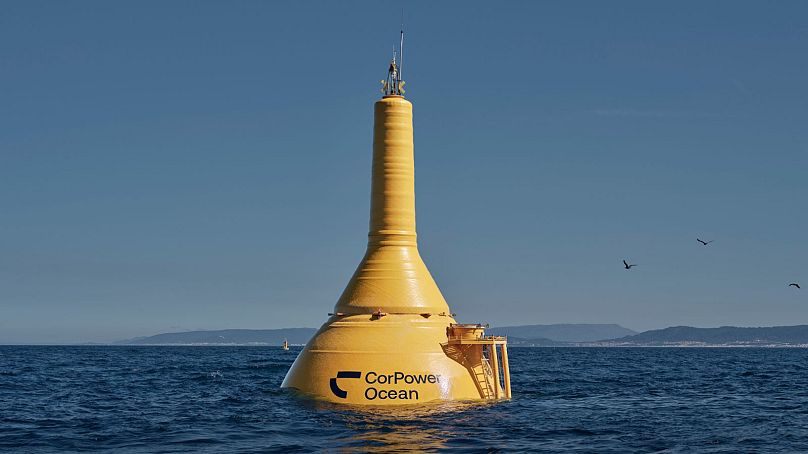

CorPower Ocean’s first full-scale wave energy converter is deployed off the northern coast of Portugal.  CorPower Ocean

Rodrigues considers CorPower Ocean’s innovation a significant achievement. “CorPower has steadily progressed through development stages, securing investment and research grants, particularly from the EU," he says.

"Their structured approach has allowed them to put a device in the water, a significant achievement given the limited funding available for wave and tidal energy in Europe.”

CorPower Ocean’s first full-scale wave energy converter is deployed off the northern coast of Portugal, near Aguçadora, where it is supplying energy to the Portuguese grid. 

There are many more companies and research organisations trying to ride the ocean energy wave.

Other notable examples include Italian energy company ENI with its Inertial Sea Wave Energy Converter, the Chinese-built Nanku - a floating generator powered by waves - and Finland-based AW-Energy’s WaveRoller, made up of large underwater panels. 

Why does wave energy get less attention than wind and solar?

Solar power generated seven per cent of global energy in 2024, according to the IEA. Over the next two years, solar is forecast to meet nearly half of the world’s electricity demand, while wind energy is expected to fulfil about one third. 

Waves have the highest energy density of any renewable source. And although closely tied to wind, they are less ‘variable’ than wind energy. Tidal energy, meanwhile, is considered to be the most predictable of all variable renewable sources.

Despite this potential, wave and tidal tech is lagging behind in the clean energy race.

“The key challenge is competitiveness,” explains Rodrigues. “Unlike wind and solar, wave and tidal energy have yet to demonstrate commercially viable technologies at scale. 

“Wave energy faces demanding requirements for both consistent performance and the ability to withstand extreme ocean forces. Many prototypes have failed or underperformed, while offshore wind and solar have demonstrated reliability and cost reductions.” 

Which European countries have the biggest potential for wave power?

Assessing potential requires considering both the availability of natural energy resources and the feasibility of harnessing them.

“Countries exposed to strong Atlantic swells - Portugal, Spain, France, Ireland, and the UK - have the most favourable conditions for wave energy at utility scale,” says Rodrigues.  

“Norway, with its extensive coastline and many remote island communities, presents a strong market where wave energy could help reduce grid costs and enhance energy independence.”

Beyond technical feasibility, success depends on economic viability, social acceptance, and supportive policies. 


Illinois researchers develop next-generation organic nanozymes and point-of-use system for food and agricultural uses


University of Illinois College of Agricultural, Consumer and Environmental Sciences

Mohammed Kamruzzaman (left) and Dong Hoon Lee 

image: 

Mohammed Kamruzzaman (left) and Dong Hoon Lee

view more 

Credit: College of ACES


URBANA, Ill. – Nanozymes are synthetic materials that have enzyme-like catalytic properties, and they are broadly used for biomedical purposes, such as disease diagnostics. However, inorganic nanozymes are generally toxic, expensive, and complicated to produce, making them unsuitable for the agricultural and food industries. A University of Illinois Urbana-Champaign research team has developed organic-material-based nanozymes that are non-toxic, environmentally friendly, and cost effective. In two new studies, they introduce next-generation organic nanozymes and explore a point-of-use platform for molecule detection in agricultural products.

“The first generation of organic-compound-based (OC) nanozymes had some minor drawbacks, so our research group worked to make improvements. The previous OC nanozymes required the use of particle stabilizing polymers having repeatable functional groups, which assured stability of the nanozyme’s nanoscale framework, but didn’t achieve a sufficiently small particle size,” said lead author Dong Hoon Lee, who completed his Ph.D. from the Department of Agricultural and Biological Engineering (ABE), part of the College of Agricultural, Consumer and Environmental Sciences and The Grainger College of Engineering at the U. of I.

In the new iteration, they used a core amino acid (L- alanine) and polyethylene glycol as constituent materials and a novel particle synthesis technique that allowed them to bring the particle size down to less than 100 nanometers. This nanozyme resembles the physical framework and mimics the catalytic activity of target enzymes. 

In the first study, the researchers showed these organic (OA) nanozymes combined with a colorimetric sensing platform can successfully detect the presence of histamine in food products.

“We used this analytic method on spinach and eggplant, which are among the top vegetables with a high concentration of histamine, and we obtained an affordable analytic performance profile. We were able to show that our system doesn’t just work in the lab, it has the potential to be utilized for real-world applications as a cost-effective molecule sensing system for food and agriculture,” Lee said.

In another study, they further refined the novel organic (OM) nanozyme production process and developed an integrated, colorimetric point-of-use platform that enables rapid detection of agricultural and biological molecules without a laboratory environment.  

“Conventional detection methods are based on laboratory analysis, but it would be helpful to have a portable molecule sensing system for the agricultural and food environment, similar to point-of-care systems such as in-home COVID tests,” Lee said.

The researchers first applied the system to detecting the presence of glyphosate, a common agricultural herbicide. Next, they used the enzyme-cascade reaction method to detect glucose, which is a common biological molecule. In both cases their system showed decent analytic sensitivity, and they were able to obtain accurate results within a few minutes.

“To complete this molecule sensing task at home, you need a Smartphone image-processing app integrated with an OM-nanozyme-based colorimetric sensing platform. Users may add food samples to a liquid solution, then test with a small paper microfluidic strip for the detection procedure. If the strip changes color to green, you’ll know catalytic activity occurs, and based on the color intensity, the sample may contain the target molecule (in this case, glyphosate or glucose). Then users can take a picture with their phone, and the app uses an algorithm to convert the color image to an estimated concentration of target molecules,”  said Mohammed Kamruzzaman, assistant professor in ABE and co-author on the study.

“Our research shows that organic-material-based nanozymes demonstrate strong enzyme-like catalytic performance, while offering a biodegradable, sustainable alternative to conventional inorganic nanozymes, making them suitable for use in agriculture, food safety, and further biological fields,” Lee concluded.

The first paper, “Amino acid-based, sustainable organic nanozyme and integrated sensing platform for histamine detection,” is published in Food Chemistry [DOI: 10.1016/j.foodchem.2025.142751].

The second paper, “Consolidated sustainable organic nanozyme integrated with Point-Of-Use sensing platform for dual agricultural and biological molecule detection,” is published in Chemical Engineering Journal [DOI: 10.1016/j.cej.2025.159560]

Research support was provided by  ITG (Imaging Technology Group), Beckman Institute, Material Research Laboratory, High Throughput Screening Facility, EPR laboratory, Mass Spectrometry Lab and Integrated Bioprocessing Research Laboratory at the University of Illinois at Urbana-Champaign.


Kicking yourself: Going against one’s better judgment amplifies self-blame


Cornell University


ITHACA, N.Y. – When people go along with opinions that go against their better judgment, they feel more culpable for the decision if things go wrong than if they hadn’t received another opinion, new research from Cornell University finds.

The effect may seem counterintuitive, but going against one’s better judgment increases thoughts about better decisions that could have been made, which amplify feelings of control over the situation. 

“If you have another person in the decision process, you would think that’s going to help spread the responsibility,” said Kaitlin Woolley, professor of marketing and management communications. “And yet not only do people not blame the adviser more, they’re blaming themselves more.”

Woolley and Sunita Sah, associate professor of management and organizations, published their findings in Personality and Social Psychology Bulletin.

The research included a 200-subject in-person experiment with physical prizes and four online studies, with up to 1,200 participants per experiment.

Participants chose between two lotteries, one with clearly superior prizes. Some subjects were offered input from an adviser who had no more knowledge about the choices. The adviser recommended the lesser lottery, and in four of the five studies participants received the lowest possible prize: 10 cents.

Across all studies, they found that participants’ feelings of culpability and the perception that they had control over the situation were greater in the group that received input than in the group that made an independent decision. Participants thought about how they could have ignored the advice and enjoyed the better prize.

“This effect could extend beyond small decisions. It can apply to major life choices, like wondering, ‘What if I had chosen a different career?’” Sah said.

In previous research, Sah, a physician turned organizational psychologist, found that people often followed obviously bad advice. This new research explored the downstream effects of regret, responsibility and blame after following bad advice – at least from an adviser who is not an expert.

“Our research highlights the importance of rejecting suggestions that go against our better judgments,” Sah said. “People often assume that following someone else’s suggestion will shield them from responsibility or regret. But in reality, the opposite happens. You end up feeling worse when you ignored what you knew was the better choice.”


Primary care practices with NPs are key to increasing health care access in less advantaged areas, Columbia Nursing study shows


Columbia University Irving Medical Center


NEW YORK, NY (February 28, 2025) -- Primary care practices that employ nurse practitioners (NPs) are more likely to serve socioeconomically disadvantaged communities than practices with no NPs on staff, Columbia University School of Nursing researchers report in JAMA Network Open. Assistant Professor Monica O’Reilly-Jacob, PhD, led the study, published online February 28, 2025.  

To better understand the distribution of NPs—who are increasingly critical to improving access to primary care—O’Reilly-Jacob and her colleagues looked at 79,743 primary care practices across the U.S., 53.4% of which employed NPs in 2023. The authors note that this is a big jump from 2012, when 21% of primary care practices employed NPs. 

Practices with NPs were more likely to be based in low-income (23.3% vs. 17.2%) and rural (11.9% vs. 5.5%) areas, the researchers found. Communities where primary care practices employed NPs had more people living below the poverty level (14.4% vs. 12.8%) and more people without high school diplomas (19.8% vs. 18.5%).  

“This study demonstrates that NPs are increasingly utilized for primary care delivery across the country, and especially within low-socioeconomic communities,” O’Reilly-Jacob and her colleagues note. “This is important as fewer medical residents are choosing to practice primary care, resulting in an estimated shortfall of 20,200-40,400 primary care physicians by 2036.” 

Policies are also needed to bring NPs to underserved areas, and retain them, the researchers add, “such as strengthening federal and state loan repayment programs, establishing pay parity in state Medicaid programs, and ensuring primary care provider designation for NPs across payers. Such steps would expand the capacity of the primary care system to better meet demand in communities where it is needed most.” 

The study was funded by the National Institute of Nursing Research. Columbia Nursing co-authors were Kyle Featherston, PhD, research program director, and Professor Lusine Poghosyan, PhD. 

About Columbia University School of Nursing    

Columbia University School of Nursing is advancing nursing education, research, and practice to advance health for all. As one of the top nursing schools in the country, we offer direct-entry master’s degrees, advanced nursing, and doctoral programs with the goal of shaping and setting standards for nursing everywhere. And, as a top recipient of NIH research funding, we address health disparities for under-resourced populations and advance equitable health policy and delivery.  

Through our expansive network of clinical collaborations in New York City and around the world —including our dedicated faculty practice, the ColumbiaDoctors Nurse Practitioner Group — we cultivate a culture of innovation and diversity and champion a community-centered approach to care. Across the Columbia Nursing community, we encourage active listening, big thinking, and bold action, so that, together, we’re moving health forward.  

Columbia University School of Nursing is part of Columbia University Irving Medical Center, which also includes the Columbia University Vagelos College of Physicians and Surgeons, the Mailman School of Public Health, and the College of Dental Medicine. 


New device could allow you to taste a cake in virtual reality


From fish soup to coffee, ‘e-Taste’ delivered, study finds


Ohio State University


COLUMBUS, Ohio – Novel technology intends to redefine the virtual reality experience by expanding to incorporate a new sensory connection: taste.  

The interface, dubbed ‘e-Taste’, uses a combination of sensors and wireless chemical dispensers to facilitate the remote perception of taste – what scientists call gustation. These sensors are attuned to recognize molecules like glucose and glutamate — chemicals that represent the five basic tastes of sweet, sour, salty, bitter, and umami. Once captured via an electrical signal, that data is wirelessly passed to a remote device for replication. 

Field testing done by researchers at The Ohio State University confirmed the device’s ability to digitally simulate a range of taste intensities, while still offering variety and safety for the user. 

“The chemical dimension in the current VR and AR realm is relatively underrepresented, especially when we talk about olfaction and gustation,” said Jinghua Li, co-author of the study and an assistant professor of materials science and engineering at Ohio State. “It’s a gap that needs to be filled and we’ve developed that with this next-generation system.”

The system, whose development was inspired by previous biosensor work of Li’s, utilizes an actuator with two parts: an interface to the mouth and a small electromagnetic pump. This pump connects to a liquid channel of chemicals that vibrates when an electric charge passes through it, pushing the solution through a special gel layer into the mouth of the subject. 

Depending on the length of time that the solution interacts with this gel layer, the intensity and strength of any given taste can easily be adjusted, said Li. 

“Based on the digital instruction, you can also choose to release one or several different tastes simultaneously so that they can form different sensations,” she said. 

The study was published today in the journal Science Advances.

Taste is a subjective sense that can change from one moment to another. Yet this complex feeling is the product of two of the body’s chemical sensing systems working in tandem to ensure what you eat is safe and nutritious, the gustation and the olfactory (or smell) senses. 

“Taste and smell are greatly related to human emotion and memory,“ said Li. “So our sensor has to learn to capture, control and store all that information.” 

Despite the difficulty involved in replicating similar taste sensations for a majority of people, researchers found that in human trials, participants could distinguish between different sour intensities in the liquids generated by the system with an accuracy rate of about 70%. 

Further tests assessing e-Taste’s ability to immerse players in a virtual food experience also analyzed its long-range capabilities, showing that remote tasting could be initiated in Ohio from as far away as California. Another experiment involved subjects trying to identify five food options they perceived, whether it was lemonade, cake, fried egg, fish soup or coffee. 

While these results open up opportunities to pioneer new VR experiences, this team’s findings are especially significant because they could potentially provide scientists with a more intimate understanding of how the brain processes sensory signals from the mouth, said Li. 

Plans to enhance the technology revolve around further miniaturizing the system and improving the system’s compatibility with different chemical compounds in food that produce taste sensations. Beyond helping to build a better and more dynamic gaming experience, the study notes that the work could be useful in promoting accessibility and inclusivity in virtual spaces for individuals with disabilities, like those with traumatic brain injuries or Long Covid, which brought gustatory loss to mainstream attention. 

“This will help people connect in virtual spaces in never-before-seen ways,” said Li. “This concept is here and it is a good first step to becoming a small part of the metaverse.”

Other Ohio State co-authors include Shulin Chen, Yizhen Jia, Tzu-Li Liu, Qi Wang and Prasad Nithianandam and Chunyu Yang, including Bowen Duan and Zhaoqian Xie from Dalian University of Technology, Xiao Xiao and Changsheng Wu from the National University of Singapore, Xi Tian from Tsinghua University. 

This work was supported by the National Science Foundation, the National Institute Of Biomedical Imaging and Bioengineering, the Chronic Brain Injury Pilot Award Program at Ohio State, the Center for Emergent Materials; the Center for Exploration of Novel Complex Materials, the Institute for Materials Research, the National Natural Science Foundation of China and the Dalian Outstanding Young Talents in Science and Technology. 

#

Contact: Jinghua Li, Li. 1107@osu.edu

Written by Tatyana Woodall, Woodall.52@osu.edu