It’s possible that I shall make an ass of myself. But in that case one can always get out of it with a little dialectic. I have, of course, so worded my proposition as to be right either way (K.Marx, Letter to F.Engels on the Indian Mutiny)
Wednesday, March 26, 2025
Maersk Will Invest Over $500M as Part of 33-Year Port NY/NJ Lease Extension
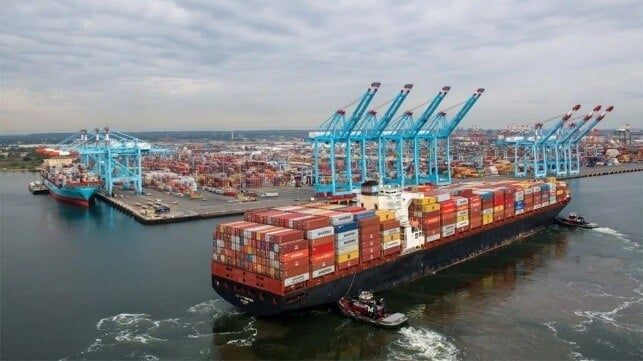
APM Terminals will make signficiant investments as part of its long-term lease extension (Port of NY/NJ)
The Port Authority of New York and New Jersey and Maersk’s APM Terminals have agreed to a 33-year lease extension for the port’s second-largest container terminal. The company plans to make significant investments in the terminal located in Elizabeth, New Jersey in support of the port’s long-term growth plan.
According to the port, the lease extension which will be voted on by the Porth Authority’s board on March 27, takes a unique, nontraditional approach of incorporating performance, infrastructure, and sustainability requirements into the contract. The port says this will ensure steps are taken to enable the terminal to handle growing cargo volumes while prioritizing customer service and sustainability. The port has also recently reached similar long-term extensions with other terminal operators.
“This lease extension secures transformative infrastructure and capacity enhancements at the second-largest container terminal in the East Coast’s busiest port,” said Port Authority Executive Director Rick Cotton. “These commitments will enable the Port of New York and New Jersey to move more goods, create more jobs, and further cement its role as an essential driver of our region’s economy and our nation’s supply chain.”
Maersk’s current lease was due to expire in December 2029. The extension extends the term through December 2062. APM Terminals highlights that the terminal currently handles over 25 percent of the annual container throughput in the port. The company has already been investing in the complex including four new gantry cranes which arrived in November 2024.
As part of the agreement, APM Terminals will invest over $500 million over the coming years to enhance cargo-handling capacity at its 350-acre terminal. APM Terminals has also committed to the replacement and maintenance of all wharf and berth structures. Additionally, the Port Authority and APM Terminals will expand the lease to include portions of an adjacent parcel of land to APM Terminals for enhanced productivity. APM Terminals has also committed to future capacity enhancements driven by demand.
Under the new agreement, APM Terminals will also invest in zero-emission cargo-handling equipment over the coming years. As a Port Authority lessee, the terminal operator is also subject to the Port Authority’s marine terminal tariff, which incentivizes the adoption of cleaner equipment as new technology becomes commercially available. It is in keeping with the Port Authority’s goal of reaching net zero agency-wide by 2050.
According to the Port Authority, the investments covered under the new agreement are in keeping with its Port Master Plan 2050. The strategy anticipates cargo volumes doubling or tripling by mid-century.
Houthis Claim "Hours-Long" Exchange of Fire With U.S. Carrier Strike Group
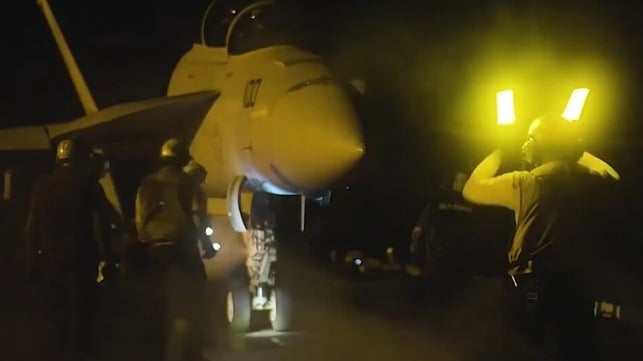
Operations aboard USS Harry S. Truman, March 24, 2025 (USN)
On Monday, Yemen's Houthi rebels claimed that they had engaged in an hours-long exchange of fire with U.S. Navy forces in the Red Sea, disrupting American strikes on Houthi-controlled areas of Yemen. The claims could not be confirmed, but Houthi forces have exaggerated their attempted attacks in the past.
Houthi forces claimed to have targeted "several enemy destroyers, in addition to the aircraft carrier Truman," using a combination of ballistic missiles, cruise missiles and drones.
"This combat, the second in 24 hours, lasted for several hours, during which an enemy air attack against our country was thwarted," said Houthi spokesman Yahya Saree.
Saree also claimed that Houthi missile forces had targeted Israel's Ben Gurion Airport with another two ballistic missiles, the latest in a series of attempted attacks on Israeli territory.
The Truman and other assets in the Mideast have been carrying out heavy strikes on Houthi positions since March 15. U.S. national security leaders have told media that multiple Houthi decisionmakers have been killed in the airstrikes, and that the toll on the group's military capabilities has been substantial. "We've hit their headquarters," National Security Advisor Michael Waltz told media on Sunday. "We’ve hit communications nodes, weapons factories and even some of their over-the-water drone production facilities."
Saudi outlet Al-Hadath reports that another Houthi leader was killed on Sunday night. Houthi media sources have reported an airstrike on a residential block in Sanaa, resulting in a claimed casualty count of one dead and 15 wounded.
Both sides are working on improving operational security and comms. According to the Institute for the Study of War (ISW), Houthi leaders claim to have improved the encryption and security of their communications systems since the start of the strikes. U.S. officials are having similar discussions after the U.S. defense leadership team accidentally leaked detailed Yemen war plans to a journalist on a commercial messaging app.
UK Launches Maritime Strategy with Emission Pricing and Fuel Regulations
UK outlined the next phase of its efforts to drive maritime decarbonization (file photo)
The UK’s Maritime Minister, Mike Kane, outlined a new detailed plan for the next stages of the efforts toward maritime decarbonization. While the policy presented to the House of Commons in Parliament builds off the efforts of the International Maritime Organization, it also launches a focus on smaller vessels and targeted subsectors which it says must also participate to reach the goals.
The policy highlights that the UK domestic maritime sector produced around eight million tonnes of CO2 equivalents, on a full lifecycle basis, in 2019. The government has already launched a sweeping Plan for Change and now it looks to bring more parts of the maritime sector in line with the broader policies. Following the IMO’s lead, the UK is setting its goal for the domestic maritime sector aiming for zero fuel lifecycle GHG emissions by 2050. The interim steps are at least a 30 percent reduction by 2030 and an 80 percent reduction by 2040, relative to 2008 levels.
The elements of the strategy call for expanding the UK’s Emission Trading Scheme to include domestic UK maritime GHG emissions starting in 2026. At the same time, the UK says it will advocate at the IMO for the introduction in 2027 of global emission pricing. As part of this, the government says subject to further consultation next year, it will introduce domestic fuel regulations to drive the update of zero and net-zero GHG emission fuels and energy sources. It will also consider further actions at the port vessel to reduce at berth emissions.
The UK also looks to expand its policies to smaller vessels, i.e. sub-400 gross tons. It points out that it will be difficult for some sectors such as fishing vessels while others such as offshore wind support vessels could lead the sector. The government is issuing a call for evidence to begin this policy development.
The government will also launch a further exploration of the efforts at the port level. It will look at whether ports are planning decarbonization and the strategies for wider environmental considerations.
While recognizing that the efforts will be challenging for the sector, the government also cites opportunities for investment and creating new economic opportunities. They note that conservative estimates show that decarbonization of the UK maritime sector could support £130 to £180 million (US$168 to $233 million) of gross value added and around 1,400 to 2,100 jobs in the UK on average each year to 2050.
The UK Chamber of Shipping hailed the release of the new strategy saying it welcomed the Government’s publication of the Maritime Decarbonization Strategy, as a much-needed successor to the 2019 Clean Maritime Plan.
“The Government’s strategy must now be matched by delivering the regulatory framework, technology and infrastructure, including a shore power revolution, required to support the green transition for UK maritime, bringing benefits to maritime communities and the UK economy,” said UK Chamber CEO Rhett Hatcher. “We look forward to working collaboratively alongside government to progress this important agenda and reach our shared goals of a cleaner, more resilient maritime sector in the UK.”
Op-Ed: FuelEU Maritime Has Teeth, But is the Industry Equipped to Meet It?
The introduction of FuelEU Maritime (FEUM) in January 2025 represents one of the most comprehensive pieces of regulation designed to directly mitigate the carbon intensity of maritime operations. Working in tandem with the EU’s existing ETS regulation, FEUM comes with significant penalties for non-compliance and has the ability to make a tangible impact on the maritime industry’s carbon emissions while incentivizing the acceleration in low-carbon alternative fuel development.
As of January 2025, vessels are required to decrease the average greenhouse gas intensity of their fuel use by 2% relative to the industry average for vessels above 5,000 GT. This requirement will continue to increase gradually over the coming years to reach an 80% decrease by 2050.
The regulation also imposes detailed reporting obligations, which require companies to monitor and report the lifecycle GHG intensity of their fuel mix. This data must be verified by an accredited third party and submitted to the FEUM database, creating a further layer of administrative complexity to ensure compliance.
Ultimately, the goal of FEUM is to promote the increased use of low-carbon alternative fuels as a means of drastically curtailing the industry’s carbon emissions in order to achieve the IMO’s GHG reduction strategy. However, the industry is still faced with significant challenges when it comes to establishing alternative fuel viability at scale. Biofuels currently lack the required feedstocks needed to promote development, fuel technologies such as methanol and ammonia bring with them a significant risk profile due to their volatile composition, and the increase in e-fuel development is hampered by the lack of onshore infrastructure to support the necessary supply of green electricity. Furthermore, the CAPEX implications, not just of the fuels themselves, but in committing to retrofit and newbuild development to future-proof the global fleet, represents a significant barrier.
Despite these challenges, Bureau Veritas (BV) remains steadfast in its efforts to support the safe development and integration of alternative fuels into maritime operations. With longstanding expertise in supporting the development of viable alternative fuels, particularly within Liquefied Natural Gas (LNG) bunkering vessels, BV has been developing rules and guidelines for LNG bunkering and has awarded AiPs of ship designs dedicated to ship-to-ship bunkering since 2012. To enhance safety, BV introduced the Rule for LNG Bunkering Ships, which focused on a transfer system to prevent leaks and boil-off gas handling systems for ships that aren’t sailing continuously but waiting for fuel delivery. Today, BV covers all units in the LNG segment, having classified around 35% of the world’s bunkering ships in service and 50% of the orderbook to date.
Whilst LNG remains an important part of the current energy landscape, the development of greener alternatives – such as ammonia, methanol, and green hydrogen – are vital to establishing a robust, multifuel environment. Using our experience in LNG, BV has developed Rules (NR671) and notations to support the adoption of ammonia as a fuel onboard, whilst having recently announced that it would be classifying the first of four newbuild dual-fuel methanol chemical IMO II medium-range (MR) tankers, built at Guangzhou Shipyard International for owner Socatra and its joint-venture partner Hafnia.
However, despite the significant emissions reductions that can be unlocked by the delivery of viable and scalable alternative fuel options, if shipping is to achieve its interim emissions targets in 2030 and 2040, all energy efficiency and wider green technologies must be engaged in order to decarbonize the global fleet. FEUM has adopted a technology-agnostic approach to achieving compliance that provides the flexibility for shipowners and operators to engage with a variety of green solutions that support emissions reductions. These solutions focus particularly on fuel cells, onboard electrical energy storage, as well as onboard power generation from wind and solar energy.
When considering the use of wind propulsion systems (WPS), FEUM represents the only emissions regulation to include a specific reward mechanism to promote the use of WPS. The Wind Reward Factor (WRF) offers up to a 5% reduction on the GHG calculation of energy used onboard for those vessels where wind assisted propulsion accounts for 15% or more of the propulsive power used onboard.
As of February 2025, more than 125 wind propulsion systems have been installed on over 57 ships, in addition to 17 ships that are already prepared for potential installation of wind propulsion systems. In fact, a recent study suggested that over 1,600 ships will be ordered by 2030, and by 2050, it is estimated that 30% of the entire global fleet will have engaged with wind propulsion technology. These statistics make clear that, while the industry grapples to develop alternative low-carbon fuel viability, wind propulsion systems provide a proven and readily available solution that can make a significant impact on owners' and operators' compliance efforts.
Furthermore, BV’s own modeling has confirmed the potential cumulative impact that operational and technical efficiency measures will make to ensuring shipping stays within its “GHG budget” to 2050. BV’s simulations, outlined in its decarbonization trajectories technical paper, show that without action to reduce speed or waiting time while ocean transportation volumes grow moderately to reach a 50% increase by 2050, GHG emissions would be 92% higher in 2050, with 44% more emissions over the period from a GHG budget perspective, than if these levers had been actioned.
As we edge closer to the IMO’s 2030 checkpoint, which will require the industry to evidence a GHG emissions reduction of at least 20 – and striving for 30% – the pressure on the industry to make meaningful impacts on their carbon emissions continues to increase. The introduction of new regional regulation is having a positive impact on reducing shipping’s carbon emissions. However, such regulation will always be subject to dynamic carbon credit prices, a volatile political landscape, and the emergence of compliance incentives and mechanisms that may inhibit or support their efficacy.
Meanwhile, the industry is waiting for the upcoming IMO MEPC83 meeting in April, where mid-term measures, including a potential codified global carbon levy, are expected to be announced. If the levy introduced is sufficiently robust, such a measure holds great promise for the next phase in the industry’s decarbonization efforts. If effective, a global carbon levy could provide a level of financial certainty to incentivize further investment in low-carbon fuel production, narrow the price gap between fossil and alternative fuels, and generate the revenue required to achieve sector-wide low-carbon fuel viability.
Suba Sivandran is Director of Strategy, M&A and Advanced Services at BV.
The opinions expressed herein are the author's and not necessarily those of The Maritime Executive.
Vattenfall Approves Construction of Germany’s Largest Offshore Wind Farm
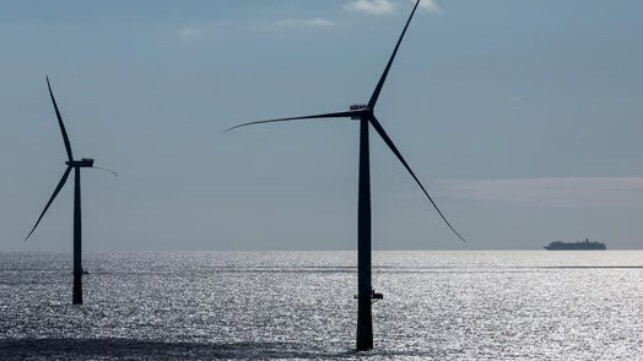
Vattenfall is moving forward building Germany's largest offshorewind farm (Vattenfall)
Swedish offshore wind developer Vattenfall announced that it has taken the final investment decision to proceed with the construction of Germany’s largest offshore wind farm. The announcement was seen as a vote of confidence for the sector and comes as Germany is embroiled in a political debate about its offshore wind policy.
The final investment decision for the Nordlicht 1 and 2 offshore wind farms signals that construction will begin on the first phase in 2026 with a capacity of 980 MW. The wind farm will be located approximately 53 miles north of Borkum in the German North Sea. The final investment decision for the second phase was made on a conditional basis pending the receipt of permits.
As part of the decision, Vattenfall has also agreed to re-acquire 49 percent ownership in the project from German chemical company BASF. It acquired the portion of the project in April 2024 but says it has decided to streamline its current portfolio of renewable power projects. BASF however secured an agreement for long-term supply of renewable electricity from the project.
“The Nordlicht offshore wind cluster makes a significant milestone in the path to enabling fossil freedom,” said Helene Biström, Head of Business Area Wind at Vattenfall. “By accelerating Germany’s energy transition and supporting industrial decarbonization, it will provide clean, reliable energy while driving innovation and sustainability in the sector.”
Vattenfall also said it would use low-emission steel for the wind turbine towers at both wind farms to lower their carbon footprint by 16 percent. When completed the full project will produce more than 1.6 GW with the first phase expected to be operational in 2028.
Last week, however, RWE’s CEO Markus Krebber called for Germany to lower its total target for offshore wind due to concerns about efficiency and rising grid connection costs. He expressed concerns about crowding and its impact on maximizing wind yields.
Germany currently has approximately 9 MW installed but the government mapped out an ambitious plan to grow to 70GW by 2045 to ensure its economy achieves climate neutrality. Krebber called for a more realistic target of just over 50 GW but others in the industry quickly rejected his suggestions. It comes as Germany is looking to reinvigorate offshore development and drive the growth of the sector after years of slow growth.
Shipping Company Blames “Captain’s Carelessness” as LPG Carrier Strands
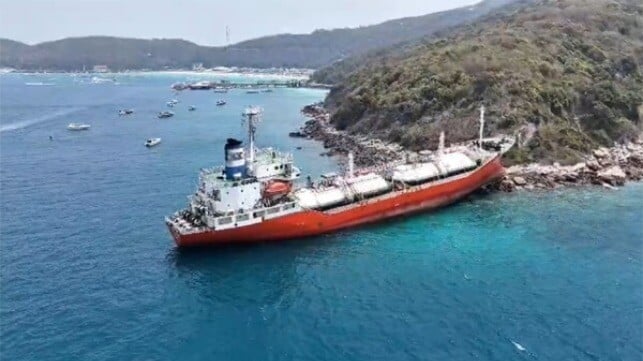
Captain said her attempted to avoid a fishing boat (Thailand TV)
Residents in the area around Pattaya City, Thailand panicked when they saw a gas tanker stranded on the shoreline at daybreak. There were rumors that the vessel was releasing gas, but it was quickly stopped by the authorities which announced the vessel’s tanks were empty and there was no immediate danger.
According to media reports, the captain of the LPG carrier NP Bangpakong (3,996 dwt) told the authorities he had served the vessel in an attempt to avoid a fishing boat. The shipping company SC Group Holding later issued a statement confirming the vessel grounded at approximately 0225 on March 25. It was traveling between two ports in Thailand when it stranded in the south of the country in an area known as the Eastern Gulf Coast.
The vessel was built in 1991 and has been operating in Thailand since 2013. It is 100 meters (328 feet in length).
The shipping company reported that it has dispatched engineers to inspect the vessel and a tug to aid in its refloating. At the same time, it issued a statement saying the grounding was “due to the employee’s negligence in his duties.” The company said it accepted responsibility for the incident and promised to implement stricter “preventive measures.”
Officials report that the first survey showed possible damage to the ballast tanks. They said it is a double-hull vessel which prevented damage to the tanks.
ALT.FUEL
HMM Joins Pioneers with its First Methanol-Fueled Containership
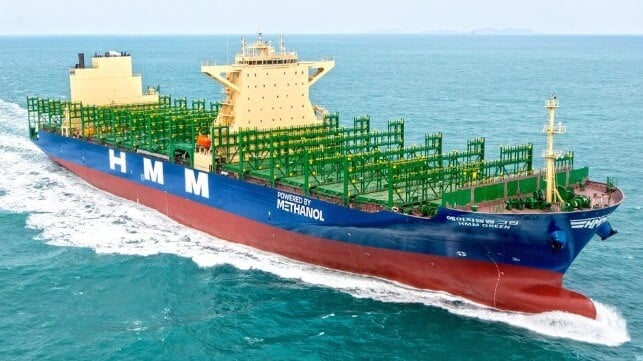
HMM Green is entering service as HMM's first methanol-fueled containership (HMM)
The ranks of container shipping companies employing methanol-fueled vessels continue to grow with HMM becoming the latest among the early adopters of the fuel. DNV calculates there are just 26 methanol-fueled containerships in service currently with orders for 200 more vessels having been placed. By comparison, there are 166 containerships fueled by LNG currently in service.
HMM ordered its first methanol vessels in February 2023 with seven to be built by HD Hyundai Samho Heavy Industries and two additional vessels at HJ Shipbuilding & Construction. The deliveries are coming this year as part of the company’s expansion and environmental plans.
The first ship, named HMM Green was delivered and is due to arrive in Busan on March 26. The vessels are 100,000 dwt with a capacity of 9,000 TEU. Their length is 274 meters (899 feet), which HMM highlights as a versatile class of ships. To maximize their ability to dock in ports around the world the company highlights a range of environmental technologies that were incorporated into the design. In addition to the methanol-fueled propulsion system, the vessel is equipped for shore power and has a ballast water treatment system.
HMM reports the new vessel will bunker with bio-methanol at the port of Shanghai. The bio-methanol is derived from waste resources. The company reports it can reduce carbon emissions by up to 65 percent, eliminate sulfur oxide (SOx) emissions, and cut nitrogen oxide (Nox) emissions by up to 80 percent compared to conventional bunker fuel.
The new vessel will be deployed on HMM’s independently operated route between Far East Asia, India, and the Mediterranean. It is part of a drive by the company which expects to reach the 1 million TEU capacity mark later this year. HMM is currently the eighth largest container carrier with a capacity of approximately 922,000 TEU.
Mitsui OSK Partners with CMB.Tech for First Ammonia-Fueled Vessels
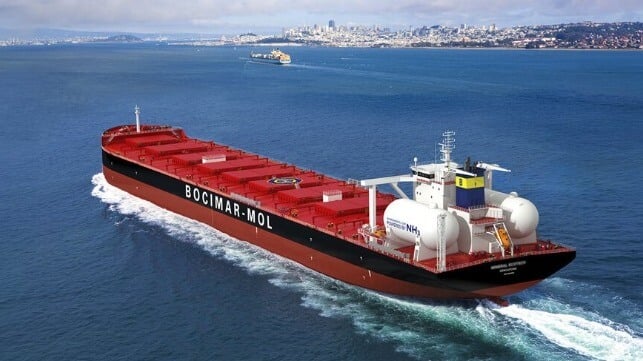
MOL is partnering with CMB.Tech for the first ammonia-fueled large dry bulk carriers (CMB.TECH)
Japan’s Mitsui O.S.K. Lines is moving forward to become one of the first of the major carriers to incorporate ammonia-fueled vessels into its fleet. MOL is joining with CMB.Tech which launched a project in 2023 to build the first ammonia-fueled large dry bulker carriers and will also expand ammonia as a fuel to its chemical tanker segment.
MOL and CMB.Tech have agreed to joint ownership of three ammonia-fitted 210,000 dwt Newcastle bulk carriers. The vessels have already been ordered at Qingdao Beihai Shipyard due for delivery in 2026 and 2027. CMB.Tech launched the project in 2023 working with WinGD to develop a 72-bore ammonia-fueled engine. After nine months of work, they announced good progress as CSSC Qingdao-Beihai Shipbuilding and CSSC Engine Company joined the project.
The vessels which were being developed for CMB’s Bocimar and were anticipated to be the first large ammonia-fueled vessels in the commercial industry. Under the terms of the new agreement, CMB.Tech and MOL will jointly own the vessels. The Japanese company will charter the three vessels each for 12 years.
The companies are expanding ammonia-fueled installations reporting a new order with China Merchants Jinling Shipyard (Yangzhou) for a total of six chemical tankers. Two of the vessels will be ammonia-fitted on delivery and the other four will be built ammonia-ready. CMB.Tech will own the vessels, which are due for delivery in 2028 and 2029, and charter the two ammonia vessels to MOL Chemical Tankers for 10 years. The Japanese company will have 7-year charters on the ammonia-ready vessels.
The MOL Group reports it intends to adopt ammonia and integrate it into the corporate environmental vision initiative. MOL’s goal is to achieve net-zero GHG emissions by 2050.
WinGD has reported that it is making solid progress in the testing of its first ammonia-fueled engines. The company has said the first engines could be ready for delivery this year.
While there is strong interest in ammonia due to its ability to eliminate carbon emissions, the shipping industry has been waiting for progress with the engines. DNV calculates that there are 31 vessels on order for delivery by 2027 that would be built for ammonia, but so far only three vessels have been retrofitted for ammonia operations. Australia’s Fortescue completed certification in Singapore for an offshore vessel while Japan’s NYK Group converted its LNG-fueled tugboat to operate with ammonia.
Alexander Saverys, CEO of CMB.Tech has been a strong proponent of ammonia as one of the tools to decarbonize shipping. He noted with these orders, CMB.Tech has increased its contract backlog by $921 million to a total of $2.94 billion. He says it demonstrates the progress on their vision of fleet rejuvenation, decarbonization, and diversification.
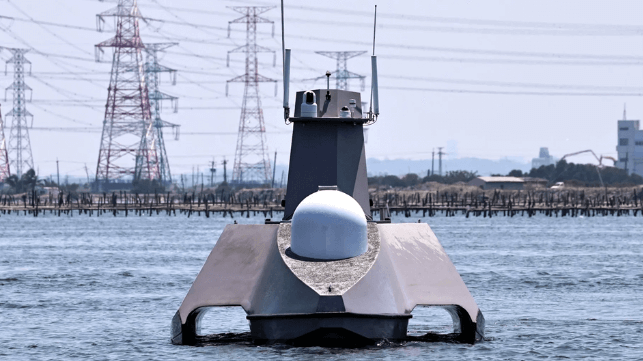
Inspired by Ukraine's success with unmanned drone boats in the Black Sea, Taiwan has built an unmanned attack boat of its own, with modifications.
The new "Endeavor Manta" drone is a fiberglass-hull trimaran measuring 28 feet long. In its prototype configuration, it is powered by two outboard motors, an unusual but economical choice for a military vessel. It displaces about five tonnes with weapons loadout and fuel, and it can make more than 35 knots, according to manufacturer CSBC. Its small size and light weight make it possible to launch from small ports or even unimproved beaches, making deployments harder to interdict.
Ukraine's drone boats are smaller monohull designs with inboard propulsion. Initially they were one-way attack drones only, designed to deliver an explosive warhead directly to the hull of a target ship and detonate by ramming. They have gradually evolved to include reusable variants that carry FPV drone aircraft and antiaircraft missiles, among other payloads.
The Taiwanese design is expected to carry and use lightweight torpedoes, allowing it to make more than one attack run in a surface warfare role. It is equipped for ramming and detonation as well.
In initial configuration, the Manta has a cockpit for a human crewmember; it is unknown whether this would be removed for the final version. According to CSBC, it is capable of autonomous navigation, and will be able to return to port on its own if its command-and-control connectivity is interrupted.
The prototype aligns with U.S. war planning for a Taiwan Strait conflict: U.S. Indo-Pacific Command chief Adm. Sam Paparo has called for building the technology for a "hellscape" of unmanned systems in the strait, which could fend off a Chinese invasion force long enough for a conventional response.
Appeals for Diplomacy for Crew Kidnapped by Pirates off Central Africa
Pirates kidnapped 10 crewmembers from the tanker off Central Africa according to family members (Rubis file photo)
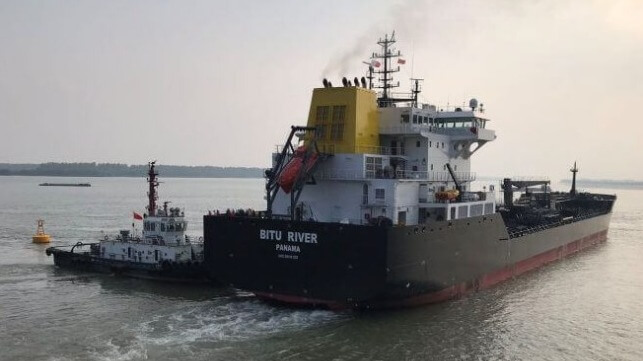
Frustrated by a lack of information, the family members of crewmembers kidnapped last week from a product tanker off Africa have gone public with their appeals for assistance. Calling for aid from the Indian government, the family members revealed that 10 crewmembers were abducted from the BITU River last week in an incident off the west coast of Africa.
The Maritime Domain Awareness for Trade – Gulf of Guinea (MDAT-GoG) recorded the incident on March 18 but provided few details other than saying the pirates had ultimately abandoned the vessel. The vessel was the BITU River, a Panama-flagged bitumen tanker operated by Rubis Asphalt, a company that sources bitumen at the refinery and distributes it across West and Central Africa. At the time, no details were released on the status of the crew.
Family members speaking to Indian newspapers revealed the attack took place around 1930 on March 17 while the tanker was approximately 40 nautical miles southeast of Santo Antonio do Príncipe, on the island of Príncipe in the island nation of São Tomé and Príncipe off the west coast of Central Africa. The 15,500 dwt vessel had departed the anchorage at Lomé, Togo, and was proceeding to Douala in Cameroon.
The crew retreated into the vessel’s citadel and others hid in the engine room with family members saying they had lost contact with the crew at around 2330. The crew reportedly surrendered when the pirates forcefully breached the citadel and broke into the engine room. Earlier it was said the pirates were armed and there were reports of gunfire when they boarded the vessel.
A total of 10 crewmembers were kidnapped from the vessel, including seven from India and three from Romania. The remaining crew were threatened with violence and confined to a cabin on the tanker. Before leaving the vessel, the pirates also stole personal belongings from the crew including gold, phones, and a laptop.
The families said the company informed them of the kidnappings the following day while assuring them the crewmembers were unharmed. The families are appealing to the Indian government citing the need for swift diplomatic efforts. The authorities have not commented further on the situation.
MDAT-GoG said the company’s safety officer had advised that after the pirates left the vessel, it was proceeding to Libreville in Gabon for refuge. The tanker’s AIS signal shows that it arrived in the Owendo Anchorage in Gabon on March 18 where it remains.
Burnt-Out Containership Solong to be Towed into UK Port
Solong is being held stationary by a towline (Havariekommando)
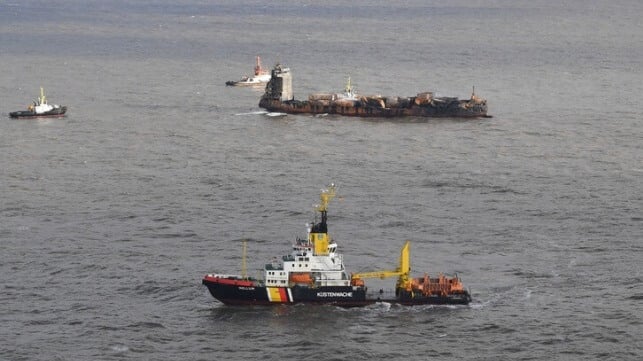
More than two weeks after the devastating incident on March 10 in which the Portuguese-flagged containership Solong hit the anchored tanker Stena Immaculate, the UK’s HM Coastguard reports preparations are being made to tow the containership to port. The operation is expected later this week.
After hitting the tanker which started fires aboard both ships, Solong was abandoned and her crew was brought to shore by an offshore service vessel working at a wind farm in the area. One crewmember, a resident of the Philippines, was lost with reports saying he had been working near the bow of the vessel when it hit the tanker. HM Coastguard led an unsuccessful search to locate the missing seafarer.
After initially drifting in the North Sea, salvage teams were able to attach a tow line to hold the still-burning vessel. It took more than a week for the fires to be put out.
“Salvage of the Solong has progressed to enable its relocation to the Port of Aberdeen for safe berthing,” Chief Coastguard Paddy O’Callaghan announced today. “Tug and tow are scheduled to arrive at Aberdeen later this week,” the Coastguard announced
The plan calls for Solong to be towed by one of the salvage tugs and accompanied by another tug. In addition, a vessel with counter pollution measures will be accompanying the tow. HM Coastguard said the pollution measures would be available if needed during the tow.
At the same time, the local authorities report the cleanup is continuing along the coastline as nurdles (plastic beads) have washed up following the incident. The Coastguard has said that it is likely that the nurdles entered the water at the point of collision, but the vessel’s owners through a spokesperson said that it believes no containers holding nurdles were thought to have been lost over the side of the ship. It speculates that some of the plastic beads were released during the fires which ruptured some of the containers.
The situation for the Stena Immaculate remains unchanged with the tanker still at anchor. U.S. ship operator Crowley reported salvage teams determined only one of the tanks holding jet fuel had been ruptured and fed the fire. The remainder of the jet fuel is stable aboard the tanker. No details have been announced for the salvage which is being conducted by Boskalis’ SMIT group.
The crews from the two vessels were repatriated to the United States and the Philippines. However, the master of the Solong remains in a UK jail having been arrested on a count of gross negligent manslaughter. It came out in the initial court hearing that he had been on the bridge of the containership standing watch when it hit the tanker. His next hearing is scheduled for April 14 and the judge has set a tentative trial date of January 12, 2026.
Two Killed as Bulker Runs Over Tug’s Towline in the Philippines
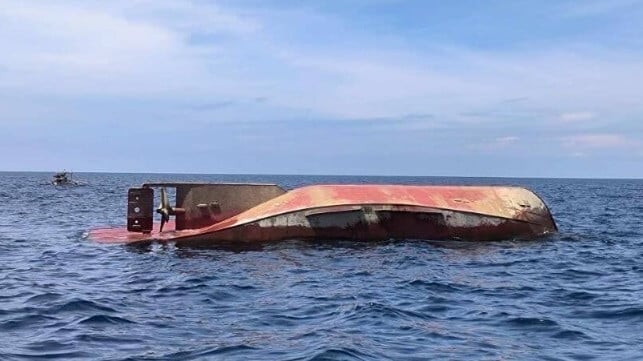
Philippines'; tugboat capsized when the bulker hit its towline (PCG)
The Philippines Coast Guard is reporting it rescued six crewmembers, but that two others including the captain were killed when a bulker ran over a tugboat’s towline. The tug registered in the Philippines capsized when the vessel struck the towline.
The incident happened at 0420 local time today, March 25, in the waters near Maasim, Sarangani Province, in the southern Philippines. The Coast Guard reports it dispatched four boats with rescue divers and response teams to the scene.
The Chinese-owned bulker Universe Kiza (28,388 dwt) has been detained. It was sent to the anchorage at General Santos City. The Coast Guard reports it has instructed its legal officers to handle the filing of appropriate charges against the master and crew of Universe Kiza. The vessel built in 2004 and registered in Panama was transporting a load of concrete from Vietnam.
According to the survivors from the tug, they were towing a barge with approximately 50 to 100 meters of towline. The bulker attempted to pass in between the tug Sadong 33 and the barge LCT Sea Asia.
The tug had a crew of eight aboard and capsized from the impact. The Coast Guard was able to recover six seafarers from the water while search teams later recovered the two deceased crewmembers. One is identified as the captain of the tug and the other was working as an oiler. The six were provided medical attention and reported not to be seriously injured.
The Coast Guard has placed oil booms around the tug as a precaution. A salvage company is working to recover the tug.

 The introduction of FuelEU Maritime (FEUM) in January 2025 represents one of the most comprehensive pieces of regulation designed to directly mitigate the carbon intensity of maritime operations. Working in tandem with the EU’s existing ETS regulation, FEUM comes with significant penalties for non-compliance and has the ability to make a tangible impact on the maritime industry’s carbon emissions while incentivizing the acceleration in low-carbon alternative fuel development.