Saturday, April 05, 2025

'Winner!' Conservative WSJ editors say China had an 'excellent week' — thanks to Trump


Matthew Chapman
April 4, 2025
RAW STORY


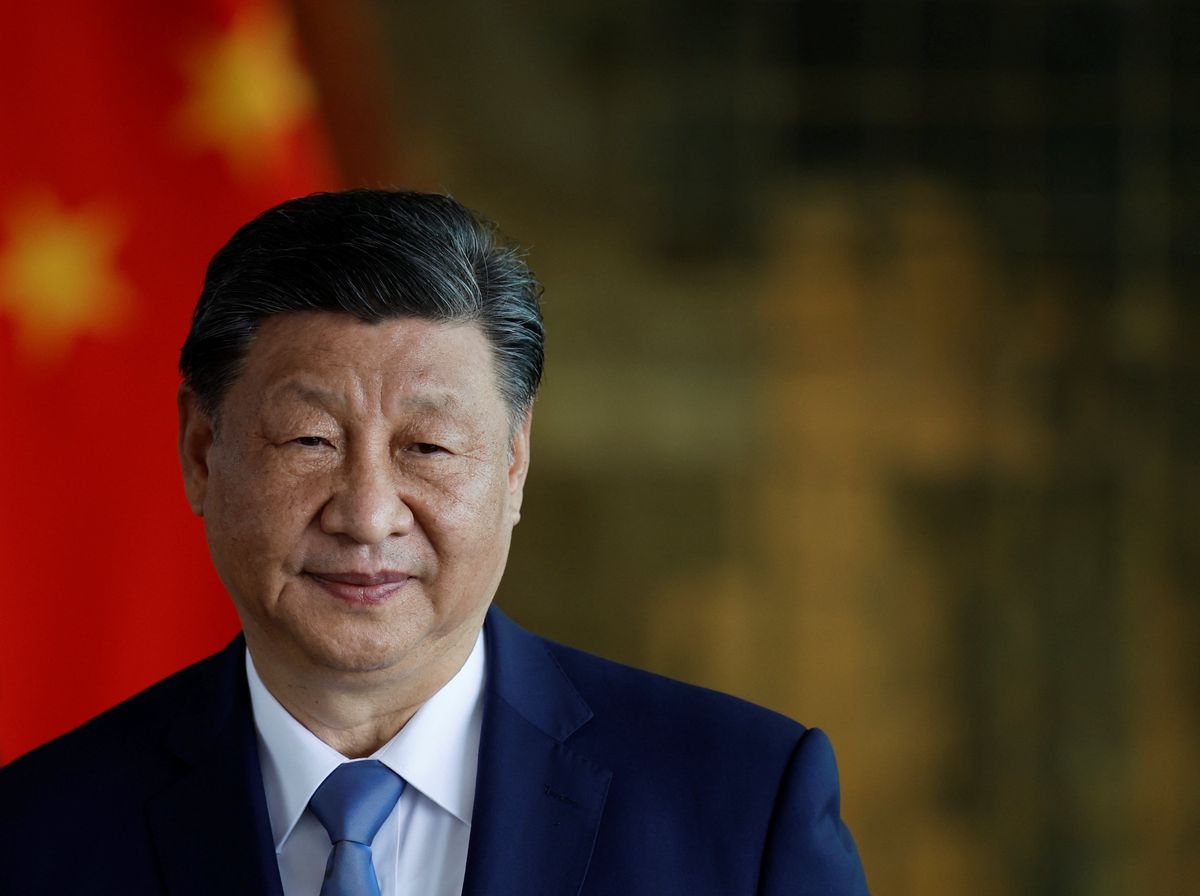
China's President Xi Jinping attends a meeting with Brazil's President Luiz Inacio Lula da Silva, in Brasilia, Brazil November 20, 2024. REUTERS/Adriano Machado

The conservative Wall Street Journal editorial board, after months of warning, has had enough of Trump's tariff scheme — and is putting out a clear message to the administration: You're now making China great again.

Trump’s tariffs are poised to "change the world order in many ways," the board said. And "one winner is already emerging" — Xi Jinping, the autocratic ruler of China, who had an "excellent week."

Trump is poised to tank the U.S. economy and drive many American allies right into China's arms.

"This is only partly a story about the retaliatory measures Beijing announced Friday following Wednesday’s 'Liberation Day' performance at the White House. China will impose a blanket 34% tariff on imports from the U.S. starting next week, matching Mr. Trump’s latest addition to his tariffs on China," wrote the board. "Beijing also added a couple dozen U.S. companies to various regulatory blacklists subject to trade, investment or export restrictions. Mr. Xi is slapping export controls on several rare-earth minerals critical for high-tech manufacturing. Oh, and a smattering of regulatory investigations for antidumping and the like are brewing, targeting American firms."

This all comes at a moment, the board wrote, when China's economy was teetering, its real estate market was in shambles, and it looked like all America had to do to win the rivalry was let events unfold.

"Mr. Xi must believe he will have no problem finding other sources for critical imports, especially since the U.S. is punishing the rest of the world with tariffs," said the board. "Meanwhile, China’s authoritarian system means Mr. Xi probably can ride out whatever political or social pain might result from higher unemployment or slower economic growth in a trade war. Congressional Republicans have to face voters in 18 months following whatever fallout comes from Mr. Trump’s tariffs. It’ll help that Mr. Xi can rally nationalist sentiment against the U.S."

Ultimately, the board concluded, Trump is only proving Xi's greatest hopes of the West's vulnerability.

"Mr. Xi and his Communist comrades have long believed the West is weak, divided and in retreat," the board concluded. "He will see this week as confirmation, and he won’t have to do much to exploit those divisions."

US soybeans, energy: Who is hit by China’s tariff retaliation?


By AFP
April 4, 2025


US agricultural exports are poised to be hard-hit if Washington and Beijing move forward with steep new tariffs, analysts say - Copyright AFP/File Johannes EISELE

Beiyi SEOW

US agricultural exports, fuels and manufactured goods are set to take a hit from China’s blanket retaliation against President Donald Trump’s sharp tariffs, with both sets of measures due to take effect next week.

After Trump announced a 34-percent new tariff on imports of Chinese goods — taking the added rate imposed this year to 54 percent — Beijing said it would slap an equivalent across-the-board tariff on US goods, among other countermeasures.

China used to target specific industries in a “mirror response” to US export restrictions, said Emily Benson of consulting firm Minerva Technology Policy Advisors.

But its broader plan unveiled Friday marks a “pretty significant warning shot” to the Trump administration to hold off further measures, she told AFP.

What is the state of US-China trade, and what US sectors stand to be impacted?


– US exports –


The United States exported $144.6 billion in goods to China in 2024, much less than the $439.7 billion it imported, Commerce Department data shows.

Among its exports, key sectors include electrical and electronic equipment and various fuels, alongside oilseed and grains.

But China likely has more confidence to retaliate this time compared with Trump’s first presidency, when he engaged in a tit-for-tat tariff war with Beijing.

“While the US is still obviously a very important market, fewer firms are now existentially dependent on US suppliers,” said Lynn Song, ING chief economist for Greater China.

She added that Beijing has also made efforts towards technological self-sufficiency.


– Agricultural goods –


“US farmers will bear a heavy burden,” said Asia Society Policy Institute vice president Wendy Cutler.

Their agricultural exports to China could “become too expensive to be competitive” with Beijing’s added tariffs, she told AFP.

Soybeans, oilseeds and certain grains were a key US export to China, amounting to $13.4 billion last year, US trade data showed.

“China bought 52 percent of our (soybean) exports in 2024,” said American Soybean Association chief economist Scott Gerlt.

Given the size of its purchases, China cannot easily be replaced, he told AFP.

Soybean prices plunged on Friday’s news.


– Fuels, machinery –


China also imported $14.7 billion of various fuels and oils from the United States last year.

Tariffs could impact the oil and gas industry in states like Texas, which alongside Louisiana saw such exports to China surge in 2023, said a US-China Business Council report.

And the US exported some $15.3 billion in electrical machinery to China last year, official trade data showed.

But semiconductor shipments have faltered on expanding US export controls on advanced tech.


– Chips impact –


Besides tariffs, China has restricted exports of rare earth elements and taken action against US firms — including drone companies and those in the defense and aerospace sectors.

“China controls about 69 percent of rare earth element mining. They also control about 90 percent of refining,” said Benson of Minerva Technology Policy Advisors.

“That’s going to probably be a chokepoint moving forward,” she added. This could affect semiconductor manufacturing, magnets, optics and lasers.

“Some of these are targeted, of course, at chips,” she said.

With Washington and Beijing turning to a growing range of tools in their conflict, Benson warned that the US “is relatively exposed to these Chinese controls” without an industrial policy response providing “a major cash infusion to scale up domestic production.”
Taiwan earmarks $2.7 bn to help industries hit by US tariffs

Agence France-Presse
April 4, 2025 


A 3D-printed miniature model of U.S. President Donald Trump, U.S. Flag and word "Tariffs" are seen in this illustration taken, April 2, 2025. REUTERS/Dado Ruvic/Illustration

by Joy CHIANG


Taiwan has earmarked $2.7 billion to help industries affected by US President Donald Trump's new tariffs, the government said Friday.

Taipei had sought to avoid Trump's threatened levies by pledging increased investment in the United States and more purchases of US energy, but it was still hit by a 32 percent tax on its imports, excluding semiconductor chips.

The government has described the tariffs as "unreasonable" and "extreme", and plans to seek negotiations with Washington in the hope of reducing their impact.

Announcing the NT$88 billion ($2.7 billion) assistance package, Premier Cho Jung-tai said the plan was to "address various needs of industries and society in the future."

Taiwan's trade surplus with the United States is the seventh highest of any country, reaching $73.9 billion in 2024.

Around 60 percent of Taiwan's exports to the United States are information and communications technology products, or ICT, which includes chips.

The government has argued that the surplus reflected soaring demand in the United States for Taiwan's semiconductors and other tech products, further driven by US tariffs and export controls targeting China that Trump imposed during his first term.

Cho told a news conference that the industrial and agricultural sectors would be the main targets of the assistance.

The funds will be used for financial support, reducing administrative costs, improving competitiveness, offering tax incentives and diversifying markets, he said.

Products expected to be hardest hit by Trump's tariffs include ICT, electronics, steel, metal and machinery, components and building materials.

Tea, orchids and fish are also likely to be hurt, Cho said, flagging a possible "shrinking consumer market or a weakening of our competitive advantage".

Vice Premier Cheng Li-chun told reporters the government had drawn up response measures based on a possible 25 percent tariff ahead of Trump's announcement.


"I must clarify that a 32 percent tariff falls under an extreme scenario," Cheng said.

"While we did run simulations based on it, that doesn't mean we consider it reasonable. In our view, it exceeds what would be a reasonable expectation -- it's neither reasonable nor fair."

Semiconductor chips, a sector that Taiwan dominates and has been a source of friction between Washington and Taipei, were excluded from Trump's levies.

However, analysts warned that tariffs on components would have a knock-on effect for the critical chip industry that is the lifeblood of the global economy.

Trump has accused Taiwan of stealing the US chip industry and recently threatened to impose tariffs of up to 100 percent on semiconductor imports from the island.

"Taiwan will lobby for exemption or at least see what Trump wants -- Trump wants something," Andrew Kam Jia Yi, an associate professor at the National University of Malaysia told AFP.


"(Trump) gives you the worst-case scenario then batters you down to a deal that you might not want but seems more reasonable than the original threat."

joy/amj/dhw

© Agence France-Presse

Taiwan says US tariffs ‘highly unreasonable’


By AFP
April 3, 2025

Donald Trump's sweeping new tariffs announced overnight included a hefty 32 percent tax on Taiwanese imports, which Taipei described as 'unfair'
- Copyright AFP I-Hwa Cheng

Joy CHIANG

US President Donald Trump’s tariffs were “highly unreasonable” and the government planned to start “serious negotiations” with Washington, Taipei said Thursday.

Taiwan had sought to avoid Trump’s threatened levies by pledging increased investment in the United States, more purchases of US energy, and greater defence spending.

But Trump’s sweeping new tariffs announced overnight included a hefty 32 percent tax on Taiwanese imports, which Taipei described as “unfair”.

“The Executive Yuan found the decision highly unreasonable and deeply regretted it, and will initiate serious negotiations with the United States,” cabinet spokeswoman Michelle Lee said.

Taiwan’s trade surplus with the United States is the seventh highest of any country, reaching US$73.9 billion in 2024.

Around 60 percent of Taiwan’s exports to the United States are information and communications technology products, or ICT, which includes semiconductor chips.

Lee said the surplus reflected soaring US demand for Taiwan’s semiconductors and other tech products that was further driven by the tariffs and export controls targeting China that Trump imposed during his first term.

“The surge in US demand for Taiwan’s ICT products reflects Taiwan’s significant contribution to the US economy and national security, yet Taiwan is now being hit with high tariffs,” Lee said.

“The proposed tariff does not accurately reflect the actual state of Taiwan-US trade relations and is unfair to Taiwan.”

Semiconductor chips, a sector that Taiwan dominates and has been a source of friction between Washington and Taipei, were excluded from the levies.

But analysts warned that tariffs on components would have a knock-on effect for the critical chip industry that is the lifeblood of the global economy.

Taiwan had drawn up plans to help local industries hit by possible US tariffs, Minister of Economic Affairs Kuo Jyh-huei said Tuesday, ahead of Trump’s announcement.

“Our countermeasures have been assessed and analysed, for example, how we would respond to a 10 percent or how we would respond to a 25 percent tariff,” Kuo said.

There had been hopes that Taiwan chipmaking titan TSMC’s plan to invest $100 billion in the United States would shield the island from Trump’s tariffs.

Taiwan has also pledged to increase investment in the United States, buy liquefied natural gas from the US state of Alaska, and raise its defence spending to more than three percent of GDP.

Trump has accused Taiwan of stealing the US chip industry and recently threatened to impose tariffs of up to 100 percent on semiconductor imports from there.
Japan PM says Trump tariffs a ‘national crisis’


By AFP
April 4, 2025


Japan's main Nikkei 225 index fell more than three percent on Friday, adding to a 2.7-percent drop on Thursday after the S&P 500 on Wall Street dropped by the most in a day since 2020 - Copyright AFP Kazuhiro NOGI


Kyoko HASEGAWA

US President Donald Trump’s tariffs on Japanese goods are a “national crisis”, Prime Minister Shigeru Ishiba said Friday ahead of cross-party talks on mitigating the impact.

Japanese firms are the biggest investors into the United States but Trump on Thursday announced a hefty 24-percent levy on imports from the close US ally as part of global “reciprocal” levies.

The measures “can be called a national crisis and the government is doing its best with all parties” to lessen the impact, Ishiba said in parliament.

He called however for a “calm-headed” approach to negotiations with Trump’s administration, which has also imposed 25-percent tariffs on auto imports which came into force this week.

Bank of Japan governor Kazuo Ueda said meanwhile that tariffs “can be a factor in downward pressure on the global and national economies”.

Ishiba on Thursday told his ministers “to study closely” the tariffs and “to take all measures necessary including financing support” for domestic industries and protecting jobs, government spokesman Yoshimasa Hayashi told reporters.

Ishiba’s meetings with party leaders later Friday were aimed at laying the groundwork for the supplementary budget bill, as his minority government needs opposition support to pass it in parliament, the Asahi Shimbun daily reported.

On Friday, Hayashi repeated that Trump’s sweeping new tariffs are “extremely regrettable” and that Japan has “serious concerns” about whether they comply with World Trade Organization rules and US-Japan trade agreements.

Japan’s main Nikkei 225 index fell more than three percent on Friday, adding to a 2.7-percent drop on Thursday after the S&P 500 on Wall Street dropped by the most in a day since 2020.


– ‘Extremely grave’ –


Major Japanese business lobby the Japan Chamber of Commerce and Industry (JCCI) said Trump’s tariffs “would have an extremely grave impact on the Japanese economy”.

“We strongly urge the government to continue its persistent negotiations for the exemption from tariff measures and to take all possible measures to minimise the impact on small and medium-sized enterprises and small businesses… by developing a detailed consultation system and strengthening cash management support,” the JCCI said Thursday.

The Japan Automobile Manufacturers Association (JAMA) also called for government assistance for its members, which make up an important pillar of the world’s fourth-biggest economy.

The industry has “consistently called for fundamental reform to simplify and ease the burden of automobile-related taxation, (and) we kindly request comprehensive support measures to ensure that Japan’s automotive industry can maintain its foundation as a manufacturing base, through the revitalization of the domestic market”, it said.

JAMA said its members have invested a cumulative total of more than $66 billion in US manufacturing as of 2024, generating over 110,000 direct US jobs and supporting more than 2.2 million others.

“We have long believed that becoming an integral part of the US auto industry — through local investment and job creation — is the most sustainable path forward for the auto industries of both countries,” it said.

Japanese carmakers ship about 1.45 million cars to the United States from Canada and Mexico, where they operate factories, Bloomberg News reported.

By comparison, Japan exports 1.49 million cars directly to the United States, while Japanese automakers make 3.3 million cars in America.

In Japan, the auto sector is a key industry, employing about 5.6 million people directly or indirectly.

Vehicles accounted for around 28 percent of Japan’s 21.3 trillion yen ($142 billion) of US-bound exports last year.


Japan says US tariffs ‘extremely regrettable’, may break WTO rules

By AFP
April 3, 2025


Unlike in Trump's first term, Japan has failed to win exemptions on tariffs on imports into the United States - Copyright AFP/File TOSHIFUMI KITAMURA


Hiroshi HIYAMA, Kyoko HASEGAWA

Japan slammed Thursday as “extremely regrettable” US President Donald Trump’s sweeping new tariffs, saying they may break WTO rules and the two countries’ trade agreement.

Japanese firms are the biggest investors into the United States but Tokyo has failed to secure an exemption, with Trump announcing a hefty 24-percent levy on Japanese imports.

“I have conveyed that the unilateral tariff measures taken by the United States are extremely regrettable, and I have again strongly urged (Washington) not to apply them to Japan,” Yoji Muto, trade and industry minister, told reporters.

He said he spoke to US Commerce Secretary Howard Lutnick before Trump’s announcement of a new 10-percent baseline tariff and extra levies on selected countries — including close strategic ally Japan.

“Japan (are) very very tough. Great people…. They would charge us 46 percent, and much higher for certain items,” Trump said. “We are charging them 24 percent.”

Muto said he had explained to Lutnick “how the US tariffs would adversely affect the US economy by undermining the capacity of Japanese companies to invest”.

“We had a frank discussion on how to pursue cooperation in the interest of both Japan and the United States that does not rely on tariffs,” Muto said.

Government spokesman Yoshimasa Hayashi also said that the US measures may contravene World Trade Organization (WTO) rules and the two countries’ trade treaty.

“We have serious concerns as to consistency with the WTO agreement and Japan-US trade agreement,” he told reporters.

Asked if Japan will impose retaliatory tariffs or is considering filing a suit to the WTO, Hayashi said: “We decline to disclose details of our considerations.”


– Abe exception –


In Trump’s first term, then prime minister Shinzo Abe, who had warm relations with Trump, managed to secure an exemption from tariffs.

In February, Trump hosted Prime Minister Shigeru Ishiba for apparently friendly and fruitful talks, hailing a “new golden age for US-Japan relations”.

Ishiba promised a trillion dollars in investments and to import what Trump called “record” imports of US natural gas.

Japan, together with South Korea, would also partner on a “gigantic natural gas pipeline in Alaska”, Trump said.

Japan has also failed to win exclusion from 25-percent tariffs on imports into the United States by its massive auto sector that came into force on Thursday.

Last year, vehicles accounted for around 28 percent of Japan’s 21.3 trillion yen ($142 billion) of US-bound exports, and roughly eight percent of all Japanese jobs are tied to the sector.

Japanese carmakers ship about 1.45 million cars to the United States from Canada and Mexico, where they operate factories, Bloomberg News reported.

By comparison Japan exports 1.49 million cars directly to the United States, while Japanese automakers make 3.3 million cars in America.
‘Shocking’: US tariffs worse than feared for Vietnamese exporters


By AFP
April 3, 2025


Vietnam was among the countries hardest hit by Trump's latest tariffs blitz
 - Copyright AFP Huu Kha


Lam Nguyen and Alice Philipson in Hanoi

At a garment factory in Ho Chi Minh City that exports T-shirts and underwear to the United States, staff were alarmed by “shocking” trade tariffs imposed on Vietnam that could severely impact their business.

A manufacturing powerhouse that counted the United States as its biggest market last year, the Southeast Asian nation was hammered with a thumping 46 percent tariff in President Donald Trump’s global trade blitz.

Despite widespread fears it could be a key target over its huge trade surplus with Washington — the third-largest after China and Mexico — the size of the levies came as a bombshell for businesses and factory workers on Thursday.

“It’s truly shocking,” said Tran Nhu Tung, board chair at Thanh Cong, a factory in Ho Chi Minh City that makes clothes for DKNY and Walmart, among others.

“Especially in the textile industry, we did not anticipate (this). I thought that since Vietnam is a smaller country, the US would not impose such (high) tariffs,” said Tung.

About 25 percent of his exports currently go to the United States, he added.

During the trade war between Beijing and Washington in Trump’s first term, Vietnam took advantage of its geographic location and cheap skilled labour to position itself as an alternative manufacturing hub in Asia.

Many companies shifted parts of their supply chain, and Vietnam’s trade surplus with the United States doubled between 2017 and 2023.

Now, big brands such as Nike — which produced 50 percent of its footwear and 28 percent of its apparel in Vietnam in the 2024 financial year — face vastly higher costs, which they will have to absorb or pass on to customers, and their shares dropped sharply Thursday.

The tariffs could force many to look elsewhere for manufacturing, analysts said.

“These products are low margin and price sensitive, prompting major companies to switch orders to countries with lower reciprocal tariffs,” said Sayaka Shiba, senior country risk analyst at research firm BMI.

The tariffs would “significantly damage” Vietnam’s current export-based growth model, which heavily relies on exports to the United States, she said, adding in the worst-case scenario there could be a three percent hit to GDP this year.

According to data from the US Trade Representative website, the United States imported $136.6 billion worth of goods from Vietnam last year, representing nearly 30 percent of its GDP.

In the wake of the announcement, Hanoi shares tumbled, with its main index closing down 6.7 percent on Thursday, its biggest drop since 2001 according to Bloomberg.


– ‘Can’t eat, can’t sleep’ –


The tariffs have left workers in Vietnam fearing for their futures.

“I can’t eat or sleep well because I keep worrying about losing my job,” said 38-year-old Cao Thi Dieu, a worker at a factory in Ho Chi Minh City that makes shoes for brands such as Nike and Adidas.

“How will I manage if I lose my job? How will I continue earning money each month to take care of my two children’s education?” she told AFP.

Hours after the announcement, Vietnam’s prime minister requested the immediate establishment of a “rapid response team” and said Deputy Prime Minister Ho Duc Phoc would head to the United States for a “working visit”.

“Many here believe (the tariff figure) is more of a negotiation tool than a final position,” said Dan Martin of business advisory firm Dezan Shira & Associates in Hanoi.

Although Vietnam may hope that it can clinch a reduction, previous charm offensives have not worked.

Earlier this week, Vietnam cut import duties on a wide range of goods from liquefied gas and some agricultural products to cars in what appeared to be a pre-emptive attempt to blunt the tariffs.

It also announced that it would allow Elon Musk’s SpaceX to launch its Starlink satellite internet service in a pilot programme running to 2030.

But it appears the Trump administration was too angered by what it sees as Vietnam’s role in attempts to get around tariffs imposed on China.

“The way the game works with Vietnam….” a White House official told reporters, “they’ll set up these facilities, which look like from the air that they’re manufacturing facilities, but all China does is ship in Chinese products into these warehouses and off they (Vietnam) send it to us.”

But a 2024 report by the International Monetary Fund said there was “no clear evidence” of Vietnam’s role in facilitating Chinese exports to the United States.

“Most manufacturers are not here to game the system,” said Martin. “They’re here because Vietnam makes strategic and operational sense.”
India says ‘examining the implications’ of US tariffs


By AFP
April 3, 2025


India said Thursday it was 'examining the implications' of sweeping US tariff
 - Copyright AFP Narinder NANU

India said Thursday it was “examining the implications” of sweeping US tariffs, saying it was eyeing “opportunities” after rival competitors were harder hit by US President Donald Trump’s hike in duties.

New Delhi, which is in the process of negotiating the first tranche of a bilateral trade agreement with Washington, said it was pushing ahead with talks for a deal.

India’s Department of Commerce said it is “carefully examining the implications of the various measures”, adding in a statement that it was “also studying the opportunities that may arise due to this new development”.

Trump, speaking while unveiling the tariffs at the White House on Wednesday, said that Indian Prime Minister Narendra Modi was a “great friend” but that he had not been “treating us right”.

An initial White House chart revealing the tariffs listed India at 26 percent, but a subsequent annex — cited by New Delhi — put duties at 27 percent.

“Discussions are ongoing between Indian and US trade teams for the expeditious conclusion of a mutually beneficial, multi-sectoral Bilateral Trade Agreement,” the statement said.

The commerce department added that talks “are focused on enabling both nations to grow trade, investments and technology transfers”.

“We remain in touch with the Trump Administration on these issues and expect to take them forward in the coming days.”

India’s pharmaceutical sector, which exported more than $8 billion of products to the United States in the 2024 fiscal year, emerged unscathed — with drugs exempt from its reciprocal tariff move.
Leading garment producer Bangladesh holds crisis talks on US tariffs


By AFP
April 5, 2025


Textile and garment production accounts for about 80 percent of exports in Bangladesh - Copyright AFP/File Munir UZ ZAMAN

Bangladesh’s interim leader called an emergency meeting on Saturday after textile leaders in the world’s second-largest garment manufacturing nation said US tariffs were a “massive blow” to the key industry.

Textile and garment production accounts for about 80 percent of exports in the South Asian country, and the industry has been rebuilding after it was hard hit in a revolution that toppled the government last year.

US President Donald Trump on Wednesday slapped punishing new tariffs of 37 percent on Bangladesh, hiking duties from the previous 16 percent on cotton and 32 percent on polyester products.

Bangladesh exports $8.4 billion of garments annually to the United States, according to data from the Bangladesh Garment Manufacturers and Exporters Association (BGMEA), the national trade body.

That totals around 20 percent of Bangladesh’s total ready-made garments exports.

Interim leader Muhammad Yunus “convened an emergency meeting… to discuss the US tariff issue,” the government said in a statement.

Sheikh Bashiruddin, who holds the commerce portfolio in the government, told reporters after the meeting that Yunus “will raise the issue with the US administration”.

Bashiruddin said he believed Bangladesh would “not be severely affected”, adding that some other competitors faced “much higher than those on us”.

Yunus’ senior advisor Khalilur Rahman said the government had been readying for the tariff hike, and had began talks with US officials in February.

“I have already spoken with several State Department officials,” Rahman said on Saturday.

“The discussions are ongoing. We will take the necessary steps based on these discussions.”

Bangladesh’s tax authority, the National Board of Revenue, is also expected to meet to review the fallout from the tariffs.

Rakibul Alam Chowdhury, chairman of RDM Group, a major manufacturer with an estimated $25 million turnover, said on Thursday that the industry would lose trade.

“Buyers will go to other cost-competitive markets — this is going to be a massive blow for our industry,” he said.

Several garment factories produce clothing for the US market alone.

Anwar Hossain, administrator of the BGMEA, has told AFP that the industry was “not ready” for the tariff impact.

Bangladesh, the second-largest producer after China, manufactures garments for global brands — including for US firms such as Gap Inc, Tommy Hilfiger and Levi Strauss.


Pacific nations perplexed, worried by Trump tariffs

By AFP
April 4, 2025


Pacific island nations hit hardest by US President Donald Trump's trade tariffs are querying the "unfair" impost - Copyright AFP TORSTEN BLACKWOOD

Pacific island nations hit hardest by US President Donald Trump’s trade tariffs are querying the “unfair” impost, and they are fearful of the impact.

The United States has punished Fiji, Vanuatu and tiny Nauru for running trade surpluses with the economic superpower, slapping them with duties far above its new 10-percent baseline.

Besides squeezing their finances, analysts say the US levies are making Pacific countries wary of their historic ally, which has already cut humanitarian aid programmes.

“It’s just another reason to have less trust in the US, stacked on top of the US aid freeze,” said Blake Johnson, senior analyst at the Australian Strategic Policy Institute think tank.

It also creates opportunities for China to expand its ties from aid to trade, he said, as Beijing vies with the United States and its allies for influence in the geographically strategic region.

Among the Pacific countries’ biggest sellers in the United States are the traditional narcotic kava drink, and spring water under the brand Fiji Water — owned by Los Angeles-based The Wonderful Company.

The 22-percent tariffs on Vanuatu are expected to impact exports and hurt kava farmers, a spokesperson for the prime minister said.


-‘Just suck them up’ –


Vanuatu was hit by the tariffs after running a US$6.6 million surplus in its trade of goods with the United States last year, according to UN data.

Jonathan Naupa, owner of Vanuatu kava exporter Mount Kava, said demand for kava was high and he had no plans to cut prices for the US market.

“We are going to keep our prices right where they are — the American public can just suck them up,” he told AFP, adding that there was a growing global market for kava exports.

He welcomed Trump’s move.

“I actually think it’s a good thing that he’s done this because it will make the Americans realise that they need to treat our cultural product with a bit more respect,” he said.

“With the shortage of kava in Vanuatu, I don’t see prices going down, and I hope my fellow exporters also try to follow suit and not drop their prices.”

Nauru’s main exports include the remnants of its once-vast phosphate deposits and the sale of fishing rights, but it was not clear what made up its 2024 goods trade surplus with the United States of $1.4 million — about the price of a one-bedroom apartment in Manhattan.

It faces a 30-percent US trade tariff.

Fiji runs a larger surplus in the trade of goods with the United States of about $252 million helped by exports of Fiji Water, kava and fish, and it now faces a 32-percent tariff across the board.


– ‘Unfair’ –


The beach-fringed tourist magnet says it applies zero or five-percent duty on 96 percent of US imports.

Trump’s levy “is quite disproportionate and unfair”, Finance Minister Biman Prasad said in a statement.

“We are still trying to get more details on the exact rationale and application of the newly announced retaliatory tariff by the US and will work with our key stakeholders and US counterparts to get this,” he said.

Roland Rajah, director of the Indo-Pacific Development Centre at the Lowy Institute think tank, said the tariffs were based on the scale of US trade deficits with each country.

But it makes economic sense to have a trade deficit with some countries and a surplus with others, he said.

“It’s not necessarily driven by particular policy distortions,” Rajah added, making it hard for countries to find a basis for trade talks with the United States.

“The other factor for the Pacific is that being small countries and quite small trading partners in the world it might be very difficult for them to get a hearing with the Trump administration, who will have bigger fish to fry at the current moment.”

Papua New Guinea, the most populous Pacific island country, said it had no plans to retaliate against the US decision to impose a 10-percent tariff.

“We will continue to strengthen our trade relations in Asia and the Pacific, where our produce is welcomed,” Prime Minister James Marape said in a statement.

“If the US market becomes more difficult due to this tariff, we will simply redirect our goods to markets where there is mutual respect and no artificial barriers.”
Penguin memes take flight after Trump tariffs remote island


By AFP
April 3, 2025


A waddle of King penguins, some of the only inhabitants of the Australian territory of Heard Island -- which is among those targeted by US President Donald Trump's tariffs - Copyright AUSTRALIAN ANTARCTIC DIVISION/AFP Matt CURNOCK

Donald Trump’s tariffs have become a black and white issue on social media, where penguin memes have gone viral after he targeted an island inhabited by the flightless birds, but no people.

One widely shared image on Thursday showed a penguin in place of Ukrainian leader Volodymyr Zelensky in the Oval Office during his recent row with the US president and Vice President JD Vance.

Another meme showed US First Lady Melania Trump gazing up at an emperor penguin — in place of former Canadian Prime Minister Justin Trudeau — while Trump looks askance.

Trump’s announcement of worldwide tariffs on Wednesday certainly received an icy reception in many countries.

But there has also been bafflement about why some of the most remote parts of the world have been targeted.

A case in point: why would Trump slap 10 percent tariffs on all exports from the Heard and McDonald Islands, a barren sub-Antarctic Australian territory without a human population, but four different species of penguin?

“The penguins have been ripping us off for years,” Anthony Scaramucci, who was Trump’s former communications chief for 11 days in his first term and is now a vocal critic, joked on X.

“Donald Trump slapped tariffs on penguins and not on Putin,” posted US Senate Democratic leader Chuck Schumer, referring to the fact that Russia was not on the US tariff list.

The White House said sanctions on Russia over President Vladimir Putin’s war on meant that there was no “meaningful” trade on which to impose tariffs.

Trump also caused puzzlement with his 29 percent tariff on Norfolk Island, a tiny Australian territory in the Pacific with a population of a little over 2,000 humans.

“I’m not quite sure that Norfolk Island, with respect to it, is a trade competitor with the giant economy of the United States,” Australian Prime Minister Anthony Albanese said.

Britain’s remote Falkland Islands — home to one million penguins, and most famous for a 1982 war fought by Britain to repel Argentinian invaders — was hit by 41 percent exports even though the UK only faces 10 percent.

Trump’s tariffs have however been no laughing matter for global markets, with US stocks suffering their worst day since the Covid pandemic in 2020.
Trump tariffs on Mexico: the good, the bad, the unknown

By AFP
April 3, 2025


Mexico dodged the reciprocal tariffs imposed by US President Donald Trump on dozens of nations, but its automotive sector is in trouble after some parts were hit with 25-percent tariffs - Copyright AFP SANDY HUFFAKER

Yussel GONZALEZ, Jean ARCE

At first glance, Mexico got off lightly from Donald Trump’s “Liberation Day” tariffs blitz.

The US president has repeatedly threatened the United States’ top trading partner with punishing tariffs over illegal migration and drug smuggling.

So it was a surprise when he left Mexico off the list of nations on which he imposed levies ranging from 10 to 50 percent.

The relief in Mexico, which has a free-trade deal with the United States and Canada, was tempered by concern over the 25-percent levies Trump slapped on foreign-made imported vehicles.

That includes some of the three million vehicles the Latin American country sends north across the border each year.

AFP looks at how Mexico, whose President Claudia Sheinbaum has been walking a diplomatic tightrope with Trump, fared generally:


– The good –


Mexico avoided the 10-percent blanket tariffs imposed by Trump on several Latin American countries, including ones with staunchly pro-Trump governments such as Argentina and El Salvador.

For the moment at least, some Mexican exports to the United States remain tariff-free.

Analysts at BBVA bank said the fact that Mexico faced a lower level of relative protectionism “could give it advantages in accessing the US market and, therefore, attracting investment.”

They said it could act as an incentive for nearshoring — companies moving their operations to Mexico from other countries to use it as a tariff-free or low-tariff port of entry to the United States.

“It would simply be more profitable or less expensive to export these goods from Mexico than from countries with higher tariffs,” BBVA said.

During Trump’s first presidency from 2017-2021, scores of Chinese companies relocated their production to northern Mexico to avoid tariffs — a bone of contention for the Republican leader.


– The bad –


Parts of Mexico’s vital automotive industry are reeling after being hit with 25 percent tariffs, which come a month after Trump imposed levies on other goods from Mexico and Canada not covered by the United States-Mexico-Canada-Agreement (USMCA) trade deal.

Mexico’s steel and aluminum exports to the United States have, since March, also been subject to 25 percent tariffs.

“We shouldn’t be subject to these tariffs simply because the USMCA agreement provides otherwise,” Juan Francisco Torres-Landa, a partner at consulting firm Hogan Lovells in Mexico City, told AFP.

The automotive tariffs are particularly painful for Mexico.

In recent years, several major automakers including Ford, General Motors, BMW, and Audi have outsourced part of their production to Mexico because of its tariff-free access to the United States.

Under Trump’s new rules, US vehicle parts will not face tariffs. But manufacturers say that with automotive components crossing the US-Mexico border multiple times during the assembly process, it is nearly impossible to ascertain which are American.

Torres-Landa called the provision “gibberish.”

“A car must have about 10,000 parts; tracking them to see what you pay (tariffs) for and what you don’t pay for is a very complex equation,” he said.

A day after the tariffs were announced, the shockwaves are still being felt.

Stellantis (born out of the merger of Fiat Chrysler and Renault) said it would immediately pause production at some of its Mexican and Canadian plants.

Volkswagen, meanwhile, indicated it would halt rail shipments of vehicles made in Mexico to the United States, Automotive News said.

The Mexican government said Thursday that over the next 40 days it will attempt to negotiate “the best conditions” with the Trump administration for the automotive, steel, and aluminum industries.


– The unknown –


The uncertainty caused by Trump’s repeated threats of steep tariffs has already caused a slowdown in manufacturing activity.

While the Mexican government has forecast economic growth of about 1.5 percent this year, analysts surveyed by the central bank said this week they expected it to come in much lower, at 0.5 percent.

In the country’s northern industrial borderlands, home to thousands of factories built to serve the US market, Mexicans fear mass layoffs.

“I think difficult times are coming,” trucker Omar Zepeda told AFP in the border city of Tijuana this week.


On Mexico-US border, Trump’s ‘Liberation Day’ brings fears for future


By AFP
April 2, 2025


US-bound cargo trucks queue near the border in the Mexican city of Tijuana 
- Copyright AFP Robin LEGRAND


Daniel Rook

As dawn broke over the Mexican-US border on US President Donald Trump’s “Liberation Day,” Raul Hernandez steered his semi-trailer carrying Toyota pick-up trucks towards California, worried how tariffs would affect him.

If Trump goes ahead with his plan to impose sweeping import duties and manufacturers move their plants to the United States, many workers in Mexico will suffer, he said.

“A lot of people are going to lose their jobs here if he does that,” the 37-year-old told AFP, waiting in a long queue to cross into San Diego.

Factories operated by foreign companies are vital for Mexican border cities like Tijuana and the armies of workers who keep them running, Hernandez said.

“They provide jobs. They support families. If the plants really stop because of tariffs, it will hurt Mexico and the Mexican people,” he added.

Behind him in the queue, Omar Zepeda was also transporting Tacoma pick-up trucks from a nearby Toyota plant.

Like Hernandez, he was nervous about the impact of tariffs.

“I think there will be a lot less work for us because the products will become more expensive and fewer people will buy them,” the 40-year-old said.

“There’s a reason why the plants are here. Maybe the people who work here are more efficient and the labor is cheaper.”

– ‘Difficult times’ –

Mexico’s northern industrial borderlands are home to thousands of factories thanks to tax breaks and free trade agreements dating back several decades.

“Most of the families in Tijuana work in factories and transportation,” Zepeda said.

“It’s very uncertain. We don’t know what’s going to happen,” he added. “I think difficult times are coming, but let’s wait and see.”

Taking a break from his work at the Toyota plant on the outskirts of Tijuana, Apolos Vela said tariffs would deal a heavy blow across the city.

“It is worrying because it would mean that many people would be left without jobs ,” he said.

– ‘Tragic for Tijuana’ –

In Mexican border cities like Tijuana, where poverty and crime are a part of everyday life, it is not just factory and haulage workers who rely on cross-border trade worth hundreds of billions of dollars a year.

Selling burritos to hungry truckers at her roadside stall next to the border fence built to keep out undocumented migrants, Charito Moreno said tariffs would hurt all of Tijuana if plants fire workers.

“Everyone depends on those businesses. The week the tariffs were introduced, many people took time off, and that’s why the economy is slowing down,” the 44-year-old said.

If companies heed Trump’s call to relocate from Mexico to the United States, “it would be tragic for Tijuana, because many workers would be left without jobs,” Moreno said, urging the two countries to come to an agreement.

Jumping out of his truck carrying parts for swimming pools in the United States to grab a burrito, Antonio Valdez said truckers already had more paperwork to deal with.

“A procedure used to take an hour. Now it takes all day to calculate and pay taxes,” he said before leaping back into his truck to head to the border.

Mexican President Claudia Sheinbaum said Wednesday she was working on a wide-ranging program of economic reforms in response to the tariffs.

“It’s in our interest to strengthen the Mexican economy,” she said.

Trucker Alejandro Espinoza said Mexico should hit the United States where it hurts.

“If they impose tariffs on us, we won’t send them avocados and see what they do then,” he said with a chuckle.
Canada loses jobs for first time in 3 years as US tariffs bite


By AFP
April 4, 2025


Prime Minister Mark Carney has vowed Canada will push back against US tariffs - Copyright AFP Brendan SMIALOWSKI

Employment in Canada fell for the first time in three years in March, the national statistical agency said Friday, as uncertainty over US tariffs led businesses to cut staff and stall hiring.

Canada shed some 33,000 net jobs in the month, pushing the unemployment rate up 0.1 percentage point to 6.7 percent, according to Statistics Canada.

“I know that a great many Canadians are worried,” Prime Minister and Liberal leader Mark Carney said Friday about the latest tariff announcements.

“The weeks and months to come will not be easy, but we will not abandon you. We will fight against these tariffs,” Carney said at a campaign event in Montreal ahead of national elections.

The March jobs decline was driven by losses among full-time workers, who had seen a “strong upward trend in the second half of 2024,” Statistics Canada said in a statement.

These losses were mostly in the private sector, particularly wholesale and retail, as well as information, culture and recreation.

Canada was largely spared from the sweeping global tariffs US President Donald Trump announced Wednesday, as Washington granted an exemption to goods compliant with the US-Canada-Mexico free trade agreement, which covers most products.

But on Thursday the two neighbors slapped tit-for-tat 25 percent tariffs on some vehicles crossing the border, coming after Washington imposed levies on Canadian steel and aluminum.

Washington last month also announced but then paused tariffs on most Canadian goods and energy imports into the United States, saying that was in response to illegal immigration and the deadly drug fentanyl coming into the United States.

Economists had expected the Canadian job market to start to slow in March as companies held back on investments and hiring, which surged in December 2024 and January, adding 211,000 net new jobs, before flatlining in February.

But they were surprised by the extent of the losses, with CIBC Economics analyst Andrew Grantham saying the consensus forecast had pointed to a gain of 10,000 net new jobs.

“The wheels may be starting to fall off the Canadian labor market,” he said in a research note.

However, he added, staffing levels “in areas expected to be the first (and) hardest hit by US tariffs were mixed, with transport and warehousing posting an increase while manufacturing employment fell modestly.”

TD senior economist James Orlando commented that “businesses and consumers are naturally hesitant in the face of heightened political uncertainty.”

“Today’s report reflects this,” he said, adding that Canadians who lose their jobs are also taking longer to find work.

Canada imposing 25% tariff on some US auto imports


By AFP
April 3, 2025


Prime Minister Mark Carney announced 25 percent tariffs on all vehicles imported from the United States that are not compliant with an existing North America free trade agreement - Copyright AFP OLIVIER CHASSIGNOLE

Canada said it would impose a 25 percent tariff on some autos imported from the United States, retaliating against President Donald Trump’s levies that came into affect on Thursday.

Prime Minister Mark Carney announced “25 percent tariffs on all vehicles imported from the United States that are not compliant with CUSMA,” using the Canadian acronym for an existing North America free trade agreement.

It was not immediately clear what percentage of US vehicle imports would be impacted.

Canada was largely spared from the sweeping global tariffs Trump announced Wednesday, as Washington granted an exemption to goods compliant with the US-Canada-Mexico free trade agreement, which covers most products.

But Canada, which is America’s largest trading partner, is still facing steel, aluminum and other products in addition to autos.

Carney said Trump’s trade war “will rupture the global economy.”

“The system of global trade anchored in the United States that Canada has relied on since the end of the Second World War… is over,” Carney said.

“The 80 year period when the United States embraced the mantle of global economic leadership, forged alliances rooted in trust and mutual respect, championed the free and open exchange of goods and services is over,” Carney added, calling the development “a tragedy.”

Carney and Trump spoke by phone last week. They agreed Washington and Ottawa should negotiate the future of bilateral trade after Canada’s April 28 election.


Stellantis pausing some Canada, Mexico production over Trump auto tariffs


By AFP
Published April 3, 2025


Trucks cross the Ambassador Bridge connecting Windsor, Canada and Detroit, Michigan on April 2, 2025 - Copyright AFP JEFF KOWALSKY
Anne-Marie PROVOST

Auto giant Stellantis said Thursday it was pausing production at some plants in Canada and Mexico, the first disruptions to hit the sector since US President Donald Trump’s tariffs on foreign-made vehicles came into force.

The announcement from Stellantis — which owns Chrysler, Jeep and Dodge, among other major brands — impacts thousands of workers who have faced fear and uncertainty amid Trump’s efforts to force auto companies to make more vehicles in the United States.

“Stellantis continues to assess the effects of the recently announced US tariffs on imported vehicles,” a company statement said.

“Immediate actions we must take include temporarily pausing production at some of our Canadian and Mexican assembly plants,” it added.

Vehicle production in North America is highly integrated and the full impact of Trump’s 25 percent levy on foreign-made vehicles and parts, which came into effect on Thursday, remains unclear.

Individual parts can cross the US-Canada border several times during the assembly process.

Officials have said Trump’s tariffs will apply only to a vehicle’s non-American components, but implementing that policy may be complicated.

Stellantis said it would “continue to engage with the US administration” on its new auto sector policies.

The company confirmed the Chrysler plant in the Canadian city of Windsor, across a river from US auto capital Detroit, will pause production from April 7 to 21.

The factory, which employs around 4,000 people and is one of three Stellantis has in Canada, manufactures the Chrysler Pacifica minivan and the electric version of the Dodge Charger.


– ‘Everybody’s uncertain’ –


Windsor has been on edge since Trump first announced his plans for auto sector tariffs.

US auto companies have employed people in the city for more than a century and the industry is vital to the local economy.

Detroit and Windsor are connected by a suspension bridge and tunnel, with auto industry workers crossing back and forth daily.

Outside the Stellantis plant on Thursday, 58-year-old auto worker David Lumley told AFP Trump was making “a big mistake.”

“We’re all intertwined,” he said.

A two-week production pause was manageable, he said, but warned “we don’t know what’s going to happen after the two weeks,” raising concern Windsor’s auto industry could ultimately shut down.

“This Donald Trump, you don’t know what he’s going to do,” Lumley said.

Trump has publicly told auto companies that to avoid tariffs they need to build plants in the United States and employ American workers.

Industry experts note North American production chains have developed to maximize efficiency and unwinding those links to relocate jobs to the United States would take years, if not decades.

On a break outside the Windsor plant, Philip Sauve rejected Trump’s suggestion that he had taken a job that rightfully belongs to an American.

“I feel like these jobs have been ours for a long time and I don’t really feel like we’ve taken anything from them,” he told AFP.

He voiced hope Ottawa and Washington would reach a deal “that makes sense.”

Trump and Canadian Prime Minister Mark Carney spoke last week and agreed Washington and Ottawa should discuss the broader future of bilateral trade after Canada’s April 28 election.

“You feel nervous and you don’t know what the future’s going to be like,” Sauve said.

He told AFP his auto job “provided a good situation at home for my raised family. Food on the table and a house and a pretty good life so far and I would like to continue that.”

burs-bs/aha


Trump tariffs: The motives and potential consequences for the automotive sector


ByDr. Tim Sandle
April 2, 2025


Donald Trump warned he will impose 25 percent tariffs on imported cars - Copyright GETTY IMAGES NORTH AMERICA/AFP JUSTIN SULLIVAN

President Donald Trump has announced plans to impose 25 percent tariffs on imported passenger vehicles, light trucks, and parts such and engines and transmissions. With the tariffs set to start April 3rd, the tariffs stir questions about how the auto industry might respond and what consumers could expect.

Virginia Tech global finance expert David Bieri has considered the potential positive and negative effects of the tariffs for the auto industry, auto workers, and consumers, as well as the Trump administration’s motivation and risks inherent in the strategy.

David Bieri is an associate professor in the School of Public and International Affairs and an associate professor of economics. He also holds an appointment in the Global Forum on Urban and Regional Resilience.

What purposes do levying tariffs serve?

According to Bieri: “Let me take a step back — what I think is quite important in these things is two-fold. There’s a narrow view, which is that a tariff is a tax on a particular good, and they have distributional consequences that make certain things more expensive. The Trump administration’s vision is for the U.S. economy, which is a very large domestic economy, to be more insulated from the global economy. Tariffs are a very effective tool for doing this, but it will hurt some people — it is no mystery that consumers are most immediately the ones that will bear the cost.”

Moving to the political dimension, Bieri states: “The other element to this is that tariffs are also political instruments. We’ve seen Trump wield them this way, use them as a big stick in dynamic bilateral negotiations. This is where it’s a little tricky, because it makes things unpredictable. A lot of people did not anticipate the tariffs being so politically volatile.”

How can businesses cope with this volatility?

In terms of industrial strategy, Bieri advises: “In the case of this on-off, on-off, on-off status of tariffs, it does make pricing tricky, except for one redeeming factor, which is if the tariffs are strictly on finished goods, imported cars and light trucks, the manufacturers here in America themselves are not affected, because the higher prices on foreign cars will be borne by the consumers themselves,” Bieri said. “If it’s on unfinished goods, intermediary products that need to be imported from Mexico or other countries, that affects the bottom line. This is where the supply chain adjustments will have to come.”

How might consumers cope with higher prices?

Those likely to be affected the most are consumers. Already hard pushed economically, Bieri observes: “If you want a Volkswagen Golf and the price goes up, either you stick with it and you have the income to compensate for that price increase, or you switch to a different product. It’s called the substitution effect. That’s what we did during the pandemic. Many, many people, when luxury goods became very expensive, just switched out into more affordable, plain brands. In that sense, these tariffs can be good news for GM and Ford. It could be bad news, though, if overall demand declines because people are less willing to spend on cars.”

Does this strategy pose risks for the Trump administration?

There is the risk of the strategy blowing up in “A potential wrinkle is that the Trump administration, in the campaign leading up to the election, may have sold tariffs as something that will protect American workers, but the way they are currently structured, they will benefit shareholders more.”

He adds: “The automotive industry in America is a capital-intensive industry, with manufacturing largely automated. The labor share in the American car industry is increasingly small. Should these tariffs make GM and Ford more productive, the increase in shareholder value won’t necessarily translate immediately to higher wages.”

There is a further complication, according to Bieri: “Intriguingly, if the tariffs make automated manufacturing itself more expensive — for example, raising the prices of German-made robots and replacement parts used on the line — manufacturers will either have pay the increased price and take a hit on their profitability when repairs are needed, or they can hire two more workers and not use the robots. So, in the case of a tax on an intermediate product, it might actually benefit American workers”.