'Winner!' Conservative WSJ editors say China had an 'excellent week' — thanks to Trump
Matthew Chapman
April 4, 2025
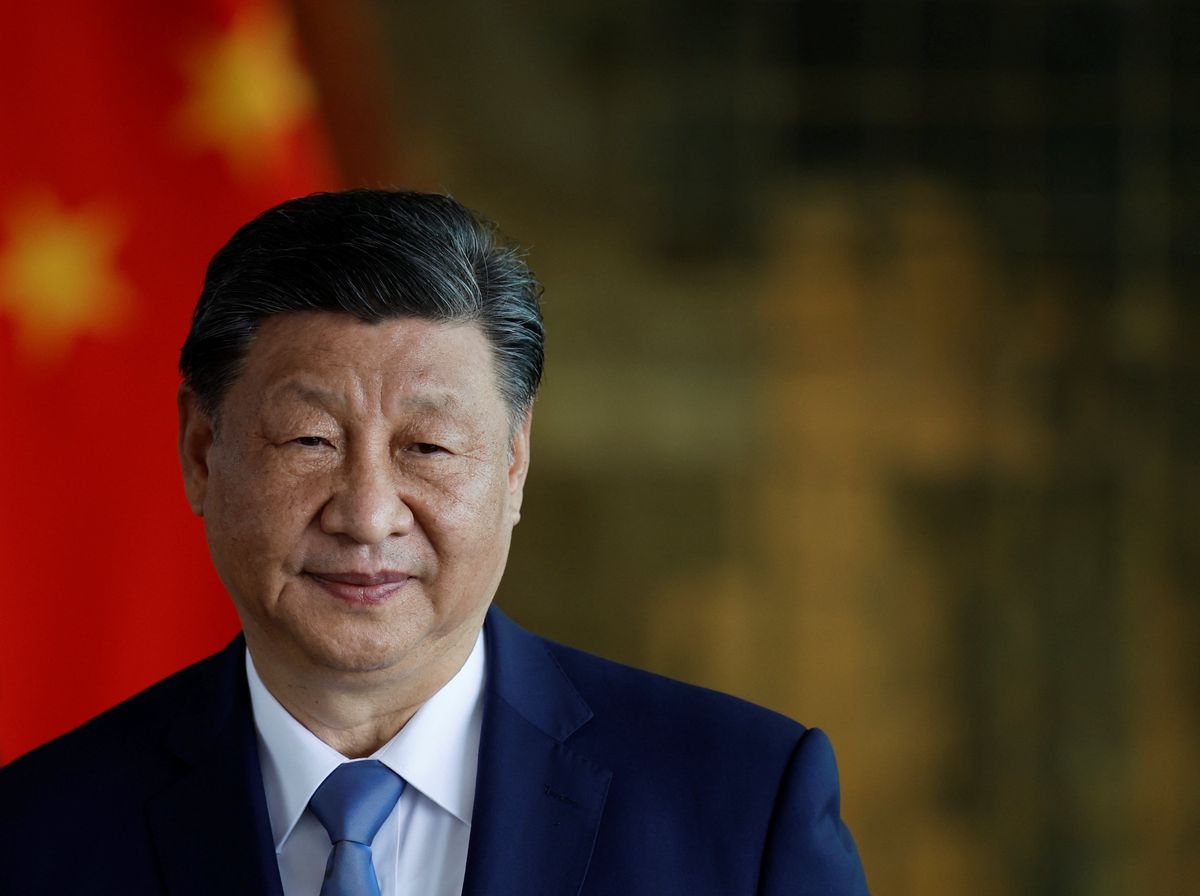
China's President Xi Jinping attends a meeting with Brazil's President Luiz Inacio Lula da Silva, in Brasilia, Brazil November 20, 2024. REUTERS/Adriano Machado
The conservative Wall Street Journal editorial board, after months of warning, has had enough of Trump's tariff scheme — and is putting out a clear message to the administration: You're now making China great again.
Trump’s tariffs are poised to "change the world order in many ways," the board said. And "one winner is already emerging" — Xi Jinping, the autocratic ruler of China, who had an "excellent week."
Trump is poised to tank the U.S. economy and drive many American allies right into China's arms.
"This is only partly a story about the retaliatory measures Beijing announced Friday following Wednesday’s 'Liberation Day' performance at the White House. China will impose a blanket 34% tariff on imports from the U.S. starting next week, matching Mr. Trump’s latest addition to his tariffs on China," wrote the board. "Beijing also added a couple dozen U.S. companies to various regulatory blacklists subject to trade, investment or export restrictions. Mr. Xi is slapping export controls on several rare-earth minerals critical for high-tech manufacturing. Oh, and a smattering of regulatory investigations for antidumping and the like are brewing, targeting American firms."
This all comes at a moment, the board wrote, when China's economy was teetering, its real estate market was in shambles, and it looked like all America had to do to win the rivalry was let events unfold.
"Mr. Xi must believe he will have no problem finding other sources for critical imports, especially since the U.S. is punishing the rest of the world with tariffs," said the board. "Meanwhile, China’s authoritarian system means Mr. Xi probably can ride out whatever political or social pain might result from higher unemployment or slower economic growth in a trade war. Congressional Republicans have to face voters in 18 months following whatever fallout comes from Mr. Trump’s tariffs. It’ll help that Mr. Xi can rally nationalist sentiment against the U.S."
Ultimately, the board concluded, Trump is only proving Xi's greatest hopes of the West's vulnerability.
"Mr. Xi and his Communist comrades have long believed the West is weak, divided and in retreat," the board concluded. "He will see this week as confirmation, and he won’t have to do much to exploit those divisions."
Matthew Chapman
April 4, 2025
RAW STORY
China's President Xi Jinping attends a meeting with Brazil's President Luiz Inacio Lula da Silva, in Brasilia, Brazil November 20, 2024. REUTERS/Adriano Machado
The conservative Wall Street Journal editorial board, after months of warning, has had enough of Trump's tariff scheme — and is putting out a clear message to the administration: You're now making China great again.
Trump’s tariffs are poised to "change the world order in many ways," the board said. And "one winner is already emerging" — Xi Jinping, the autocratic ruler of China, who had an "excellent week."
Trump is poised to tank the U.S. economy and drive many American allies right into China's arms.
"This is only partly a story about the retaliatory measures Beijing announced Friday following Wednesday’s 'Liberation Day' performance at the White House. China will impose a blanket 34% tariff on imports from the U.S. starting next week, matching Mr. Trump’s latest addition to his tariffs on China," wrote the board. "Beijing also added a couple dozen U.S. companies to various regulatory blacklists subject to trade, investment or export restrictions. Mr. Xi is slapping export controls on several rare-earth minerals critical for high-tech manufacturing. Oh, and a smattering of regulatory investigations for antidumping and the like are brewing, targeting American firms."
This all comes at a moment, the board wrote, when China's economy was teetering, its real estate market was in shambles, and it looked like all America had to do to win the rivalry was let events unfold.
"Mr. Xi must believe he will have no problem finding other sources for critical imports, especially since the U.S. is punishing the rest of the world with tariffs," said the board. "Meanwhile, China’s authoritarian system means Mr. Xi probably can ride out whatever political or social pain might result from higher unemployment or slower economic growth in a trade war. Congressional Republicans have to face voters in 18 months following whatever fallout comes from Mr. Trump’s tariffs. It’ll help that Mr. Xi can rally nationalist sentiment against the U.S."
Ultimately, the board concluded, Trump is only proving Xi's greatest hopes of the West's vulnerability.
"Mr. Xi and his Communist comrades have long believed the West is weak, divided and in retreat," the board concluded. "He will see this week as confirmation, and he won’t have to do much to exploit those divisions."
By AFP
April 4, 2025

US agricultural exports are poised to be hard-hit if Washington and Beijing move forward with steep new tariffs, analysts say - Copyright AFP/File Johannes EISELE
Beiyi SEOW
US agricultural exports, fuels and manufactured goods are set to take a hit from China’s blanket retaliation against President Donald Trump’s sharp tariffs, with both sets of measures due to take effect next week.
After Trump announced a 34-percent new tariff on imports of Chinese goods — taking the added rate imposed this year to 54 percent — Beijing said it would slap an equivalent across-the-board tariff on US goods, among other countermeasures.
China used to target specific industries in a “mirror response” to US export restrictions, said Emily Benson of consulting firm Minerva Technology Policy Advisors.
But its broader plan unveiled Friday marks a “pretty significant warning shot” to the Trump administration to hold off further measures, she told AFP.
What is the state of US-China trade, and what US sectors stand to be impacted?
– US exports –
The United States exported $144.6 billion in goods to China in 2024, much less than the $439.7 billion it imported, Commerce Department data shows.
Among its exports, key sectors include electrical and electronic equipment and various fuels, alongside oilseed and grains.
But China likely has more confidence to retaliate this time compared with Trump’s first presidency, when he engaged in a tit-for-tat tariff war with Beijing.
“While the US is still obviously a very important market, fewer firms are now existentially dependent on US suppliers,” said Lynn Song, ING chief economist for Greater China.
She added that Beijing has also made efforts towards technological self-sufficiency.
– Agricultural goods –
“US farmers will bear a heavy burden,” said Asia Society Policy Institute vice president Wendy Cutler.
Their agricultural exports to China could “become too expensive to be competitive” with Beijing’s added tariffs, she told AFP.
Soybeans, oilseeds and certain grains were a key US export to China, amounting to $13.4 billion last year, US trade data showed.
“China bought 52 percent of our (soybean) exports in 2024,” said American Soybean Association chief economist Scott Gerlt.
Given the size of its purchases, China cannot easily be replaced, he told AFP.
Soybean prices plunged on Friday’s news.
– Fuels, machinery –
China also imported $14.7 billion of various fuels and oils from the United States last year.
Tariffs could impact the oil and gas industry in states like Texas, which alongside Louisiana saw such exports to China surge in 2023, said a US-China Business Council report.
And the US exported some $15.3 billion in electrical machinery to China last year, official trade data showed.
But semiconductor shipments have faltered on expanding US export controls on advanced tech.
– Chips impact –
Besides tariffs, China has restricted exports of rare earth elements and taken action against US firms — including drone companies and those in the defense and aerospace sectors.
“China controls about 69 percent of rare earth element mining. They also control about 90 percent of refining,” said Benson of Minerva Technology Policy Advisors.
“That’s going to probably be a chokepoint moving forward,” she added. This could affect semiconductor manufacturing, magnets, optics and lasers.
“Some of these are targeted, of course, at chips,” she said.
With Washington and Beijing turning to a growing range of tools in their conflict, Benson warned that the US “is relatively exposed to these Chinese controls” without an industrial policy response providing “a major cash infusion to scale up domestic production.”

No comments:
Post a Comment