Saturday, April 19, 2025


Developing Waterway Cruises in Northern Canada
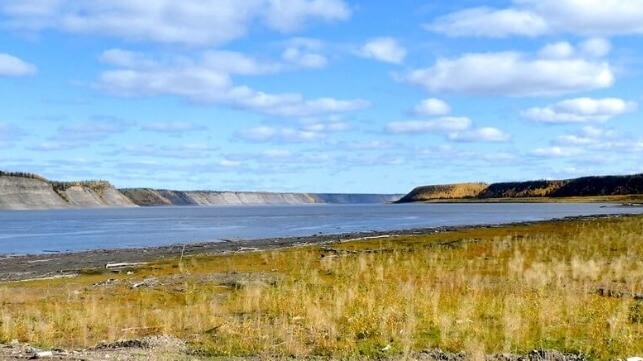
The Mackenzie River near Thiigehtchic (SF-DVS / CC BY 2.0)
The Mackenzie River near Thiigehtchic, 150 miles inland from the Beaufort Sea (SF-DVS / CC BY 2.0)

Published Apr 17, 2025 1:41 PM by Harry Valentine


Trump’s tariffs have elicited a backlash from Canadian tourists, who now choose to visit domestic attractions. The shift has opened the door to evaluate prospects to develop cruises that sail mainly in Canadian waters, including along shallow waterways and bodies of water where tourist cruise operations are presently absent. At present, cruise ships that carry guests on Arctic cruises, sail from the Port of Churchill on Hudson Bay. While most of the guests travel by air from Montreal to the airport at Churchill to board the ship, there is passenger railway service between Winnipeg and Churchill.

The precedent of Port of Churchill serving as a cruise ship terminal allows development of cruise tourism from other northern Canadian ports. Shallow draft river cruise ships that sail along European waterways would be an option to sail along Canada’s shallow Mackenzie River. However, extreme shoaling along some sections some northern Canadian waterways would require operation of a vessel capable of sailing in shallower water than the European river cruise design.

Precedents

Tug-propelled freight barges have sailed along the shallow Mackenzie River in northwestern Canada for decades, including into the Beaufort Sea and east toward Amundsen Gulf and Coronation Gulf. Such barges have also sailed on Hudson Bay, including along the navigable Chesterfield Inlet to the Hamlet of Baker Lake (pop. 2,000). The barges measured 450-feet length by 50-feet width, or very slightly larger than a European river cruise ship, and provide the basis to develop cruise vessels capable of sailing along shallow waterways such as the Mackenzie River, Slave River and Peace River in northwestern Canada.

Waterways

The Mackenzie River is navigable from the Beaufort Sea to Great Slave Lake, where the City of Yellowknife (pop. 20,000) has an airport and dock facilities. Duplicating the precedent at Churchill, guests interested in sailing aboard a river cruise from Yellowknife would arrive at the local airport from numerous other Canadian airports. Shallow water depth occurs along some sections of the Mackenzie River, requiring the cruise vessel to elevate in the water to transit shallow sections. There might be scope for the vessel to navigate the Slave River between Lake Athabasca and Great Slave Lake.

Arctic ice conditions during summer would determine as to whether a cruise vessel would be able to sail the extended voyage between the Beaufort Sea and Hudson Bay, sailing from Yellowknife to Port of Churchill. The sailing distance between Yellowknife and the Hamlet of Tuktoyaktuk (pop. 1,000) on the Beaufort Sea is equivalent to the Alaska cruise from Vancouver to Juneau. A cruise between Yellowknife and Churchill would likely involve a month of sailing, with stops at northern hamlets to allow guests to make extended visits to communities located north of the Arctic Circle.

Hudson Bay

A passenger train service connects Toronto to the Village of Moosonee, located on Moose River in the southwestern corner of James Bay. The shallow waters of the Moose River would allow for a river cruise ship or modified Mackenzie River barge to approach the village. A water taxi might need to shuttle guests from a dock at the village to a floating dock, to allow guests to board the cruise vessel. Once underway, the vessel could sail across Hudson Bay and to stop at Port of Churchill and other coastal villages including Baker Lake (pop. 2,000).

A large shallow draft vessel sailing from Moosonee might connect with a large cruise ship at the Port of Churchill, to allow for a transfer of passengers. Both a modified river cruise ship or a modified Mackenzie River barge rebuilt into a cruise vessel would be able to sail through the gentle summer wave conditions on James Bay and Hudson Bay. Such a cruise vessel would be able to sail to both Yellowknife and Moosonee. There would be scope to sail freight barges capable of elevating in shallow water, between Churchill and Moosonee.

Conclusions

As a result of the tariffs, Canadian are choosing to remain in Canada during their vacations, including booking passage aboard cruise vessels that sail in Canadian waters and visit Canadian destinations. There is now likely a market for cruise service along the Mackenzie River and on Hudson Bay.

The opinions expressed herein are the author's and not necessarily those of The Maritime Executive.


Norway Adopts Zero-Emissions Requirements for World Heritage Fjords
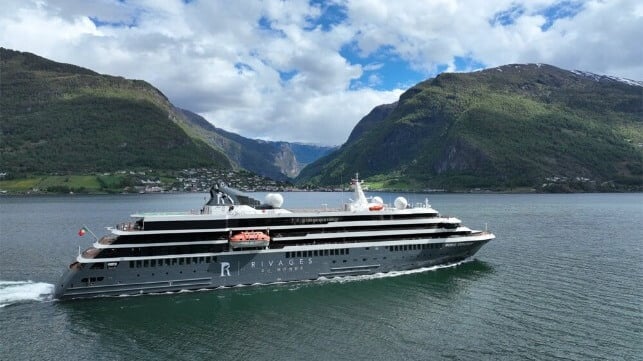
cruise ship Norwegian fjord
Smaller cruise ships (under 10,000 GT) and ferries are required to sail with zero emissions starting in 2026 (Port of Flam)

Published Apr 16, 2025 3:33 PM by The Maritime Executive


The Norwegian Storting (Parliament) has confirmed the requirements and schedule for the regulations to move passenger and ferry shipping to zero emissions while sailing within the country’s World Heritage fjords. The first phase is set to start in 2026 and progress as technology becomes available for larger ships to sail with zero emissions.

The process of developing the regulations began in 2018 with the Norwegian Maritime Authority. Implementation however has been delayed as they worked to define the scope of the regulations and waited for technology to advance to the level required to maintain shipping while achieving the goals.

“The process of developing zero-emission requirements for the World Heritage fjords has been long and demanding, both for the industry and for the Norwegian Maritime Authority,” said Alf Tore Sørheim, Director General of Shipping and Navigation. “Now that new provisions have been adopted, it is important to highlight that they provide the clarity the industry has long awaited. This ensures predictability and offers the opportunity to comply with the requirements.”

The first phase is just eight months away. As of January 1, 2026, passenger ships of less than 10,000 gross tons will have to meet the zero-emission requirement for the World Heritage fjords, which include Geirangerfjorden, a primary destination for the cruise industry, as well as Nærøyfjorden, Aurlandsfjorden, Sunnylvsfjorden and Tafjorden. All passenger ships, including ferries, must meet the requirement, but for larger ships of 10,000 gross tons and above it will be phased in with the requirement to sail with zero emissions as of January 1, 2032.

The Minister of Climate and Environment, Andreas Bjelland Eriksen, describes the legislation as a significant breakthrough for the World Heritage fjords. It is a key step in Norway’s overall sustainability programs and a commitment to the tourism industry.

The authorities note that the zero-emission requirement is technology-neutral and does not prescribe specific solutions. It is up to the operators in the World Heritage fjords to use energy sources that do not emit carbon dioxide (CO?) and methane (CH?). However, when such energy sources are used, there are requirements for greenhouse gas emission reductions, in accordance with the EU regulatory framework.

As part of the final test of the regulation, the government determined that passenger ships may use biogas as an alternative fuel, but that when biogas is used as an alternative fuel, it must be kept separate from fossil fuels until it is bunkered. In addition, the biogas must be bunkered within the final month before the ship enters the World Heritage fjords, and the amount bunkered must correspond to the amount expected to be used during the voyage through the fjords. Biogas sourced from the gas grid, accompanied by a certificate based on a mass balance system, does not meet the requirements for operating in the World Heritage fjords.  

It also includes a requirement that ships must use shore power where available. The Storting also agreed to create shore-side electricity in the city of Flåm. It is allocating NOK 100 million ($9.5 million) in support of a shore power project.

Norway is at the forefront of developing technologies including batteries for its ferries as well as alternative fuels. In 2022, coastal ship operator Havila ran the first demonstration of a passenger ship operating solely on batteries in Geirangerfjord. Competitor Hurtigruten has also released its concept designs for a zero-emission passenger ship.




Submarine Designers' Union Approves Strike at Electric Boat

The future Columbia-class ballistic missile submarine (General Dynamics)
The future Columbia-class nuclear ballistic missile submarine (General Dynamics)

Published Apr 17, 2025 3:13 PM by The Maritime Executive


The draftsmen's union at General Dynamics Electric Boat has voted to authorize a strike if the company can't provide higher wages and benefits in its next contract. If carried out, the strike would further slow progress on the Columbia-class nuclear ballistic missile submarine, a multibillion-dollar program that is already behind schedule and over budget.

UAW Marine Draftsmens' Association Local 571 represents the 2,500 workers who draw up schematics and plans for sub construction at GD Electric Boat, one of the two firms in the United States that can build nuclear-powered submarines. Electric Boat holds contracts for the Columbia-class and the next generation of the Virginia-class attack sub, two of the Navy's highest-priority programs. Columbia is needed to replace the aging Ohio-class as the platform for the nation's at-sea nuclear deterrent, the most survivable second-strike option in the arsenal. The UAW MDA's members did the detail design for Columbia, and they produce the plans for construction. 

GD Electric Boat emphasizes that "our nation needs submarines now more than any time in our history," and says that it has already made its best and final offer to the union. This includes a pay raise of 23 percent and certain retirement package improvements. 

The union, however, says that the wage increase doesn't go far enough to offset recent inflation, and that a proposed hike in employees' insurance premiums would further erode the gains in the package. Meanwhile, the union says that Electric Boat has kept profits totaling $13 billion over 2022-2024 - more than the price of one Columbia-class hull. 

"This company has a simple choice. They can get back to the table and get serious about the demands, or they can keep messing around," said UAW President Shawn Fain in an address to 1,200 Local 571 members on Monday. 

At the meeting, rank and file union members voted to authorize a strike, and approved the motion by a margin of about two-thirds. The union leadership will keep working on negotiations with GD Electric Boat, but now has the power to start industrial action if the talks do not produce results. 

On the same day as the meeting, Electric Boat filed a complaint with the National Labor Relations Board, alleging that the union is refusing to bargain or is bargaining in bad faith.


Stand up for NOAA research — the time to act is now


A statement of the American Meteorological Society in partnership with the National Weather Association


American Meteorological Society

AMS logo 

image: 

American Meteorological Society logo

view more 

Credit: American Meteorological Society


The American Meteorological Society (AMS), in partnership with the National Weather Association (NWA), today released a statement regarding the proposed elimination of NOAA Research. The full statement can be found here. It reads, in part:

The administration's 2026 budget passback plan, currently under consideration, eliminates NOAA's Oceanic and Atmospheric Research (OAR) Office and its 10 research laboratories and 16 affiliated Cooperative Institutes, and moves the few remaining research efforts to different NOAA departments. If enacted, the passback would close all of NOAA’s weather, climate, and ocean Laboratories and Cooperative Institutes. 

The speed at which these decisions are being made translates into little to no opportunity for feedback or consideration of long-term impacts. Without NOAA research, National Weather Service (NWS) weather models and products will stagnate, observational data collection will be reduced, public outreach will decrease, undergraduate and graduate student support will drop, and NOAA funding for universities will plummet. In effect, the scientific backbone and workforce needed to keep weather forecasts, alerts, and warnings accurate and effective will be drastically undercut, with unknown — yet almost certainly disastrous — consequences for public safety and economic health. As key stakeholders, AMS and NWA stand ready to provide our expertise so that the U.S. can maintain its competitiveness in the years ahead.  

If you believe in the importance of NOAA research for maintaining and improving NWS forecasts and services to the nation then the time to act is now. Reach out to your elected representatives and share your concerns.

To envision the disastrous impact of this plan, one only needs to see what NOAA research has provided to the U.S. taxpayer and imagine where we would be without it. For example, the work of NOAA Research Labs and Cooperative Institutes:

  • Sparked and developed our national Doppler radar network. NOAA research proved that Doppler weather radars are critical for severe thunderstorm warnings. This research led directly to the creation of the national Doppler weather radar network, which provides the radar observations you see on television and on your phone, and which meteorologists use to keep you safe during hazardous and severe weather. The next generation of weather radar is now being developed in the same laboratories.
  • Feeds National Weather Service forecasts. NOAA research created and continuously improves the two computer weather models used by the National Weather Service to generate hourly and daily weather forecasts. One model focuses on predicting severe weather and is used extensively by the transportation and energy sectors. Another model predicts global weather patterns across the world for the 3- to 14-day range, with forecast outlooks used by farmers, ranchers, and water managers.   
  • Helps us respond to hurricanes. The NOAA Hurricane Hunter aircraft that fly into Atlantic Ocean hurricanes collect essential observations to improve forecasts of hurricane landfall location and intensity, leading to better evacuation decisions and emergency response. This directly impacts public safety during extreme weather events.
  • Helps us track airborne hazards. NOAA research developed and continuously improves models to track the release of hazardous materials, including toxins, wildfire smoke, and volcanic ash, to keep people out of danger–as well as creating specialized instruments to detect those airborne hazards. 
  • Keeps water treatment plants on track. NOAA implemented and operates a lake hypoxia warning system to help keep drinking water potable in the Great Lakes region.
  • Warns communities of tsunamis. NOAA researchers developed and maintain the real-time tsunami monitoring system that plays a critical role in tsunami forecasting and helps keep coastal communities safe. 
  • Helps farmers and managers plan. NOAA created and runs an El-Niño information system to assist in seasonal forecasting of temperature and rainfall across the U.S. This helps farmers, ranchers, water managers, and electric utility companies make better decisions.
  • Keeps water supplies more secure. NOAA research developed and continuously advances water information systems to better manage large reservoirs that supply water to towns, cities, and farmers across the nation.
  • Addresses climate change. NOAA research has developed and improved climate models, the U.S. Climate Reference Network, and monitoring stations to learn about our changing climate and its causes.

Imagine what will happen to tornado and severe thunderstorm warnings if we don’t have a robust national weather radar network? What will happen to reservoir management when critical information on rainfall and runoff goes missing? What will happen when Hurricane Hunter aircraft are delayed or data from their instruments are not available to improve hurricane track and landfall forecasts? NOAA research affects the lives of American taxpayers every day. It is vital to the work of the National Weather Service and the NOAA mission to predict the environment and share that information with businesses, communities, state and local governments, and citizens.  

NOAA Research costs every American citizen less than a cup of coffee a year, with large returns on this small investment. This is a prime example of effective government — one that helps grow the economy and keeps people safe.

The statement urges readers to contact their elected representatives. Read the full statement.

About the American Meteorological Society

The American Meteorological Society advances the atmospheric and related sciences, technologies, applications, and services for the benefit of society. Founded in 1919, AMS has a membership of around 12,000 professionals, students, and weather enthusiasts. AMS publishes 12 atmospheric and related oceanic and hydrologic science journals; sponsors more than 12 conferences annually; and offers numerous programs and services. Visit us at https://www.ametsoc.org/.

About the National Weather Association

The National Weather Association, founded in 1975, connects approximately 1,300 members from the fields of meteorology, hydrology, broadcasting, emergency management, academia, and students. The NWA's mission is to foster excellence in service to the public through weather forecasting, communication, and service by bringing together professionals from the operational meteorological community and related fields. nwas.org.


AMERIKA

Millions could lose no-cost preventive services if SCOTUS upholds ruling


Stanford University


A study by the Stanford Prevention Policy Modeling Lab (PPML) finds that almost 30% of privately insured individuals in the United States, or nearly 40 million people, use at least one of the free preventive health services guaranteed under the Affordable Care Act (ACA).

But those services are now under threat by an ongoing legal challenge.

On April 21, the Supreme Court will hear arguments in Kennedy v. Braidwood Management Inc. to decide whether to uphold the ruling from a Texas district court that the ACA preventive services mandate was unconstitutional.

The ACA requires that private insurers cover specific preventive services at no cost to patients, such as blood pressure, diabetes and cholesterol tests, and cancer, HIV and hepatitis C virus screenings. One set of services mandated for no-cost coverage follows recommendations from the U.S. Preventive Services Task Force (USPSTF), which bases these recommendations on strong evidence of effectiveness in improving health through prevention and early detection of disease. The legality of mandating USPSTF-recommended services is the focus of the current case.

Who Uses Preventive Services?

The PPML team from Stanford School of Medicine and Harvard T. H. Chan School of Public Health looked at claims data from privately insured individuals in the United States, state by state. They determined how many people received, at no cost, any of the 10 services most likely jeopardized by Braidwood.

The study published in JAMA Health Forum found that almost 30% of privately insured individuals, and almost half of privately insured women, use at least one of the 10 services at no cost. They found that 13 states have at least 1 million recipients of these free services—including 3 million (30%) people in Texas, where the case originated.

“Preventive services are essential health care. Eliminating guaranteed free access to these services would likely lead to lower use of evidence-based screening and treatment interventions, and worse health outcomes,” said Josh Salomon, PhD, a professor of health policy and director of the Stanford PPML, and senior author on the study.

The Threat to Preventive Services

previous study indicated that around 150 million U.S. individuals in the have employer-sponsored insurance that makes them eligible for the free services mandated under the ACA. Another study looked at five services potentially affected by Braidwood and estimated that 10 million people received those services. The new Stanford-led study is the most detailed and comprehensive analysis to date on the potential reach of a Braidwood decision, looking at a broad array of jeopardized services and including analysis of who receives these without cost-sharing.

In the Braidwood case, a key part of the Supreme Court’s decision will be to evaluate the claim that the mandated coverage of USPSTF-recommended services violates the Appointments Clause of the Constitution, which declares that “officers of the United States” be appointed by the President and then confirmed by the Senate. The USPSTF health experts who recommended the preventive services are not appointed by the President. In the original Texas case, the plaintiffs also asserted that the federal mandate to cover HIV prevention medication violated their religious rights.

The Stanford study focused on a cohort of 16.1 million employee-sponsored health insurance enrollees in the MarketScan database, representing 130.9 million enrollees nationwide. The team identified preventive services most likely to be impacted by Braidwood due to having new or revised USPSTF recommendations since enactment of the ACA. The services included statin use to prevent cardiovascular disease, pre-exposure prophylaxis for HIV, medication to reduce breast cancer risk, and new or expanded screenings for breast cancer, cervical cancer, colorectal cancer, lung cancer, hepatitis B virus infection, hepatitis C virus infection, and HIV infection. Among the 39.1 million individuals nationally who received any of these services without cost-sharing, the most widely used services were screenings for cervical cancer and hepatitis C virus and HIV infections.

“The ACA preventive services mandate has been consistently popular in public opinion polls,” the researchers said in their study.

“The decision in this case will be important for millions of people with private insurance, across all states, who are currently benefiting from free preventive services thanks to the ACA mandate,” said lead author of the study, Michelle Bronsard, MSc, a research fellow at the Stanford Institute for Economic Policy Research (SIEPR) and incoming PhD student at Stanford Health Policy.

The other PPML members and co-authors of the study were Adrienne Sabety, PhD, assistant professor of health policy at Stanford and a SIEPR faculty fellow; Minttu Rönn, PhD, a research scientist at the Harvard T.H. Chan School of Public Health; and Nicole Anne Swartwood, MSc, a research analyst at the Harvard T.H. School of Public Health.


Study details role of protein that may play a key role in the development of schizophrenia


The rodent experiment, conducted at the State University of Campinas, highlighted the involvement of the hnRNP A1 molecule in maintaining the integrity of the myelin sheath – a fatty layer that protects neurons and facilitates communication between them


Fundação de Amparo à Pesquisa do Estado de São Paulo


Research published in the Journal of Neurochemistry has detailed the role of a protein, hnRNP A1, in the formation and stability of myelin, suggesting an important impact on neurodegenerative diseases and mental disorders such as multiple sclerosis and schizophrenia. The findings pave the way for new research and potential treatments.

Myelin is a fatty substance produced by oligodendrocytes (cells of the central nervous system) that forms a sheath, like a kind of “insulator.” It “protects” the extensions of neurons (axons) and increases the conduction speed of nerve impulses that carry information between neural cells. Scientific literature has shown that patients with multiple sclerosis and schizophrenia lose myelin (called demyelination), leaving part of the axons “unplugged” and causing damage to brain function.

This rodent study examined changes in proteins essential for myelin production (myelination). The results highlight the involvement of hnRNP A1 in maintaining the integrity of this protective sheath.

hnRNP A1 regulates the processing of messenger RNA, i.e., it controls how the molecule is cut and assembled (splicing), thereby determining which proteins are produced and in what amounts. Studied for years by this group of scientists at the State University of Campinas (UNICAMP), in the state of São Paulo, Brazil, hnRNP A1 had already figured prominently in previous research carried out on brain tissue from people with schizophrenia and on cells grown in the laboratory.

“When I was a master’s student, I worked with oligodendrocyte predecessor cell lines and their responses to antipsychotics. This protein, hnRNP A1, always appeared. We decided to try to understand its role in oligodendrocytes. But to do this, we had to use an animal model to induce myelination and understand the process,” explains Caroline Brandão Teles, first author of the article and FAPESP doctoral fellow at the Institute of Biology (IB-UNICAMP).

For researcher Fernanda Crunfli, also from IB-UNICAMP and corresponding author of the paper, myelin has been an important target of study for neuropsychiatric diseases.

“We were able to analyze the demyelination process in the animals and then restore the myelin sheath. This allowed for an interesting study window. We did behavioral tests to assess locomotion, short- and long-term memory, and social interaction. When the myelin is restored, all these functions return to the brain,” says Crunfli, who was a FAPESP postdoctoral fellow.

Teles points out that this was one of the results that caught the group’s attention – the fact that the changes were detected at the molecular level, without affecting the animals’ behavior.

“With this molecular and non-behavioral alteration, the work has the interesting potential to pinpoint an important protein in the establishment of schizophrenia. This same animal model is analyzed in research on multiple sclerosis, for example, and when there’s a behavioral study, changes are noted. In the case of schizophrenia, the fact that the behavior isn’t altered indicates, in my opinion, that this protein is essential in the development of the disease and may have an influence on its genesis,” Professor Daniel Martins-de-Souza, from IB-UNICAMP, Teles’ supervisor and head of the Neuroproteomics Laboratory, told Agência FAPESP.

Schizophrenia is a mental disorder characterized by loss of contact with reality (psychosis), hallucinations, delusions, and impaired cognition, among other symptoms. The exact cause is still unknown, but recent research suggests a combination of hereditary factors and molecular and functional alterations in the brain. Treatment includes antipsychotic medications and psychotherapy.

It is estimated that approximately 1.6 million people in Brazil have schizophrenia. Worldwide, the prevalence is about 1% of the world’s population.

For years, Martins-de-Souza’s research group has been working to understand the role of oligodendrocytes in schizophrenia and has managed to map a series of brain proteins that help to unravel the molecular basis of the disorder (read more at: agencia.fapesp.br/36053).

To understand the research

The group used a rodent (murine) model that has also been studied in cases of multiple sclerosis, a disease characterized by severe demyelination.

From the eighth week of the experiment, demyelination was induced and continued for another five weeks. The process was then interrupted and the myelin sheath was restored. During this time, the researchers analyzed the activity of hnRNP A1. “We saw that the proteins linked to myelin in these animals were all reduced. By disrupting the activity of this protein [hnRNP A1], we ended up disrupting myelination,” says Teles.

The scientists believe that studying the impact of the protein’s alterations on synaptic transmission and cognitive processes could reveal new therapeutic targets.

In addition to the grants, the research was also supported by FAPESP through six other projects (17/25588-119/05155-918/01410-123/08885-318/01669-5 and 23/11514-7).

About FAPESP

The São Paulo Research Foundation (FAPESP) is a public institution with the mission of supporting scientific research in all fields of knowledge by awarding scholarships, fellowships and grants to investigators linked with higher education and research institutions in the state of São Paulo, Brazil. FAPESP is aware that the very best research can only be done by working with the best researchers internationally. Therefore, it has established partnerships with funding agencies, higher education, private companies, and research organizations in other countries known for the quality of their research and has been encouraging scientists funded by its grants to further develop their international collaboration.


Research expands options for more sustainable soybean production


A group of scientists supported by FAPESP is studying a new strain of bacteria in consortium with rhizobia, microorganisms that biologically fix nitrogen, an essential nutrient for crops.


Fundação de Amparo à Pesquisa do Estado de São Paulo


Brazil is the world’s largest producer of soybeans and one of the reasons is the incorporation of bio-inputs, microorganisms that promote biological nitrogen fixation. Without this practice, this essential nutrient would have to be supplemented with fertilizer. By managing fertilizer use, Brazilian growers can save an estimated USD 15 billion per year.

The main bio-input used commercially today is bacteria of the genus Bradyrhizobium spp. (rhizobia). In a study supported by FAPESP, this strategy was combined with a new bacterial isolate (PGPR, which stands for plant growth-promoting rhizobacteria). The results were published in the journal Microbiology Ecology.

“We observed that there was greater growth and pod production in the plants, without the microorganisms introduced into the environment affecting the structure of the native microbial community,” says Leandro Fonseca de Souza, a biologist with a postdoctoral fellowship at the Laboratory of Microorganism Genetics at the Luiz de Queiroz College of Agriculture of the University of São Paulo (ESALQ-USP) in Brazil. “In addition, combining these microorganisms has the potential to contribute to the assimilation of phosphorus in the soil by the plant, another important nutrient supplemented by fertilization,” he adds.

Discovery

Bacillus thuringiensis RZ2MS9 was first isolated from the rhizosphere (the area where soil and plant roots come into contact) of Amazonian guarana (Paullinia cupanea, variety sorbilis) and has shown the potential to enhance the growth of soybean and corn in greenhouse and field trials.

This strain is capable of producing siderophores (important molecules for capturing nutrients from the environment), plant hormones, phosphate solubilization and biological nitrogen fixation in vitro. The strain belongs to the microorganism collection of the Microorganism Genetics Laboratory of ESALQ-USP, from which another isolate, Pantoea agglomerans strain ESALQ 33.1, recently gained prominence as a commercial bio-input, developed in a partnership between the company Bionat Soluções Biológicas and ESALQ-USP.

The study broke new ground by demonstrating that in-field application of the microorganism had little effect on the diversity of the soil’s natural potential functions. It also showed that even when functional diversity was affected, the effect was short-lived and lost at the end of a soybean production cycle. This further supports the environmental safety of using B. thuringiensis RZ2MS9 in co-inoculation with bio-inputs already on the market for soybean production.

About FAPESP

The São Paulo Research Foundation (FAPESP) is a public institution with the mission of supporting scientific research in all fields of knowledge by awarding scholarships, fellowships and grants to investigators linked with higher education and research institutions in the state of São Paulo, Brazil. FAPESP is aware that the very best research can only be done by working with the best researchers internationally. Therefore, it has established partnerships with funding agencies, higher education, private companies, and research organizations in other countries known for the quality of their research and has been encouraging scientists funded by its grants to further develop their international collaboration.