Monday, June 30, 2025


Mixed Outlook For The UN On Its 80th Birthday – OpEd
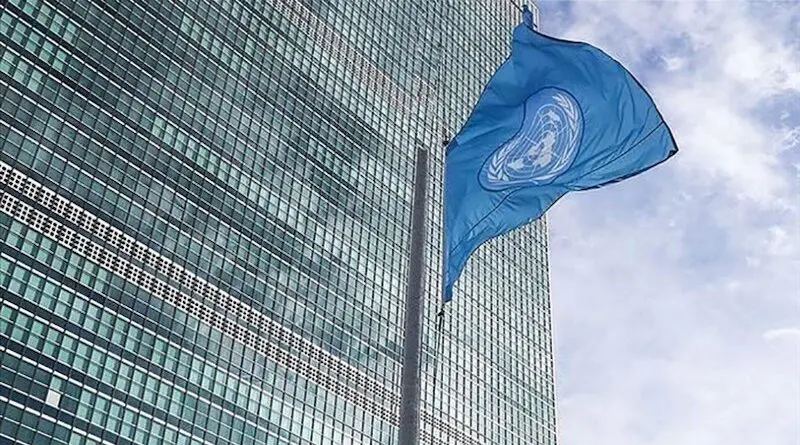
United Nations flag. Photo Credit: Tasnim News Agency

By 

By Andrew Hammond


The UN celebrated its 80th birthday on Thursday. But Secretary-General Antonio Guterres used the occasion to warn that its founding charter is under assault like never before.

The organization was created out of the trauma of the Second World War, with the UN Charter inked by an initial 50 states on June 26, 1945. It came into force later that year with the aim of trying to prevent future wars, while also upholding human dignity and equal rights.

Guterres warned on Thursday that “we see an all-too-familiar pattern: follow when the charter suits, ignore when it does not. The Charter of the United Nations is not optional. It is not an a la carte menu. It is the bedrock of international relations.”

Of course, countries regularly accuse each other of violating the charter. In recent years, Russia and Israel have been cited by the General Assembly for violating it in Ukraine and Gaza, respectively. Earlier this month, Iran accused the US of breaching the charter with its strikes on three of its nuclear facilities.

Yet, as many challenges as the world body now faces, its 80th birthday underlines that it continues to have resilience and legitimacy. This is despite growing concerns over its relevance in an increasingly contentious, fragmented world.


There is still widespread recognition that global challenges can best be tackled through international, coordinated action, often led by the UN. And despite the deep decay of the post-1945 order, the remaining postwar international institutions — with the UN at their heart — continue to have major relevance almost a century after their birth. While these bodies are imperfect and in need of significant reform, they have generally enabled international prosperity and security, especially with the two most powerful countries in the world today, China and the US, both being permanent members of the Security Council.

The UN’s continuing relevance underlines the wisdom of the critical mass of nations that decided, at that time, to try to change the course of history by committing to work together for peace. In the decades since the signing of the charter, the world body has worked unwaveringly for peace, dialogue and cooperation to promote human rights, the rule of law and sustainable development, as well as fighting climate change.

Given the overall success of the UN after three-quarters of a century, one of the many ironies of the current political era is the sea change in view of the US administration. The UN and fellow multilateral institutions such as the International Monetary Fund and World Bank were key parts of the postwar settlement championed by American presidents in the 1940s and which were subsequently cultivated on a bipartisan basis by successors of every stripe to bolster US global leadership during the Cold War and beyond.

Yet, today’s administration is widely viewed to be hastening the collapse of that same postwar order. This surprises many across the world, given that the post-1945 system has generally been so beneficial for Washington in terms of both soft and hard power.

President Donald Trump, unlike all his postwar predecessors in the White House, has disowned many of the US-led institutions and alliances, promising instead an “America First” platform. On his first day back in power in January, for instance, he signed an executive order withdrawing the US from the World Health Organization.

The UN is also concerned about the expected outcome of a US review of its participation in the UN and other multilateral institutions, which was ordered by Trump and is expected in August. More than 60 UN offices, agencies and operations that get money from the organization’s regular operating budget are already facing job cuts of about 20 percent — part of reforms made by Guterres due to the White House’s already-announced funding cuts and wider developments.

But dismantlement is one thing — building something new is another. Thus far, the administration is yet to forge any comprehensive new doctrine centered on its core vision. Indeed, there has often been policy incoherence, reflecting the president’s transactional style of governing.

However, it is not just the vacuum caused by a lack of US leadership in the UN that is contributing to the uncertainty surrounding both it and the wider erosion of the post-Second World War settlement in the volatile, uncertain, complex and ambiguous landscape of 2025. For there is also growing geopolitical angst, as shown by the current tensions in the Middle East and Ukraine, not to mention other conflicts such as those in Sudan, eastern Congo, Haiti and Myanmar.

What makes this so worrying for the UN and other proponents of international peace and security is that it comes on top of layers of previous turbulence in the international landscape. The multiple challenges now confronting the international order include the fact that Washington’s relations with China are at one of their lowest points in decades.

A fundamental driver of whether the UN will thrive, not just survive, in the coming years is the direction of the ties between the US and China, the two most powerful members of the UNSC. With the US exiting the WHO and cutting its funding to other UN agencies, China’s influence will increase.

Right now, the US-China relationship seems set for growing bilateral rivalry and what some see as a new cold war that could see international cooperation erode, including over technology and wider trade issues. Military tensions are also increasing, from the South China Sea outward.

However, there may still be unexpected potential for partnership at the UN and beyond. Bilateral cooperation, possibly in the era after the Trump presidency, is most likely if stronger partnerships can be embedded on issues like climate change, as during the Barack Obama and Joe Biden years, which may enable more effective ways of resolving hard power disputes.

  • Andrew Hammond is an associate at LSE IDEAS at the London School of Economics.

Arab News

Arab News is Saudi Arabia's first English-language newspaper. It was founded in 1975 by Hisham and Mohammed Ali Hafiz. Today, it is one of 29 publications produced by Saudi Research & Publishing Company (SRPC), a subsidiary of Saudi Research & Marketing Group (SRMG).


Iran Could Resume Uranium Enrichment Within Months, Says UN Nuclear Chief


International Atomic Energy Agency (IAEA) Director General Rafael Mariano Grossi. Photo Credit: Dean Calma / IAEA


By 

(RFE/RL) — Iran could resume producing enriched uranium within months despite significant damage inflicted on its nuclear facilities by recent US and Israeli air strikes, according to Rafael Grossi, the head of the UN’s nuclear watchdog.


“The capacities they have are there. They can have, you know, in a matter of months, I would say, a few cascades of centrifuges spinning and producing enriched uranium, or less than that,” Grossi told CBS News in an interview scheduled to air on June 29.

Grossi, who leads the Vienna-based International Atomic Energy Agency (IAEA), acknowledged that attacks on sites in Fordow, Natanz, and Isfahan had set back Iran’s capacity to convert and enrich uranium.

However, he cautioned: “Frankly speaking, one cannot claim that everything has disappeared and there is nothing there.”

“Iran is a very sophisticated country in terms of nuclear technology,” Grossi said. “So you cannot disinvent this. You cannot undo the knowledge that you have or the capacities that you have.”

Israel launched a bombing campaign against Iranian nuclear and military sites on June 13, stating its aim was to prevent Tehran from developing nuclear weapons — an objective Iran denies, insisting its program is solely for peaceful purposes.


The United States later joined the strikes, targeting three key facilities linked to Iran’s atomic program.

US President Donald Trump claimed on June 26 that Iran’s nuclear program had been set back “decades” and said he would consider further strikes if Iran resumed worrying levels of uranium enrichment.

On June 29, Trump told Fox News that Iran’s nuclear capabilities were “obliterated like nobody’s ever seen before. And that meant the end to their nuclear ambitions, at least for a period of time.”

Iranian Foreign Minister Abbas Aragchi confirmed that the damage to nuclear sites was “serious,” though details remain unclear.

A major unresolved issue is the fate of Iran’s stockpile of highly enriched uranium, enriched to 60 percent — above levels needed for civilian use but still below weapons grade. Iran is estimated to have had around 400 kilograms of this uranium.

“We don’t know where this material could be,” Grossi said. “So some could have been destroyed as part of the attack, but some could have been moved. So there has to be at some point a clarification.”

In his interview with Fox News, Trump indicated that he did not believe Iran had relocated its stockpile.

“It’s a very hard thing to do plus we didn’t give much notice. They didn’t move anything,” he said.

Meanwhile, Iranian lawmakers voted to suspend cooperation with the IAEA, and Tehran denied Grossi’s request to visit the damaged sites, including Fordow, Iran’s main uranium enrichment facility.

“We need to be in a position to ascertain, to confirm what is there, and where is it and what happened,” Grossi said.

Following calls in the hard-line Iranian Kayhan newspaper for the “arrest and execution” of the IAEA chief, US Secretary of State Marco Rubio said such statements were “unacceptable and should be condemned.”

“We support the IAEA’s critical verification and monitoring efforts in Iran and commend the Director General and the lAEA for their dedication and professionalism,” he said. “We call on Iran to provide for the safety and security of IAEA personnel.”

Iran’s ambassador to the United Nations, however, assured Grossi needs not to worry. In an interview with US broadcaster CBS, Amir Saeid Iravani said “there is not any threat” against the inspectors or the director general. “Inspectors in Iran were “in safe conditions,” he added.

Separately, French President Emmanuel Macron said he held a telephone conversation with Iranian President Masud Pezeshkian on June 29, telling him that Tehran’s best course of action was to return to the negotiating table and to allow resumption of the IAEA’s work in the country.


RFE RL

RFE/RL journalists report the news in 21 countries where a free press is banned by the government or not fully established.


France, Germany and UK condemn 'threats' against UN nuclear watchdog chief

France, Germany and Britain on Monday condemned "threats" against the head of the UN nuclear watchdog after Iran rejected its request to visit nuclear facilities bombed by Israel and the United States.


Issued on: 30/06/2025 - RFI

IAEA Director General Rafael Grossi with Austrian Foreign Minister Beate Meinl-Reisinger, at the Austrian Chancellery, in Vienna, Austria, 25 June, 2025. © Reuters/Lisa Leutner

Tehran has accused Rafael Grossi, head of the International Atomic Energy Agency, of "betrayal of his duties" for not condemning the Israeli and US strikes on Iran's nuclear sites, and Iranian lawmakers this week voted to suspend cooperation with the agency.

"France, Germany and the United Kingdom condemn threats against the director general of the IAEA Rafael Grossi and reiterate our full support to the agency," foreign ministers Jean-Noël Barrot, Johann Wadephul and David Lammy said in a joint statement.

"We call on Iranian authorities to refrain from any steps to cease cooperation with the IAEA," they added.

"We urge Iran to immediately resume full cooperation in line with its legally binding obligations, and to take all necessary steps to ensure the safety and security of IAEA personnel."

Excuse

On Friday, Iranian Foreign Minister Abbas Araghchi said on X that Grossi's insistence on visiting the bombed sites was "meaningless and possibly even malign in intent".

Iran has said it believes an IAEA resolution on 12 June that accused Iran of ignoring its nuclear obligations served as an "excuse" for the war that Israel launched on 13 June and that ended with a fragile ceasefire last week.

Iran nuclear sites suffered 'enormous damage', IAEA chief tells RFI

Argentina, Rafael Grossi's home country, has also slammed "threats" against him from Iran.

None specified which threats they were referring to, but Iran's ultra-conservative Kayhan newspaper recently claimed documents showed Grossi was an Israeli spy and should be executed.

Speaking to US broadcaster CBS on Sunday, Iranian ambassador to the United Nations Amir Saeid Iravani denied there was any threat to nuclear inspectors in Iran, insisting they were "in safe conditions" but their work was suspended.
Downplayed damage

Questions remain as to how much damage the US strikes did to Iran's nuclear programme, with President Donald Trump and his officials insisting it had been "obliterated".

On Sunday, however, The Washington Post reported that the United States had intercepted calls between Iranian officials who said the damage was less than expected.

That followed an early "low confidence" US military intelligence report that said the nuclear programme had been set back months, not years.

Israel has said Iran's programme was delayed by years, while Tehran has downplayed the damage.

The IAEA said Iran had been enriching uranium to 60 percent, far above the levels needed for civilian nuclear power, although Grossi previously noted there had been no indication before the strikes that Iran was working to build an atomic weapon.

On Saturday, Grossi told CBS Iran likely will be able to begin to produce enriched uranium "in a matter of months," despite damage.

Israel has maintained ambiguity about its own nuclear arsenal, neither officially confirming nor denying it exists, but the Stockholm International Peace Research Institute (Sipri) has estimated it has 90 nuclear warheads.

(with AFP)


‘Flying Money’ Scheme Aiding Trafficking In Wildlife, Other Illicit Resources

China Elderly Woman Market Seller


By 

The Chinese term fei chien, which translates to “flying money,” refers to an underground financial system with no paper trail that dates back to the Tang dynasty in the ninth century, when traders established a network to settle accounts without carrying coins over long distances.


The ancient Chinese scheme still exists today. Experts say it is the primary method of laundering immense amounts of cash linked to wildlife trafficking and the smuggling of illicit minerals and other natural resources. Traditional Chinese medicine is a leading driver of the illicit wildlife trade worldwide.

“Flying money is often used to denote Chinese money laundering or paying in-kind with a commodity instead of cash,” Vanda Felbab-Brown, a senior fellow with the Brookings Institution and an expert on international crime and terrorism, told conservation website Mongabay for a June 6 article.

Fei chien allows for the virtually untraceable transfer of huge sums of money. Transnational criminal networks use this shadowy system to launder money, pay traffickers and move illicit profits across borders while avoiding the conventional financial sector.

According to Andrea Crosta, Chinese brokers around the world help traffickers pool profits from the illegal trade of wildlife, timber, gold and drugs. Crosta is the founder and director of Earth League International, a nonprofit that works to monitor, investigate and dismantle these crime networks.

In fei chien, a broker in one part of the world receives money and transfers it to another agent in the network elsewhere who pays the same amount to the intended recipient. With Chinese brokers around the world and in their homeland connected to illicit trade, untraceable funds are transferred anonymously through or end up in China.


“The same crooks trafficking people, drugs and weapons are increasingly trafficking elephant ivory, tiger bones and many other natural resources,” Crosta wrote in a June 6 article for Mongabay. “That’s why I believe flying money is the greatest national security risk you’ve never heard of.”

Crosta sees fei chien as a critical component in what he calls “environmental crime convergence” — the growing connection between environmental crime and global organized crime.

“Studies estimate the annual value of environmental crime at between $110 billion and $281 billion, making it one of the most lucrative criminal economies in the world,” the Global Initiative Against Transnational Organized Crime (GI-TOC) stated in a 2023 report.

“Few of the proceeds of this market benefit the development of communities near the source markets but are instead transferred abroad and laundered into the global financial system.”

Internet-enabled smart devices have transformed how illicit exotic wildlife, timber, precious metals and other commodities are sold, with traders able to reach to a much wider audience over long distances and at little cost, GI-TOC said.

Money laundering through the fei chien system is key to the connection between multiple criminal enterprises.

“The menace has grown in recent years, fueled by underground Chinese networks equipped with new technologies that can enable dirty money to be washed clean in minutes,” according to a 2024 report in The Economist magazine. “For transnational criminal gangs, these shadowy ‘banks’ are becoming the financiers of choice.”

Crosta says one way to fight fei chien is to target the individuals, entities and countries with sanctions for facilitating financial crimes. This also would help restore legitimate government revenue from legal transactions. In Africa, that kind of response could save wildlife, ecosystems and tourism industries that are in danger.

“The only way to defeat a threat stretching from Asia to Africa is by working together,” he wrote.


Africa Defense Forum

The Africa Defense Forum (ADF) magazine is a security affairs journal that focuses on all issues affecting peace, stability, and good governance in Africa. ADF is published by the U.S. Africa Command.

 IMPERIALISM

India Tightens Hold Over Sri Lanka With Its Defence Ministry Acquiring Colombo Dockyard – Analysis

Sri Lanka's Colombo Dockyard. Photo Credit: Colombo Dockyard PLC

By 

With the acquisition of the Colombo Dockyard PLC (CDPLC) by the Indian Defence Ministry’s Mazagaon Dock Shipbuilders Ltd., (MDSL) last week, India’s position in Sri Lanka’s maritime domain vis-à-vis rival China, has been strengthened. 

\

Given Colombo port’s strategic location in the Indian Ocean, it has been eyed by regional powers India and China since 2010. And the competition has manifested itself in various forms.      

The Colombo Dockyard PLC(CDPLC) had been a joint venture of the Sri Lankan government and the Japanese Onomichi Dockyard Company Ltd., (Onomichi for short) since 1974. The CDPLC had been a success all along until the Sri Lankan financial crisis in 2022, when the country defaulted on its loans and its economy tanked. 

According to Lloyd’s List, the CDPLC had been a major asset as it was capable of handling vessels up to 125,000 dwt. It has serviced more than 200 ships annually. Even last year, the yard delivered two 5,000 dwt bulk carriers and was awarded contracts for four more, Lloyd’s List said. 

But 2023 proved to be a disastrous year for CDPLC. It registered a loss of Sri Lank ₨.11.1bn (U$ 38.2m). This was attributed to “poor performance in the shipbuilding sector and the economic crisis which saw exchange rates tumble and inflation skyrocket.” 

According to The Sunday Morning, requests made on behalf of the Japanese company for government intervention to curb the impact of debt servicing went unanswered. However, seeing the gravity of the situation, the government, at the end of 2024, began to search for a suitable partner to keep CDPLC going. 

\

But according to The Sunday Morning several “powerful nations were expressing concern” about which entities were wanting to acquire control of the port. Be that as it may, on its part, Onomichi’s condition was that it would sell its shares to “any strategic investor willing to commit to the CDPCL’s business.” 

Enter Mazagaon Dock Shipbuilders .

Last week, the Indian Defence Ministry-owned Mazagaon Dock Shipbuilders Ltd.,(MDSL) announced that it had acquired 51% of the stake in CDPCL previously held by Onomichi. According to Llyod’s List, the deal is worth US$ 52.96 million. 

This marked MDSL’s first international acquisition. “MDSL begins its transformation from a domestic shipbuilder to a regional maritime player with global ambitions. This move strengthens India’s regional maritime influence and expands MDSL’s global reach,” the company said in a social media post on X on June 27. 

The MDSL’s credentials are impressive. It has built 805 vessels since 1960, including 30 warships, ranging from advanced destroyers to missile boats as well as 8 submarines. For its Indian and global clientele, it has built cargo and passenger ships, supply vessels, multipurpose support vessels, water tankers, tugs, dredgers, fishing trawlers, and barges. MDL reported strong financial results in the third quarter of 2024, showing a net profit that had surged by 29% Year on Year.

Geopolitical Dimension 

India, which was already in the race to acquire control over Colombo port, had seized the opportunity created by Onomichi’s exit with alacrity, before China could seize it. 

After China got to set up a container terminal (the Colombo Container Terminal or CCT), India wanted to build and run the Eastern Container Terminal (ECT) and the Sri Lankan agreed to the proposal. But the decision to give it to India clashed with the policy of not giving ports to foreign counties. This caused tension with India especially because India saw the hidden hand of India in the controversy.

However, given India’s geopolitical heft, which was bigger thanb China’s, the project to build the Western Container Terminal (WCT) was given to the Indian group, the Adanis in 2021. 

In 2022, when Sri Lanka defaulted on replaying loans, India bailed the Sri Lankan government out by promptly giving aid to the tune of US$ 4 billion, while China was dragging its feet. With that New Delhi’s influence over Sri Lanka increased. 

In July 2023, a Joint statement issued at the end of Sri Lankan Prime Minister Ranil Wickremesinghe’s visit to New Delhi said that the two countries would ” cooperate in development of ports and logistics infrastructure at Colombo, Trincomalee and Kankesanthurai with an aim to consolidate regional logistics and shipping, as per mutual understanding.”

More importantly, the statement said that the two countries would “establish land connectivity between Sri Lanka and India for developing land access to the ports of Trincomalee and Colombo, propelling economic growth and prosperity in both Sri Lanka and India, and further consolidating millennia-old relationship between the two countries. A feasibility study for such connectivity will be conducted at an early date.”

However, in the December 2024, the joint communique issued after President Anura Kumara Dissanayake’s visit to New Delhi omitted the land connectivity part but spoke about cooperation in ensuring maritime security.

The December 2024 joint communicate said – “Recognizing shared maritime security interests in the Indian Ocean Region, both leaders agreed to jointly pursue strengthening regional maritime security, both bilaterally and through existing regional frameworks. In this regard, the leaders welcomed the recent signing of the Founding Documents of the Colombo Security Conclave headquartered in Colombo. India reiterated its support to Sri Lanka in advancing the objectives of the Conclave.” 

The omission of the land connectivity plan did not come as a surprise, as the National Peoples’ Power (NPP) government led by Dissanayake was expected to be cautious about agreeing to connectivity projects. The leaders of the NPP have had a long background of anti-Indian politics and were also ideologically pro-China.

But over time, the Dissanayake regime grasped the geopolitical power of India in the region and yielded to Indian sensitivities. In deference to India’s security concerns, the NPP government does not allow foreign oceanographic research vessels to do any work in Sri Lankan waters. Recently, the government disallowed the Food and Agricultural Organization’s research vessel Nansen, though it had requested a visit in 2023. The decision might have been, at least partly, due to the fact that India and Sri Lanka had formally agreed to cooperate in hydrographic surveys.


P. K. Balachandran

P. K. Balachandran is a senior Indian journalist working in Sri Lanka for local and international media and has been writing on South Asian issues for the past 21 years.