Wednesday, September 03, 2025

Plausible Parody: A ‘Property Development’ Theory of Geopolitics


Since resuming residence in the White House a few months ago, it has not been difficult to detect in President Trump’s behaviour traces of his background as a real estate deal maker. Indeed, it could be said that his statements and actions since becoming president demonstrate a clear predisposition to perceive geopolitics predominantly as an arena of opportunity for ‘property development’. ‘Property’ defined in a broad sense to include any high value natural resource, land, or other asset that can be turned into profit.

We argue that the acquisition of such assets by fair means or foul (mainly the latter) and/or the control of access (for example, waterways) to them are important features of the president’s megalomaniacal self-image as the world’s new colossus and that they have a determining influence on his view of geopolitics and hence on US foreign policy.

In some well-known cases, such as Palestine, President Trump has already expressed his interest explicitly in these terms.

Conveniently, and perhaps not coincidentally, the president’s predilections in these respects dovetail beautifully with the insatiable appetites of late-stage capitalism, which depends for its survival on the acquisition and consumption of ever-increasing quantities of ‘property’. You might say that it is a union made in oligarchic heaven.

Below, as plausible parody, we outline a Property Development Theory of Geopolitics (PDTG) as follows: first, we set out the criteria employed to identify target countries for property acquisition; and second, on the basis of those criteria, we draw up a property development country hit list, which reflects our best estimates of countries at risk of invasion or attack.

This list can be used to assess the predictive validity of our theory as measured by the vigour with which countries on the list are attacked militarily and in other ways by the US and/or its allies and proxies.

Country Assessment Criteria and Hit List

Countries that might be regarded as prime targets are identified in terms of the following criteria:

First, the richness of their natural resources (a sine qua non). Does the country have enough ‘property development’ potential to warrant and maintain the president’s attention?

Second, the ease with which the country can be demonised as a mortal threat to the ‘democratic way of life’ or as a terrorist haven, a source of refugees and/or drugs (etc.) and can therefore be made a ‘legitimate’ target for invasion or some other form of attack such as economic sanctions, targeted assassinations, and so on. This would enable the US to employ the tried and tested method of attacking the country concerned in order to save both its own people as well as the rest of the world, as was the case in Afghanistan and Iraq.

Third, the military strength of the country and whether proxy states or other agents such as mercenaries can be used to do the dirty work for the US.

Fourth, the degree to which the US government is subject to determining influences such as those exerted by Israel in relation to Palestine and Iran and/or strong pressure from major corporations and/or the target country has significant regional strategic significance.

We have excluded Russia and China from our list because they are military superpowers that would not be susceptible to conventional US imperial smash and grab methods involving direct military attack.

Neither have we included Ukraine. While undoubtedly asset rich, Ukraine’s notional status as a US ally and as the US/Nato proxy in the war with Russia largely exempts it from imperial smash and grab. It is conceivable also that the US will do an asset sharing deal with Russia and compel Ukraine and Nato to accept it.

The absence from our list of erstwhile US target favourites like North Korea and Cuba is explained by the paucity of their assets and their relatively high military strength and the absence of suitable proxies. Their political misbehaviour in the eyes of the US is punished by extensive economic sanctions.

We have included Palestine because we believe that the US will allow Israel to complete its occupation and ethnic cleansing of Gaza, the destruction of its infrastructure, and the expulsion of its inhabitants. Its asset richness stems from the high value and significance to Israel (and therefore the US) of the land it occupies and its reserves of natural gas.

As we have suggested elsewhere, Iran’s heretofore underestimated military strength makes it a high-risk target for the US and Israel, but this is heavily outweighed by its maximum scores on the other criteria, making further military attacks against it a certainty in the short term.

The first three countries in the high susceptibility category are all high value in terms of assets or ‘property’ and relatively low risk military targets.

In particular, the DRC and the CAR have long been subjected to various forms of foreign state-supported corporate predation (using mercenaries etc.), are weak militarily, and the governance circumstances of the two countries have been reduced to ‘failed state’ status.

By some calculations, the DRC is the world’s richest country in terms of natural resources.

Regarding Venezuela, whose oil reserves are the largest in the world, President Trump’s ambitions were made clear in late August 2025 when he despatched three US warships armed with cruise missiles to the Venezuelan coast. Venezuela’s high demonisation score is accounted for by its socialist government.

Panama and Greenland are less attractive for the reasons given in Table 1, but this does not preclude them from attack. Greenland’s inclusion as a semi-autonomous region within the Kingdom of Denmark and Denmark’s authority over its foreign and defence policies explain its score on military strength.

Conclusion

The serious purpose of this plausible parody is to identify in rank order a hit list of countries that according to our PDTG will become the next victims of US imperialism under President Trump or, where they are already subject to attack, US or US-supported aggression against them will be intensified.

The other purpose is to demonstrate the depths to which international relations has sunk under the current US administration, which, given their normal abysmal state, required a deep dive.

The implications for those countries that we deem to be either ‘certainties’ or ‘high risk’ are particularly sinister. Clearly, their interest in the predictive validity of our theory will be neither light-hearted nor academic.

Peter Blunt is Honorary Professor, School of Business, University of New South Wales (Canberra), Australia. He has held tenured full professorships of management in universities in Australia, Norway, and the UK, and has worked as a consultant in development assistance in 40 countries, including more than three years with the World Bank in Jakarta, Indonesia. His commissioned publications on governance and public sector management informed UNDP policy on these matters and his books include the standard works on organisation and management in Africa and, most recently, (with Cecilia Escobar and Vlassis Missos) The Political Economy of Bilateral Aid: Implications for Global Development (Routledge, 2023) and The Political Economy of Dissent: A Research Companion (Routledge, forthcoming 2026). Read other articles by Peter.

How the UN Can Act Decisively to End Genocide in Gaza


One year ago, the UN General Assembly demanded that Israel must end its occupation of the Palestinian Territories within twelve months.

The General Assembly voted, by 124 votes to 14, with 43 abstentions, for a strong resolution that not only “demanded” an end to the occupation within a year, but called on all countries to refrain from trade involving Israeli settlements and from transfers of weapons “where there are reasonable grounds to suspect that they may be used in the Occupied Palestinian Territory.”

The General Assembly was meeting on September 18, 2024, in an Emergency Special Session, invoking the “Uniting For Peace” principle to act where the UN Security Council has failed to do so. The General Assembly had asked the International Court of Justice (ICJ) to rule on the legality of the Israeli occupation and the legal consequences arising from it, and the new resolution was triggered by the court’s ruling, on July 19, 2024 that the Israeli occupation is unlawful and must end “as rapidly as possible.”

A year later, Israel has failed to comply with any of the demands of the 124 states. On the contrary. It has escalated its genocide in Gaza by cutting off nearly all food, medicine and humanitarian assistance, launching relentless bombardments, expanding ground incursions, and displacing virtually the entire population. All over the world, people are calling on leaders and politicians to do whatever it takes to put a stop to this holocaust before it goes any further.

As world leaders gather again in New York for another UN General Assembly beginning on September 9th, how will they respond to Israel’s ever-escalating genocide and continued occupation and expansion of settlements in the West Bank and Jerusalem? Grassroots political pressure is building on all of them to turn the strong words in ICJ rulings and UN resolutions into meaningful action to end what the vast majority of the world recognizes as the most flagrant genocide of our time.

Countries have taken individual actions to cut off trade with Israel and cancel weapons contracts. Turkey announced a total trade boycott on August 29, and closed its airspace to Israeli planes and its ports to Israeli ships. Twelve members of the Hague Group, formed to challenge Israeli impunity, have formally committed to banning arms transfers and blocking military-related shipments at their ports. Sweden and the Netherlands have urged the EU to adopt sanctions on Israel, including suspending the EU-Israel trade deal.

But most of the 124 countries that voted to demand an end to the occupation have done very little to enforce those demands. If they fail to enforce them now, they will only confirm Israel’s presumption that its corrupt influence on U.S. politics still ensures blanket impunity for systematic war crimes.

In response to this unconscionable state of affairs, Palestine’s UN Representative has formally asked the UN to authorize an international military protection force for Gaza to help with the delivery of humanitarian aid and protect civilians. So has the largest coalition of Palestinian NGOs, PNGO, as well as pro-Palestine groups and leaders such as Ireland’s President Michael D. Higgins. There’s a growing global movement calling for the UN General Assembly to take up this request in another Emergency Special Session when it meets this month. That would be well within the authority of the General Assembly in a case like this, where the Security Council has been hijacked by the U.S. abuse of its veto power.

Whether or not this initiative for a protective force succeeds, the truth is that the governments of the world already have countless ways to support Palestine—they simply need to muster the political will to act. Israel is a small country that depends on imports from countries all over the world. It has diversified sources for many essential products, and, although the United States supplies 70% of its weapons imports, many other countries also supply weapons and critical parts of its infernal war machine. Israel’s dependence on complicated international supply chains is the weakest link in its presumption that it can thumb its nose at the world and kill with impunity.

If the large majority of countries that have already voted for an end to the occupation are ready to back their words and their votes with coordinated action, a UN-led trade boycott, divestment campaign and arms embargo can put enormous pressure on Israel to end its genocide and starvation of Gaza, and its occupation of Palestine. With full participation by enough countries, Israel’s position could quickly become unsustainable.

Two years into a genocide, it is shameful that the world’s governments haven’t already done this, and that their people have to plead, protest and push them into action through a dense fog of spin and propaganda, while leaders mouth the right words yet keep doing the wrong things.

Many people compare the problem the world faces in Israel to the crisis over apartheid South Africa. The similarity lies not only in their racism, but also in the western countries’ shameful complicity in their human rights abuses and lack of concern for the lives of their victims. It is surely no coincidence that the United States, with its own history of genocide, slavery and apartheid, acted as the main diplomatic supporter and military supplier of apartheid South Africa, and now of Israel.

But it took over 30 years, from the first UN arms embargo and oil sanctions in 1963 to the final lifting of UN sanctions in 1994, before UN action helped bring down the apartheid regime in South Africa. It was not until 1977 that the UN even made its arms embargo binding on all members. In the case of Israel and Palestine, the world cannot wait 30 years for its actions to have an impact. What will be left to salvage of Palestine if the UN can only counter Israel’s genocide and America’s bombs with endless court rulings, resolutions and declarations, but no decisive action?

One initiative that will be debated and voted on in the General Assembly is the one advanced by France and Saudi Arabia. In July they hosted a high-level UN conference on the “Peaceful Settlement of the Question of Palestine and the implementation of the Two State Solution.” But its agenda is weak and it avoids any strong action to pressure Israel to end the genocide or the occupation.

The first steps the declaration calls for are a ceasefire in Gaza, the restoration of the Palestinian Authority’s control of Gaza, and then the deployment of an international military “stabilization” force. But Israel has already rejected the first two steps, and critics warn that a stabilization force would mean foreign troops deployed in Gaza, not to protect Palestinians from Israeli bombs and bulldozers, but to police them, contain resistance, and reinforce Israeli demands.

Moreover, the declaration contains no enforcement mechanism. Instead, it offers only carrots—promises of recognition, trade, and arms deals—while Israel pays no price for continuing its crimes.

And while the declaration could pave the way for more Western countries to join the 147 countries that already recognize Palestine as an independent state, without concrete pressure on Israel to agree to a ceasefire in Gaza and end the occupation, such recognition risks being symbolic at best—and, at worst, may embolden Israel to accelerate its campaign of mass killing, settlement expansion, and annexation before the world can act.

What is urgently needed is for the General Assembly to hold an Emergency Special Session to vote on a UN protection force, as well as a UN-led arms embargo, trade boycott and divestment from Israel, conditioned on ending the genocide in Gaza and the post-1967 occupation of the Occupied Palestinian Territories.

The arms embargo and economic measures against Israel should be binding on all UN members, with the full support of the UN secretariat, which can provide staff to organize and supervise them, in coordination with UN members. China, the largest supplier of Israeli imports, and Turkey, which was the third largest before it cut off trade with Israel, should both be ready to take leadership roles in a UN boycott and arms embargo. The European Union collectively does even more trade with Israel than China, and has failed to unite against the genocide, but strong UN leadership could help Europe to overcome its divisions and join the campaign.

As for the United States, its role in this crisis, under Biden and now under Trump, is to encourage Israel’s crimes, provide unlimited weapons, veto every Security Council resolution, and oppose every international attempt to end the slaughter. Even as majorities of ordinary Americans now side with the Palestinians and oppose U.S. military support for Israel, the oligarchy that rules America is as guilty of genocide as Israel itself. As the world comes together to confront Israel’s crimes, it will also have to confront the reality that Israel is not acting alone, but in partnership with the United States of America.

Aggressors and bullies get their way by dividing their enemies and picking them off one at a time, as the world has seen the European colonial powers and now the United States do for centuries. What every aggressor or bully fears most is united opposition and resistance.

Israel and the U.S. currently apply huge political pressure against countries and institutions that take action to boycott, sanction or divest from Israel, as Norway has by its decision to divest its sovereign wealth fund from Caterpillar for supplying bulldozers to demolish homes in Palestine. In a world that is truly united to end Israel’s genocide, threats of U.S. and Israeli retaliation would isolate the United States and Israel more than those they target.

Recent UN General Assemblies have heard many speeches lamenting the UN’s failure to fulfill its most vital purpose, to ensure peace and security for all, and how the veto power of the five permanent members (P5) of the Security Council prevents the UN from tackling the world’s most serious problems. If, at this year’s UN General Assembly, the world can come together to confront the holocaust of our time in Gaza, this could mark the birth of a reenergized and newly united UN—one finally capable of  fulfilling its intended role in building a peaceful, sustainable, multipolar world.

Medea Benjamin and Nicolas J.S. Davies are the authors of War in Ukraine: Making Sense of a Senseless Conflict, published by OR Books, November 2022.  Medea Benjamin is the cofounder of CODEPINK for PEACE, and the author of several books, including Inside Iran:  The Real History and Politics of the Islamic Republic of Iran. Nicolas J.S. Davies is an independent journalist, a researcher for CODEPINK and the author of Blood on our Hands:  The American Invasion and Destruction of IraqRead other articles by Medea Benjamin and Nicolas J.S. Davies.
EU approves draft Mercosur trade deal with ‘robust’ protections for farmers

The EU on Wednesday moved a step closer to sealing the world’s largest free-trade zone, giving final approval to its long-delayed pact with South America’s Mercosur bloc while assuring ‘robust’ protections for farmers to win over a skeptical France. The pact, set to create the world’s largest 700-million-strong trade area, is key to Brussels’ push to diversify markets.


Issued on: 03/09/2025 - 
By: FRANCE 24

The EU put forward a huge trade deal with South American bloc Mercosur for approval by member countries Wednesday, reassuring chief critic France it came with "robust" safeguards to protect farmers.

The agreement to form a 700-million-customer free-trade area, the world's biggest, is a key pillar in Brussels' push to open new markets in the face of US tariffs – but has faced Paris-led opposition over agricultural concerns.

"EU businesses and the EU agrifood sector will immediately reap the benefits of lower tariffs and lower costs, contributing to economic growth," European Commission President Ursula von der Leyen said presenting the deal.

The commission Wednesday gave its final go-ahead to the accord, which was struck with the club bringing together Argentina, Brazil, Paraguay and Uruguay in December – 25 years after negotiations began.


But the text needs to be approved by at least 15 of the EU's 27 member nations – and the European Parliament – to be formally adopted.

EU trade chief Maros Sefcovic told a press conference the commission hoped to complete the approval process by the end of the year.

Read moreEU leaders mull new US trade proposals ahead of Trump tariffs deadline

The Mercosur deal is backed by a wide majority of countries skippered by Germany, keen to diversify trade away from the United States – which will maintain ramped-up tariffs on the EU despite a newly-struck trade deal.

The pact will see Mercosur countries progressively remove import duties on 91 percent of EU goods including cars, chemicals, wine and chocolate, which currently face tariffs of up to 35 percent.

The commission estimates it will increase EU annual exports to the four-country bloc by up to 39 percent, or €49 billion ($57 billion), and give Europe an edge over China and others vying for influence in the region.

"These are markets that haven't opened up in this manner before to anyone, so there is a certain first-mover advantage for us," a senior commission official said on condition of anonymity.

In return, agricultural giant Brazil and its neighbours would be able to sell meat, sugar, honey, soybeans and other products to Europe with fewer restrictions.

This raised fears that a flow of cheaper farming goods would undercut European producers – leading to a staunch opposition by France.

Read moreBrazil's Lula urges Macron to 'open your heart' to EU-Mercosur trade deal
'Steaks' and Mexico

Pan-European agriculture lobby group Copa-Cogeca has called the deal "economically and politically damaging for Europe's farmers, rural communities, and consumers."

But the commission insisted it provides "full and comprehensive protection for all EU sensitivities in the agricultural sector".

For example, only a quota of beef imports from Mercosur, equal to 1.5 percent of EU production, will be subject to a preferential 7.5-percent levy.

"This is about two steaks, two hamburgers, whatever your preferences are, per year, per European," said the commission official. Additional imports will face tariffs of up to 50 percent, he added.

Sensitive European products will be further protected from "any harmful surge in imports" by "robust safeguards", the commission said.

In a late concession, it promised to detail how these would work in a separate act, which the official said will clarify the safeguards could be triggered even if a single member state – rather than the whole of the EU – is badly affected.

Paris sounded a conciliatory note Wednesday, with government spokeswoman Sophie Primas saying the commission had "heard the reservations" of several countries.

She stressed, however, that Paris still needed to analyse the safeguard mechanism before giving its green light to the accord.

Brussels had also already said it planned to set up a €1 billion ($1.2 billion) "reserve" for European farmers who might be negatively impacted.

The EU has sought to broaden its trade horizons, pitching itself as a reliable business partner, amid soaring global trade tensions and the volatility sparked by Trump's tariff campaign.

Over the past year, it has launched trade deal talks with the United Arab Emirates and Malaysia and held summits with India and South Africa, among other initiatives.

On Wednesday the commission also presented a revamp of its existing trade deal with Mexico.

The update will see Mexico remove the remaining tariffs on EU agrifood exports, such as cheese, poultry, pasta, apples, chocolate and wine, and provide access to critical raw materials, the commission said.

"In today's uncertain geopolitical climate, diversifying our supply chains and deepening partnerships with trusted allies, partners and friends is not a luxury, it is a necessity," trade chief Sefcovic told reporters.

(FRANCE 24 with AFP)


Moroccan feminist sentenced to 30 months for blasphemy due to T-shirt slogan

A Moroccan court sentenced feminist activist Ibtissame Lachgar to 30 months in prison on Wednesday for “offending Islam” over a T-shirt with the word "Allah" in Arabic followed by "is lesbian". The 50-year-old psychologist and rights campaigner was also fined $5,500, with her defence team vowing to appeal.


Issued on: 03/09/2025 - 
By: FRANCE 24

Moroccan feminist Ibtissame Lachgar has been sentenced to 30 months for ‘offending Islam’ with a T-shirt slogan. © Compte X, @IbtissameBetty


A Moroccan court on Wednesday sentenced feminist activist Ibtissame Lachgar to 30 months behind bars for "offending Islam", her lawyer told AFP, adding that the defence plans to appeal.

Lachgar, a 50-year-old clinical psychologist known for her rights activism, was arrested last month after posting online a picture of herself wearing a T-shirt with the word "Allah" in Arabic followed by "is lesbian".


Read moreMoroccan feminist activist accused of 'offending Islam' has trial postponed

The court in Rabat sentenced her to 30 months in prison and imposed a fine of 50,000 dirhams ($5,500), said defence lawyer Mohamed Khattab.

Khattab said the defence team planned to appeal the decision.

Outside the courtroom, friends and family of Lachgar began weeping as the verdict was announced, an AFP correspondent said.

Hakim Sikouk, president of the Moroccan Association for Human Rights, called the sentence "shocking" and an "attack" on freedom of expression.

During an earlier hearing, Lachgar told a judge that the message on her T-shirt was a "feminist slogan which has existed for years, against sexist ideologies and violence against women... and has no connection to the Islamic faith".

(FRANCE 24 with AFP)


US judge overturns Trump’s Harvard research funding freeze

A US judge on Wednesday ordered the Trump administration to reverse funding cuts to Harvard University, which froze more than $2 billion. The cuts were imposed over allegations of antisemitism and bias at the Ivy League school, sparking a legal battle over federal support for higher education.


Issued on: 04/09/2025 
By: FRANCE 24

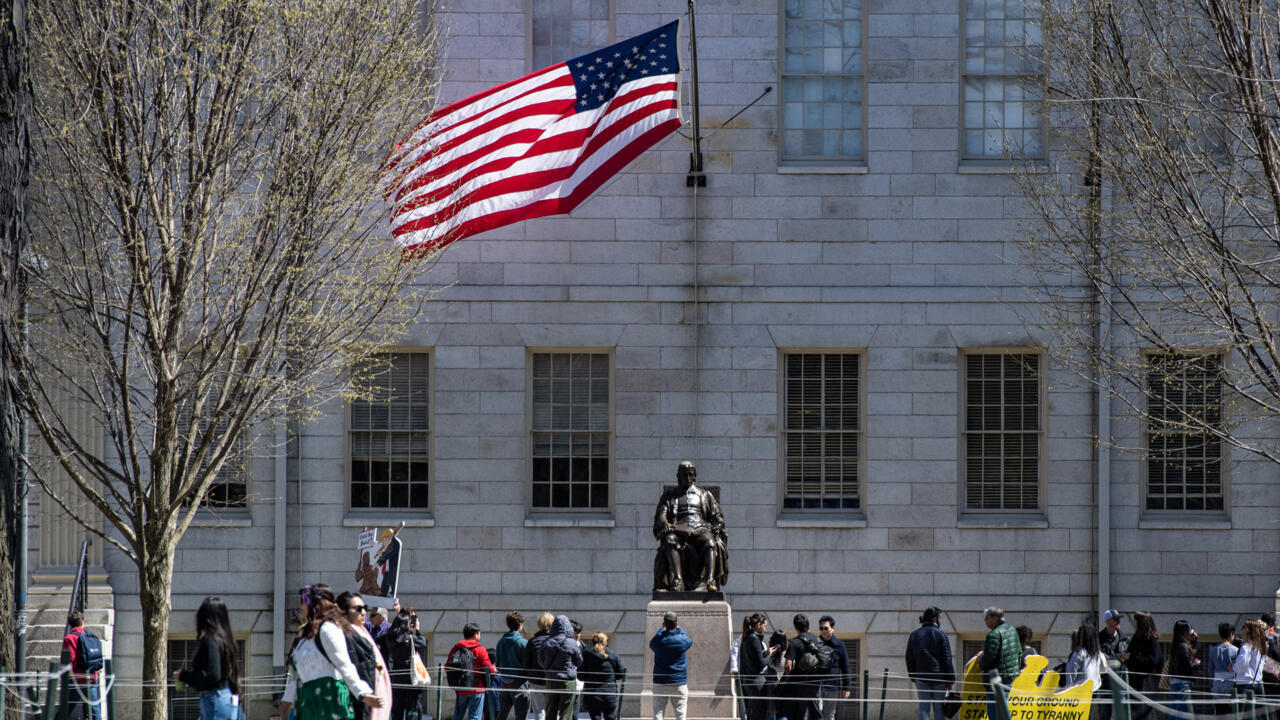
Demonstrators with signs in Harvard Yard after a rally was held against President Donald Trump’s attacks on Harvard University at Harvard University, Massachusetts on April 17, 2025. © Joseph Prezioso, AFP

A US judge ordered the Trump administration on Wednesday to overturn deep funding cuts to Harvard University that froze more than $2 billion over allegations of antisemitism and bias at the Ivy League institution.

The administration insisted its move was legally justified over Harvard's alleged failure to protect Jewish and Israeli students amid campus protests against Israel's war in Gaza -- claims Harvard rejected, saying Trump was instead focused on controlling the prestigious school's hiring, admissions and curriculum.

The cuts to Harvard's funding stream forced it to implement a hiring freeze while pausing ambitious research programs, particularly in the public health and medical spheres -- pauses experts warned risked American lives.

The ruling, which can be appealed, could shape talks on a settlement reportedly underway between Harvard and the White House under which the university would pay a sum acknowledging Trump's claims, with federal funding restored in return.

Other universities have struck similar deals with the administration.

"The Court vacates and sets aside the Freeze Orders and Termination Letters as violative of the First Amendment," Boston federal judge Allison Burroughs said in her order.

"All freezes and terminations of funding to Harvard made pursuant to the Freeze Orders and Termination Letters on or after April 14, 2025 are vacated and set aside."

The ruling also bars the administration from using the same reasoning to cut funding in the future.

Albany Law School Professor Ray Brescia told AFP that despite the overwhelming legal victory Wednesday, Harvard may still follow Columbia University and settle with the administration.

"(Trump) could go back to the negotiating table and offer Harvard a better deal than they have been offering. I think that there has been some talk about a $500 million settlement," he said.

"People settle cases all the time for lots of reasons, even if they think they are 100 percent right."

Harvard did not respond to a request for comment.


'Smokescreen' for university 'assault'


In her ruling, Burroughs pointed to Harvard's own admissions in legal filings that there had been an issue of antisemitism on campus -- but said the administration's funding cuts would have no bearing on the situation.

"It is clear, even based solely on Harvard's own admissions, that Harvard has been plagued by antisemitism in recent years and could (and should) have done a better job of dealing with the issue," she wrote.

"That said, there is, in reality, little connection between the research affected by the grant terminations and antisemitism."

The judge, appointed by Democratic former president Barack Obama, said evidence suggests Trump "used antisemitism as a smokescreen for a targeted, ideologically motivated assault on this country's premier universities."

Both Harvard and the American Association of University Professors brought cases against the Trump administration's measures.

Trump had sought to have the case heard in the Court of Federal Claims instead of in the federal court in Boston, just miles away from the heart of the university's Cambridge campus.

The Ivy League institution has been at the forefront of Trump's campaign against top universities after it defied his calls to submit to oversight of its curriculum, staffing, student recruitment and "viewpoint diversity."

Trump and his allies claim that Harvard and other prestigious universities are unaccountable bastions of liberal, anti-conservative bias and antisemitism, particularly surrounding protests against Israel's war in Gaza.

The government has also targeted Harvard's ability to host international students, an important source of income who accounted for 27 percent of total enrollment in the 2024-2025 academic year.

(FRANCE 24 with AFP)
‘Block everything’: What we know about the movement to shut down France on September 10

A grassroots protest movement that began on social media is gathering steam with its rallying cry to "Block everything" ("Bloquons tout”) in France on September 10. Organisers hope to bring the country to a standstill to protest Prime Minister François Bayrou’s national budget plan ­– even though the current government may fall before the demonstrations begin.


Issued on: 03/09/2025 - 
FRANCE2
By:  Barbara GABELJoanna YORK

A protestor holds a smoke bomb aloft during a May Day rally, marking International Workers' Day, in Paris, on May 1, 2025. © Alain Jocard, AFP

Across social media in France, three words have been proliferating since Bayrou announced his national budget plan on July 15: “Boycott, disobedience and solidarity” ("Boycott, désobéissance et solidarité").

Behind the slogan is the burgeoning national protest movement "Block everything" (Bloquons tout) calling for a day of national protest on September 10 in a bid to paralyze the country.

The citizens collective, which has about 20 organisers according to French newspaper Le Parisien, says it is independent of political parties and unions. On social media platforms X, TikTok, Telegram and Facebook, its message has taken off with supporters sharing visuals under the hashtags #10septembre2025 and #10septembre.

The trigger for such widespread discontent is Bayrou’s 2026 financial plan aiming to slash €43.8 million from the national budget and reduce France’s spiralling deficit. Among the most controversial austerity measures are plans to remove two national holidays, a freeze on pensions and €5 billion in health cuts.

But in the weeks since support for the protest took off, France’s political landscape has shifted dramatically. Bayrou in late August called for a parliamentary confidence vote in his government – and its budget – which will take place on September 8.

The prime minister is all but certain to lose the vote, forcing his resignation and leaving France, once again, without a government or a financial plan.

In this scenario, will the September 10 protests still go ahead?

“Definitely,” says Andrew W M Smith, historian of Modern France at Queen Mary University, London. “If the government falls on September 8, then on September 10 people will feel that the streets are where politics needs to be done. The protests will be even more emboldened because of the reality of an apparent political crisis.”
'Feeling left behind'

On a website created for the movement, which has since been removed, the collective listed a wide range of demands including massive reinvestment in public services, an end to job cuts, and for all public holidays to be maintained.

But the government is not the only target for the organisers’ discontent.

Recommended forms of protest include boycotting major retailers such as Carrefour, Amazon and Auchan, withdrawing money from major banks and the “peaceful occupation of symbolic locations” such as local government administrative buildings and town halls.

A social media post linked to the movement viewed more than 1.5 million times calls on supporters to help “stop the machine” that is crushing “worn out, invisible” citizens.
A social media post outlining the objectives of France's Block Everything protest movement. © @SarahHRakM4, X

On September 10, they write, “we won’t pay anymore, we won’t consume anymore, we won’t work anymore, and we will keep our children at home. Our only power is a total boycott”.

Other forms of suggested action call for solidarity such as creating strike funds, organising neighbourhood assemblies, and supporting protestors who engage in acts of civil disobedience.

It may be frustration over plans to cut two public holidays that ignited calls for protest, “but the movement is much broader”, says Paul Smith, head of the department of Modern Languages at the University of Nottingham, UK. “It’s become about the idea of people feeling left behind.”

“It’s calling for a refocusing of political attention on the cost-of-living crisis and people feeling underrepresented by what's happening in Parliament,” adds Andrew W M Smith.

There are echoes of the 2018 Yellow Vest (gilets jaunes) protest, which began with social media users venting frustration over rising petrol prices but grew to encompass street protests that attracted tens of thousands frustrated by a broad sense of economic injustice.

The Yellow Vest movement was not affiliated with any specific political party or union and had no single leader. Its emblem was instead the florescent yellow vest that French law requires all drivers to have in their vehicles and which protestors wore en masse during demonstrations.

In terms of its material objectives, the movement was only partially successful, achieving small but significant wins such as raising minimum pensions.

Block everything for now only exists in the digital space. But its grassroots organisation, generalised frustration with the authorities, and combative tone are all in the same mould as its predecessor.

Murky origins


While the organisers of Block everything have said the movement is apolitical, questions have emerged over its origins.

The first post calling for a September 10 protest appeared in May – well before Bayrou had announced his budget – posted by anti-government group, Les Essentiels France.

As little is known about who runs the group or what its affiliations are, “it's always worth being alert to the possibility of manipulation, especially by foreign interests”, says Andrew W M Smith.

Online support for the idea of a September 10 protest surged after Bayrou’s budget announcement in July, with figures on extreme right quick to align themselves with the burgeoning movement.

Since then, the movement has garnered widespread support from left-wing parties, spearheaded by the firebrand leader of the France Unbowed party, Jean-Luc Mélenchon.

“Much like the Yellow Vests there have been plenty of people willing to try and own some of the political dynamism and force of the movement by attaching themselves to it,” says Andrew WM Smith.

An alignment with the left fits the profile of the average supporter of the movement, according to a survey published on Monday by French think-tank Fondation Jean-Jaurès.

Among more than 1,000 supporters interviewed in mid-August, 69% said they had voted for Mélenchon’s hard-left party in the first round of the 2022 presidential election, compared with 22% of the population as a whole.

Just 2% said they had voted for President Emmanuel Macron and 3% for hard-right leader Marine Le Pen in the same election.

The survey found that despite apparent similarities with the Yellow Vest movement, Block everything’s supporters are less focused on economic insecurity, and more on “strong politicisation and a desire to engage on behalf of collective interests”.

Lack of union support


Most major union chiefs have so far refused to align themselves with Block everything, despite sharing many of their political concerns.

A petition launched by five major unions against Bayrou’s budget on July 22 has so far amassed more than 375,000 signatures.

"The horror show that is the draft budget must be abandoned," CFDT union chief Marylise Léon on Friday, even though her union will not participate in the September 10 protests.

Only the hard-left CGT union has said it will support Block everything by organising strikes on September 10.

The inter-union group has instead called for “major strikes and protests” on September 18 – an announcement that is unlikely to take the wind out of Block everything’s sails.

Compared with a formal union strike, September 10’s grassroots protest is, “much less controlled, and much less organised”, says Paul Smith. “That makes stopping it really quite difficult.”


This article was adapted from the original in French.
DESANTISLAND; EVAGELICAL'S VS SCIENCE

Florida set to become first US state to ban all childhood vaccine mandates

Florida plans to scrap vaccine mandates, becoming the first US state to end long-standing requirements protecting schoolchildren and adults from infectious diseases. State Surgeon General Joseph Ladapo announced the move Wednesday, denouncing existing rules as “immoral” intrusions on parental rights that restrict families’ ability to make health decisions.


Issued on: 04/09/2025 -
By: FRANCE 24

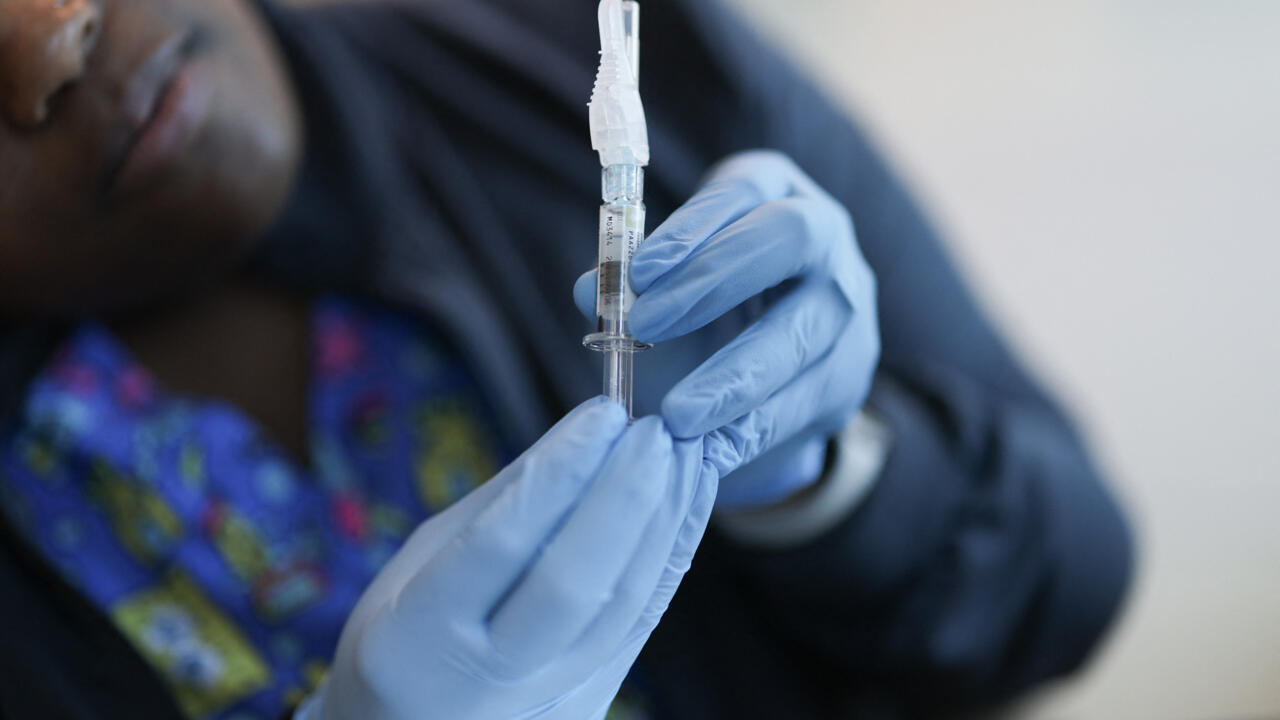
Ruth Jones, Immunization Nurse, holds a Pfizer-BioNTech COVID-19 vaccine (brand name: Comirnaty) at Borinquen Health Care Center on May 29, 2025 in Miami, Florida. © Joe Raedle, AFP

Florida plans to become the first state to eliminate vaccine mandates, a longtime cornerstone of public health policy for keeping schoolchildren and adults safe from infectious diseases.

State Surgeon General Dr. Joseph Ladapo, who announced the decision Wednesday, cast current requirements in schools and elsewhere as “immoral” intrusions on people's rights that hamper parents' ability to make health decisions for their children.

“People have a right to make their own decisions, informed decisions,” Ladapo, who has frequently clashed with the medical establishment, said at a news conference in Valrico. “They don’t have the right to tell you what to put in your body. Take it away from them.”

Florida's move, a significant departure from decades of public policy and research that has shown vaccines to be safe and the most effective way to stop the spread of communicable diseases, especially among schoolchildren, is a notable embrace of the Trump administration's agenda led by Health Secretary Robert F. Kennedy Jr., a longtime anti-vaccine activist.

Dr. Rana Alissa, chair of the Florida Chapter of the American Academy of Pediatrics, said removing vaccines puts students and school staff at greater risk.

“When everyone in a school is vaccinated, it is harder for diseases to spread and easier for everyone to continue learning and having fun,” Alissa said in an email. “When children are sick and miss school, caregivers also miss work, which not only impacts those families but also the local economy.”

Democratic state Rep. Anna Eskamani, who is running for Orlando mayor, said in a social media post that scrapping vaccines “is reckless and dangerous” and could cause outbreaks of preventable disease.

“This is a public health disaster in the making for the Sunshine State,” Eskamani said on the social platform X.

Amid turmoil at the US Centers for Disease Control and Prevention caused by Kennedy's extensive restructuring and downsizing, the Democratic governors of Washington, Oregon and California announced Wednesday that they had created an alliance to safeguard health policies, contending that the administration is politicising public health decisions.

The partnership plans to align immunization plans based on recommendations from respected national medical organisations, according to a joint statement from the states' governors.

Read more

Vaccines have saved at least 154 million lives globally over the past 50 years, the World Health Organisation reported in 2024. The majority of those were infants and children.

“Vaccines are among the most powerful inventions in history, making once-feared diseases preventable,” said Dr. Tedros Adhanom Ghebreyesus, WHO director-general.

In Florida, vaccine mandates for child day care facilities and public schools include shots for measles, chickenpox, hepatitis B, diphtheria-tetanus-acellular pertussis, polio and other diseases, according to the state Health Department’s website.

Ladapo didn't give a timeline for the changes but said the department can scrap its own rules for some vaccine mandates, though others would require action by the Florida Legislature. He did not specify any particular vaccines but repeated several times that the effort would end “all of them. Every last one of them.”

The American Medical Association issued a statement saying Florida’s plan to end vaccine mandates “would undermine decades of public health progress.”

“While there is still time, we urge Florida to reconsider this change to help prevent a rise of infectious disease outbreaks that put health and lives at risk,” said Dr. Sandra Adamson Fryhofer, an AMA trustee.

Under Republican Gov. Ron DeSantis, Florida resisted imposing COVID vaccines on schoolchildren during the pandemic, requiring “passports” for places that draw crowds, school closures and mandates that workers get the shots to keep their jobs.

“I don’t think there’s another state that’s done as much as Florida. We want to stay ahead of the curve,” the governor said.

DeSantis also announced the creation of a state “Make America Healthy Again” commission Wednesday modeled after similar initiatives that Kennedy established at the federal level.

The commission would look into such things as allowing informed consent in medical matters, promoting safe and nutritious food, boosting parental rights in medical decisions about their children and eliminating “medical orthodoxy that is not supported by the data,” DeSantis said. The commission will be chaired by Lt. Gov. Jay Collins and Florida first lady Casey DeSantis.

The commission's work will help inform a large “medical freedom package” to be introduced in the Legislature next session, which would address the vaccine mandates required by state law and make permanent the recent state COVID decisions relaxing restrictions, DeSantis said.

(FRANCE 24 with AP)
RFK Jr. Is 'Compromising the Health of This Nation,' Say 1,000+ Staffers Demanding Resignation


"Under Secretary Kennedy's leadership," said the employees, "HHS policies are placing the health of all Americans at risk, regardless of their politics."


Julia Conley
Sep 03, 2025
COMMON DREAMS

After a deadline passed for the nation's top health official to pledge to protect the federal public health workforce, more than 1,000 current and former employees of the US Department of Health and Human Services said Wednesday that "it's time for Robert F. Kennedy Jr. to resign" from his position leading the agency.


The employees addressed their letter to Kennedy, President Donald Trump's health and human services secretary, as well as members of Congress, warning that since HHS staffers spoke out in a previous letter last month about a shooting at the Centers for Disease Control and Prevention (CDC), Kennedy has continued "to endanger the nation's health."

The number of signatories on the initial correspondence has grown to more than 6,800 since 750 employees signed it in August, with federal workers endorsing the concerns it raised about how Kennedy is "sowing public mistrust" and spreading misinformation about immunizations, including the measles vaccine and mRNA vaccines like the Covid-19 shot that's credited with saving millions of lives.

"Secretary Kennedy did not respond to the letter, and HHS released a statement accusing us of politicizing a tragedy," wrote the HHS workers on Wednesday. "To be clear, the HHS workforce is nonpartisan, implementing science-based policies developed under both Republican and Democratic administrations. We believe health policy should be based on strong, evidence-based principles rather than partisan politics. But under Secretary Kennedy's leadership, HHS policies are placing the health of all Americans at risk, regardless of their politics."

The letter listed ways in which Kennedy has doubled down on harming the nation's public health infrastructure since a gunman fired more than 500 rounds of ammunition into six buildings on the CDC's main campus in Atlanta, killing a police officer before he turned the gun on himself. The shooter was reportedly motivated by his "discontent" with Covid-19 vaccines and believed he and others had been injured by the immunization.

Since then, Kennedy's employees said, the secretary has:Facilitated the firing of Dr. Susan Monarez, the Senate-confirmed CDC director, after reportedly clashing with her on vaccine science;
Caused the resignations of public health officials at the CDC;
Appointed idealogues "who pose as scientific experts and manipulate data to fit predetermined conclusions," including mRNA vaccine opponent Retsef Levi, the leader of the Advisory Committee on Immunization Practices' Covid-19 work group, and ACIP member Robert Malone, who "has made multiple inaccurate claims regarding Covid-19 and measles";
Refused to be briefed on vaccine-preventable diseases by CDC experts;
Disparaged the American Academy of Pediatrics for recommending the Covid-19 vaccine for children; and
Made "ongoing verbal attacks" on the HHS workforce, including by stating, "Trusting experts is not a feature of either a science or democracy."

The workers noted that they "swore an oath to support and defend the United States Constitution and to serve the American people" and are bound to "speak out when the Constitution is violated and the American people are put at risk."

"Thus, we warn the president, Congress, and the public that Secretary Kennedy's actions are compromising the health of this nation, and we demand Secretary Kennedy's resignation," said the HHS employees.

Should Kennedy refuse to resign, the workers wrote, the president and Congress must appoint a new secretary of health and human services—"one whose qualifications and experience ensure that health policy is informed by independent and unbiased peer-reviewed science."

"We expect those in leadership to act when the health of Americans is at stake," said the employees.

Last week, US Sen. Bernie Sanders (I-Vt.) wrote an op-ed in the The New York Times demanding Kennedy's resignation, citing Monarez' ouster and warning of the danger of Kennedy's "advocacy of conspiracy theories that have been rejected repeatedly by scientific experts."

"Covid is just the beginning," said Sanders. "Mr. Kennedy's next target may be the childhood immunization schedule, the list of recommended vaccines that children receive to protect them from diseases like measles, chickenpox, and polio."

The signatories of Wednesday's letter, who work at HHS agencies including the CDC, the Food and Drug Administration, the office of the secretary, and the Centers for Medicare and Medicaid Services, noted that in addition to the named signers, anonymous employees endorsed the letter.

The signers "speak for countless others across HHS who share our concerns but who chose not to sign out of well-founded fear of retaliation and threats to personal safety," reads the letter.

The signers also urged members of the public to join the push for Kennedy to resign or be removed, calling on them to use the 5 Calls platform to contact their elected representatives and demand Congress take action to "hold him accountable for his careless statements and actions that are endangering the health and safety of every American."


Online retailer Zalando bound by strictest EU platform rules: court

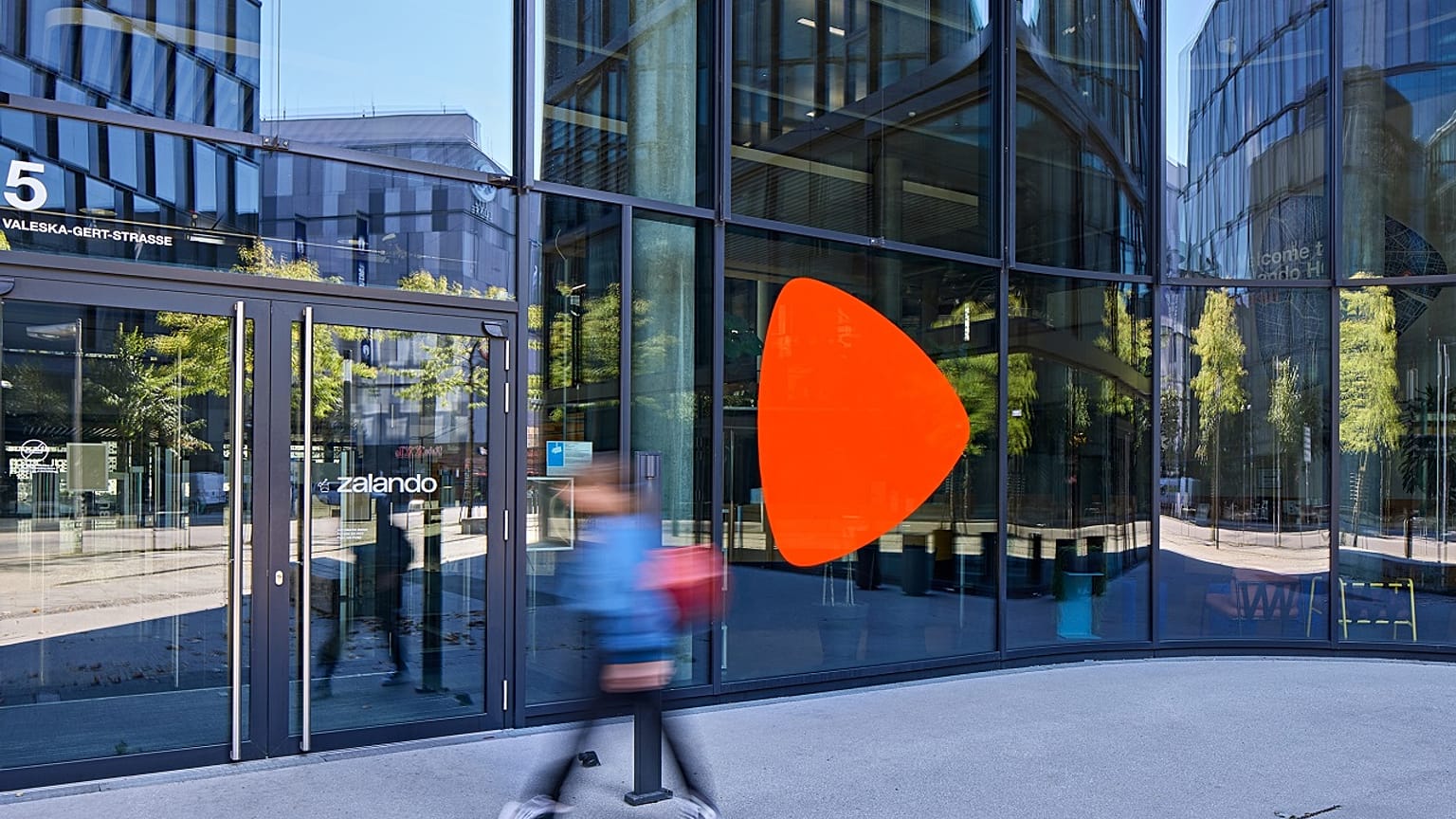
A Zalando office in Germany.
Copyright © Kirsten Bucher/ Kirsten Bucher

By Cynthia Kroet
Published on 

EU Court sides with European Commission in landmark platform rules case.

German fashion website Zalando is bound by the strictest online platform rules, the EU’s general court said in a judgment on Wednesday. 

Zalando is the first online platform to challenge its designation under the EU’s platform rules, the Digital Services Act (DSA), claiming that its user numbers are a lot lower than was estimated by the European Commission upon its designation.

The legislation, meant to combat illegal content online, started applying in August 2023 to the bloc's biggest online platforms – those with more than 45 million users per month.

The court said that since Zalando could not distinguish, among the more than 83 million people who used its platform, those who were actually exposed to the information provided by third-party sellers from those who were not, the "European Commission could consider that they were all deemed to have been exposed to it."

"The Commission could therefore consider that the average monthly number of active recipients of the Zalando platform amounted to more than 83 million, and not only around 30 million as Zalando claimed on the basis of the gross value of sales generated under the Partner Programme," the court said

The landmark ruling is a blow to other platforms with similar business models, as well as others which have appealed their designation including e-commerce player Amazon, and porn websites Pornhub, Stripchat and Xvideos. 

A Zalando spokesperson told Euronews that the company will appeal the judgement.

"We are disappointed by today's decision (... ) the judgement maintains the uncertainty about user counts (“active recipients of a service”), as the current absence of a common methodology leads to an incoherent, uneven application of the law," the statement said.

In June the court heard a second challenge to the Commission’s DSA policy brought by Amazon. A ruling in this case is expected at a later stage.

User numbers

In August 2023, the Commission designated the first batch of 19 platforms – including Facebook, Instagram, TikTok, LinkedIn, Amazon and Zalando – that are considered a Very Large Online Platform (VLOPs). The Commission has since designated six other platforms that pass the threshold of 45 million active users per month.

Those VLOPs face stricter rules than other platforms with lower user numbers including supervisory fees and more transparency reporting obligations.

Zalando challenged that decision, claiming that it differed from the others VLOPs. The platform, founded in 2008 in Berlin, said the Commission's methodology for counting user numbers and assessing whether a company is a VLOP lacked clarity and consistency.

In addition, in its defence, Zalando claimed that it operates a “hybrid business model” with a retail business and a partner business. It claims its retail business, which represents 61% of its business, for which Zalando’s provides its own content, does not fall within the scope of the DSA.

The Commission said in its designation decision that it's impossible to know whether a particular recipient of Zalando is “exposed to products stemming from Zalando SE’s proprietary retail business or from third-party traders using its intermediation service, as both types of products are indistinctly displayed on Zalando’s online interface.”