Thursday, September 11, 2025

‘Our voices just aren’t heard’: ‘Block Everything’ protesters meet heavy police response in Paris

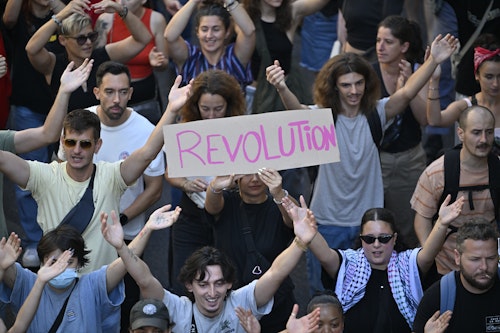
Police came down hard on scattered groups of protesters trying to block critical roads and infrastructure in Paris on Wednesday to protest government austerity measures as France's fifth prime minister in under two years took office. Demonstrators said they were frustrated with successive governments that changed names and faces – but not policy.


Issued on: 10/09/2025 - 
By: Paul MILLAR
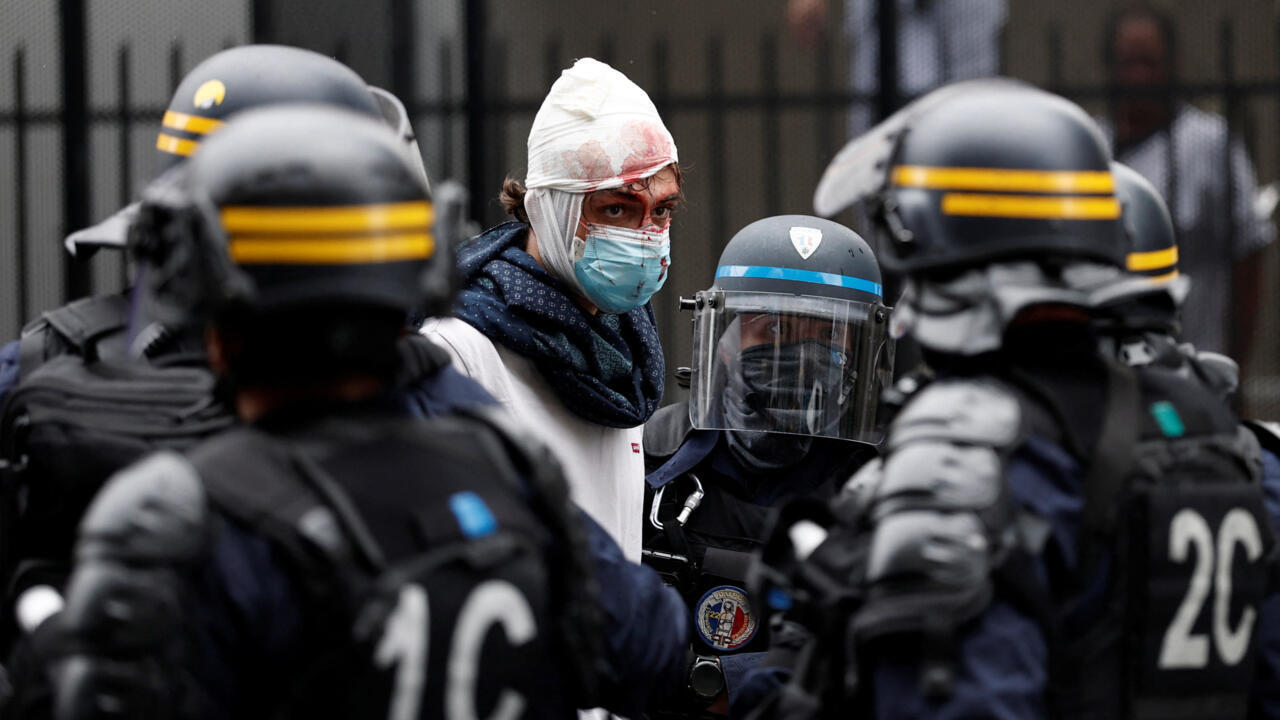
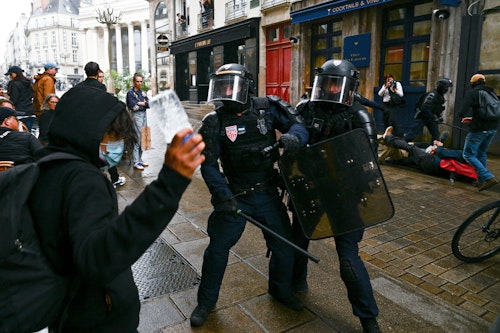
An injured masked protester is surrounded by French CRS riot police during a demonstration near the Gare du Nord train station during a day of protests in Paris. © Benoit Tessier, Reuters


The signal’s red, but the road is still alive with people. At the Porte de Bagnolet, one of several major interchanges between metropolitan Paris and the Boulevard Périphérique ring road that curls around the capital, a few dozen demonstrators are milling back and forth across the road. Traffic is backed up, and the drivers are furious. It’s 7:30am, and if they’re not already late for work, they soon will be. The noise of horns is unrelenting.

Soon, the braying horns give way to a sharper sound. Mounted police pull up on heavyset motorbikes in a wail of sirens, and the pace of the protesters quickens. They drift away from the crossing and begin making their way back into the city.

The armoured police dismount, and all pretence of nonchalance vanishes. A few demonstrators break into a run, and the police give chase. A man stumbles as a police officer lunges at him, hitting the asphalt hard. The protesters seethe. Back off, back off, they yell. Back on his feet, the police officer looks around him and sees that he’s outnumbered. He backs off.

The next action ends less dramatically. At a nearby crossing, a mounted police officer tells a scant dozen protesters that they have ten minutes to clear the road before the police come out in force. The young demonstrators exchange nervous looks, then let out a cheer, and clap, and clear the road.

French protesters 'focus on disrupting key elements of national infrastructure'
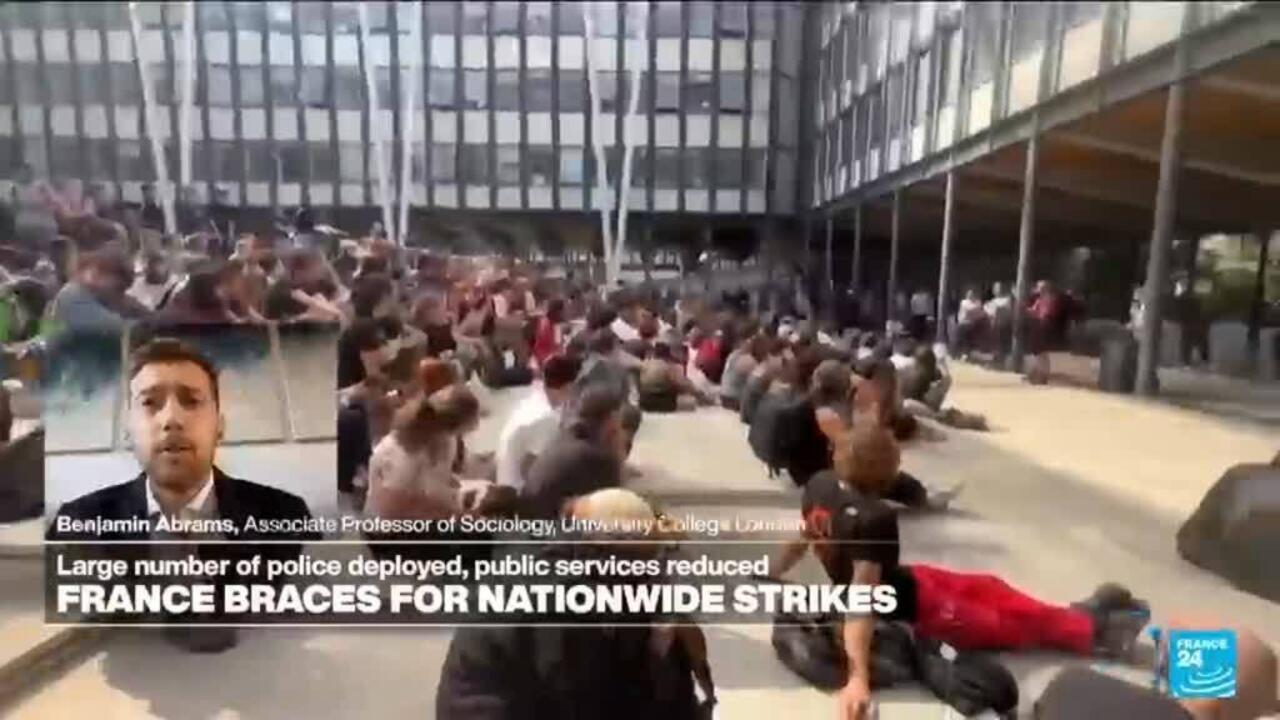
© France 24
06:19


The day’s rallying cry was “Block Everything”, and they haven’t. All across Paris, all across France, groups of young protesters who found one another through social media gathered at critical points of the nation’s roads and infrastructure, setting up makeshift barriers and putting their bodies in the way of traffic to protest years of austerity measures imposed by French President Emmanuel Macron and his successive prime ministers.

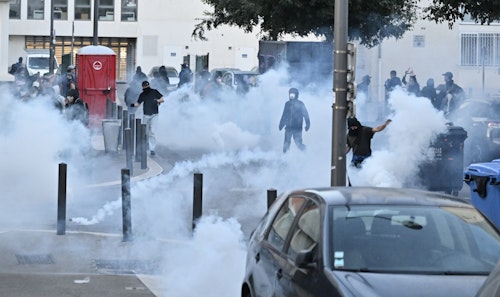
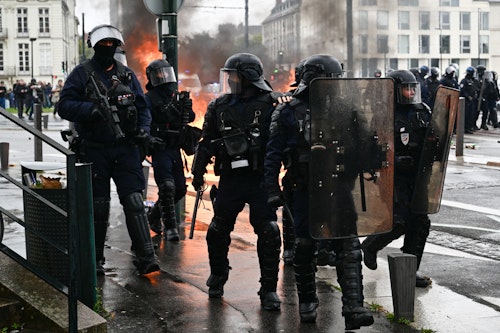
Each time they were met by rank after rank of heavily armed and armoured police who drove them from the streets with clubs, tear gas and flash balls.

Read moreHundreds arrested as police clash with France’s ‘Block Everything’ protesters

Right-wing Interior Minister Bruno Retailleau – now outgoing interior minister after the fall of François Bayrou’s government on Monday – had warned the nation’s prefectures that there were likely to be at least 100,000 protesters across the country. To match their numbers, he assured them, he would be mobilising some 80,000 law enforcement officials across France.

In Paris, the result was a day-long, shifting pursuit spanning swaths of the city. Police would break one blockade by force, scattering protesters into side streets who would then catch their breath, find their comrades and try again.
Macron ‘doesn’t care about the French people’

At Porte de Bagnolet, Marie is mulling her next move. The young professor says she came out with one aim in mind – the fall of the government, before it’s even been put into place.

“It’s important to take action right now,” she says, arguing that Macron’s decision to name long-time loyalist Sébastien Lecornu as France’s new prime minister last night showed that he “didn’t care about the French people”.

“I think it's problematic to appoint someone from his own ranks, even before he has met with party leaders and the opposition, and seen what today's movement will bring,” she says.

While the conservative-turned-centrist ally of Macron has promised a break from the policies of previous governments, critics of the decision say it sends a clear message that the struggling president will continue to push for the same policies that have already seen his last two appointments voted out of office.

Lecornu’s appointment seems only to have strengthened the protesters’ resolve. Throughout the day, messages hurtle back and forth in the Telegram groups that have been crucial to the movement’s momentum: Where’s the next action? Are any blockades still standing?

At Porte de Montreuil on the eastern edge of Paris, someone responds, things are heating up. Garbage bins, broken glass and wooden pallets lie strewn across the street from where the latest blockade has been cleared away. The police are hunting the remaining demonstrators through the streets – one officer catches a woman around the throat and sets her to clearing the remaining palettes from the road. The air is sharp with tear gas.
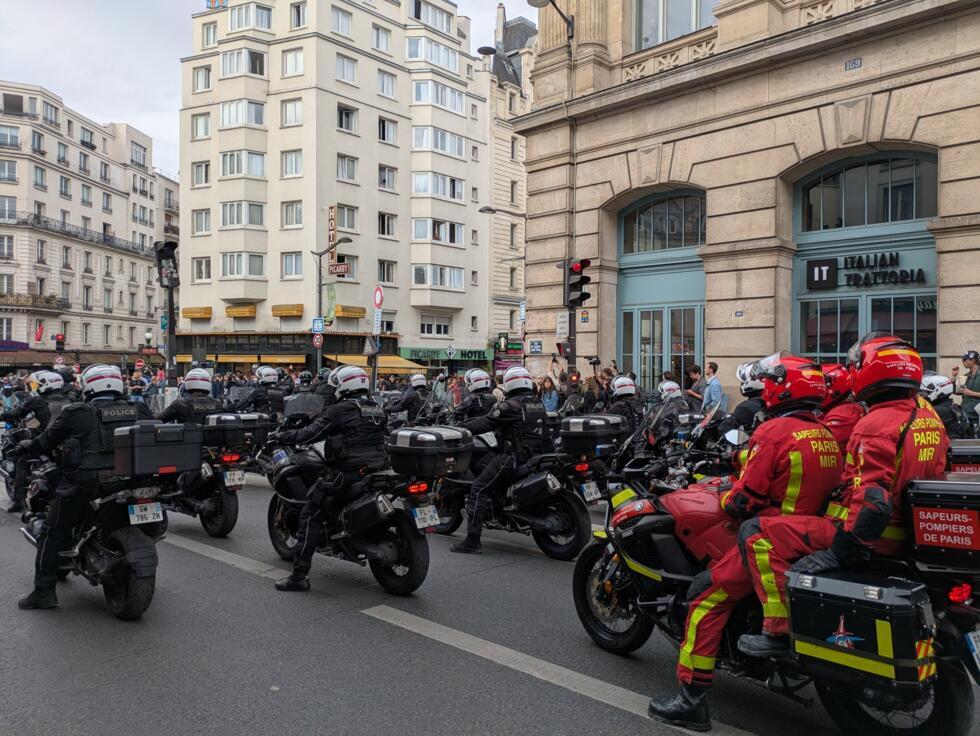
A mobile brigade of riot police disperse a crowd of demonstrators near Gare du Nord station in Paris on September 10, 2025. © Paul Millar, FRANCE 24

As a phalanx of riot shield-bearing police cordon off the block, demonstrators begin to trickle north to Tenon Hospital, where healthcare workers have gone on strike to protest what they describe as chronic under-funding. The atmosphere here is joyous, and calmer; union reps and local left-wing politicians speak to the packed crowd before opening the mic to all comers. A brass band launches into a raucous cover of Rage Against the Machine’s "Killing in the Name Of", to wild applause.

Nicolas, a striking lab technician at the hospital, says that working conditions in public hospitals continue to deteriorate.

“We’re changing prime ministers, but will this new prime minister be able to do any better? I don’t think so,” he says. “We’ve grown too used to budget cuts and bed closures. Today, behind each caregiver there’s a man or a woman at the end of their rope, who can’t take it anymore. Public hospitals have become an enormous psycho-social risk for the people who work there.”

Evelyn, a nursing assistant at the hospital, says that she was glad to attach their struggle to the broader movement.

“We’re fed up with the current French system,” she says. “We never have enough people working in our hospitals – we’re always working with knives drawn.”

“All we want is to be seen and heard,” she adds.
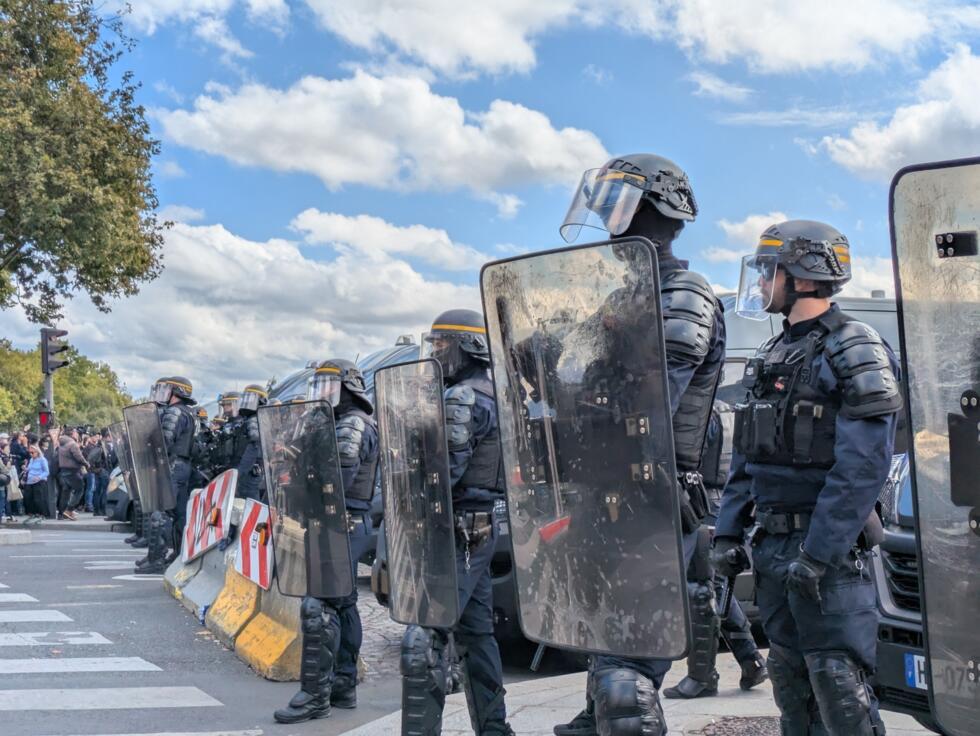

Riot police block off a bridge near Place du Châtelet on September 10, 2025. © Paul Millar, FRANCE 24

The chasm between the desperate blockades launched by hastily assembled groups and the more structured leftist protests reflects an uneasy tension within the “Block Everything” movement. Taking direct inspiration from the massive spontaneous Gilets Jaunes protests that rocked Macron’s first term in office, the grassroots movement has championed a leaderless expression of general protest, keeping its distance from traditional parties and social organisations.

Despite this, and perhaps unsurprisingly for a movement born out of frustration with cuts to social services and proposed austerity measures that fall heaviest on working- and middle-class French people, the movement soon gained support from the country’s left-wing parties. Jean-Luc Mélenchon’s France Unbowed was quick to voice its solidarity with the movement, and the left-wing CGT trade union federation quickly followed – though the country’s unions have also announced their own day of protest on September 18.

While some in the Telegram groups rankle at what they see as the risk that a grassroots movement may be swallowed by the familiar struggles of French politics, Marie said that the parties’ support was all too welcome.

“The interests that we’re defending are the interests of the majority,” she says. “Isn't that what political parties in France are supposed to represent? If some don't support us, that's their problem – but I think it's a bad strategy.”


Rendez-vous Gare du Nord

Bolstered by reports of a general assembly launched by striking railway workers at the capital’s Gare du Nord, groups of demonstrators descend into the city metro to make their way to France’s largest train station. The police are waiting for them. Imposing police vans block off the station, and the roar of motorbikes heralds the arrival of a mobile brigade of riot police.

As the protesters jeer, the armoured police form ranks and charge, driving the protesters back. Dozens of two-man teams of mounted police follow on their motorbikes, forming a wall of muscle and metal scattering all in its path. As they turn the corner, one bike skids and goes down, bringing its riders with it.

As the officers scramble to their feet, batons in hand, a scattered shower of gravel bounces off their body armour. Immediately, the police fire a barrage of tear gas grenades, putting the crowd to flight. Defiant to the last, a protester tips a recycling bin onto the street as he sprints past, blocking a lane of traffic. As the gas seethes down the street, a flash ball erupts, and the first fat rain drops begin to fall.
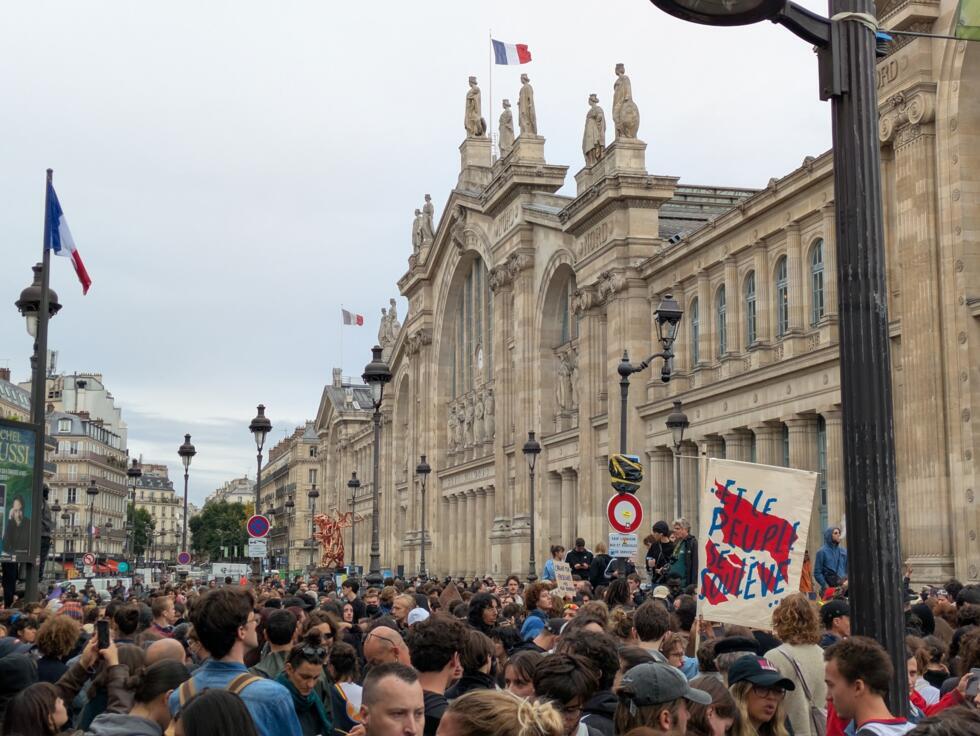
A demonstration takes place outside Paris's Gare du Nord station on September 10, 2025. © Paul Millar, FRANCE 24

In photos: Block Everything demonstrators protest in Marseille
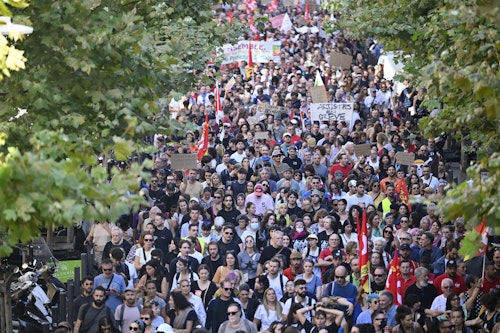


(Philippe Magoni, AP)


Her voice still thick from the gas, Sarah – a civil servant worried about further cuts to France’s public sector – scrubs at her eyes and says she is not surprised by the force of the police’s response.

“It’s not surprising, but we still find it pretty excessive,” she says. “The number of cops – here, we were a bit even, but we were in the south of Paris a little while ago and there were really three cops for every protester. It was a bit absurd. So yeah, we find it violent, excessive and frankly dangerous – it puts everyone in danger, it gets people riled up. I think there’s a lot of violence in these kinds of protests that is really a response to heavy police repression.”

With the sun high in the sky, demonstrators across the city converge on the Place du Châtelet, a tree-lined public square on the banks of the Seine. Here, the mood is festive – the unions are out in force, red flags ripple overhead and chants that have become a fixture of French demonstrations since the Yellow Vest protests thunder out across the river. Lecornu’s name is on everyone’s lips – they’ve wasted little time in working it into the lyrics.

Soon, the crowd stretches out deep into the streets surrounding the square, growing every minute as processions arrive from Gare du Nord, Place de la République and beyond. The Telegram groups minutely track police movements – they’ve blocked off the Les Halles shopping complex to stop spontaneous acts of anti-capitalist sentiment. Closer to the crowd, a wall of police vans blocks the bridge across the Seine. Ranks of police officers stand before it, their batons drawn.

Police clash with protesters in Nantes
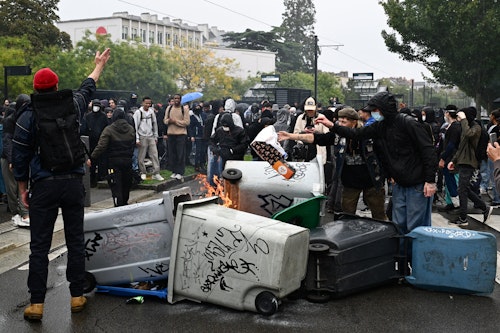


(Sebastien Salom-Gomis, AFP)


The police presence has done little to weaken the protesters’ resolve.


Anaïs, a medical student who came to protest what she describes as the underfunded state of French hospitals, says that she would continue to take part in joint actions against Macron’s policies.

“I want this mobilisation and this strength to make the government listen to us,” she says. “Even if that hasn't always been the case in the past. I think it's important for us as well as citizens – we need to mobilise and continue to fight. If we start to give up and say that it's pointless, unfortunately things will never change, and that's why we're here.”

She says attempting to shut down the country for a day was the only effective way to give voice to the widespread frustration with successive governments that changed names and faces but not policies.

“I think it's important for me to protest, to say that we're not happy, and unfortunately ... if we don't stop the system from working just a little bit, our voices just aren’t heard.”

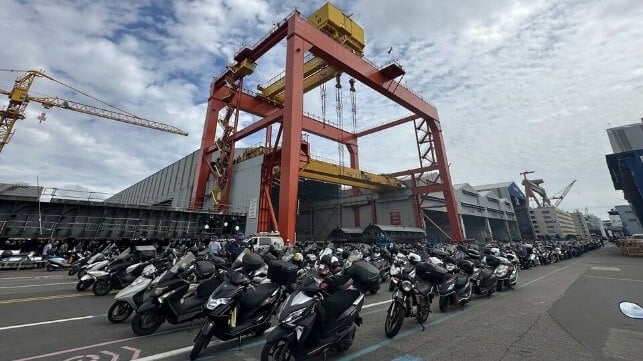
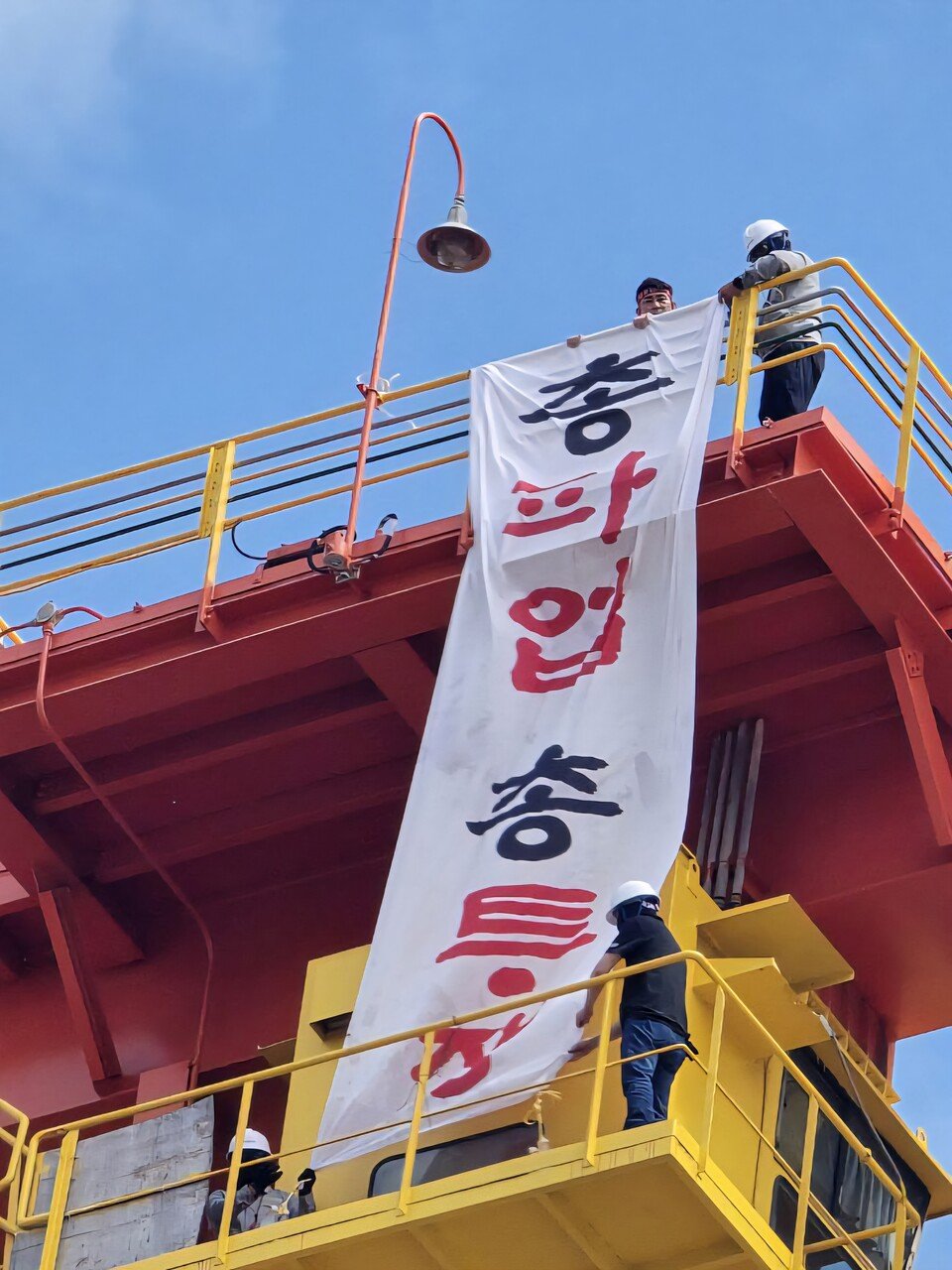


Metal Workers Launch Strike With "High-Altitude Sit-In" at Hyundai Shipyard

crane at shipyard HHI
Strikers are blocking a key crane used to move blocks in the HD Hyundai Heavy Industries shipyard in Korea (Metal Workers Union)

Published Sep 10, 2025 12:51 PM by The Maritime Executive


The protracted annual wage negotiations between the Metal Workers Union and HD Hyundai for its shipyards are continuing without an agreement, while the union called management’s negotiations “insincere.” Workers at the three shipyards in South Korea staged a partial strike on September 10, with reports that they will begin a general strike starting on the 11th, which is likely to further impact production at the yards.

To demonstrate the union’s frustration with the slow pace of the talks, the branch head of the union, Baekho-seon, began a “50-meter-high sit-in.” On the morning of the 10th, coinciding with the start of a seven-hour strike at the yard, the head of the union branch climbed the yard’s 164-foot-tall crane used to move blocks. He emphasized the lack of progress and no new offers from management for the wage negotiations while urging management “to make a decision.”

Workers at the HD Hyundai Heavy Industries’ yard were on strike for the day, while union members at the HD Hyundai Mipo and Samho yards stopped work in the afternoon. Reports said there have been between 10 and 20 negotiating sessions since May and that the union staged seven partial strikes at HHI and more than 10 at all the facilities, and now will move to a full strike.


The union branch head climbed the key crane and banners have been unfurled (Metal Workers Union)


Baekho-seon called the wage demands “completely justified” and said they are “neither excessive nor unusual compared to the company’s ability to pay.” The talks have reportedly been stalled with no new offer from management since union members in mid-July rejected a tentative agreement. The union asserted that the workers “are not being treated with respect or compensated” for their role in helping to elevate the yards’ importance with the Make American Shipbuilding Great (MASGA) initiative. The union rejected the tentative agreement which called for an increase in base pay of approximately $100 and a $3,800 bonus.

HD Korea Shipbuilding & Offshore Engineering, the holding company for the shipbuilding operations, reported on September 8 that it has received orders for a total of 86 ships worth $11.75 billion so far in 2025, achieving 65 percent of its annual order target of $18.05 billion. Media reports, however, indicate that the union's partial strikes and now the sit-in on the critical crane are impacting production. As part of its protests, union members have also used motorcycles on the main roads to slow or stop the movement of blocks and equipment.

Tensions with the union also increased after the company announced plans to merge the shipyards in Ulsan, with Mipo becoming an offshoot of HHI. The union fears job transfers and reassignments after the merger. It has threatened to oppose the merger and the MASGA initiative, which was a key part of the trade and tariff negotiations between the Koreans and the Trump administration.

Hyundai Raid Shows Trump Can't Deport His Way To a Manufacturing Boom


Autumn Billings
Tue, September 9, 2025 
REASON.COM


ICE/UPI/Newscom at a $7.6 billion electric vehicle battery factory near Savannah, Georgia, on Thursday, September 4, in what immigration officials are calling the "largest single-site enforcement operation in the history of Homeland Security Investigations." The operation was a coup for President Donald Trump's mass deportation goals, but it could come at the expense of another Trump priority: boosting domestic manufacturing.

During a press conference, Steven Schrank, the special agent in charge of Homeland Security Investigations in Georgia and Alabama, said the operation was part of a multimonth criminal investigation into the factory's alleged unlawful employment practices. A judicial search warrant was filed on September 2, naming four people to be searched in connection with the criminal investigation. But immigration authorities arrived in force, ready to question and detain hundreds of workers. Of the 475 detained for offenses ranging from crossing the border illegally to overstaying their visa, over 300 were South Korean nationals. The arrests were meant to send a message that "those who exploit our workforce, undermine our economy, and violate federal laws will be held accountable." No criminal charges have yet been filed. 

Video provided by Immigration and Customs Enforcement and released by WJCL News, a local ABC News affiliate, shows federal and state officers descending on the site to line up, frisk, and shackle hundreds of workers. Each individual, Schrank said, was questioned on their status, and their documents and backgrounds were reviewed before being transported to a detention facility.  

Although Schrank claims all documents were reviewed, one South Korean official told The Wall Street Journal that many of the South Korean nationals were working as instructors in Georgia and had the appropriate visas, like the B-1 Temporary Business Visitor visa, which allows someone to enter the U.S. for an eligible business purpose for between one and six months, and up to one year with an extension. Family members of detained workers interviewed by CNN following the raid said valid work permits did not stop agents from making arrests. Detained Korean nationals have since been released and are allowed to leave the country voluntarily, rather than through deportation, which would have triggered a multiyear entry ban into the United States.

In a Truth Social post on Sunday, Trump called on foreign companies to follow U.S. immigration law and encouraged them to "LEGALLY bring your very smart people" to train American workers. But while Trump is confident the immigration raid won't harm an otherwise strong allyship, South Korean Foreign Minister Cho Hyun called the incident "a very serious matter." 

South Korea's response could have significant implications for Trump's stated goal of restoring domestic manufacturing. In July, South Korea announced that it would invest $350 billion in U.S. projects (which will be selected by the Trump administration) and purchase $100 billion worth of American energy in exchange for a reduced tariff rate (15 percent instead of 25 percent). It wouldn't be inconceivable if South Korea started to reconsider this arrangement in light of Thursday's events. In fact, it appears that it already has. During a legislative hearing on Monday, Korean politicians questioned how "companies investing in the U.S. [can] continue to invest properly in the future," reports the Associated Press. Others even called for retaliatory investigations on Americans working in South Korea. 

Meanwhile, LG Energy Solutions—which saw 47 of its employees detained last Thursday—is pausing all business trips to the U.S. and directing other employees on assignment in the U.S. to return immediately. Construction at the Georgia facility—which was part of the state's largest-ever economic development project and expected to employ 8,500 people—has been halted. Given South Korea's rich history of investing in the U.S., and a recent jobs report showing America's manufacturing shrinking, Trump can't afford for South Korea to pull back from U.S. investments.

Trump campaigned on a promise to help American workers through mass deportations of criminal aliens and rebuilding the U.S. manufacturing industry. His immigration policies have failed to capture violent criminals. Now they're jeopardizing jobs for Americans, too.

The post Hyundai Raid Shows Trump Can't Deport His Way To a Manufacturing Boom appeared first on Reason.com


Hyundai’s $7.6B EV Bet Shaken by Historic Plant Raid and Worker Exodus as 300+ Workers Flown Home

Chase Bierenkoven
Tue, September 9, 2025 
AUTOBLOG


This weekend, around 475 people were detained during an immigration raid at Hyundai's massive Georgia Metaplant. Steven Schrank, Special Agent in Charge, Homeland Security Investigations, called it the "largest single site enforcement operation in the history of Homeland Security Investigations." Following the raid, more than 300 workers will be flown home by the South Korean government.

ICE Conducts Raid At Hyundai Plant


Hyundai MetaplantHyundai

"This operation underscores our commitment to jobs for Georgians and Americans," Schrank said in a news conference. Schrank said the investigation leading up to the ICE raid had been ongoing for months, and authorities reportedly received intel from "community members and former workers."

A spokesperson for the South Korean Foreign Ministry said that detained workers were part of a "network of subcontractors" working for companies on-site. Hyundai said it is "committed to full compliance with all laws and regulations in every market where we operate. This includes employment verification requirements and immigration laws."


300+ South Koreans Flown Home


Hyundai

Speaking to Korean reporters, Foreign Minister Cho Hyun said: "We are deeply concerned and feel a heavy sense of responsibility over the arrests of our nationals." South Korean President Lee Jae Myung stressed that "...the rights and interests of South Korean nationals and the business operations of South Korean companies investing in the United States must not be infringed upon."

As of Sunday, September 7, negotiations had been finalized and led to the release of the detained workers, with South Korea making arrangements for a charter plane to fly home more than 300 workers. Meanwhile, LG, which will operate a battery production facility on the grounds of Hyundai's Metaplant, said it has suspended all business trips to the US and told visiting workers to stay in their accommodations or immediately return to South Korea. LG will also send its chief human resources officer to the US to "address the issues on site," according to NPR.

SAC Schrank alleged the workers were either unlawfully working in the US or had immigrated illegally. President Trump backed SAC Schrank's allegations in a statement: "I would say that they were illegal aliens, and ICE was just doing its job."

Immigration Raids And Tariffs Stress Auto Industry


Hyundai MetaplantHyundai

The messaging from Georgia officials and lawmakers has shifted in the days since the plant's construction. Initially, Gov. Brian Kemp (R) praised the "historic benefits" the plant would bring to the state: "With more Georgians working than ever before, record jobs and investment coming to all parts of our state, and award-winning workforce development programs and infrastructure, the Peach State’s economy is reaching new heights. Our partnership with Hyundai Motor Group and the groundbreaking of this innovative facility exemplifies that unprecedented success."


Hyundai Metaplant Groundbreaking ceremony, attended by Congressman Carter and Gov. KempHyundai


Congressman Buddy Carter (R) indicated a change of heart from the above 2022 photo, when the Congressman attended the Metaplant groundbreaking ceremony: "I applaud the Trump Administration and our brave law enforcement officers for taking bold action to put American workers first and protect our communities from the scourge of illegal immigration," Carter said on X (formerly Twitter). "For anyone who thinks they can take jobs from hardworking Americans and give them to illegal immigrants, take note: not under Donald Trump's watch."


This story was originally reported by Autoblog on Sep 9, 2025, where it first appeared in the News section. Add Autoblog as a Preferred Source by clicking here.


Police arrested a 13-year-old in Washington state who had ‘everything ready to go’ for a mass shooting


Lauren Mascarenhas, CNN
Tue, September 9, 2025 

When police arrested a 13-year-old boy in Washington state last week accused of making threats to kill, they found he had “everything ready to go to commit a mass shooting” – including a trove of more than 20 guns in his home.

He was arrested after the Pierce County Sheriff’s Office received information Friday from an internet watch group that reports threatening online posts, Deputy Carly Cappetto told CNN.

“After reviewing the suspect’s social media posts, it was warranted to immediately move forward with an arrest,” Cappetto said. Authorities believe the boy had “school shooter ideations.”

When a SWAT team descended on the boy’s home, located in a suburban area of Parkland, Washington, around 1 a.m. Saturday, they found a collection of 23 firearms, several boxes of ammunition, loaded magazines “with school shooter writings on them,” as well as clothing and writings typical to a mass shooting scenario, Cappetto said.

The arrest comes as students around the United States settle into a new school year and the persistent threat of gun violence that comes with it. Last month, two young children were killed and more than a dozen people were wounded in a shooting during Mass marking the first week of classes at a Catholic school in Minneapolis, just as a wave of active shooter hoaxes at more than dozen universities strained law enforcement resources and stoked fears about carnage on school campuses.
Guns had no serial numbers and some appeared 3D printed

What investigators found in the boy’s bedroom revealed what they describe as an obsession with past school shooters. He “imitated similar behaviors, with photos and inscriptions spread throughout his room,” the sheriff’s office said.

“It is unknown who or what the intended target was going to be, but it’s clear it was a matter of time before a tragic incident occurred,” the sheriff’s office said.


Authorities found 23 firearms along with ammunition when they arrested a 13-year-old boy who allegedly had "school shooter ideations" in his Washington state home last week. - Pierce County Sheriff’s Office

Experts on the psychology of school shooters say one of the biggest red flags for future attackers is an unhealthy obsession with past perpetrators.

Investigators are serving warrants on the electronic devices found in the home in hopes of getting “a clear idea on who/what he intended to hit,” Cappetto said.

Some firearms were mounted on the walls, fully accessible, while others were spread around the home, unsecured, the sheriff’s office said.

Images released by authorities of the firearms seized show rows of long rifles and handguns, lined up one by one. It’s unclear whether the guns were purchased legally, Cappetto said, noting that many have no serial numbers and are essentially “untraceable.”

Some also appear to be homemade from a 3D printer, Cappetto said.


Suspect pleaded not guilty to charges

The boy, who is detained at a juvenile detention center in Tacoma, pleaded not guilty to five charges in juvenile court Monday, including one count of a threat to bomb or injure property and three counts of unlawful possession of a firearm, CNN affiliate KOMO reported.

Outside the courtroom, his parents told KOMO the situation is a misunderstanding. His mother suggested his social media posts were an attempt to “be cool” among peers, and his father said he had no intention to harm anyone, KOMO reported.

The boy has not been enrolled in school since 2021 when he was registered with the Franklin Pierce School District in Tacoma, the sheriff’s office said.

“We have not received any specific threats toward individuals or schools in our community,” said Joel Zylstra, the school district’s executive director of strategic partnerships and communications, confirming the boy was a student in 2021.

Washington state law dictates guns must be stored out of reach of children.

The boy’s parents had not been arrested as of Tuesday morning, though police still need to conduct many interviews with the adults who were in the home, Cappetto said.

The prosecutor will ultimately decide whether the parents will be charged with improper storage and safekeeping of firearms or other potential crimes, Cappetto noted.

CNN.com


Democratic senator warns colleagues of 'distorted system' if college sports bill passes


Story by AP


Senate Commerce, Science, and Transportation Committee Ranking Member Sen. Maria Cantwell, D-Wash., speaks Jan. 28, 2025, in Washington. (AP Photo/Jacquelyn Martin, File) (ASSOCIATED PRESS)


FILE - The NCAA logo is displayed at center court at The Consol Energy Center in Pittsburgh, March 18, 2015. (AP Photo/Keith Srakocic, File) (ASSOCIATED PRESS)

EDDIE PELLS
Wed, September 10, 2025 

Sen. Maria Cantwell warned her colleagues Wednesday that a bill heading to the House floor that would regulate college sports would solidify an unsustainable and growing gap between the nation's biggest athletic conferences and everyone else.

In a letter to members of the Senate Commerce Committee, where Cantwell, D-Wash., is the ranking member, she references the SCORE Act, which the House is set to vote on next week.

The NCAA and its top conferences support the bill. It would provide limited antitrust exemption for the NCAA, override state laws governing paying players in favor of one national statute and remove the possibility of athletes being considered employees of their schools.

Cantwell argued it would lock in a “distorted system" that would ultimately favor the Big Ten and Southeastern Conferences — the “Big 2,” she called them.

“The SCORE Act would entrench a college sports arms race that rewards power conferences at the expense of smaller schools and conferences, student athletes and America’s future Olympic competitiveness," she wrote.

Though the bill has bipartisan support in the House, there are a handful of Republicans who have come out against it. If it passes, it would face an uphill climb in the Senate, where it would need 60 votes if it were considered as a stand-alone bill.

In a report attached to her letter, Cantwell outlined the growing gap between the Power Four conferences and everyone else. One statistic: Power conferences will receive an average of $63 million more than other leagues from the College Football Playoff in 2025, an increase of $20 million in the gap between the groups since the CFP began at the end of the 2014-15 season.

The Big Ten and SEC benefit the most, Cantwell's report outlined. She argued it was no fluke that those “Big 2” conferences, which have been able to increase spending on men's basketball by around 70% since 2023, saw a corresponding surge in at-large bids to March Madness last season.

“This dominance also heightens the risk of the SEC and Big Ten demanding a greater share of TV rights revenue for the tournament when the current TV media rights deal expires in 2032, or even leaving the NCAA altogether,” the report read. “And it hurts fans who want to see Cinderella stories during March Madness.”

Among those lobbying for change on Capitol Hill is Cody Campbell, a billionaire member of the Texas Tech board of regents. Campbell is running ads during college games this season urging Congress to amend a law that prevents conferences from pooling their TV rights — a move he said could create a more even playing field for all schools in Division I.

Cantwell's report makes no mention of Campbell's proposal, though her concerns sound similar.

“I look forward to working with you to develop a more durable growth model for college athletics that will provide opportunities and reward all student athletes, increase audiences and revenues for college sports, and preserve women’s and Olympic sports,” she wrote.

___

AP college sports: https://apnews.com/hub/college-sports
Matthew Dowd Fired From MSNBC for Charlie Kirk Comments

Jack Dunn
Wed, September 10, 2025
 at 8:08 PM MDT
VARIETY


Yahoo is using AI to generate takeaways from this article. This means the info may not always match what's in the article. Reporting mistakes helps us improve the experience.Generate Key Takeaways

Political analyst Matthew Dowd has been fired from MSNBC after his comments about the death of conservative activist Charlie Kirk, according to a network source.

During MSNBC’s coverage of Kirk’s shooting, anchor Katy Tur asked Dowd about “the environment in which a shooting like this happens.” Dowd responded with the following about Kirk: “He’s been one of the most divisive, especially divisive younger figures in this, who is constantly sort of pushing this sort of hate speech or sort of aimed at certain groups. And I always go back to, hateful thoughts lead to hateful words, which then lead to hateful actions. And I think that is the environment we are in. You can’t stop with these sort of awful thoughts you have and then saying these awful words and not expect awful actions to take place. And that’s the unfortunate environment we are in.”

More from Variety

MSNBC Apologizes for Analyst Matthew Dowd's Commentary on Charlie Kirk's Death: 'Insensitive and Unacceptable'


The remarks sparked outrage across social media, and MSNBC president Rebecca Kutler issued an apology in response. She slammed Dowd’s comments as “inappropriate, insensitive and unacceptable.”

“We apologize for his statements, as has he,” Kutler said in a statement shared to the MSNBC Public Relations X account. “There is no place for violence in America, political or otherwise.”

Dowd issued his own apology for his commentary on his BlueSky account. He wrote, “I apologize for my tone and words. Let me be clear, I in no way intended for my comments to blame Kirk for this horrendous attack. Let us all come together and condemn violence of any kind.”

Kirk died on Wednesday after he was shot at a college event in Utah. He was 31 years old.

Donald Trump announced Kirk’s death on Truth Social on Wednesday afternoon. In his post, he wrote, “The Great, and even Legendary, Charlie Kirk, is dead. No one understood or had the Heart of the Youth in the United States of America better than Charlie. He was loved and admired by ALL, especially me, and now, he is no longer with us. Melania and my Sympathies go out to his beautiful wife Erika, and family. Charlie, we love you!”

Matthew Dowd on MSNBC wonders if Charlie Kirk shooting may have been “supporter shooting their gun off in celebration.”

The Recount
Wed, September 10, 2025 

Political analyst Matthew Dowd wondered Wednesday on MSNBC whether a Charlie Kirk supporter accidentally shot the Turning Point USA founder, shortly before Kirk was pronounced dead.

“We don’t know any of the full details of this yet,” Dowd said on “Katy Tur Reports” shortly after the shooting and before more details were revealed. “We don’t know if this was a supporter shooting their gun off in celebration or — so we have no idea about this.”

“He’s been one of the most divisive — especially divisive younger figures in this — who is constantly sort of pushing this sort of hate speech or sort of aimed at certain groups,” Dowd continued. “And I always go back to, hateful thoughts lead to hateful words, which then lead to hateful actions.”

Kirk, 31, was shot in the neck in the afternoon during a Q&A with students at Utah Valley University. FBI Director Kash Patel said a suspect was in custody, although local officials confirmed only that a “person of interest” was in custody. The university said the shot came from a building about 200 yards away, and law enforcement said it was a “targeted attack.”

In the evening, MSNBC President Rebecca Kutler apologized for Dowd’s comments.

“During our breaking news coverage of the shooting of Charlie Kirk, Matthew Dowd made comments that were inappropriate, insensitive and unacceptable. We apologize for his statements, as has he. There is no place for violence in America, political or otherwise,” Kutler said in the statement.

PATRIARCHY IN PRACTICE

Longtime head of Mexican megachurch is indicted in New York on federal sex trafficking charges

LARRY NEUMEISTER
Wed, September 10, 2025


FILE - Naason Joaquin Garcia, the leader of a Mexico-based evangelical church with a worldwide membership, attends a bail review hearing in Los Angeles Superior Court on July 15, 2019. (Al Seib/Los Angeles Times via AP, Pool, File)


NEW YORK (AP) — The longtime head of a Mexican megachurch who is serving more than 16 years in a California prison for sexually abusing young followers has been charged with racketeering conspiracy and sex trafficking for allegedly victimizing members of the church for decades, federal authorities said Wednesday.

A New York grand jury returned the indictment alleging that Naasón Joaquín García, 56, and five others, including his 79-year-old mother, exploited the church for decades, enabling the systemic sexual abuse of children and women for the sexual gratification of García and his father, who died in 2014.

García is the head of La Luz del Mundo (The Light of the World), which claims to have 5 million followers in more than 50 countries. Believers consider him to be the “apostle” of Jesus Christ

The newly unsealed indictment said the criminal activity included the creation of photos and videos of child sexual abuse and had begun after the church was founded a century ago by Garcia's grandfather, who died in 1964. Garcia's father, Samuel Joaquin Flores, led the church from then until his death.

Sexual abuse alleged to have occurred for over 50 years

The indictment said the sexual abuse went on for so many decades that many of the grandfather's victims were mothers of girls and women abused by García's father and many of the father's victims were the mothers of girls and women abused by García.

The indictment listed 13 female victims anonymously and specifically, describing when they were allegedly attacked while they were under the age of consent. Some victims, it said, were as young as 13.

The church is based in Guadalajara, Mexico, and there are church locations throughout the United States, including in California, New York, Nevada, Texas, Georgia, Indiana, North Carolina, South Carolina, New Jersey and Washington, D.C., according to the indictment.


FILE PHOTO: Devotees of the La Luz del Mundo (The Light of the World) church are seen after they prayed for their leader Naason Joaquin Garcia

In a court document seeking detention of all indicted without bail, prosecutors said sex trafficking of women and children occurred as a result of the case in the U.S., Mexico, Europe, Asia, Africa and elsewhere.

García was taken into federal custody early Wednesday in Chino, California, where he is serving a sentence after pleading guilty in 2022 to two state counts.

Defense lawyer calls charges ‘reckless campaign of government overreach’

In a statement, attorney Alan Jackson, representing García, called the indictment the result of “a reckless campaign of government overreach.”

He said the charges were “a rehashing of old, recycled claims that have been made before, scrutinized before, and ultimately debunked and disproven before.”

“We categorically deny these charges," Jackson said, adding that the defense will expose them as “desperate, unfounded, recycled and driven by ulterior motives.”

Federal authorities said García used his spiritual sway to have sex with girls and young women who were told it would lead to their salvation — or damnation if they refused. His efforts were enabled by others, including his mother, who helped groom the girls to be sexually abused, they said.

Prosecutors said García also directed girls, boys and women to engage in group sex with each other, often in his presence, for his sexual gratification.

Sometimes, they added, he required the children to wear masks so they would not realize they were having incestual sex.

García's 79-year-old mother portrayed as key member of conspiracy

Besides García, his mother, Eva García De Joaquín, was taken into custody in Los Angeles. A third defendant, Joram Nunez Joaquín, was arrested in Chicago, authorities said. Three others were at large and were believed to be in Mexico, where authorities said extraditions would be sought.

The indictment said De Joaquín on at least one occasion held down a girl so that her husband — García's father — could rape her.

Nunez Joaquín falsely held himself out as a lawyer working on behalf of the church as he tried to prevent sexual abuse victims from reporting the abuse to law enforcement, the indictment said.

A message seeking comment was sent to the law firm representing Nunez Joaquín. It was not immediately clear who would represent De Joaquín at a Los Angeles court appearance Wednesday.

According to the indictment, two of the defendants and others tried to destroy evidence and prevent victims of the sexual abuse from speaking to law enforcement after García was arrested.

It said they pressured victims to sign false declarations disclaiming that any abuse occurred, drafted and distributed sermons stating that all sexual abuse victims were lying and reinforced church doctrine that doubting the apostle was a sin punishable by eternal damnation.

García family alleged to have lived opulent lifestyle

The indictment said church followers were required to forward a portion of their income to the church, a portion of which would fund the García family's extravagant lifestyle, which included luxury cars, watches, designer clothing and first-class travel worldwide.

In a release, U.S. Attorney Jay Clayton said García and the others “exploited the faith of their followers to prey upon them.”

He added: “When they were confronted, they leveraged their religious influence and financial power to intimidate and coerce victims into remaining silent about the abuse they had suffered.”

Ricky J. Patel, the head of the New York office of Homeland Security Investigations, said the charges resulted from a “yearslong investigation that spanned the country and involved the support of dozens of courageous victims.”