Tuesday, September 23, 2025

From Sanctions To Strikes: US-Venezuela Tensions In The Caribbean – Analysis


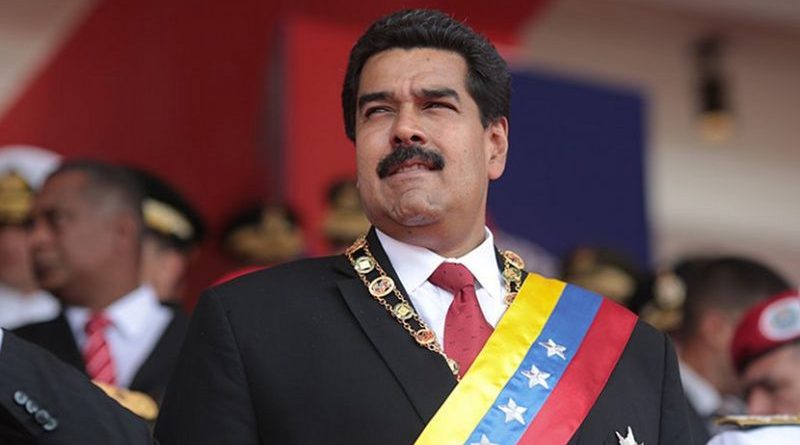
Venezuela's Nicolas Maduro. Photo by Hugoshi, Wikimedia Commons.

September 23, 2025 
By Observer Research Foundation
By Vivek Mishra and Prakreeti Chaudhary


The Caribbean, at present, stands barely one mistake away from a catastrophe. In an unprecedented move, the United States (US) has directly attacked a vessel linked to Venezuelan drug networks in international waters, killing 11 people. Trump invoked imminent threats to American security to take the action and linked it to Venezuela’s Tren de Aragua gang, involved in narcotics trafficking.

Caracas dismissed the incident as a fabrication and denounced it as an imperialist aggression. The Departments of State and Justice have raised the reward under the Narcotics Rewards Program (NRP) to as much as US$50 million for information that leads to the arrest or conviction of Nicolás Maduro on US narcotics law violations.

The situation has rapidly escalated as the Pentagon has since expanded its F-35 fleet in Puerto Rico and strengthened naval patrols. Over 4,500 Marines are on alert, underscoring the seriousness of the escalation. Venezuela has responded in kind, announcing that its coastal defence forces will increase from 10,000 to 25,000 personnel. Drones, naval patrols, and semi-submersible detection systems have been activated, especially in the country’s northwest states—Zulia and Falcón. The Venezuelan Air Force has also flown their F-16 fighters dangerously close to USS Jason Dunham, drawing Trump’s ire.

The US-Venezuela tension in the Caribbean now mirrors a Cold War-style standoff, walking a tightrope between a classic political and ideological divide. Critics argue that Washington’s one-sided strike lacks both congressional approval and international legal cover. If such operations become normalised, it could set an example for other powers to justify military action under the banner of counter-narcotics, undermining global norms. The confrontation now demands resolution frameworks that privilege stability over escalation.
Structural Roots of Venezuela’s Drug Nexus

Venezuela’s entanglement in the global drug problem—particularly its pronounced impact on the US—has consistently remained a contentious issue. Neighbouring the world’s largest cocaine supplier—Colombia—Venezuela’s topography and location make it a suitable transit hub instead of becoming a significant cocaine producer itself. Venezuelan officials, including the military-linked Cartel de los Soles, have been accused by US agencies of making profits through drug trafficking over the past two decades. Even President Nicolás Maduro and several of his top right-hand men have been charged with narco-terrorism by the US prosecutors. Not long ago, Venezuela’s former intelligence chief, Hugo Carvajal, pleaded guilty to drug trafficking charges in a US court, reinforcing the latter’s claims of systemic complicity.


Nonetheless, Caracas has dismissed these allegations, denouncing them as politically motivated attempts to invalidate its government. Venezuela has argued that the US particularly picks on it and ignores the involvement of its allies in Central and Latin America. However, evidence suggests that Venezuela may not be the largest but a significant transit corridor for drugs in the region. In fact, US Drug Enforcement Administration (DEA) data indicate that far greater volumes of cocaine travel through Guatemala or Honduras. Often, this has led Venezuela to accuse the US of disguising the geopolitics of oil as its war on drugs.
The Sanction-Security Spiral

The escalation between Washington and Caracas is not unfolding in isolation. The Caribbean may be the theatre, but the script is familiar. When security threats are countered solely through force or punitive measures, it is unlikely to yield the desired outcome and often results in prolonged insecurity. Over two decades, the US has imposed several sanctions ranging from visa restrictions, terrorism-related sanctions, sanctions related to anti-democratic actions, human rights violations, and corruption, drug-trafficking-related sanctions, export controls, and sanctions on the Maduro government, among others. This has led to the collapse of the Venezuelan economy.

In March 2025, Washington ordered Chevron to wind down Venezuelan oil exports within 30 days, cutting a lifeline for Caracas at a moment of fiscal strain. Additional sanctions block access to the US capital markets, freeze assets, and penalise firms that transact with Petróleos de Venezuela (PDVSA) – the state-owned oil and gas company.


European countries have also imposed restrictions, though more selectively, focusing on travel bans and asset freezes for Venezuelan officials who are implicated in corruption or human rights abuses. Financial pressure is compounded by ongoing litigation against Citgo, PDVSA’s US-based subsidiary, which risks dismantling one of Caracas’s last major overseas assets.

The impact of sanctions on the Venezuelan economy has been devastating. Oil production has plummeted, falling below one million barrels per day, while hyperinflation and shortages of food, fuel, and medicine persist. Ordinary Venezuelans bear the brunt even as remittance dependence has grown, public services have collapsed, and millions have fled the country, exacerbating regional migration crises. Contrary to intended results, sanctions have hardened Maduro’s inner circle in their collective stance against the US.

Restricted from Western financial systems, Caracas has turned more decisively toward Russia, China, and Iran for loans, oil swaps, military supplies, and political support. In effect, sanctions risk accelerating geopolitical polarisation in the Caribbean while failing to deliver regime change. Even though sanctions have been the mainstay of American political pressure against Venezuela for a long time, the second Trump administration is bent on testing the possibility of military force as well.

History is replete with instances highlighting Washington’s limits of a militarised approach in its backyard. In the past, the US has also signed joint initiatives such as Plan Colombia and Mexico’s Mérida Initiative, which have failed to yield desired results. Perhaps this suggests that the Trump administration must look for solutions beyond military means or coercion. Stability requires a combination of security cooperation, institutional reform, and humanitarian support. Without this, the Caribbean risks becoming the next Cold War frontier.


Internal Faultlines and Systemic Weaknesses

The challenges in Venezuela are entrenched and layered. Corruption within the judiciary, collusion by security forces, and weak state capacity, resulting from power consolidation and opaque democratic processes, make enforcement inconsistent. Traffickers exploit porous borders with Colombia and use clandestine airstrips, semi-submersibles, and fishing fleets to move narcotics.

On the US side, the elephant in the room is growing demand for drugs. The opioid crisis has revealed that without serious investment in treatment, rehabilitation, and education, supply-side crackdowns will achieve little. According to the US Department of Health and Human Services (HHS) data, millions of Americans with substance use disorders go untreated each year, widening the gap between public health needs and law enforcement-led strategies.

Furthermore, the absence of a robust legal mechanism on the international front to govern such disputes further aggravates the issue. The United Nations Office on Drugs and Crime (UNODC) provides technical assistance but lacks enforcement power. Moreover, the Organization of American States (OAS) initiatives are chronically underfunded. A regional response is the need of the hour and could prove to be the more effective approach. A Caribbean Counter-Narcotics Task Force, monitored by neutral countries such as Brazil or Chile, could share intelligence, coordinate patrols, and give smaller Caribbean nations a voice, while reducing their dependence on unilateral US action.

Additionally, targeting the finances of drug networks is more effective than intercepting shipments, as cartels use cryptocurrencies, offshore accounts, and shell companies. Stronger regional anti-moneylaundering standards and coordinated judicial frameworks for extradition and asset freezes would increase the costs of trafficking. Reducing demand is equally important. Portugal’s experience shows that decriminalisation, along with treatment and harm reduction, can address addiction as a health issue. Similar reforms in the US would lower demand for Venezuelan and Colombian cocaine and demonstrate Washington’s willingness to face its own responsibility. Confidence-building measures such as joint patrols under the UN or regional oversight could ease mistrust and prevent clashes, giving both sides a dignified way out. Finally, giving the UNODC more resources would strengthen multinational enforcement, capacity building, and data-sharing.

Shifting from a fragmented ‘war on drugs’ to a united framework could help the US balance enforcement, development, and public health. This will require treating narcotics as primarily governance and human-related security issues instead of treating them as a militarised conflict. For greater acceptability of his war against drugs, the Trump administration will have to avoid double standards in condemning Venezuela while tolerating drug entries from other neighbouring countries. Meanwhile, as the US has struck a second vessel in international waters, resulting in three Venezuelans being killed, and Secretary Rubio has affirmedthe US’s stance against drugs, the Caribbean seems to be inching towards a flagration which could engulf the larger region.


About the authors:

Vivek Mishra is Deputy Director – Strategic Studies Programme at the Observer Research Foundation.

Prakreeti Chaudhary is a Research Intern at the Observer Research Foundation.

Source: This article was published by the Observer Research Foundation.

Observer Research Foundation

ORF was established on 5 September 1990 as a private, not for profit, ’think tank’ to influence public policy formulation. The Foundation brought together, for the first time, leading Indian economists and policymakers to present An Agenda for Economic Reforms in India. The idea was to help develop a consensus in favour of economic reforms.


White House rejects Maduro's call for talks as US naval buildup stirs tensions


The White House on Monday dismissed Venezuelan President Nicolas Maduro's appeal for direct talks with Donald Trump, as Washington's show of force in the Caribbean drew both warnings of 'undeclared war' from Caracas and support from key opposition leaders hoping to hasten Maduro's fall.


Issued on: 23/09/2025 - 
By: FRANCE 24
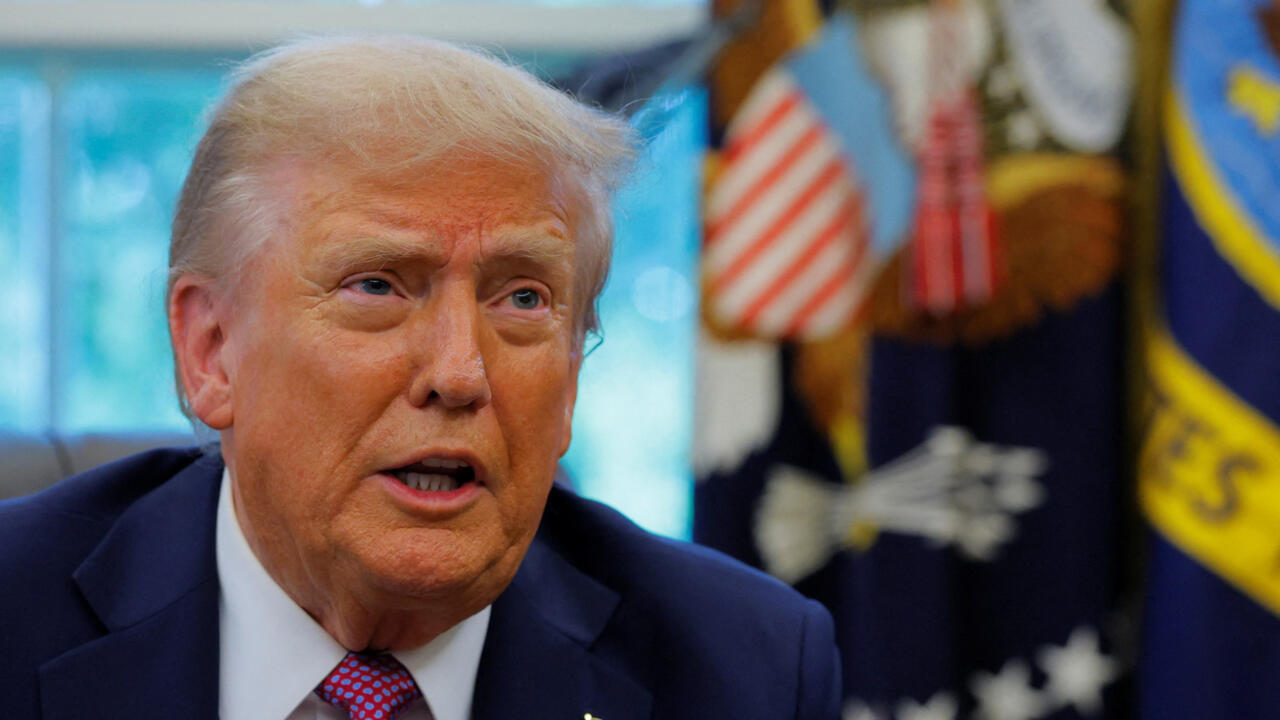
US President Donald Trump speaks with the media at the White House in Washington, DC, September 5, 2025. © Brian Snyder, Reuters

The White House on Monday dismissed a request by Venezuelan President Nicolas Maduro for talks with counterpart Donald Trump to de-escalate tensions between the two arch-foes.

The brush-off came as two Venezuelan opposition leaders backed a US naval build-up near the South American country, calling it critical for the restoration of democracy.

Trump has dispatched eight warships and a submarine to the southern Caribbean in an anti-drug operation Venezuela fears could be the preamble to an invasion.

US forces have destroyed at least three suspected Venezuelan drug boats in recent weeks, killing over a dozen people.

On Sunday, the Venezuelan government released a letter that leftist Maduro had sent to Trump.

In the missive, Maduro -- whose July 2024 reelection was rejected as fraudulent by Venezuela's opposition and much of the international community -- rejected as "absolutely false" US allegations that he leads a drug cartel and urged Trump to "keep the peace."

Reacting on Monday, White House Press Secretary Karoline Leavitt said Maduro's letter contained "a lot of lies."

She added the Trump administration's position on Venezuela "has not changed" and it viewed the regime as "illegitimate."

The US deployment is the biggest in the Caribbean in years.

Maduro has accused Trump -- who during his first term tried unsuccessfully to expedite the Venezuelan president's ouster -- of trying to affect regime change.

His defense minister, Vladimir Padrino Lopez, last week accused the United States of waging "an undeclared war" in the Caribbean, underlining that occupants of alleged drug boats were "executed without the right to a defense."

Thousands of Venezuelans have joined a civilian militia in response to Maduro's call for bolstering the cash-strapped country's defenses.

Some Venezuelans have welcomed the US actions, however, hoping they hasten Maduro's downfall.

'Real and growing threat'

Exiled presidential candidate Edmundo Gonzalez Urrutia, who the United States views as Venezuela's democratically-elected leader, said the military deployment was "a necessary measure to dismantle the criminal structure" he said Maduro leads.

Opposition figurehead Maria Corina Machado agreed, and said Venezuelan crime gangs were "a real and growing threat to the security and stability" of the Americas.

Maduro's claim to election victory last year sparked violent protests that were harshly repressed, leaving more than two dozen dead and hundreds behind bars.

The opposition said its own tally of results showed Gonzalez Urrutia, who stood in after the regime barred Machado from running, had defeated Maduro hands down.

Threatened with arrest, Gonzalez Urrutia fled to Spain. Machado remains in Venezuela, in hiding.

Another opposition figure, Henrique Capriles, last week came out against any US invasion.

"I continue to believe that the solution is not military, but political," the two-time presidential candidate said, adding Trump's actions were counterproductive and "entrenching those in power."

(FRANCE 24 with AFP)


War Signals, Quiet Channels, and Venezuela’s Discounted Barrels

  • Trump threatened Venezuela and sent Navy, Air Force, and special forces to the Caribbean.

  • Despite the hard line, both sides appear open to talks.

  • Chevron’s waiver keeps some U.S. barrels flowing, but sanctions push ~85% of Venezuela’s oil to China at a discount.

In a recent post on Truth Social, U.S. President Donald Trump threatened Venezuela to take back ‘prisoners and people from mental institutions,’ or else ‘the price you will pay will be incalculable.’ This was announced right when the U.S. military was deploying an array of Navy and Air Force units in the Eastern Caribbean, and even elite Special Operations forces, making the threat real.

The deployment is accompanied by a key narrative element. Since late July, administration officials have been promoting the idea that Venezuela is ruled by a ‘criminal organisation’ known as the ‘Cartel de los Soles’, with Nicolás Maduro at its head. Many analysts are thus seeing through the ‘counter-narcotics’ rhetoric, concluding that this is a campaign to drive Maduro out of power.

The U.S. military has since bombed and destroyed three boats, alleged to be carrying drugs from Venezuela—although the statement on the third strike shied away from mentioning the country, given rising questions over the legality of such actions. In any case, while the Navy surrounds Venezuela’s coasts, destroying speedboats could be equivalent to shooting in the air during a heist.

At Guacamaya we recently published articles finding that the ‘Cartel de los Soles’ story is no more than a political narrative, ignoring the realities of drug trafficking, and that it is being promoted by certain political and economic interests to push for regime change in Venezuela. Others have also analysed how the use of the terms ‘Tren de Aragua’ and ‘Cartel de los Soles’ has risen and fallen based on their political convenience.

Related: Eni Seals Billion-Dollar Fusion Energy Deal with U.S. Partner

President Trump’s messaging has consistently focused on fentanyl—which causes 70% of overdose deaths in the United States—instead of Colombian cocaine. And in any case, just 5% of the latter transits through Venezuela, according to none other than the DEA. What Venezuela does indeed have is 300 billion barrels of oil, 220 trillion cubic feet of gas, and significant deposits of gold, iron, tin, bauxite, coltan, and rare minerals. Meanwhile, Caracas has been a close ally of Havana, meaning it is in the sights of South Florida’s Cuban-American political community, with Secretary of State and National Security Advisor Marco Rubio at its head.

Are we then to expect a further escalation of conflict between the United States and Venezuela? How likely is it that there will be an all-out war? Or are the two sides ready to negotiate? Then, what would either of these options mean for energy markets?

Actually, there are some signals that both the White House and the Palace of Miraflores are open to talk. The Truth Social post creates a doubt. One can understand that it refers to President Trump’s claim that Maduro purposefully sent thousands of criminals into the United States. But if Venezuela accepts all deportees, would regime change plans be shelved?

Soon after the publication, on the very same day, Reuters said that it had seen a letter in which Maduro offered Trump to engage in direct talks via Presidential Envoy for Special Missions Richard Grenell. The letter’s date was September 6, probably reflecting that some officials tried to hide it.

A key question remains. The United States is already sending two flights full of Venezuelan migrants home every week. By mid-September, this means 54 flights and 10,000 deportees, according to a source in the State Department with information on the matter. So, is the solution as simple as ramping up the pace of deportation flights?

Likewise, regarding drug trafficking, would it be enough for Maduro to commit to combating the transit of cocaine? If Trump only worries about fentanyl, eradicating it will be all the easier.

Besides immigration and drug trafficking—real and alleged—energy is the key topic in discussions between Washington, DC and Caracas. If they go back to the negotiation table, one can be sure that oil and gas will be on the agenda.

The sanctions waiver for Chevron to continue operating in Venezuela is still active. Local sources estimate that it is shipping an average of 80,000 barrels per day to the United States, well below a high of 300,000 bpd last year, under the previous license.

The main argument behind the special authorisation is that the corporation needs to recoup its debts. But this results in an awkward favouritism. On one hand, other oil firms in the U.S. and Europe are wondering what the argument is for leaving them out. Simultaneously, there are various types of creditors of Venezuela, including bondholders and arbitration award claimants. The first group are owed $70 billion—not including bonds held by Venezuelan entities—while the second are requesting at least $23 billion. Both are mostly comprised of U.S. and European companies and financial institutions.

Another argument is that the Chevron license will allow the United States to keep a foothold in Venezuela and combat Beijing’s influence in the region. But the current sanctions framework is resulting in China taking 85% of oil exports, at a discount. We are also seeing private Chinese companies sign contracts to extract crude, including China Concord Petroleum, Anhui Guangda Mining Investment, and Kerui Petroleum; all while North American and European investors are barred by the Department of the Treasury’s sanctions.

Iran’s dark fleet is also back, providing much-needed diluents, after having stayed out of the picture while Chevron and other Western companies had licenses until late May this year. Historically, the U.S. and Venezuela had a symbiotic relationship; the first sold light petroleum products to make the second’s extra-heavy crude exportable, which then ended up in the Gulf Coast refineries.

The still active Chevron license leaves an open question mark. Is the White House gearing up to escalate tensions, and risk losing its last foothold in Venezuela? Or, perhaps, will it use negotiations to expand its economic beachhead and demand better conditions for American businesses? President Trump has already sought to extract deals for critical minerals and energy with countries like Ukraine, the Democratic Republic of Congo, Syria, and Saudi Arabia.

By Elias Ferrer for Oilprice.com


Shadowy U.S. Special Operations Ship Spotted off Venezuela

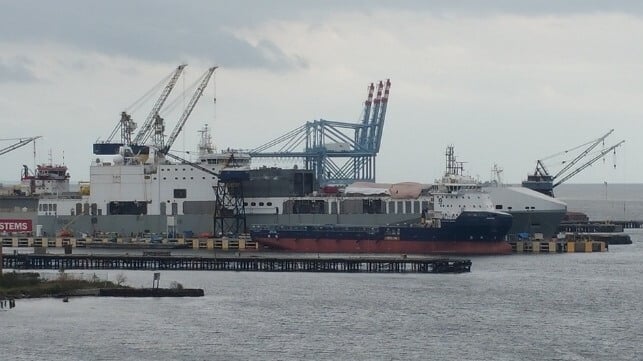
The ro/ro ferry Cragside undergoes conversion into special operations ship Ocean Trader, Mobile, Alabama, 2015 (background with tarps on deck) (Jabarnes / CC BY SA 4.0)

Published Sep 22, 2025 3:56 PM by The Maritime Executive


The U.S. military is building up a growing force of naval and aviation assets within striking distance of Venezuela, prompting speculation about the administration's plans - and its current activities. It is already carrying out drone strikes on drug-running boats linked to Venezuelan smuggling groups, and a rare vessel sighting in the region suggests that more gray-zone kinetic operations may be in the works. 

The vessel in question is an open secret. U.S. Military Sealift Command operates an 11,000 dwt cargo ship called Ocean Trader, which began life as a European ro/ro ferry. The RFP for its procurement included requirements fitting a special operations sea base: landing capacity for heavy helicopters, accommodations for 160 supernumeraries for 45 days, underway replenishment capability, an onboard SCIF, machine gun mounts, and launch and recovery capacity for jet skis and RIBs. After 12 years in Navy service, this modified merchant ship still wears its original white livery, but is never spotted working cargo, never inspected by port state control officials and never broadcasts its position on AIS (since 2017). Previous in-person sightings suggest that Ocean Trader's name and flag state are not marked on her stern, and her IMO number is displayed in unusually small text. 

On Sunday, open-source researcher MT Anderson spotted Ocean Trader's characteristic hull shape, size and color in satellite imaging of an area southwest of St. Kitts. The last sighting of the vessel was off Bahrain in May 2025, suggesting that Ocean Trader got under way for Venezuela well in advance of current developments. 

Other analysts have confirmed that the appearance of the ship in MT Anderson's satellite imaging conforms closely to previous known images of Ocean Trader. 

The Ocean Trader is usually spotted near hot spots for special operations activity, like Somalia. Her presence off Venezuela raises questions about her current mission set, as well as any future plans for her use. The vessel is the stealthiest element of a growing armada in the area, to include the destroyers USS Stockdale, USS Sampson and USS Jason Dunham; cruiser USS Lake Erie; LCS USS Minneapolis-St. Paul; the amphibs USS Iwo Jima, USS Fort Lauderdale, and USS San Antonio; and attack sub USS Newport News. 

The administration has been ratcheting up pressure on the government of Venezuelan dictator Nicolas Maduro, and the accumulation of military capabilities in the Caribbean is perceived by many analysts as a signaling exercise - not a preparation for an invasion, which would require far more troops. 

The buildup is "a clear signal to Nicolas Maduro that this administration is growing serious about accomplishing either regime or behavioral change from Caracas," Adm. James G. Stavridis, former chief of US Southern Command, told the New York Times. "Gunboat diplomacy is back, and it may well work."

ECO CRIMINAL CAPITALI$M

Singapore firm rejects $1bn Sri Lankan pollution damages

Singapore (AFP) – A Singapore shipping company told AFP on Tuesday it will refuse to pay Sri Lankan court-ordered damages of US$1 billion for causing that country's worst case of environmental pollution.

Issued on: 23/09/2025 - RFI

The Singapore-registered container ship MV X-Press Pearl carrying hundreds of containers of chemicals and plastics, as its towed away from the coast of Colombo in June 2021
 © ISHARA S. KODIKARA / AFP/File

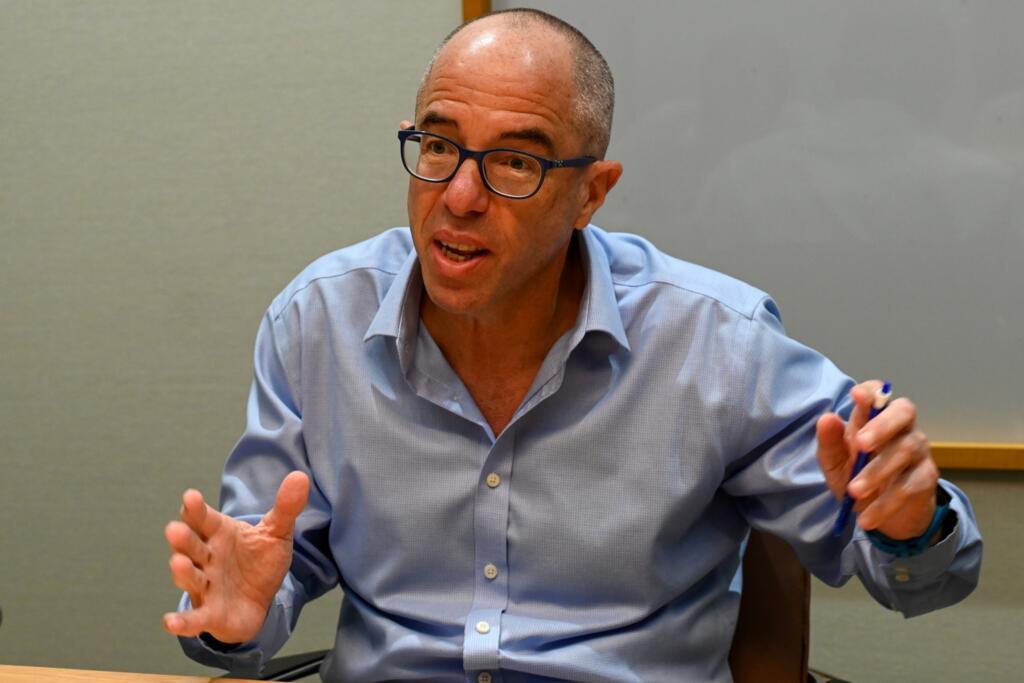
In an exclusive interview, X-Press Feeders chief executive Shmuel Yoskovitz said he believed paying would have wide-ranging implications on global shipping and "set a dangerous precedent".

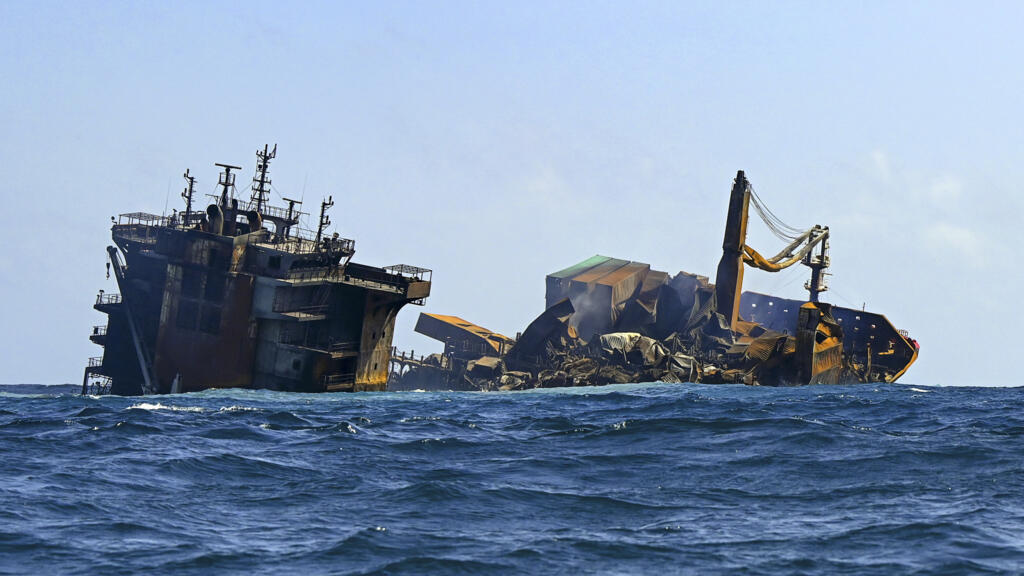
The company operated the MV X-Press Pearl that sank off Colombo Port in June 2021 after a fire -- believed caused by a nitric acid leak -- that raged for nearly two weeks.

Its cargo included 81 containers of hazardous goods, including acids and lead ingots, and hundreds of tonnes of plastic pellets.

The ship was refused permission by ports in Qatar and India to offload the leaking nitric acid before it arrived in Sri Lankan waters.

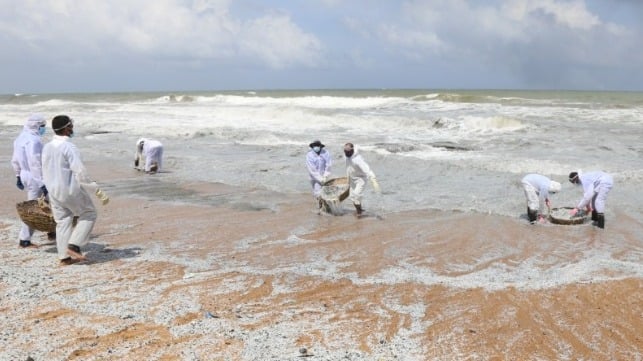
Tonnes of microplastic granules from the ship inundated an 80-kilometre (50-mile) stretch of beach along Sri Lanka's western coast. Fishing was prohibited for months.

Sri Lanka's Supreme Court in July ordered the company to pay Colombo an "initial" US$1 billion in damages within a year, with the first tranche of US$250 million to be paid by Tuesday.

It also ordered the company "to make such other and further payments" in the future as the court may direct.

'Hanging guillotine'


Yoskovitz rejected the open-ended nature of the penalty.

"We are not paying because the whole base of maritime trade is based on the limitation of liability. This judgment undermines this limitation of liability," he told AFP.

"Any payment towards the judgment could set a dangerous precedent for how maritime incidents will be resolved in the future," he said.

X-Press Feeders chief executive Shmuel Yoskovitz says he believed paying the court-ordered damages would have wide-ranging implications on global shipping
 © Roslan RAHMAN / AFP

Yoskovitz said the absence of limitations could lead to higher insurance premiums, which would be ultimately passed on to consumers.

The chief executive again apologised for the incident, saying the company recognised the disaster and was trying to make amends.

He said X-Press Feeders had already spent $170 million to remove the wreck, clean up the seabed and beaches, and compensate affected fishermen.

"We are not trying to hide... We are willing to pay more, but it has to be under certain marine conventions and an amount that is full and final and then it can be settled, and we can move on," he said.

"But to live under this hanging guillotine -- it is simply impossible to operate like this."

Long-term effects

In Colombo, Sri Lanka's Supreme Court has scheduled a hearing on Thursday about the implementation of its decision.

One of the petitioners who sought compensation for the pollution has called for further research to determine the full extent of the damage to the island's marine ecosystems.

"If you visit the coastlines today, there is nothing visible in terms of plastic pollution. A major clean-up took place soon after the X-Press Pearl incident, but the effects of the pollution will be felt for a long time," said Hemantha Withanage from the Centre for Environmental Justice.

The MV X-Press Pearl vessel sank off Colombo Port in June 2021 
© ISHARA S. KODIKARA / AFP/File

It remains unclear how Sri Lanka's Supreme Court could enforce its decision.

However, in its 361-page decision in July, the court ordered the police and the state prosecutor to initiate criminal proceedings for non-compliance if the parties were present in Sri Lanka.

Yoskovitz expressed concern over the ship's Russian captain, Vitaly Tyutkalo, who has been banned from leaving Sri Lanka for more than four years, as well as the company's third-party agents there.

The firm had offered to pay a fine for the skipper's release, but this was refused, according to Yoskovitz.

X-Press Feeders obtained an order from London's Admiralty Court in July 2023, limiting its liability to a maximum of 19 million pounds (US$25 million), but Sri Lanka has challenged that.

The Sri Lankan government also filed a lawsuit against the ship's owners in the Singapore International Commercial Court. But that has been stayed pending the result of the case in London, with a pre-trial hearing expected in May 2026.

© 2025 AFP

X-Press Feeders Declines to Pay Sr Lankan Court Judgmen

Drifts of partially-burned plastic pellets from XPress Pearl wash up on the beach in Colombo, 2021 (Sri Lankan Environmental Protection Authority)

Published Sep 22, 2025 9:45 PM by The Maritime Executive


X-Press Feeders has declined to pay an initial judgment ordered by the Supreme Court of Sri Lanka for damages from the loss of the XPress Pearl, which burned and sank off Colombo with disastrous effects in 2021. The first $250 million tranche is due on September 23, and if paid, it would more than double the amount that X-Press has paid out so far. 

In a statement Tuesday, the Singapore-based company said that it is "unable to make payment at this stage, and it is still in talks with Sri Lankan authorities.

"While we respect the judicial process, the ruling leaves open the possibility of additional and potentially unlimited compensation. Any payment towards the judgement could set a dangerous precedent for how maritime incidents will be resolved in the future," said Shmuel Yoskovitz, Chief Executive Officer of X-Press Feeders.

X-Press Pearl suffered a slow-rolling disaster on her final voyage in 2021. Several containers of nitric acid started leaking on deck, and the master sought a port of refuge. However, port officials at Hamad, Qatar and Hazira, India refused to allow the unloading of the leaking boxes. The container ship sailed onwards to Colombo, Sri Lanka, a voyage of some 1,000 nautical miles southeast from Hazira.

On arrival off Colombo, a container on deck caught fire, but local authorities refused to allow XPress Pearl to berth for firefighting operations. The ship burned and sank, releasing acids, caustic soda, 9,700 tonnes of epoxy resin and 1,680 tonnes of plastic pellets into the water - the largest plastic spill in history. 

In July 2025, Sri Lanka's Supreme Court ruled in favor of local fishermen in an environmental-damage suit against X-Press Feeders, finding that X-Press had not fully informed the port of the unfolding catastrophe on board. The court set the value of the loss at $1 billion and gave the owner, charterer and agent one year to pay. The court's plan requires four $250 million installments, payable quarterly. All the money would be deposited in court-administered funds for compensation to the fishing community and for environmental remediation.

X-Press Feeders took issue with the court's decision. “The court’s intent to lay all blame and liability on the vessel’s owners and operators is blatantly apparent in their judgment,” the firm said in a statement last month. "[It has] effectively pronounced the vessel’s master and local agents guilty of criminal charges before their trials have concluded," referring to the parallel criminal case against X-Press Pearl's captain. 

In the new statement issued Tuesday, X-Press Feeders said that it sympathizes with local fishermen and is willing to work with local nonprofits and community organizations to provide compensation directly. It noted that all government claims approved by the International Tanker Owners Pollution Federation have already been paid out. Yoskovitz called for a court judgment that is "substantiated, proportionate and consistent with international conventions."


Photos: Cargo Ship Thamesborg Remains Grounded in Northwest Passage

cargo ship aground in Arctic
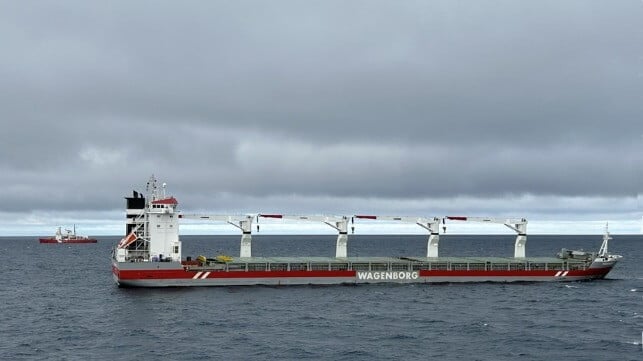
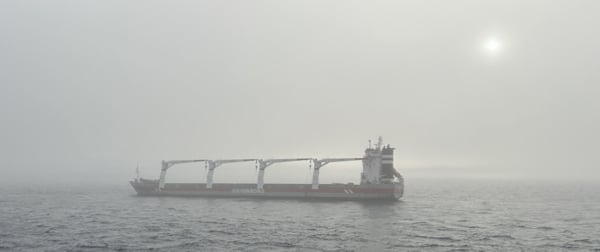
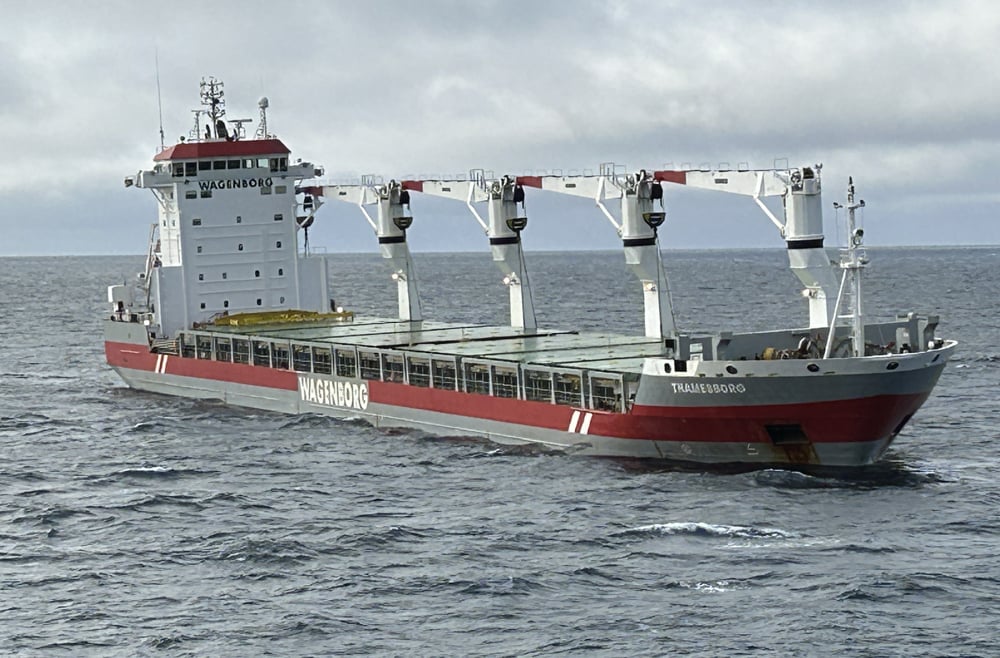
Thamesborg has been stranded in a remote part of the Canadian Arctic since September 6 (Photos courtesy of Canadian Coast Guard)

Published Sep 17, 2025 2:44 PM by The Maritime Executive


The Canadian Coast Guard and the owners of the cargo ship Thamesborg, Royal Wagenborg, provided updates reporting that after 10 days, the vessel remains stable and in no immediate danger. Resources are being assembled to refloat the 21,359 dwt vessel, which is carrying a cargo of carbon block.

The first salvage equipment, a salvage master, and a naval architect have reached the vessel, and a plan for refloating was submitted to the Canadian Coast Guard and Transport Canada, who said they are reviewing it. The cost of refloating the vessel and any remediation efforts undertaken by the Canadian Coast Guard will be the responsibility of the vessel’s owner.

Additional salvage equipment and staff are expected to reach the ship later in the week. Royal Wagenborg, however, notes that the efforts are subject to the weather, which delayed some operations last weekend. 


The Canadian Coast Guard had dispatched its vessels CCGS Jean Goodwill and CCGS Sir Wilfrid Laurier to the site and used them to assist in transporting materials. Both vessels have been released, while CCGS Des Groseilliers is now on-scene to monitor and provide response support.

Thamesborg, which is 565 feet (172 meters) in length, was transiting from Asia to Baie Comeau, Canada, when it grounded in the Franklin Strait off Prince of Wales Island, Canada, on September 6. Surveys have confirmed the damage is limited to several of the vessel’s ballast tanks, with no water ingress into the cargo holds or fuel tanks.

Royal Wagenborg highlights that the vessel, which was built in 2012, was designed to meet Finnish/Swedish ice class 1A (IACS Polar Class 7), meaning it is suitable for summer and autumn operations in first-year ice. For the Arctic voyages, Royal Wagenborg said it hires external knowledge in the form of ice pilots, who are often former captains of icebreakers who are familiar with the local waters. They said the Canadian authorities “greatly appreciate that we strengthen our professional crew with extra local knowledge.”


The company became the first European shipping company in 2016 to traverse the entire North West Passage without the assistance of icebreakers. The company highlighted that it has made several transits of the waters, including Thamesborg previously sailed from Canada to China on the North West Passage.

Using this route, Royal Wagenborg reports is some 3,750 nautical miles shorter than sailing through the Panama Canal. It results in about 14 days less sailing time. They, however, acknowledged the challenges, noting the level of planning required and that ships encounter shallow water, islets, narrow waterways, strong currents in some passages, and routes close to the coast. They said hydrographic data is available, but that navigation aids such as buoys and beacons are very limited. Crews are reported to have to work off a combination of electronic and paper charts.


Report: UK's Seafaring Community is in Decline

MCG
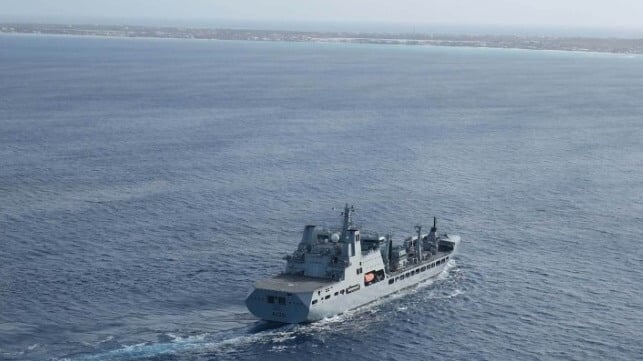
Civilian-crewed RFA Tideforce off the Turks and Caicos (Royal Navy file image)

Published Sep 22, 2025 5:17 PM by The Maritime Executive


The United Kingdom is on track for a massive decline in the number of its homegrown seafarers over the next decade and a half owing to rising challenges, which is also making the country struggle to recruit the next generation of seafarers.

A new report commissioned by the Maritime Charities Group (MCG) shows that due to burnout and safety concerns, the UK’s diverse seafaring community is vanishing at an unprecedented rate. Currently, the community - defined as active seafarers, former seafarers, and dependent children - is estimated at more than half a million. By 2040, the community is projected to decline by 40 percent to around 300,000. In an extreme scenario, projections indicate a substantial 75 percent decrease to as low as 131,000.

The future is gloomy for the community of the UK's active seafarers, which is expected to decrease by approximately six percent from 35,000 to 33,000 - or even as low as 23,000, in an extreme scenario. This would mean a loss of one in three seafarers.

According to the report - based on a survey of hundreds of seafarers and their families - the strains that come with the job are the main contributing factors for the declining numbers. For instance, two out of five seafarers believe their vessels are unsafe due to lack of crew, while only one in three agree that they receive adequate shore leave. While on duty in the high seas for weeks and even months, 40 percent of seafarers reported that they do not get enough sleep onboard. Other factors like lack of social interaction and workplace bullying are also a persistent challenge.

The declining numbers of seafarers, coupled by the challenges to recruit, are a major worry for the UK’s shipping industry, which contributes $22 billion in gross value to the national economy annually. Its maritime sector directly employs more than 98,000 people at sea and on shore in roles including cargo, fishing, ferries, superyachts, cruise ships and workboats, and also supports 728,000 jobs.

Seafarers handle 90 percent of the country’s traded goods and support the Royal Navy via the Royal Fleet Auxiliary, as well as crewing cruise ships, ferries and more. Many more are employed in the commercial fishing industry.

“If seafaring communities start to disappear, it will get harder and harder to restore them and to attract the next generation into vital seafaring careers,” said Tim Slingsby, MCG chair.

To safeguard the UK’s seafarers’ community, the MCG wants maritime welfare charities to take urgent action, including reviewing eligibility criteria to expand the number of seafarers they can support, and working with policymakers to ensure standards on seafarer safety and wellbeing.

King Charles Commissions New Royal Navy Attack Sub

King Charles
Courtesy of the Royal Navy

Published Sep 22, 2025 9:54 PM by The Maritime Executive


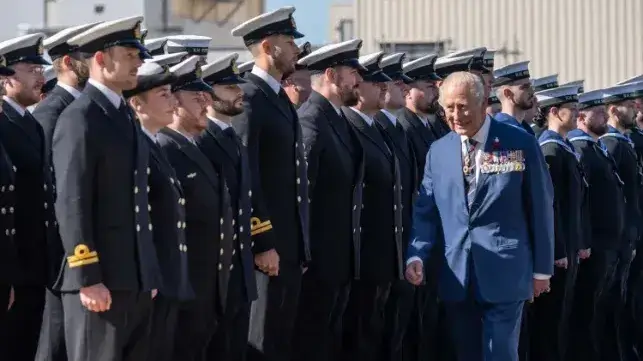
After 12 years of construction, the Royal Navy is celebrating the commissioning of another of its most advanced hunter-killer submarines, this time with a royal welcome. 

The HMS Agamemnon (S123), built at a cost of $2 billion, was commissioned at the BAE Systems’ yard in Barrow-in-Furness by King Charles III in a ceremony that departed from naval tradition. The King read the commissioning warrant, an act that is typically performed by the Fleet Commander.

Following the commissioning, the 7,400 tonnes nuclear-powered boat that is 97 meters long is expected to complete her final tests and commissioning program before leaving Barrow for sea trials. Nicknamed "Awesome Aggie," the boat becomes the sixth of seven Astute-class submarines built for the Royal Navy over the past quarter of a century. Once fully operational, she will be based at the HM Naval Base Clyde, joining her five sister submarines that are already in service.

The contract for Agamemnon was awarded in 2010, with her keel laid in 2013 marking the beginning of a 12-year construction period, which BAE Systems has described as quite complex. She becomes the sixth Royal Navy vessel to carry the name taken from the Greek king from the Trojan Wars going back to the late 18th century.

Described as the most advanced hunter-killer, Agamemnon is expected to carry out a number of important roles from covert surveillance, tactical strikes to protecting critical underwater infrastructure owing to her advanced weaponry that includes the spearfish heavyweight torpedo and the Tomahawk Block IV land-attack missile, which has a range of some 1,000 miles.

The Tomahawk IV has a longer range but can also be re-directed at a new target mid-flight. It can also beam back images of the battlefield to other assets. The UK says the boat will be pivotal to the country’s national security going into the second half of the 21st Century.

“HMS Agamemnon is a product of stealth, equipped with world-leading sensors and is crewed by a highly-trained and dedicated crew. Together, they form a formidable capability, vital to protecting the United Kingdom’s security interests and supporting our global responsibilities,” said Commander David Crosby.

Crosby is taking over Agamemnon’s command, having commanded her three older sister boats namely Astute, Artful and Anson.

Apart from the commissioning of Agamemnon, the event also marked the steel cutting for the fourth and last Dreadnought-class submarine, HMS King George VI, that is also being built by BAE Systems. The boats, due to enter service from the early 2030s, are the replacement for the Vanguard-class submarines.

King Charles also visited Barrow Town Hall to bestow Royal Port status on the town in honor of its 120-year history as the home of UK submarine construction. Two boats, the final Astute-class submarine Agincourt and Dreadnought are currently under construction in the gigantic Devonshire Dock Hall, which dominates the Barrow townscape.


Maritime Revival?

Correcting the sorry state of the U.S. maritime industry is a priority for the White House and Congress


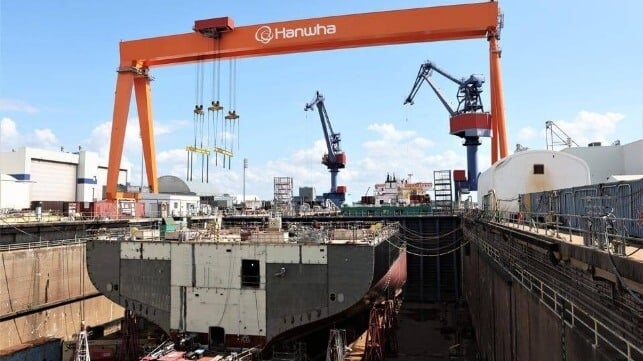
Hanwha Philly
Courtesy Hanwha Philly

Published Sep 22, 2025 10:11 PM by G. Allen Brooks


(Article originally published in July/Aug 2025 edition.)


In February, a draft executive order was leaked that outlined a plan for the government to address the Navy and commercial shipbuilding problems as well as the inadequate supply of U.S. mariners. The effort was promoted as addressing a national security issue.

The Administration's efforts were mirrored in the bipartisan congressional SHIPS for America Act. To expedite its passage, the bill was divided into two parts, eliminating the need for the complete bill to be considered by two separate legislative committees. Instead, these committees would only need to deal with provisions related to their jurisdiction, thereby speeding up the process.

Trump's April Executive Order established the White House Shipbuilding Office under the National Security Council. Recently, the NSC underwent reorganization and downsizing. The head of the Shipbuilding Office departed for an industry position, and staff members either were transferred to other positions or resigned. The staff-less office now operates under the Office of Management and Budget.

JUST THE FACTS

We're reminded of the poor performance of the shipbuilding industry by the latest data from the U.N. Conference on Trade and Development. The 2024 data showed that the global shipbuilding industry delivered 71.7 million tons of new oceangoing ships. It included 30,782 tons built in the U.S. That represented four hundredths of a percent of the total tonnage built by the world's shipyards. This was not four percent or even four-tenths of a percent. It was just four hundredths of a percent!

The new tonnage represented a 1,469-vessel expansion of the world's merchant fleet. According to the UNCTAD data, the U.S. merchant fleet increased by just six ships. If we exclude ships in the "Other Types" category, the global fleet increased by 1,128 ships while the U.S. fleet remained unchanged.

A review of historical fleet data shows that 2024 was not an anomaly. Between 2011 and 2025, the global fleet increased by 35 percent. However, the U.S. fleet only increased by just 2.7 percent.

Is it possible the U.S. didn't need additional vessels? The UNCTAD data on global maritime trade suggests otherwise. From 2011 to 2023, global cargo volumes loaded and discharged increased by 22.5 percent while total U.S. maritime trade grew by 16.2 percent. That would certainly justify a larger U.S. fleet.

Equally interesting is the fact that between 2011 and 2023, the volume of U.S. cargo loaded increased by 58.8 percent while the amount discharged declined by 16.1 percent. Excluding the impact of the U.S. becoming a major oil exporter, U.S. cargo growth was 24.2 percent.

Overall, the UNCTAD data support the President's efforts to revive the U.S. shipbuilding and merchant marine industries. During World War II, the U.S. created a powerful industry that delivered ships in months, not years, and enabled the U.S. and its allies to secure victory in the European and Pacific theaters. Over time, however, the shipbuilding and maritime industries were allowed to atrophy.

How did this happen?

The downsizing of the U.S. defense industry following the end of the Cold War contributed to the atrophy. Moreover, military officials indicated to defense supplier executives that spending would continue to decline. Therefore, it made sense for the industry to contract, which it did through mergers and company acquisitions.

A shrinking industry, facing reduced defense spending, focused on cutting costs and eliminating inefficient businesses. That meant targeting the closing of shipyards that made large, oceangoing military and merchant ships. Furthermore, there was little incentive to invest in operating shipyards because they faced a shrinking market.

TURNING THE TIDE – DAVIE AND HANWHA

That tide may be turning. Earlier this month, Canada's Davie Shipbuilding announced that it aims to acquire shipyard assets in Galveston and Port Arthur, Texas, from Gulf Copper & Manufacturing. Davie's goal is to enter the market to build icebreakers that the President has ordered. As Davie's CEO, James Davie, said, the company's goal is "to make Texas a world-class hub for American icebreaker and complex ship production."

Davie's involvement in building U.S. icebreakers would expand with the acquisition, given its ownership of Helsinki Shipyard in Finland, one of the world's leading builders of icebreakers. It also owns a shipyard in Quebec that specializes in icebreakers.

Last July, the Biden Administration negotiated a deal with Canada and Finland, known as the Icebreaker Collaboration Effort Pact, which allowed the parties to share their expertise. The Trump Administration reaffirmed this collaboration in March. By utilizing existing icebreaker designs and construction expertise, costs can likely be reduced. Perhaps more importantly, the construction experience might lead to shorter delivery times.

Davie hopes to complete the Gulf Copper acquisition later this summer. U.K.-based marine industrial group Inocea owns Davie. It plans to invest $1 billion in modernizing and expanding the Texas shipyards.

The move by Davie follows the December 2024 acquisition of Philly Shipyard, controlled by Aker Capital, by Hanwha Systems and Hanwha Ocean Co. of South Korea for $100 million. Hanwha Ocean was formerly known as Daewoo Shipbuilding & Marine Engineering Company. It's the only company that has built submarines for the Korean Navy. It's also built five Tide-class fleet oilers for the U.K. Royal Fleet Auxiliary. Hanwha is one of Korea's top three shipbuilders.

Last spring, the company completed a six-month refurbishment of a U.S. Navy vessel at its shipyard in Geoje, Korea. The need for the U.S. Navy to utilize a foreign shipyard for vessel refurbishment is a sign of the woeful state of the domestic shipbuilding and repair industries.

David Kim, Hanwha Philly Shipyard's new CEO, said, "Hanwha Philly Shipyard begins an exciting new chapter today. We plan to grow and build on a long tradition of success by expanding production using advanced technologies and supporting the national revitalization of U.S. shipyards." He went on to further explain the company's plan: "We intend to do that by pushing the boundaries of shipbuilding by combining people with technology to build best-in-class vessels."

Recently, Hanwha Philly Shipyard announced a contract to construct a Jones Act-compliant LNG carrier for a Hanwha Group subsidiary, with an option for a second vessel. According to reports, the vessel is expected to cost $250 million, which is an attractive price for a sophisticated ship like an LNG carrier. Hanwha is a world leader in LNG ships and will provide a technology transfer arrangement with Philly Shipyard.

Notably, this will be the first U.S.-built LNG carrier in 45 years.

Established in 1997 following the closure of the U.S. Navy's Philadelphia Naval Shipyard, Philly Shipyard has delivered around 50 percent of all large, oceangoing U.S. Jones Act-compliant commercial ships since 2000. These ships have primarily been tankers and container ships. It recently completed a second National Security Multi-Mission Vessel (NSMV) for the U.S. Maritime Administration, establishing the shipyard's credentials as a prime maritime supplier.

NSMVs are used as training ships for U.S. maritime schools. The first vessel was delivered to the State University of New York Maritime College last year. The second ship will go to the Massachusetts Maritime Academy.

Hanwha Group acquired a 9.9 percent stake in Australian shipbuilder Austal Ltd. for 183.3 million Australian dollars ($117 million) in March. This purchase followed an offer to buy Austal USA's shipyard in Mobile, Alabama, for $662 million, which was scuttled partly due to national security concerns over Korean ownership of a yard becoming more involved in U.S. submarine construction.

Austal specializes in building both commercial and naval vessels as a global defense prime contractor. It's one of four major suppliers to the U.S. Navy and has built a surface warfare combatant ship, the Independence-Class Littoral Combat Ship (LCS).

While headquartered in Australia, Austal operates shipyards in Alabama and Western Australia. It will be interesting to see the Hanwha Group's next moves in light of its acquisition of Philly Shipyard and its investment in Austal.

One wonders whether the uncertain fate of Trump's shipbuilding office and congressional inaction on the SHIPS Act will discourage further foreign investment in domestic shipyards.

NEXT STEPS?

The actions of Hanwha and Davie signal that maritime capital understands the serious condition of the U.S. shipbuilding and repair industries as well as what appears to be a commitment by the Trump Administration to revive the domestic maritime sector.

Navigating foreign policy and national security issues by foreign shipbuilders raises questions about the speed of the U.S. maritime revival. However, the UNCTAD data confirm both the challenges and opportunities awaiting policymakers and companies seeking to revive the maritime industry.

The opinions expressed herein are the author's and not necessarily those of The Maritime Executive.


Container Rates Plummet on China-U.S. Routes

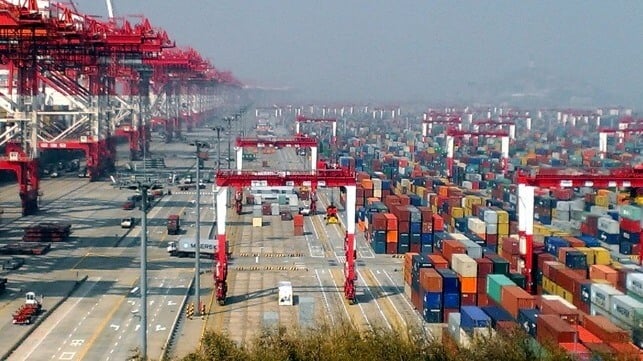
Shanghai Yangshan
ErickJB / iStock

Published Sep 22, 2025 10:58 PM by The Maritime Executive


International container rates have plummeted over the past few weeks, pulled down by cooling economic signals in the West and the onset of the Golden Week holiday in China.

The core Shanghai-U.S. West Coast route saw rates drop by 31 percent week-on-week, down to just $1,600 per FEU. The all-water route from Shanghai to the East Coast fell to $2,500 per FEU, down 23 percent week-on-week. Rates from Shanghai to Europe dropped by nine percent to $1,000 per TEU, a favorable price per ton-mile for the shipper. Falling demand and falling rates are typically a sign of blanked sailings ahead. 

"If demand drops, so should capacity if you are to at least underpin the rates and prevent them from dropping. And if we look on the capacity side, the carriers are still busy blanking sailings," said Vespucci Maritime analyst Lars Jensen in a podcast released Monday. "We are now at a point where roughly 14% have been pulled out of the Pacific, 17% out of Asia and Europe."

Part of the drop on U.S. routes may be a response to tariffs on China, which currently sit at 30 percent-plus and will automatically ratchet up further on November 10 (unless Beijing and Washington negotiate another agreement). Part may also be consumer sentiment: most Americans expect the unemployment rate to rise within a year, and about one-fifth think it's possible to lose a job within five years, according to the latest data from University of Michigan's benchmark survey. 

"This month’s easing in economic views was particularly strong among lower and middle income consumers," University of Michigan consumer survey director Joanne Hsu said in a mid-September update. "Trade policy remains highly salient to consumers, with about 60% of consumers providing unprompted comments about tariffs during interviews, little changed from last month."