Sunday, October 19, 2025


China is Including Cruise Ships in its New “Special Port Fees”
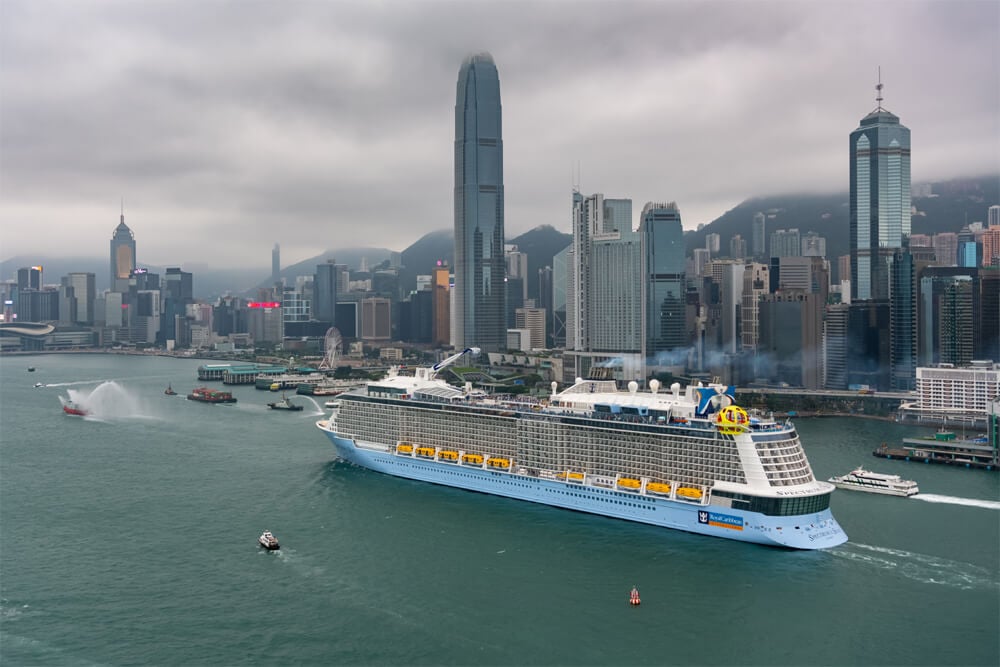
cruise ship in Hong Kong
Spectrum of the Seas arrived in Asia in 2019 and returned to China 2024 homeporting in Shanghai (Royal Caribbean)

Published Oct 17, 2025 7:17 PM by The Maritime Executive


China is extending its new “special port fees” to visiting cruise ships, raising questions about whether the cruise industry will retreat from its planned port calls due to the costs. The new fees started on October 14 as a reciprocal to the U.S. port fees introduced under the program established by the U.S. Trade Representative’s Office in response to China’s dominance of the shipbuilding industry.

The U.S. program is targeting China-owned and operated ships as well as those built in China, but mostly applies to the commercial shipping industry. None of China’s cruise ships has scheduled port calls in the United States. China, in its reciprocal program, is targeting U.S.-owned or operated ships as well as U.S.-flagged and built ships. 

The test of China’s approach to the cruise industry came on Thursday, October 16, with the Marshall Islands-flagged cruise ship Riviera (66,172 gross tons / 1,250 passengers), operated by Miami, Florida-based Oceania Cruises, part of Norwegian Cruise Line Holdings, which was scheduled for a one-day port call. The ship, which is marketed in the United States and carries American passengers, is on a 14-night cruise that began in Japan. 

Caixin, a privately-owned Chinese news outlet, reports the Riviera was going to have to pay approximately $1.6 million in additional port fees. It was due to make a port call in Shanghai but diverted to Busan, South Korea.

However, Royal Caribbean International’s cruise ship Spectrum of the Seas (169,379 gross tons) returned to Shanghai on Friday, October 17, after a short cruise. The cruise ship is homeported in Shanghai, offering short cruises mostly marketed to Chinese citizens.

Caixin is reported that the government granted the ship a waiver for the additional port fees, which would have been substantial based on its size. According to the newspaper article, the Chinese are warning that it is not a blanket waiver for cruise ships. Caixin believes ships homeported in China will continue to receive the exemption, but that port calls on cruises aboard ships associated with the U.S. during Asian cruises will not be exempted.

Built in 2019, Spectrum of the Seas was one of the first international cruise ships to return to China after the extended pause due to the pandemic, currently sailing year-round from Shanghai. Since 2023, she has been registered in Cyprus while operating for the Miami, Florida-based cruise line. She carries 5,600 passengers and 1,550 crew. 

Royal Caribbean has highlighted that the Spectrum of the Seas, which was built in Germany, was tailored to the Chinese market. For example, passengers can find aboard regionally inspired restaurants including Hot Pot, Teppanyaki, and Sichuan Red, as well as entertainment like a show called Silk Road. 

The Spectrum of the Seas is scheduled to continue to be homeported in Shanghai till November 2026 and then move to Hong Kong. Caixin believes that because it is operating from China that it will continue to have the exemption.

The fees would be significant for the cruise ships, which are larger than many commercial ships. Currently, China is charging $56 per net ton, with the fees increasing by 2028 to approximately $157 per net ton. For a ship the size of the Spectrum of the Seas, Caixin reports the current fee would be more than $9 million per trip and rise to more than $26.5 million for each cruise.

With China targeting the in-transit port calls of cruise ships for the fees, Caixin reports that cruise lines are likely to reconsider the port calls. It says Disney Cruise Line had been planning calls in Shanghai, which it reports are unlikely to proceed. With most cruise ships owned by the U.S.-based Carnival Corporation, Royal Caribbean Group, and Norwegian Cruise Line Holdings, other port calls are likely to be canceled. 

Currently, the only other international cruise ship homeported in Shanghai is MSC Cruises’ Bellissima. Owned by a Swiss company and flagged in Malta, it is not subject to the special port fees. The other cruises in the market are Chinese companies, including Adora, the China Merchants joint venture with Viking, and domestic companies, including Blue Dream Cruises and Cosco’s Astro Ocean International Cruise, which currently has its sole ship based in Malaysia. 


India Secures Defense Presence on Chagos Islands

IT'S GETTING CROWDED!

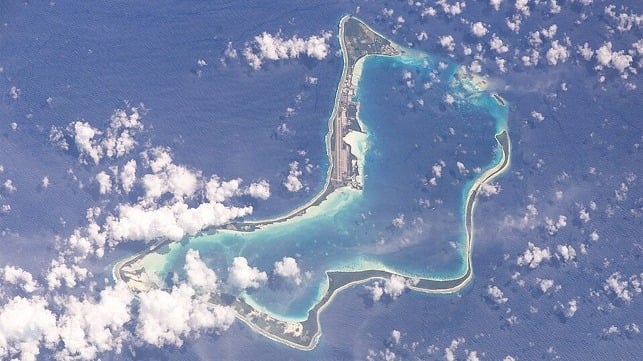
Chagos Archipelago
Chagos Archipelago - NASA image (public domain)

Published Oct 19, 2025 11:29 AM by The Maritime Executive


India has secured agreement from the government of Mauritius allowing it to establish a satellite station in the Chagos archipelago, according to reports in the Indian media outlets The Economic Times and The Times of India. The purpose of the new station, according to the reports, will be to track satellites and “to serve as a strategic asset for monitoring the region,” a formula normally used to describe SIGINT collection sites. 

The report does not give a precise location for the new facility, which has probably not yet been fixed, but postulates it will be “near the Diego Garcia US-UK strategic base.” It is not clear how the site will be serviced. The Indian ambition is likely to be to create a similar facility to that it has already established on Agaléga, an island belonging to Mauritius, which, despite denials, India has already for practical purposes annexed.

Mauritius is heavily dependent on India’s support and goodwill, under which Mauritius operates as an offshore financial center for India. When the agreement was signed, India’s Prime Minister Modi said he had always supported decolonization of the Chagos, and that while “India and Mauritius are two nations, our dreams and destiny are one.”

Also part of the Indian-Mauritius agreement, which was made during an eight-day visit of Mauritius PM Navinchandra Ramgoolam to New Delhi in September, was a plan to allow Indian naval vessels to conduct hydrographic surveys of the archipelago, most of which was a closed Marine Protected Area when administered by the British Indian Ocean Territory. Such surveys would be necessary if India’s Arihant-class nuclear-powered ballistic missile submarines are to operate in Chagos waters. Currently, INS Arihant (S2), INS Arighaat (S3), and INS Aridhaman (S4) are in service, and a fourth boat in the class was launched last year.

The deal also calls for the refitting of a Mauritius Coast Guard ship to prepare it for patrol duties in the Chagos, and the provision of $680 million in aid, some of which is allocated to “development of the Chagos Marine Protected Area.” A hallmark of the British-administered marine protection area was that it was not developed and preserved in its pristine natural state.

Mauritius and the United Kingdom formally signed the sovereignty handover agreement on May 25, 2025, but the ratification process is not yet complete. The deal envisages continued U.S. use of the Diego Garcia Naval Support Facility, but under a lease-back arrangement once the UK has closed down the British Indian Ocean Territory. 

The principal advocate for the handover agreement within the British government, Attorney General Lord Hermer, and the lead British negotiator, Jonathan Powell, are both currently under scrutiny in Parliament, after the prosecution of two British nationals for spying for China was dropped before the case came to court, apparently in an attempt to avoid upsetting China. Former U.S. Secretary of State Mike Pompeo has recently described Jonathan Powell, who is the UK National Security Adviser, as “strategically an absolute fool,” and that “Mauritius is a close ally of the Chinese Communist Party and not only will we lose Diego Garcia, but you will have Chinese power projection from Diego Garcia.” Opposition parties in the United Kingdom have promised to reverse the deal should they displace the current government. 


Explosion on LPG Tanker Off Yemen Remains Under Investigation

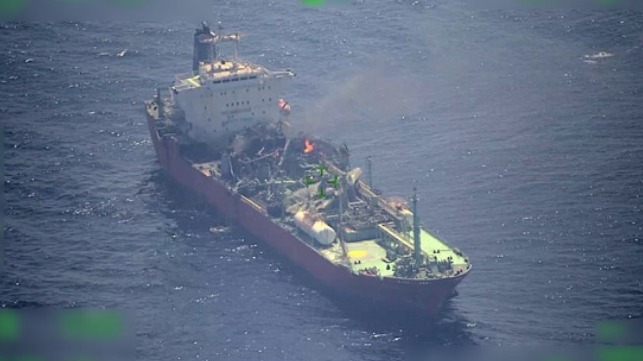
LPG tanker damaged by explosion and fire
Falcon was abandoned after an explosion and fire (French Armed Forces General Staff)

Published Oct 19, 2025 12:40 PM by The Maritime Executive


The explosion yesterday, October 18, aboard an LPG tanker Falcon continues to be under investigation, with the authorities discounting the media speculation of an attack by the Houthis. The Houthis also took the unusual step of quickly issuing a denial, saying that they had not been involved in the incident.

Initial reports coming from the UK Maritime Trade Operations (UKMTO) said a company security officer had informed them that the vessel was struck by an “unknown projectile.” The monitoring operation later issued a statement saying they had been unable to confirm the source of the report and that “we cannot rule out an onboard accident.”

UKMTO today has reported it was still investigating, but that it has not been able to confirm the source of the incident. They downgraded it to an advisory.

Similarly, EUNAVFOR Aspides, which was coordinating the search and rescue effort, continues to refer to the incident as an accident.  They have also not issued any further details after stating they would provide follow-ups as information became available.

The ship has a spotty record with its last two port state inspections showing a long list of maintenance issues. The ship was detained in Turkey in January due to a hole in its hull and corroded ventilation pipes, along with citations for safety and welfare issues. Indian authorities in August 2023 also cited the vessel for 17 deficiencies, including safety, cargo handling, and corrosion.


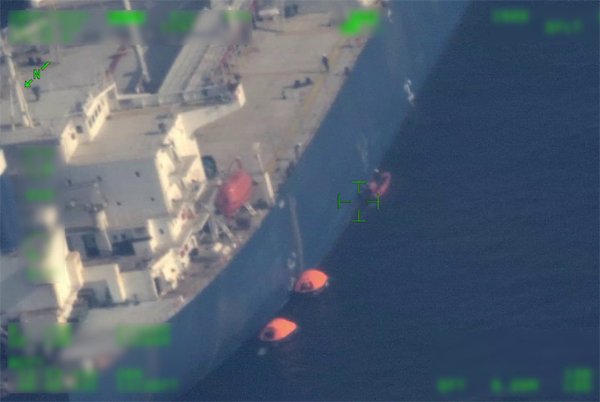
The rescued crew was taken aboard a passing tanker and is being taken to Djibouti (French Armed Forces General Staff)


The last reports said that 24 crewmembers (one Ukrainian and 23 Indians) had been rescued and taken aboard a vessel that Aspides is referencing as the MV Meda. It appears to be another shadow fleet LPG tanker operating for the Iranians, likely under a false flag. Other data sources are identifying the vessel as Aira (IMO: 8818219). Another vessel, a Greek-owned bulker, AK Carl, had responded to the distress call but is now heading to the Suez Canal.

Aspides reports that the rescued crewmembers are heading towards the port of Djibouti, escorted by the Hellenic Frigate HS Spetsai. Two other seafarers from the crew were last reported as missing. The French armed forces which supplied a plane for the search and rescue operation released photos of the rescue operation and damaged tanker.

TakerTrackers.com reported yesterday that the Falcon was part of the Iranian shadow fleet and was likely bound for Yemen with a cargo of liquified petroleum gas. They speculated the vessel was supplying the Houthis and noted that it had no known insurer, but had not been listed in any of the sanction programs.

The Houthis, at the end of last week, issued a summary of their efforts during the war, implying the effort had come to an end. They claim to have launched over 1,800 missiles and drones, mostly directed at Israel and targeting a total of 228 ships. Experts have noted it is unclear what the Houthis’ next steps might be, especially because the peace in Gaza appears fragile after Israel claimed violations by Hamas.

The last reports warned that the LPG carrier Falcon was drifting in the Gulf of Aden. Ships were cautioned to avoid the area and to remain alert.


LPG Carrier on Fire and Drifting off Yemen Issues Distress Call

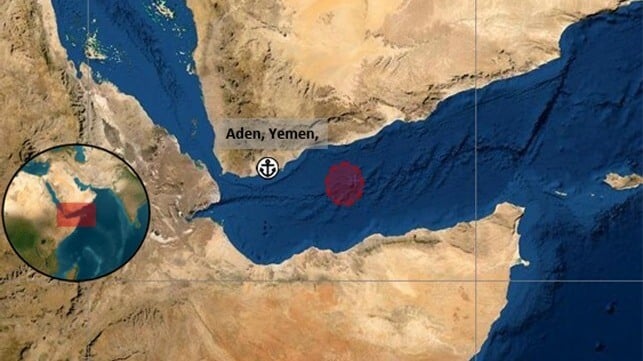
Gulf of Aden position
Reported position of the SAR operation for the burning, drifting LPG carrier (UKMTO)

Published Oct 18, 2025 11:16 AM by The Maritime Executive


A Cameroon-flagged LPG carrier issued a distress call Saturday morning, October 18, while sailing near Yemen, but the cause of an explosion and fire is unclear. EUNAVFOR Aspides is coordinating a search and rescue operation using a Greek frigate and French air assets in the region.

The vessel reported an explosion and fire while it was approximately 130 miles southeast of Aden. Aspides is saying that approximately 15 percent of the vessel is involved in the fire, and the ship is now abandoned and drifting. They are calling it an accident while the UK Maritime Trade Operations UKMTO) which monitors the region reports that it received information from the shipping company’s security officer that the vessel was hit by a projectile.

The vessel is being identified as the LPG tanker Falcon (30,761 dwt). Built in 1994, the vessel is reported to be owned by an Indian company. United Against a Nuclear Iran (UANI) says the vessel has carried Iranian products in the past. The AIS signal shows it is currently sailing from Khor Al Zubair, Iraq, to Djibouti. Ambrey, however, reports the vessel as having sailed from Oman. TankerTrakers.com also reports it is a false AIS signal that the vessel loaded in Iran and was likely actually bound for Yemen.

The vessel has a spotty inspection record with 13 deficiencies reported in January 2025 during a port state inspection in Turkey. The ship was detained due to a hole in its hull and corroded ventilation pipes, along with citations for safety and welfare issues. Indian authorities in August 2023 cited the vessel for 17 deficiencies also including safety, cargo handling, and corrosion.

The crew of 26, consisting of one Ukrainian and 25 Indians, abandoned the ship. Aspides reports the Greek frigate HS Spetsai was dispatched and was launching an “air asset” along with a French “air asset” from France’s Indian Ocean command for a search and rescue operation. Two passing vessels, Meda and AK Carl, have taken aboard 24 of the crewmembers. One crewmember is reportedly still aboard the burning vessel, and one person is reported as missing. The rescued crewmembers are being transported to Djibouti.

The position of the ship in the Gulf of Aden raised immediate suspicion of an attack by the Houthi militants, but Ambrey reported the ship has no known association with Israel. Responding to the widespread media coverage, the Houthis issued a statement denying any involvement with the explosion on the ship incident. The group is currently mourning the death of one of their senior commanders, Mohammed Abd Al-Karim Al-Ghamari, who, it says, succumbed to injuries from an attack by Israel. The IDF, however, reports he was killed on August 28 along with several associates. The Houthis' last attack on a merchant ship took place on September 29 in the same region of the Gulf of Aden. The group has not commented since the Gaza peace accord this week.

Aspides is warning vessels in the region and says it continues to monitor and coordinate the rescue efforts. Additional details will be provided when they are available.


Canada Launches Prequalification for First Offshore Wind Farm Bidding

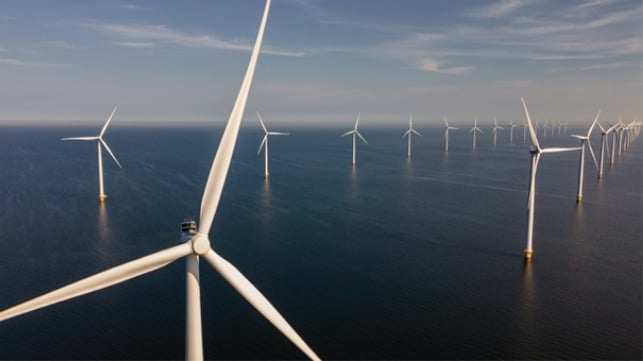
offshore wind farm
Prequalification has beguin for Canada's first offshore wind energy license auction (Nova Scotia Government)

Published Oct 19, 2025 2:55 PM by The Maritime Executive


Canada is taking a key step toward launching its offshore wind energy industry with the opening of its first prequalification round, along with a Call for Information from the communities and partners. It is a critical step toward the launch of the first auction for licenses off the coast of Nova Scotia.

The Canada-Nova Scotia  Offshore Energy Regulator (CNSOER), an independent joint agency created by the government of Canada and Nova Scotia, opened the two actions simultaneously on October 16, with both scheduled to run for 90 days. It follows the September Strategic Direction from the two governments for the process and the designation of four Wind Energy Areas in July. Three of the areas are situated south of Nova Scotia’s eastern mainland, and the fourth is east of Cape Breton Island.

In providing the strategic direction, the governments had called this a “pivotal moment” for Canada. They provided direction to formally initiate the process, saying it would be a historic achievement for Canada and Nova Scotia. 

“There is enormous potential for offshore wind in Canada,” they said, directing that the first step should target 3000 MW. They, however, noted that the ambition is to reach 5000 MW in the near term and said the regulator should determine the feasibility based on the initial prequalification and call for information. They said they would welcome the recommendation, if appropriate, to make “an even more ambitious call for bids.”

The prequalification seeks to identify companies capable of undertaking the project and ensuring their financial and technical capabilities. The regulator was directed not to make this set too burdensome, as they said that a more detailed and thorough assessment of the qualifications and capacity would take place during the actual bidding process.

At the same time, CNSOER is inviting feedback on the process from indigenous groups as well as rights holders, including the fishing sector, industry, government, the public, and other stakeholders. They are invited to comment on the possible evaluation criteria for the Call for Bids as well as the possible draft terms and conditions for the licenses.

The pre-qualified companies will be eligible to bid for the licenses. No timeline has been set for the Call for Bids, but the submissions in this prior step are due by January 13, 2026.


Report: EU to Work With Flag States to Increase Shadow Tanker Inspections

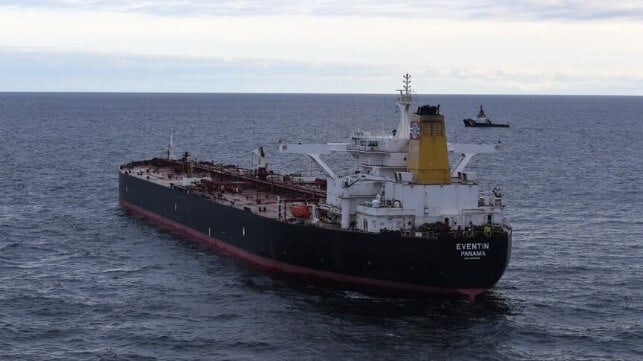
shadow fleet tanker detained in Germany
Germany detained the tanker Eventin and its cargo for violations (Havariekommando)

Published Oct 19, 2025 2:55 PM by The Maritime Executive


The diplomatic arm of the European Union is reported to be working on a new plan to further increase the inspections of the shadow tanker fleet that supports the Russian energy industry, according to a draft document seen by Reuters and POLITICO. The outlets are reporting that the position builds on the efforts by France, Estonia, Germany, and other member states, which have already stopped suspect vessels.

The European External Action Service (EEAS) will be presenting a draft position paper to members on Monday, October 20, reports POLITICO, with a goal of finalizing the declaration by the end of November. They report that the paper cites the support by the tankers of Russia’s energy industry and income for Russia, as well as the environmental and safety issues posed by the shadow fleet. It also cites the potential for the tankers to be used in hybrid warfare, highlighting the unidentified drone sightings in Northern Europe. Both Germany and Denmark have said they suspect the drones were launched from vessels off their coasts. The EEAS also cites the need to crack down on false flag operations.

The reports said that the EU has already begun negotiations with flag states with a goal of reaching bilateral agreements that would provide additional authority to board and inspect suspect vessels. The EU in the spring authorized states to demand proof of insurance from vessels sailing through their zones, and several states have independently said they would be inspecting the tankers. Denmark announced a new inspection program for tankers anchoring in a popular spot near the entrance to the Baltic.

The report says the EU is also considering extending the efforts to support elements for the tanker fleet. Key among these it mentions bunkering services as a potential target.

French President Emmanuel Macron had urged member states to get more aggressive, citing France’s detention of the notorious shadow tanker Boracay. He said that even a few hours' delay would negatively impact the tankers’ operations. France stopped the tanker on suspicion that it was operating under a false flag and held it for several days in October.

The EU is also working on its 19th sanctions package, which is reported to include more than 100 additional tankers. It will also accelerate the efforts to end Russian oil and gas imports. Reuters writes that the package will be presented to member states for adoption likely within the next week. 

European officials have talked of a renewed urgency to increase the pressure on Russia as the war in Ukraine drags on. They have said Russia is showing little regard for the peace efforts and cite the increase in attacks on Ukraine over the past few months.


China's PLA Navy Dismissed Admirals in Senior-Level Purge

KEEPING UP WITH HESGETH 

China military spokesperson
In a highly unusual move, China announced a purge for senior admirals and military leaders (China military)

Published Oct 19, 2025 3:31 PM by The Maritime Executive


Three senior People’s Liberation Army (PLA) Navy officers were among a group of nine Four Star officers whose dismissal was announced by the Chinese Ministry of Defense on October 17.

Admiral Miao Hua had been head of the Central Military Commission's (CMC) Political Work Department, the organization within the PLA responsible for upholding conformity to Communist Party of China (CPC) doctrine. This activity is synonymous with oversight of personal loyalty to the personality of President XI and his particular interpretation of CPC ideology. Dismissed alongside him was Admiral Yuan Huazhi, a marine officer, until recently head of the Political Works Department for the PLA Navy. Admiral Wang Houbin was dismissed from his post as commander of the PLA Rocket Force, but he had previously been Deputy Commander of the PLA Navy from 2019-23 and had held senior operational positions in both the East and South Fleets.

The most senior officer dismissed was CMC Vice Chairman General He Weidong. General He Hongjun, deputy head of the CMC Political Work Department, was unusually a senior officer from Tibet, and managed to commit suicide before his dismissal announcement. Two other of the senior officers had been holding operational posts, General Lin Xiangyang in command of the PLA Eastern Theater, and General Wang Chunning in command of the PLA’s Armed Police.

Many of those dismissed had only recently been promoted. Most were considered to be members of the Fujian clique, a group considered to be closely aligned and loyal to President Xi Jinping personally. The announcement confirms rumours concerning some of those dismissed, which had been circulating since April.

All the dismissals, coupled with expulsions from the CPC, were attributed to disciplinary violations and allegations of corruption, an implausible generic explanation given the spread of posts of those dismissed. A more logical explanation is that this group of officers - mostly concerned with political work within the PLA - were the leading representatives of a faction within the CPC which had begun to have misgivings about the political direction of the CMC Chairman, President Xi Jinping. Alternatively, the group may not have been sufficiently effective in quelling 'alternative' thinking to the current version of CPC orthodoxy. There have been suggestions that within the PLA, there is a school of thought opposed to President Xi's plans to use blunt military force to invade Taiwan.

The announcement, highly unusual in itself, only covered the purging of senior officers at Four Star rank, the highest officer level within the PLA. It would be a safe assumption that there were other dismissals of more junior officers aligned with the seniors who were dismissed, dismissals that will reach down into the operational elements of the PLA Navy and other branches of the PLA. Rather than a plot, the purge seems to be a move on President Xi's part to suppress and put an end to debate within the CPC on alternative approaches to his chosen hardline path.


Korean Port Receives First Containership in 57 Years with New China Route

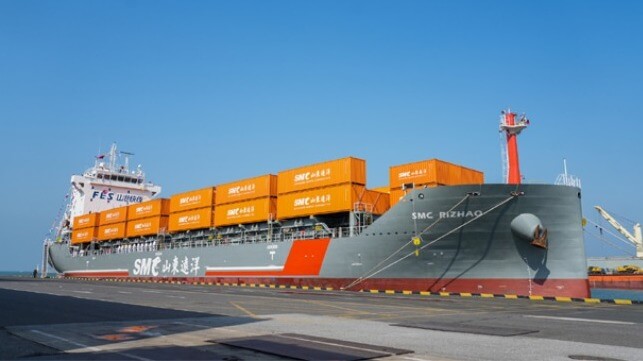
Chinese containership
Chinese containership which became the first in 57 years to arrive at South Korea's Jeju Port (Jeju Port)

Published Oct 19, 2025 3:46 PM by The Maritime Executive


South Korea’s Jeju Port celebrated the opening of a new trade route to China, which also marked the first arrival in 57 years of a containership to Jeju. The semi-autonomous island, which lies to the south of the Korean peninsula, highlights that the new service with China will be an economic boost to the region.

The Ministry of Oceans and Fisheries approved the route in late July and completed the operational plan in October. The plan calls for weekly service between China’s Qingdao and Jeju.

Jeju was designated as a trading port in 1968, but it has mostly seen smaller cargo ships, the fishing fleet, and has become a popular stop for cruise ships. Ferries also maintain service to the Korean mainland, but containers have had to be transshipped from Korea’s main seaports.

The service is being initiated by China’s Shandong Port Equipment Group with one of its recently built containerships. The first ship departed China on October 16, arriving at Jeju on October 18. It was the 712-TEU containership SMC Rizhao (8,800 dwt). Having entered service in 2023, it is 118 meters (387 feet) in length. The ship is reported to be well-suited to the service as it has 109 reefer plugs to permit the export of frozen fish.


The vessel arrived with 40 containers of Chinese imports, including furniture and electronics. It was reported to have loaded 10 containers of processed seafood for export to China.

Chinese officials highlighted it as an important new trade route and part of the country’s efforts to build regional services. China looks to export building materials and other products to Jeju.

The Koreans said it would provide a two-day faster service, permitting containers not to have to be transshipped through Inchon. This, they said, would also result in costs up to 62 percent lower. In addition to seafood, Jeju officials said they expect to export bottled water and cosmetics to China and will use the new service to attract manufacturing companies.

The SMC vessel will depart China every Monday, arriving in Jeju port on Wednesday. It will return to China the following Saturday.

Nuns, ex-Satanic priest among seven new saints created by Pope Leo

Vatican City (AFP) – Bells rang out Sunday over St Peter's Square as Pope Leo XIV created seven new saints, including the first from Papua New Guinea, an archbishop killed in the Armenian genocide and a Venezuelan "doctor of the poor".


Issued on: 19/10/2025 - RFI

The canonisation will be the second for the US pope since he was made leader of the Catholic Church on May 8 © Filippo MONTEFORTE / AFP/File

Also canonised during the solemn ceremony, under sunny skies in the vast plaza on World Mission Day, were three nuns who dedicated their lives to the poor and sick, 
and former Satanic priest Bartolo Longo.

The Italian lawyer born in 1841 subsequently rejoined the Catholic faith and went on to found the Pontifical Shrine of the Blessed Virgin of the Rosary of Pompeii.


"Today we have before us seven witnesses, the new Saints, who, with God's grace, kept the lamp of faith burning," Leo told an audience the Vatican estimated at some 55,000 people.

"May their intercession assist us in our trials and their example inspire us in our shared vocation to holiness," he said during his homily.

Huge portraits of the seven were unfurled from windows over the square as Leo, the first US pope, exited St Peter's Basilica dressed in a ceremonial white cassock with a white mitre on his head, preceded by white-clad bishops and cardinals.

Cardinal Marcello Semeraro, prefect of the Dicastery for the Causes of Saints -- the Vatican department charged with beatification and canonisation -- read aloud profiles of the seven to applause from the crowd.

With Leo's reading of the canonisation formula, they were officially declared saints.

In his homily, Leo described the new saints as either "martyrs for their faith", "evangelisers and missionaries", "charismatic founders" of congregations or "benefactors of humanity".

The rite of canonisation was the second for the former Robert Prevost since he was made leader of the Catholic Church on May 8.

Last month, he proclaimed as saints Italians Carlo Acutis -- a teenager dubbed "God's Influencer" who spread the faith online before his death at age 15 in 2006 -- and Pier Giorgio Frassati, considered a model of charity who died in 1925, aged 24.

Canonisation is the final step towards sainthood in the Catholic Church, following beatification.

Three conditions are required -- most crucially that the individual has performed at least two miracles. He or she must be deceased for at least five years and have led an exemplary Christian life.

- Martyrs, humanitarians -

Along with Longo, those made saints Sunday were Peter To Rot, a lay catechist from Papua New Guinea killed during the Japanese occupation during World War II, Armenian bishop Ignazio Choukrallah Maloyan killed by Turkish forces in 1915, and Venezuela's Jose Gregorio Hernandez Cisneros, a layman who died in 1919, whom the late Pope Francis called a "doctor close to the weakest".

Also from Venezuela was Maria Carmen Elena Rendiles Martinez, a nun born without a left arm who overcame her disability to found the Congregation of the Servants of Jesus before her death in 1977. She becomes the South American country's first female saint.

The Italian nuns canonised are Vincenza Maria Poloni, the 19th-century founder of Verona's Institute of the Sisters of Mercy, which cares primarily for the sick in hospitals, and Maria Troncatti of the Daughters of Mary Help of Christians.

In the 1920s, Troncatti arrived in Ecuador to devote her life to helping its indigenous population.

© 2025 AFP


Back from the brink, the bearded vulture makes a cautious return to French Alps

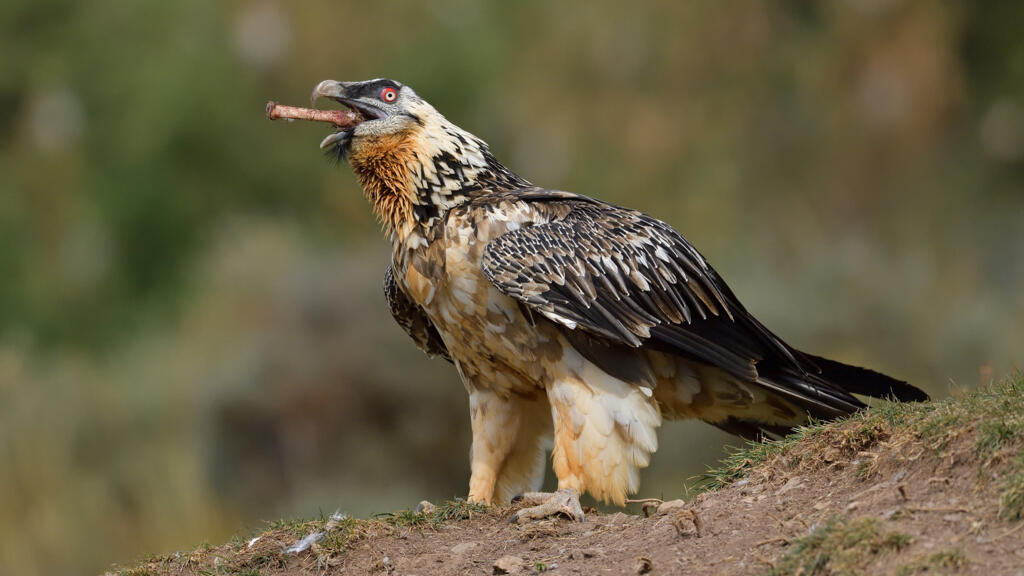
In a hidden valley in the French Alps, conservationists are quietly raising Europe’s largest bird of prey – the bearded vulture – once wiped out from these mountains. After a century away, it is once again soaring again over the Alps, but its comeback still depends on human care.


Issued on: 19/10/2025 - RFI

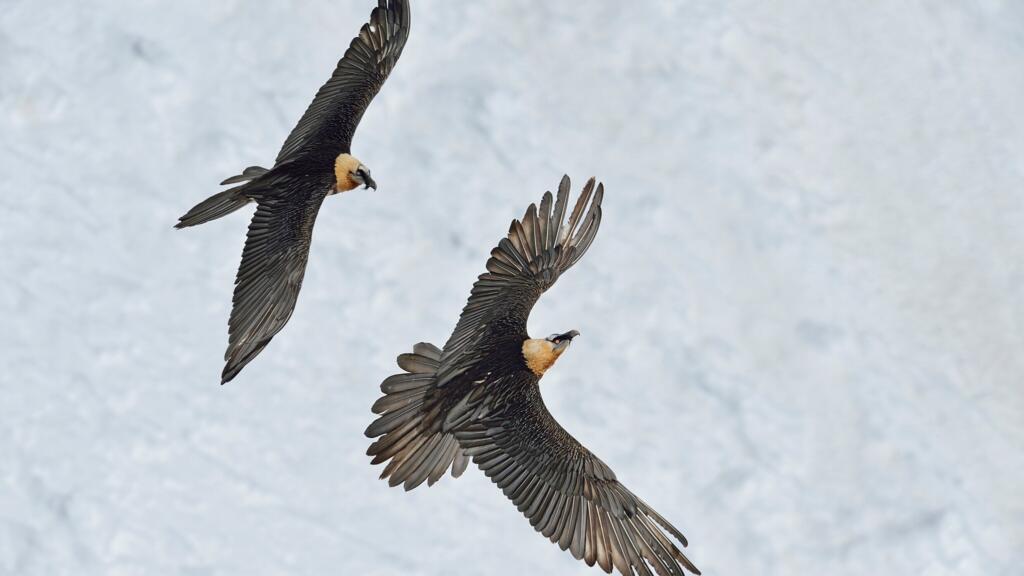
Bearded vultures soar together above the Alps, where they were wiped out a century ago. © Hansruedi Weyrich/VCF

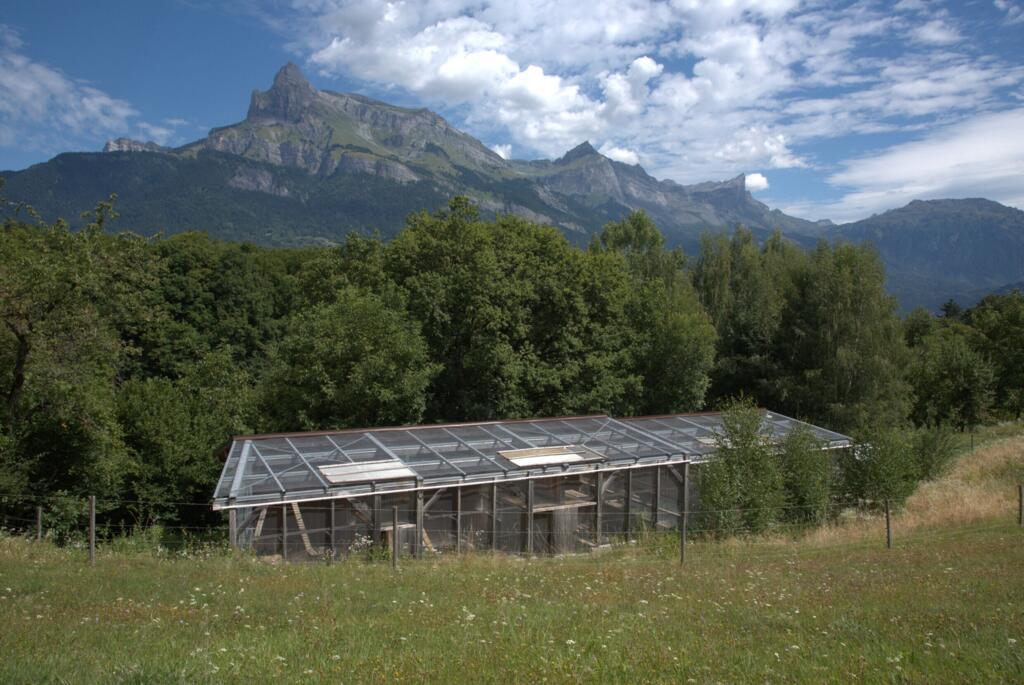
Up a steep track above the village of Sallanches in the Arve valley, the road turns to rock and tree roots. Beyond the beech trees, a meadow opens on to a view of Mont Blanc and the Fiz and Aravis ranges. Nestled here is the Asters breeding centre, a small conservation site that has worked since 1986 to bring the bearded vulture back to the Alps.

Its exact location is kept secret. The birds are extremely sensitive to stress – it can even kill them.

“You can tell their state of mind by the red ring around the pupil,” says Étienne Marlé, a field worker who helps care for the birds. “If it widens, it means stress or excitement. That’s our signal to stop and come back later.”

Each aviary is equipped with cameras, including one trained directly on the nest. These run day and night so staff can observe the birds without disturbing them. The footage is also available online, allowing anyone to watch the birds in real time.

“It’s not a zoo,” Marlé says. “We don’t receive visitors. We just feed them in the morning and leave them in peace.”


A camera captures bearded vulture pair Milutz and Envol tending to their chick at the Asters centre. © Asters-CEN74
'Bone breaker'

The bearded vulture, or Gypaetus barbatus, is an icon among Alpine wildlife. Each pair needs a vast territory – up to 500 square kilometres – to find enough food and nesting space.

A scavenger, it survives mainly on bones – which make up around 80 percent of its diet – which it digests with its highly acidic stomach juices.

In the wild, if the bones are too large to swallow it carries them high into the air and drops them on to rocks to smash them apart – a habit that explains its Spanish nickname, quebrantahuesos, or "bone breaker".

By feeding on carcasses left behind by other animals, the bird clears the mountains of decay and helps prevent disease. It also keeps mountain water sources pure and saves farmers the trouble of hauling dead livestock down from high pastures.

“Reintroducing the bearded vulture is a way of repairing our past mistakes by restoring biodiversity,” Marlé explains.

He feeds the centre’s three breeding pairs six days a week. “On the menu today: sheep and rabbit legs,” he says, smiling at the smell.

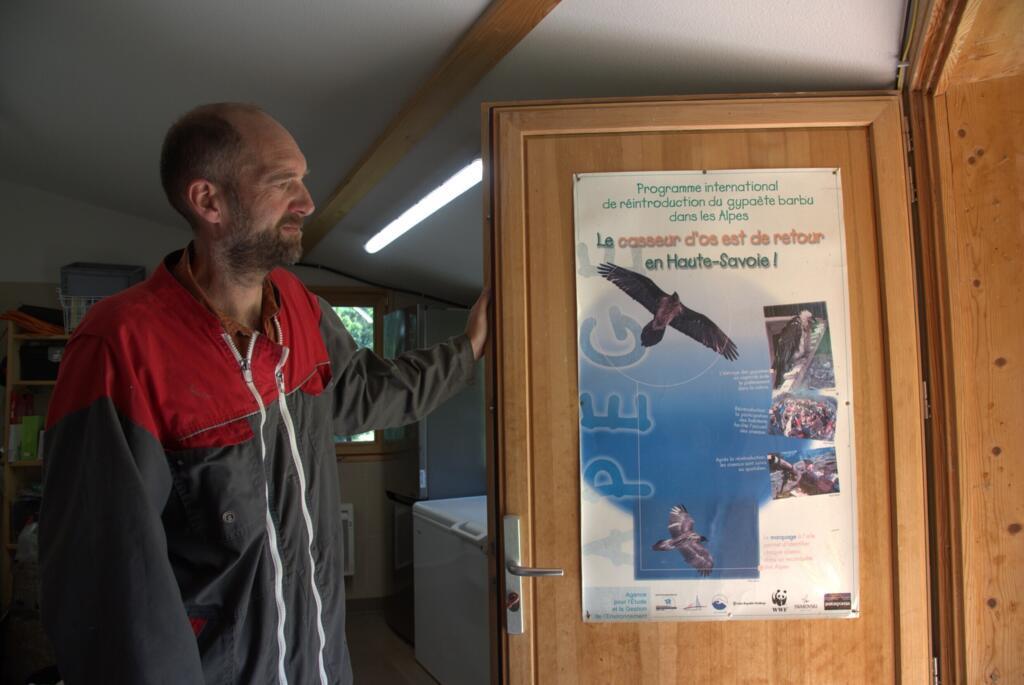
Étienne Marlé at the Asters centre in Annecy, which has worked since 1986 to restore the bearded vulture to the Alps. © Géraud Bosman-Delzons/RFI

Raising a new generation

Two of the centre’s young adults, Flata and Bargy, were born in 2019. “We paired them early so they could bond and start nesting,” Marlé says. “Our goal is to understand how each pair works and give them the best conditions for breeding.”

If an egg or chick needs help, it can be placed in an incubator, but staff prefer to let parents raise their own – otherwise the bird might grow up seeing humans as friends and its own species as rivals.

The vultures remain still as people pass by, moving only their heads. “They see us, but they won’t eat until we’ve gone,” Marlé adds. “They’re not hungry animals.”

Nearby, a rabbit hops about. Visitors sometimes expect drama, Marlé says. “People wait for the bird to pounce. But it never does – it’s a scavenger, not a killer.”

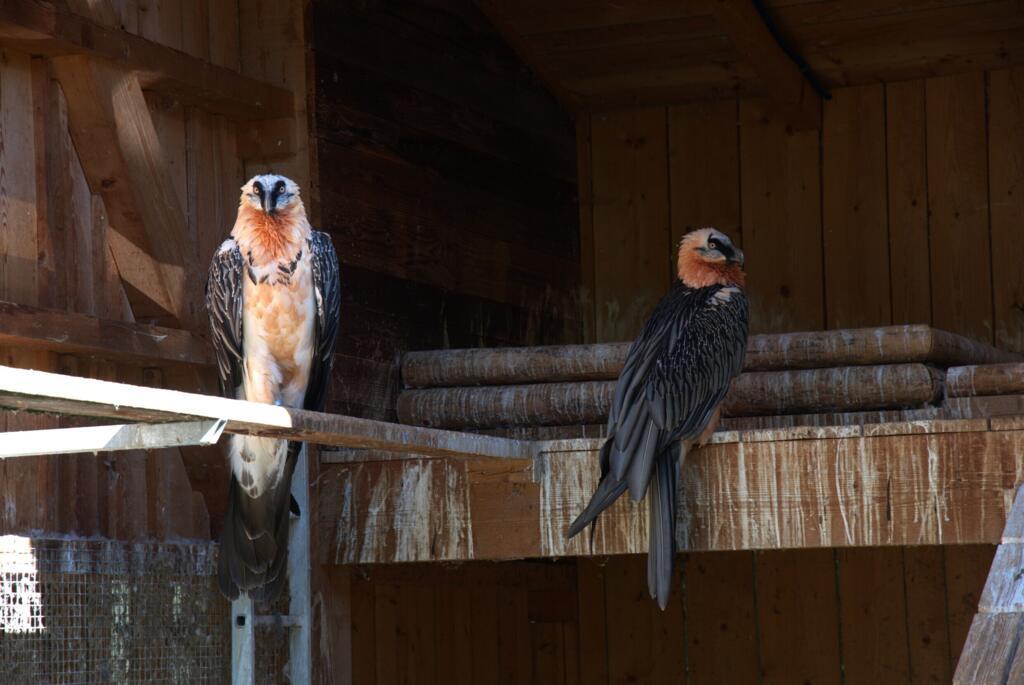
Flata and Bargy, an adult breeding pair of bearded vultures. 
© Géraud Bosman-Delzons/RFI


At least 650,000 years old, the bearded vulture once shared the mountains with wolves and early humans.

With its vast wingspan, black beard and hooked beak, it has a fierce look. For centuries, local myths claimed that it carried off children or pushed livestock over cliffs. In the 19th century, even scientists accused it of killing cattle.

Those fears led to its extermination across the Alps, with the last known Alpine bird shot in Italy in 1920.

Hunters were paid to destroy them, their bodies ending up in museums and private collections. “It was pure prejudice – the bird was just unlucky to look intimidating,” Marlé says.

Black when young, the bearded vulture’s chest turns pale as it matures. Some later stain their feathers orange-red by bathing in iron-rich mud – a natural show of dominance seen in both males and females.

A European rescue

Efforts to bring the species back began in the 1970s but took off in 1987, when a bird named Phénix was released in France.

Today, six breeding centres – in France, Austria, Switzerland and Spain – and around 30 zoos from Finland to Kazakhstan form a vast European network coordinated by the Vulture Conservation Foundation.

“We pool the birds we produce and distribute them based on genetics, age and release sites,” Marlé explains. “Now we have wild-born bearded vultures in the Alps that have never been touched by human hands.”

At three months old, chicks born in captivity are transported to release areas such as regional parks or bird protection groups. They are placed in artificial nests and fed without ever seeing people. After a month, they take their first flight.

The aviaries at the Asters breeding centre, facing the Fiz mountain range in Haute-Savoie. © Géraud Bosman-Delzons/RFI

Still endangered

Four decades of work have brought 29 breeding pairs to the French Alps and 93 across the Alpine range – a small number, but a real success. “We started from zero and the population is growing,” said Marlé. “It’s working.”

Still, the recovery is slow. Bearded vultures reproduce only from age seven, raising one chick every two or three years. The nesting period lasts almost a year, from October to late August.

“For now, the number of pairs is rising and their range is expanding,” says Marie Heuret, who leads France’s national recovery plan. “But if just three or four more adults died each year, that progress could reverse. The balance is very fragile.”

The species also needs genetic reinforcement to stay healthy in the long term.

A bearded vulture tucks into a meal of mostly bones, its favourite food. © Hanruedi Weyrich/ VCF


The latest Red List from the International Union for Conservation of Nature, released this month, still classifies the bearded vulture as endangered in France and the Mediterranean region, where numbers have halved over 40 years. In Corsica, the species is close to extinction.

France has unveiled a new 10-year plan to protect the bearded vulture, as it makes its fragile comeback in the Alps. The plan aims to raise the number of breeding pairs across the country’s four mountain ranges by 42 percent by 2034 – reaching 130 pairs, including 54 in the French Alps.

It coincides with growing public interest, with more than 1,000 people across Europe recently joining a special observation day dedicated to the bird.

Threats from humans

Each young bird carries a GPS tracker so researchers can monitor its journey across the mountain chain. “Some used to disappear without trace,” Marlé says. “Now we can learn what really caused their deaths.”

The main threats to these birds are poisoning, lead contamination and power lines. Of 77 recorded deaths since 1989, 21 were caused by toxic substances.

“If someone poisons a sheep to kill wolves, the bearded vulture will eat it too,” Marlé says. The birds also suffer lead poisoning when they swallow bullet fragments left in carcasses.

Fifteen have died after colliding with electrical or ski-lift cables. Partnerships with ski resorts and energy operators now help fit lines with visual markers and anti-electrocution devices.

Some are still shot, despite being fully protected. Thirteen have been killed by gunfire since 1989 – seven of them between 2010 and 2020.

One mystery, however, remains unsolved – the death of Rei del Causse, a three-year-old bird found lifeless in the Cévennes in May after travelling as far as Austria. No lead, poison or virus was detected.

Even high up in the cliffs, these birds are not left undisturbed. Helicopters, wildlife photographers and mountain sports such as off-piste skiing, paragliding, wingsuit flying and ice climbing all encroach on their habitat.

“If climbers pass close to a nest every day, the birds will leave and breeding will fail,” Marlé says. “We need to communicate better and mark nesting sites clearly so people know to avoid them.”

Dialogue with local communities remains key – and mostly positive. “It’s an animal that inspires real affection,” Heuret explains. “It brings together very different people because it’s not controversial.”

Like the mythical phoenix with which it was once compared, the Alpine bearded vulture is rising again – but its future remains fragile.

This article was adapted from the original version in French by RFI's Géraud Bosman-Delzons
Jewels of 'inestimable' value stolen from Louvre museum in Paris in major heist


Copyright Copyright 2025 The Associated Press. All rights reserved.

By Emma De Ruiter
 19/10/2025 


France's Interior Ministry said that around 9:30am several intruders forced open a window, stole jewels from vitrines and fled on two-wheelers.

France's world-famous Louvre museum in Paris was forced to close on Sunday after thieves broke into the Apollo Gallery and stole valuable crown jewels.

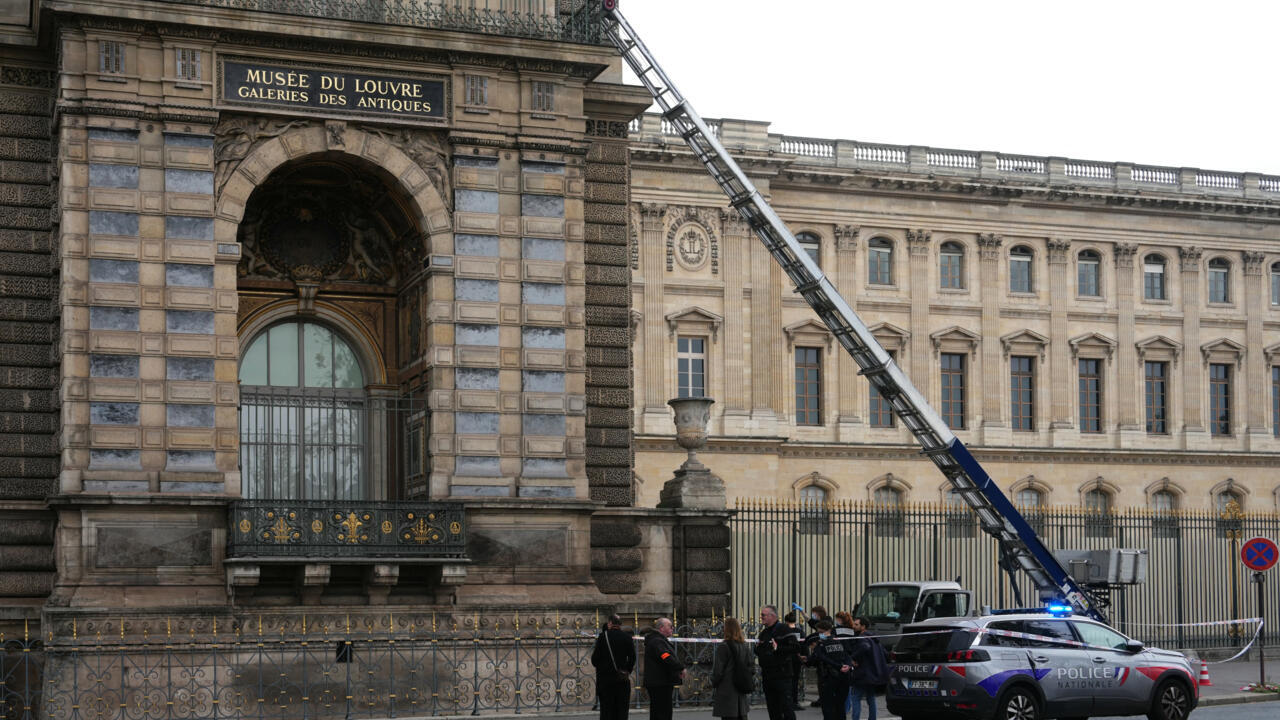
Interior Minister Laurent Nuñez said the thieves used a basket lift to access the room directly, forced a window and broke display cases to steal the jewels, before escaping on two-wheelers.

He said forensic work is underway and a precise inventory of the stolen objects is being compiled, adding that the items have “inestimable” historical value.

Culture Minister Rachida Dati wrote on social media there were "no injuries to report," adding "I am on site alongside the museum teams and the police. Investigations under way."

In a post on X the Louvre confirmed it will be closed "for exceptional reasons".

The daylight heist about 30 minutes after opening, with visitors already inside, was among the highest-profile museum thefts in living memory, in what Dati described as a professional “four-minute operation.”

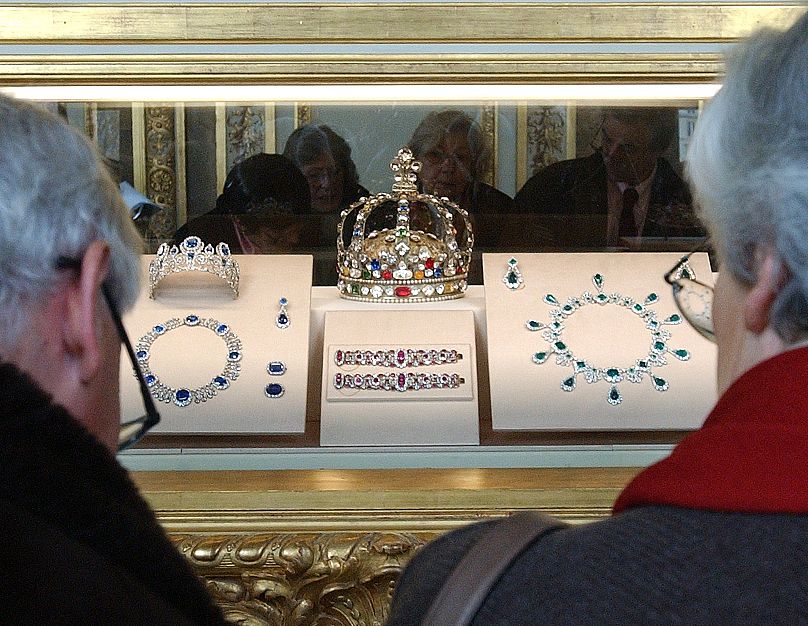
Officials said nine pieces were stolen from the Napoleon and the Empress's jewellery collection in the Apollo Gallery, including a necklace, a brooch, a tiara and more.

One object was later found outside the museum, Dati said. French media identified it as the emerald-set imperial crown of Napoleon III’s wife, Empress Eugénie, containing more than 1,300 diamonds. It was reportedly recovered broken.

Some of the French Crown Jewels, including the diamond crown of King Louis XV and Empress Marie-Louise's necklace,in the Apollo Gallery of the Louvre, Nov. 23, 2004. AP Photo/Remy de la Mauviniere

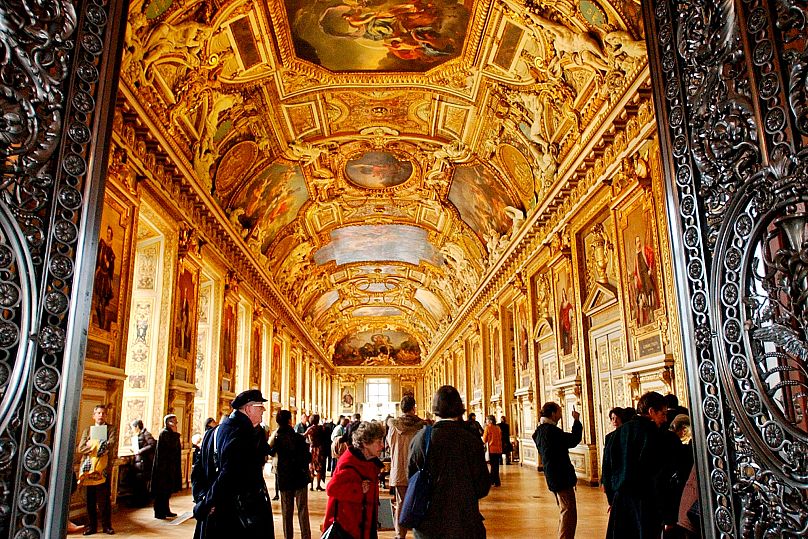
The Apollo Gallery is a vaulted hall in the Denon wing that displays part of the French Crown Jewels beneath a ceiling painted by King Louis XIV’s court artist.

Visitors walks through the Apollo gallery of the Louvre museum after its renovation, in this Nov. 23, 2004 file photo taken in Paris. AP Photo/Remy de la Mauviniere

One stolen jewel was later found outside the museum, the paper reported, adding that the item was believed to be Empress Eugénie’s crown and that it had been broken.

One witness, Kaci Benedetti, described in a post on X scenes of panic inside the museum as people tried to exit when police arrived.

The Louvre has a long history of thefts and attempted robberies. The most famous was in 1911, when the Mona Lisa vanished from its frame, stolen by Vincenzo Peruggia, a former worker who hid inside the museum and walked out with the painting under his coat. It was recovered two years later in Florence — an episode that helped make Leonardo da Vinci’s portrait the world’s best-known artwork.

In 1983, two Renaissance-era pieces of armor were stolen from the Louvre and only recovered nearly four decades later. The museum’s collection also bears the legacy of Napoleonic-era looting that continues to spark restitution debates today.

The Louvre is home to more than 33,000 works spanning antiquities, sculpture and painting — from Mesopotamia, Egypt and the classical world to European masters. Its star attractions include the Mona Lisa, as well as the Venus de Milo and the Winged Victory of Samothrace.


Thieves steal eight objects from the Louvre

 in daring daytime heist

A four man "strike team" broke into the Louvre in the heart of Paris on Sunday and robbed eight objects from the Gallerie d'Apollon, including historical jewellery, as the world-renowned museum closed for the day. French authorities later said they recovered one item, which was apparently dropped by the robbers as they made their escape.


Issued on: 19/10/2025
By: FRANCE 24
Video by: Shirli SITBON


French police officers stand next to a furniture lift used by robbers to enter the Louvre in Paris on October 19, 2025. © Dimitar Dilkoff, AFP
03:32


Robbers wielding power tools broke into the Louvre on Sunday and made off with priceless jewels from the world-renowned museum, taking just seven minutes for the broad-daylight heist, sources and officials said.

"A robbery took place this morning at the opening of the Louvre Museum," French Culture Minister Rachida Dati on Sunday wrote on X. The Louvre said it was closing for the day "for exceptional reasons".

The thieves made off with eight priceless objects, with a ninth that they tried to steal recovered at the scene, Paris Prosecutor Laure Beccuau said.

They did not target or steal the world-famous Regent diamond, which is housed in the same gallery the thieves hit, Beccuau said on BFM TV. Sotheby's estimates the Regent is worth over $60 million.

French authorities are hunting the four man "strike team", Paris's chief prosecutor Laure Beccuau, told BFMTV television.

How did burglars pull off 'the theft of the decade' in 7 minutes at the Louvre? 
REUTERS - Gonzalo Fuentes
15:52


There were no injuries reported. Dati said she was at the museum and investigations were underway.

"We saw some footage: they don't target people, they enter calmly in four minutes, smash display cases, take their loot, and leave. No violence, very professional," she said on TF1.

French President Emmanuel Macron promised that the thieves who raided the Louvre in Paris Sunday morning would be caught and the items they stole recovered.

"Everything is being done, everywhere, to achieve this, under the leadership of the Paris prosecutor's office," he said in a statement on social media.
Macron promises the Louvre thieves will be caught ©


French Interior Minister Laurent Nunez said the “major robbery” said the thieves used a crane that was positioned on a truck to enter the building. They stole jewels of “priceless value”.

It was “manifestly a team that had done scouting”, he said, adding that the panes were cut “with a disc cutter”.

The interior ministry specified the location as the Galerie d’Apollon.

Daring heist at the Louvre Museum in Paris
© France 24
04:11


What jewels did the Louvre thieves steal?

The Culture Ministry said eight pieces were stolen.

These included the tiara, necklace and an earring, part of a pair, from the jewellery set of Queen Marie-Amélie and Queen Hortense.

An emerald necklace and a pair of emerald earrings from the Marie-Louise set were also stolen, as was the brooch known as the reliquary brooch, the tiara of Empress Eugénie as well as the large bodice knot (brooch).

One piece of jewellery had been recovered outside the museum, apparently dropped as they made their escape.

French authorities confirmed they found the 19th-century crown that once belonging to Empress Eugenie, the wife of Napoleon III. The crown features golden eagles and is covered in 1,354 diamonds and 56 emeralds, according to the museum's website.
What is the Gallerie d'Apollon?

In 1661, after a fire broke out at the Louvre, Louis XIV entrusted architect Louis Le Vau to create a gallery reflecting his new emblem, the sun. Le Vau modelled the space on Apollo, the Greek god of the sun.

The resulting hall, an ornate space of gold leaf and paintings, would be the model for the Palace of Versailles' world-famous Hall of Mirrors, finished 20 years later after Louis XIV left Paris for Versailles.

Visitors evacuated


Police sealed off the museum and evacuated visitors. New arrivals were turned away and nearby streets were closed, according to the interior ministry.

A police source said the robbers had drawn up on a scooter armed with angle grinders and used the hoist -- an extendible ladder used to move furniture -- to reach the room they were targeting.

The brazen robbery happened just 800 metres from Paris police headquarters.

Louvre museum authorities could not immediately be reached for comment, according to French media reports.

But the Louvre confirmed that the museum was closed Sunday due to “exceptional reasons”, in a post on X.


According to French daily, Le Parisien, the criminals entered the sprawling building from the facade facing the Seine River, where construction work is underway.

After breaking the windows, they reportedly stole "nine pieces from the jewellery collection of Napoleon and the Empress", said the report.
Echoes other recent break-ins

The theft, which occured less than half an hour after doors opened, echoes other recent museum raids.

Daylight robberies during public hours are rare. Pulling one off inside the Louvre — with visitors present — ranks among Europe’s most audacious since Dresden’s Green Vault museum in 2019, where which thieves smashed vitrines and carried off diamond-studded royal jewels worth hundreds of millions of euros.

Last month, criminals used an angle grinder to break into Paris's Natural History Museum, making off with gold samples worth 600,000 euros ($700,000).

In November last year, four thieves stole snuffboxes and other precious artifacts from the Cognacq-Jay museum in Paris, breaking into a display case with axes and baseball bats.

French President Emmanuel Macron in January pledged the Louvre would be "redesigned, restored and enlarged" after its director voiced alarm about dire conditions inside.

He said at the time he hoped that the works could help increase the annual number of visitors to 12 million.
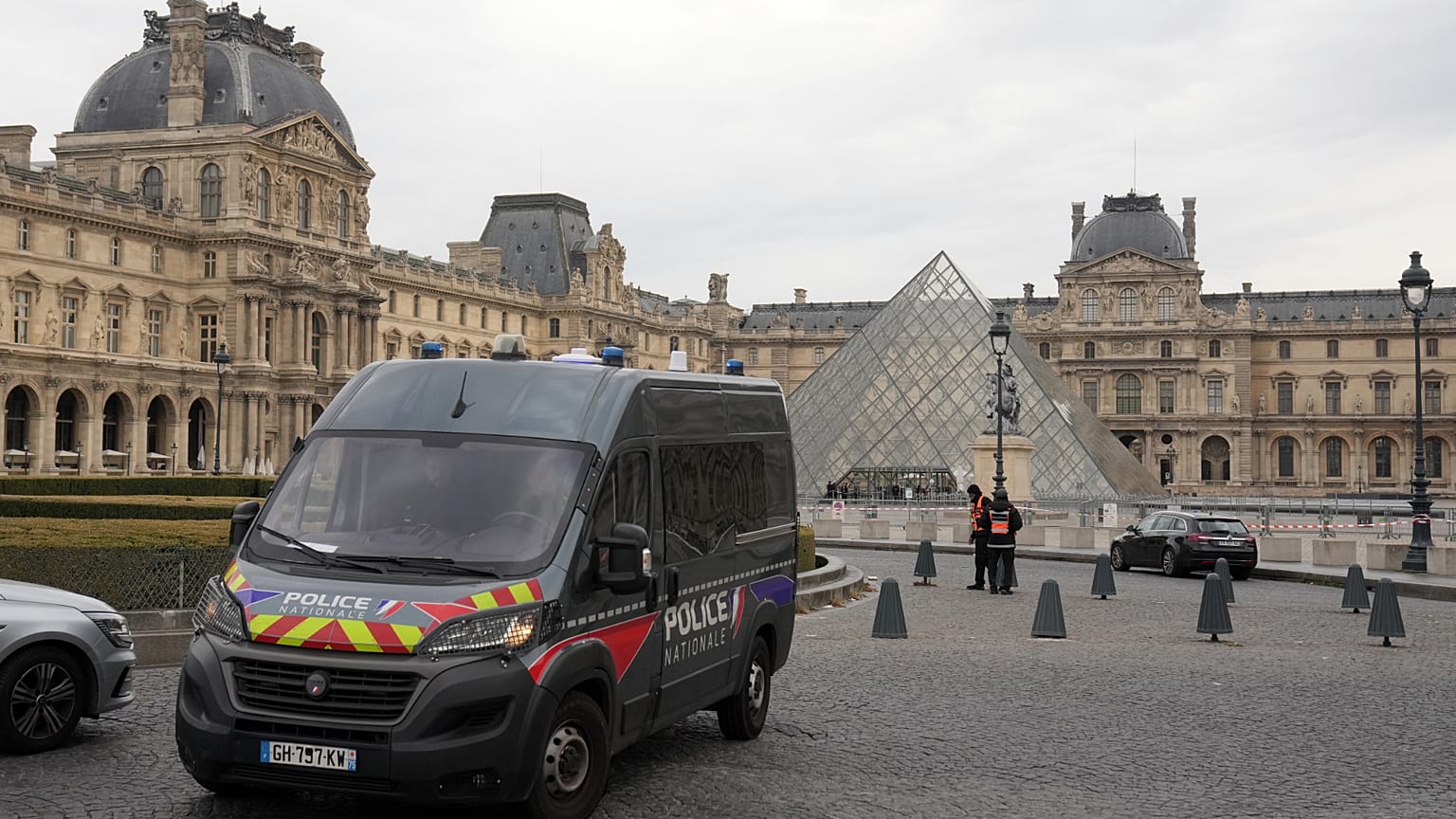
A police van patrols in the courtyard of the closed Louvre museum after a robbery Sunday, October 19, 2025 in Paris. © Thibault Camus, AP


In 2017, burglars at Berlin’s Bode Museum stole a 100-kilogram (220-pound) solid-gold coin. In 2010, a lone intruder slipped into Paris’s Museum of Modern Art and escaped with five paintings, including a Picasso.

The robbery is likely to raise awkward questions about security at the museum, where officials had already sounded the alarm about lack of investment at a world-famous site that welcomed 8.7 million visitors in 2024.

The Louvre has a long history of thefts and attempted robberies. The most famous was in 1911, when the Mona Lisa vanished from its frame, stolen by Vincenzo Peruggia, a former worker who hid inside the museum and walked out with the painting under his coat. It was recovered two years later in Florence – an episode that helped make Leonardo da Vinci’s portrait the world’s best-known artwork.

Home to more than 33,000 works spanning antiquities, sculpture and painting – from Mesopotamia, Egypt and the classical world to European masters – the Louvre’s star attractions include the Mona Lisa, the Venus de Milo and the Winged Victory of Samothrace. The Galerie d’Apollon displays a selection of the French Crown Jewels.

The museum can draw up to 30,000 visitors a day.

(FRANCE 24 with AFP and AP)